
Technical sourcing guide
Lampshade Fittings: Types, Standards and Custom Glass Shade Specification
Lampshade fittings are the mechanical parts or interface that attach a shade to a fixture. They are not the same as the bulb cap or the lamp holder. For a glass shade, the fitting brief should identify the connection method, opening or neck, retaining hardware, overall dimensions, glass process, finish and project quantity. The final fit should be confirmed against a fixture drawing, sample or clear measurements.
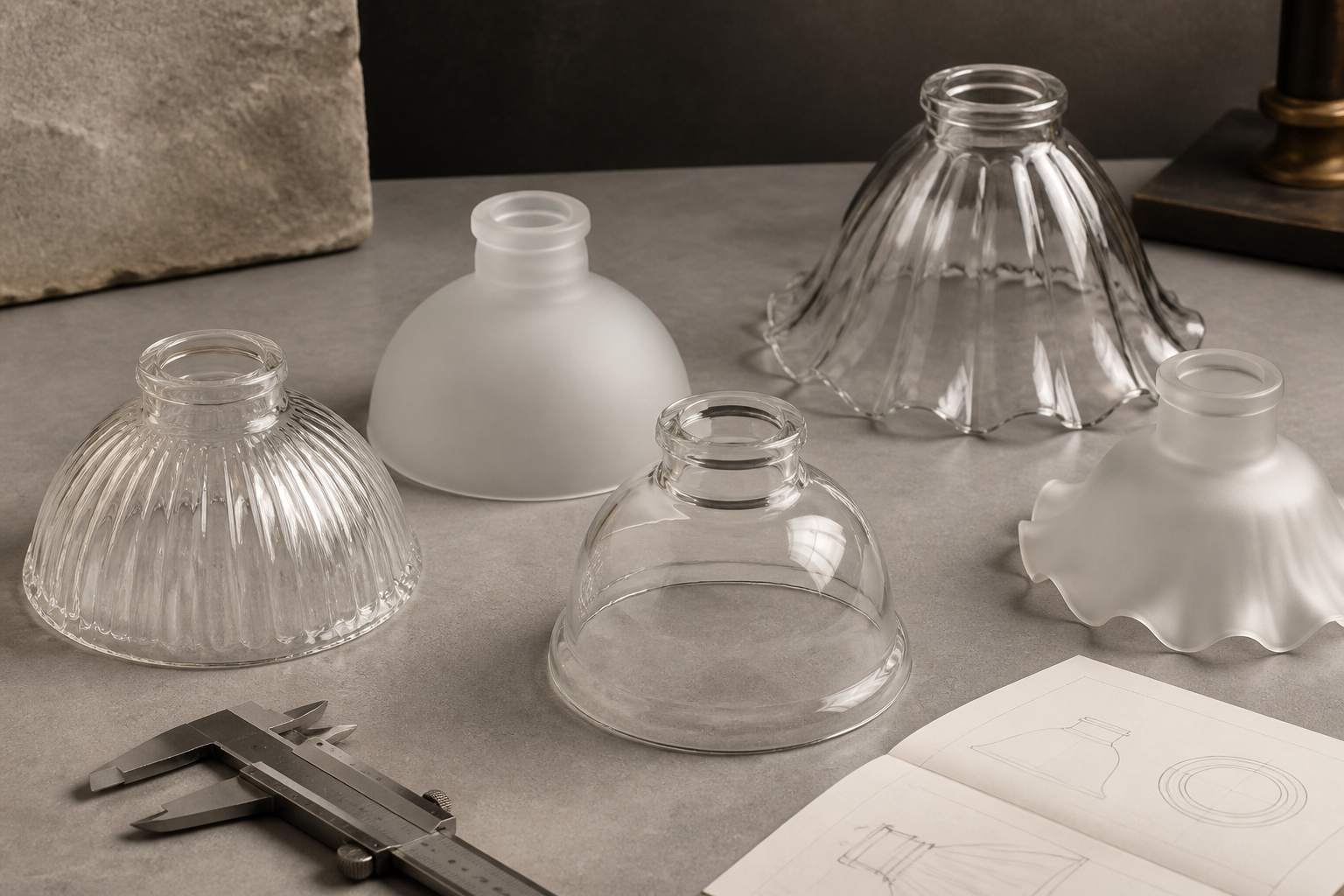
What lampshade fittings control
A fitting controls how the shade is positioned, retained and removed during installation or maintenance. It can sit around the lamp holder, connect to a harp or carrier, clip over a candle-shaped lamp, or use a threaded neck and retaining ring.
For procurement, the useful question is not simply “Which bulb does this shade use?” The useful question is “Which fixture-side part locates the glass shade, and which dimensions must be controlled so the shade clears the lamp and hardware?”
Procurement checkpoint
Identify the fixture-side locating part first. Then confirm the opening, retaining hardware, clearance and removal method with a drawing or sample.
Lampshade fitting types for glass shades
These are common market categories. Supplier naming varies, so the final specification should show the actual interface and hardware.
Spider and harp-mounted fittings
A spider fitting normally sits at the top of a shade and works with a harp or similar support. It is common on table and floor lamp assemblies. Confirm the support height, central opening, retaining finial and clearance before specifying a glass shade.
UNO and socket-mounted fittings
An UNO-style arrangement connects at the socket or socket ring instead of relying on a separate harp. The term is used differently across suppliers, so a clear photo or drawing is more useful than the name alone. Confirm whether the shade sits above, below or around the socket and how it is locked in place.
Clip-on and candle-clip fittings
Clip-on fittings use spring clips or a candle-clip form to locate a shade directly around a lamp. They are useful where a harp or carrier is not part of the fixture. Check the clip geometry, lamp clearance, heat conditions and the weight that the fixture is designed to support.
Neckless, threaded-neck and retaining-ring fittings
A neckless shade may be held by a separate ring, carrier or housing. A threaded-neck shade can use matching hardware at the fixture. For either arrangement, the opening, thread or ring interface must be checked as a set. Do not assume that two rings with the same nominal name will have the same working fit.
Duplex rings and shade carriers
A duplex ring or carrier can position the shade between fixture hardware and a support. This is often useful when the shade needs a defined upper and lower location. Confirm the ring thickness, clearances, hardware stack-up and whether the glass should rest on, inside or below the carrier.
Fitting standard and shade fitter are different
These terms are often mixed together during sourcing. Separating them prevents a common quotation error.
Lamp cap or bulb base
E14, E26, E27 and B22 are examples of electrical lamp-cap or bulb-base designations. They describe the lamp-to-holder interface. They do not, by themselves, define the glass shade opening or retaining method.
Lamp holder or socket
The holder receives the lamp cap and may provide the fixture-side support for a shade. Its body, shoulder, ring, harp adapter and available clearance should be shown in a drawing or photo.
Shade fitter
The shade fitter is the mechanical interface that locates the shade on the fixture. It may be a spider, UNO, clip, neck, carrier, retaining ring or another project-specific structure. Names vary by market, so the connection geometry matters more than the label.
Glass opening
The glass opening is the physical feature at the shade interface. Record the opening profile, inside and outside dimensions where relevant, edge condition, wall thickness requirement, and the surfaces that contact the fitting. The final dimensions should be approved against a sample or drawing.
For a standards orientation, the IEC 60061 database covers lamp caps, lampholders and gauges related to interchangeability and safety. It is not a substitute for checking the complete fixture assembly and the shade interface for a specific project: IEC 60061 lamp-cap and lampholder reference.
How to specify lampshade fittings for a custom glass shade
A useful RFQ turns the fitting from a product name into a checkable interface. Work through these seven items before requesting a production price.
1. Fixture and application
State whether the shade is for a table lamp, floor lamp, pendant, chandelier, wall light, ceiling light, hospitality room or another application. Include a fixture photo and identify whether the shade is a replacement, a matched set or a new design.
2. Attachment method
Name the suspected fitting type, then describe how it attaches. Explain whether the shade is supported by a harp, socket ring, carrier, spring clip, threaded neck, retaining ring or another component. If the name is uncertain, send a photo of the fixture-side hardware.
3. Opening, neck and ring dimensions
Provide a drawing or measured sketch showing the opening shape, inside diameter, outside diameter, ring seat, thread information if applicable, and any non-circular features. State the measurement method and whether the values are nominal, sampled or final approved dimensions.
4. Geometry and clearance
Give the shade height, maximum body diameter, flare, shoulder, vertical clearance and any nearby hardware that could touch the glass. A shade can have the correct opening and still fail to fit if the body, bulb or carrier has insufficient clearance.
5. Glass process and finish
Specify the intended glass type or process, transparency, color, surface finish, texture, edge treatment and appearance sample. For mouth-blown or formed glass, identify the visual variation that is acceptable for the project. Final material and process availability should be confirmed before purchase order approval.
6. Sample or drawing approval
For a new or non-standard fitter, approve a dimensioned drawing and, where practical, a physical sample. Confirm that the glass opening, retaining hardware, lamp position and removal method work together before bulk production.
7. Quantity, packaging and destination
Share the estimated order quantity, sample quantity, delivery destination, packaging constraints, inspection requirements and requested documents. Ask the supplier to confirm MOQ, lead time, export packing and any applicable certification scope for the actual order.
Fitting requirements by fixture type
The same glass profile can need a different fitting review when the fixture, installation direction or maintenance method changes.
Table and floor lamps
Check the relationship between the harp, socket, finial, shade opening and bulb. The shade should be removable without forcing the glass over the hardware. For replacement work, compare the original shade’s opening and body dimensions, not only its widest diameter. The glass lamp shade replacement finder can help organize the matching information.
Pendants and chandeliers
Confirm how the shade is supported while suspended, how the lamp is inserted, and which parts carry the load. Review the cable, gallery, holder, carrier and retaining hardware as one assembly. Multiple shades should also be checked for consistent visual and dimensional matching.
Wall and ceiling fixtures
Wall and ceiling shades may use a backplate, fitter ring, screws, clips or a dedicated housing. Record the direction of installation, access for maintenance, heat environment and clearance from the wall or ceiling. For a ceiling replacement, use the glass ceiling light shade selection guide as a starting point and confirm the fixture drawing.
Replacement and matched sets
For replacements, send the original shade, clear measurements or a dimensioned drawing whenever possible. If several shades must match, define the acceptable range for color, texture, opening, height and body profile. A photo alone can identify the general type, but it may not be enough to approve a production fit.
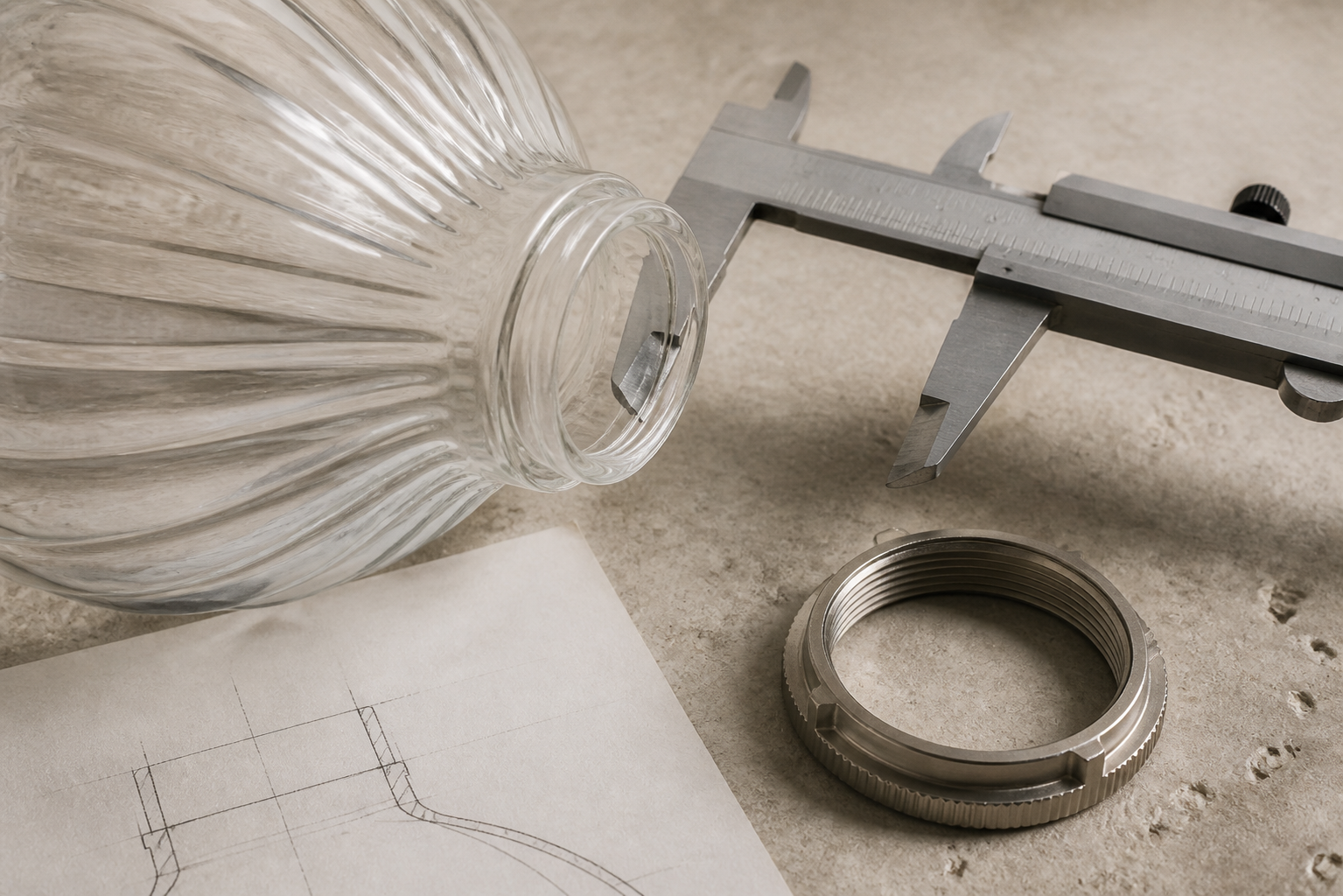
Custom glass shade fitting review
JX’s public glass shade and service pages describe support for custom shapes, sizes, fitter structures, glass colors and finishes, samples, production and export packing. The right route for a project depends on the actual drawing, fixture, glass process and order requirements. Material, MOQ, lead time, documents and certification scope should be confirmed for each quotation.
Review the custom glass lamp shade range for product context, then use the custom glass shade services page when the fitting or shape needs engineering and sample discussion.
Common fitting problems before production
- Measuring only the shade body: The body diameter does not prove that the opening or retaining interface will fit.
- Confusing a bulb base with a shade fitter: E27, E26 or B22 identifies a lamp-cap family, not the complete glass attachment.
- Ignoring the hardware stack-up: Ring thickness, carrier height, socket shoulders and finials can change the usable clearance.
- Assuming universal fit: A market category name can cover several supplier-specific geometries.
- Skipping sample approval: A drawing review or physical sample can reveal interference before the order reaches production.
- Leaving the removal method undefined: The installer must be able to fit, secure and service the shade without damaging the glass.
What to send for a lampshade fitting RFQ
Send the following information with your enquiry:
- Fixture photos from the side, top and fitting interface.
- A dimensioned drawing or measured sketch of the opening and retaining hardware.
- Shade height, maximum body diameter, clearance and lamp position.
- Fitting type or a description of how the shade is attached and removed.
- Glass process, color, transparency, finish and acceptable visual variation.
- Sample quantity, expected production quantity, destination and packaging needs.
- Requested inspection documents, compliance documents or certification review.
Ready for a drawing review?
Include the fitting interface, glass appearance, quantity and destination in the first message.
Frequently asked questions about lampshade fittings
A lampshade fitting is the mechanical interface that locates and retains a lampshade on a fixture. It can include a spider, harp support, socket-mounted ring, clip, neck, carrier or retaining ring.
No. A lamp holder receives the lamp cap, while the lampshade fitter describes how the shade connects to the fixture. They may work together, but the bulb-base designation alone does not define the glass opening.
Send the opening or neck dimensions, ring or thread interface, overall height, maximum body diameter, clearance and any non-circular features. A fixture photo and dimensioned drawing are useful because the hardware around the opening can affect the fit.
It may be possible when the connection geometry, glass process and inspection requirements can be reviewed together. Send the fixture-side component or a clear drawing so the supplier can assess the interface before quoting.
Send both when available. A drawing communicates the intended dimensions and a physical sample helps confirm the real fixture, surface contact and removal method.
JX’s public product and service information describes custom glass shade shapes, sizes and fitter structures, with sample and production discussion. Share the actual application and drawing so the available process, finish, quantity and documentation can be confirmed for the project.
Send a side photo, a close-up of the fixture interface, key measurements and the required glass appearance in one message. If the interface is unusual, add the original shade or a physical fitting sample and request a drawing review before production.
Request a lampshade fitting review
Send your fixture photo, drawing or sample details for a practical fit review. We can then confirm which dimensions, glass details, sample steps and order information are needed for the quotation. Use the contact page for the initial enquiry.