
A Complete Guide to Glass Lamp Shade Fitting Sizes & International Standards: How to Choose the Right Shade for Your Fixture
Introduction
When replacing or upgrading a glass lamp shade, one of the most critical factors for a secure, safe, and aesthetically pleasing installation is correct fitting size and compliance with international standards. A mismatched shade not only risks falling and causing damage but also compromises the safety of your lighting system. This guide breaks down global standard dimensions, key measurement points, and step-by-step selection tips for machine-pressed glass shades, helping homeowners, electricians, and resellers make informed purchasing decisions.
1. Core International Standards for Glass Lamp Shade Fittings
Global lighting manufacturers follow standardized fitting dimensions to ensure universal compatibility across regions. The most widely adopted standards are defined by IEC (International Electrotechnical Commission) and regional bodies like UL (US), CE (EU), and AS/NZS (Australia/New Zealand), with core common dimensions for glass shade mounts:
1.1 Standard Central Fitting Sizes (Most Common for Ceiling/Pendant Shades)
The central threaded/neck fitting is the primary connection point for most flush-mount, pendant, and chandelier glass shades. The global standard dimensions are:
| Fitting Type | Thread Diameter (Nominal) | Standard Height | Regional Compatibility | Common Use Case |
|---|---|---|---|---|
| M10 (10mm) | 10mm (0.39″) | 8–10mm | Global (EU, Asia, AU) | Small pendant lights, wall sconces |
| M13 (13mm) | 13mm (0.51″) | 10–12mm | Global (Universal) | Most residential ceiling flush mounts, pendants |
| M16 (16mm) | 16mm (0.63″) | 12–15mm | North America, Commercial | Large chandeliers, heavy-duty commercial fixtures |
| 1-5/8″ (41.3mm) Unthreaded | 41.3mm (1.625″) | 15–20mm | North America (US/CA) | Vintage flush mounts, ceiling fans with lights |
Key Note: Our ribbed machine-pressed glass shades are manufactured with universal M13 standard central fittings as default, compatible with 90% of residential lighting fixtures worldwide, and custom sizes (M10/M16) are available for bulk orders.
1.2 Regional Standard Variations
- North America (US/CA): Compliant with UL 1598 standards, with common 1-5/8″ unthreaded collars for ceiling fixtures, alongside M13/M16 threaded fittings.
- European Union (EU/UK): CE-marked per IEC 60598, with M10/M13 as the dominant standard for residential lighting.
- Australia/New Zealand (AU/NZ): AS/NZS 60598 aligned with IEC standards, M13 universal fit for most homes.
- Asia: IEC-compliant M13 as the primary standard for mass-market lighting.
2. Critical Measurements to Take Before Buying a Glass Shade
To ensure a perfect fit, you must measure 4 key dimensions of your existing fixture before purchasing a replacement glass shade:
Step 1: Measure the Central Fitting (Neck) Diameter
- How to measure: Use a caliper or tape measure to measure the inner diameter of the shade’s mounting hole (or the outer diameter of your fixture’s threaded post).
- Match to standard: Confirm it aligns with M10/M13/M16 or regional unthreaded sizes.
- Pro tip: For threaded fittings, measure the thread pitch (distance between threads) to avoid mismatches (standard pitch for M13 is 1mm, M10 is 1.5mm).
Step 2: Measure the Shade’s Overall Dimensions
- Top (Fitting) Diameter: The diameter of the central mounting hole (must match your fixture’s post).
- Bottom (Opening) Diameter: The width of the shade’s outer edge, to ensure it covers the fixture and fits your space aesthetically.
- Height (Depth): The vertical height of the shade, to ensure it does not interfere with bulb installation or ceiling clearance.
- Weight Compatibility: Confirm your fixture can support the glass shade’s weight (our machine-pressed shades are engineered for lightweight durability, compatible with standard residential fixtures).
Step 3: Check Fixture Type Compatibility
Different lighting fixtures require specific shade designs:
- Flush Mount Ceiling Lights: Require low-profile, wide-diameter shades with central M13 fittings.
- Pendant Lights: Need taller, deeper shades with secure central fittings (M13/M16 for heavy pendants).
- Chandeliers: Smaller, lightweight shades with M10/M13 fittings, often with decorative edge designs.
- Wall Sconces: Compact shades with side-mounted or central M10 fittings.
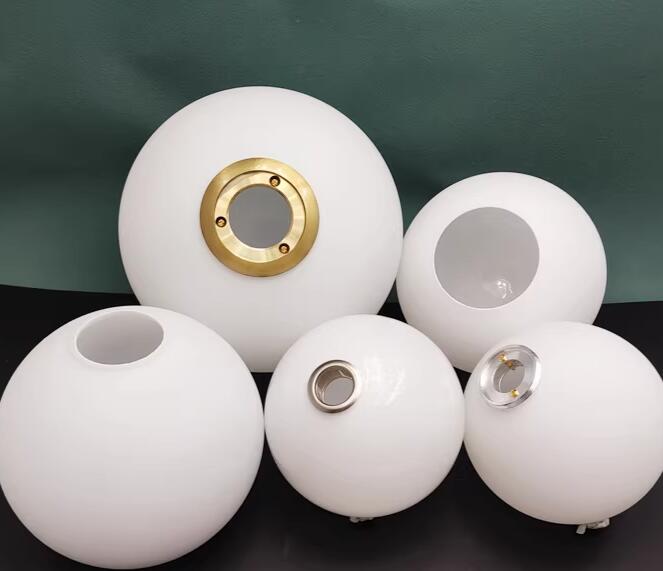
3. How to Choose the Right Glass Lamp Shade: Step-by-Step Guide
Follow this foolproof process to select a perfectly fitting, compliant glass shade:
Step 1: Verify Your Fixture’s Fitting Standard
- Check your fixture’s manual or manufacturer specifications for the fitting size (e.g., “M13 universal fit”).
- If no manual is available, measure the threaded post/ mounting collar to confirm the diameter and thread type.
Step 2: Match the Glass Shade’s Fitting to Your Fixture
- Residential Use: Opt for our M13 universal machine-pressed glass shade for maximum compatibility with ceiling lights, pendants, and chandeliers.
- Commercial/Heavy-Duty Use: Select M16 fittings for large, high-traffic fixtures.
- Vintage/US Ceiling Fans: Choose 1-5/8″ unthreaded collar-compatible shades.
Step 3: Confirm Aesthetic & Functional Compatibility
- Light Diffusion: Ribbed/fluted glass shades (like our product) are ideal for soft, glare-free ambient light, while clear smooth shades maximize brightness.
- Size Proportion: Ensure the shade’s bottom diameter is proportional to your fixture (e.g., 30cm shade for a 20cm ceiling fixture base).
- Bulb Compatibility: Confirm the shade’s internal height accommodates your bulb type (LED, incandescent, halogen) without overheating.
Step 4: Ensure Compliance with Safety Standards
- Always select shades certified to IEC 60598, UL, CE, or AS/NZS standards to guarantee electrical safety and fire resistance.
- Our machine-pressed glass shades are manufactured to meet all global safety standards, with heat-resistant glass suitable for all bulb types.
4. Common Mistakes to Avoid When Selecting a Glass Shade
- Ignoring Fitting Size: The #1 mistake is buying a shade based solely on aesthetics, without measuring the central fitting. A mismatched shade is unsafe and unusable.
- Overlooking Weight Capacity: Heavy glass shades can damage lightweight fixtures, leading to falls. Always confirm your fixture’s weight limit.
- Forgetting Bulb Clearance: Choosing a shade that is too short can cause the bulb to touch the glass, leading to overheating and safety risks.
- Non-Compliant Materials: Low-quality, uncertified glass may crack under heat, posing a fire hazard. Always choose IEC/UL/CE-certified machine-pressed glass.
5. Custom Fitting Solutions for Specialized Projects
For non-standard fixtures, commercial projects, or custom lighting designs, we offer tailored glass shade solutions:
- Custom central fitting sizes (M8 to M20, unthreaded collars)
- Custom height, diameter, and edge designs
- Bulk orders compliant with regional safety standards (UL, CE, etc.)
- OEM/ODM services for lighting brands and resellers
Contact our sales team to discuss your project requirements, and we will provide a custom quote and technical drawing for your glass shade fittings.