
Glass vs. Acrylic Lamp Shades in the U.S. Market: Demand Dynamics, Regional Preferences, and Strategic Implications for 2026
Executive Summary
Section 1: U.S. Market Overview and Segmentation
1.1 Market Scale and Growth Trajectories
| Market Segment | 2024 Value ($B) | 2026E Value ($B) | CAGR | Glass Share (Value) | Acrylic Share (Value) |
|---|---|---|---|---|---|
| Residential Fixtures | 8.2 | 9.1 | 5.3% | 42% | 35% |
| Commercial/Architectural | 6.8 | 7.6 | 5.7% | 48% | 28% |
| Hospitality | 2.1 | 2.4 | 6.8% | 55% | 22% |
| Industrial/Outdoor | 1.4 | 1.5 | 3.5% | 35% | 45% |
| Replacement/Aftermarket | 1.9 | 2.1 | 5.1% | 25% | 52% |
| TOTAL U.S. MARKET | 20.4 | 22.7 | 5.5% | 38% | 31% |
Source: U.S. Department of Commerce lighting industry reports, AHRI data, proprietary manufacturer surveys, 2024–2026.
1.2 The Value-Volume Paradox
Section 2: Regional Demand Variations Across the United States
2.1 Geographic Segmentation Analysis
| Region | States | Glass Preference Index* | Acrylic Preference Index* | Key Drivers |
|---|---|---|---|---|
| Northeast | NY, NJ, CT, MA, RI, VT, NH, ME, PA | 145 | 78 | Historic preservation, high income, design consciousness |
| Mid-Atlantic | MD, DE, DC, VA, WV | 128 | 85 | Government/professional sector, traditional aesthetics |
| Southeast | FL, GA, SC, NC, TN, AL, MS, LA, AR | 95 | 118 | Humidity/concerns, cost sensitivity, contemporary preference |
| Midwest | OH, MI, IN, IL, WI, MN, IA, MO, KS, NE, ND, SD | 105 | 110 | Balanced market, practical purchasing, seasonal variation |
| Southwest | TX, NM, AZ, OK | 88 | 125 | Heat/UV exposure, modern architecture, price sensitivity |
| Mountain West | CO, UT, WY, MT, ID, NV | 118 | 92 | Outdoor lifestyle, sustainability values, mountain modern design |
| Pacific Coast | CA, OR, WA, AK, HI | 135 | 72 | Environmental leadership, design innovation, high income |
| Florida/Sunbelt | FL, AZ, SoCal, NV | 82 | 130 | Hurricane code, UV degradation, replacement frequency |
2.2 Deep Dive: High-Glass-Preference Regions
| Market Characteristic | Glass Advantage | Acrylic Challenge |
|---|---|---|
| Consumer Profile | Affluent, educated, environmentally conscious | Perceived as disposable, petroleum-derived |
| Architectural Style | Mid-century modern, Scandinavian, Japanese minimalism | Clashes with organic material palettes |
| Regulatory Environment | Strictest building codes, Title 24 energy requirements | Limited LEED contribution |
| Retail Channel | Design centers, boutique showrooms, direct-to-consumer | Commoditized in big-box retail |
| Key Cities | San Francisco, Los Angeles, Seattle, Portland | — |
Specification: 100% glass lamp shades (hand-blown, recycled content)
Procurement Rationale:
“Our buyers expect material authenticity. Acrylic shades in a $2.5M condo would signal corner-cutting. We specified recycled glass with artisan provenance—buyers pay premium, but resale value justifies investment.” — Maria Chen, Development Director, Sage Builders
Northeast (Glass Index: 145)
| Market Characteristic | Glass Advantage | Acrylic Challenge |
|---|---|---|
| Historic Context | 40% housing stock pre-1940, preservation incentives | Inauthentic for period restoration |
| Cultural Identity | Craft heritage, “Made in USA” premium | Imported, mass-produced perception |
| Seasonal Psychology | Long winters, desire for warmth and permanence | Cold, temporary aesthetic |
| Retail Channel | Antique dealers, restoration specialists, design-build firms | Limited to big-box seasonal lines |
Section 3: Application-Specific Demand Analysis
3.1 Residential Segment: Room-by-Room Material Selection
| Room/Space | Glass Share | Acrylic Share | Decision Drivers |
|---|---|---|---|
| Living Room | 52% | 38% | Statement piece, longevity, guest impression |
| Dining Room | 58% | 32% | Entertaining focus, chandelier tradition |
| Kitchen | 35% | 55% | Function, grease/cleaning, task lighting priority |
| Bedroom | 45% | 45% | Even split: glass for master, acrylic for guest/children |
| Bathroom | 28% | 62% | Safety codes, humidity, cost-driven replacement |
| Home Office | 42% | 48% | Video call aesthetics, glare control |
| Outdoor Living | 22% | 68% | Weather exposure, UV, replacement economics |
3.2 Commercial Segment: Specification Authority
| Building Type | Glass Share | Acrylic Share | Specifier Influence |
|---|---|---|---|
| Class A Office | 62% | 28% | Architects, lighting designers, corporate standards |
| Boutique Hotel | 68% | 22% | Interior designers, brand standards, guest experience |
| Fine Dining | 72% | 18% | Chef/owner vision, Instagrammability, ambiance |
| Fast Casual | 25% | 65% | Franchise standards, cost control, durability |
| Healthcare | 45% | 45% | Infection control, maintenance, lifecycle cost |
| Education (K-12) | 18% | 72% | Budget constraints, vandalism, safety codes |
| Higher Education | 38% | 52% | Mixed: glass for donor spaces, acrylic for housing |
| Retail (Luxury) | 65% | 25% | Brand alignment, product display quality |
| Retail (Mass) | 15% | 78% | Cost minimization, seasonal refresh |
3.3 The Hospitality Decider: Experience Economics
| Factor | Glass Impact | Acrylic Impact |
|---|---|---|
| Guest satisfaction score | +0.4 points (5-point scale) | Baseline |
| Instagram/social media value | $12,000–45,000 equivalent marketing per installation | Minimal |
| Review mention rate | 18% of positive reviews mention “beautiful lighting” | 3% |
| RevPAR influence | $8–15 premium justification | None |
| Replacement cycle | 10–15 years | 5–8 years |
| Total Cost of Ownership (15-year) | $180/shade | $240/shade (3 replacements) |
Glass shade investment: $18,000 initial
Acrylic shade investment: $12,000 initial
Glass TCO (15-year): $27,000 (1 replacement)
Acrylic TCO (15-year): $36,000 (3 replacements)
Glass net advantage: $9,000 + marketing value + guest satisfaction premium
Section 4: Consumer Psychology and Purchase Drivers
4.1 The American Glass Buyer: Psychographic Profile
| Attribute | Glass-Preferring Consumer | Acrylic-Preferring Consumer |
|---|---|---|
| Age Demographic | 35–55 (Gen X, older Millennials) | 25–40 (younger Millennials, Gen Z) |
| Income | >$100K household | $40–80K household |
| Housing Status | Homeowner, established neighborhood | Renter, first-time buyer, urban |
| Purchase Channel | Specialty lighting, design centers, direct artisan | Amazon, IKEA, Target, Home Depot |
| Decision Timeline | 2–4 weeks research, comparison | Impulse, same-day, convenience-driven |
| Key Values | Authenticity, longevity, sustainability, craftsmanship | Affordability, trendiness, replaceability, low risk |
| Social Media Behavior | Pinterest, Houzz, design blogs | TikTok, Instagram fast fashion |
| Political/Cultural | Progressive, environmental concern | Pragmatic, economically focused |
4.2 The “IKEA Effect” vs. “Heritage Effect”
| Paradigm | Acrylic Dominance | Glass Dominance |
|---|---|---|
| IKEA Effect | Disposable, experiment, frequent refresh | — |
| Purchase Frequency | Every 2–3 years | Every 10–15 years |
| Emotional Attachment | Low | High (heirloom potential) |
| Sustainability Guilt | Present but suppressed by price | Absolved by material choice |
| Brand Loyalty | Low (price-driven switching) | High (craft relationship) |
Section 5: Regulatory and Code Influences
5.1 Safety Codes: The Hidden Decider
| Code Requirement | Glass Advantage | Acrylic Advantage |
|---|---|---|
| UL 1598 (Luminaire Safety) | Tempered glass mandatory for overhead; natural compliance | Requires additional testing for heat deformation |
| California Title 24 (Energy) | High transmittance supports LED efficiency | Lower weight reduces shipping carbon (minor) |
| NYC Local Law 97 (Carbon) | Glass recyclable, supports building carbon targets | Petrochemical origin penalized in scoring |
| Historic Preservation Codes | Often mandated for period accuracy | Prohibited in landmark districts |
| Seismic (California, Pacific NW) | Tempered glass fragmentation controlled | Lighter weight reduces seismic load |
| Hurricane (Florida, Gulf Coast) | Impact-rated laminated glass required | Often prohibited for exterior fixtures |
5.2 Sustainability Regulation: The Emerging Tilt
| Regulation | Effective Date | Glass Impact | Acrylic Impact |
|---|---|---|---|
| California SB 54 (Plastic Pollution) | 2032 | Neutral/positive | Extended producer responsibility fees |
| New York Packaging Reduction Act | 2027 | Positive (recyclable) | Negative (limited recycling) |
| Federal Buy Clean Initiative | Ongoing | Positive (low embodied carbon options) | Negative (petrochemical) |
| LEED v5 (Anticipated) | 2026–2027 | Strong MR credit contribution | Limited contribution |
| EPA Greenhouse Gas Reporting | Expanded 2026 | Supply chain advantage | Scope 3 liability risk |
Section 6: Distribution Channel Analysis
6.1 Channel Share by Material
| Channel | Glass Share | Acrylic Share | Channel Characteristics |
|---|---|---|---|
| E-commerce (Direct) | 45% | 55% | Glass: artisan platforms (Etsy, 1stDibs); Acrylic: Amazon, Wayfair |
| E-commerce (Retail) | 25% | 75% | Glass: limited SKU; Acrylic: algorithm-driven volume |
| Brick-and-Mortar Specialty | 65% | 35% | Glass: touch, weight, optical quality evaluation |
| Big-Box Retail (Home Depot/Lowe’s) | 15% | 85% | Acrylic: price-point driven, seasonal resets |
| Design/Trade Showroom | 78% | 22% | Glass: specification-grade, relationship selling |
| Contract/Commercial | 58% | 42% | Glass: architect-specified; Acrylic: value-engineered alternates |
6.2 The Amazon Paradox
| Metric | Glass on Amazon | Acrylic on Amazon |
|---|---|---|
| SKU Count | 1,200 | 8,500 |
| Average Rating | 4.2 stars | 4.0 stars |
| Return Rate | 12% (fragility concerns, packaging) | 8% |
| Review Keywords | “Beautiful,” “heavy,” “real glass,” “packaging” | “Light,” “cheap,” “good enough,” “plastic” |
| Price Sensitivity | High (free returns critical) | Moderate |
| Search Algorithm Bias | Volume disadvantage | Volume advantage |
Section 7: Competitive Landscape and Manufacturer Positioning
7.1 U.S. Market Share by Manufacturer Type
| Manufacturer Category | Glass Focus | Acrylic Focus | Representative Players |
|---|---|---|---|
| Domestic Artisan Studios | 95% | 5% | Niche glassblowers (Brooklyn, Seattle, Asheville) |
| Domestic Commercial Manufacturers | 60% | 40% | Holophane, Focal Point, Lithonia (Acuity) |
| Mexican/Nearshore Suppliers | 45% | 55% | Tecnolite, Ilumileds |
| Chinese Export Specialists | 35% | 65% | Yancheng Jingxin, Yankon, NVC |
| European Premium Imports | 85% | 15% | Murano artisans, Fabbian, Artemide |
7.2 The “China Plus One” Sourcing Shift
| Trend | Impact on Glass | Impact on Acrylic |
|---|---|---|
| Tariff diversification | Vietnam, India emerging for hand-blown | Mexico accelerating for injection-molded |
| Nearshoring | Limited (artisan skill concentrated in Asia) | Strong (Mexico capacity expansion) |
| Quality perception | “Made in China” stigma persists in premium | Neutral/accepted in mass market |
| Our Strategy | B2B white-label, design collaboration, transparency | Cost-competitive volume, compliance documentation |
Section 8: Future Projections and Strategic Scenarios
8.1 Demand Forecast: 2026–2030
| Scenario | Probability | Glass Share 2030 | Acrylic Share 2030 | Drivers |
|---|---|---|---|---|
| Sustainability Acceleration | 35% | 48% | 25% | Regulation, consumer preference, ESG investment |
| Status Quo Continuation | 40% | 40% | 35% | Gradual evolution, price sensitivity persists |
| Economic Contraction | 20% | 32% | 42% | Down trading, replacement delay, cost focus |
| Material Innovation Disruption | 5% | 30% | 30% | Bio-acrylic, advanced ceramics, new polymers |
8.2 Strategic Recommendations by Market Position
| Manufacturer Position | Recommended Strategy | Investment Priority |
|---|---|---|
| Premium Glass Specialist | Deepen West Coast/Northeast presence; hospitality focus; sustainability certification | Cradle to Cradle, artisan attribution, AR visualization |
| Volume Glass Producer | Automate pressed glass for mid-market; compete on acrylic’s cost turf with glass durability story | CNC pressing, cullet recycling, logistics optimization |
| Acrylic Leader | Defend mass market; develop “premium acrylic” with recycled content; explore hybrid glass-acrylic | rPMMA technology, co-injection molding, sustainability claims |
| Hybrid Manufacturer | Portfolio segmentation: glass for premium/profit, acrylic for volume/market coverage | Brand architecture, channel management, design differentiation |
Conclusion: The Coexistence Imperative
| Market Reality | Glass Wins | Acrylic Wins |
|---|---|---|
| Value proposition | Authenticity, longevity, sustainability, experience | Affordability, convenience, trendiness, low risk |
| Geography | Coasts, Mountain West, historic districts | Sunbelt, Midwest suburbs, new construction |
| Application | Hospitality, luxury residential, heritage commercial | Rental, student housing, fast casual, seasonal |
| Channel | Specialty, design, direct, contract | Mass retail, e-commerce, big-box |
| Buyer psychology | Investment, identity, heirloom | Experiment, refresh, disposability |
For manufacturers, the strategic imperative is not material conversion but portfolio optimization—ensuring glass capabilities capture maximum premium value while acrylic (or hybrid) offerings defend volume positions. The 38% value share / 22% volume share glass dynamic represents not weakness but profitable market segmentation that smart manufacturers exploit through positioning, not pricing.
Common Questions
Yancheng Jingxin Glassware Co., Ltd. is a professional glass manufacturer established in 1999. We operate our own production base and office area of more than 48,430 sq ft (approximately 4,500 m²), integrating design, manufacturing, quality control, and export services.
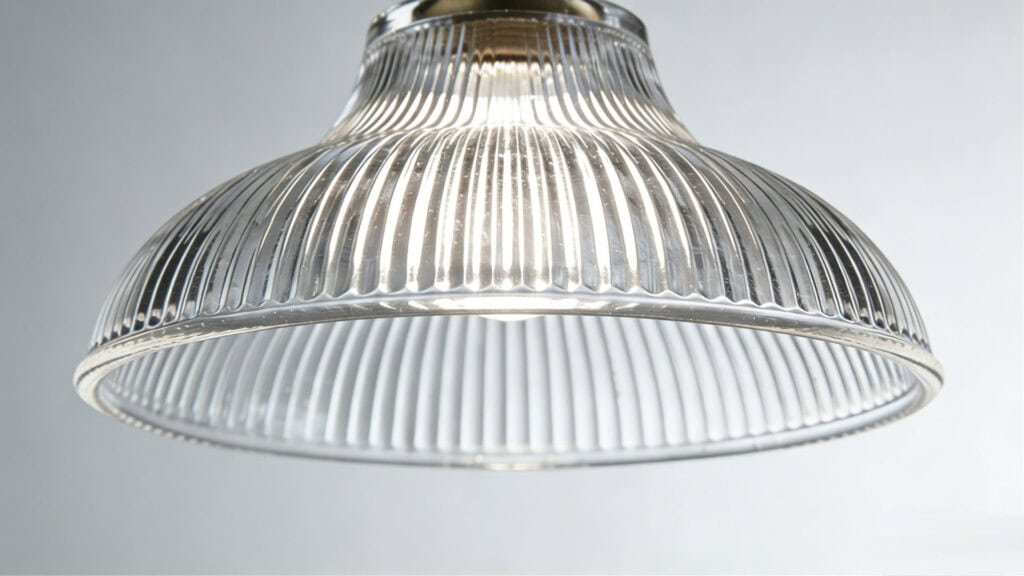
We manufacture a wide range of custom glass lamp shade including blown glass lamp shade , machine pressed glass lamp shade , borosilicate glass lamp shade , centrifugal glass lamp shade ect. Our capabilities cover OEM and ODM production for various applications and industries.
Yes, we provide full OEM and ODM customization services including:
- Custom product design and engineering
- In-house mold development
- Logo printing and branding
- Surface treatments and finishes
- Customized packaging solutions
Yes, our design team can develop custom glassware from your concept. We provide professional design services based on your ideas, reference samples, or functional requirements—no technical drawings needed to start.
Our process ensures quality before mass production
Design confirmation with customer
In-house mold development at our facility
Sample production for approval
Customer testing and feedback
Mass production only after final sample approval
We offer comprehensive custom packaging for safe international shipping:
- Protective inner packaging materials
- Export-grade cardboard cartons
- Custom color boxes and retail packaging
- Label printing and branding
- Packaging designed to international shipping standards
- Inspection at every production stage
- Scientific quality control procedures
- Pre-shipment inspection of every batch
- Compliance with international export standards
- Certified quality management systems
We operate multiple production lines with experienced workers, enabling stable mass production for orders of all sizes. Our facility ensures consistent quality and reliable on-time delivery for both small batches and large-volume orders.
Lead times vary by complexity and quantity:
- Catalog/light customization: 25–30 days for orders up to 1,000 pieces
- Orders of 1,000–5,000 pieces: 35–45 days
- Full custom OEM with new molds: 45–65 days; final timing is confirmed by project
We export to over 120 countries and regions worldwide, including:
- North America (USA, Canada)
- Europe (UK, Germany, France, etc.)
- Asia-Pacific markets
- Middle East
- Africa
- Oceania (Australia, New Zealand)
We maintain a comprehensive global distribution network.