
Glass Lampshades vs. Plastic Lampshades: A Comprehensive Comparison of Advantages and Disadvantages
Glass Lampshades vs. Plastic Lampshades: A Comprehensive Comparison of Advantages and Disadvantages
—Author: Ms. Candy Cang
In the realm of lighting design, the lampshade is far more than a decorative accessory—it is a critical component that shapes light quality, protects the bulb, enhances safety, and integrates with the overall aesthetic of a space. Among the various materials used for lampshades, glass and plastic stand out as the most popular choices, each boasting unique properties that cater to different needs and scenarios. From residential living rooms to commercial spaces, from budget-friendly installations to high-end design projects, the selection between glass and plastic lampshades often hinges on a careful balance of functionality, durability, aesthetics, and cost. This article provides a detailed comparison of the advantages and disadvantages of glass and plastic lampshades, exploring their material characteristics, optical performance, durability, safety, maintenance, environmental impact, and application suitability, to help consumers, designers, and manufacturers make informed decisions.
1. Material Characteristics: Fundamental Differences
The core distinction between glass and plastic lampshades lies in their material composition, which directly dictates their physical and chemical properties. Glass lampshades are typically crafted from silica-based materials, with common variants including soda-lime glass, high borosilicate glass, and tempered glass. Soda-lime glass is the most widely used due to its affordability and good light transmittance, making it suitable for everyday household lighting. High borosilicate glass, on the other hand, offers superior heat resistance and impact resistance, making it ideal for high-temperature environments and outdoor applications. Tempered glass, a processed variant of soda-lime or high borosilicate glass, undergoes a heat treatment process that enhances its strength and safety, as it breaks into small, blunt particles rather than sharp shards when shattered.
Plastic lampshades, by contrast, are made from various thermoplastic polymers, each with distinct properties. The most common types include polycarbonate (PC), acrylic (PMMA), polyvinyl chloride (PVC), and polypropylene (PP). PC is a high-performance plastic known for its exceptional impact resistance and heat tolerance, often referred to as “unbreakable glass” due to its durability. Acrylic, or polymethyl methacrylate, mimics glass’s transparency while being significantly lighter and more shatter-resistant. PVC is a cost-effective option valued for its flexibility and versatility, while PP is prized for its lightweight nature and chemical resistance. Each plastic variant is engineered to address specific needs, from budget constraints to harsh environmental conditions.
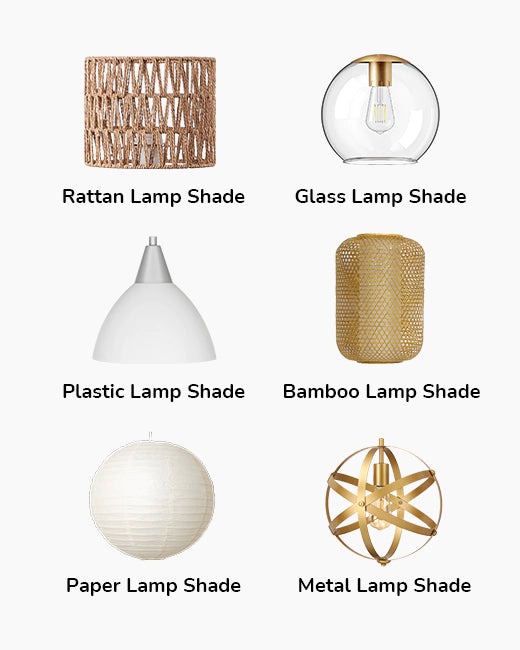
2. Optical Performance: Light Quality and Diffusion
One of the primary functions of a lampshade is to control and enhance the quality of light emitted by the bulb, and this is where glass and plastic lampshades differ significantly in performance.
Glass lampshades excel in light transmittance and clarity. High-quality glass can achieve a transmittance rate of 95% or higher, allowing most of the light from the bulb to pass through without significant loss. This results in bright, clear illumination that accurately reflects the bulb’s original color temperature, making glass ideal for spaces where bright, natural-looking light is desired, such as reading rooms, exhibition halls, and galleries. Additionally, glass has excellent light refraction properties, which can create a warm, elegant glow when paired with frosted or stained glass designs. Frosted glass lampshades diffuse light evenly, reducing glare and creating a soft, ambient atmosphere, while stained glass adds a decorative touch by casting colored light patterns. Importantly, glass does not yellow or degrade over time, ensuring that its optical performance remains consistent for years.
Plastic lampshades vary in optical performance depending on the type of plastic used. Acrylic lampshades offer the closest approximation to glass, with a transmittance rate of 90-92%, providing bright, clear light that is slightly softer than glass. PC lampshades have a slightly lower transmittance (85-90%) but excel in light diffusion, creating even, glare-free illumination that is ideal for residential spaces like bedrooms and living rooms. PVC and PP lampshades typically have lower transmittance (below 80%) and may produce a slightly muted or hazy light, making them more suitable for decorative or ambient lighting rather than task lighting. A key limitation of many plastic lampshades is their tendency to yellow or become brittle when exposed to prolonged sunlight or high heat, which gradually reduces their transmittance and aesthetic appeal. However, high-quality plastics with UV stabilizers can mitigate this issue, extending their optical lifespan to 5-8 years.
3. Durability and Longevity: Resistance to Wear and Tear
Durability is a critical factor in choosing a lampshade, as it directly impacts maintenance costs and lifespan. Glass and plastic lampshades differ dramatically in their resistance to impact, heat, and environmental factors.
Glass lampshades are highly durable in terms of scratch resistance and long-term stability. Glass has a high hardness rating, meaning it is resistant to scratches from everyday use, such as cleaning or minor contact. High borosilicate glass, in particular, can withstand extreme temperature changes (from -40°C to 200°C) without cracking, making it suitable for use with high-wattage bulbs and outdoor environments. When properly cared for, glass lampshades can last for decades, maintaining their clarity and structural integrity. However, glass’s greatest weakness is its brittleness—even a minor impact, such as a fall or collision, can cause it to shatter. Ordinary glass breaks into sharp, dangerous shards, while tempered glass breaks into small, blunt particles, reducing the risk of injury but still requiring replacement. Additionally, glass lampshades may develop cracks or chips if subjected to sudden temperature changes, such as pouring cold water on a hot shade.
Plastic lampshades are generally more impact-resistant than glass, with PC being the most durable—up to 200 times stronger than glass and virtually unbreakable under normal conditions. Acrylic is also highly impact-resistant, roughly 7-10 times stronger than glass, making it a safer choice for households with children or pets. PVC and PP are less impact-resistant than PC and acrylic but still more flexible and shatter-proof than glass. However, plastic lampshades are more prone to scratches than glass, especially acrylic, which can be easily scratched by hard objects or abrasive cleaning materials. Heat resistance varies widely among plastic types: PC can withstand temperatures up to 120°C, making it suitable for high-wattage bulbs, while PVC and PP have lower heat resistance (around 60-80°C) and may warp or melt if exposed to excessive heat. Additionally, most plastics are susceptible to UV degradation, which can cause yellowing, brittleness, and cracking over time, especially if used outdoors without UV protection. High-quality plastics with UV stabilizers can slow this process, but even then, their lifespan is typically shorter than that of glass—ranging from 5-10 years compared to glass’s decades-long lifespan.
4. Safety: Risks and Protections
Safety is a paramount consideration for any lighting fixture, and the choice of lampshade material can have significant implications for user safety.
Glass lampshades pose two primary safety risks: shattering and heat retention. As mentioned earlier, ordinary glass shatters into sharp shards that can cause cuts, making it a hazard in households with children, pets, or high-traffic areas. Tempered glass mitigates this risk by breaking into blunt particles, but it still poses a risk of injury if not handled carefully. Additionally, glass has poor heat dissipation, meaning it can become extremely hot when used with high-wattage bulbs, increasing the risk of burns if touched. Glass lampshades also require secure installation, as their weight (significantly heavier than plastic) can cause them to fall if not properly mounted, leading to injury or damage. However, glass is non-toxic and does not emit harmful fumes, even when exposed to high heat, making it a safe choice in terms of chemical safety.
Plastic lampshades are generally safer in terms of impact resistance, as they do not shatter and are lighter, reducing the risk of injury from falls. PC and acrylic lampshades, in particular, are ideal for high-traffic areas, children’s rooms, and outdoor spaces where impact is more likely. However, plastic lampshades pose their own safety risks, primarily related to heat and chemical emissions. Low-quality plastics, such as some PVC variants, may emit toxic fumes when exposed to high heat, which can be harmful to human health. Additionally, plastics with poor heat resistance may warp, melt, or even catch fire if used with high-wattage bulbs, especially if they are not properly ventilated. It is important to choose high-quality, flame-retardant plastics that meet safety standards to mitigate these risks. Another safety consideration is that some plastics may release harmful chemicals when they degrade, though this is less of a concern for indoor use with proper ventilation.
5. Maintenance and Cleanliness: Ease of Care
The ease of maintenance and cleaning is another important factor for many users, as lampshades can accumulate dust, dirt, and stains over time.
Glass lampshades are relatively easy to clean due to their smooth, non-porous surface. Dust and dirt can be easily wiped away with a soft, damp cloth, and more stubborn stains (such as grease in kitchen settings) can be cleaned with mild soap and water. Glass is resistant to most cleaning agents, though abrasive cleaners should be avoided to prevent scratches. Frosted glass may require a bit more care to avoid scratching the surface, but overall, glass lampshades are low-maintenance and retain their appearance with minimal effort. However, cleaning glass lampshades requires caution due to their weight and fragility—they should be handled carefully to avoid dropping or breaking them.
Plastic lampshades vary in maintenance difficulty depending on the type of plastic. Acrylic and PC lampshades are relatively easy to clean, similar to glass, but they are more prone to scratches, so abrasive cleaners and hard cloths should be avoided. PVC and PP lampshades are also easy to clean but may be more susceptible to staining, especially if they are light-colored. A key challenge with plastic lampshades is that scratches are more visible than on glass, and once scratched, they are difficult to repair. Additionally, plastic lampshades that have yellowed due to UV exposure cannot be restored to their original color, requiring replacement. Overall, plastic lampshades are low-maintenance but require more careful cleaning to avoid damage.
6. Aesthetics and Design Versatility
Lampshades play a crucial role in the aesthetic appeal of a lighting fixture and the overall design of a space. Glass and plastic lampshades offer distinct aesthetic options and design versatility.
Glass lampshades are prized for their elegant, timeless appearance and premium质感. Clear glass exudes a sleek, modern look, while frosted glass adds a soft, romantic touch. Stained glass, with its vibrant colors and intricate patterns, is a classic choice for traditional or decorative spaces, adding artistry and character. Glass can also be shaped into various forms, including cylindrical, conical, dome-shaped, and custom designs, making it suitable for a wide range of interior styles, from minimalist and contemporary to classic and vintage. The transparency and light refraction properties of glass create a sense of depth and sophistication, making it a popular choice for high-end lighting fixtures and spaces where aesthetics are a top priority, such as living rooms, dining rooms, and exhibition halls.
Plastic lampshades offer greater design versatility and affordability, making them ideal for modern, casual, or budget-conscious spaces. They can be easily molded into a wide variety of shapes, sizes, and colors, including bold, bright hues and unique, unconventional designs. Acrylic and PC can be frosted, textured, or colored to mimic the appearance of glass, while PVC and PP offer more flexible design options, such as curved or collapsible shades. Plastic lampshades are also available in a range of finishes, from matte to glossy, allowing them to complement any interior style, from modern and industrial to playful and whimsical. However, plastic lampshades often lack the premium of glass, and low-quality plastics can appear cheap or flimsy. High-quality acrylic and PC lampshades, however, can closely resemble glass, offering a more affordable alternative without sacrificing aesthetics.
7. Cost: Affordability and Value
Cost is a significant factor for many consumers and manufacturers, and the price difference between glass and plastic lampshades can be substantial.
Glass lampshades are generally more expensive than plastic ones, primarily due to the higher cost of raw materials and the more complex manufacturing process. Soda-lime glass lampshades are the most affordable glass option, but they are still more expensive than basic plastic lampshades. High borosilicate and tempered glass lampshades are even more costly, as they require specialized processing to enhance their strength and heat resistance. Additionally, custom glass lampshades, such as stained or hand-blown glass, can be very expensive, making them a luxury option. However, glass lampshades offer better long-term value, as they are more durable and have a longer lifespan, reducing the need for frequent replacement.
Plastic lampshades are significantly more affordable than glass, making them a popular choice for budget-conscious consumers and large-scale installations. PVC and PP lampshades are the cheapest options, ideal for mass-produced lighting fixtures and temporary installations. Acrylic and PC lampshades are slightly more expensive than PVC and PP but still more affordable than glass. The lower cost of plastic lampshades is due to the abundance of raw materials and the simpler manufacturing process, which allows for mass production at a lower cost. However, plastic lampshades may have higher long-term costs, as they are more prone to degradation and require more frequent replacement compared to glass. Additionally, high-quality plastics with UV stabilizers and flame-retardant properties can be more expensive, narrowing the price gap with basic glass lampshades.
8. Environmental Impact: Sustainability Considerations
In an era of increasing environmental awareness, the sustainability of materials is becoming an important consideration for many consumers and manufacturers. Glass and plastic lampshades have distinct environmental impacts.
Glass is a highly sustainable material. It is made from natural, abundant resources (silica, soda ash, and limestone) and is 100% recyclable without losing its quality. Recycled glass can be used to make new glass products, reducing the need for raw materials and energy consumption. Glass also does not degrade over time, meaning it does not release harmful chemicals into the environment. However, the manufacturing process of glass requires high temperatures, which consumes a significant amount of energy, contributing to carbon emissions. Additionally, the transportation of glass lampshades is more energy-intensive due to their weight, further increasing their environmental footprint. Despite these drawbacks, glass is generally considered a more sustainable option than most plastics, especially when recycled.
Plastic lampshades have a more complex environmental impact. Most plastics are made from petroleum, a non-renewable resource, and their production requires significant energy. While some plastics (such as PC and acrylic) are recyclable, many plastic lampshades are made from a combination of plastics or contain additives (such as UV stabilizers or flame retardants) that make recycling difficult. Additionally, plastic lampshades that end up in landfills can take hundreds of years to degrade, releasing harmful microplastics into the environment. However, plastic lampshades are lighter than glass, reducing transportation energy consumption. Some manufacturers are also producing eco-friendly plastic lampshades made from recycled materials or biodegradable plastics, which can mitigate their environmental impact. Overall, plastic lampshades are less sustainable than glass, but their environmental footprint can be reduced by choosing recyclable or biodegradable options and properly disposing of them.
9. Application Suitability: Matching Materials to Scenarios
The choice between glass and plastic lampshades ultimately depends on the specific application scenario, as each material excels in different environments.
Glass lampshades are ideal for:
– High-end residential spaces (living rooms, dining rooms, bedrooms) where aesthetics and premium are a priority.
– Commercial spaces (exhibition halls, galleries, hotels) where bright, clear lighting and elegant design are needed.
– Kitchens and bathrooms, where easy cleaning and resistance to grease and moisture are important (tempered or high borosilicate glass is recommended).
– Spaces with minimal risk of impact, such as formal dining rooms or display areas.
– Outdoor spaces with harsh temperature changes (high borosilicate glass) or where long-term durability is required.
Plastic lampshades are ideal for:
– Households with children or pets, where impact resistance and safety are top priorities (PC or acrylic is recommended).
– Budget-conscious installations, such as rental properties, temporary events, or mass
-produced lighting fixtures. – Outdoor spaces where weight is a concern (e.g., hanging lamps) or where impact resistance is needed (PC or acrylic with UV stabilizers).
– Modern or playful interior styles that require bold colors, unique shapes, or flexible designs.
– Task lighting or ambient lighting where soft, diffused light is preferred (acrylic or PC with frosted finishes).
10. Conclusion
Glass and plastic lampshades each have their own set of advantages and disadvantages, and the choice between them depends on a variety of factors, including aesthetic preferences, durability needs, safety requirements, budget constraints, environmental concerns, and application scenarios. Glass lampshades excel in optical performance, durability, aesthetics, and sustainability, making them a premium choice for spaces where quality and longevity are prioritized. However, they are more expensive, fragile, and heavier than plastic lampshades. Plastic lampshades, on the other hand, offer greater affordability, impact resistance, design versatility, and lightweight construction, making them a practical choice for budget-conscious users, high-traffic areas, and modern design projects. However, they are more prone to scratches, UV degradation, and may have lower long-term value.
For consumers and designers, the key is to evaluate their specific needs and priorities. If aesthetics, clarity, and long-term durability are most important, glass is the ideal choice—preferably tempered or high borosilicate glass for added safety and heat resistance. If budget, safety, and design flexibility are the top concerns, plastic lampshades (especially PC or acrylic) offer a practical alternative. Ultimately, both materials have their place in the lighting industry, and understanding their strengths and weaknesses is essential to creating functional, safe, and aesthetically pleasing lighting solutions for any space.