
Commercial & Industrial Lighting Solutions: Transforming Spaces, Driving Efficiency, and Shaping the Future
1. Introduction:
The Evolving Role of Commercial & Industrial Lighting Commercial and industrial lighting encompasses a broad range of lighting systems designed to meet the unique needs of non-residential spaces. Commercial lighting typically serves spaces such as retail stores, offices, hotels, restaurants, healthcare facilities, and educational institutions—where the focus is often on enhancing ambiance, supporting customer engagement, and creating a comfortable environment for occupants. Industrial lighting, by contrast, is engineered for harsh, high-demand environments like manufacturing plants, warehouses, distribution centers, factories, and outdoor industrial sites—prioritizing durability, reliability, safety, and high-performance illumination for complex operations. Historically, commercial and industrial spaces relied on traditional lighting technologies such as incandescent bulbs, fluorescent tubes, and high-intensity discharge (HID) lamps. While these technologies served basic illumination needs, they were plagued by inefficiencies, short lifespans, high maintenance costs, and limited control options. Today, the industry has undergone a paradigm shift, with light-emitting diode (LED) technology at the forefront, supported by smart controls, IoT integration, and sustainable design principles. This shift has not only reduced energy consumption and operational costs but has also unlocked new possibilities for customization, automation, and data-driven decision-making. The global commercial and industrial lighting market is poised for significant growth in the coming years. According to market research, the commercial lighting market is projected to reach $510.4 billion by 2031, with a compound annual growth rate (CAGR) of 17.73% from 2026 to 2031. This growth is driven by factors such as the phased elimination of traditional lighting technologies, declining LED costs, increasing adoption of smart building systems, and growing regulatory pressure to reduce carbon footprints. For procurement professionals and business owners, understanding the nuances of commercial and industrial lighting solutions is essential to making informed decisions that align with operational goals, compliance requirements, and long-term sustainability objectives.
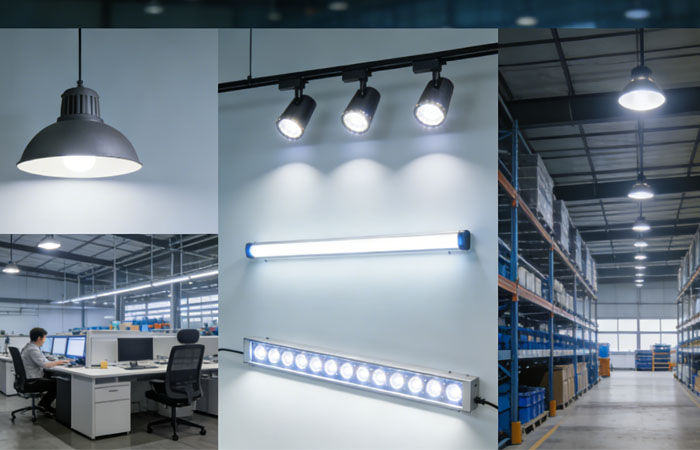
2. Core Technologies Powering Modern Commercial & Industrial Lighting Solutions
The transformation of commercial and industrial lighting is rooted in technological innovation, with LED technology serving as the foundation. Complemented by smart controls, IoT integration, and advanced materials, these technologies work together to deliver efficient, reliable, and flexible lighting solutions. Below is a detailed breakdown of the key technologies shaping the industry.
2.1 LED Technology: The Backbone of Modern Lighting
Light-emitting diodes (LEDs) have revolutionized commercial and industrial lighting, replacing traditional technologies due to their superior efficiency, longevity, and versatility. Unlike incandescent bulbs, which waste up to 90% of energy as heat, LEDs convert nearly 90% of energy into light, significantly reducing energy consumption. For commercial and industrial spaces—where lighting is often used 24/7—this efficiency translates to substantial cost savings. For example, a 50-fixture factory using 1,000W HID bulbs can save approximately 300,000 kWh annually by switching to 320W LED high bay lights that deliver 65,000 lumens at 220 lm/W, cutting energy use by up to 68%.
LEDs also offer an exceptional lifespan, typically ranging from 50,000 to 100,000 hours—far longer than incandescent (1,000–2,000 hours) or fluorescent (10,000–20,000 hours) bulbs. This longevity reduces maintenance costs and downtime, a critical advantage for industrial environments where replacing fixtures in high-ceilinged spaces or hazardous areas can be time-consuming and expensive. For instance, LED fixtures with 10-year warranties can eliminate relamping for over a decade, even in extreme temperature environments up to 80°C (176°F).
In addition to efficiency and longevity, LEDs offer superior light quality and customization options. They can produce a wide range of color temperatures (from warm white to cool white), high color rendering index (CRI) values—ensuring accurate color representation—and uniform illumination. For commercial spaces like retail stores and hotels, this flexibility allows businesses to create targeted ambiance to enhance customer experience. For industrial spaces, high CRI (95+) and uniform lighting (UGR ≤ 10) reduce eye strain and errors, improving employee productivity and safetysuperscript:5.
Recent advancements in LED technology have further expanded its capabilities. High-power LEDs, for example, can deliver intense illumination for large industrial spaces, such as 50-meter-tall industrial halls, without creating dark corners or blind spots. Some LED fixtures can produce up to 210,000 lumens, making them ideal for high-ceilinged warehouses and manufacturing plants. Additionally, driverless LED platforms, such as Seoul Semiconductor’s AC Rich technology, eliminate the need for fragile power supplies, reducing fixture costs by 18% and improving reliability.
2.2 Smart Controls and IoT Integration
While LED technology provides the foundation for efficient lighting, smart controls and Internet of Things (IoT) integration elevate commercial and industrial lighting solutions to new levels of functionality and efficiency. Smart lighting systems allow for centralized control, automation, and data collection, enabling businesses to optimize lighting usage, reduce waste, and gain valuable insights into space utilization.
Key components of smart lighting controls include occupancy sensors, daylight harvesting systems, dimming controls, and centralized management platforms. Occupancy sensors detect human presence and automatically turn lights on or off, eliminating energy waste in unoccupied spaces— a critical feature for warehouses, offices, and retail stores with variable foot traffic. Daylight harvesting systems adjust lighting intensity based on natural light availability, further reducing energy consumption by leveraging free, renewable light. Dimming controls allow for precise adjustment of light levels, enabling businesses to tailor illumination to specific tasks or ambiance requirements.
IoT integration takes smart lighting a step further by connecting fixtures to a network, enabling remote monitoring and control. Through cloud-based platforms, facility managers can monitor lighting performance, track energy usage, and receive alerts for maintenance issues—all from a mobile device or computer. This level of visibility allows for proactive maintenance, reducing downtime and extending the lifespan of lighting systems. For example, in a large e-commerce fulfillment center, IoT-connected lighting can be integrated with warehouse management systems (WMS) via Power over Ethernet (PoE) to provide real-time bin location mapping, improving picking accuracy and operational efficiency.
Communication protocols play a critical role in smart lighting systems, ensuring seamless integration and interoperability. Popular protocols include DALI (Digital Addressable Lighting Interface), Zigbee, Bluetooth, and Matter. DALI-2, which surpassed 5,000 certifications in 2024, enables digital control and interoperability between different manufacturers’ products, simplifying system design and deployment. Matter 1.2, meanwhile, supports smartphone-based commissioning, reducing installation and training costs by making it easier to set up and manage smart lighting systems.
2.3 Sustainable and Durable Materials
Sustainability and durability are key priorities in modern commercial and industrial lighting solutions, driven by regulatory requirements and corporate sustainability goals. Manufacturers are increasingly using eco-friendly materials, such as recycled aluminum, glass, and plastic, to reduce the environmental impact of lighting fixtures. Additionally, modular design has become a focus, allowing for easy repair, replacement of components, and recycling—extending the lifespan of fixtures and reducing waste.
For industrial environments, durability is paramount. Fixtures must withstand harsh conditions, including extreme temperatures, humidity, dust, corrosion, and high-pressure washdowns. Industrial-grade LED fixtures often feature heavy-duty aluminum profiles for advanced heat dissipation, sealed enclosures with IP67 or IP69K ratings, and arctic-grade silicone seals to withstand extreme cold or sterile environments. For example, LED fixtures with IP69K ratings are suitable for pharmaceutical cold storage facilities and food processing plants, where high-pressure cleaning and sterile conditions are requiredsuperscript:5.
Heat dissipation is another critical consideration, especially for high-power LEDs. Advanced heat sink designs, such as passive heat sinks and heat pipes, prevent overheating, ensuring consistent performance and extending the lifespan of LED chips. For example, high-temperature LED series can operate reliably in foundries and smelters up to 80°C (176°F) thanks to heavy-duty aluminum profiles and advanced heat dissipation technology.
3. Key Applications of Commercial & Industrial Lighting Solutions
Commercial and industrial lighting solutions are tailored to the unique needs of different spaces, with each application requiring specific features and performance characteristics. Below are the most common applications, highlighting the key requirements and solutions for each.
3.1.1 Retail Stores
Retail lighting is a critical component of customer experience, as it influences product visibility, brand perception, and purchasing behavior. The goal of retail lighting is to highlight products, create a welcoming ambiance, and guide customers through the store. Key requirements include high CRI (to accurately represent product colors), adjustable color temperatures (to match brand aesthetics), and targeted illumination for product displays.
LED downlights, track lights, and spotlights are popular choices for retail spaces. Track lights and spotlights allow for flexible positioning, enabling retailers to highlight specific products or displays. LED strip lights are used for under-shelf lighting, accent lighting, and perimeter lighting, adding depth and visual interest to the space. Smart controls are also widely used in retail, allowing retailers to adjust lighting based on time of day, promotions, or customer traffic. For example, brighter lighting can be used during peak hours to attract customers, while softer lighting can be used during off-peak hours to reduce energy consumption.
3.1.2 Offices
Office lighting plays a crucial role in employee productivity, comfort, and well-being. Poor lighting can lead to eye strain, fatigue, and reduced focus, while well-designed lighting can enhance concentration, mood, and overall productivity. Key requirements for office lighting include uniform illumination, low glare, adjustable light levels, and compatibility with human-centric lighting principles.
Human-centric lighting (HCL), which mimics the natural progression of sunlight throughout the day, is increasingly popular in office spaces. HCL systems adjust color temperature and intensity to align with the body’s circadian rhythm, promoting alertness during the day and relaxation in the evening. LED panel lights, recessed downlights, and task lights are common in offices, providing uniform ambient lighting and targeted task lighting for workstations. Smart controls, such as occupancy sensors and daylight harvesting, help reduce energy waste by ensuring lights are only on when needed and adjusting intensity based on natural light.
3.1.3 Hotels and Hospitality
Hospitality lighting is designed to create a luxurious, welcoming ambiance that enhances the guest experience. From lobbies and restaurants to guest rooms and conference halls, lighting must be versatile, customizable, and aligned with the hotel’s brand identity. Key requirements include warm color temperatures, dimmable lighting, and layered illumination (ambient, task, and accent lighting).
In hotel lobbies, chandeliers, pendant lights, and recessed downlights are used to create a grand, inviting atmosphere. In guest rooms, dimmable bedside lights, task lights for work areas, and ambient lighting for relaxation are essential. Smart controls allow guests to adjust lighting to their preferences, while centralized systems enable hotel staff to manage lighting across the property. For example, hotel staff can dim lights in common areas during nighttime to create a more intimate ambiance and reduce energy consumption.
3.1.4 Healthcare Facilities
Healthcare lighting requires a balance of functionality, safety, and patient comfort. Hospitals, clinics, and medical facilities need lighting that supports accurate diagnosis, surgical procedures, and patient recovery, while also reducing eye strain for medical staff and creating a calming environment for patients. Key requirements include high CRI (to accurately detect skin tones and medical conditions), uniform illumination, low glare, and compliance with medical standards.
In operating rooms, surgical lights with high intensity, adjustable focus, and shadow-free illumination are critical. In patient rooms, soft, dimmable lighting is used to promote relaxation and sleep, while task lights are provided for medical staff to perform procedures. LED lighting is ideal for healthcare facilities due to its low heat emission, long lifespan, and ability to produce clean, consistent light. Additionally, smart controls allow for easy adjustment of lighting levels based on the time of day and patient needs.
3.2 Industrial Applications
3.2.1 Manufacturing Plants and Factories
Manufacturing facilities require robust, high-performance lighting that can withstand harsh conditions, support complex tasks, and ensure worker safety. Key requirements include high brightness, uniform illumination, durability, resistance to dust and moisture, and compatibility with hazardous environments (in some cases).High bay LED lights are commonly used in manufacturing plants, as they provide intense illumination for large, high-ceilinged spaces. These fixtures are designed to withstand extreme temperatures, vibration, and dust, making them ideal for foundries, smelters, and assembly plants. For example, high-temperature LED series can operate reliably in environments up to 80°C (176°F), maintaining full output even in the hottest industrial settings. In addition, anti-glare optics and uniform lighting (UGR ≤ 10) reduce eye strain for workers, improving productivity and reducing errors.In hazardous environments, such as those with flammable gases or dust, explosion-proof LED fixtures are required to ensure safety. These fixtures are sealed to prevent the ignition of hazardous materials, complying with international standards such as ATEX and IECEx.
3.2.2 Warehouses and Distribution Centers
Warehouses and distribution centers require lighting that supports efficient operations, including inventory management, order picking, and material handling. Key requirements include high brightness, uniform illumination, energy efficiency, and compatibility with smart systems.High bay and low bay LED lights are the primary choice for warehouses, with high bay lights used for spaces with ceilings above 20 feet and low bay lights for lower ceilings. These fixtures deliver high lumens per watt, ensuring that every corner of the warehouse is well-lit, reducing errors in order picking and improving safety. Smart controls, such as occupancy sensors and motion detectors, are essential for warehouses, as they reduce energy waste by turning lights off in unoccupied areas. IoT integration also allows for real-time monitoring of lighting performance and energy usage, enabling facility managers to optimize operations.A real-world example of warehouse lighting optimization is a 500,000 sq. ft fulfillment center in Rotterdam, Netherlands, which installed 650 units of LED high bay lights with visible light communication (VLC) and integrated them with the warehouse management system (WMS) via PoE. This solution improved picking accuracy to 99.8%, reduced energy use from 2.3 W/sf to 0.7 W/sf, and enhanced overall operational efficiency.
——By Fairy
Customization Options for Commercial Lighting
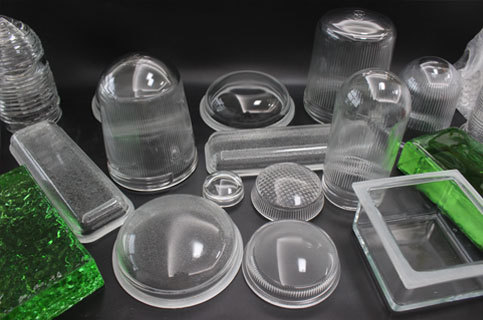
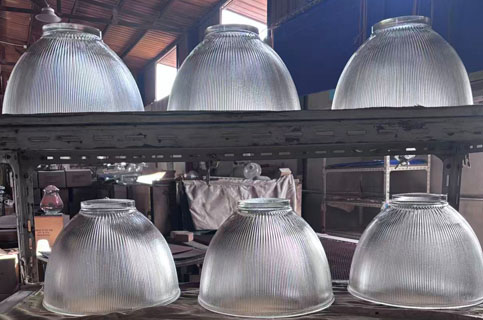
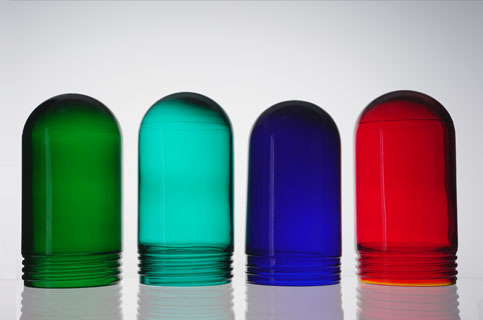
Shape
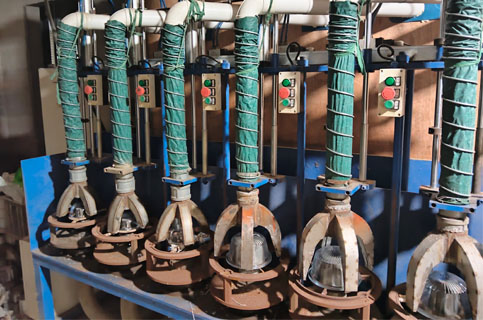
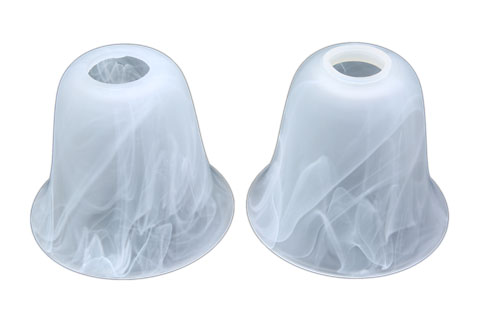
Dome, Dish, Cylinder, Cone, Pyramid, Custom CAD
Mold Pressed
Φ40mm – Φ400mm (standard), Φ600mm+ (extra-large mold)
Color
clear,amber, smoke gray,red,blue,green, custom solid or painted color
Tempered
Physical or chemical tempering,explosion-proof
Surface Texture
High-gloss fire polishing, matte sandblasting, acid etching satin, laser logo
Lined Pattern
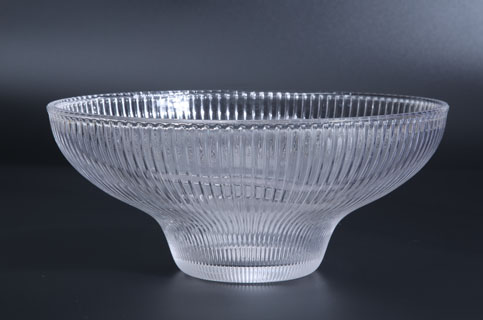
Classic lined ribbed glass
Machine Pressed Glass Shade Technical FAQs
Standard MOQ 500pcs~1000 per design. Lead time 3-4 weeks .mold making (2~3 weeks for new designs).
Three controls: (1) All glass from single furnace batch for orders <10,000pcs, (2) Inline spectrophotometer monitoring with automatic furnace chemistry adjustment, (3) Sample retention comparison for multi-batch large orders.
For machine pressed glass , which is heavy . we pack each glass shade by bubble bag and seperate each one by cardboard , some pieces pressed glass into one carton . then pack them by wooden pallet or wooden box .
Normally the thickness is at least 4mm . for tempered borosilicate glass , the thickness can be between 5~ 10mm . More thicker glass can be achieved .