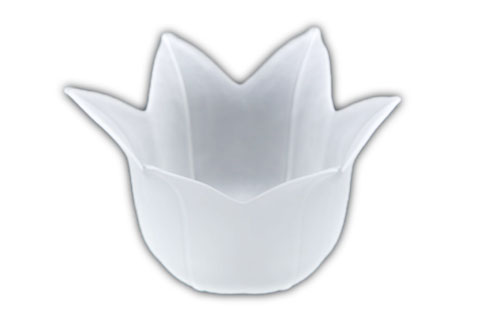
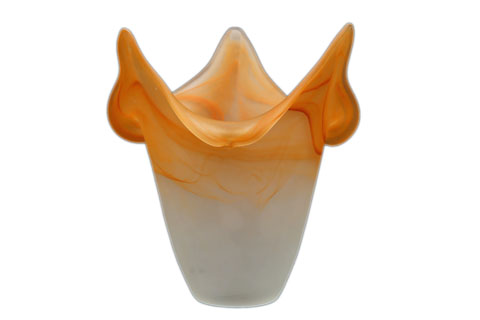
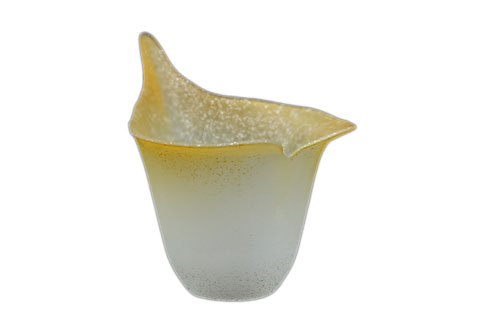
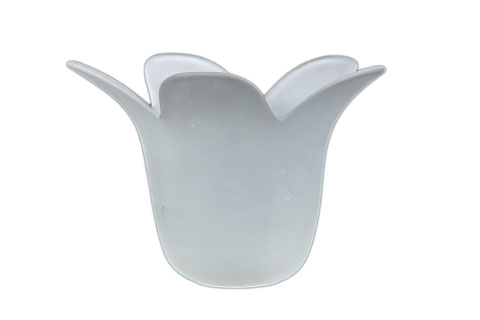
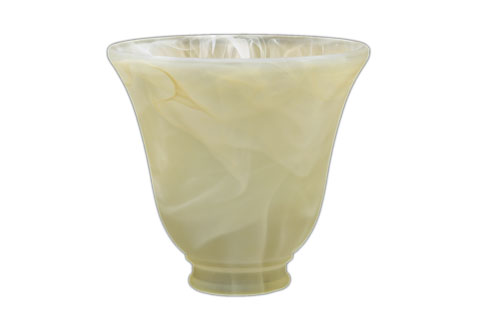
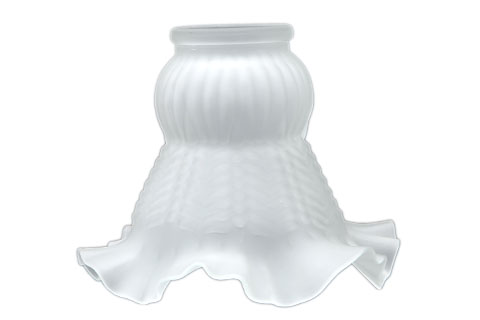
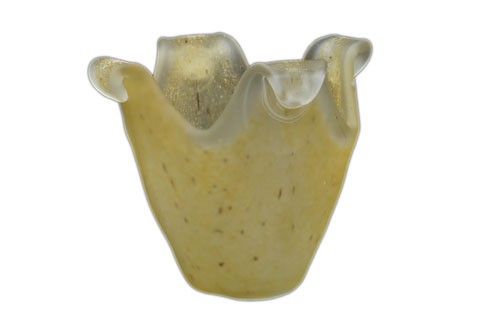
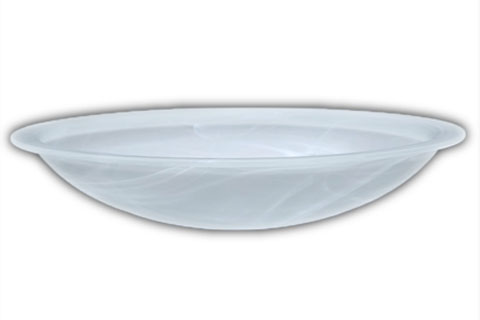
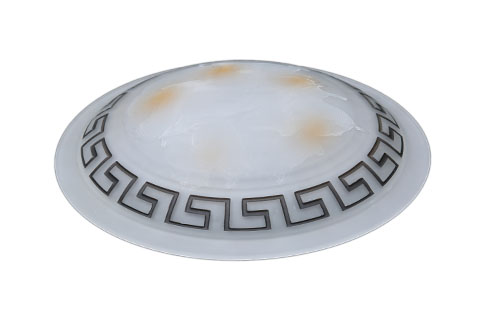
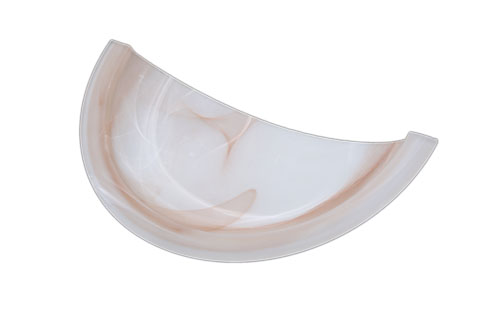
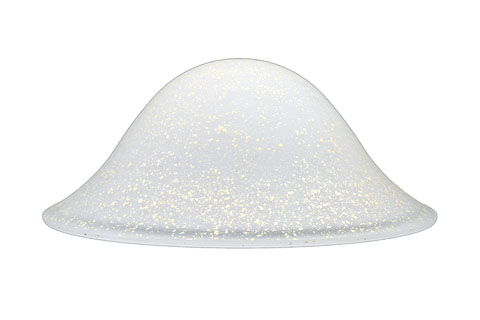
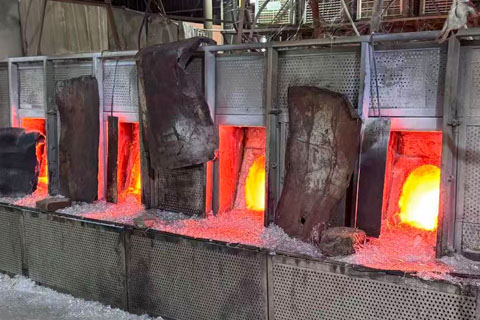
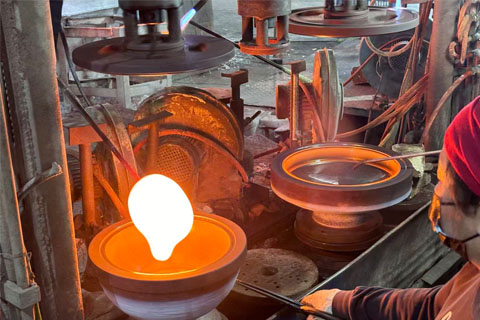
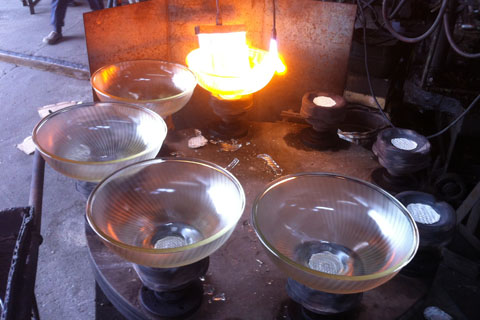
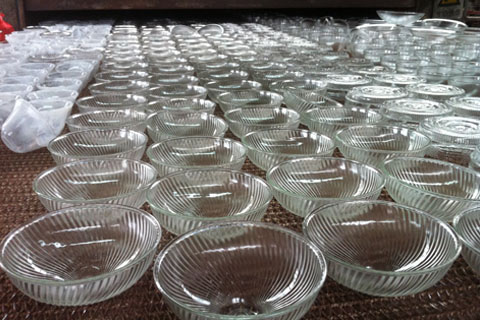
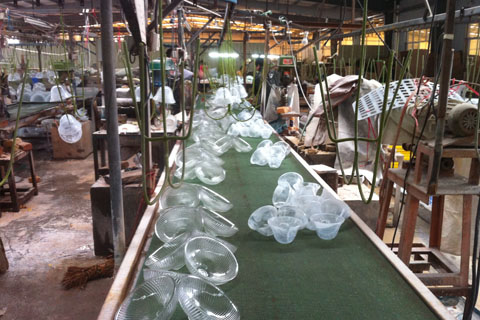
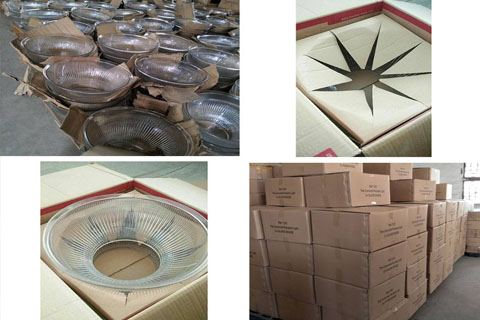
La formation de verre centrifugée est une technique où une quantité mesurée de verre fondu à environ 1150°C est placée dans un moule métallique tournant, qui tourne à 200-600 RPM pour forcer le verre vers l'extérieur contre les parois du moule par force centrifuge. La technique permet de produire des formes précises de dômes, bols et demi-sphères avec une épaisseur de paroi extrêmement uniforme, car la rotation répartit le verre de manière homogène. Après la rotation, le moule continue de tourner pendant 8-15 secondes pendant que le verre refroidit partiellement, puis l'abat-jour est retiré et transféré dans un four d'anellage pour soulager les contraintes. La formation centrifuge a été initialement développée dans les années 1920 pour les réflecteurs lumineux industriels et est aujourd'hui largement utilisée pour les abat-jour nécessitant une géométrie circulaire symétrique, des surfaces intérieures lisses pour une réflexion lumineuse optimale et une performance optique cohérente sur toute la production. La technique permet de produire de 200 à 400 pièces par machine par heure, ce qui la rend économiquement compétitive avec la presse mécanique pour les designs symétriques.
Les abat-jour en verre centrifugés diffèrent des alternatives moulées par pression et soufflées en trois points clés : uniformité de l'épaisseur des parois, qualité de la finition de surface et limitations de forme. L'uniformité de l'épaisseur des parois est exceptionnelle dans la formation centrifuge car le mouvement de rotation répartit le verre de manière homogène – la variation typique est de +/-0,15 mm sur toute la hauteur de l'abat-jour, contre +/-0,3 mm pour le moulage par pression et +/-1 mm pour le soufflage à la main. La finition de surface, aussi bien à l’intérieur qu’à l’extérieur, est très lisse puisque le verre touche le moule sous une pression extérieure contrôlée, produisant des surfaces de qualité optique idéales pour des luminaires nécessitant une distribution précise de la lumière. La principale limitation concerne la forme – la formation centrifuge ne produit que des formes symétriques par rotation (dôme, bol, demi-sphère, géométries de réflecteurs paraboliques), et non des designs asymétriques ou organiques. Pour les applications de réflecteurs symétriques, la formation centrifuge est optiquement supérieure à la pression et au soufflage, c’est pourquoi elle reste la technique standard pour les réflecteurs industriels en hauteur, les luminaires à dôme parabolique et les downlights encastrés architecturaux.
Les abat-jours en verre centrifugés fonctionnent avec tous les types d'ampoules courantes, y compris LED, halogène, CFL, incandescence et HID à vapeur de mercure, avec la compatibilité des ampoules principalement déterminée par le matériau de l'abat-jour (sodocalcique vs borosilicate) plutôt que par la technique de formage elle-même. Les abat-jours centrifugés en sodocalcique supportent en toute sécurité des ampoules produisant des températures de surface jusqu'à 180°C, couvrant la plupart des ampoules LED et CFL dans des luminaires ouverts ou ventilés. Pour des halogènes à plus haute puissance, incandescence au-dessus de 60W, ou des luminaires avec une classification d'enclosure où la chaleur s'accumule, nous recommandons de spécifier la formation centrifugée en borosilicate. La surface intérieure lisse produite par le formage centrifugé offre d'excellentes caractéristiques de réflexion lumineuse, avec un indice de réflexion mesuré de 88-92% pour les intérieurs revêtus de blanc et 65-75% pour les intérieurs en verre simple. Cela rend les abat-jours réflecteurs formés par centrifugation particulièrement précieux pour les luminaires où le pattern de distribution de la lumière et le contrôle du faisceau sont cruciaux – notamment pour l’éclairage industriel en hauteur, les projecteurs d’exposition en retail, et les luminaires d’accentuation architecturale.
Les abat-jour en verre centrifugés sont généralement produits dans des diamètres allant de 80 mm à 600 mm, avec une plage pratique pour les applications d’éclairage entre 150 mm et 400 mm. Les abat-jour plus petits, en dessous de 80 mm de diamètre, deviennent difficiles à former en raison d’une force centrifuge insuffisante à des vitesses de rotation pratiques, tandis que ceux au-dessus de 600 mm nécessitent des équipements très grands et des coûts importants de moules, ce qui limite la viabilité économique en dehors des commandes à volume élevé. La technique est particulièrement rentable dans la gamme de 200 à 350 mm, où la majorité des réflecteurs industriels en hauteur sous plafond, des downlights encastrés architecturaux et des dômes de luminaires suspendus sont spécifiés. La hauteur/profondeur des abat-jour centrifugés est limitée à environ 40-60 % de la dimension du diamètre, car les formes plus profondes nécessitent un mouvement de moule multi-axes plus complexe. Pour des formes de dômes plus profonds, des techniques de formage centrifugé en deux pièces (deux demi-dômes assemblés) ou des techniques hybrides centrifugé-pressé peuvent étendre la gamme de profondeur pratique sans redessiner l’équipement de production.
La mise en forme centrifugale et le moulage par presse rivalisent dans des gammes de production à volume élevé, la centrifugale offrant des avantages de qualité pour les formes symétriques à des coûts unitaires légèrement plus élevés. Le taux de production centrifugale est généralement de 200 à 400 pièces par heure contre 800 à 1500 pièces par heure pour le moulage par presse à cavité unique, ce qui rend la centrifugale environ 2 à 3 fois plus lente. Cependant, la centrifugale offre une meilleure uniformité de l'épaisseur des parois (+/-0,15 mm contre +/-0,3 mm), une meilleure finition de surface intérieure pour les applications de réflecteurs, et un poids global plus léger puisque moins de verre est nécessaire pour une intégrité structurelle équivalente. Le coût des outillages pour la mise en forme centrifugale varie de $1 200 à $4 500 par conception contre $800 à $3 500 pour le moulage par presse, reflétant le mécanisme de rotation plus complexe. Pour les applications de réflecteurs symétriques à volume élevé où la performance optique est importante, la mise en forme centrifugale est le choix standard malgré le coût supérieur. Pour les abat-jour décoratifs où l'apparence prime et où l'uniformité de l'épaisseur des parois est moins critique, le moulage par presse reste plus rentable.
Oui, les abat-jours en verre centrifugés peuvent être teintés par coloration en masse lors de la fusion du verre ou recouverts en surface après façonnage pour des effets décoratifs ou fonctionnels spécifiques. La coloration en masse produit une teinte uniforme et permanente à travers toute l'épaisseur du verre en utilisant des pigments à base d'oxydes métalliques (cobalt pour le bleu, fer pour l'ambre, chrome pour le vert, manganèse pour le violet) – c'est la méthode privilégiée pour les applications d'éclairage car la couleur ne peut pas s'estomper ou s'écailler. Les revêtements de surface après façonnage incluent un émail blanc opaque appliqué sur les surfaces intérieures pour des applications de réflecteurs à haute réflectance, des peintures en spray extérieures pour des finitions décoratives, des logos et motifs sérigraphiés, ainsi que des revêtements métalliques spéculaires pour des effets de luxe design. Le revêtement intérieur blanc est le traitement le plus courant pour les abat-jours centrifugés, augmentant la réflectance lumineuse mesurée de 65-75% (verre simple) à 88-92% (revêtu blanc), ce qui améliore significativement le flux lumineux du luminaire. L'épaisseur du revêtement est généralement de 50 à 150 microns et est cuite à 600°C pour adhérer de façon permanente à la surface du verre.
Oui, les abat-jour en verre centrifugés conviennent particulièrement aux applications industrielles et commerciales car la technique excelle dans la fabrication de géométries de réflecteurs symétriques courantes dans ces environnements. Les luminaires industriels à haute baie (entrepôts, sols de fabrication, gymnases) utilisent généralement des réflecteurs paraboliques centrifugés de diamètre 300-500 mm associés à des ampoules LED à haute puissance ou à vapeur de mercure. L’éclairage commercial en vente au détail utilise des abat-jour en dôme centrifugés de 150-250 mm dans des projecteurs sur rail et des downlights encastrés pour une distribution précise de la lumière sur les présentoirs. L’éclairage des bâtiments de bureaux utilise souvent des couvercles de lentilles centrifugés pour des luminaires encastrés en plafond. Pour ces applications, l’uniformité de l’épaisseur de la paroi et la qualité de la surface intérieure produites par la formation centrifuge offrent des avantages mesurables en termes d’efficacité lumineuse du luminaire (généralement 8-15 % supérieur aux alternatives formées par presse) et de contrôle de l’angle du faisceau. Les spécifications pour un usage industriel exigent généralement un matériau en borosilicate avec un revêtement intérieur blanc, trempé pour une résistance aux chocs, et des données photométriques CRI validant la performance du faisceau.
Les abat-jour à réflecteur formé par centrifugation peuvent être finis avec cinq options de revêtement principales visant différents besoins d’éclairage et de design. L’émail en céramique opaque blanc produit un indice de réflexion de 88-92% et constitue la norme pour les réflecteurs industriels à haute baie – appliqué en couche de 80-150 microns et cuit à 600°C pour une adhérence permanente. Le revêtement miroir en argent utilise de l’aluminium ou de l’argent déposé sous vide, atteignant un indice de réflexion de 95-97%, utilisé pour des luminaires architecturaux haut de gamme nécessitant une efficacité maximale en lumen. Le revêtement blanc diffus avec micro-texture contrôlée produit un indice de réflexion de 75-82% avec une distribution de lumière plus douce, préféré pour l’éclairage de commerce et d’hôtellerie. L’intérieur poli spéculaire sans revêtement conserve l’aspect du verre clair avec un indice de réflexion de 65-75% pour des luminaires design où le verre lui-même est un élément visuel. Les revêtements intérieurs colorés personnalisés (bleu, ambre, or) produisent des effets lumineux teintés spectaculaires pour des applications d’accentuation et décoratives. Chaque option de revêtement a des coûts d’application, des caractéristiques de durabilité et des limites de température de fonctionnement différentes que nous discutons lors de la spécification du luminaire.
Les abat-jour en verre centrifuges durent généralement 20 à 30 ans en service industriel, dépassant souvent la durée de vie des boîtiers de luminaire et des composants électriques avec lesquels ils sont associés. La durée de vie dépend principalement de l'environnement de travail – les espaces industriels intérieurs secs (entrepôts, salles mécaniques, parkings) ont une durée de vie typique de 25 à 30+ ans avec une dégradation minimale. Les environnements humides ou chimiquement actifs (transformation alimentaire, piscines, fabrication avec des produits chimiques en suspension dans l'air) réduisent la durée de vie à 15-20 ans en raison de la dégradation du revêtement ou de l'attaque de surface. Les modes de défaillance courants incluent le délaminage du revêtement (5-8% des abat-jour après plus de 10 ans dans des environnements humides), le brouillard de surface dû aux résidus de produits chimiques de nettoyage, et les dommages par impact causés par un chariot élévateur ou un contact de maintenance. Nous recommandons une inspection annuelle pour vérifier l'uniformité du revêtement, les éclats sur les bords, et toute opacité visible de la surface. Des abat-jour en verre de rechange sont disponibles pour la plupart des modèles standard de luminaires pendant au moins 10 ans après l'achat initial, soutenant une économie de maintenance à long terme pour les acheteurs industriels.
Oui, les abat-jours en verre centrifugés peuvent être conçus pour produire des distributions photométriques spécifiques définies par des fichiers IES (Illuminating Engineering Society) ou des spécifications de conception d’éclairage similaires. Le processus commence par la fourniture par le concepteur lumière de l’angle de faisceau cible, de la distribution de candela et de toute caractéristique de coupure requise, généralement sous forme de fichier IES provenant de logiciels de conception d’éclairage (DIALux, AGi32, Relux). Notre équipe d’ingénierie traduit ces exigences en paramètres géométriques du verre – équations de courbe parabolique, profondeur du réflecteur, localisation du point focal, et spécifications du revêtement intérieur – qui produisent la distribution lumineuse souhaitée. Les échantillons prototypes sont validés à l’aide de mesures par sphère d’intégration dans notre laboratoire d’optique, en comparant la performance photométrique réelle au fichier IES cible avec une précision typique de +/-5% des valeurs de candela spécifiées. Le développement photométrique personnalisé prend 25 à 40 jours, incluant les itérations de prototypes. Les fichiers photométriques validés sont ensuite enregistrés dans les principales bibliothèques de logiciels de conception d’éclairage pour soutenir les architectes dans la spécification de nos abat-jours dans les luminaires.