
Globe Glass Lampshade Surface Treatment & Coating: A Comprehensive Technical and Manufacturing Guide
Executive Summary
The global market for treated glass lighting components is experiencing accelerated growth, driven by architectural lighting trends, hospitality sector recovery, and the integration of smart coating technologies that respond to environmental conditions
.
Section 1: The Strategic Importance of Surface Treatment in Glass Lampshade Manufacturing
1.1 Functional Objectives of Glass Lamp Surface Treatment
- Diffusion Enhancement: Converting specular transmission to diffuse transmission (haze factor 85-99%)
- Glare Reduction: Lowering luminance peaks while maintaining total light output
- Color Temperature Modification: Shifting effective CCT through selective absorption or interference coatings
- Directional Control: Creating gradient opacity or patterned transmission zones
- Scratch Resistance: Hard coatings (SiO₂, Al₂O₃) increasing surface hardness from 5-6 Mohs to 7-8 Mohs
- Impact Resistance: Tempering and chemical strengthening treatments
- Thermal Shock Protection: Stress-relief coatings for high-temperature LED environments
- Anti-Corrosion: Fluoropolymer coatings preventing degradation from atmospheric sulfur compounds
- Stain Resistance: Hydrophobic/oleophobic nano-coatings repelling fingerprints and dust
- UV Stability: Blocking coatings preventing photodegradation of underlying decorative layers
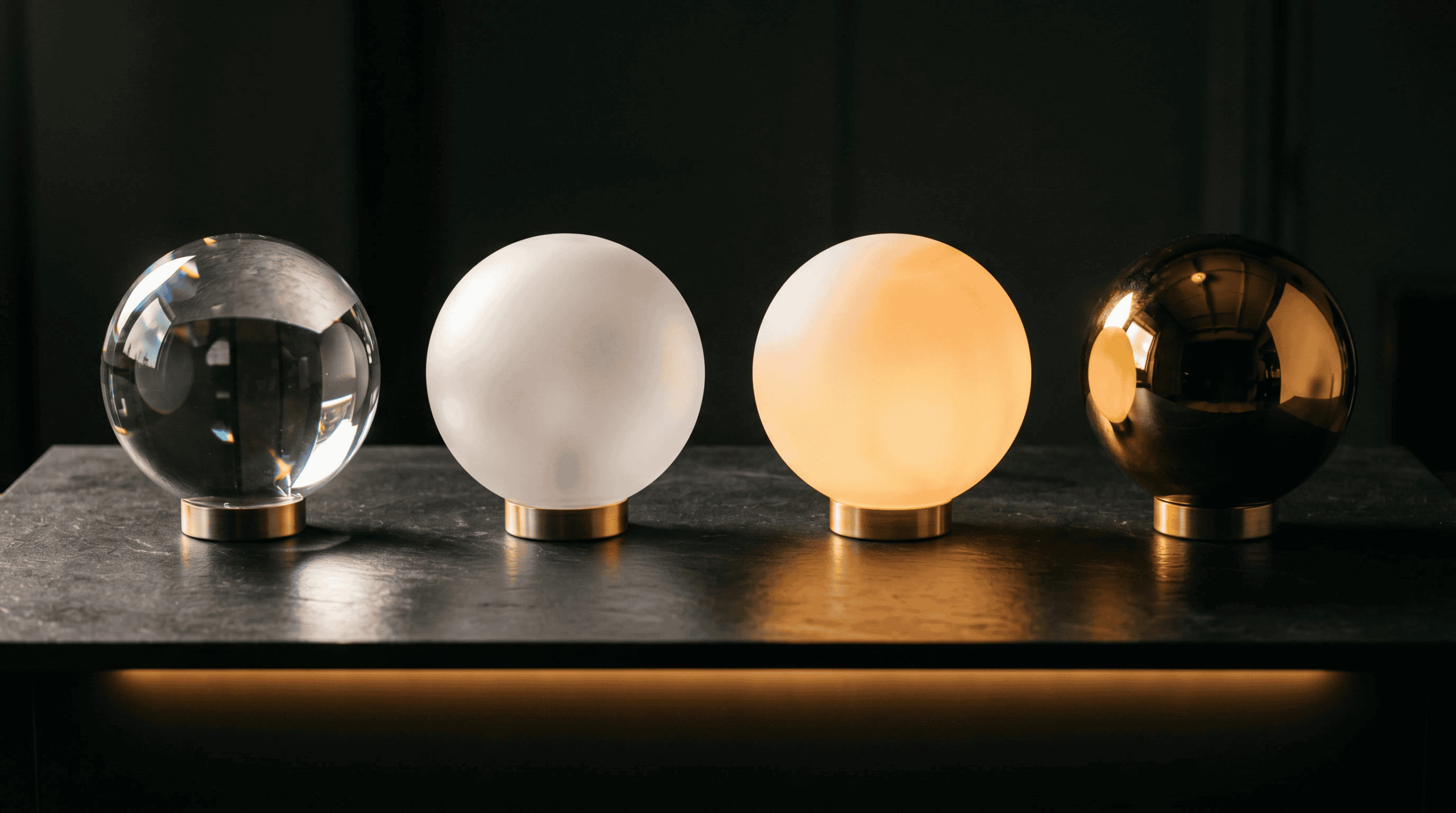
- Texture Creation: Matte, satin, or patterned surfaces through etching or embossing
- Color Application: Ceramic inks, organic dyes, or metallic films
- Brilliance Enhancement: Fire polishing and optical-grade polishing achieving Ra <0.01μm
1.2 Market Context: Treated Glass Lampshade Value Proposition
| Surface Treatment Level | Value Addition | Target Segment | Price Premium |
|---|---|---|---|
| Basic (Clean/Fire Polish) | 5-10% | Mass residential, functional | Baseline |
| Standard (Etch/Sandblast) | 25-40% | Commercial, hospitality | +30% |
| Premium (Ceramic Print/PVD) | 60-120% | Luxury residential, boutique | +80% |
| Advanced (Smart/Nano-coatings) | 150-300% | Architectural, museum, healthcare | +200% |
The custom glass lampshade manufacturer capable of delivering advanced surface treatments captures significantly higher margins while differentiating from commodity competitors
.
Section 2: Core Surface Treatment Technologies for Glass Lampshades
2.1 Mechanical Surface Treatments
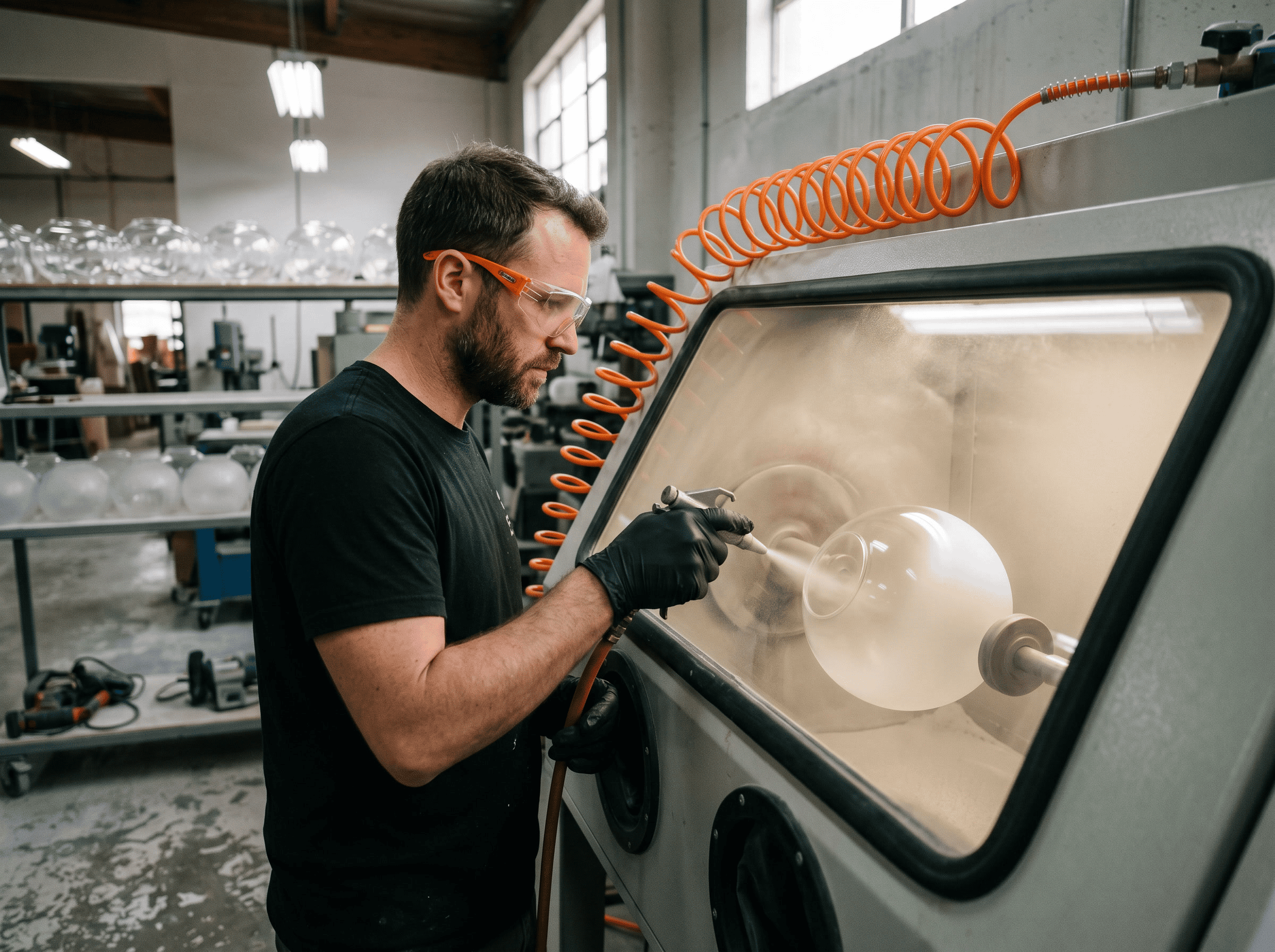
Sandblasting (Abrasive Blasting)
- Media Size: 60 mesh (coarse, 250μm) to 220 mesh (fine, 65μm)
- Air Pressure: 4-8 bar depending on glass thickness and desired effect
- Standoff Distance: 150-400mm
- Coverage Rate: 0.5-2.0 m²/minute
- Surface Roughness (Ra): 2-15μm achievable
- Overall Matte Finish: Uniform diffusion, haze factor 90-98%
- Selective Patterning: Masking techniques create designs with glossy/matte contrast
- Gradient Effects: Variable pressure or distance creates fading opacity
- Visual Inspection: 100% for uniformity and defect detection
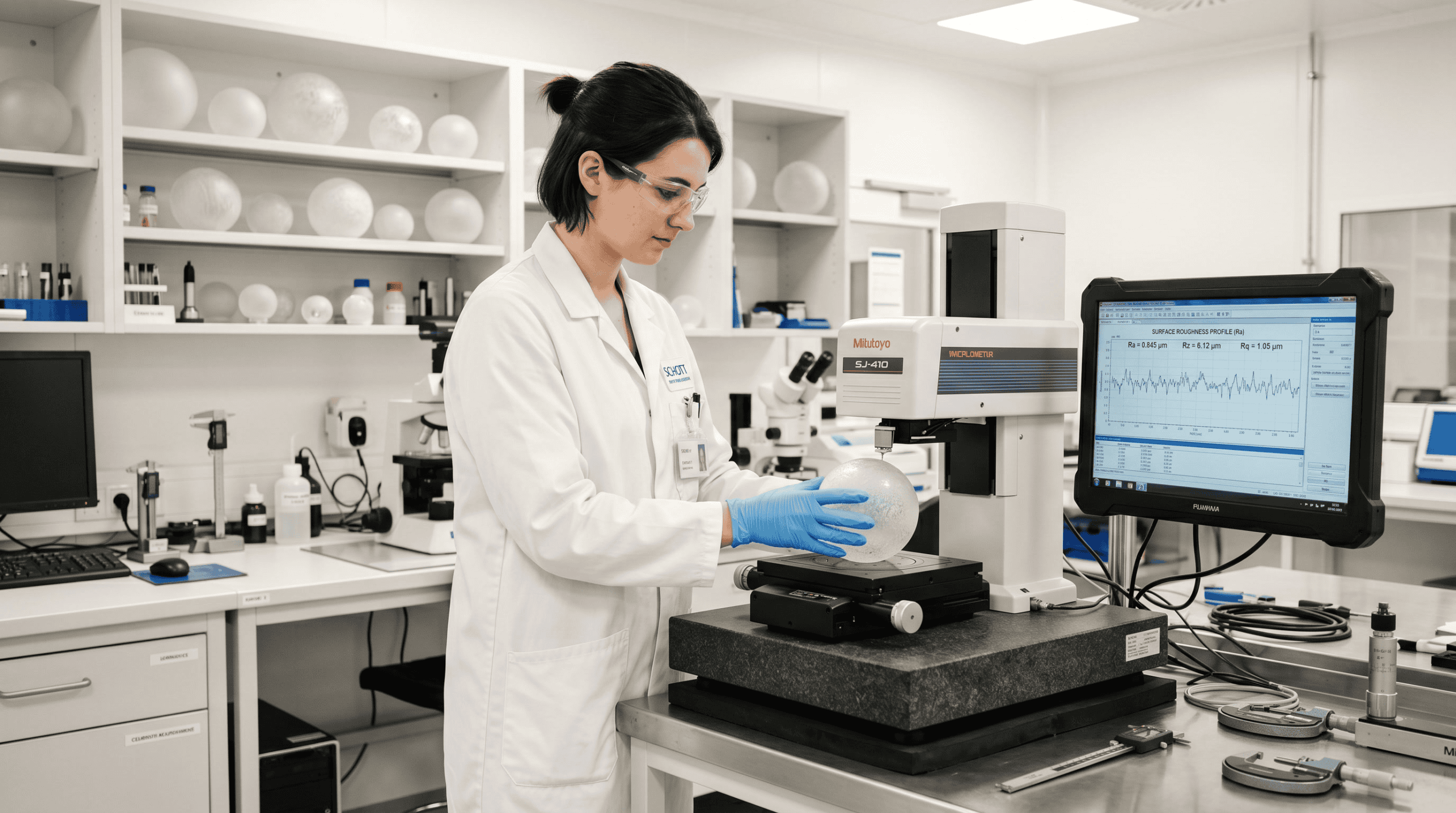
- Profilometry: Ra measurement for consistency
- Haze Measurement: Integrating sphere verification of diffusion performance
Grinding and Polishing
- Rough Grinding: Diamond wheels (80-180 grit) remove mold seams, imperfections
- Fine Grinding: 320-600 grit diamond or silicon carbide
- Polishing: Cerium oxide or iron oxide compounds on felt/pitch laps
- Fire Polishing (Optional): Surface reheating to 800-900°C for optical-grade finish
- Ground Finish: Ra 0.5-2.0μm
- Polished Finish: Ra 0.01-0.05μm
- Fire Polished: Ra <0.01μm, optical clarity
2.2 Chemical Surface Treatments
Acid Etching (Matte Etching)
- HF Concentration: 10-40% (diluted from commercial 70%)
- Bath Temperature: 20-40°C
- Immersion Time: 30 seconds to 30 minutes
- Etch Depth: 2-50μm depending on duration and concentration
- Smoother Surface: Acid etching creates rounded micro-features vs. sandblasting’s sharp peaks
- Fingerproof: Smoother surface resists fingerprint retention
- No Stress Concentration: Chemical process avoids subsurface cracking from mechanical impact
- Pattern Precision: Photoresist masking enables intricate designs
- HF is highly toxic and corrosive; requires specialized ventilation and neutralization systems
- Waste treatment mandatory (calcium hydroxide precipitation of fluorides)
- Alternative: Fluorine-free etching pastes (ammonium bifluoride-based, lower hazard)
Ceramic Frit and Enamel Coating
- Silica (SiO₂): 50-70%
- Lead/Boron oxides: 15-25% (flux, reducing melting point)
- Pigments: Cobalt (blue), chromium (green), iron (brown), titanium (white)
- Screen Printing: 80-200 mesh screens, wet thickness 20-100μm
- Spray Coating: Automated or manual, 50-200μm wet film
- Digital Printing: Ceramic inkjet, 600-1200 dpi resolution
- Preheat: 100-150°C (solvent evaporation)
- Firing: 550-650°C (frit melting, pigment fusion)
- Anneal: Controlled cooling to prevent thermal shock
- Adhesion: >20 MPa (ASTM C633)
- Hardness: 6-7 Mohs
- UV Resistance: >10,000 hours QUV testing
- Chemical Resistance: Passes ISO 10545-13 (acids, alkalis, solvents)
2.3 Advanced Coating Technologies
Physical Vapor Deposition (PVD)
| Method | Source Material | Coating Thickness | Application |
|---|---|---|---|
| Thermal Evaporation | Aluminum, silver, gold | 50-200nm | Reflective mirrors, metallic aesthetics |
| Electron Beam (E-Beam) | Titanium, zirconium oxides | 10-100nm | Hard coatings, interference colors |
| Magnetron Sputtering | Chrome, titanium nitride | 20-500nm | Decorative finishes, wear resistance |
| Cathodic Arc | Titanium, zirconium | 50-300nm | Ultra-hard decorative coatings |
- Metallic: Silver, gold, rose gold, gunmetal, black chrome
- Interference: Titanium oxide layers creating blue, purple, green iridescence
- Gradient: Variable deposition rates or masking creating color transitions
- Adhesion: >50N (scratch test, ISO 1518)
- Hardness: >1000 HV (Vickers)
- Corrosion Resistance: >1000 hours salt spray (ASTM B117)
- Thermal Stability: Up to 300°C continuous operation
Nano-Coatings and Functional Films
- Composition: Fluorinated silanes or perfluoropolyethers
- Contact Angle: >110° (water), >70° (oil)
- Thickness: 10-50nm monolayer
- Application: Spray, dip, or vapor deposition
- Benefit: Reduced cleaning frequency, maintained optical clarity
- Principle: λ/4 optical thickness layers creating destructive interference
- Structure: SiO₂/TiO₂ multilayer stack (2-5 layers)
- Performance: <1% reflectance per surface (vs. 4% untreated glass)
- Application: Museum lighting, display cases, high-end residential
- Active Material: Titanium dioxide (TiO₂) anatase phase
- Mechanism: UV activation creates hydrophilic surface + oxidative radicals
- Benefit: Organic contaminant decomposition, reduced maintenance
- Limitation: Requires UV exposure (indoor applications limited)
Silk Screen and Digital Printing
- Resolution: Screen: 60-120 lpi; Digital: 360-720 dpi
- Color Range: Limited to stable metal oxide pigments (no organic dyes)
- Firing: 580-620°C for permanent fusion
- Design Capability: Photographic reproduction, vector graphics, custom patterns
- Advantage: Lower curing temperature (no thermal stress on glass)
- Limitation: Lower durability vs. ceramic (5-7 year outdoor life)
- Application: Indoor decorative, temporary installations, prototyping
Section 3: Hand Blown vs Pressed Glass Lampshade — Surface Treatment Considerations
3.1 Substrate Characteristics Affecting Treatment Outcomes
| Characteristic | Hand-Blown Glass Lampshade | Pressed Glass Lampshade | Treatment Implication |
|---|---|---|---|
| Wall Thickness Variation | ±20-40% (organic) | ±5-10% (uniform) | Etching depth must account for thickness variation in hand-blown |
| Surface Contamination | Higher (tool marks, oils) | Lower (mold release agents) | Pre-cleaning protocols differ significantly |
| Internal Stress | Variable (dependent on artisan technique) | Uniform (controlled cooling) | Stress-relief annealing may be required before coating |
| Dimensional Tolerance | ±3-5mm | ±0.5mm | Masking and fixture design complexity |
| Surface Texture (As-Formed) | Tool marks, slight ripples | Mold texture, parting lines | Different baseline for finish development |
3.2 Process-Specific Treatment Protocols
Hand-Blown Glass Lampshade Surface Treatment
- Inspection: 100% visual for checks, seeds, bubbles that may affect coating adhesion
- Cleaning: Alkaline wash (pH 11-13) to remove forming oils, followed by deionized water rinse
- Annealing Verification: Polariscope inspection for residual stress; retreat if >50nm/cm retardation
- Surface Preparation: Light grinding (600 grit) to remove severe tool marks if polished finish required
- Acid Etching: Preferred over sandblasting due to thickness variation tolerance
- Ceramic Printing: Requires flexible masking or hand-application for organic shapes
- PVD: Challenging due to dimensional variation; fixturing must accommodate ±5mm tolerance
- Fire Polishing: Excellent for restoring optical clarity to formed surfaces
- Etch Uniformity: Thicker areas etch slower; process timing must accommodate maximum thickness
- Coating Adhesion: Organic surface contamination from hand-forming requires aggressive pre-clean
- Color Consistency: Variable thickness affects apparent color in translucent treatments
Pressed Glass Lampshade Surface Treatment
- Parting Line Removal: Grinding/polishing mold seam (0.2-0.5mm raised line)
- Mold Release Residue Removal: Solvent wash or mild alkaline clean
- Dimensional Sorting: Grouping by size for efficient batch processing
- Surface Inspection: Automated vision systems for defect detection
- Sandblasting: Excellent for uniform matte finish; consistent wall thickness ensures even erosion
- Ceramic Printing: Highly efficient with automated screen printing; precise registration possible
- PVD: Ideal substrate; uniform dimensions enable efficient fixturing and consistent coating thickness
- Digital Printing: High repeatability for complex multi-color designs
- Mold Texture Replication: Any mold surface defect transfers to final product; mold maintenance critical
- Batch Consistency: Excellent for process control; SPC (Statistical Process Control) highly effective
- High-Volume Efficiency: Automated treatment lines achieve 500-2,000 pieces/day throughput
3.3 Hybrid Treatment Strategies
- Substrate: Machine-blown for dimensional consistency (±1.0mm)
- Base Treatment: Acid etch lower hemisphere for 90% haze
- Gradient Treatment: Spray etch transition zone (30-60% haze)
- Upper Treatment: Fire polish for 98% clarity
- Result: Single piece with three distinct optical zones, impossible with uniform treatment
Section 4: Custom Glass Lampshade Surface Treatment — Advanced Capabilities
4.1 Multi-Layer Coating Systems
| Layer | Function | Material | Thickness | Process |
|---|---|---|---|---|
| Primer/Adhesion | Bond promotion | Silane coupling agent | 50-100nm | Dip or spray |
| Functional | Primary property | Varies by application | 100nm-10μm | PVD, CVD, sol-gel |
| Protective | Wear/chemical resistance | SiO₂, DLC | 50-200nm | PVD, plasma CVD |
| Topcoat | Hydrophobic/oleophobic | Fluoropolymer | 10-30nm | Vapor or solution |
- Substrate: Borosilicate glass, fire-polished
- Layer 1: SiO₂ base coat (adhesion promotion, 50nm)
- Layer 2: TiO₂ high-index layer (λ/4 optical thickness, 60nm @ 550nm)
- Layer 3: SiO₂ low-index layer (λ/4, 90nm @ 550nm)
- Layer 4: TiO₂ high-index layer (λ/4, 60nm)
- Layer 5: SiO₂ low-index layer (λ/4, 90nm)
- Topcoat: Oleophobic nano-layer (15nm)
4.2 Smart and Responsive Coatings
- Principle: Tungsten oxide (WO₃) layers change optical density with applied voltage
- Application: Privacy lighting, adjustable ambiance, energy management
- Transition Time: 2-5 minutes full range
- Cycles: >50,000 switching cycles
- Integration: Requires transparent conductive electrodes (ITO, FTO) and control electronics
- Principle: Vanadium dioxide (VO₂) phase transition at 68°C
- Application: Automatic solar gain control in architectural lighting
- Limitation: Limited color options, hysteresis effects
- Principle: Silver halide microcrystals darkening under UV exposure
- Application: Adaptive glare control, outdoor lighting
- Response Time: 30 seconds to darken, 2-5 minutes to clear
4.3 Sustainability in Surface Treatment
| Traditional Process | Sustainable Alternative | Benefit | Status |
|---|---|---|---|
| HF Acid Etching | Ammonium bifluoride pastes | Reduced toxicity, easier waste treatment | Commercial |
| Organic Solvent Cleaning | Aqueous alkaline + DI water | VOC elimination, lower disposal cost | Commercial |
| Hexavalent Chrome PVD | Trivalent chrome, TiN | Eliminates carcinogenic process | Commercial |
| Thermal Curing (600°C+) | UV-cured organic coatings | 80% energy reduction | Emerging |
| Virgin Silica Coatings | Recycled glass-derived SiO₂ | Circular material flow | R&D |
- ISO 14001: Environmental management systems
- RoHS/REACH: Chemical substance restrictions
- Cradle to Cradle: Material health and recyclability
- B Corp: Social and environmental performance
Section 5: Client Case Studies — Surface Treatment Implementation
Case Study 1: Luxury Hospitality Chain — Custom Gradient Etched Glass Pendant Program
- Substrate: 300mm diameter hand-blown borosilicate globe, 3.0-4.5mm wall thickness
- Treatment Challenge: Wall thickness variation (±25%) risked uneven etch depth
- Innovation: Computer-controlled spray etch system with real-time thickness compensation
- Process:
- Laser thickness mapping of each piece (120 points)
- Algorithm-generated spray path with variable dwell time
- Multi-axis robotic spray application (HF-based etchant, 15% concentration)
- Automated rinse and neutralization cycle
- Gradient Consistency: Δhaze <5% at equivalent heights across batch
- Etch Depth Range: 8-25μm (compensated for thickness variation)
- Production Rate: 45 pieces/day (vs. 12 pieces/day manual process)
- Defect Rate: 3.2% (vs. 18% manual process)
- Unit Cost: $127 (vs. $185 quoted for fully manual process)
- Total Project Value: $304,800
- Specification Retention: 94% across franchise properties
- Brand Differentiation: Featured in Hospitality Design Magazine, increased booking inquiries attributed to “Instagram-worthy lighting”
Case Study 2: Commercial Office Complex — Anti-Glare Pressed Glass Downlight Specification
- Substrate: 180mm diameter pressed soda-lime glass, 2.5mm uniform wall
- Base Form: Prismatic internal surface (mold-integrated) for initial diffusion
- Surface Treatment: Chemical micro-etch (4μm depth, 2μm Ra) creating controlled surface roughness
- Optical Performance:
- Total Transmission: 87%
- Diffuse Component: 82% (94% of total)
- Haze Factor: 96%
- UGR Rating: 14.2 (exceeds <16 requirement)
- Pressing: 4-cavity automated press, 1,600 pieces/day
- Annealing: Continuous lehr, stress relief verified by polariscope
- Pre-Clean: Alkaline wash, DI rinse, forced air dry
- Micro-Etch: Immersion in controlled HF bath (12%, 4.5 minutes, 28°C)
- Post-Treatment: Neutralization, cascade rinse, air knife dry
- QC: 100% haze measurement via integrating sphere, AQL 0.65 visual
- Unit Cost: $14.50 (treated) vs. $8.20 (untreated) = 77% premium
- Total Contract Value: $123,250
- Energy Impact: Enabled 18W LED (vs. 22W specification) achieving equivalent task illuminance
- Annual Energy Savings: $47,000 across portfolio (10-year NPV: $312,000)
- LEED Contribution: Daylight and quality views credit support
Case Study 3: Museum Renovation — Ultra-Low Reflectance Custom Glass Lampshade
- Substrate: Hand-blown and pressed borosilicate (shape-dependent)
- Coating System: 5-layer magnetron sputtered AR stack + anti-static topcoat
- Performance Targets:
- Reflectance: <0.3% per surface (450-650nm)
- Transmission: >99.2%
- Color Shift: ΔE <0.5 (vs. uncoated glass)
- Abrasion Resistance: >1000 cycles (eraser test, ASTM D2486)
- Phase 1 (Months 1-2): Substrate qualification—tested 4 glass compositions for coating compatibility
- Phase 2 (Months 3-4): Coating design—optical modeling (Essential Macleod software), deposition parameter optimization
- Phase 3 (Month 5): Prototype production—15 sample pieces, accelerated aging testing
- Phase 4 (Month 6): Scale-up—fixture design for 120 unique shapes, batch processing protocol
- Hand-Blown Pieces (45 units): Individual fixturing in PVD chamber, 2-hour cycle time
- Pressed Pieces (75 units): Batch fixturing (6 pieces/cycle), 45-minute cycle time
- Quality Verification: Spectrophotometry (PerkinElmer Lambda 950), 100% inspection
- Development Cost: $78,000 (absorbed by manufacturer as capability investment)
- Production Value: $340,000 ($2,833 average per piece)
- Curatorial Impact: Artifact visibility scores improved 23% (visitor survey)
- Media Coverage: Featured in Museum Lighting Quarterly, generated 4 additional museum inquiries
Section 6: Quality Control and Testing Protocols
6.1 Surface Treatment Inspection Methods
| Test Method | Standard | Purpose | Equipment |
|---|---|---|---|
| Visual Inspection | ISO 9022 | Defect detection (scratches, bubbles, inclusions) | Light booth, 1000-2000 lux |
| Haze Measurement | ASTM D1003 | Diffusion quantification | Integrating sphere spectrophotometer |
| Gloss Measurement | ASTM D523 | Surface shine quantification | 60°/85° gloss meter |
| Profilometry | ISO 4287 | Surface roughness (Ra, Rz) | Contact or optical profilometer |
| Adhesion Test | ASTM D3359 | Coating bond strength | Cross-hatch tape test |
| Hardness Test | ASTM D3363 | Pencil hardness | 6B-9H pencil set |
| Abrasion Resistance | ASTM D2486 | Wear durability | Taber abraser or linear abrader |
| Salt Spray | ASTM B117 | Corrosion resistance | Neutral salt spray chamber |
| UV Exposure | ASTM G154 | Weathering simulation | QUV accelerated weathering tester |
| Thermal Cycling | IEC 60068-2-14 | Coating thermal stability | -40°C to +85°C, 100 cycles |
6.2 Process Control for Consistency
- Control Charts: X-bar and R charts for haze, thickness, color coordinates
- Cp/Cpk Analysis: Process capability indices >1.33 for critical parameters
- DOE (Design of Experiments): Optimization of etch time, concentration, temperature interactions
- FMEA (Failure Mode and Effects Analysis): Risk prioritization for treatment processes
Section 7: FAQ — Glass Lampshade Surface Treatment & Coating
Q1: What is the most durable surface treatment for high-traffic commercial glass lampshades?
Q2: How does wall thickness variation in hand-blown glass affect etching uniformity?
Q3: Can surface-treated glass lampshades be repaired or refinished if damaged?
- Mechanical treatments (sandblast, grind): Generally irreversible; damaged areas can sometimes be blended through localized retreatment, but perfect match is difficult
- Chemical etch: Cannot be “reversed” to glossy; damaged matte areas can be re-etched to match, though boundary lines may be visible
- Ceramic frit: Chipped areas can be touched up with matching enamel and refired (550-620°C), though color match requires skilled technician
- PVD coatings: Cannot be field-repaired; damaged pieces require recoating in vacuum chamber
- Nano-coatings (hydrophobic): Can be reapplied via consumer-grade spray products, though professional application preferred
Q4: What is the lead time difference between standard and custom surface treatments?
| Treatment Type | Sample Development | Production Lead Time | Minimum Order |
|---|---|---|---|
| Standard Acid Etch | 3-5 days | 1-2 weeks | 50 pieces |
| Standard Sandblast | 2-3 days | 1 week | 50 pieces |
| Ceramic Screen Print | 1-2 weeks (screen making) | 2-3 weeks | 100 pieces |
| Ceramic Digital Print | 3-5 days | 2-3 weeks | 50 pieces |
| PVD Coating (Standard Colors) | 1 week | 2-3 weeks | 100 pieces |
| Custom PVD Color Match | 3-4 weeks | 3-4 weeks | 200 pieces |
| Multi-Layer Optical Coating | 4-6 weeks | 4-6 weeks | 50 pieces |
| Smart/Responsive Coating | 8-12 weeks | 6-8 weeks | 500 pieces |
Q5: How do I specify surface treatment for outdoor glass lampshade applications?
- Substrate: Tempered or heat-strengthened glass (4-5× impact resistance)
- Treatment Durability: Ceramic frit or PVD only (organic coatings fail within 1-2 years)
- UV Stability: Pigments must be inorganic (cobalt, chromium, iron oxides); no organic dyes
- Thermal Shock: Specify ΔT >100°C resistance (tempered borosilicate preferred)
- IP Rating: IP44 minimum (splashing water); IP65+ for exposed locations
- Base: Tempered soda-lime or borosilicate glass
- Decoration: Ceramic frit (fired 600°C) or PVD coating
- Protection: Clear ceramic overglaze or SiO₂ protective PVD layer
- Surface: Hydrophobic nano-coating (reduces water spotting, extends cleaning intervals)
Q6: What is the cost premium for advanced surface treatments vs. untreated glass?
| Treatment Level | Cost Premium (vs. Untreated) | Value Proposition |
|---|---|---|
| Basic Clean/Polish | Baseline | Standard optical clarity |
| Acid Etch (Standard) | +25-40% | Diffusion, fingerprint resistance |
| Sandblast (Standard) | +20-35% | Diffusion, texture |
| Ceramic Print (1-2 colors) | +40-60% | Branding, decoration, durability |
| Ceramic Print (Full color, complex) | +80-120% | Photographic quality, custom design |
| PVD (Standard metallic) | +60-100% | Premium aesthetic, wear resistance |
| PVD (Custom color match) | +100-150% | Brand-specific finish, exclusivity |
| Multi-layer Optical (AR) | +150-300% | Maximum transmission, museum-grade |
| Smart/Responsive Coating | +300-500% | Adaptive functionality, technology premium |
Q7: Can the same surface treatment be applied to both hand-blown and pressed glass?
- Acid etching (with thickness compensation for hand-blown)
- Ceramic frit printing (requires flexible fixturing for hand-blown)
- Basic PVD colors (accommodating dimensional variation)
- Hydrophobic nano-coatings
- Precision sandblasting with tight masking
- Automated screen printing with exact registration
- Multi-layer optical coatings requiring uniform substrate
- Gradient treatments requiring predictable thickness
- Fire polishing (restoring optical clarity to formed surfaces)
- Hand-applied gilding or enamel painting
- Organic, irregular etch patterns that embrace thickness variation
- Artisanal surface techniques (tool mark preservation, selective polishing)
Q8: What environmental regulations affect glass lampshade surface treatment processes?
- REACH (EC 1907/2006): Restricts SVHCs (Substances of Very High Concern) including certain PVD precursors and etching byproducts
- RoHS Directive (2011/65/EU): Limits lead, cadmium, mercury in coatings (ceramic frit reformulation required)
- EU Ecodesign: Requires repairability, recyclability—impacts coating selection for disassembly
- Industrial Emissions Directive (2010/75/EU): Controls HF emissions from etching operations
- EPA NESHAP: National Emission Standards for Hazardous Air Pollutants (hexavalent chrome in PVD)
- OSHA PEL: Permissible Exposure Limits for HF (3 ppm TWA)
- California Prop 65: Warning requirements for lead/cadmium in ceramic decorations
- ISO 14001: Environmental management systems (voluntary but market-expected)
- Cradle to Cradle Certified: Material health and recyclability assessment
- Trivalent chromium PVD (replacing hexavalent)
- Ammonium bifluoride etching (reducing HF use)
- Lead-free ceramic frits (barium/zinc-based fluxes)
- Water-based cleaning (replacing solvent degreasing)
Q9: How do surface treatments affect the thermal performance of glass lampshades?
- Metallic PVD Coatings: High emissivity (ε >0.8) improves radiant heat dissipation from LED sources
- Ceramic Coatings: Moderate emissivity (ε 0.6-0.8), generally neutral thermal impact
- Organic/Nano-coatings: Low emissivity (ε <0.3) can trap heat; require thermal design adjustment
- Hydrophobic Coatings: Slight reduction in convective coefficient (2-5%) due to smoother surface
- Textured Surfaces (Etch/Sandblast): Increase surface area, potentially improving convection by 5-10%
- High-Power LEDs (>15W): Metallic or dark PVD coatings on interior surfaces improve heat spreading
- Enclosed Fixtures: Avoid low-emissivity coatings that trap heat; specify ventilated designs
- Thermal Cycling: Mismatched coating/substrate expansion coefficients cause delamination; specify CTE-matched systems
Q10: What emerging surface treatment technologies should lighting manufacturers monitor?
- Atomic Layer Deposition (ALD): Sub-nanometer precision coating enabling ultra-thin functional layers (anti-reflective, conductive) with perfect conformality on complex shapes. Currently R&D stage for large glass; expect commercialization 2027-2028.
- Plasma-Enhanced Chemical Vapor Deposition (PECVD): Lower-temperature deposition (200-400°C vs. 600°C+ for conventional CVD) enabling coating of heat-sensitive glass compositions. Commercial for small optics; scaling to lampshade size by 2026.
- Self-Healing Nano-Coatings: Microcapsule-based coatings that release repair agents when scratched. 3-5 year development timeline for lighting applications.
- Biomimetic Surface Structures: Moth-eye anti-reflective structures (sub-wavelength pillars) created through nano-imprint lithography, achieving <0.1% reflectance without multilayer complexity. Pilot production 2025-2026.
- Conductive Transparent Coatings: Silver nanowire or graphene coatings enabling integrated touch/ gesture control, electrochromic switching, or embedded heating for defogging. Emerging in automotive; lighting crossover expected 2026-2027.
Section 8: Optimization — Content Strategy for Surface Treatment Topics
8.1 Keyword Architecture
- “glass lampshade surface treatment”
- “custom glass lampshade coating”
- “hand blown glass lampshade finishing”
- “pressed glass lampshade treatment”
- “glass lamp surface treatment manufacturer”
- “acid etch vs sandblast glass lampshade”
- “PVD coating glass lighting durability”
- “ceramic frit printing glass lampshade process”
- “anti-reflective coating museum lighting”
- “hydrophobic nano-coating glass pendant”
- “glass surface treatment optical performance haze”
- “thermal impact LED glass lampshade coating”
- “sustainable glass finishing REACH compliance”
- “multi-layer optical coating stack design”
8.2 Generative Engine Optimization
- “Acid etching is a chemical surface treatment using hydrofluoric acid to create matte, diffused glass surfaces…”
- “PVD (Physical Vapor Deposition) is a vacuum coating process depositing thin metallic or ceramic films…”
- Tables comparing hand-blown vs. pressed treatment outcomes
- Cost-benefit matrices for treatment selection
- Performance specification ranges
- Numbered process steps with time/temperature parameters
- Quality control checkpoints with measurable criteria
- Troubleshooting guides with cause-effect relationships
- “PVD coatings achieve >1000 HV hardness”
- “Acid etching creates 2-50μm surface roughness”
- “Ceramic frit fired at 580-620°C achieves >20 MPa adhesion”
8.3 EEAT Signal Enhancement
Conclusion: Mastering Surface Treatment for Competitive Advantage
Technical Glossary
Common Questions
Yancheng Jingxin Glassware Co., Ltd. is a professional glass manufacturer established in 1999. We operate our own production base and office area of more than 48,430 sq ft (approximately 4,500 m²), integrating design, manufacturing, quality control, and export services.
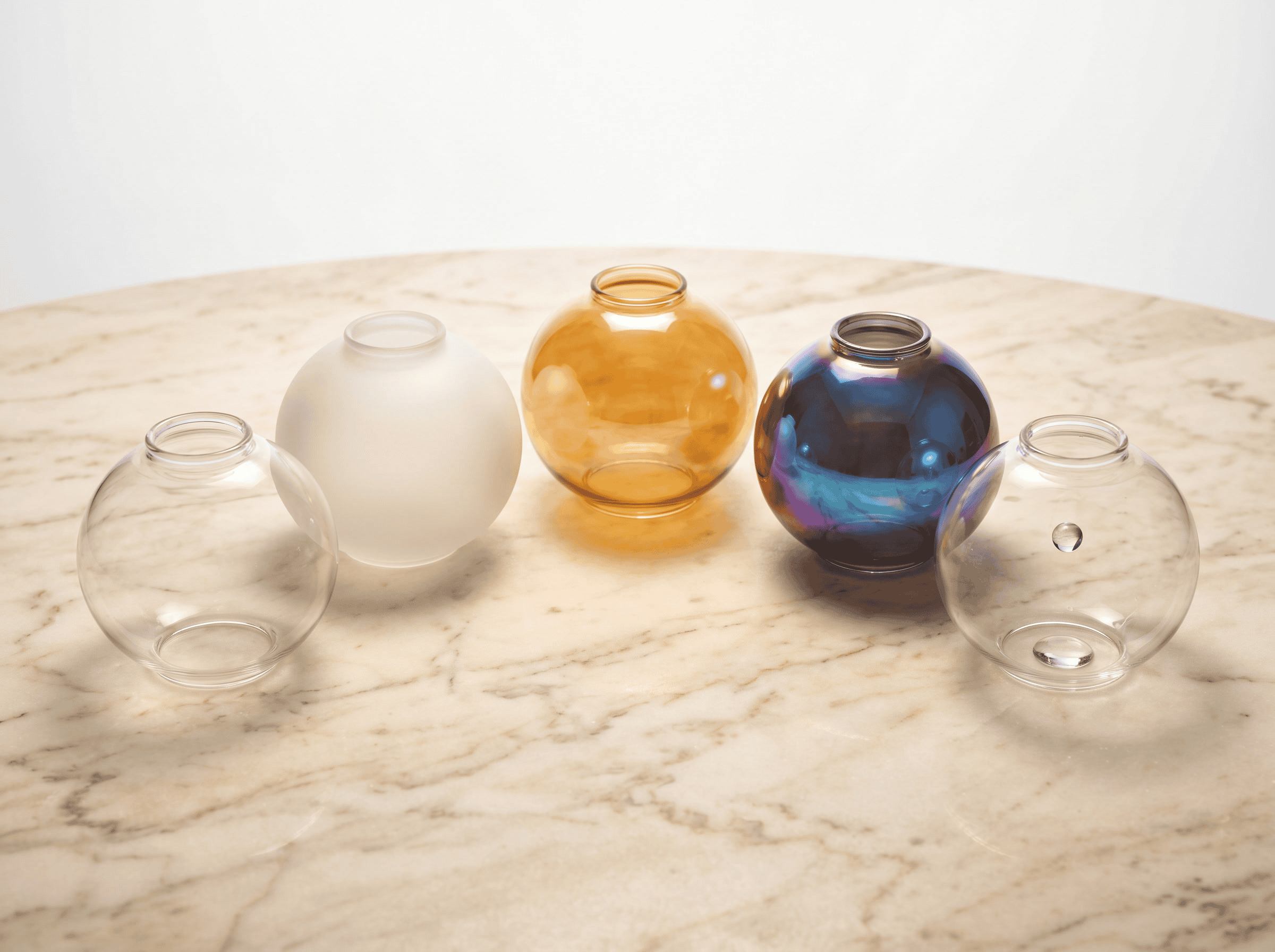
We manufacture a wide range of custom glass lamp shade including blown glass lamp shade , machine pressed glass lamp shade , borosilicate glass lamp shade , centrifugal glass lamp shade ect. Our capabilities cover OEM and ODM production for various applications and industries.
Yes, we provide full OEM and ODM customization services including:
- Custom product design and engineering
- In-house mold development
- Logo printing and branding
- Surface treatments and finishes
- Customized packaging solutions
Yes, our design team can develop custom glassware from your concept. We provide professional design services based on your ideas, reference samples, or functional requirements—no technical drawings needed to start.
Our process ensures quality before mass production
Design confirmation with customer
In-house mold development at our facility
Sample production for approval
Customer testing and feedback
Mass production only after final sample approval
We offer comprehensive custom packaging for safe international shipping:
- Protective inner packaging materials
- Export-grade cardboard cartons
- Custom color boxes and retail packaging
- Label printing and branding
- Packaging designed to international shipping standards
- Inspection at every production stage
- Scientific quality control procedures
- Pre-shipment inspection of every batch
- Compliance with international export standards
- Certified quality management systems
We operate multiple production lines with experienced workers, enabling stable mass production for orders of all sizes. Our facility ensures consistent quality and reliable on-time delivery for both small batches and large-volume orders.
Lead times vary by complexity and quantity:
- Catalog/light customization: 25–30 days for orders up to 1,000 pieces
- Orders of 1,000–5,000 pieces: 35–45 days
- Full custom OEM with new molds: 45–65 days; final timing is confirmed by project
Current market coverage is confirmed during supplier review., including:
- North America (USA, Canada)
- Europe (UK, Germany, France, etc.)
- Asia-Pacific markets
- Middle East
- Africa
- Oceania (Australia, New Zealand)
We maintain a comprehensive global distribution network.