
How Is the Glass Lampshade Designed?
Author: Rae Liu 10+ years Sales Manager
From Concept to Production: The Complete Design Engineering Process for Glass Lighting Covers
The Design Philosophy: Balancing Form, Function, and Manufacturability
Before any technical work begins, effective glass lampshade design requires clarity on three interdependent factors:
Optical Performance: How will the lampshade modify, direct, or diffuse light? Clear glass maximizes transmission for task lighting. Frosted or etched surfaces scatter light for ambient illumination. Colored glass filters specific wavelengths for mood or functional effects. Opal glass, with its milky white appearance and controlled light diffusion (typically 30-70% transmittance), creates soft, glare-free illumination preferred in residential and hospitality settings .
Structural Integrity: The lampshade must withstand thermal stress from the light source, mechanical handling during installation and cleaning, and environmental factors including vibration and impact. Wall thickness, material selection, and edge treatment directly influence durability.
Concept Development and Design Brief Formulation
Defining Requirements and Constraints
- Application Context: Residential, hospitality, commercial, industrial, or outdoor use
- Fixture Type: Table lamp, floor lamp, pendant, chandelier, wall sconce, or ceiling flush mount
- Light Source: Incandescent, halogen, LED, or fluorescent—with significant implications for thermal management
- Dimensional Constraints: Maximum and minimum dimensions based on fixture architecture and spatial requirements
- Mounting Interface: Threaded neck, slip fit, clip retention, or custom mechanical attachment
- Regulatory Requirements: Safety standards, energy efficiency mandates, and environmental regulations
- Production Volume: Prototype quantities, initial production runs, and long-term annual volume projections
- Target Cost Structure: Material, processing, and finishing cost parameters
Preliminary Sketching and Shape Exploration
Empire and Bell Shapes: Narrow at the top and wider at the base, these forms focus light downward while minimizing upward glare. Empire shades excel over reading lamps and bedside tables, while bell shades—with their gracefully flared, curved sides—softly diffuse light in all directions, creating gentle ambient glow ideal for living rooms and entryways.
Drum and Cylinder Forms: With straight sides and equal or near-equal diameters at top and bottom, drum shades offer balanced up-and-down illumination perfect for modern minimalist spaces. Cylinder shapes, taller relative to diameter, emphasize verticality and work beautifully on floor lamps or as pendant clusters, providing concentrated downward beams while allowing ambient light escape.
Dome and Bowl Profiles: These pendant forms point light downward, making them ideal for focused task areas such as kitchen islands, dining tables, or workspaces. Material choices significantly influence whether light is primarily transmitted or reflected, and decorative shadow patterns become an intentional design element.
Spherical and Globular Forms: Classic round shapes provide omnidirectional light distribution. The G9 spherical glass lampshade represents a commonly specified component for LED and halogen applications, requiring precise dimensional control for proper lamp seating and heat dissipation.
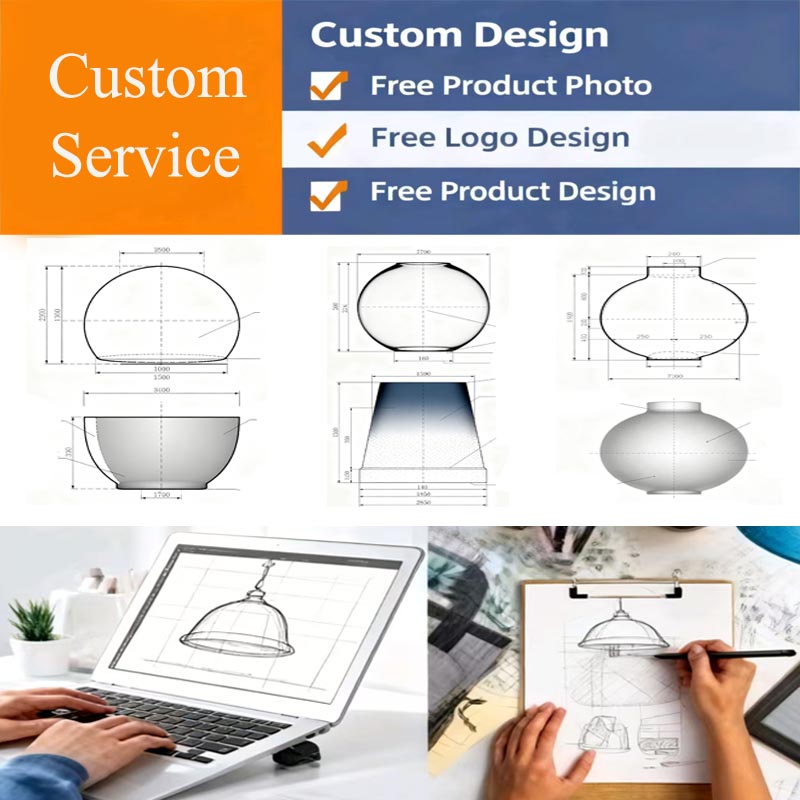
Digital Design and Engineering Development
CAD Modeling and Geometric Definition
- Base Geometry Creation: Establishing the primary silhouette through revolved profiles, lofted surfaces, or sculpted forms. For symmetrical designs like drums, cylinders, and bells, revolving a 2D profile around a central axis generates the basic shape efficiently.
- Detail Development: Adding mounting features, ventilation slots, decorative ridges, or surface textures. Threaded necks for secure fixture attachment, flanged edges for retention systems, and internal light shields are engineered at this stage.
- Wall Thickness Definition: Specifying uniform or variable thickness based on structural requirements, optical performance, and thermal management needs. Uniform thickness simplifies manufacturing and improves forming consistency, while strategic thickness variation can enhance strength in high-stress areas.
- Draft Angle Analysis: Ensuring all surfaces include appropriate draft angles (typically 1-3 degrees) to permit clean release from forming molds. Undercuts and negative draft features significantly complicate mold design and may require multi-piece mold configurations or specialized forming techniques.
- Tolerance Specification: Defining dimensional tolerances for critical features. Standard glass forming tolerances typically range from ±0.5mm to ±2mm depending on size and complexity, with tighter tolerances achievable through secondary grinding operations.
Mold Design Engineering
- Reproduce Design Geometry: Capture all intended surfaces, textures, and features with precision
- Accommodate Glass Flow: Provide adequate venting channels to allow air escape during forming, preventing trapped air bubbles and incomplete filling
- Manage Thermal Exchange: Conduct heat appropriately to achieve controlled cooling and proper glass setting
- Ensure Part Release: Include sufficient draft angles and smooth surface finishes to prevent glass adhesion
- Withstand Production Stress: Resist thermal cycling, mechanical loading, and chemical attack from molten glass
- Cast Iron and Steel Alloys: Durable for high-volume production, capable of achieving smooth surface finishes, but requiring careful thermal management
- Graphite: Excellent thermal conductivity and natural lubricity reduce glass adhesion; preferred for complex shapes and moderate production volumes
- Ceramic Composites: High temperature resistance and chemical inertness; suitable for specialized applications requiring extreme thermal or chemical resistance
Mold fabrication typically requires 2-3 weeks for new designs, with complex geometries or textured surfaces extending this timeline. The process involves precision machining, heat treatment, surface finishing, and dimensional verification before production trials begin.
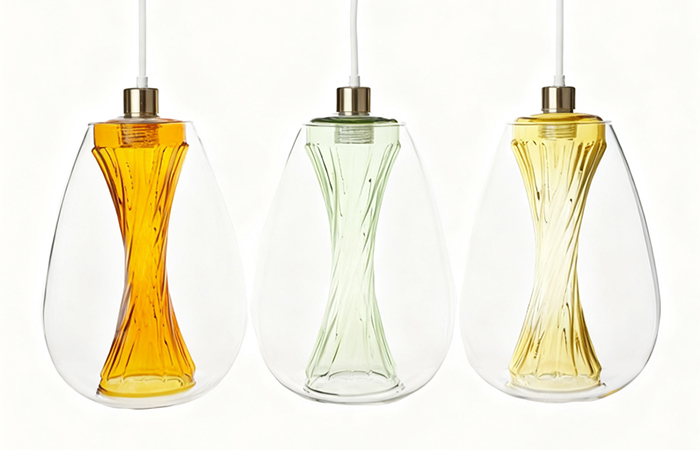
Prototyping and Design Validation
Rapid Prototyping Methods
Before committing to production tooling, designers validate concepts through prototyping:
3D Printed Models: Fused deposition modeling (FDM) or stereolithography (SLA) produces physical form models for aesthetic evaluation, fit checking, and stakeholder review. While these prototypes don’t replicate glass optical properties, they enable assessment of proportion, scale, and spatial relationships at minimal cost and lead time.
CNC Machined Prototypes: For optical evaluation, machined acrylic or polycarbonate prototypes simulate glass light transmission and diffusion characteristics. These prototypes prove particularly valuable for evaluating beam patterns, glare control, and aesthetic light effects before glass production commitment.
Glass Prototyping: For designs pushing material or process boundaries, actual glass prototypes are produced using modified production methods or manual techniques. Hand-blowing or small-batch pressing validates forming feasibility, identifies potential defects, and confirms optical performance.
Functional Testing and Iteration
Prototypes undergo systematic evaluation against design requirements:
Optical Performance Testing: Light distribution measurement, color rendering assessment, and glare evaluation using integrating spheres, goniophotometers, and visual inspection protocols.
Thermal Testing: Evaluation of temperature distribution under operating conditions, identification of hot spots, and verification that maximum surface temperatures remain within safe limits for the application.
Mechanical Fit Verification: Confirmation that mounting interfaces align with fixture components, that retention systems function as intended, and that assembly and disassembly procedures are practical.
Material Selection and Specification
nGlass Composition Options
nThe choice of glass material fundamentally influences every aspect of lampshade performance:
nSoda-Lime Glass: The most widely utilized material, offering favorable balance of workability, clarity, and cost. Suitable for general interior lighting where moderate heat resistance suffices. Typical light transmission exceeds 90% for clear formulations.
nBorosilicate Glass: Engineered for applications requiring superior thermal shock resistance. With a linear thermal expansion coefficient of 3.3×10⁻⁶K⁻¹ conforming to ISO 3585 standards, borosilicate glass withstands temperature differentials up to 300°C without failure. This makes it ideal for high-heat fixtures, industrial applications, and environments with significant temperature variation.
nOpal Glass: Characterized by milky white appearance and controlled light diffusion, opal glass creates soft, glare-free illumination. The degree of opacification can be tailored from semi-opal (partial light transmission with visible source obscuration) to fully opaque (complete source concealment with diffuse output).
nSurface Treatment and Finish Specification
Surface treatments dramatically alter both aesthetic character and functional performance:
Sandblasting and Acid Etching: These processes create matte or satin surfaces that diffuse light and obscure the light source. Acid etching typically produces finer, more uniform texture than mechanical sandblasting. Frosted finishes reduce glare and create ambient lighting effects.
Spray Coating: Specialized glass paints applied via spray gun and cured at 80-120°C enable custom colors and decorative effects. This technique allows precise color matching to brand standards or design palettes.
Electroplating: Metallic deposition (chrome, nickel, or other finishes) enhances reflectivity and corrosion resistance. The process requires thorough surface preparation to ensure adhesion and durability.
Production Design and Manufacturing Integration
Process Selection Based on Design Characteristics
Machine Pressing: Ideal for medium to high volumes (typically 500+ pieces per design), geometric precision, and consistent quality. Molten glass is mechanically pressed into precision molds, producing uniform wall thickness and repeatable dimensions. This process accommodates various glass lampshade models including domes, cylinders, and geometric shapes.
Blow Molding: Suitable for hollow, symmetrical forms such as spheres, bells, and organic shapes. A blowpipe introduces air pressure to expand molten glass within a mold, creating thin, uniform walls. This method excels for delicate, light-transmitting designs.
Hand Blowing: Reserved for artisan, limited-production, or highly customized pieces where organic variation is desirable. Skilled craftsmen manipulate molten glass with tools and breath to create unique forms impossible to replicate mechanically.
Design for Manufacturing (DFM) Optimization
As designs transition from prototype to production, engineers optimize for manufacturability:
Wall Thickness Uniformity: Variations in wall thickness create differential cooling rates during forming, leading to internal stress, warping, and potential failure. DFM review identifies and resolves thickness inconsistencies before mold fabrication.
Corner Radii: Sharp internal corners concentrate stress and create forming difficulties. Minimum radius specifications (typically 2-5mm depending on glass thickness) improve both structural integrity and manufacturing yield.
Undercut Elimination: Features that prevent straight mold release require complex multi-piece molds, increasing tooling cost and production cycle time. DFM review often suggests design modifications that achieve similar aesthetic effects without manufacturing complexity.
Quality Control Integration
Production-oriented design includes specification of inspection points and acceptance criteria:
Dimensional Verification: Critical dimensions are identified with tolerance specifications. Standard tolerances for pressed glass typically range from ±1mm to ±2mm for general features, with tighter tolerances achievable through secondary grinding for mounting interfaces.
Scaling from Custom to Production Volume
Prototype-to-Production Transition
Mold Finalization: Production molds are fabricated based on validated prototype tooling, with refinements incorporated based on trial production feedback. Full-scale mold production requires meticulous machining to ensure uniform cavity thickness distribution, which is essential for structural integrity and consistent quality of the final lampshades.
Process Parameter Development: For machine pressing or blow molding, optimal temperature, pressure, timing, and cooling profiles are established through systematic experimentation. These parameters are documented and controlled to ensure batch-to-batch consistency.
Pilot Production: Limited initial production runs (typically 100-500 pieces) validate process stability, confirm quality levels, and establish production cycle times. Samples from pilot runs undergo comprehensive testing against specifications.
Managing Design Evolution
Successful glass lampshade designs often evolve over time in response to market feedback, material innovations, or regulatory changes:
Design Refresh: Periodic updates to surface treatments, proportions, or decorative details maintain product relevance without requiring complete redesign.
Material Substitution: Advances in glass composition or coating technology may enable performance improvements (better thermal resistance, enhanced light output) or cost reduction.
Application-Specific Design Considerations
Residential and Hospitality Lighting
- Warmth and Comfort: Opal and soft white glass creates inviting atmospheres. Color temperatures are managed through glass tinting or coating.
- Scale and Proportion: Lampshade dimensions must harmonize with fixture bases and room proportions. Standard sizes range from small accent shades (150mm diameter) to substantial statement pieces (400mm+).
- Glare Control: Frosted, etched, or ribbed surfaces diffuse point-source LEDs and prevent uncomfortable direct glare.
- Cleanability: Smooth, non-porous surfaces withstand regular cleaning without degradation.
Commercial and Office Environments
- Uniform Illumination: Diffusing glass ensures even light distribution across work surfaces, reducing eye strain and improving productivity.
- Energy Efficiency: High-transmission clear glass maximizes light output from efficient LED sources, reducing energy consumption.
- Durability: Thicker walls, tempered glass, and robust mounting features withstand commercial handling and extended service life.
- Regulatory Compliance: Designs must meet relevant safety standards, electromagnetic compatibility requirements, and accessibility guidelines.
Industrial and Hazardous Area Lighting
- Impact Resistance: Thick-walled borosilicate or tempered glass withstands mechanical abuse in demanding environments.
- Thermal Management: Designs accommodate high-heat sources and extreme ambient temperature variations.
- Explosion Containment: For hazardous area fixtures, glass lampshades must withstand internal pressure pulses and prevent flame transmission.
- Chemical Resistance: Glass compositions resist degradation from corrosive atmospheres, cleaning agents, and environmental contaminants.
Outdoor and Architectural Lighting
Environmental durability drives design decisions:
- Weather Resistance: UV-stable glass compositions prevent solarization and discoloration. Thermal shock resistance accommodates rapid temperature changes.
- Ingress Protection: Designs integrate with sealing systems to achieve IP66, IP67, or IP68 ratings against dust and moisture.
- Vibration Tolerance: Robust mounting and adequate wall thickness withstand wind loading, traffic vibration, and structural movement.
- Aesthetic Integration: Glass color, texture, and form complement architectural design language while meeting photometric requirements.
Sourcing Custom Glass Lampshade Design Services
Evaluating Design and Manufacturing Partners
- Portfolio of completed projects demonstrating range of styles, scales, and applications
- In-house CAD/CAM capabilities and design engineering staff
- Experience with relevant glass materials and manufacturing processes
- Understanding of lighting performance requirements and optical design principles
- Rapid turnaround for concept models and functional prototypes
- Access to multiple prototyping methods (3D printing, machining, glass forming)
- Iterative refinement process based on testing feedback
- Appropriate forming equipment (press machines, blow molding stations)
- In-house mold design and fabrication capabilities
- Finishing and decoration lines (grinding, polishing, coating, plating)
- Quality control laboratory and testing equipment
The Collaborative Design Process
Effective custom glass lampshade development follows a structured collaboration:
- Requirements Definition: Detailed brief capturing functional, aesthetic, and commercial requirements
- Concept Presentation: Supplier presents preliminary design concepts with material recommendations and manufacturing approach
- Design Development: Selected concept is refined through CAD modeling, with client review and approval gates
- Prototype Production: Physical prototypes produced for evaluation and testing
- Design Finalization: Approved design transferred to production engineering with mold fabrication
- Pilot Production: Initial production run validates process and confirms quality
- Full Production: Scaled manufacturing with ongoing quality monitoring
Frequently Asked Questions (FAQ)
A: Concept development through prototype validation generally requires 4-8 weeks, depending on design complexity and revision cycles. Mold fabrication adds 2-3 weeks. Simple modifications to existing designs may complete in 2-3 weeks, while complex custom developments with extensive prototyping could extend to 12 weeks or more. Rush programs are sometimes available for urgent projects, though expedited timelines may limit iteration opportunities or increase costs.
A: Machine pressing accommodates a wide range of geometric forms including domes, dishes, cylinders, cones, pyramids, and custom profiles derived from CAD models. The process excels at axisymmetric shapes with adequate draft angles. Complex undercuts, deep re-entrant curves, or significant asymmetry may require alternative forming methods such as blow molding or hand fabrication. Discuss your specific shape requirements with your manufacturer to confirm process suitability.
A: Shape fundamentally determines light behavior: Empire and bell shapes focus light downward while providing ambient side illumination, making them ideal for task and accent lighting. Drum and cylinder forms offer balanced up-and-down light distribution, suitable for general ambient illumination in modern interiors. Dome and bowl profiles direct light downward for focused task areas like dining tables and kitchen islands. Geometric shapes (rectangular, hexagonal) create directional light patterns and architectural shadow effects. The specific performance depends on combining shape with material transmission properties and surface finish.
A: Standard manufacturing capabilities typically span from approximately 40mm to 400mm in diameter, with specialized equipment accommodating up to 600mm or larger for statement fixtures. Wall thickness ranges from 2mm for delicate decorative pieces to 15mm or greater for industrial applications requiring enhanced durability. Height-to-diameter proportions vary widely based on design intent, from shallow dish forms to tall cylindrical pendants. Confirm specific size capabilities with your manufacturer, as equipment limitations vary between suppliers.
A: Yes, multiple coloration methods are available. Bulk coloration incorporates pigments into the molten glass batch, producing consistent through-body color. Surface coating techniques—including spray painting (cured at 80-120°C), dip coating, and vacuum deposition—apply color to the surface while maintaining clear glass properties underneath. Color matching to Pantone, RAL, or physical samples is typically achievable. Note that bulk colored glass requires higher minimum volumes due to batch furnace requirements, while surface coating accommodates lower quantities with greater flexibility.
A: Extensive options exist: mold-integrated textures transfer patterns directly during forming, including ribbing, fluting, geometric patterns, and organic textures. Post-forming treatments include sandblasting or acid etching for matte/satin finishes, engraving for precise linear or pictorial designs, and applied decorative elements. Fire polishing creates high-gloss clarity, while selective frosting combines polished and matte areas for sophisticated effects. Laser etching enables highly detailed logos, patterns, or text. Discuss specific texture requirements early in design development, as mold complexity and finishing process selection depend on pattern intricacy.
Conclusion
Common Questions
Yancheng Jingxin Glassware Co., Ltd. is a professional glass manufacturer established in 1999. We operate our own production base and office area of more than 48,430 sq ft (approximately 4,500 m²), integrating design, manufacturing, quality control, and export services.
We manufacture a wide range of custom glass lamp shade including blown glass lamp shade , machine pressed glass lamp shade , borosilicate glass lamp shade , centrifugal glass lamp shade ect. Our capabilities cover OEM and ODM production for various applications and industries.
Yes, we provide full OEM and ODM customization services including:
- Custom product design and engineering
- In-house mold development
- Logo printing and branding
- Surface treatments and finishes
- Customized packaging solutions
Yes, our design team can develop custom glassware from your concept. We provide professional design services based on your ideas, reference samples, or functional requirements—no technical drawings needed to start.
Our process ensures quality before mass production
Design confirmation with customer
In-house mold development at our facility
Sample production for approval
Customer testing and feedback
Mass production only after final sample approval
We offer comprehensive custom packaging for safe international shipping:
- Protective inner packaging materials
- Export-grade cardboard cartons
- Custom color boxes and retail packaging
- Label printing and branding
- Packaging designed to international shipping standards
- Inspection at every production stage
- Scientific quality control procedures
- Pre-shipment inspection of every batch
- Compliance with international export standards
- Certified quality management systems
We operate multiple production lines with experienced workers, enabling stable mass production for orders of all sizes. Our facility ensures consistent quality and reliable on-time delivery for both small batches and large-volume orders.
Lead times vary by complexity and quantity:
- Catalog/light customization: 25–30 days for orders up to 1,000 pieces
- Orders of 1,000–5,000 pieces: 35–45 days
- Full custom OEM with new molds: 45–65 days; final timing is confirmed by project
Current market coverage is confirmed during supplier review., including:
- North America (USA, Canada)
- Europe (UK, Germany, France, etc.)
- Asia-Pacific markets
- Middle East
- Africa
- Oceania (Australia, New Zealand)
We maintain a comprehensive global distribution network.