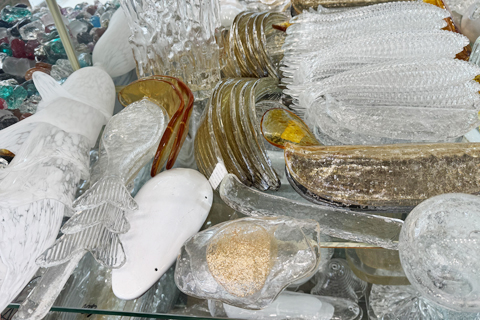
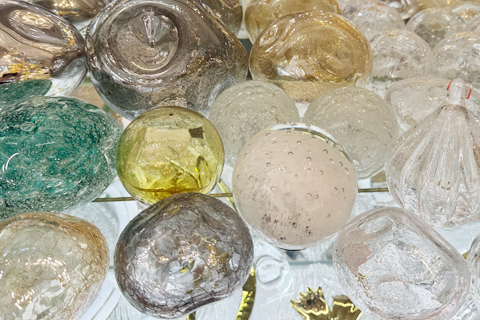
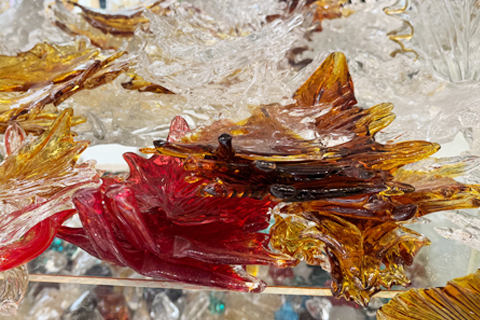
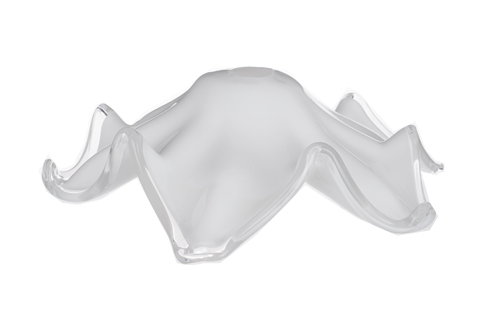
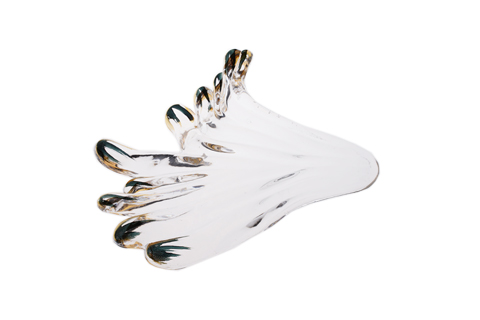
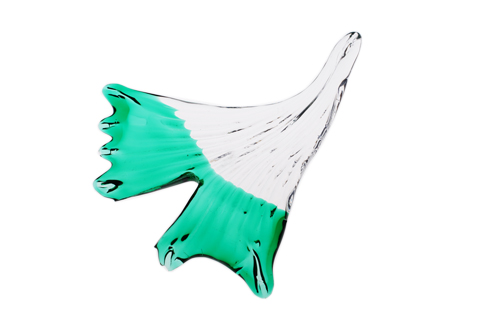
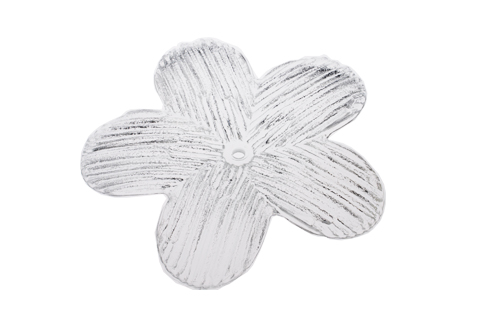
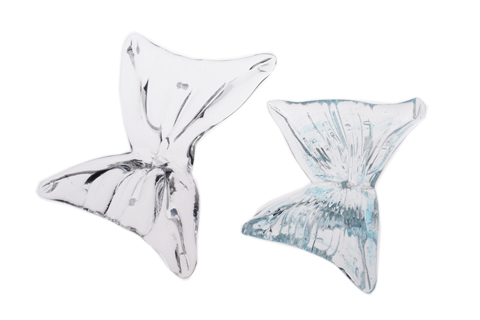
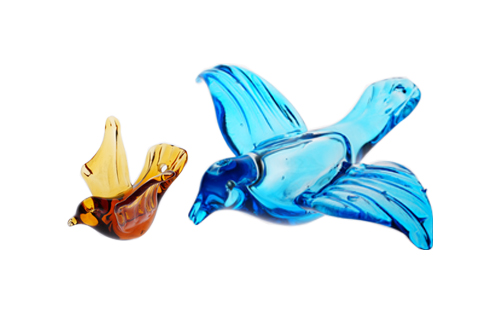
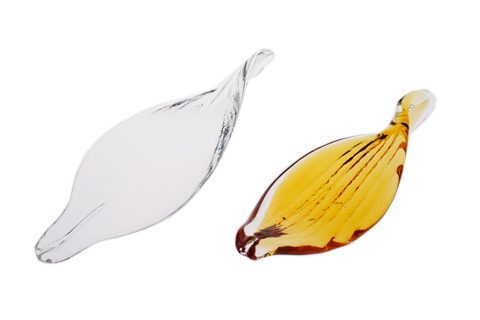
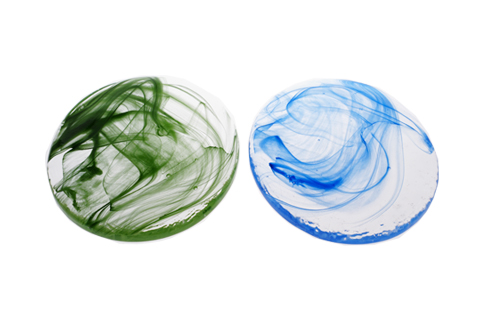
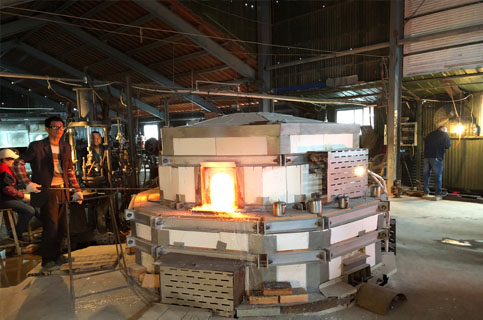
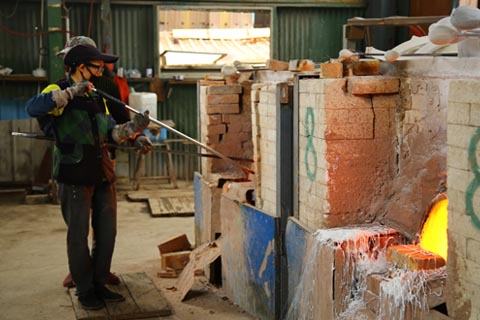
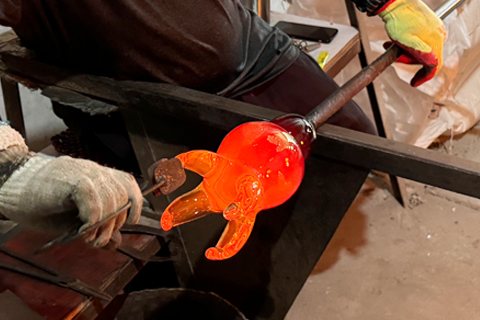
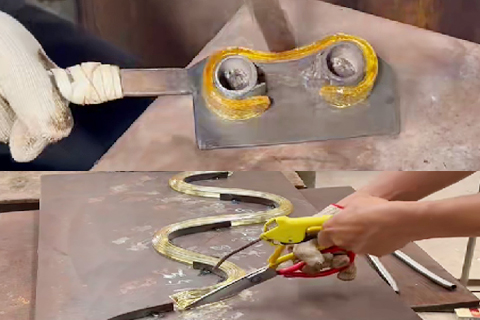
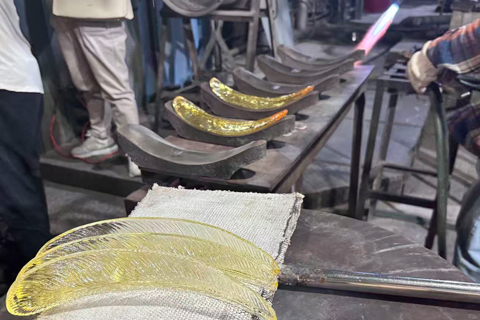
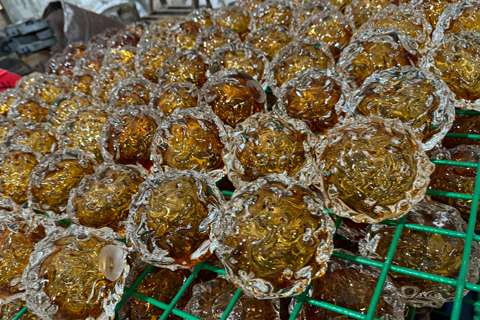
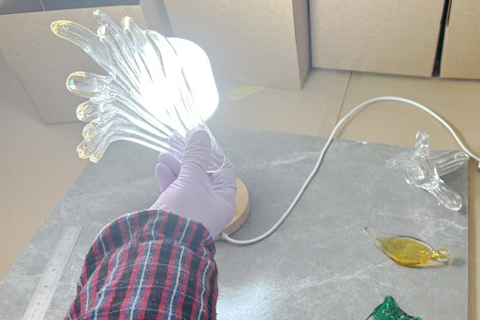
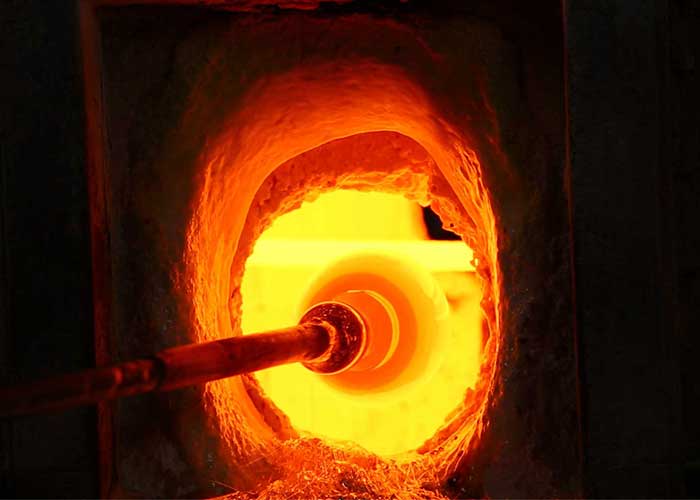
Cúpulas de vidro feitas à mão são produzidas através de técnicas artesanais tradicionais, onde cada peça é moldada individualmente por um artesão habilidoso, em vez de ser formada em máquinas automatizadas. A categoria abrange várias técnicas específicas, incluindo sopro à boca (coletando vidro fundido em um tubo de sopro e inflando com a respiração), lampworking (moldando tubos de borossilicato com a chama de um maçarico) e puxar à mão (desenhando vidro fundido em formas personalizadas com ferramentas manuais). Cada cúpula feita à mão apresenta variações sutis individuais na espessura da parede, precisão dimensional e caráter da superfície que a distinguem de contrapartes idênticas feitas por máquinas. A taxa de produção é dramaticamente menor do que a formação automatizada – tipicamente 30-80 peças por artesão por dia, dependendo da complexidade, em comparação com 800-1500 peças por turno para prensagem mecânica. A designação feita à mão representa tanto um método de fabricação quanto uma estética de design favorecida pelos mercados de hospitalidade de luxo, residências de designers e varejo boutique, onde o caráter único é mais valioso do que a consistência da produção em massa uniforme.
Cada cúpula de vidro feita à mão é única de maneiras sutis, mesmo quando feita de acordo com a mesma especificação de design, porque o processo de formação manual introduz pequenas variações que a produção em máquina elimina. Variações naturais típicas incluem espessura da parede variando de 0,5 a 1,5 mm entre as seções superior e inferior, diâmetro externo variando em +/- 3 mm mesmo dentro do mesmo lote de produção, leve assimetria de 1 a 3 mm entre lados opostos, pequenas bolhas ocasionais (chamadas de sementes, 0,1-0,5 mm) presas durante a formação, e sutis ondulações na superfície visíveis sob luz de arraste. Essas variações são avaliadas em relação a padrões de qualidade publicados, em vez de serem tratadas como defeitos – elas são evidências de um artesanato autêntico valorizado nos mercados de luxo e design. Os compradores devem revisar peças de amostra para calibrar os critérios de aceitação antes da aprovação da produção em massa. Para instalações que exigem pares ou sequências perfeitamente combinados, oferecemos produção em conjunto combinado, onde artesãos produzem peças extras e o subconjunto que mais se aproxima é selecionado e embalado junto.
Vidro feito à mão e vidro feito por máquina têm durabilidade comparável quando feitos do mesmo material base (ambos tipicamente soda-lima ou borossilicato), sem diferença significativa na resistência à tração, resistência a arranhões ou vida útil sob uso normal. No entanto, as sombras feitas à mão frequentemente têm espessura de parede variável que cria zonas mais fortes e mais fracas localizadas – as seções mais grossas são ligeiramente mais resistentes a impactos, enquanto as seções mais finas são ligeiramente mais vulneráveis a quebras. Na prática, essa variação raramente importa porque ambos os tipos de sombras enfrentam os mesmos desafios de impacto e térmicos em instalações de iluminação. O que difere entre feito à mão e feito por máquina é a disponibilidade de reposição – sombras feitas por máquina normalmente permanecem em produção por 5-10+ anos com disponibilidade consistente de reordenação, enquanto sombras feitas à mão dependem do artesão específico e podem se tornar indisponíveis se esse artesão se aposentar ou se o design for descontinuado. Para instalações de alto valor, considere encomendar 10-15% de estoque extra na compra original para necessidades futuras de reposição.
Cúpulas de vidro feitas à mão funcionam com a maioria dos tipos de lâmpadas comuns, incluindo LED (recomendado), CFL, halógena, incandescente e lâmpadas de filamento Edison, com a seleção de material determinando limites específicos de compatibilidade. Sombras feitas à mão de vidro de soda-lima lidam com segurança com lâmpadas que produzem temperaturas de superfície de até 180C, cobrindo todas as lâmpadas LED e CFL e a maioria das lâmpadas halógenas e incandescentes abaixo de 60W em luminárias abertas. Para lâmpadas de filamento Edison (geralmente operando a temperaturas de superfície de 200-260C) ou qualquer luminária fechada onde o calor se acumula, recomendamos especificar construção em borossilicato feita à mão, que suporta temperaturas de serviço contínuas de até 450C. Recomendamos fortemente lâmpadas LED para instalações de vidro feitas à mão porque a saída de luz LED complementa o caráter óptico do vidro feito à mão sem expor a sombra a estresse térmico desnecessário. Lâmpadas LED classificadas em 800-1100 lumens (8-12W) geralmente fornecem a iluminação equivalente a uma lâmpada incandescente tradicional de 60-75W enquanto operam 70% mais frias, prolongando a vida útil da sombra e reduzindo o custo de energia ao longo da vida útil da instalação.
Os pedidos de cúpulas de lâmpadas artesanais normalmente exigem um prazo de entrega específico para o projeto, desde o pagamento do depósito até a prontidão para envio, variando de acordo com a quantidade do pedido, a complexidade do design e a programação atual de produção. O prazo detalha-se em 5 a 8 dias para a preparação de matérias-primas, incluindo a fusão de lotes de vidro ou aquisição de tubos de borossilicato, 3 a 5 dias para a configuração do artesão e ferramentas específicas do design, 20 a 35 dias para a produção real a taxas típicas de 30 a 80 peças por artesão por dia, dependendo da complexidade, 4 a 6 dias para recozimento controlado em fornos com temperatura gerenciada para aliviar o estresse interno, e 3 a 4 dias para inspeção, verificação de qualidade e embalagem. Pedidos de design personalizado exigem 20 a 35 dias adicionais para desenvolvimento de protótipos, aprovação de amostras e confirmação do método de produção antes do início da produção em massa. O frete marítimo a partir dos portos de Xangai ou Ningbo adiciona 25 a 40 dias para destinos de entrega na Europa, América do Norte ou outras regiões. O cronograma total de porta a porta é tipicamente de 80 a 110 dias, portanto, planeje grandes compras artesanais com bastante antecedência em relação às datas de instalação necessárias.
Cúpulas de vidro feitas à mão estão disponíveis em uma ampla gama de tamanhos, desde pequenos pendentes decorativos de 60mm até grandes peças arquitetônicas de 600mm, com formas que incluem esferas, formas de sino, sombras cônicas, formas de cabaça, designs artísticos orgânicos em livre formato, texturas estriadas e facetadas, e formas personalizadas de especificações de designers. O limite prático de tamanho depende da técnica – sopro à boca suporta sombras de até 400-500mm antes de se tornar impraticável para o manuseio do artesão, enquanto o trabalho com lâmpadas é melhor para peças abaixo de 350mm. Tamanhos maiores podem ser produzidos por meio de técnicas especializadas ou pela montagem de múltiplos componentes, mas geralmente requerem desenvolvimento personalizado. A complexidade da forma é limitada principalmente pela habilidade do artesão e pela economia de produção – formas muito complexas aumentam o custo por peça em 30-100% em relação a designs geométricos simples e podem exigir períodos de treinamento mais longos para a equipe de produção. Mantemos um catálogo de mais de 200 designs padrão feitos à mão e desenvolvemos aproximadamente 30-50 novos designs personalizados anualmente para clientes de marcas de designers.
Sim, reproduzimos rotineiramente Cúpulas de vidro feitas à mão para combinar com designs existentes, amostras de outros fabricantes, peças vintage que precisam de substituição ou conceitos originais de designers fornecidos como esboços ou protótipos físicos. O processo de reprodução começa com medições detalhadas e análise da peça de referência, incluindo documentação dimensional, mapeamento da espessura da parede, espectrofotometria de cor e caracterização da textura da superfície. A partir dessa análise, desenvolvemos especificações de produção e criamos de 3 a 5 peças de amostra para comparação do comprador com o original. A precisão típica de correspondência está dentro de 95-97% da aparência visual original, embora a reprodução exata de peças antigas ou originais artísticos únicos possa exigir refinamento iterativo ao longo de 2 a 4 rodadas de amostras. Os custos de desenvolvimento de reprodução geralmente variam de R$ 1.400 a R$ 1.800, dependendo da complexidade, com a produção subsequente a preços padrão de produtos feitos à mão. Respeitamos os direitos de propriedade intelectual e exigimos documentação de propriedade do design antes de reproduzir designs de marcas ou protegidos por direitos autorais.
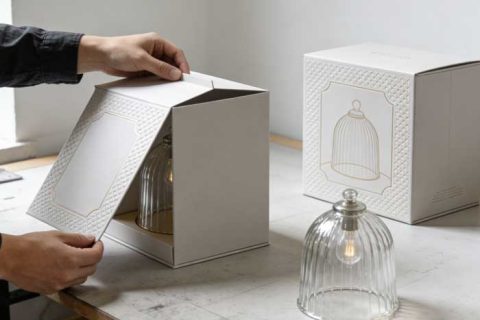
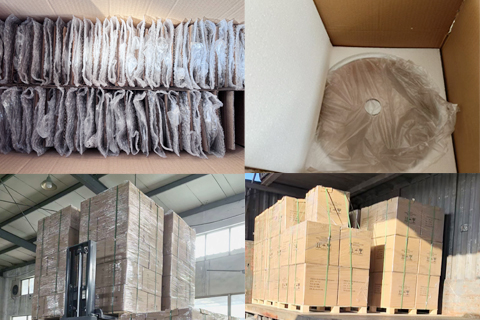
Cúpulas de vidro feitas à mão recebem proteção de embalagem aprimorada além dos envios padrão feitos por máquina devido às suas paredes tipicamente mais finas, formas assimétricas e maior valor por peça. Cada sombra é primeiro envolta em papel tissue livre de ácido para evitar marcas de contato na superfície, depois em espuma EPE cortada sob medida de 5-10mm moldada para a geometria específica da peça, em seguida colocada em suportes de papelão ondulado cortados a laser que seguram de 6 a 24 peças por caixa interna, dependendo do tamanho, e finalmente carregada em caixas mestres de exportação de 5 camadas com reforço nos cantos e acolchoamento na parte inferior. Para peças com mais de 300mm de diâmetro, valor excepcional ou formas orgânicas frágeis, usamos moldagem por injeção de espuma diretamente ao redor de cada sombra e adicionamos embalagens de madeira com acolchoamento interno de espuma. As caixas mestres são paletizadas com protetores de borda e envoltas em filme stretch para transporte marítimo. Este protocolo de embalagem aprimorado manteve as taxas de quebra de sombras feitas à mão abaixo de 0,5% ao longo de mais de 7 anos de envios de marcas de designer e hospitalidade de luxo para mais de 60 países.
Cúpulas de vidro feitas à mão custam de 2 a 4 vezes mais do que as alternativas feitas por máquinas devido a diferenças fundamentais na entrada de mão de obra, taxa de produção, rendimento de material e investimento em treinamento de artesãos. A entrada de mão de obra é de aproximadamente 8 a 20 minutos por peça em comparação com 4 a 6 segundos para prensagem mecânica, representando de 80 a 200 vezes mais custo de mão de obra por unidade. A taxa de produção é de 30 a 80 peças por artesão por dia em comparação com 800 a 1500 peças por turno de máquina, exigindo mais capacidade de produção para um volume equivalente. O rendimento de material é tipicamente de 85-92% (algumas peças falham durante a formação ou recozimento) em comparação com 98-99% para a produção mecânica, aumentando o custo do material por peça acabada. O treinamento de artesãos para habilidades de qualidade de produção leva de 5 a 8 anos, com nossos mestres artesãos tendo de 15 a 25 anos de experiência. O prêmio de preço é justificado para mercados de hospitalidade de luxo, residenciais de designers e varejo boutique, onde o caráter individual de cada peça apoia o posicionamento de produto premium. Para iluminação de alta volume e commodities, a prensagem mecânica continua sendo a escolha econômica prática.
Sim, as cúpulas de vidro feitas à mão podem atender aos requisitos de componentes de vidro para as principais certificações, incluindo UL 1598 (padrão de luminárias dos EUA), CE EN 60598 (padrão de luminárias europeu), CCC (Certificação Compulsória da China) e certificação do esquema CB, com o material de vidro subjacente em conformidade com os requisitos gerais da indústria de iluminação. O processo de certificação se aplica à montagem completa do dispositivo em vez de apenas ao componente de vidro, portanto, as cúpulas de vidro feitas à mão geralmente se integram a designs de luminárias certificados fornecidos por fabricantes de dispositivos. Fornecemos relatórios de teste de componentes de vidro cobrindo resistência térmica conforme IEC 60068, amostragem dimensional conforme a especificação do comprador, análise de composição de material e documentação de rastreabilidade de lote necessária para auditorias de certificação. Para clientes de marcas de designers de alto volume que buscam certificação UL ou CE de seus dispositivos finais, fornecemos arquivos técnicos incluindo desenhos detalhados de vidro, registros de lote e certificados de análise. Testes de laboratório de terceiros através da SGS, Intertek ou TUV estão disponíveis a um custo adicional quando a verificação independente é necessária para submissões de certificação.