
Borosilicate glass safety, without blanket claims
Is Borosilicate Glass Toxic? Safety Facts for Lighting Buyers
Usually, no. An intact, uncoated borosilicate glass lamp shade is not generally expected to create a toxicity exposure during normal lighting use. The word “borosilicate,” however, does not prove the chemistry of every color, coating or adhesive, and it does not certify the finished luminaire.
This guide is about glass lamp shades. Cookware, food-contact containers and pharmaceutical vials have different exposure routes and test requirements.
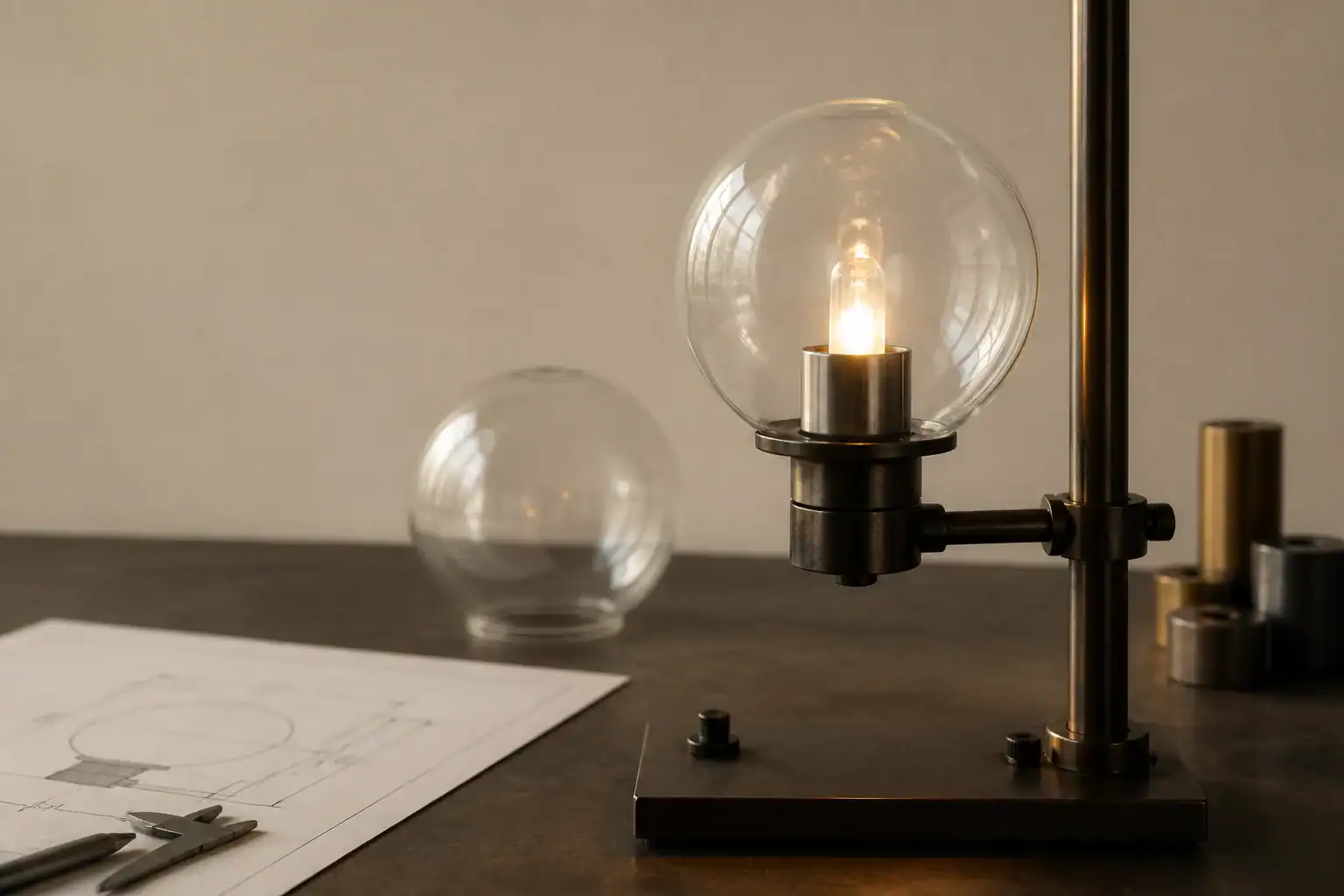
Direct answer
The Short Answer
For a finished lighting product, five questions sit behind the word “safe.” The public-health distinction matters. ATSDR’s silica guidance separates routine contact with commercial products from work that creates fine airborne dust.
The base glass
Intact borosilicate is a stable, non-crystalline glass material. Ordinary public contact with the finished article is different from a dust exposure.
Processing dust
Cutting, grinding and polishing create a workplace exposure that needs process controls, eye protection and a risk assessment.
Added finishes
Paint, ink, mirrored layers, adhesives and other decorations need their own material declarations or tests.
Heat and breakage
A shade can chip, break or overheat. “Non-toxic” does not mean “unbreakable” or suitable for any lamp source.
The full luminaire
Electrical and product-safety certification covers a defined assembly, not the glass family name alone.
Material identity
What Borosilicate Glass Actually Tells You
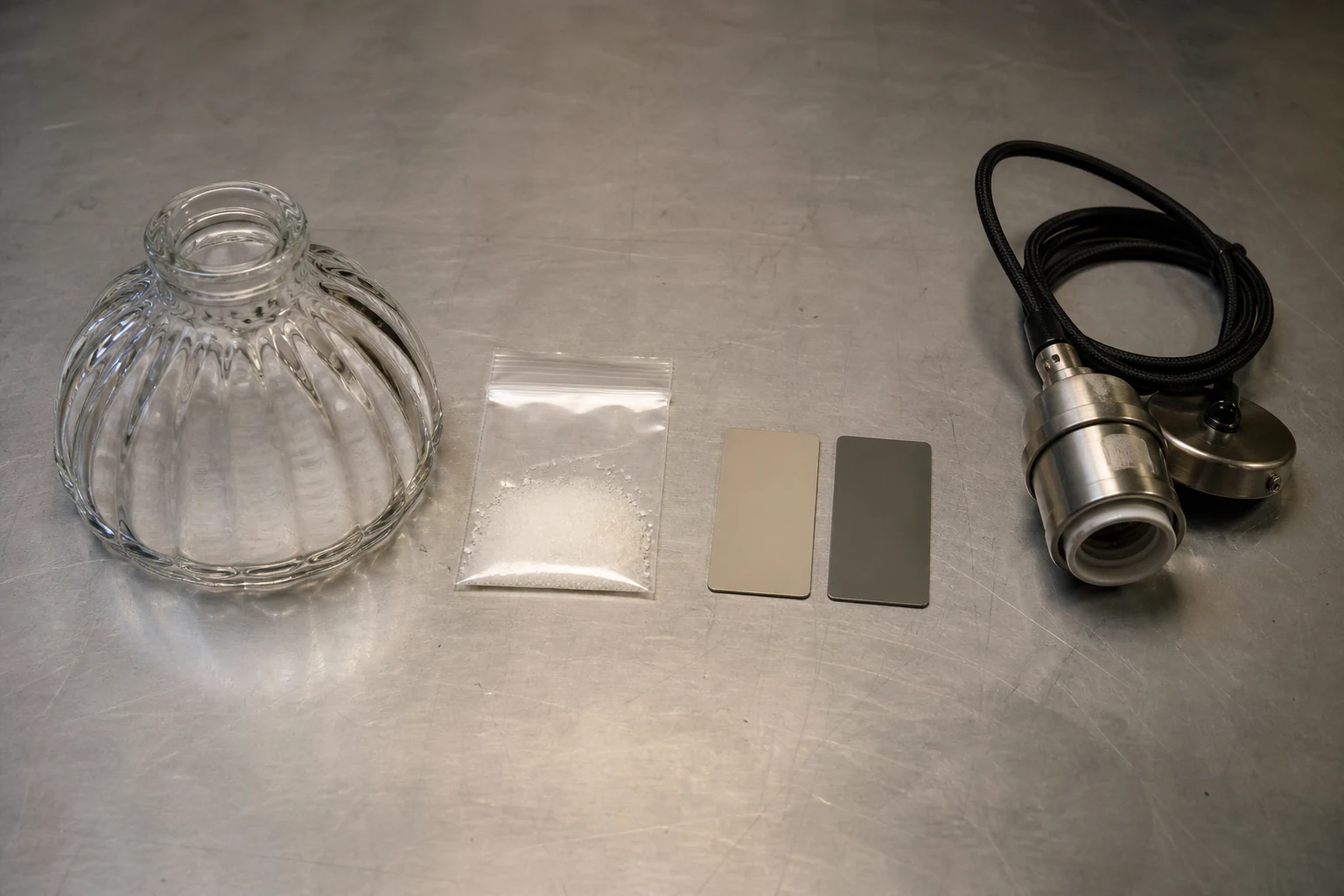
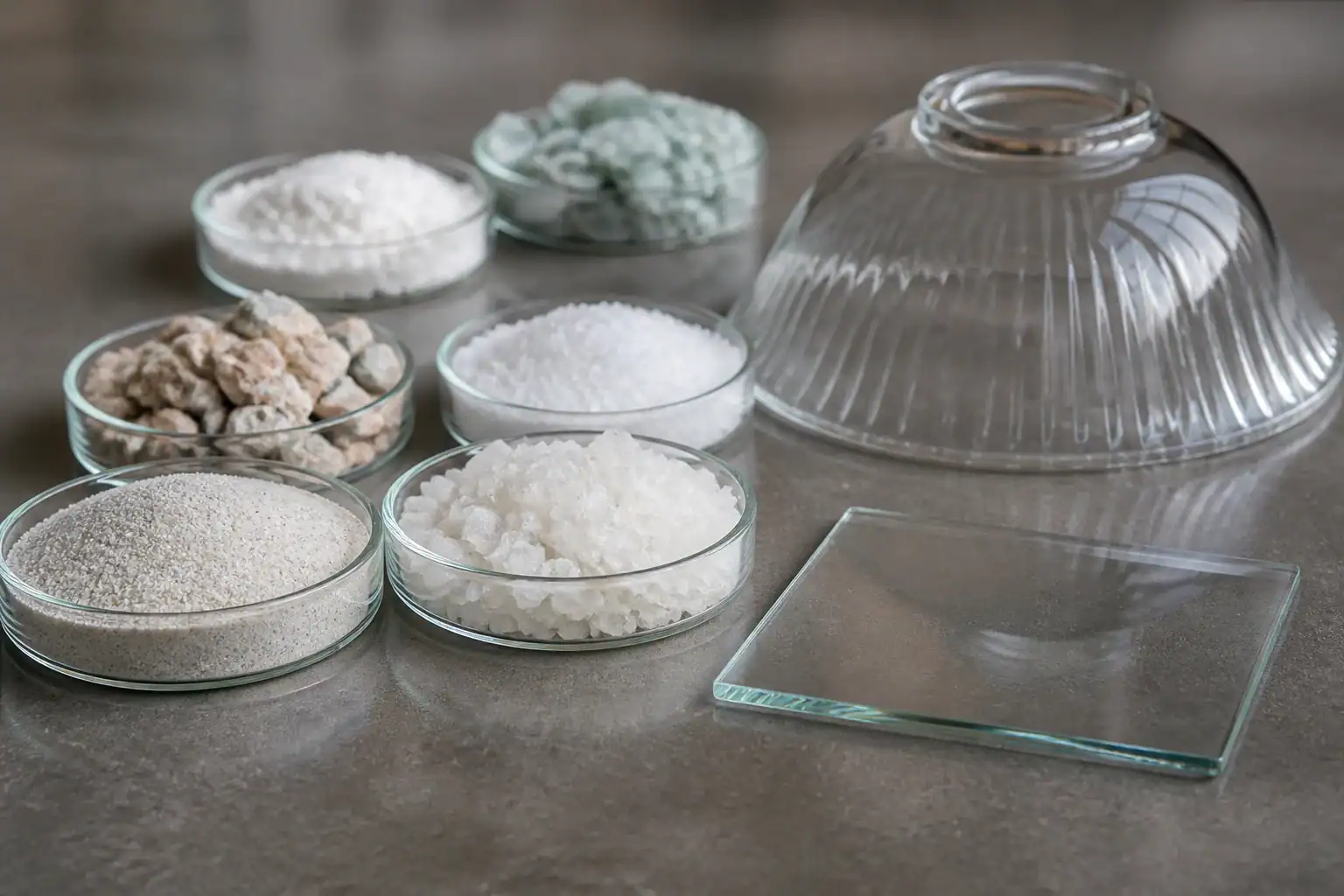
Borosilicate is a family of glass compositions that use boron oxide to change the glass network. A common result is lower thermal expansion and better chemical durability than many conventional soda-lime formulations. It is a material category, not one universal recipe.
This is why a named grade matters. SCHOTT publishes composition-related performance for its own BOROFLOAT 33 material, including thermal expansion and chemical-resistance data. Those numbers are evidence for that grade and test method, not automatic specifications for every borosilicate shade. Review the manufacturer’s technical data for its scope and reference conditions.
Ask two questions:
- Which glass grade or controlled composition is proposed?
- Which document connects that material to the actual shade sample being approved?
Normal handling
Is an Intact Borosilicate Lamp Shade Safe to Handle?
Under normal use, a clean, intact and uncoated shade is handled as a solid glass article. It does not behave like a bag of silica powder, and it does not contain the plastic additives that buyers sometimes have in mind when they ask a “non-toxic” question.
That answer has limits. A chipped rim can cut a hand. Broken glass creates sharp fragments. A painted or mirrored surface adds another material system. None of those issues can be settled by the base-glass name.
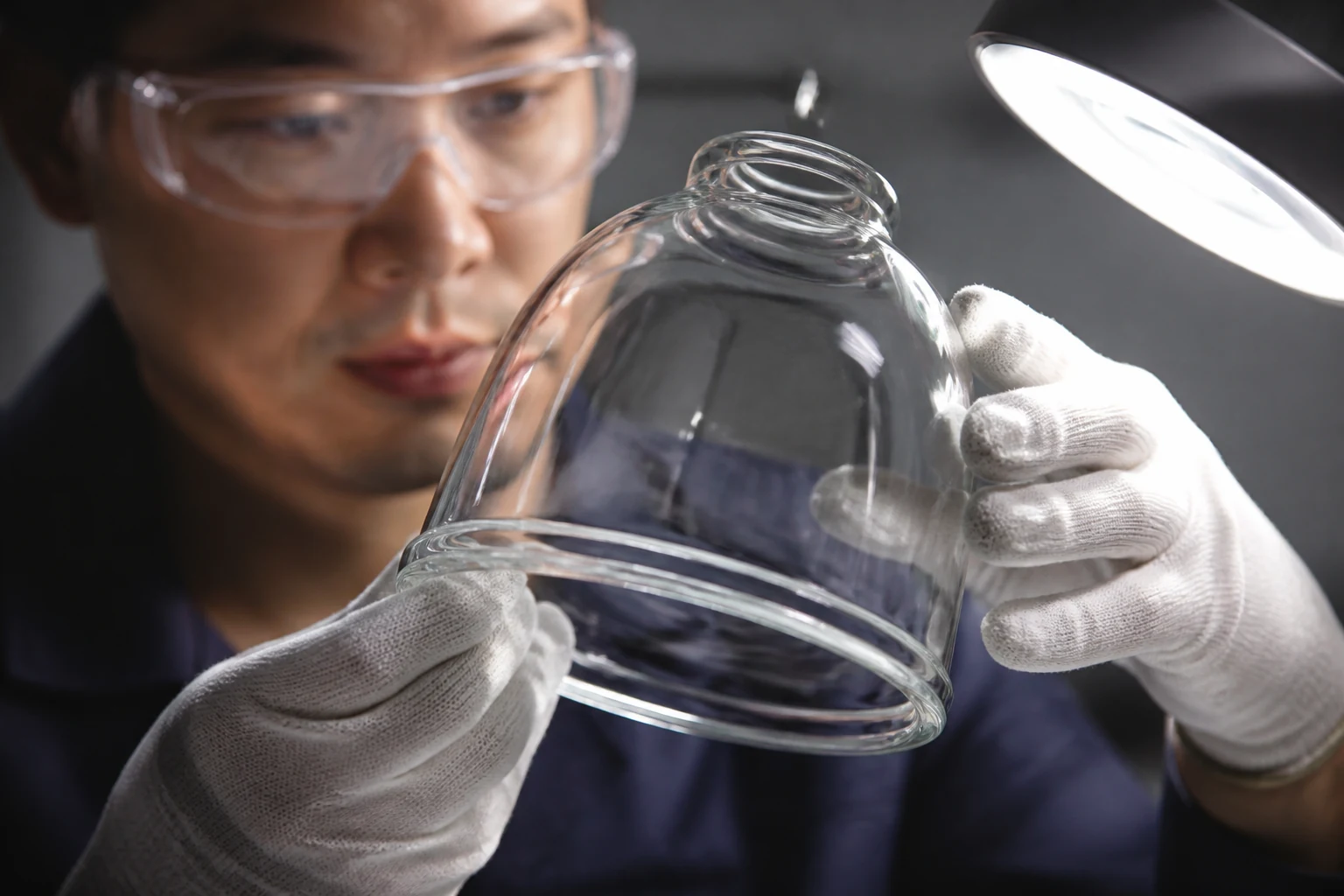
Incoming inspection should look for:
- chips, cracks and sharp edge damage;
- residue or an oily film on either surface;
- coating overspray near the fitter or open rim;
- finish flaking after the agreed adhesion check;
- a mismatch between the approved sample and delivered item.
Workshop exposure
The Real Inhalation Question Starts When Glass Is Cut or Ground
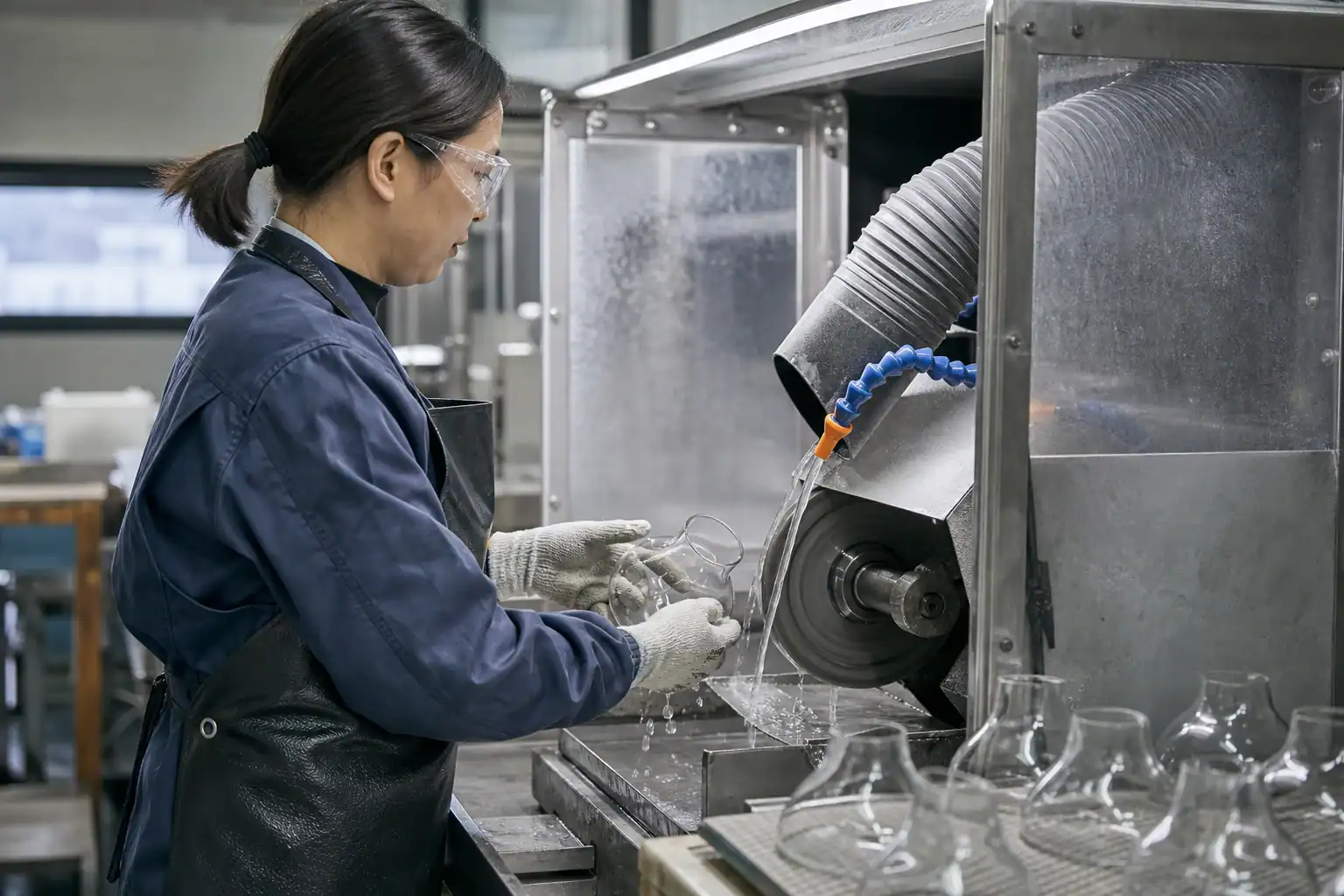
Finished glass and airborne glass dust are different exposure conditions. Grinding a rim, drilling a hole or cleaning dry dust from a workstation can put fine particles into the air. The correct controls depend on the material, particle size, process and measured exposure.
NIOSH lists inhalation and eye contact as exposure routes for amorphous silica and notes irritation of the eyes and respiratory system. Its Pocket Guide entry for amorphous silica is an occupational reference, not a warning that an installed shade poisons a room.
A responsible glass-processing route starts with engineering and housekeeping controls. Wet processing, local extraction, guarded equipment and suitable cleaning methods reduce dust at the source. PPE is then selected from the actual risk assessment. Buyers can ask how rim grinding, drilling and rejected-glass cleanup are controlled instead of accepting a vague “safe material” statement.
Finish chemistry
Clear Glass Does Not Prove That Every Finish Is Non-Toxic
The base glass may be stable while a decorative layer still needs review. Colored enamels, sprayed paints, mirrored coatings, printed inks, frosting chemicals and assembly adhesives all have their own formulations and curing processes.
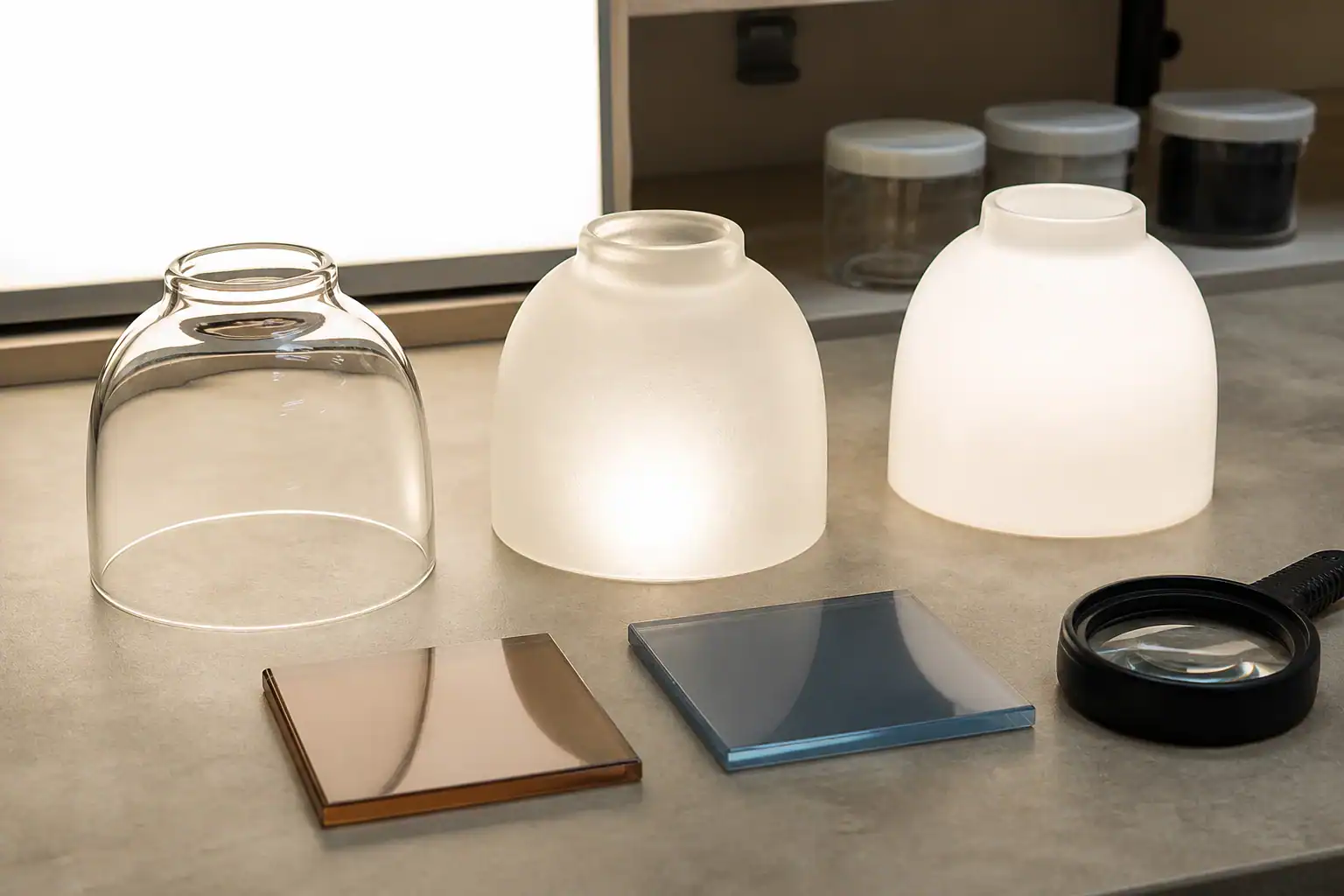
For a colored, opal, mirrored or printed shade, ask the supplier to identify which layer creates the appearance. Then define the evidence required for the destination market and intended use. Depending on the project, that could include a restricted-substance declaration, a supplier specification, a third-party report or an SDS for a process material.
Do not ask only, “Is it lead-free?” A more useful request is: “Confirm the base glass, each applied finish, the report number, the tested sample and the applicable limit.” That wording makes it harder to substitute a generic certificate from another product.
Fixture test scope
Heat Resistance Is Not the Same as Non-Toxicity
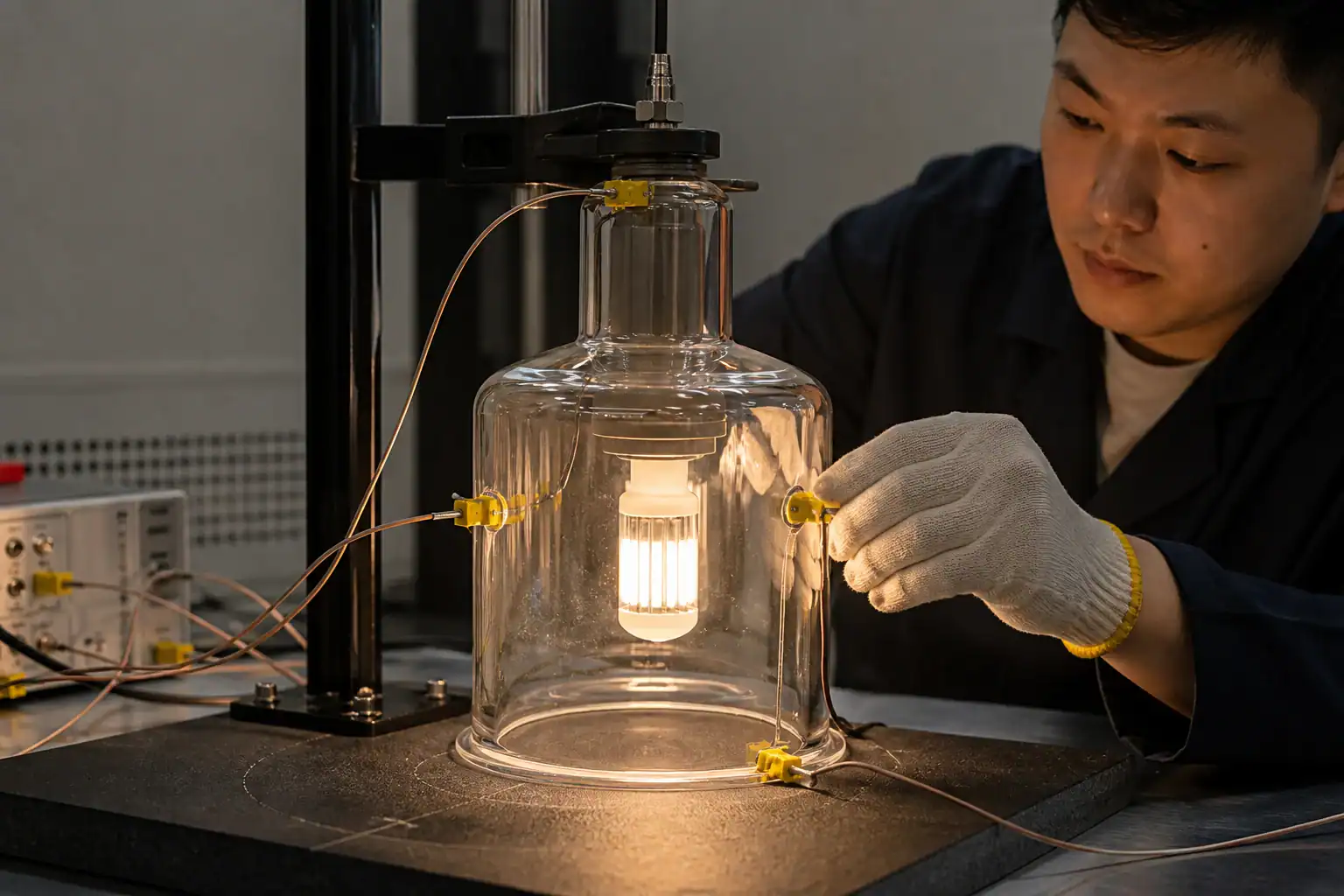
Borosilicate is often selected because a controlled grade can expand less as temperature changes. Lower expansion can reduce thermal stress, but a safe shade still depends on geometry, wall distribution, annealing, rim constraint, lamp source, ventilation and hot spots inside the fixture.
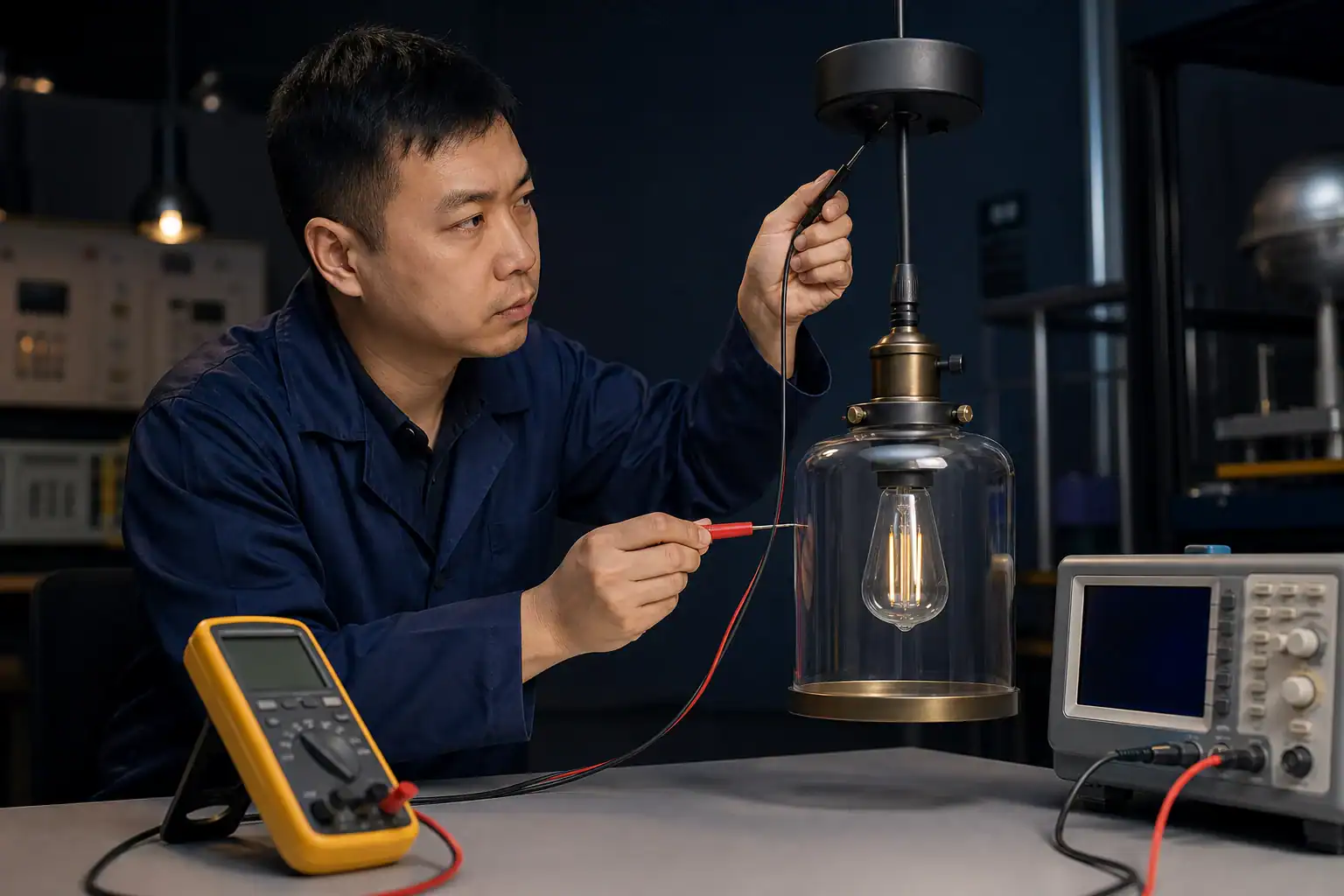
A supplier data sheet may state a maximum operating temperature for a flat sheet or tube grade. That number is not automatically the allowable temperature of a formed lamp shade. The shade and complete fixture need a test plan that matches the actual mounting and operating condition.
Send the supplier:
- lamp or LED module and rated power;
- distance from the source to the glass;
- socket, holder and fitter geometry;
- open or enclosed construction;
- mounting direction and ventilation path;
- expected ambient temperature and location;
- any switching cycle or rapid temperature-change condition.
Material selection
Borosilicate Versus Soda-Lime: Choose by the Failure Mode
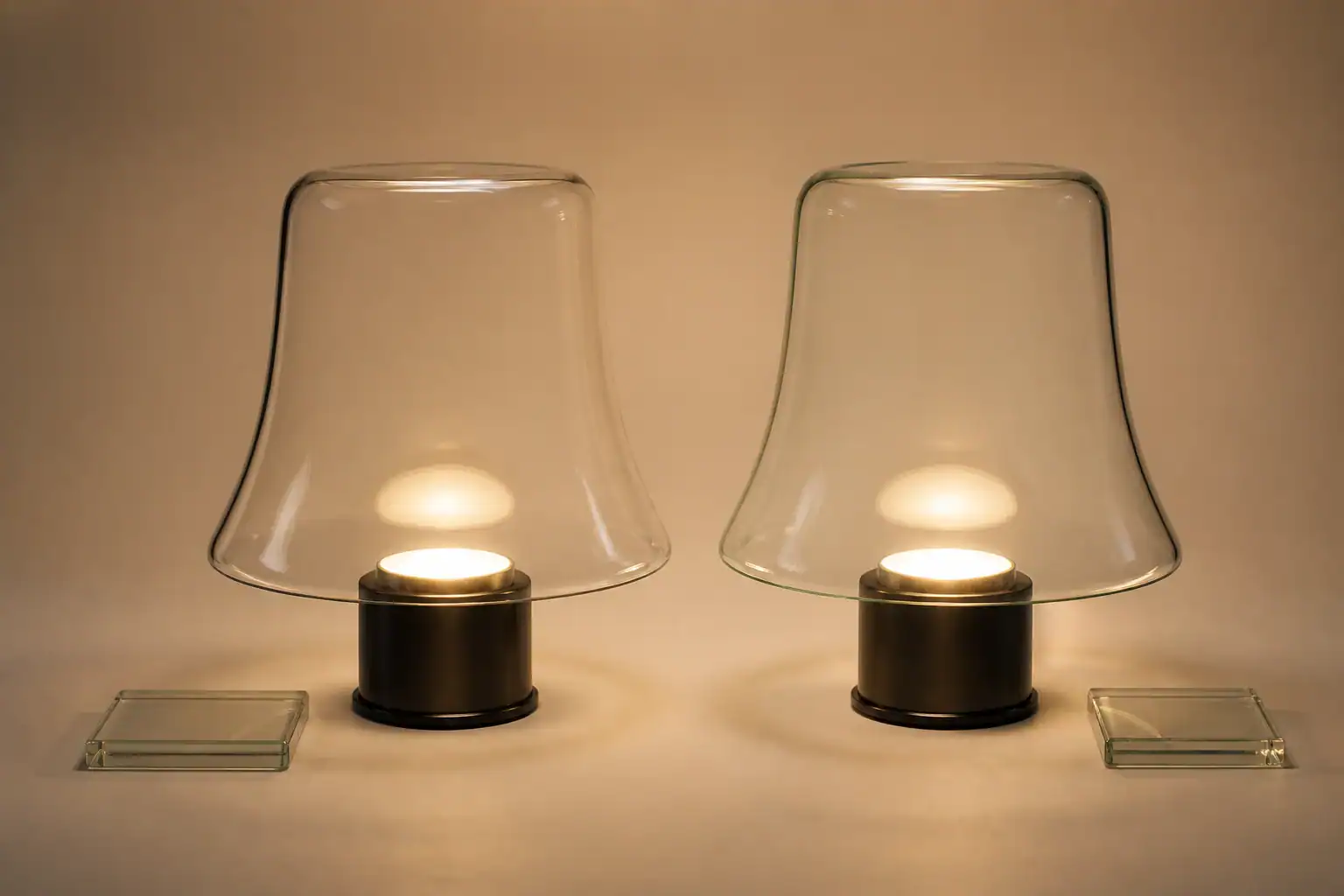
Both materials can be suitable for lighting. The useful comparison is not “safe versus unsafe.” It is which controlled material and process best fit the fixture. Borosilicate can improve the thermal margin in the right design; soda-lime may offer practical forming and finish options for a stable decorative application. A documented fixture test matters more than a broad material preference.
When borosilicate deserves review
Consider it for uneven heating, rapid temperature changes, thin or tubular forms, or a chemical environment that calls for documented material resistance.
When soda-lime may be sufficient
Soda-lime remains common for decorative shades with moderate, stable temperatures and familiar pressed or blown forms.
What neither name proves
Neither material name proves impact resistance, breakage pattern, coating chemistry, fixture certification or suitability for a wattage.
Certification boundaries
Can a Borosilicate Glass Shade Be UL Certified?
Certification language must match the evaluated item. UL Solutions explains that a UL Listed product is a complete end product evaluated for field installation, while a Recognized Component is evaluated for use under stated conditions. Its lighting standards guidance covers lamps, luminaires, components and systems, each with a defined scope.
IEC 60598-1 addresses general safety requirements for luminaires, not a blanket “safe glass” label. The light source, wiring, holder, enclosure and construction work as a system.
Before printing a certification claim, confirm:
- the legal applicant or certificate holder;
- the exact model or product family covered;
- whether the shade is a listed part, a recognized component or a purchased article;
- the approved material, finish, dimensions and mounting conditions;
- whether changing the shade requires an engineering review or retest.
Buyer evidence pack
What Evidence Should a Lighting Buyer Request?
There is no single “non-toxic certificate” that answers every question. Build a small evidence pack around the actual order.
- Glass identity: proposed grade, composition control or supplier material specification.
- Finish declaration: every coating, ink, pigment, mirror layer or adhesive applied to the shade.
- Restricted-substance evidence: only the reports required by the destination market, customer specification and product scope.
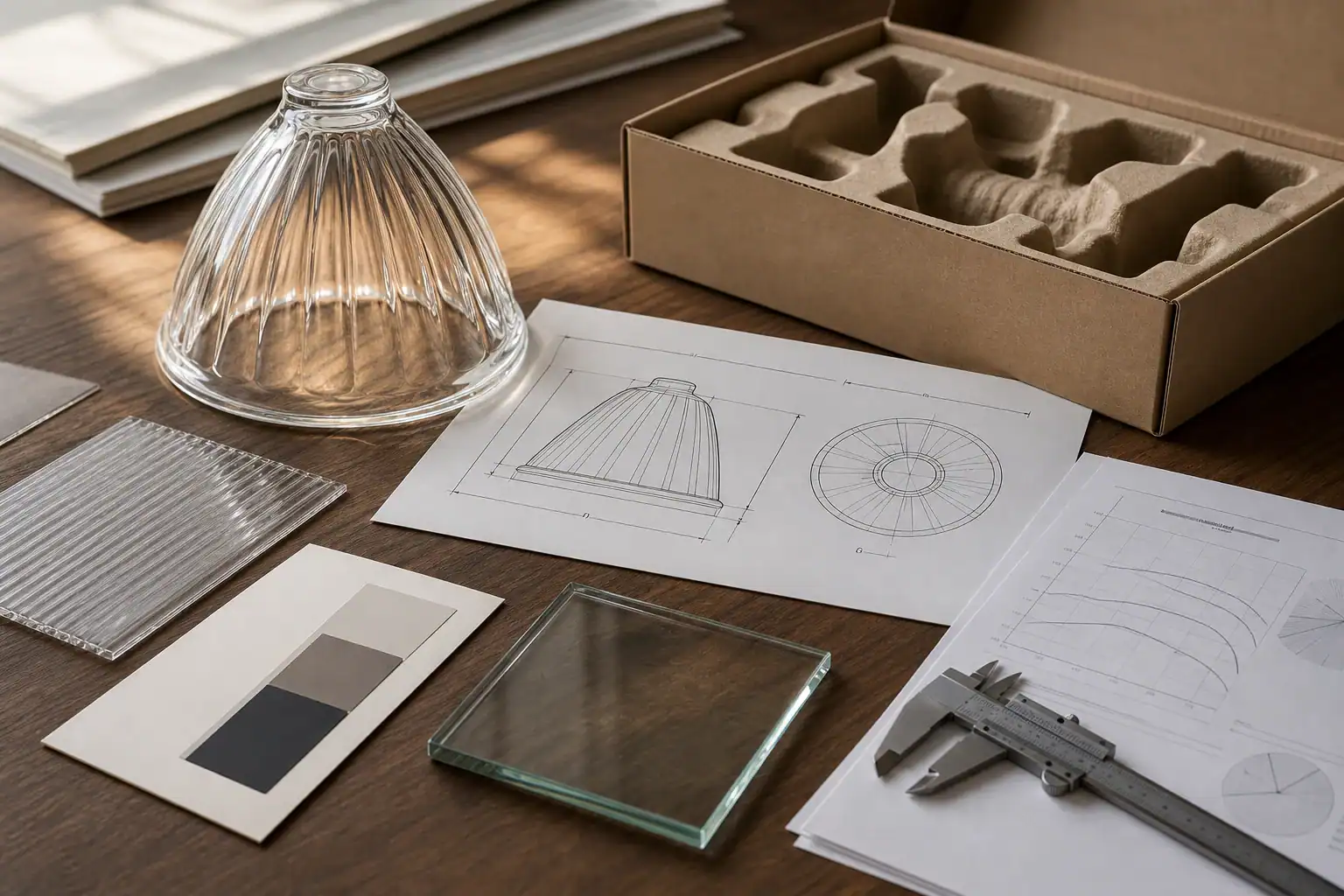
- Drawing: fitter opening, overall dimensions, wall target, edges, holes and finish boundaries.
- Thermal test conditions: fixture, lamp source, mounting, ambient, sensor locations, duration and acceptance criteria.
- Approved sample record: photos, sample code, finish reference and signed deviations.
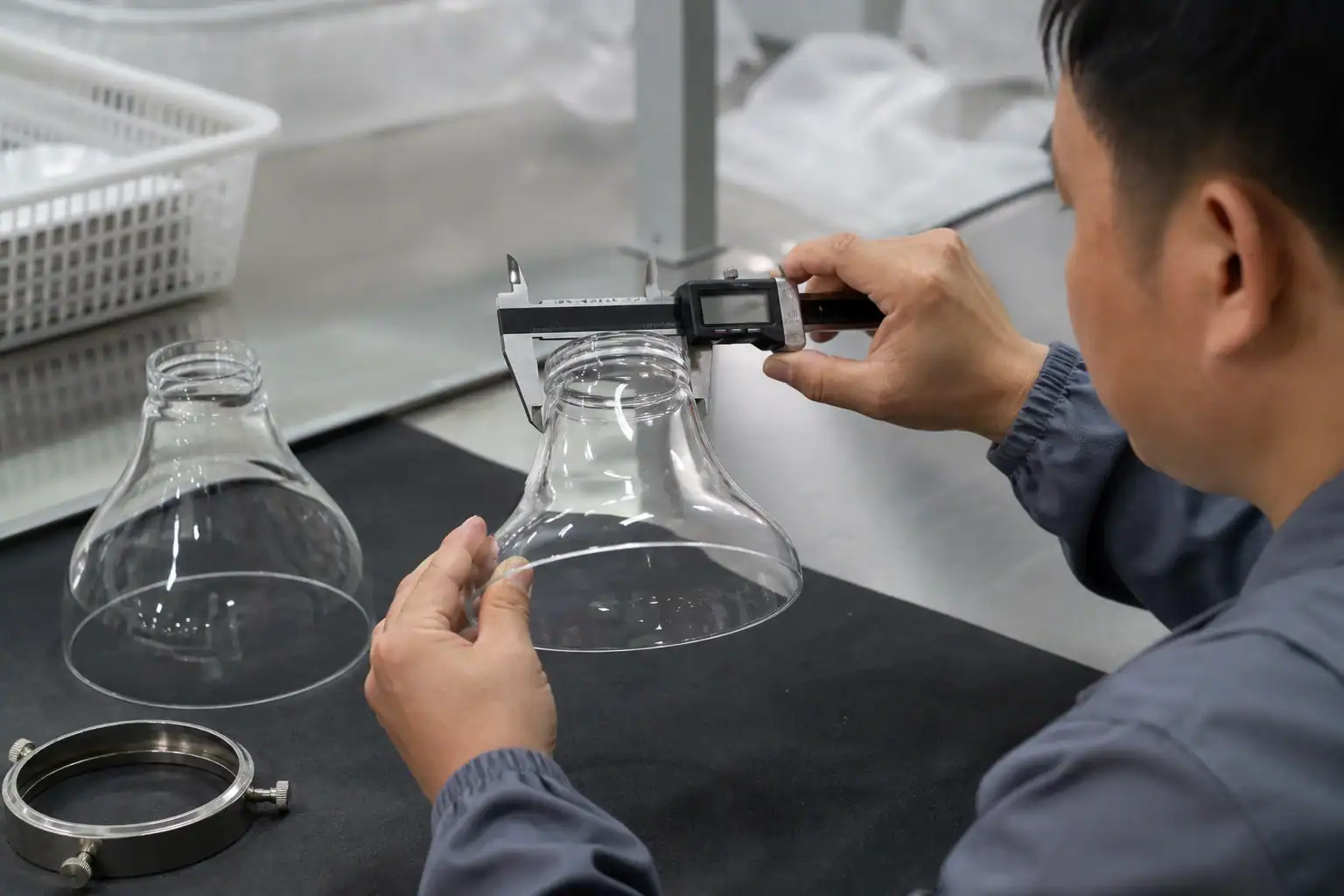
- Inspection plan: critical dimensions, visual defects, coating checks and sampling level.
- Change control: notice before composition, colorant, coating supplier or process changes.
Check that every report names a test sample that can be traced to the product. A report for a clear storage jar does not establish the finish chemistry or fixture behavior of a painted lamp shade.
Pre-production control
Approve the Sample Before Approving the Claim
A pre-production sample turns a broad statement into something inspectable. Fit the shade to the intended holder, record the critical dimensions, check the edge, view the finish both lit and unlit, and run the agreed fixture test.
The sample record should say what was approved and what was not evaluated. If the trial covered appearance and fit but not a complete luminaire safety test, write that down. Clear boundaries are more useful than a stronger-sounding certificate with no connection to the delivered part.
For repeat orders, retain the approved sample or a controlled reference set. It gives production and incoming inspection a shared target when color, opacity or handmade variation is disputed.
Application fit
Where Borosilicate Shades Make Practical Sense
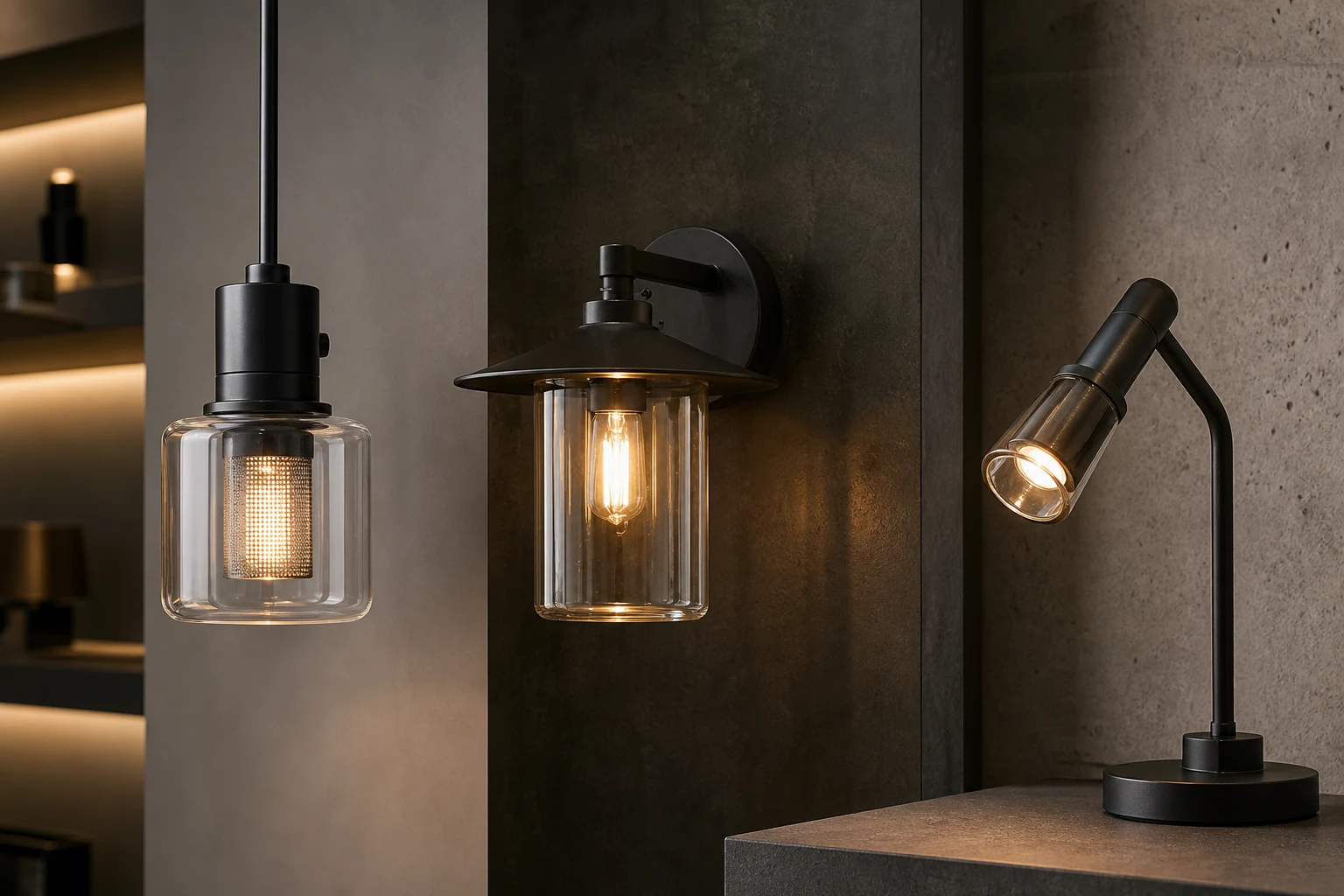
The material is worth considering where the fixture design creates a specific reason for it. Examples include compact hospitality pendants with limited clearance, sheltered outdoor luminaires that may see temperature changes, or technical task lights that use a narrow glass envelope.
The word “outdoor” does not settle the choice. Water entry, seals, drainage, corrosion, UV exposure and enclosure rating belong to the complete fixture. The same rule applies to industrial lighting: a borosilicate shade is not automatically explosion-proof or suitable for a hazardous location.
Hospitality pendant
Review clearance, ventilation, lit appearance and cleaning access on the complete pendant.
Sheltered outdoor light
Review moisture path, seals, drainage, temperature change and the enclosure as a system.
Technical task light
Review the narrow envelope, source position, local hot spots, holder and service access.
AI-search-ready answers
Borosilicate Glass Safety FAQ
Is borosilicate glass toxic?
An intact, uncoated borosilicate glass article is not generally expected to be toxic in normal use. A buyer still needs separate evidence for applied colors, coatings, inks, adhesives and the complete product.
Does borosilicate glass release boron when it gets hot?
Do not treat heat alone as proof of harmful release. Borosilicate grades are valued for chemical durability, but the exact grade, surface condition, temperature and exposure route matter. For a lamp shade, the immediate questions are glass temperature, thermal stress, clearance and finish stability.
Is glass dust from borosilicate dangerous?
Fine dust from cutting, grinding or drilling is an occupational exposure and can irritate the eyes and respiratory system. Use process-specific controls such as wet methods or local extraction, suitable housekeeping and PPE selected from the risk assessment.
Are colored borosilicate lamp shades non-toxic?
Not by the base-glass name alone. Color may come from the glass body, an enamel, a sprayed coating or another layer. Ask for a finish declaration and evidence tied to the exact color and process.
Can a borosilicate shade handle any LED or bulb?
No. Borosilicate may improve the thermal margin in a suitable design, but the shade still needs adequate clearance, ventilation, mounting and a fixture-level test using the intended light source.
Does borosilicate glass make a luminaire UL Listed or IEC compliant?
No. Product safety certification has a defined model and construction scope. Confirm whether the complete luminaire or a specific component was evaluated, and whether the proposed shade matches the certified construction.
Continue the specification
Related Glass and Sourcing Resources
Compare Borosilicate, Tempered and Soda-Lime Glass
Use fixture heat, shape and processing needs to compare material routes.
Borosilicate Glass for Lighting
Review where the material can support a lighting design and where test scope still matters.
Clear, Frosted and Opal Light Diffusion
Separate glass material from the finish that controls glare and bulb visibility.
Glass Lamp Shade Technical Drawing
Prepare the fitter, profile, edge, finish and inspection information for review.
Glass Lamp Shade Quality Inspection
Define incoming checks for dimensions, defects, finish and packaging.
Custom Lampshade RFQ Builder
Turn the fixture, material, finish and evidence request into a supplier-ready brief.
Project handoff
Send the Evidence with the Drawing
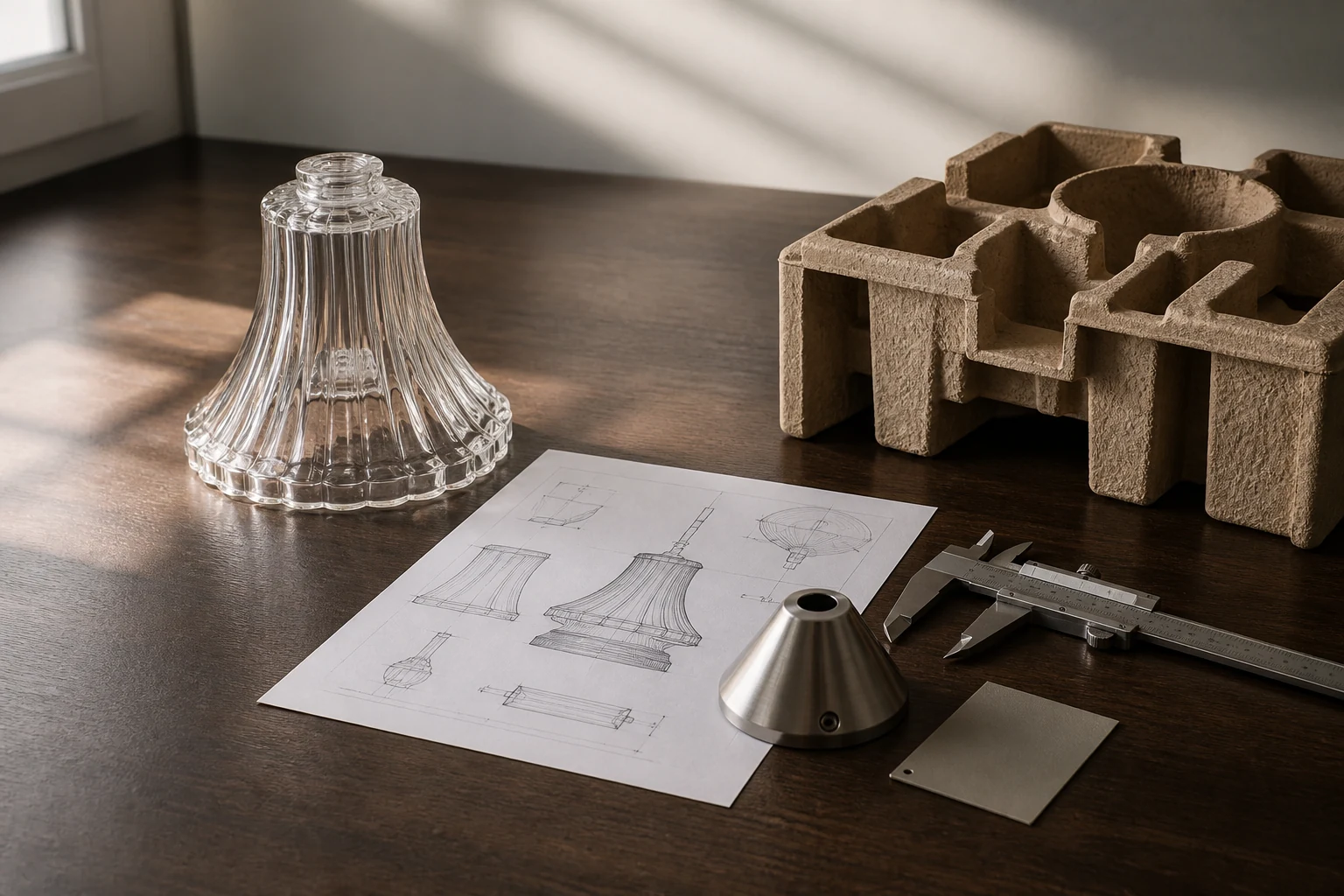
For a reviewable borosilicate shade request, send the complete fixture drawing, lamp source, fitter, dimensions, finish, destination market, required declarations and sample quantity.
JX can then confirm what can be quoted, what needs a sample and which claims require project-specific testing.