
A practical fuel and glass shade compatibility guide
Paraffin Lamp Oil: Safety, Wick Setup and Glass Shade Compatibility
Paraffin lamp oil is a refined liquid fuel commonly used in wick-fed oil lamps. The name does not mean that every product with a similar label can be poured into every burner. Formulation, viscosity, additives, wick design, burner temperature and ventilation all affect the result. The product label and the lamp maker's instructions remain the first authority.
This guide gives a buyer-friendly way to understand paraffin lamp oil, compare it with related fuels, reduce soot and flame problems, and specify a glass shade or chimney without guessing. JX Lampshade supplies glass lamp shades and custom glass shade programs, not lamp fuel. For any fuel purchase, follow the fuel supplier's label and safety data sheet. For safety context, see Poison Control's lamp oil guidance and the U.S. Consumer Product Safety Commission information on torch fuel and lamp oil.
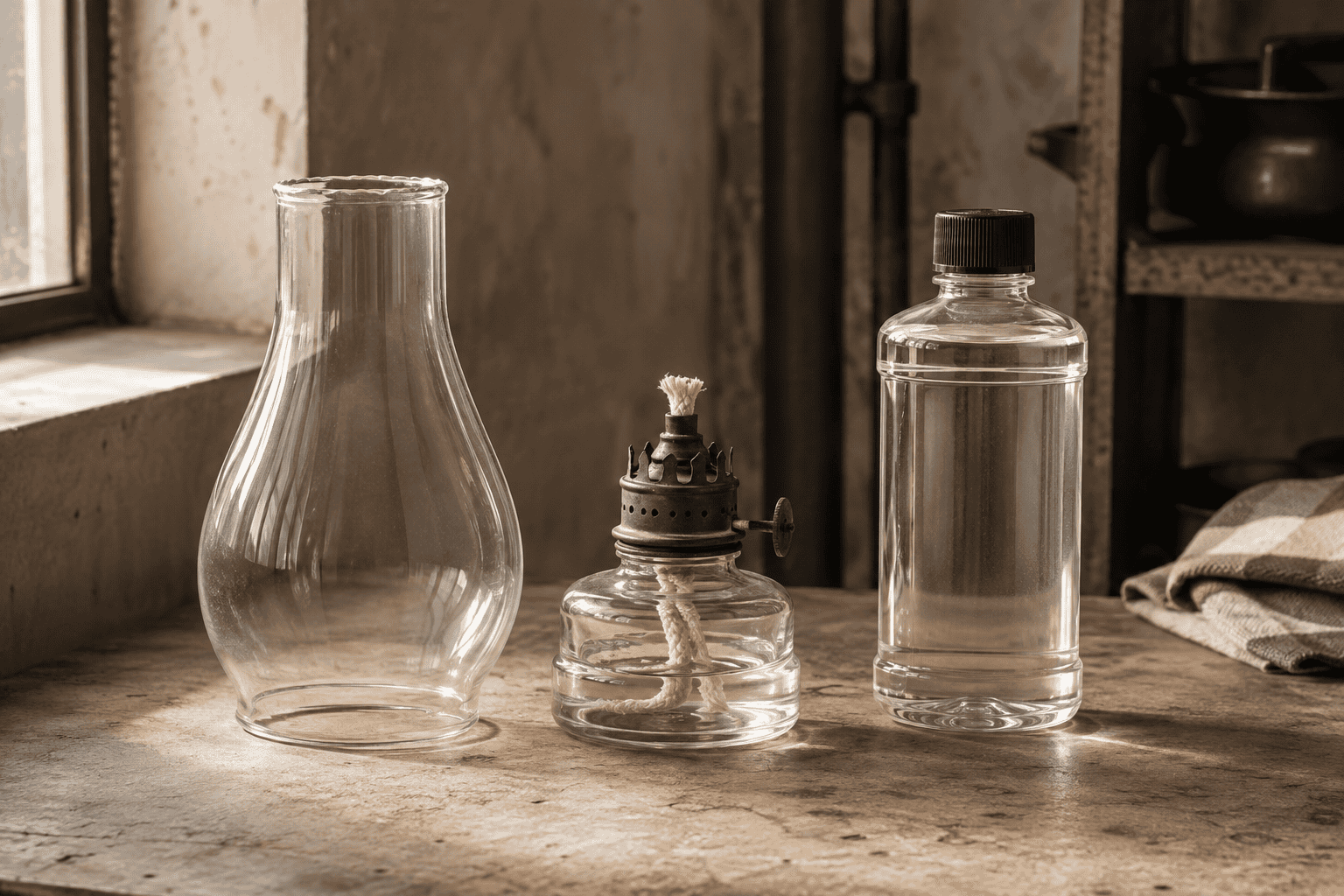
Fuel definition
What is paraffin lamp oil?
In the US market, paraffin lamp oil generally refers to a liquid fuel based on refined petroleum distillates. Poison Control notes that most lamp oil is made of paraffin, while a CPSC document describes liquid paraffin as commonly used as lamp oil. Those references explain the common meaning, but they do not make different commercial products interchangeable.
For a real product decision, capture the exact product name, intended lamp type, label directions, hazard warnings and current safety data sheet. If a listing only says "oil" or "fuel" without an intended use, it is not enough information for a burner or a glass shade project.
| Term on a label | What it may describe | What a buyer must confirm |
|---|---|---|
| Paraffin lamp oil or liquid paraffin | A lamp fuel intended for a compatible wick lamp | Burner approval, additives, handling instructions and label warnings |
| Kerosene or mineral oil | A different petroleum fuel used by some lamps and lanterns | The burner maker's fuel requirement and ventilation conditions |
| Torch fuel or citronella fuel | Fuel intended for a torch or an outdoor device | Whether the device and location are approved for that formulation |
| Scented or fragrance lamp oil | A specialized product that may use additional carriers or fragrance | Exact appliance instructions, ventilation and safe-use limits |
The practical answer is simple: paraffin lamp oil is a fuel category, not a universal compatibility promise. The correct choice is the product that the specific burner and its instructions identify.
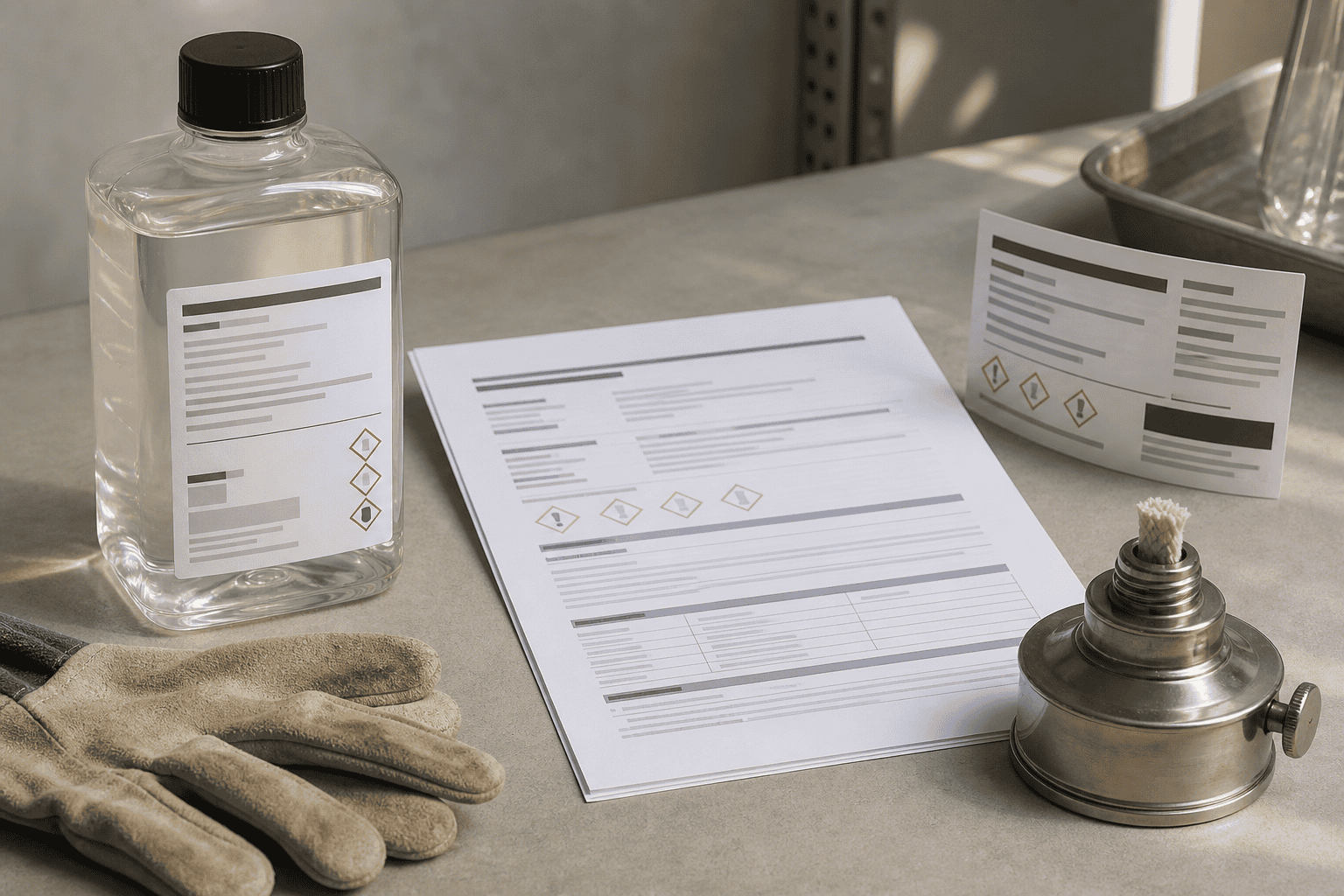
Fuel comparison
Paraffin lamp oil vs kerosene and scented lamp oil
Search results often place paraffin, kerosene, mineral oil, torch fuel and scented lamp oil next to one another. A procurement team should not treat those names as interchangeable synonyms. They can differ in odor, smoke, handling warnings, burner requirements and transport documentation.
| Comparison point | Paraffin lamp oil | Kerosene or mineral oil | Scented or torch fuel |
|---|---|---|---|
| First check | Product label and wick-lamp instructions | Fuel specification for the burner | Intended device and outdoor or indoor use |
| Additives | May be plain or formulated; verify the label | May vary by grade and market | May contain fragrance, colorant or repellent ingredients |
| Flame result | Depends on wick, burner, draft and fuel condition | Depends on a compatible burner and adjustment | Depends strongly on the product and device |
| Shade risk | Soot or heat can mark glass if the setup is wrong | Incorrect fuel can create poor combustion | Unapproved additives can change odor, smoke or residue |
| Buyer evidence | Label, SDS and batch information | Label, SDS and burner approval | Label, SDS, device approval and destination rules |
The CPSC has treated lamp oil packaging and labeling as a safety issue, and its recall notices show why a buyer should inspect the container, warnings and closure instead of relying on a marketplace title. A low price or a phrase such as "clean burning" is not a substitute for a product-specific instruction.
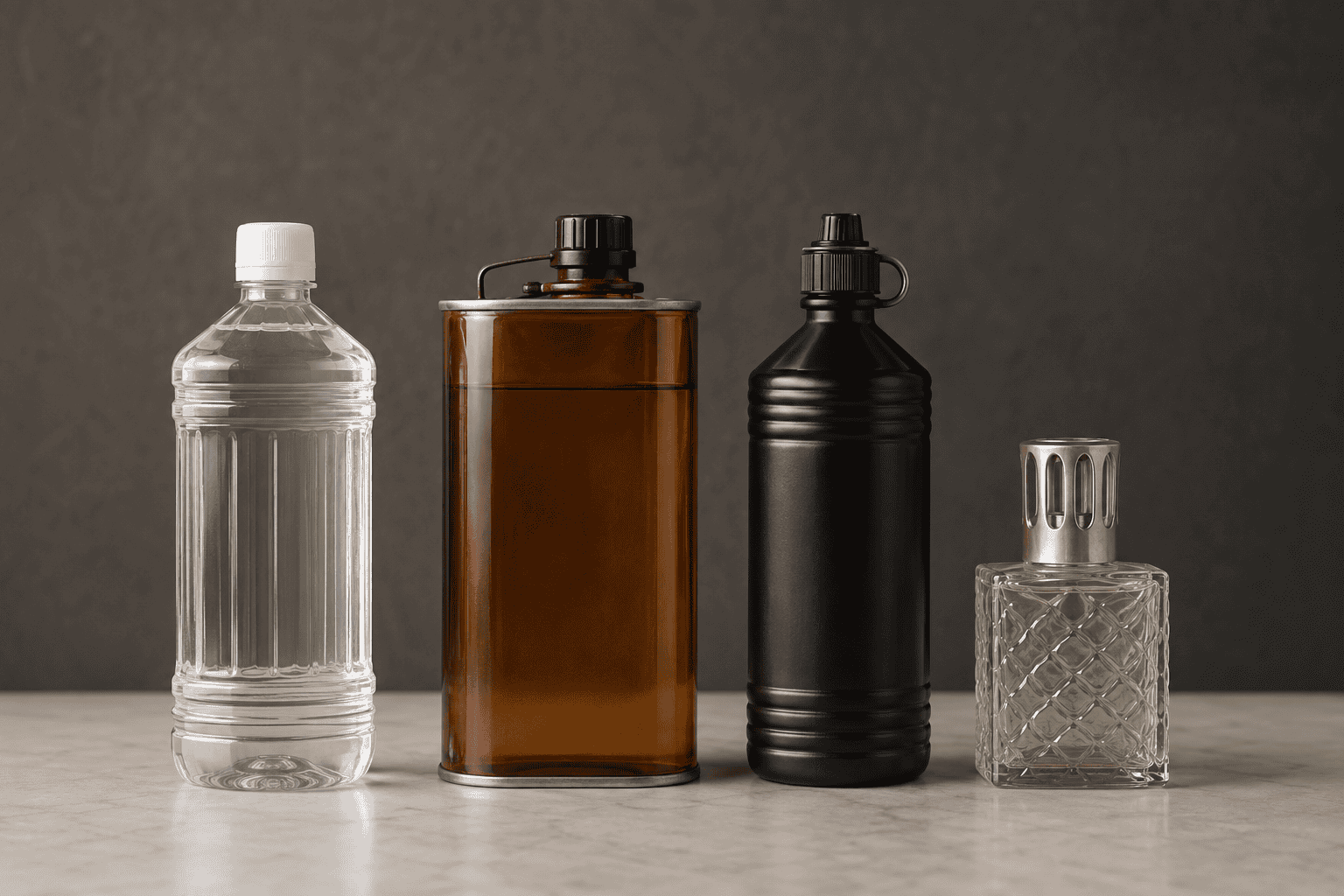
Lamp identification
Which lamp types can use paraffin lamp oil?
Paraffin lamp oil is relevant to wick-fed oil lamps, decorative oil lamps and some covered table or hurricane-style lamps when the burner maker or fuel label permits it. The glass shape alone does not identify the correct fuel. A globe, chimney or shade can be fitted to more than one lamp design, while the burner underneath may require a different fuel or wick.
Before filling a lamp, identify four parts:
- The reservoir that holds the liquid.
- The burner that controls the wick and flame.
- The chimney or draft-control glass, if the lamp uses one.
- The outer shade or decorative cover, if the lamp uses one.
Do not pour paraffin lamp oil into an electric fixture, an LED lamp, a burner marked for another fuel, or an unknown antique lamp simply because the reservoir looks similar. If the lamp has no readable label, photograph the burner, wick holder, gallery, reservoir and existing glass before asking a specialist to identify the setup.
For a replacement project, the JX oil lamp glass shade page is the relevant product path. It is still necessary to confirm the burner and fuel separately.
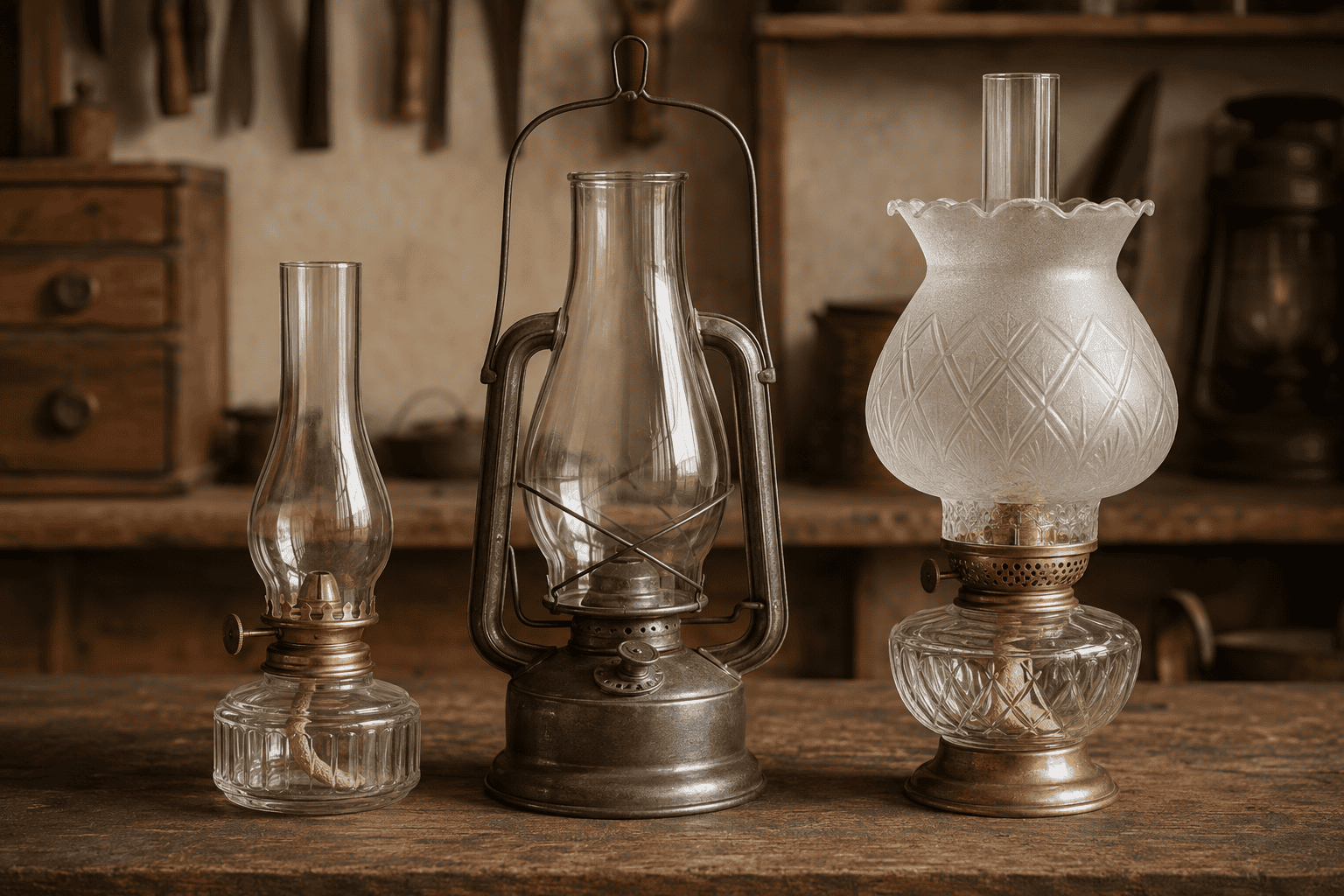
Combustion checks
How fuel choice changes flame, smoke and glass
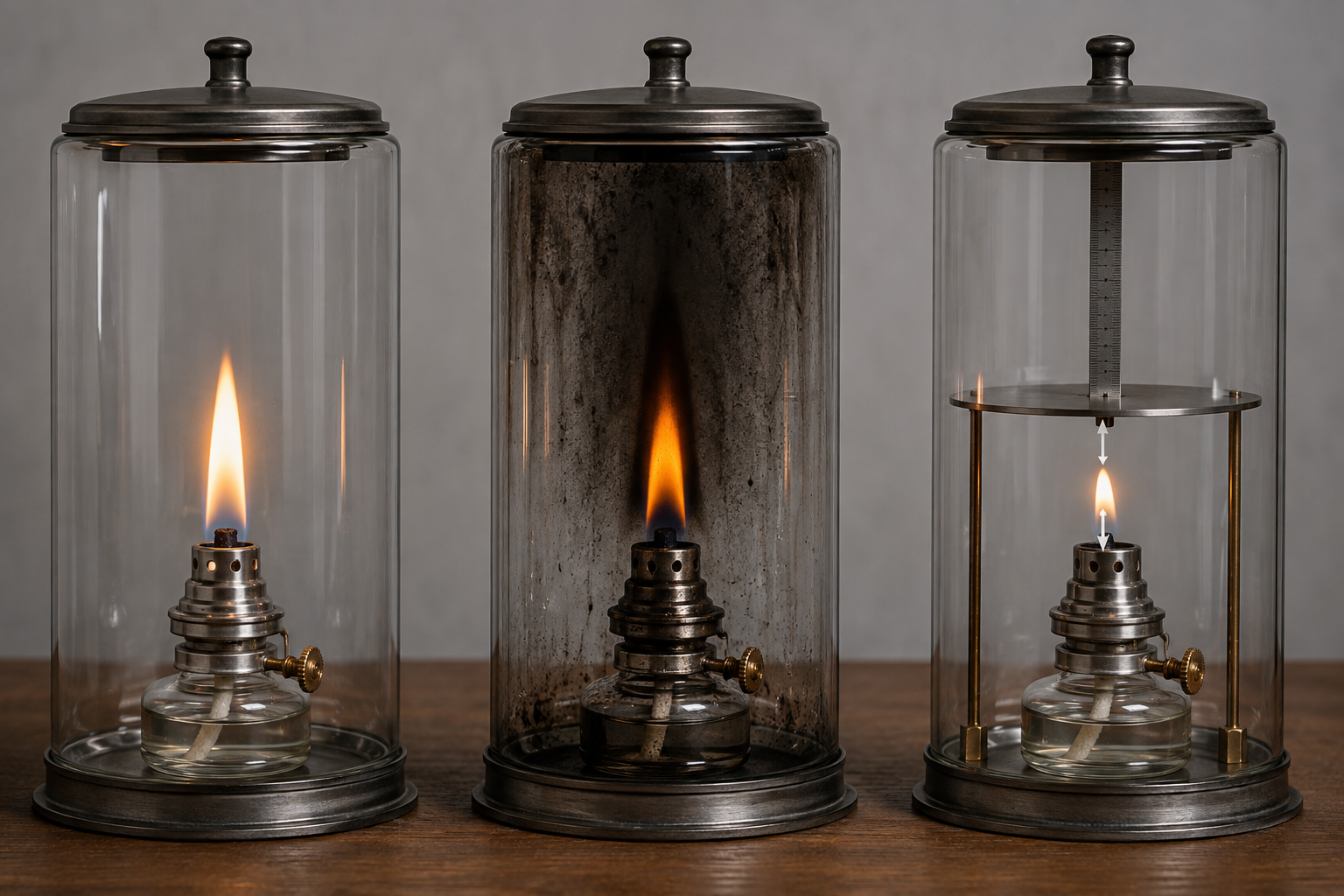
Fuel is only one part of combustion. A clean-looking fuel can still smoke if the wick is too high, the burner is dirty, the draft is restricted, the lamp is tilted or the shade is too close to the flame. Conversely, a stable flame does not prove that a glass component has enough thermal clearance.
Watch the setup during a short, supervised test after the lamp is assembled according to its instructions. Record whether the flame is steady, whether the glass becomes sooty, whether the odor changes, whether heat collects around the upper opening and whether the wick can be adjusted without forcing it. Stop using the lamp if there is a fuel leak, an unstable flame, a cracked glass part or an unusual smell that the product instructions do not describe.
| Observation | Possible variables to control | Safer next step |
|---|---|---|
| Tall yellow flame | Wick height, draft or burner cleanliness | Extinguish, cool and follow the burner adjustment instructions |
| Soot on the glass | Incomplete combustion, dirty wick or restricted draft | Clean only when cool and inspect the wick, burner and clearance |
| Strong unexpected odor | Fuel formulation, spill or poor combustion | Extinguish, ventilate and check the label and SDS |
| Flicker or flame movement | Air movement, loose wick or uneven surface | Move only after cooling; use a stable, level surface |
| Heat concentrated near the rim | Shade geometry, chimney path or inadequate clearance | Stop and obtain a fit review before continued use |
Burner interface
Wick, burner and oil reservoir compatibility
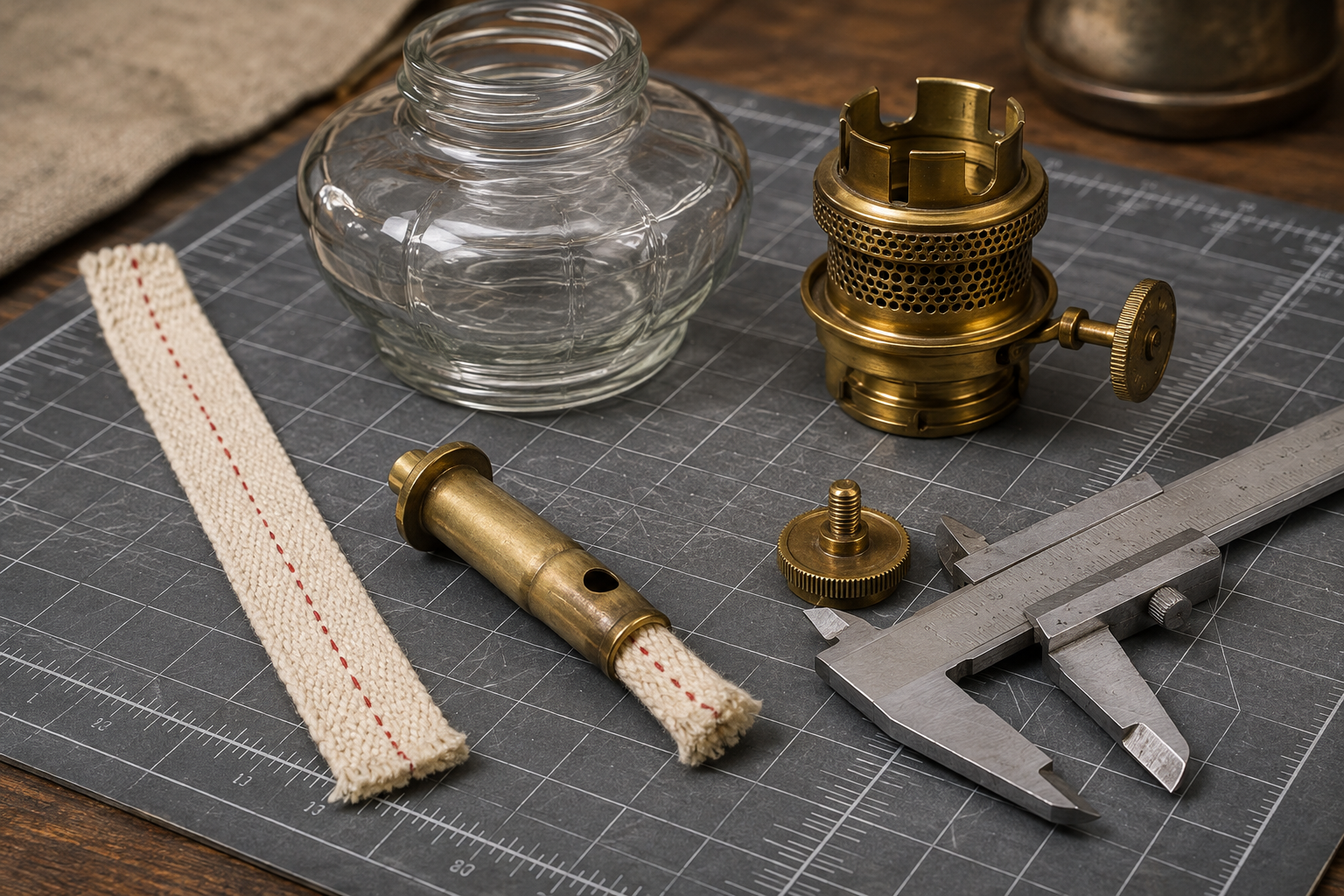
The wick turns liquid fuel into a controlled flame. Its width, weave, height and contact with the burner affect how much fuel reaches the flame. The reservoir, wick carrier and burner must also be mechanically sound. A new fuel cannot compensate for a damaged burner or a wick that does not match the lamp.
Use this short compatibility record when evaluating an old lamp or a new project:
- Burner maker or model, if known.
- Wick type, width and visible condition.
- Wick adjustment range and whether the control turns smoothly.
- Reservoir material, capacity and signs of seepage.
- Burner threads, gallery, retaining ring or clip interface.
- Chimney and shade dimensions, including the lower opening and seated height.
- Fuel name exactly as printed on the container.
Trim or replace the wick only as the burner instructions specify. Do not widen an opening, force a gallery, drill glass or mix fuels to solve a flame problem. If the reservoir, burner or wick carrier is loose, corroded or leaking, the correct action is a component inspection rather than a higher flame setting.
Shade and chimney fit
Choosing the right glass shade or chimney
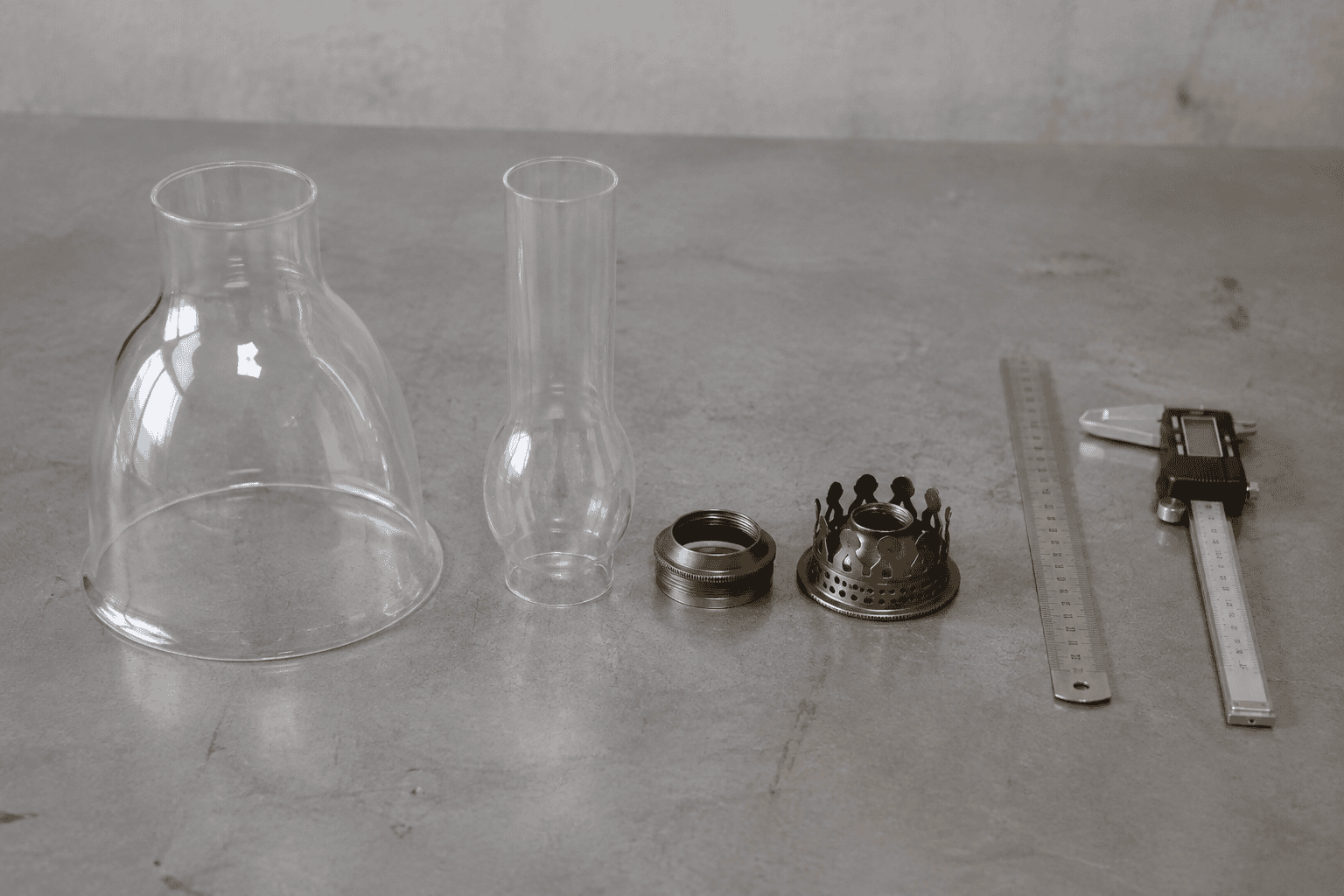
A chimney guides draft and helps protect a flame. A shade diffuses or directs light and may also provide a decorative enclosure. Some lamps use both parts; others use a single glass form. A decorative glass shade is not automatically a safe replacement for a chimney, and a chimney is not automatically a suitable outer shade.
For a glass replacement or custom development, record:
| Measurement or detail | Why it matters |
|---|---|
| Lower opening diameter or fitter | Confirms how the glass sits on the holder, ring or gallery |
| Upper opening or vent path | Confirms clearance and draft around the flame |
| Seated height and overall height | Controls the visual proportion and heat path |
| Maximum width and profile | Helps match the fixture and prevents contact with nearby parts |
| Retaining method | Identifies a slip-on, screw-thread, clip, ring or other interface |
| Glass thickness and edge finish | Helps the supplier assess the rim and handling requirements |
| Fuel and burner information | Prevents a shade-only decision that ignores heat and combustion |
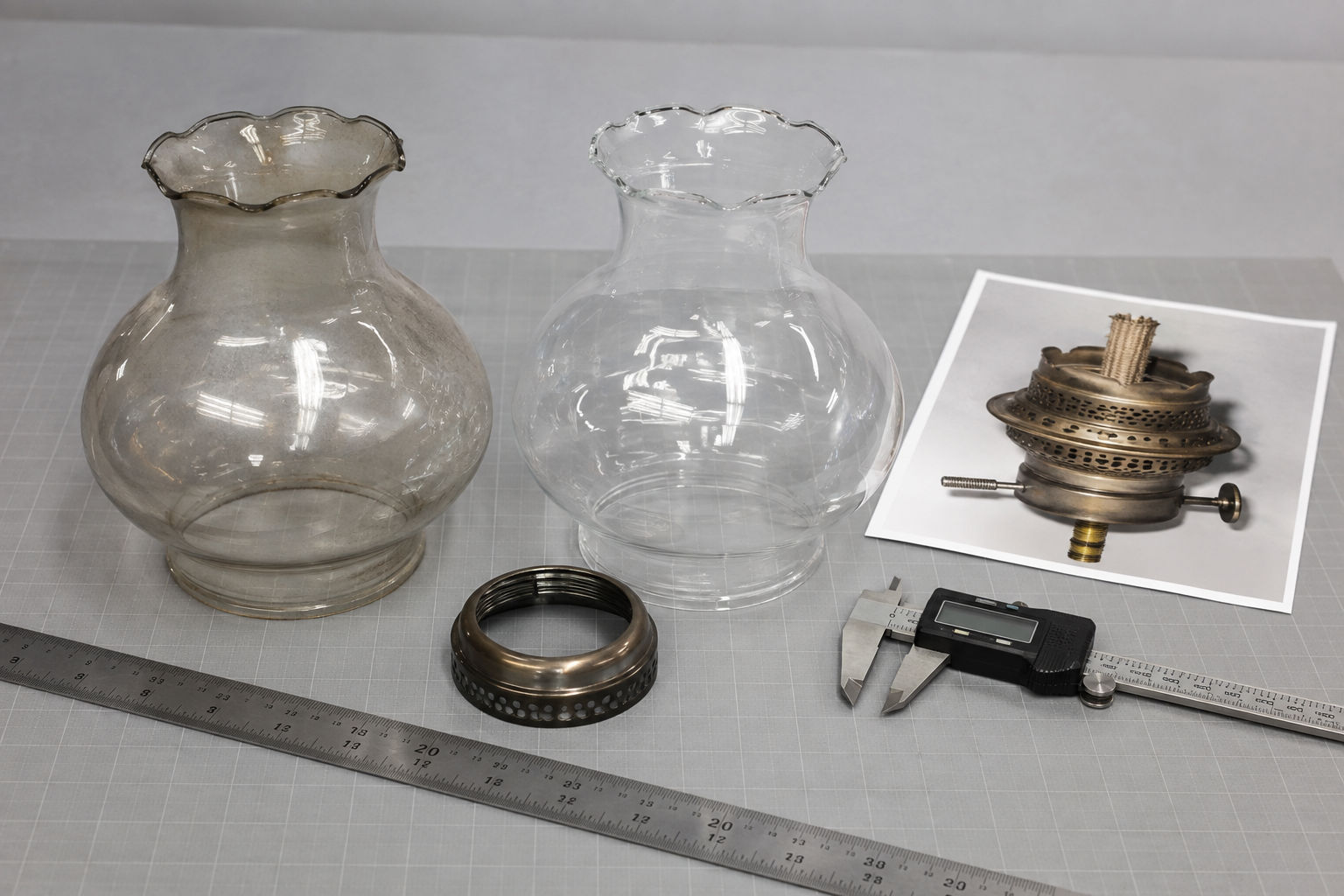
Use a ruler, caliper and clear photographs. Do not rely on a style name such as "antique oil lamp" or "hurricane lamp" because the same name can cover different fitter systems. JX's replacement glass shade guide explains the measurement and matching path; the fuel and burner still need to be confirmed by the lamp owner or fuel specialist.
Safe operation
A safe filling and lighting checklist
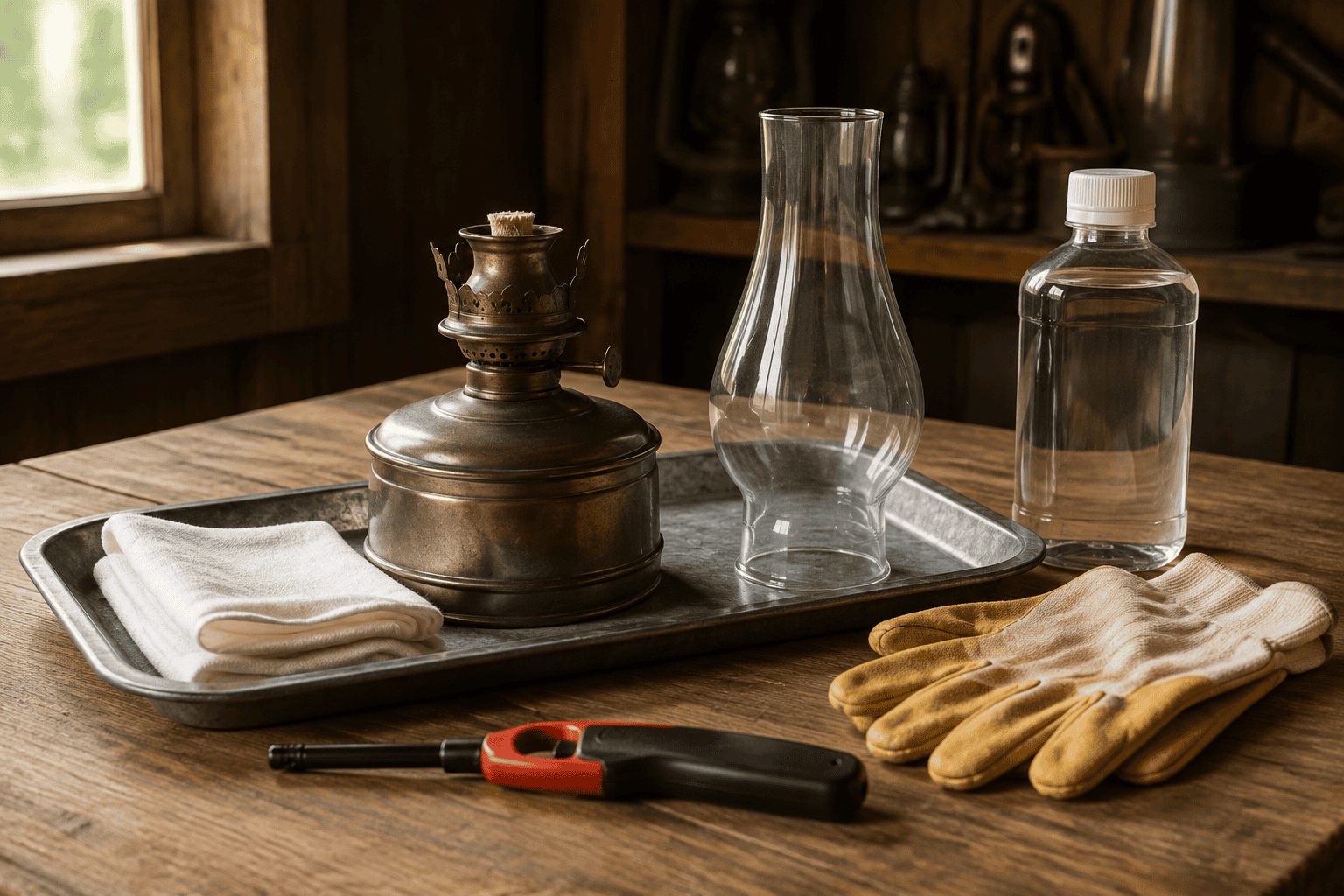
Use the container label and lamp instructions as the operating procedure. The following checklist is a conservative project reference, not a replacement for the manufacturer's directions:
- Confirm that the fuel name and intended device match the lamp instructions.
- Work in a stable, ventilated area away from ignition sources and loose combustible materials.
- Extinguish the lamp and let the burner, chimney and shade cool completely before handling fuel.
- Inspect the reservoir, burner, wick, chimney and shade for leaks, cracks, chips or loose parts.
- Fill only to the level allowed by the lamp instructions, and wipe any spill before lighting.
- Set the lamp on a level, stable surface and keep children, pets and flammable materials away.
- Light and adjust the lamp only as the burner instructions allow; never force a high flame.
- Remain present while the lamp is burning, and extinguish it before leaving the room or going to sleep.
Poison Control warns that lamp oil can cause serious injury if swallowed because it can enter the lungs, and recommends keeping it in the original container and out of reach of children. The CPSC has also documented packaging and labeling failures in a liquid paraffin lamp oil recall. Treat the container as a hazardous fuel package, not as a decorative bottle.
Send your product details for a quote
Include dimensions, material or finish, quantity, application, and any photos or drawings so the JX team can review the request.
Storage and logistics
How to store and transport lamp oil
Keep paraffin lamp oil in its original, clearly labeled container with the cap closed. Store it upright in a cool, controlled location away from ignition sources, children, pets, food and direct heat. Do not transfer it to a drink bottle, unmarked jar or container that could be confused with another liquid.
For a hospitality, retail or project order, ask the fuel supplier for the current SDS, label artwork, packaging closure details, lot or batch identification and destination-specific transport guidance. The shade supplier and fuel supplier may be different companies, so keep their documents separate in the project file.
When shipping glass shades, the packaging plan must protect the glass from impact and must not place fuel in the same inner package unless a qualified logistics provider has approved the arrangement. JX can discuss glass shade packaging and export requirements for a shade order, but the fuel supplier remains responsible for the fuel package and documentation.

Soot diagnosis
How to reduce soot on a glass shade
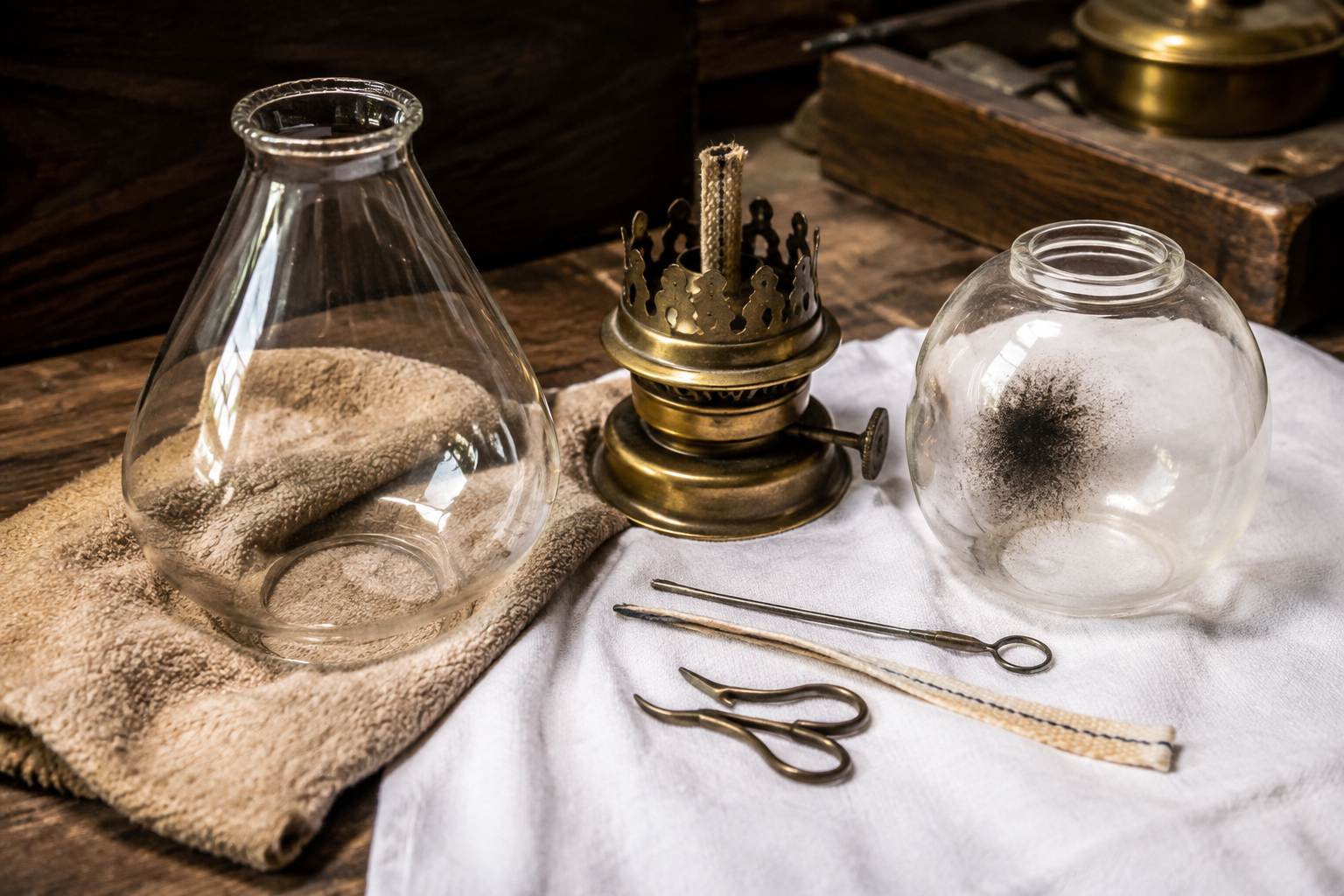
Soot is a signal to inspect the entire lamp setup. It is not proof that the fuel is defective, and it should not be hidden by polishing the glass while the cause remains unresolved.
Use this order of checks:
- Verify that the fuel is the exact product specified for the burner.
- Extinguish and cool the lamp before inspecting the wick.
- Confirm that the wick height and trim follow the burner instructions.
- Check for a dirty burner, blocked draft path or loose chimney.
- Look for drafts, an uneven surface or a shade that crowds the flame.
- Clean the cooled glass with a method suitable for that glass finish.
- Test only under supervision after the cause has been addressed.
Never mix paraffin lamp oil with kerosene, torch fuel, scented oil or another liquid to change the flame. If the lamp continues to smoke, produces an unusual odor or leaves heavy deposits, stop using it and request a fuel and burner review. A replacement shade may solve a fit problem, but it cannot correct poor combustion inside the burner.
Replacement matching
How to match paraffin lamp oil to a replacement shade
A replacement shade should be matched to the fixture interface and operating conditions, not only to its color or historical style. Send the supplier a complete evidence set:
- A front photograph of the lamp with the shade removed.
- A side photograph showing the burner, gallery and retaining parts.
- The lower opening, upper opening, height and maximum width.
- The fitter type, thread, ring, clip or seating method.
- The fuel name and burner instructions, if available.
- A note about whether the glass is a chimney, an outer shade or both.
- Quantity, sample requirement, finish, color and destination.
If the original glass is available, photograph the rim and measure it at multiple points. If it is broken, do not handle sharp fragments just to obtain a measurement. A paper outline, fixture dimensions and a photo of the mating hardware can still help a supplier define the next check.
The JX replacement shade route is appropriate for matching a standard or custom glass shade. State the fuel and burner details so the glass recommendation is not separated from the way the lamp will actually operate.
Procurement record
Procurement checklist for retail, hospitality and projects
For a one-off replacement, the main risk is a mismatch. For a repeat order, the risk is losing the approved reference. A procurement file should connect the fuel setup, burner, glass drawing, sample approval and packaging record.
| Procurement question | Evidence to keep |
|---|---|
| What fuel will the lamp use? | Exact product name, label photo, SDS and supplier contact |
| What does the burner require? | Burner model, wick specification and instruction sheet |
| What glass is being sourced? | Drawing, dimensions, fitter, finish, color and approved sample |
| How will fit be checked? | Measurement record, sample photos and sign-off owner |
| How will breakage be controlled? | Inner protection, carton design, case quantity and inspection point |
| How will repeat orders be matched? | Sample code, drawing revision, finish reference and packing record |
| What is the commercial route? | Quantity, target date, destination, Incoterm and quotation scope |
JX Lampshade uses the product and website brand of Jingxin Glassware for glass shade supply. Its current commercial fact sheet states that catalog items start from 500 pieces, full custom OEM starts from 1,000 pieces and the final MOQ is confirmed in the quotation. These are glass shade project references, not a promise about the minimum order for paraffin lamp oil. Ask the fuel supplier for a separate fuel quotation and documentation set.
RFQ specification
What JX needs in an oil lamp shade RFQ
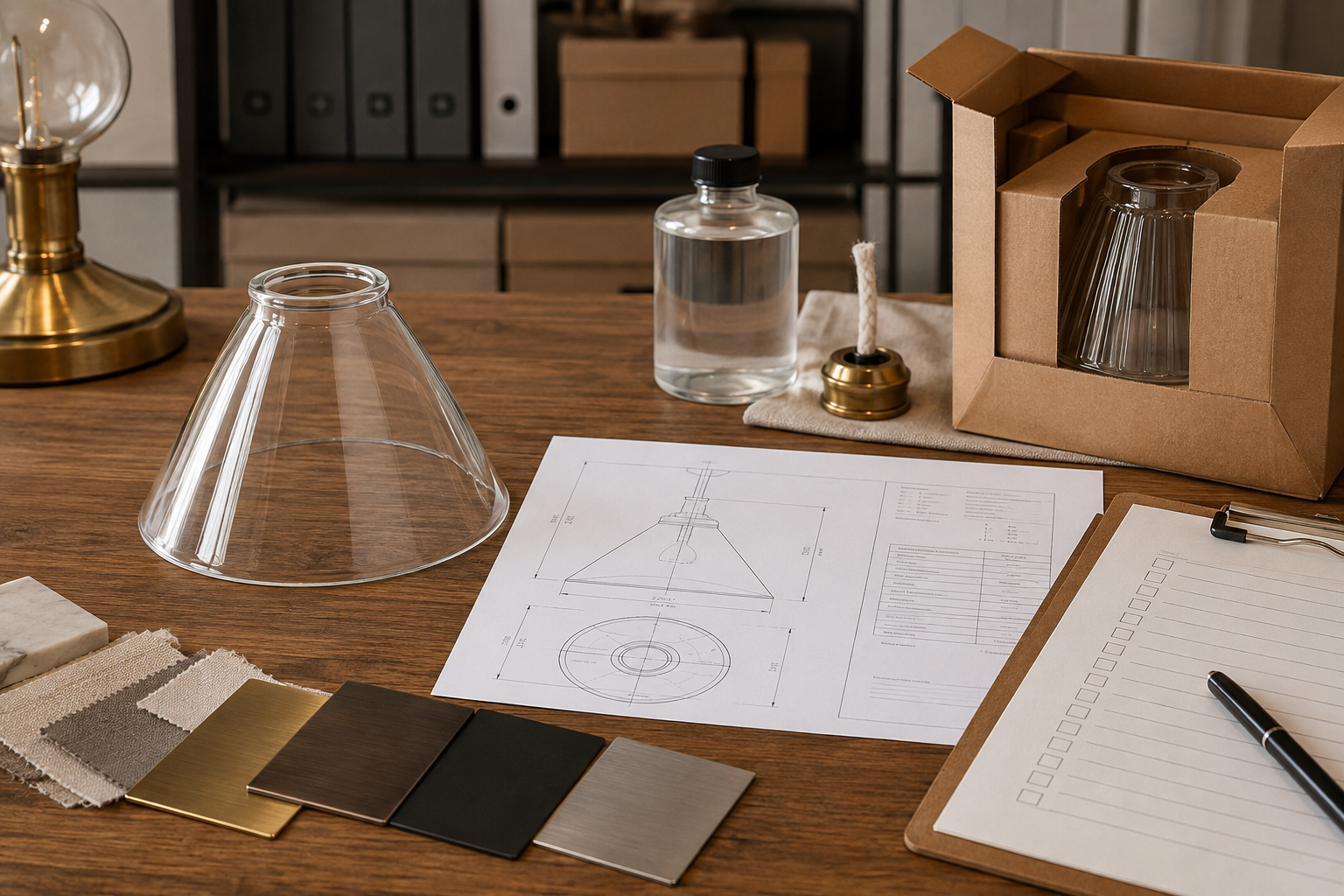
The fastest way to make a shade inquiry useful is to separate verified facts from assumptions. Use the custom lampshade RFQ builder and include the following information in the project notes:
- Lamp application: table, wall, pendant, lantern, hospitality or another use.
- Fuel and burner: exact paraffin lamp oil product, burner type and wick details.
- Glass role: chimney, outer shade, globe, diffuser or a combined assembly.
- Fitter: lower opening, thread, retaining ring, clip, gallery or seating method.
- Dimensions: height, width, openings, wall thickness and tolerance targets.
- Appearance: clear, frosted, opal, colored, ribbed, seeded, pressed or hand-blown reference.
- Quantity: sample, pilot, catalog order or full custom OEM requirement.
- Packaging: individual protection, case quantity, drop-test expectations and destination.
- Timing: sample approval date, production window and required delivery milestone.
For compliance questions, ask for the current document, scope, issuing party and validity rather than assuming a universal certificate. JX's public guidance separates Sedex/SMETA audit information from product-specific RoHS or REACH documentation for applicable projects. A fuel supplier's safety documentation should remain attached to the fuel line item.

Replacement decision
When to replace the shade, burner or fuel setup
Stop using the lamp and investigate if the glass is cracked, chipped at the rim, loose in the fitter, heavily sooted after cleaning and adjustment, or exposed to a flame path it was not designed to control. Also stop if the reservoir leaks, the burner adjustment is stuck, the wick cannot be identified, the fuel has been transferred to an unmarked container or the instructions are missing.
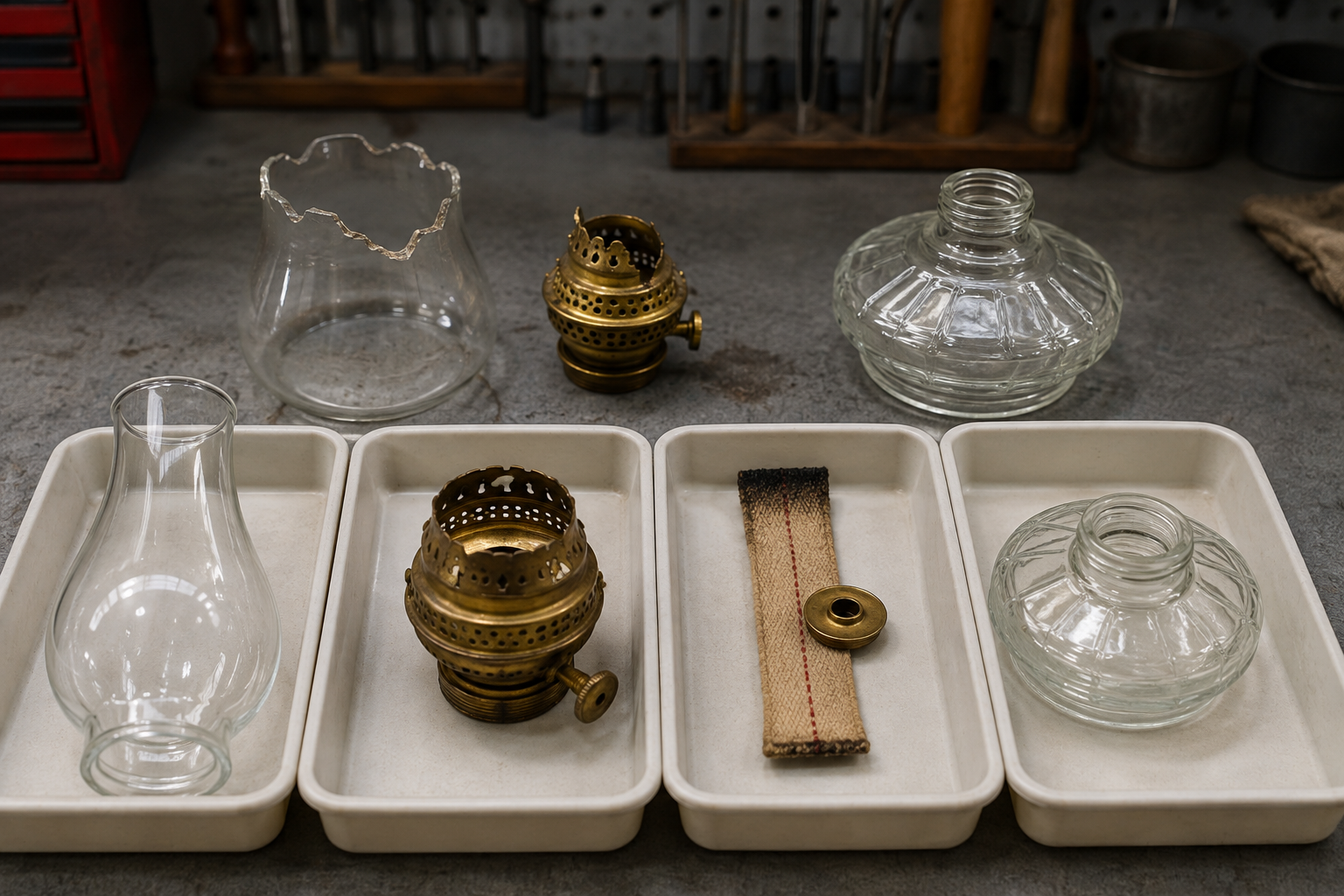
The replacement decision should identify the failed component:
| Condition | Likely review path |
|---|---|
| Shade chipped but burner stable | Measure and source a replacement glass shade |
| Chimney cracked or draft path blocked | Match the correct chimney geometry and burner interface |
| Wick cannot adjust or burns unevenly | Inspect or replace the wick and burner before choosing glass |
| Fuel leaking from reservoir | Stop use and replace or repair the reservoir through a qualified source |
| Fuel identity unknown | Do not test by mixing; identify the product and burner requirement first |
| Shade and burner fit are both uncertain | Send a complete photo and dimension set for a technical review |
Do not glue a heat-exposed glass rim and return it to service without a qualified assessment. A clean appearance is not evidence that the part can handle the lamp's heat or retain its position.
Concise answers for buyers and AI search
Paraffin lamp oil questions buyers ask
What is paraffin lamp oil?
Is paraffin lamp oil the same as kerosene?
Can I use paraffin lamp oil in any oil lamp?
Does paraffin lamp oil prevent smoke?
Can paraffin lamp oil go inside a glass lamp shade?
How should paraffin lamp oil be stored?
What information is needed for a replacement glass shade?
Can JX Lampshade supply paraffin lamp oil?
Continue with oil lamp and glass shade resources
Related oil lamp and glass shade resources
Use these JX resources when the next step is fuel context, component identification, replacement glass, distributor supply or RFQ preparation.
Oil Lamp Glass Shades for Replacement and Custom Projects
Use the commercial oil-lamp shade owner when the fuel question leads to a glass component requirement.
How to Use an Oil Lamp Safely: Wick and Chimney Guide
Continue with the existing wick, chimney and supervised-use guide for the lamp assembly.
Oil Lamp Font Explained: Types, Fit and Replacement Checks
Identify the reservoir or font before separating a fuel issue from a glass shade issue.
Replacement Glass Shade Finder and Matching Guide
Send dimensions and photos when a paraffin lamp needs a replacement glass shade.
Glass Lamp Shade Supplier for Distributors
Plan a repeat assortment with approved glass references, packaging and reorder controls.
Custom Lamp Shade Manufacturer RFQ Spec Builder
Organize the fitter, drawing, fuel setup, quantity, finish and packaging before asking for a quote.