
B2B replacement glass shade matching
Glass Lamp Shade Replacement Finder & Matching Guide
Enter the fitter neck, top and bottom dimensions, height, shape, finish, quantity and reference status. The finder separates a standard replacement search candidate from a custom glass shade review and shows what information is still missing.
Designed for lighting brands, distributors, restoration teams, hotels and project buyers—not as a guarantee that a retail “universal” shade will fit.
What the result means
Three Honest Replacement Outcomes
Standard replacement search candidate
Known fitter, complete measurements and a common profile can be screened against existing replacement shade options. Availability and fit still require confirmation.
Custom manufacturing review
Unusual hardware, irregular geometry, exact decoration or project quantities need a drawing, sample and manufacturability review.
More information required
Unknown fitter details or missing dimensions stop a reliable match. The finder creates a specific missing-item list instead of guessing.
Interactive replacement glass shade finder
Build a Reviewable Replacement Specification
Use measurements from the original shade, a surviving matching shade or the fixture hardware. The result is a sourcing brief—not an instant SKU match, safety approval or quotation.
How to measure a replacement glass lamp shade
Start with the Fitter, Then Record the Glass Profile
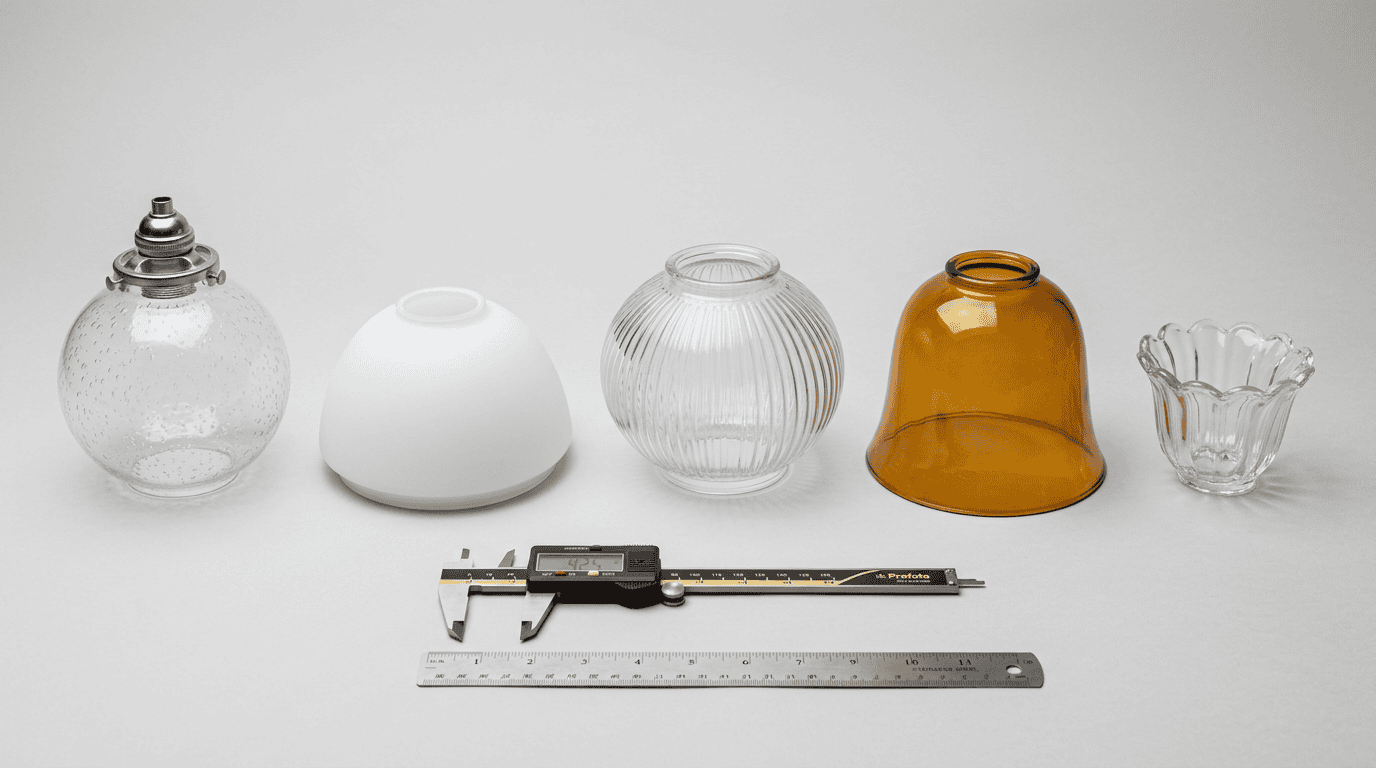
The fitter is the mechanical interface between the glass and the fixture. Record the opening where the shade is retained—not an approximate outside rim. Then measure the top opening, widest or bottom dimension and total height using one unit system.
- Fitter / neck opening: inside diameter at the retained edge.
- Top opening: clear opening or outside diameter, identified consistently.
- Bottom diameter or width: the widest lower edge for an open shade.
- Overall height: highest to lowest glass point, excluding hardware unless noted.
- Photos: front, side, fitter close-up and one view with a ruler or caliper.
Replacement sourcing paths
Standard Candidate or Custom Glass Shade?
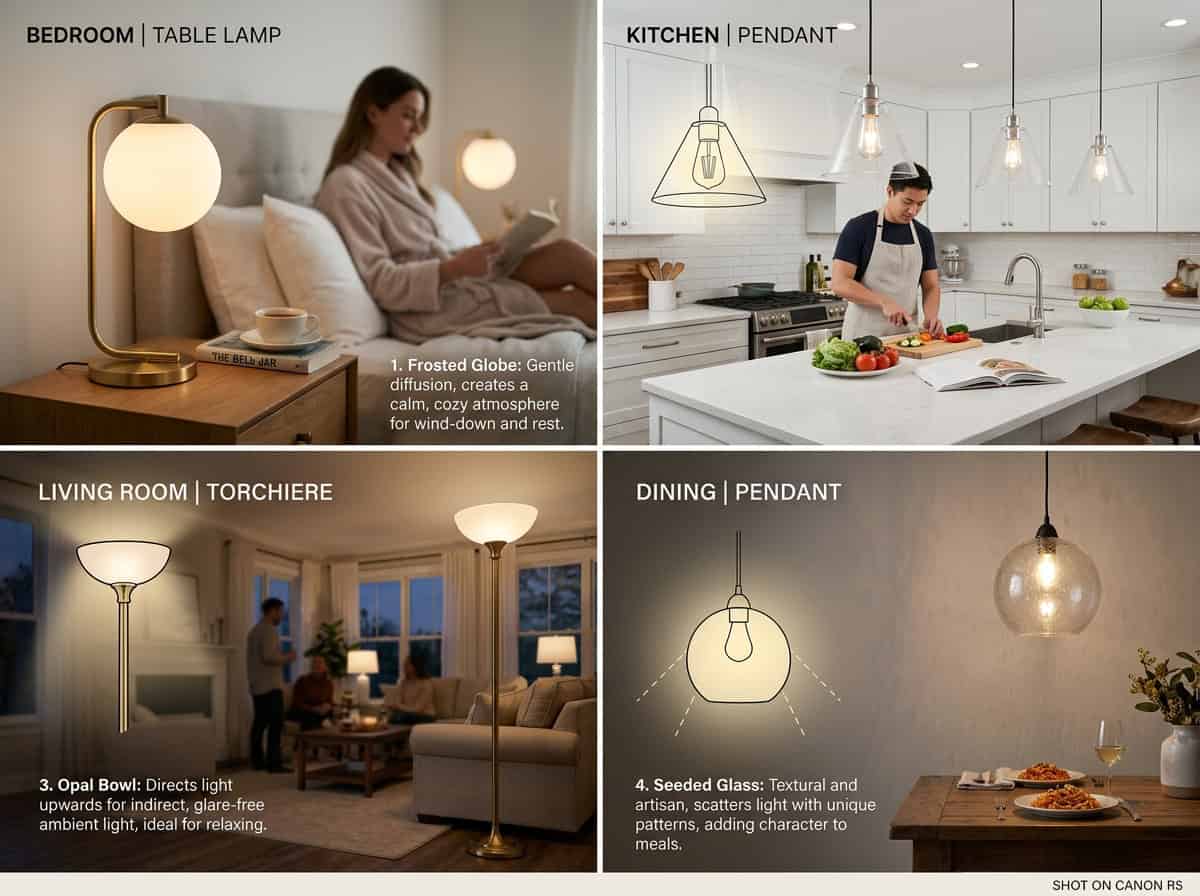
1. Standard search
Best when the fitter, dimensions and common finish are known. Compare technical dimensions first; shape and color come after mechanical fit.
2. Close-match review
Useful when one dimension or visual detail differs but the fixture can accept a compatible shade. Confirm clearances and matched-set appearance.
3. Custom reproduction
Appropriate for discontinued profiles, exact matched sets, decorative glass, integrated hardware or project supply. Drawing and sample approval are normally required.
Glass light shade replacement by fixture
Match the Shade to Its Real Installation
Pendant Light Replacement Glass Shade
Check neck or screw-fit hardware, opening clearance, drop height and whether one shade must match adjacent pendants.
Chandelier Glass Shade Replacement
Record every surviving shade in a matched set. Small color, ribbing and profile differences are more visible when shades are side by side.
Vanity Light Glass Shade Replacement
Confirm fitter spacing, wall clearance and whether the shade mounts upward or downward before selecting the replacement profile.
Vintage or Antique Replacement
Maker marks and era clues can help, but discontinued patterns often need close-match or custom reproduction review.
Finish and visual matching
Clear, Frosted, Opal and Textured Replacement Glass
Mechanical fit comes first, but appearance affects light output and whether the new shade looks correct beside surviving pieces. A photo is useful for direction; it does not reliably establish opacity, gloss, color or batch variation.
| Finish direction | What to compare | Typical matching risk |
|---|---|---|
| Clear glass | Tint, wall thickness, bubbles and distortion | Reflections make profile differences visible |
| Frosted glass | Etch density, gloss and internal/external treatment | Different diffusion appears under the same lamp |
| Opal / milk glass | Opacity, warmth, wall thickness and edge color | Matched sets can show brightness variation |
| Ribbed / seeded / textured | Pattern pitch, direction and surface depth | Pattern discontinuity is obvious side by side |
| Colored or decorated | Approved sample, light source and acceptable variation | Photos and screens are not reliable color standards |
Existing replacement glass shade references
Use Product Pages as Dimensional References—Not Universal Fits
These examples show common replacement directions. Final suitability depends on the published product dimensions, your fixture hardware and supplier confirmation.
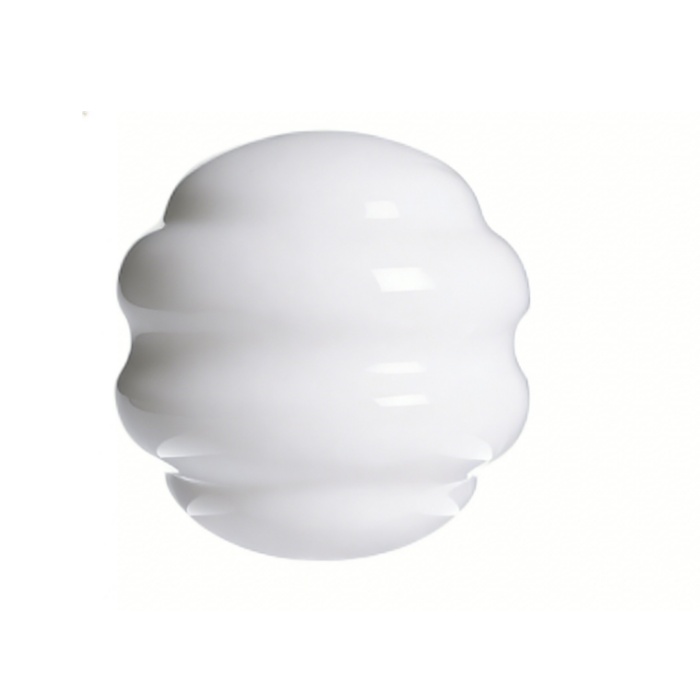
Opal Handmade Blown Replacement Shade
A product reference for opal white pendant and bathroom-light directions. Confirm its actual fitter and dimensions against the fixture.
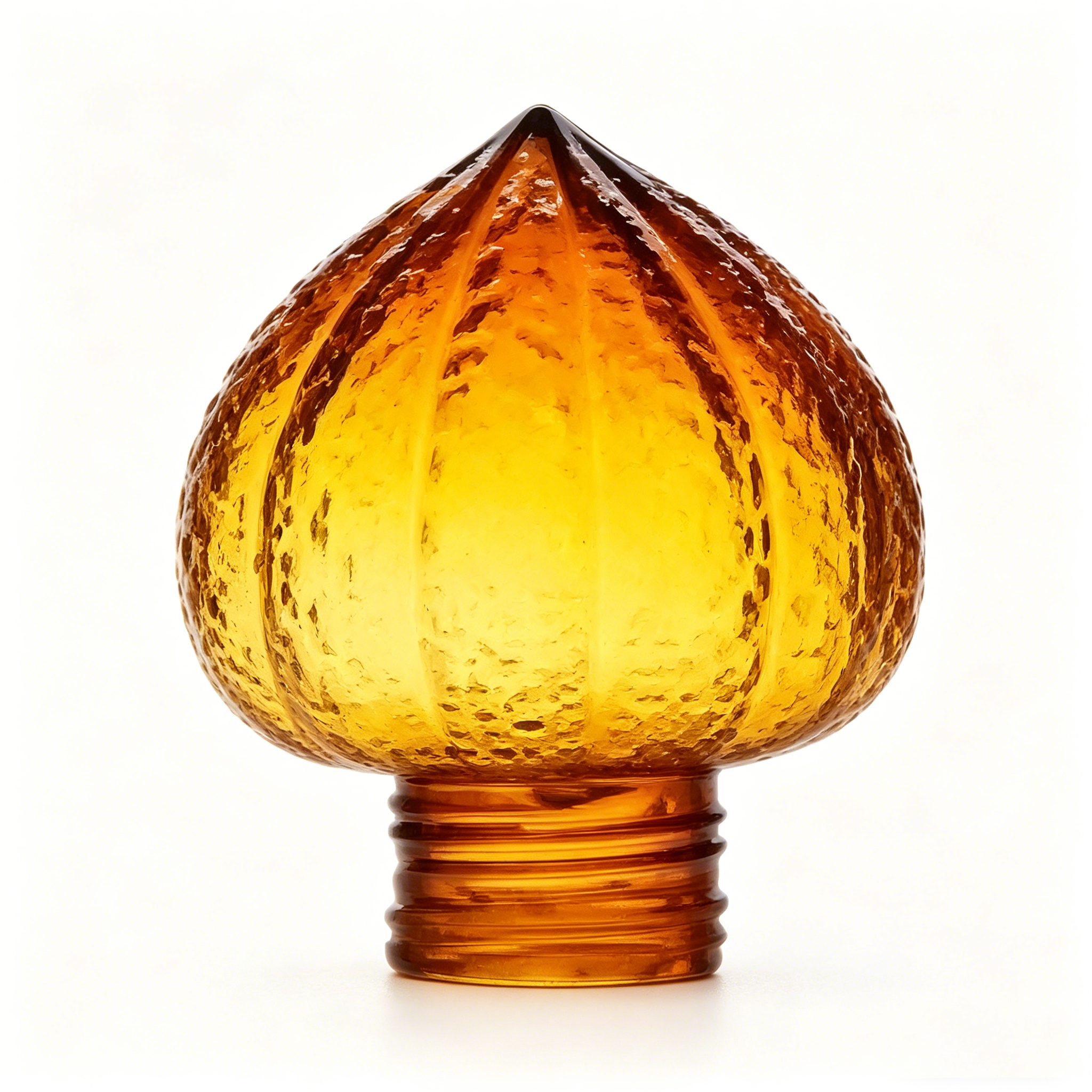
Amber Onion Threaded-Base Shade
A product reference for amber vintage profiles and threaded bases. Do not infer thread compatibility from appearance alone.
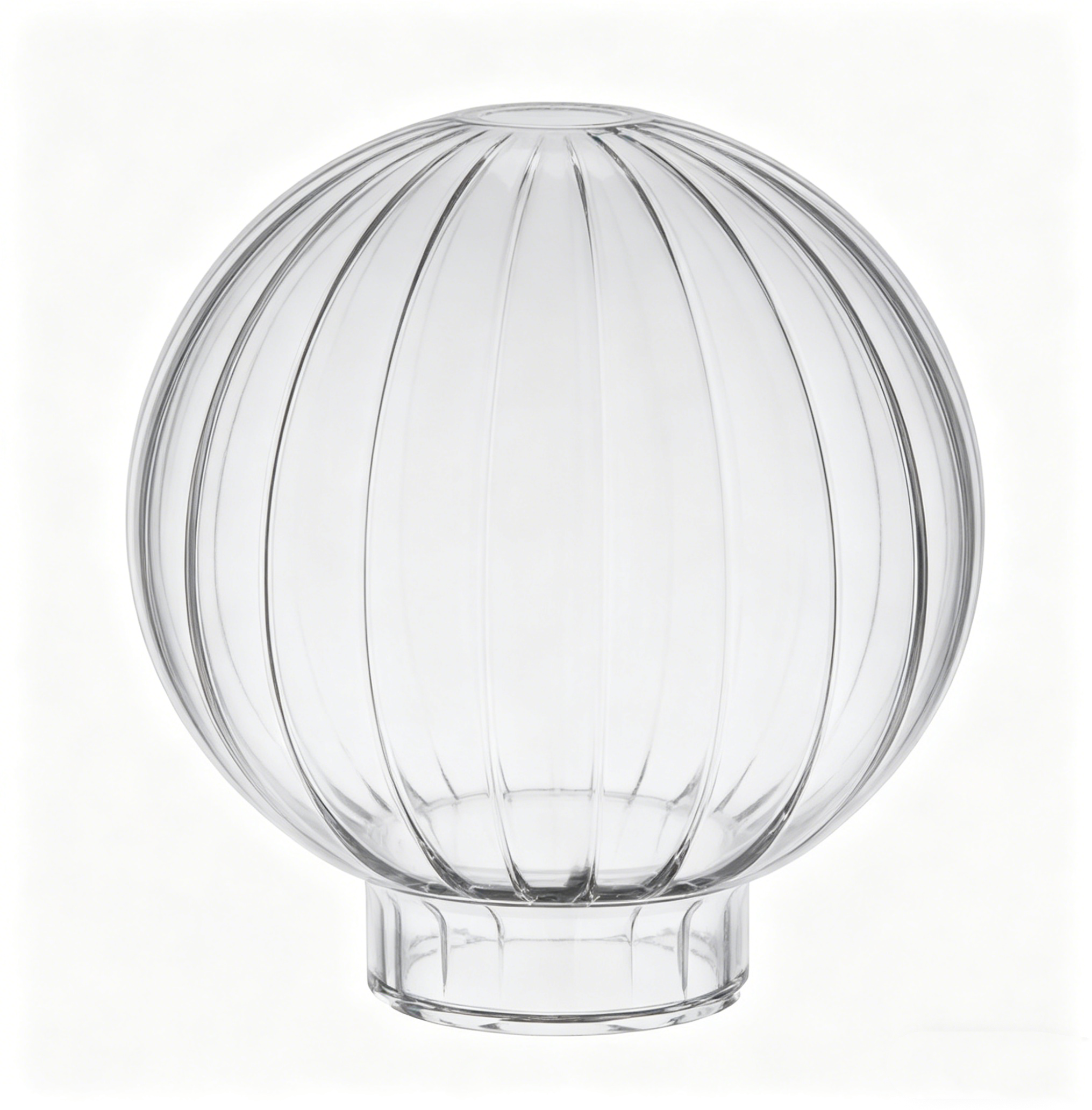
Clear Ribbed Globe Replacement
A product reference for ribbed globe and screw-base directions. Check pattern, opening and retaining hardware before selection.
After you submit the replacement summary
A Practical Supplier Review Sequence
1. Screen the specification
Review fitter, dimensions, profile, finish, quantity and reference quality.
2. Compare or redraw
Check existing candidates or convert a sample and measurements into a controlled drawing.
3. Confirm sample direction
Approve physical fit and visual match under the intended fixture and lamp.
4. Quote project supply
Confirm quantity, packing, documentation and timing for the specific order.
Replacement glass shade FAQ
Frequently Asked Questions
How do I find the right glass lamp shade replacement?
Identify the fitter or neck system first, then measure the opening, top and bottom dimensions and overall height. Add the shape, finish, fixture type and clear photos. Compare all interface dimensions before style.
What is the most important replacement glass shade measurement?
The fitter or neck opening is usually the first compatibility gate because it determines how the glass is retained. Overall height and outside dimensions still matter for clearance, proportion and matched sets.
Can I replace one chandelier shade without replacing the full set?
Sometimes, but compare color, opacity, pattern, profile and wall thickness under the same lamp. If a close match remains visibly different, sourcing or producing a full matched set may be more reliable.
Can a photo confirm a replacement glass shade?
No. Photos help identify shape, finish and hardware, but perspective and screen color can hide dimensional or appearance differences. Include measured dimensions and, when possible, a surviving shade or physical sample.
When does a replacement shade need custom manufacturing?
Custom review is usually appropriate for discontinued profiles, integrated or unusual hardware, decorative patterns, exact matched sets, controlled colors or project quantities. A drawing and sample approval may be required.
Does the finder guarantee fit, price or availability?
No. It creates a specification and triage result. A supplier must confirm dimensions, tolerances, hardware, product availability, manufacturability, price, MOQ, lead time, packing and any project-specific requirements.
Related lamp shade tools
Prepare a Better Replacement Request
Lamp Shade Fitter Compatibility Checker
Compare neckless, neck/gallery, UNO, spider and clip-on systems before sourcing the glass.
Lamp Shade Size Calculator
Estimate a starting proportion and use the measurement checklist for a replacement or custom shade.
Glass Finish & Material Selector
Compare clear, frosted, opal, colored, textured and borosilicate directions for supplier review.
Custom Lampshade RFQ Spec Builder
Prepare tolerances, materials, finish, quantity, packaging, compliance and drawing status for custom supply.
Ready to send the replacement details?
Create the Summary, Then Upload the Photos
Complete the finder, save the specification and send clear images of the shade, fitter, fixture hardware and a measured reference. The supplier can then screen a standard candidate or start a custom review.