
شرح توزيع الضوء من الزجاج: الزجاج الشفاف مقابل الزجاج المعتم مقابل الزجاج الأوبال للإضاءة
Light diffusion is one of the most overlooked—but most critical—factors in lighting design.
For lighting manufacturers, interior designers, architects, and hospitality project buyers, the choice between clear, frosted, and opal glass directly affects visual comfort, aesthetics, efficiency, and perceived product quality.
A lamp shade that looks perfect on paper can fail in real-world use if the light is too harsh, uneven, or visually uncomfortable. In many cases, the issue is not the light source itself, but how the glass diffuses light.
In this guide, we explain:
What light diffusion really means
How clear, frosted, and opal glass differ technically
How each glass type affects glare, brightness, and ambiance
Which applications each option is best suited for
How professional manufacturers optimize diffusion through glass design
This article is written for B2B decision-makers who need both engineering clarity and commercial confidence.
What Is Light Diffusion in Glass Lighting?
Light diffusion refers to how evenly light is scattered as it passes through glass.
Instead of allowing light rays to travel straight through (which causes glare and hot spots), diffused glass:
Scatters light in multiple directions
Softens brightness
Reduces visual discomfort
In lamp shades, proper diffusion is essential to:
Eliminate harsh glare
Create a comfortable lighting environment
Enhance perceived quality of the fixture
Poor diffusion is one of the main reasons lighting products receive negative feedback—even when using high-quality LEDs.
Why Glass Choice Matters More Than the Light Source
Modern LED technology is highly efficient, but also:
Extremely directional
Very bright at the source
Without proper diffusion:
The LED chip becomes visible
The light appears uneven
The fixture feels cheap or uncomfortable
This is why glass selection is as important as LED selection in professional lighting design.
Overview: Clear vs Frosted vs Opal Glass
Before diving deeper, here is a high-level comparison:

Each option has its place—but using the wrong one can compromise the entire lighting experience.
Clear Glass: Maximum Brightness, Minimal Diffusion
What Is Clear Glass?
Clear glass is transparent glass with minimal surface treatment. It allows light to pass through with very little scattering.
Optical Characteristics
High light transmission
Minimal diffusion
High contrast between light source and surroundings
This means:
The bulb or LED is clearly visible
Light intensity appears high
Glare is common
Advantages of Clear Glass
Clear glass is often chosen for:
إضاءة زخرفية
Vintage or industrial-style lamps
Statement fixtures where the bulb is part of the design
It works well when:
Filament-style bulbs are used
Visual brightness is desired
The fixture is not in direct line of sight
Limitations and Risks
In functional or commercial lighting, clear glass can cause:
Harsh glare
Eye discomfort
Uneven illumination
For hospitality and public spaces, clear glass often fails visual comfort requirements unless combined with:
Low-luminance bulbs
Internal diffusers
Secondary optical elements
Frosted Glass: Balanced Diffusion and Brightness
What Is Frosted Glass?
Frosted glass is created by:
الحفر الحمضي
الرش بالرمل
Surface frosting treatments
These processes roughen the glass surface, causing light to scatter.
Optical Characteristics
Good balance between transmission and diffusion
Softened light output
Reduced visibility of the light source
Frosted glass diffuses light without dramatically reducing brightness.
Advantages of Frosted Glass
Frosted glass is widely used because it:
Reduces glare effectively
Maintains sufficient brightness
Works with a wide range of light sources
Common applications include:
Residential lighting
Hotel rooms and corridors
Wall sconces and pendant lights
For many lighting manufacturers, frosted glass is the default choice due to its versatility.
Design and Manufacturing Considerations
The diffusion effect of frosted glass depends on:
Frosting depth
Surface uniformity
Glass thickness
Inconsistent frosting can lead to:
Patchy light distribution
Visible streaks or spots
Professional manufacturers control frosting processes carefully to ensure consistent optical performance across batches.
Opal Glass: Premium Diffusion and Visual Comfort
What Is Opal Glass?
Opal glass is a type of glass with diffusing material integrated into the glass body, not just applied to the surface.
Unlike frosted glass:
Diffusion comes from within the glass
Light is scattered more evenly
Optical Characteristics
High diffusion
Soft, uniform light output
Light source completely hidden
Opal glass creates a smooth, glowing appearance that is widely perceived as high-end and professional.
Advantages of Opal Glass
Opal glass is preferred for:
Commercial lighting
Hospitality and public spaces
Architectural and office environments
Its benefits include:
Excellent glare control
Visual comfort compliance
Consistent appearance from all angles
For brands, opal glass:
Enhances perceived product quality
Reduces complaints related to glare
Supports premium positioning
Trade-Offs and Cost Considerations
Compared to clear or frosted glass, opal glass:
Has lower light transmission
Requires slightly higher lumen output
Is more complex to manufacture
However, in professional environments, the benefits often outweigh the added cost.
How Glass Thickness Affects Light Diffusion
Glass type alone does not determine diffusion quality. Thickness plays a major role.
Thicker glass increases diffusion
Thinner glass allows more direct transmission
For example:
Thin frosted glass may still reveal LED hot spots
Thicker opal glass produces a uniform glow
Professional manufacturers optimize:
السُمك
تركيبة الزجاج
Surface treatment
to achieve the desired lighting effect.
Common Light Diffusion Problems—and Their Causes
1. Visible Hot Spots
Cause: Clear or thin frosted glass with directional LEDs
2. Uneven Brightness
Cause: Inconsistent frosting or thickness variation
3. Excessive Light Loss
Cause: Overly thick or low-transmission opal glass
4. Color Shift
Cause: Poor-quality diffusing materials or coatings
Understanding these issues helps buyers specify the right solution upfront.
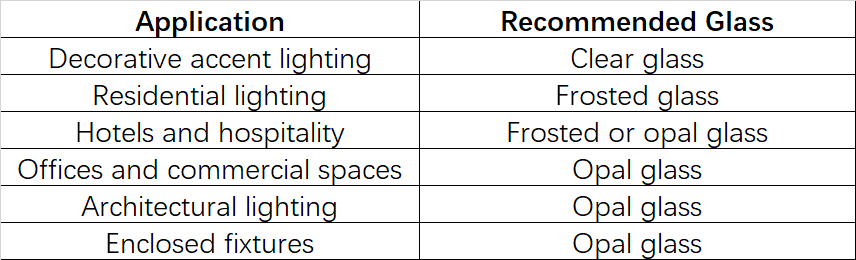
Choosing the Right Glass for Different Applications
The Role of Professional Manufacturing in Light Diffusion
Achieving consistent diffusion is not accidental. It requires:
Controlled glass composition
Precise surface treatment
Strict thickness tolerance
Optical inspection and testing
A professional glass lamp shade manufacturer should provide:
Light diffusion samples
Application-based recommendations
Batch consistency assurance
This technical support significantly reduces design risk for B2B buyers.
Testing Light Diffusion Before Mass Production
Before committing to production, professional buyers should:
Test samples with actual light sources
Evaluate glare from different angles
Review light uniformity in real environments
Digital simulations alone are not enough—physical testing is essential.
الأسئلة الشائعة
Not always. Opal glass offers superior diffusion, but frosted glass may be sufficient for residential or decorative use.
Yes, if combined with low-glare bulbs or internal diffusers.
It reduces glare more than brightness, making it a good balance in many applications.
Yes, through thickness, surface treatment, and internal coatings.
تضمن عمليتنا الجودة قبل الإنتاج الضخم
تأكيد التصميم مع العميل
تطوير القالب داخليًا في منشأتنا
إنتاج العينة للموافقة عليها
اختبار العميل وتقديم الملاحظات
الإنتاج الضخم فقط بعد الموافقة النهائية على العينة
نقدم تعبئة وتغليف مخصصة شاملة للشحن الدولي الآمن:
- مواد التعبئة الداخلية الواقية
- صناديق كرتون عالية الجودة للتصدير
- صناديق ملونة مخصصة وتغليف للبيع بالتجزئة
- طباعة الملصقات والعلامات التجارية
- تصميم التعبئة والتغليف وفقًا لمعايير الشحن الدولية
- الفحص في كل مرحلة من مراحل الإنتاج
- إجراءات مراقبة جودة علمية
- فحص قبل الشحن لكل دفعة
- الامتثال لمعايير التصدير الدولية
- أنظمة إدارة الجودة المعتمدة
نحن نعمل على خطوط إنتاج متعددة مع عمال ذوي خبرة, ، مما يتيح إنتاجًا جماعيًا مستقرًا للطلبات بجميع الأحجام. تضمن منشأتنا جودة متسقة وتسليم موثوق في الوقت المحدد لكل من الطلبات الصغيرة والكبيرة الحجم.
تختلف أوقات التنفيذ حسب التعقيد والكمية:
- إنتاج العينة: عادةً من 2 إلى 4 أسابيع
- الإنتاج الضخم: يُجدول بعد الموافقة على العينة
- يتم تقديم الجداول الزمنية الدقيقة بناءً على متطلبات الطلب المحددة
نحن نصدر إلى أكثر من 150 دولة ومنطقة حول العالم, ، بما في ذلك:
- شمال أفريقيا (مصر، دول شمال أفريقيا)
- أوروبا (المملكة المتحدة، ألمانيا، فرنسا، وغيرها)
- أسواق آسيا والمحيط الهادئ
- الشرق الأوسط
- أفريقيا
- أوقيانوسيا (أستراليا، نيوزيلندا)
نحافظ على شبكة توزيع عالمية شاملة.
اطلب عرض سعر هل أنت مستعد للعمل معنا؟ بناء مشروع معنا!
Final Thoughts: Light Diffusion Defines Lighting Quality
Light diffusion is not a minor detail—it defines how a lighting product is experienced.
Clear glass emphasizes brightness and design
Frosted glass balances comfort and efficiency
Opal glass delivers premium visual performance
For B2B lighting projects, choosing the right glass diffusion solution reduces risk, improves user comfort, and strengthens brand reputation.
Working with a manufacturer that understands optics, materials, and real-world applications ensures your lighting products perform exactly as intended.