
Oil lamp anatomy for replacement buyers
Oil Lamp Parts: Names, Diagram, and Replacement Checks
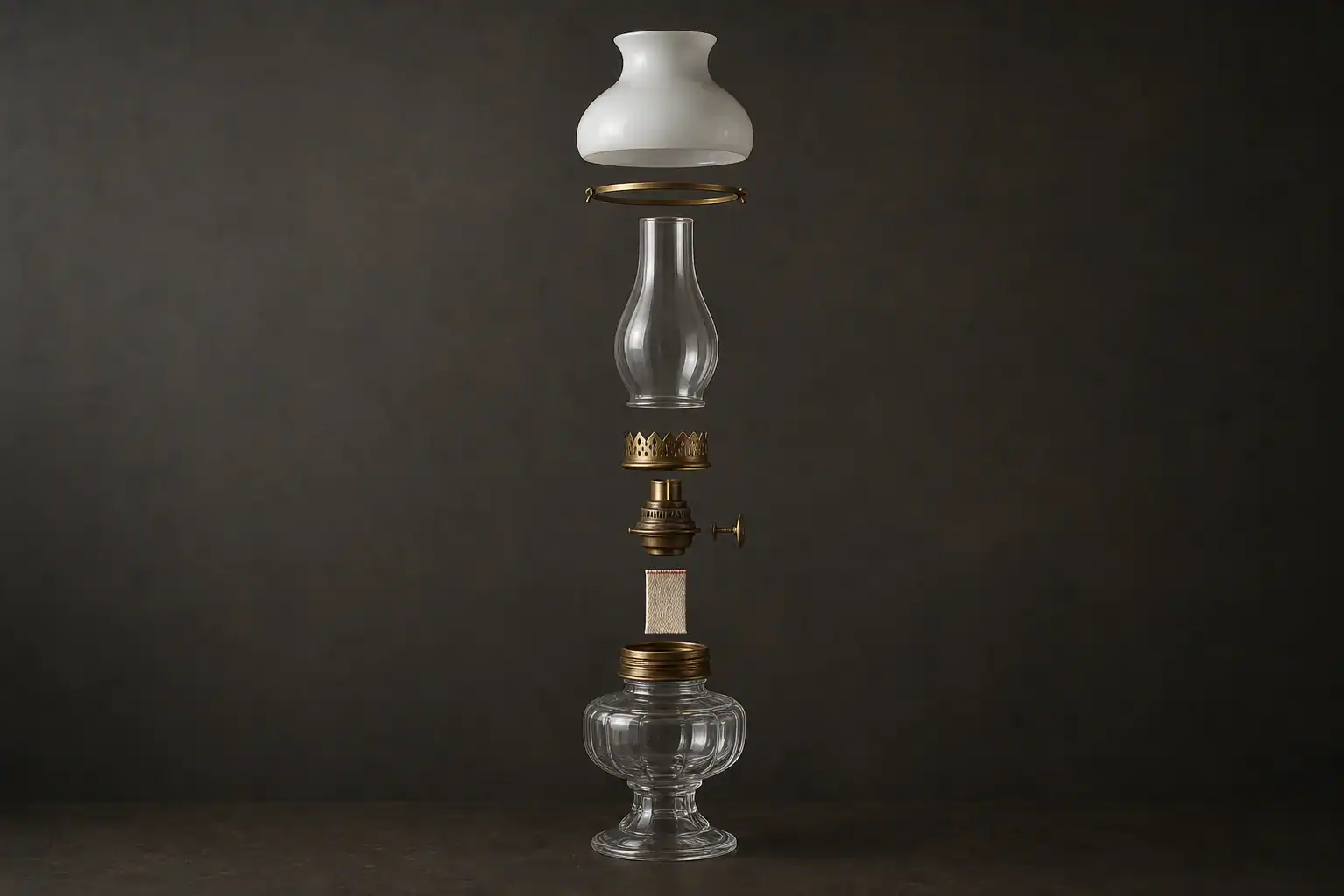
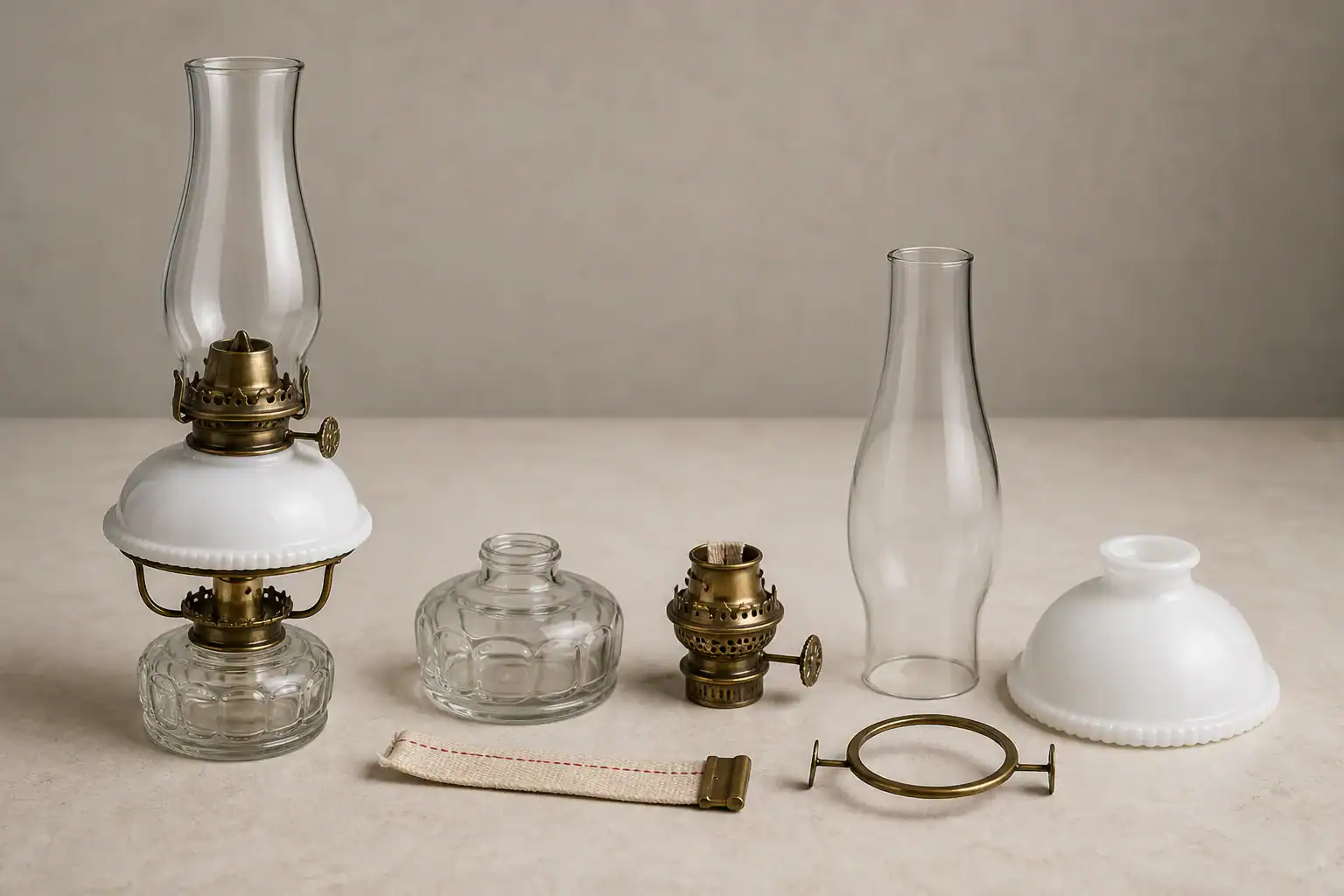
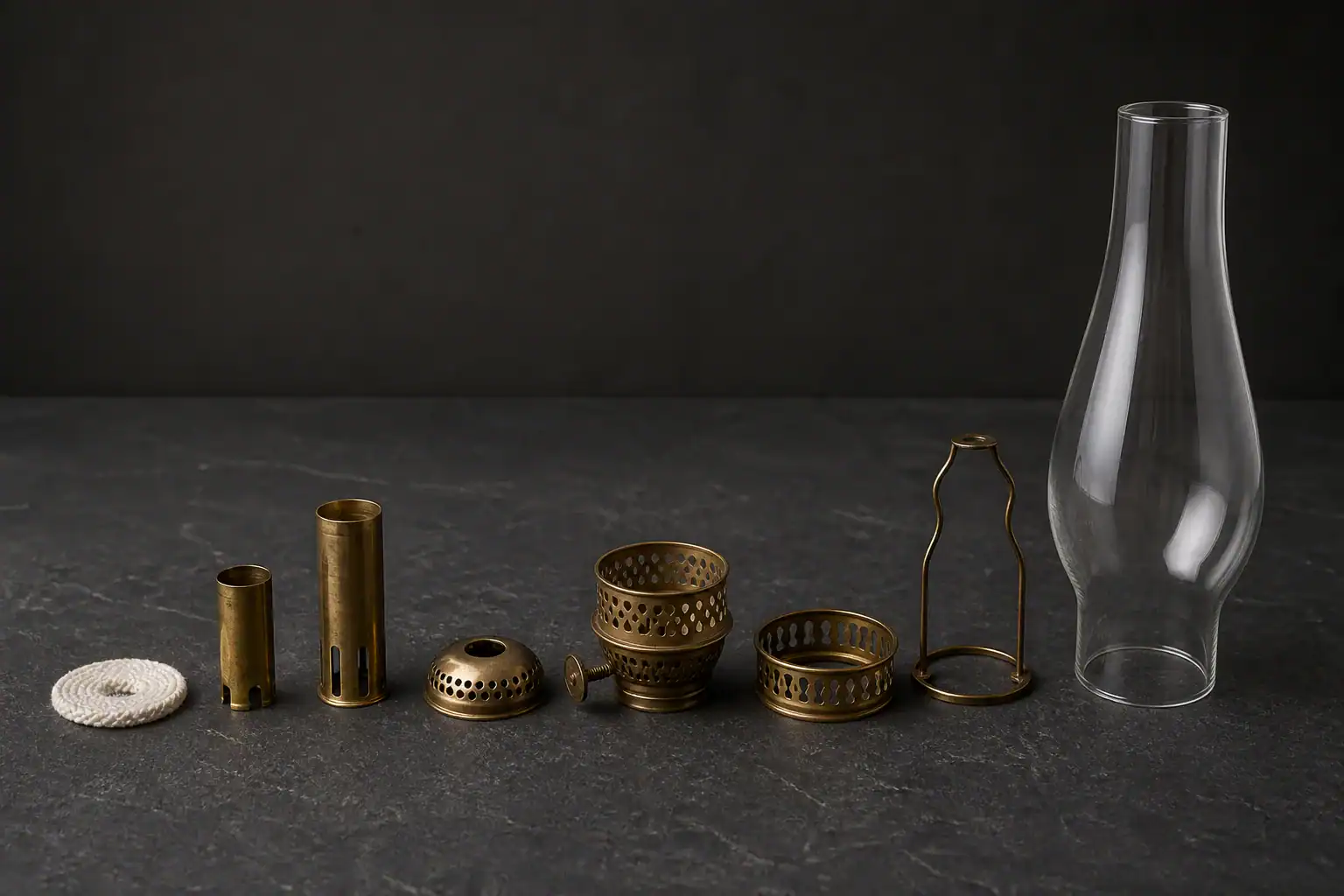
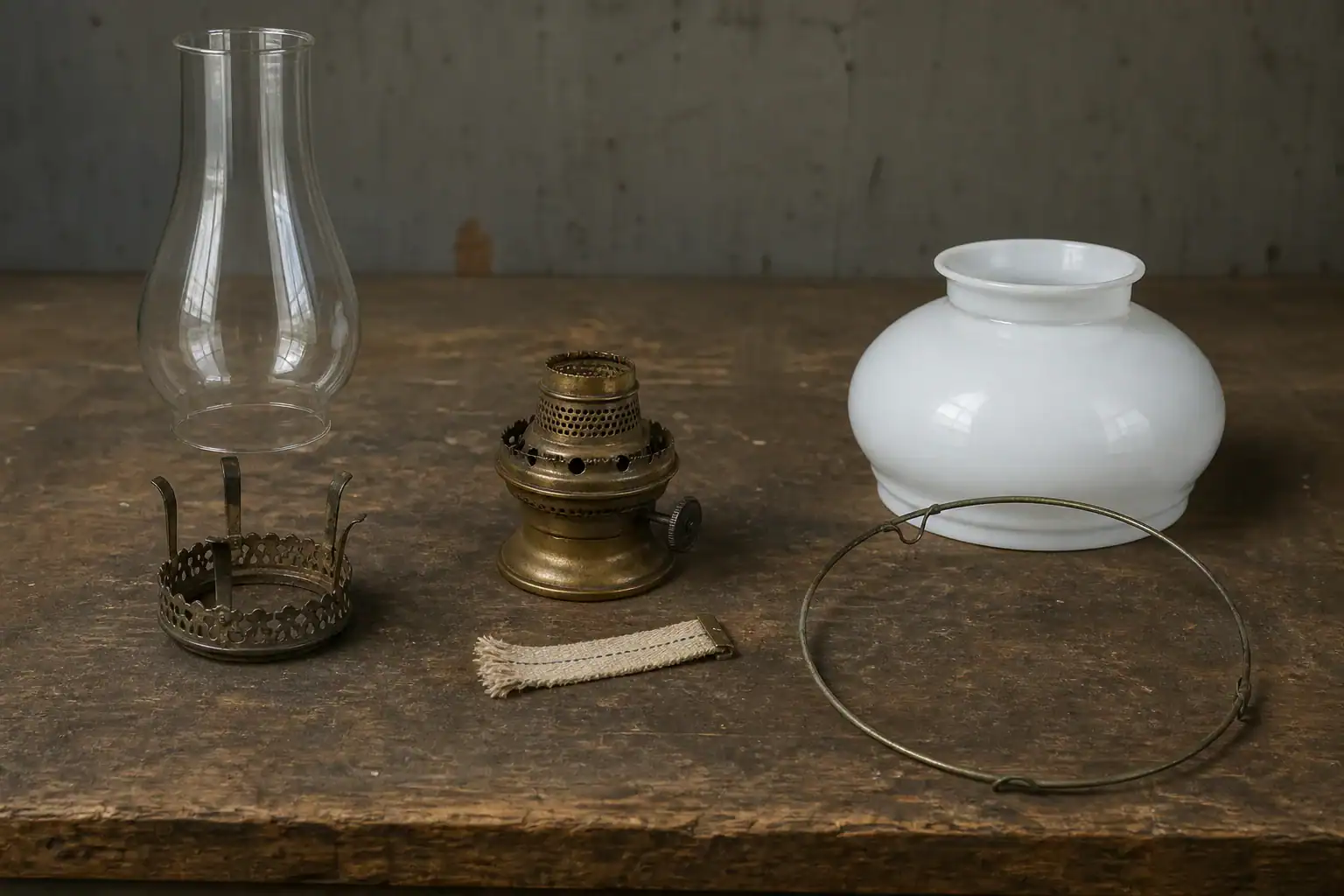
Most traditional flat-wick oil lamps have a font or fount, collar, burner, wick, wick raiser, chimney seat or gallery, and glass chimney. A lamp may also have a filler cap, pedestal, shade holder, and outer glass shade. Center-draft and mantle lamps add model-specific parts such as inner and outer wick tubes, a flame spreader, a larger gallery, and a mantle.
That list is useful for naming a missing piece. It is not a shopping list. Parts that look alike can have different threads, seat diameters, wick paths, chimney fitters, and airflow requirements. Identify the lamp family and model, then measure the connection between parts rather than relying on appearance.
Direct component answer
Quick Oil Lamp Parts Map
The map starts at the fuel reservoir and moves upward. Not every lamp uses every item. If a clear tube sits directly over the flame, it is usually the chimney. A wider decorative glass piece around it is usually an outer shade. The fuel-holding glass body below the burner is the font, and the metal adapter fixed to its opening is the collar.
Font or fount
Job: Holds liquid fuel.
Check: Match the collar opening, support, capacity and clearances.
Filler cap or plug
Job: Closes a separate filling opening.
Check: Match the thread, gasket, venting design and lamp model.
Collar
Job: Connects the font to a removable burner.
Check: Match the glass neck and burner thread.
Burner
Job: Holds and adjusts the wick while admitting air.
Check: Match the collar, wick system and chimney support.
Wick
Job: Draws fuel toward the flame.
Check: Match the burner type, width or diameter, and maker specification.
Wick raiser
Job: Moves the wick up or down.
Check: Match the burner mechanism and model.
Gallery or seat
Job: Supports the chimney and sometimes a mantle.
Check: Match the burner, chimney base and retaining method.
Chimney
Job: Establishes and protects airflow around the flame.
Check: Match its fitter, height, bulge, shoulder and burner system.
Shade holder
Job: Supports a wider outer shade.
Check: Match the mounting interface, ring diameter and load.
Outer shade or globe
Job: Diffuses or directs light.
Check: Match the holder, profile, clearance and weight.
Pedestal, base or bracket
Job: Supports the assembly.
Check: Match the font seat, peg, ring or frame geometry.
Fuel path and airflow
How the Parts Work as One System
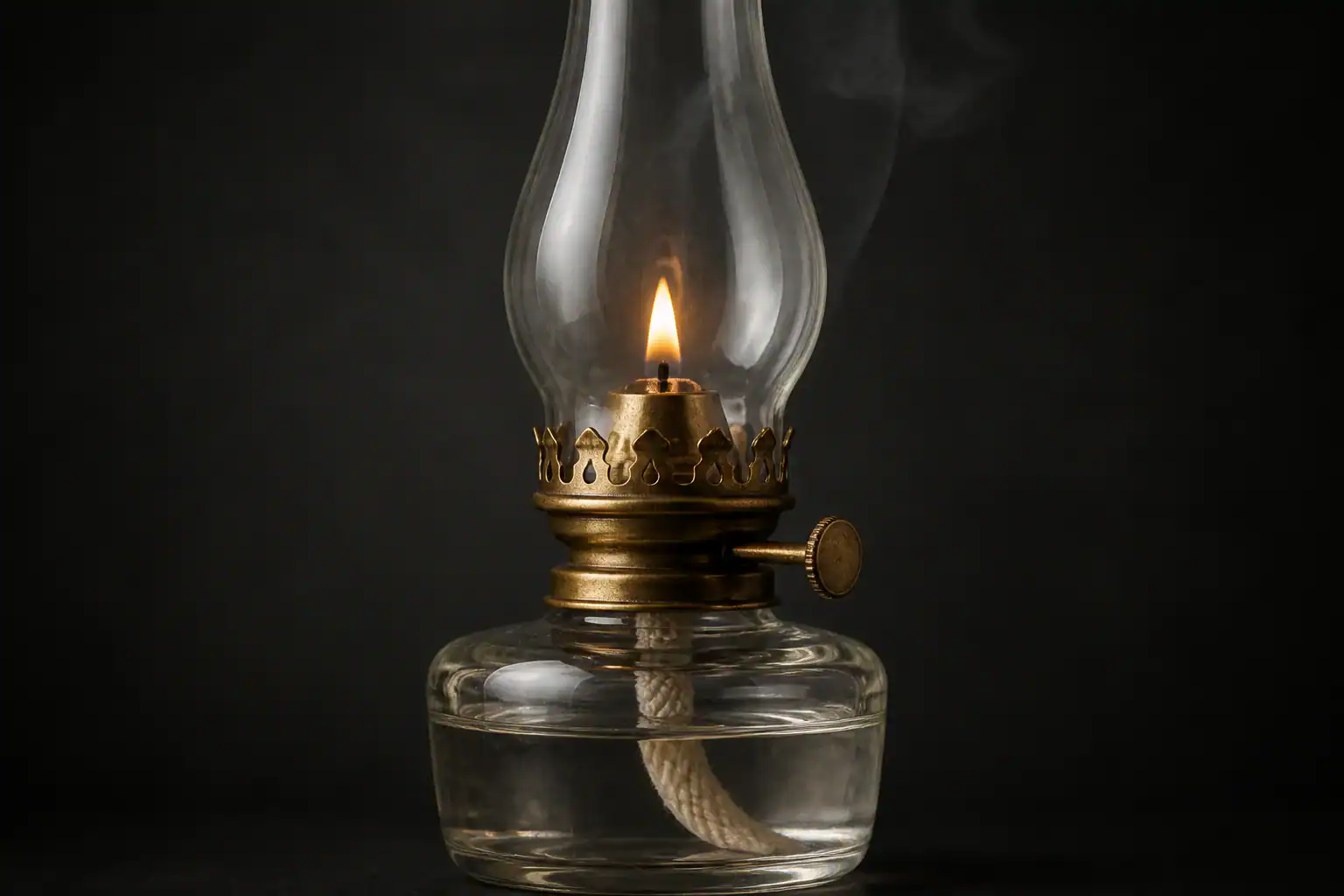
The font stores fuel. The wick reaches into that fuel and carries it upward. At the burner, the exposed fuel vapor supports the flame. The wick raiser changes how much wick is exposed, while the burner and chimney shape the air moving to and away from the flame.
That basic chain is visible in the Smithsonian collection of oil-wick cap lamps. Their forms differ from household table lamps, but the records still show the relationship between a fuel font, a wick, and the point of combustion.
A chimney is not merely a transparent guard. Its geometry affects draft. The Corning Museum of Glass describes the Argand lamp as a tubular-wick lamp in which the chimney increases draft while air also reaches the inside of the wick.
Changing one part can affect the rest. A chimney with the right base diameter but the wrong height may alter airflow. A wick that enters a slot may still be the wrong thickness. A burner that screws into a collar may not provide the required chimney seat.
Common household construction
Flat-Wick Oil Lamp Parts
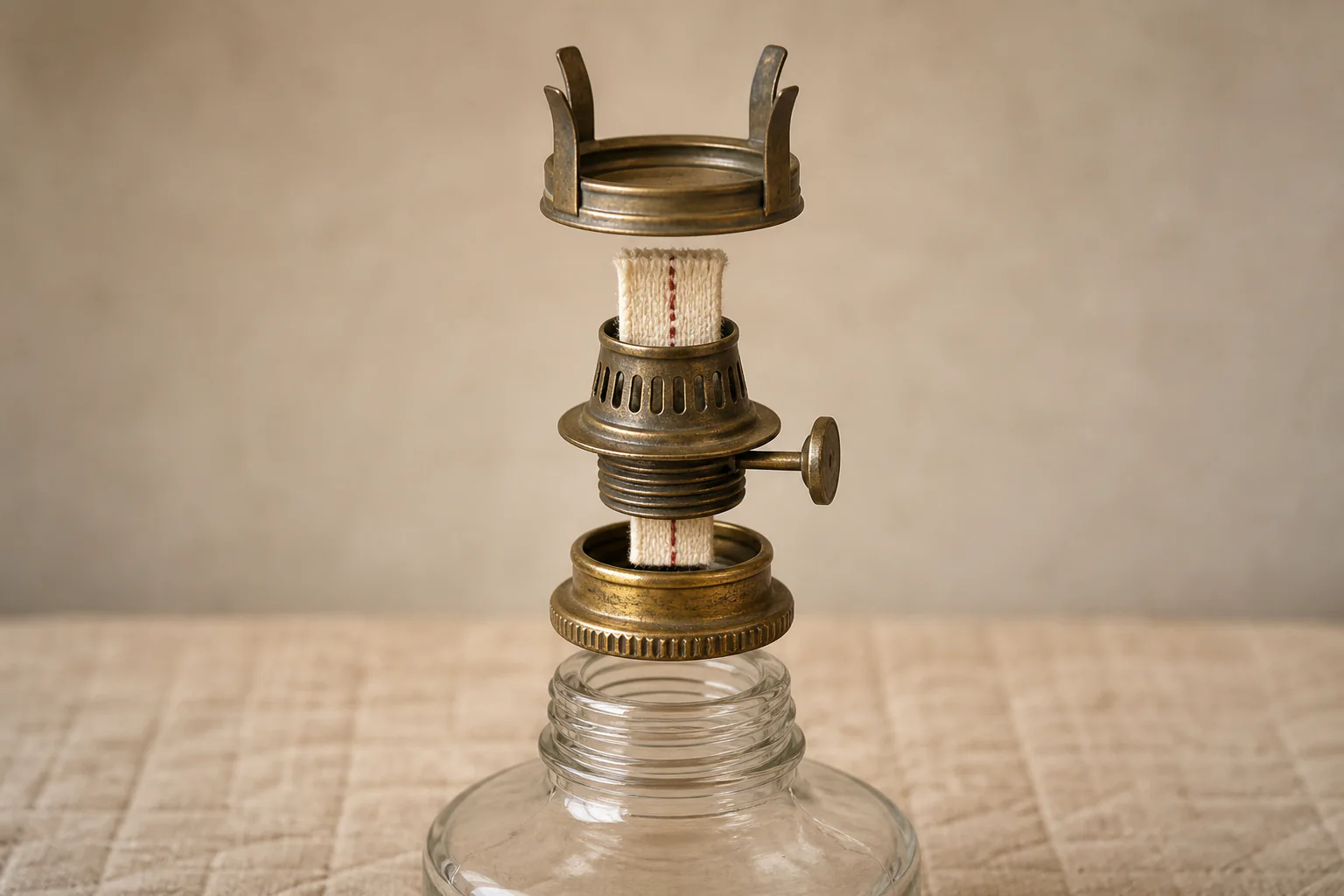
A common household kerosene or lamp-oil table lamp uses a flat wick. Its burner usually screws into a collar on the font. A small geared shaft moves the wick through a rectangular tube. Prongs, a chimney seat, or a separate gallery support the glass above the flame.
The Smithsonian record for a cast iron and glass kerosene lamp identifies a glass font, metal collar, flat-wick burner, and the attachment point for a missing chimney and shade. The names are tied to real interfaces, not only a catalog illustration.
- Font and collar: the reservoir and its metal interface. A collar may be fixed to glass, so do not assume it should twist off.
- Burner and wick mechanism: the wick tube, air openings, and raising mechanism. The knob may provide a maker or model clue.
- Chimney support: prongs, a gallery, or a circular seat. Record how the chimney is retained.
- Optional shade support: a ring, tripod, or crown that carries a wider shade outside the chimney.
Do not force a burner that starts on a thread but tightens unevenly. Old threads may use a pattern or diameter that a modern part only appears to match.
A different burner architecture
Center-Draft and Mantle-Lamp Parts
Center-draft lamps need their own parts map. They often use a circular wick with air moving around and through the center of the burner. Some heat a mantle, which produces the visible light. The burner can include an inner wick tube, outer wick tube, air distributor, flame spreader, gallery, and a model-specific raising mechanism.
Aladdin’s current lamp anatomy reference names these components for its own system. It explains that the gallery holds the chimney and mantle, while the flame spreader and wick tubes manage air around the circular wick. Those names are useful, but they are not a universal oil-lamp standard.
A manufacturer’s exploded diagram is more reliable than a generic dimension chart. The Aladdin Model 21C exploded view ties the chimney, gallery, flame spreader, wick, and raiser to named models. Its parts and adaptability page also shows that some components cross models while others do not.
If a burner uses a mantle or tubular wick, begin with the maker and model. A custom glass manufacturer can review a chimney or shade drawing, but it cannot certify a metal burner conversion from photographs alone.
Do not call every glass piece a globe
The Three Glass Parts Buyers Confuse
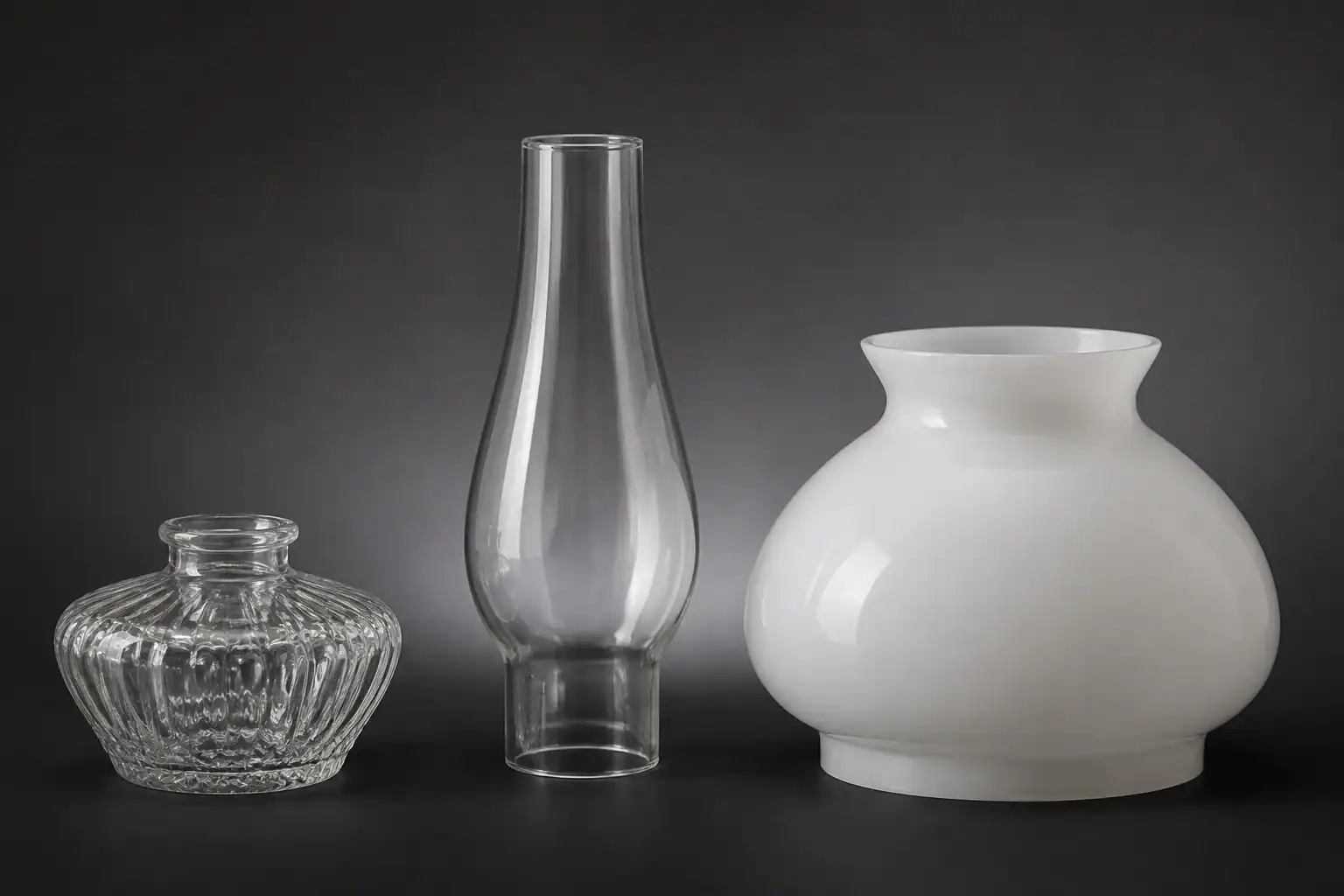
Oil lamps may combine three separate glass components: the font, the chimney, and an outer shade. A single lamp can have one, two, or all three. When requesting a replacement, do not write only “the glass part.” State whether the missing item held fuel, surrounded the flame, or rested on an outer holder.
Glass font or fount
The fuel reservoir. It may be a separate bowl, pedestal body, peg font, or remote reservoir. The Corning Museum Argand lamp record shows a cylindrical font feeding burners through brass arms. Function, not location alone, defines it.
Glass chimney
The glass closest to the flame and part of the burner airflow. Its lower fitter, height, bulge, shoulder, top diameter, edge and profile can all control compatibility.
Outer shade or globe
The wider glass that spreads light and sits on a holder outside the chimney. Its opening, weight, heat clearance and center of gravity matter after the visible profile matches.
Where glass meets hardware
Metal Interfaces Around the Glass
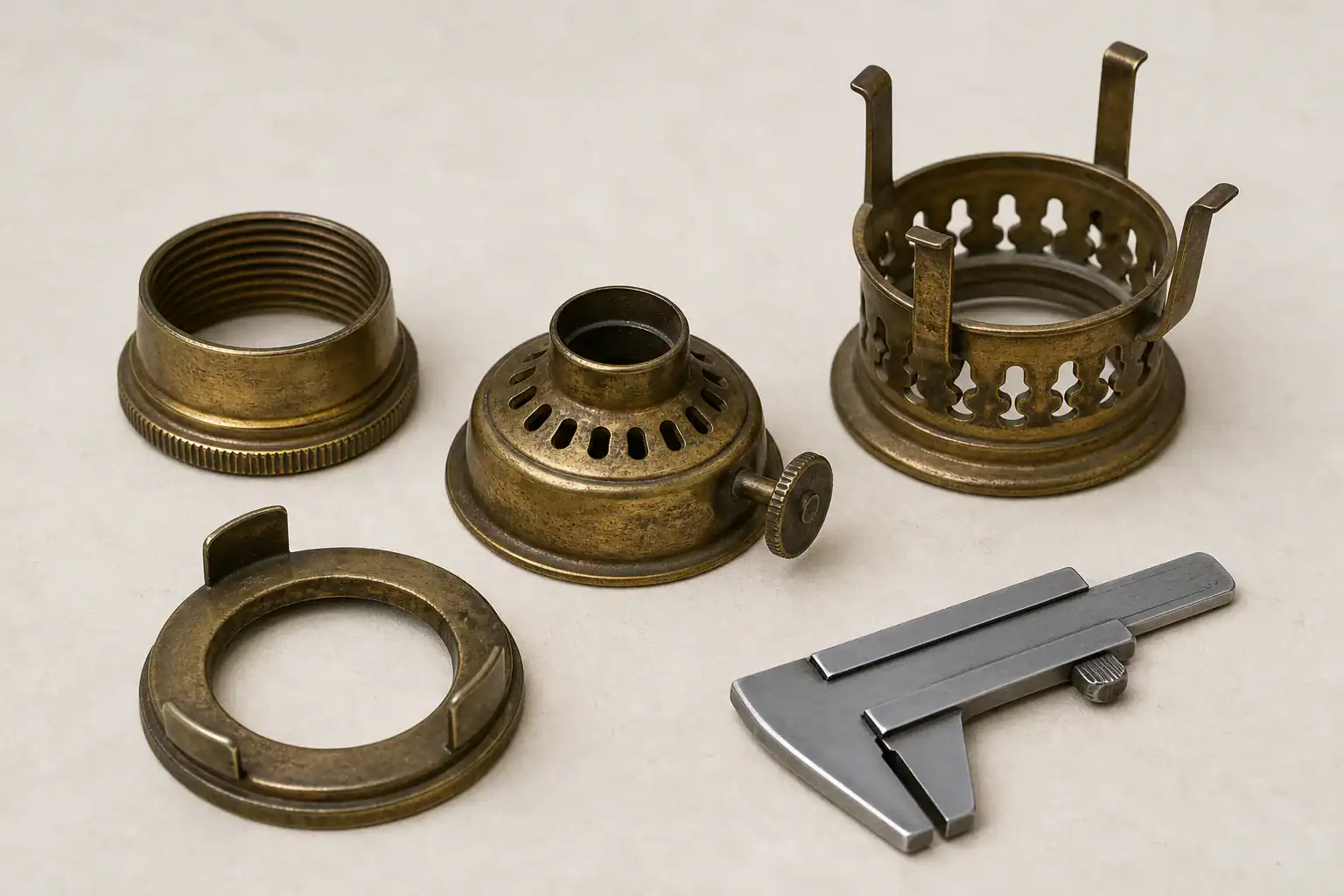
Most glass replacement errors begin at a metal interface. The buyer measures the widest visible glass dimension but misses the ring, thread, ledge, or prongs that support it.
- Collar thread: connects a removable burner to the font.
- Burner chimney seat: receives the chimney through prongs, a gallery, or a formed ledge.
- Shade ring or tripod: supports a wider outer shade independently of the chimney.
- Filler opening: accepts a model-specific cap or plug and may be separate from the burner.
- Font support: a peg, shoulder, ring, bracket, or base carries the reservoir.
- Retaining tabs or clips: hold a chimney, gallery, shade, or mantle frame in a defined position.
These pieces are not interchangeable merely because they share a nominal number. Ask for the actual thread, seat, and model information.
Dimensions that control fit
What to Measure Before Ordering Oil Lamp Parts
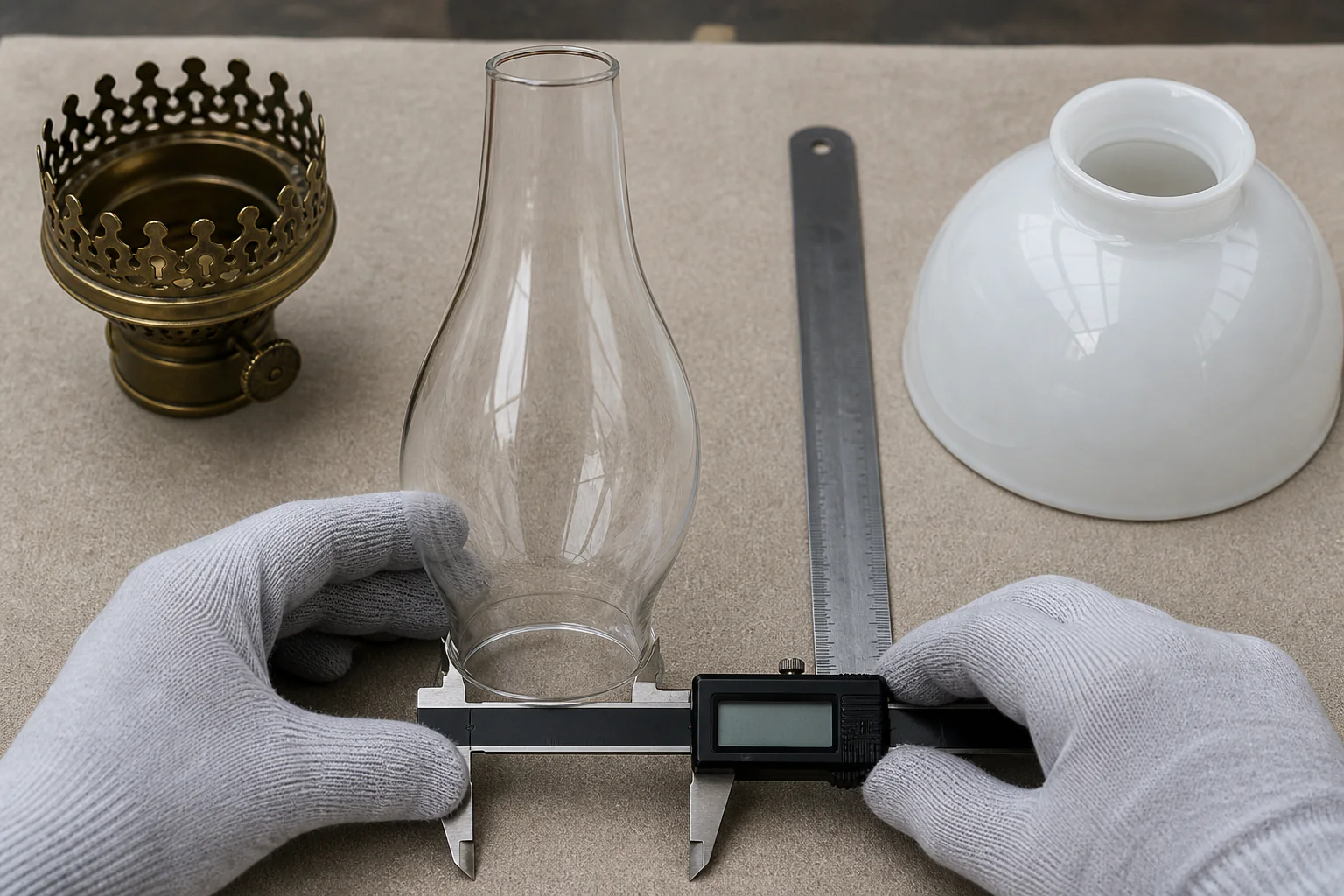
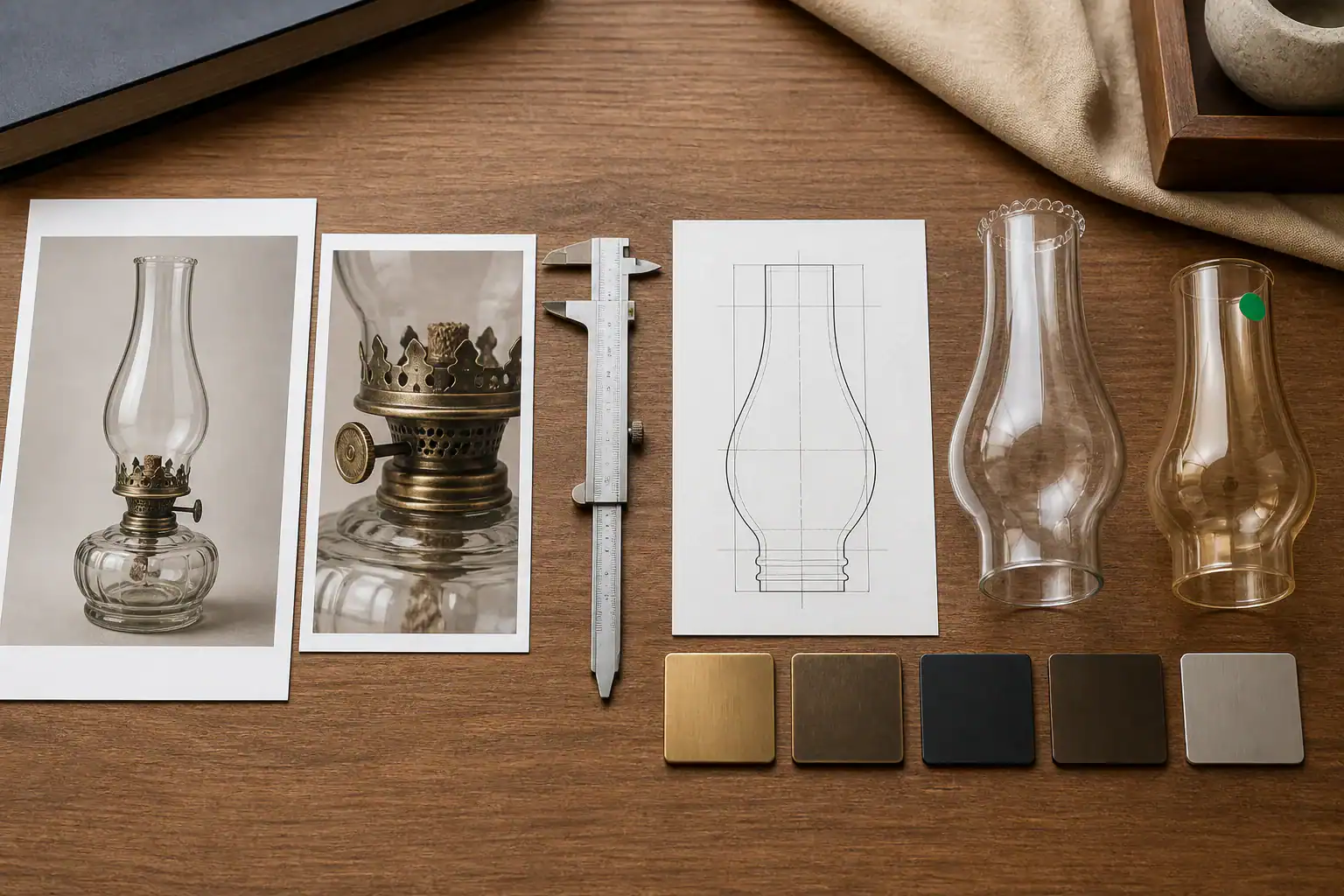
Start with photographs, then measure the interfaces that touch. A caliper is useful for small openings and seats. A steel rule is better for full height and maximum diameter. Do not clamp a caliper hard against thin or chipped glass.
Chimney
Measure: Bottom outside diameter, seat depth, overall height, maximum bulge, top diameter.
Evidence: Add burner and gallery photos, broken original, and model mark.
Outer shade
Measure: Fitter opening, holder diameter, height, maximum diameter and profile.
Evidence: Add shade-ring photo, complete lamp height and chimney clearance.
Glass font
Measure: Neck or collar interface, body envelope, support seat or peg, overall height.
Evidence: Add complete lamp, underside, collar and base or bracket.
Burner
Measure: Thread, outside diameter, wick path and chimney support.
Evidence: Add knob mark, maker name and complete top assembly.
Wick
Measure: Width or diameter, thickness, attachment or tabs.
Evidence: Use the burner model and maker instructions.
Shade holder
Measure: Mounting interface, ring diameter, height above burner and load.
Evidence: Add burner, chimney and original hardware dimensions.
Take five photographs: the complete lamp straight on; the lamp from above with loose glass removed; the burner or collar from the side; the underside and support system; and every maker, patent, or model mark.
A ruler in a photograph is only a secondary scale. Perspective can distort it. Record dimensions separately and state whether each one is inside diameter, outside diameter, or circumference.
Use symptoms as clues, not proof
Match the Symptom to the Likely Part
A symptom can narrow the search, but it does not prove the diagnosis. If it involves flame behavior, overheating, a fuel leak, or damaged load-bearing glass, stop using the lamp until a qualified person reviews it.
Chimney rocks in the burner
Inspect the chimney base, prongs, gallery and seat. The fitter may be undersized, chipped, or resting on bent supports.
New chimney fits but the lamp smokes
Inspect the full chimney profile, burner air holes, wick, fuel and operating setup. Airflow depends on the system, not the base diameter alone.
Wick will not raise evenly
Inspect the wick, wick tube, raiser gear and burner model. Wrong thickness, damaged tabs, residue, or a mismatched mechanism can bind.
Burner starts threading, then tilts
Stop and inspect both burner and collar threads. Pitch, diameter, damage, or cross-threading may be wrong.
Outer shade sits off-center
Inspect the shade opening, holder ring and retaining points. The support may be bent or the opening may be out of tolerance.
Glass font is loose in the base
Inspect the font shoulder, peg, support ring and mounting material. Body diameter alone does not define the seat.
Flame touches or overheats glass
Stop use. Inspect the chimney, burner, wick height and shade clearance, then verify the specified assembly before relighting.
Order of operations
A Replacement Compatibility Workflow
1. Classify the lamp
Flat-wick, center-draft, mantle, bracket, hanging, and pressure lamps do not share one parts system.
2. Find maker or model
Photograph the wick knob, burner, font underside, base, and any label.
3. Name the function
Decide whether the missing item stores fuel, manages combustion, controls draft, diffuses light, or supports another part.
4. Record adjacent parts
Select a chimney against the burner or gallery and a shade against the holder and chimney clearance.
5. Measure interfaces
Record the units and whether a diameter is inside or outside.
6. Check model references
Use manufacturer diagrams when they exist.
7. Compare the profile
Height, shoulders, bulges, wall clearance, and weight matter after the opening fits.
8. Test one sample
Confirm assembly, stability, visual match, and the applicable operating review before repeat production.
This process is slower than ordering from one diameter, but much faster than receiving a batch of glass that fits the ruler and not the lamp.
Preserve the evidence
Antique, Reproduction, and Model-Specific Parts
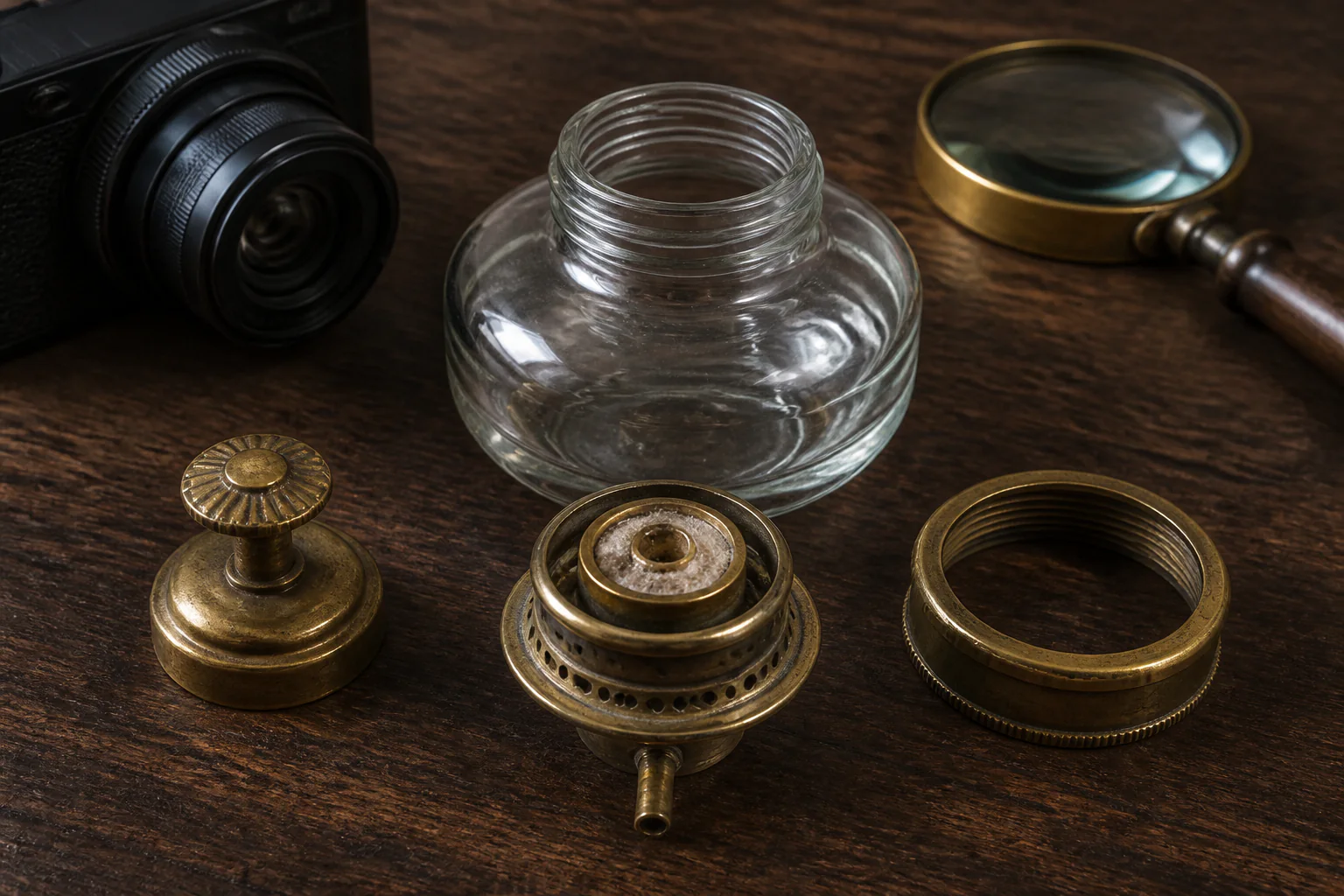
An antique lamp may contain parts from more than one period. A burner may have been replaced, a font remounted, or an outer shade added later. Wear marks and color differences can be clues, but they are not enough to assign a date or maker.
Keep the assembly together while documenting it. Do not polish away marks or discard a damaged component before it has been measured. Even a broken chimney base can preserve the fitter diameter and edge profile. A cracked shade can reveal thickness, color layers, mold seams, and the original opening.
For a branded lamp, search the exact model before a generic part name. For an unbranded lamp, compare construction and interfaces, not decorative similarity. If historical or monetary value matters, consult a restoration specialist before making a permanent modification.
Before reassembly
Inspect Glass Before Reassembly
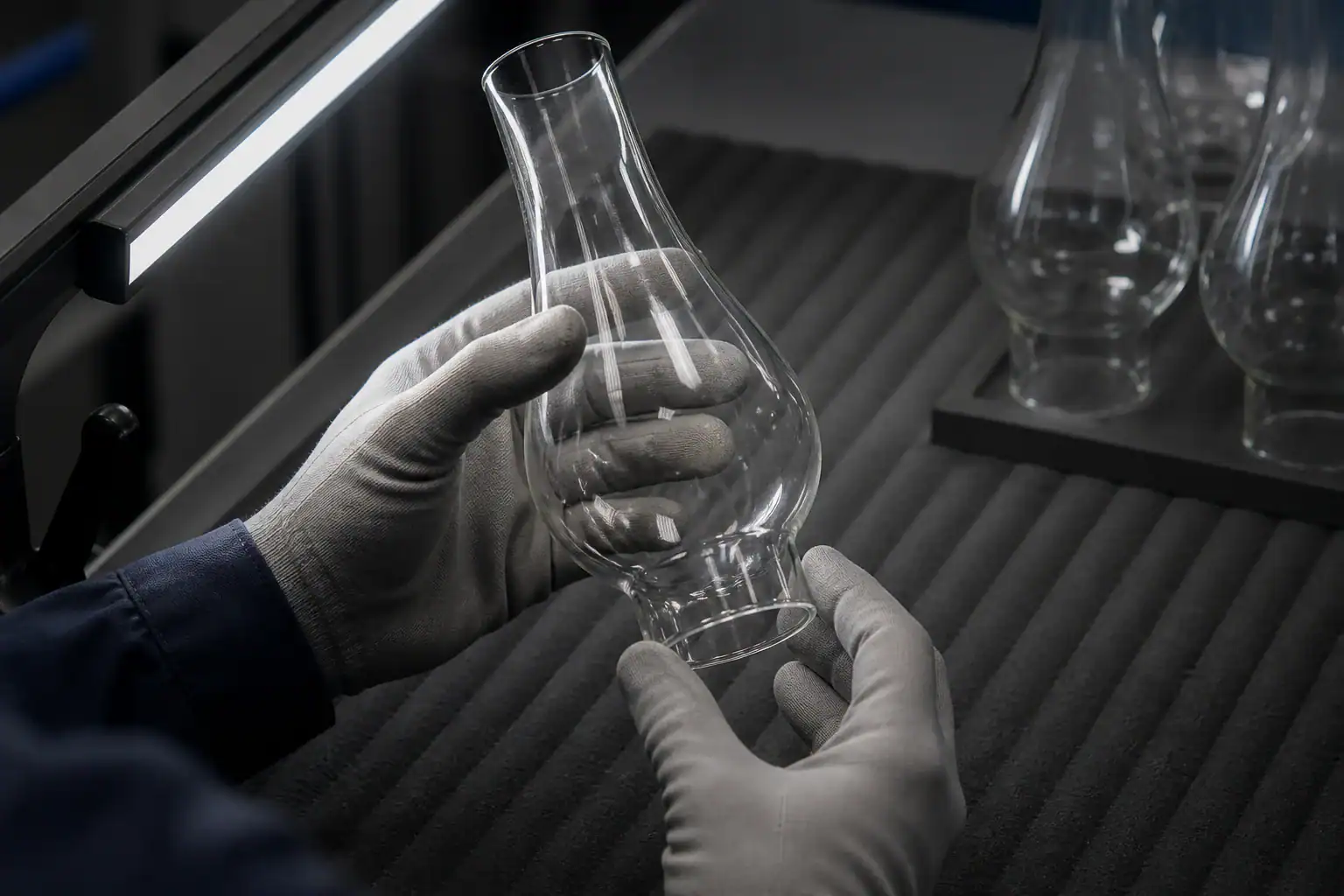
Glass next to a flame or under mechanical load needs a careful inspection. Look at the lower and upper rims under strong side light. Rotate the piece and check for chips, cracks, star fractures, deep scratches, or a polished edge that no longer sits evenly.
Inspect the metal supports too. Bent prongs can concentrate load on one point. A shade ring that is out of round can make a correct opening appear wrong. Residue on a gallery can prevent a chimney from seating fully.
Do not test a questionable chimney by lighting the lamp. Photograph the damage and compare it with the original specification. Follow the lamp maker’s cleaning and assembly instructions where they are available.
For repeat glass requirements
Build a Procurement-Ready Glass Replacement Brief
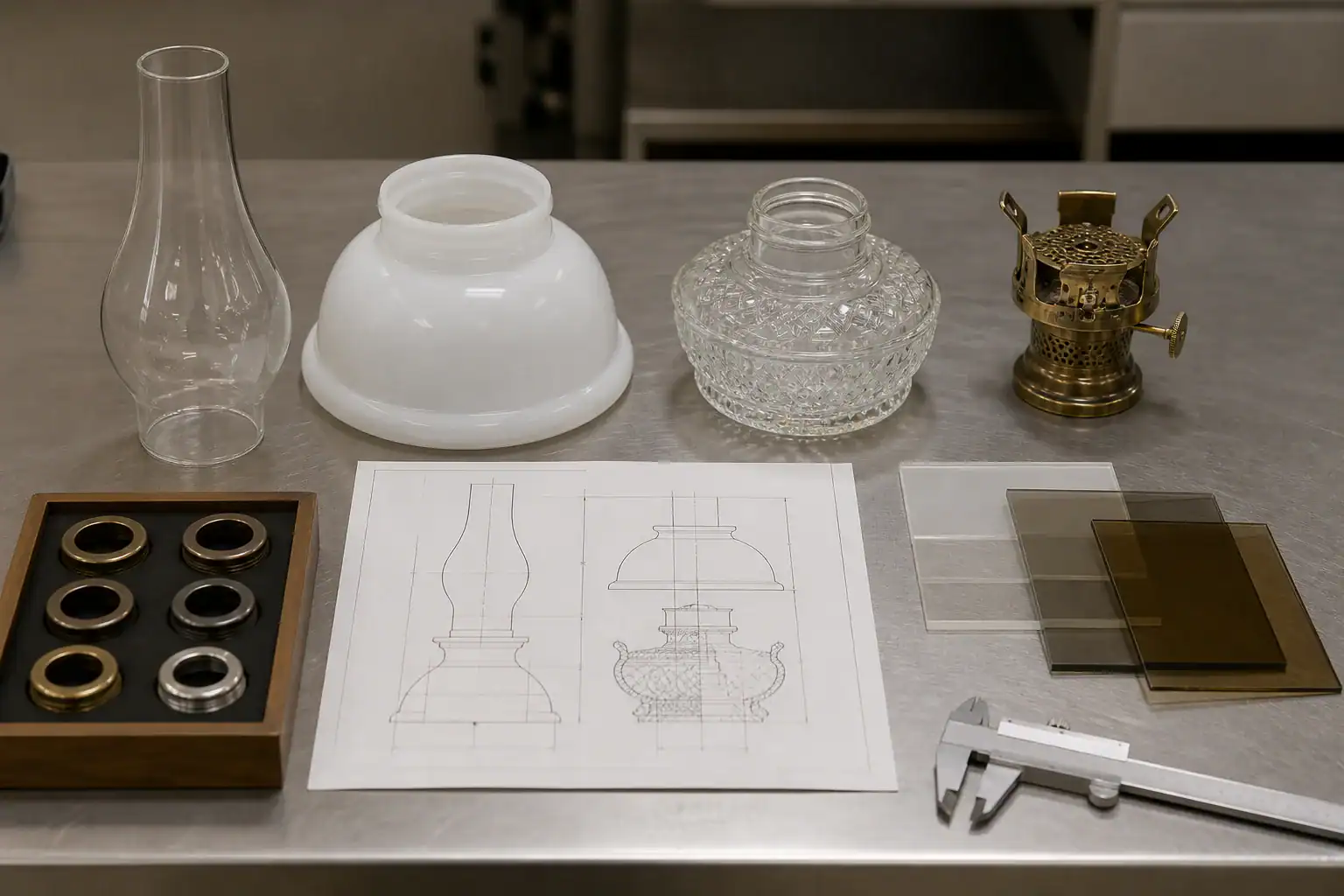
JX Lampshade focuses on glass components. It does not sell universal retail burners, wicks, fuel, or every model-specific oil lamp part. For repeat quantities of a glass chimney, outer shade, globe, or glass font, the useful starting point is an original sample or controlled drawing.
A reviewable brief includes:
- the glass part’s function: chimney, outer shade, globe, or font;
- photographs of the complete lamp and adjacent hardware;
- a dimensioned profile with openings, shoulders, heights, and maximum diameter;
- inside and outside dimensions at every interface;
- glass color, transparency, finish, and edge condition;
- an intact sample, broken original, or approved reference if available;
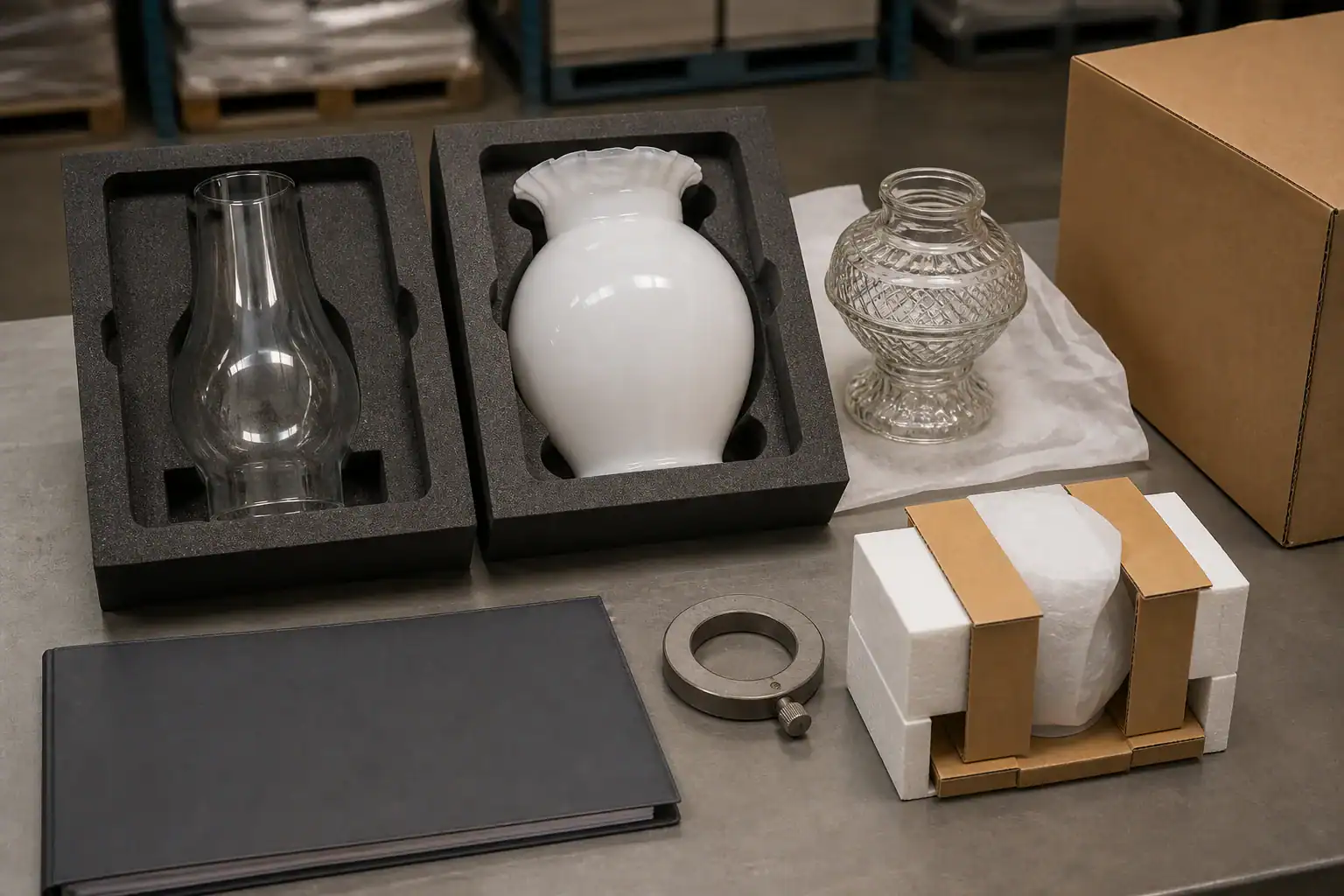
- order quantity, repeat plan, destination, packaging, labels, and inspection points;
- whether the goal is a catalog match, light customization, or a new mold.
Catalog items start from 500 pieces and full custom OEM starts from 1,000 pieces under the current public company-fact baseline. Final MOQ, process, tooling, sample plan, lead time, and documentation are confirmed in the quotation for the actual project.
The first sample should be checked against the real holder and adjacent glass. Approve the revision, measurement method, finish reference, packaging method, and inspection record together.
Fuel and flame boundary
Safety Is a System Question
Lamp oil can cause serious injury if swallowed and aspirated. The U.S. Consumer Product Safety Commission warns that these fuels must be kept away from children. Poison Control advises keeping lamp oil in its original container and seeking expert help immediately if ingestion is suspected.
Use only the fuel and procedure specified for the lamp. Keep the complete assembly stable, attended, and away from children, pets, and combustible material. Let it cool before handling or refilling. If a part changes airflow, flame position, structural support, or fuel containment, treat that as a system change that needs qualified review.
Concise answers for buyers and AI search
Oil Lamp Parts FAQ
What are the main parts of an oil lamp?
The main parts of a typical flat-wick lamp are the font or fount, collar, burner, wick, wick raiser, chimney support, and glass chimney. Some lamps add a filler cap, base, shade holder, and outer shade. Center-draft or mantle lamps use additional model-specific burner parts.
What is the glass part on an oil lamp called?
It depends on what the glass does. The fuel reservoir is the font or fount. The narrow glass around the flame is the chimney. A wider decorative piece outside the chimney is an outer shade or globe. Use the function and mounting point to identify it.
Are oil lamp burners interchangeable?
Not universally. The burner must match the collar thread, wick system, air path, chimney or gallery, and sometimes a specific lamp model. A burner that appears to screw in may still have the wrong thread or support geometry.
How do I measure an oil lamp chimney replacement?
Record the bottom outside diameter, the depth and form of its seat, overall height, maximum bulge, top diameter, and profile. Photograph the burner or gallery and include the lamp model or broken original when possible.
Is a globe the same as an oil lamp chimney?
Usually not. The chimney sits over the flame and helps control draft. A globe or outer shade generally sits farther out on a holder and diffuses light. Some sellers use the words loosely, so verify the mounting interface rather than relying on the product name.
What is the oil reservoir called?
It is called the font or fount. It may be a visible glass body, a removable bowl, a peg font, or a reservoir integrated into another structure. The spelling varies, but the function is the same: it holds fuel for the wick.
Can I order an oil lamp part from a photograph?
A photograph can identify the category, but it rarely proves compatibility. Include interface dimensions, maker and model marks, the adjacent hardware, and a sample or drawing for a custom glass part.
Which oil lamp parts can JX Lampshade review?
JX can review repeat-order and custom glass requirements such as chimneys, outer shades, globes, and some glass font projects. Metal burners, wicks, fuel, and universal retail repair parts should be sourced from the lamp maker or a model-specialist dealer.
Keep each topic with its owner
Related Oil Lamp and Glass Replacement Resources
How to Use an Oil Lamp Safely
Operation, wick adjustment, smoke checks, approved-fuel boundaries, and general safety.
Oil Lamp Font Explained
A dedicated guide to fonts, fount types, support systems, and reservoir measurements.
Oil Lamp Glass Shades
Review replacement and custom glass shade or chimney routes for project quantities.
Antique Glass Shade Replacement
Preserve the evidence, measure the fitter, and decide between an original and reproduction.
Glass Lamp Shades
Browse the wider glass shade range, materials, forms, and project routes.
Custom Lampshade RFQ Builder
Turn photographs, dimensions, finish, quantity, packaging, and inspection needs into a supplier brief.
Project handoff
Send the Glass Interface, Not Just the Part Name
For a repeat glass chimney, shade, globe, or font project, send complete-lamp photographs, an original sample or fragments, a dimensioned profile, interface details, finish target, quantity, destination, and packaging requirements.
JX can then confirm whether a catalog item, light customization, or full custom route is appropriate. The glass interface matters more than the part name alone.