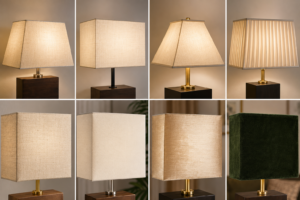
Abajures de vidro em forma de bulbo são pequenos difusores de vidro em forma de bulbo ou cobertura de bulbo — tipicamente de 7 a 15 centímetros — que se montam diretamente sobre um bulbo exposto para suavizar a luz, esconder o filamento e adicionar forma decorativa. Eles estão na interseção entre sombreamento decorativo e estilo de bulbo exposto, e se encaixam em luminárias onde um abajur de tamanho completo sobrecarregaria o design.
Quando os compradores pesquisam “abajures de vidro em forma de bulbo”, raramente estão procurando um globo pendente de 30 centímetros. Eles querem a pequena cobertura de vidro em escala de bulbo que se encaixa sobre um bulbo Edison ou uma vela LED, o tipo que transforma um aplique de soquete nu ou um lustre em algo finalizado. A categoria abrange chaminés de candelabro, mini globos de escola, mini-abajures de vaidade e coberturas decorativas em forma de bulbo — e as regras de fornecimento são diferentes das de abajures de tamanho completo.
Fabricamos abajures de vidro em forma de bulbo para lustres, apliques e projetos de pendentes com luminárias expostas desde 2003, principalmente para clientes de hospitalidade e restauração. As perguntas recorrentes são as mesmas: qual tamanho de encaixe, como ele interage com o calor do bulbo e como você combina uma substituição em um lustre quando um quebra. Este guia cobre o que realmente importa.
O que são abajures de vidro em forma de bulbo?
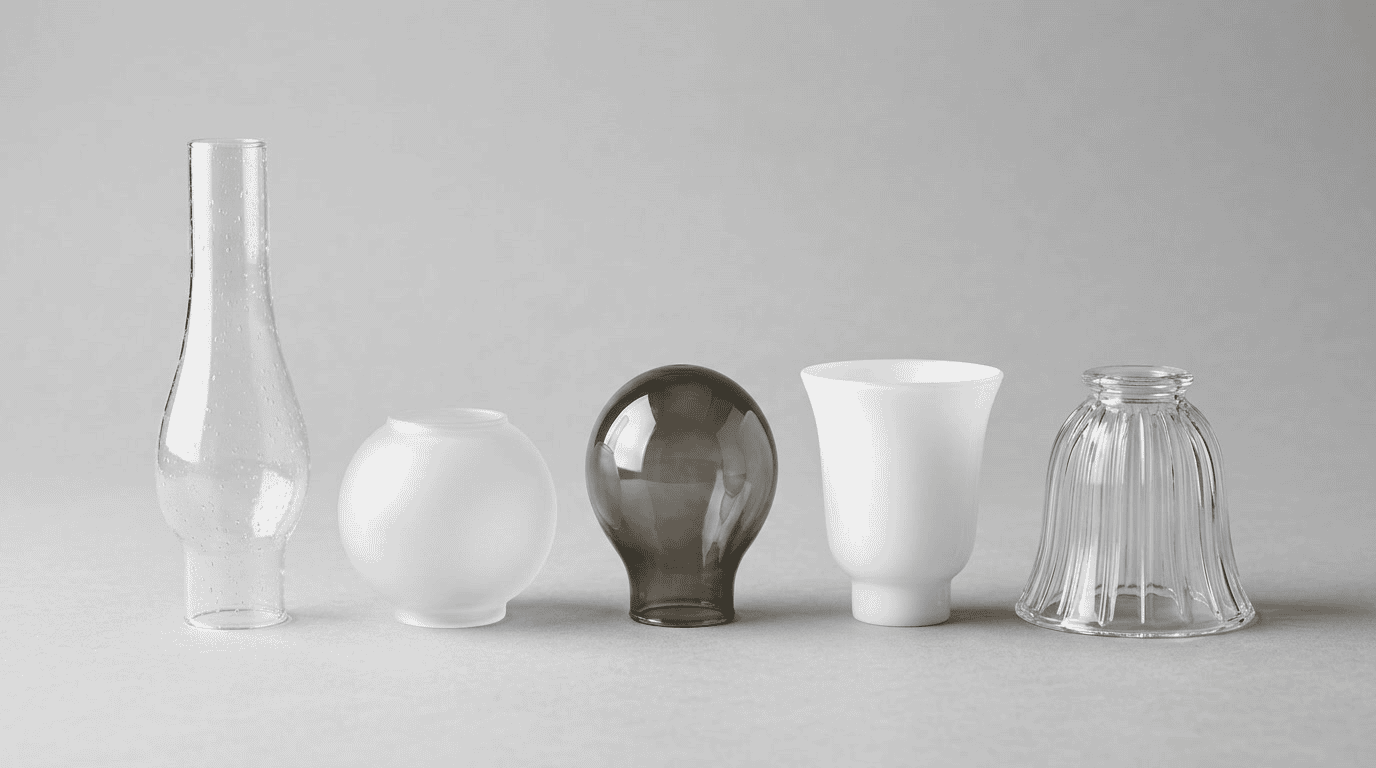
Abajures de vidro em forma de bulbo são difusores de vidro em escala de bulbo — geralmente de 7 a 15 centímetros de altura, 5 a 10 centímetros de diâmetro — que se conectam diretamente ao soquete do bulbo ou a um pequeno anel de encaixe projetado para luminárias de candelabro e de base mini. Eles diferem dos abajures de tamanho completo de três maneiras: dimensões menores, padrões de encaixe menores (predominantemente 4,1 cm) e margens térmicas mais apertadas porque o vidro fica mais próximo do bulbo.
A categoria é dominada por braços de lustre, apliques de parede, barras de vaidade e luminárias pendentes com bulbos expostos. Em qualquer lugar onde um bulbo nu pareceria muito utilitário e um abajur de tamanho completo pareceria muito pesado, um abajur de vidro em forma de bulbo preenche a lacuna.
Como eles diferem dos abajures normais
Um abajur de tamanho completo fica de 10 a 20 centímetros acima do bulbo em um arco; o espaço de ar entre o bulbo e o abajur dissipa o calor. Um abajur de vidro em forma de bulbo fica de 1,3 a 5 centímetros do bulbo, então a superfície de vidro fica mais quente — 80 a 130°C com uma lâmpada incandescente de 40W. É por isso que os abajures de bulbo quase sempre especificam classificações térmicas compatíveis com LED em vez de especificações de lâmpadas incandescentes vintage. A orientação do Departamento de Energia dos EUA sobre retrofits de LED em luminárias fechadas cobre a matemática do calor em detalhes.
Por que a categoria sobrevive na era do LED
Você pensaria que os bulbos LED Edison com filamento exposto teriam acabado com o mercado de abajures de bulbo. Eles não acabaram. Os compradores ainda querem abajures de vidro em forma de bulbo foscos, opalinos e coloridos por três razões: controle de ofuscamento (um bulbo Edison claro é desconfortável de olhar diretamente), mudança de cor (abajures de bulbo com revestimento âmbar oferecem calor que os LEDs com filamento não conseguem), e conclusão estética (um soquete nu e bulbo ainda é visto como “inacabado” na maioria dos contextos residenciais e de hospitalidade). A categoria de abajures de bulbo na verdade cresceu na era do LED porque a menor emissão de calor dos LEDs abre designs de abajures que não poderiam sobreviver ao lado de uma lâmpada incandescente de 60W.
Tipos de abajures de vidro em forma de bulbo
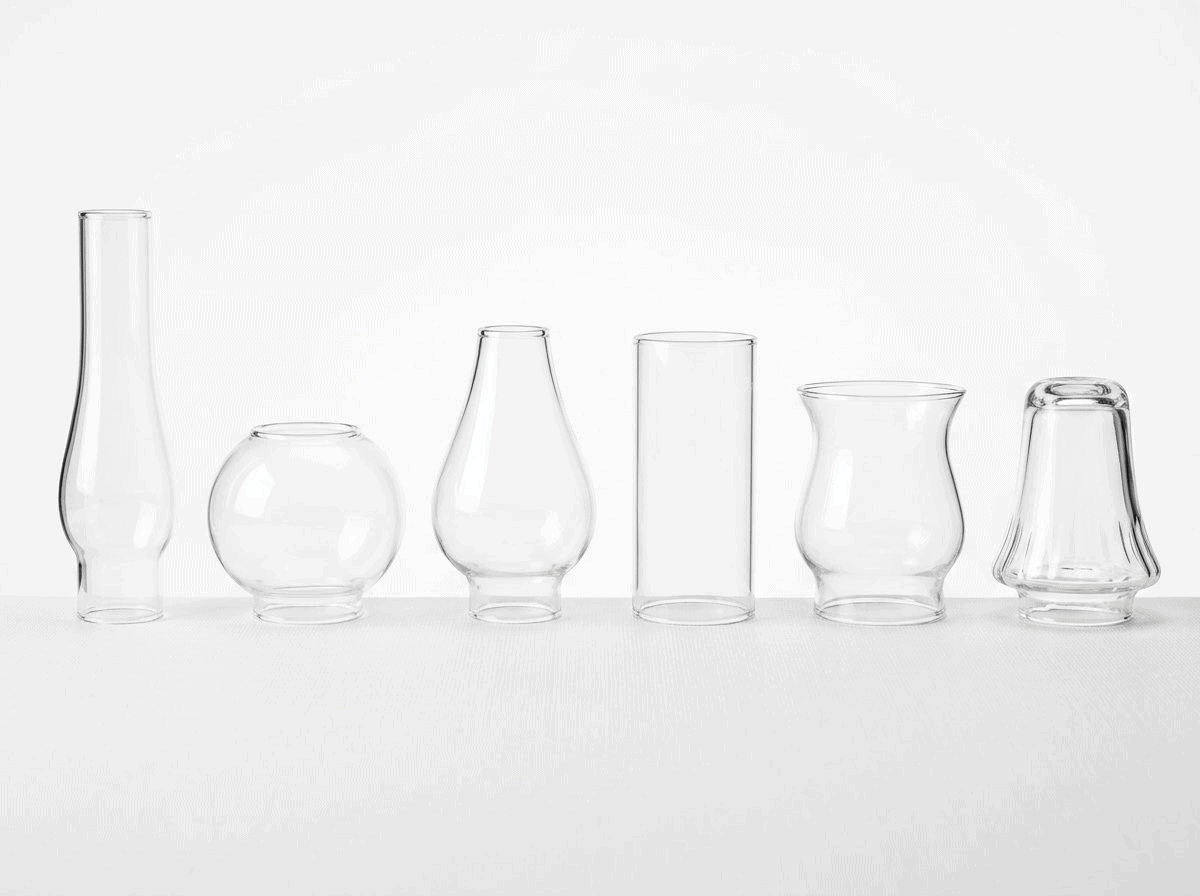
A categoria se divide em seis tipos principais: chaminés de candelabro, mini globos, coberturas decorativas em forma de bulbo, mini-abajures de vaidade, copos de furacão para lustres e abajures em forma de saleiro (sino). Cada um tem um padrão de encaixe distinto e uma aplicação típica de luminária.
Chaminés de candelabro
Cilindros de vidro altos e finos (7 a 15 centímetros de altura, 3,8 a 5 centímetros de diâmetro) projetados para se montar sobre um bulbo de base de candelabro (E12) em um braço de lustre estilo vela. Eles se encaixam em um encaixe de 4,1 cm ou em um pequeno clipe de vela. Acabamentos comuns: claro, texturizado fosco, revestido de opala. A proporção definidora: aproximadamente 3 vezes mais altos do que largos.
Mini globos
Pequenas cúpulas de vidro esféricas, tipicamente de 3 a 4 polegadas de diâmetro, usadas em braços de lustres, barras de vaidade e mini pendentes. Tamanhos de encaixe de 1-5/8″ (mais comum) ou 2-1/4″. A característica assinatura: uma forma redonda que envolve a lâmpada sem alongá-la. Globos mini estilo escola dominam esta subcategoria.
Cobrimentos decorativos em forma de lâmpada
Cúpulas de vidro moldadas para parecer uma versão estilizada da própria lâmpada — geralmente uma silhueta de gota levemente oversized, pêra ou em forma de A. Elas ficam próximas à lâmpada (clearance de 1/4 a 1/2 polegada), então a forma da lâmpada é realçada em vez de escondida. Populares em luminárias de reprodução de meio século e modernas industriais.
Mini cúpulas de vaidade
Cúpulas cilíndricas ou em forma de sino de 4 a 7 polegadas de altura, projetadas para barras de vaidade de banheiro. Quase sempre vendidas em pacotes combinados de 3 ou 5, pois as barras de vaidade possuem múltiplas lâmpadas lado a lado. Tamanhos de encaixe de 1-5/8″ ou 2-1/4″. Cúpulas foscas e opacas dominam; claras são raras porque a iluminação de vaidade de banheiro precisa de controle de ofuscamento.
Copos de furacão para lustres
Copos de vidro curtos e largos (2 a 4 polegadas de altura, 3 a 5 polegadas de diâmetro) que ficam em um braço de lustre sob uma chaminé mais longa ou sozinhos como uma cúpula de vela. Eles fazem referência à forma histórica da lâmpada de furacão. O encaixe é geralmente um clipe de braço de 1-5/8″.
Cúpulas de sal (sino)
Cúpulas compactas em forma de sino de 4 a 6 polegadas de altura com uma borda alargada. Elas foram originalmente usadas para cobrir lâmpadas nuas em luzes de trabalho industriais nas décadas de 1910 a 1930. Reproduções modernas as utilizam em luminárias de estilo escola e reproduções de luzes de celeiro. Encaixe de 1-5/8″ ou 2-1/4″.
Comparação rápida de tipos
| Tipo | Tamanho típico (A × D) | Encaixe comum | Luminária típica | Faixa de preço (única) |
|---|---|---|---|---|
| Chaminé de candelabro | 4–6″ × 1.5–2″ | 1-5/8″ / clipe | Candelabro de vela | $4–$28 |
| Mini globo | 3–4″ × 3–4″ | 1-5/8″ ou 2-1/4″ | Candelabro, vaidade, mini pendente | $6–$45 |
| Capa em forma de lâmpada | 4–6″ × 2.5–3.5″ | 1-5/8″ ou montagem de soquete | Meio século, industrial | $8–$60 |
| Mini-abajur de vaidade | 4–7″ × 3–4″ | 1-5/8″ ou 2-1/4″ | Barra de vaidade para banheiro | $5–$35 cada |
| Copo de furacão | 2–4″ × 3–5″ | Clipe de braço de 1-5/8″ | Candelabro | $5–$40 |
| Saleiro (sino) | 4–6″ × 3–4″ | 1-5/8″ ou 2-1/4″ | Casa escolar, luz de celeiro | $7–$50 |
Como São Feitas as Lâmpadas de Vidro
As lâmpadas de vidro usam as mesmas três famílias de vidro que as lâmpadas de tamanho normal — vidro de soda-lima, borossilicato, cristal de chumbo — mas os métodos de formação tendem mais para a prensagem, pois a escala menor oferece uma vantagem de custo. Existem lâmpadas de vidro sopradas à boca, mas representam menos de 1% do volume da categoria.
A prensagem domina a produção em pequena escala
Uma lâmpada de vidro prensada vai de um bloco fundido a um blank acabado em 6–10 segundos. A cavidade do molde menor mantém a temperatura melhor do que os moldes de tamanho normal, então a consistência da espessura da parede é excelente — a variação típica é de ±0,3 mm em comparação com ±0,5 mm em uma lâmpada pendente de 10 polegadas. Os ciclos de recozimento são mais curtos (20–40 minutos em comparação com 60–90 minutos para peças maiores), o que é a razão pela qual as lâmpadas prensadas fazem sentido econômico mesmo em produções menores.
Sopro à boca para restauração e design de alto padrão
Uma lâmpada de vidro soprada à boca leva de 3 a 7 minutos por peça. As irregularidades visíveis — leve assimetria, distribuição variada de bolhas, bordas acabadas à mão — são exatamente o que os compradores de restauração e design de alto padrão desejam. De acordo com a documentação do Museu Corning de Vidro sobre sopro de vidro tradicional, a formação em pequena escala de lâmpadas de tamanho bulb é um dos padrões de produção mais antigos em vidro decorativo e precede a iluminação elétrica por séculos.
A questão do recozimento para lâmpadas de parede fina
As lâmpadas geralmente têm paredes finas (1,5–2,5 mm) para manter o peso baixo para os pequenos encaixes. Paredes finas esfriam mais rápido no lehr, então o recozimento requer programação cuidadosa para evitar o bloqueio de tensões residuais. Fábricas respeitáveis realizam verificações de polariscópio em cada lote de produção de lâmpadas porque a alta relação superfície-massa torna os defeitos de tensão mais perigosos do que em peças mais pesadas.
Tratamentos de superfície em lâmpadas
Frosting (gravado com ácido ou jateado), esmalte branco queimado para efeitos opalinos, cores de frita cerâmica para aparências em camadas e construção de vitrais com cobre para capas de lâmpadas no estilo Tiffany. O mesmo menu de tratamento de superfície que as lâmpadas de tamanho normal, reduzido. Evite lâmpadas pintadas com laca spray — a proximidade com a lâmpada significa que a tinta descasca em 12–24 meses em qualquer uso comercial.
Como Escolher Lâmpadas de Vidro
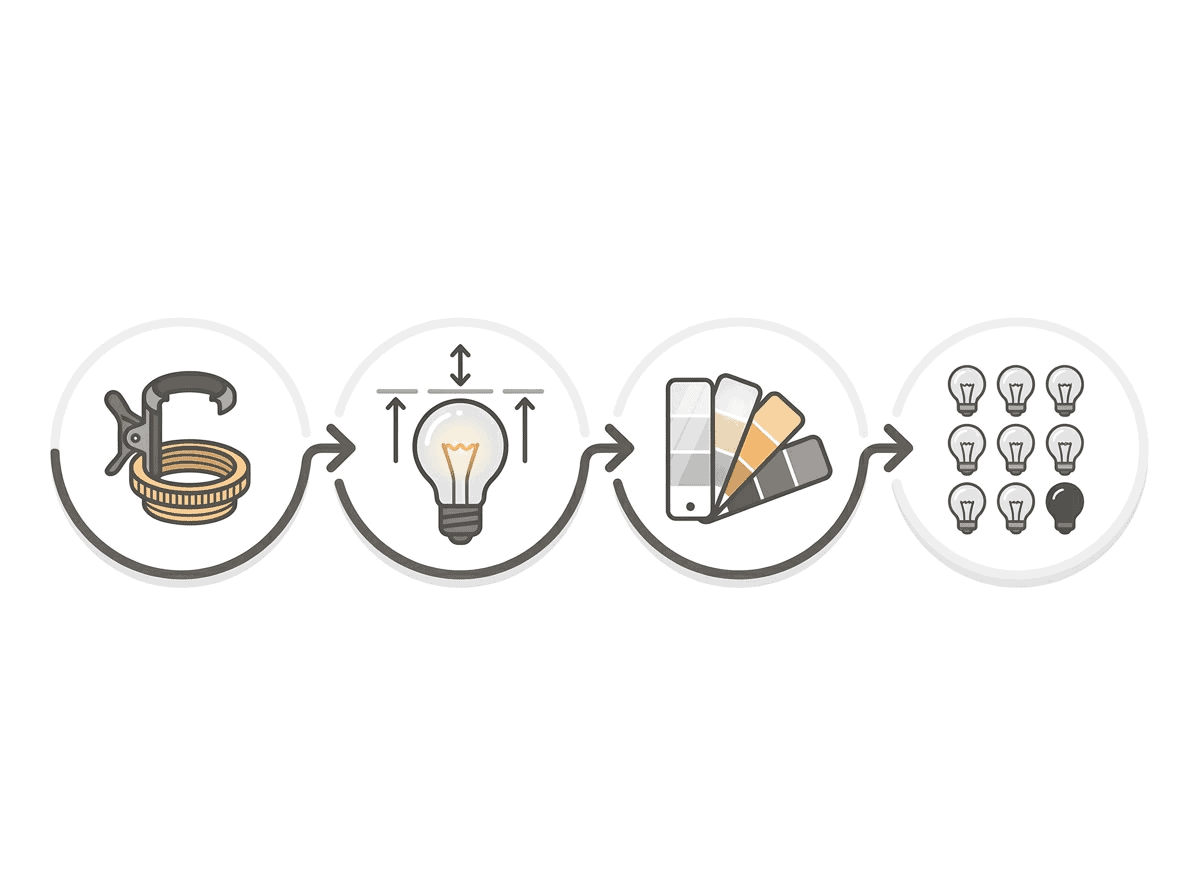
Combine quatro coisas nesta ordem: padrão do encaixe primeiro, folga entre lâmpada e sombra em segundo, acabamento e cor em terceiro, combinação de conjunto em quarto. A ordem importa porque a pequena escala das lâmpadas torna os desajustes mais visíveis do que nas lâmpadas de tamanho normal.
Passo 1: Confirme o padrão do encaixe
A grande maioria das lâmpadas de vidro usa um encaixe de 1-5/8″ (o padrão de clipe de candelabro). Um subconjunto menor usa 2-1/4″. Algumas luminárias incomuns usam um soquete onde a lâmpada é rosqueada diretamente na parte rosqueada do soquete. Veja como a lâmpada existente se conecta antes de pedir uma substituição — meça o diâmetro interno do encaixe com calipers para ±0,5 mm.
Passo 2: Verifique o espaço entre a lâmpada e o abajur
Um abajur de vidro deve ter pelo menos 1/4 de polegada de espaço em todos os lados para LEDs, 1/2 polegada para incandescentes e 3/4 de polegada para halógenas. Espaços muito próximos causam rachaduras no abajur e aceleram a falha da lâmpada devido ao calor preso. Padrão UL 1598 da Underwriters Laboratories para luminárias cobre os requisitos mínimos de espaço de ar para luminárias com lâmpadas fechadas.
Passo 3: Escolha o acabamento e a cor
Abajures de lâmpada foscos oferecem o melhor controle de ofuscamento. Abajures opalinos proporcionam um brilho mais uniforme. Abajures claros com sementes ou com ranhuras claras permitem que o filamento apareça (bom para a estética de lâmpadas Edison). Abajures coloridos (âmbar, fumaça, cobalto) são apenas para destaque — a transmissão de luz cai para 8–25% na maioria dos vidros coloridos.
Passo 4: Combine em todo o conjunto
Candelabros e barras de vaidade têm 3, 5, 6 ou 8 abajures por luminária. Peça todos os abajures do mesmo lote de produção. Mesmo dentro da categoria “branco opalino”, a variação de cor de lote para lote varia Delta-E 1–3, que é invisível em um único abajur, mas óbvio em um candelabro de seis braços. Sempre peça um ou dois sobressalentes no momento da compra original — pedidos de reposição 2 anos depois terão pequenas discrepâncias.
Matriz de decisão
| Se você precisar… | Escolha | Evite |
|---|---|---|
| Substituição de candelabro de vela | Chaminé de candelabro, encaixe de 1-5/8″ | Abajur pendente de 2-1/4″ |
| Balcão de banheiro | Abajures mini-foscos ou opalinos de lote combinado | Pedido de lote misto |
| Pendente com recurso de lâmpada Edison | Abajur claro com sementes ou ranhuras | Opalino (esconde o filamento) |
| Reprodução de meio século | Capa clara ou de fumaça em forma de lâmpada | Copo de vitral (era errada) |
| Mini-pendente de escola | Mini globo com caixa de opala | Transparente prensado (reflexo) |
| Pátio ao ar livre ou coberto | Abajur de bulbo de borossilicato, classificado IP | Vidro de soda-lima de parede fina |
Aplicações da indústria
Os abajures de vidro fluem através de cinco setores principais: varejo residencial (candelabros, barras de vaidade, arandelas), hospitalidade FF&E (candelabros de lobby, pendentes de restaurante), restauração (copos e chaminés de candelabros corretos para o período), comercial (instalações de banheiro e corredor) e o crescente mercado de pendentes decorativos com bulbos expostos.
Varejo residencial
O maior canal único para abajures de bulbo de vidro por volume de unidades. Substituições de barras de vaidade, substituições de copos de candelabro, atualizações de abajures de arandela. O encaixe padrão de 1-5/8″ domina; 2-1/4″ é o padrão secundário para arandelas de braço oscilante. Pacotes de varejo geralmente vêm como conjuntos combinados de 3 ou 5 unidades para barras de vaidade, ou unidades únicas para substituições de candelabros e arandelas.
FF&E de hospitalidade
Candelabros de lobby, pendentes de barra de restaurante, barras de vaidade de banheiro de hotel. Compradores de hospitalidade com quem trabalhamos pedem de 50 a 500 abajures de bulbo de vidro por projeto, com especificações rigorosas de correspondência de cores e compromissos de fornecimento de substituição de 5 a 10 anos. A capacidade de reordenação importa mais do que o preço inicial por unidade — um candelabro com um abajur quebrado e sem substituição correspondente parece pior do que todo o fixture sendo substituído.
Restauração
Chaminés e copos de candelabro corretos para o período de 1900 a 1970. O pedido dominante: chaminés de vidro claro soprado à boca para combinar com candelabros originais de artesanato ou art déco. Substitutos modernos prensados parecem mecânicos aos olhos dos colecionadores. Fornecedores de restauração especializados (Antique Lamp Supply, Paxton Hardware) oferecem os tamanhos e formas legados.
Comercial
Instalações de banheiro e corredor em escritórios, escolas, hospitais. Requisitos de especificação: classificações de resistência a quebra (temperado ou laminado), facilidade de limpeza sob desinfetantes de grau médico, pedidos de lote combinado para barras de vaidade de 6 ou 8 abajures. Volume por projeto: 20 a 200 abajures.
Pendente decorativo com bulbo exposto
O segmento de crescimento. Restaurantes com estética industrial moderna, cafeterias e projetos residenciais liderados por design usam abajures em forma de bulbo ou de gota grande sobre lâmpadas LED de filamento como um elemento de iluminação de destaque. De acordo com Dados do mercado de iluminação da Statista, a iluminação pendente decorativa cresceu a uma taxa de crescimento anual composta de aproximadamente 8% nos últimos cinco anos, puxando a demanda por abajures de bulbo de vidro junto com ela.
Sourcing de Abajures de Bulbo de Vidro
Cinco canais com diferentes MOQ, tempo de entrega e perfis de personalização.
Direto do fabricante. Melhor para pedidos acima de 200 unidades de um único SKU. MOQ tipicamente de 200 a 1.000 (custo por unidade mais baixo significa que os fabricantes querem produções maiores). Preços unitários 40–65% abaixo do varejo. Tempos de entrega de 30 a 60 dias para acabamentos padrão, 60 a 90 para cores personalizadas. Canal certo para hospitalidade FF&E e varejo de marca própria.
Distribuidores de iluminação. Catálogos selecionados a preços de varejo mais. Quantidades de pedido menores (5–50 unidades) com envio típico de 2 semanas. Bom para designers e empreiteiros.
Varejo de grande porte e online. Home Depot, Lowe’s, Lamps Plus, Wayfair, Amazon. Preços de mercado de massa em tamanhos padrão (encaixe de 1-5/8″ e 2-1/4″, acabamentos foscos ou de opala). Devoluções fáceis. Vida útil de SKU de 18 a 36 meses — ruim para substituição de conjuntos combinados.
Restauração especializada. Fornecimento de Lâmpadas Antigas, Paxton Hardware, Fornecimento de Lâmpadas BP. Chaminés de candelabro corretas para o período, copos de furacão e abajures de lustre de vidro colorido. Preços unitários mais altos, mas insubstituíveis para trabalhos de restauração.
Feiras comerciais. Las Vegas Market, High Point Market, Feira de Iluminação de Hong Kong. Ideal para programas de sourcing de múltiplos fornecedores e comparação de 10 a 30 fornecedores de abajures de bulbo de vidro em três dias.
Erros Comuns ao Comprar Abajures de Bulbo de Vidro
Tamanhos de encaixe incompatíveis em um conjunto de lustre. Um lustre com 6 braços precisa de 6 abajures com dimensões de encaixe idênticas. Encaixes mistos significam que alguns abajures não se acomodarão. Meça todos os braços antes de pedir substituições — lustres antigos às vezes têm braços não uniformes.
Comprar substituições únicas sem informações de lote. A cor do vidro e a qualidade variam de lote para lote por Delta-E 1–3. Um abajur de substituição único para um lustre de 6 abajures irá desajustar sutilmente os 5 restantes. Peça ao mesmo fornecedor e documente o lote de produção.
Ignorar a potência da lâmpada em relação ao espaço do abajur. Uma lâmpada incandescente de 40W em um abajur de bulbo de espaço apertado atinge 130°C de temperatura na superfície e quebra o abajur. O mesmo dispositivo com um equivalente LED de 9W funciona a 50°C e é seguro. Se você estiver usando lâmpadas incandescentes vintage em abajures modernos, reduza a potência em 50%.
Abajures de bulbo de vidro “colorido” pintados com spray. Especialmente comuns em lustres importados baratos. A tinta spray perto de uma lâmpada quente descasca em 12 a 24 meses. Exija vidro colorido cerâmico ou fundido para qualquer uso comercial.
Misturando vidro prensado e soprado na mesma luminária. Mesmo dentro do mesmo estilo nominal, abajures prensados e soprados à boca têm diferentes espessuras de parede e texturas de superfície. Lado a lado em um lustre, eles parecem visivelmente diferentes. Mantenha um método de produção por dispositivo.
Pular a inspeção da borda. Uma borda mal polida é afiada o suficiente para cortar dedos durante a instalação. Fabricantes de qualidade polêm cada borda de sombra; fornecedores que cortam custos pulam esta etapa. Passe a ponta do dedo ao redor da borda antes de aprovar uma amostra.
Cuidados e Manutenção
Abajures de bulbo de vidro coletam mais poeira por unidade de área do que abajures de tamanho completo porque estão mais próximos da fonte de calor e têm uma maior relação superfície-massa. Limpe a cada 2 a 4 meses para residências, a cada 1 a 2 meses para hospitalidade.
Rotina de limpeza
Desligue o dispositivo e deixe a lâmpada esfriar completamente. Remova o abajur (libere o clipe, afrouxe os parafusos de aperto ou desenrosque o anel rosqueado). Lave em água morna — não quente — com detergente suave. Seque com um pano de microfibra. Reinstale com cuidado — apertar demais os encaixes do clipe quebra a borda.
Inspecionando por rachaduras de estresse
Após a limpeza, segure o abajur em direção a uma janela e procure por rachaduras finas irradiando da borda ou do ponto de contato do encaixe. Estas frequentemente aparecem antes de uma falha catastrófica e indicam estresse térmico (potência muito alta) ou estresse mecânico (encaixe apertado demais). Substitua abajures rachados imediatamente — eles se desintegram de forma imprevisível.
Armazenando peças de reposição
Lâmpadas de vidro armazenadas como sobressalentes precisam de embalagem acolchoada ou caixas compartimentadas. O armazenamento solto em gavetas leva a lascas nas bordas que tornam o sobressalente inutilizável quando finalmente necessário. Marque a caixa com o lote de compra original e a data para rastreabilidade.
Inspeção de Qualidade: O que Verificar em um Envio de Lâmpadas de Vidro
Quando um envio de lâmpadas de vidro chega, realize uma inspeção de amostra 5% nos primeiros 30 minutos.
Precisão dimensional. Meça o diâmetro interno do encaixe em cada lâmpada amostrada. A pequena escala das lâmpadas significa que 0,3 mm de variação é a diferença entre uma lâmpada que se assenta corretamente e uma que balança solta. Rejeite lotes onde mais de 5% estejam fora da tolerância especificada.
Correspondência de cores em todo o lote. Alinhe 10 lâmpadas contra uma fonte de luz calibrada. As cores em caixa devem corresponder dentro de Delta-E 2.0. Variações acima de Delta-E 3 são visíveis para a maioria das pessoas em uma barra de vaidade ou candelabro — rejeite lotes com esse nível de desvio.
Qualidade da borda. Passe a ponta do dedo ao redor de cada borda amostrada. Lâmpadas de qualidade são polidas a fogo e lisas; versões de baixo custo têm bordas afiadas que cortam os dedos dos instaladores e lascam durante o transporte. Rejeite lotes com bordas não polidas a fogo.
Integridade do recozimento. Bata duas lâmpadas juntas — vidro devidamente recozido soa claramente; vidro mal recozido soa abafado. Para pedidos de conjuntos combinados de alto valor, solicite fotos de polariscópio do lote de produção. Lâmpadas de vidro são especialmente vulneráveis a defeitos de recozimento porque paredes finas esfriam mais rápido.
Embalagem. Divisores de célula individuais são obrigatórios. Lâmpadas de vidro embaladas soltas em compartimentos compartilhados chegam com lascas nas bordas em aproximadamente 30% das peças. Fabricantes de qualidade enviam em inserts moldados com 15 mm de material de proteção por lâmpada — verifique com uma inspeção de abertura de caixa.
Documente os defeitos com fotografias antes de registrar reclamações. A maioria dos fabricantes substituirá ou creditará dentro de 30 dias após a entrega com a documentação adequada.
Tendências Futuras 2026 e Além
Três tendências estão remodelando a demanda por lâmpadas de vidro: estética de lâmpadas LED de filamento, compatibilidade de cor de lâmpadas inteligentes e o movimento mais amplo em direção ao design modular substituível em campo na iluminação comercial.
Estética de lâmpadas LED de filamento
O crescimento contínuo de lâmpadas de vidro claras e com textura clara está diretamente ligado à popularidade das lâmpadas LED decorativas de filamento. A lâmpada em si se tornou a característica de design, com a sombra de vidro servindo como uma moldura sutil em vez de um elemento visual primário. Espere que os SKUs de lâmpadas de vidro claras continuem crescendo de 10 a 15% anualmente até 2028.
Teste de CCT de lâmpadas inteligentes
Lâmpadas LED com ajuste de cor (2200K–6500K) interagem de forma imprevisível com lâmpadas de vidro coloridas em caixa. Uma chaminé de cor âmbar que parece correta a 2700K fica turva a 4000K. Os fabricantes publicarão cada vez mais tabelas de compatibilidade testadas em CCT como uma linha de especificação padrão até 2027.
Design modular substituível em campo
Regulamentações de direito à reparação na UE e na Califórnia estão pressionando fabricantes de candelabros e arandelas a publicar catálogos de peças que incluam SKUs de lâmpadas de vidro substituíveis. Espere que isso se torne padrão para luminárias premium até 2027 — e um grande alívio na aquisição para compradores de hospitalidade que atualmente lutam para encontrar substituições correspondentes 3 anos após a instalação.
Cullet reciclado
Lâmpadas de vidro de soda-lima feitas com 30–50% de cullet reciclado reduzem o carbono incorporado em aproximadamente 25% por unidade sem afetar a qualidade óptica. Lâmpadas elegíveis para LEED estão surgindo como uma subcategoria para projetos que buscam certificação.
O que não vai mudar
O padrão de encaixe de candelabro de 1-5/8″. As famílias básicas de vidro. A taxonomia visual de lâmpadas de vidro claras, foscas, opacas, estriadas, manchadas e coloridas. Playbooks de aquisição construídos em torno dessas especificações duráveis superam o catálogo de qualquer fornecedor.
Perguntas Frequentes
Quais são os tipos que cobrem uma lâmpada chamados?
Pequenas capas de vidro que se montam sobre uma lâmpada são chamadas de capas de lâmpada de vidro, chaminés de candelabro, mini globos ou copos de furacão, dependendo da forma e do tipo de fixture. “Capa de lâmpada” é o termo geral; “chaminé” descreve versões altas e finas em forma cilíndrica para candelabros de vela; “mini globo” descreve capas redondas de 3 a 4 polegadas de diâmetro; “copo de furacão” descreve copos curtos e largos nos braços do candelabro.
Posso colocar uma capa de lâmpada de vidro em qualquer candelabro?
Apenas se os braços do candelabro tiverem um encaixe que corresponda ao padrão do encaixe da capa. A maioria dos candelabros de estilo vela usa um clipe de candelabro de 1-5/8″; a capa correspondente tem um encaixe de 1-5/8″. Candelabros de estilo pendente podem usar capas de encaixe de 2-1/4″ em vez disso. Meça o encaixe existente ou fotografe-o com uma régua na imagem antes de solicitar substituições.
Como faço para substituir uma única capa de lâmpada de vidro em um candelabro?
Desligue a fixture no disjuntor, deixe as lâmpadas esfriarem, remova a lâmpada, solte o clipe da capa existente ou desenrosque o anel roscado, instale a nova capa, reinstale a lâmpada, restaure a energia. O tempo total por capa é de 4 a 6 minutos. Use uma substituição de lote correspondente para evitar desvio de cor visível com as capas restantes — peça ao fornecedor original se conhecido, ou procure uma substituição de conjunto completo se o original estiver descontinuado.
Por que minhas capas de lâmpada de vidro continuam quebrando?
Três causas comuns: potência da lâmpada muito alta para o espaço da capa, mudança de LED de volta para incandescente em uma capa classificada apenas para cargas térmicas de LED, ou má recozimento durante a fabricação. Verifique a classificação de potência da capa, troque para lâmpadas LED (60% mais frias que incandescentes), e se rachaduras aparecerem dentro de meses após a instalação, solicite um relatório de inspeção de polariscópio do fabricante.
As lâmpadas LED são seguras em capas de lâmpada de vidro?
Sim — LEDs funcionam aproximadamente 60% mais frios que equivalentes incandescentes e estendem significativamente a vida útil da lâmpada-capa ao reduzir o ciclo térmico. A única ressalva: LEDs dimmáveis podem piscar visivelmente através de capas de lâmpada de vidro claras ou estriadas quando emparelhados com dimmers baratos. Use LEDs dimmáveis sem flicker e verifique se o dimmer é classificado para cargas de LED.
Qual é a diferença entre uma chaminé e uma capa de lâmpada em globo?
Uma chaminé é alta e fina — tipicamente 3 vezes mais alta do que larga — e faz referência à forma histórica da chaminé de lâmpada a querosene. Um globo é redondo, tipicamente tão alto quanto largo, totalmente fechado na parte superior com um anel de encaixe na parte inferior. Chaminés se montam sobre lâmpadas de base de candelabro em candelabros de vela; globos se montam em mini pendentes, barras de vaidade e braços de candelabro.
As capas de lâmpada de vidro colorido podem ser usadas em lâmpadas LED modernas?
Sim — capas de lâmpada de vidro colorido com estrutura de folha de cobre ou chumbo funcionam bem com lâmpadas LED e são na verdade mais compatíveis com LEDs do que com incandescentes. A menor emissão de calor dos LEDs reduz a fadiga das juntas de solda na estrutura com chumbo. Basta verificar se a CCT (temperatura de cor) do LED está na faixa de 2700K–3000K, uma vez que as cores do vitral são ajustadas para luz branca quente e mudam de forma imprevisível sob LEDs brancos frios ou ajustáveis.
Referências de Preços para Sombras de Lâmpadas de Vidro
O preço por unidade para sombras de lâmpadas de vidro varia de $4 a $60 no varejo, dependendo do tipo, acabamento e procedência, com preços diretos do fabricante ficando 35–60% abaixo desses números em quantidade.
A faixa mais barata do mercado — chaminés de candelabro de vidro claro ou fosco em varejo de massa — varia de $4 a $10 por sombra. Estas são substituições funcionais para braços de candelabro onde a correspondência exata não é crítica. Sombras de lâmpadas de vidro prensado de médio porte em vidro opalino ou colorido variam de $15 a $35 por unidade no varejo. Sombras de lâmpadas sopradas à boca para projetos de restauração começam em torno de $25 e sobem para $60+ para reproduções de época especiais.
Sombras de lâmpadas de vitral são sua própria faixa de preços: $40 a $300+ dependendo da complexidade e procedência. Sombras de candelabro Tiffany assinadas do período de 1900–1920 são leiloadas na faixa de $1.500 a $8.000, mas esses são itens de colecionador em vez de substituições funcionais.
Para pedidos de volume comercial (200+ unidades), o preço direto do fabricante para sombras de lâmpadas prensadas padrão cai para $2,50 a $15 por unidade, com cores personalizadas ou logotipos gravados adicionando $1 a $3 por unidade. Os prazos de entrega para esses pedidos variam de 30 a 60 dias para itens padrão, 60 a 90 para trabalhos personalizados.
Conclusão
A aquisição de sombras de lâmpadas de vidro é uma versão em menor escala do problema de aquisição de sombras em tamanho real, com três diferenças: os adaptadores são quase sempre de 1-5/8″, a correspondência de lotes é mais importante porque candelabros e barras de vaidade possuem múltiplas sombras em estreita proximidade, e as margens térmicas são mais apertadas porque o vidro fica mais próximo da lâmpada. Acertar essas três coisas e as demais decisões de aquisição são estéticas.
Para luminárias de conjuntos combinados — candelabros, barras de vaidade, pares de arandelas — sempre peça sobressalentes na compra original. Pedidos de reposição de lotes diferentes terão discrepâncias de Delta-E 1–3, e essa é a reclamação pós-venda mais comum na categoria de sombras de lâmpadas de vidro. Enviamos mais de 100.000 sombras de lâmpadas de vidro de acordo com especificações mensuráveis desde 2003, e os projetos que são enviados conforme o planejado quase sempre começam com uma ficha técnica de uma página em vez de um painel do Pinterest.