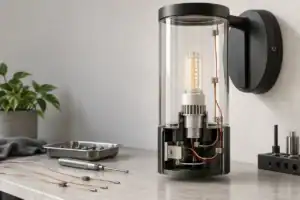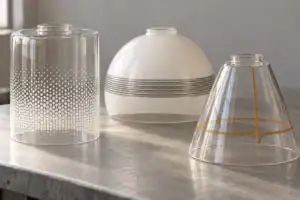
A light with a glass shade uses a transparent or translucent glass enclosure around the bulb to shape, diffuse, and stylize light output — combining decorative appeal with durable, heat-managed illumination in any room.
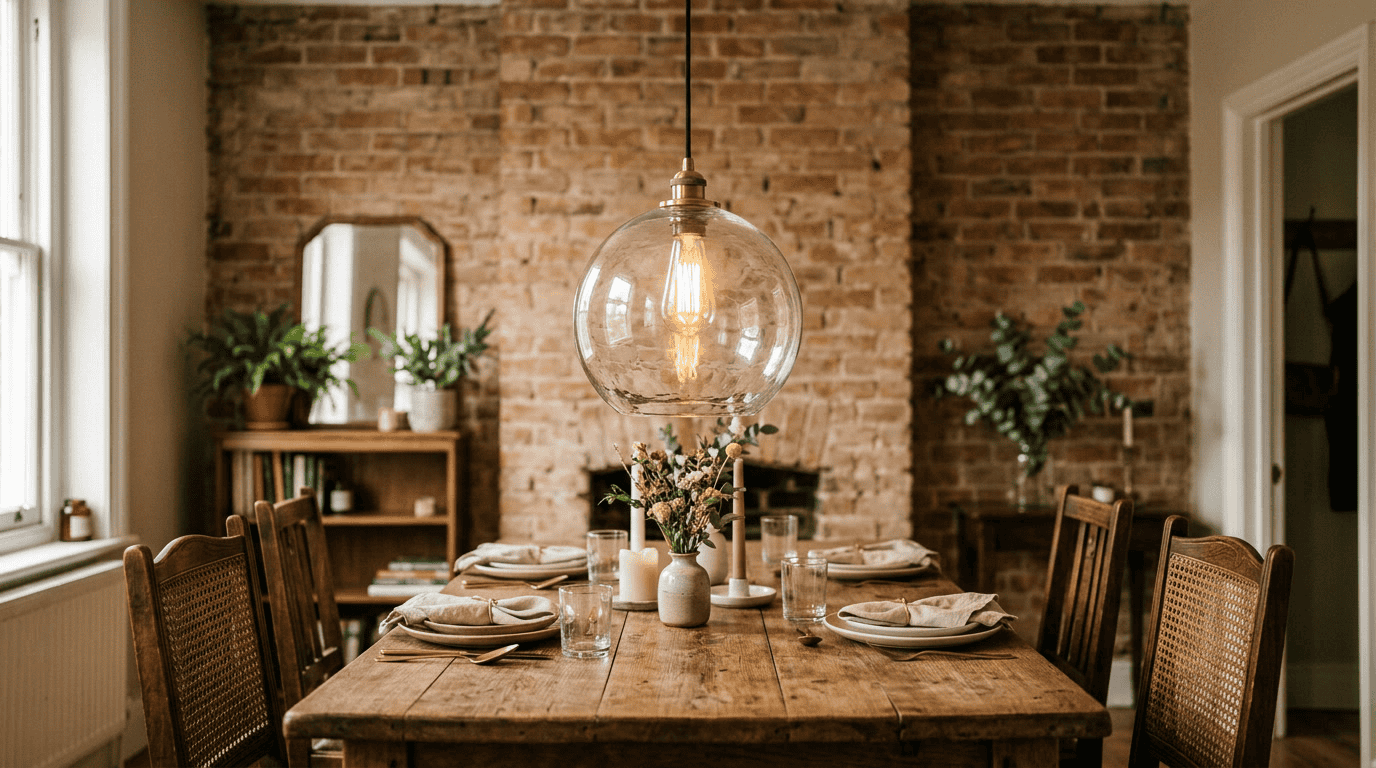
You’ve found a fixture you love. The proportions are right, the finish matches your hardware — but the shade is wrong. Or maybe it’s cracked. Or you’re starting from scratch and the sheer number of glass shade options has left you more confused than when you started: clear or frosted? globe or bell? borosilicate or regular glass? What even is a “fitter size”?
This guide cuts through all of it. By the end, you’ll know exactly which type of glass shade fits your fixture, which material holds up to heat, and how to pair your shade with the right LED bulb for the light quality your room actually needs.
What Is a Light with a Glass Shade?
A light with a glass shade is any lamp or fixture that uses glass — rather than fabric, plastic, or metal — as its primary shade material. The glass can be clear, frosted, colored, blown, or textured, and it can be shaped into globes, bells, cylinders, drums, or custom forms.
According to the Lampshade article on Wikipedia, lampshades are broadly classified by shape (drum, empire, bell, coolie), by material (fabric, glass, Tiffany glass, parchment, paper, plastic), by fitter type, and by function. Glass shades fall squarely in the material category — but within that category, choices diverge quickly depending on manufacturing method, glass composition, and finish.
Key Terms: Shade, Globe, and Fitter Explained
Shade is the general term for any light cover. When the shade is made of glass and fully encloses the bulb in a spherical form, it’s usually called a globe. The term glass light shade and glass lampshade are interchangeable in the trade.
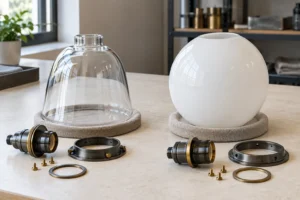
The fitter is the critical measurement most buyers overlook: it’s the opening at the top (or bottom) of the glass shade that slips over the socket or lamp arm. Standard fitter sizes in the US are:
- 2-1/4 inch — the most common, used on pendant pendants and ceiling fixtures
- 3-1/4 inch — medium fixtures, flush mounts, some semi-flush
- 4 inch — larger flush-mount ceiling fixtures and some chandeliers
- Slip fitter / spider fitter — used on floor lamps and table lamps where the shade rests on a harp
Getting the fitter wrong means the shade won’t seat properly — even if it looks close. Always measure the existing shade’s fitter opening before ordering a replacement.
How Glass Shades Differ from Fabric Shades
| Feature | Glass Shade | Fabric Shade |
|---|---|---|
| Light diffusion | Hard, crisp edge or smooth glow depending on finish | Warm, soft, even |
| Heat tolerance | High (especially borosilicate) | Low — scorch risk above 60W incandescent |
| Durability | Breakable if dropped, but no yellowing or fading | Fades, stains, collects dust in fibers |
| Style range | Modern, industrial, vintage, art glass | Traditional, residential, classic |
| Maintenance | Wipe-clean in 30 seconds | Requires gentle washing or dry cleaning |
| Replacement | Widely available as individual pieces | Often fixture-specific, harder to source |
For high-traffic areas, kitchens, or outdoor-adjacent spaces, glass wins on durability. Fabric wins in bedrooms and living rooms where warmth and texture matter more than practicality.
7 Types of Glass Shades for Lights
The glass shade market looks overwhelming until you break it into seven distinct categories. Each has a different aesthetic, a different light behavior, and a different room fit.
1. Clear Glass Shades
Clear glass transmits the maximum amount of light — nothing is blocked or scattered. The bulb itself becomes a design element. This is exactly why clear glass requires a beautiful bulb: Edison-style carbon filament or vintage tungsten bulbs look stunning inside clear shades. A bare LED spiral? Not so much.
Best for: Kitchen islands, industrial loft spaces, entryways, bar pendants where filament bulbs are part of the aesthetic.
Drawback: Every fingerprint, water spot, and dust particle is visible. Wiring and socket hardware are fully exposed. If your fixture’s interior isn’t pretty, clear glass exposes it.
2. Frosted Glass Shades
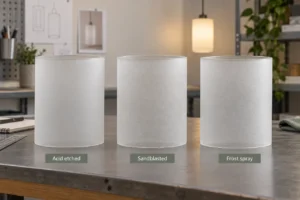
Frosted glass is produced by acid etching or sandblasting the surface of the glass — both processes create microscopic surface roughness that scatters light uniformly. The result is a soft, glare-free glow rather than a harsh direct point of light.
Light output difference: A frosted shade can reduce delivered lumens by 10–20% compared to the same bulb in a clear shade — but the quality of that light is dramatically better for living spaces because it eliminates the “hot spot” directly beneath the bulb.
Best for: Bathrooms, bedrooms, dining rooms, any space where you want ambient light without visible glare.
3. Milk Glass (Opal Glass) Shades
Milk glass is fully opaque — it blocks all direct view of the bulb. Made by adding fluorite or tin oxide to molten glass during manufacturing, it glows evenly across the entire surface rather than showing a bright center. The effect is clean, classic, and easy to live with.
In practice, milk glass is one of the most forgiving shade types: it hides discolored bulb bases, mismatched bulb shapes, and socket hardware. It also doesn’t show fingerprints as readily as clear glass, making it a genuinely low-maintenance choice.
Best for: Farmhouse kitchens, vintage-style bathrooms, laundry rooms, any space where clean and timeless beats dramatic.
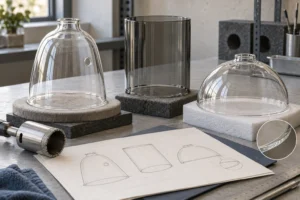
4. Hand-Blown Glass Shades
Hand-blown glass is made by a glassblower shaping molten glass using breath and gravity. No two pieces are identical. The subtle ripples, slight thickness variations, and occasional bubbles are features, not flaws — each creates unique light patterns on surrounding walls.
The production process is slower and more labor-intensive, which is reflected in pricing. Expect to pay $40–$150+ for a single hand-blown glass shade versus $8–$30 for a mass-produced pressed glass equivalent.
Best for: Statement pendants over dining tables, boutique retail environments, artisan-style kitchens where the shade is meant to be noticed.
5. Seeded and Textured Glass Shades
Seeded glass contains intentional tiny air bubbles suspended in the glass body. The effect is vintage, slightly weathered, and extremely flattering — the bubbles catch and scatter light in a way that feels organic rather than manufactured.
Textured glass (ribbed, hammered, fluted) achieves a similar visual interest through surface pattern rather than internal structure. Ribbed glass, in particular, has surged in popularity in 2026 interior design, appearing in both contemporary and transitional spaces.
Best for: Coastal, farmhouse, transitional, and Scandinavian-inspired interiors.
6. Stained and Tiffany Glass Shades
Stained glass uses colored glass pieces joined with lead came or copper foil to create mosaic patterns. Tiffany-style shades use this technique to produce the iconic floral and geometric designs popularized by Louis Comfort Tiffany in the late 19th century.
When lit, stained glass shades project colored light onto walls and ceilings — a genuinely immersive effect that no other shade type replicates. The tradeoff is reduced overall light output, since pigmented glass absorbs a meaningful portion of the light rather than transmitting it. ENERGY STAR luminaire testing shows that shade color alone can drop delivered lumens significantly — a blue shade measured 129.9 lumens versus 165.0 lumens for a white shade from identical bulbs.
Best for: Living room accent lamps, library reading lamps, traditional interiors, decorative statement pieces.
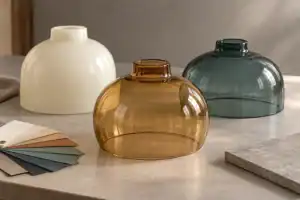
7. Colored and Smoked Glass Shades
Colored glass (amber, cobalt blue, green, ruby red) adds a tint to all transmitted light. Smoked glass is a neutral gray-to-black tint that reduces light output while maintaining a sleek, modern aesthetic.
Amber glass is particularly useful for evening lighting — its warm tone shifts the color temperature toward the 1800–2200K range of candlelight, which research increasingly links to better sleep onset and reduced blue-light exposure in the hours before bed.
Best for: Bedroom bedside lamps, bar lighting, accent fixtures in hospitality spaces.
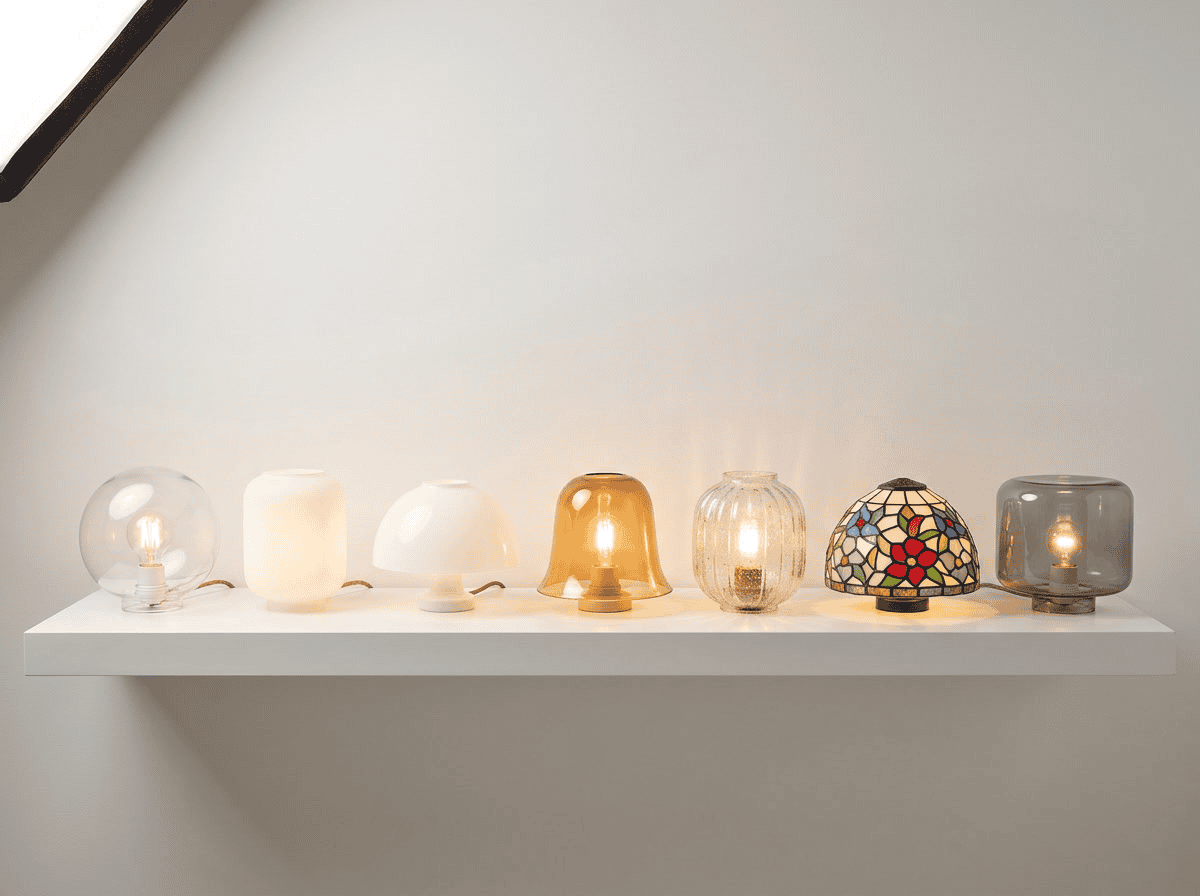
Glass Shade Type Comparison Table:
| Glass Type | Light Quality | Style Fit | Maintenance | Price Range |
|---|---|---|---|---|
| Clear | Bright, directional | Industrial, modern | High (shows dirt) | $ |
| Frosted | Soft, diffused | Universal | Medium | $ |
| Milk (Opal) | Even, glowing | Farmhouse, vintage | Low | $ |
| Hand-Blown | Unique, patterned | Artisan, statement | Medium | $$$ |
| Seeded/Textured | Warm, scattered | Coastal, transitional | Low-medium | $$ |
| Stained/Tiffany | Colored, dramatic | Traditional, eclectic | High (lead joints) | $$$ |
| Colored/Smoked | Tinted, moody | Contemporary, bar | Low | $$ |
Glass Material Science: Borosilicate vs. Soda-Lime Glass
Most buyers choose a glass shade based entirely on looks. That’s a mistake — the glass composition determines how the shade behaves under heat, whether it will crack during installation, and how long it will last.
Two glass types dominate the lighting market:
Borosilicate Glass — The Safer Choice for Lighting
Borosilicate glass is composed of approximately 80% silica, 13% boric oxide, 4% sodium/potassium oxide, and 2–3% aluminium oxide. The boric oxide is the key: it dramatically lowers the coefficient of thermal expansion (CTE), making the glass far more stable under temperature changes.
According to Wikipedia’s borosilicate glass entry, borosilicate glass can withstand temperature differentials of approximately 330°F (166°C) without fracturing. In plain English: if your fixture runs hot and the air conditioning suddenly kicks on, borosilicate glass won’t crack.
For lighting applications, this matters in three specific scenarios:
- High-wattage situations — if someone installs a 75W incandescent in a fixture rated for 60W, borosilicate glass handles the extra heat without crazing
- Outdoor fixtures — temperature swings between day and night, or between summer and winter, can be significant
- Bathroom fixtures — steam from showers creates humidity spikes that stress glass seals
Identification tip: Most premium fixture manufacturers specify borosilicate in their product descriptions. If a glass shade is marketed as “oven-safe” or “laboratory-grade,” it’s almost certainly borosilicate.
Soda-Lime Glass — Budget Friendly but Heat Sensitive
Soda-lime glass is the most common glass on earth — used for windows, bottles, and the majority of inexpensive glass shades. Per Wikipedia’s soda-lime glass article, it has a high thermal expansion coefficient and can only withstand roughly 100°F (40°C) temperature differentials before fracturing risk rises sharply.
That’s a significant gap from borosilicate’s 330°F. For most residential use with LED bulbs (which run much cooler than incandescents), soda-lime glass is perfectly adequate. The risk profile changes when:
- High-wattage incandescent or halogen bulbs are used
- The fixture is enclosed (globe fixtures trap heat more than open pendants)
- Outdoor use is intended
In practice, we’ve found that soda-lime shades most commonly crack during installation — when cold glass is placed near a warm bulb too quickly, or when the glass briefly contacts the socket hardware during positioning.
Why Material Matters for Your Light Fixture
| Property | Borosilicate | Soda-Lime |
|---|---|---|
| Thermal shock resistance | 330°F differential | ~100°F differential |
| Typical use | Premium fixtures, outdoor, enclosed globes | Standard indoor fixtures |
| Clarity over time | Maintains clarity | Can yellow slightly with heat exposure |
| Cost | 20–40% more expensive | Base price |
| Weight | Slightly lighter per mm thickness | Heavier |
The bottom line: If your fixture uses LED bulbs at their rated wattage in a standard indoor setting, soda-lime glass will serve you fine. Upgrade to borosilicate for outdoor fixtures, enclosed globes with incandescent or halogen bulbs, or any fixture in a high-humidity environment.
How to Choose the Right Glass Shade for Your Fixture
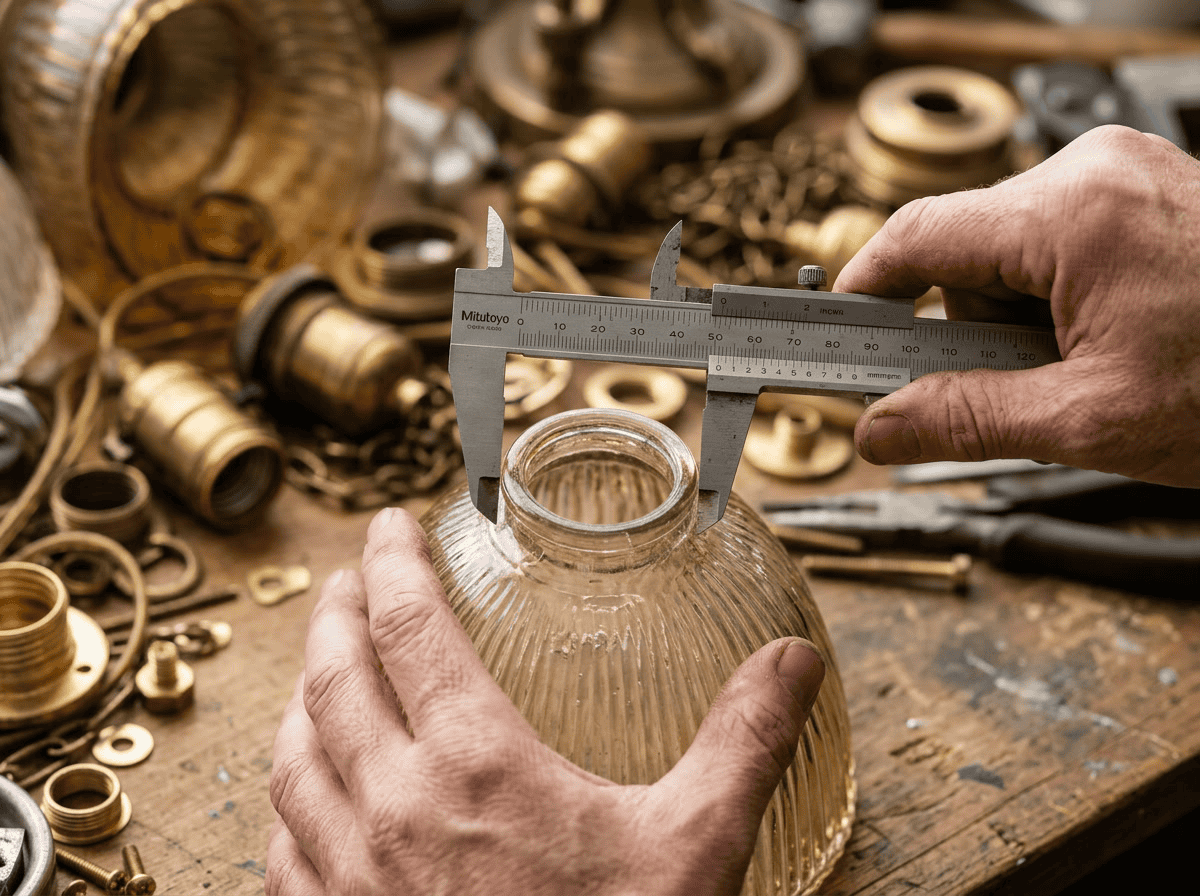
Choosing the right light with glass shade comes down to three decisions made in sequence. Get step 1 wrong and steps 2 and 3 don’t matter.
Step 1 — Measure Your Fitter Size
Before anything else, measure the opening of your existing shade (or the socket on your fixture). Fitter size is the diameter of the opening, measured in inches at its widest point.
Standard US fitter sizes:
– 2-1/4″ — common on pendant cords and most ceiling fixtures
– 3-1/4″ — medium flush-mounts, some sconces
– 4″ — large flush-mount fixtures
– Slip/spider — floor and table lamps with a harp assembly
A shade with the wrong fitter won’t seat properly. Some shade sellers advertise “adjustable” shades — these use rubber gaskets or set screws to accommodate a range, typically ±1/4″. For a secure fit, an exact fitter match is always better.
Pro tip: If you’re replacing a broken shade, take the old shade’s broken fragments to a lighting store and ask them to measure the fitter opening from the intact neck portion. Even a cracked shade retains its fitter geometry.
Step 2 — Match Glass Type to Room Function
Different rooms have different lighting jobs. Here’s a practical matrix:
| Room | Primary Need | Recommended Glass Type |
|---|---|---|
| Kitchen (island/task) | Bright, focused task light | Clear or lightly frosted |
| Dining room | Warm, flattering ambiance | Amber, hand-blown, or seeded |
| Living room (accent) | Soft fill light | Frosted or milk glass |
| Bathroom (vanity) | Even, shadow-free light | Frosted or opal/milk glass |
| Bedroom (bedside) | Warm, dim-able, sleep-friendly | Amber or warm-tinted glass |
| Entryway / foyer | Statement fixture, moderate light | Clear with filament or stained |
| Home office | Focused but not harsh | Frosted, lightly diffused |
| Outdoor (porch) | Weather-resistant, safety | Borosilicate clear or frosted |
Step 3 — Pair Glass Shade with the Right LED Bulb
The glass shade you choose changes how an LED bulb’s color temperature is perceived. According to the U.S. Department of Energy’s lumens guide, you should shop for bulbs by lumens (brightness) rather than watts (energy consumption). A good rule:
- 450 lumens ≈ replaces a 40W incandescent
- 800 lumens ≈ replaces a 60W incandescent
- 1100 lumens ≈ replaces a 75W incandescent
Color temperature pairing with glass:
- Clear glass → use a 2200–2700K vintage-style LED or a filament bulb. Higher color temperatures (4000K+) look harsh and clinical through clear glass.
- Frosted glass → 2700–3000K soft white. The diffusion smooths out the slightly bluer tone of 3000K, making it feel warmer than it would in a clear shade.
- Milk/opal glass → 2700K warm white. The opacity softens everything; cooler color temps look lifeless through opaque glass.
- Amber or colored glass → 2700K minimum. The glass itself shifts the color temperature warmer; starting with a neutral or cool bulb results in an odd color cast.
- Smoked glass → 3000–4000K. The neutral gray tint absorbs some warmth; a slightly cooler bulb compensates.
Are Glass Lampshades Safe? Heat, Breakage, and Wattage Guide
Glass shades are safe — when matched correctly to the fixture and bulb. The vast majority of glass shade failures (cracking, shattering) trace back to three avoidable mistakes.
Wattage Limits and Heat Buildup
Every glass shade fixture has a maximum wattage rating, usually printed on a label inside the socket. Never exceed this rating. The rating exists because the shade’s geometry determines how well heat escapes.
- Open-bottom pendant shades (cone, bell, cylinder) allow heat to rise and exit through the top opening — lower heat buildup, more tolerant of borderline wattage.
- Closed globe shades (spheres, fully enclosed forms) trap heat inside the glass shell — higher heat concentration, stricter wattage discipline required.
With LED bulbs, this is far less of a concern than it was with incandescents. A standard 10W LED produces roughly the same light output as a 60W incandescent but generates far less heat. In practice, almost no LED-equipped glass shade fixture reaches dangerous temperatures in normal use.
The exception: retrofit LED bulbs in enclosed-rated fixtures. Some LED bulbs are not rated for fully enclosed fixtures and can overheat, reducing lifespan and, in worst cases, causing the bulb to fail in ways that stress the glass.
Look for “enclosed fixture rated” on LED packaging if your glass shade is a globe or fully enclosed form.
Breakage Risk and Positioning
Glass breaks when struck or dropped — that’s obvious. Less obvious: glass also cracks from thermal shock during installation. The most common installation failure is placing a warm or cold glass shade directly against a metal socket without allowing the glass to reach ambient temperature first.
Mitigation steps:
1. Allow glass shades to reach room temperature before installation if stored in a cold garage or attic.
2. When threading the shade onto the socket, avoid contact between the glass neck and metal hardware — use the rubber or felt gasket that most quality fixtures include.
3. Hand-tighten retaining rings only — overtightening concentrates stress at the fitter opening.
Child and Pet Safety
A glass shade mounted at eye level or lower — on a table lamp, floor lamp, or low-hung pendant — can be knocked by children or pets. For these situations:
- Choose thicker glass (typically 3mm+) rather than the thinnest budget options
- Seeded or textured glass tends to be slightly thicker than thin-blown varieties
- Consider caged pendant designs that protect the glass globe from direct contact
- For homes with young children, fully enclosed milk glass or frosted glass globes on ceiling fixtures (out of reach) eliminate the risk entirely
Future Trends in Glass Shade Lighting (2026 & Beyond)
Smart Lighting Integration with Glass Fixtures
The pairing of glass shades with smart LED bulbs has changed how people think about glass shade selection. As of 2026, tunable white smart bulbs — capable of shifting from 1800K to 6500K via app or voice control — have pushed buyers toward neutral glass types (clear, lightly frosted) that don’t pre-tint the light.
A frosted or clear glass shade with a tunable smart LED becomes a single fixture that handles everything from morning energizing light (5000K) to evening wind-down (1800K) without changing the physical fixture. This “one shade, all moods” approach has driven a notable uptick in demand for neutral glass over colored glass in residential settings.
In contrast, colored glass shades (amber, cobalt, green) are increasingly popular in hospitality and commercial settings where a fixed mood is the design intent and smart lighting isn’t the priority.
Sustainability: Recycled and Low-Carbon Glass Shades
Glass manufacturing is energy-intensive, but glass as a material is infinitely recyclable without quality degradation. A growing number of manufacturers now produce glass shades using post-consumer recycled glass content — typically 30–70% — which reduces the energy required to melt raw materials.
Buyers can identify these products by looking for:
– “Recycled glass content” in product descriptions
– Third-party certifications from sustainability programs
– Manufacturers with stated carbon-reduction targets in their supply chain disclosures
Hand-blown glass shades inherently have a lower carbon footprint than mass-produced pressed glass, simply because no injection-molding machinery or energy-intensive pressing equipment is involved. A lampshade shaped by human breath and skill has a manufacturing process that hasn’t changed in centuries.
Frequently Asked Questions
What is a glass light cover called?
A glass light cover is called a glass shade or glass globe depending on its shape. Fully enclosed spherical covers are globes; open-ended or shaped covers are shades. The opening that attaches to the fixture is called the fitter. In trade catalogs, you’ll see the terms “glass lampshade,” “fixture shade,” and “replacement glass globe” used interchangeably.
Are glass lampshades good?
Yes — for the right use case. Glass shades are more durable than fabric (no scorching, no fading, wipe-clean), offer a wider range of light diffusion options from crystal-clear to fully opaque, and are available as inexpensive replacement parts. Their drawback is fragility from impact. For most kitchens, bathrooms, and open living spaces, glass is the best practical choice.
What are colored glass lamps called?
Colored glass lamps are most commonly called art glass lamps or stained glass lamps. When they use the copper-foil mosaic technique popularized by Louis Tiffany, they’re called Tiffany lamps. Lamps with a single-tint glass shade (amber, cobalt, ruby) are typically called colored glass pendant lights or identified by their glass color (e.g., “amber glass pendant”).
Are glass lampshades safe?
Glass lampshades are safe when used at or below the fixture’s rated wattage, mounted correctly with the provided gasket, and paired with LED bulbs rated for the fixture type. Breakage risk is the main safety consideration — keep globe-style shades out of reach of children, use enclosed-fixture-rated LEDs in closed globes, and avoid rapid temperature changes during installation.
What size glass shade do I need for my fixture?
Measure the fitter opening on your existing shade or fixture socket. The three most common sizes are 2-1/4″, 3-1/4″, and 4″. The fitter opening must match the socket collar diameter on your fixture. If you’re replacing a broken shade, the size is usually also marked on the fixture socket housing.
Can I use any LED bulb in a glass globe shade?
Not quite. For enclosed globe shades (fully sealed around the bulb), you need an LED bulb specifically rated for enclosed fixtures — these are printed “Enclosed Fixture Rated” on the packaging. Standard LED bulbs in enclosed fixtures can overheat, reducing lifespan significantly. For open-bottomed pendant shades, any LED bulb within the fixture’s wattage limit works fine.
How do I clean a glass lampshade without streaks?
Turn off and allow the shade to cool completely before removing it. Wipe with a microfiber cloth dampened with a 50/50 mix of white vinegar and water — this dissolves mineral deposits and leaves no residue. Avoid paper towels (leaves lint) and commercial glass cleaners with ammonia (can cloud frosted finishes over time). Dry immediately with a second dry microfiber cloth.
Conclusion
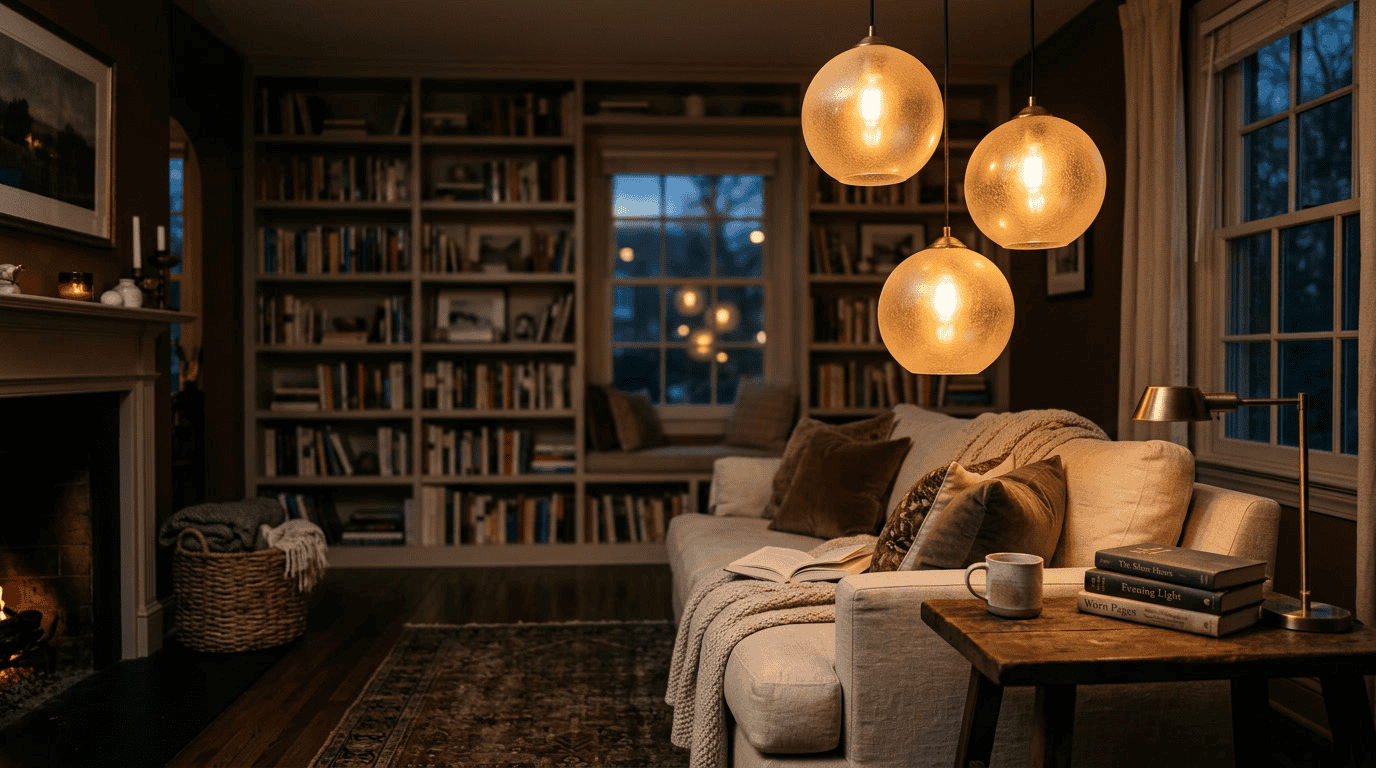
A light with a glass shade is one of the most versatile lighting choices you can make — but only if you pick the right type of glass for your room, the right fitter for your fixture, and the right LED for your glass. Clear glass demands a beautiful bulb. Frosted glass forgives almost any bulb and flatters almost any room. Borosilicate glass outlasts soda-lime in heat-intensive or outdoor applications. And no matter what style you choose, the right fitter size is the non-negotiable starting point.
The three steps are simple: measure the fitter first, match the glass type to the room’s lighting job, then pair with an LED bulb in the right color temperature range. Get those three right and the rest — style, material, finish — becomes a matter of personal preference rather than guesswork. Browse the full range of glass shade lights to find the exact shade and fixture that fits your space.