A floral lampshade is a decorative lamp cover printed or crafted with botanical or flower patterns, used to add warmth, color, and character to living rooms, bedrooms, and dining spaces.
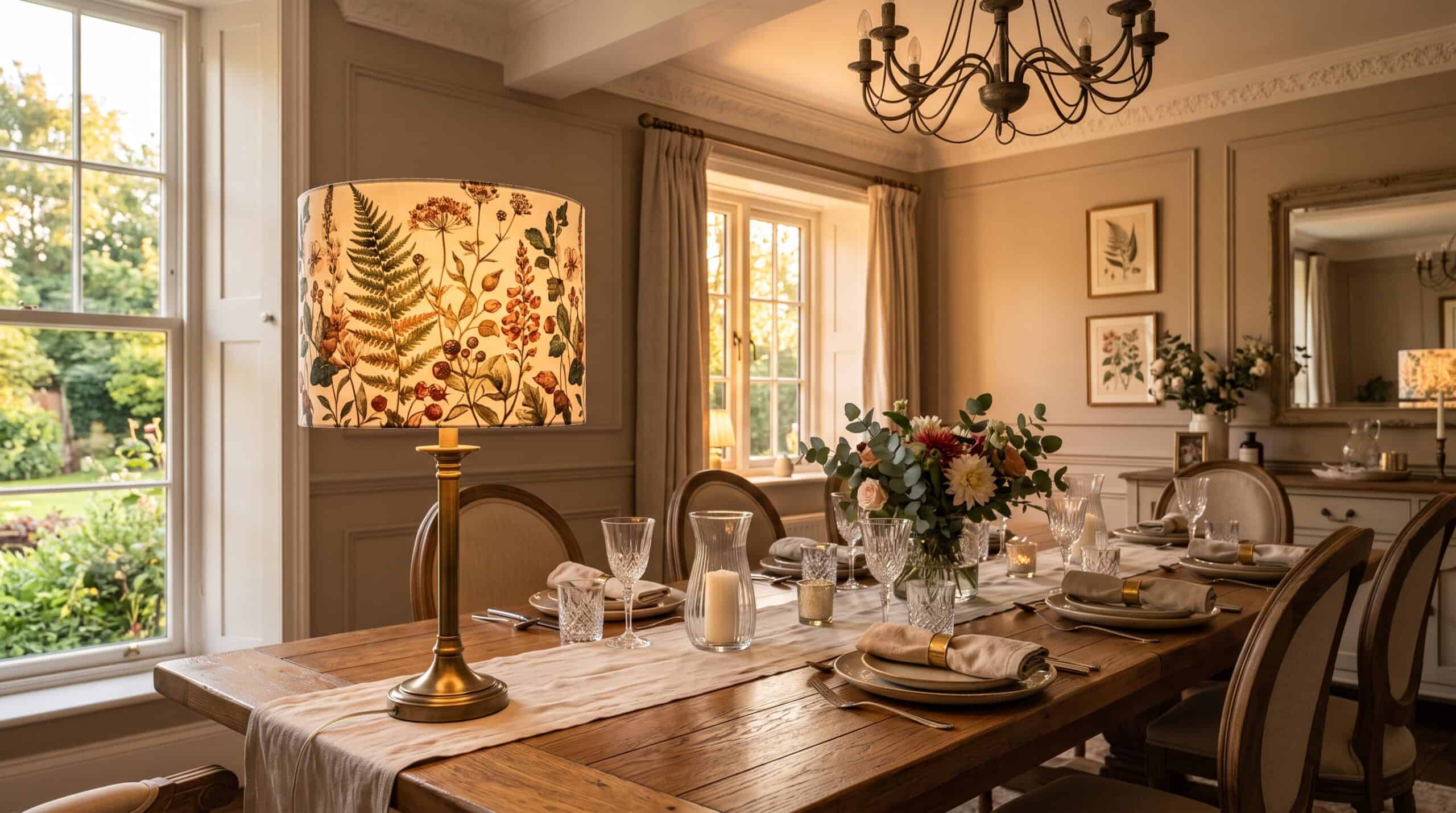
Walk into a room lit by a plain white drum shade and it feels like a hotel lobby: functional, forgettable. Walk into the same room with a floral shade throwing soft, patterned light across the ceiling, and suddenly the space has a point of view. That’s the entire appeal in one sentence. A floral lampshade doesn’t just diffuse a bulb. It sets a mood before anyone consciously notices why.
We’ve spent time sourcing, testing, and photographing lampshades for lighting projects, and the floral category is one of the most misunderstood corners of home décor. People either overbuy (a huge peony print that swallows a small side table) or underbuy, picking a shade so timid it disappears next to a patterned sofa. This guide fixes both problems. By the end, you’ll know exactly which shade type, material, and size fits your lamp, your room, and your budget.
Most people searching for a floral lampshade fall into one of three groups. There’s the person redecorating a single room and looking for one statement piece. There’s the person replacing a worn-out shade on a lamp they already love and don’t want to part with. And there’s the person furnishing an entire space, a bedroom, a reading nook, sometimes a whole small business like a boutique hotel room or a bed-and-breakfast, where floral shades need to work as a set, not as one-off decisions. The advice in this guide applies to all three, but pay closest attention to the sizing and material sections if you’re buying more than one shade at a time; consistency across a room matters more than any single shade being “perfect.”
What Is a Floral Lampshade?
A floral lampshade is any lamp cover (drum, empire, bell, or otherwise) that features botanical imagery, whether printed on fabric, hand-painted on glass, or laser-cut into a pattern. That’s the short version. The longer version is that “floral” covers an enormous range, from a subtle sprig print on cream linen to a maximalist, saturated peony pattern that becomes the loudest object in the room.
How Floral Shades Differ from Plain or Geometric Options
Plain shades diffuse light evenly and disappear visually. They’re a neutral tool. Geometric shades (stripes, chevrons, dots) add rhythm but stay graphic and cool. Floral shades do something different: they add organic irregularity. Light passing through a botanical print scatters unevenly, which is why a floral shade often reads as “warmer” even under an identical bulb. This isn’t decoration for its own sake. It’s a functional choice about how light behaves in a room.
The trade-off is commitment. A geometric shade rarely clashes with existing décor. A floral shade, especially a busy one, asks the rest of the room to coordinate with it. That’s not a downside if you plan for it, but it’s a design decision, not an accessory choice.
A Brief History of the Floral Lamp Shade
Floral shades trace back to the Victorian era, when heavily patterned textiles moved from clothing and upholstery onto household objects, including the earliest gas and oil lamp shades. According to Wikipedia’s overview of lampshade design, the shade itself only became a distinct decorative object once electric lighting made bare bulbs common enough to need covering. Before that, oil lamps had built-in glass globes that served the same function. Floral prints were a natural fit for the fabric shades that followed, since chintz and printed cotton were already fashionable in Victorian and Edwardian interiors.
That history matters here: much of what reads today as “vintage floral lampshade” is a direct callback to that late-19th-century pairing of printed textile and lamp form, not a modern invention with old-fashioned styling. By the mid-20th century, floral shades had become a default rather than a statement: nearly every suburban living room lamp in the 1950s and ’60s wore some version of a chintz or rose print, which is part of why the style still reads as comfortably nostalgic rather than trendy today.
That staying power is worth noting because it separates floral shades from most other décor trends. A geometric or novelty-print shade dates itself within a few years. A well-chosen floral print, especially in a classic palette, can stay relevant in a room for a decade or more, which changes the math on how much you should be willing to spend on one.
| Shade Style | Light Quality | Best Room Mood |
|---|---|---|
| Plain / Solid | Even, neutral | Minimalist, modern |
| Geometric | Crisp, rhythmic | Contemporary, graphic |
| Floral | Warm, scattered | Traditional, boho, cottagecore |
Types of Floral Lampshades
Not all floral shades are built the same, and the shape matters as much as the print. A drum shade and a bell shade with the identical fabric will throw completely different light patterns and read as different styles entirely. Shape also determines how much of the actual pattern repeat you see at once: a large-scale print can look completely different, even unrecognizable, when it’s wrapped tightly around a narrow taper versus stretched flat across a wide drum.
Drum Floral Lampshades
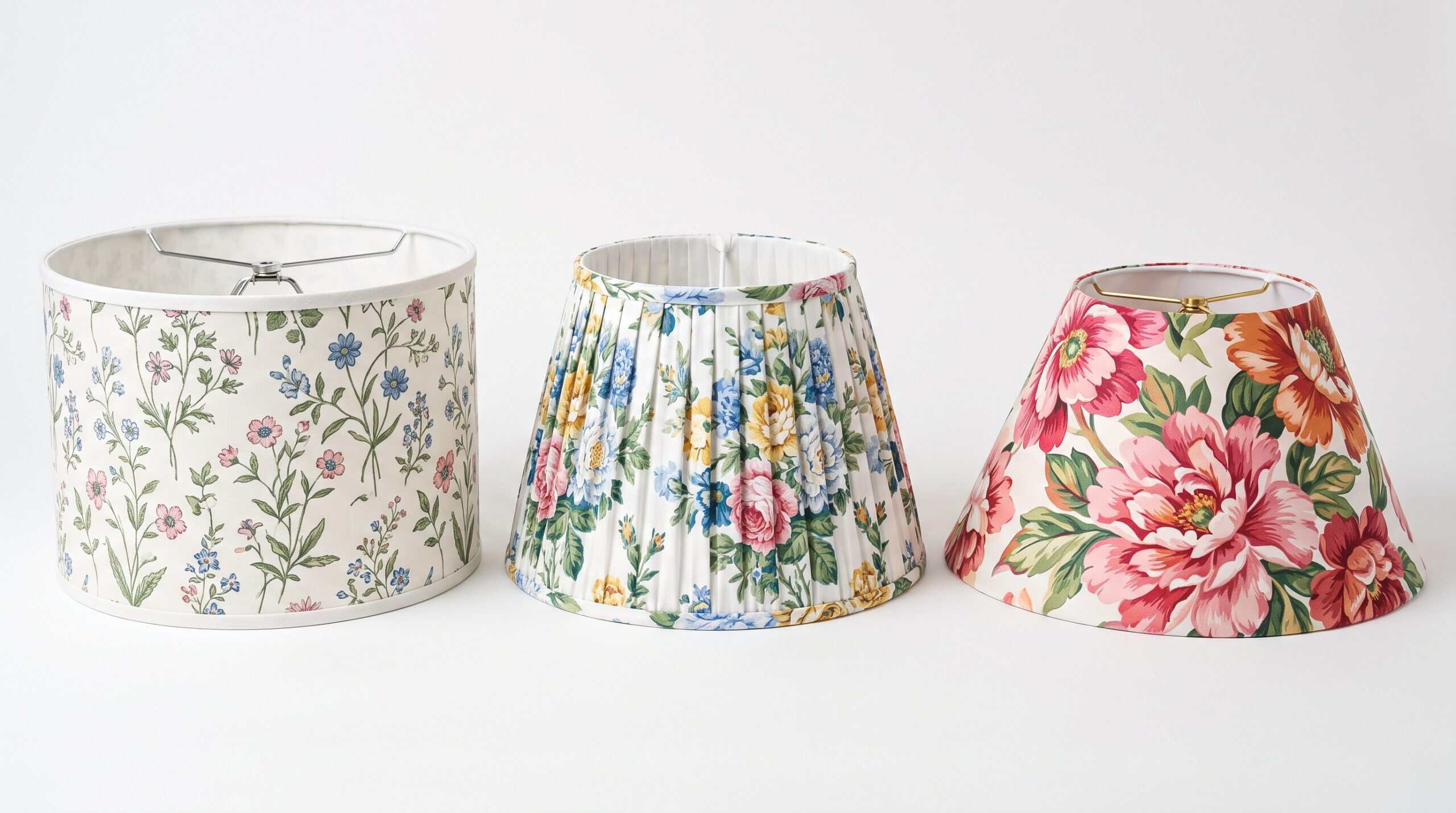
Drum shades are cylindrical, with the same diameter top and bottom. They’re the most versatile floral option because the straight sides show off a large, uninterrupted section of the print, which matters a lot for bigger floral patterns that would get cropped awkwardly on a tapered shade. Drums work equally well on table lamps and floor lamps and pair with almost any base style.
Pleated Floral Lampshades
Pleated shades gather the fabric into vertical folds, which does two things: it breaks a large floral print into narrower repeating slices (softening a bold pattern into something more textured than graphic), and it changes the light output. Pleats create subtle vertical light-and-shadow stripes rather than an even glow. Pleated floral shades read as more traditional and more formal than drum shades, which is why you’ll see them more often in dining rooms and on bedside table lamps in classically styled homes.
Empire, Bell, and Coolie Shapes
These three tapered shapes (narrower at top, wider at bottom) each crop the floral print differently, and picking the wrong one is the single most common mistake we see in floral shade purchases. A gorgeous large-scale print bought for a coolie shade, then mounted on an empire frame, ends up cropped mid-flower, with the pattern repeat looking accidental rather than intentional:
- Empire: moderate taper, the most common tapered shape, works well with mid-scale floral prints
- Bell: curved taper with a flared bottom edge, suits smaller and more delicate floral motifs
- Coolie: wide, shallow taper (like a cone), best for bold, large-scale prints since it exposes more surface area per inch of height than empire or bell shapes
| Shape | Light Spread | Print Scale Best Suited | Common Use |
|---|---|---|---|
| Drum | Wide, even | Large or all-over prints | Table & floor lamps |
| Pleated | Textured, vertical | Small to medium ditsy prints | Bedside, formal dining |
| Empire | Focused downward | Medium prints | Table lamps |
| Bell | Soft, curved | Small delicate motifs | Bedside, accent lamps |
| Coolie | Broad, horizontal | Bold, oversized florals | Statement floor lamps |
Where Floral Lampshades Show Up Beyond the Living Room
Floral lampshades aren’t confined to residential bedrooms and reading nooks. The same design logic shows up across several other settings, each with slightly different priorities driving the choice.
- Boutique hospitality: bed-and-breakfasts and small boutique hotels lean on floral shades heavily because they signal “homey” almost instantly, more effectively than nearly any other single décor object. Durability matters more here than at home, since housekeeping staff handle the fixtures daily; this is one setting where glass or laminated shades often beat fabric on total cost of ownership.
- Retail and photography styling: floral lampshades are a recurring prop in home-goods photography and staged retail vignettes, precisely because they read as “lived-in” on camera in a way plain shades don’t. If you’ve ever noticed how many furniture catalog photos feature a floral-shaded lamp on the nightstand, this is why.
- Restaurants and cafés with a cottage or vintage theme: pleated floral shades over pendant fixtures are a common choice in tea rooms and brunch spots aiming for a soft, nostalgic atmosphere rather than stark modern lighting.
- Wedding and event styling: floral lampshades, often paper or fabric and rented rather than bought, show up in garden-party and vintage-themed event décor, usually on battery-powered lamps positioned as ambient table lighting rather than functional task lighting.
The common thread across all of these settings: floral shades get chosen specifically for the emotional register they add to a space, not just the light they produce. That’s worth keeping in mind even for a single home purchase. You’re buying mood as much as function, and mood is harder to return if you get it wrong.
Floral Lampshade Materials Compared
The fabric or material behind a floral print changes almost everything about how it performs: how much light passes through, how it ages, and how it survives cleaning.
Linen and Cotton Fabric Shades
Linen is the most common material for floral lampshades in mid-range and higher-end lines, and for good reason. It diffuses light evenly, holds a crisp print without excessive sheen, and has a natural texture that reads as “quality” rather than mass-produced. Wikipedia’s entry on linen notes that flax-derived linen fiber is notably stronger than cotton and becomes even more so when wet, a property that shows up in practice as linen shades resisting sagging over years of use, where a cheaper cotton-blend shade will start to droop at the seams. A peer-reviewed fiber study published via PMC/NIH found linen fibers retain structural integrity better than cotton under repeated mechanical stress, which is a more technical way of saying the shade holds its shape.
Cotton is the budget-friendlier alternative. It takes printed floral patterns well and comes in a wider range of price points, but it’s more prone to yellowing near the bulb over time, especially with incandescent or halogen bulbs that run hot.
Silk and Organza Floral Shades
Silk floral shades have a shimmer that fabric shades simply don’t get. Light doesn’t just pass through, it catches the weave and creates a subtle glow around the edges. This is the material of choice for formal or heritage-style rooms. The trade-off is durability and cost: silk fades faster in direct sunlight and requires professional cleaning rather than a quick wipe-down. Organza, a sheerer cousin of silk, pushes that trade-off further still. It’s nearly transparent when lit, which makes a floral print look almost like it’s floating rather than printed on fabric, but it also shows dust and fingerprints far more readily than a denser weave.
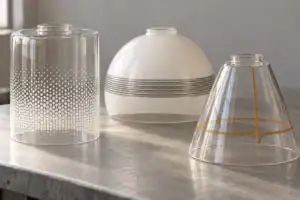
Glass Floral Lampshades
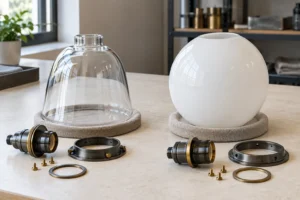
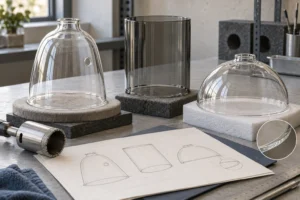
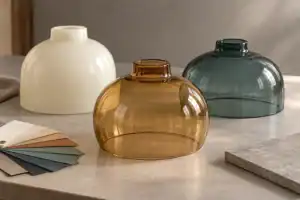
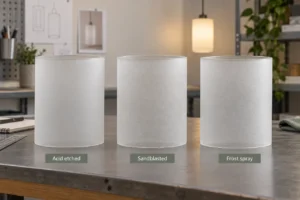
Glass floral shades (hand-painted, etched, or cast with a botanical relief pattern) sit at a different end of the category entirely. Instead of diffusing light through fabric, they refract and color it, which produces a completely different visual effect: shadows and color casts on the surrounding wall rather than a softly glowing drum. We’ve found glass floral shades hold up dramatically better in humid rooms (bathrooms, sunrooms) where fabric shades can develop mildew spots within a season. If you’re drawn to this look, browse our glass floral lampshade collection for pressed and hand-painted options that pair botanical detail with the durability fabric can’t match.
Paper and Fiberglass Options
Paper (often laminated or treated) and fiberglass shades are the lightest and least expensive options. Fiberglass in particular resists warping in humidity better than raw paper, which makes it a reasonable budget pick for kitchens or bathrooms, but neither material holds up to the level of pattern detail that fabric or glass can reproduce, so floral prints on these materials tend to look flatter and less dimensional.
| Material | Light Diffusion | Durability | Care Level |
|---|---|---|---|
| Linen | Even, soft | High | Low (spot clean) |
| Cotton | Even, bright | Medium | Low (spot clean) |
| Silk | Warm, luminous | Low-Medium | High (professional) |
| Glass | Refractive, colored | High | Low (wipe down) |
| Paper/Fiberglass | Flat, diffuse | Low-Medium | Low (dust only) |
A practical note on care: whichever material you choose, the single biggest factor in how long a floral print stays vivid is bulb heat, not cleaning frequency. Fabric and paper shades positioned close to a hot-running incandescent or halogen bulb will yellow or fade at the top edge within a year or two, regardless of how carefully you dust them. Switching to an LED bulb of an equivalent lumen output is the cheapest, easiest fix, and it’s the same principle covered in more detail in the trends section below.
How to Choose and Size a Floral Lampshade
The right floral lampshade fits three things at once: your room’s existing pattern language, your lamp’s proportions, and the light output you actually need. Skip any one of these and the shade looks like an afterthought.
Matching Your Floral Shade to Room Style
- Cottagecore / country: ditsy small-scale florals, linen or cotton, pleated or bell shapes
- Vintage / traditional: chintz-style saturated prints, pleated drum shades, brass or ceramic bases. The Victoria and Albert Museum’s overview of William Morris textiles is worth a look here: Morris’s late-1800s botanical patterns are the direct ancestor of most “vintage floral” prints still sold today, and seeing the originals clarifies why certain repeats and color palettes read as authentically vintage rather than generic
- Boho / maximalist: bold, oversized botanical prints, coolie or drum shapes, mixed with other patterns rather than isolated
- Modern / transitional: a single muted floral tone (sage, blush, cream-on-cream), simple drum shape, used as a soft accent rather than a focal point
Design tip: If your room already has a patterned rug or upholstery, pick a floral shade in a tonal palette (same color family, quieter print) rather than a competing bold pattern. Two loud prints in one sightline read as clutter, not curation.
Getting the Size Right: The Measuring Formula
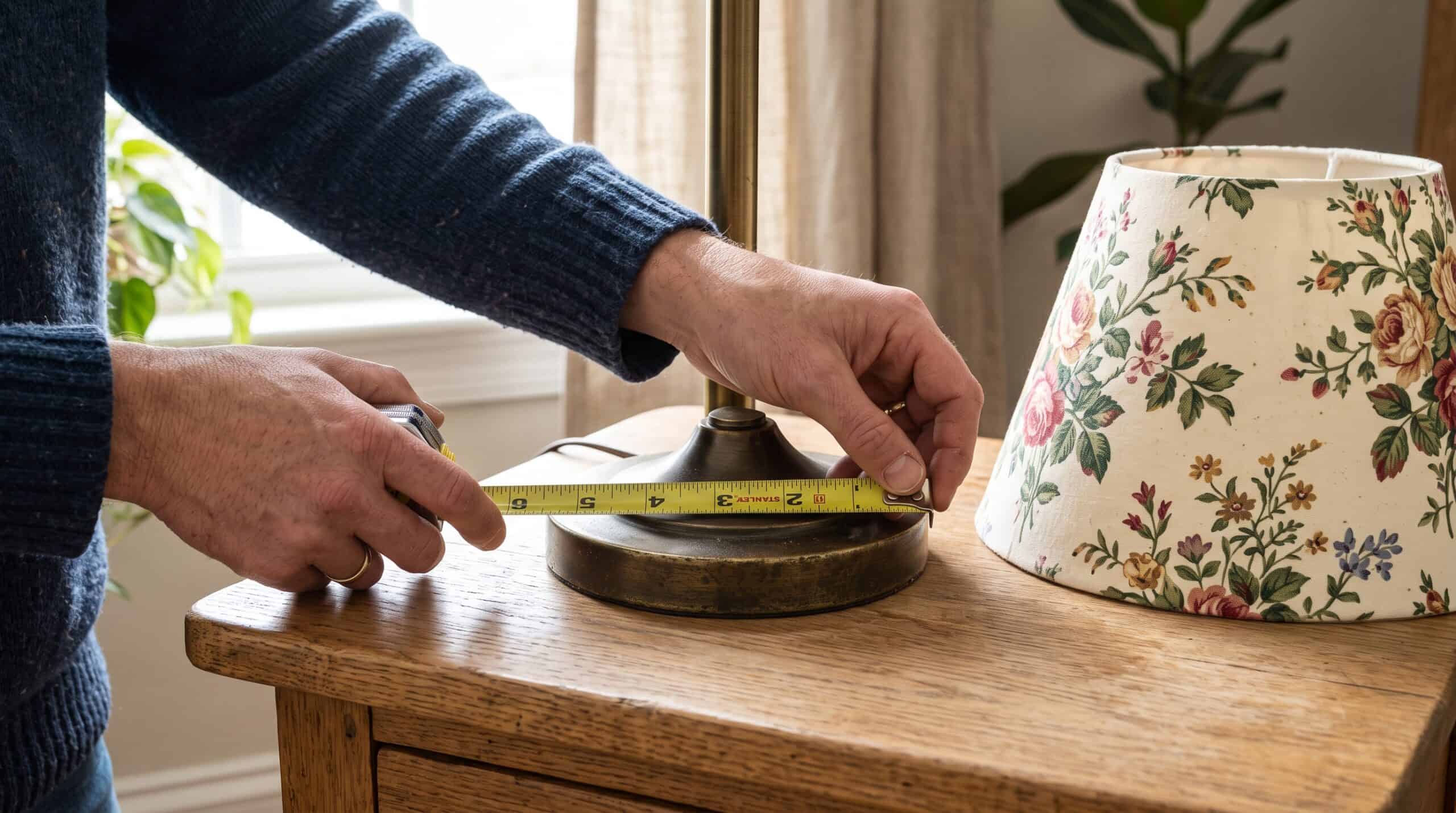
This is the step most buying guides skip entirely, which is exactly why it’s worth doing properly. The shade needs to be proportional to both the lamp base and the surface it sits on.
- Shade height should run roughly 60-70% of the lamp base’s height
- Shade bottom diameter should be about 1-2 inches wider than the widest point of the base
- Table clearance: the shade bottom should sit at or just above eye level when seated, so the bulb never shows
For a typical table lamp with an 18-inch base, that means a shade roughly 11-13 inches tall with a 10-14 inch bottom diameter. Floor lamps scale up proportionally: expect shades in the 14-18 inch height range.
A mistake we see constantly: buyers measure the lamp base but forget to check the harp, the wire frame that holds the shade above the socket. A shade that’s the right diameter but paired with too-short a harp will sit too low and scorch against the bulb; too tall a harp leaves an awkward gap of exposed pole between base and shade. If you’re replacing an old shade, measure the harp height separately and buy a taller one if your new shade is bigger than the original.
Table Lamp vs. Floor Lamp vs. Pendant: What Changes
Table lamps sit closest to eye level, so the print detail is seen up close. This is where a delicate, small-scale floral pattern earns its keep. Floor lamps are viewed from farther away and from below, so bold, larger-scale florals hold up better; fine detail gets lost at that distance. Pendant shades face a different constraint: since light passes both down and outward, dark or densely printed floral fabric can create an oddly dim room rather than the ambient warmth you’re expecting. Lighter grounds with a floral print diffuse more evenly overhead.
One more variable worth planning around: bulb color temperature. A warm 2700K bulb pulls out the reds and oranges in a floral print and mutes the greens and blues; a cooler 3000-4000K bulb does the opposite, making blues and purples in the pattern read truer but flattening warm tones. If a print has a color you specifically bought it for (a particular rose pink, say), test it under the bulb you actually plan to use before committing, since the same shade can look noticeably different under a hardware-store bulb swap.
Floral Lampshade Trends for 2026 and Beyond
Floral lampshades cycle in and out of mainstream décor roughly every decade, and the current cycle is leaning toward two distinct directions rather than one dominant look.
Oversized Botanicals and Maximalist Prints
The maximalist interiors trend that’s been building since the early 2020s has pushed floral prints toward larger, bolder scale: big leaves, oversized peonies, and jungle-adjacent botanicals rather than tight ditsy patterns. Coolie and drum shapes are doing most of the work here since they expose the largest continuous surface for the print to actually register at scale.
Sustainable Linen and Natural-Fiber Floral Shades
The other direction is quieter: a shift toward natural, undyed or low-impact-dyed linen with subtler floral motifs, paired with efficient LED bulbs rather than incandescent. ENERGY STAR’s guidance on LED lighting notes that LED bulbs run at a fraction of the heat output of incandescent bulbs, which matters directly for fabric floral shades, since heat is the main driver of fading and yellowing over time. Pairing a natural-fiber floral shade with an LED bulb also measurably extends how long the print stays true to its original color, on top of the energy savings. According to state energy program guidance from NYSERDA, switching a fixture from incandescent to LED can cut that fixture’s lighting energy use by up to 75%, a meaningful number if you’re running multiple lamps through a floral-heavy room scheme.
| Trend | Style Match | 2026 Momentum |
|---|---|---|
| Oversized botanicals | Boho, maximalist | Rising |
| Natural-fiber, subtle florals | Modern, transitional | Rising |
| Saturated chintz revival | Vintage, traditional | Steady |
| Glass botanical shades | Any (durability-first) | Rising |
A third, smaller trend worth flagging: mixed-material floral shades, where a fabric print is paired with a glass or metal diffuser insert rather than being fabric all the way through. These hybrids are still a niche category in 2026, but they address the exact trade-off this guide keeps circling back to (fabric’s warmth versus glass’s durability) by trying to get both in one fixture. Expect to see more of them as manufacturers respond to demand from the hospitality and rental markets, where durability increasingly outweighs pure aesthetics.
FAQ
What style room suits a floral lampshade best?
Cottagecore, traditional, and boho rooms suit floral lampshades most naturally. In modern or minimalist spaces, a single muted tonal floral shade works better than a bold multicolor print, which can feel out of place against clean lines.
What size floral lampshade do I need for a table lamp?
Aim for a shade height that’s 60-70% of the lamp base’s height, with a bottom diameter about 1-2 inches wider than the base’s widest point. For an 18-inch base, that’s roughly an 11-13 inch tall shade.
Are drum or pleated floral lampshades better?
Neither is universally better. Drum shades show off larger prints and suit casual to contemporary rooms, while pleated shades soften the pattern and suit more formal, traditional settings. Choose based on the print scale and room style, not one over the other by default.
How do I clean a fabric floral lampshade?
Dust weekly with a soft brush or lint roller, and spot-clean stains with a barely damp cloth and mild soap. Never submerge a fabric shade, since the glue holding the fabric to the frame can loosen. Glass floral shades just need a dry microfiber wipe.
Can I use a floral lampshade in a modern or minimalist room?
Yes, if you pick a subtle, tonal print rather than a bold multicolor pattern. A cream-on-cream or sage-on-sage floral drum shade adds texture without breaking a minimalist room’s visual quiet.
What is a vintage floral lampshade?
A vintage floral lampshade typically refers to shades using saturated, chintz-style botanical prints reminiscent of Victorian and Edwardian textile design, often pleated, often paired with brass or ceramic bases. Reproduction versions are widely available; true antique shades are rarer and usually more fragile.
Are glass floral lampshades a good choice?
Yes, especially for humid rooms like bathrooms or sunrooms, where fabric shades can develop mildew. Glass floral shades also refract and color light differently than fabric, producing a more dramatic visual effect rather than soft diffusion.
Does a floral lampshade affect the bulb’s brightness?
Yes. Darker or densely printed floral fabric absorbs more light than a plain white shade, which can reduce perceived brightness by a noticeable margin. If ambient brightness matters more than mood lighting in that room, choose a lighter-ground print or size up the wattage slightly to compensate.
Finding the Floral Lampshade That Fits Your Space
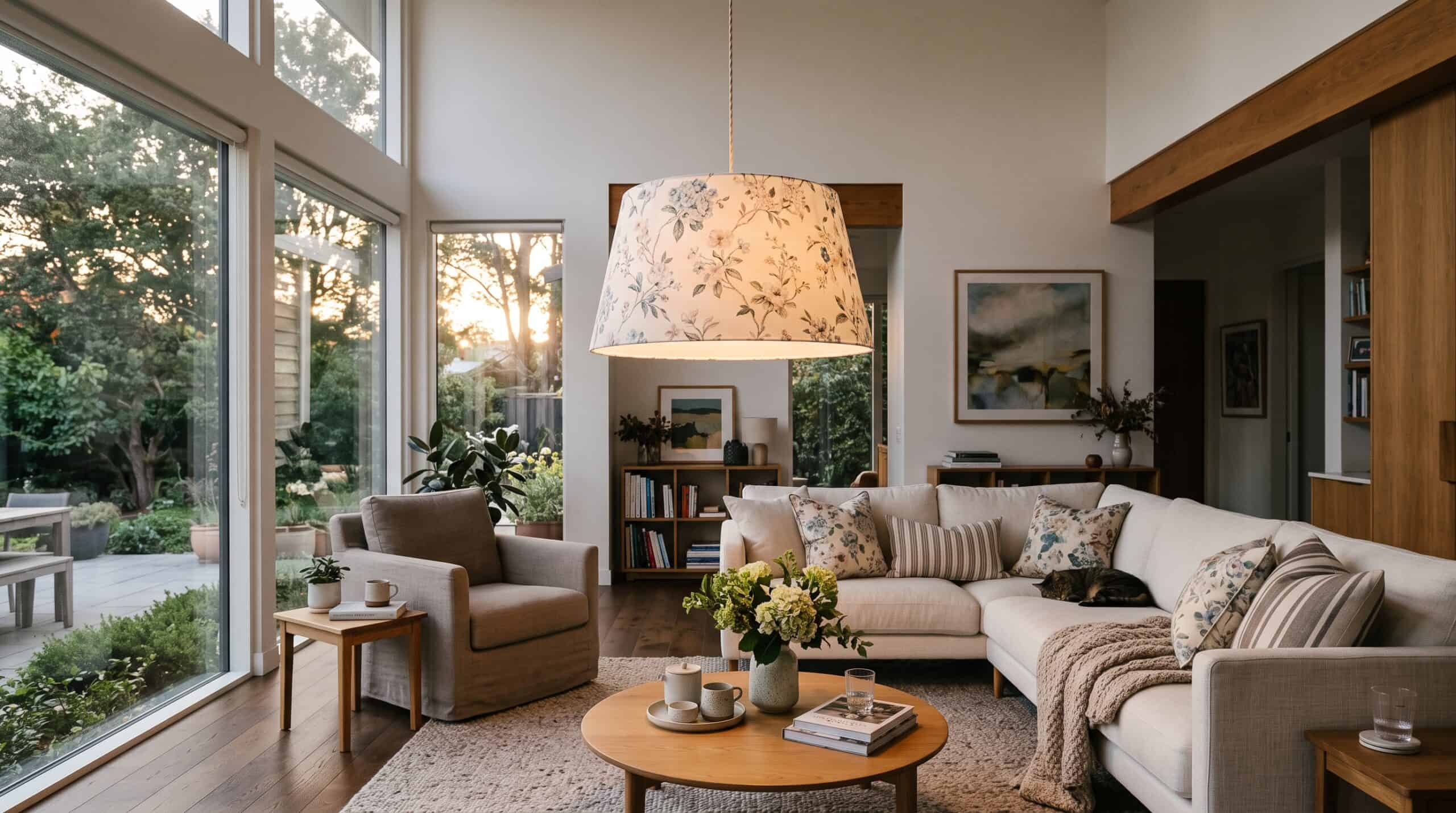
A floral lampshade earns its place in a room when the shape, material, and print scale all agree with what’s already there: the lamp base, the surrounding pattern, and how close people actually stand to look at it. Get those three things right and the shade stops being an accessory and starts doing real design work, the same way a well-chosen rug or a piece of art does.
Start with the room style you already have, not the shade you like most in isolation. Measure the lamp base, and the harp, before you shop. And if durability in a humid or high-traffic space is a real concern, don’t overlook glass floral lampshade options. They solve a maintenance problem fabric simply can’t, without giving up the botanical character that made you want a floral shade in the first place.
It’s worth resisting the urge to buy the first floral shade that catches your eye online. Photos flatten scale and color in ways that matter a lot with a busy print. If you can, look at a physical swatch or sample under the same bulb type you’ll actually use, since a print that looks perfectly balanced on a monitor can read as either washed out or overwhelming once it’s lit in your actual room. This is doubly true for anyone buying more than one shade for matching lamps; a slight color shift between two “identical” shades from different production runs is common enough that it’s worth ordering both from the same batch when possible.
None of this needs to be complicated. Pick the room mood first, match the shape and material to that mood, then size it properly to the base you already own. That order (mood, shape, material, size) is the one thing every good floral lampshade purchase has in common, whether it costs twenty dollars or two hundred. Get those four decisions right, in that order, and the shade will keep earning its spot in the room long after the initial purchase excitement fades.