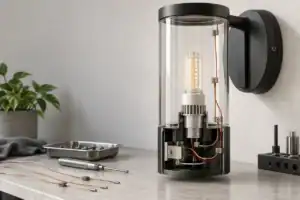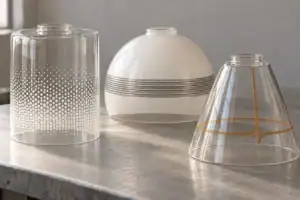
Glass lamp shades can be developed toward a Pantone color reference, but a paper swatch cannot guarantee an identical result in transparent, translucent or illuminated glass. The workable target is an approved glass master, with its finish, geometry, lighting and acceptance limits recorded. A color that works with the lamp off may need a separate decision when the lamp is on.
For lighting brands and OEM buyers, the useful question is how to turn a brand color into a repeatable component specification. This guide explains where Pantone color matching in glass is practical, which promises need qualification, and what to agree before ordering custom color glass lamp shades.
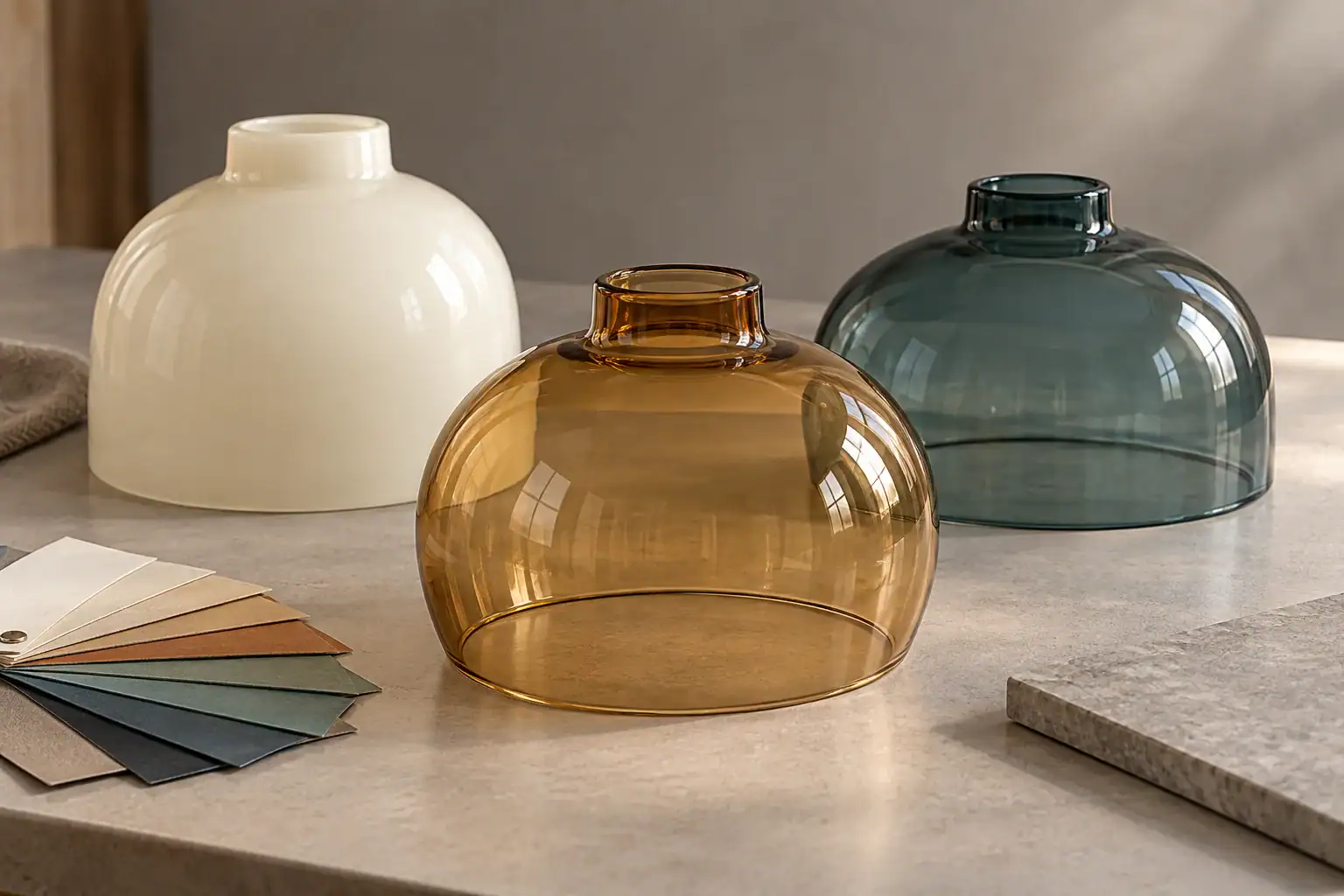
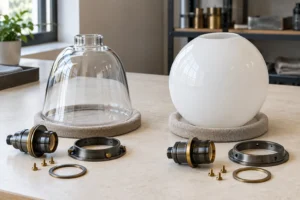
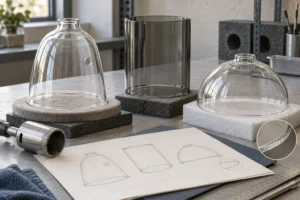
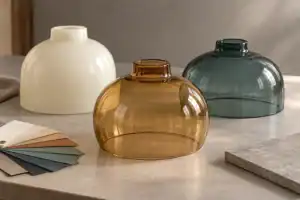
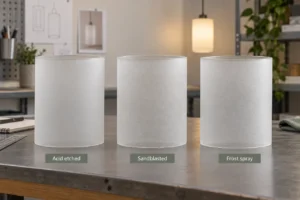
The images in this guide are original AI-generated educational illustrations. They explain sample-review decisions; they are not calibrated color references, factory photographs or test results.
What does a Pantone match mean for a glass lamp shade?
Start by defining what is being matched and how it will be viewed. Are you matching the outside of an opaque shade to a printed brand chip, the tint seen through a transparent shade, or the color of the assembled lamp? Those are different approval tasks.
A printed chip mainly returns light to the observer. A transparent glass wall also passes light from behind it, so the background and optical path enter the comparison. An opal shade scatters light as well. Copying the chip’s digital color value into an order does not describe these effects.
Pantone’s explanation of its material-specific color systems states that achievable appearance varies with the material. For procurement, treat the reference as the start of development. Once a glass sample is approved, identify it as the production appearance master.
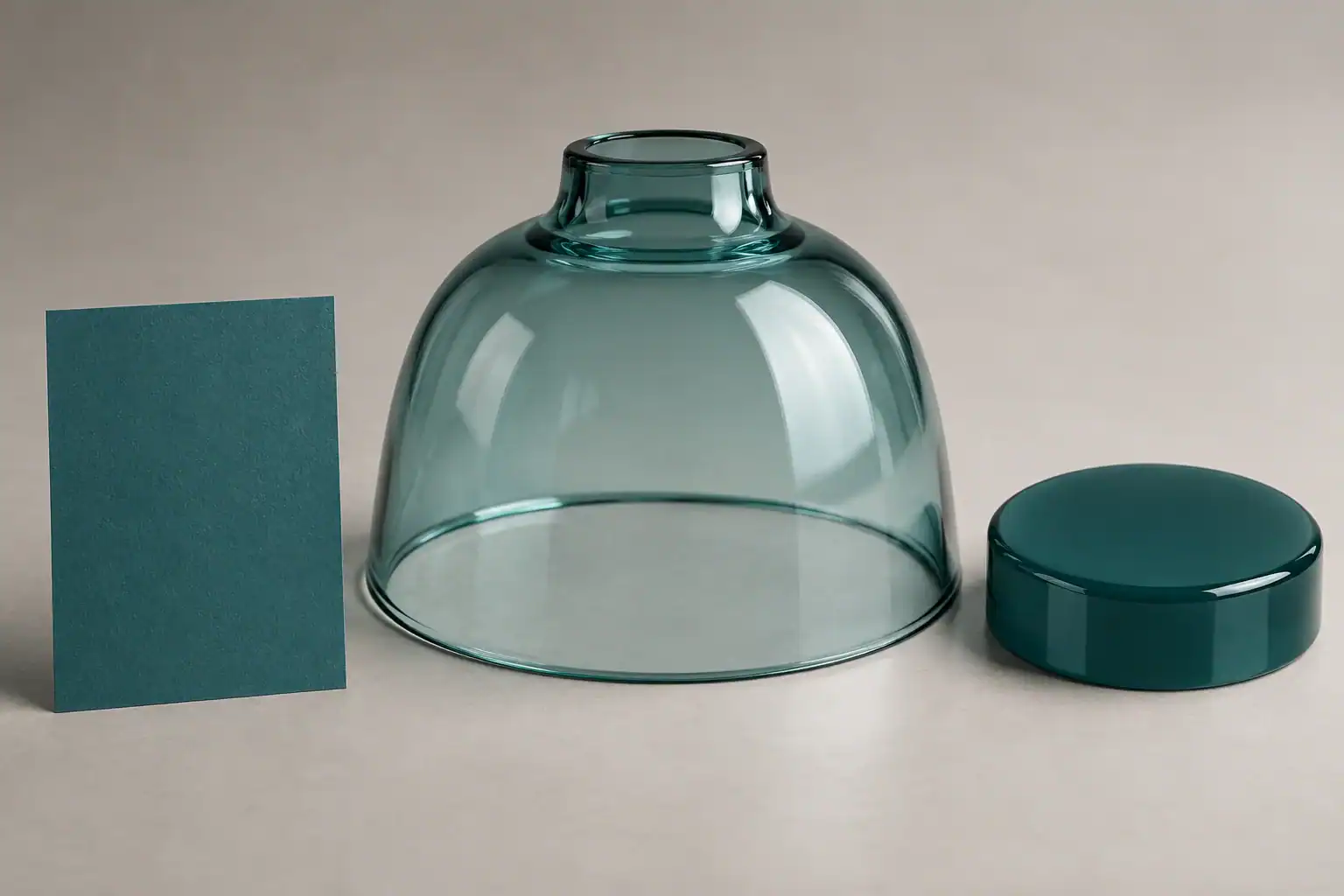
Decision rule: if two parties cannot point to the same physical master and reproduce the same viewing setup, a promise to “match Pantone” is not yet a complete acceptance requirement.
Send the complete reference, including the suffix
Record the Pantone system, complete color designation and physical reference supplied. Do not shorten the order to a color name or a number without its suffix. A screenshot is useful for discussing direction, but it leaves the display, exposure and material reference uncertain.
The letters C and U in the Graphics system refer to coated and uncoated paper. They do not specify whether the glass should receive a coating. Pantone explains that these paper surfaces produce different appearances, even for the same named ink color.
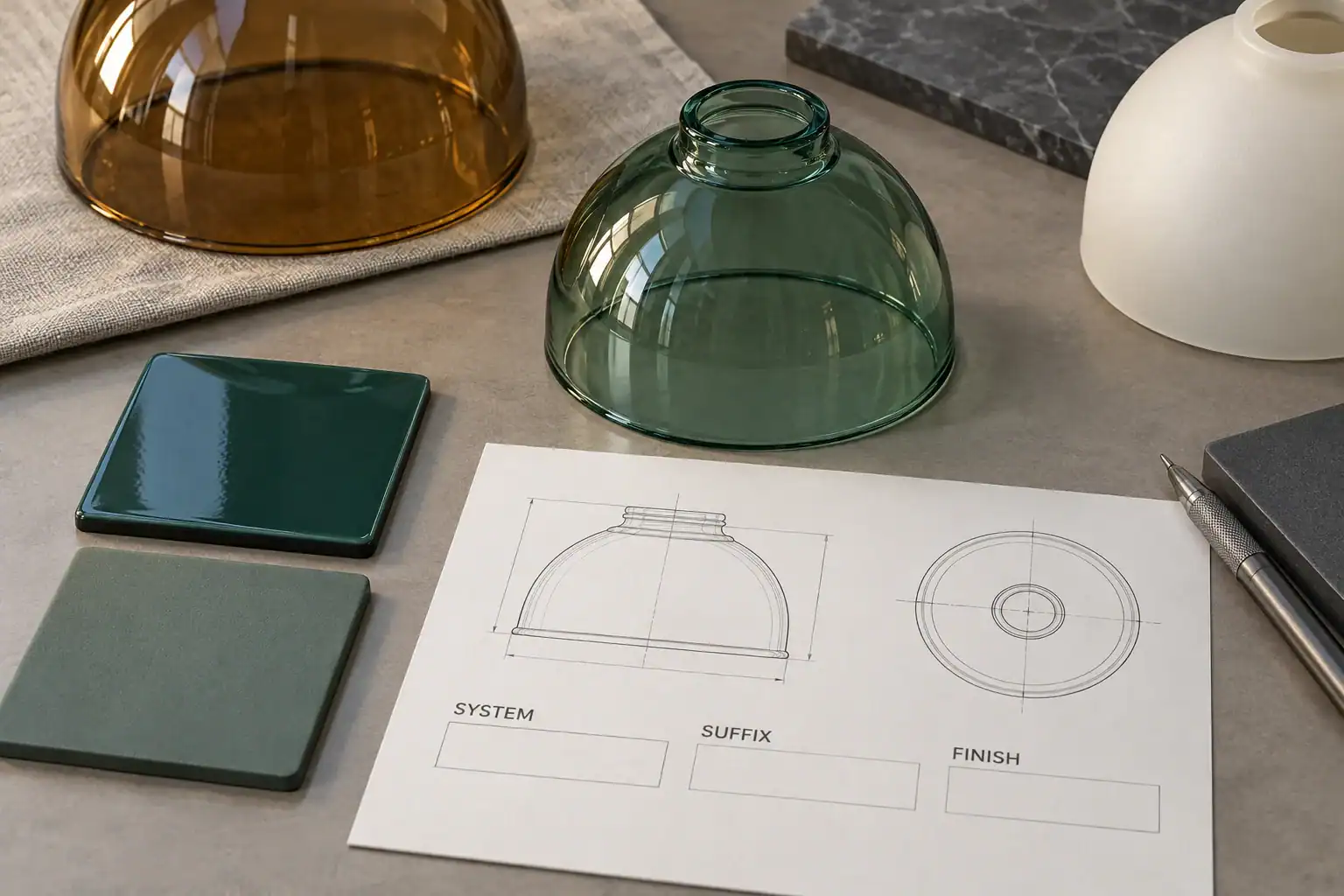
Add three pieces of product information alongside the reference: the required transparency or opacity, the final surface finish, and the appearance that takes priority. For example, a matte exterior and a glossy exterior need separate review even if both are described as the same green.
If packaging, a metal canopy and the glass must look coordinated, send all three samples. Name the component that controls the design decision. The objective might be a coordinated family of finishes rather than an indistinguishable match between unlike materials.
What is achievable, and what needs qualification?
A defined color direction on an approved glass sample
A supplier can assess a target hue and propose development samples using a suitable material and coloring process. Acceptance becomes more useful when the buyer selects an actual finished shade, records the sample revision and agrees what variation is acceptable. Feasibility, cost and minimum quantity still require a project-specific quotation.
A controlled batch compared with the same master
Specify repeat-order consistency against a defined comparison method. “Same as last time” is weak when the original master, finish or lamp source has changed. Keep the master identity with the drawing revision and order records.
Promises that should not be accepted without evidence
- Every Pantone color reproduced in every glass composition and finish.
- An identical appearance on paper, transparent glass and an illuminated shade under all lighting.
- A universal percentage such as “99% matched” without a calculation and specimen definition.
- A fixed color-difference limit that also guarantees transmission, brightness, haze and durability.
Use these limits to plan the sample program. If brand-color appearance is strict, allow the supplier to flag an unachievable target before tooling and production are committed.
Why wall thickness and shade shape change the result
In absorbing colored glass, the distance light travels through the material affects transmission. A thick rim, a thin wall and a view through two sides of a hollow shade can therefore look different within the same part. Curvature also changes reflections and viewing paths.
SCHOTT’s optical filter glass documentation treats thickness and spectral properties as specification variables. That is an optical-material example, not a specification for decorative lamp shades. For shade procurement, keep the geometry in the color approval. A small flat chip does not describe every view of the finished part.
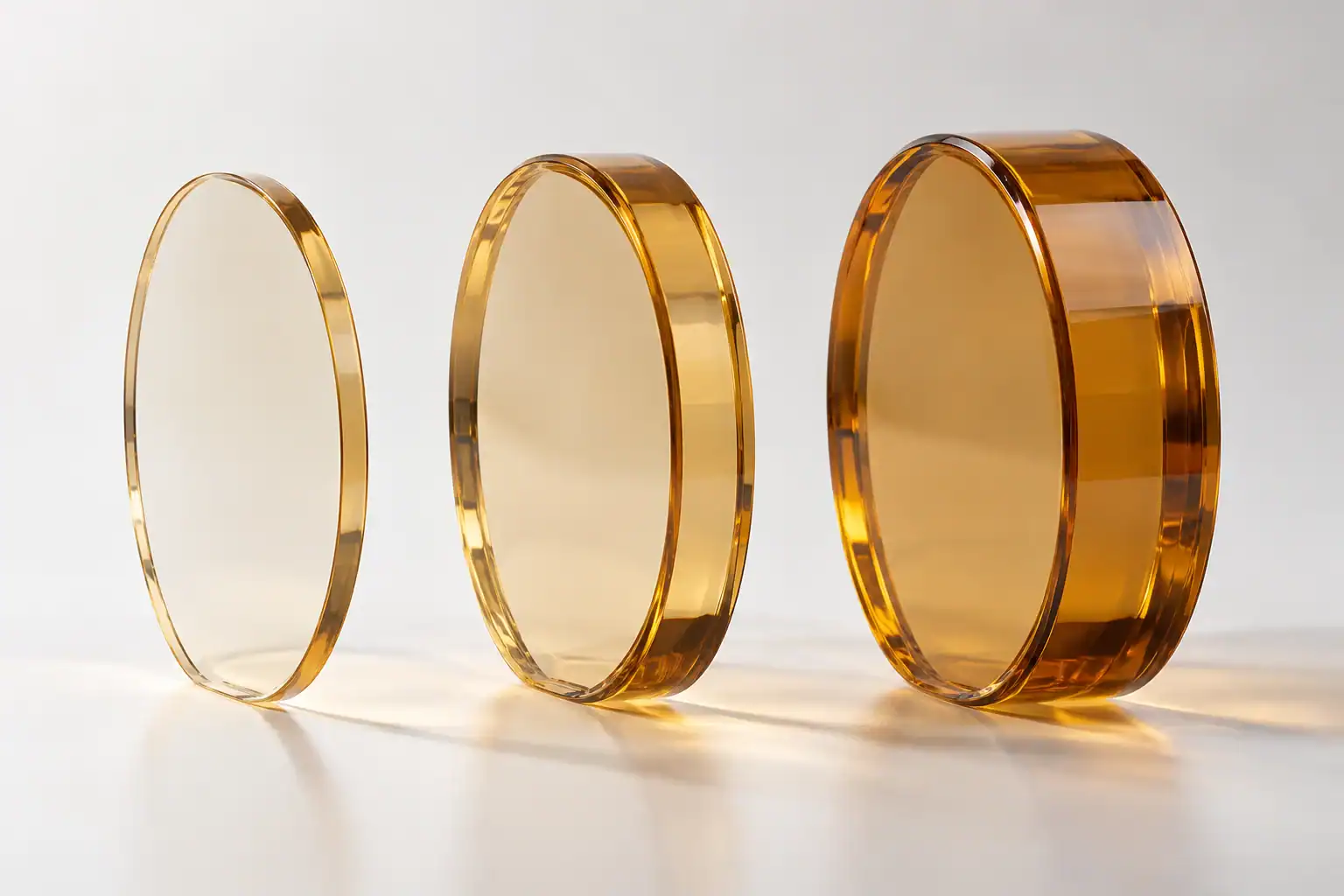
Mark the main comparison zone on the drawing: for instance, the broad side wall at the normal viewing angle. Separately describe an acceptable rim appearance. Do not reject a thick edge solely because it looks deeper than the wall unless the agreed master and requirements address that feature.
A change in diameter, wall distribution, ribbing or forming method should trigger an appearance review. For hand-formed geometries, discuss the material and dimensional variation together; the mouth-blown glass shade process is a relevant starting point for that conversation.
Approve the unlit shade and the operating lamp separately
The unlit check asks whether the component looks right in its surroundings. The lit check asks whether it still meets the design intent when the source, shade and fixture work together. Passing one does not establish the other.
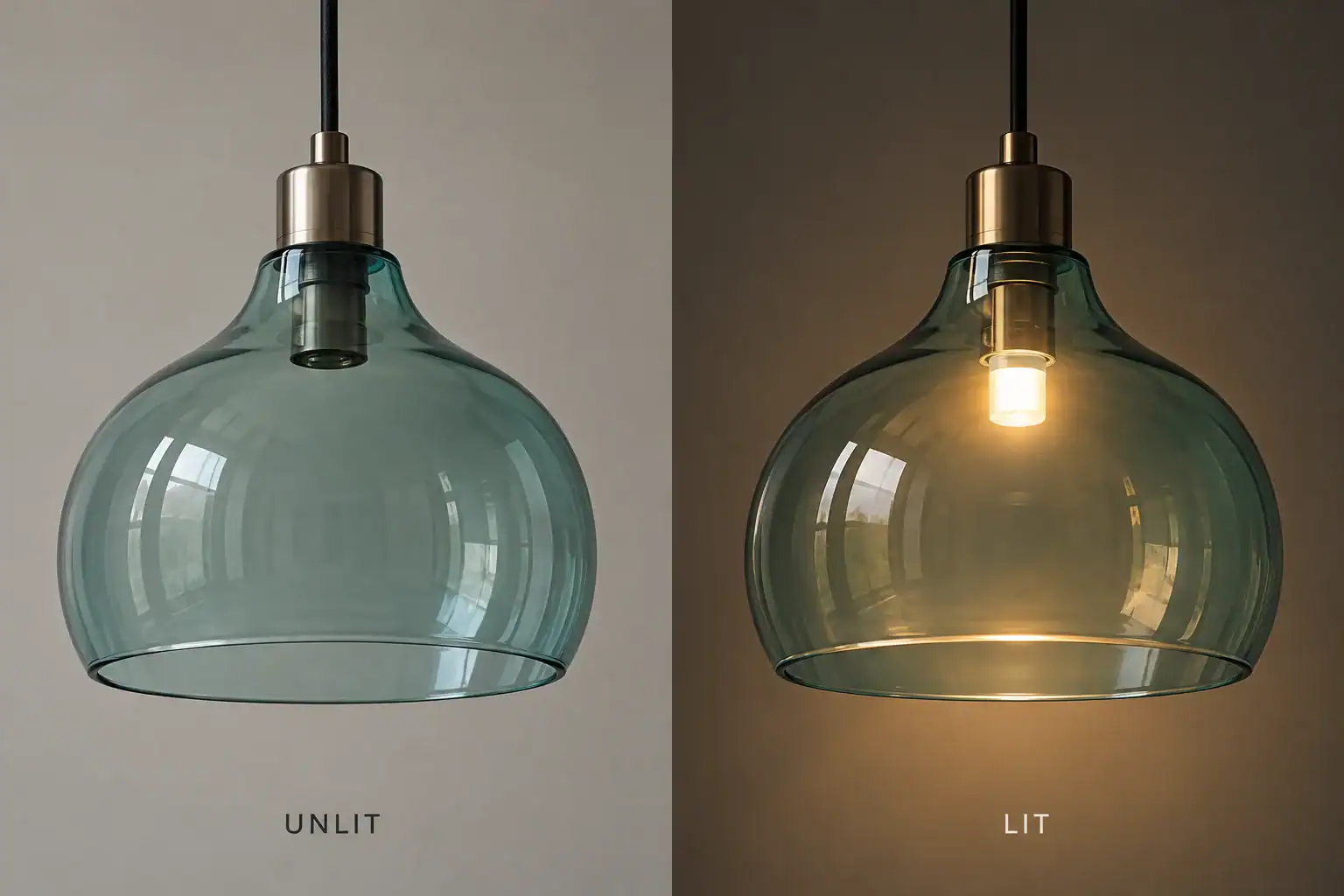
For a hospitality pendant, an OEM buyer might prioritize the daytime appearance while still requiring an acceptable evening glow. A decorative accent lamp might prioritize the lit effect. State that priority before asking the supplier to revise the color: otherwise, one correction can improve the first view while making the second less acceptable.
Document the LED or lamp model, mounting position, diffuser arrangement, dimming state and viewing background for the operating check. If the fixture is still being designed, call the result provisional and repeat the review on the final assembly. A shade-only approval does not establish the completed luminaire’s optical or thermal performance.
Check the light source, not just its color-temperature label
A match under one illuminant can separate under another. This is metamerism. Pantone’s guidance on comparing color systems discusses lighting-dependent differences and recommends controlled visual comparison.
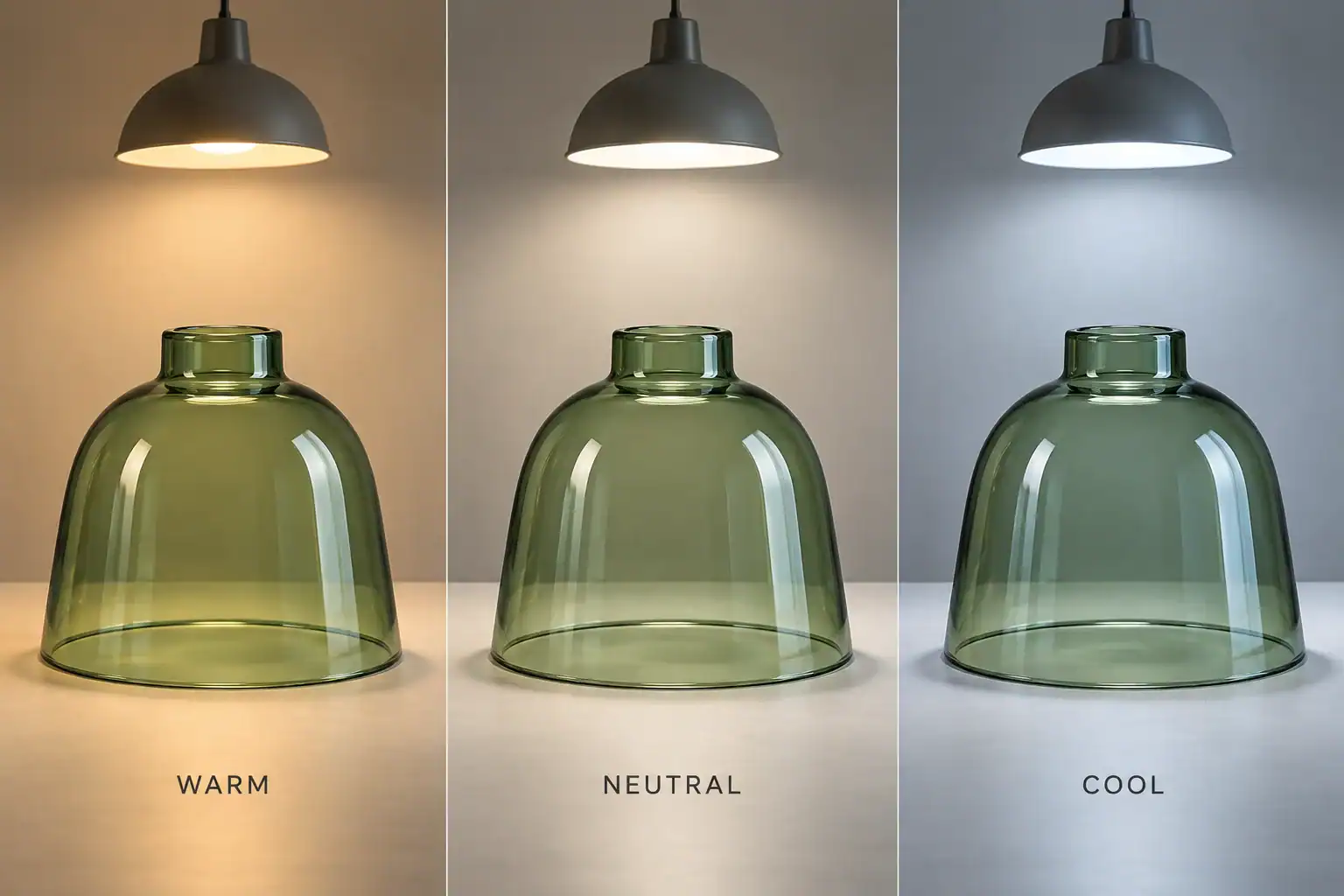
For a lamp project, use the actual intended source as an additional review condition. “Warm white” leaves too much unspecified. Even a stated correlated color temperature does not identify the full spectral output of an LED, so retain the approved source model rather than treating the temperature alone as interchangeable.
Review glass and nearby brand-colored components together if they must coordinate in the installed space. Record which lighting condition controls acceptance and which secondary conditions are for information. Avoid a requirement that silently expands to every room, daylight condition and replacement bulb.
Choose the coloring route before freezing the appearance
Body-colored glass, an applied surface layer and a localized printed decoration are different constructions. Ask which route is proposed and where the color sits. Do not assume a colored appearance means the wall is colored throughout.
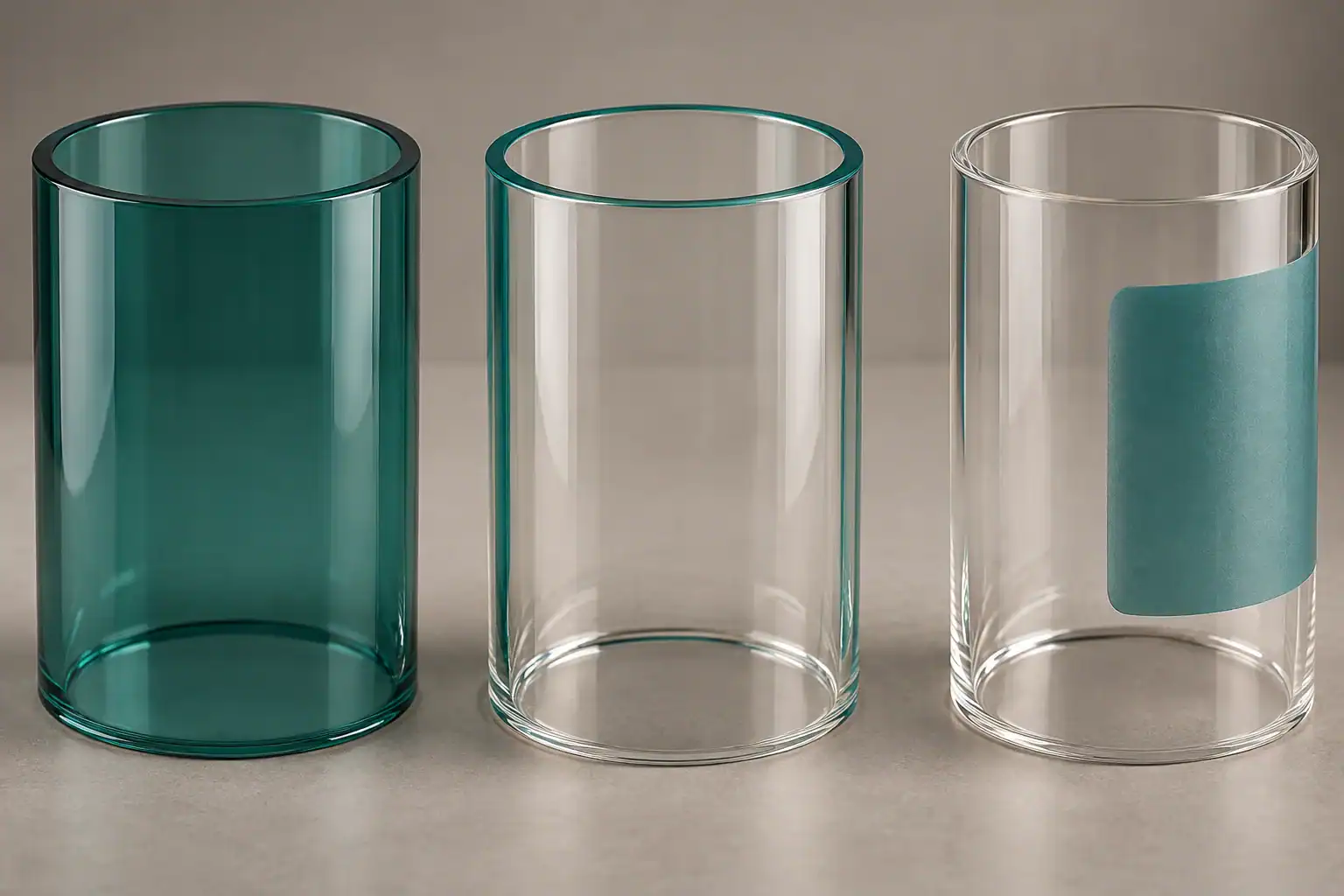
Body-colored glass
Review the finished wall distribution and the resulting color depth. This route deserves consideration when the appearance should come from the glass itself, but available colors, development quantities and optical behavior depend on the proposed composition and process.
Surface-colored glass
Identify the coating family, coated side and coverage. Ask how adhesion, cleaning exposure and the actual service temperature will be qualified. A close initial match is only one requirement; compatibility with the fixture’s use must be checked separately.
Localized decoration
A printed logo or color band can give a brand-colored feature while leaving other areas clear or diffusing. Specify the decorated zone, edge definition and position relative to the fitter. If this solves the design brief better than tinting the full shade, review screen printing on glass lamp shades as a separate process choice.
Changing the route after approval requires a new sample decision. A body-colored master does not automatically authorize a visually similar coated substitute.
Build an approval setup both buyer and supplier can repeat
An uncontrolled inspection environment can turn an acceptable sample into a disputed one. Use an agreed viewing source and neutral surroundings; remove unrelated colored objects from the immediate comparison area. Keep the reference and candidate sample in consistent positions.
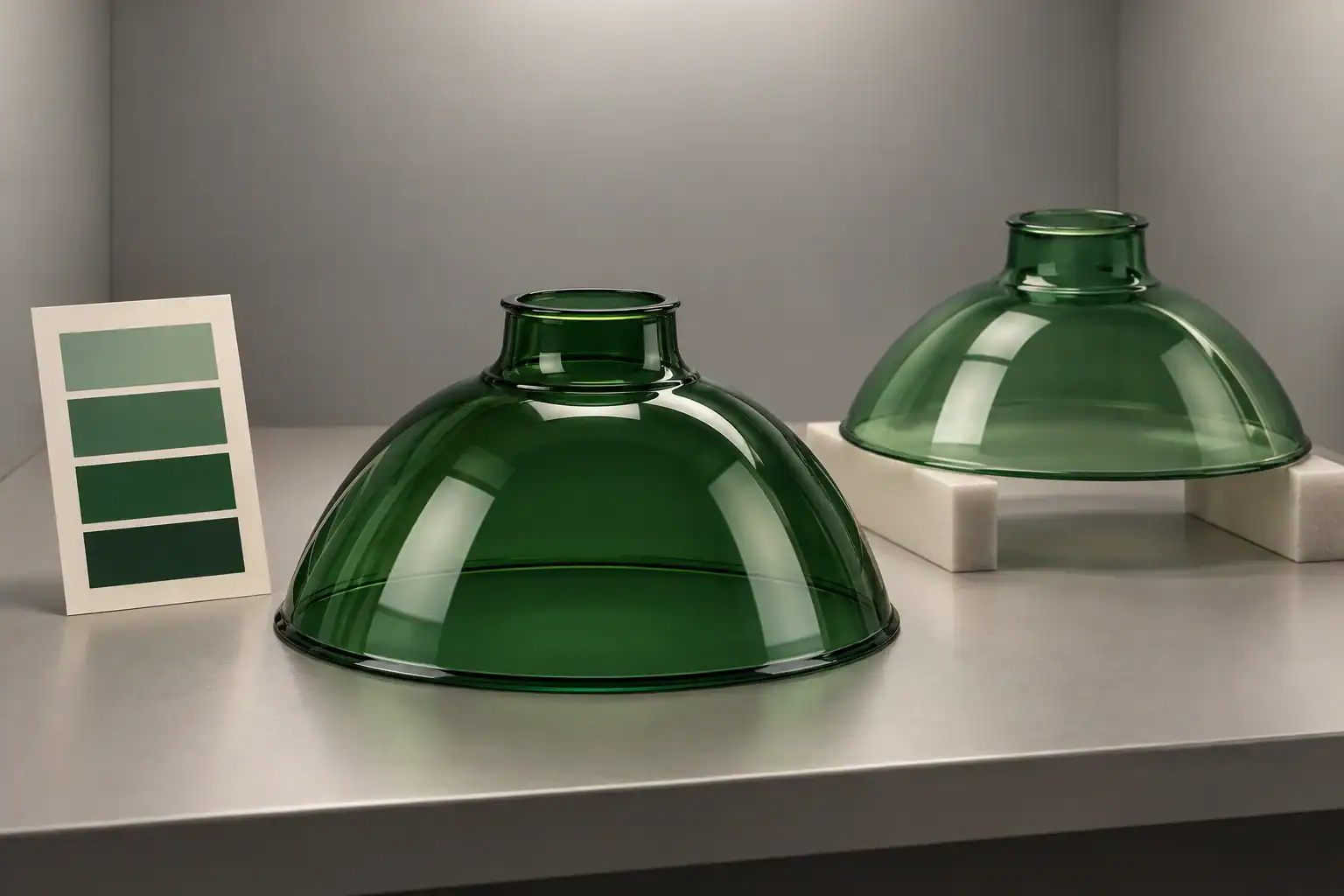
Write a short setup record with the master ID, background, viewing orientation and inspection distance. Separate the unlit viewing condition from the operating-fixture condition. Include the finish and the portion of the shade being judged.
Photographs can document which sample was reviewed, but automatic white balance and exposure can change the apparent result. Keep photographs as supporting records. When an order depends on appearance, arrange for both sides to have traceable physical samples rather than accepting a phone image as the only master.
If a sample changes during handling, cleaning or transport, review whether it still represents production. Store the approved reference so its identity and condition can be checked before a later order.
How should Delta E and optical measurements be specified?
Delta E expresses a calculated color difference under stated conditions. The number needs its equation, instrument setup and specimen definition. A requirement written only as “Delta E below 2” omits information needed to interpret it.
X-Rite’s color-tolerance guidance distinguishes calculation methods and recommends checking numerical limits against visual judgments. For a glass order, ask the buyer and supplier to agree the method before choosing a threshold. There is no single acceptance number established here for all glass lamp shades.
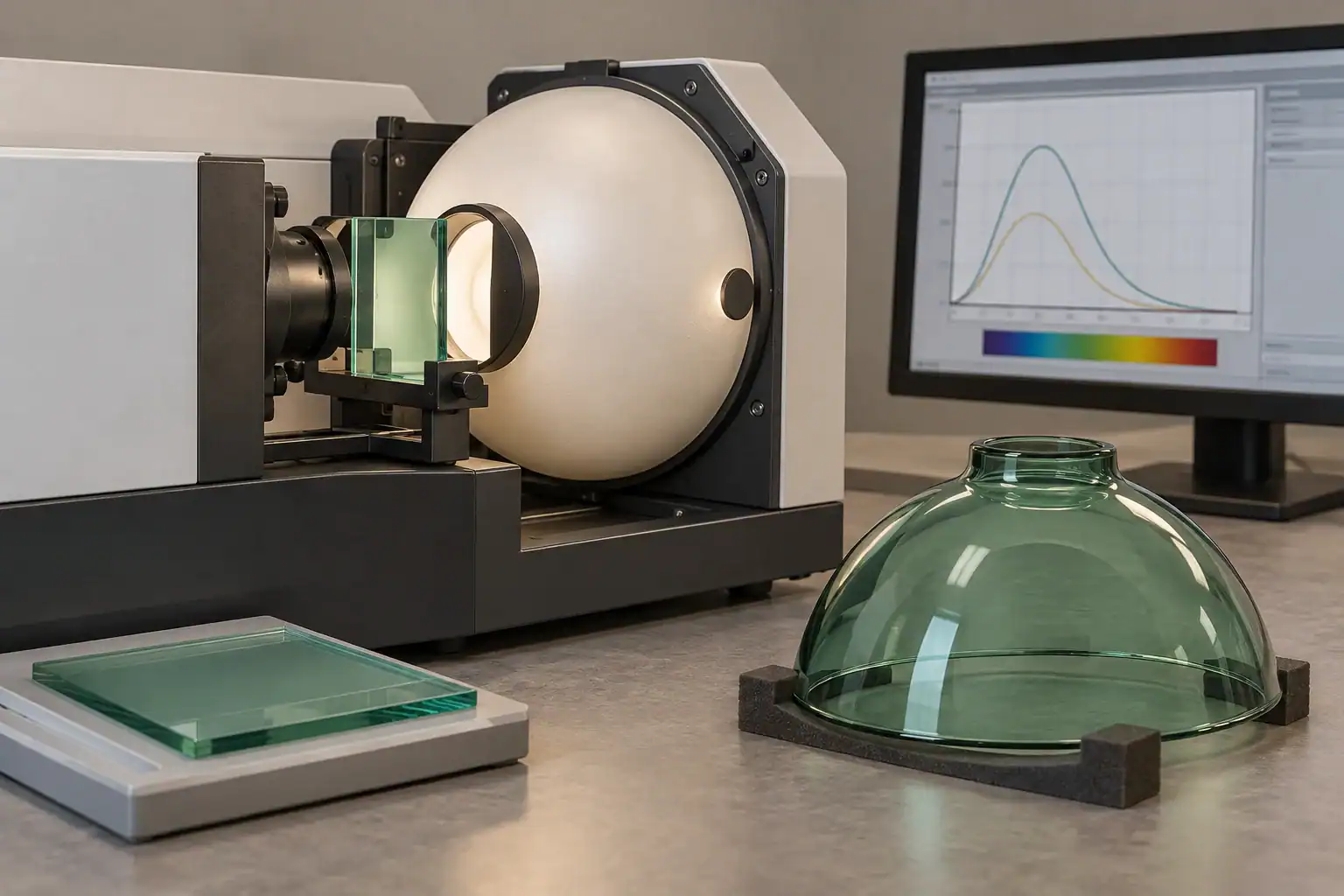
Also choose a suitable measurement mode. X-Rite explains transmission and reflectance measurements for materials including glass. A reflected-color reading, a transmitted-color reading and an assembled-lamp assessment answer different questions.
- Calculation: identify the color-difference formula, illuminant and observer settings.
- Instrument method: record geometry, aperture, relevant specular settings and calibration procedure.
- Specimen: identify the measurement zone, thickness, background, orientation and number of readings.
- Optical requirements: specify transmission or haze separately where they matter to the design.
- Finished-part check: if a flat coupon is measured, agree how it relates to the curved production shade.
Request a measurement report only when the method is available and agreed. Do not substitute a convenient instrument reading for the appearance decision the buyer actually needs.
Turn sample approval into usable production limits
One attractive sample defines a target but may not communicate the edges of acceptability. Where color consistency matters, consider agreed boundary samples alongside the master. Light and dark limits can help, but hue or saturation boundaries may also be needed.
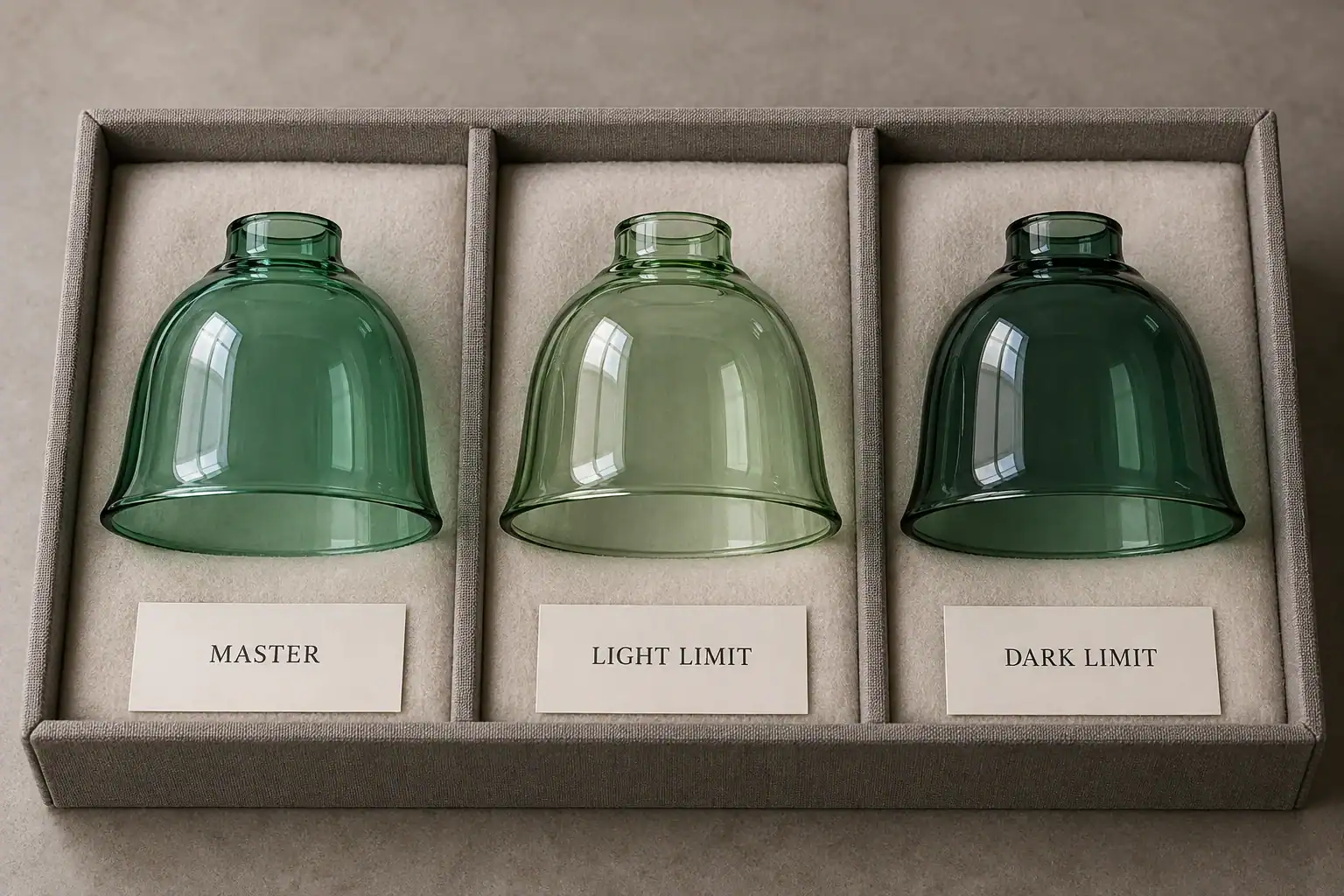
Label each retained piece with its role, revision and approval record. Avoid using an informal reject sample as a limit unless both sides have explicitly agreed what it represents. Define how a borderline batch will be reviewed and who can authorize a deviation.
Worked procurement example: a teal hotel pendant
Assume a brand requests a transparent teal shade coordinated with its printed packaging. This is a hypothetical example, not a JX project result. The first development sample looks acceptable against the paper under the agreed unlit condition, but appears too pale in the operating fixture.
The buyer now has a design choice: prioritize the unlit brand relationship, revise the lit appearance, or change the coloring route. Increasing color depth without a fixture review is not a complete answer. The revised sample needs both checks, and its geometry, finish and source model should remain identifiable.
Once the buyer approves the compromise, retain that shade as the master. The paper reference remains part of the design history; the glass master becomes the agreed production appearance target.
Keep color, defects and reorder control separate
A color match does not decide whether a scratch, bubble, streak or coating defect is acceptable. Define these separately, including the viewing zone and inspection conditions. A part can meet the color requirement and still fail a surface-defect requirement.
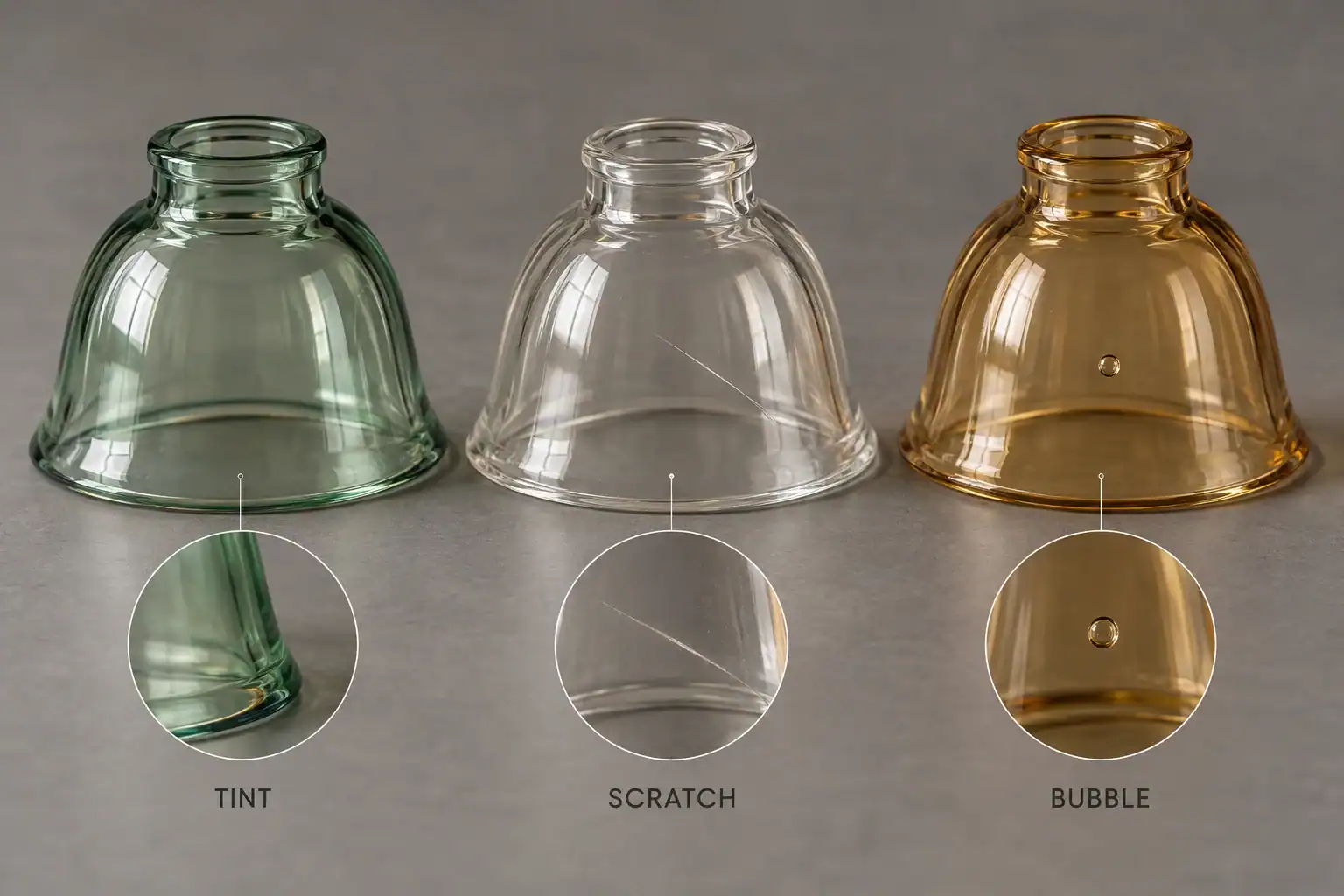
For batch inspection, agree the sampling approach, how units are selected and how a failed result is handled. Record the batch against the approved revision. Do not describe a few hand-picked photographs as evidence that an entire shipment matches.
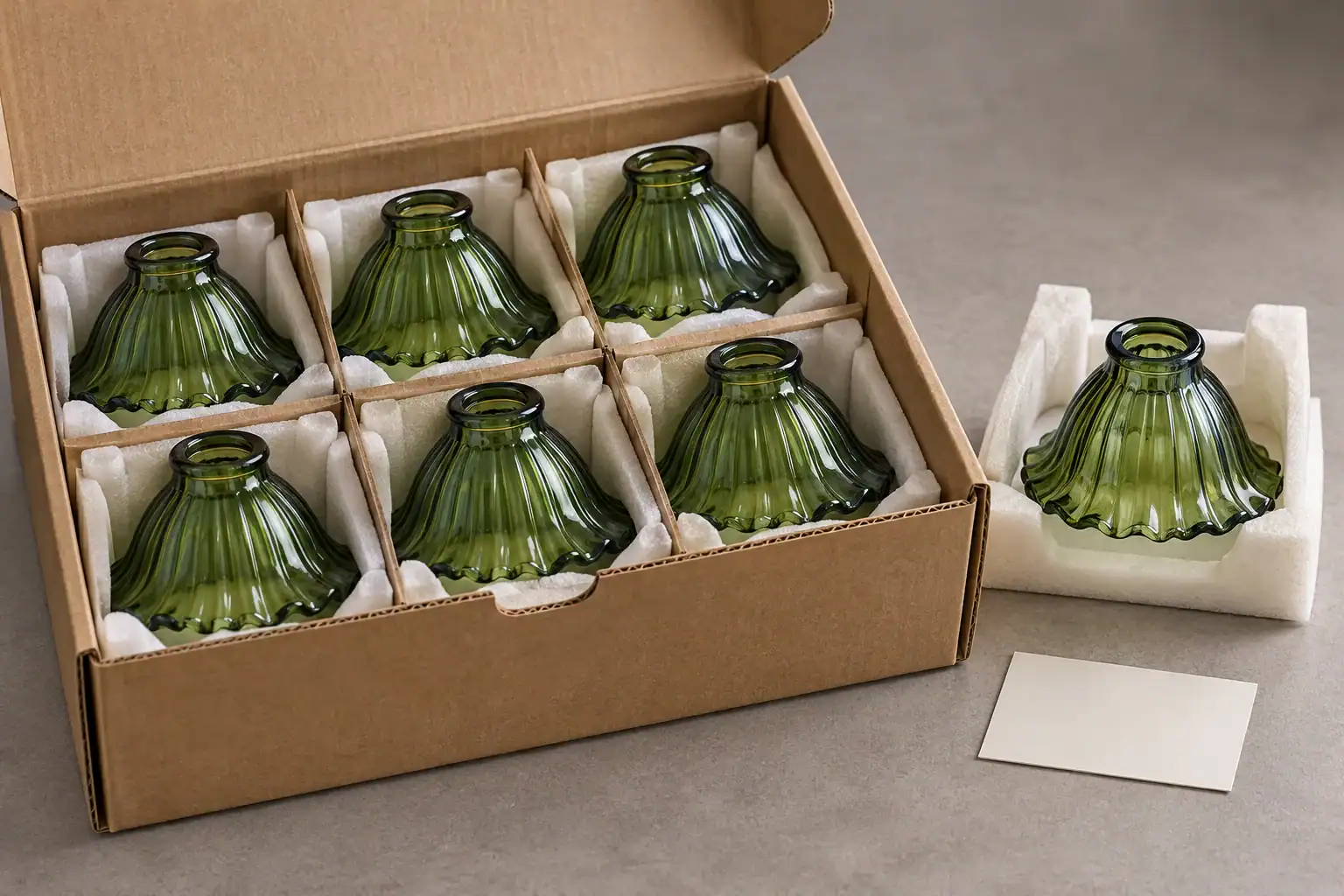
Packaging should protect the approved finish from rubbing and other handling damage. For a repeat order, compare the retained master with a new sample before accepting a material, coating, finish or process change. Revisit the operating appearance if the light source or fixture has changed.
Color-specific guides such as green glass lamp shade sourcing can help define the broader product brief. The master and acceptance record still need to belong to the particular order.
Questions buyers ask about Pantone-matched glass
Can a manufacturer guarantee an exact Pantone match in glass?
A guarantee needs a defined reference, specimen, method and tolerance. Ask for a finished glass sample and written acceptance conditions. An unqualified guarantee across all glass types, finishes and illumination conditions is not a usable specification.
Does a Pantone C reference mean the glass should be coated?
No. C identifies coated paper in the Pantone Graphics reference. The glass coloring route and surface finish must be specified separately.
Can I approve a custom color from a digital render?
Use a render to discuss design direction and placement. Approve the production appearance with physical glass samples under the agreed conditions. A render cannot establish the actual transmission, finish or lit appearance.
Will the same color look identical on a globe and a cylinder?
That requires review. Wall distribution, curvature and the viewing path can change appearance. Approve each geometry or agree a documented relationship between the variants.
Is a Delta E limit enough for an opal shade?
No. Agree the color method and separately address the opacity, diffusion or transmission needed by the fixture. Include an assembled-lamp review where the lit result is part of the purchase decision.
Does a new color change MOQ or lead time?
It can. Ask the supplier to quote color development, sample rounds, tooling if needed, and production separately. Confirm the minimum quantity per color and the schedule after the proposed route and approval steps are known.
Should replacement shades be matched to an installed old shade?
First agree whether the target is the original approved appearance or the current installed appearance. Inspect the old piece’s condition and review the intended replacement under the actual fixture. An aged or altered sample may be a different target from the retained master.
Freeze the glass master before committing the production order
Finish Pantone development with an approval the buyer and supplier can reproduce: this glass part, this finish, these viewing conditions and these acceptance limits. Resolve any conflict between the unlit brand color and the lit effect before authorizing production.
Keep the final sample approval with the drawing and order revision. When a requirement changes, identify which appearance checks must be repeated. Attach the approval record to the reorder specification so the next batch has the same target.
Request a color-feasibility review for your glass shade
JX’s green dome glass shade page describes review from a physical sample or Pantone reference and pre-production sample approval. Use that as a route to discuss your own geometry and color target; suitability still needs confirmation for the proposed part.
Send the complete color designation, a physical reference if available, a dimension drawing with fitter details, required transparency and finish, and the intended light source. Include sample quantity, first-order quantity and whether unlit appearance or the operating effect takes priority. Ask for the proposed coloring route and approval steps in the quotation.
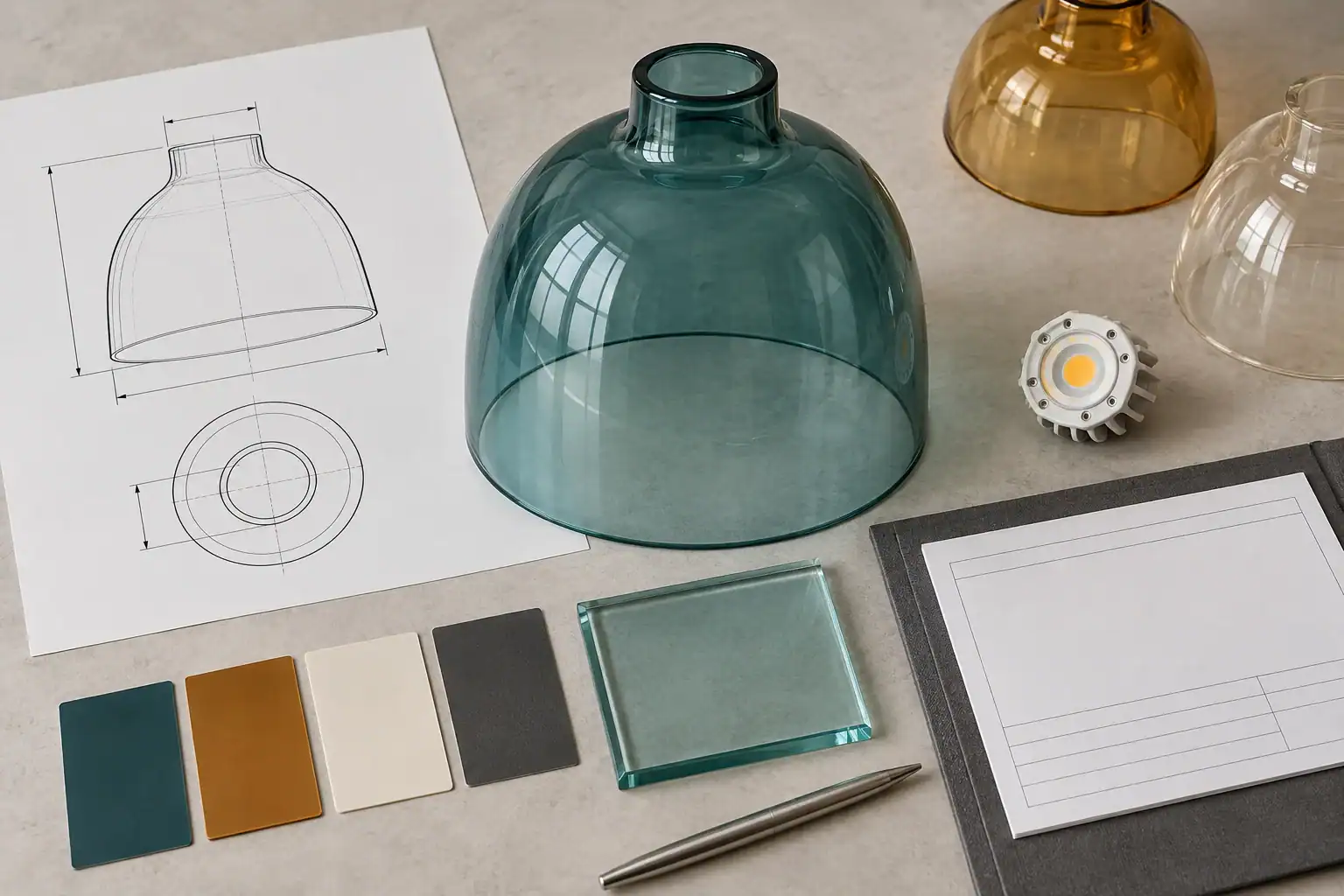
Include these inputs in your custom color glass lamp shade inquiry so the review addresses the actual part. Ask the team to identify any feasibility limits before the sample program begins, then agree the evidence needed for approval.