
Blue Glass Lamp Shades: How to Choose Color, Light, Fit and OEM Supply
A blue glass lamp shade looks like a color choice, but fit and light transmission usually decide whether it works on the fixture. For a replacement, start with the mounting details and dimensions. For a new OEM program, choose the blue, transparency, profile and bulb as a set, then approve a physical sample under the light it will actually use.
The images in this guide are generated illustrations for visual comparison. They are not photographs of JX Lampshade products, factory operations, inspection results or validated packaging.
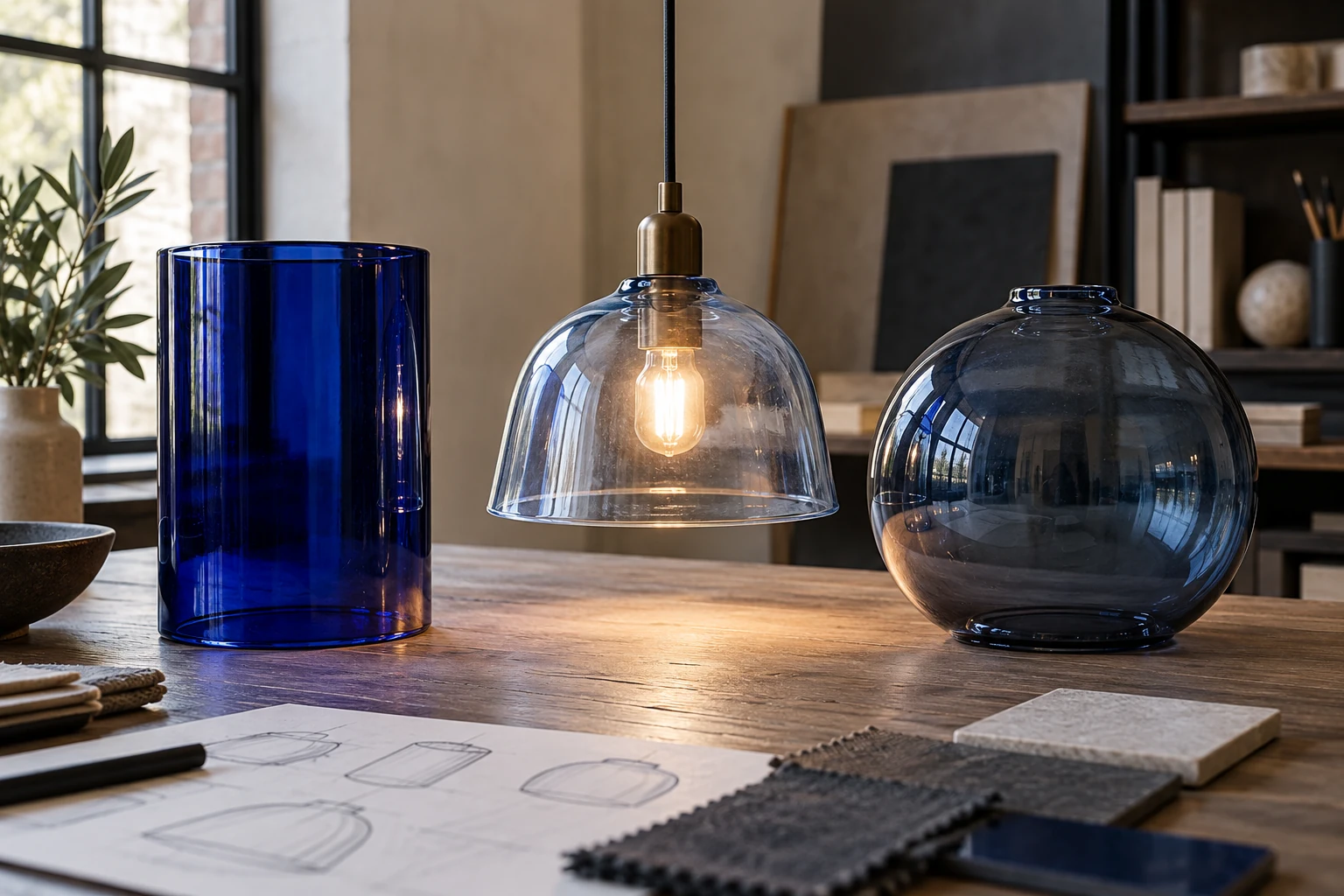
Compare the different silhouettes and blue tones before reviewing a specific drawing or sample.
What is a blue glass lamp shade?
A blue glass lamp shade has a body that appears blue because of its composition, surface treatment or both. It may be transparent, translucent or opaque. Those terms describe different things: a deep blue tint can still be see-through, while a pale blue shade can hide the bulb.
Blue glass is not automatically stained glass. A solid blue shade, a blue flashed layer and a leaded stained-glass assembly are different constructions. If you need a plain blue shade, say so in the brief. The Corning Museum of Glass describes several ways to color glass. Cobalt is one familiar blue colorant, but it does not define every blue glass formulation. Corning Museum of Glass: Frequently Asked Questions
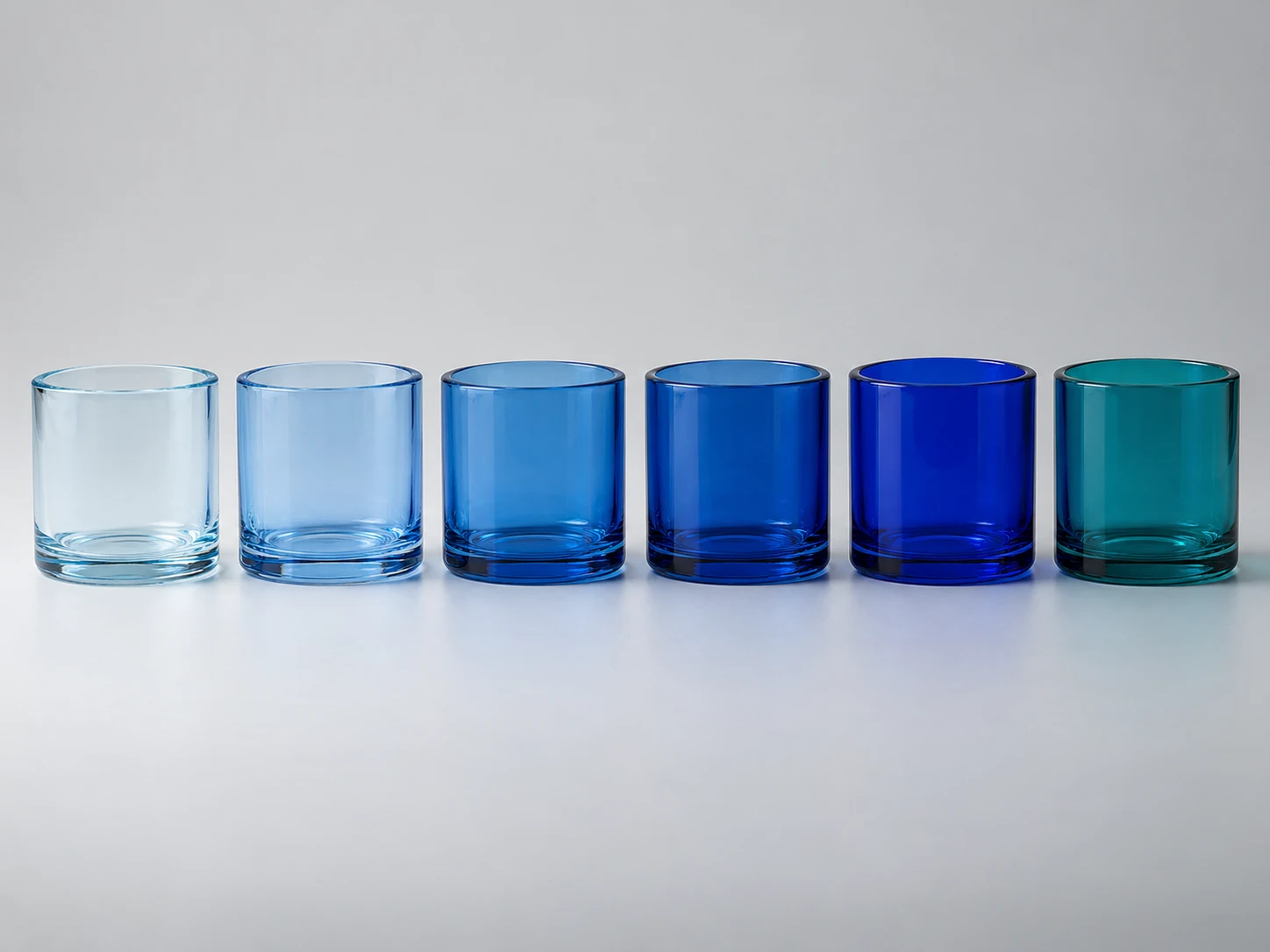
A blue color family for discussion; settle the final target with a physical reference.
Compare transparency before choosing a shade of blue
Start with two questions: what should the glass reveal when the lamp is off, and what should it do when the lamp is on? Transparent glass shows more of the bulb, hardware and room through the body. Translucent glass softens those details. Opaque glass conceals the source and sends more light through the opening or other designed areas.
Color alone will not answer it. A useful brief names both the target blue and the target transmission: “medium cobalt blue, transparent body” or “pale blue, diffused appearance.” Treat those as visual directions, then approve a sample.
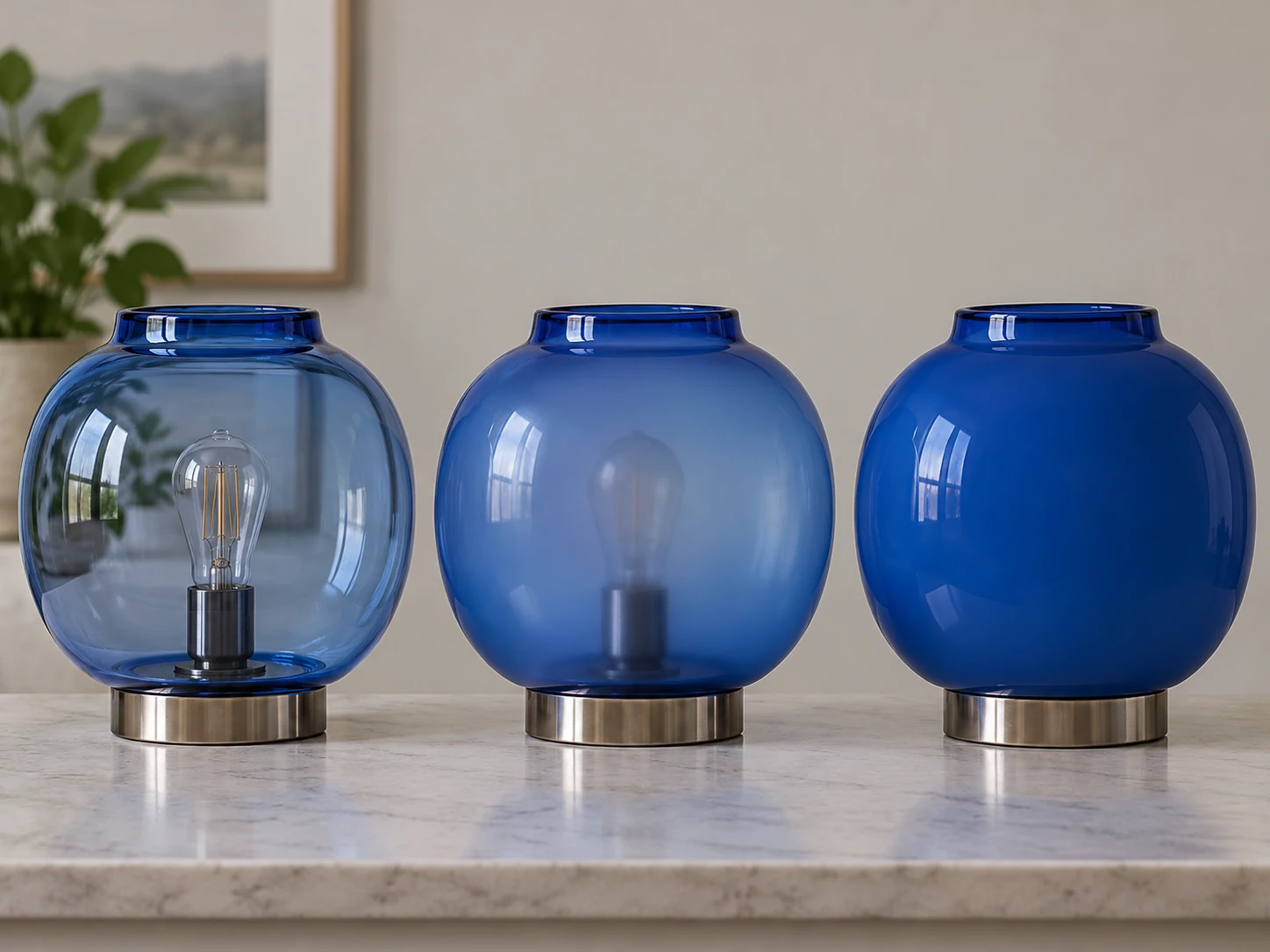
The glass construction, thickness, lighting and viewing angle all affect the final appearance.
Review blue under the intended light source
Look at the shade both unlit and illuminated. Room light affects the unlit appearance; the bulb and glass affect the color of transmitted light. A shade that looks saturated on a white table may look darker in a warm room or from another angle.
For an OEM review, note the lamp or LED model, dimming state and room conditions used for approval. Correlated color temperature tells you whether the light appears warmer or cooler. It cannot tell you exactly what blue will pass through a particular shade. The U.S. Department of Energy explains CCT and color rendering in its LED Basics. Check the shade with the intended source instead of choosing from a photograph alone.
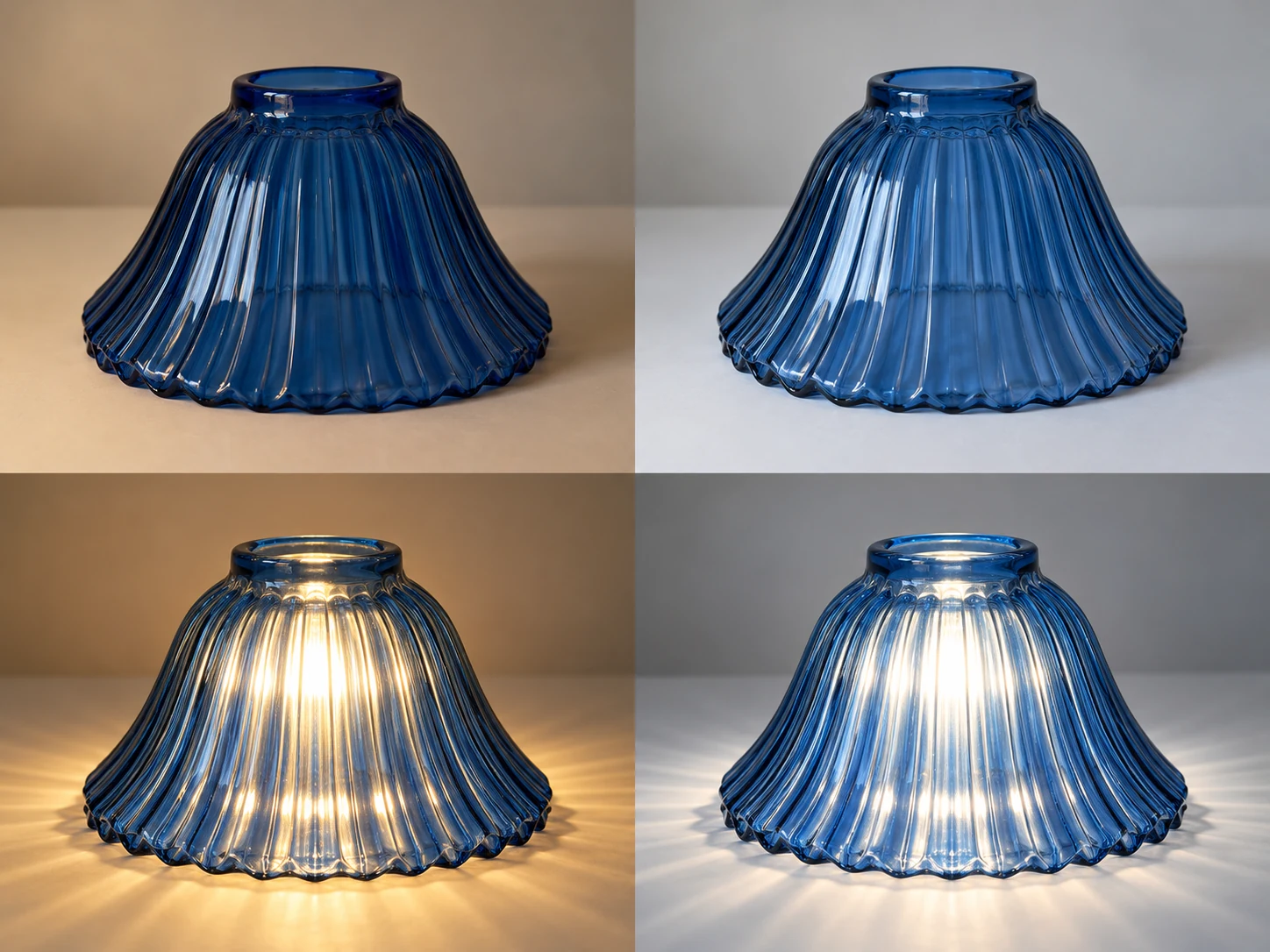
Compare the shade before and after illumination; final color depends on the actual source and surroundings.
Match the profile to the fixture
Choose a profile after checking how it mounts and where light needs to go. Cylinders, bells, shallow domes, globes and fluted forms create different proportions around the socket, fitter and fixture body. Compare the top opening, widest point, overall height and lower edge from the side.
On a multi-light fixture, compare the full set at once. Small differences in silhouette stand out when shades sit side by side. If you are matching a particular profile, send a dimensioned drawing or sample instead of relying on a color name.
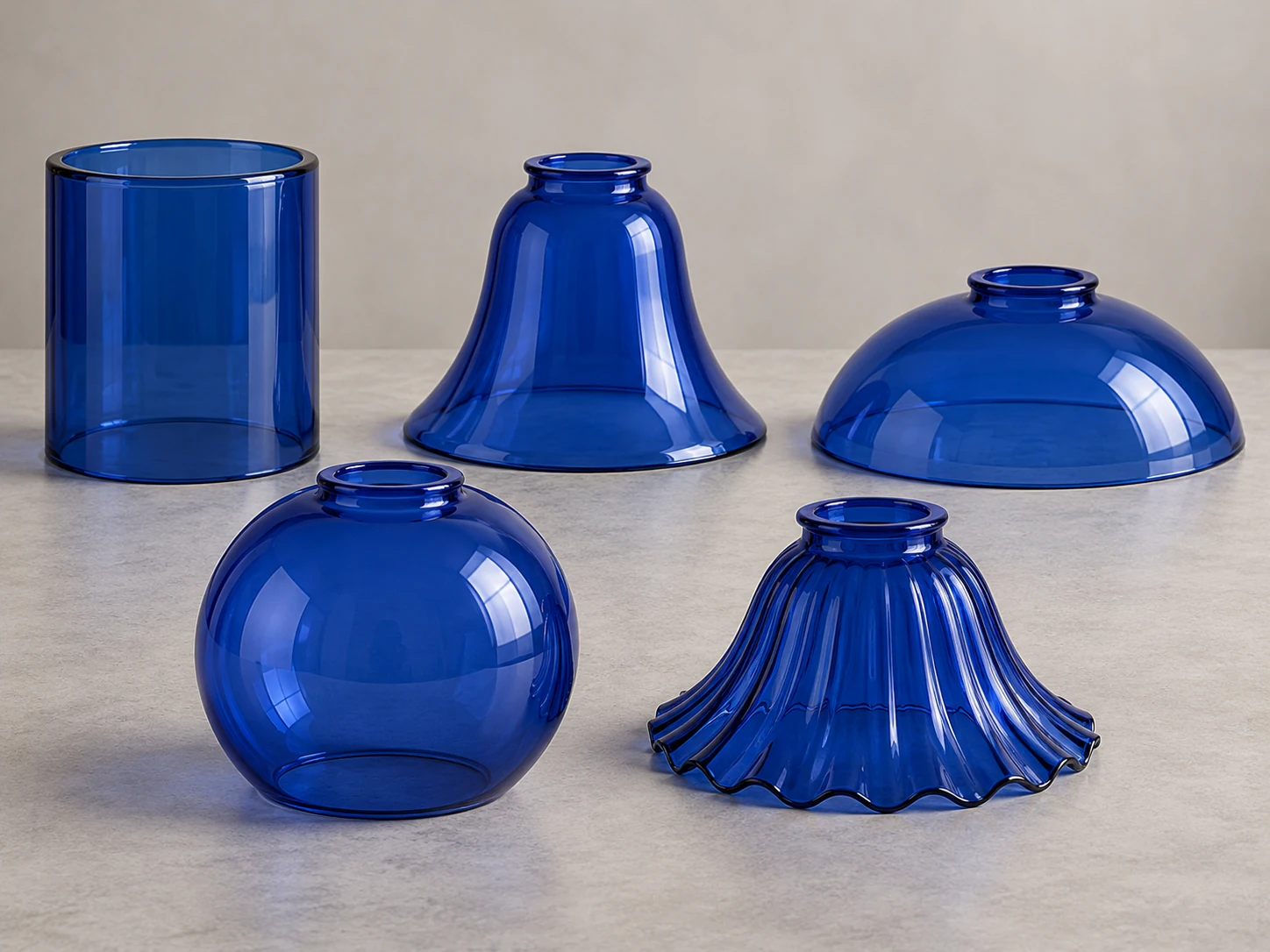
Compare overall shape, opening and widest point before choosing a profile.
Confirm fitter dimensions before ordering
Measure the shade opening and fixture interface before ordering a replacement. A shade can look close in a photograph and still fail to seat, stay in place or clear the fixture hardware.
- Record the opening or fitter diameter at the actual contact point.
- Measure the overall shade height and the distance from the opening to the widest section.
- Photograph the holder, retaining ring, screws or other connection parts beside a ruler.
- Note whether the shade sits on a ring, clips to a holder, or uses another mounting method.
- Compare the fixture and shade together to check clearance around the bulb and hardware.
Do not assume that a familiar opening size guarantees compatibility. See the glass lamp shade fitting standards guide for the dimensions and mounting details to document.
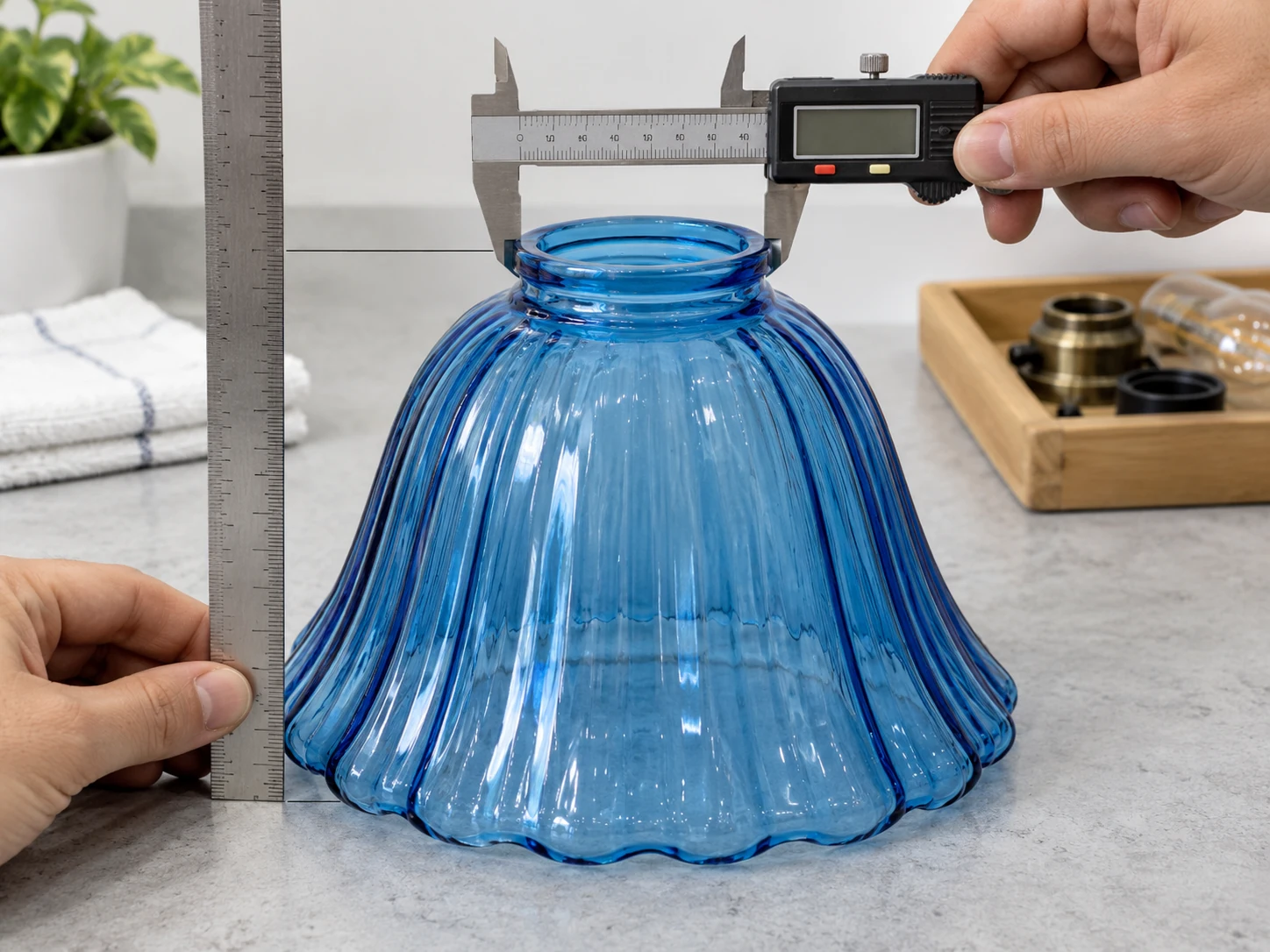
Use the actual shade and fixture for dimensions; the illustration contains no project measurements.
Consider the application before finalizing the color
The same shade can look different in a pendant, wall light or table lamp. Background, viewing distance and exposed hardware all change what the buyer sees. Check it in the fixture and room where it will be used. For a row of pendants, pay attention to spacing, orientation and whether the bulb is visible from normal standing positions.
JX’s catalog includes a blue cylindrical glass shade example. Treat the listing as a visual reference only and confirm current dimensions, construction and suitability before using it for a project.
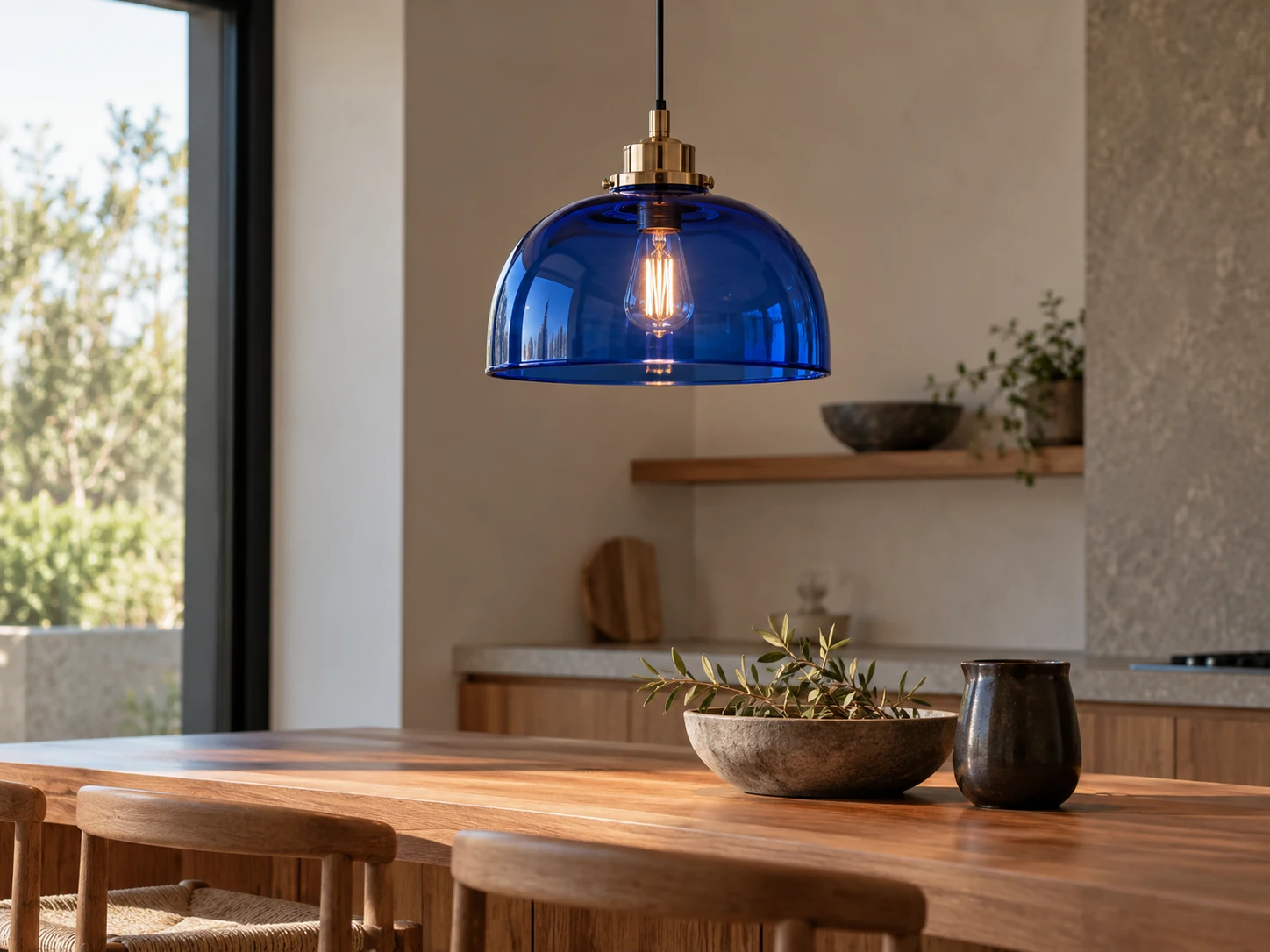
Consider the shade in the fixture and interior where it will be used.
For a replacement, match the original and the fixture
Take clear photos of the original shade from the front, side and opening. Include one photo of it on the fixture, plus the opening, height and widest diameter. If the shade is broken, photograph the holder and any ring or retainer that remains.
Say if the replacement needs to match another shade in a set. “Blue” can mean pale, gray-blue, teal or saturated cobalt. A photo helps establish the direction; a physical reference is better for final color approval.
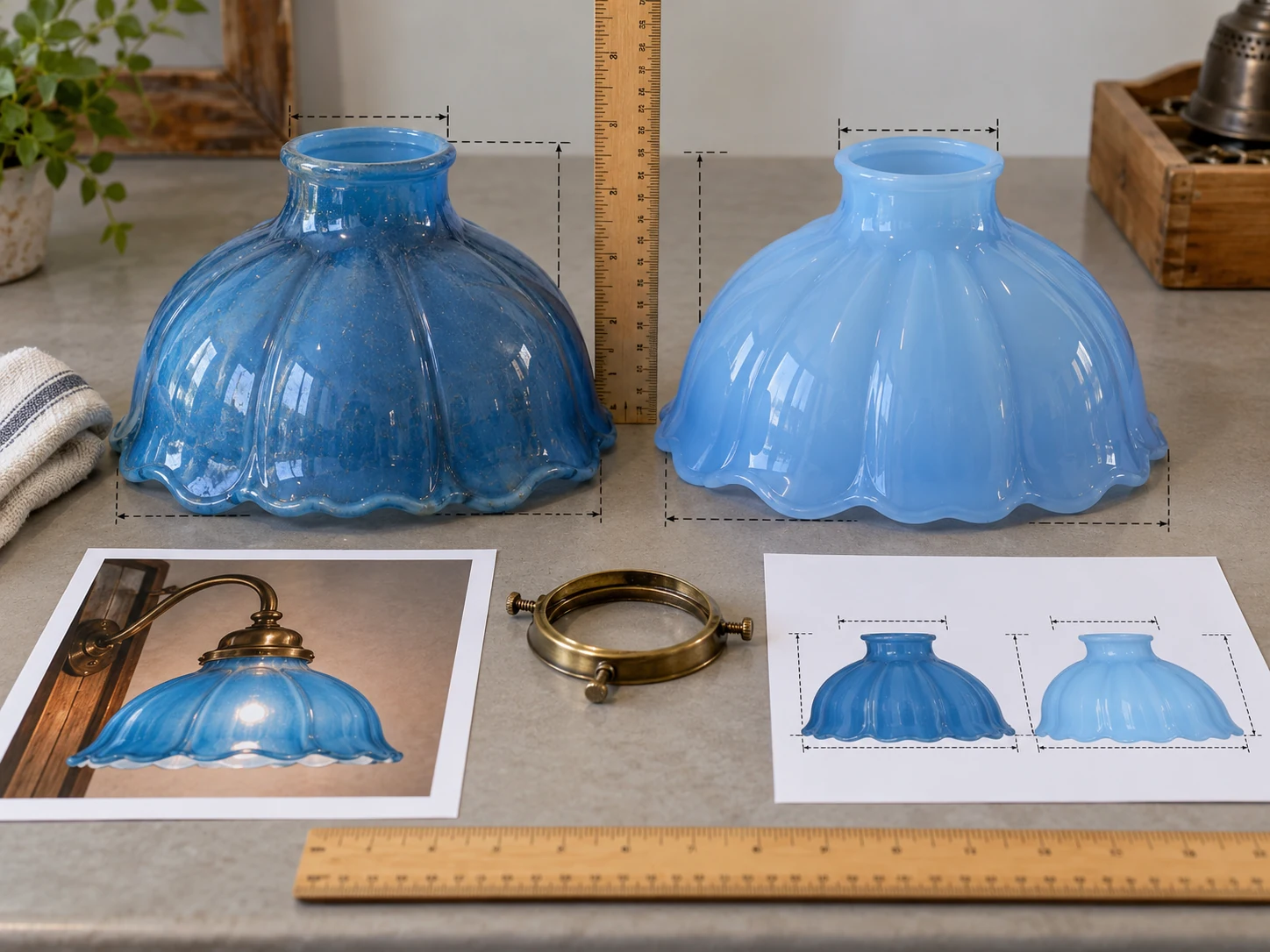
Compare the candidate with the original, fixture and mounting parts.
Approve a sample with a repeatable color brief
Before approving a sample, agree how it will be viewed. Keep the background, light source, distance and angle consistent. Note whether approval is based on the shade lit or unlit, then keep the approved reference for later comparisons.
The brief can include a physical color reference, transparency target, surface finish, profile drawing and fixture photo. If several shades must match, compare them side by side. Separate photos taken under different lights are hard to judge fairly. Have the supplier confirm which color, fit and finish details can be supported before setting the production specification.
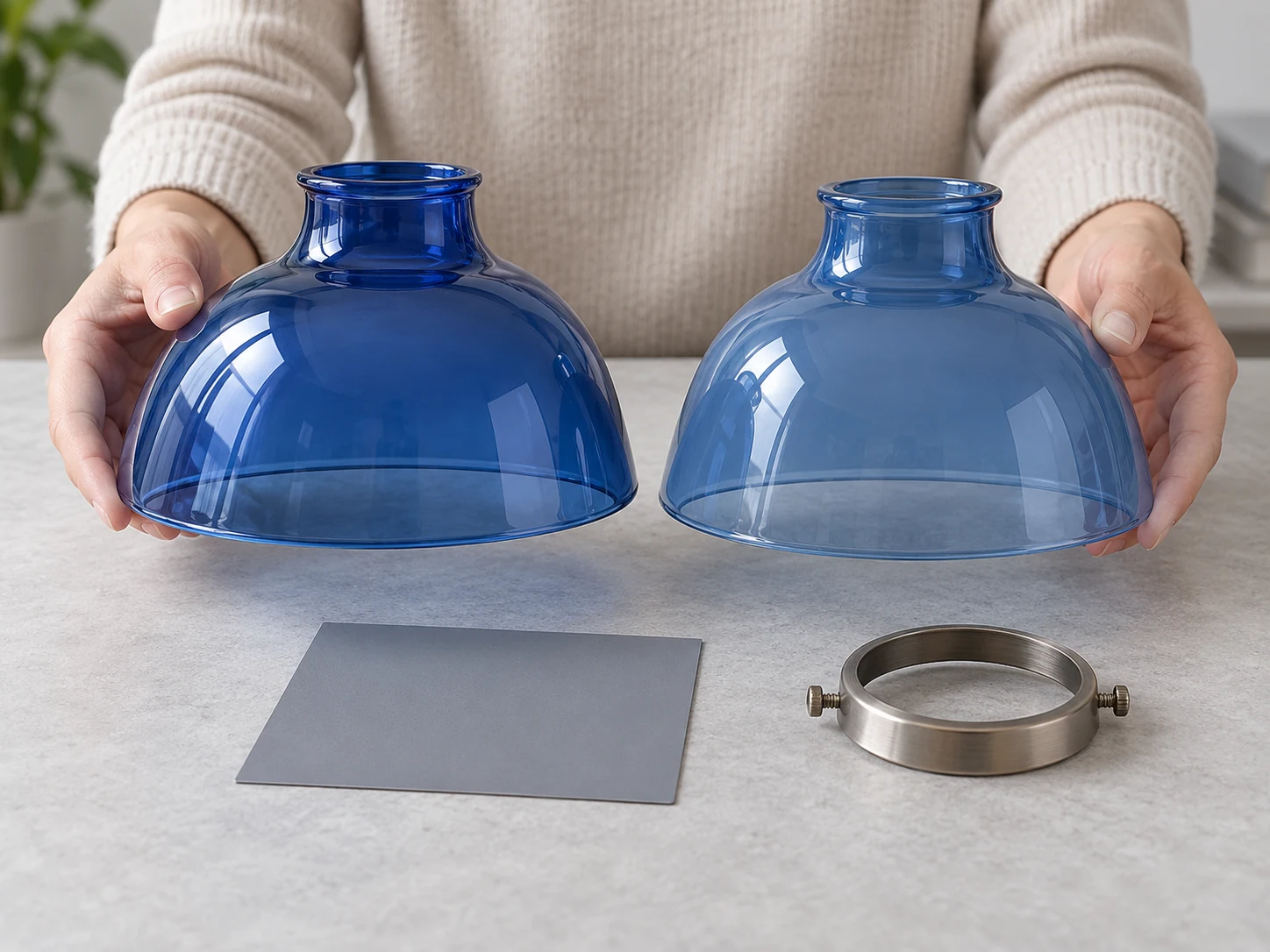
Keep the reference, sample and viewing light consistent during comparison.
Specify surface and rim details
Surface details change how blue reads. Smooth glass reflects light differently from ribbed or satin-looking glass. The rim and opening affect how the shade sits on its holder and how its edge looks from below. If a decorative surface or shaped lower edge matters, show it on the drawing and ask to review a sample.
Ask which finishes and edge treatments are available for the profile; do not assume every appearance works with every shape. Under steady light, check the full surface and rim for the details that matter to the fixture. Put project acceptance limits in writing.
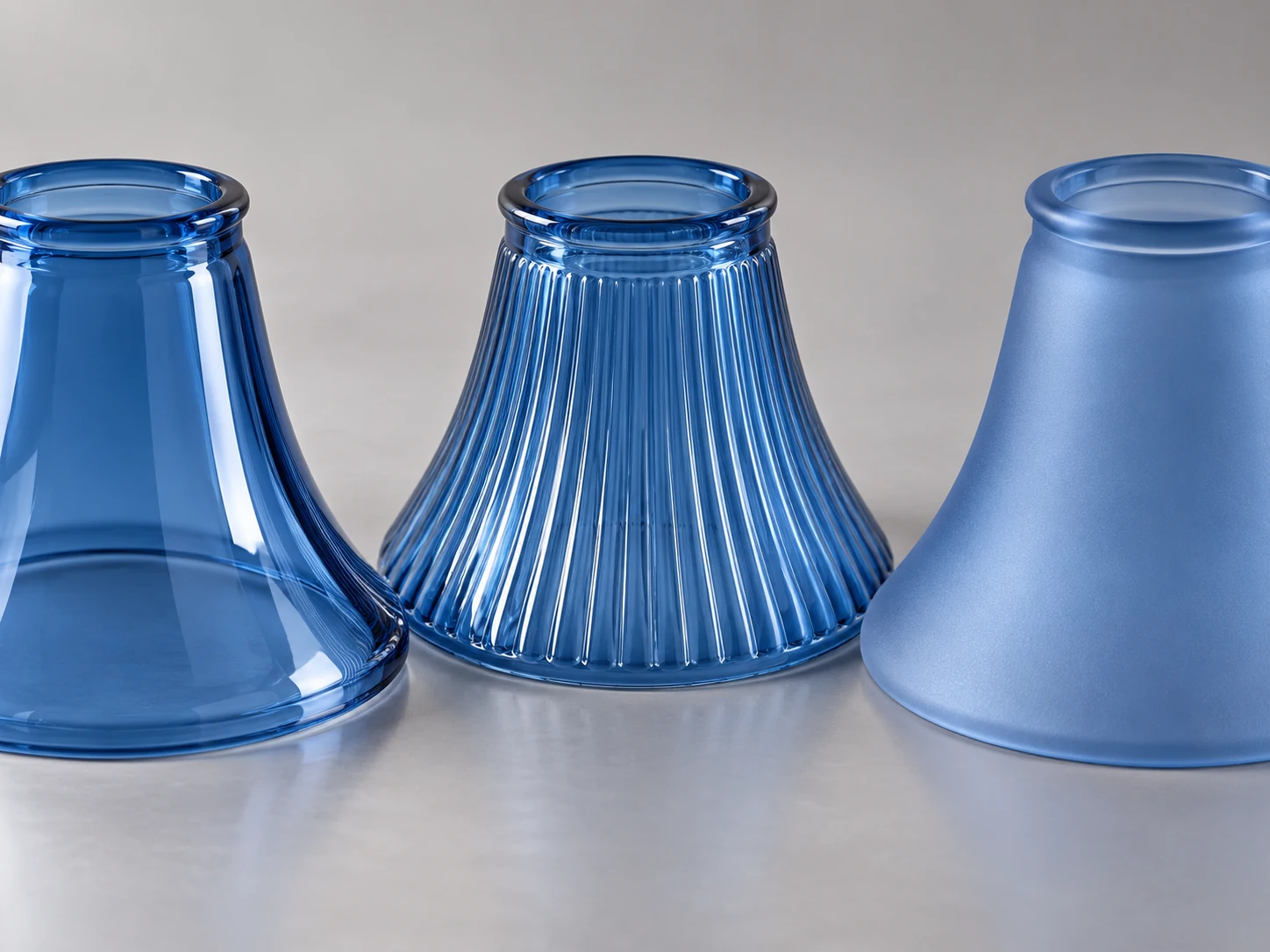
Use these surface differences as visual references, then confirm available finishes.
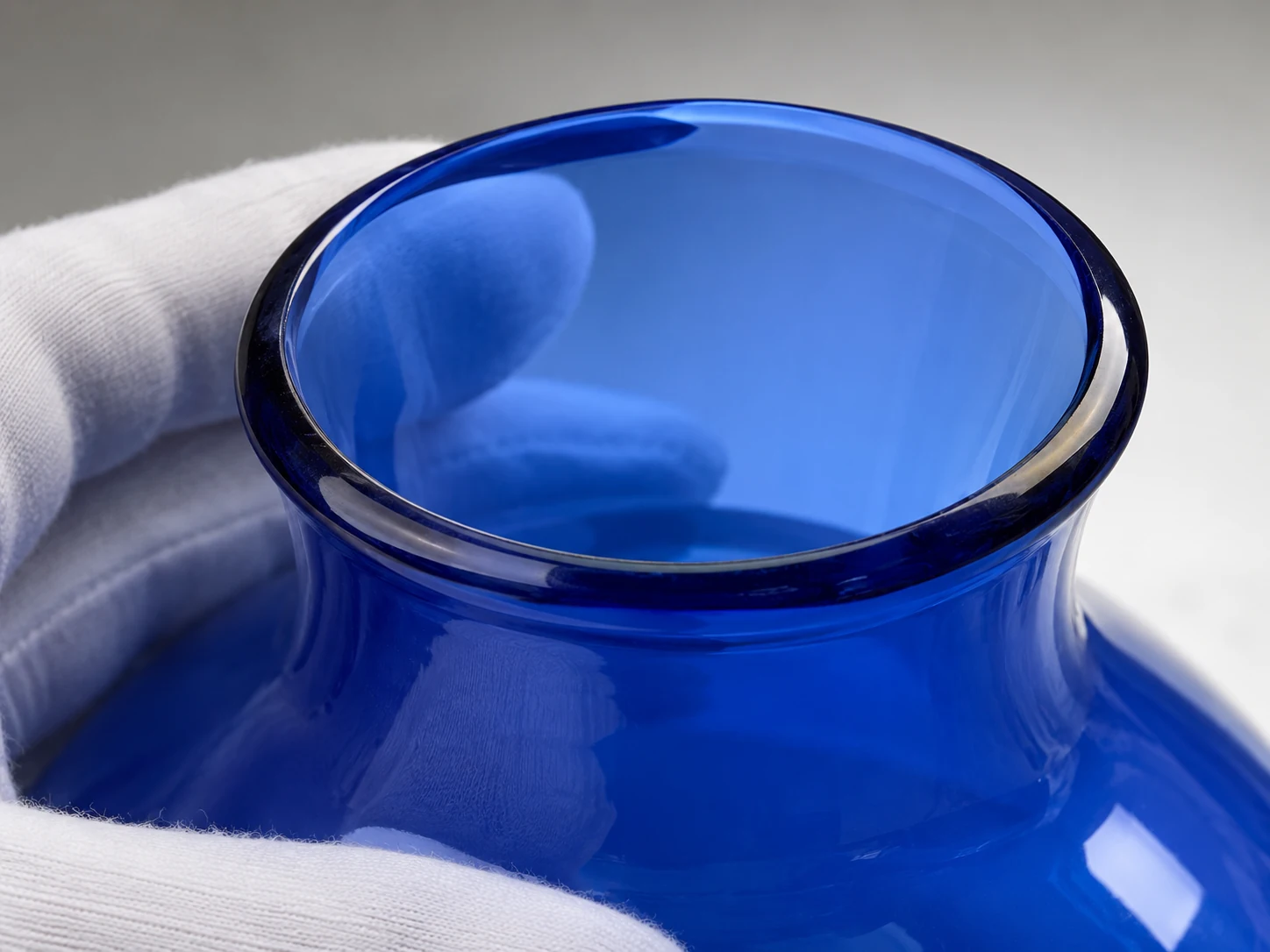
Set rim and surface acceptance criteria against the actual approved sample.
Plan protection for glass before confirming the order
Packaging needs to protect the shade’s profile, opening and rim in storage and transit. Agree how each piece will be separated and supported, and how the carton will be marked and handled. The right setup depends on the shape, order size and shipping route.
For a new program, review the proposed pack-out and, when the shipping risk calls for it, a representative packed sample. The image below is a concept only, not JX’s packaging method or evidence of a transit test.
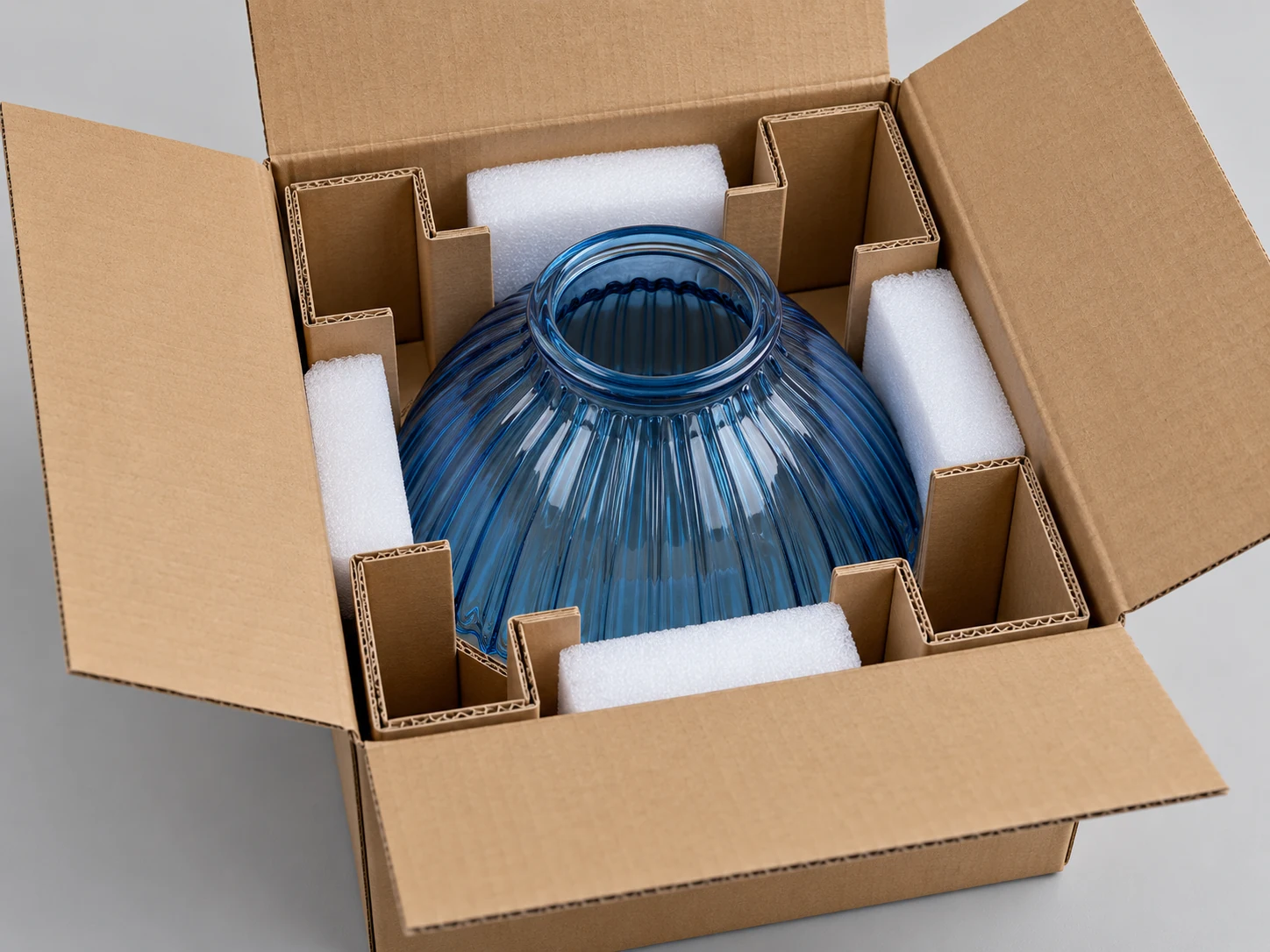
Concept for discussing separation and support; agree actual packaging for the order.
What to include in a blue glass shade RFQ
Give the supplier enough information to assess fit, appearance and commercial scope. Include:
- Product use and fixture type, with installed photographs if available.
- A dimensioned profile drawing or a physical reference sample.
- Fitter or opening dimensions, overall height and widest diameter.
- Blue color direction, transparency target and surface-finish reference.
- Intended bulb or LED and whether the shade will be reviewed lit, unlit or both.
- Initial quantity, expected repeat quantities and target order timing.
- Required inspection points, packaging needs and destination market.
- Any drawings, standards or documentation the buyer needs the supplier to review.
Confirm MOQ, lead time, materials, compliance documents and packaging directly with the supplier for the project. This guide does not set those terms for JX. Use the custom lampshade RFQ builder to organize your inputs, or send a drawing for review.
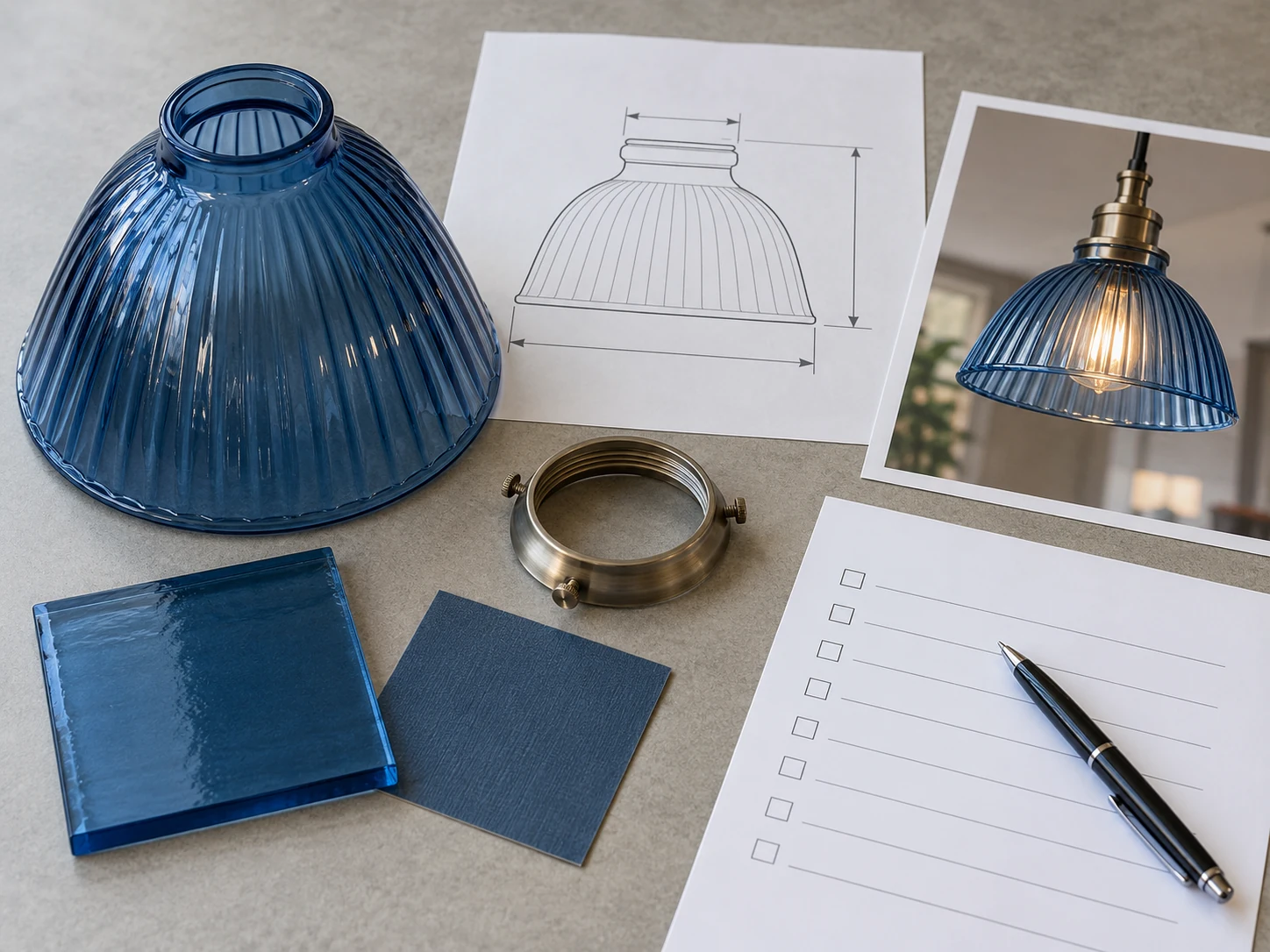
Gather the actual project drawing, fixture photo and dimensions before requesting a quote.
Blue glass lamp shade questions buyers ask
Does blue glass always use cobalt?
No. Cobalt is one familiar way to produce blue glass, but it is not the only possible colorant or formulation. Ask for the target appearance and approve a sample instead of specifying a colorant based only on the word “blue.”
Will a blue glass shade make the light blue?
Not necessarily. The result depends on the glass, its transmission, the fixture and the light source. Review the shade with the intended bulb or LED in the intended fixture.
Can I buy a replacement shade without buying a complete lamp?
Ask whether the supplier can provide a shade-only order for the model or project. Send the opening dimensions, mounting details and fixture photos so compatibility can be checked.
What measurements should I send for a replacement?
Send the opening or fitter diameter, overall height, widest diameter and the fixture’s retaining method. Include front, side and installed photographs with a ruler for scale.
How do I match blue glass shades across a fixture set?
Use one agreed physical color reference and compare all samples under the same lighting, background and viewing angle. Keep the approved sample and record the light source used for review.
Is a blue glass shade the same as a blue stained-glass shade?
No. A plain blue glass shade and a stained-glass assembly are different product types. State which construction you need and share a reference image or drawing.
What should I send to request an OEM quote?
Send the profile drawing or sample, fitter dimensions, color and transparency target, fixture photos, quantity forecast, intended light source and packaging requirements. Ask the supplier to confirm any MOQ, lead time or compliance documents for that specific project.
Request a project review
For a project discussion, include the profile drawing or sample, fitting details, color reference, intended light source, quantity estimate and destination. The supplier can confirm which fit, finish and commercial details are available for that request.