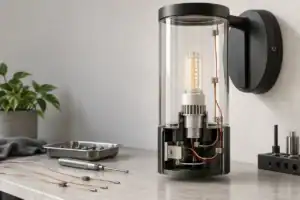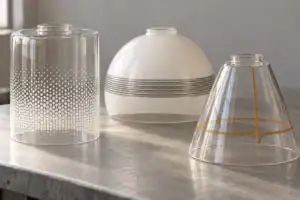
# Custom Glass Lamp Shades Manufacturer: OEM/ODM Process Explained
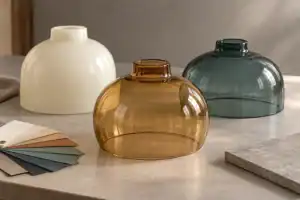
JX Lampshade supplies custom glass lamp shades for lighting brands, distributors, interior designers, architects and project buyers. We support pendant, table, floor, wall-sconce and ceiling-fixture programs, with custom dimensions and openings, clear, opal, milk, frosted, amber, smoke and colored glass, plus smooth, ribbed or buyer-approved surface finishes. Send a drawing or fixture interface, target quantity and packing requirements for a quote; MOQ and lead time are confirmed for the approved design, finish and order scope.
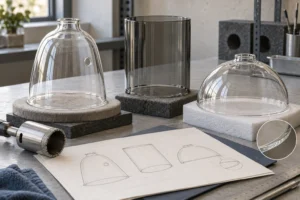
For B2B buyers, the quote-ready file should connect the buyer’s drawing, approved sample, inspection criteria, packaging specification, quantity and delivery window. Review the technical drawing checklist, quality inspection checklist and supplier quote comparison, then submit the fields through the Custom Lamp Shade RFQ Spec Builder.
This guide explains how to move from an initial concept, old sample or fixture interface to a controlled drawing, sample, inspection and packing record. Exact commercial terms belong in the project quotation, not in a generic page.
OEM vs ODM: The Distinction That Sets the Project Scope
In Chinese-export and broader Asian manufacturing terminology, two acronyms dominate custom shade contracts:
OEM (Original Equipment Manufacturer): The buyer provides full specifications – drawings, dimensions, finish, material composition, finish color. The manufacturer produces strictly to those specs. The buyer owns the design IP. The manufacturer’s job is execution.
ODM (Original Design Manufacturer): The buyer provides high-level requirements – “modern minimalist pendant in opal glass for hospitality, ~300mm diameter, 4-inch fitter, 100 units” – and the manufacturer designs the actual product. The manufacturer owns or co-owns the design. The buyer brands and distributes.
For lighting designers and architects with developed concepts: OEM. For brand owners and distributors entering a new SKU category: ODM. Most experienced glass shade manufacturers offer both, with somewhat different pricing structures – OEM is typically 10-15% more expensive per unit because the manufacturer takes more risk on production reliability against external specs.
A third hybrid is OBM (Original Brand Manufacturer) – the manufacturer’s own designs sold under the buyer’s brand. Less common in glass shades than in consumer electronics.
For the broader B2B sourcing context: how to choose the right glass lamp shade manufacturer covers supplier evaluation criteria.
The Standard 6-Stage Custom Manufacturing Process
A typical custom glass lamp shade order moves through six phases, with discrete handoffs and deliverables at each.
Stage 1: Inquiry and Requirement Specification
The buyer contacts the manufacturer with project parameters:
- Product type (table lamp shade, pendant, ceiling globe, floor lamp shade)
- Target dimensions (shade outer diameter, height, fitter size)
- Glass type (clear, frosted, opal, smoked, amber, ribbed, etc.)
- Quantity range (200 units minimum is typical; some manufacturers accept 50-100 unit prototype runs at higher per-unit pricing)
- Target delivery date
- Budget range or target FOB price
A reputable manufacturer responds within 24-48 hours with:
- Initial quote (rough order-of-magnitude pricing)
- Sample policy (cost of samples, lead time)
- Standard lead time for the requested quantity
- List of clarifying questions
What to provide upfront: photos or sketches of the intended look, any drawings or CAD files, the target application (residential, hospitality, retail display), and packaging requirements (if relevant). The more concrete the inquiry, the faster the manufacturer can quote accurately.
Stage 2: Drawing Review and Mold Evaluation
Once the spec is agreed, the manufacturer’s engineering team reviews:
- Whether the requested geometry can be blown or pressed reliably
- Whether existing molds can be adapted, or if a new mold is required
- Wall thickness implications for the requested glass type
- Annealing requirements (the slow cooling cycle that prevents residual stress in the glass)
Mold development is the major cost driver for low-quantity orders. A new mold for a custom geometry costs 800-3000 USD depending on complexity. The mold cost is usually amortized into the first production run (added to per-unit price) or charged separately for orders below 500 units.
For orders above 1000 units, mold amortization disappears into per-unit pricing – effectively free. For orders below 200 units, mold cost dominates the project budget. This is why the sweet spot for custom glass shade orders is 500-2000 units.
If the manufacturer already has a similar mold from another project, that mold can sometimes be adapted with minor modifications – saving 50-80% of new-mold cost. Ask explicitly: “do you have a mold close enough to my requested geometry that we can adapt instead of building new?”
Stage 3: Sample Development
The manufacturer produces 1-3 samples to the buyer’s specification. These are real production parts, made on the actual mold, in the actual glass formulation, with the actual finish process.
Sample timing and sample cost are confirmed after the drawing, material, finish and approval scope are reviewed. The approved sample should become part of the inspection and repeat-order record.
The sample is the buyer’s single best chance to catch problems before production. Inspect:
- Dimensions – measure with calipers against drawing tolerances
- Glass clarity / opacity – hold up to light, check for inclusions, bubbles, or distortion
- Surface finish – feel the surface for roughness, scratches, or chemical residue
- Color – compare against a Pantone reference if the spec called for a specific color
- Weight – heavier is usually better, indicates thicker walls and proper annealing
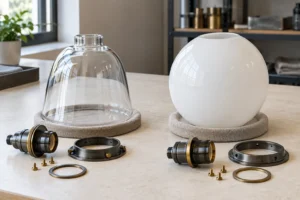
- Fitter compatibility – if the shade has a fitter, install a sample on real fixture hardware
Any deviation from spec needs to be documented and discussed before bulk production starts. Catching a 2 mm dimensional error in a sample is 100x cheaper than catching it across 1000 units.

Stage 4: Bulk Production
Once the sample is approved, bulk production runs in the factory’s normal manufacturing cycle. Lead time depends on:
- Order quantity, current production load and the approved finish route
- Factory’s current backlog
- Complexity of the finish process (frosting and casing add days)
- Glass type (opal requires specialty production lines that may run weekly rather than daily)
What the factory does during bulk production:
- Batch melting – Glass batch is melted in a furnace at 1450-1550°C
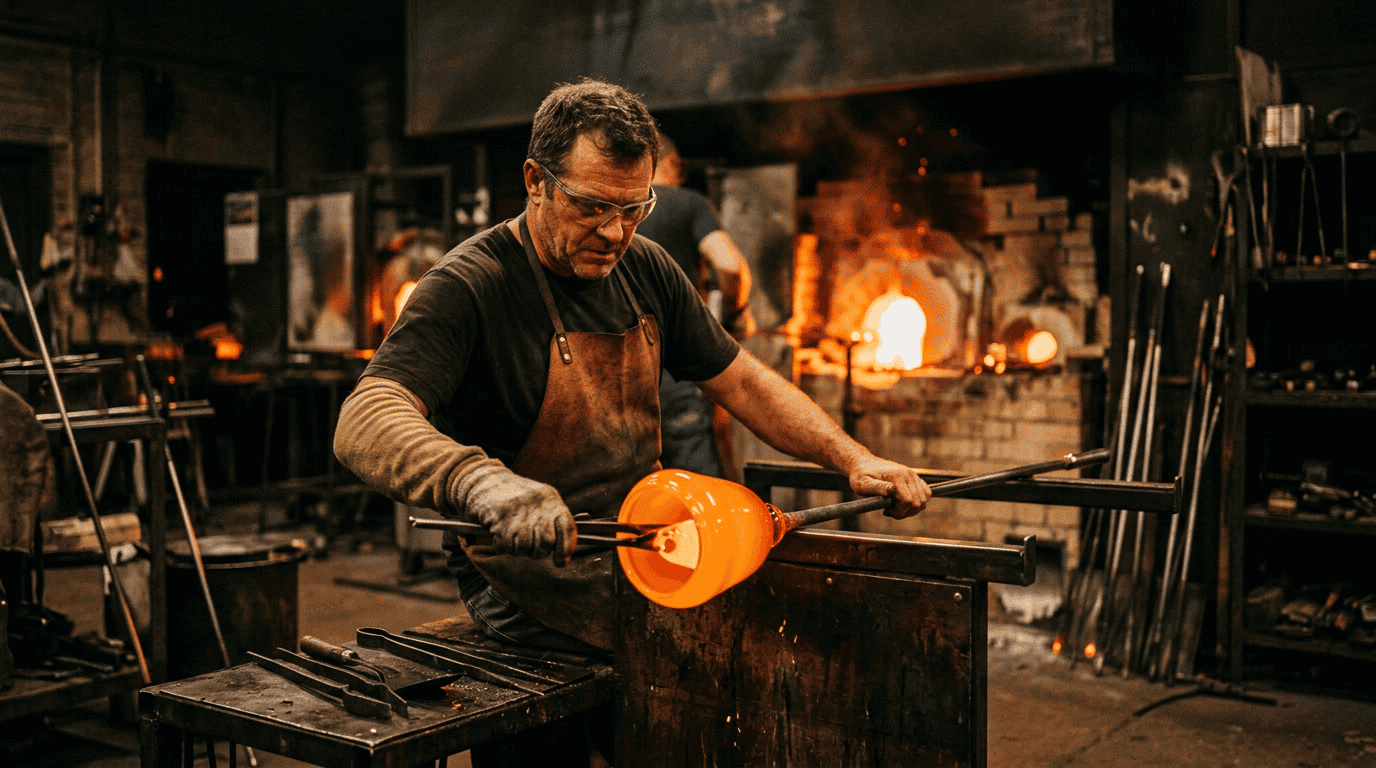
- Forming – Hot glass is gathered and either blown by hand, blown by machine, or pressed into the mold
- Annealing – The formed shade is cooled slowly in a lehr (annealing oven) to relieve thermal stress
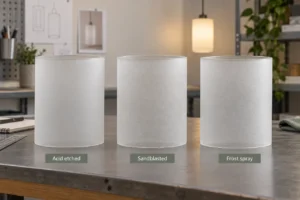
- Finishing – Frosting (acid etching or sandblasting), coloring, decorative treatment as applicable
- Inspection – Pre-shipment quality check on each unit
According to the Wikipedia article on glassblowing, the annealing cycle alone can take 12-24 hours for thick-walled shades. This is why glass manufacturing lead times are longer than they intuitively seem – the slow cooling cycle is non-negotiable for quality.
Stage 5: Quality Inspection
The inspection plan should identify the evidence to retain at each stage:
- Raw glass record – material or batch confirmation against the agreed specification
- Formed-piece check – visual or process observations before annealing when applicable
- Annealed-piece check – the agreed stress or annealing verification when required
- Finished-piece check – dimensions, surface, color and fit against the approved drawing or sample
- Pre-shipment record – lot identity, sampling plan, packing condition and release decision
For higher-stakes orders, the buyer can hire third-party QC services (SGS, Bureau Veritas, Intertek) to conduct independent inspection at the factory. This adds 1-2 weeks to the timeline but provides independent verification for hospitality procurement, regulated industries, and high-value orders.
Stage 6: Packaging and Shipment
Packaging must be approved against the shade profile, fitter or rim risk, quantity and shipping route. Record the protection and packing decision in the quotation and order file:
- Individual protection – protect the fitter, rim and decorative surfaces
- Inner and master cartons – define inserts, orientation and quantity by SKU
- Labels and destination – record buyer SKU, carton marks and receiving route
Destination, Incoterm, route and requested delivery window are confirmed in the project quotation. For fragile glass, the packing plan should be approved against the shade profile before shipment. See the quality inspection checklist for the packing checkpoints to record.
Timeline Summary
Putting the six stages together:
| Phase | Duration |
|---|---|
| Inquiry + quote | Confirmed in project quote |
| Drawing review + mold quote | Confirmed in project quote |
| Mold development (if needed) | Confirmed in project quote |
| Sample production | Confirmed in project quote |
| Sample review + revisions | Buyer approval window |
| Bulk production (1000 units) | Confirmed in project quote |
| Pre-shipment inspection | Confirmed in inspection plan |
| Ocean freight (China to US East Coast) | Confirmed by destination and route |
| **Total project time** | Project-specific schedule in quotation |
If your project has a fixed deadline, state it in the RFQ before the drawing and sample route is confirmed. The quotation should show the schedule assumptions and any approval or logistics dependency.
Pricing Structure: How Much Custom Costs
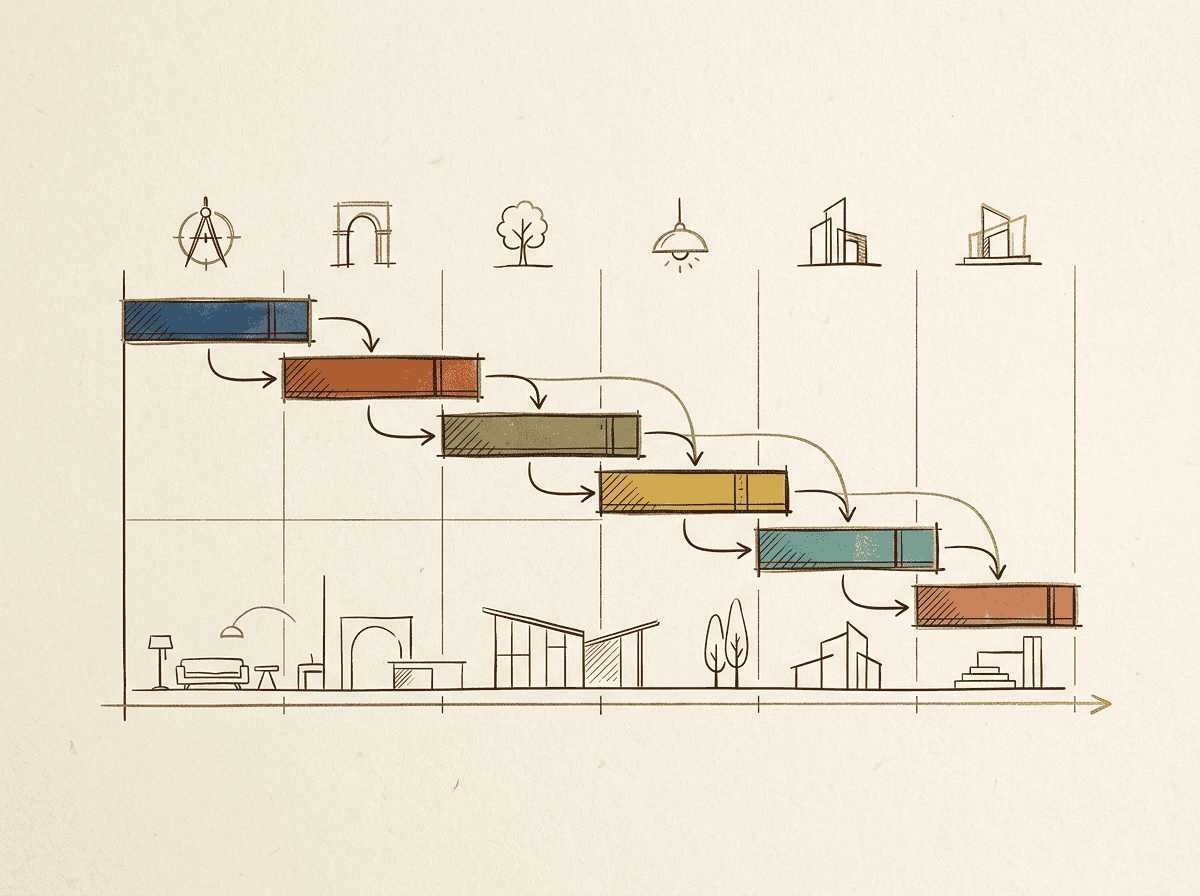
Custom glass shade pricing has three components:
1. Per-unit production cost
Driven by:
- Glass material and processing complexity
- Labor hours per unit (hand-blown ≈ 4x machine-pressed)
- Finishing operations (frosting, coloring, ribbing)
- Inspection labor
Typical FOB China per-unit pricing for 500-unit orders:
| Shade type | Hand-blown | Machine-pressed |
|---|---|---|
| Clear glass globe, 250 mm, 4 mm wall | $9-15 | $4-7 |
| Frosted glass globe, 250 mm, 4 mm wall | $11-18 | $5-9 |
| Cased opal globe, 250 mm, 4 mm wall | $18-30 | $9-15 |
| Ribbed/fluted glass shade | $14-22 | $6-12 |
| Smoked or amber tinted | +$2-4 over baseline |
These are wholesale FOB factory prices in mid-2026. Add ocean freight, import duties, US warehouse handling, and US distribution margin to get to retail or end-user pricing.
2. Mold cost (amortized)
- 500-unit order: mold cost = ~$2 per unit added
- 1000-unit order: mold cost = ~$1 per unit added
- 2000+ units: mold cost ≈ $0.50 per unit added
- 5000+ units: mold cost effectively free
3. One-time costs
- Sample production: $50-300 per sample unit (often credited against bulk order)
- Mold (if new): $800-3000 (often amortized; sometimes charged upfront)
- Third-party QC (optional): $500-1500 per inspection
- Custom packaging design: $200-800 if non-standard packaging required
What to Look for in a Glass Lamp Shade Manufacturer
Not every glass factory can produce quality lamp shades. Five criteria separate reliable manufacturers from problematic ones:
1. Furnace and forming capability
Ask: “What forming methods do you offer – hand-blowing, machine-blowing, press-molding?” A serious manufacturer offers all three because different shade types require different forming methods. A manufacturer that only does press-molding can’t produce hand-blown opal, for example.
2. Annealing capacity
Ask: “What’s your annealing lehr capacity and cycle time?” A short answer (“we cool overnight”) is fine. A long, technical answer with temperature curves and cycle programs is even better. Avoid factories that don’t anneal properly – their shades crack under thermal stress.
3. Quality control systems
Ask: “Do you provide pre-shipment inspection reports? Do you allow third-party inspectors on-site?” Both should be yes. Reputable manufacturers welcome QC inspections because they signal seriousness from the buyer.
4. Sample policy
Ask: “How quickly can you produce a sample? What’s the cost? Is it refundable against bulk order?” Good answers: 10-20 days, $50-300, partial refund if proceeding. Bad answers: “samples are free” (usually means you’ll get a sample-grade piece that’s not real production) or “samples not available” (the factory doesn’t have flexibility in their production schedule).
5. Export experience
Ask: “What countries do you currently ship to? Do you have a freight forwarder relationship? Do you handle export documentation?” A factory that already exports to your target market has solved the logistics, customs, and certification headaches. A factory that’s never exported is going to surface unexpected delays.
Common Failure Modes in Custom Orders
Five patterns account for the majority of custom glass shade project problems:
Failure 1: Skipping the sample stage
“We have a strict deadline, so let’s go straight to bulk.” This works ~50% of the time. The other 50% you get a 1000-unit order with the wrong dimensions, wrong color tint, or wrong finish – and the cost of remaking it is the entire project budget. Always sample first.
Failure 2: Vague drawings or photos
“We want something like this Pinterest image.” That’s an aesthetic reference, not a manufacturing spec. The manufacturer needs millimeter-accurate dimensions, glass type, fitter size, and weight target. Provide CAD files or detailed dimensioned sketches. Otherwise the sample will be “close enough” but not what you wanted.
Failure 3: Choosing the cheapest quote
Glass manufacturing has tight margins and predictable costs. A quote that’s 30%+ lower than other quotes is signaling lower glass quality (thinner walls, less annealing time, weaker glass batch). The cost difference shows up in returned product after delivery.
Failure 4: Underestimating freight and customs
A $5 FOB shade becomes a $9-11 landed-cost shade after ocean freight, customs duties (varies by destination), and US/UK warehouse handling. Build this into the project budget from the start. The US Customs and Border Protection import duty calculator provides current duty rates by HTS code.
Failure 5: Not building in revision time
The sample stage typically goes 1-2 revision rounds before approval. Each revision adds 2-3 weeks. If you’ve planned the project as a single sample-to-bulk transition, the first revision blows the timeline. Build 4-6 weeks of revision buffer into the schedule.
Hospitality Procurement: Why Custom Manufacturing Dominates
For hospitality groups (hotel chains, restaurant groups, serviced apartment operators) ordering glass shades across multiple properties, custom manufacturing is almost always the right path. The math:
- Quantity: 200-2000+ units per property × multiple properties
- Standardization: identical finish, identical fitter, identical dimensions across all rooms
- Branding: subtle brand elements (signature finish, signature color, signature shape) that retail catalogs can’t provide
- Cost: per-unit pricing 30-60% below retail equivalent at scale
- Inventory: predictable supply for replacement and refurbishment over property lifecycle
For broader hospitality sourcing context: hotel glass lamp shades.
Designer and Architect Workflows
Lighting designers and architects working on residential and commercial projects use custom manufacturing for slightly different reasons than hospitality procurement:
- Design integrity: the lighting concept on the design board can only be executed if the manufacturer can produce the exact shade. Stock catalogs constrain the design.
- Small-batch flexibility: 50-200 units is the typical project size for a residence or boutique commercial space. Many manufacturers will accept this volume at slightly higher per-unit pricing.
- Drawing-to-product handoff: experienced designers provide CAD files, photographic mood boards, and verbal explanations of the intent. Reputable manufacturers translate these into manufacturable specs.
For projects above ~50 units, going through a custom manufacturer is the right call. Below that, stock catalogs probably have something close enough.
Future Trends in Glass Shade Manufacturing (2026 and Beyond)
Three movements are reshaping the custom glass shade manufacturing landscape in 2026:
| Trend | What changes | B2B buyer implication |
|---|---|---|
| Lead-free opal formulations | Sustainability spec, slightly different optical character | Increasingly required by EU procurement |
| Energy-efficient furnaces | Lower carbon footprint per shade | Hospitality procurement specifies this |
| Digital twin and CAD-to-mold automation | Faster mold development, lower mold cost | Time-to-market 20-30% faster |
| Small-batch on-demand | Manufacturers accepting 50-100 unit prototype runs | Lower barrier to custom for boutique projects |
| Recycled cullet content | 30-70% recycled glass in baseline shades | New spec sheet differentiator |
Per the U.S. Department of Energy’s industrial decarbonization guidance, glass manufacturing furnaces are among the highest energy-intensity processes in light industry. The 2026 push toward electric furnaces and hydrogen-fueled furnaces is changing both the cost structure and the sustainability spec of high-end shades.
Frequently Asked Questions
What’s the minimum order quantity for custom glass lamp shades?
There is no single public MOQ for every shade. The quotation should state the MOQ for the selected design, finish, tooling route and order scope; share the target volume so the project team can assess the workable route.
How long does it take from inquiry to delivered product?
Lead time is project-specific. The quotation should state the sample stage, tooling or mold route, order quantity, finish complexity, packing scope, delivery terms and requested window.
What’s the difference between OEM and ODM contracts?
OEM means the buyer provides full specifications and design ownership; the manufacturer executes to spec. ODM means the manufacturer designs the product within the buyer’s general requirements and may retain partial design ownership. OEM is typical for lighting designers; ODM is typical for new SKU launches by distributors.
Can I order custom dimensions for an unusual fitter size?
Yes. A direct manufacturer can produce a glass shade with any fitter dimension – 100 mm, 105 mm, 110 mm, anything. This is one of the major reasons designers source custom rather than retail.
What sample costs should I expect?
50-300 USD per sample unit, depending on complexity. Most manufacturers credit sample cost against bulk order if you proceed. Avoid manufacturers that offer “free samples” – usually a sign the samples are sample-grade rather than real production parts.
Are there quality certifications I should look for?
ISO 9001 for general quality management. For lighting components specifically, fixture-level certifications (UL in US, CE in EU, BS in UK) apply to assembled fixtures – the glass shade itself doesn’t carry these. Material composition certifications (RoHS, REACH compliance) matter for export to regulated markets. The Underwriters Laboratories website covers UL certification scope in detail.
Can I get my logo or branding on the shade?
Yes, via subtle methods – laser-etched bottom rim, screen-printed inside, or molded debossing. Visible branding on the outside is rare in residential lighting; subtle branding inside or on the rim is common for hospitality groups wanting brand consistency.
The Bottom Line for Custom Glass Shade Manufacturing
Custom manufacturing connects dimensional control, finish approval, inspection and packing records to a project-specific commercial schedule. Whether it is the right route depends on the approved design, target quantity, tooling needs and delivery window. For hospitality procurement, design-driven residential projects, and brand-owned SKU launches, custom is essentially mandatory.
The critical phases are: clear specification at inquiry, careful sample review before bulk production, and quality inspection before shipment. Get these three right and the custom path delivers exceptional results. Get them wrong and you’ve burned 60 days and the project budget.
Next step: scope your project (quantity, dimensions, finish target) and contact 2-3 manufacturers for initial quotes. Compare them on specifications and capability, not just price.
Related B2B Glass Lamp Shade Routes
Use the route that matches your buying role or project stage: