
Einführung: Die Renaissance der handwerklichen Beleuchtung
Als Hersteller von maßgeschneiderten Glasschirmen Mit tiefem Fachwissen in handwerklichen Produktionsmethoden erkennen wir, dass das Verständnis sowohl der Vorteile als auch der Einschränkungen von mundgeblasenem Glas für Beleuchtungsmarken, Innenarchitekten, Architekten und Beschaffungsspezialisten unerlässlich ist. Diese umfassende Analyse untersucht die technischen Spezifikationen, praktischen Anwendungen, wirtschaftlichen Überlegungen und Qualitätsstandards, die mit mundgeblasenem Glaslampenschirm Produktion verbunden sind, unterstützt durch reale Kundenfälle und Fertigungsinsights.
Verständnis des Mundgeblasenen Glasherstellungsprozesses
nDas Glaslampenschirmfabrik Der Prozess umfasst mehrere kritische Phasen: das anfängliche Sammeln und Aufblasen, präzises Formen durch Formen oder Handmanipulation, kontrolliertes Abkühlen (Anlassen) in Öfen zur Entlastung innerer Spannungen und die abschließende Bearbeitung, einschließlich Kantenbearbeitung, Polieren und Vorbereitung der Anpassung.. Jede Phase erfordert jahrelange Ausbildung und Jahrzehnte, um sie zu meistern, was erfahrene Handwerker zu unschätzbaren Ressourcen für jede Hersteller von Glasschirmelampenschirmen .
nWas wirklich handwerkliches mundgeblasenes Glas auszeichnet, ist die absichtliche Akzeptanz natürlicher Variationen. Wie der Premium-Beleuchtungshersteller Louis Poulsen anmerkt: “Das Erstellen von mundgeblasenen Lampenschirmen aus Glas ist eine Kunst… Selbst wenn die Farbmischungen genau übereinstimmen, beeinflusst die unterschiedliche Glasdicke subtil den Farbton. Darüber hinaus können verschiedene Muster von winzigen Blasen, die im Glas eingeschlossen sind, das Aussehen von Schirm zu Schirm leicht verändern.”. Diese Faktoren tragen zu dem bei, was wir “unvollkommene Schönheit” nennen – das Markenzeichen authentischen Handwerks.
n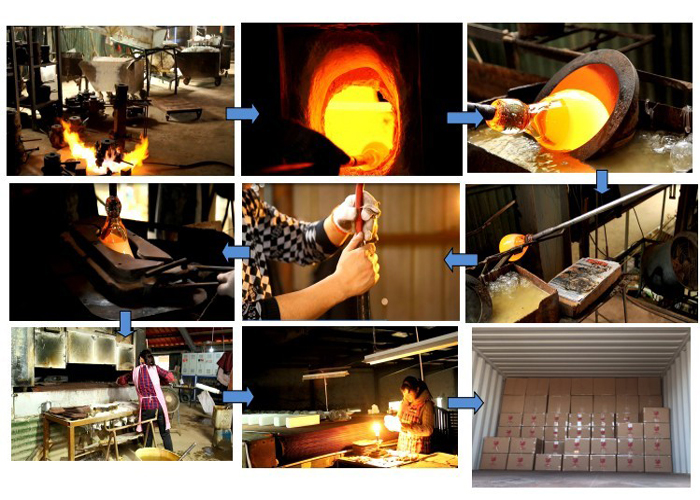
Die Vorteile von mundgeblasenen Glaslampenschirmen
1. Unvergleichliche ästhetische Individualität und Designvielfalt
- Bunte und Gemusterte Schirme: Mit wirbelnden Schnüren, gerippten Texturen, geometrischen Anordnungen und floralen Motiven, die die Beleuchtung in dynamische visuelle Erlebnisse verwandeln
- Florale und Natürliche Motive: Gravierte oder geformte botanische Elemente, die Ruhe und Wärme hervorrufen, besonders geeignet für Cottagecore- und Bohemian-Interieurs
- Industrielle und Rustikale Designs: Texturierte Oberflächen mit Blasen, Wellen und unebenen Kanten, die handwerkliche Authentizität betonen
- Geometrische und Minimalistische Muster: Winklige Prismen und facettierte Oberflächen, die während des Blasprozesses eine fachkundige Kontrolle erfordern
- Künstlerische und Skulpturale Designs: Abstrakte Formen, einschließlich gewellter Wellen, schwebender Kugeln und verdrehter Spiralen, die durch fortschrittliche Techniken wie Glasrauchen und Marmorieren geschaffen werden
2. Überlegene Lichtqualität und Diffusionseigenschaften
3. Umweltliche Nachhaltigkeit und Minimierung von Abfall
4. Premium-Marktplatzpositionierung und Markenunterscheidung
Diese Premium-Positionierung ermöglicht eine stärkere Markenunterscheidung in überfüllten Märkten. Ein Hersteller von Glasschirmelampenschirmen Unternehmen, das sich auf mundgeblasene Techniken spezialisiert hat, kann SKUs mit “starkem ästhetischen Wert und Markenunterscheidung” anbieten, die Maschinenproduktionsstätten nicht erreichen können. Die Erzählung von handwerklicher Kunstfertigkeit – die Jahre der Ausbildung, Jahrzehnte der Meisterschaft und individuelle Aufmerksamkeit betont – spricht zeitgenössische Verbraucher an, die nach Authentizität und Herkunft suchen.
5. Kompatibilität mit moderner Beleuchtungstechnologie
Moderne mundgeblasene maßgeschneiderten Glaslampenschirmen Designs zeigen eine hervorragende Kompatibilität mit LED-Lampen, intelligenten Beleuchtungssystemen und Dimmern. Diese Konvergenz von traditioneller Handwerkskunst und zeitgenössischer Technologie ermöglicht es Lichtdesignern, handwerkliche Stücke zu spezifizieren, ohne Energieeffizienz oder fortschrittliche Funktionalität zu opfern. Die thermischen Eigenschaften von richtig geglühtem Glas gewährleisten auch die Haltbarkeit in Kombination mit LED-Quellen, die deutlich weniger Wärme abgeben als traditionelle Glühlampen – ein kritischer Aspekt zum Erhalt empfindlicher Glasarbeiten.
Die Nachteile von mundgeblasenen Glaslampenschirmen
1. Produktionskosten und wirtschaftliche Zugänglichkeit
Der bedeutendste Nachteil von mundgeblasene Glaslampenschirme ist ihr erheblicher Kostenaufschlag im Vergleich zu maschinell hergestellten Alternativen. Dieser Kostenunterschied ergibt sich aus mehreren Faktoren: der umfangreichen Ausbildung, die für qualifizierte Handwerker erforderlich ist (oft über 10 Jahre Erfahrung), der arbeitsintensiven Natur der Einzelstückproduktion, höheren Fehlerquoten, die mit handgefertigten Prozessen verbunden sind, und der Unfähigkeit, Skaleneffekte zu erzielen.
Für budgetbewusste Projekte oder Anwendungen, die mehrere identische Leuchten erfordern – wie z. B. Hotelketten oder große kommerzielle Installationen – kann mundgeblasenes Glas wirtschaftlich unerschwinglich sein. Branchenrichtlinien deuten darauf hin, dass diese Stücke “weniger ideal für… budgetbewusste Käufer oder diejenigen sind, die mehrere identische Leuchten benötigen”.
2. Inkonsistenz und Herausforderungen bei der Qualitätskontrolle
3. Verlängerte Lieferzeiten und Skalierbarkeitsbeschränkungen
Die handwerkliche Natur von mundgeblasenem Glas bringt inhärente Produktionsgeschwindigkeitsbeschränkungen mit sich. Während maschinell gepresste maßgeschneiderten Glaslampenschirmen Produktion täglich Tausende identischer Einheiten erzeugen kann, benötigen geschickte Handwerker möglicherweise mehrere Stunden, um ein einzelnes komplexes Stück. abzuschließen. Diese Einschränkung wird besonders problematisch für Großprojekte oder Marken, die ein schnelles Wachstum erleben.
4. Zerbrechlichkeit und Handhabungsanforderungen
5. Risiko von Fälschungen und Authentizitätsprüfung
Kundenfallstudie: Erfolgreiche Implementierung für eine USA Beleuchtungsmarke
Um die praktische Anwendung dieser Vor- und Nachteile zu veranschaulichen, betrachten Sie die Erfahrungen einer mittelgroßen Beleuchtungsmarke mit Sitz in USA. Dieses Unternehmen wollte eine neue Kollektion moderner Wandleuchten entwickeln, die maßgeschneiderten Glaslampenschirmen Komponenten mit markanten Fackelformen, hoher Transparenz, gleichmäßiger Dicke und Kompatibilität mit Standardanschlüssen aufweist.
Erste Herausforderungen bei der nationalen Beschaffung
Übergang zu einem spezialisierten Hersteller von Glaslampenschirmen
- Schnelle Prototypenentwicklung: Entwicklung neuer Formen basierend auf den Markenspezifikationen mit der Musterproduktion, die innerhalb von Wochen abgeschlossen wurde
- Designoptimierung: Gemeinsame Anpassungen zur Verbesserung der Lichtstreuungseigenschaften und der strukturellen Integrität
- Verpackungsinnovation: Neu gestaltete Schutzverpackungen, die die Vorfälle von Transportschäden reduzierten
Kosteneffizienz: Produktionskosten um über 30 % im Vergleich zur inländischen Beschaffung gesenkt, während die handwerklichen Qualitätsstandards beibehalten wurden
Technische Spezifikationen und Qualitätsstandards
Materialzusammensetzung und thermische Eigenschaften
Hochwertiges, mundgeblasenes Glas für Beleuchtungsanwendungen verwendet typischerweise silikathaltige Mischungen mit Soda und Kalkstein, wobei die Verhältnisse je nach gewünschten optischen und physikalischen Eigenschaften variieren.. Die Färbung erfolgt durch präzise Zugabe von Metalloxiden während des Schmelzprozesses, der über 14 Stunden bei etwa 1.450 °C in traditionellen Ofenbetrieben stattfindet.
Das Anlassen – der kontrollierte Kühlprozess – ist entscheidend für die Haltbarkeit. Unsachgemäß angelassenes Glas behält innere Spannungen, die zu spontanen Bruch führen können. Professionelle Hersteller von Glaslampenschirmen führen das Anlassen über längere Zeiträume durch, wobei spezifische Temperaturkurven durch die Glasdicke und -zusammensetzung bestimmt werden.
Sicherheits- und Konformitätszertifikate
- UL-Zertifizierung: Erforderlich für den Marktzugang in USA, umfasst elektrische Sicherheit und Feuerbeständigkeit
- CE-Kennzeichnung: Pflicht für den Vertrieb im Europäischen Wirtschaftsraum
- CCC-Zertifizierung: Chinesische Pflichtzertifizierung für den Binnenmarkt und bestimmte Exportkategorien
- Oberflächenfinish: Abwesenheit von Kratzern, Absplitterungen oder unzulässigen Einschlüsse
- Maßgenauigkeit: Einhaltung der Konstruktions-Toleranzen (typischerweise ±2-3mm für handwerkliche Stücke
- Strukturelle Integrität: Abwesenheit von Rissen, Spannungsmustern oder SchwachstellenROHS-Konformität: Beschränkung gefährlicher Stoffe für die Umweltverträglichkeit
- FCC-Zertifizierung: Für Produkte mit Funkfrequenz- oder elektromagnetischen Komponenten
Oberflächenfinish und optische Qualitätsstandards
- Transparenz: Gemessene Lichtdurchlässigkeitsraten im Vergleich zu den Spezifikationen
- Oberflächenfinish: Abwesenheit von Kratzern, Absplitterungen oder unzulässigen Einschlüsse
- Maßgenauigkeit: Einhaltung der Konstruktions-Toleranzen (typischerweise ±2-3mm für handwerkliche Stücke)
- Strukturelle Integrität: Abwesenheit von Rissen, Spannungsmustern oder Schwachstellen
- Farbkonstanz: Bewertung innerhalb akzeptabler Variationsbereiche für handwerkliche Produkte
Strategische Empfehlungen für Lichtprofis
Wann man mundgeblasene Glaslampenschirme spezifizieren sollte
- Luxuriöse Wohnprojekte wo Einzigartigkeit und handwerkliche Herkunft Premiumpreise rechtfertigen
- Boutique-Hotellerie-Umgebungen (gehobene Restaurants, Boutique-Hotels), die nach einzigartiger atmosphärischer Beleuchtung suchen
- Aussagekräftige Stücke in kommerziellen Lobbys, Galerien oder Executive-Räumen
- Heritage-Restaurierungsprojekte die traditionelle Handwerkstechniken erfordern
- Limitierte Auflage oder Sammlerstück Beleuchtungskollektionen
Wann man alternative Fertigungsmethoden in Betracht ziehen sollte
- Großangelegte kommerzielle Rollouts die Hunderte identischer Einheiten erfordern
- Budgetbeschränkte Projekte wo Kosteneffizienz den handwerklichen Wert überwiegt
- Anwendungen, die präzise dimensionale Konsistenz erfordern über mehrere Vorrichtungen hinweg
- Hochfrequentierte öffentliche Räume wo Bedenken hinsichtlich der Haltbarkeit ästhetische Überlegungen überwiegen
- Schnelle Marktexpansion die skalierbare Lieferketten erfordert
Beschaffungsbest Practices
- Produktionskapazitäten überprüfen durch Betriebsbesuche oder Drittanbieterprüfungen
- Umfassende Musterevaluierung anfordern einschließlich Belastungstests und optischer Bewertung
- Klare Qualitätsgrenzwerte festlegen handwerkliche Variationen anerkennen und inakzeptable Abweichungen definieren
- Spezialisierte Verpackungsprotokolle entwickeln die Fragilitätsbedenken ansprechen
- Flexible Produktionsplanung verhandeln die handwerklichen Vorlaufzeiten berücksichtigen
- Implementierung von Authentifizierungsmaßnahmen Schutz vor gefälschten Produkten
Fazit: Balance zwischen Kunstfertigkeit und Praktikabilität
Die Nachteile – Kostenprämien, Produktionsbeschränkungen, Qualitätsvariabilität und Handhabungsanforderungen – sind erheblich, aber durch informierte Beschaffungsentscheidungen und strategische Partnerschaften mit erfahrenen Glaslampenschirmfabrik Betrieben handhabbar. Wie erfolgreiche Kundenimplementierungen zeigen, kann die Zusammenarbeit mit spezialisierten Hersteller von Glaslampenschirmen die traditionellen Herausforderungen der handwerklichen Produktion mildern und gleichzeitig die ästhetischen und narrativen Vorteile bewahren, die mundgeblasenes Glas in zeitgenössischen Märkten auszeichnen.
Häufig gestellte Fragen
Yancheng Jingxin Glassware Co., Ltd. ist ein professioneller Glashersteller Gegründet im Jahr 1999. Wir betreiben unsere eigene Produktionsstätte und Bürofläche von mehr als 48.430 Quadratfuß (ca. 4.500 m²), wobei wir Design, Fertigung, Qualitätskontrolle und Exportdienstleistungen integrieren.
Wir stellen eine breite Palette von maßgeschneiderten Glaslampenschirmen her, einschließlich mundgeblasener Glaslampenschirme, maschinengepresster Glaslampenschirme, Borosilikatglas-Lampenschirme und zentrifugalgegossener Glaslampenschirme. Unsere Kapazitäten decken die OEM- und ODM-Produktion für unterschiedliche Anwendungen und Branchen ab.
Ja, wir bieten vollständige OEM- und ODM-Anpassungsdienste an einschließlich:
- Kundendesign und -entwicklung von Produkten
- Inhouse-Moldentwicklung
- Logo-Druck und Markenbildung
- Oberflächenbehandlungen und -veredelungen
- Maßgeschneiderte Verpackungslösungen
Ja, unser Designteam kann maßgeschneiderte Glaswaren aus Ihrem Konzept entwickeln. Wir bieten professionelle Designleistungen basierend auf Ihren Ideen, Referenzmustern oder funktionalen Anforderungen—keine technischen Zeichnungen sind erforderlich, um zu beginnen.
Unser Prozess sichert die Qualität vor der Serienproduktion.
Designbestätigung mit dem Kunden
In-House-Formenentwicklung in unserer Einrichtung
Musterproduktion zur Freigabe
Kundenprüfung und Feedback
Nur nach endgültiger Musterfreigabe erfolgt die Massenproduktion
Wir bieten umfassende individuelle Verpackungen für sicheren internationalen Versand:
- Schützende Innenverpackungsmaterialien
- Verpackungen aus Karton für den Export
- Individuelle Farbboxen und Einzelhandelsverpackungen
- Etikettendruck und Markenbildung
- Verpackungen, die den internationalen Versandstandards entsprechen
- Inspektion in jeder Produktionsphase
- Wissenschaftliche Qualitätskontrollverfahren
- Vorversandkontrolle jeder Charge
- Einhaltung internationaler Exportstandards
- Zertifizierte Qualitätsmanagementsysteme
Wir betreiben mehrere Produktionslinien mit erfahrenen Arbeitern, die eine stabile Massenproduktion für Aufträge jeder Größe ermöglichen. Unsere Anlage sorgt für gleichbleibende Qualität und zuverlässige termingerechte Lieferung sowohl bei kleinen Chargen als auch bei Großaufträgen.
Lieferzeiten variieren je nach Komplexität und Menge:
- Katalogartikel/leichte Anpassung: 25–30 Tage bei Bestellungen bis 1.000 Stück
- Bestellungen mit 1.000–5.000 Stück: 35–45 Tage
- Vollständig kundenspezifisches OEM mit neuen Formen: 45–65 Tage; der endgültige Termin wird projektspezifisch bestätigt
Die aktuelle Marktabdeckung wird während der Lieferantenprüfung bestätigt., einschließlich:
- Nordamerika (USA, Kanada)
- Europa (Vereinigtes Königreich, Deutschland, Frankreich usw.)
- Asien-Pazifik-Märkte
- Nahost
- Afrika
- Ozeanien (Australien, Neuseeland)
Wir unterhalten ein umfassendes globales Vertriebsnetzwerk.