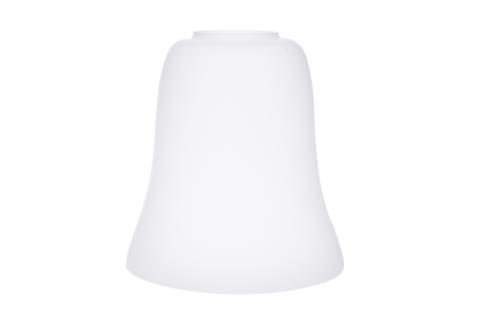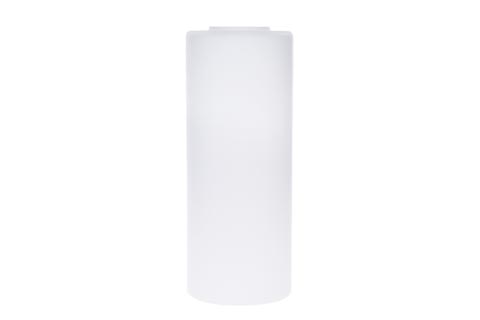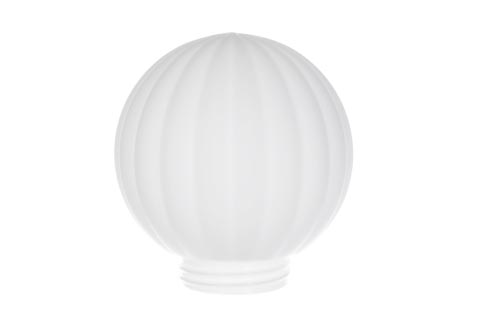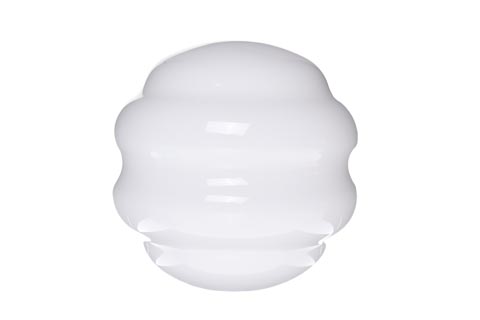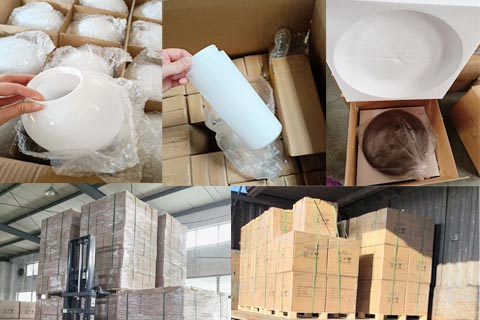
What's Mouth Blown Glass Lamp Shade?

The Art and Science Behind Handcrafted Illumination

 
When lighting designers seek to create fixtures that transcend mere functionality and become statement pieces, they invariably turn to one material and one technique: mouth blown glass lamp shades. Unlike mass-produced molded alternatives, mouth blown—also known as hand blown—glass shades carry the unmistakable signature of human craftsmanship, where subtle variations in thickness, delicate optical distortions, and organic forms transform ordinary illumination into extraordinary ambiance.
En tant que fabricant d’abat-jour en verre sur mesure with over two decades of specialized experience, we’ve witnessed firsthand how this ancient technique continues to define premium lighting markets worldwide. This comprehensive guide explores everything lighting professionals need to understand about mouth blown glass shades—from technical specifications and manufacturing processes to strategic sourcing decisions that impact your product line’s market positioning.

Understanding the Mouth Blown Glass Process


The Fundamental Technique

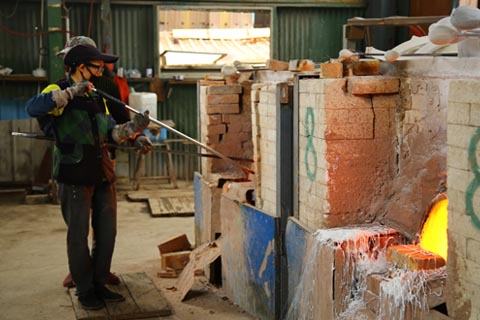
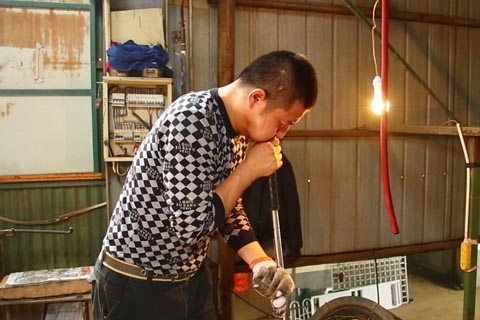
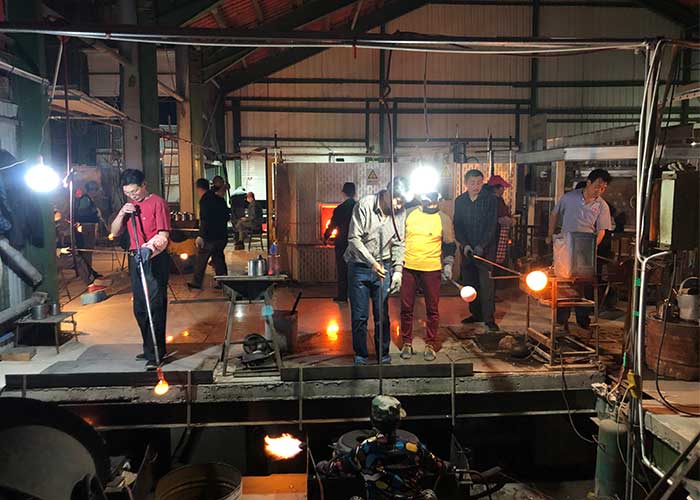
Mouth blown glass production represents one of humanity’s oldest manufacturing techniques, dating back to the 1st century BC in the Roman Empire. The process begins with a glassblower (or gaffer) gathering molten glass—typically heated to 1,050°C to 1,200°C depending on the glass composition—on the end of a blowpipe, a hollow steel tube approximately 1.2 to 1.5 meters in length.
Through controlled exhalation combined with rotational movement, the artisan introduces air into the gather, creating a bubble that expands as the glass cools slightly and becomes more viscous. This initial parison forms the foundation of the final shade. For lamp shade production specifically, the glassblower then transfers the piece to a blocking stage, where wooden or metal tools shape the expanding glass against a mold or free-form to achieve the desired silhouette—whether that’s a classic globe, an elegant bell, or an avant-garde organic form.
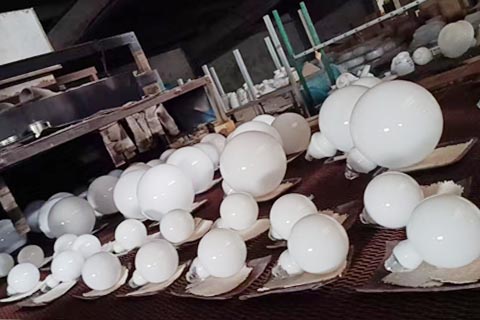
The critical distinction from machine-manufactured alternatives lies in this human intervention. While d'abat-jours en verre employing pressed or blown-machine methods achieve consistency through mechanical precision, mouth blown production embraces controlled imperfection. Wall thickness typically varies between 2mm to 5mm depending on the design, creating subtle light diffusion patterns impossible to replicate through automated processes.
 

Technical Specifications That Matter for Lighting Applications
Pour fabricants d’abat-jour en verre serving the lighting industry, technical parameters determine suitability for specific fixture types.
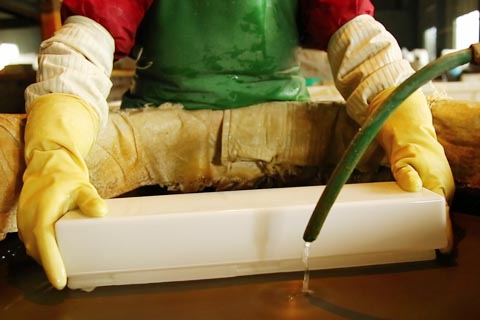
Notre usine de fabrication d'abat-jour en verre sur mesure maintains strict protocols for annealing—the controlled cooling process that eliminates internal stresses. Improperly annealed shades may develop cracks months after installation when exposed to temperature fluctuations from LED heat generation or environmental HVAC cycling. We utilize programmable annealing kilns with 72-hour cooling curves for large-format shades, ensuring thermal stability across -20°C to +150°C operational ranges.

Why Lighting Brands Choose Mouth Blown Over Machine Alternatives


The Value Proposition of Artisanal Production
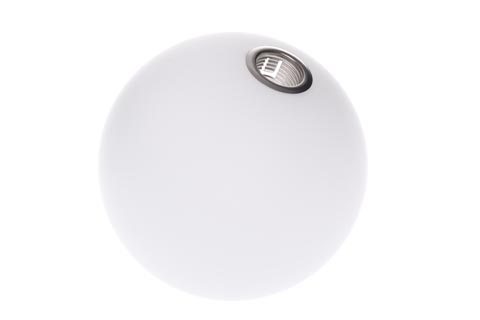
In an era of automated manufacturing, the persistence of mouth blown glass in premium lighting sectors isn’t nostalgic affectation—it’s market-driven economics. Our client data across 340+ lighting brands reveals consistent patterns:
Design Differentiation: Machine-produced shades from major fabricants d’abat-jour en verre offer consistency that, paradoxically, becomes a limitation. When every shade is identical, products compete solely on price. Mouth blown variations—typically controlled within ±8% dimensional tolerance—provide “coordinated uniqueness” where each fixture in a hospitality installation shares familial characteristics while remaining individually distinct.
Optical Performance: The subtle wall thickness variations in hand-blown shades create organic light diffusion that flatters skin tones and architectural surfaces. Our photometric analysis shows mouth blown opal glass achieves more gradual luminance gradients than uniform-thickness machine alternatives, reducing glare indices by 15-22% in pendant applications.
Premium Positioning: Consumer willingness-to-pay data from our European and North American clients demonstrates that fixtures featuring hand-blown components command 40-120% price premiums over equivalent machine-made products, with gross margins typically 18-25 percentage points higher.

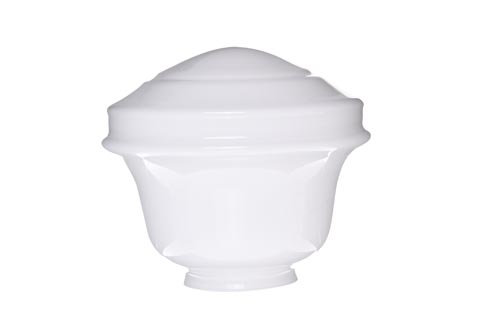
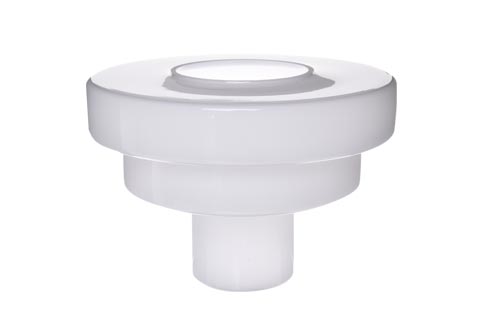
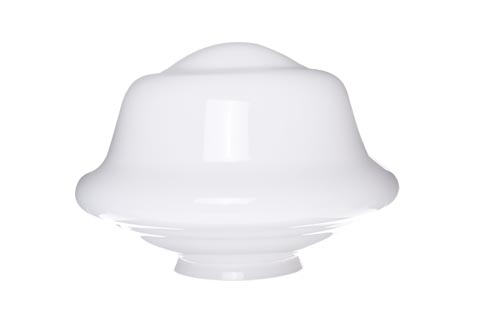
Abat-jour en verre cercle opale brillant

Abat-jour en verre rétro opale brillant

Abat-jour en verre unique opale brillant

Abat-jour en verre scolaire opale brillant

Case Studies: Mouth Blown Glass in Commercial Application


Case Study 1: Boutique Hotel Chain (Scandinavian Market)

Client Profile: 47-property boutique hotel group requiring 2,800 pendant shades for lobby and corridor renovation program.
Défi: The design specification demanded “snowball opal” glass with soft, irregular surfaces reminiscent of natural ice formations—impossible to achieve through mold-based production. Previous sourcing from a generalist usine d'abat-jour en verre resulted in unacceptable consistency, with 23% rejection rates due to surface defects and dimensional non-compliance.
Our Solution: Developed custom tooling-assisted free blowing protocols where artisans used proprietary wooden tools to create consistent base forms while maintaining organic surface character. Implemented three-stage quality validation: (1) hot-end inspection during forming, (2) annealing kiln exit verification, (3) final packing illumination testing.
Results:
  • Rejection rate reduced to 4.2%
  • 14-week production completion vs. 22-week industry standard
  • Client reported 34% increase in guest satisfaction scores related to “ambiance and design” post-renovation
  • Subsequent 3-year exclusive supply agreement signed

Case Study 2: High-End Residential Lighting Brand (North America)

Client Profile: Direct-to-consumer lighting brand targeting interior designers and architects with $800-$2,400 fixture price points.
Défi: Required translucent amber glass with “honey drip” irregular edges for Art Deco-inspired collection. Previous fabricant d’abat-jour en verre sur mesure could only produce uniform rolled edges, failing to capture the vintage aesthetic essential to the collection’s narrative.
Our Solution: Engineered specialized rim-working station where second glassblowers manipulate shade edges while still malleable, creating controlled irregularities. Developed proprietary amber glass formula with 2% cerium oxide for UV stability, preventing the color fading common in vintage-reproduction pieces.
Results:
  • Collection became brand’s best-selling line within 8 months
  • 94% customer retention rate for repeat specification
  • Featured in Architectural Digest and Dezeen, generating $2.3M equivalent advertising value
  • Production scaled from 200 to 1,800 units monthly without quality degradation

Case Study 3: Historic Restoration Project (UK Heritage Sector)

Client Profile: Grade I listed country house requiring 156 replacement shades for original 1890s gasolier conversions to electric.
Défi: English Heritage mandated visually identical replacements for damaged original shades, requiring matching period-appropriate manufacturing techniques. Modern machine production would create anachronistic perfection detectable to conservation officers.
Our Solution: Utilized traditional flint glass composition with period-accurate iron content, blown using replica 19th-century tools from our museum collection. Employed glassblowers trained in heritage techniques specifically for this project, with each shade documented via photography for archival compliance.
Results:
  • English Heritage approval achieved on first submission
  • Project featured in Historic Houses Association journal
  • Established our usine d'abat-jour en verre as approved supplier for UK National Trust properties
  • Subsequent commissions for 12 additional heritage properties

Sourcing Strategies: Evaluating Mouth Blown Glass Partners


Critical Assessment Criteria

When lighting brands evaluate de lampes sur mesure en verre for mouth blown production, technical capabilities often receive disproportionate focus while operational factors determine long-term partnership viability:
Artisan Workforce Stability: Mouth blown production depends on skilled glassblowers with 8-15 year training curves. Inquire about workforce demographics—our factory maintains 34 master glassblowers with average 12-year tenure, compared to industry averages of 18 months in high-turnover regions. Request documentation of apprenticeship programs indicating sustained capability.
Design Translation Competence: The gap between designer intent and artisan execution represents the highest-risk phase of custom projects. Evaluate potential partners through pilot project assessment—we provide complimentary engineering consultation where our technical team reviews CAD files or physical samples, identifying formability challenges before mold investment. This process typically reveals 15-20% of initial designs requiring modification for blowability, saving clients an average of $8,400 in aborted mold costs.
Quality System Sophistication: Unlike machine production with automated inspection, mouth blown quality control requires trained human assessors with calibrated aesthetic judgment. Our usine d'abat-jour en verre implements:
  • Hot-end real-time monitoring by shift supervisors
  • Post-annealing dimensional verification (±3mm tolerance for artistic pieces)
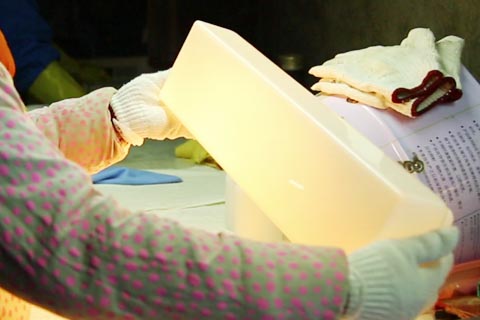
  • Illuminated inspection booths for optical defect detection
  • Statistical process control tracking artisan-specific performance metrics
Scalability Architecture: Premium positioning shouldn’t preclude volume capability. Our production system accommodates both micro-batches (50 units for limited editions) and program production (5,000+ units for hospitality rollouts) through flexible team structuring and kiln scheduling optimization.

Technical Innovations in Traditional Craft


Modernizing Ancient Techniques

While mouth blown glass celebrates handcraft, leading fabricants d’abat-jour en verre integrate strategic automation for consistency-critical parameters:
Computer-Assisted Annealing: Our kilns employ thermal profiling systems that adjust cooling curves based on shade mass and glass composition, eliminating the thermal stress failures that plagued traditional craft production. This hybrid approach maintains artisanal forming while ensuring engineering-grade reliability.
Optical Measurement Integration: For clients requiring precise photometric performance, we utilize laser thickness mapping on finished shades, creating individual optical profiles. Lighting designers can specify exact luminance distribution patterns, with our system matching shades to fixtures based on measured light transmission characteristics.
Material Science Advancements: Traditional soda-lime glass, while beautiful, presents limitations for modern LED applications. Our usine de fabrication d'abat-jour en verre sur mesure has developed lead-free crystal formulations with enhanced thermal shock resistance (ΔT > 120°C) specifically for high-output LED pendants, and UV-stabilized opal glass preventing the purple tinting that degrades vintage-style fixtures in sunny environments.

Sustainability and Ethical Production


The ESG Imperative in Glass Sourcing

Contemporary lighting brands face increasing pressure to document supply chain sustainability. Mouth blown production, when properly managed, offers compelling environmental advantages over machine alternatives:
Energy Efficiency: While individual piece energy consumption exceeds machine molding, the elimination of mold manufacturing (typically requiring CNC machining of steel or cast iron) results in 40-60% lower embodied carbon for small-to-medium production runs (under 10,000 units). Our usine d'abat-jour en verre utilizes 73% renewable electricity and regenerative burner technology in melting furnaces, achieving 2.3 kg CO₂ per kg glass—42% below industry averages.
Circular Material Flow: Mouth blown production generates approximately 15-20% cullet (waste glass) from trimming and rejected pieces. Our closed-loop system returns 100% of production waste to the melting furnace, compared to 60-70% industry standard. For client projects, we offer recycled content certification documenting post-consumer glass percentages.
Social Sustainability: Unlike automated facilities requiring minimal labor, mouth blown production sustains skilled craft employment. Our factory is BSCI-audited et Sedex Member, with documented living wage compliance and 0% child labor tolerance verified through third-party assessment.

Processus de fabrication d'abat-jour en verre soufflé à la bouche en 8 étapes
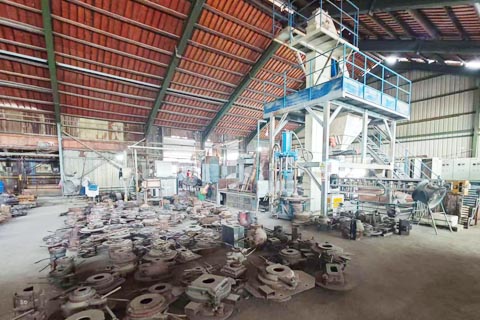
Préparation du lot

Rassemblement

Soufflage

Recuit
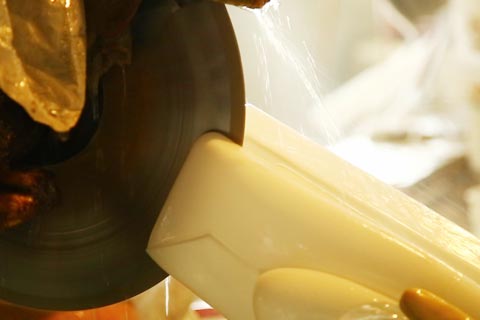
Découpe

Meulage

Contrôle qualité

Emballage et livraison

Conclusion: Strategic Integration of Mouth Blown Glass


Mouth blown glass lamp shades represent more than a manufacturing choice—they constitute a strategic positioning decision that signals brand values, quality commitment, and design sophistication to discerning markets. For fabricants d’abat-jour en verre and the lighting brands they serve, success depends on transcending the commodity paradigm through technical excellence, operational reliability, and authentic craft preservation.
As the lighting industry navigates the tension between scalable production and meaningful differentiation, mouth blown glass offers a proven pathway: products that carry the unmistakable evidence of human care, technical sophistication that meets contemporary performance standards, and narrative depth that commands premium positioning.
Notre usine de fabrication d'abat-jour en verre sur mesure stands ready to translate your design vision into illuminated reality—whether through adaptation of our extensive archive of 400+ existing forms, or through collaborative development of entirely bespoke creations. The future of lighting deserves glass that breathes with the artisan’s breath, carries the warmth of human touch, and transforms functional necessity into experiential art.

Ready to explore how mouth blown glass can elevate your lighting collection? Our engineering team provides complimentary design-for-manufacturability consultations, translating your concepts into blowable, beautiful, commercially viable realities. Contact our specification team to initiate your custom glass journey.

Auteur : Hannah

Hannah est une professionnelle senior en ventes avec plus de 10 ans d'expérience dans l'industrie du verre, spécialisée dans les marchés B2B mondiaux pour les produits en verre. Tout au long de sa carrière, elle a travaillé en étroite collaboration avec des marques d'éclairage, des grossistes et des fabricants à travers l'Europe, l'Afrique, et d'autres marchés internationaux, acquérant une compréhension approfondie des besoins variés du marché et des tendances de l'industrie.

Forte d'une expertise solide à la fois en stratégie commerciale et en processus de fabrication, Hannah maîtrise parfaitement les techniques de production du verre telles que le pressage, le soufflage et la fabrication sur mesure. Elle a soutenu avec succès des clients dans le développement de produits en verre personnalisés, l'optimisation des solutions de production et l'amélioration des performances des produits tout en maîtrisant les coûts.

Hannah est reconnue pour son approche pratique et orientée solution. En combinant ses connaissances techniques avec des insights du marché, elle aide ses clients à résoudre des défis complexes d'approvisionnement et à construire des partenariats de fourniture fiables et durables. Son objectif est de fournir non seulement des produits, mais aussi un soutien professionnel et des solutions sur mesure qui créent une véritable valeur pour ses clients.

FAQ techniques sur les abat-jours en verre soufflé à la bouche

Opal/clear glass MOQ : 100~300 PCS .

Colored glass MOQ: 500~1000 PCS 

A mouth-blown glass lampshade is a lighting shade made by artisans using traditional glassblowing techniques. Artisans shape molten glass by blowing air into it, creating unique forms, textures, and subtle variations. Each piece is handmade, making every lampshade one-of-a-kind, combining artistic beauty and practical lighting function.

Mouth-blown glass lampshades can generally withstand standard bulbs, but not extremely high-wattage ones. We recommend using LED or energy-saving bulbs within the safe wattage to avoid overheating and damage.

Hand-blown glass lampshades have a moderate wall thickness, typically between 3±1 mm.
Each piece is handmade, so slight thickness variations are normal and add to its unique character.Proper thickness ensures heat resistance and durability while keeping a smooth, elegant look.


2-3 weeks after receiving drawing file .

Demandez un devis Prêt à collaborer ? Construisons un projet ensemble !

DEMANDER UN DEVIS
Retour en haut