
Lampshade Shapes: The Complete Visual Glossary (12 Glass Shade Types)
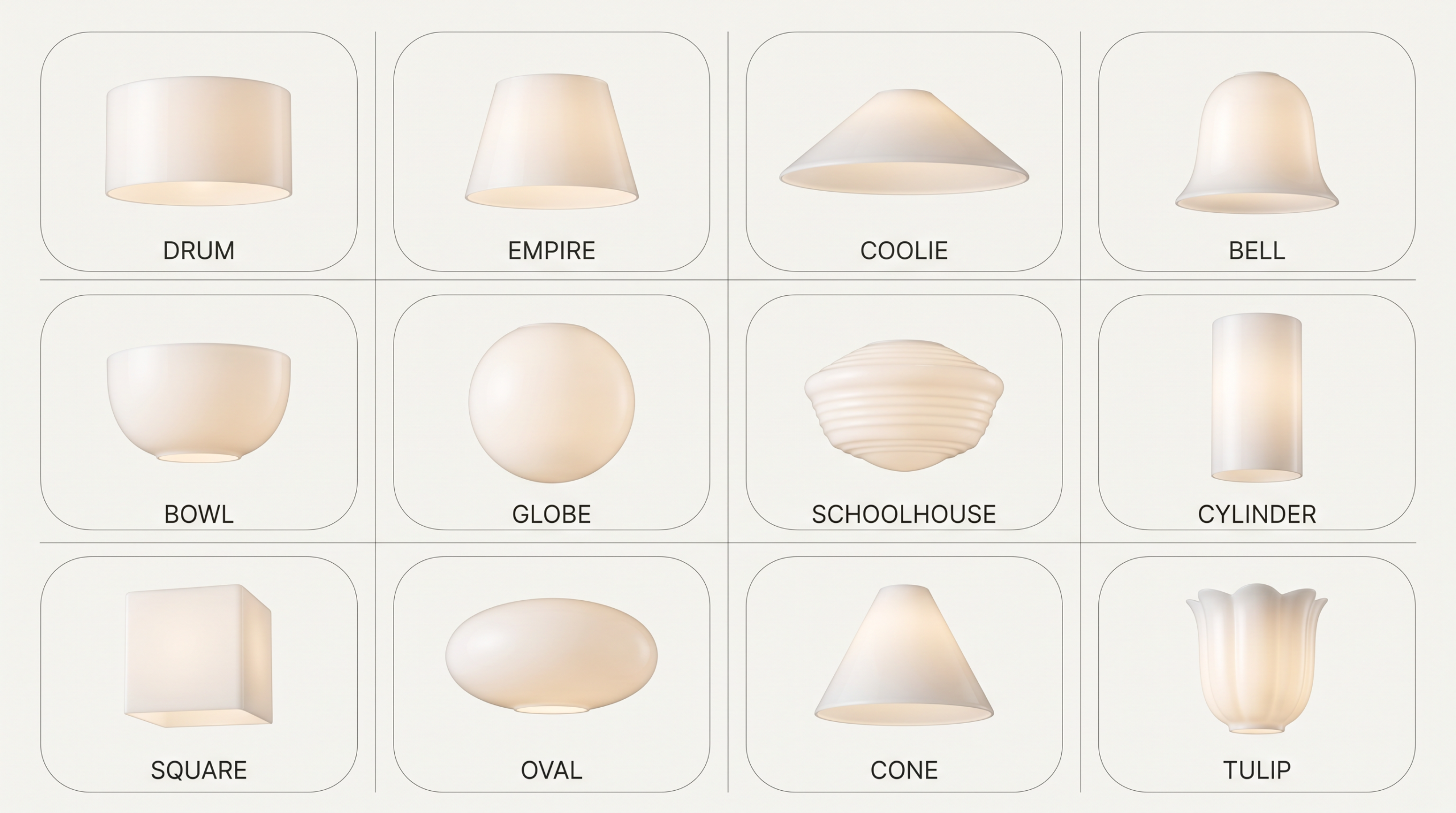
Not sure what to call that lampshade shape? This is the complete visual reference to the 12 most common glass lampshade silhouettes — drum, empire, coolie, bell, bowl, globe, schoolhouse, cylinder, square, oval, cone and tulip — each shown, named, and explained with its profile, typical fitting, light effect and best use.
Why lampshade shape matters
A lampshade does three jobs at once, and its shape decides how well it does each one. First, it controls where the light goes: an open, flared shade throws light down onto a surface, while a closed, rounded shade spreads a soft glow in every direction. Second, it sets the style of the fixture, from a clean modern drum to an ornate tulip. Third, it fixes the proportions of the whole lamp, which is why a shade that is the wrong height or width can make an otherwise beautiful base look off.
With glass shades, shape also interacts with the material. The same opal globe that glows evenly on a bedside pendant would behave very differently as a wide clear-glass coolie over a dining table. That is why this glossary pairs every shape with the glass types and finishes that suit it best.
Anatomy of a glass lampshade
Before comparing shapes, it helps to share a common vocabulary. Most shades are described by a handful of parts:
| Part | What it is |
|---|---|
| Top opening | The diameter of the upper edge. Narrow on empire and cone shapes, wide and equal to the base on a drum. |
| Body / wall | The main surface — straight, flared, curved or spherical. This is what defines the shape family. |
| Bottom opening | The lower edge where most of the light exits. The widest point on flared shapes. |
| Slope & height | The angle of the wall and the vertical dimension, which together control proportion and spread. |
| Fitter | The feature that attaches the shade to the fixture — a fitter neck, spider, UNO ring or clip. See the frames & fitters guide for sizing. |
The four lampshade shape families
Every shape below belongs to one of four families based on its side profile. Recognising the family is the fastest way to name a shade you have never seen before.
| Family | Profile | Shapes |
|---|---|---|
| Straight-sided | Vertical walls, top and bottom roughly equal | Drum, Cylinder, Square |
| Flared / tapered | Narrow top widening to a broad base | Empire, Coolie, Cone |
| Curved | Walls that bow or sweep outward | Bell, Tulip |
| Rounded / closed | Enclosing forms that wrap the bulb | Globe, Bowl/Dome, Oval, Schoolhouse |
How to identify your lampshade shape in 3 steps
- Look at the side profile. Are the sides straight (drum, cylinder, square), flared (empire, coolie, cone), curved (bell, tulip), or rounded and closed (bowl, globe, oval, schoolhouse)?
- Compare top vs. bottom width. Equal = drum or cylinder. Narrow top, wide bottom = empire, coolie or cone. Equal and round all over = globe.
- Check how it mounts. The fitting (spider, UNO, fitter neck or clip) often points to the shape family. For full sizing and fittings, see our lampshade frames, sizes & fitters guide.
The 12 lampshade shapes, explained
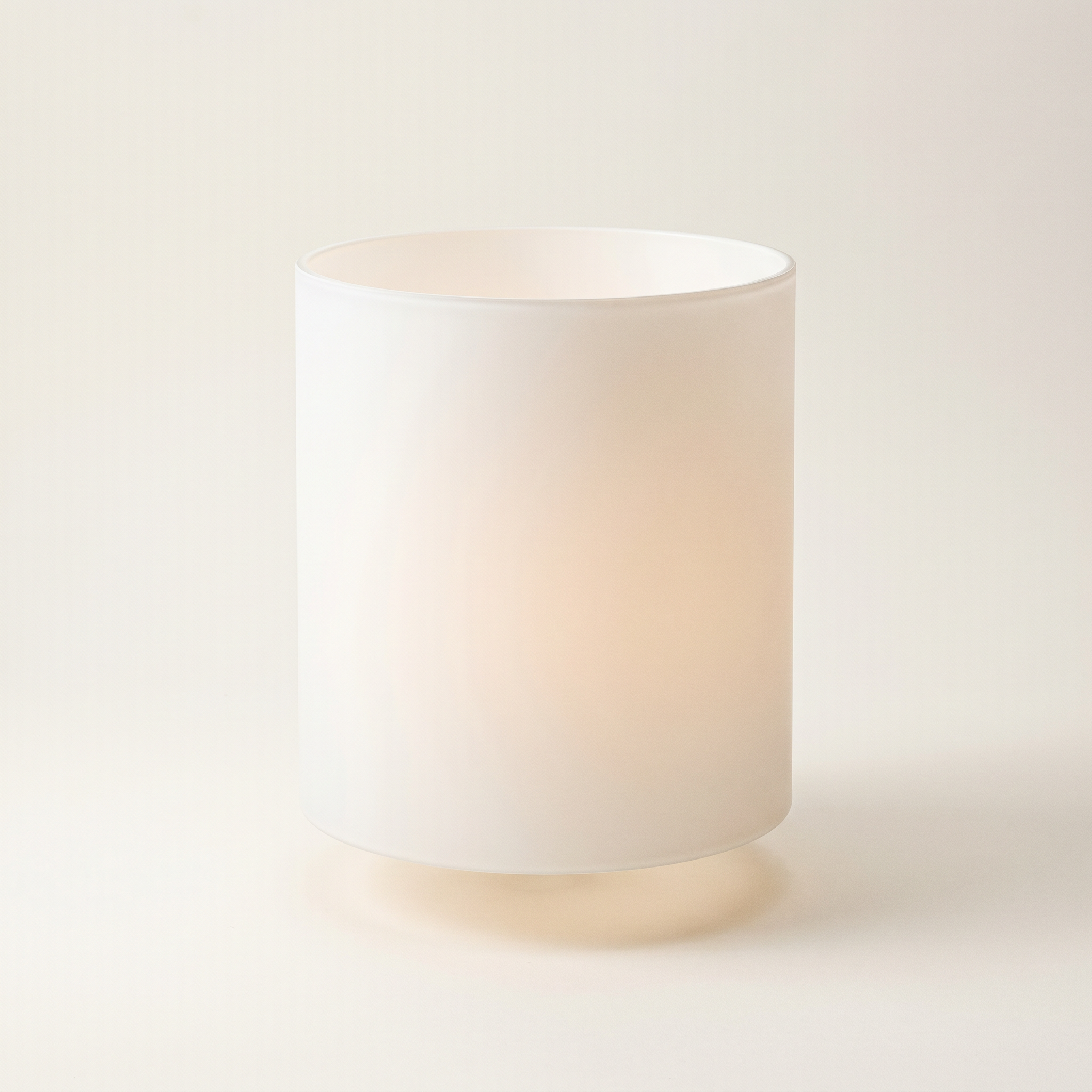
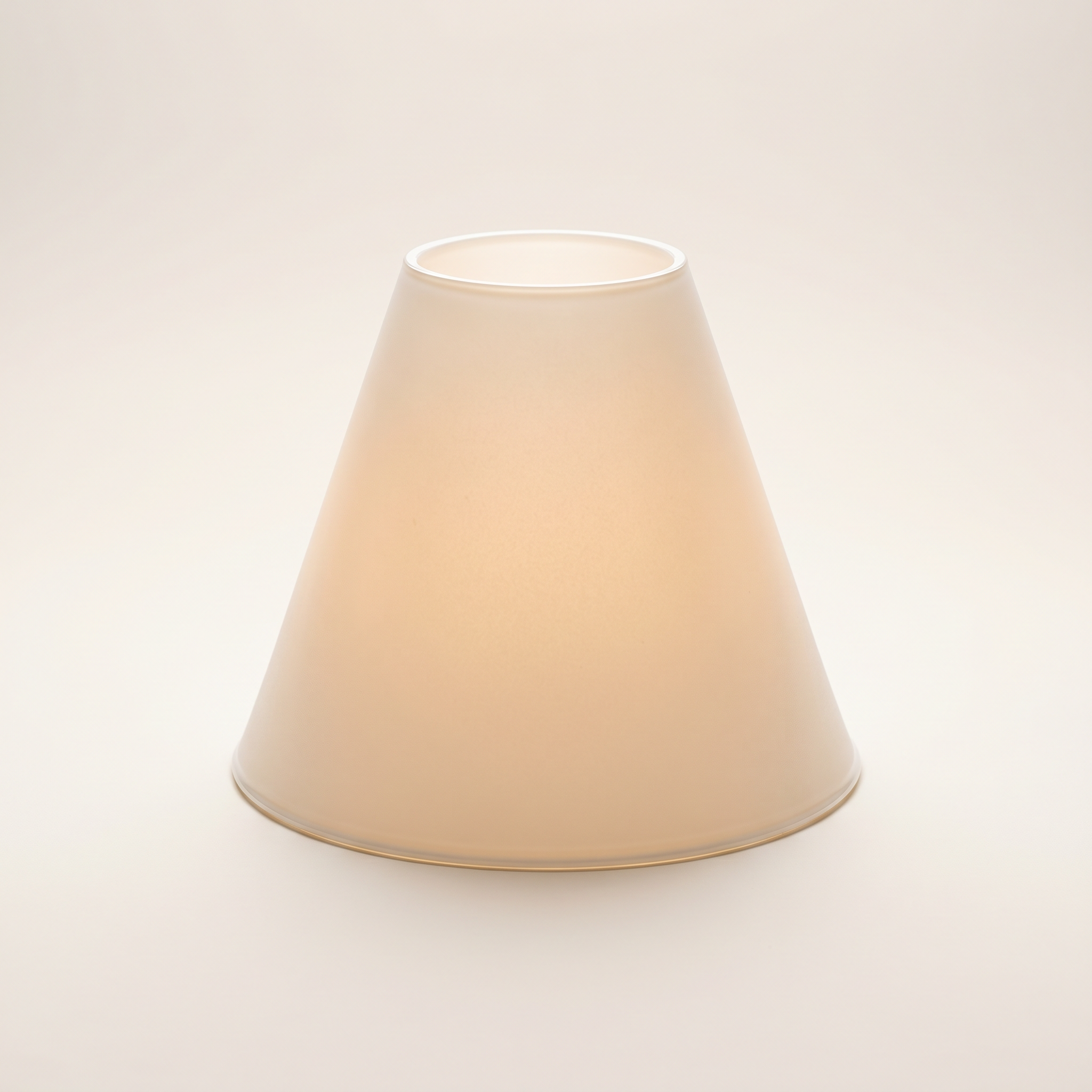
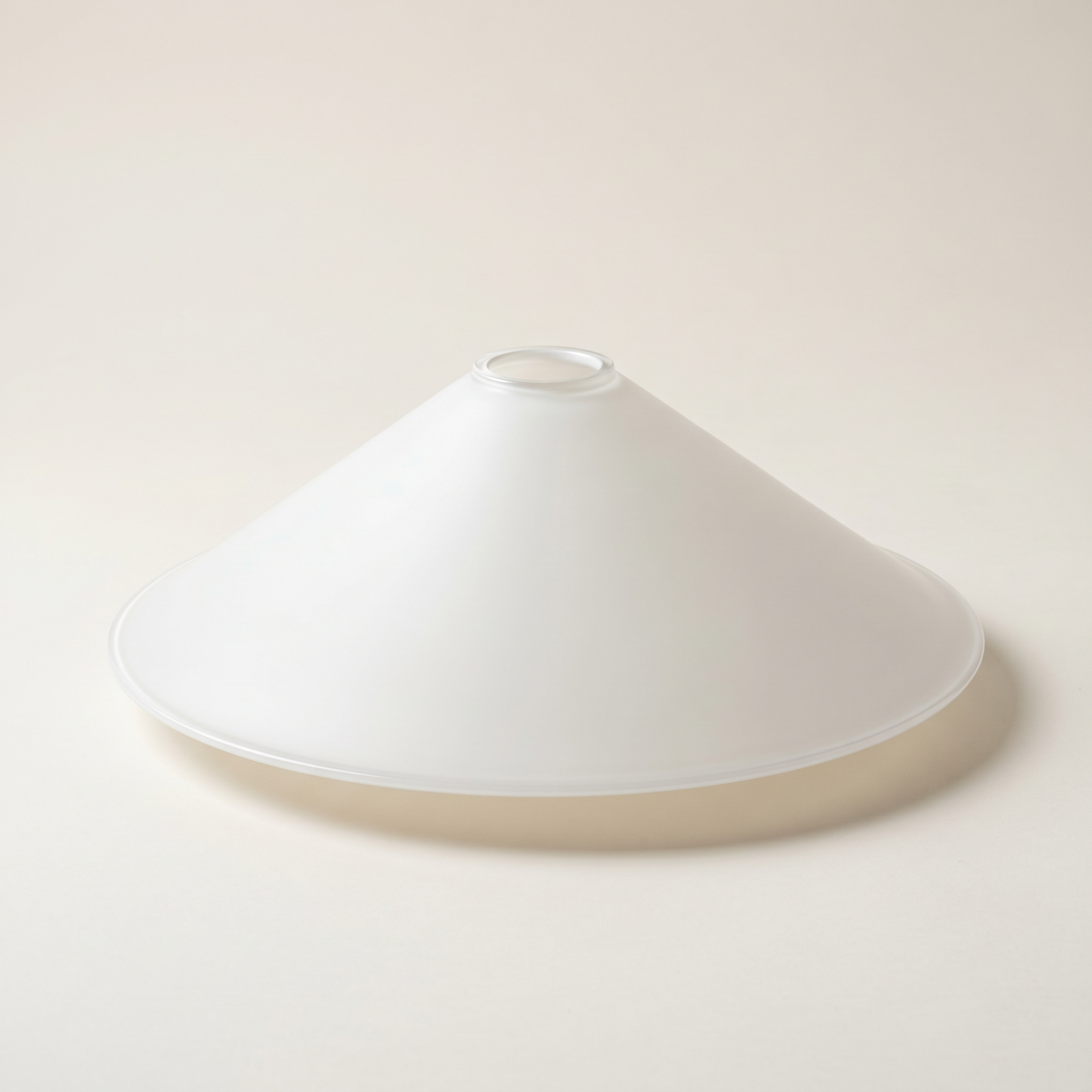
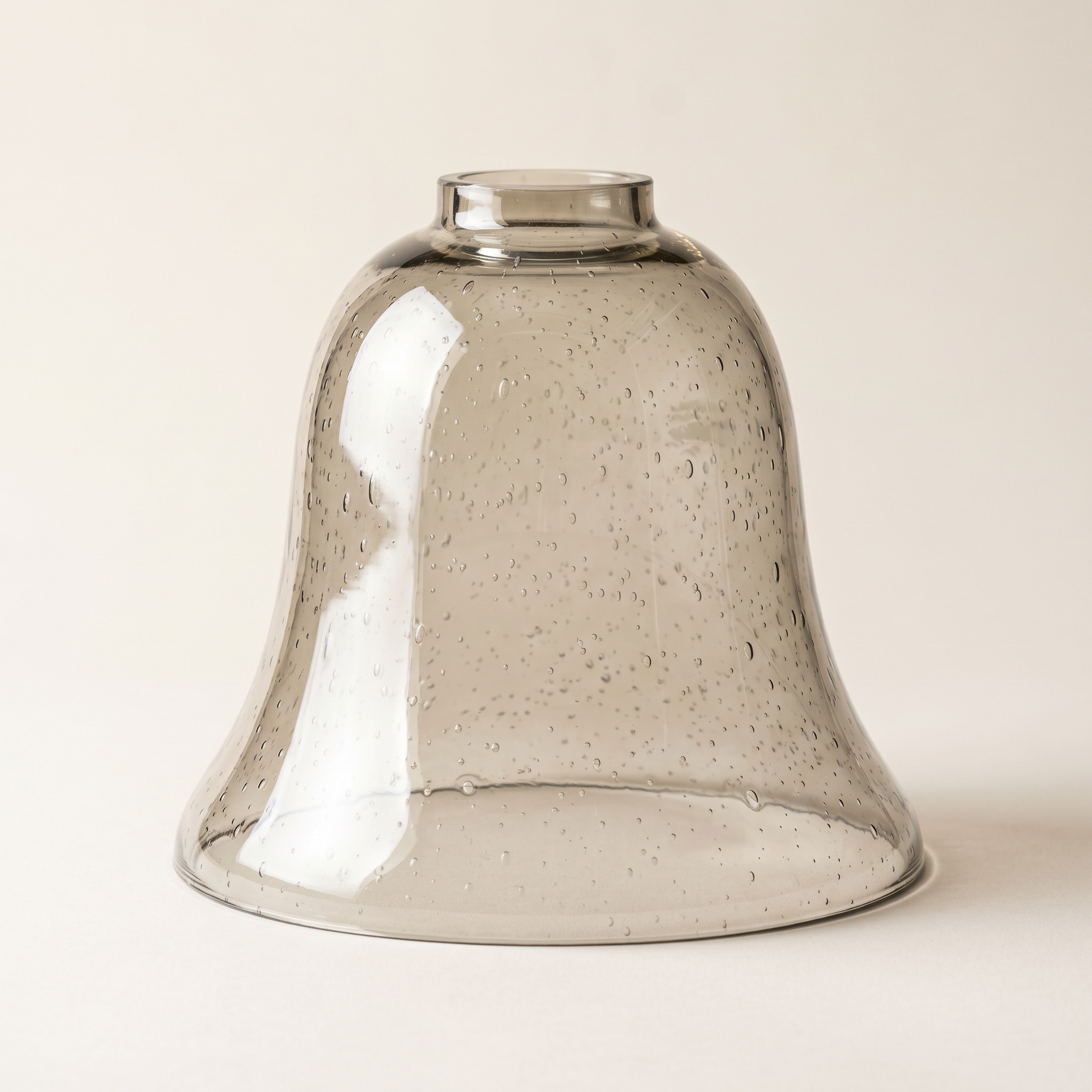
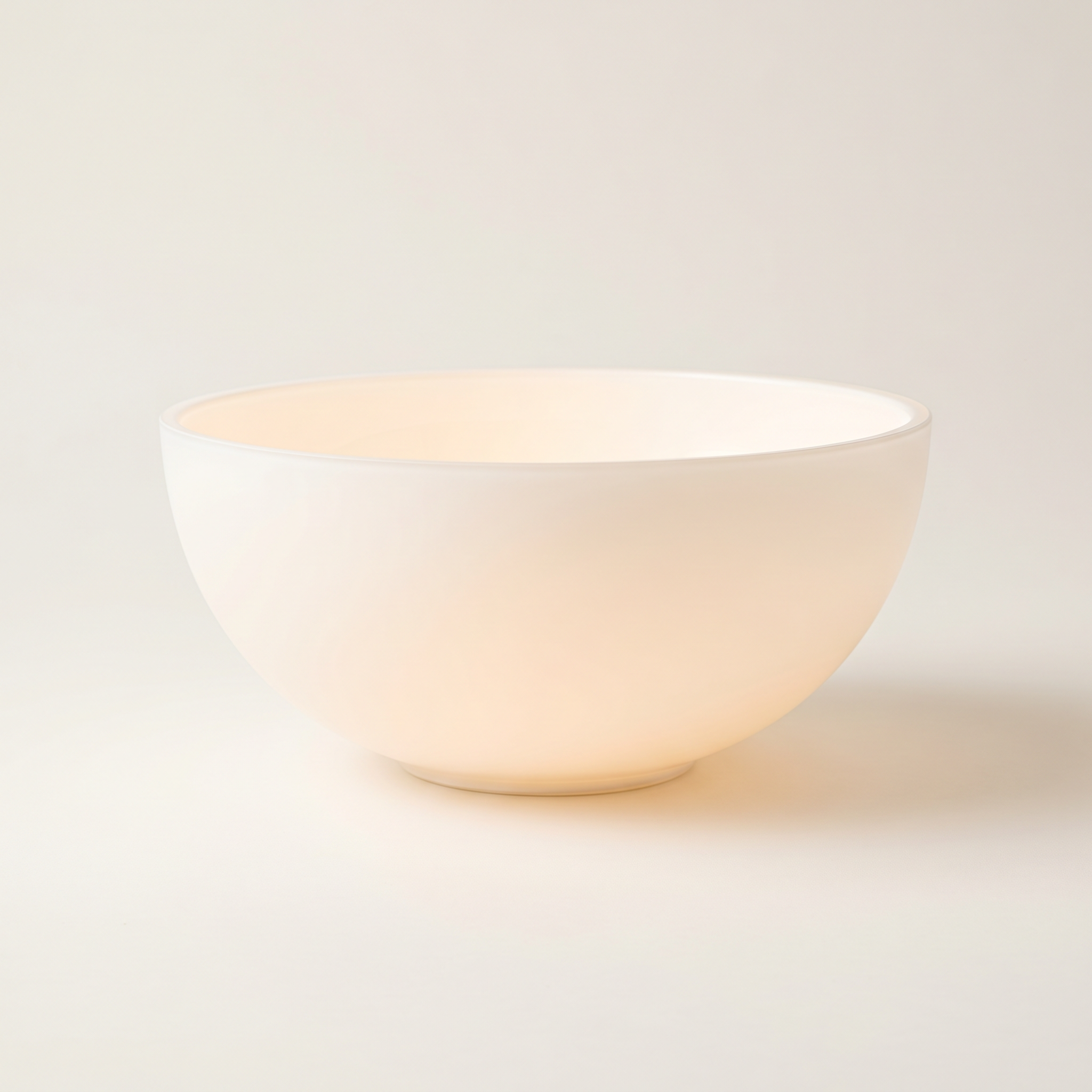
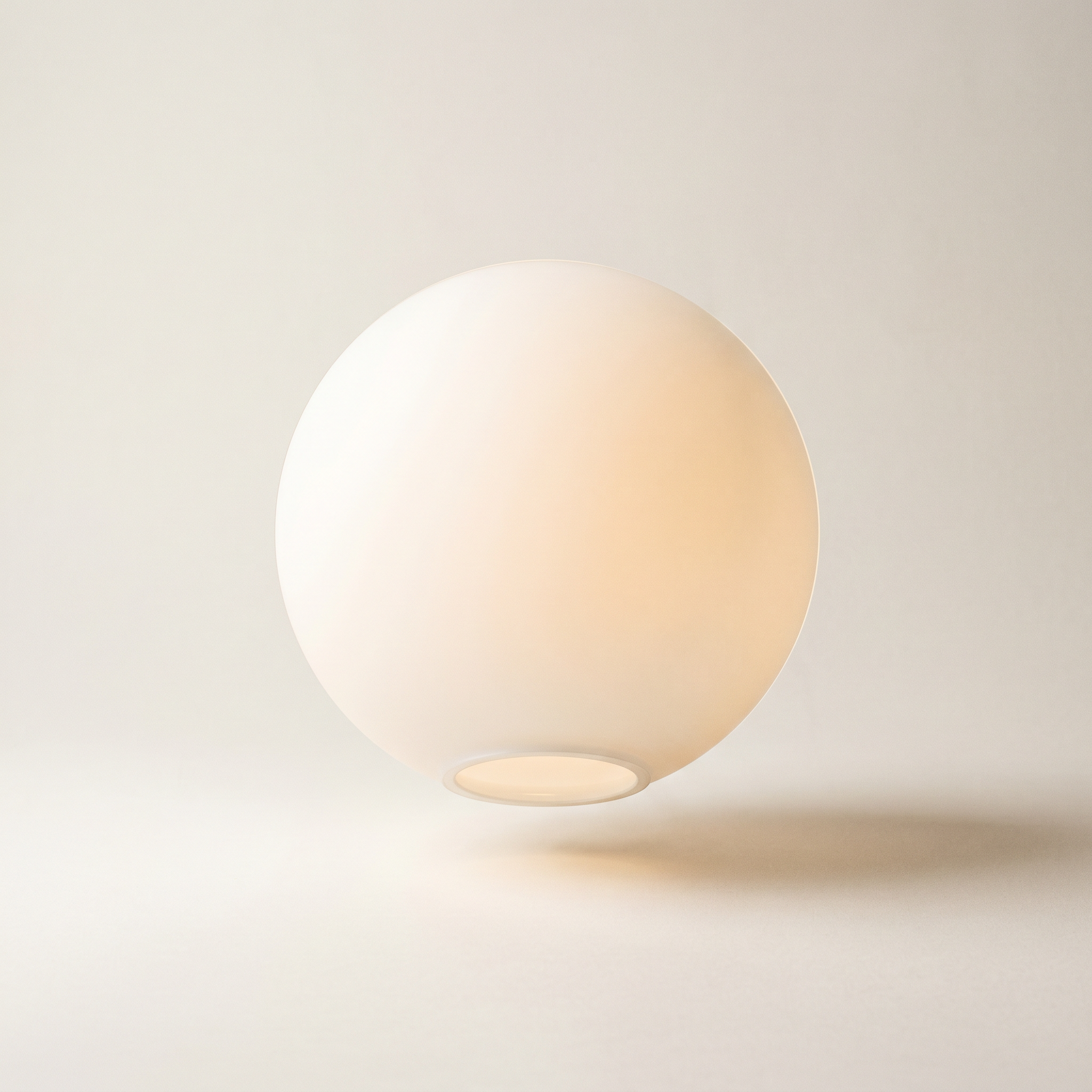
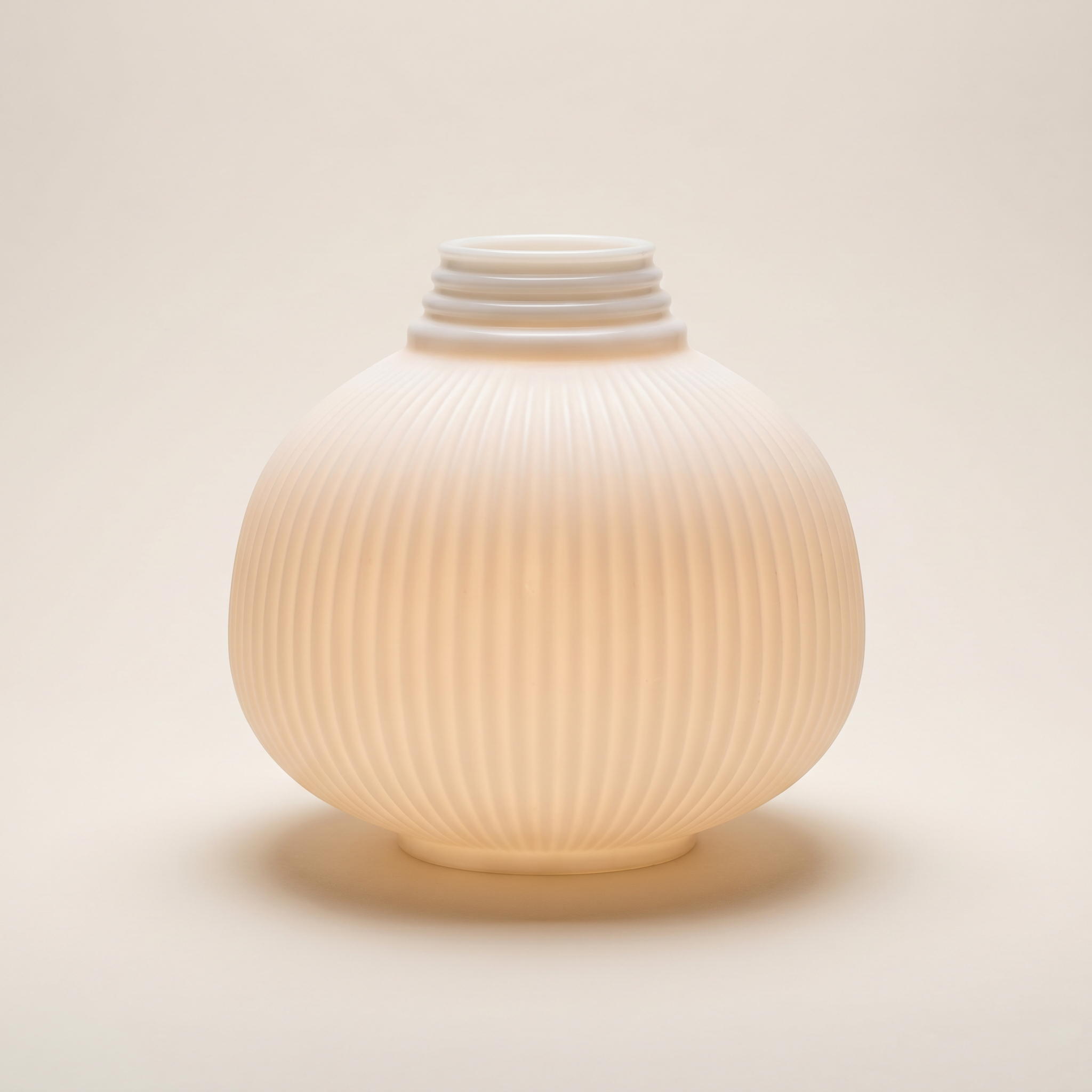
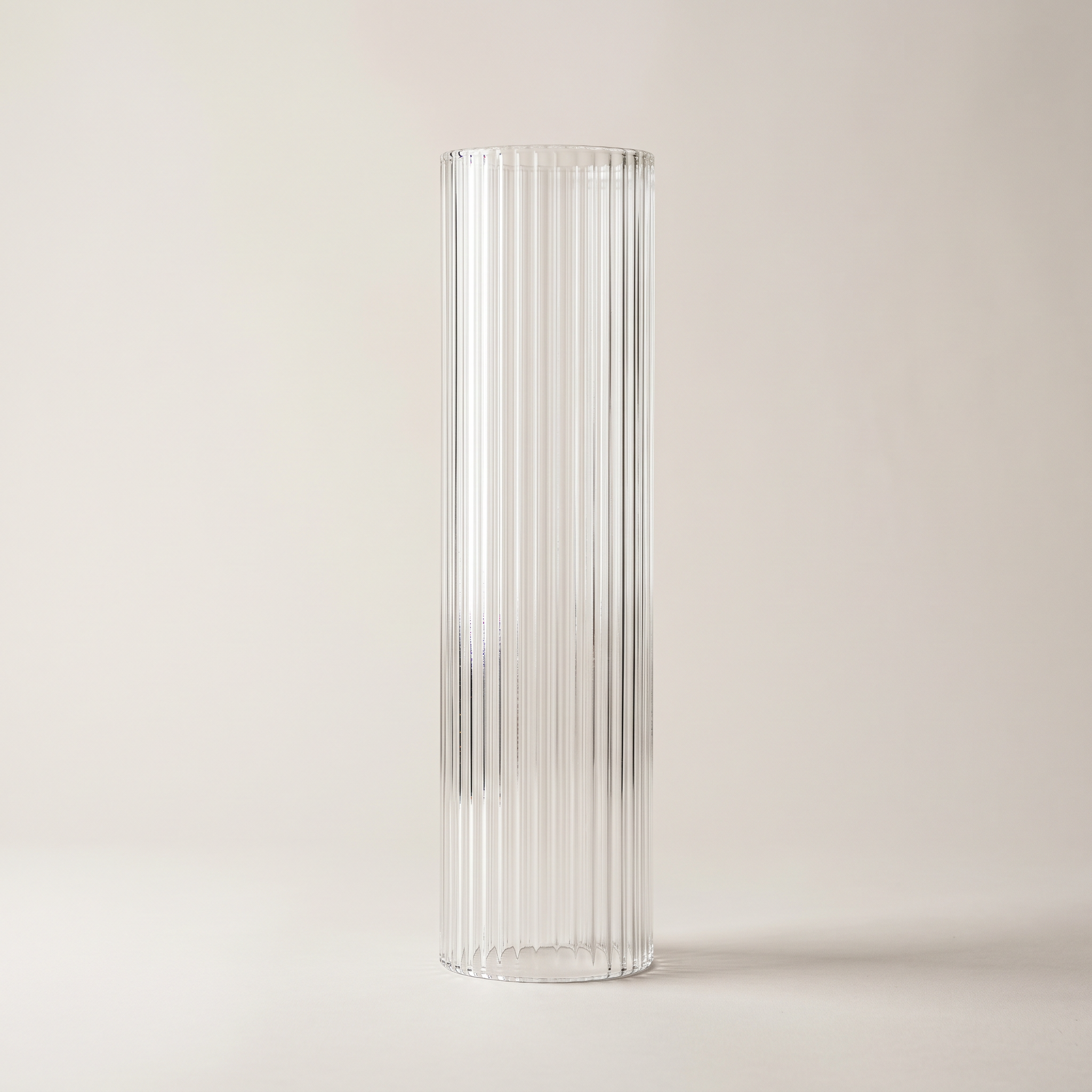
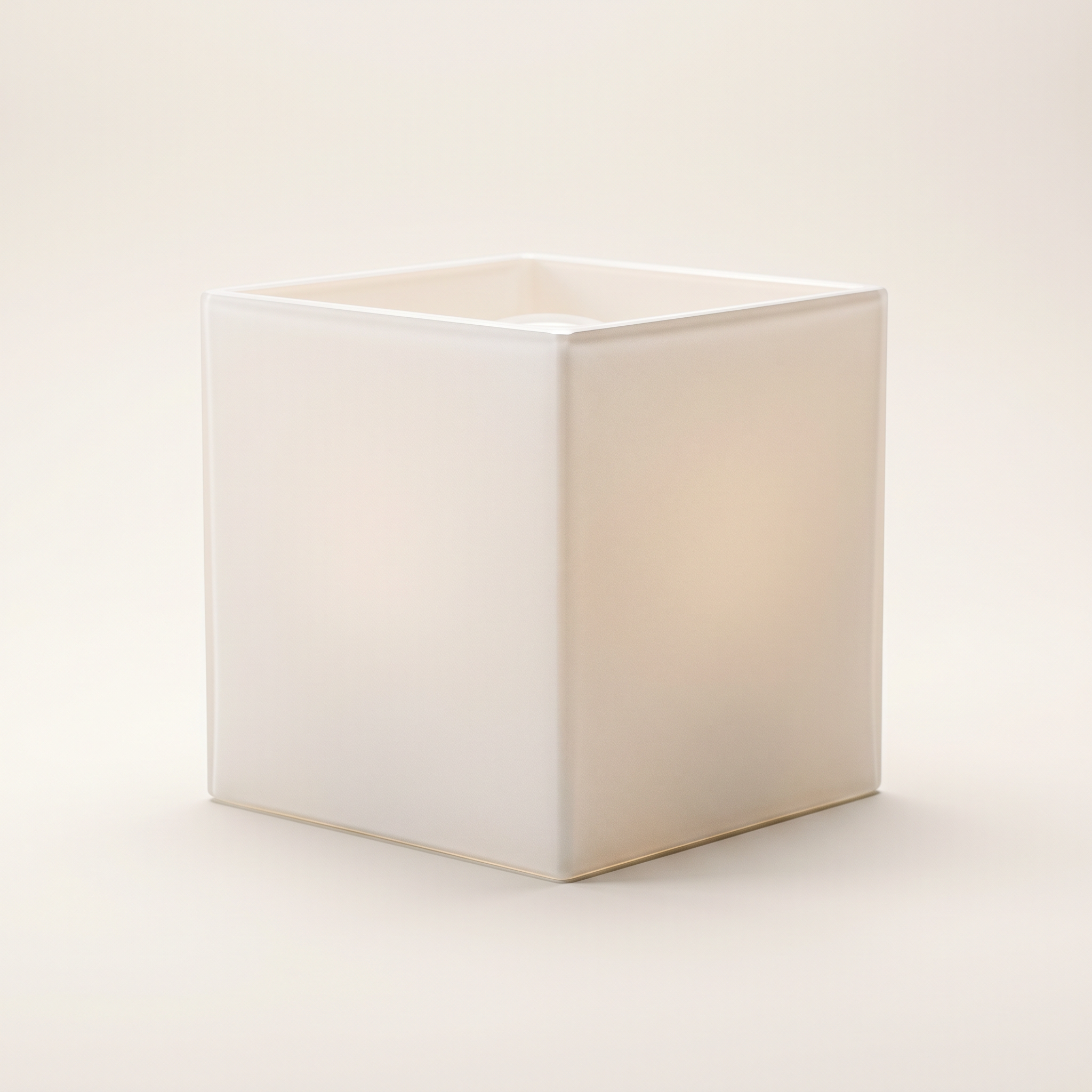
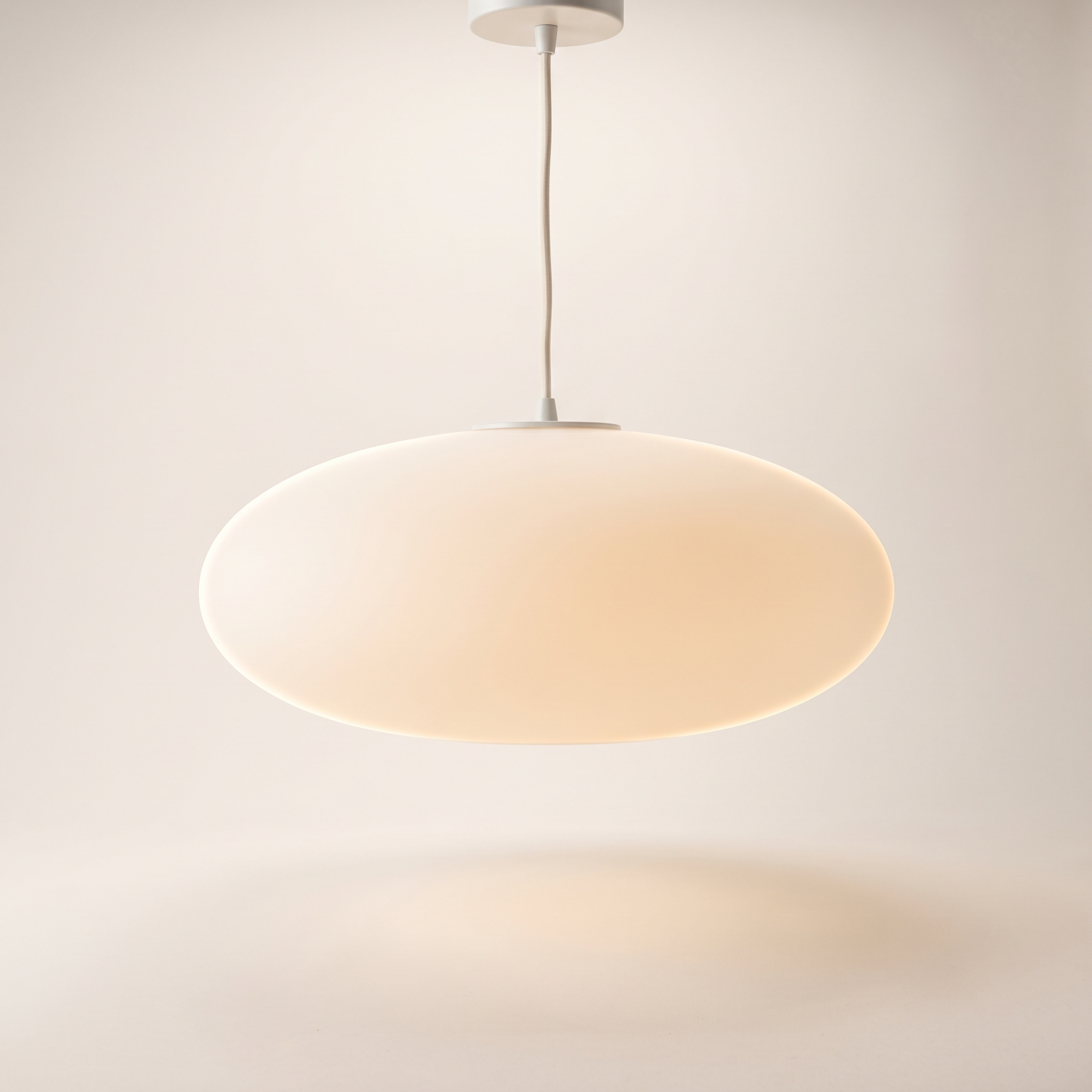
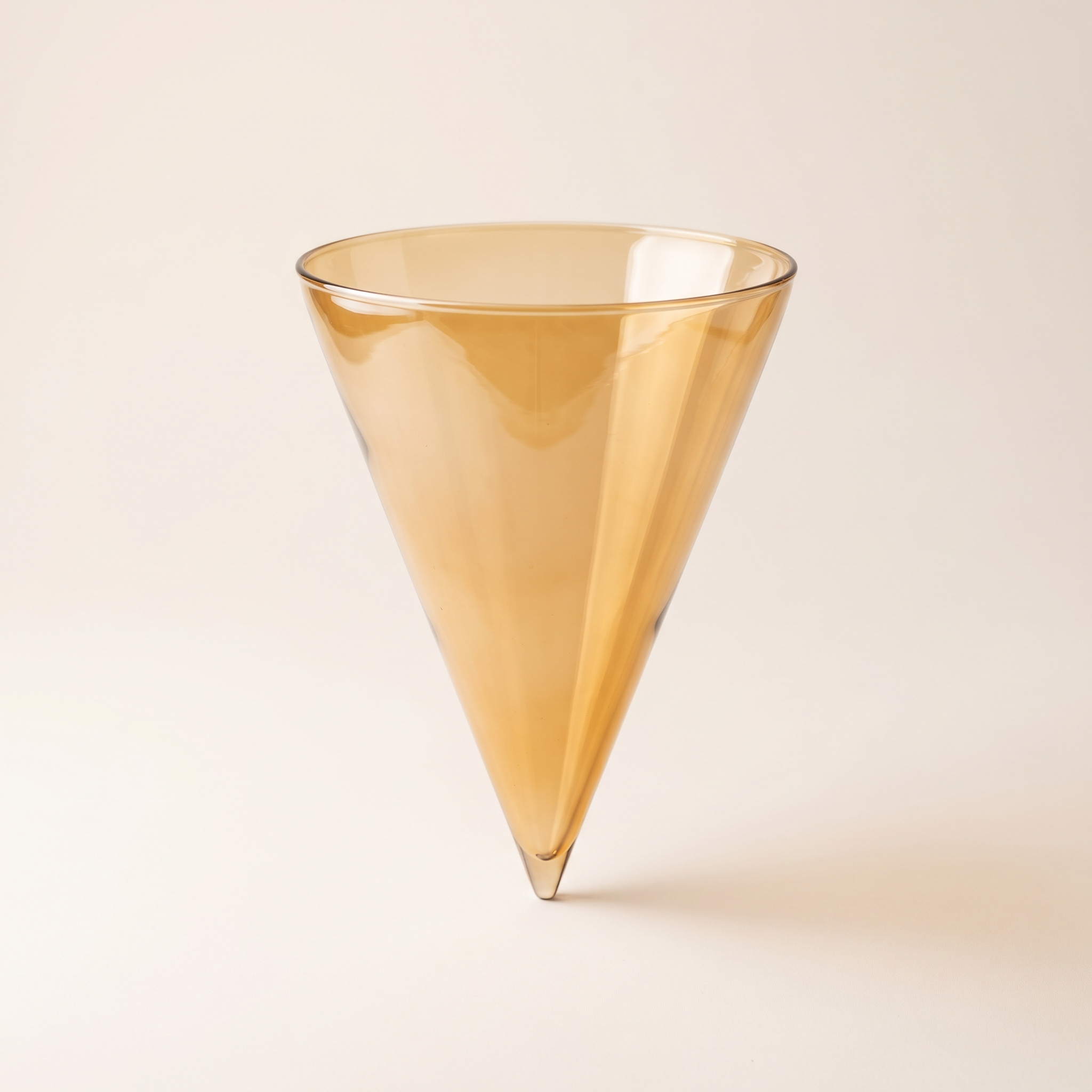
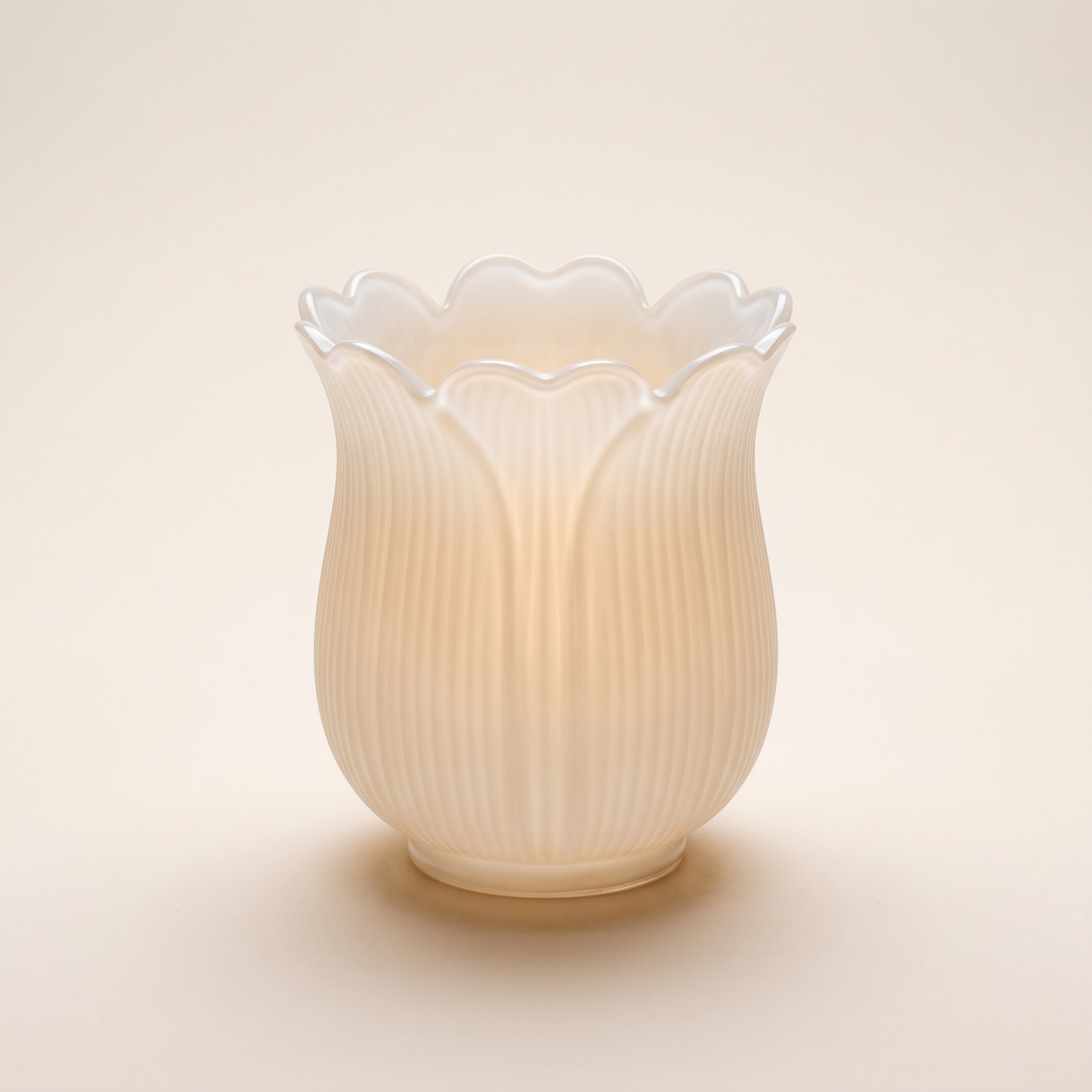
All 12 lampshade shapes at a glance
Use this table as a quick reference when you need to match a shape to a room, a glass type or a fitting without scrolling back through the cards above.
| Shape | Family | Light direction | Best room | Suggested glass |
|---|---|---|---|---|
| Drum | Straight | Up & down, even | Living room, dining | Opal |
| Empire | Flared | Mostly downward | Living room, study | Opal |
| Coolie | Flared | Strong downlight | Reading nook, restaurant | Opal |
| Bell | Curved | Wide downward | Bar, island, café | Clear / seeded |
| Bowl / Dome | Rounded | Diffuse wash | Hallway, hotel corridor | Opal |
| Globe | Rounded | All directions | Bedroom, bathroom | Opal |
| Schoolhouse | Rounded | Warm all-round | Kitchen, farmhouse hall | Opal |
| Cylinder | Straight | Tall, narrow | Sconce, minimalist pendant | Clear / borosilicate |
| Square / Box | Straight | Even, geometric | Modern table lamp | Frosted opal |
| Oval | Rounded | Low, wide | Bedside, hotel room | Opal |
| Cone | Flared | Focused task | Counter, retail | Colored / clear |
| Tulip | Curved | Decorative, upward | Chandelier, sconce | Opal / handmade |
How lampshade shape affects light
Shape is not only a style decision. It is the single biggest factor in how a fixture lights a room, because the openings and the wall angle decide where the light can escape.
| Shape group | Light behaviour | Use it for |
|---|---|---|
| Open top & bottom (drum, cylinder, empire) | Light escapes up and down equally | Ambient and general lighting |
| Wide bottom, narrow top (coolie, cone) | Light is funneled downward into a pool | Task lighting over a surface |
| Closed / enclosing (globe, bowl, schoolhouse, oval) | Light diffuses through the glass in all directions | Soft, glare-free ambient glow |
Glass opacity then fine-tunes the result. Opal glass diffuses the bulb into an even glow and hides the filament, while clear glass shows the bulb and produces sharper, more directional light with visible sparkle.
Choosing a shape by lamp type and room
Two rules cover most decisions. For proportion, a table-lamp shade should be roughly one-third of the total lamp height and a little wider than the widest part of the base. For pendants, scale the shade to the surface below — a single pendant over a small table looks best around one-third of the table’s width, while a dining table usually needs a wider drum, bell or a row of globes.
| Lamp type | Shapes that work best |
|---|---|
| Table lamp | Empire, Drum, Square, Oval |
| Floor lamp | Coolie, Drum, Empire |
| Pendant | Globe, Bell, Cone, Schoolhouse, Drum |
| Wall sconce | Cylinder, Tulip, Oval, Bell |
| Flush / semi-flush ceiling | Bowl/Dome, Globe |
Glass type and finish for each shape
Because we are a glass lampshade manufacturer, every shape above can be produced in different glass bodies and surface finishes. The right pairing depends on whether you want diffusion, sparkle, color or heat resistance.
| Glass type | Character | Suits shapes |
|---|---|---|
| Opal / opal-cased | Diffuses light, hides the bulb, even glow | Globe, Bowl, Drum, Schoolhouse, Oval |
| Clear / seeded | Shows decorative bulbs, sparkle, directional | Bell, Cone, Cylinder |
| Colored | Adds mood and accent tone | Cone, Bell, Tulip |
| Borosilicate | High heat & thermal-shock resistance | Cylinder, Globe, enclosed fixtures |
Finishes — frosted, acid-etched, sandblasted, electroplated and hand-painted — can be applied to any of these to soften glare or match a brand palette.
How each shape is made: glass lampshade manufacturing processes
The shape a glass shade can take depends heavily on how the glass is formed. A deep globe is blown; a precise square is pressed. Knowing the process helps you specify the right shape and understand its cost, wall thickness and finish. These are the six processes we run in-house.
| Process | How it works | Best for these shapes |
|---|---|---|
| Mouth-blown | Molten glass is blown by hand into a mould or free-formed, giving organic, seamless curves and a soft hand-made character. | Globe, Bell, Cone, Tulip |
| Machine-pressed | Glass is pressed into a steel mould under pressure for tight tolerances, crisp edges and consistent repeat production. | Drum, Square, Schoolhouse |
| Centrifugal (spun) | Glass is spun in a rotating mould so centrifugal force shapes wide, even, open forms with thin walls. | Coolie, Bowl, Dome |
| Lampwork (borosilicate) | Borosilicate rod and tube are worked at the torch for heat-resistant, intricate, fine detail. | Cylinder, decorative small shades |
| Curved / bent | Flat or pressed glass is heat-slumped over a form to create smooth single or compound curves. | Oval, Bowl, curved panels |
| Handmade / art glass | Hand-shaping, casing and hand-painting for one-off and small-batch decorative pieces. | Tulip, colored & art shades |
Lampshade shapes by interior design style
Shape is one of the fastest ways to signal a design language. If you are specifying shades for a project, start from the room’s style and work toward the silhouette.
| Interior style | Shapes that fit | Why |
|---|---|---|
| Modern & minimalist | Drum, Globe, Square, Cylinder | Clean geometry and unbroken surfaces keep the look quiet and architectural. |
| Traditional & classic | Empire, Bell, Schoolhouse | Tapered and curved silhouettes read as timeless and formal. |
| Industrial | Cone, Coolie, Schoolhouse | Open metal-and-glass forms echo factory task lighting; clear or seeded glass adds grit. |
| Art Deco & Art Nouveau | Tulip, Bell, fluted Cylinder | Sculptural, petalled and fluted glass suits decorative period interiors. |
| Farmhouse & rustic | Schoolhouse, Bowl, Globe | Warm opal glass and rounded forms feel homely and unfussy. |
| Coastal & Scandinavian | Drum, Globe | Soft, light, glare-free opal shapes keep rooms feeling bright and calm. |
How to measure and specify a glass shade for production
For wholesale and OEM orders, a clear spec avoids costly sampling rounds. When you request a quote, the more of these you provide, the faster we can tool and price the shade. A simple sketch with the figures below is usually enough to start.
| Spec | What to provide |
|---|---|
| Top diameter | The width of the upper opening (mm). |
| Bottom diameter | The width of the lower opening (mm) — the widest point on flared shapes. |
| Height | Vertical height; for sloped shades, note the slant height too. |
| Fitter type & size | Fitter neck, spider, UNO or clip — with the neck or ring diameter. |
| Wall thickness | Affects weight, diffusion and strength; typically 2–4 mm for shades. |
| Glass & finish | Opal, clear, colored or borosilicate, plus frosted, etched or painted. |
| Quantity | MOQ is 500 pcs for catalog shapes and 1,000 pcs for full custom tooling. |
Not sure of every figure? Send a sample or a competitor reference and our engineers will reverse-engineer a spec. Request a quote to start.
Glass lampshade shape trends in 2026
Shape preferences move with interior fashion. These are the directions we are seeing most in current project and retail orders:
- Oversized globes. Large opal spheres, single or in clusters, continue to dominate modern pendants.
- Fluted and ribbed glass. Vertical fluting on cylinders, bells and tulips adds texture and catches light.
- Smoked and colored glass. Amber, smoke grey and soft green on cone and bell shapes bring warmth and mood.
- Sculptural and organic forms. Asymmetric and hand-blown shapes read as crafted rather than mass-produced.
- Opal revival. Milk-white schoolhouse and dome shapes are returning through farmhouse and heritage interiors.
Common mistakes when choosing a lampshade shape
- Getting the proportion wrong. A shade that is too small or too tall unbalances the base. Keep a table shade near one-third of the lamp height.
- Ignoring the fitter. A beautiful shape is useless if its fitting does not match your fixture. Confirm fitter type before you order.
- Using clear glass where you want soft light. Clear glass shows the bulb and can glare; choose opal for ambient spaces.
- Mismatching shape and base. Angular shades suit angular bases; curved shades suit contoured bases.
- Forgetting the room scale. A small cone is lost over a large island; size the shape to the surface and ceiling.
Caring for glass lampshades
Glass shades are easy to maintain and outlast most fabric shades. Dust them regularly with a soft, dry microfibre cloth. For frosted or opal glass, clean with a barely damp cloth and a drop of mild detergent, then dry to avoid water marks. Clear and seeded glass can take a standard glass cleaner sprayed onto the cloth rather than the shade. Let a shade cool before handling, and stay within the fixture’s rated bulb wattage so the glass is never thermally stressed.
Other lampshade shapes worth knowing
Beyond the 12 core shapes, a few specialist forms come up in lighting projects. All can be produced to order:
- Gourd: a curvy double-bulge silhouette, popular on ceramic and glass table lamps.
- Beehive: stacked horizontal ribs that taper like a hive, a vintage favourite.
- Teardrop: a rounded body drawn to a soft point, common in pendant clusters.
- Prismatic / holophane: ribbed clear glass that refracts light, used in industrial and heritage fixtures.
- Pagoda: a tiered, stepped profile with an Asian-inspired line.
- Hexagon: a six-sided geometric take on the drum or globe.
Which lampshade shape fits which space?
| Space | Recommended shapes | Why |
|---|---|---|
| Home | Drum, Empire, Globe, Bell | Soft, even ambient light for living and dining spaces. |
| Restaurant / Café | Bell, Cone, Coolie | Focused downlight over tables and counters. |
| Hotel | Oval, Bowl/Dome, Schoolhouse | Refined, glare-free light for rooms and corridors. |
| Engineering / Commercial | Cylinder, Square, Globe | Durable, uniform output for project lighting. |
| Outdoor / Lawn | Globe, Bowl/Dome | Sealed, weather-resistant glass for exterior fixtures. |
Any shape, any glass — made to order
Every shape on this page can be produced in opal, clear, colored or borosilicate glass, with frosted, etched or hand-painted finishes. As a glass lampshade manufacturer we also produce fully custom shapes from your drawings or samples via OEM/ODM, with fitter and dimension changes as standard. MOQ starts at 500 pcs for catalog shapes and 1,000 pcs for full custom tooling.
Need a specific shape or a custom glass shade?
Send us your shape, size, glass type and fitter — we’ll quote factory-direct.
Request a quoteLampshade terminology glossary
| Term | Meaning |
|---|---|
| Fitter | The part of the shade that connects it to the lamp or fixture. |
| Fitter neck | A glass neck (often 2.25″ or 3.25″) that slips into a fixture and is held by set screws — common on glass pendants. |
| Spider fitter | A cross-bar with a central hole that rests on a harp and is held by a finial. |
| UNO fitter | A ring that threads directly onto the lamp socket below the bulb. |
| Clip-on | A wire clip that grips the bulb itself, used on small shades. |
| Harp | The metal frame that holds a spider-fitter shade above the socket. |
| Finial | The decorative cap that screws on to secure a spider-fitter shade. |
Frequently asked questions
What are the most common lampshade shapes?
The most common lampshade shapes are the drum, empire, coolie, bell, bowl/dome, globe, schoolhouse, cylinder, square, oval, cone and tulip. Drum and empire are the most widely used for table and pendant lamps, while globe and bell are popular for glass pendants.
What is the difference between an empire and a coolie shade?
Both flare from a narrow top to a wide base, but an empire shade has a moderate, gentle slope, while a coolie shade is much wider and shallower — its base is far larger than its top, giving a broad downward spread of light.
Which lampshade shape gives the most light?
Open, flared shapes like the coolie and cone direct the most light downward, making them ideal for task lighting. Globe and drum shades spread light more evenly in all directions for ambient lighting.
What shape lampshade is best for a glass pendant light?
Globe, bell, cone and schoolhouse shapes are the most popular for glass pendants because they mount cleanly to a fitter neck and look balanced when hung. Opal glass softens the glare; clear glass shows the bulb and filament.
What size lampshade do I need for my lamp?
As a rule of thumb, a table-lamp shade should be about one-third of the total lamp height and slightly wider than the widest part of the base. For pendants, match the shade width to the surface below — roughly one-third of a small table’s width.
Should I choose opal or clear glass for my shade?
Choose opal glass when you want an even, glare-free glow that hides the bulb — ideal for bedrooms, hotels and ambient lighting. Choose clear or seeded glass when you want to show off a decorative filament bulb and create sparkle and directional light.
Are glass lampshades heat resistant?
Standard soda-lime glass shades suit normal LED and low-wattage bulbs. For high-wattage, enclosed or outdoor fixtures, borosilicate glass is recommended because it withstands high heat and thermal shock.
Can glass lampshades be made in custom shapes?
Yes. A glass lampshade manufacturer can produce custom shapes, sizes, glass types and fitters via OEM/ODM using mouth-blown, machine-pressed, centrifugal or lampwork processes. Provide a drawing or sample to get a quote.
How do I know what fitter or fitting my shade needs?
The fitting depends on the lamp, not just the shape. Common fittings include spider, UNO, fitter neck and clip-on. See our dedicated lampshade frames, sizes and fitters guide for measurements and compatibility.
What is the most popular lampshade shape?
The drum is currently the most popular shape for modern interiors thanks to its clean lines and balanced light, while the empire remains the classic choice for traditional table lamps.
What is the difference between a drum and a cylinder lampshade?
Both have straight vertical sides, but a drum is wider than it is tall, while a cylinder is taller than it is wide. The drum suits pendants and table lamps; the slim cylinder suits wall sconces and minimalist fixtures.
Which lampshade shape is best for a bedside table?
Compact rounded shapes work best beside a bed. An oval or small globe in opal glass gives a soft, glare-free glow at close range without taking up much surface space.
Do glass lampshades reduce glare?
Opal and frosted glass shades reduce glare significantly by diffusing the bulb into an even glow. Clear glass does not reduce glare, so it is best paired with a decorative low-output filament bulb.
What glass lampshade shapes are trending in 2026?
Oversized opal globes, fluted and ribbed cylinders, and smoked or colored bell and cone shapes are the leading trends in 2026, alongside a revival of milk-white schoolhouse and dome shades.
How do I measure a glass lampshade for replacement?
Measure the top diameter, the bottom diameter, the height, and the fitter type and size. These four figures let a manufacturer match or reproduce a shade. A photo with a ruler in frame also helps.
References & further reading
This guide draws on established references for glass types, finishes and lampshade history:
- Wikipedia — Lampshade (en.wikipedia.org/wiki/Lampshade)
- Wikipedia — Borosilicate glass (en.wikipedia.org/wiki/Borosilicate_glass)
- Wikipedia — Soda–lime glass (en.wikipedia.org/wiki/Soda-lime_glass)
- Wikipedia — Milk glass / opal glass (en.wikipedia.org/wiki/Milk_glass)
- Wikipedia — Glassblowing (en.wikipedia.org/wiki/Glassblowing)
- Wikipedia — Frosted glass (en.wikipedia.org/wiki/Frosted_glass)
- Wikipedia — Art Nouveau (en.wikipedia.org/wiki/Art_Nouveau)
Request a Quote for Custom Glass Lampshades