
Color and diffusion specification guide
Pink Opalescent Glass Lamp Shades: Color, Diffusion and Custom Sourcing
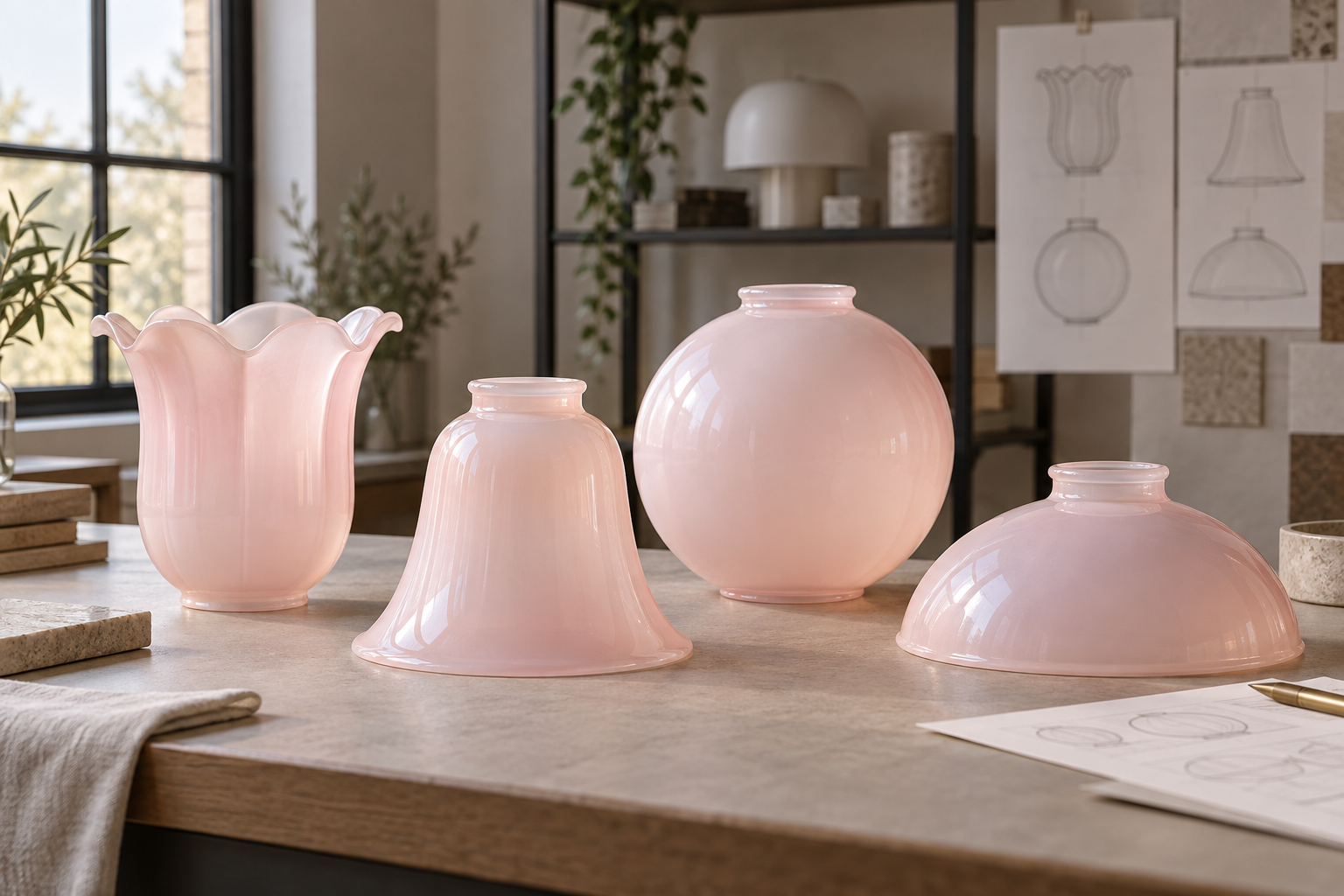
Pink opalescent glass is colored glass with a milky or softly translucent visual effect. It can soften a lamp's beam, show different amounts of pink under different illuminants, and create more variation than a flat pink coating. The term is not a universal recipe, however. A buyer still needs to define the target color, light transmission, opacity, profile, fitter, surface finish, sample approval method and quantity.
For a lighting brand, distributor or project buyer, the safest route is to treat pink opalescent as a visual and performance specification rather than a color name alone. The Corning Museum of Glass definition of opalescent glass covers historical art-glass methods and a glass type resembling opal. The Fitzwilliam Museum terminology record describes opal glass as partially opacified, translucent glass. Those references explain the vocabulary, but they do not replace a project sample or a supplier's material documentation.
Material definition
What is pink opalescent glass?
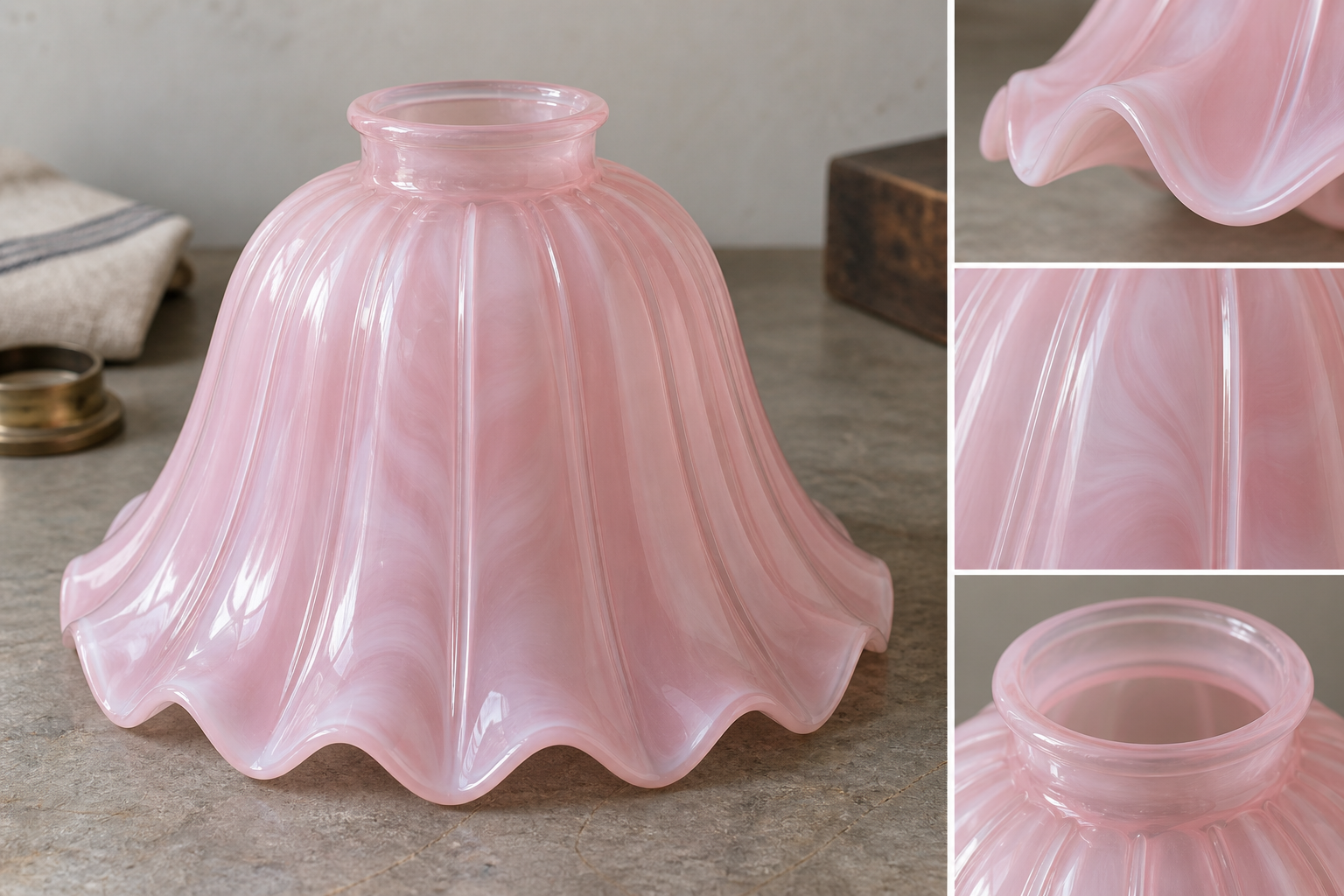
Pink opalescent glass combines a pink body color with a cloudy, pearly or softly diffusing appearance. It may look more opaque at the rim, show milky swirls through the body, or transmit a warm pink glow when illuminated. “Opalescent” describes the optical appearance and the way the glass interacts with light; it does not tell a factory the exact batch formula, wall thickness or finished transmission.
The distinction matters because buyers often mix three different requests: pink transparent glass, pink translucent diffuser glass and historic opalescent art glass. A product can be pink without being opalescent, and it can be opalescent without having the same pink tone from one batch to the next. Ask the supplier to confirm the intended glass family, color route, surface treatment and whether the effect is through-body, layered or finish-dependent.
Term comparison
How pink opalescent differs from clear, frosted and flashed glass
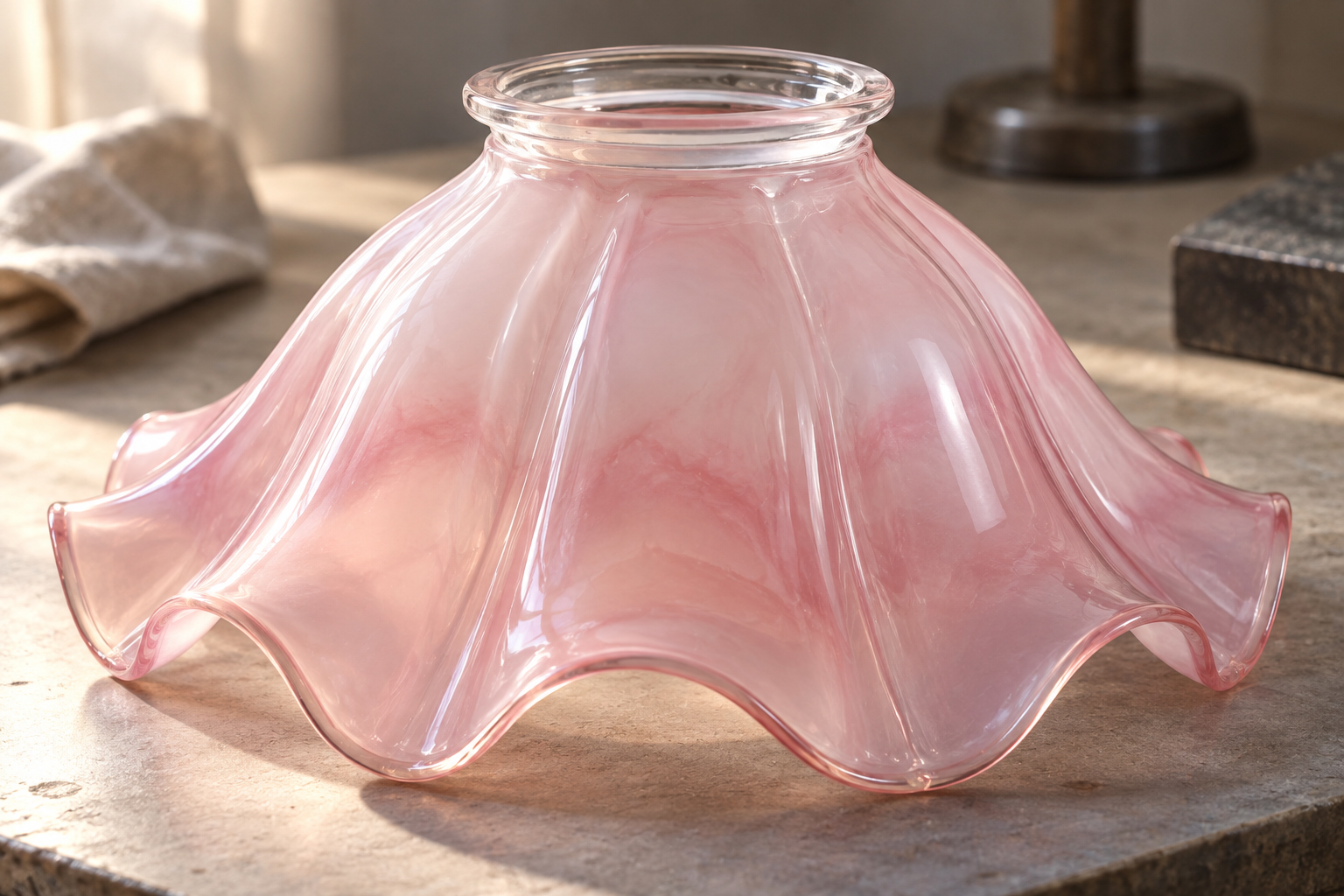
The names below describe different visual mechanisms, so they should not be treated as interchangeable purchasing terms.
| Glass description | Typical visual behavior | What to specify for a lamp shade |
|---|---|---|
| Pink transparent glass | The body stays visibly clear or lightly tinted | Pink hue, visible light transmission, wall thickness and color tolerance |
| Pink opalescent glass | The body has a milky or pearly diffusion with pink color variation | Translucency, diffusion, body color, edge appearance and approved sample |
| Pink frosted glass | A surface treatment scatters light and reduces clarity | Frost method, coverage, haze, cleanability and surface durability |
| Pink flashed glass | A thin colored layer sits over a different glass body | Layer thickness, edge exposure, abrasion risk and color consistency |
| Pink opal glass | A partially opacified glass that may read as milky or softly colored | Opacity, transmission, color under the target illuminant and profile |
The National Glass Association glossary separates diffusion, translucency, transparency, haze, metamerism and transmittance. Use those concepts in the specification instead of relying on a product photo with unknown lighting.
Lighting behavior
How the color changes under different lighting
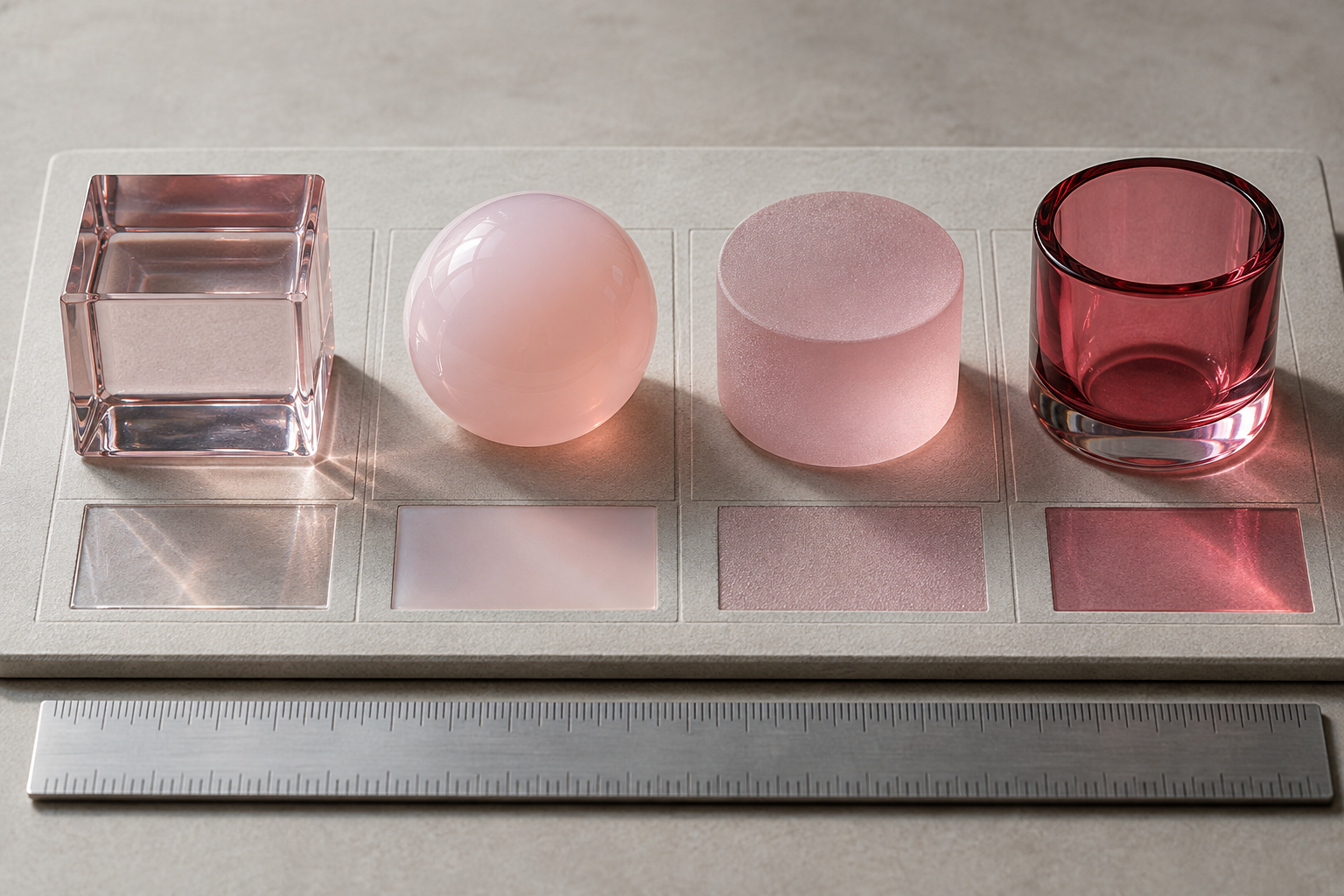
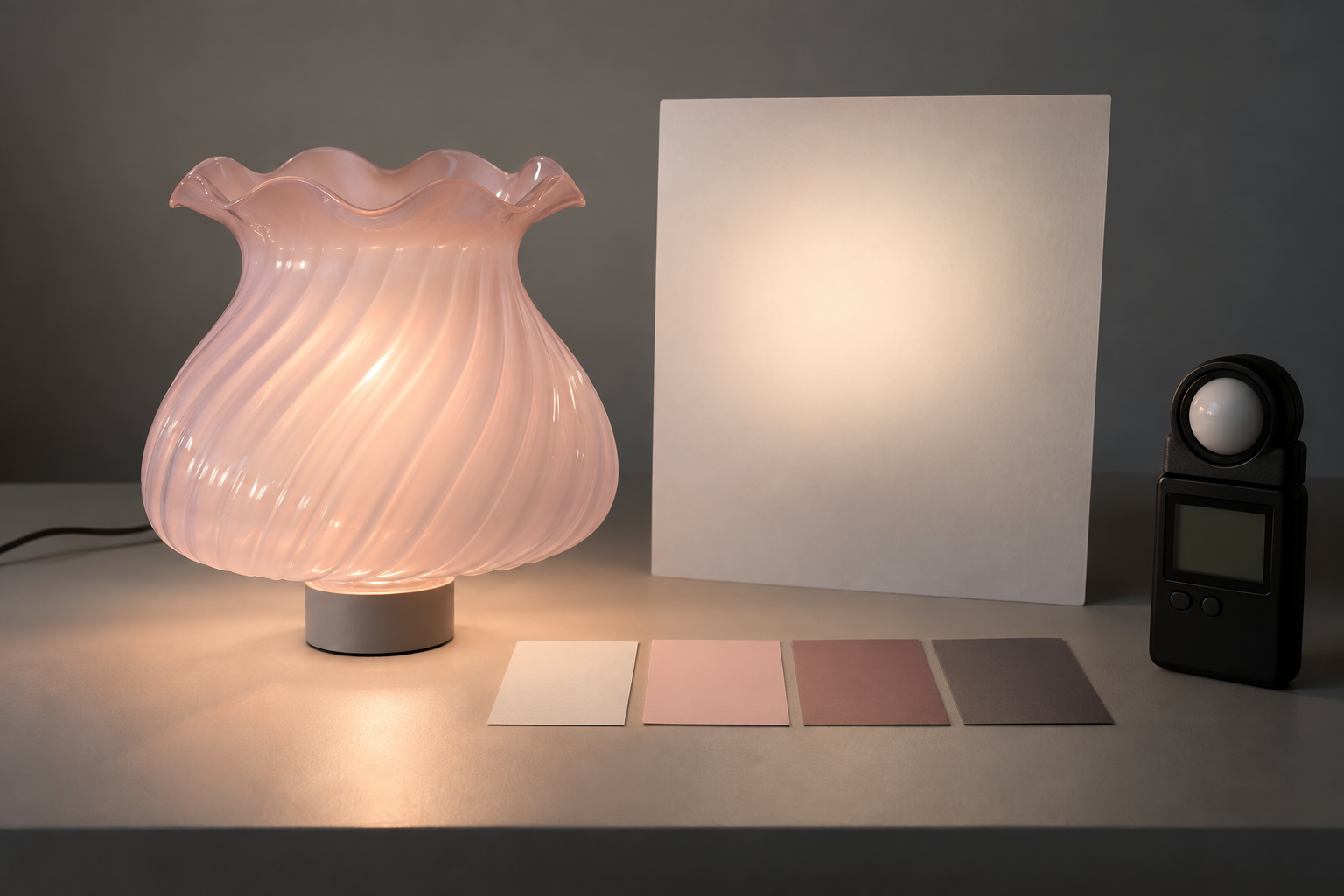
Pink opalescent shades should be reviewed under the light sources used in the finished fixture. A warm LED may make the shade appear peach or salmon, while a cooler source may reveal a paler or more violet cast. A shade can also look different when viewed from the outside with the lamp off, from the front with the lamp on, or against a dark ceiling.
This is a color-control issue, not a reason to reject every visible difference. Define the viewing conditions before sampling: light source or CCT, dimming state, background, viewing distance, camera settings and whether the shade is photographed lit or unlit. The NGA glossary describes metamerism as a color match under one illuminant that fails under another. That is why a single phone photograph is weak evidence for a repeat order.
For a coordinated collection, approve a physical master sample or a documented color reference. If a brand uses a color system, include the reference as guidance, then approve the actual glass because translucency and wall thickness can change the perceived result.
Profile choice
Choose the shade profile before the color is finalized
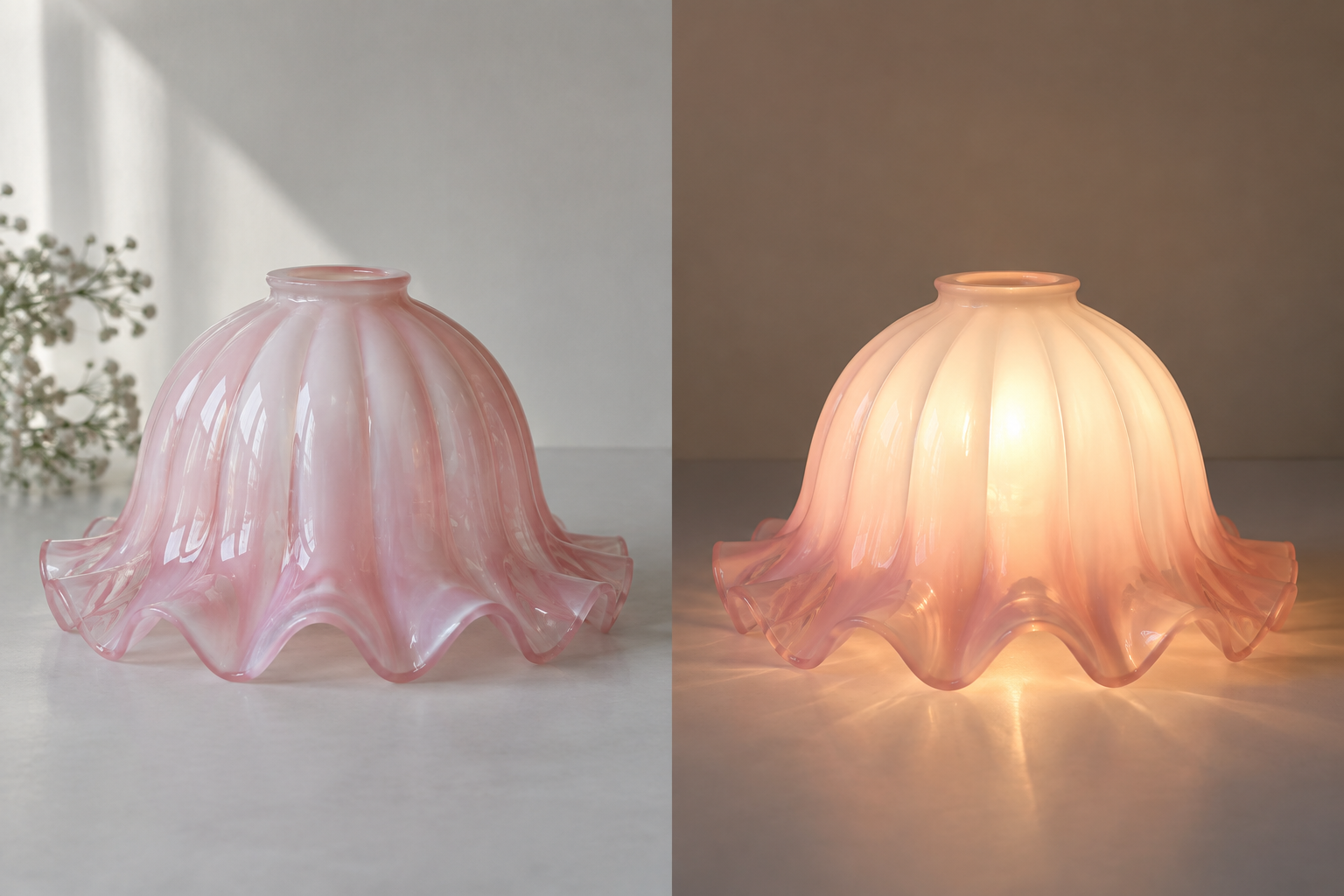
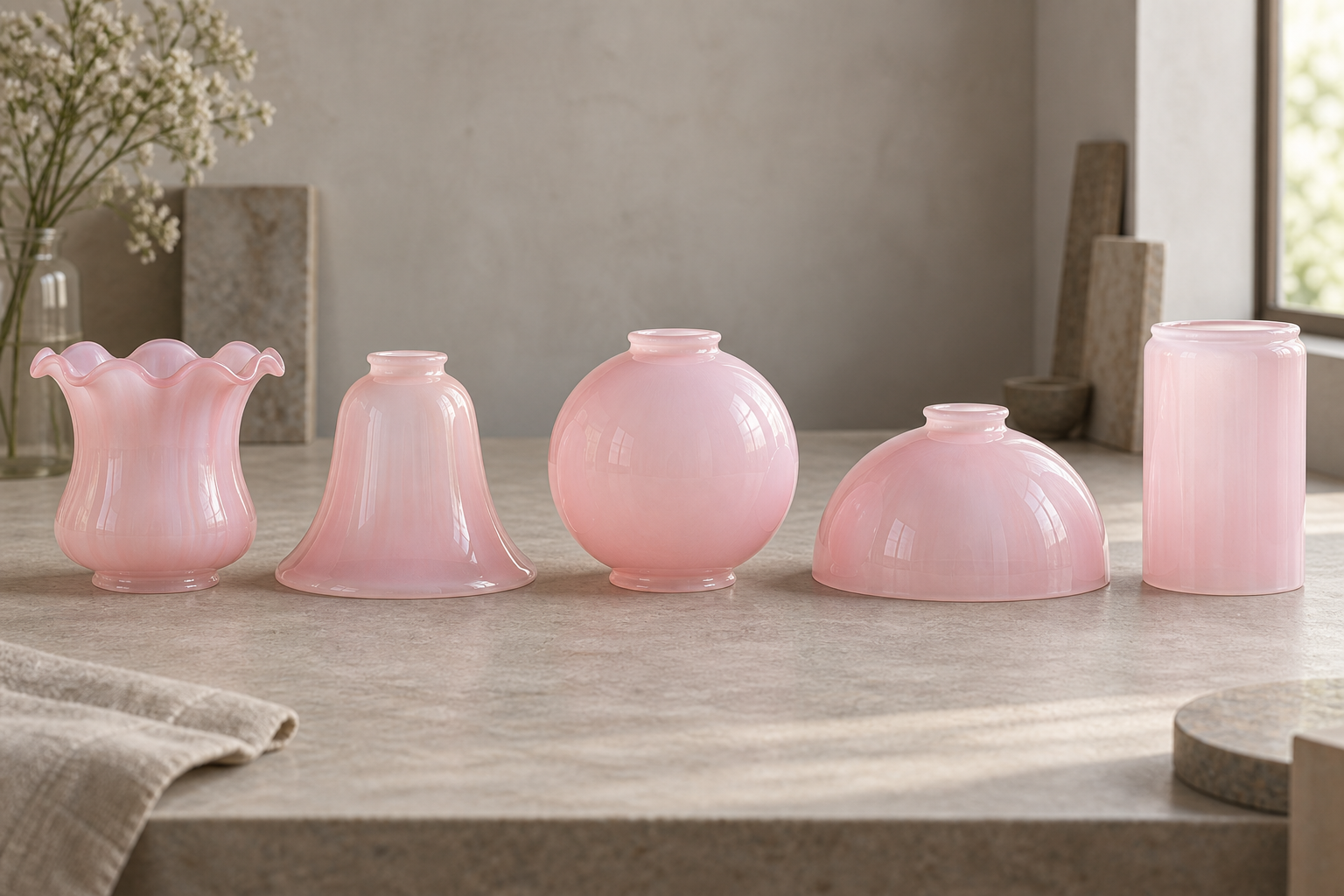
The same pink opalescent glass can read very differently in a tulip, bell, globe, cylinder, dome or shallow bowl. A narrow neck may concentrate color at the rim. A large globe may spread the light more evenly. A flared form may show a stronger transition from a denser lower edge to a brighter upper body.
Choose the geometry that fits the fixture and application first, then tune the color and diffusion within that geometry. For replacement work, the existing fitter and seated height are functional constraints. For a new lighting collection, the shade profile can be developed together with the holder, bulb position, heat path and cleaning access.
Use the JX glass lamp shade catalog to organize the visual discussion, but treat catalog references as a starting point. A supplier still needs the drawing, sample and application details before confirming feasibility.
Diffusion brief
Specify diffusion and translucency in buyer language
“Soft light” is useful as a design goal but too vague for production. State whether the shade should hide the LED point, soften a filament, maintain a visible glow, or provide a mostly opaque decorative body. If a fixture has a high-lumen source, confirm how much light must exit through the body and whether the opening should remain clearer than the sides.
| Buyer question | Useful specification language |
|---|---|
| Should the light source be visible? | Fully obscured, softly visible, or intentionally visible |
| How should the body transmit light? | Even diffuse glow, stronger rim glow, or directional transmission |
| How should the pink read? | Pale blush, medium rose, dusty pink or another approved reference |
| What surface character is acceptable? | Smooth opalescent body, controlled swirls, seeded texture or uniform haze |
| What must remain stable? | Color, transmission, profile, opening and finish across the approved batch |
Avoid setting an invented percentage for transmission unless the project has a test method and instrument. If photometric performance matters, agree on the test fixture, sample position, lamp source and measurement report before production.
Fit control
Lock the fitter and dimensions before sampling
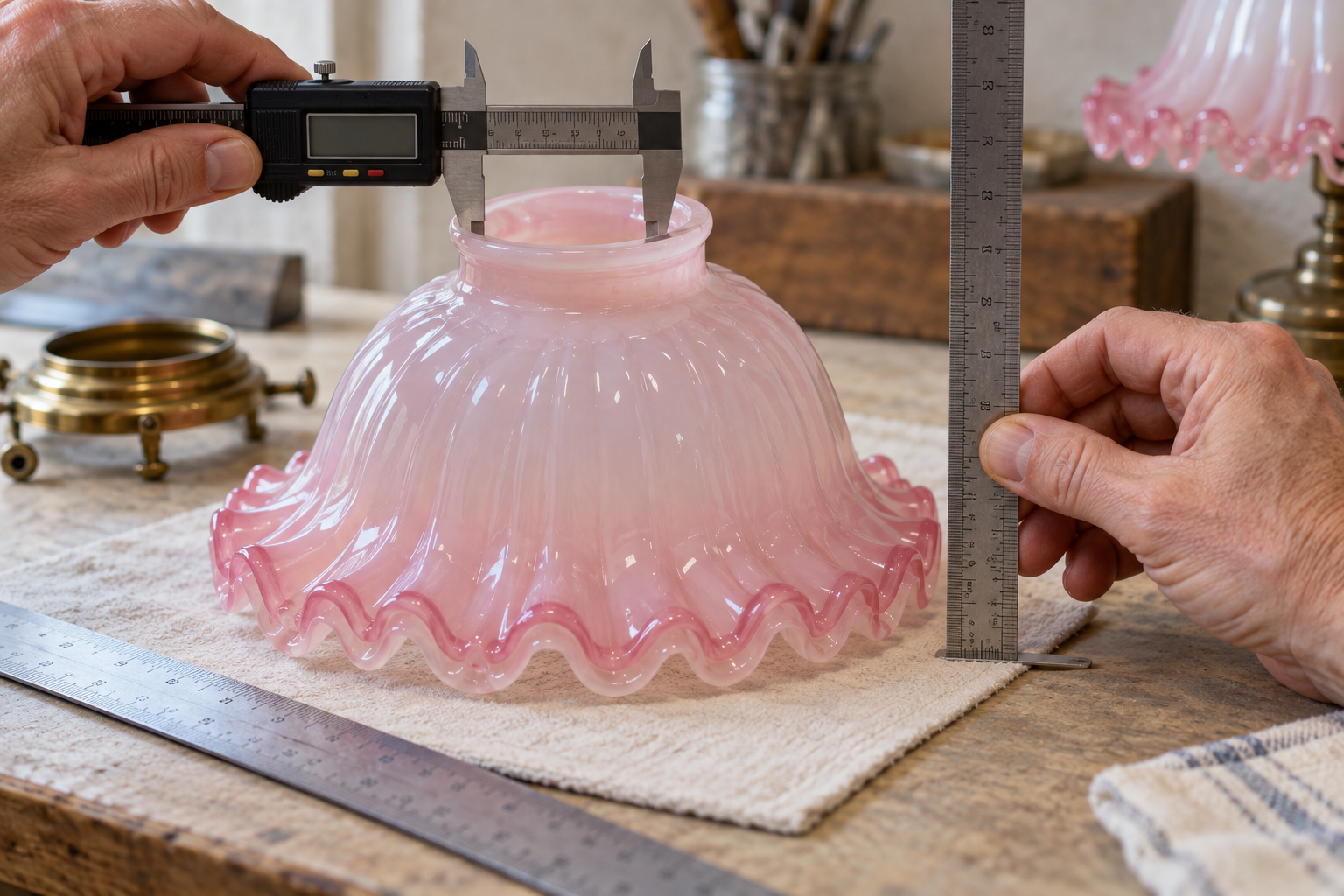
Color development cannot rescue a shade that does not seat on the fixture. Before requesting a sample, send the lower opening diameter, upper opening or neck, overall height, maximum diameter, seated height, rim thickness, retaining method and any holes, slots or notches. Include the holder or a clear photograph with a scale when the original drawing is unavailable.
For replacement shades, measure the interface rather than copying the old shade's overall outside dimensions. For OEM development, define which dimensions control the metal holder, which dimensions are visual, and where variation is acceptable. The JX lampshade fittings guide provides a useful companion reference for fitter terminology and specification questions.
| Dimension | Why it matters |
|---|---|
| Fitter opening | Determines whether the shade seats on the holder, ring or gallery |
| Seated height | Controls bulb clearance and the visible relationship to the base |
| Maximum diameter | Affects fixture envelope, packaging and neighboring shades |
| Rim and edge | Influences retaining hardware, touch points and perceived quality |
| Wall thickness | Affects weight, color density, thermal behavior and handling |
| Hole or cutout position | Must align with the holder, screw, cable or ventilation requirement |
Process route
Match the construction route to the program
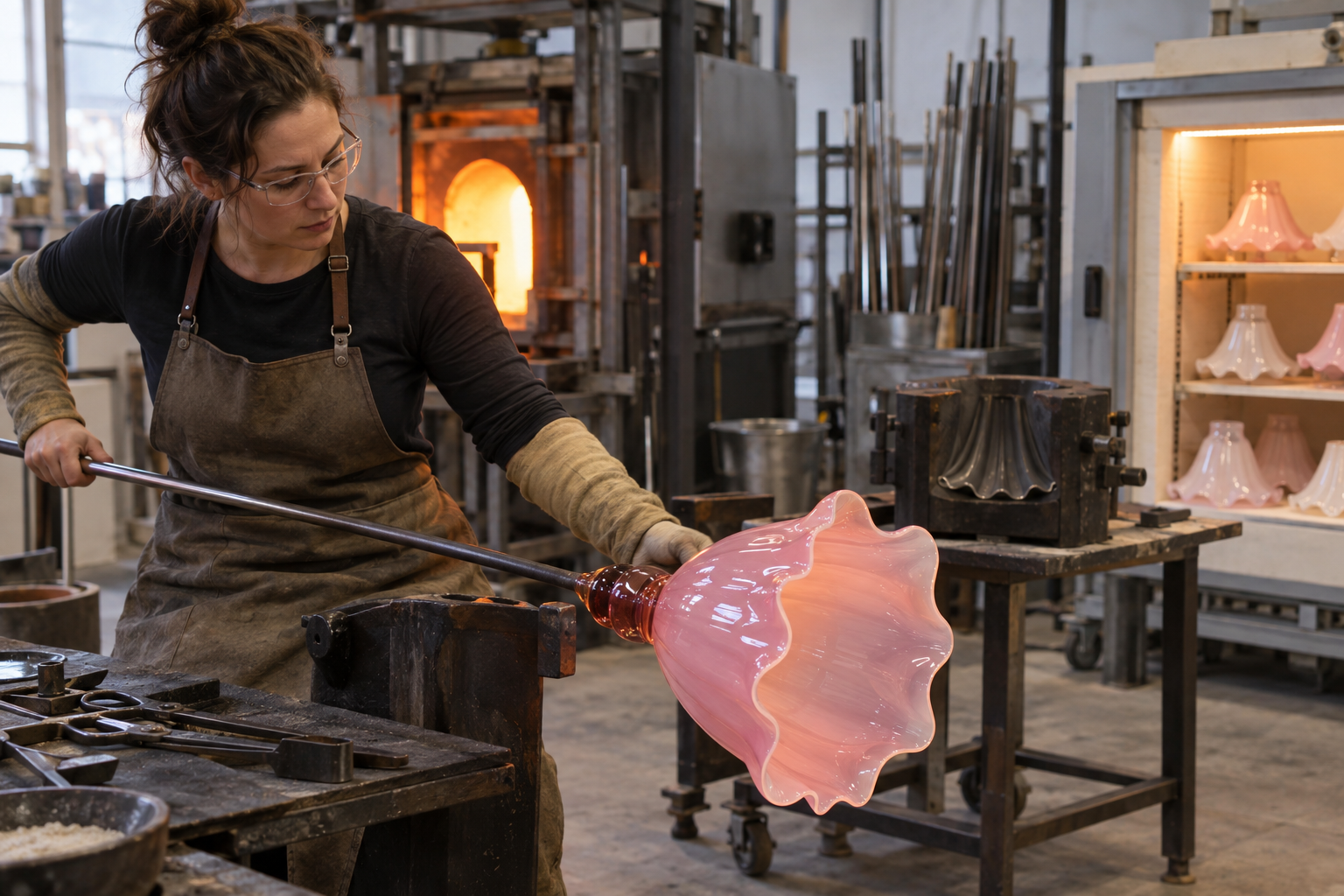
The appropriate forming route depends on geometry, volume, tooling, variation and finish. A rounded shade with deliberate hand variation may suit mouth blowing. A repeatable relief pattern or larger repeat order may justify a pressed route. A small tube-derived component may require a different glass and forming method. The commercial question is not which process sounds most premium; it is which process can hold the agreed dimensions, appearance and quantity.
Discuss these points with the manufacturer:
- whether the pink effect is created in the body, in a layer or by a surface finish;
- whether the shape is free-formed, mold-formed, pressed or otherwise heat-shaped;
- which tool controls the fitter and rim;
- how a retained master sample will be used for repeat orders;
- whether the same recipe and process can be maintained across the required quantity.
JX Lampshade can review a drawing, reference sample, fixture photo and target quantity through its custom glass lamp shade manufacturer page. Feasibility, recipe, tooling and final compliance remain project-specific quotation items.
Decorative detail
Control ribs, petals, swirls and rim details
Decorative structure changes both the look and the light. Ribs can create highlights and shadow bands. Petal rims can make the edge appear lighter or denser. Swirls can make each shade visually unique, which may be desirable for a small design series but difficult for a tightly matched multi-location rollout. A thick rolled rim can also hold more color than a thin cut edge.
Define whether variation is part of the design or a defect. A product brief can call for controlled variation in swirl direction while requiring the fitter opening and overall profile to remain within the drawing. It can also separate appearance zones: body, rim, neck, relief and any polished or frosted areas.
Sample approval
Review a sample like a lighting component
The first sample should be tested on the intended holder or a representative fixture, not only held in a hand. Review it with the lamp off and on, from the normal viewing distance, against the actual ceiling or wall color, and with the planned bulb or LED source. Photograph the same setup for the approval record.
Check five groups of evidence:
- Geometry: the fitter, seated height, profile and clearances match the drawing.
- Appearance: the pink tone, opalescent pattern, edge and surface finish match the approved reference.
- Light behavior: the source is as visible or concealed as intended, with no unexpected hot spot.
- Handling: the rim, surface and packaging concept support normal installation and cleaning.
- Repeatability: the supplier explains which features are controlled and which variations are inherent to the route.
Do not approve from a heavily edited render. An illustrative visualization can help a design review, but production approval should use a physical sample or an agreed inspection record.

Quality record
Build a repeatable quality checklist
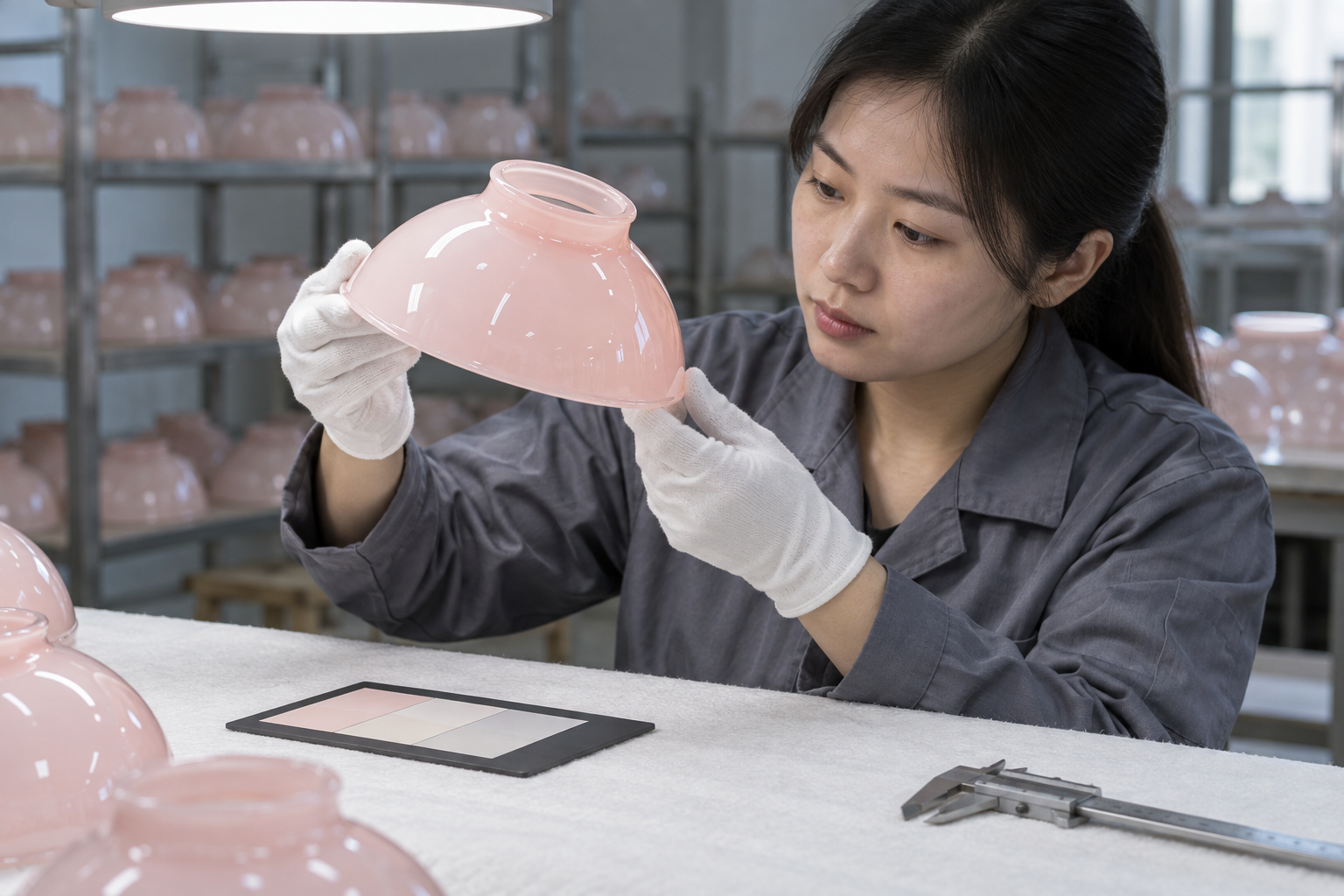
For a repeat program, the quality plan should distinguish critical, major and visual characteristics. The fitter opening, seating surface, cracks, sharp edges and structural defects normally deserve a different disposition from a small change in swirl density. The exact limits belong in the drawing, approved sample and inspection plan.
A practical inspection record can include:
- drawing revision and sample reference;
- glass color and appearance under the named illuminant;
- fitter opening and seated height measurements;
- rim, edge, hole and cutout checks;
- visible bubbles, stones, cords, scratches or mold marks against the agreed standard;
- weight or wall-thickness checks when they affect installation or color density;
- packaging inspection and carton drop or transit evidence where required.
The supplier should report what was measured, what was visually compared and what was accepted by the buyer. “Pink” alone is not a complete quality standard.
Commercial planning
Ask about MOQ, lead time and export packing early
Color and tooling decisions affect the commercial schedule. A catalog shape may move faster than a new mold or a new opalescent color development. Samples, approval revisions, packaging tests and destination documentation can also change the calendar.
JX Lampshade's current planning facts use catalog quantities from about 500 pieces, full custom OEM programs from about 1,000 pieces, and final MOQ confirmation in the quotation. Planning ranges are about 25 to 30 days for a catalog order up to 1,000 pieces, 35 to 45 days for a 1,000 to 5,000 piece batch, and 45 to 65 days for a full custom or new-mold project after the project is confirmed. These are planning references, not a promise for every pink opalescent program.
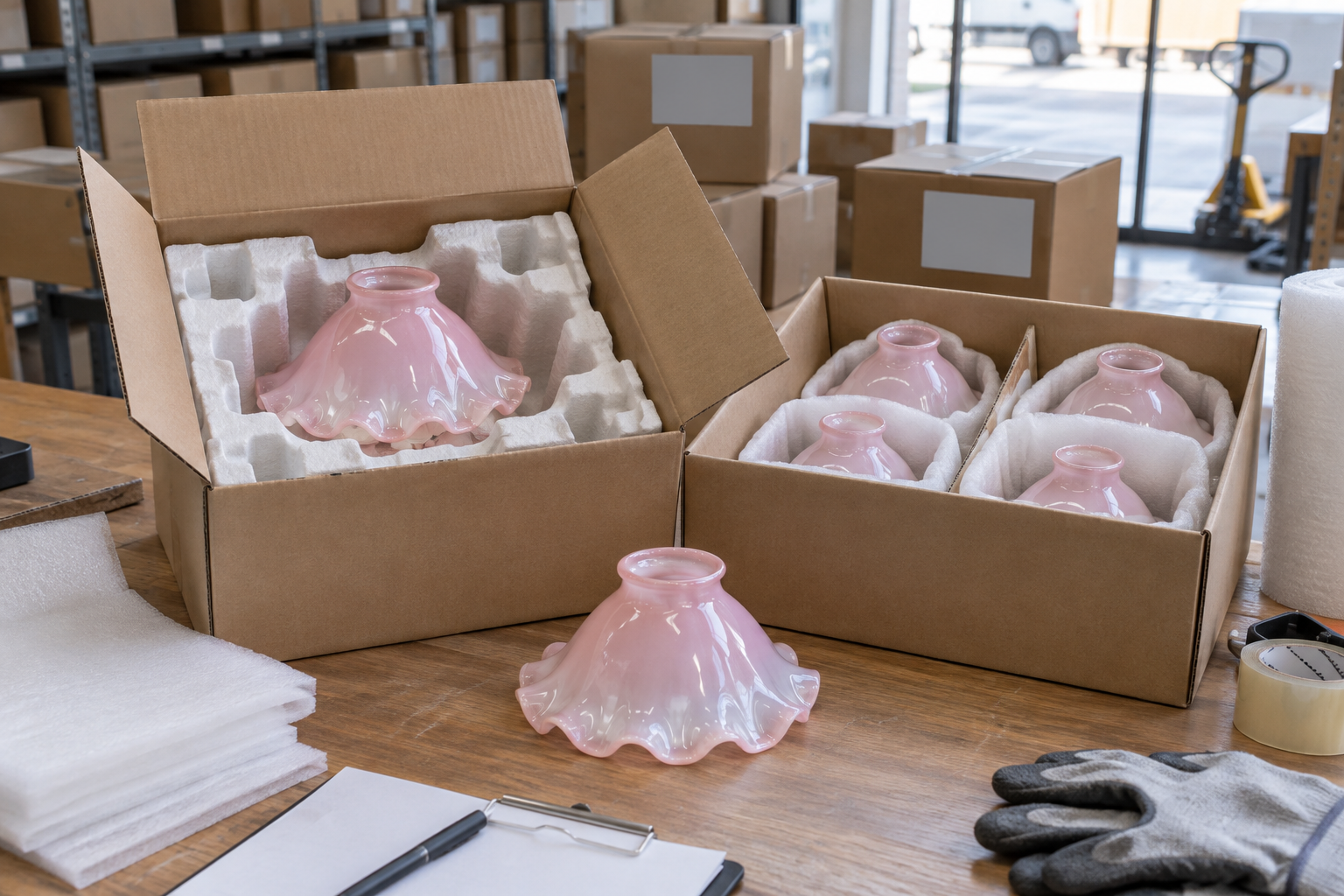
For repeat collections, ask for inner protection, dividers, carton markings, spare-rate assumptions, palletization and the packing test method. Lighting brands can review the OEM glass shade program for lighting brands, while distributors can compare assortment and packing questions on the glass lamp shade supplier page for distributors.
RFQ handoff
Send an RFQ that a manufacturer can quote
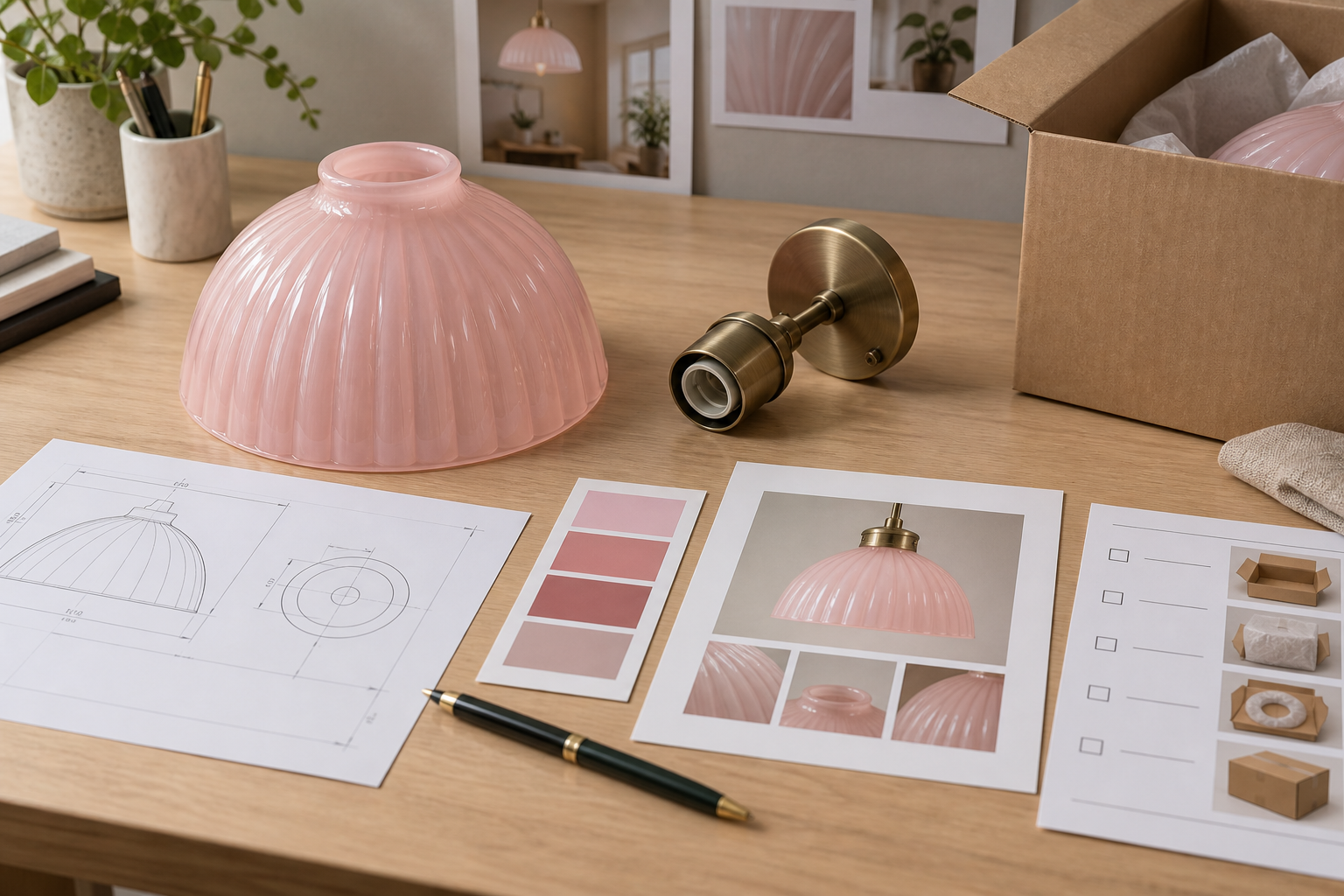
The fastest RFQ is not the longest one. It is the one that separates fixed requirements from design choices. Include the fixture application, target market, profile drawing, fitter dimensions, reference images, finish, color intent, quantity by variant, sample deadline, packaging and required documentation.
Use this checklist:
- product name and intended fixture;
- pink opalescent reference image plus a physical or color reference if available;
- drawing with critical dimensions and tolerances;
- light source, approximate wattage or lumen target, and whether the source must be hidden;
- construction preference or permission for the supplier to recommend a route;
- quantity, forecast, MOQ expectation and reorder plan;
- sample, inspection and packaging requirements;
- destination, shipping terms and any project-specific compliance documents.
The custom lampshade RFQ builder can organize the first request. Attach the fixture photograph and the fitter measurement even when the shade is intended to be a new design. A short, evidence-led brief gives the supplier a better basis for confirming color, process, tooling, sample cost, MOQ and lead time.
Concise answers for buyers and AI search
Pink opalescent lamp shade questions buyers ask
Is pink opalescent glass transparent?
Is opalescent glass the same as frosted glass?
Will a pink opalescent shade look the same with the light off?
Can pink opalescent glass hide an LED hotspot?
Can a manufacturer make a custom pink opalescent glass lamp shade?
What dimensions should I send for a replacement shade?
How do I keep pink color consistent across repeat orders?
What is the quickest next step for a wholesale quote?
Continue with glass shade resources
Related glass shade resources
Use these JX resources for material comparison, fitting standards, brand and distributor supply, or RFQ preparation.
Custom Glass Lamp Shades Manufacturer
Review drawing, sample, tooling and production questions for a custom shade program.
Glass Lamp Shade Catalog
Review adjacent profiles and material references before finalizing the pink opalescent brief.
Glass Lamp Shade Fitting Standards
Confirm the fitter, opening, retaining method and functional dimensions before sampling.
OEM Glass Lamp Shades for Lighting Brands
Coordinate a family of profiles, finishes, approvals, packaging and reorders.
Glass Lamp Shade Supplier for Distributors
Plan catalog and custom assortment requirements for a repeatable wholesale program.
Custom Lampshade RFQ Builder
Organize fixture photos, drawings, quantities, color references and packaging details.