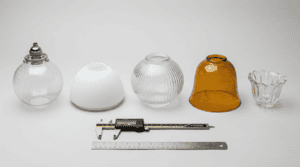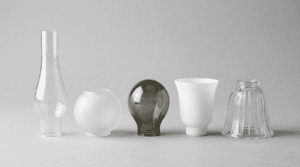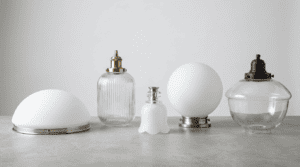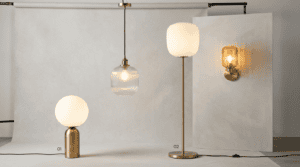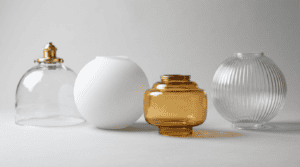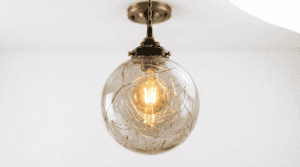
Glass lamp shade lamps are complete lighting fixtures — table, floor, pendant, or wall — engineered with detachable glass shades that can be replaced, swapped, or upgraded without changing the base. They combine a metal or wood structural body with a glass diffuser held by a fitter, harp, or threaded ring.
When buyers search for “glass lamp shade lamps,” they’re rarely looking for a shade in isolation. They want the whole fixture — base, harp, socket, switch, cord, and glass — sized so the shade is field-replaceable when it breaks, fades, or stops matching the room. That’s a different sourcing question than buying a bare shade, and the answers don’t live on most lighting category pages.
We’ve built and shipped over 80,000 complete glass lamp shade lamps since 2003, mostly for hospitality, hotel-FF&E, and private-label retail clients. The real questions that come up repeatedly — fitter compatibility, harp height versus shade height, weight tolerances of bases, color matching across reorders — are the ones this guide answers.
What Are Glass Lamp Shade Lamps?
A glass lamp shade lamp is a finished lighting fixture in which the glass shade is a separable, replaceable component rather than a permanently fused element. The category covers everything from a $40 nightstand lamp at a big-box store to a $2,800 hospitality bedside specified for a hotel rollout.
What unifies the category is the fitter standard. The glass shade attaches via one of four common mounts — uno fitter, slip-uno, spider harp, or threaded chimney/holder — and any shade made to the same standard can swap onto the same lamp. This modularity is why a 1940s table lamp with a broken shade can still be brought back to life today with a modern reproduction shade.
How they differ from integrated glass fixtures
Integrated fixtures — most ceiling flush mounts, many wall sconces — fuse the glass diffuser to the metal housing with adhesive or rivets. When the glass cracks, you replace the whole fixture. Glass lamp shade lamps explicitly avoid that failure mode by making the shade a serviceable part. For hospitality, the math is straightforward: a $180 lamp with a $35 replaceable shade beats a $140 fused fixture that has to be entirely scrapped when one guest knocks it off the nightstand.
Why the “lamp shade lamps” phrasing exists
The double “lamp” in the keyword reflects how buyers actually search. They’re saying: “I want a lamp where the lamp shade is glass” — the redundancy signals intent. Most retailers misread this as a synonym for “glass lamp shades” alone, which is why the search results for this query skew toward bare shades and miss the complete-fixture intent.
Types of Glass Lamp Shade Lamps
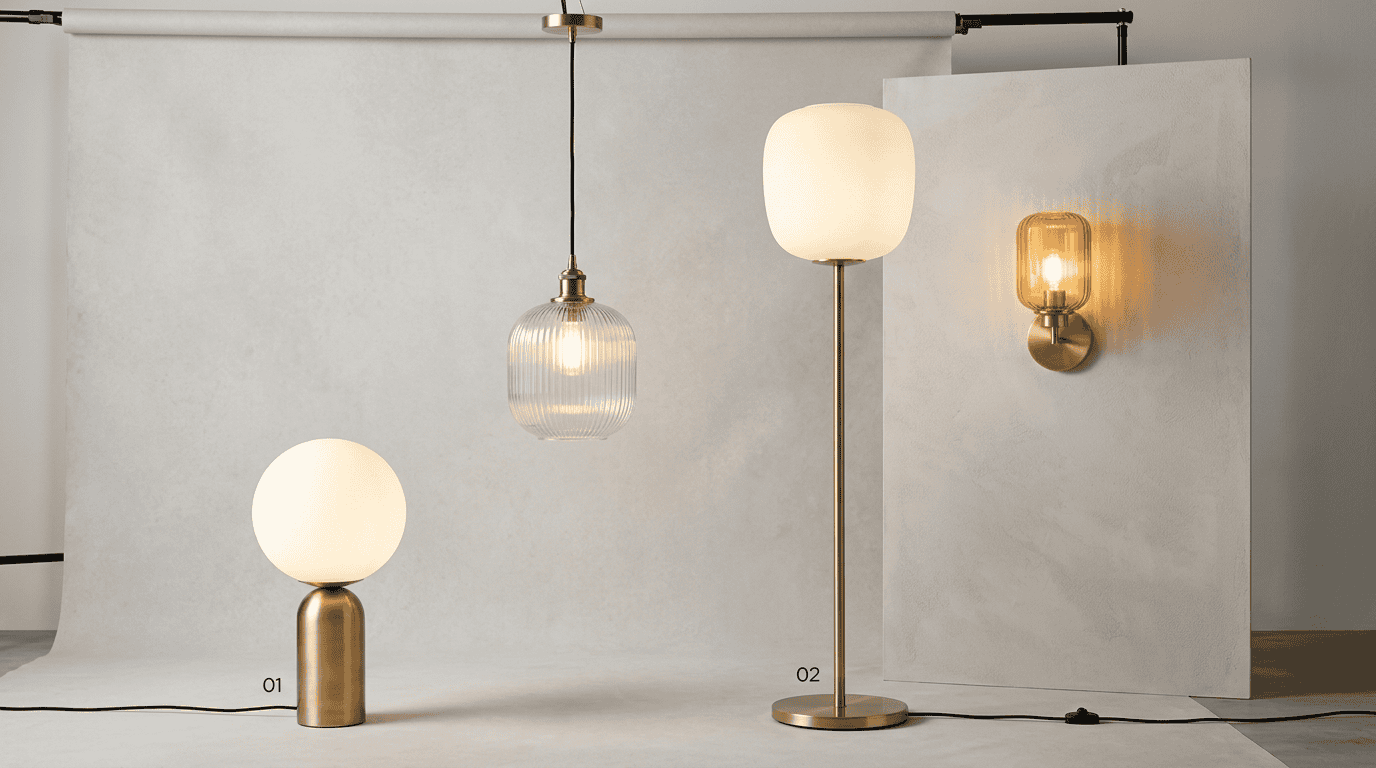
The category breaks down into six fixture types: table lamps, floor lamps, pendant lamps, wall sconces, accent/buffet lamps, and torchiere floor lamps. Each uses different fitter standards and has different shade weight tolerances.
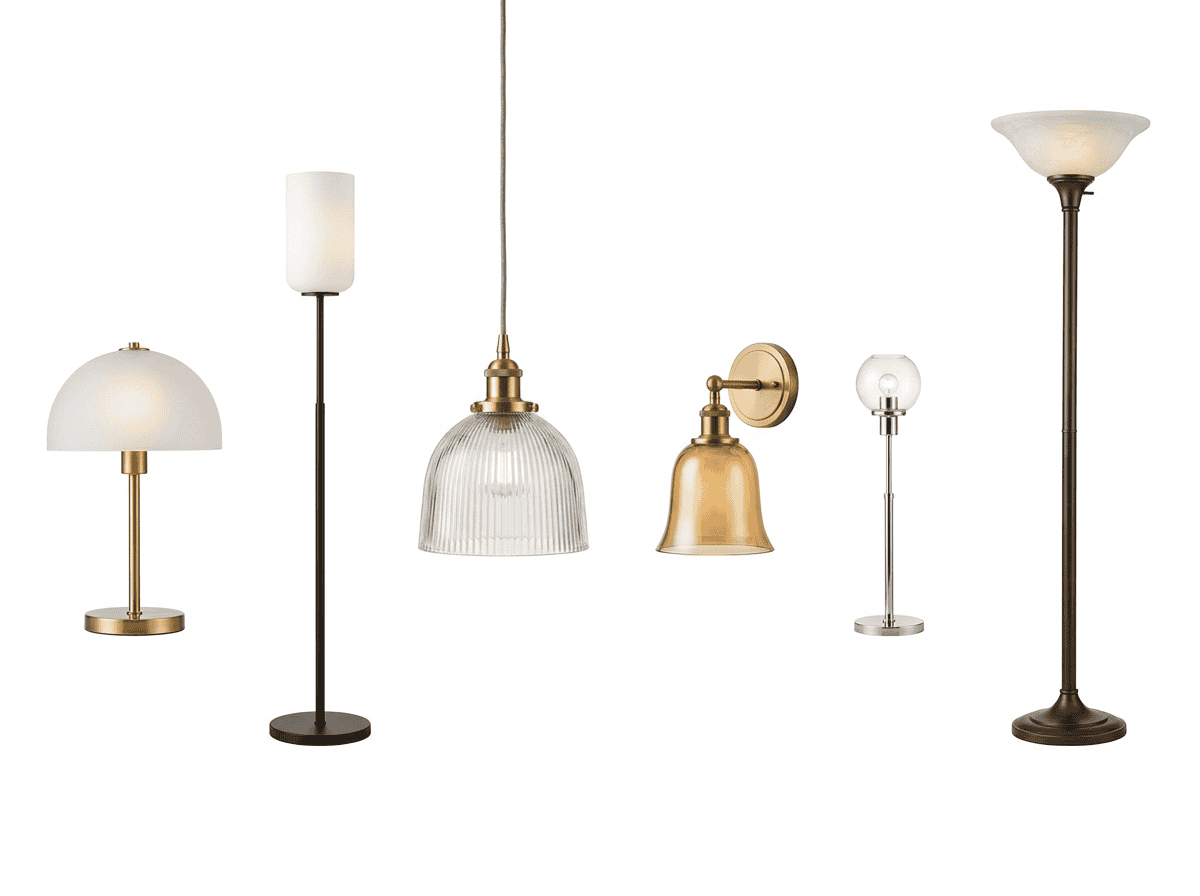
Table lamps with glass shades
The largest sub-category. Typical specs: 12–32 inches tall, 2-1/4″ fitter (most common), shade weight tolerance 200–900 g, harp height matching shade height ± 1/2 inch. Bedside, desk, and console-table lamps all live here. Watch for harp-versus-fitter mismatch — a lamp shipped with a 9″ harp will look wrong with a 12″ tall shade.
Floor lamps with glass shades
Taller bases (54–68 inches) with heavier shade tolerance, often 1.5–2 kg. The base diameter matters more than for table lamps because a top-heavy floor lamp tips. According to the Underwriters Laboratories standard UL 153 for portable luminaires, a floor lamp must pass a 10-degree tilt test without falling — bases under 11 inches in diameter rarely meet this with a heavy glass shade.
Pendant lamps with glass shades
Ceiling-suspended fixtures using a threaded shade holder (commonly 2-1/4″ or 3-1/4″ neck) or canopy-and-chain assembly. Shade weight tolerance depends on the canopy hardware, typically up to 2.5 kg for residential and 5 kg for commercial pendants. Schoolhouse globes and opal diner-style pendants dominate this sub-category.
Wall sconces with glass shades
Horizontal or upward-facing shades on swing arms or fixed brackets. Almost always 1-5/8″ fitter for direct-mount sconces, 2-1/4″ for swing-arm bedside sconces. Heat handling matters more here because the shade often sits closer to the bulb than in a table lamp configuration.
Accent and buffet lamps
Tall narrow lamps (24–36 inches) with smaller chimneys or candelabra-base shades. Fitter sizes diverge — many use 1-5/8″ candelabra clip-on fitters that don’t interchange with table-lamp standards. Common in dining rooms and bar-tops.
Torchiere floor lamps
Upward-facing bowl-shaped glass shades that bounce light off the ceiling. The bowl is held by three or four arms in a “slip-shade” arrangement rather than a fitter. Replacement bowls run 12–16 inches in diameter and 4–6 inches deep. Period torchieres (1920s–1950s) often have non-standard bowl rims, and replacement requires custom matching.
Quick type comparison
| Fixture type | Typical fitter | Shade weight tolerance | Typical price (complete lamp) |
|---|---|---|---|
| Table lamp | 2-1/4″ | 200–900 g | $40–$600 |
| Floor lamp | 2-1/4″ or 3-1/4″ | 1.0–2.0 kg | $90–$1,400 |
| Pendant lamp | 2-1/4″ or 3-1/4″ neck | up to 2.5 kg | $60–$1,200 |
| Aplique de parede | 1-5/8″ or 2-1/4″ | 150–700 g | $50–$500 |
| Accent/buffet | 1-5/8″ candelabra | 100–400 g | $35–$280 |
| Torchiere | Slip-shade arms | up to 2.5 kg | $80–$900 |
Anatomy of a Glass Lamp Shade Lamp
A complete glass lamp shade lamp has nine functional parts: base, body, neck/stem, socket, harp or fitter, finial, glass shade, cord, and switch. Each is a swap-out point during the lamp’s lifetime, but the glass shade is the part most often replaced.
The base
Cast iron, steel, ceramic, wood, marble, or weighted resin. Weight matters — a lamp with a 600 g glass shade needs a base of roughly 4–8× the shade weight to resist tipping. Underweighted bases ship from low-quality suppliers and are the single largest source of post-sale complaints in the lamp category.
The harp
The wire frame that holds a spider-fitter shade above the bulb. Harps come in sizes from 7″ to 14″ tall in 1/2″ increments. Standard practice: harp height equals shade height to within 1/2 inch. A 10″ harp under a 12″ shade leaves the bulb visible; a 14″ harp under a 9″ shade looks gangly.
The socket and fitter
Most modern glass lamp shade lamps use medium-base E26 sockets (US) or E27 (Europe). Candelabra-base E12 sockets appear in accent and chandelier lamps. The fitter is the ring that mates the shade to the harp or socket — uno fitter (shade screws onto socket), slip-uno (shade slides over socket sleeve), or spider (shade sits atop harp with finial holding it down).
The finial
The small decorative cap that screws onto the harp threaded stud to hold a spider-fitter shade in place. Finials are themselves a $5–$60 product category and one of the easiest ways to update a lamp’s look without replacing the shade.
The glass shade
The serviceable consumable. Replacement frequency for residential lamps averages once every 12–18 years; for hospitality lamps, once every 3–5 years due to higher handling.
How Glass Lamp Shade Lamps Are Manufactured
Production splits into two parallel streams — the metal/wood base body and the glass shade — that converge at final assembly and QC. The two streams have completely different supply chains, which is why custom-color glass on a standard base lamp typically takes 30–45 days instead of the 7–14 days a stock SKU ships in.
The base manufacturing stream
For metal bases: die-cast zinc or aluminum, sand-cast iron, or stamped-and-formed steel. Castings are deburred, plated or powder-coated, then drilled for cord pass-through and weighted with internal fill if needed. Ceramic bases are slip-cast, biscuit-fired, glazed, and refired — three weeks total cycle time.
The glass shade stream
Documented in detail in our companion guide to glass lamp shades, but in summary: pressed, machine-blown, or mouth-blown forming → annealing → optional surface treatments → QC inspection. The U.S. Department of Energy’s glass manufacturing energy profile documents how forming method drives both cost and consistency.
The assembly and electrical stream
UL-listed cord sets are pulled through the base body, wired to the socket, and strain-relieved. The harp seats on the socket. Each lamp goes through a 100% electrical safety test — hi-pot test at 1500V for 1 second, ground continuity, and switch function. Lamps that fail are reworked or scrapped.
Pre-shipment inspection
A 10% AQL Level II audit covers: dimensional check on base, harp, and shade; cosmetic inspection (chips, scratches, finish defects); electrical re-test on a random sample; packaging drop-test simulation. Hospitality FF&E orders often require 100% inspection rather than AQL sampling — write this into the PO explicitly.
Aplicações da indústria
Glass lamp shade lamps move primarily through four channels: hospitality FF&E, residential retail, contract office, and restoration/replacement parts. Each channel has different specs, price tolerances, and reorderability requirements.
Hospitality FF&E
Hotels, restaurants, and resorts order glass lamp shade lamps in lots of 50–5,000 units per project. Specs are tight: matching glass color across the lot, 5-year warranty on electrical, 10-year supply commitment on replacement shades. Hospitality buyers we work with prioritize reorderability over initial unit price — the cost of replacing a discontinued lamp 3 years post-install with a non-matching alternative is 4–8× the original unit price.
De acordo com Statista’s hotel industry data, the global hotel construction pipeline supports roughly 18,000 new hotels in active build phases, each averaging 80–200 lamps, which sustains the high-volume FF&E segment.
Varejo residencial
Department stores, lighting showrooms, and online marketplaces. Volume per SKU averages 500–5,000 units. Glass lamp shade lamps in this channel emphasize design refresh — typical SKU lifespan is 18–36 months before discontinuation. Returns rate sits at 6–12% depending on packaging quality.
Contract office
Corporate offices, executive suites, reception areas. Smaller volumes per project (10–80 units) but higher per-unit price points ($200–$1,500). The dominant requirement is matching the building’s CRI (Color Rendering Index) target — usually CRI 90+ — and glass shade color stability under the building’s specified bulb temperature range.
Restoration and replacement parts
Specialty market for shades that fit 1900–1970 vintage lamps. Typical buyer: an antique dealer or homeowner with a documented lamp model that needs a period-correct replacement. Mouth-blown reproductions dominate; CNC-pressed alternatives are visibly wrong to collector eyes.
Niche: outdoor and marine
Coastal and outdoor patio fixtures need borosilicate glass, IP44+ ratings on the electrical, and stainless or marine-bronze hardware. Roughly 3% of glass lamp shade lamps category volume but growing 12–15% YoY according to industry tracking.
How to Choose Glass Lamp Shade Lamps
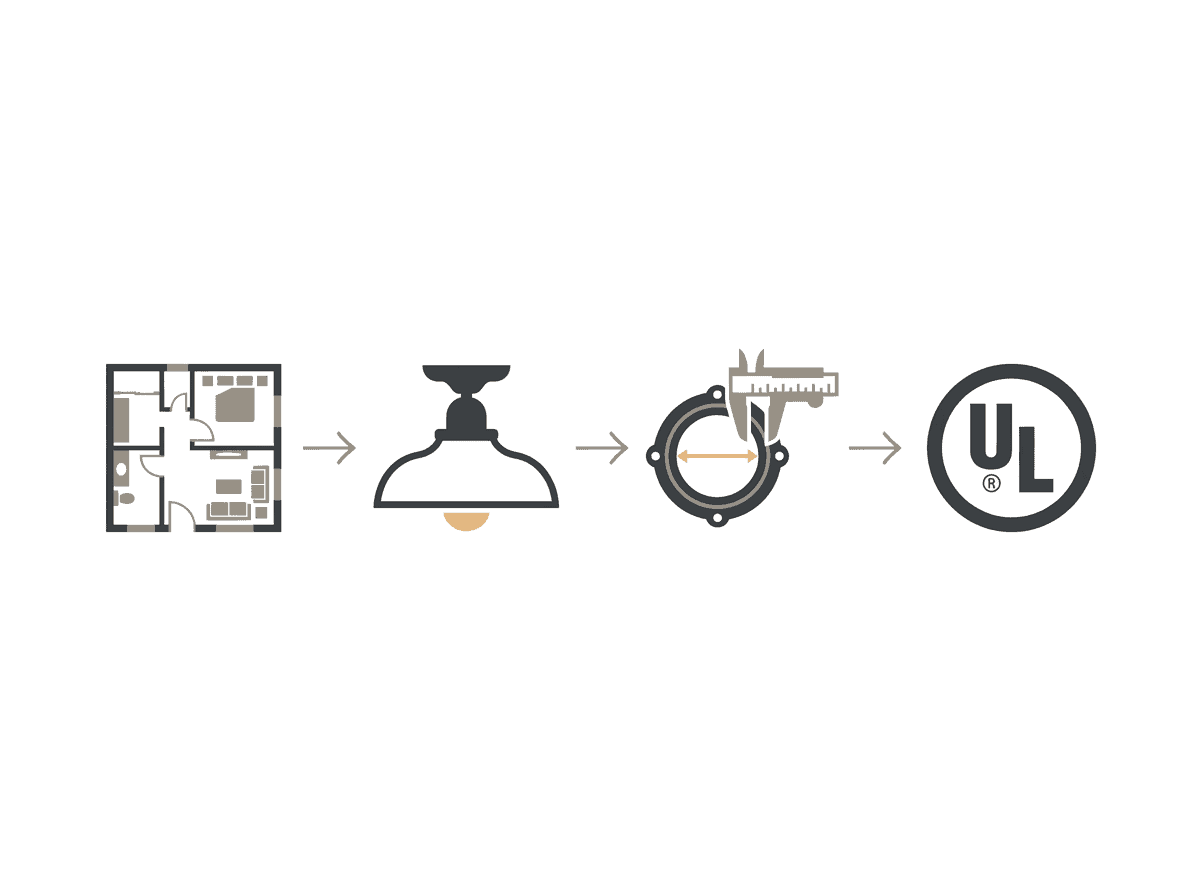
Match four things in this order: room placement first, fixture type and size second, shade fitter and weight tolerance third, electrical and bulb specs fourth. Skip any step and you’ll spend the next two years working around the wrong choice.
Step 1: Pinpoint the room placement
Where will the lamp sit? Nightstand? End table? Floor next to a sofa? Hallway console? The placement dictates fixture type (table vs floor vs wall), height range, and shade height. A nightstand reading lamp wants the shade’s bottom rim 18–22 inches above the mattress — that fixes the lamp’s total height at 24–28 inches.
Step 2: Choose the fixture type and overall size
Table for surface placement, floor for open space next to seating, pendant for ceiling-mounted task or ambient, sconce for wall-mounted hallway or bedside. The Illuminating Engineering Society’s residential lighting guidance gives foot-candle targets for each room type, which translates back into lamp count and shade transmission requirements.
Step 3: Confirm fitter and shade weight tolerance
Match the lamp’s fitter standard to the shade you want, or to the shade you’ll be able to source easily 3 years from now. The 2-1/4″ fitter is the safest bet for table lamps because replacement shades are widely available. Confirm the lamp’s published shade weight tolerance — most consumer specs list this in grams or pounds; commercial spec sheets give a tilt-test rating instead.
Step 4: Verify the electrical and bulb specs
US lamps must be UL or ETL listed. EU lamps need CE marking and (post-2026) the new ESPR ecodesign labeling. Socket type (E12, E26, E27) determines bulb compatibility. Maximum wattage rating matters mostly with vintage and reproduction lamps that pre-date LED — pushing a 100W incandescent into a fixture rated 40W max is a fire risk and voids any warranty.
Matriz de decisão
| Se você precisar… | Escolha | Evite |
|---|---|---|
| Reading light at a nightstand | Table lamp with frosted/opal shade | Clear-glass exposed-filament fixtures |
| Ambient corner lighting | Floor lamp with cased opal shade | Halogen torchiere (heat) |
| Dining table focal lighting | Pendant with opal or ribbed shade | Heavy stained-glass (>3 kg) |
| Hallway pathway lighting | Wall sconce with opal shade | Stained-glass (low transmission) |
| Hospitality bedside | Custom-spec table lamp with replaceable shade | Fused-shade fixtures |
| Restoration of vintage lamp | Period-correct mouth-blown shade on original base | Modern pressed substitute |
Sourcing Glass Lamp Shade Lamps
The five channels for sourcing glass lamp shade lamps differ in MOQ, lead time, customization, and reorderability.
Direto do fabricante. Best for orders over 100 units of one model. MOQ typically 100–500. Unit price 35–60% under retail. Lead times 30–90 days. Custom colors, custom etching, custom base finishes available. The right channel for FF&E projects and private-label retail.
Distribuidores de iluminação. Rejuvenation, Schoolhouse Electric, Visual Comfort, regional showrooms. Curated catalogs at retail-plus pricing, 5–15 unit ordering, 2-week typical ship. Right for designers and small-project specifiers.
Varejo de grande porte e online. Home Depot, Lamps Plus, Wayfair, Amazon. Mass-market price points, broad selection, easy returns. SKU lifespans short (18–36 months) so reorderability is poor. Right for consumer one-offs.
Specialty restoration. Antique Lamp Supply, Paxton Hardware, BP Lamp Supply. Period-correct lamps and shades for 1900–1970 reproductions. Higher unit prices but irreplaceable for specific restoration jobs.
Trade-show direct. Las Vegas Market, High Point Market, and the Hong Kong Lighting Fair host hundreds of glass lamp shade lamp manufacturers under one roof. Right for buyers building a multi-supplier sourcing program who need to compare 20+ vendors in three days.
Compatibility: Matching Shades Across Manufacturers
Glass lamp shade lamps from different manufacturers usually share fitter standards but rarely share exact shade heights, neck angles, or harp profiles. That makes cross-brand shade replacement possible but tricky.
Fitter standards travel; aesthetics don’t
A 2-1/4″ fitter shade from Manufacturer A will physically mount on a Manufacturer B lamp with a 2-1/4″ fitter — the threads or sleeve match. What won’t match is the proportional balance: if Manufacturer A designed the shade at 9″ tall and Manufacturer B designed the lamp for a 12″ shade, the lamp looks stubby. Always verify the shade height against the lamp’s harp height before assuming cross-brand compatibility.
Color and finish cross-match
Even within the “opal cased white” category, manufacturers use different opacifiers (bone ash, tin oxide, fluoride compounds) that produce subtly different white tones. Cross-brand replacement shades sit next to original shades with a visible warmth or coolness shift. For matched-set fixtures (chandeliers, paired bedside lamps), stick to a single manufacturer’s shade line.
Vintage-to-modern compatibility
Pre-1970 lamps often used non-standard fitter dimensions — 1-1/2″, 2-1/8″, 2-3/8″ appear in old American manufacturers. Modern reproduction shades made to current 2-1/4″ standard won’t seat correctly. Specialty restoration suppliers carry the legacy sizes; mass retailers don’t.
Common Mistakes When Buying Glass Lamp Shade Lamps
Buying a beautiful lamp with a discontinued shade size. The shade will break eventually. If the fitter or shade dimension isn’t a current standard, plan to source a backup shade at the time of original purchase.
Underweighted bases under heavy shades. A 600 g glass shade on a 1.2 kg base will tip if bumped. Verify the base-to-shade weight ratio is at least 4:1 before buying.
Ignoring the harp-shade height match. A 10″ shade on a 13″ harp leaves a 3″ gap of exposed socket — looks wrong, lets glare escape. The harp should equal the shade height ±1/2 inch.
Buying mixed batches expecting matched glass. Glass color varies batch-to-batch by Delta-E 1–3. If you need 12 matching glass lamp shade lamps for a hotel suite floor, order all 12 from the same production lot. Reorders 6 months later will subtly mismatch.
Skipping the UL or ETL mark on imported lamps. US insurance and building codes require listed luminaires. Unlisted lamps are uninsurable in commercial settings and can void homeowner policies after fire claims.
Cheap cord sets on otherwise quality lamps. A $300 cast-bronze base with a $0.40 PVC cord is a known cost-cutting pattern from some overseas suppliers. Strain-relief failures and insulation cracking show up after 18–24 months. Spec SJT or SVT rubber-jacketed cord sets for any hospitality or commercial lamp.
Care and Maintenance of Glass Lamp Shade Lamps
Glass shades should be removed and cleaned every 3–6 months to prevent dust accumulation that reduces light output by 8–15% over a year. The base hardware needs less attention but isn’t maintenance-free.
Cleaning the glass shade
Remove the shade (loosen finial, lift off harp, or unscrew threaded ring). Wash in warm water with mild dish soap — never hot water on a cold shade, the thermal shock can crack it. Dry with a microfiber cloth to avoid lint. For frosted or sandblasted shades, an old soft-bristle toothbrush gets into texture without scratching.
Inspecting the electrical components
Every 12–18 months: unplug, check the cord for cracks or discoloration near strain reliefs, verify the socket contacts aren’t pitted or corroded, test the switch for solid mechanical action. Sockets with visible arcing marks should be replaced — they’re a fire risk regardless of the lamp’s age.
Storing seasonal lamps
If a glass lamp shade lamp goes into storage, remove the shade and wrap separately in bubble wrap. Glass shades cracked in storage almost always trace back to being left on the lamp where they vibrate against the harp during the move.
Tendências Futuras 2026 e Além
Three trends are reshaping glass lamp shade lamp demand: smart-bulb integration, modular field-replaceable design, and circular-economy refurbishment.
Compatibilidade com lâmpadas inteligentes
Color-tunable LED bulbs (2200K–6500K) interact unpredictably with cased colored glass shades. A buyer pairing a smart bulb with an amber-cased shade will see the shade color shift unpredictably across the CCT range. Expect manufacturers to publish CCT-tested shade compatibility charts by 2027 — a quietly important spec for hospitality projects standardizing on tunable-white LED.
Design modular substituível em campo
The base, electrical, socket, harp, and shade are all becoming user-serviceable on premium glass lamp shade lamps. The trend mirrors the IKEA-ization of replaceable furniture parts. Right-to-repair regulations in the EU and California are accelerating this — expect manufacturer-published parts catalogs and replacement-shade SKUs to become a competitive differentiator by 2027.
Circular-economy refurbishment
Hotels rotating their FF&E every 7–10 years are starting to send used glass lamp shade lamps back to the original manufacturer for refurbishment rather than landfilling. The economics work: a $180 lamp refurbished for $40 and resold or redeployed beats a $180 new build with the embedded carbon footprint. Expect a few hospitality-focused manufacturers to offer formal take-back-and-refurbish programs by 2027.
CCT-test data on commercial spec sheets
Tied to smart-bulb compatibility. Commercial spec sheets will start listing the shade’s Delta-E shift across 2700K, 3000K, 3500K, 4000K — useful for designers building consistent lighting across multi-room projects.
O que não vai mudar
UL-listed electrical safety. The four standard fitter sizes. The basic shape vocabulary of bell, drum, globe, and bowl. Buyers who build their sourcing playbook around these durable specs will outlast the design-trend cycles.
Perguntas Frequentes
What is a lamp with a glass shade called?
A lamp with a glass shade is called a glass lamp shade lamp or, depending on form, a table lamp, floor lamp, pendant, sconce, or torchiere. “Glass lamp shade lamp” is the buyer-search phrasing for any fixture with a replaceable glass diffuser. The form factor name (table, floor, etc.) describes where it sits; the shade material (glass, fabric, paper, acrylic) describes what diffuses the light.
Can I replace just the glass shade on a lamp?
Yes — most lamps are designed so the glass shade is a separate, serviceable part. Confirm three dimensions before ordering a replacement: fitter inside diameter (1-5/8″, 2-1/4″, 3-1/4″, or 4″), fitter type (uno, slip-uno, spider, or threaded), and overall shade height to match the harp. If the original shade was custom or vintage, expect to source from a specialty restoration supplier rather than mass retail.
Are glass shades better than fabric shades?
Glass shades outlast fabric shades by 5–10× and don’t yellow, sag, stain, or attract dust adhesion. Fabric is lighter, softer in appearance, and cheaper to replace. For task lighting, hospitality use, and any setting that needs to look new after a decade, glass wins. For bedrooms, kid’s rooms, and lightweight portable lamps, fabric serves better.
Why are some glass lamp shades so expensive?
Mouth-blown shades, leaded stained-glass shades, and cased-color glass shades cost 8–40× more than pressed clear or frosted shades because each piece is hand-formed, takes 4–9 minutes versus 8–14 seconds, and varies enough to require individual QC. Tiffany-style leaded shades take 20–80 hours of labor; that’s where the $4,000–$40,000 prices come from. Pressed shades make up roughly 80% of glass-shade volume but only 30% of glass-shade dollar value.
How do I match a replacement shade to an old lamp?
Photograph the lamp with a ruler in frame for scale, measure the fitter inside diameter with calipers, then send specs to a specialty restoration supplier. If the lamp has a maker’s mark, search the maker’s catalog archive — Quezal, Steuben, Handel, and Tiffany shade patterns are documented online. For unsigned lamps, a mouth-blown custom reproduction matched to a fragment or photograph is usually the only path to a correct-looking replacement.
Are LED bulbs safe in glass shade lamps?
Yes — LEDs run roughly 60% cooler than incandescent equivalents and put far less thermal stress on glass shades. LEDs extend shade life by reducing thermal cycling. The one caveat: dimmable LEDs can flicker noticeably through clear glass (less so through frosted or opal), so choose flicker-free dimmable bulbs for any clear-shade application.
What’s the average lifespan of a glass lamp shade lamp?
A quality glass lamp shade lamp lasts 25–40 years with one or two shade replacements along the way. Electrical components (socket, cord) need replacement every 15–25 years in residential use, sooner in hospitality. The base typically outlasts every other component and is often the only part that survives intact across multiple shade and electrical refreshes.
Conclusão
Glass lamp shade lamps are the longest-lived lighting category in residential and commercial spaces — properly specified, they outlast every other furniture decision in the room. The secret is treating the shade as a serviceable consumable and the base as a 25-year investment, then sourcing both against measurable specs rather than catalog SKUs.
If you’re specifying for a hospitality rollout, a private-label retail line, or a single restoration project, write the spec around four durable dimensions: fitter standard, shade weight tolerance, electrical certification, and base-to-shade weight ratio. Everything else — finish, color, style — follows from there. We’ve shipped over 80,000 complete glass lamp shade lamps against measurable specs since 2003, and the projects that hit budget and timeline almost always start with a one-page spec sheet rather than a mood board.