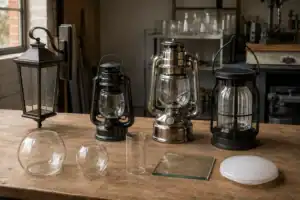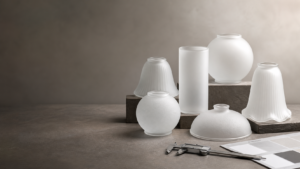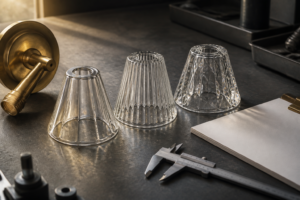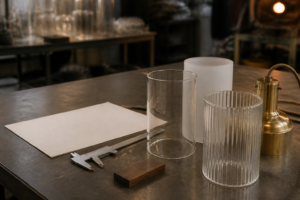
Standard outdoor glass lamp shade packaging consists of EPE foam individual wrapping, a double-wall corrugated inner box per unit (or per pair), and a master export carton engineered to pass ISTA 2A drop and vibration testing — with a minimum 50 mm of cushioning between any glass surface and the carton wall. This structure is what separates a sub-2% breakage rate from the 8–12% breakage rate common with under-engineered packaging.
An importer places a container order for outdoor glass lamp shades. The goods arrive. Fourteen percent of the units have cracked fitter rims. The supplier blames the carrier. The carrier blames the packaging. The buyer eats the loss, because the purchase agreement specified only “standard export packaging” — a phrase that means nothing enforceable.
The difference between 1.5% breakage and 15% breakage on outdoor glass lamp shades is almost never the carrier. It is almost always the packaging design. Outdoor glass lamp shades are heavier, thicker-walled, and often larger in diameter than interior glass shades — which means they generate higher impact forces on drop and exert more crushing pressure on adjacent units in a stack. A packaging structure optimized for a 150-gram interior glass pendant shade fails predictably when applied to a 400-gram outdoor globe shade.
This guide covers outdoor glass lamp shade packaging from a manufacturer’s perspective: the materials used, how inner and outer carton structures are engineered, what testing standards to require from suppliers, what OEM branded packaging options exist, and what the 2026 shift toward sustainable glass packaging means for export orders.
Why Outdoor Glass Shade Packaging Differs from Interior Glass Packaging
Outdoor glass lamp shades require a more robust packaging specification than interior glass shades for three structural reasons, and understanding each one helps buyers write enforceable packaging requirements into supply agreements.
Weight and Impact Energy
The physics of packaging are straightforward: drop force = mass × deceleration. A standard interior glass lamp shade weighs 100–180 grams. A typical outdoor glass globe shade — borosilicate or tempered, with the wall thickness needed for outdoor thermal cycling — weighs 350–600 grams. At the same drop height (the ISTA 2A standard tests 60 cm edge and flat drops), the outdoor shade generates two to three times the impact energy. Foam cushioning that adequately absorbs a 150-gram shade’s drop impulse compresses to bottoming-out on a 450-gram shade.
Fitter Rim Fragility
The fitter rim is the thinnest cross-section of any glass shade — it is where the glass wall tapers from the shade body into the collar that seats on the fixture. On outdoor shades, where the fitter collar must accommodate a rubber gasket and often a deeper lip than interior shades, the rim geometry creates a stress concentration point. In drop tests, fitter rim chips and cracks account for over 60% of all outdoor glass lamp shade packaging damage — not glass body shattering. Any packaging system that does not separately cushion the fitter rim with a dedicated foam recess or collar insert is underengineered for outdoor glass shades.
Stack Loading in Master Cartons
Outdoor glass lamp shades, sold in higher quantities per shipment and distributed through commercial supply chains, are routinely stacked in master cartons of 6, 12, or 24 units. The bottom units bear the cumulative weight of all units above plus the weight of cartons stacked on top during container loading — commonly 400–600 kg per pallet layer. Interior glass shade packaging often uses corrugated dividers between units; outdoor shade packaging requires formed foam inserts or molded pulp trays that distribute vertical load across the foam body, not through the glass.
| Glass Shade Type | Typical Unit Weight | Master Carton Qty | Stack Load Risk |
|---|---|---|---|
| Interior pendant glass shade | 100–180 g | 12–24 | Low |
| Outdoor wall sconce glass shade | 250–400 g | 6–12 | Medium-High |
| Outdoor post lantern globe shade | 400–700 g | 4–8 | High |
| Large outdoor pendant globe (250+ mm) | 600–1,000 g | 2–4 | Very High |
Core Packaging Materials for Outdoor Glass Lamp Shades
The materials used in outdoor glass lamp shade packaging form a hierarchy: primary wrapping contacts the glass directly, secondary packaging (inner box) provides structural containment and drop absorption, and tertiary packaging (master carton) provides shipping and stacking strength. Each layer has a specific performance function that cannot be substituted without understanding the tradeoff.
EPE Foam — The Primary Wrapping Standard
Expanded polyethylene (EPE) foam is the standard primary wrapping material for outdoor glass lamp shade packaging. EPE is used in preference to bubble wrap, kraft paper, or tissue paper for four specific reasons:
- Non-abrasive surface — EPE foam does not scratch fire-polished, acid-etched, or sandblasted glass surfaces during vibration. Kraft paper and uncoated bubble wrap can micro-scratch glass finishes over the duration of an ocean freight voyage.
- Controlled compression — EPE compresses progressively under impact load, absorbing energy across the full compression stroke. Bubble wrap offers only a thin air-filled layer that pops at low force thresholds.
- Moisture resistance — EPE does not absorb humidity, preventing paper-based moisture transfer that can leave staining marks on glass finishes during container transit in humid climates.
- Reusability — EPE foam retains its cushioning properties through multiple handling events; kraft or tissue paper crushes permanently on first compression.
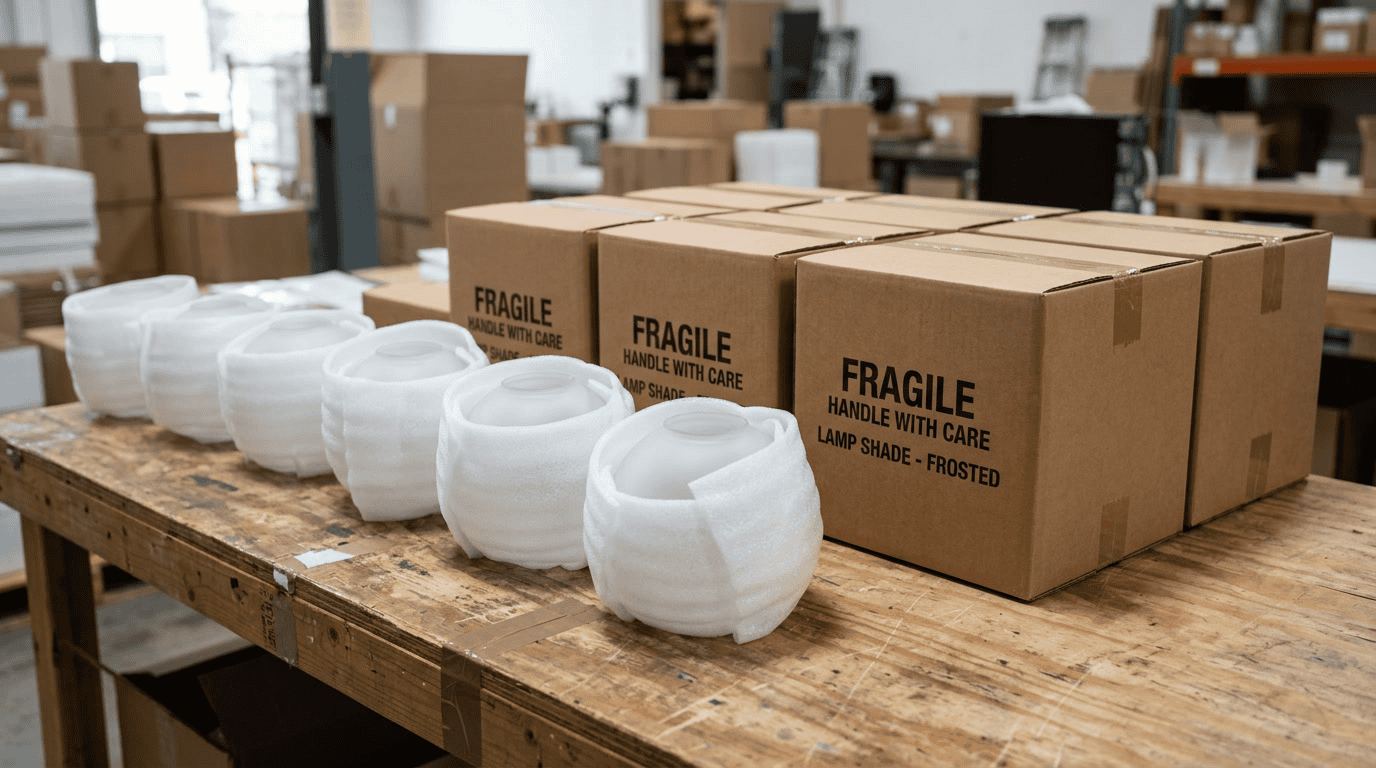
Standard EPE foam wrap for outdoor glass lamp shades is 3–5 mm thick for shades up to 300 grams. Larger globe shades (200 mm diameter and above) use 5–8 mm foam. The foam is cut to sheet, wrapped around the shade body with at least 1.5 turns of overlap, and secured with a small piece of polypropylene tape — not adhesive tape applied to the glass surface.
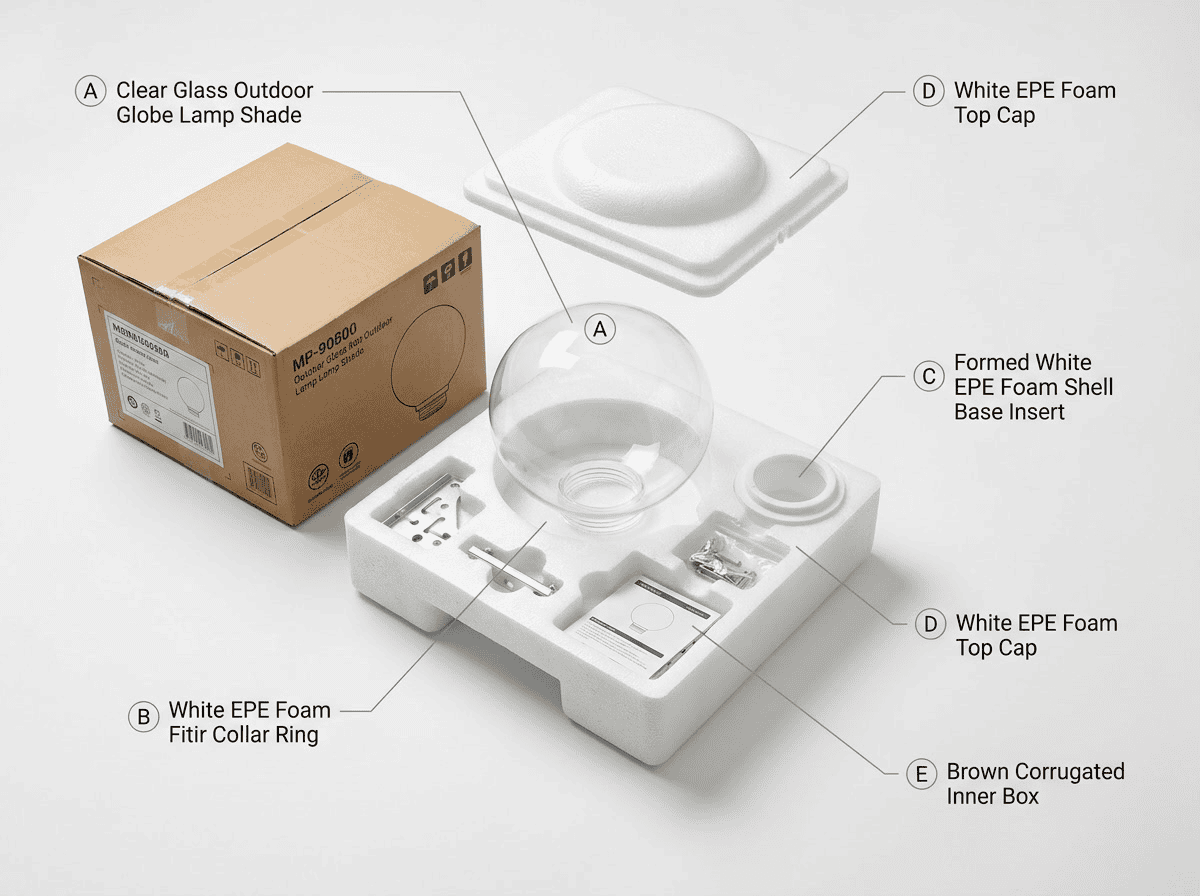
Dedicated fitter collar foam rings — a foam disc with a center hole cut to the fitter inner diameter — are placed over the fitter collar before the sheet foam wrap begins. This ring isolates the thinnest and most fragile glass section from all other surfaces during the entire transit sequence.
Inner Box — Double-Wall Corrugated with Foam Insert
The inner box is the most engineered component of outdoor glass lamp shade packaging. For single-unit inner boxes (one shade per carton), the standard structure is:
- Double-wall corrugated carton (BC-flute construction, minimum 7-ply): provides higher compressive strength than single-wall corrugated for tall globe shapes where the carton height-to-width ratio exceeds 1.5:1.
- Formed EPE foam tray or shell insert: molded to the shade profile, providing uniform 50 mm cushioning clearance between any glass surface and the carton wall. The foam tray typically consists of a base platform, a waist ring that supports the shade’s widest diameter, and a top cap.
- Fitter-specific recess in base foam: the base foam tray has a raised recess that the shade’s fitter collar seats into, preventing the shade from shifting axially during drop events.
For two-per-inner-box configurations (common for smaller outdoor sconce shades under 250 grams), a central corrugated divider with foam facing separates the two units and prevents glass-to-glass contact.
Cushioning Design: How Foam Geometry Controls Breakage Rate
Cushioning geometry is where most low-cost outdoor glass lamp shade packaging fails. The raw material — EPE foam — is present, but the geometry is wrong, and the breakage rate reflects it.
The 50 mm Rule and Why Suppliers Cut It
The 50 mm minimum clearance between any glass surface and the carton wall is an established packaging benchmark for glass items shipped by ocean freight, referenced in ISTA Project 2A testing protocols for packaged products up to 68 kg. This clearance is not arbitrary — it reflects the foam compression depth required to reduce a 60 cm drop impact from a peak deceleration of 50+ G down to the 15–25 G threshold where glass breakage probability drops below 2% for borosilicate glass shades.
Suppliers under cost pressure reduce foam wall thickness from 50 mm to 25–30 mm to save on material cost. A 25 mm foam wall compresses to bottoming-out on a 60 cm drop for shades heavier than 350 grams — meaning the impact force transmits directly through bottomed-out foam into the glass. The cost saving on foam is approximately $0.15–0.30 per unit. The replacement cost on a cracked outdoor glass shade is $8–25 per unit. The math is not subtle.
When evaluating an outdoor glass lamp shade supplier’s packaging, request the foam wall thickness specification — not just “EPE foam cushioning” — and confirm it is 50 mm on all six sides for shades above 300 grams.
Formed Foam Shells vs. Loose Fill
Two approaches to filling the space between glass and carton wall:
Formed foam shells (the correct approach): EPE foam cut or molded to the exact profile of the shade, with dedicated recesses for the fitter collar and widest diameter. The shade cannot shift within the carton regardless of orientation. This approach maintains consistent 50 mm clearance on all sides.
Loose foam chips or peanuts (not suitable for outdoor glass shades): fill material that settles during vibration, creating voids adjacent to the glass surface. According to ASTM D4169 distribution-cycle simulation testing, loose fill settles by 15–25% of its initial volume over a simulated 72-hour truck vibration cycle — meaning what appeared adequate at packing time is inadequate at the destination.
Corner and Fitter Collar Protection Specifics
Corner protection within the inner carton is provided by:
– Corner foam pads: pre-cut EPE blocks at each of the 8 carton inner corners, preventing carton corners from denting inward and contacting the glass on corner drops.
– Fitter collar foam ring: a separately placed ring of 15–20 mm EPE foam around the fitter collar, providing dedicated isolation for the highest-risk fracture point on outdoor glass lamp shades.
Outer carton corner drops in the ISTA 2A test sequence are the most discriminating test for fitter rim integrity. A packaging design that passes all flat and edge drops but fails a corner drop is almost always missing this fitter collar ring.
Master Export Carton Specifications
The master carton provides the structural envelope for 4–24 individual shade inner boxes during ocean freight, customs handling, and warehouse storage. Its engineering is driven by stack load and drop energy.
Corrugated Grade and ECT Rating
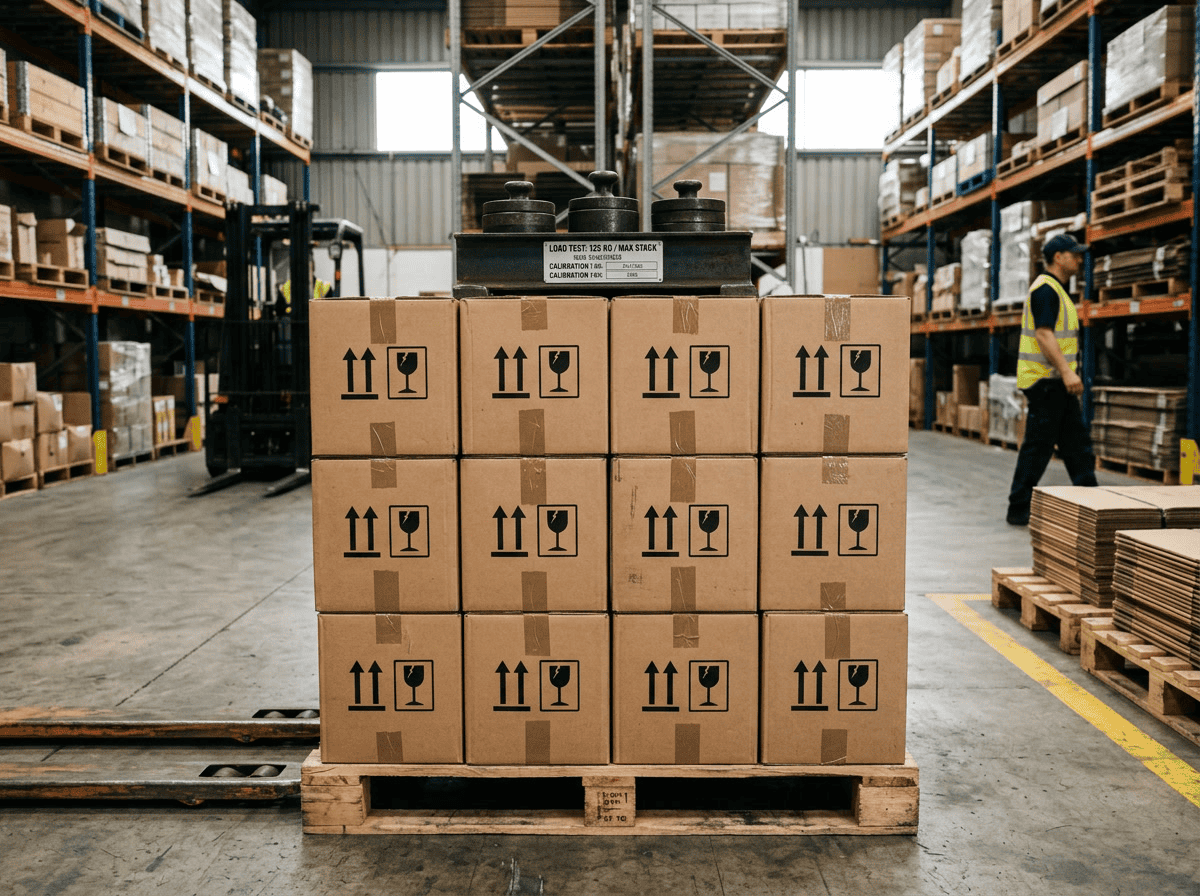
The standard for outdoor glass lamp shade packaging master cartons is double-wall corrugated, BC-flute, minimum 32 ECT (edge crush test) for cartons up to 10 kg gross weight, and 44 ECT minimum for cartons from 10–20 kg gross weight. ECT rating measures the corrugated board’s resistance to vertical crushing force — the primary failure mode in stacked shipping containers.
As TAPPI corrugated board testing standards define, a 32 ECT board sustained through a properly constructed carton provides box compression strength adequate for 3-high pallet stacking of cartons up to 15 kg. Heavier outdoor shade master cartons (18–25 kg gross) require 44 or 51 ECT board to maintain structural integrity under standard container stacking.
Inner Configuration and Load Distribution
The arrangement of inner boxes within the master carton affects compressive load distribution:
- Aligned stacking: all inner boxes in the same orientation, sharing structural rib alignment with the master carton flutes — maximum compression resistance for uniform inner box sizes.
- Interlocked stacking: alternating inner box orientations across layers, distributing horizontal shear loads — used when inner box footprints vary.
Each inner box contacts adjacent inner boxes only through corrugated walls, never through glass surfaces. A 10 mm corrugated honeycomb or foam layer between inner box layers prevents vertical load from transferring through inner box tops into glass interiors during pallet stacking.
Weight Limits and Pallet Configuration
Standard outdoor glass lamp shade packaging master cartons are sized to stay within 20–25 kg gross weight — the threshold for manual handling in most warehouse and customs environments. Above 25 kg, mechanized handling changes the grip profile and increases corner damage risk.
A standard 20-foot export container holds approximately 1,800–2,400 outdoor glass lamp shade master cartons in interlocked pallet configurations, depending on shade size. Pallet height is limited to 220 cm (pallet + carton stack) for standard container clearance.
ISTA and Drop Test Standards for Glass Lamp Shade Packaging
Specifying ISTA testing compliance in a supplier agreement is the single most effective way to ensure outdoor glass lamp shade packaging meets a minimum engineering threshold.
ISTA 2A — The Primary Reference Standard
ISTA Project 2A is the standard packaged-product performance test for items under 68 kg shipped through standard distribution. The International Safe Transit Association’s 2A protocol covers:
- Atmospheric conditioning: 24 hours at 23°C / 50% RH — simulates ambient moisture exposure
- Vibration: 60 minutes random vibration — simulates truck transit
- Drop sequence: multiple drops from 60 cm in 18 specified orientations (flat, edge, corner)
- Compression: static load at 3× gross weight for 1 hour — simulates pallet stacking
A packaging system passing ISTA 2A with zero breakage across 6 sample units demonstrates that the foam geometry, carton grade, and interior configuration are correctly engineered for the shade weight and fragility. Buyers should request ISTA 2A test reports — not just the claim of compliance — from suppliers handling outdoor glass shade export orders.
ISTA 3A for Large-Diameter Outdoor Globes
ISTA Project 3A extends 2A with an enhanced vibration profile that better simulates ocean freight container conditions, including lower-frequency resonance modes. Large outdoor glass globes (250 mm diameter and above) often have natural vibrational frequencies in the range that 3A testing specifically exercises. For premium or high-value outdoor glass shade lines, 3A compliance provides meaningfully higher assurance than 2A.
Breakage Rate Benchmarks by Packaging Specification
| Packaging Specification | Observed Breakage Rate (Ocean Freight) |
|---|---|
| Single-wall carton, kraft paper wrap only | 8–15% |
| Single-wall carton, 25 mm EPE foam | 3–6% |
| Double-wall carton, 40 mm EPE formed shell | 1–2% |
| Double-wall carton, 50 mm EPE formed shell, ISTA 2A tested | < 0.8% |
| Double-wall carton, 50 mm EPE, fitter collar ring, ISTA 2A tested | < 0.5% |
The sub-0.5% level requires the complete system — including the dedicated fitter collar foam ring. Suppliers who achieve this without it are rare outliers.
OEM Branded Packaging for Outdoor Glass Lamp Shades
For importers building a retail or house brand, outdoor glass lamp shade packaging is also a brand touchpoint. OEM branded packaging does not require minimum order quantities that differ materially from standard export packaging.
Color Box Retail Packaging
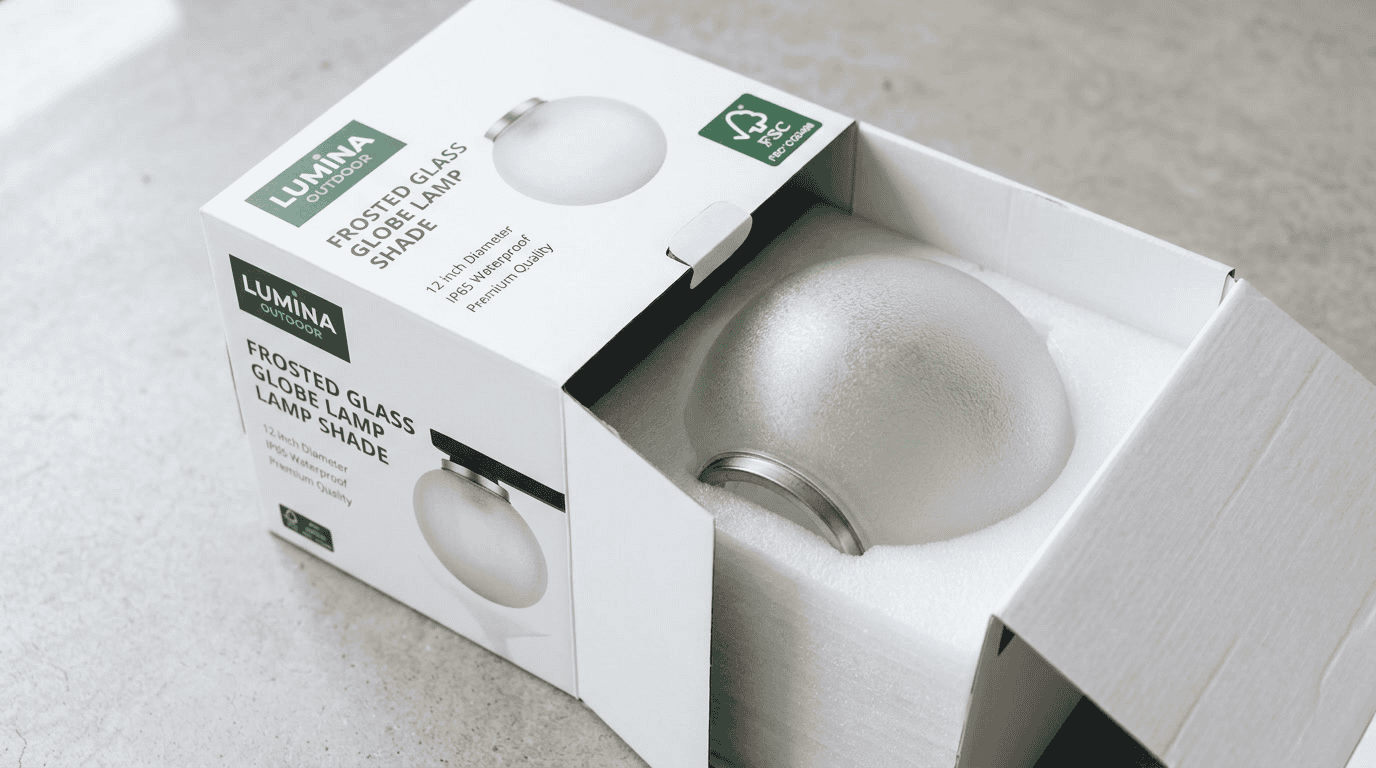
The most common OEM format is a color box inner carton — a single-unit printed corrugated or solid-board box with the importer’s branding, product photography, and specifications printed on the outer surface. Color boxes for outdoor glass lamp shades typically include:
- Brand name, logo, and product image on four side panels
- Product specifications (shade dimensions, glass type, fitter size, IP rating) on one end panel
- Installation and care instructions on the opposite end panel
- Barcode and regulatory marks (CE, ETL, UL) on the base panel
The color box retains the same internal foam-insert and double-wall construction as standard export packaging — the branding adds to the engineering, not replaces it. Tooling cost for new color box flexographic plate setup runs $800–1,500 USD; digital printing is available for short runs without plate costs.
Private Label and Insert Card Options
For orders where full color box tooling cost is not justified, private label printed polypropylene tape on plain kraft cartons, combined with adhesive label sets, provides a lower-cost intermediate option with equivalent functional packaging performance.
High-end outdoor glass lamp shade packaging often includes a printed insert card (160 gsm coated stock, full-color) inside the inner box — placed between the top foam cap and the box lid, never against the glass surface — covering care instructions, warranty information, and a QR code linking to installation guidance.
Sustainable Packaging Trends for Outdoor Glass Lamp Shades (2026+)
The shift toward sustainable outdoor glass lamp shade packaging is accelerating in 2026, driven by EU Packaging and Packaging Waste Regulation requirements, major retailer sustainability mandates, and importer preferences in European and North American markets.
FSC-Certified Corrugated and Recycled Board
FSC-certified corrugated is now a standard specification in RFQs from European lighting importers. Requesting FSC-certified board adds approximately 3–5% to corrugated material cost with zero impact on carton performance specifications — the most straightforward sustainable upgrade available for outdoor glass lamp shade packaging without any engineering compromise.
Recycled-content corrugated (minimum 80% post-consumer recycled fiber) is available at equivalent ECT ratings to virgin-fiber board for grades up to 32 ECT. For 44 ECT and above — required for heavier outdoor shade master cartons — recycled-content board is available at 70–80% post-consumer content. As Statista packaging market research documents, the global recycled corrugated board market has reached sufficient scale to support production-volume outdoor glass lamp shade packaging orders without lead time penalties at most major manufacturing locations.
EPE Foam Alternatives — What Works and What Doesn’t Yet
EPE foam is not recyclable in standard municipal streams. Alternatives under active evaluation:
- Honeycomb kraft wrapping: 3-ply honeycomb kraft paper, fully recyclable, compressive performance adequate for outdoor glass shades up to 400 grams at 50 mm wrap thickness. Moisture-sensitive — not suitable for shipments through high-humidity transshipment ports without additional barrier packaging.
- Mushroom packaging (mycelium foam): bio-based cushioning grown from agricultural waste. Compressive performance comparable to EPE for shades under 300 grams; insufficient for heavy outdoor globes (above 450 grams) at equivalent thickness.
- Recycled EPE: mechanically recycled EPE foam at 85–90% of virgin cushioning efficiency. The most practical near-term sustainable option for manufacturers with high EPE volume in outdoor glass shade packaging lines.
The practical 2026 position: FSC-certified corrugated is achievable today without performance compromise. EPE foam alternatives remain weight-limited for heavy outdoor glass shades and should be evaluated per SKU.
FAQ
What packaging is used for outdoor glass lamp shades?
Standard outdoor glass lamp shade packaging uses individual EPE foam wrapping (3–8 mm thickness based on shade weight) with a dedicated fitter collar foam ring, a formed foam shell insert providing 50 mm clearance on all sides, and a double-wall corrugated inner box per unit. Multiple inner boxes are packed into a master export carton rated to the combined gross weight. For retail, a color-printed outer box with the same internal foam structure is used.
What drop test should outdoor glass lamp shade packaging pass?
The standard reference is ISTA Project 2A, which covers atmospheric conditioning, vibration, a 60 cm multi-orientation drop sequence across 18 positions, and compression testing. Suppliers exporting outdoor glass shades should provide ISTA 2A test reports for their specific packaging configuration. For large-diameter globes (250 mm and above), ISTA 3A provides a more demanding ocean-freight-specific vibration profile.
What causes glass lamp shade breakage during shipping?
The primary cause is fitter rim impact on carton corner or edge drops — the fitter collar is the thinnest cross-section and the first fracture point under impact. The second cause is foam bottoming-out: foam wall thickness below 50 mm for shades above 300 grams fully compresses on a 60 cm drop and transmits peak impact force directly to the glass. The third cause is glass-to-glass contact in multi-unit inner boxes without adequate central divider cushioning.
Can outdoor glass lamp shade packaging be OEM branded?
Yes. OEM branded packaging for outdoor glass lamp shades is widely available from manufacturers. Options include full-color box printing (retail-ready), private label printed tape and label sets (lower tooling cost), and printed insert cards inside standard export cartons. Color box flexographic plate tooling costs $800–1,500 USD; digital printing is available for short runs without plate costs. The internal foam cushioning specification remains identical to standard export packaging.
What is the minimum foam cushioning thickness for outdoor glass lamp shades?
50 mm on all six sides for shades weighing 300 grams or above. Shades below 300 grams can be adequately cushioned with 35–40 mm. These thicknesses reflect the foam compression depth needed to reduce a 60 cm ISTA 2A drop from ~50 G peak deceleration down to the 15–25 G threshold where borosilicate and tempered glass breakage probability drops below 2%.
What corrugated carton grade is required for outdoor glass shade master cartons?
Double-wall corrugated, BC-flute construction, minimum 32 ECT for master cartons up to 10 kg gross weight. Cartons in the 10–20 kg range require 44 ECT minimum. These ratings provide adequate box compression strength for standard 3-high pallet stacking in container and warehouse environments without structural collapse.
What sustainable packaging options are available for outdoor glass lamp shades?
FSC-certified corrugated cartons at equivalent ECT ratings with a 3–5% material cost premium — achievable today without performance compromise. Recycled-content corrugated (80%+ post-consumer fiber) is available at 32 ECT grades. EPE foam alternatives (honeycomb kraft, recycled EPE) are viable for shades under 400 grams; large, heavy outdoor globes remain constrained to EPE or equivalent closed-cell foam for adequate cushioning at 50 mm wall thickness.
Specifying Outdoor Glass Lamp Shade Packaging Before You Order
Outdoor glass lamp shade packaging is a procurement specification, not a shipping detail. The variables that determine breakage rate — foam wall thickness, carton ECT grade, fitter collar isolation, ISTA test compliance — are all specifiable in a purchase agreement and verifiable with supplier documentation before a container ships.
The baseline specification that achieves sub-1% breakage on outdoor glass lamp shade export orders: EPE foam individual wrapping with dedicated fitter collar ring, formed foam shell providing 50 mm minimum clearance on all sides, double-wall BC-flute inner box, and a master carton rated to ISTA 2A requirements. Any manufacturer producing outdoor glass shades for export should be able to document this baseline without hesitation.
For OEM branded packaging, the internal structure must remain intact. Brand presentation and functional cushioning are not a tradeoff. Buyers who specify one without confirming the other get the resulting breakage problem.