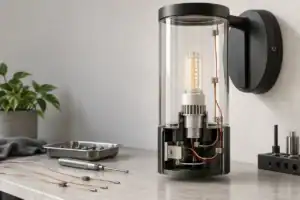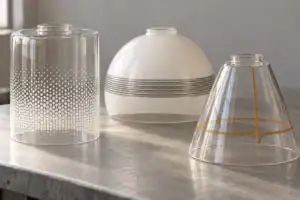
A lawn light glass shade is a weatherproof glass globe, cylinder, or lantern cover fitted to a post-top, bollard, or wall-mount outdoor fixture. Replacements are sized by fitter diameter — standard 2¼ inch, 4 inch, or 6 inch — and matched to glass type (clear, frosted, or seeded).
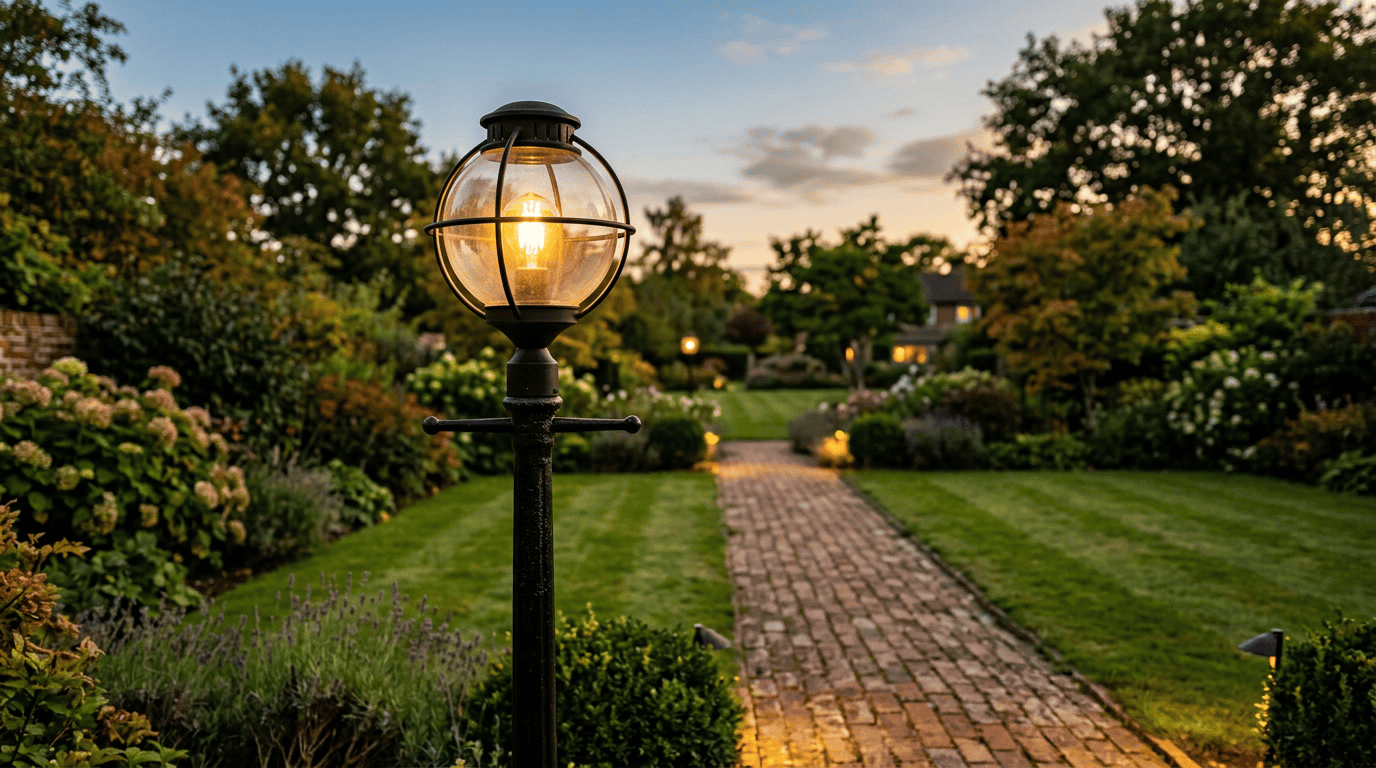
Your lawn light worked fine for years. Then one winter, a branch came down or a wayward soccer ball found its mark, and now you’re left with a bare bulb staring up from your post-top fixture. The good news: the fixture itself is almost certainly fine. A replacement lawn light glass shade is the only part you need — but buying the wrong size or the wrong glass type means another trip to the returns counter.
This guide covers everything that matters. What the different shade types are, how to measure so the replacement actually fits, which glass materials survive real outdoor exposure, and how to install without cracking the replacement before it ever lights up. We’ll also address the black-finish and custom-color questions that come up constantly when matching an established landscape look.
What Is a Lawn Light Glass Shade?
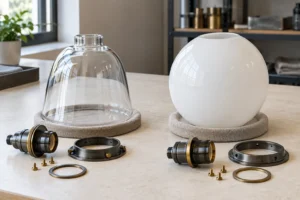
A lawn light glass shade is the glass enclosure that both protects the bulb from weather and controls how light is distributed across your outdoor space. It attaches to an outdoor fixture — typically a post-top, bollard, or wall-mount lantern — through a holder ring (also called a fitter ring), which grips a molded glass collar at the top of the shade.
The “lawn light” designation typically refers to fixtures mounted on ground-level posts between 18 inches and 6 feet tall that illuminate a pathway, driveway edge, garden bed, or lawn perimeter. The shade does several things at once:
- Weatherproofing — protects the bulb and socket from rain, snow, and condensation
- Light shaping — diffuses, directs, or focuses the beam pattern depending on glass opacity and shape
- Glare reduction — frosted and seeded glass eliminate the uncomfortable point-source glare of an exposed bulb
- Aesthetics — the shade defines the visual style of the fixture more than any other component
According to the Illuminating Engineering Society’s outdoor lighting standards, fixture lenses and globes are classified by both their optical properties and their rated exposure category — a critical distinction when choosing glass for a lawn application that sees direct rain, freeze-thaw cycling, and UV exposure year-round.
How the Fitter System Works
The term fitter refers to the glass collar at the top opening of the shade — the part that contacts the fixture’s holder ring. The fitter diameter is measured across the inside of this opening. Standard sizes are 2¼ inch, 4 inch, and 6 inch (measuring the inner clear span, not the outside of the collar).
The holder ring on the fixture grips this collar with screws or spring clips. When the fitter size matches the holder ring exactly, the shade seats flush, seals against weather, and won’t rock or rattle. A mismatch of even 2–3 mm causes the shade to sit crooked, vibrate in wind, and — critically — create a water infiltration gap directly above the bulb socket.
The Difference Between Shade, Globe, and Cover
These three terms are used interchangeably in retail contexts, but they describe different shapes:
| Term | Shape | Typical Fixture |
|---|---|---|
| Globe shade | Spherical — equal height and width | Post-top lawn lights, bollards |
| Cylinder shade | Taller than wide, straight sides | Bollard lights, pathway posts |
| Jelly jar shade | Short, wide cylinder with rounded base | Wall sconces, porch lights |
| Lantern panel | Flat glass panes in a metal frame | Hanging lanterns, coach lights |
For lawn post-top fixtures, the round globe is the dominant form. For bollards, a taller cylinder or ribbed oval is more common. The measurement approach is the same regardless of shape.
Types of Lawn Light Glass Shades
The SERP for “lawn light glass shade” is dominated by Amazon category pages and hardware store listings — none of which explain the actual differences between glass types. That gap matters because choosing the wrong glass for your specific fixture and light source creates problems that no amount of cleaning or repositioning will fix.
Clear Glass Globe Shades
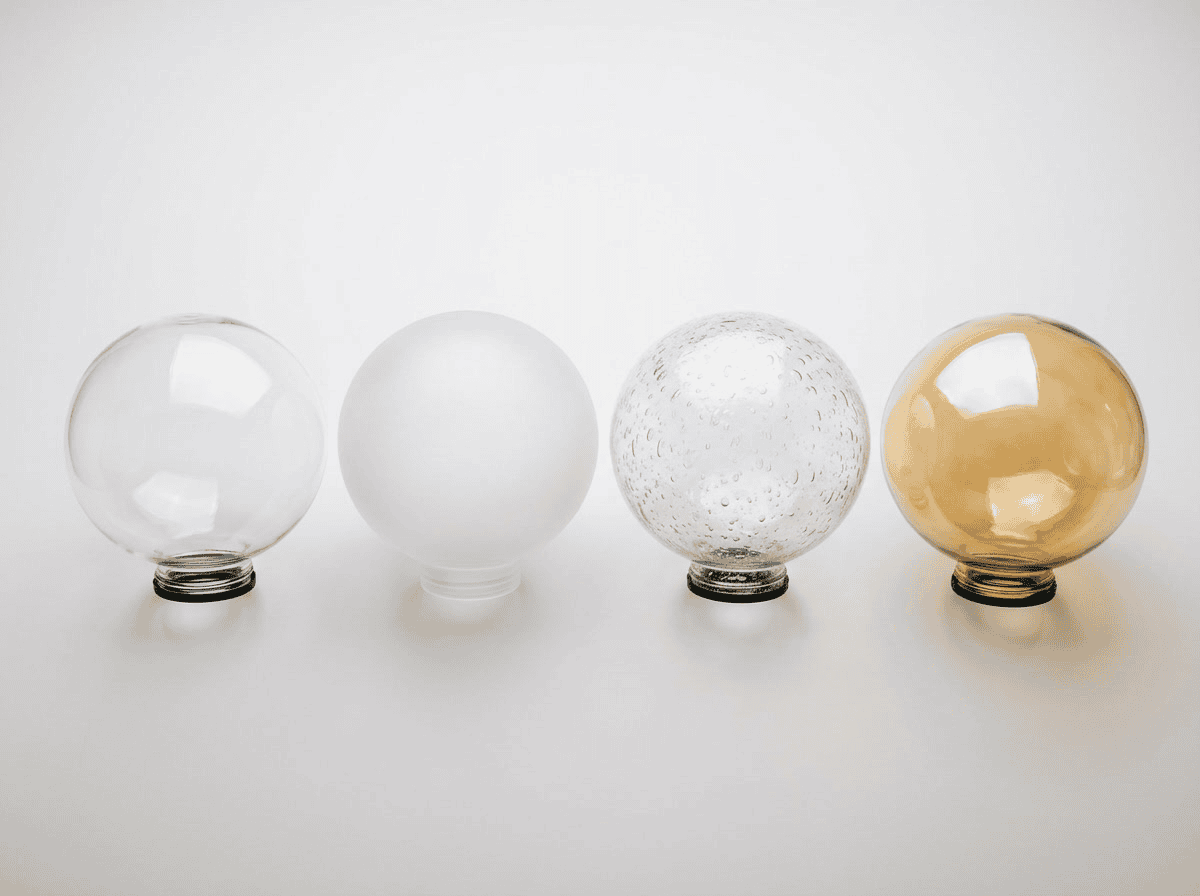
Clear glass transmits maximum light output. A 10-watt LED behind a clear globe produces noticeably more usable lux on the pathway than the same bulb behind a frosted shade. The tradeoff: clear glass makes the bulb fully visible, creating point-source glare that can be uncomfortable at eye level for anyone sitting on a patio or walking past.
Best applications:
– Driveways and parking areas where maximum light coverage matters more than comfort
– High-mount posts (above 5 feet) where the bulb is above eye level
– Fixtures with decorative filament-style LED bulbs where the bulb itself is part of the visual design
Frosted Glass Globe Shades
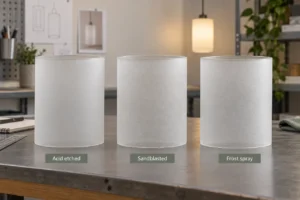
Frosted glass (acid-etched or sandblasted surface) diffuses light uniformly. The output looks softer and the globe glows evenly rather than showing a bright hot spot at the bulb position. Lux output drops 15–25% compared to clear glass, but the quality of light is generally more comfortable for garden and pathway use.
In practice, frosted white globes are the most common replacement purchase for residential lawn lights because they match the factory appearance of most mid-market post-top fixtures. If you’re not sure what the original shade was, frosted is almost always the correct starting assumption.
Seeded and Textured Glass Shades
Seeded glass contains deliberate air bubbles cast into the glass body during manufacture, creating a vintage or artisan appearance. Ribbed, hammered, and “rain glass” textures are variations of the same category — all provide moderate diffusion while retaining some visible texture interest.
These shades are popular for craftsman-style, colonial, and cottage landscape designs. Optically, seeded glass behaves similarly to frosted: good diffusion, 20–30% lux reduction versus clear, no glare.
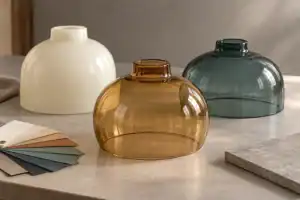
Amber and Tinted Glass Shades
Amber-tinted glass reduces blue-spectrum light output, which matters for two reasons:
1. Wildlife-friendly — amber and warm-tinted shades dramatically reduce the disorienting effect outdoor lights have on insects, birds, and sea turtles. As referenced in the IEC 60529 standard for enclosure ratings, outdoor luminaire spectral output is increasingly regulated in coastal and wildlife-adjacent zones.
2. Warmer ambiance — amber tones complement wood decks, brick pathways, and natural stone better than the cool-white appearance of clear glass.
The lux output is lower, and amber glass will not appear “bright” in the conventional sense. That’s usually appropriate for accent lighting and ambiance lighting rather than task or safety lighting.
Borosilicate vs. Soda-Lime Glass
This distinction matters more than most buyers realize. Standard soda-lime glass — the type used in windows and basic glassware — handles outdoor temperature swings up to roughly 40°C without issue. In climates where outdoor temperatures can drop from +35°C in summer to -25°C in winter, or where hot bulbs create localized heat stress, soda-lime glass is vulnerable to thermal shock fracture.
Borosilicate glass (as used in laboratory glassware and high-quality cookware) has a thermal expansion coefficient roughly one-third that of soda-lime, allowing it to survive sudden temperature changes of 120°C or more without fracturing. For any lawn light shade that uses an incandescent or halogen bulb — or an LED that runs warm — borosilicate is the correct specification.
Per ASTM C1048 heat-treated glass standard, heat-strengthened glass provides approximately twice the thermal resistance of standard annealed glass, while fully tempered glass provides four times the resistance. Look for shades that explicitly state “borosilicate” or “heat-tempered” construction for all-season outdoor use.
How to Measure Your Lawn Light Glass Shade
Measurement is where most replacement purchases go wrong. Buyers measure the outside of the broken shade (or the outside of the holder ring) instead of the dimensions the manufacturer uses to specify fit.
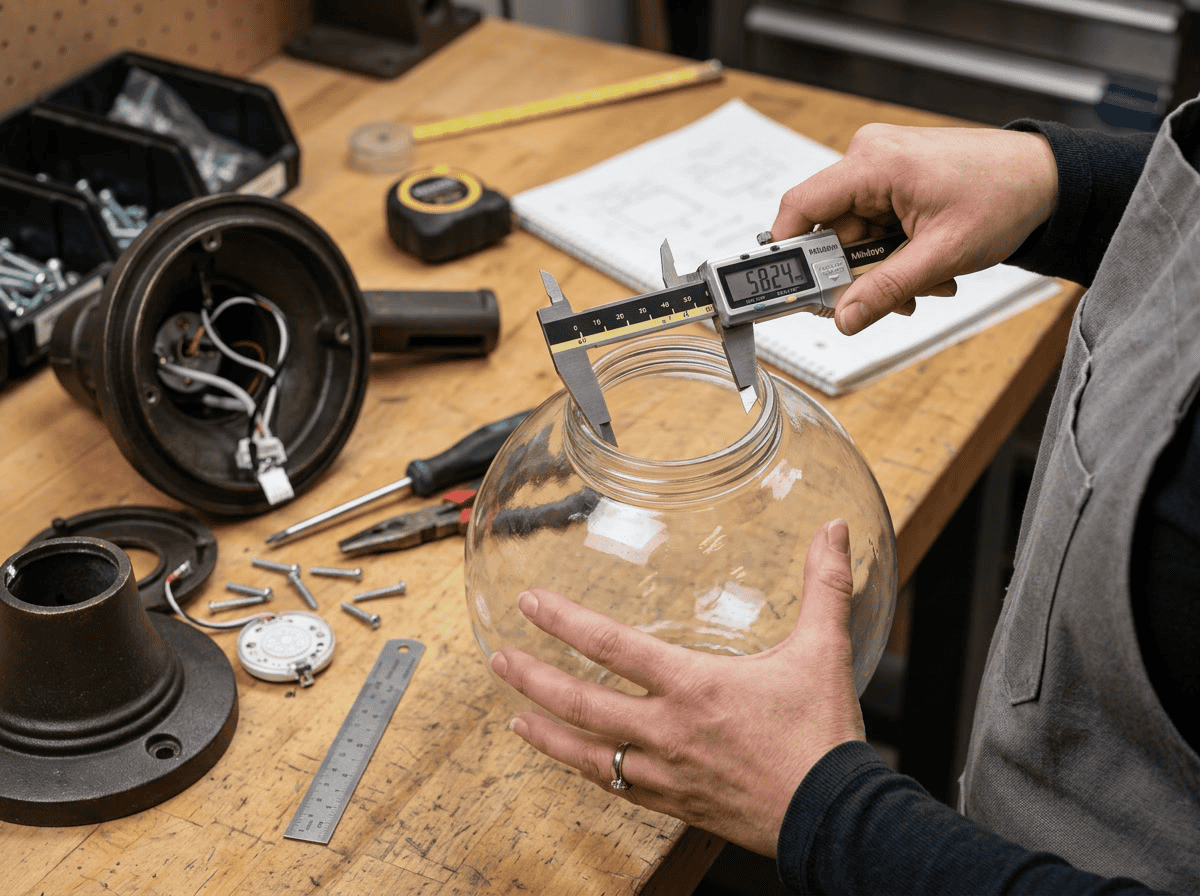
Take three measurements. Do them in this order:
Step 1: Measure the Fitter Diameter
The fitter diameter controls fit — it’s the only dimension that determines whether the shade physically seats on your fixture or falls through the holder ring.
Measure across the inside of the glass collar opening at the top of the shade. Use a steel rule or digital calipers — not a flexible tape measure, which bends and gives a shortened chord reading.
Standard fitter sizes for lawn and outdoor fixtures:
– 2¼ inch (57 mm) — small jelly jar shades, compact post fixtures
– 4 inch (102 mm) — mid-size post globes, most residential bollards
– 6 inch (152 mm) — large globe post-top lights, commercial pathway fixtures
If the original shade is already broken or missing, measure the inner diameter of the holder ring on the fixture instead. The ring’s inner span equals the fitter diameter you need. Using calipers here is strongly recommended — the difference between a 4-inch and 4¼-inch fitter is invisible to the eye but means a loose, rocking shade in service.
Step 2: Measure the Globe Diameter (Maximum Width)
This is the widest horizontal measurement across the shade body. A 10-inch globe diameter and a 12-inch globe diameter will both fit a 4-inch fitter — they produce different visual proportions relative to the post and fixture housing.
For matching a replacement to an existing fixture design, measure the original shade if possible. For fixtures where the original shade is gone, use the fixture housing width as a proportional guide: a globe roughly equal to or slightly wider than the housing top looks balanced.
Step 3: Measure the Shade Height
Height matters for two scenarios:
1. Enclosed post-top fixtures — the globe must fit inside a housing that also contains the socket arm; if height is wrong, the shade won’t close
2. Open-frame fixtures — height is primarily visual proportion
Measure from the base of the fitter collar lip (where it rests on the holder ring) to the lowest point of the shade. Match within ±10 mm of the original for best visual result.
A reliable quick-reference for common outdoor post-top shade proportions:
| Globe Diameter | Typical Height | Common Fitter Size | Typical Weight |
|---|---|---|---|
| 6 inch (150 mm) | 5–6 inch | 2¼ inch | 180–250 g |
| 8 inch (200 mm) | 7–8 inch | 4 inch | 300–450 g |
| 10 inch (250 mm) | 9–10 inch | 4 inch | 500–700 g |
| 12 inch (300 mm) | 10–12 inch | 6 inch | 800–1,100 g |
Glass Materials and Weather Ratings for Lawn Shades
Outdoor glass shade longevity is driven by two independent factors: glass composition (thermal resistance) and fixture IP rating (liquid and particle ingress protection). Most buyers focus on one and ignore the other, then wonder why the replacement fails.
Understanding IP Ratings for Glass Shades
The IP (Ingress Protection) rating system, defined by IEC standard 60529, uses two digits. The first digit (0–6) describes solid particle protection; the second (0–8) describes liquid protection.
For lawn lights:
– IP44 — protected against solid objects > 1 mm and water splashing from any direction. Minimum for open-frame landscape fixtures.
– IP54 — dust protected and splash-proof. Standard for residential post-top and bollard fixtures.
– IP65 — fully dust-tight and protected against low-pressure water jets. Required for fixtures in direct spray range of irrigation systems or in coastal environments.
A glass shade rated IP65 requires a gasketed fitter seat — the rubber or silicone gasket between the glass collar and the holder ring creates the seal. When ordering a replacement shade for a gasketed fixture, confirm that the replacement includes a fitter gasket or that the gasket on the fixture is still serviceable.
The Energy.gov Outdoor Lighting Guide and Shade Material Efficiency
The Department of Energy’s outdoor lighting guidance notes that fixture lens transmittance directly impacts LED efficacy — a frosted glass shade rated at 75% transmittance reduces the effective output of a 100-lumen LED to 75 lumens. This is relevant when replacing a clear shade with a frosted one: you may need to increase LED wattage by 15–25% to maintain the same pathway illumination level.
For lawn light glass shades specifically:
– Clear glass: 88–92% transmittance
– Frosted (light etch): 75–82% transmittance
– Frosted (heavy acid etch): 60–72% transmittance
– Seeded/textured: 65–78% transmittance
– Amber tinted: 50–65% transmittance (varies with tint density)
Thermal Cycling and Glass Longevity
In freeze-thaw climates, a lawn light glass shade experiences hundreds of thermal cycles per year — cold nights contracting the glass, warm days or active bulb heat expanding it. Glass that lacks sufficient thermal resistance develops micro-cracks that eventually propagate to visible fractures.
The NEMA outdoor luminaire standards specify glass enclosures for outdoor fixtures by their operating temperature range. For a globe rated to -40°C / +120°C, borosilicate construction is the only glass type that reliably meets that range.
In practice: if your climate drops below -20°C in winter, or if your fixture uses an LED retrofit that runs the socket area noticeably warm, specify borosilicate or heat-tempered glass when ordering the replacement shade. The cost premium over standard soda-lime glass is typically 20–40%, but the replacement frequency drops dramatically.
Choosing a Lawn Light Glass Shade by Finish and Style
The glass itself is only half the replacement decision. The finish of the fitter collar, the color of the hardware ring, and the texture of the glass all need to coordinate with the existing fixture and surrounding landscape materials.
Black Finish Lawn Light Glass Shades
Black is the most popular finish for residential lawn light hardware because it reads as a neutral against virtually any landscape palette — brick, stone, wood, and concrete all look deliberate next to a matte or gloss black post and shade ring.
For black-finish fixtures, the glass shade itself is typically clear or frosted white — the black comes from the metal holder ring and post, not the glass. However, some designs use smoked glass (grey-tinted) or black-seeded glass for a more dramatic nighttime appearance. These transmit significantly less light (40–55%) and are appropriate only for accent fixtures, not pathway safety lighting.
Bronze and Copper Tones
Antique bronze and oil-rubbed bronze fixtures pair well with amber-tinted or warm-white frosted glass, which reinforces the warm spectrum of the hardware color. Cool-white clear glass on an antique bronze fixture creates a visual disconnect — the fixture reads warm, the light reads cold.
Matching Weathered and Aged Fixtures
Older post-top fixtures often have visible patina or weathering on the holder ring. A pristine new glass globe can look mismatched against a well-aged fixture. Options:
– Order a globe with a slightly textured or seeded finish — the visual complexity of the glass reduces the contrast between new glass and aged metal
– Order a frosted globe rather than clear — the diffused appearance is less obviously “new”
– Replace the holder ring gasket at the same time to refresh the seating area
The Case for Matching Pairs
Most residential lawns have 2–6 post lights along a driveway or pathway. If one shade breaks, the replacement should exactly match the survivors — not just in fitter size, but in globe diameter, glass type, opacity, and height. The eye catches asymmetry in a row of lights immediately.
If matching the original shade is impossible (discontinued product), the better choice is often to replace all shades at once rather than one. The visual continuity is worth the additional cost, and all shades in a matching set will age at approximately the same rate going forward.
Installation and Maintenance of Lawn Light Glass Shades
Most lawn light glass shade replacements take under 10 minutes. The standard approach applies to the vast majority of post-top residential fixtures:
- Turn off power at the circuit breaker — not just at the switch. Post lights are often on photocell or timer circuits that can switch on unexpectedly during installation.
- Allow the bulb to cool — 10–15 minutes for LED retrofits, 20–30 minutes for older incandescent or CFL fixtures.
- Loosen the set screws on the holder ring — typically 3 equally-spaced screws. Do not remove them completely; loosen until the ring releases tension on the glass collar.
- Rotate the shade — many fixtures use a bayonet-style lock that requires a quarter-turn counterclockwise before the shade lifts free. Others simply lift straight up once the set screws are backed off.
- Inspect the gasket and holder ring — before installing the replacement, check the rubber or silicone gasket. A hardened, cracked, or compressed gasket will not seal properly. Replace if necessary (standard 4-inch gaskets are available at any hardware store for under $2).
- Seat the new shade and re-tighten screws — hand-tight plus one quarter-turn. Over-tightening the set screws is the most common cause of new shade breakage on installation — the screw point creates a stress concentration in the glass collar at the contact point.
A thin bead of clear silicone sealant between the fitter collar and the gasket improves weatherproofing on IP44-rated fixtures and extends the life of the gasket in wet climates. Apply sparingly — the shade should still be removable for future bulb changes.
Cleaning Lawn Light Glass Shades
Glass lawn light shades accumulate a combination of oxidized mineral deposits (from rain and irrigation), insect debris, UV-degraded silicone residue, and algae growth in humid climates. Annual cleaning extends optical clarity and prevents etching.
Recommended approach:
– Remove the shade from the fixture (follow installation steps in reverse)
– Soak in warm water with a few drops of dish soap — 10–15 minutes dissolves most mineral deposits
– For stubborn calcium scaling, a 50/50 white vinegar/water solution applied with a soft cloth works without scratching
– Never use abrasive pads or steel wool on frosted or seeded glass — the surface texture is easily damaged
– Rinse thoroughly and dry before reinstalling — water droplets inside a hot globe create thermal stress points
Lawn Light Glass Shade Trends for 2026 and Beyond
The replacement glass shade market is shifting alongside broader landscape lighting trends. The shifts that matter most for buying decisions in 2026:
LED-Optimized Shade Geometries
First-generation LED retrofit bulbs for post lights used the same A19 or globe shapes as incandescent predecessors. Current-generation filament LED arrays and COB (chip-on-board) modules distribute light in fundamentally different patterns. As the Illuminating Engineering Society’s 2026 guidance on LED outdoor luminaires notes, optimizing shade geometry for the light source is now as important as matching fitter size.
In practice: frosted shades provide more uniform illumination with LED sources than clear glass, because the LED chip cluster creates a visibly uneven hot spot through clear glass in a way that incandescent filaments (which glow uniformly across a longer element) did not.
Dark-Sky Compliant and Wildlife-Friendly Glass
Municipalities across the US are adopting dark-sky ordinances that restrict upward light spill and blue-spectrum emission from outdoor fixtures. IDA-compliant lawn light glass shades use amber-tinted or warm-spectrum diffusion glass that shifts output below 3000K and eliminates upward light scatter.
| Trend Driver | Glass Response | Adoption Rate (2026 est.) |
|---|---|---|
| Municipal dark-sky codes | Amber / warm-tinted glass | ~18% of new landscape installs |
| Wildlife protection zones | Amber glass, opaque top caps | ~9% of coastal installs |
| HOA aesthetic standards | Matching frosted white globes | ~45% of residential installs |
| Energy efficiency codes | Higher-transmittance clear glass | ~28% of commercial installs |
Sustainable Glass Manufacturing
Borosilicate glass production is energy-intensive, and post-2026 EU import regulations increasingly require carbon footprint disclosure for glass components. Manufacturers are responding with:
– Recycled cullet content — using reclaimed glass as input material reduces energy consumption 2–3% per 10% cullet addition
– Thinner wall construction — same structural performance at reduced material weight, lowering both cost and shipping carbon footprint
– Regional manufacturing — reducing transport distance from Asian to North American manufacturing for the US market
Frequently Asked Questions
What size glass shade fits most residential lawn lights?
Most residential post-top lawn lights use a 4-inch fitter with a globe diameter between 8 and 10 inches. The 4-inch fitter size covers the majority of mid-market post-top fixtures from brands like Kichler, Progress Lighting, and Westinghouse. Measure the inner diameter of your existing shade collar or holder ring to confirm before ordering.
Can I use any glass globe on a lawn light fixture?
No — the glass globe must match the fitter diameter of your specific fixture. Using a globe with a smaller fitter allows it to drop through the holder ring; a larger fitter will not seat at all. Beyond fitter size, the shade must be rated for outdoor use (borosilicate or heat-tempered glass) and should match the IP rating of the fixture for proper weather sealing.
What is the difference between a frosted and a seeded glass shade?
Both provide diffusion, but through different mechanisms. Frosted glass has a surface treatment (acid etch or sandblasting) that scatters light at the surface, producing even, shadowless illumination. Seeded glass contains air bubbles suspended in the glass body, producing a more textured, vintage appearance with slightly more light variation across the globe surface. Optically, both reduce lux output by 20–30% compared to clear glass.
How do I know if my lawn light shade is borosilicate or soda-lime glass?
Most product listings do not state the glass type explicitly unless it is borosilicate — if the listing says nothing, assume soda-lime. Physical indicators: borosilicate glass has a faint blue or green tint when viewed edge-on through sufficient thickness, while soda-lime glass appears more greenish. In practice, the safest approach is to specify borosilicate in writing when ordering from a manufacturer, or to confirm the thermal shock rating in the product specification sheet.
Why did my replacement glass shade crack after just one season?
Thermal shock is the most common cause. Glass cracks when a localized area expands or contracts faster than the surrounding material can accommodate. In outdoor shades, this typically occurs at the fitter collar where the metal holder ring contacts the glass — the metal heats and cools faster than the glass body, creating stress at the contact point. Solutions: use borosilicate glass, ensure the set screws are not over-tightened (hand-tight plus one quarter-turn maximum), and verify the gasket is intact and making even contact around the full collar circumference.
Can I spray paint a lawn light glass shade to change the color?
Standard spray paint on glass is not durable outdoors — UV exposure, thermal cycling, and moisture will cause it to peel within one season. If you need a tinted appearance, the correct approach is to order glass with factory amber, smoked, or colored tinting. Some specialty glass suppliers offer custom tinting for production quantities. For a single fixture, a frosted glass shade with a warm-white LED bulb (2700K) produces a visually warmer tone than clear glass without any paint.
How often should lawn light glass shades be replaced?
A quality borosilicate or heat-tempered glass shade in good operating conditions — no physical impact, proper gasket sealing, non-overtightened set screws — should last 10–15 years. Soda-lime glass in harsh climates (freeze-thaw cycling, coastal salt air) typically shows micro-fracturing within 5–8 years. The practical trigger for replacement is visible crazing (a network of fine surface cracks), permanent clouding that cleaning does not resolve, or chip damage to the fitter collar that compromises the weather seal.
Conclusion
A lawn light glass shade replacement is a genuinely simple fix when you have the three correct measurements — fitter diameter, globe diameter, and shade height — and you specify glass composition appropriate for your climate. Fitter diameter is the one number that determines fit; glass type determines durability; and globe size determines whether the finished installation looks right.
The SERP for this topic is dominated by product listings that give you size filters but no context for choosing correctly. We’ve seen residential buyers spend years going through soda-lime replacement shades in northern climates simply because no one told them borosilicate was an option. Match the fitter, match the glass spec to your climate, and the replacement should outlast the next decade of seasons without issue.
For specifications on glass types and manufacturing standards for outdoor use, our glass lampshade product line covers commercial and residential post-top globe shades in borosilicate and heat-tempered construction across the full range of standard fitter sizes.