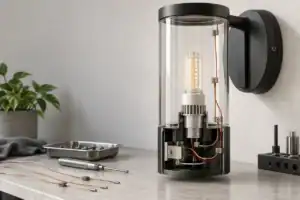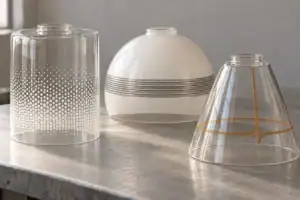
Short answer: A textile lamp shade uses fabric or another textile covering to soften and distribute light around a bulb. Choose one by material, opacity, shape, fitter, dimensions, cleaning requirements, and the heat or moisture conditions of the fixture. If the project needs a rigid, wipeable diffuser or a repeatable replacement component, compare the brief with a custom glass lamp shade.
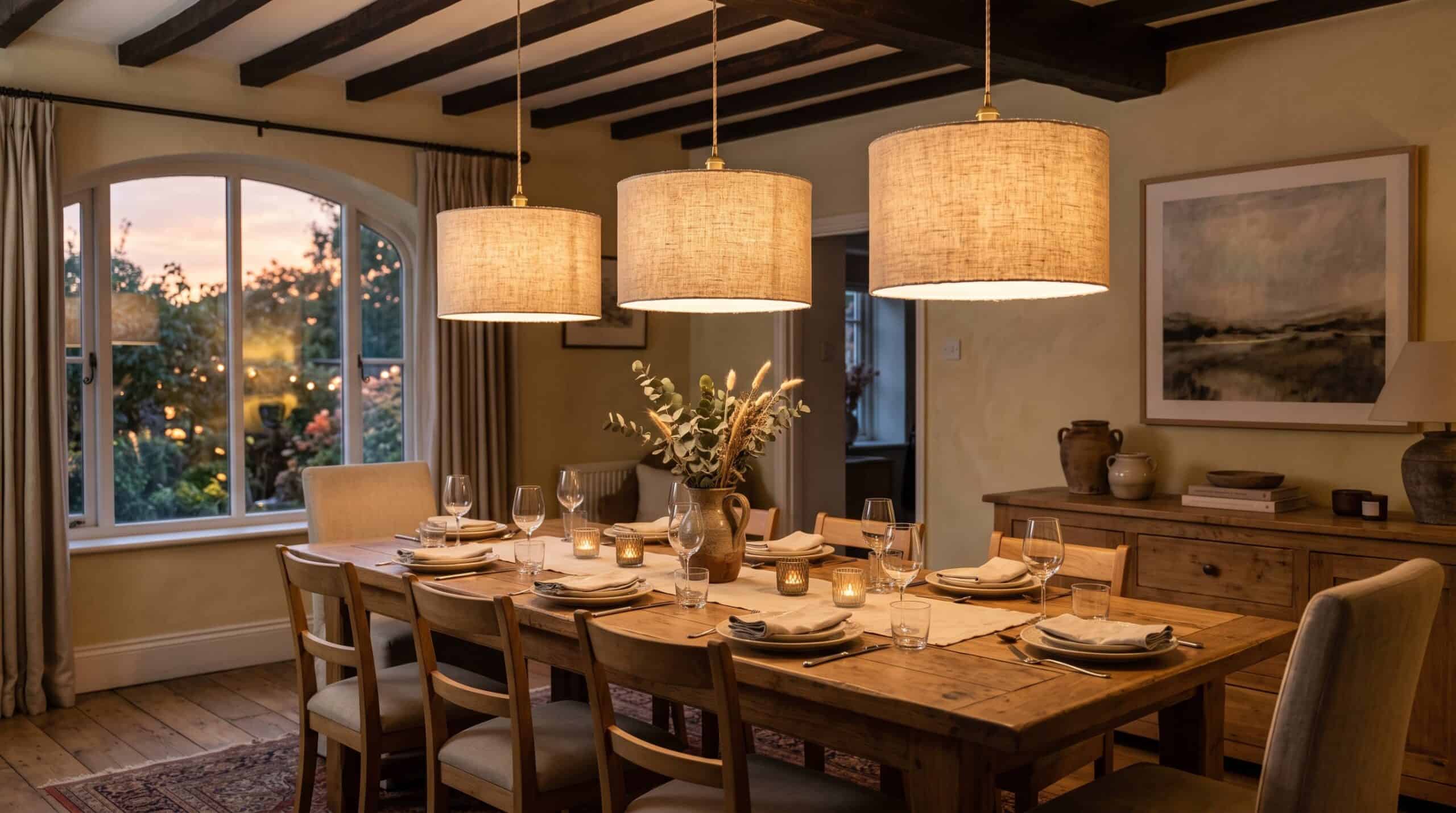
Textile shades are often described by appearance alone: linen, pleated, drum, bell, printed, or neutral. Those labels are useful, but they do not answer the procurement questions that affect the finished light. A buyer also needs to know how much light the covering transmits, whether the fitter matches the fixture, how the shade will be cleaned, and what information a supplier needs to repeat the design.
What Is a Textile Lamp Shade?
A textile lamp shade is a light-shaping covering made from fabric or a textile-based material. Many designs use an outer fabric, an inner liner, and a frame or ring set. The fitter connects the shade to a pendant, table lamp, floor lamp, wall sconce, or another fixture. Some shades are soft-sided; others use a textile laminated to a more rigid backing.
The covering changes both the visual character and the distribution of light. A lighter or more open weave can allow the shade body to glow. A denser or lined textile can keep light concentrated at the top and bottom openings. The actual result depends on the weave, color, liner, bulb, clearance, and construction, so a material name is not a substitute for a sample or product specification.
Textile Lamp Shade Materials and Their Light Effects
Material selection should start with the intended light effect and the conditions around the fixture. Ask for a material swatch or lit sample when color, opacity, or repeatability matters. The lampshade fabric guide can be used alongside the checklist below.
| Material direction | Typical visual effect | Questions to confirm |
|---|---|---|
| Linen and linen-look cloth | Visible weave and a calm, diffused appearance | What is the weave density, backing, color tolerance, and cleaning method? |
| Cotton and cotton blends | Flexible styling, from soft translucency to a more covered look | Is the fabric washable, spot-cleanable, coated, lined, or bonded to a backing? |
| Silk and faux silk | Fine texture and a more formal glow, especially on pleated shades | How should it be protected from heat, sunlight, moisture, and abrasion? |
| Velvet or other pile fabrics | Deep color and a directional surface texture | Will the pile mark, collect dust, or block more side light than intended? |
| Open-weave natural fibers | Dappled texture and a stronger material presence | Is a liner required, and how will cut edges and fraying be controlled? |
| Printed or custom-dyed fabric | Pattern or brand color becomes part of the fixture | How will the artwork, dye lot, UV exposure, and repeat order be controlled? |
For a residential lamp, the best material is usually the one that gives the desired glow while remaining easy to live with. For a hotel, restaurant, retail, or lighting-brand program, add repeatability, cleaning, replacement, sample approval, and packaging to the material decision. Do not specify a fabric only by a color name or a photograph on a screen.
Textile Lamp Shade Styles and Shapes
Shape affects proportion, light direction, and fitter clearance. The same cloth can read very differently on a straight-sided drum and a tapered empire shade.
Drum and cylinder shades
Drum shades have similar top and bottom diameters with mostly straight sides. They suit table lamps, floor lamps, and pendant fixtures where an even, contemporary silhouette is wanted. A semi-translucent textile can make the body glow; a dense textile can direct most light through the openings.
Empire, bell, and coolie shades
Empire shades taper from a smaller top ring to a wider bottom ring. Bell shades use a softer curved taper, while coolie shades exaggerate the widening toward the bottom. These profiles can direct more light downward and often work with traditional, hospitality, or decorative fixtures. The fitter and the top opening must still match the lamp hardware.
Pleated, oval, and specialty profiles
Pleats add rhythm and can emphasize a tapered shape. Oval shades are useful when the base or fixture is oval or rectangular. Scalloped edges, fringe, trim, and printed surfaces are styling choices that need extra attention at the seam, edge, and repeat points.
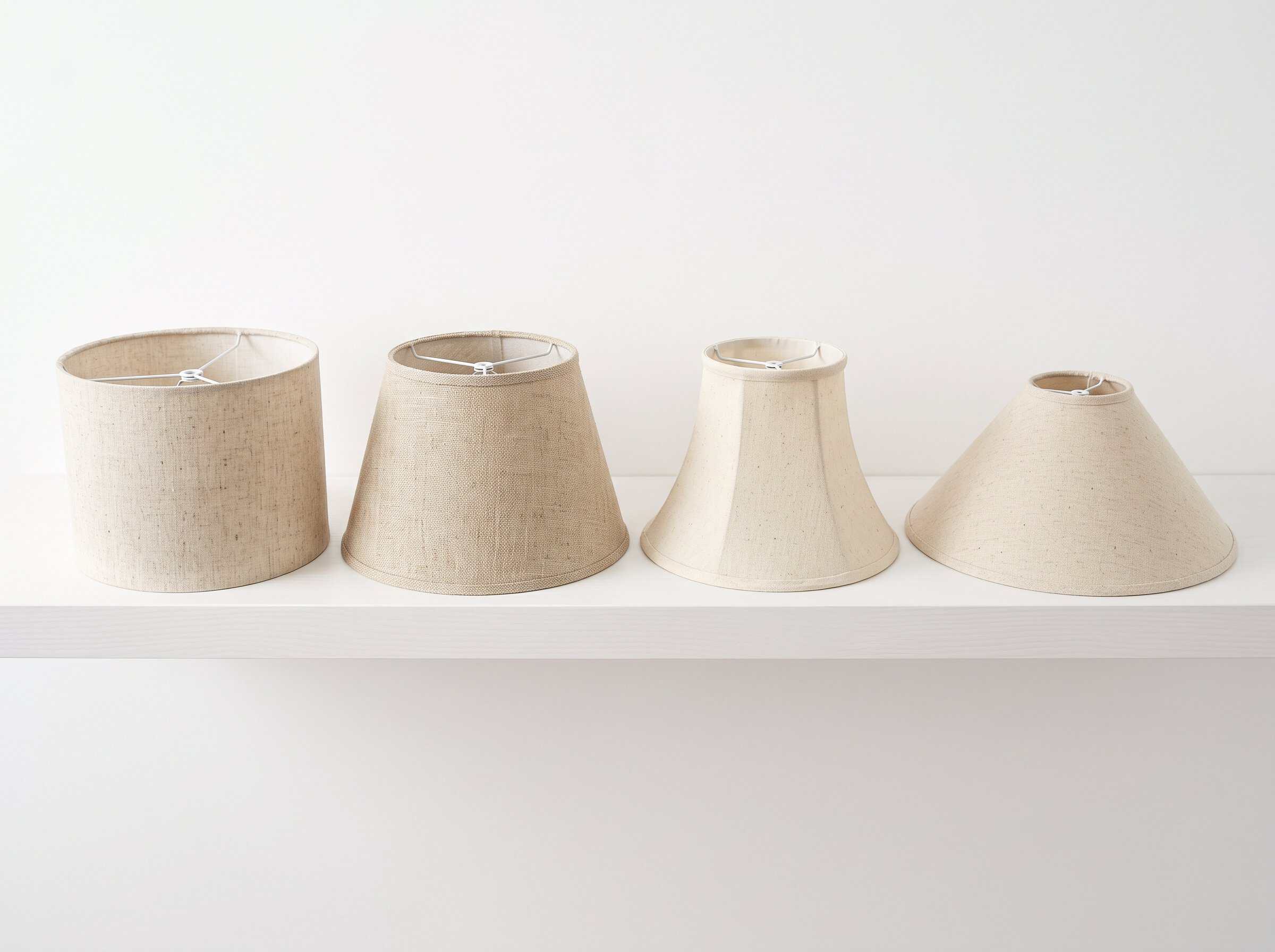
- Drum: Often used on modern table lamps, floor lamps, and pendants. Confirm top and bottom diameter, height, and fitter position.
- Empire or bell: Often used on table lamps, bedside lamps, and classic interiors. Confirm the top opening, bottom diameter, slant height, and clearance.
- Coolie: Often used on accent lamps when a wider lower opening and stronger downward distribution are wanted. Confirm stability and clearance.
- Oval: Useful for rectangular or oval lamp bases. Confirm both axes and the orientation on the base.
- Pleated or trimmed: Useful for decorative, hospitality, and custom collections. Confirm pleat repeat, seam location, trim finish, and replacement method.
Textile vs Glass Lamp Shades: Which Fits the Project?
Textile and glass are not interchangeable materials. They can use similar fixture language, but they behave differently in handling, cleaning, light distribution, and replacement. Use this comparison to frame a specification rather than to choose by appearance alone.
- Light character: Textile can soften light through weave, color, and liner. Glass can be clear, opal, frosted, colored, ribbed, or otherwise finished for a defined transmission effect.
- Surface and cleaning: Textile usually needs dusting or careful spot cleaning, depending on construction. Glass presents a rigid surface that can be wiped when the fixture and finish allow it.
- Shape and structure: Textile uses fabric, backing, seams, and frame geometry. Glass uses a rigid profile, opening, neck, and fitter or retention structure.
- Replacement risk: Textile repeats can be affected by color, fabric lot, trim, and seam placement. Glass repeats depend on dimensions, opening, wall profile, finish, and breakage protection.
- Good starting evidence: For textile, collect a swatch, shade measurements, fitter, bulb, and environment. For glass, add an old shade, fixture photo, drawing, opening measurements, finish reference, and quantity.
There is no universal winner. Textile is often attractive when softness, color, pattern, and a lighter visual mass matter. Glass is often worth comparing when the project calls for a rigid diffuser, a wipeable surface, a fixed opening, or a repeatable component that can be reviewed as a physical sample.
When Should You Choose Textile or Glass?
A textile shade may be the better starting point when:
- The design brief depends on fabric color, weave, print, trim, or a soft silhouette.
- The shade should create a warm, filtered glow rather than show a rigid surface.
- The fixture is primarily decorative and the textile construction can be maintained in its intended environment.
- The supplier can confirm the liner, fitter, bulb clearance, cleaning method, and repeatability required for the project.
A glass shade may be worth comparing when:
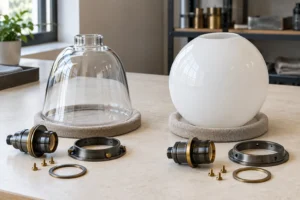
- The fixture needs a rigid shape with a controlled opening, neck, or fitter structure.
- The surface will be exposed to frequent handling, splashes, grease, or outdoor conditions that require a specified finish.
- The lighting brand needs a consistent color, texture, dimension, or replacement component across a collection.
- The buyer can provide an old shade, fixture photo, drawing, dimensions, or a physical reference for feasibility review.
For a direct comparison of glass options, visit JX Lampshade’s glass lamp shade solutions. The page covers fixture types, materials, finishes, shapes, replacement requirements, and custom OEM / ODM development.
How to Choose the Right Textile Lamp Shade
- Identify the fixture. Record whether it is a pendant, table lamp, floor lamp, wall sconce, ceiling fixture, or another format. Note how the shade is retained and whether the bulb sits inside, below, or above the shade.
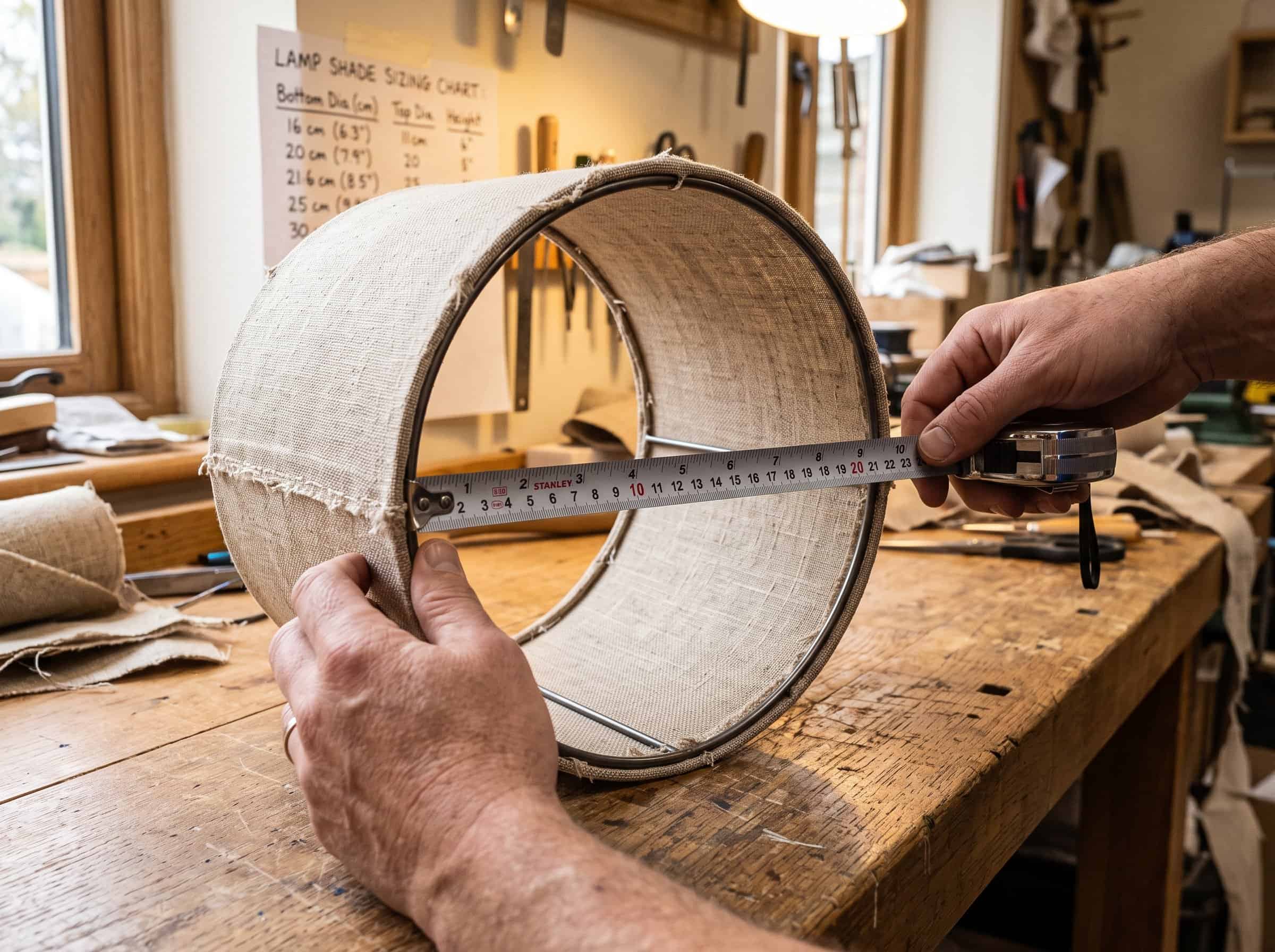
- Measure the shade and fitter. Record top diameter, bottom diameter or width, overall height, slant height where relevant, opening size, neck height, and the connection detail. The lamp shade size guide is useful for a first measurement pass.
- Choose the light effect. Decide whether the body should glow, whether light should leave through the top and bottom, and how much glare control is needed. Confirm with a lit sample when the liner or color changes the result.
- Match the material to the environment. Ask about dust, moisture, cleaning, sunlight, heat, and likely handling. Follow the shade maker’s care instructions and the fixture and bulb manufacturer’s limits.
- Confirm construction. Ask how the outer material is attached, whether a liner or backing is used, how seams are finished, and whether the frame, fitter, and trim can be repeated.
- Prepare the buyer brief. For a trade or OEM order, include the drawing or reference, dimensions, material, color, finish, quantity, sample requirement, packaging, destination, and schedule. This gives suppliers a comparable basis for quotation.
Custom Glass Alternatives from JX Lampshade
JX Lampshade is a glass lamp shade manufacturer. This page explains textile selection for buyers; it is not a claim that JX manufactures fabric, cloth, or textile lamp shades. When a glass component is a better fit, JX can review a separate glass brief.
JX’s current glass range and project pages describe support for:
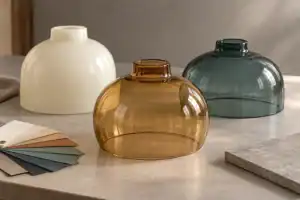
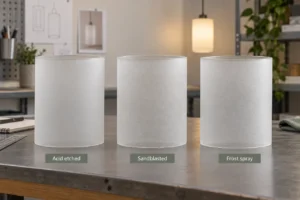
- Clear, opal or milk, frosted, amber, smoke, ribbed, fluted, seeded, and colored glass directions, subject to the final specification.
- Globe, cylinder, dome, bell, cone, lantern, rounded-square, and custom molded profiles.
- Custom dimensions, opening sizes, neck heights, fitter structures, colors, finishes, samples, and mold evaluation.
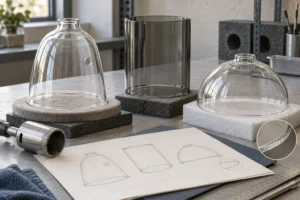
- Replacement reviews based on an old shade, fixture photos, drawings, and dimensional information.
- OEM / ODM development, quality inspection, bulk production, and protective export packaging for project requirements.
See the custom glass lamp shade manufacturing guide for the development path, or review the glass manufacturing page before sending a production brief. Availability, process, quantity, timing, and documentation should be confirmed against the specific project.
Textile or Glass: A Practical Specification Checklist
Before requesting a quotation or replacement review, collect the information that controls fit and repeatability:
- Fixture type, mounting orientation, and application environment.
- Overall shade height, maximum diameter or width, and top and bottom opening dimensions.
- Fitter, neck, retaining ring, socket, or other connection details.
- Textile material, liner, weave, opacity, color, print, trim, or glass material and finish.
- Bulb type, light source position, intended light effect, and required clearance.
- Quantity, sample requirement, inspection points, packaging, destination, and required schedule.
- Photos with a ruler, an old shade, a drawing, or a CAD file when available.
For glass replacement or OEM work, send the glass shade specification to JX with the fixture evidence above. For a textile-only requirement, use a supplier that can document textile construction, care, and the relevant safety requirements for the destination market.
FAQ: Textile Lamp Shades
What is a textile lamp shade?
A textile lamp shade is a fabric or textile-based covering that softens or directs light around a bulb.
It may use an outer textile, liner, backing, frame, rings, and a fitter. The material, weave, color, liner, and fixture geometry all affect the result. Confirm the construction and measurements instead of choosing by the word “textile” alone.
Is a fabric lamp shade better than a glass lamp shade?
Neither is automatically better; the right choice depends on light effect, environment, fit, cleaning, and repeatability.
Textile is often chosen for softness, color, pattern, and a lighter visual mass. Glass is often compared when a rigid, wipeable, or dimensionally controlled component is required. Review the complete fixture and the intended use before selecting a material.
What fabric is best for a lamp shade?
The best fabric is the one that provides the required opacity, appearance, construction, care, and heat clearance for the fixture.
Linen and cotton are common starting points for a calm, diffused look. Silk or faux silk may suit formal pleated work, while velvet and open weaves create different surface and light effects. Ask for a swatch or lit sample when the result matters.
Are textile lamp shades safe?
Safety depends on the shade construction, bulb, fixture, clearance, and the requirements that apply in the destination market.
Follow the shade maker’s wattage and care instructions and the fixture and bulb manufacturer’s limits. Do not assume that an LED bulb removes every clearance or material requirement. For commercial sourcing, ask for the applicable safety documentation before approval.
Can textile lamp shades be cleaned?
Most textile shades should be dusted or carefully spot-cleaned unless the maker explicitly confirms another method.
Water, solvents, or a washing machine may damage a liner, adhesive, print, trim, or frame. Ask for the care method before ordering, especially for hospitality or food-service installations.
How do I measure a textile lamp shade?
Measure the top opening, bottom diameter or width, overall height, slant height where relevant, and the fitter or connection detail.
Also record the fixture type, bulb position, and clearance. Photos with a ruler and a picture of the holder reduce the risk of ordering a shade that looks right but cannot be installed.
Can textile lamp shades use LED bulbs?
Many textile shades can be used with LED bulbs when the bulb, fixture, clearance, and shade rating are compatible.
Check the product instructions instead of treating LED as a universal exemption. The bulb shape and position can affect hot spots, glare, and clearance even when the electrical wattage is suitable.
Where can I buy wholesale textile lamp shades?
Use a textile shade specialist that can confirm fabric, liner, frame, fitter, sample approval, repeatability, and packaging for the intended quantity.
Give the supplier a complete brief rather than asking only for a color or catalog photo. JX Lampshade’s documented manufacturing scope is glass; for a glass alternative, send the fixture dimensions, finish, quantity, and reference material through the contact page.
When should I replace a textile shade with glass?
Compare glass when the project needs a rigid shape, a controlled opening, a wipeable surface, or a repeatable replacement component.
Send the old shade, fixture photo, drawing, opening measurements, finish reference, quantity, and application to a glass manufacturer for feasibility review. A material change may also change the light distribution and the fixture load, so assess the complete assembly.
Next Step: Match the Shade to the Fixture
Start with the connection and measurements, then choose the textile, opacity, shape, and finish that support the intended light. If the project needs a rigid glass component, review JX’s custom glass services and send a drawing, old sample, fixture photo, or dimensioned brief for review. The clearer the evidence, the easier it is to compare a textile shade with a feasible glass alternative.