
Custom glass lampshade sourcing tool
Custom Lamp Shade Manufacturer RFQ Spec Builder
Turn an early custom lampshade idea into a structured manufacturer RFQ. Capture the lamp shade dimensions, fitter, tolerance, glass material, finish, color, quantity, packaging, compliance documentation and drawing status that a supplier needs for a useful first review.
This tool is designed for lighting brands, OEM buyers, distributors, hospitality projects and product developers sourcing custom glass lamp shades—not for instant retail pricing.

A practical RFQ workflow
From Incomplete Idea to Reviewable Specification
01
Enter buyer-controlled data
Add confirmed dimensions, interface, appearance, quantity and documentation requirements. Use “supplier to propose” only when that decision genuinely needs manufacturing review.
02
Review the missing-item list
The builder separates confirmed information from gaps, so drawing, tolerance, packing and compliance questions are visible before quotation.
03
Send the summary and reference files
Copy, download or email the text, then transfer it to the quote form and attach the latest drawing, CAD export, photo or sample reference.
Interactive custom lampshade specification builder
Build a Custom Glass Lampshade RFQ
Complete as much as you know. The output preserves missing fields instead of guessing, which helps a custom lamp shade supplier identify the exact questions that need engineering, sample or commercial confirmation.
What a custom lampshade manufacturer needs
Buyer Inputs That Reduce Avoidable RFQ Revisions
A useful custom lampshade quote starts with a measurable part definition and a clear commercial context. The supplier still needs to review manufacturability, but these inputs reduce back-and-forth and prevent a finish preference from being mistaken for a complete product specification.
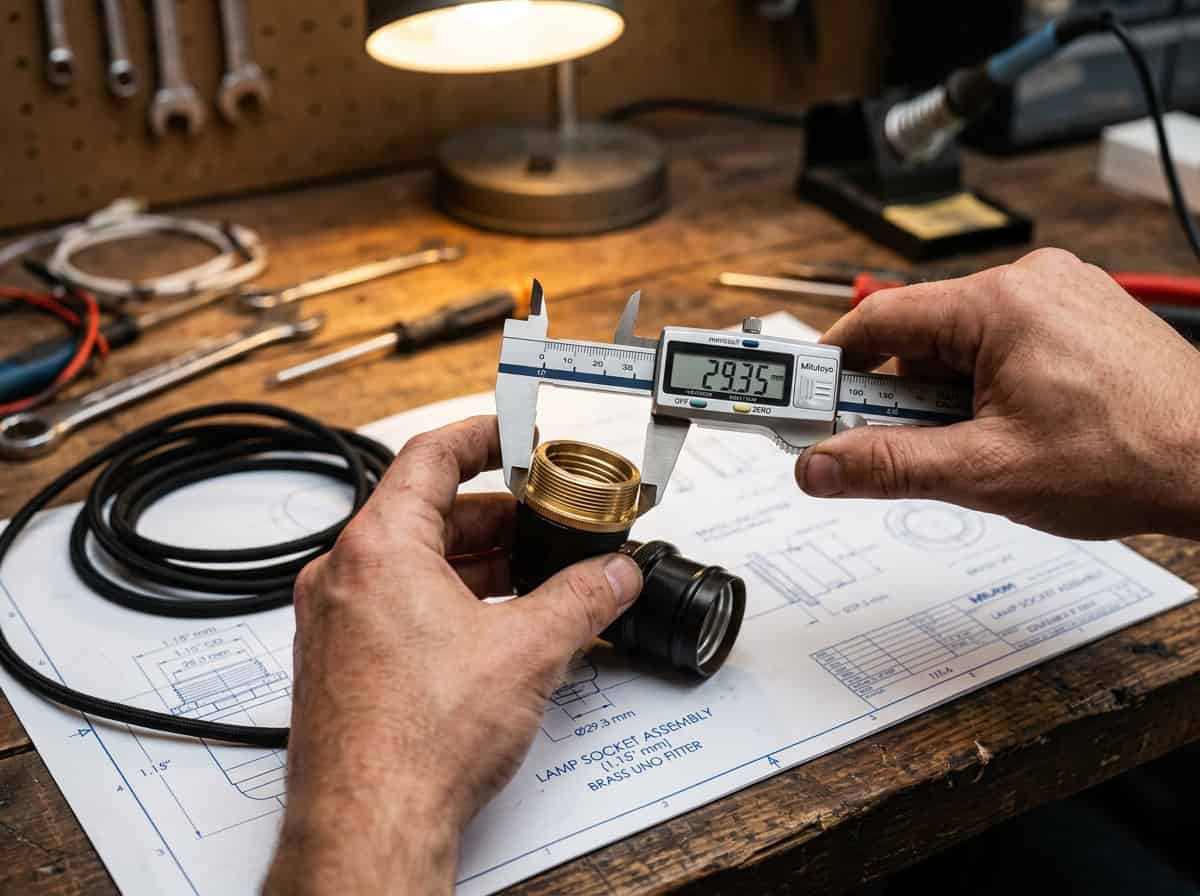
- Geometry: top opening, bottom diameter or width, overall height, shape and wall direction.
- Interface: fitter type, opening diameter, retaining hardware and fixture clearance.
- Appearance: material, transparency, surface finish, color reference and acceptable variation.
- Commercial: sample quantity, initial order, forecast, destination and target timing.
- Verification: tolerance, packaging, required documentation and the latest drawing or reference sample.
Custom lamp shade specification checklist
Four RFQ Information Groups
Dimensions & Tolerance
State units, top and bottom sizes, height, fitter opening and the tolerance expectation. If tolerance is unknown, request a proposal after the forming process is reviewed.
Fitter & Fixture Interface
Name the fitter when known, but include the measured opening and fixture hardware. A familiar fitter label alone is not enough for custom glass compatibility.
Material, Finish & Color
Separate the base glass from the optical or decorative finish. Confirm color by a controlled reference such as an approved sample, drawing note or buyer-specified color system.
Quantity, Packaging & Compliance
Provide sample and production quantities, destination, packaging direction and the documents or standards the buyer expects. Availability must be confirmed for the specific project.
After you send the specification
Typical Custom Lampshade Review Sequence
The RFQ summary makes the first conversation more precise, but it does not skip supplier review, sample approval or the buyer’s final product validation.
1. RFQ screening
Buyer and supplier identify missing technical and commercial inputs.
2. Manufacturability review
Geometry, glass route, finish, wall direction and tolerances are reviewed together.
3. Sample or reference approval
Dimensions, appearance and fit are checked using agreed reference conditions.
4. Packaging and production confirmation
Order quantity, packing, labeling, documentation and timing are confirmed for the project.
Scope and responsibility
What This RFQ Tool Does Not Confirm
The builder does not calculate price, promise MOQ or lead time, approve tolerances, determine glass safety, certify fixture compliance or confirm production feasibility. Those decisions depend on the complete design, intended use, manufacturing process, testing plan, order quantity and applicable market requirements.
For heat, impact, outdoor exposure, electrical clearance or certification-sensitive applications, provide the operating conditions and applicable requirements for technical review. Do not rely on a lampshade-only form as approval for the complete fixture.
Custom lampshade RFQ FAQ
Frequently Asked Questions
What information does a custom lamp shade manufacturer need for a quote?
Provide the application, dimensions, fitter interface, tolerance expectation, glass material, finish, color, sample and production quantities, packaging direction, destination, required documentation and the latest drawing, photo or physical sample reference.
Do I need a drawing for a custom glass lampshade RFQ?
A drawing is strongly preferred because it defines geometry and interfaces more reliably than text. If no drawing exists, send clear photos, measured dimensions and the fixture hardware or physical sample, then request drawing support before tooling or production approval.
Which lamp shade dimensions should be included?
Record the top opening or width, bottom diameter or width, overall height, fitter opening diameter, wall direction and any critical interface dimension. Use one unit system consistently and identify whether each value is nominal, measured or tolerance-controlled.
How should glass lampshade tolerance be specified?
State buyer-controlled critical dimensions and the required tolerance only when supported by the product design. For other dimensions, ask the supplier to propose achievable tolerances after reviewing the glass forming process, wall thickness, geometry and inspection method.
Can material, finish and color be approved from a photo?
A photo is useful for direction but normally cannot establish glass composition, opacity, texture, gloss, color or acceptable batch variation. Use an approved physical sample or controlled color reference under the intended light source.
Does the RFQ builder provide an instant custom lampshade quote?
No. It creates a structured inquiry and missing-item checklist. Price, MOQ, tooling, sample cost, lead time, tolerances, packaging and documentation require project-specific review by the supplier.
Related tools and manufacturing guidance
Prepare the RFQ with Supporting Resources
Custom Glass Lamp Shades Manufacturer
Understand the OEM / ODM development and review process before sending the specification.
Lamp Shade Size Calculator
Estimate a starting size and prepare a measurement checklist for a replacement or custom shade.
Glass Finish & Material Selector
Compare clear, frosted, opal, colored, textured and borosilicate directions before sample review.
Ready for a clearer supplier conversation?
Build the Specification Before Sending the RFQ
Complete the known fields, preserve the missing-item list and attach the latest drawing, photo, CAD export or sample reference when you request review.