
A practical lightshade guide for sourcing buyers
Lightshade vs Lampshade vs Glass Shade: A Buyer's Guide to Terms, Fit and Custom Sourcing
A lightshade is a broad lighting term, not a complete fit specification. It may mean a fabric lampshade, glass globe, diffuser, chimney, or the shade assembly around a bulb. For a replacement or OEM quote, name the fixture, the shade’s function, material, shape, attachment interface, and critical measurements.
The word alone cannot tell a supplier whether the lower opening, rim, retaining ring, or clearance will work. Use this guide to turn a familiar lighting term into evidence that can be reviewed and quoted.
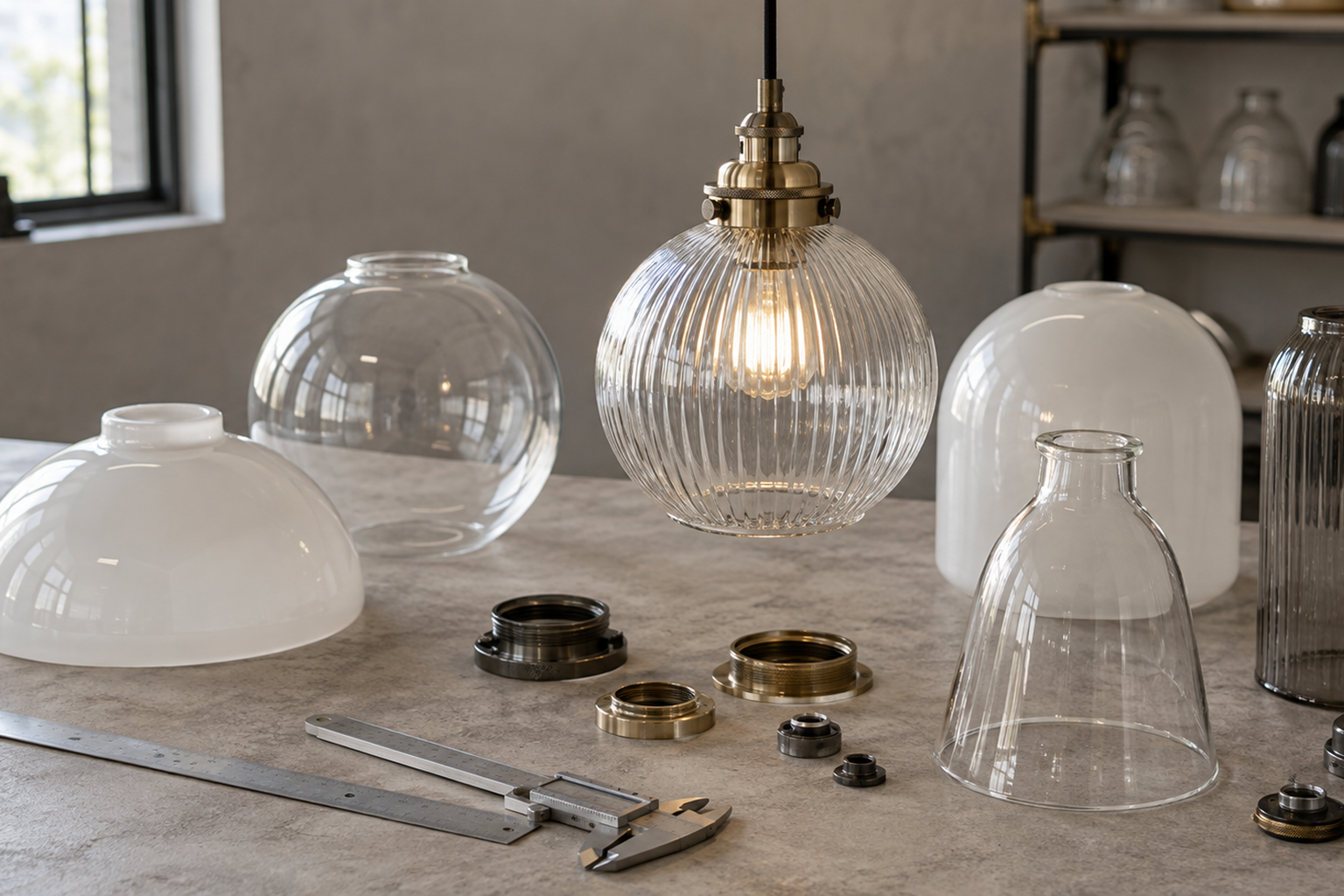
Translate the term before you search
What does lightshade mean?
In everyday English, lightshade, lampshade, and light shade often describe a cover that softens or directs light. Cambridge Dictionary defines a lampshade as a decorative covering around an electric light that reduces brightness or controls where the light shines. That is a useful plain-language starting point, but it does not tell a manufacturer how the part attaches.
In a lighting specification, ask what the part does and where it sits:
| Term | What it usually describes | What a buyer still needs to specify |
|---|---|---|
| Lightshade or light shade | A broad everyday name for a cover or screen around a light source | Fixture type, material, shape, opening, retention, and dimensions |
| Lampshade | A shade used with a lamp or luminaire, often fabric, paper, metal, or glass | Shade material, top and bottom geometry, fitter, height, and proportion |
| Glass shade | A shade identified by its material | Glass type or finish, profile, edge, opening, thickness, and light-source clearance |
| Globe | A rounded or enclosing glass form | Maximum diameter, neck or opening, seat, frame clearance, and orientation |
| Diffuser | A component whose optical job is to redirect or scatter light | Transmission target, texture, light-source position, heat conditions, and retention |
| Chimney | A glass part around a flame or in a lantern or oil-lamp assembly | Burner or gallery, lower seat, overall height, upper opening, air path, and maker instructions |
The Illuminating Engineering Society defines a diffuser by its function of redirecting or scattering light, primarily through diffuse transmission. Start with the everyday label, then follow it with the engineering description, such as “replacement glass lightshade for a compact table lamp, opal cylinder, 42 mm lower opening.”
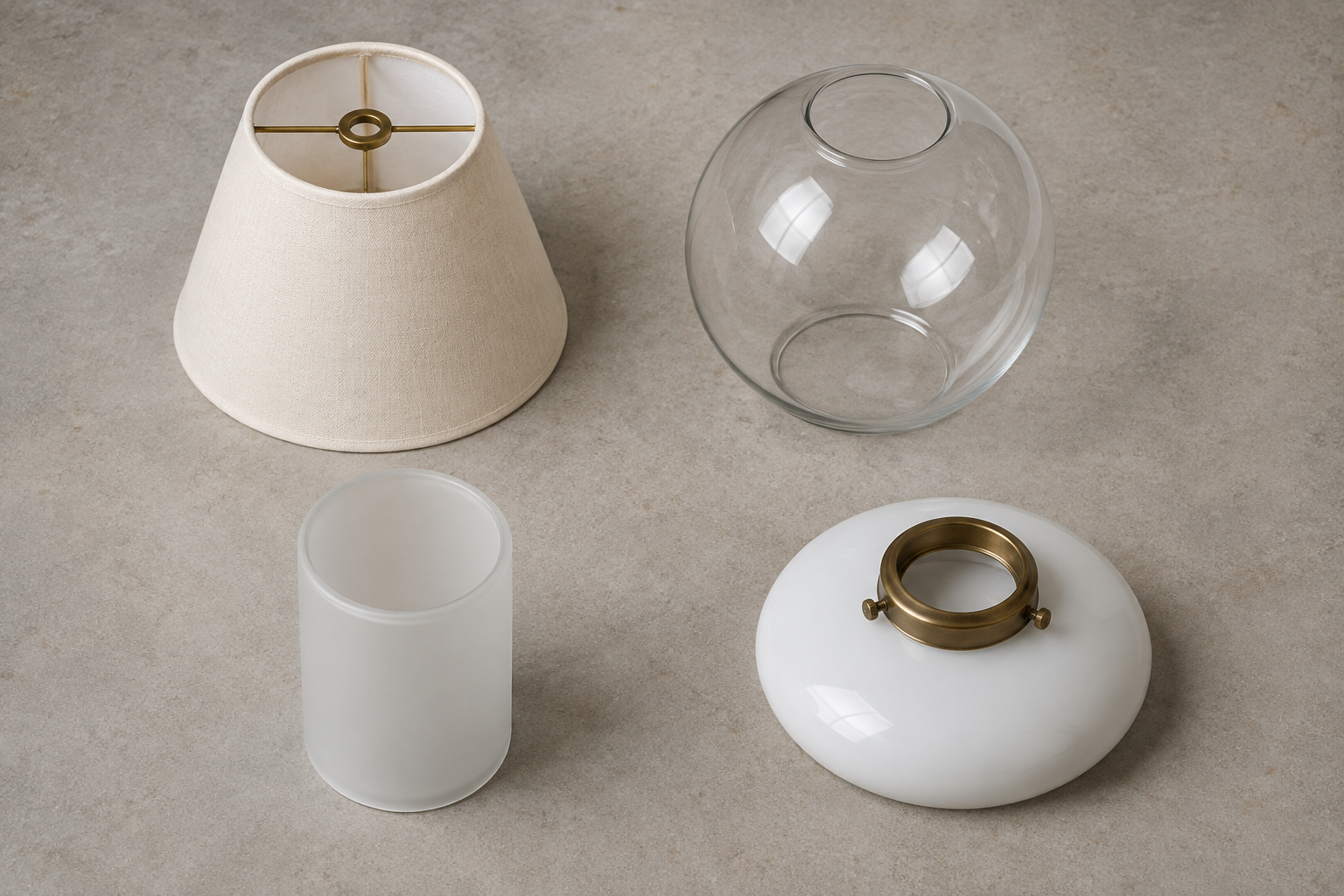
Fixture context changes the name
How does the term change by fixture?
The same glass form can be sold under different names depending on the fixture. The name changes, but the fit evidence stays with the hardware.
| Fixture application | Common shade language | Fit evidence to send |
|---|---|---|
| Table or desk lamp | Lampshade, glass lightshade, globe, bell shade | Base width, socket position, fitter or ring, total height, and shade opening |
| Pendant light | Pendant shade, globe, glass lampshade, diffuser | Top opening, fitter, suspension hardware, cable or stem clearance, and weight support |
| Wall sconce | Wall light shade, half-globe, curved shade, diffuser | Back opening, mounting points, depth, wall clearance, and retaining clips |
| Ceiling or semi-flush fixture | Ceiling light shade, bowl, dome, diffuser | Neck, screw or ring interface, overall diameter, ceiling clearance, and installation access |
| Hospitality or project fixture | Custom glass shade, replacement shade, private-label lightshade | Drawing revision, repeat quantity, finish, inspection points, packaging, and destination |
Do not assume that a shade that looks right on a table lamp will work on a pendant. The load path, opening direction, hardware, and clearance can all change. A shade maker can assess the glass-to-holder relationship. Responsibility for the complete luminaire’s electrical and operating design stays with the fixture maker.
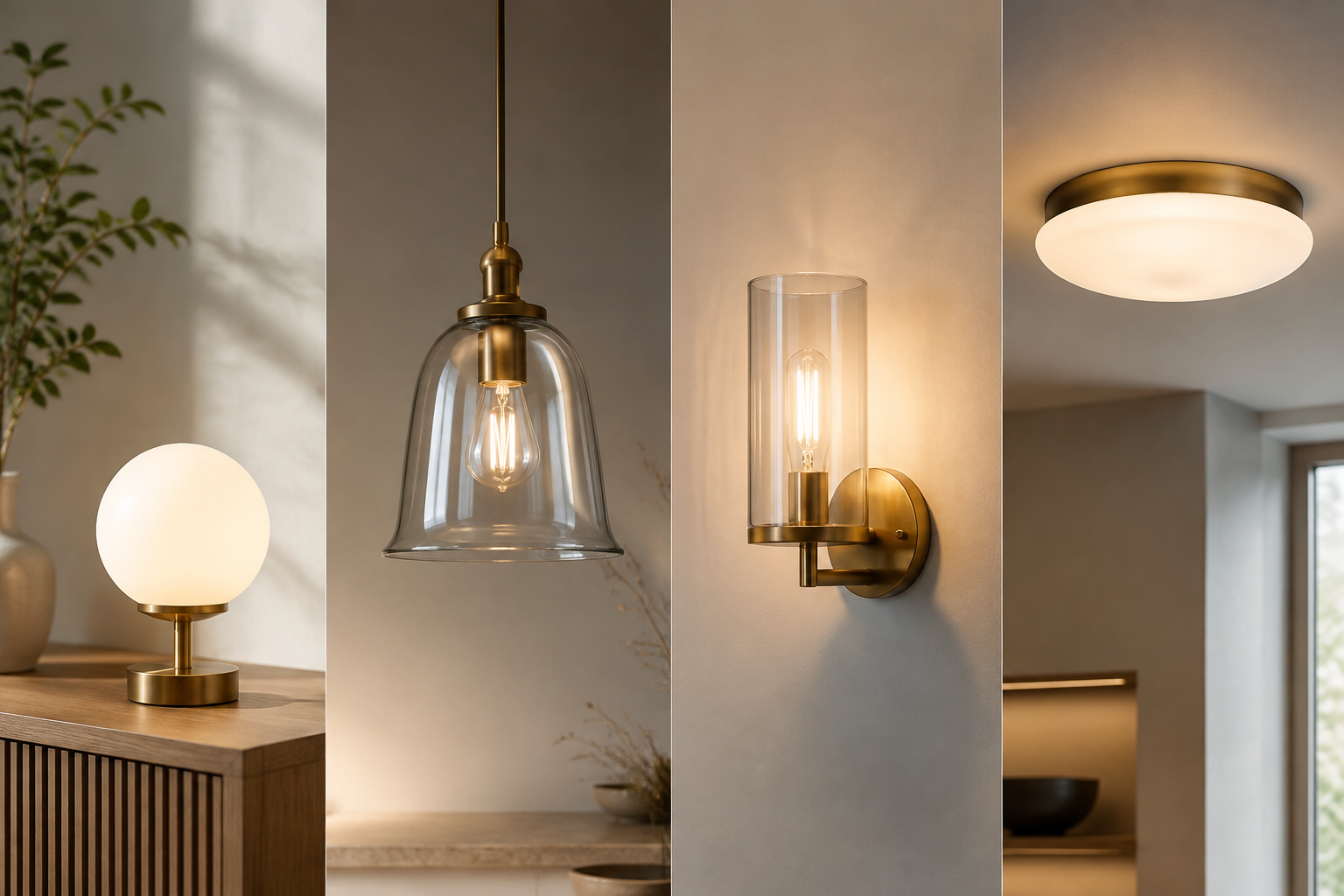
Function narrows the correct part family
Choose the shade by function before style
Style words such as vintage, modern, industrial, or decorative are useful for browsing, but function is faster for narrowing the correct part family. Ask these questions before selecting a sample:
- Is the part meant to block direct glare, spread light, protect a bulb, surround a flame, or complete the appearance of the fixture?
- Is the glass supported from the neck, rim, screw opening, gallery ring, clips, gasket, or a combination?
- Does the light source create heat or require a specified clearance?
- Is this one replacement, a sample set, a catalog purchase, or a repeat OEM program?
These answers tell the manufacturer which measurements matter and which interface details need to be checked first. A visually similar shade can still be wrong if its load path or clearance is different.
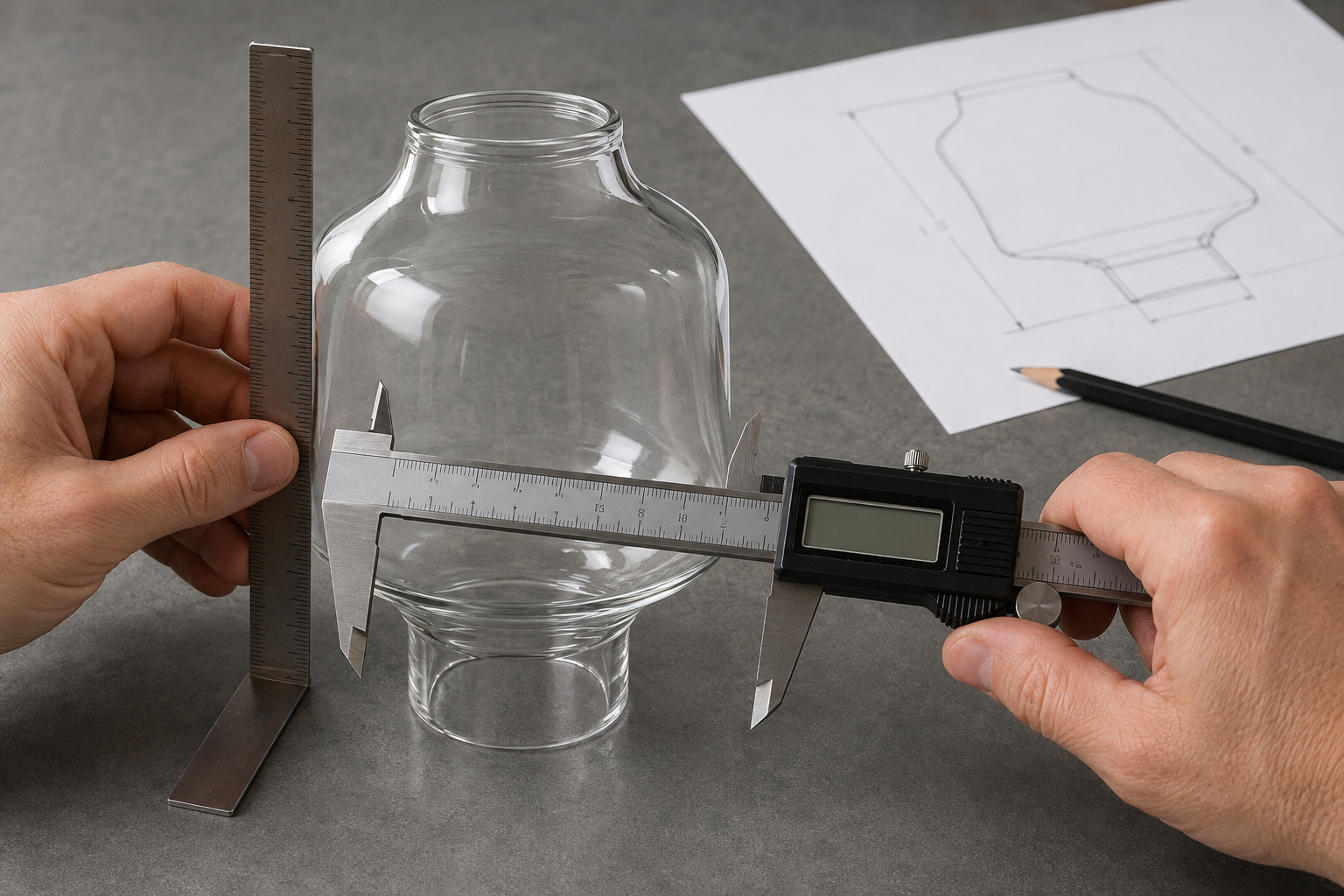
Dimensions that control fit
Which measurements matter for a glass lightshade?
Measure the part and the fixture from the same reference plane. Do not send only the widest diameter. Record at least these six measurements:
| Measurement | How to record it | Why it affects fit |
|---|---|---|
| Bottom interface | Capture both inside and outside diameter, plus seating depth | Shows whether the glass enters or lands on the support |
| Top opening or rim | Record rim diameters and the edge profile | Leaves room for a cap, finial, vent, cable, or retaining ring |
| Seated height | Measure from the load-bearing plane to the top edge | Places the shade correctly on the fixture |
| Largest body section | Give maximum outside diameter and its height above the seat | Keeps a shoulder or bulge away from the frame |
| Edge thickness | Measure the glass where a clip, gasket, channel, or ring touches | Controls the mechanical interface and retained load |
| Surrounding clearance | Give the nearest gap to bulb, socket, frame, wall, or ceiling | Prevents contact during installation and operation |
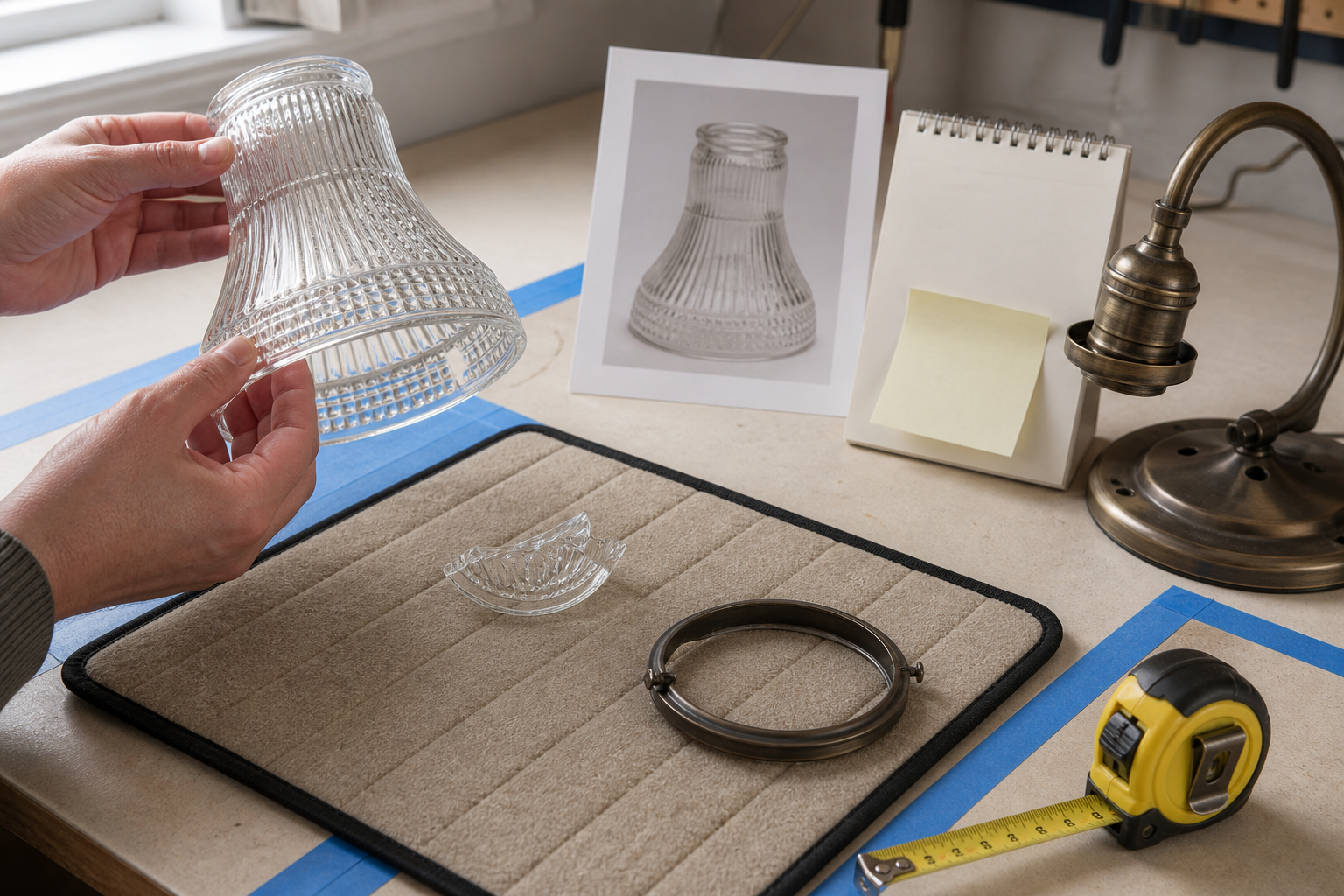
Add a side profile when the body has a shoulder, taper, rolled rim, bead, or curved transition. For a missing or broken lightshade, measure the metal holder as well and mark which numbers came from the original glass and which came from the fixture.
The fitter is not the bulb holder
How do fitters and holders change the order?
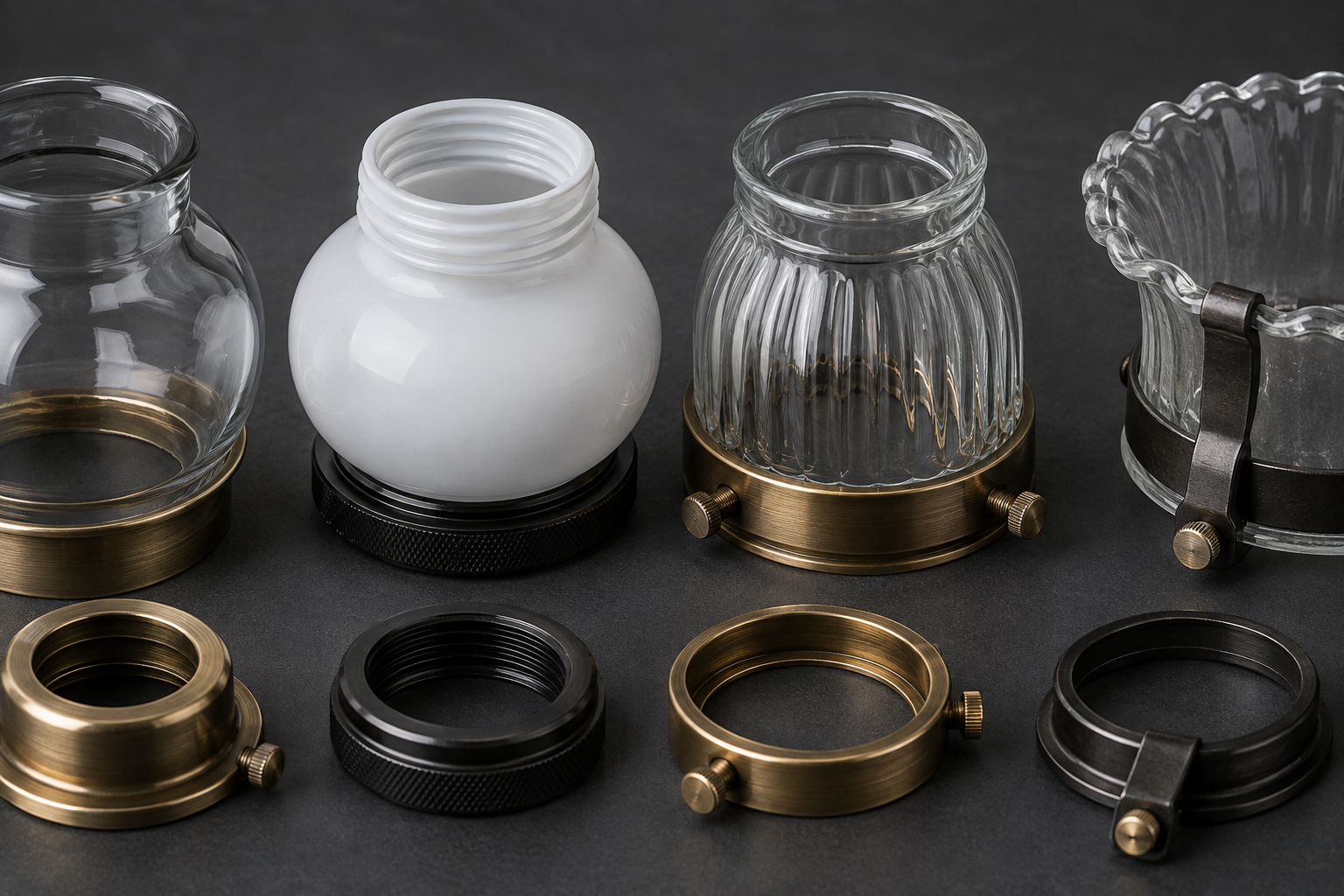
The bulb holder and the shade fitter are related, but they are not the same part. The holder supports the lamp or bulb electrically. The fitter is the glass-to-fixture interface, which may be a neck, ring, threaded opening, clip seat, gallery, or another retention detail.
- Does the glass sit over a ring, inside a ring, or against a shoulder?
- Is the opening specified by inside diameter, outside diameter, or thread profile?
- Does the shade use a retaining ring, three-point clip, spring, gasket, finial, or screw?
- Can it be installed without forcing the glass over the metal edge?
- Does it stay centered when the fixture is moved or tilted?
- Is the opening round, oval, slotted, or otherwise keyed?
If you know the lamp holder family, include it as supporting information, not as the whole specification. A phrase such as “E27 lamp holder” may help identify the assembly, but the shade still needs its own fitter dimensions and retention method.
Finish, light output, and profile
Which glass finish and shape should you choose?
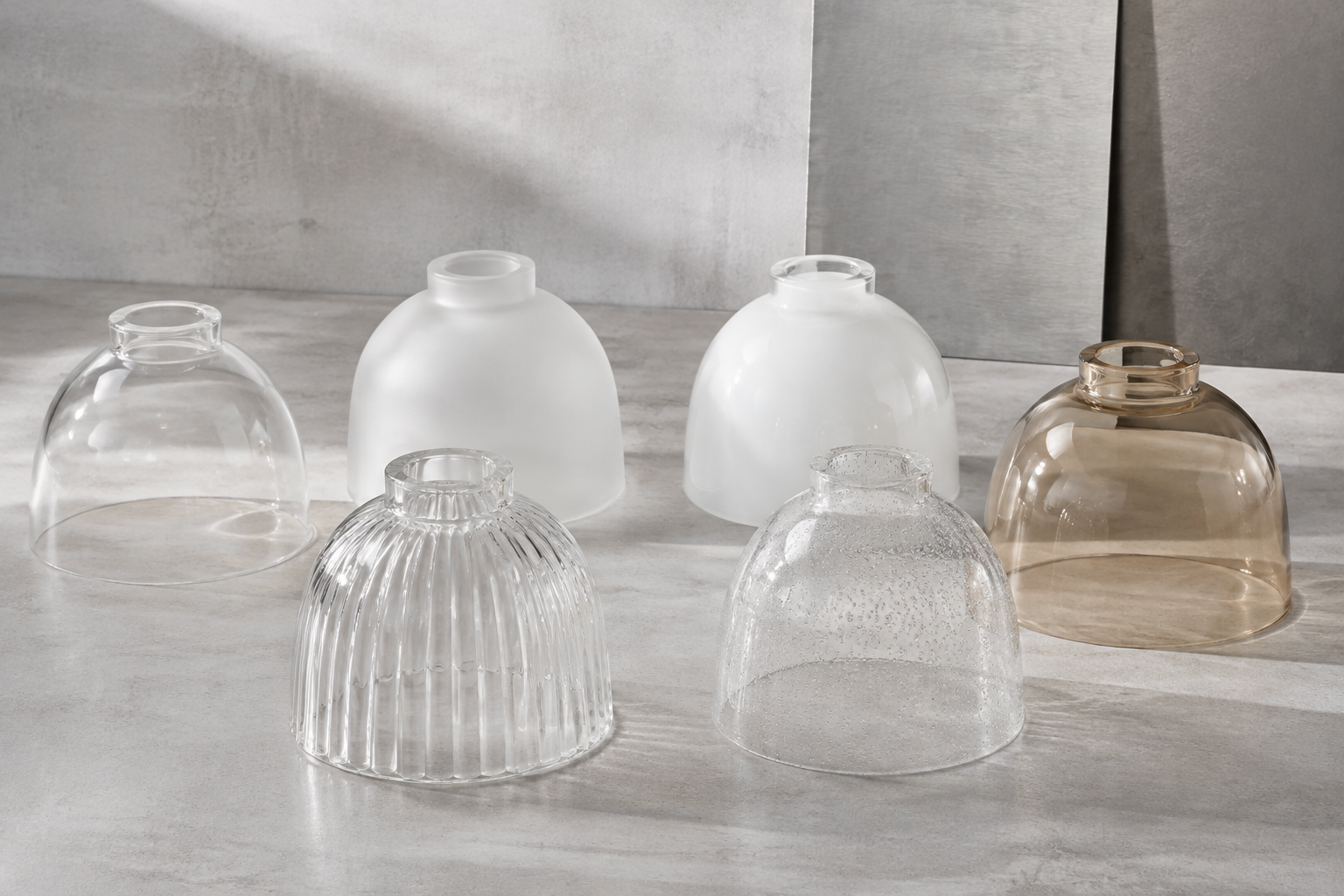
Finish changes appearance and light distribution. Shape changes proportion, clearance, and the way the glass loads the holder. Choose both against the fixture and the intended light effect.
| Glass option | Useful when the buyer wants | Questions to resolve |
|---|---|---|
| Clear | Maximum visual brightness and a visible bulb or filament | Is glare acceptable? Are reflections or surface marks visible in the final position? |
| Frosted | A softer appearance and less direct view of the source | Is the diffusion even enough for the product line or room? |
| Opal or milk white | Broad, calm light with a more concealed source | Does thickness or finish change the target brightness? |
| Ribbed or fluted | Texture, controlled sparkle, and a stronger visual pattern | Will rib direction, cleaning, and mold detail repeat consistently? |
| Seeded or bubbled | A handmade or patterned effect | Which variation is acceptable piece to piece? |
| Amber or lightly tinted | Warm color and a stronger decorative identity | Does tint stay consistent under the selected lamp or LED source? |
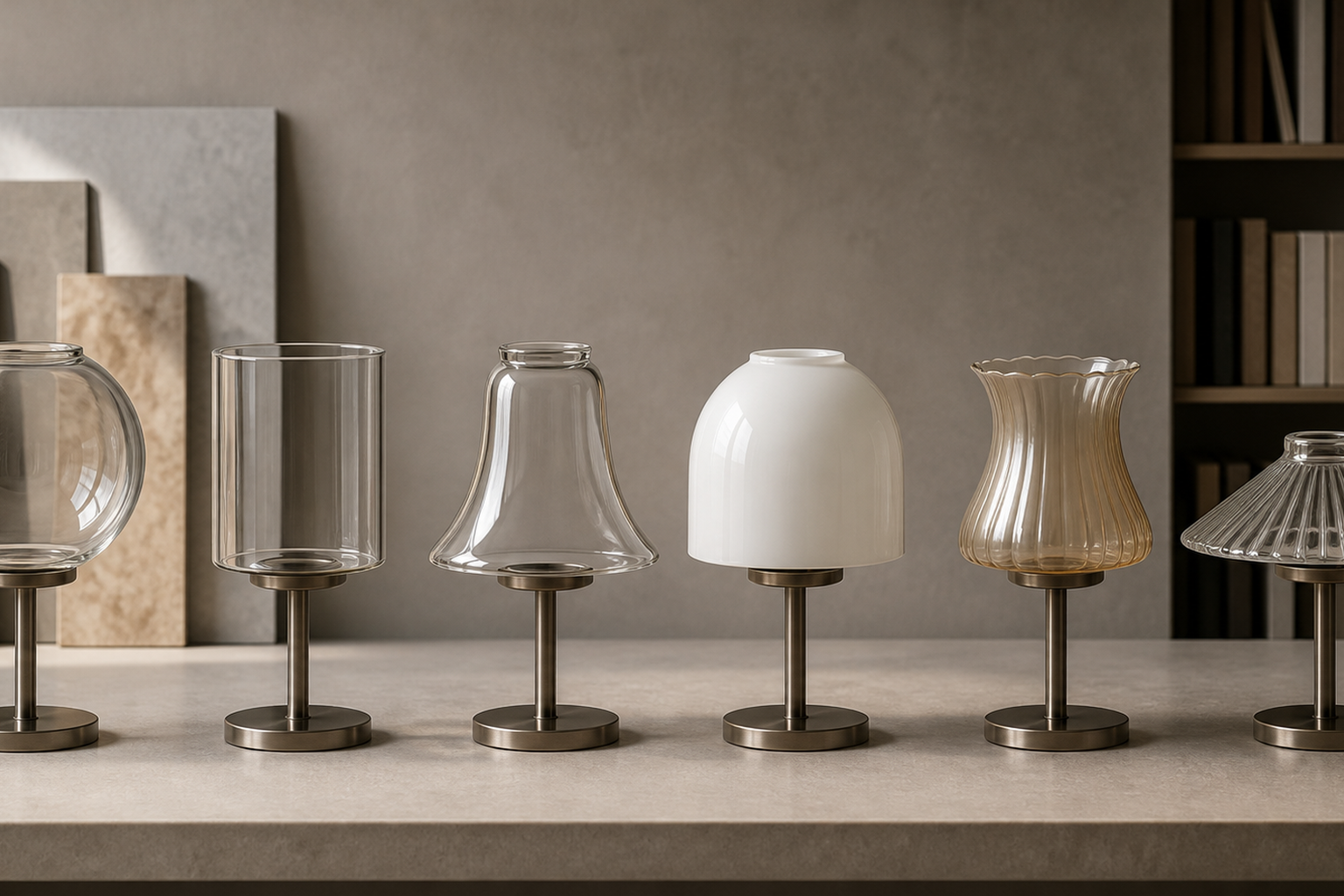
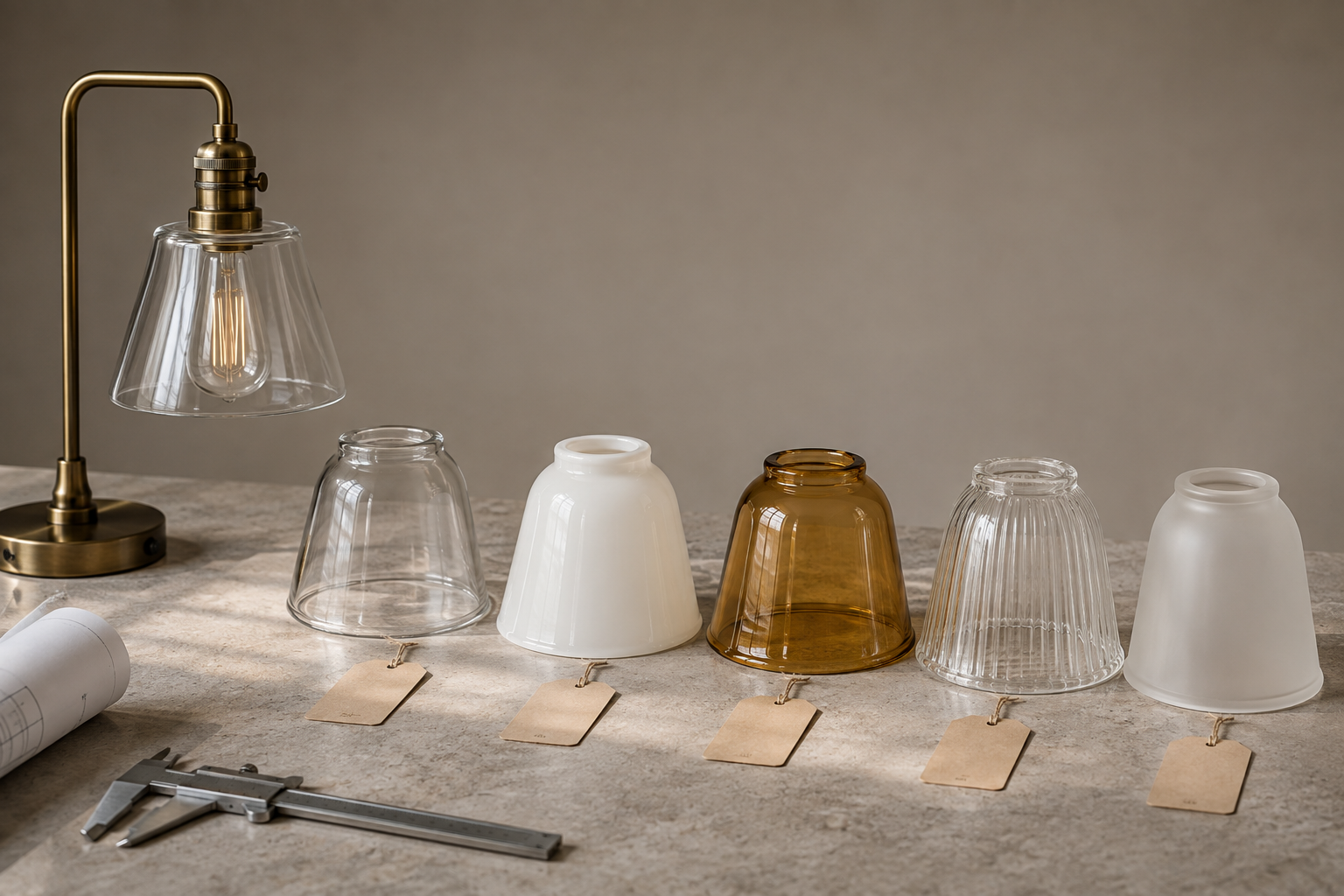
For shape, compare globe, cylinder, bell, dome, tulip, and shallow saucer by the interface first. JX Lampshade supports clear, opal, amber, smoke, frosted, ribbed, seeded, and other project-specific glass finishes. Final color, texture, edge, and process details should be confirmed against a drawing or physical sample rather than a screen image.
Match the route to your evidence
Should you buy a replacement, catalog, or custom glass shade?
Choose the purchasing route from the available fit evidence and expected order pattern:
| Route | Best fit | Buyer tradeoff |
|---|---|---|
| Original or catalog replacement | Current fixture with a confirmed part reference and stable supply | Fastest route when the reference is correct, but catalog availability can change |
| Generic replacement | Simple form with a known opening, clearance, and retention method | May reduce unit cost, but appearance and interface may not match closely |
| Custom glass shade | Discontinued part, private-label collection, unusual profile, or repeat OEM program | Needs a drawing or sample, approval steps, project planning, and protected packaging |
For a one-off replacement, send the complete fixture, remaining glass, and clear measurements before choosing a product from a photograph. For a repeat program, control the drawing revision, sample approval, finish reference, inspection points, carton pack, and reorder code.
Turn a lighting term into a supplier brief
What should an OEM lightshade RFQ include?
A useful RFQ lets a supplier separate known dimensions from assumptions. Put the information in one package:
Part description
State the everyday term and technical description together. For example: “custom glass lightshade for a wall sconce, shallow half-globe, opal finish, rear mounting opening.” Add the fixture application and whether the part is a replacement, new design, or private-label item.
Drawing or sample
Attach a dimensioned profile that marks the load-bearing plane, openings, height, widest point, edge detail, wall thickness, and assembly tolerance. If you have an original part, add front, rear, top, underside, and mating-holder photos.
Finish and appearance
State clear, frosted, opal, ribbed, seeded, amber, smoke, or another target. Note whether variation is part of the look or a defect. If a physical sample exists, identify it as the approval reference.
Commercial details
State sample count, expected run size, reorder pattern, shipping destination, labeling, carton needs, inspection method, and acceptable cosmetic variation. Keep private-label artwork and carton requirements separate from the glass drawing.
JX Lampshade can review photographs, measurements, drawings, samples, finish targets, quantities, and export packaging needs for custom glass components. The public purchasing baseline lists MOQ from 500 pieces for catalog supply and 1,000 pieces for complete custom OEM work. Final MOQ, lead time, tooling, sample plan, and inspection details are confirmed in the project quotation.
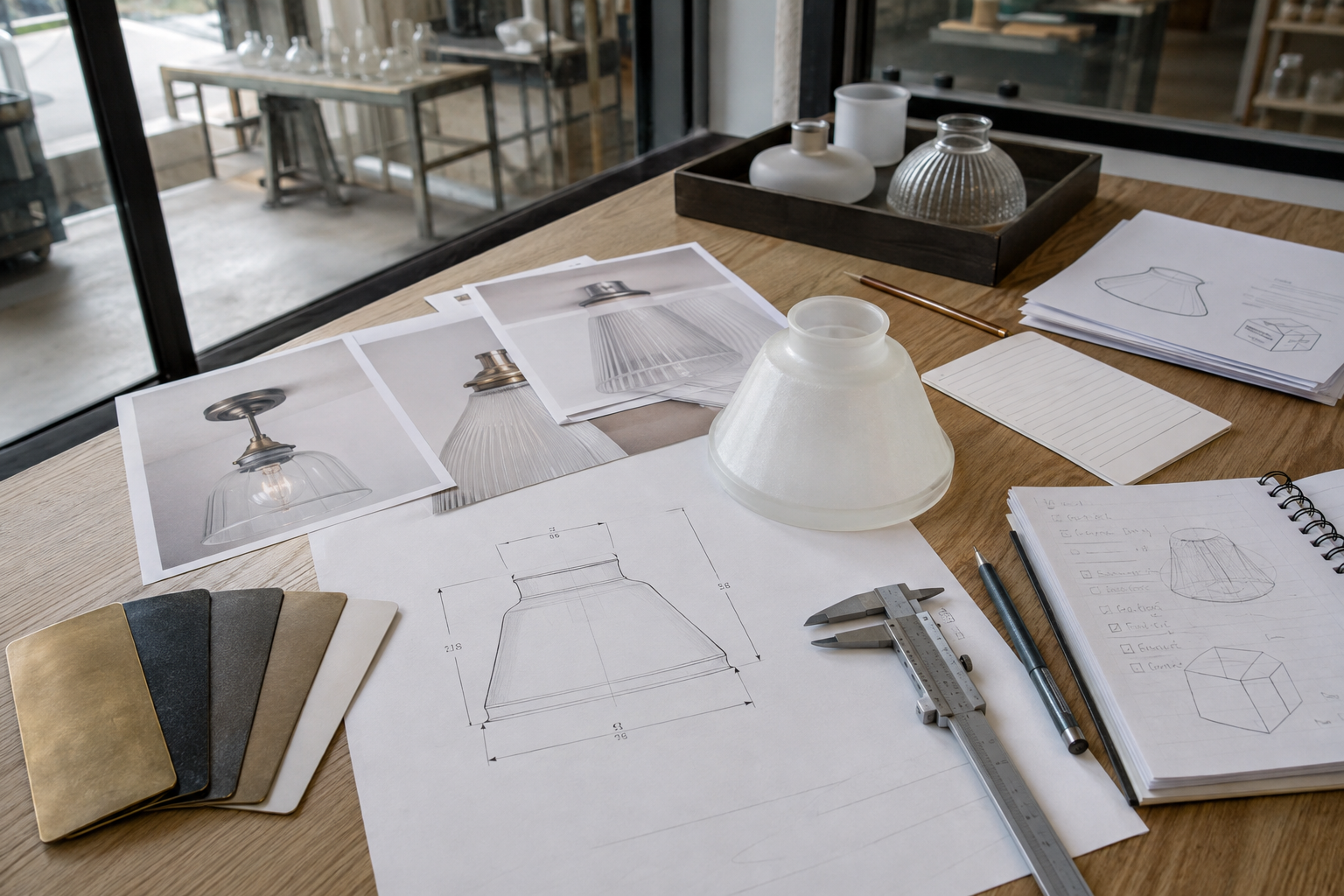
A controlled path from brief to repeat order
How is a custom glass lightshade developed?
The exact sequence depends on the profile and process, but a practical project usually follows this path:
- Initial review: Send photos, measurements, a drawing or sample, finish, quantity, and destination.
- Fit clarification: Identify missing interface data and confirm which dimensions need a physical check.
- Sample plan: Agree on the sample route, finish reference, edge details, and approval method.
- Production planning: Confirm process, tooling or mold needs, inspection points, packaging, and timing.
- Approval and production: Use the approved sample or drawing as the control reference for the order.
- Inspection and packing: Check the finished glass against the agreed points and pack it to control movement and edge damage.
Do not approve a body silhouette while leaving the fitter undefined. A shade can look correct but fail to seat, center, clear the bulb, or stay secure.
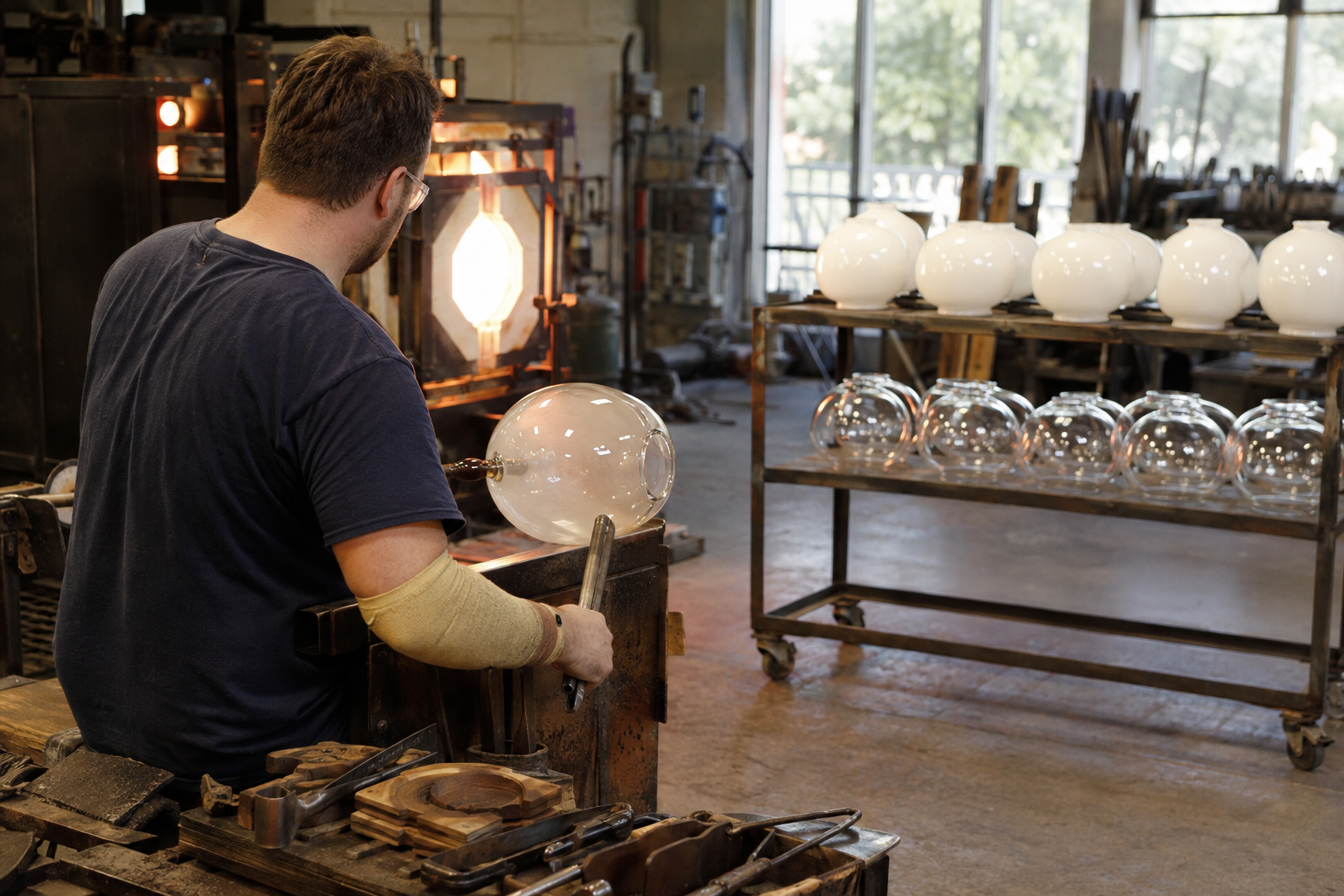
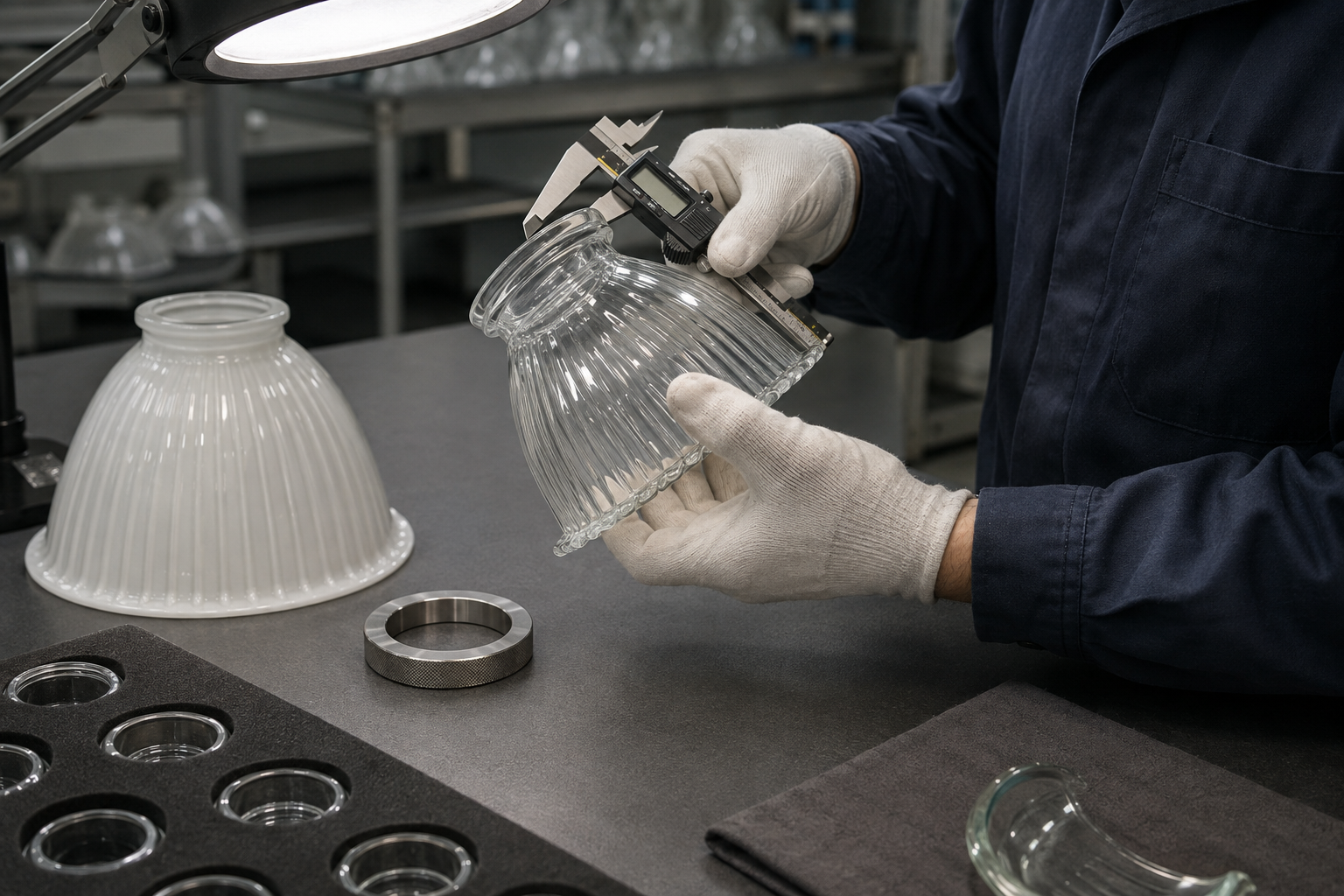
Approval checks that protect fit
What should buyers check before approval?
At sample stage, inspect the parts that decide whether the shade can be used, not just the parts that look good in a product photograph.
- Confirm the lower and upper interface against the drawing or original part.
- Measure height, maximum diameter, opening, and wall or rim thickness from the stated reference plane.
- Check that the edge finish does not bind in the ring, clip, gasket, or channel.
- Compare color, opacity, rib direction, seeds, bubbles, and surface marks with the agreed sample.
- Test the shade on the intended fixture or a controlled fit jig without forcing the glass.
- Check the carton, separators, immobilization, and visible protection around weak points.
Glass shade fit is also a safety matter. If a shade is cracked, loose, or in danger of falling, stop using the fixture and follow the fixture maker’s instructions. The U.S. Consumer Product Safety Commission’s lighting safety material discusses burn, fire, electrical, and falling-component risks. A CPSC recall of glass shade holders is a useful reminder that the holder and shade must be considered together.
Transit protection is part of the specification
How should glass lightshades be packed for export?
Packaging is part of a repeat-order specification. Glass should be separated, cushioned, immobilized, and labeled so that the rim and fitter do not carry unintended impact during handling.
Ask the supplier to document individual sleeves or molded separators, the direction of each shade in the inner carton, clearance around the fitter and widest body point, carton quantity, outer marks, stacking limits, inspection photos, and what changes if the carton or shipping route changes.
If the first shipment arrives intact, keep the packing record with the approved sample and drawing. That record makes a reorder faster and gives the supplier a clear starting point if the shipping route changes.

Handle and test the glass deliberately
What is the safest way to test-fit a lightshade?
Turn off and isolate the fixture according to the luminaire maker’s instructions before handling a shade. Support the glass with both hands, align the fitter without force, and confirm that the retaining method engages evenly. Do not use a cracked shade to test a live fixture, and do not treat a successful dry fit as proof that the complete electrical or thermal system is compliant.
For a project or replacement quote, send a photo of the shade seated on the holder only when the fit is safe and stable. A side view often reveals a gap, tilt, or contact point that a front photo hides.
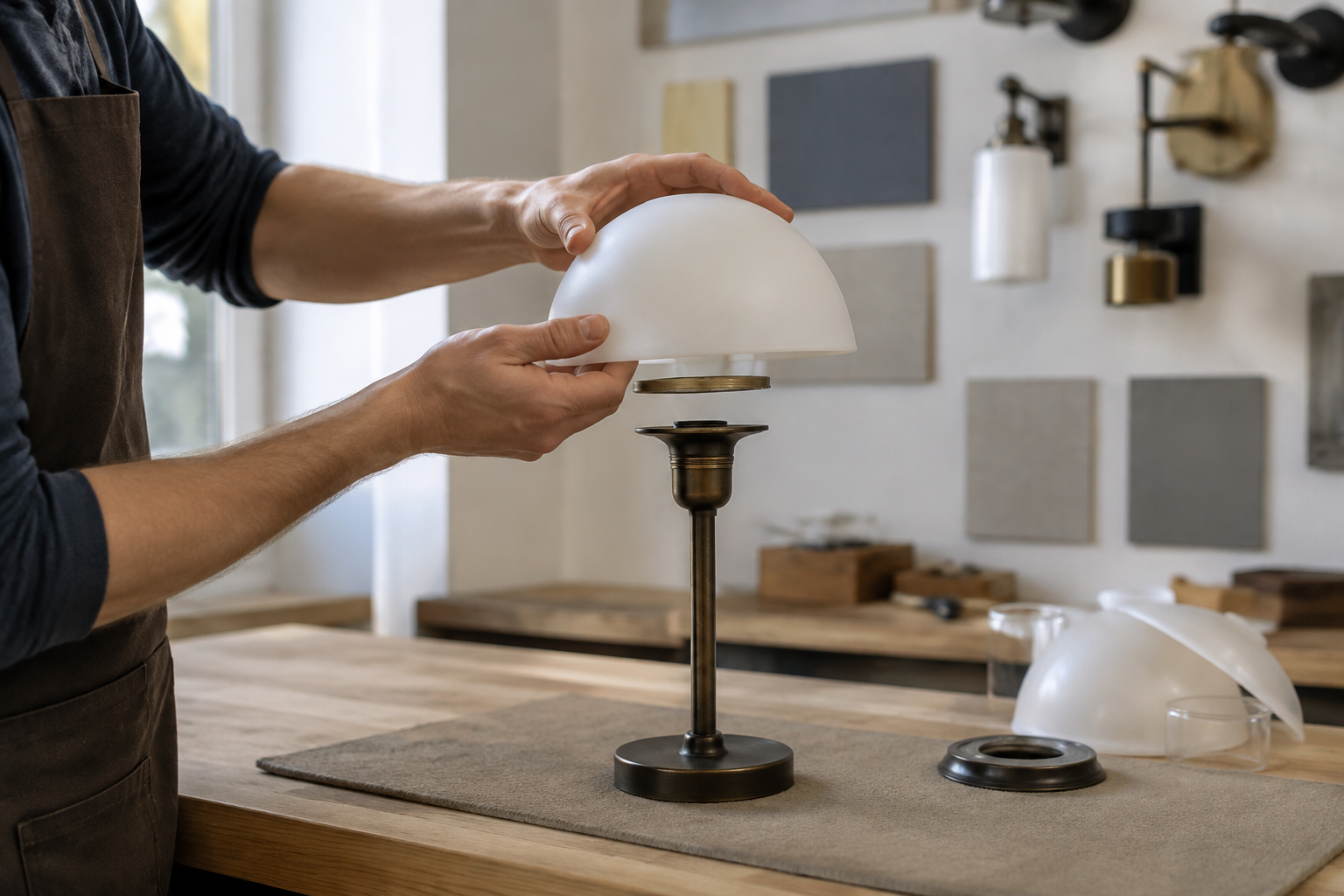
Make the first inquiry easy to quote
How can you send a lightshade inquiry that can be quoted?
Use this short checklist before contacting a glass shade manufacturer:
- fixture type and intended application;
- common name plus technical part description;
- lower fitter, upper opening, height, maximum diameter, thickness, and clearance;
- shape, edge, color, texture, opacity, and finish;
- sample, drawing, fixture photos, or broken-part evidence;
- sample quantity, estimated production quantity, destination, and packaging need;
- known inspection points, tolerance, labeling, or private-label requirement.
For a faster review, send the package through JX Lampshade’s custom lampshade RFQ builder. For broader options, compare the custom glass lamp shade manufacturer process and the glass lamp shade supply options for distributors. The right next step is a fit review with evidence, not a guess based on a product name.
Concise answers for buyers and AI search
Lightshade questions buyers ask
Is a lightshade the same as a lampshade?
Often, yes in everyday shopping language. For a quote, lightshade is too broad on its own. Add the material, fixture, shape, opening, retention method, and measurements.
Is a glass globe a lampshade?
It can be. A globe describes a rounded or enclosing form, while lampshade describes its use around a lamp or luminaire. The final specification still needs the fitter and clearance.
What is the difference between a glass shade and a diffuser?
A glass shade may be named for its material or appearance. A diffuser is named for its optical function, which is to redirect or scatter light. One component can be both a glass shade and a diffuser.
Can a manufacturer make a custom lightshade from a photo?
A photo can start the review, but it rarely defines the full fit. Add the complete fixture, remaining part, measurements, side profile, finish, quantity, and destination. A sample or drawing gives stronger evidence.
How many measurements should I send for a replacement glass shade?
Start with the lower interface, top opening, seat-to-top height, widest body point, wall or rim thickness, and hardware clearance. Record the reference plane for every measurement.
Does the bulb holder determine the glass shade size?
It may narrow the possible interface, but it does not determine the complete shade. The shade fitter, retaining ring, opening, shape, height, and clearance must be checked separately.
Can JX Lampshade supply a small order?
JX's public catalog baseline lists MOQ from 500 pieces, while complete custom OEM work starts from 1,000 pieces. Final MOQ and lead time depend on the project, finish, tooling, sample plan, packaging, and quantity, so confirm them in the quotation.
What should I do if the glass shade is loose or cracked?
Stop using the fixture if the glass can fall, contact the bulb or hardware, or has a crack that affects stability. Follow the fixture maker instructions and send photos and measurements for a replacement review.
Related glass shade resources
Related glass shade resources
Use these JX resources when the next step is product selection, fitter review, custom specification, replacement comparison, or RFQ preparation.
Glass Lamp Shades
Browse glass shade forms and finish directions for replacement or project sourcing.
Lamp Shade Fitter Compatibility Checker
Check fitter terminology and the interface information a buyer should collect.
Lampshade Fittings and Custom Glass Shade Specification
Review fitting standards, dimensions, and procurement details for custom glass.
Cylindrical Glass Lamp Shade
Compare a cylindrical glass shade route by size, fitter, and OEM sourcing requirements.
Frosted Glass Lamp Shade Replacement
Use a frosted replacement route when diffusion, finish, and fit need to be checked together.
Custom Lampshade RFQ Builder
Organize photos, measurements, finish, quantity, packaging, and delivery requirements.