Frosted glass lamp shade replacement is a fit-and-specification job, not a color-only purchase. Lighting brands, distributors, hospitality buyers and repair programs need the replacement to sit securely on the existing fixture, keep the intended light diffusion, and arrive in packaging that survives the final delivery. This guide shows what to measure and what to include in an RFQ to JX Glassware.
Scope note: This is a procurement checklist, not a universal fit or safety guarantee. Final dimensions, glass specification, heat/moisture limits, packaging and lead time must be confirmed for your fixture and order.
Use this page for a procurement conversation. For a consumer-facing identification workflow, start with JX’s glass lamp shade replacement finder, then return here with the measurements, photos or drawing that a production team can review.
Start with the fitter and fixture
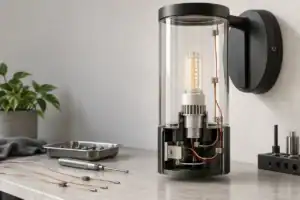
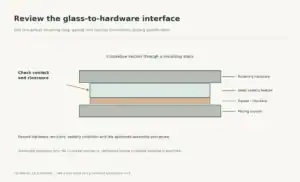
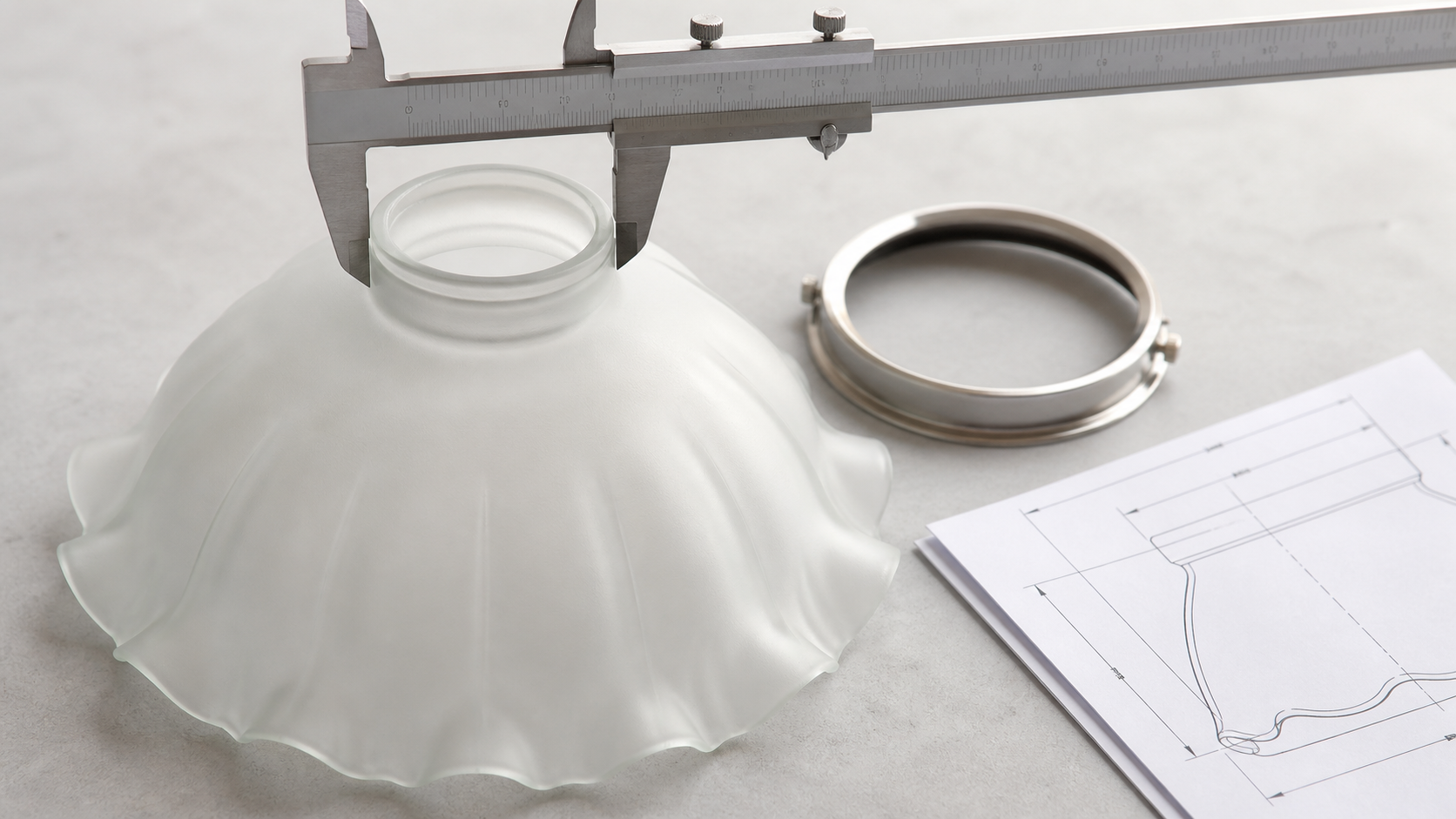
The fitter is the interface between the shade and the luminaire. A visually similar bell or globe can still fail if the opening, retaining ring, neck, or holder relationship is different. Before asking for a price, photograph the shade installed and removed, and record the fixture side of the connection.
On smaller screens, swipe inside the table to compare all columns.
| RFQ field | What to send | Why it matters |
|---|---|---|
| Fitter or opening | Inside and outside diameter, seating depth, retaining-ring or screw details, plus a close photo | Controls whether the shade locates and stays secure on the existing fixture |
| Overall envelope | Height, maximum diameter, lower opening and any critical clearance | Prevents interference with the socket, cage, wall, ceiling or neighboring shades |
| Fixture context | Pendant, sconce, ceiling, table or replacement program; lamp and heat constraints supplied by the buyer | Helps the supplier review the profile and finish against the real application |
| Reference evidence | Existing shade, dimensioned sketch, CAD file or several clear photographs with a scale reference | Reduces interpretation before sampling and tooling decisions |
JX’s replacement shade measurement guide explains the dimensions to capture. If you are unsure which holder you have, use the glass lamp shade fitter checker before selecting a profile.
Choose a frosted glass profile that matches the job
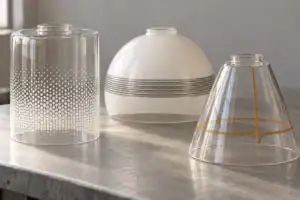
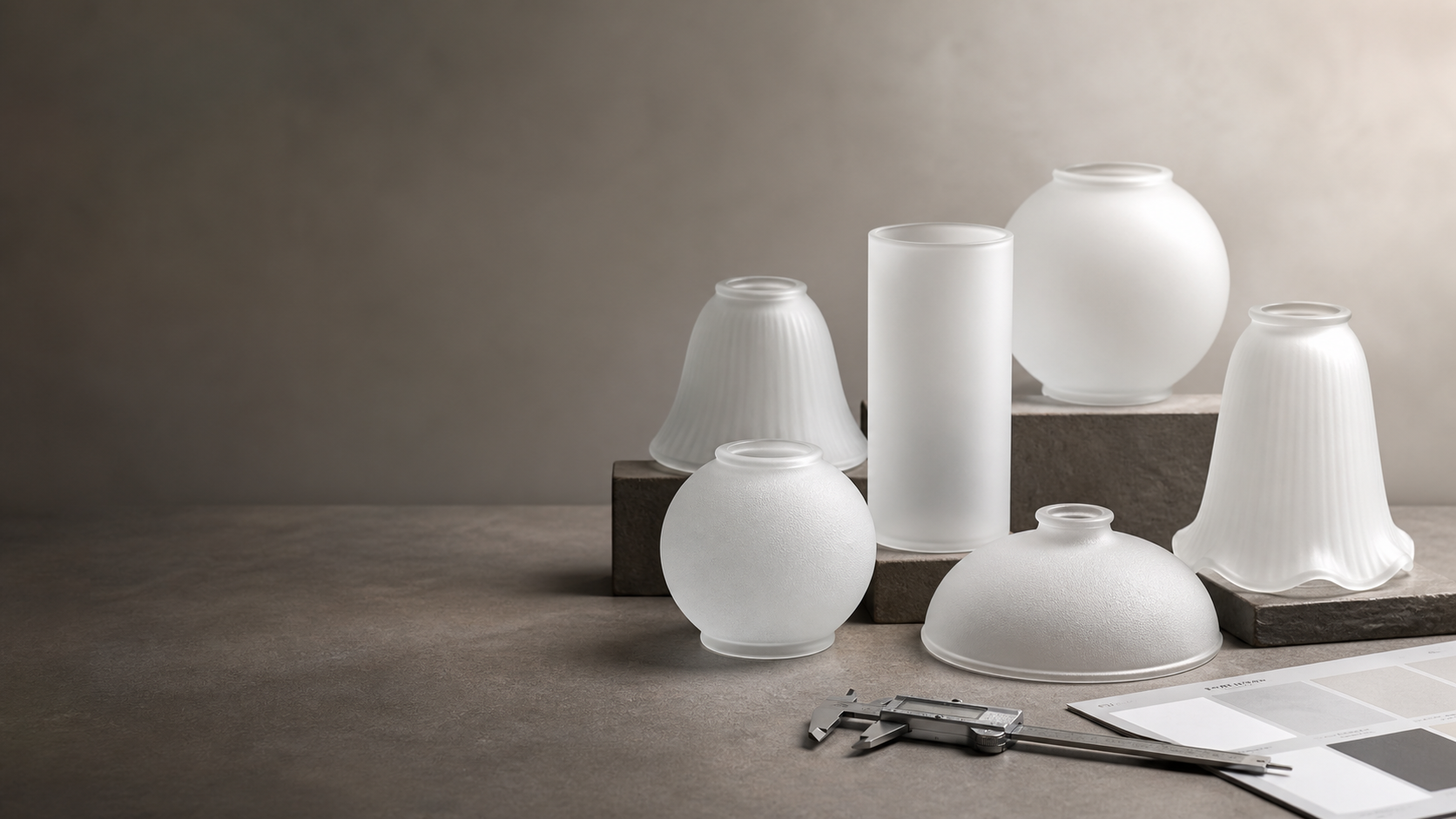
Frosted is a surface or appearance direction; it does not define the shape. A replacement program may need a bell shade for a traditional sconce, a globe for a soft all-around form, a cylinder for a clean vertical line, or a dome for a broad downward spread. Send the profile drawing or a physical reference when the silhouette is part of the product identity.
- Bell: a flared lower edge can preserve the visual proportion of traditional fixtures and wall lights.
- Globe: a rounded envelope is useful when the shade must read consistently from multiple viewing angles.
- Cylinder: a straight wall makes height, opening and edge finish especially important to the final fit.
- Dome: a broad lower diameter can affect clearance and how light is directed below the fixture.
These are starting points, not a promise of a standard stock size. JX should confirm current tooling, glass process, finish, and sampling options against your drawing or reference part.
Frosted, opal, clear or textured?
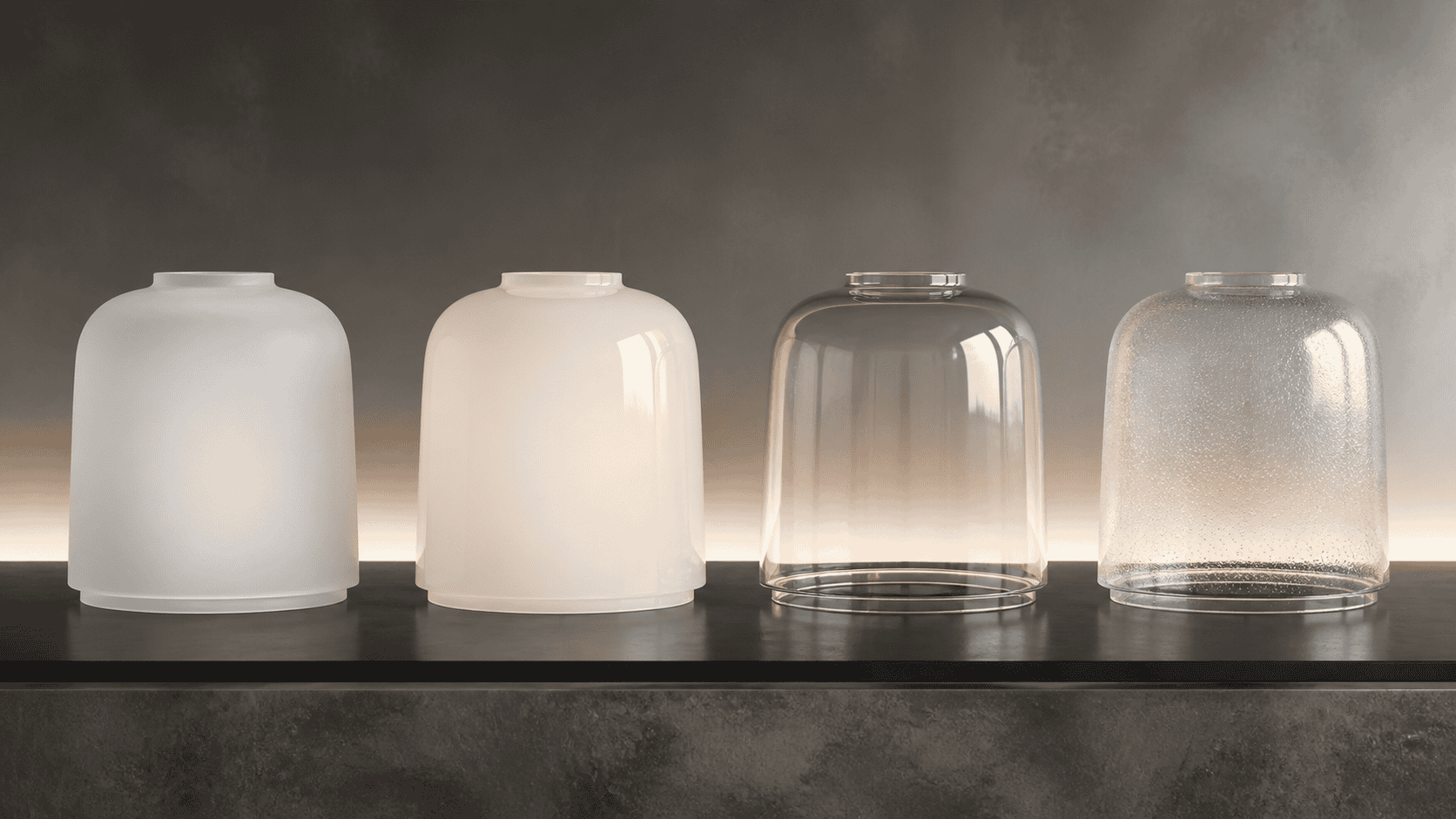
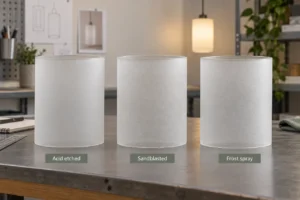
Buyers often use “frosted” and “opal” interchangeably, but the visual result and process should be confirmed with a sample. Frosting can soften reflections while leaving the glass character visible; opal or milk-white glass can provide a more uniform diffuse appearance; clear glass keeps the source and internal hardware more visible; textured glass changes both appearance and the way highlights break across the shade. JX’s clear, frosted and opal comparison is a useful starting point for a controlled finish discussion.
| Finish direction | Visual behavior to check | Procurement note |
|---|---|---|
| Frosted | Softened reflections and reduced direct view of the light source | Confirm the frosting level, uniformity and cleanability on the sample |
| Opal or milk-white | More even, diffuse appearance across the shade | Confirm the glass recipe, translucency and color under the intended lamp |
| Clear | High transparency and stronger visibility of the lamp and hardware | Useful as a control sample when comparing a legacy shade |
| Textured | Patterned highlights and a tactile surface character | Approve pattern direction, repeat and cosmetic limits before production |
Frosted glass lamp shade replacement: standard or custom OEM?
Choose the route that matches the risk in your program. A repeat replacement for a known fixture may only need a verified drawing and finish sample. A branded collection, discontinued shade, or multi-market program usually benefits from an engineering review before any production commitment.
| Route | Use it when | Minimum information to prepare |
|---|---|---|
| Reference-based replacement | The original shade or a controlled sample is available | Reference part, fitter measurements, photos, finish target and quantity by SKU |
| Drawing-led custom part | The original is unavailable or the profile must change | Dimensioned drawing or CAD, material and finish direction, tolerances to review |
| OEM or private-label program | The shade will ship inside a branded fixture or replacement kit | SKU map, artwork or packaging brief, inspection plan, destination and reorder assumptions |
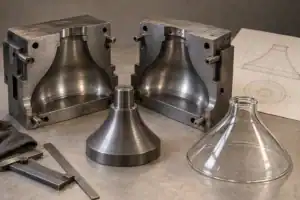
JX presents engineering, CAD and prototyping as part of its custom glassware workflow. Treat every capability, certification, MOQ, lead time and packaging format as a point to confirm in the RFQ for the specific design rather than as a blanket promise.
What to include in a replacement RFQ
A complete request lets a supplier price the same job you are evaluating. Include:
- One clear photo of the shade installed and several photos of the fitter, rim and interior.
- Fitter opening, seating depth, total height, maximum diameter and any clearance limit.
- Profile reference: bell, globe, cylinder, dome or a drawing showing the actual contour.
- Glass direction: frosted, opal, clear or textured, with a reference sample or approved visual target.
- Glass thickness, edge treatment and dimensional tolerances where the fixture requires them; ask JX to review what is practical.
- Application and lamp information, especially where heat, moisture or frequent service affects the selection.
- Quantity by SKU, sample quantity, target reorder cadence and delivery destination.
- Packaging, carton markings, inserts, private-label requirements and damage-reporting process.
MOQ, tooling cost, production lead time, shipping terms and compliance documents should be returned as quote-specific values. Keeping them open in the request avoids building a purchasing plan around an unverified number.
Quality checks before shipment
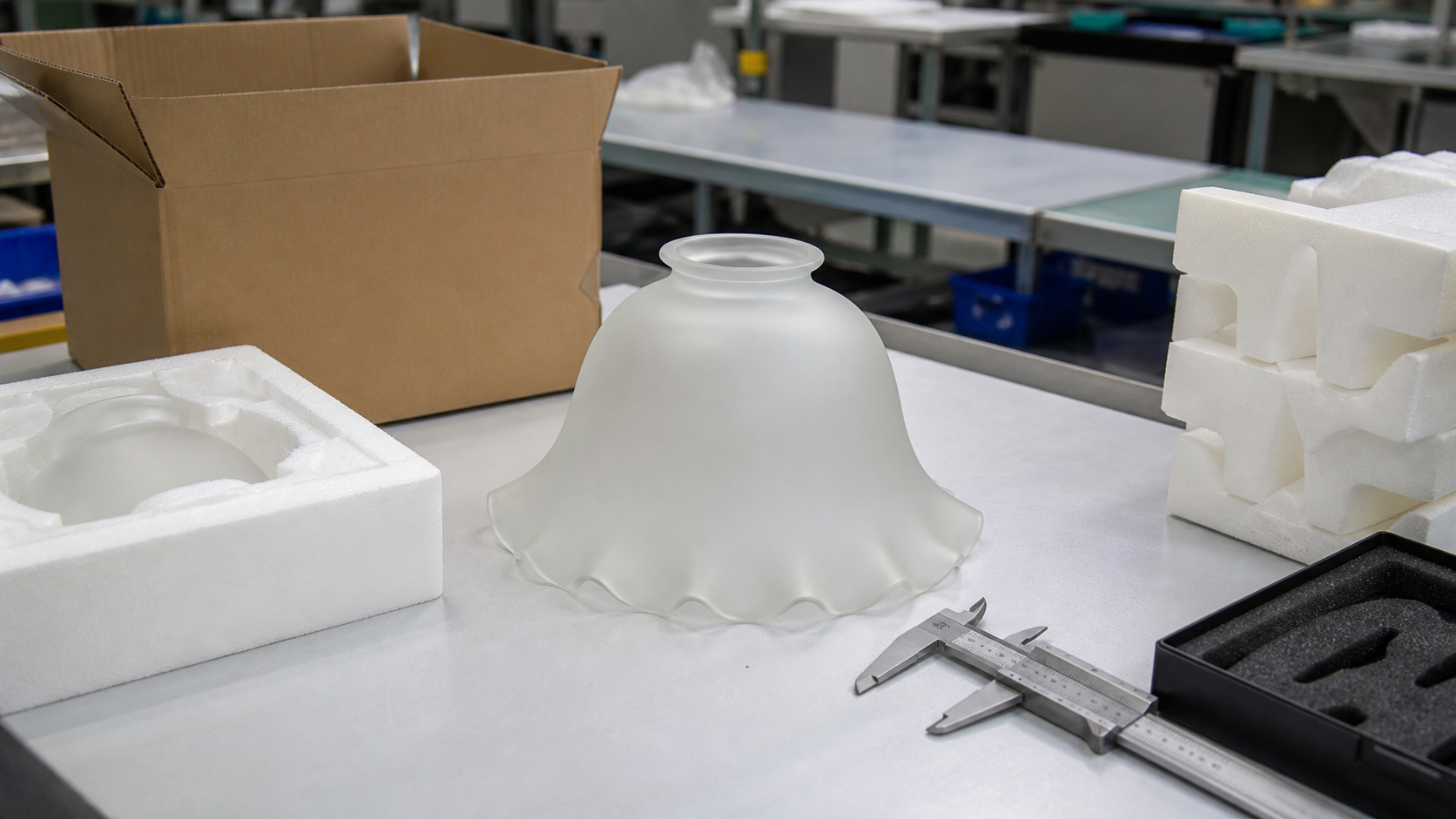
Build the inspection plan around the failure modes that matter to your fixture and customer.
Evidence boundary: Unless a dated inspection record is supplied with your quote, treat this as an agreed checklist rather than proof that a completed test has passed.
A practical pre-shipment review can cover:
- Fit: fitter opening, seating depth, ring or holder relationship and sample installation.
- Geometry: height, maximum diameter, openings, contour and symmetry against the approved drawing.
- Glass and edge: thickness direction, rim condition, chips, cracks, sharp edges, inclusions and visible process marks.
- Finish: frosting or opal uniformity, texture consistency, color under the agreed light source and clean surface.
- Pack-out: individual protection, separation between parts, carton strength, drop-risk areas and replacement-parts labeling.
Record the approved sample, drawing revision and inspection photos with the SKU. If the shade is part of a replacement kit, test the complete kit—not only the glass—before releasing a reorder.
Applications and reorder control
This page is designed for lighting brands, distributors, hospitality procurement teams, fixture repair networks and importers that need a repeatable replacement source. Keep a simple SKU record with the approved fitter, profile, finish, drawing revision, carton method and last accepted sample. That record helps a later buyer request the same result instead of describing the shade from memory.
For distributor programs, compare this workflow with JX’s glass lamp shades for distributors page. For a new collection, ask the technical team to review the fixture family, sample sequence and packaging brief together.
Frequently asked questions
Can JX match a broken frosted glass shade?
JX can review a replacement request when you provide the original shade, clear photos, measurements or a drawing. Matching is confirmed after the fitter, profile and finish are reviewed; a visual description alone is not enough.
Which measurements matter most?
Start with the fitter opening and seating relationship, then capture total height, maximum diameter, lower opening and any fixture clearance. The measurement guide shows the information to prepare.
Can the same shade be made with different fitters?
It may be possible, but the answer depends on the profile, glass process, tooling and fixture load. Treat each fitter as a separate design variant and request a drawing review before assuming parts are interchangeable.
What is the difference between frosted and opal glass?
Both can diffuse light, but they may differ in translucency, surface feel, color and process. Approve a physical sample under the intended lamp instead of selecting from the finish name alone.
Can I request a sample before a production run?
Ask for a sample or prototype review in the RFQ. Confirm the sample charge, tooling responsibility, approval record and what changes are still allowed before production.
What MOQ and lead time should I expect?
MOQ and lead time vary with the profile, finish, tooling, quantity and destination. Request current quote-specific values from JX; do not use a generic number for a different shade or production route.
Can JX support private-label packaging?
Include your carton, insert, label and barcode requirements in the request. JX should confirm the current packaging and private-label scope, artwork process and approval steps for your program.
Request a frosted replacement quote
Send the reference shade or drawing, fitter measurements, finish target, quantity by SKU and destination to JX. The technical team can then confirm whether a standard replacement, sample, custom tool or OEM review is the right next step.
Request a frosted glass lamp shade replacement quote and include the files your buyer and engineer will use to approve the part.