Antique brass lampshades are shades made from or finished in aged brass, found as pierced metal shades, brass-rimmed glass shades, and brass shade frames. Value depends on age, whether the brass is solid or plated, the maker, and condition.
Someone hands you an old brass lamp. The base is heavy, the metal has gone a deep amber-brown in the recesses, and the shade is either missing, broken, or clearly not original. Now what? Is it solid brass or plated? Is it worth anything? What kind of shade actually belongs on it? Most pages that rank for antique brass lampshades are product listings that answer none of this. This guide does: how to identify genuine antique brass, what the different shade types are, how to assess value, how to clean it without destroying it, and how to match the right shade to an antique brass base.
What are antique brass lampshades?
Antique brass lampshades are lampshades either constructed from brass or finished to look like aged brass, on lamps generally considered antique (typically over 100 years old) or vintage (roughly 30 to 100 years old). The term covers several distinct things: solid brass pierced shades, brass-rimmed glass shades, and brass wire frames for fabric shades.
Solid brass vs brass-plated vs brass-finished
The single most important distinction when evaluating antique brass lampshades is what the brass actually is:
Solid brass: the shade or fitting is made from brass alloy throughout. Brass is an alloy of copper and zinc, and solid brass items are heavy, non-magnetic, and develop a genuine patina over decades. Solid brass antiques hold value and can be polished back to a bright gold finish if desired.
Brass-plated: a thin layer of brass electroplated over a cheaper base metal, usually steel or zinc. Plated items are lighter relative to size, often magnetic (if the base metal is steel), and the plating wears through at high-contact points to reveal the base metal underneath. Brass-plated lamps are generally newer and worth considerably less than solid brass.
Brass-finished: a paint or lacquer finish in a brass color applied over any base material, with no actual brass content. This is common on modern reproductions sold as “antique brass” — the World Market pierced drum shade selling as an “antique brass finish” is a finish, not solid brass. Worth the least; valued only for appearance.
What “antique” actually means
The word “antique” is used loosely in lamp listings. Strictly, an antique is an object over 100 years old. In practice, the antique lighting market applies it more broadly:
- Genuine antique (pre-1925): gas-to-electric conversion era and earlier, often solid brass, frequently with hallmarks or maker stamps.
- Vintage (1925–1995): a wide span including Art Deco brass, mid-century brass, and later reproductions. Quality varies enormously.
- Reproduction / antiqued: new manufacture with a deliberately aged finish. Not antique at all, regardless of how it’s described.
| Category | Age | Brass type (typical) | Value driver |
|---|---|---|---|
| Genuine antique | Pre-1925 | Solid brass, often hallmarked | Age, maker, rarity, condition |
| Vintage | 1925–1995 | Solid or plated | Style era, maker, solid vs plated |
| Reproduction | Recent | Brass-finished or plated | Appearance only |
Types of antique brass lampshades
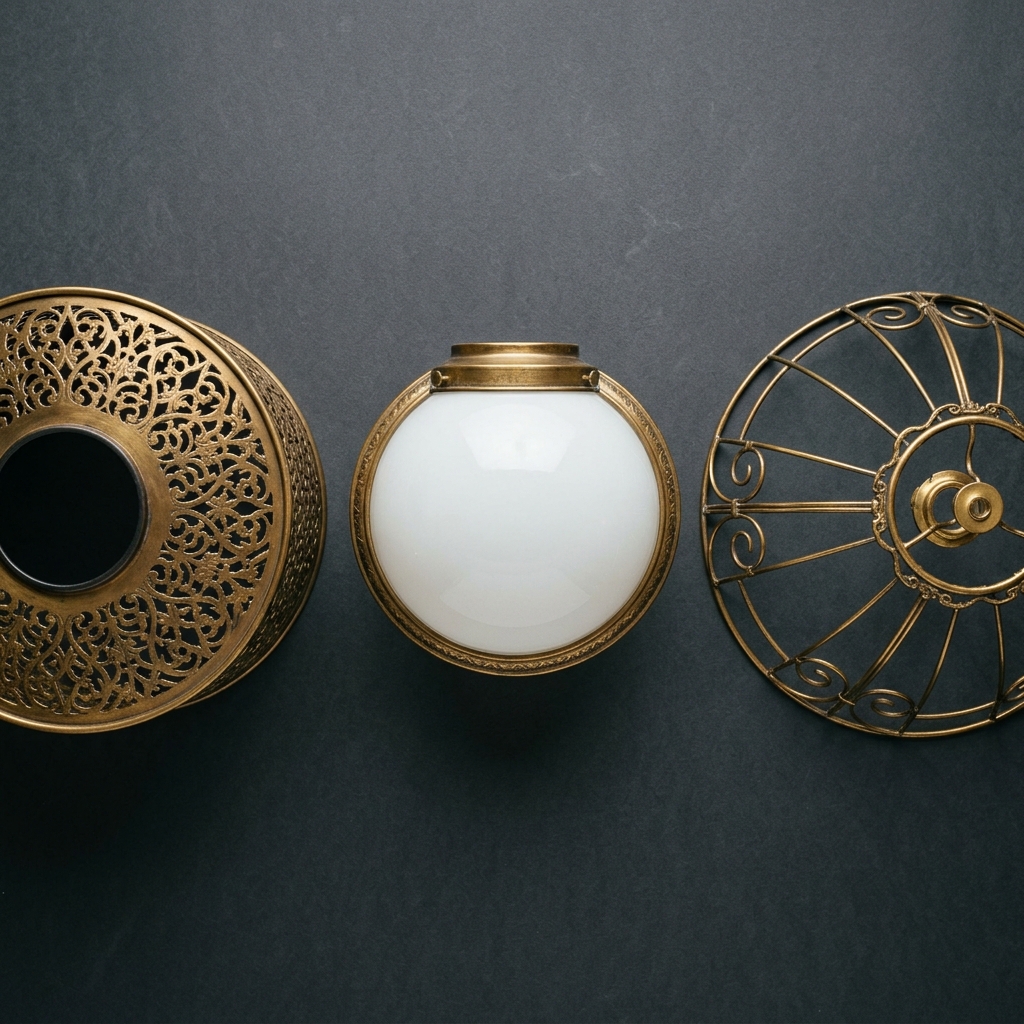
Antique brass lampshades fall into three structural types: pierced solid-metal shades, brass-rimmed glass shades, and brass wire frames for fabric. Each looks different lit and unlit, and each suits a different lamp and room.
Pierced and perforated metal shades
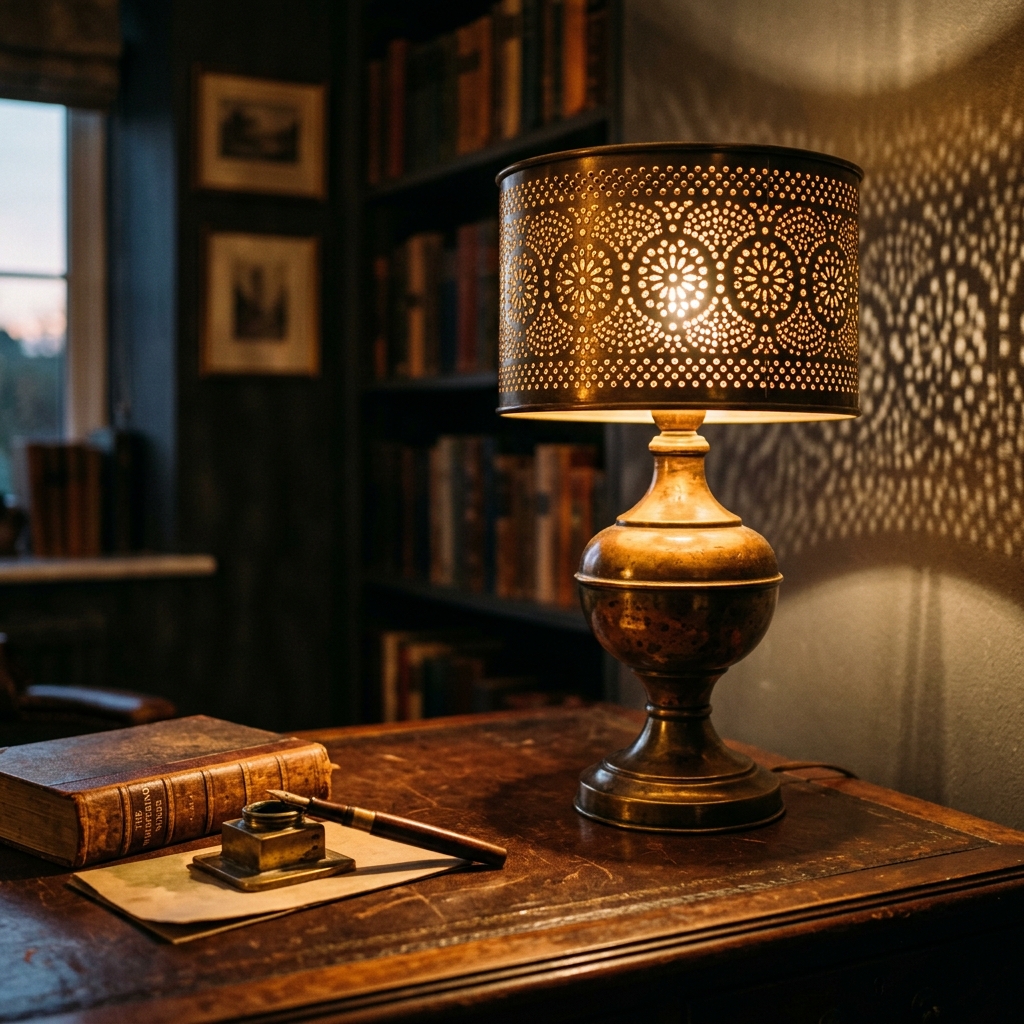
A pierced brass shade is a solid metal shade with a decorative cut-out or perforated pattern. When the lamp is off, you see an opaque brass cone or drum with a pattern of holes. When lit, the light escapes only through the perforations, casting the pattern onto the ceiling and walls. The body of the shade stays dark; the pattern glows.
Pierced metal shades are associated with traditional, colonial, and Moroccan-influenced interiors. They produce a dramatic, directional light rather than the soft overall glow of fabric or glass. The pierced pattern can range from simple punched dots to elaborate scrollwork. These shades are the most “brass-forward” option — the brass itself is the visible feature.
The practical drawback: pierced metal shades direct most of their light up and down, with little side glow. They work as accent and mood lighting, not as reading lamps.
Brass-rimmed glass shades
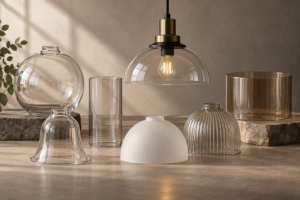
Many antique brass lamps originally used glass shades held in brass fittings — a brass shade ring, a brass gallery, or a brass holder that grips a glass globe or dome. The brass and glass were designed to work together: the warm metal tone complements the glass, and the brass hardware provides the structural mounting.
This is the configuration most antique brass table lamps and oil-lamp conversions used. The glass shade does the light-diffusing work; the brass provides the period-correct hardware and the visual frame. For owners of an antique brass lamp missing its shade, a vintage glass lamp shade in the correct fitter size is usually the most period-appropriate replacement, since the original almost certainly was glass held in a brass fitting rather than a solid brass shade.
Brass shade frames for fabric
The third type is a brass or brass-finished wire frame covered with fabric. Here the brass is structural, not decorative — it forms the skeleton, and the fabric provides the surface. Brass-finished wire frames were common on Victorian and Edwardian fabric shades, often with elaborate scrolled wirework visible at the top and bottom edges.
Genuine antique brass frames are rare because the wire usually corroded or the fabric covering was replaced many times over the decades, often onto a new frame. Most “antique brass” wire frames on the market today are reproductions with an antiqued finish.
| Shade type | Brass role | Light behavior | Best suited to |
|---|---|---|---|
| Pierced metal | The shade itself | Pattern-cast, directional | Accent, traditional, Moroccan |
| Brass-rimmed glass | Hardware/frame | Soft, diffused (via glass) | Antique table lamps, period rooms |
| Brass wire frame | Structural skeleton | Soft, diffused (via fabric) | Victorian, Edwardian fabric shades |
Identifying genuine antique brass and assessing value
Determining whether antique brass lampshades and their lamps are solid brass, plated, or merely finished is the key to assessing value. The tests are simple and take a few minutes.
Solid brass vs plated: the practical tests
Three tests, in order of reliability:
- The magnet test: hold a magnet to the metal. Solid brass is non-magnetic — a magnet will not stick. If the magnet sticks, the item has a steel base metal and is brass-plated, not solid. This is the fastest screening test, though it can’t distinguish solid brass from brass-plated zinc (zinc is also non-magnetic).
- The weight test: solid brass is dense and feels heavy for its size. A solid brass shade or fitting has a substantial heft; a plated or finished equivalent feels noticeably lighter. This requires some experience to judge but is reliable once you’ve handled both.
- The wear test: examine high-contact edges, the underside, and any scratches. On plated items, wear reveals a different-colored base metal (silvery steel or grey zinc) under the brass layer. On solid brass, a scratch reveals more brass — the same gold color all the way through.
Expert tip: check inside the fitter and on the underside of the shade where polishing never reached. Solid brass shows consistent color and a genuine aged patina in these protected areas; plated items often show the base metal or an unnaturally even finish.
Hallmarks, makers, and value drivers
The related searches around antique brass lamps include “are old brass lamps worth anything” — a fair question, and the honest answer is: it depends heavily on whether the brass is solid and who made it.
Value drivers, roughly in order:
- Solid vs plated: solid brass is worth multiples of plated, all else equal.
- Maker / hallmark: stamps from known makers (Tiffany, Handel, Pairpoint for high-end American lighting; Bradley & Hubbard; Aladdin for oil lamps) raise value substantially. Look for stamped marks on the base underside, the socket, or the shade fitter.
- Age and rarity: genuine pre-1925 pieces with original components are worth more than later vintage.
- Condition: original patina intact, no dents, original wiring (or professionally rewired), and original shade if present.
- Completeness: a lamp with its original matching shade is worth far more than a base alone or a mismatched pairing.
The spec sheets rarely mention this, but originality matters more than shine. A heavily over-polished antique brass lamp that has lost its patina is often worth less than the same lamp with its aged surface intact. Collectors pay for honest age, not for a buffed finish.
Patina, tarnish, and cleaning antique brass
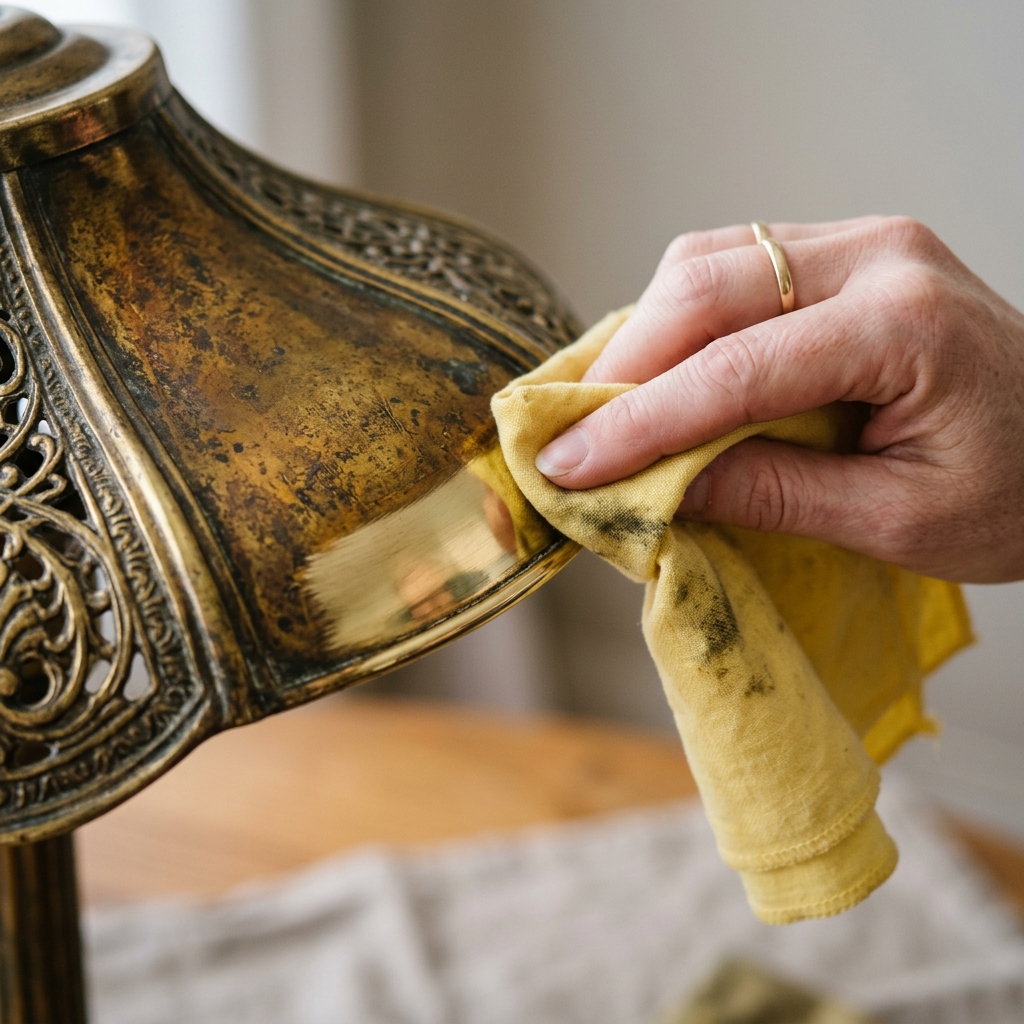
Patina and tarnish are not the same thing, and knowing the difference determines whether you should clean antique brass lampshades at all. Patina adds value; aggressive cleaning destroys it.
Patina vs tarnish: when to leave it alone
Patina is the stable, aged surface that forms on brass over decades — a deep, even darkening, often with warm amber and brown tones in the recesses and a soft sheen on raised areas. Patina is desirable. It’s evidence of genuine age, and on antiques it should generally be preserved, not removed.
Tarnish, by contrast, is active surface oxidation: dull, often blotchy or greenish, sometimes with verdigris (a green corrosion product) in crevices. Light tarnish can be cleaned; heavy verdigris should be addressed because it’s actively corroding the metal.
The judgment call: if the surface is an even, warm, aged brown, leave it. If it’s dull, blotchy, or showing green corrosion, gentle cleaning is appropriate. When in doubt on a potentially valuable piece, do nothing and consult a specialist — you can always clean later, but you can’t put patina back.
Cleaning lacquered vs unlacquered brass
The first thing to determine before cleaning is whether the brass is lacquered. Many brass items were coated with a clear lacquer to prevent tarnishing. Lacquered brass looks glossy and doesn’t tarnish unevenly; unlacquered brass tarnishes and develops patina freely.
- Lacquered brass: clean only with a soft cloth and mild soapy water. Never use brass polish or abrasives — they scratch and cloud the lacquer. If the lacquer is failing (flaking, yellowed), it must be fully stripped before the brass underneath can be polished or re-lacquered.
- Unlacquered brass: can be polished with a proper brass polish if you want a bright finish, but consider whether you should (see patina note above). For gentle cleaning that preserves patina, a soft cloth and mild soap is enough.
| Brass condition | Treatment | Avoid |
|---|---|---|
| Even aged patina (valuable antique) | Leave alone; dust only | Any polish or abrasive |
| Light tarnish, unlacquered | Soft cloth, mild soap; optional brass polish | Steel wool, harsh abrasives |
| Lacquered, intact | Soft cloth, soapy water | Brass polish, solvents |
| Verdigris / green corrosion | Gentle cleaning; specialist if valuable | Ignoring it (corrosion spreads) |
A practical warning from handling these lamps: never use steel wool or abrasive pads on antique brass lampshades. They leave permanent fine scratches that catch light and instantly mark the piece as having been mishandled. On a pierced metal shade, abrasives also lodge in the perforations and are nearly impossible to remove.
Matching a shade to an antique brass lamp base
When an antique brass lamp is missing its shade, matching a replacement requires choosing the right shade type, the correct fitter size, and proportions that suit the base. Get the shade type right first, then the dimensions.
Pierced metal, glass, or fabric on a brass base?
The first decision is what kind of shade the lamp was designed for:
- If the lamp has a shade holder ring or gallery at the top of the socket, it was designed for a glass shade. This is the most common configuration for antique brass table lamps. A glass globe or dome in the correct fitter size is the period-correct choice.
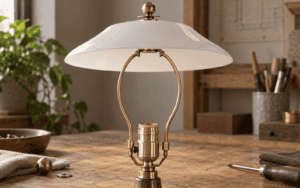
- If the lamp has a harp, it was designed for a fabric shade with a spider fitter. Brass table lamps from the 1920s onward commonly used harps.
- A pierced metal shade is appropriate if you specifically want the dramatic pattern-cast lighting effect and the lamp’s mounting accepts it. It’s a style choice, not usually the original configuration.
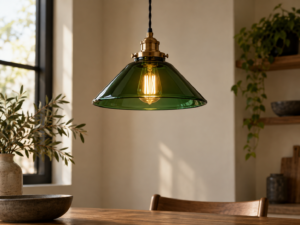
Matching the warm tone matters. A brass lamp base pairs best with shades that complement the metal: cream, ivory, and warm white fabric; amber, opal, or clear glass; or a brass-toned pierced metal shade. Stark white or cool-toned shades fight the warm brass.
Fitter sizing and proportion
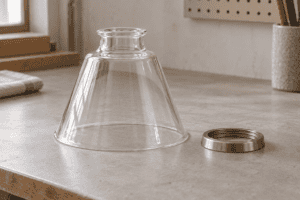
The fitter is the non-negotiable measurement. For glass shades on an antique brass lamp, the shade’s fitter diameter must match the brass holder ring exactly. Standard antique fitter sizes are 2¼”, 3¼”, and 4″. Our guide to measuring a cut glass lamp shade covers how to measure the holder ring and order the right fitter size, and the method applies to any antique brass lamp.
For proportion, the same rules apply as for any lamp: the shade’s bottom diameter should be at least 2″ wider than the widest point of the brass base, and the shade height should be roughly one-third of the total lamp height. Antique brass bases are often slender and tall (candlestick and column shapes), which sometimes calls for a slightly taller shade than the one-third rule to avoid a cap-on-a-stick look.
For readers wanting to identify exactly what era and type their glass shade is, our guide to identifying vintage glass lamp shades covers the maker marks, glass types, and fitter conventions that date a shade.
Where antique brass lampshades fit in interiors
Antique brass lampshades suit interiors that already have warmth and traditional character, but they also work as a deliberate accent in modern eclectic rooms. The key is committing to the warm metal tone rather than fighting it.
Traditional and vintage rooms
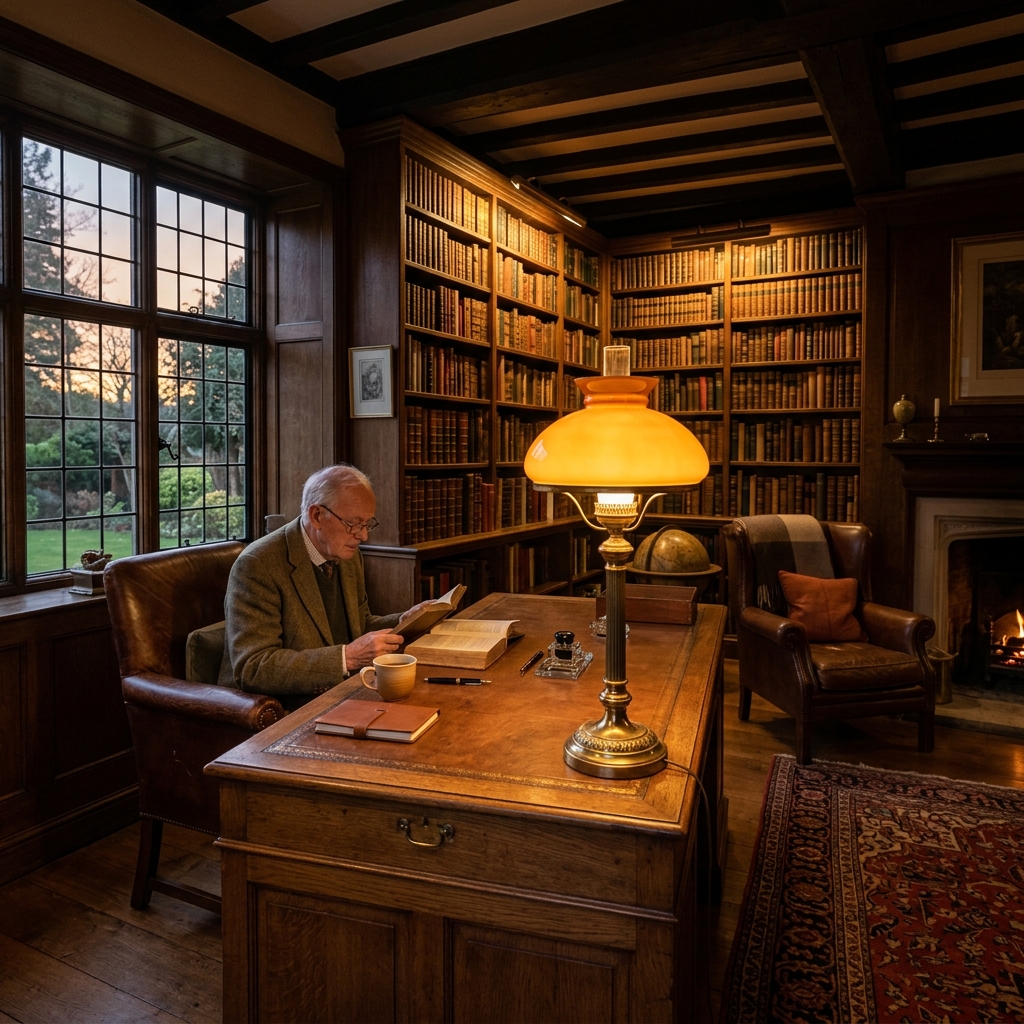
In traditional, Victorian, colonial, and farmhouse interiors, antique brass lampshades read as natural rather than decorative statements. A brass table lamp with an opal glass shade on a wooden writing desk, a pierced brass shade casting pattern light in a study, or a brass-framed fabric shade on a mantel — all of these sit comfortably in rooms with wood furniture, warm textiles, and aged finishes.
Brass works especially well alongside other warm materials: walnut and mahogany wood, leather, aged bronze hardware, and warm-toned textiles. The metal picks up and reflects the warm light, reinforcing the room’s character.
Modern eclectic pairing
In contemporary rooms, antique brass lampshades function as a deliberate vintage accent — one warm, aged element against cleaner modern surfaces. A single antique brass lamp on a minimalist console or shelf adds age and warmth without committing the whole room to a period look.
The pairing that works: keep the brass piece genuinely aged (real patina, not a shiny reproduction) and let it contrast with the modern surroundings. A buffed, bright brass lamp reads as new and can look out of place; a piece with honest patina reads as a collected antique, which is the effect most modern-eclectic rooms are after. As with all lampshades, switching to a warm-white LED bulb, which the U.S. Department of Energy notes runs far cooler than incandescent, protects both the shade and any nearby finishes from heat over the long term.
FAQ
Are old brass lamps worth anything?
It depends on whether the brass is solid and who made it. Solid brass antique lamps from known makers (Tiffany, Handel, Bradley & Hubbard, Aladdin) can be worth hundreds to thousands of dollars. Plated or brass-finished lamps are worth far less, generally valued for decorative appeal rather than as antiques. Check with a magnet (solid brass is non-magnetic), assess the weight, and look for maker hallmarks on the base, socket, or fitter. Originality and intact patina raise value; over-polishing lowers it.
How can I tell if my brass lampshade is solid brass or plated?
Use a magnet: solid brass is non-magnetic, so if a magnet sticks, the item is plated over steel. Solid brass also feels heavy for its size, and a scratch on solid brass reveals more brass (same gold color throughout), while a scratch on plated brass reveals a different base metal underneath. Check protected areas like the underside and inside the fitter, where wear and base-metal exposure are easiest to spot.
Should I polish an antique brass lampshade or leave the patina?
Generally, leave an even, warm aged patina alone — it adds value and is what collectors want. Polish only if the surface is dull, blotchy, or actively tarnishing, and even then use a soft cloth and gentle brass polish, never steel wool or abrasives. Over-polishing a genuine antique can reduce its value significantly. When in doubt on a potentially valuable piece, clean conservatively or consult a specialist first.
What shade goes on an antique brass lamp?
It depends on the lamp’s mounting hardware. If it has a shade holder ring or gallery, it was designed for a glass shade — usually the period-correct choice. If it has a harp, it takes a fabric shade with a spider fitter. Match warm tones: cream or ivory fabric, amber or opal glass, or a brass-toned pierced metal shade. The shade’s fitter size must match the lamp’s hardware exactly.
What is the difference between patina and tarnish on brass?
Patina is a stable, even, aged darkening that develops over decades and is desirable on antiques. Tarnish is active surface oxidation — dull, blotchy, sometimes with green verdigris in crevices — and indicates corrosion. Patina should be preserved; tarnish can be gently cleaned, and verdigris should be addressed because it actively corrodes the metal. The distinction matters: removing patina destroys value, while removing tarnish protects the metal.
Can I put a glass shade on an antique brass lamp?
Yes, and it’s often the most period-correct option. Most antique brass table lamps were originally designed for glass shades held in a brass holder ring or gallery. Measure the inside diameter of the holder ring to get the fitter size (commonly 2¼”, 3¼”, or 4″), then order a glass shade with a matching fitter. Amber, opal, and clear glass all pair well with the warm brass tone.
Conclusion
Antique brass lampshades cover more ground than the product listings suggest: pierced metal shades, brass-rimmed glass shades, and brass wire frames, on lamps ranging from genuine pre-1925 antiques to recent reproductions with an aged finish. The two questions that matter most are whether the brass is solid or plated, and whether the surface is genuine patina or removable tarnish. Get those right and you can identify, value, and care for the piece correctly.
For an antique brass lamp missing its shade, the most period-appropriate replacement is almost always a glass shade in the correct fitter size, since that’s what most antique brass lamps originally used. Our vintage glass lamp shades guide covers the glass types and fitter sizes that suit antique brass bases, and the cut glass lamp shades collection is the starting point for sourcing a period-correct replacement.