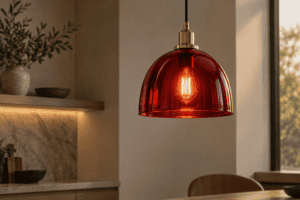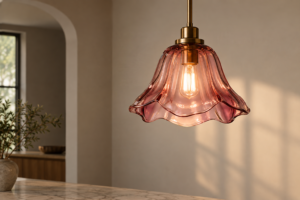
A globe lampshade is a round light cover chosen by outer diameter, opening, neck, retention method, glass finish, and fixture clearance.
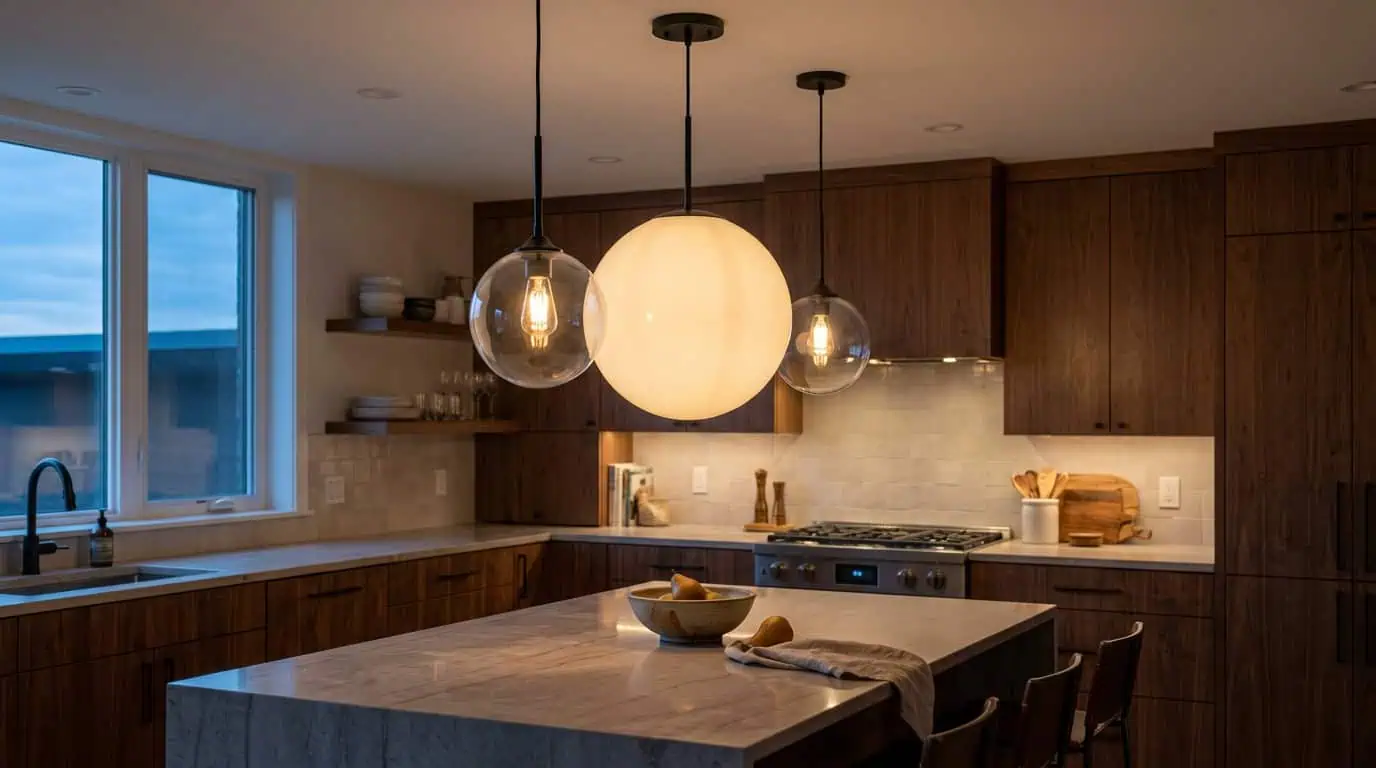
A globe lampshade looks simple because the outline is familiar. The buying decision is not. A six-inch opal sphere with a neckless opening is a different component from a six-inch screw-neck globe, even when both photographs show a white ball. A clear pendant globe, a closed outdoor globe, and a replacement ceiling shade can share the same outside diameter while using different glass, openings, and retention methods.
Most shopping pages begin with color and diameter. That is useful for browsing, but it leaves out the connection between the shade and the fixture. It also leaves out the bulb envelope, neck height, orientation, wall thickness, finish route, and project quantity.
This guide puts those details in the right order. It covers globe shape, glass effect, fixture use, measurement, replacement routes, sample approval, and packing. It is written for one-piece replacements and for buyers preparing repeat or custom orders.
What a globe lampshade is
A globe lampshade is a spherical or near-spherical cover that surrounds or screens a lamp source.
The phrase covers several geometries. Some globe lampshade designs are true spheres with one opening. Others are flattened, elongated, schoolhouse-shaped, necked, or open at both ends. A product title may still call all of them globes because the dominant visual form is round.
Outside shape and connection are separate
The globe defines what the eye sees. The opening defines whether the part can be installed. Keep those two decisions separate.
For the outside shape, record maximum diameter, overall height, and where the center of the sphere sits relative to the opening. For the connection, record opening inside diameter, opening outside diameter, neck height, lip, groove, thread, screw area, and seating surface.
Two glass globes can share a maximum diameter but sit at different heights because one has a long neck. That affects pendant proportion, bulb position, and clearance to a ceiling plate or neighboring shade.
The shade is part of a luminaire
A globe lampshade changes light distribution, glare, appearance, and access to the bulb. It also adds weight to the holder. The complete luminaire must keep the shade secure and maintain appropriate clearances.
IEC 60598-1 covers general safety requirements and tests for luminaires, including mechanical and electrical construction, marking, and temperature-related concerns. The current IEC 60598-1 summary helps frame the issue correctly: a replacement shade should be checked with the holder, light source, orientation, and complete fixture, not treated as an isolated decoration.
Globe does not mean universal
Lamp caps and holders use standardized systems in many markets. The IEC 60061 database supports interchangeability and safety for lamp caps, holders, and gauges. Decorative globe attachments still vary. A screw neck, set-screw neck, lip fitter, uno ring, and neckless opening are not interchangeable because the outside shape is round.
The useful rule is to use “globe” for search and profile. Use measured connection data for purchasing.
Compare globe shapes and glass constructions
Choose the globe family before choosing the finish, because geometry controls proportion, clearance, and manufacturing route.
A globe lampshade product photo taken straight on can hide meaningful differences. Compare the side profile and opening at the same time.
| Globe family | Profile | Typical opening | Common use | Main check |
|---|---|---|---|---|
| True sphere | Nearly equal height and diameter | Necked or neckless | Pendants, chandeliers, table and wall lights | Bulb centered within the sphere |
| Elongated globe | Height greater than diameter | Necked or threaded | Pendants and decorative fixtures | Overall drop and socket concealment |
| Flattened globe | Diameter greater than height | Broad opening or neck | Ceiling lights and shallow pendants | Ceiling and bulb clearance |
| Schoolhouse or stepped globe | Round body with shaped shoulder | Neck or lip fitter | Ceiling and wall fixtures | Shoulder position and holder depth |
| Open-bottom globe | Large lower opening | Upper ring or neck | Pendant lighting | Glare, bulb view, and edge finish |
| Double-wall globe | Inner and outer glass forms | Fixture-specific neck | Decorative pendants | Weight, assembly, and heat path |
True spherical globes
A true sphere is visually balanced when the bulb and socket sit near the intended center. If the socket enters too far, the hardware dominates the clear globe. If it sits too high in an opal globe, the lower half may look dimmer.
The clear hand-blown glass globe on the JX site shows a transparent spherical direction. Use it as a shape reference, then check the actual opening, neck, fixture, and quantity.
Elongated and flattened globes
Elongated globes add vertical presence without the full width of a large sphere. They can suit narrow pendants and grouped fixtures. A flattened globe fits shallower spaces but may bring glass closer to the bulb or ceiling hardware.
Record maximum diameter and overall height. Do not calculate one from the other. The center point of the profile also matters. An elongated globe can be symmetrical around its midpoint or carry more volume below the opening.
Necked and neckless openings
A necked globe has a controlled cylindrical or threaded area at the opening. The neck can be retained by set screws, a ring, a thread, or another fixture-specific method. A neckless globe ends at a cut or formed opening without a long straight collar.
For set-screw holders, confirm that the screws land on a straight, suitable zone. For ring-retained globes, confirm the lip and seating surfaces. For threaded glass, compare thread form and engagement, not only diameter.
Single-wall and double-wall construction
A normal globe lampshade uses one glass wall. A double-wall design adds an inner glass form, often to create a layered visual effect or separate the visible bulb from the outer sphere. Double-wall parts can be heavier and more complex to assemble. The neck and inner clearance need a dedicated drawing.
Do not assume that borosilicate automatically means double-wall, or that soda-lime automatically means single-wall. Material and construction are separate choices. Corning’s glass selection guide identifies borosilicate glass and its thermal properties in a laboratory product context. A lighting buyer still needs the grade, process, wall, and full luminaire requirements confirmed for the actual globe.
Hand-blown, pressed, and lampworked routes
The manufacturing route influences profile freedom, tooling, surface marks, wall variation, and economical quantity. A hand-blown sphere can support broader form variation and lower-volume custom work, but the approval plan should define acceptable variation. Pressed glass can support repeatable features at suitable quantities, but tooling and parting details need review. Lampworked borosilicate can suit smaller or more technical forms.
The process should follow the part, not the marketing label. Send the drawing, quantity, appearance target, and inspection points before asking which route is best.
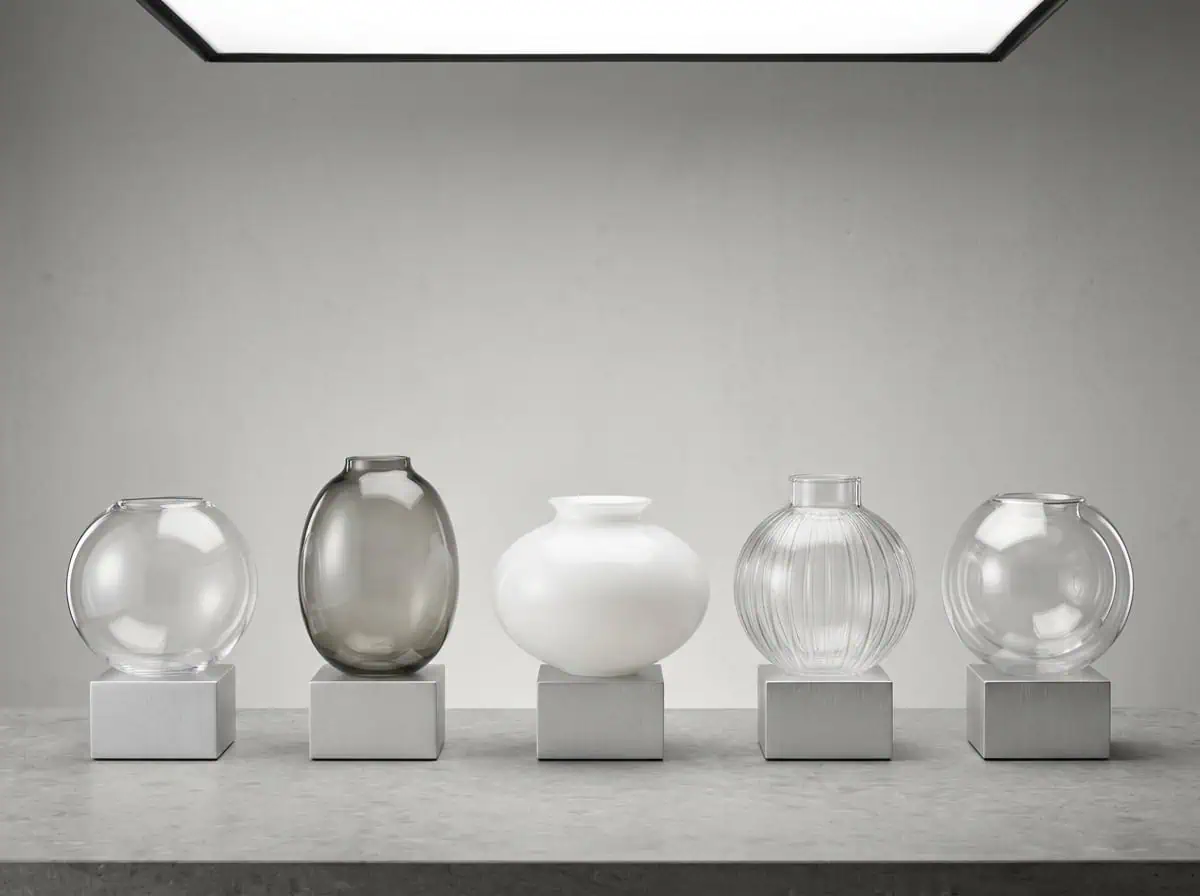
Choose clear, opal, frosted, ribbed, or colored glass
Choose the glass effect by bulb visibility, diffusion, color, cleaning, and the intended lit appearance.
The globe lampshade finish changes more than style. It changes how much of the bulb and hardware is visible, how light spreads, where bright zones appear, and how defects or dust are perceived.
Clear glass
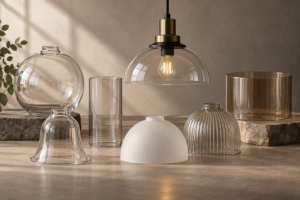
Clear glass keeps the globe outline crisp and exposes the bulb, socket, and internal hardware. It suits decorative filament-style lamps and fixtures designed around visible components. It also shows dust and fingerprints quickly.
Check glare from seated and standing viewpoints. A clear globe at eye level can reveal a bright LED source that felt acceptable in a ceiling photo. If the bulb is part of the design, specify its dimensions and appearance with the shade.
Opal or milk glass
An opal globe uses diffusing material through the glass body. It can make the whole sphere read as a luminous form and hide the bulb. Opacity and color tone vary. Some opal whites are warm and creamy; others are cool or gray when unlit.
The white opal glass globe shade shows one commercial reference. Treat it as a direction, then approve opacity, tone, opening, and lit uniformity on the intended fixture.
Frosted and matte glass
Frosting scatters light at the surface. A lightly frosted globe may still reveal the bulb as a soft bright area. A heavier frost can approach an opal effect, but the construction and cleaning behavior remain different.
Ask whether the matte treatment is on the inside, outside, or both. An outside frost can collect oils from handling. An inside frost can be hard to clean through a small neck. This affects service as well as sample appearance.
Ribbed, prismatic, seeded, and textured glass
Texture breaks up reflections and changes the visible bulb image. Vertical ribbing can emphasize height. Seeded or bubble glass adds irregular points. Prismatic patterns can redirect light more strongly than a decorative shallow rib.
Define the pattern scale, direction, depth, and repeat. A photo is useful, but a physical reference or drawing is better for a repeated project. Check how the texture terminates near the neck and opening.
Amber, smoke, and other colored glass
Color may be in the glass body or applied as a coating. State which appearance route is intended. The amber borosilicate glass globe provides one tinted product direction, but a buyer should still confirm material, color target, opening, and complete application.
Approve colored globes under the specified light source. A warm LED behind amber glass can shift the result farther than expected. A cool source behind smoke glass can look flatter than the unlit sample suggests.
Measure light instead of judging one phone photo
NIST explains how calibrated systems measure reflection and transmission by comparing light before and after it passes through a sample in its resource on light reflection and transmission. A one-piece replacement may only need a side-by-side visual check. A hospitality or retail collection may justify a controlled transmission, color, or limit-sample method.
The light source remains important. The U.S. Department of Energy’s LED basics notes that luminaire efficacy depends on the source and fixture working together. DOE also recommends at least CRI 80 for interior lighting and describes CRI 90 or higher as excellent color fidelity. The globe redistributes and filters light, but it does not repair a poor source spectrum.
For color-sensitive spaces, the Illuminating Engineering Society’s TM-30 method evaluates fidelity, gamut, and hue-specific changes. A normal residential purchase may not need a TM-30 report. A specification for hospitality, retail, or color matching should at least control the source used to approve the globe.
Match the globe to the fixture and room
Choose a globe that fits the holder, centers the bulb, clears nearby parts, and produces the intended view in the room.
One globe lampshade can behave differently on a pendant, ceiling light, or table lamp because the orientation and viewing angle change.
Pendant lights
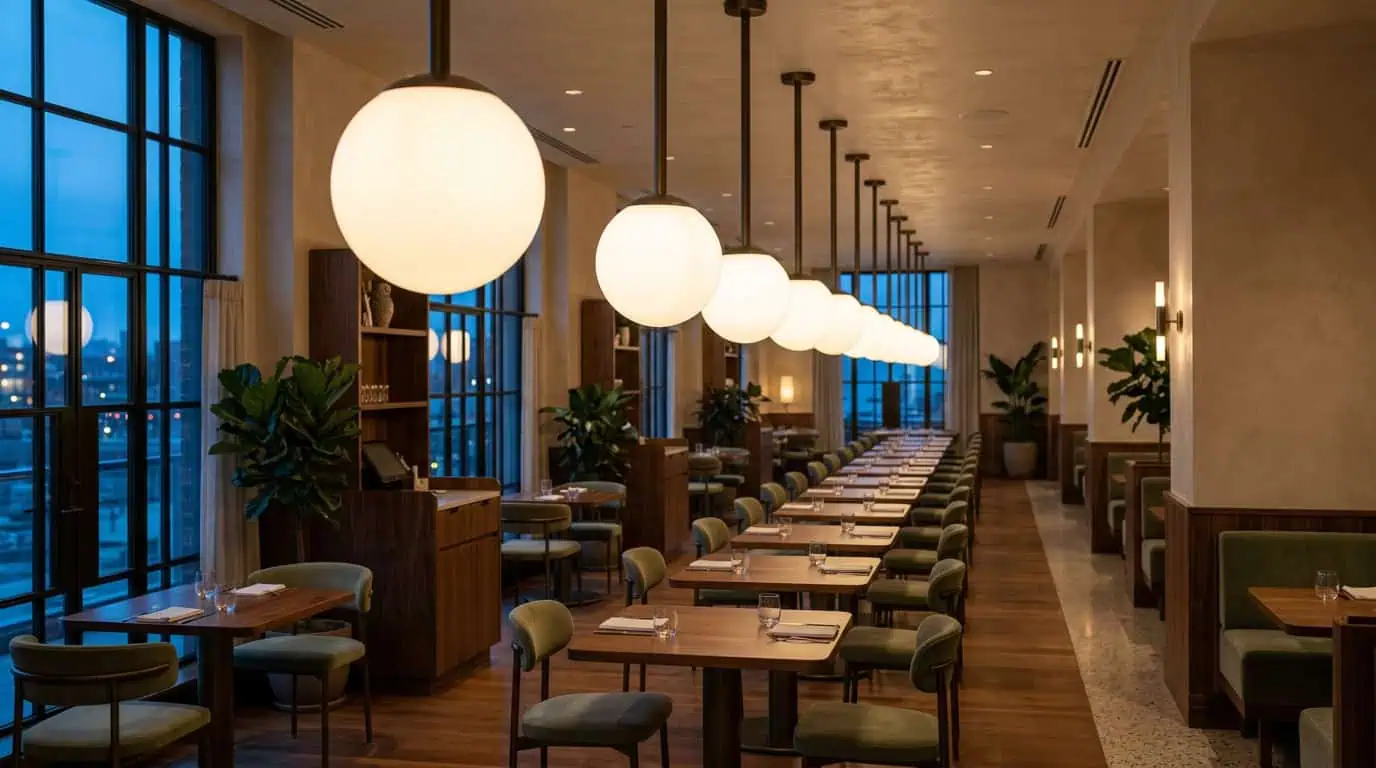
For a pendant, record the suspension type, socket location, rod or cable alignment, and view from below. A clear globe exposes the internal hardware. An opal globe hides more, but the bulb position can create a bright top or bottom zone.
Check the overall drop. A larger globe increases the visual mass and may lower the bottom edge into a circulation or sight line. In a group of pendants, record center spacing so adjacent globes do not touch.
Ceiling fixtures
Ceiling globes are often shallow or necked. Measure distance from the holder to the ceiling plate and from the bulb to the glass. Confirm how the shade is removed for lamp replacement and cleaning.
The existing JX article on replacement glass globes for ceiling lights owns the detailed fitter-size procedure for that application. Use it when the project is specifically a ceiling replacement. This guide stays broader so the two pages do not repeat the same job.
Table and floor lamps
A globe lampshade on a table lamp may sit near eye level. Clear glass can create glare, while opal glass can make the sphere the main luminous element. Check the lamp base proportion and the view from a seated position.
For a floor lamp, record stability and shade weight. A heavier globe changes the load on the arm and holder. Do not increase size or use a double-wall part without checking the complete fixture.
Wall sconces
Measure wall projection, clearance to mirrors or cabinets, and access to the bulb. A globe that looks compact from the front may project too far from the wall. If the opening faces up, consider cleaning access and dust. If it faces down, confirm positive retention.
Chandeliers and multi-globe fixtures
Record center-to-center spacing and arm angle. A group of globes amplifies small differences in color and diameter, especially when lit together. Sample approval should compare more than one piece if the acceptable variation between adjacent shades is critical.
Outdoor and damp-location fixtures
Do not select a globe for outdoor use from appearance alone. The complete fixture needs the appropriate rating, sealing, drainage, material, and electrical construction for the location. A closed glass ball is not automatically weatherproof.
Use the fixture manufacturer’s instructions and certification scope. Ask whether gaskets, threaded interfaces, vents, and replacement parts must be approved together.
Measure the opening and full globe profile
Measure the holder interface first, then record the outside sphere, height, and internal clearances.
A useful globe lampshade measurement set allows another person to compare the part without holding it.
Photograph the assembled connection
Before removing the old globe, switch off power and let the fixture cool. Photograph the connection from several angles. Include set screws, rings, clips, gaskets, threads, and seating surfaces. Keep removed hardware in order.
If the shade is broken, measure the holder and any surviving neck fragment. Do not force cracked glass back into the fitter.
Measure in a fixed order
- Holder inside diameter and depth.
- Globe opening inside diameter.
- Globe neck outside diameter.
- Neck height and any lip, groove, thread, or screw zone.
- Overall globe height.
- Maximum outside diameter.
- Distance from opening plane to the widest point.
- Bulb envelope and socket position.
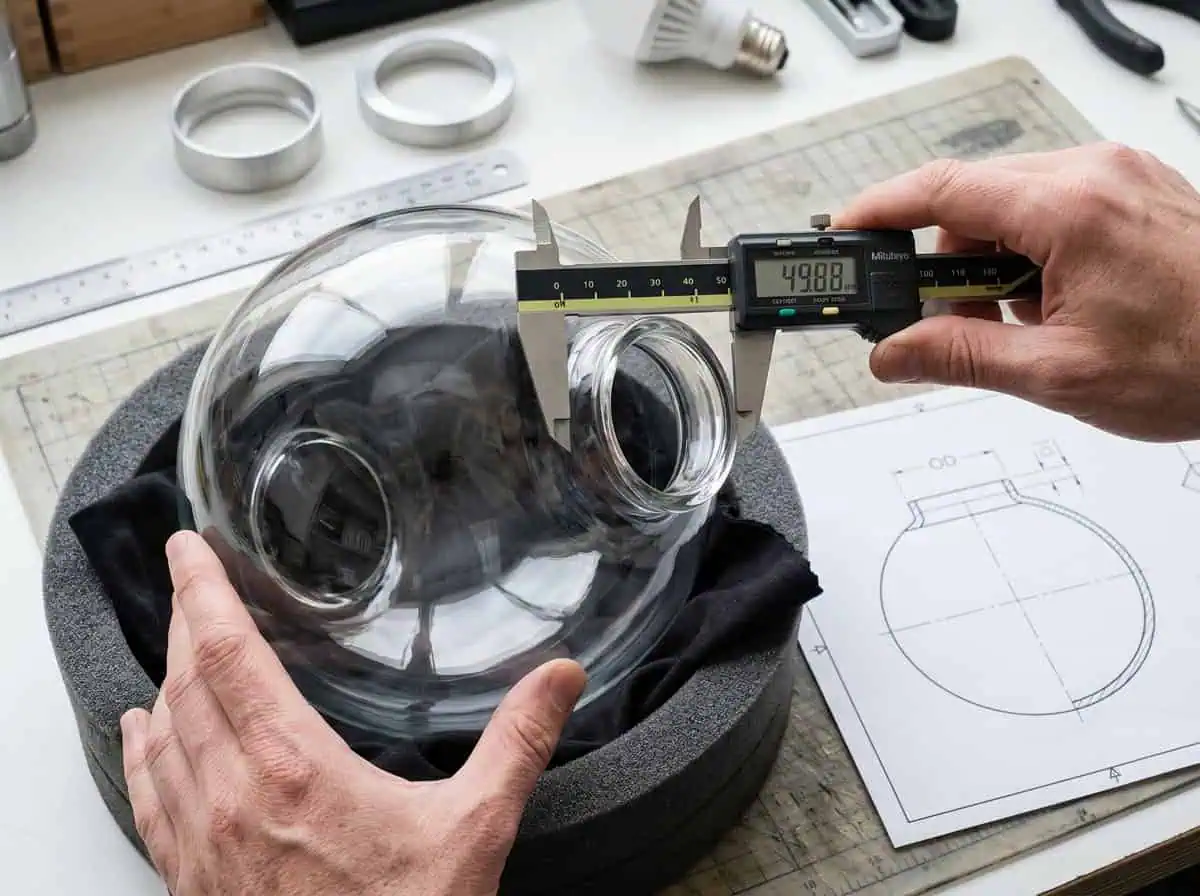
Use a caliper for the connection when possible. Take round diameters in at least two directions. A flexible tape can sag across an opening and should not be the only tool for a tight fitter.
| Measurement | Controls | Common mistake | Useful evidence |
|---|---|---|---|
| Opening inside diameter | Bulb and hardware passage | Measuring the holder instead of the glass | Caliper photo across the opening |
| Neck outside diameter | Fit inside a holder | Reporting only the opening | Two readings at right angles |
| Neck height | Screw or ring engagement | Measuring into the curved shoulder | Side photo with datum line |
| Overall height | Fixture clearance and proportion | Treating height as equal to diameter | Centerline dimension |
| Maximum diameter | Spacing and visual scale | Not recording where it occurs | Side profile with height location |
| Opening-to-center distance | Bulb position within globe | Assuming the sphere is centered on the neck | Dimensioned profile |
Check the bulb and maintenance path
Confirm that the bulb can pass through the opening or that the fixture allows another installation sequence. Record bulb length and maximum diameter. Leave room for safe handling.
The Consumer Product Safety Commission advises using the correct bulb wattage for the fixture and keeping combustible material away from bulbs in its lamp safety guidance. Follow the fixture label and instructions. A different globe should not be used to justify a higher wattage or a different lamp type.
Decide between replacement stock and custom development
Start with existing products, then use a sample or drawing when the connection or profile cannot be matched.
Custom development is one route, not the automatic answer. Existing stock can reduce tooling, sampling time, and risk when the dimensions work.
Existing replacement
Send the measured interface, globe diameter, height, finish, fixture type, orientation, and quantity. Ask for a dimensioned comparison. A product page title is not enough because several openings can exist under a similar visual style.
For a one-piece replacement, be honest about acceptable differences. If the globe sits alone, a close profile may work. If it sits beside five originals, color and diameter variation will be more visible.
Original-sample route
An intact sample gives direct evidence of the neck, wall, profile, edge, and finish. Measure and photograph it before shipping. Agree on whether destructive testing is allowed. Protect the neck and widest points with appropriate cushioning.
If the original shows wear or distortion, identify which areas should be copied and which should be corrected. The sample is evidence, not automatically a perfect nominal drawing.
Drawing-based custom globe
A controlled drawing should show datums, centerline profile, opening, neck, lip or thread, overall height, maximum diameter, wall target, edge condition, finish, critical dimensions, and inspection points. Add the fixture drawing and bulb envelope.
For a new lighting product, include market, orientation, quantity, target cost, sample schedule, packaging constraints, and complete-luminaire compliance plan. The shade supplier can review glass feasibility, while the fixture owner controls final product approval.
| Sourcing question | Existing item | Original sample | New drawing |
|---|---|---|---|
| Best when | Standard opening and profile are acceptable | Replacement must follow a physical part | A new fixture controls the interface |
| Main input | Measurements and photos | Protected sample plus measurement record | Dimensioned drawing plus fixture context |
| Main approval | Fit and appearance | Match range and acceptable variation | Drawing, sample, and inspection plan |
| Cost driver | Quantity and packing | Matching difficulty and sampling | Tooling, process, finish, tolerance, and quantity |
| Main risk | Product title hides a different opening | Worn sample treated as nominal | Decorative sketch lacks controlled geometry |
Quantity changes the route
A supplier reviews one replacement differently from a repeated commercial order. State sample quantity, first order quantity, expected replenishment, destination, and packaging needs. Do not present a large annual forecast as guaranteed demand. Separate the confirmed order from the planning estimate.
Approve fit, appearance, and packing separately
Fit approval checks opening, neck, retention, bulb clearance, and fixture assembly. Appearance approval checks profile, color, diffusion, texture, and lit uniformity. Packing approval checks how the globe survives handling and arrives identified.
One approval photo cannot prove all three. Use a written record with named samples and dates.
Inspect and pack glass globes for project orders
Define visible defects, critical dimensions, and packing questions before the first bulk shipment.
Round glass can roll, collide, and concentrate loads at the neck. A packing plan should restrain each piece and protect the widest diameter and opening.
Inspection points
Name the dimensions that affect fit: opening, neck outside diameter, neck height, thread or lip, overall height, and maximum diameter. Define how they will be measured and which sample or drawing controls acceptance.
For appearance, agree on viewing condition and defect language. Bubbles, seeds, stones, scratches, coating marks, mold seams, and wall variation may have different relevance depending on the process and product position. Do not use “perfect glass” as an inspection instruction.
For opal or colored globes, compare adjacent pieces under the intended light source. A batch can look consistent in a carton and show visible variation when lit in one chandelier.
Packing questions
Ask for:
- Individual cushioning or cell layout.
- Protection around the neck and widest diameter.
- Pieces per inner and outer carton.
- Carton dimensions and gross weight.
- Orientation labels and handling marks.
- Pallet pattern, if pallets are used.
- Replacement and breakage reporting process.
If the buyer has a packaging test requirement, provide it with the RFQ. Do not assume a generic phrase such as “export packing” names one universal performance level.
Incoming inspection
Open cartons in a controlled area and record the condition before moving pieces into production or installation. Check a defined sample for critical dimensions and appearance. Retain labels that connect parts to the batch.
For project work, verify the actual holder before distributing hundreds of globes to installers. A small connection problem becomes expensive when it reaches multiple sites.
Globe lighting direction in 2026
In 2026, the strongest globe direction combines simple round forms with replaceable parts, controlled diffusion, and better source quality.
The globe is not disappearing because it works across traditional and modern interiors. What changes is the treatment: larger opal spheres, grouped pendants, ribbed and colored surfaces, compact LED sources, and fixtures designed for service rather than one sealed decorative object.
DOE’s solid-state lighting forecast projects that LED lamps and luminaires will account for 84% of lighting installations by 2035. That supports continued attention to LED color, dimming, thermal design, and optical control. It does not mean every globe should become larger or more opaque.
Use trend direction with judgment:
- A clear globe works when the bulb and hardware are intentionally visible.
- An opal globe works when the sphere should read as a soft luminous object.
- A textured or colored globe needs a physical lit sample when repeat consistency matters.
- A replaceable shade and accessible light source can make future service easier.
The shape is timeless. The quality of the specification decides whether the product remains serviceable.
Frequently asked questions
These answers resolve the practical questions that appear before a globe shade purchase.
What is the lampshade rule?
There is no single proportion rule that replaces checking the fitter, bulb, fixture, and viewing angle.
n
General table-lamp rules can suggest a shade width or height, but a glass globe uses a rigid opening and fixed profile. Connection and clearance come first. Proportion comes after the part can be installed safely. The practical bottom line is to measure the hardware before applying a style formula.
Are globe lights in style?
Globe lights remain widely used because round forms work with clear, opal, textured, and colored glass.
n
Current projects often use grouped spheres, large opal balls, or simple single pendants. Style does not make openings interchangeable. The practical bottom line is to choose the visual direction and the fitter as separate decisions.
Can you buy replacement globes for light fixtures?
Replacement globes are available when the opening, neck, retention method, size, and clearance match the fixture.
n
Bring the old globe or a complete measurement record. Search by fitter and opening, not only outside diameter. For ceiling fixtures, use the dedicated replacement-globe article linked above. The practical bottom line is to compare dimensions before ordering.
How do globe lamps work?
A globe surrounds or screens the light source and changes distribution, glare, and visual appearance.
n
Clear glass exposes the bulb. Frosted and opal glass diffuse it. The socket, opening, and fixture support the shade and keep it positioned. The practical bottom line is that the globe and source must be evaluated together.
How do I measure a globe lampshade?
Measure opening inside diameter, neck outside diameter, neck height, retention detail, overall height, and maximum diameter.
n
Add the holder dimensions, bulb envelope, orientation, and photos. Use a caliper for the neck if possible. The practical bottom line is to measure both the glass and the metal interface.
What is the difference between opal and frosted globes?
Opal glass diffuses through the glass body, while frosting scatters light at a treated surface.
n
Both can hide the bulb, but opacity, color, cleaning, and lit uniformity may differ. Ask where the finish is located and approve the sample lit and unlit. The practical bottom line is to compare real samples with the intended LED source.
Can a globe lampshade be made in a custom size?
A custom globe can be reviewed from a drawing or sample when size, connection, quantity, and process are feasible.
n
Provide the fixture interface and target quantity early. A one-piece request may be better served by an existing item, while a repeated program can justify development. The practical bottom line is to ask for an existing-product comparison before new tooling.
Is borosilicate always better for a globe shade?
Borosilicate is not automatically the best material for every decorative globe.
n
Material choice depends on process, thermal and mechanical requirements, size, finish, cost, quantity, and the complete luminaire design. Soda-lime glass may suit many decorative applications. The practical bottom line is to state the application requirements instead of choosing material from one label.
Send a globe specification that a supplier can review
A reviewable globe brief includes the interface, full profile, fixture, finish, quantity, sample plan, and packing destination.
Send opening and neck dimensions, retention details, overall height, maximum diameter, a dimensioned side profile, holder and bulb information, orientation, glass effect, color reference, quantity, destination, and required schedule. Add the original shade or fixture drawing when available.
Ask for existing globe options first. If none fit, move to a sample or drawing review. JX can compare a globe lampshade brief with clear, opal, colored, and custom product routes. The most useful first message contains dimensions and photos taken in the same scale.