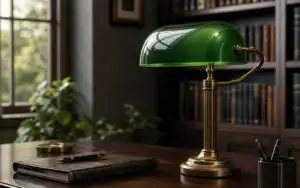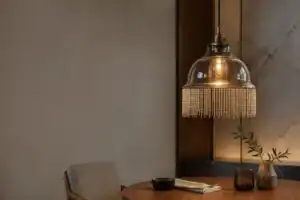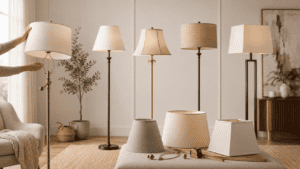
A glass lamp shade with beaded fringe combines a shaped glass body with a decorative bead treatment around the rim. Choose or specify it by the glass profile, fitter opening, total height, fringe length, bead material, attachment method and fixture clearance, not by the photograph alone.
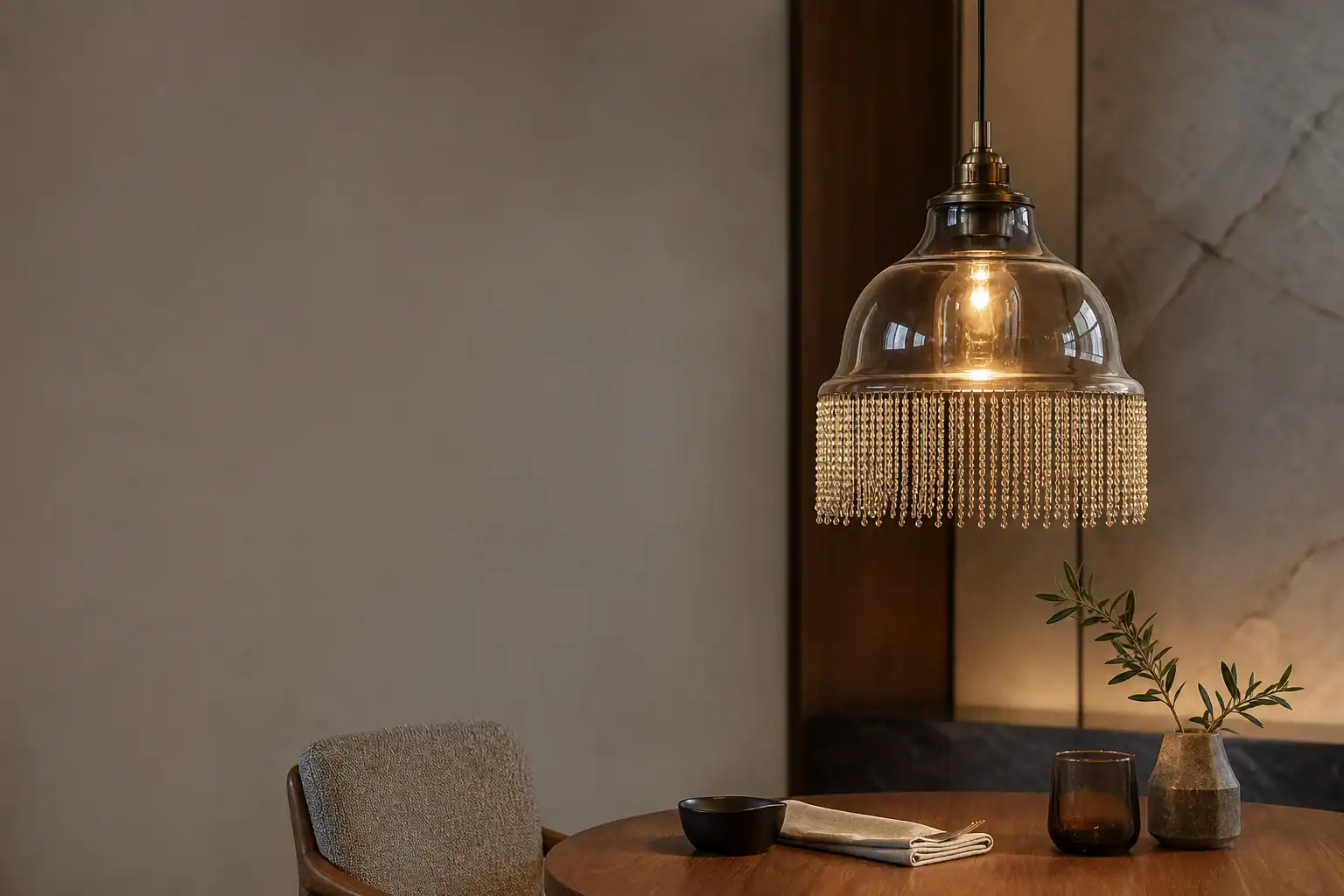
The fringe is what catches the eye first. The glass body is what decides whether the shade works.
That distinction matters when a buyer is replacing a vintage shade, developing a decorative pendant or ordering a repeat program for a lighting brand. A similar photograph may show a different neck, a different rim, a different bead material or a different support method. Those small changes can affect fit, weight, light output and the way the finished fixture is handled.
This guide looks at the shade as two connected specifications: the glass body and the decorative fringe. It covers visual directions, finishes, fitter checks, measurements, sample approval and the information a supplier needs for a useful quote.
What is a glass lamp shade with beaded fringe?
A glass lamp shade with beaded fringe is a rigid glass shade with a decorative row or series of bead strands attached around its lower rim or another defined edge. The glass may be clear, frosted, opal, colored, seeded or ribbed. The fringe may be short and orderly, long and fluid, dense, sparse, single-color or patterned.
The phrase describes a design treatment, not one standard product. It does not tell you the shade shape, fitter, glass thickness, bead material or installation method.
Separate the specification into four parts:
- Glass body: profile, height, maximum diameter, wall or edge detail and finish.
- Fitter: opening, neck, lip, groove, thread or other surface that meets the fixture.
- Fringe: bead material, strand length, density, color, pattern and carrier.
- Fixture: holder, ring, bulb, orientation, clearance and support method.
The JX Lampshade shape glossary helps with broader glass profile terms. This article stays with the beaded rim treatment because a plain bell, globe or cylinder can each carry a different fringe brief.
Glass shade versus fabric shade with fringe
The word “fringe” appears in both glass and fabric lamp shade listings. A fabric shade normally uses a frame, covering and trim. A glass shade has a rigid body, an edge and a mechanical connection to the fixture. The same decorative idea therefore creates different ordering questions.
For glass, confirm how the fringe is supported and how its weight is transferred. A supplier should know whether the trim is part of the shade assembly, held by a carrier, or supplied as a separate component for a fixture maker to install.
Why glass and beads produce a different light effect
The glass body controls the main view of the bulb and the broad direction of the light. The beads add small points of reflection, movement and shadow near the edge. A clear shade with a light fringe can keep the bulb visible. A frosted or opal shade with a denser fringe creates a quieter, softer appearance.
The result depends on the complete fixture. Bulb shape, wattage, socket position, shade orientation and room surfaces all change what a person sees. Treat the table below as a design starting point, not a promise of a fixed photometric result.
| Design variable | What it changes | Question for the buyer |
|---|---|---|
| Glass clarity or finish | Bulb visibility and the broad light pattern | Is the fixture decorative, ambient or task-oriented? |
| Bead material | Weight, reflection and the visual character of the fringe | Is the trim glass, crystal-like, acrylic or another specified material? |
| Strand density | Edge coverage and the shadow pattern on nearby surfaces | How much open space should remain between strands? |
| Fringe drop | Overall silhouette and clearance below the rim | Will the fringe approach a table, wall or hand reach? |
| Color relationship | Whether the trim blends with or contrasts against the glass | Should the finish be matched to a sample, metalwork or room palette? |
The glass and the fringe should be reviewed together. A trim that looks balanced on a small sample may appear too heavy on a large shade. A dark bead color may disappear against smoke glass but stand out against opal glass. The installed view is worth checking before a repeat order.
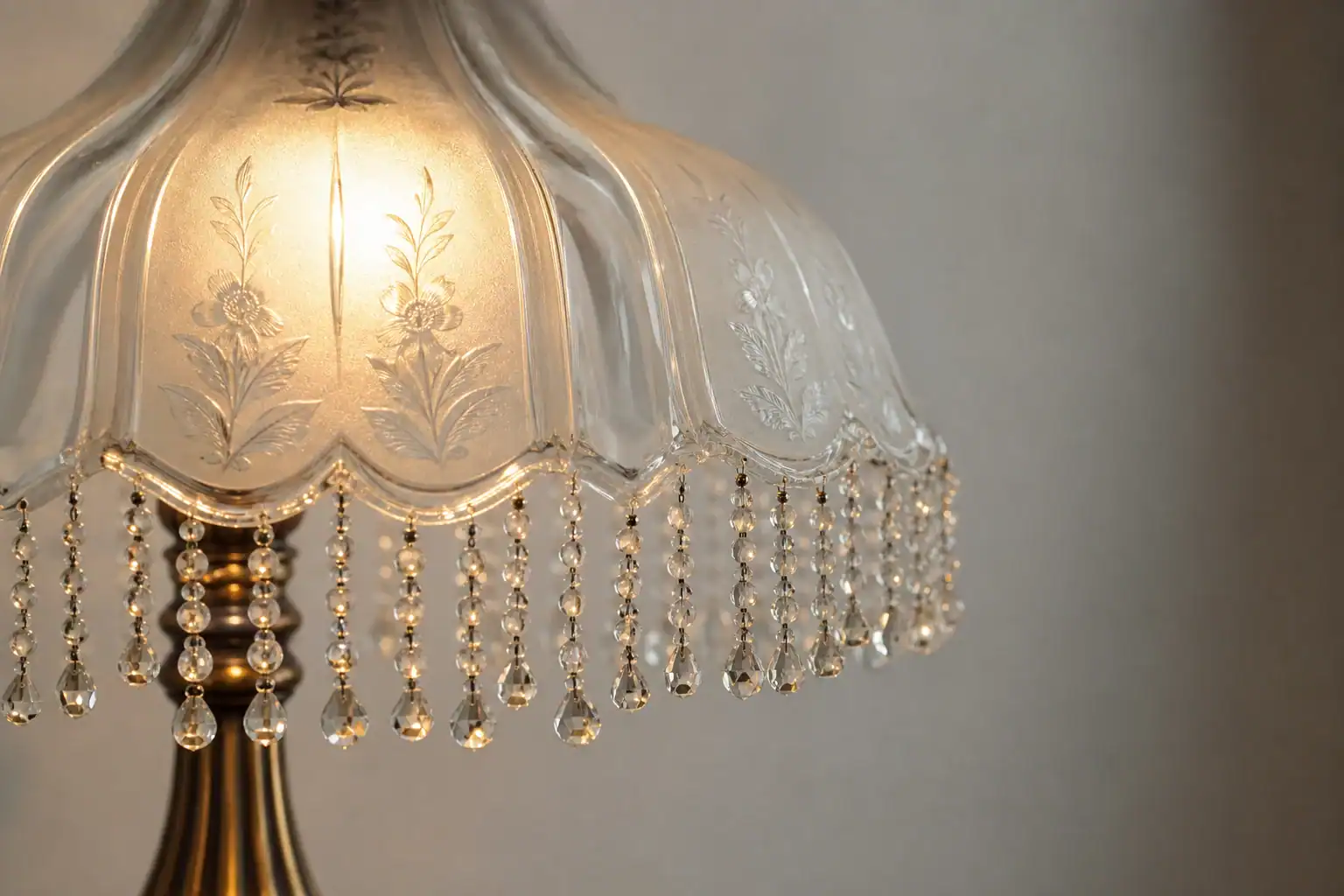
Twelve design directions for a beaded fringe glass shade
Beaded fringe is broad enough to support several design languages. The list below is organized by the treatment, finish and use case. It is not a second general shapes glossary.
1. Clear glass with crystal-look drops
Clear glass keeps the bulb and internal hardware visible. A bright, carefully spaced fringe can add sparkle without covering the profile. This direction suits decorative pendants and small accent lamps. Confirm the bead material and support method because a clear body exposes uneven attachment points.
2. Frosted boudoir glass with a short fringe
A compact frosted shade paired with a short fringe gives the edge detail without making the fixture visually busy. It works well for bedside, vanity and hospitality applications where the shade is viewed at close range. Ask for a finish sample under the actual lamp source because frosting can vary from a light satin effect to a much denser surface.
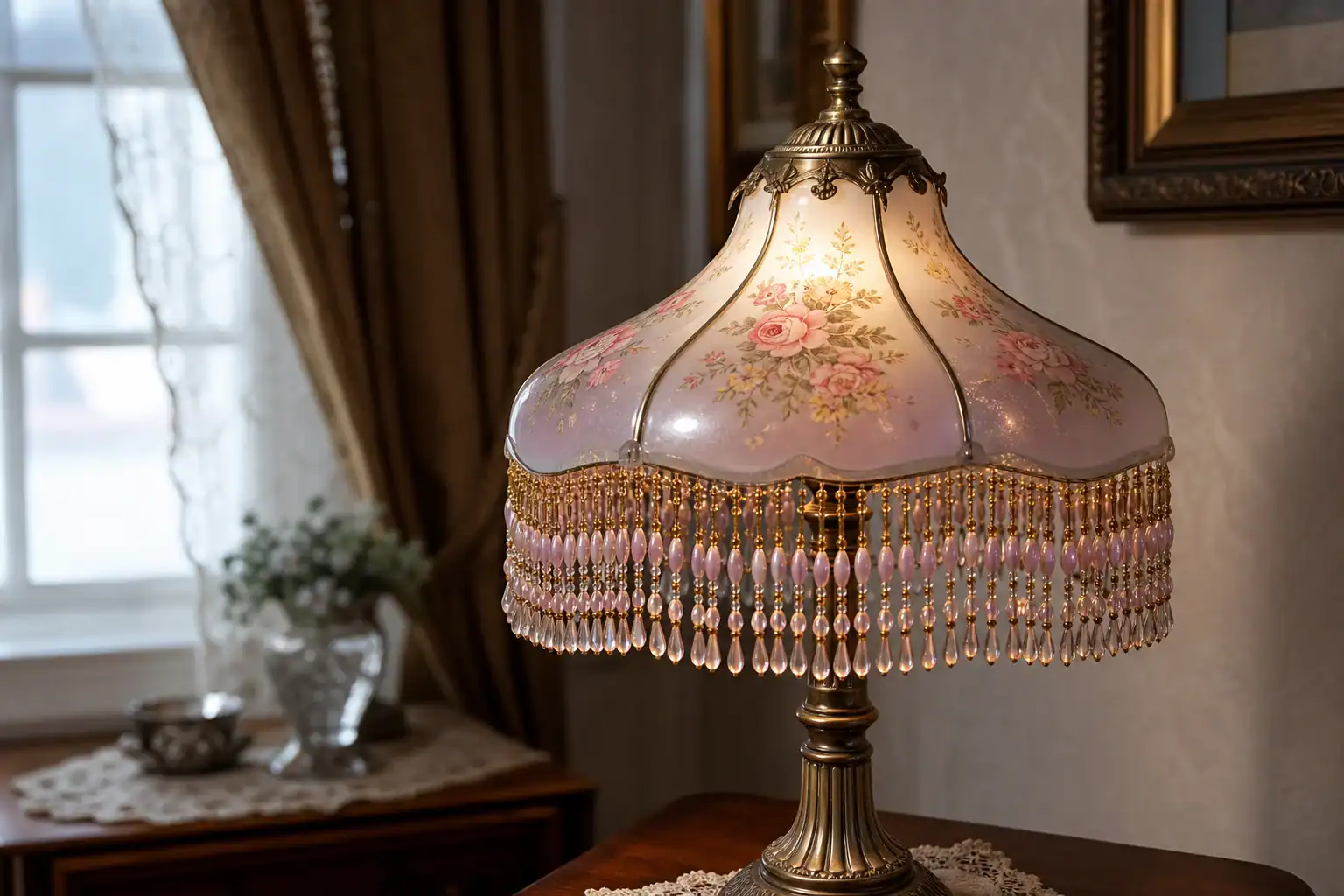
3. Victorian floral glass with layered beads
Floral relief, painted detail or colored glass can support a period-inspired design. Layered strands make the lower edge more decorative, but they also need a clear installation and cleaning plan. Photograph the rim and the carrier in the approval sample so the repeat pieces do not lose the intended proportion.
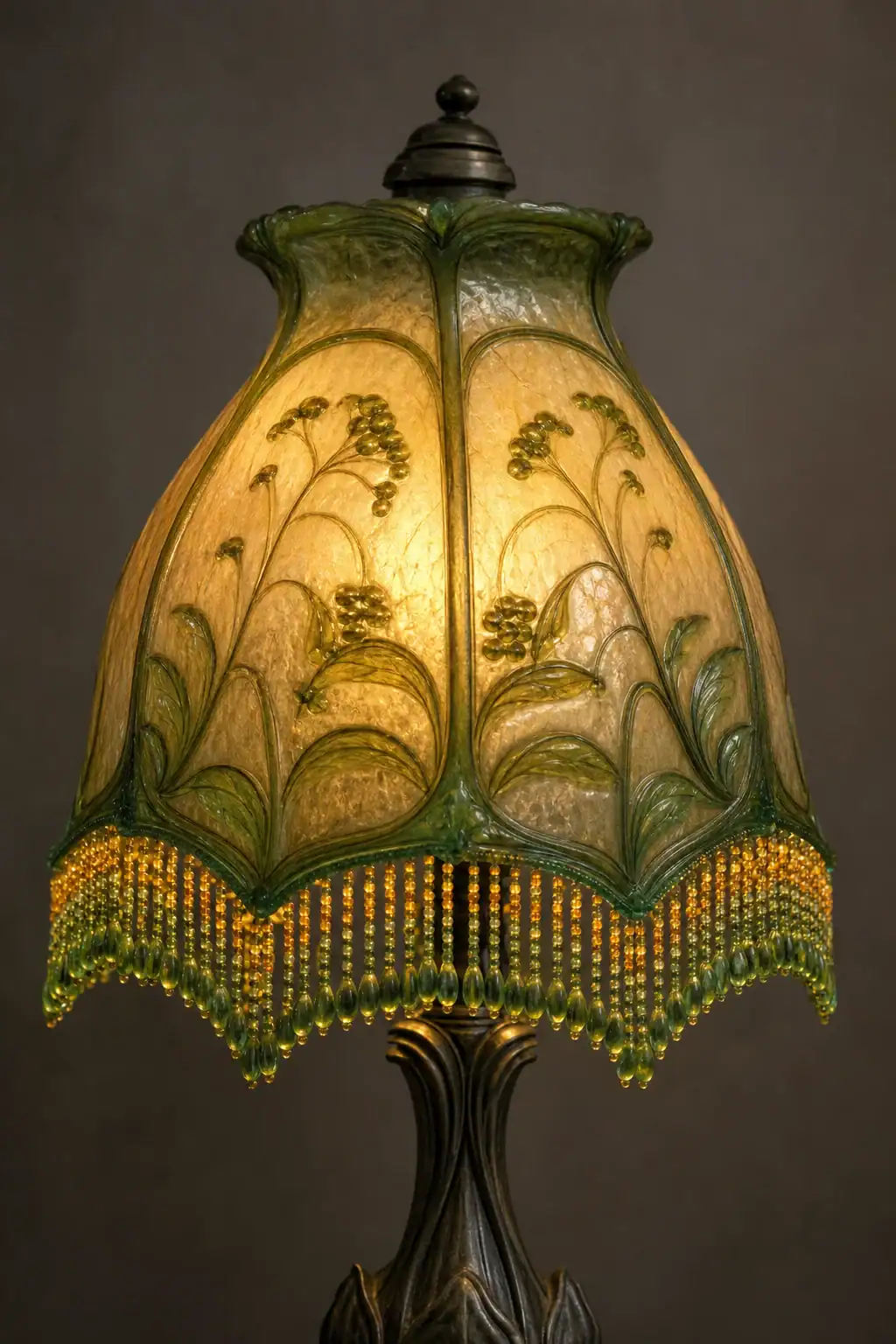
4. Art Nouveau botanical detail
Organic curves, muted green or amber glass and a flowing fringe create a softer historical reference. Keep the bead rhythm controlled when the glass already has a strong pattern. For a broader style reference, see Art Deco Glass Lamp Shades, but do not use an Art Deco label when the actual design is botanical or asymmetrical.
5. Art Deco geometry with a compact bead edge
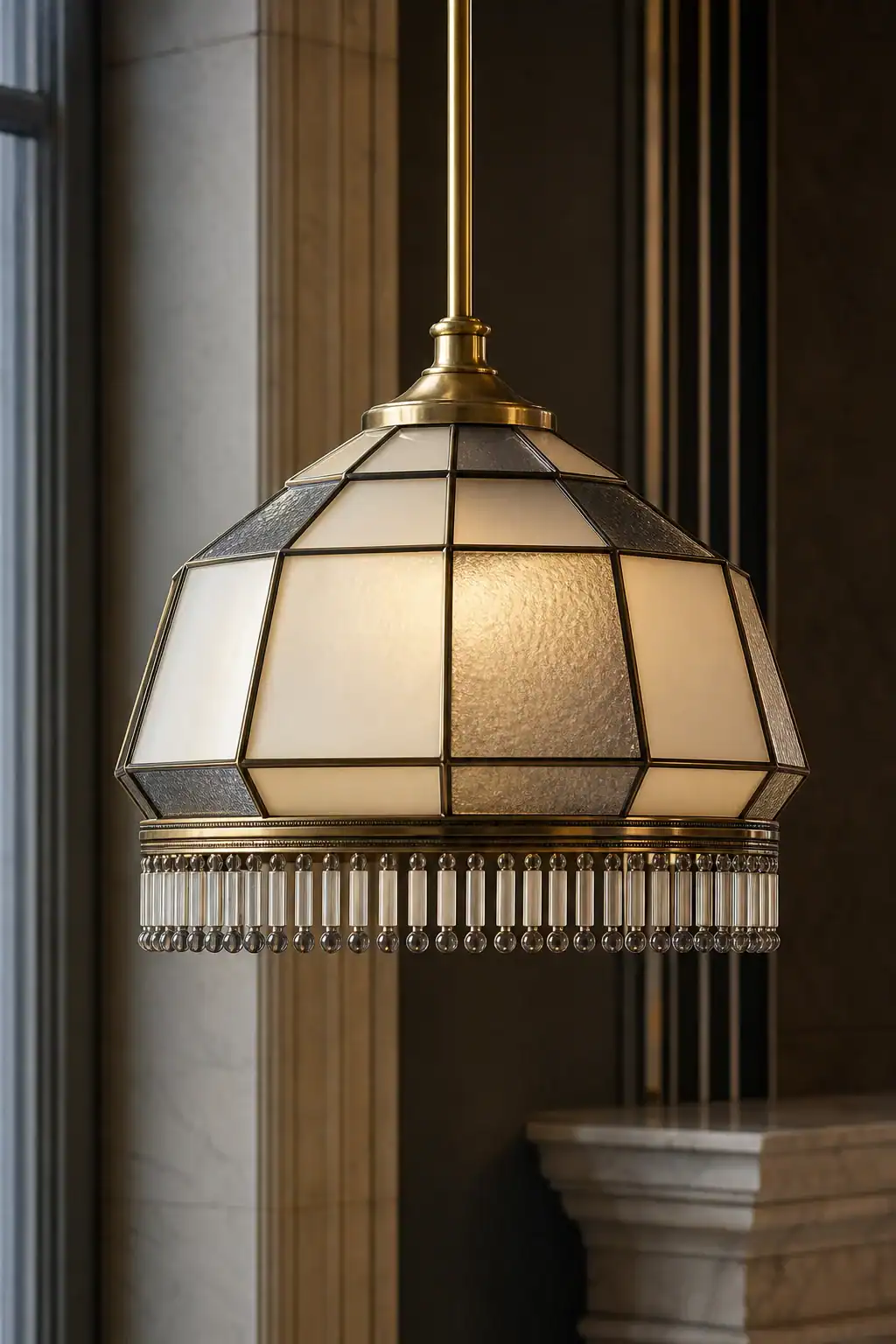
Geometric glass, a clean shoulder and a short row of repeated beads can make the fringe look architectural rather than ornamental. Strong symmetry matters here. The production drawing should show the bead spacing and the relationship between the glass pattern and the rim.
6. Amber glass with warm-toned beads
Amber glass changes the shade even before the lamp is switched on. Warm beads can extend that color, while clear or pale beads create more contrast. Approve the glass and bead colors together. A color that appears close in a catalog image may shift under warm white LEDs.
7. Smoke glass with a dark neutral fringe
Smoke glass and dark beads give a stronger outline and a more restrained palette. This can suit contemporary interiors, but it may reduce the visual brightness of a small fixture. Confirm how much light the complete fixture needs before choosing a dense or dark treatment.
8. Opal glass with a soft contrasting edge
Opal glass hides much of the bulb and creates a calm background for a contrasting fringe. A narrow band of color can be enough when the shade is used in a group. Check opacity and color consistency across the sample set, especially if the shades will be installed side by side.
9. Ribbed glass with repeated bead rhythm
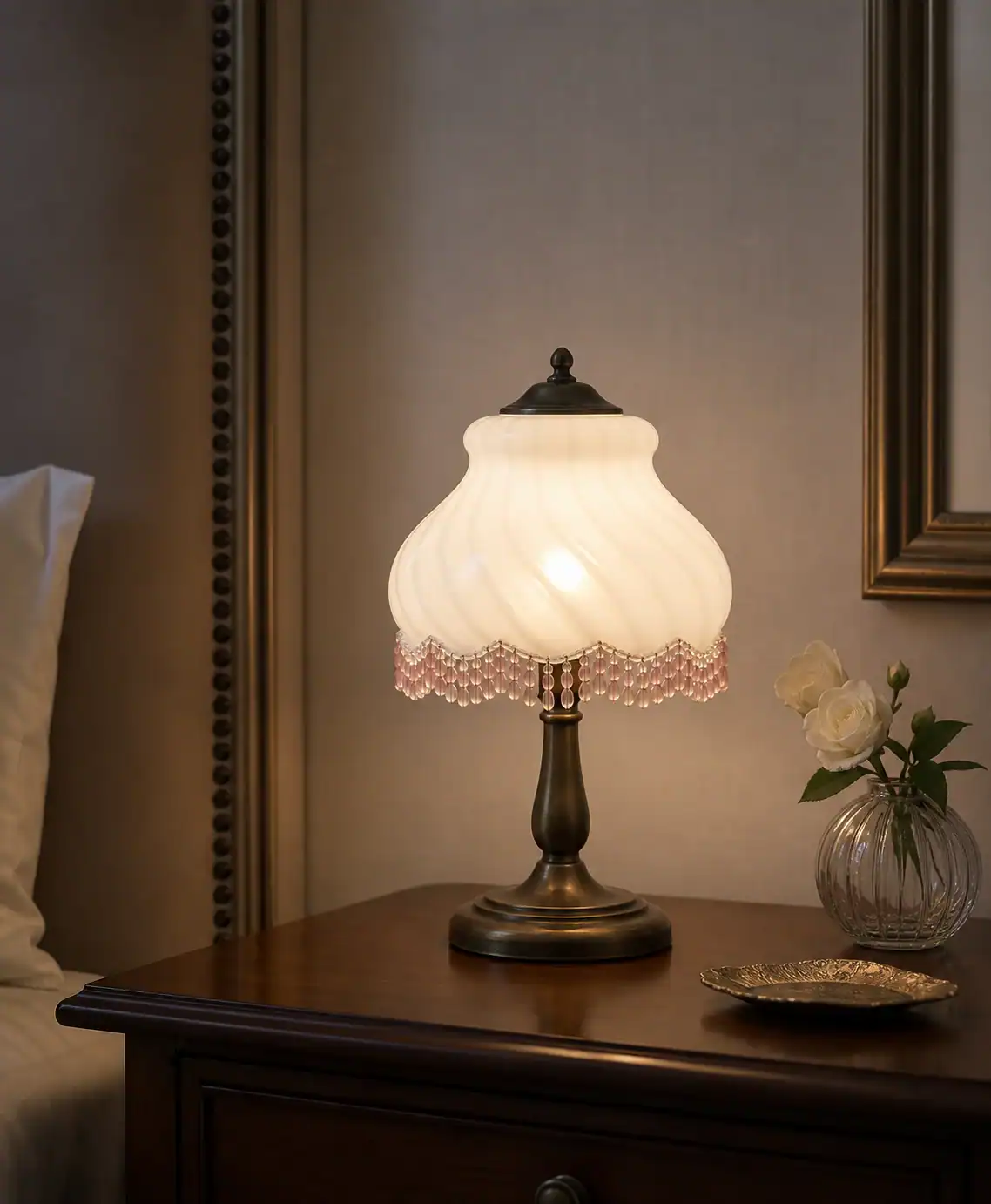
Ribs already create vertical repetition. A fringe with matching spacing can continue that rhythm at the lower rim. The design looks orderly when the rib pitch and bead spacing relate to each other. A sample should be viewed from a distance as well as close up, because the pattern changes with scale.
10. Seeded glass with irregular handmade character
Seeded glass introduces texture inside the body, while the fringe adds movement outside it. This combination can work for vintage-inspired pendants and hospitality interiors that want a less uniform appearance. Decide in advance how much variation is acceptable in the seeds, bead spacing and glass surface.
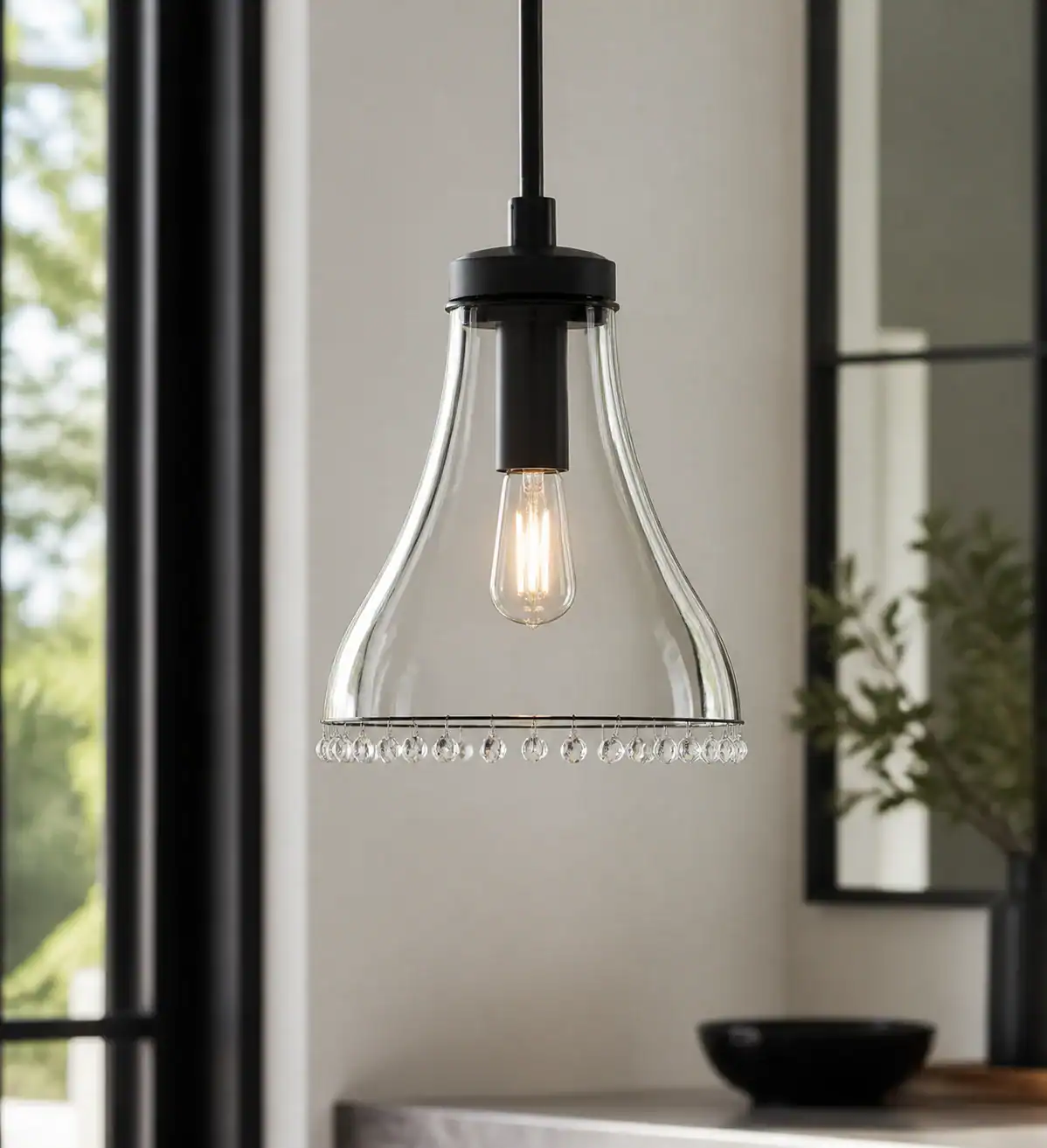
11. Minimal clear shade with a single short row
The fringe does not have to be long or elaborate. A single short row under a clean glass profile gives a small decorative signal without dominating the fixture. This direction is easier to coordinate across a collection because the glass body remains the main form.
12. Hospitality or brand-specific color matching
A hotel, restaurant or lighting brand may need the glass, bead color, metal finish and room palette to work as one collection. In that case, treat the fringe as part of the product language rather than an afterthought. Send a color reference, sample image or physical component with the drawing, then approve the first sample in the intended environment.
Glass finish and bead material: specify both
Finish names are useful for starting a conversation, but they do not fully describe a production part. “Frosted” can describe different surface treatments. “Amber” can refer to a transparent color, a translucent body or a coating. Bead descriptions also need a material, color, shape and size reference.
| Glass finish | Visual effect | Fringe direction that often suits it | Approval check |
|---|---|---|---|
| Clear | Shows the bulb and internal structure | Pale, metallic or contrasting bead detail | Edge quality, transparency and visible attachment |
| Seeded | Adds small internal texture | Simple repeated strands that do not compete with the seeds | Seed distribution and variation limit |
| Opal | Creates a milky, more diffuse body | Contrasting color or a soft tonal fringe | Opacity, color and surface uniformity |
| Frosted | Softens reflections and the bulb view | Short, light or tonal fringe | Frost depth, touch marks and cleaning method |
| Amber | Adds warmth and color | Warm beads or a restrained clear contrast | Color under the intended lamp source |
| Smoke | Adds depth and a darker outline | Clear, pale or dark neutral beads | Brightness, color density and edge visibility |
| Ribbed | Creates repeated vertical lines | Fringe with compatible spacing or a simple row | Rib pitch, alignment and surface defects |
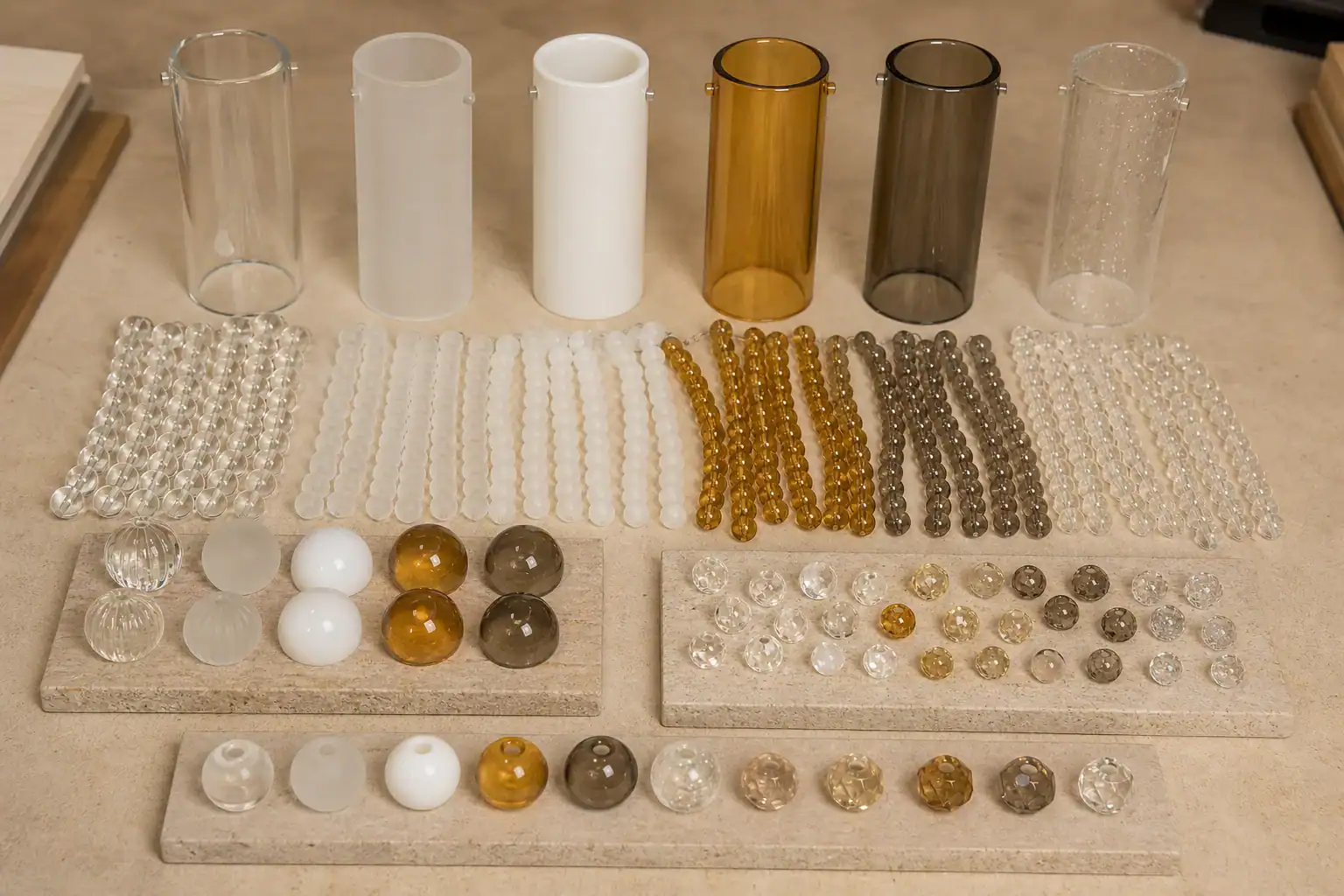
Common bead options include glass, crystal-like glass, acrylic and other decorative materials. The choice affects the perceived sparkle, assembly weight, cost direction and care requirements. The supplier should confirm the actual material rather than relying on a category name.
For a repeat program, save the approved glass sample and fringe sample together. Store the color reference, strand length, bead spacing and acceptable variation in the same approval record. That prevents the glass and trim from drifting in different directions on later orders.
Fitter, rim and weight: compatibility checks that matter
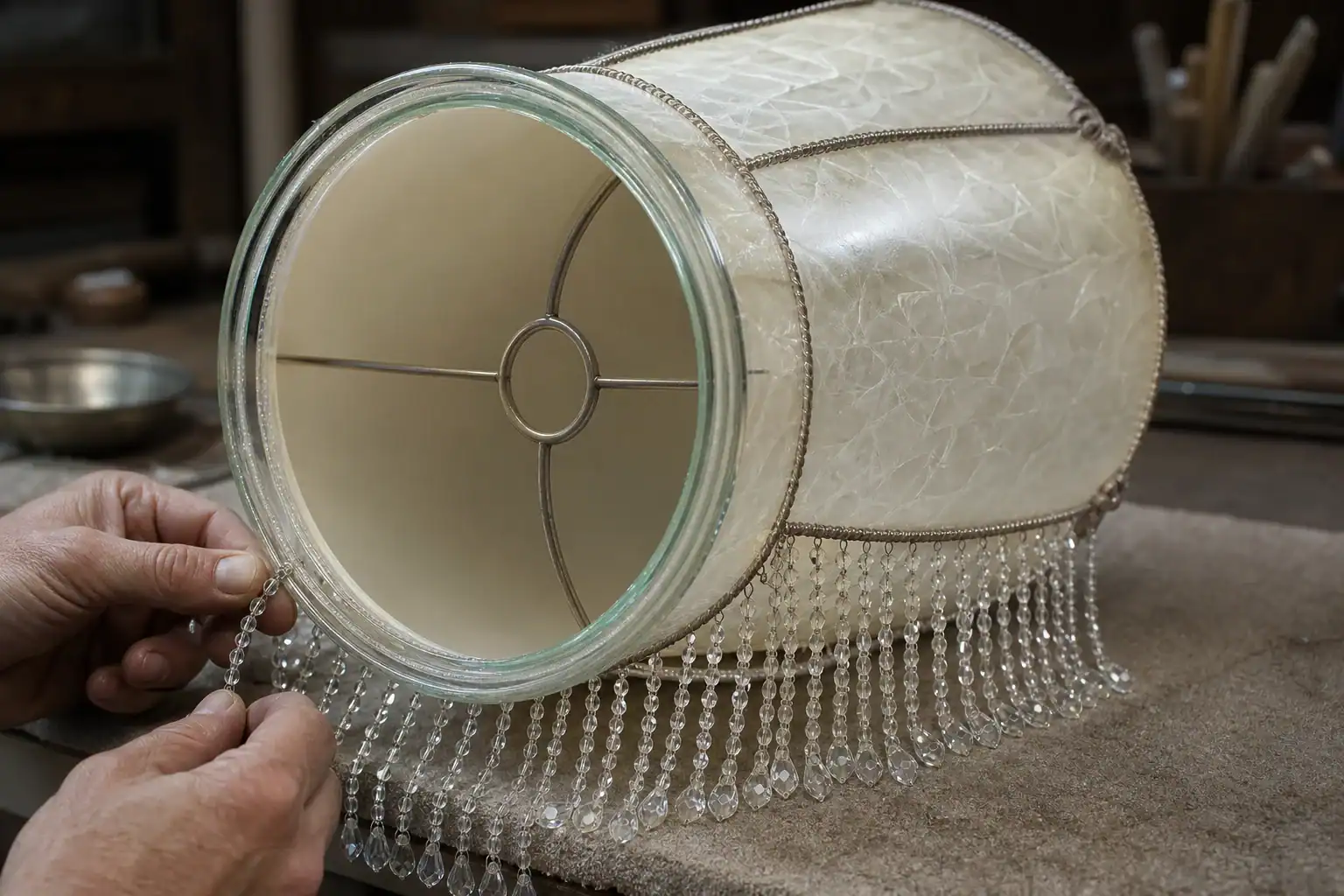
The fitter is the part of the glass that meets the lamp hardware. The fringe is a separate load and clearance question. A shade can have the correct opening and still need a different support review once the trim is added.
The JX lamp shade fitter guide explains the main attachment terms. For a beaded fringe shade, add these questions to the normal fitter check:
- Where does the glass actually sit on the ring, holder or adapter?
- Does the fringe attach to the glass edge, a carrier strip or another component?
- Does the support method keep the decorative trim away from the bulb and hot surfaces?
- What is the total assembly weight compared with the original plain shade?
- Will the fringe touch a wall, table, socket or cleaning tool in the installed position?
- Can the shade be removed without pulling on the bead strands?
Ring-held and set-screw fittings need different reference dimensions. A ring-held shade may depend on a lip or seating surface. A set-screw shade needs a neck that gives the screws enough contact without forcing pressure onto a fragile edge. A fixture-specific adapter may require a drawing or physical sample.
Do not assume that a larger decorative rim can use the same holder as a smaller plain shade. Confirm the glass opening, support surface, attachment hardware and complete fixture envelope as one assembly.
What to measure before buying or developing one
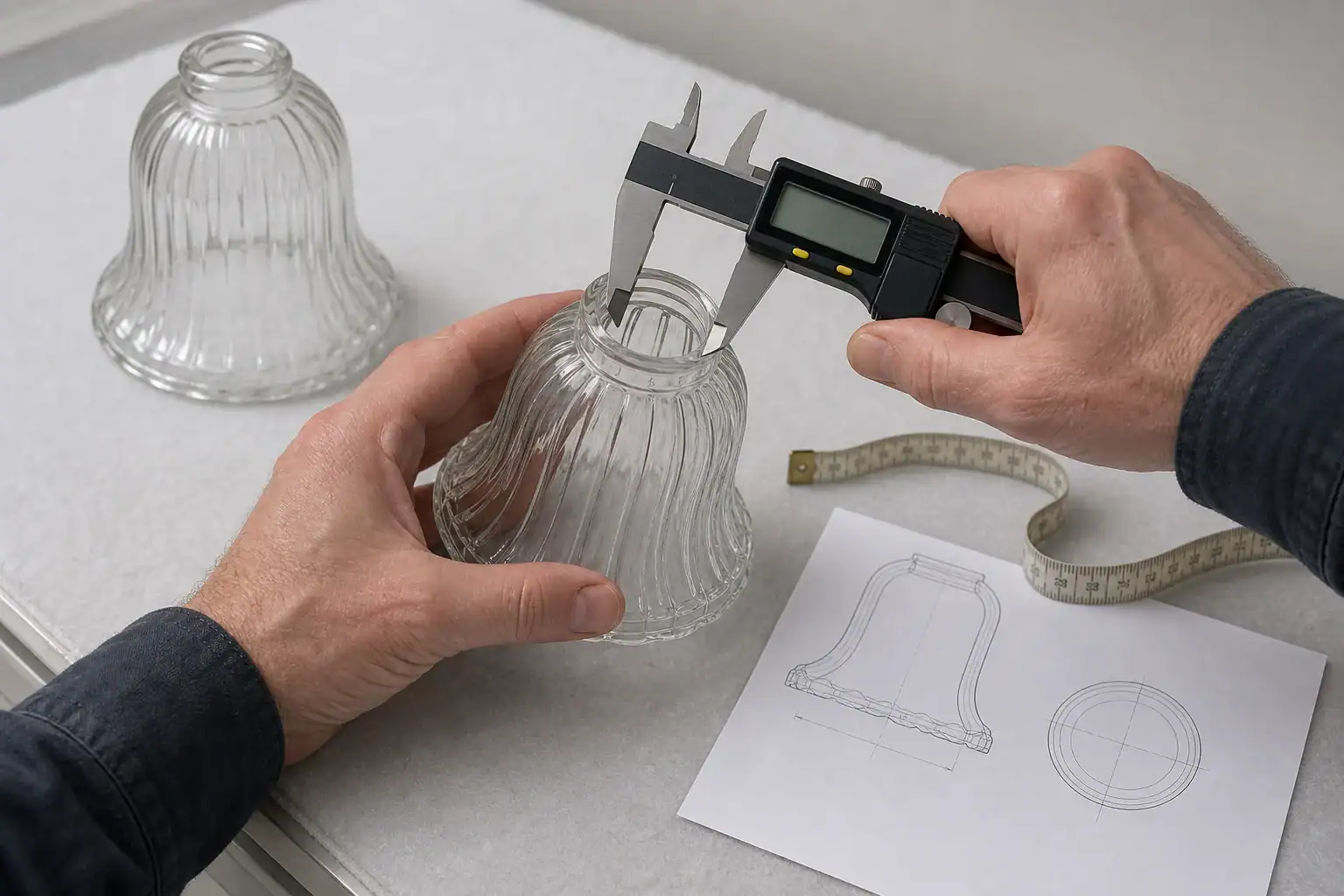
Measure the fixture and the shade together when possible. A product photo can show the style, but it cannot show every surface that controls the fit.
Seven fields for a useful measurement record
- Fitter or opening diameter: Record the inside diameter at the actual seating point and the relevant outside diameter.
- Neck height: Measure from the seating surface to the start of the main glass body.
- Glass-body height: Record the height without and, when relevant, with the fringe installed.
- Maximum body diameter: Note the widest point and its height from the fitter reference.
- Rim and fringe drop: Measure the rim shape, the planned bead length and the lowest point of the finished trim.
- Clearance: Record the bulb-to-glass, fringe-to-surface and wall-to-shade space in the actual fixture.
- Reference material: Add front, side, underside and close-up photographs, plus a sample or drawing if available.
The JX lamp shade sizes guide covers the broader measurement process. This article adds the fields that matter when the decorative fringe changes the lower edge and overall assembly height.
A simple measurement table
| Record | Measure or describe | Why it is needed |
|---|---|---|
| Opening | Inside diameter, shape and seating depth | Confirms the connection |
| Neck | Outside diameter, height, lip or groove | Confirms ring or screw contact |
| Body | Overall height, maximum diameter and shoulder position | Matches the visible profile |
| Rim | Diameter, edge shape and finish | Controls the glass-to-fringe interface |
| Fringe | Material, length, density, color and carrier | Controls the finished silhouette |
| Fixture | Holder, bulb, orientation and nearby surfaces | Checks clearance and support |
When an original shade is broken, photograph the holder and remaining hardware before disposal. A curved fragment can help identify the body, but the fitting often provides the most reliable starting point for a replacement review.
Replacement, design sample or repeat OEM: choose the sourcing route
The right route depends on what is already known.
| Requirement | Best starting route | Information to send |
|---|---|---|
| One broken or discontinued shade | Replacement match | Holder photos, original sample if available, measurements, finish and quantity |
| New decorative profile | Design sample | Sketch or CAD, target glass, fringe brief, application and sample requirements |
| Repeat lighting collection | OEM production review | Approved sample, drawing, color references, inspection points, packing and destination |
For a replacement, begin with the fitter and profile. For a new design, decide whether the glass or the fringe is the main visual feature. For a repeat collection, record the approved relation between the two. The same glass body can look like a different product when the bead length or density changes.
The JX OEM glass lamp shade page for lighting brands is the appropriate commercial destination for brand and project buyers. Send a drawing, a sample or clear photos before assuming that an existing stock shape can accept a different rim or fringe.
Information to include in a quote request
Send one organized brief instead of separate messages with missing dimensions:
- side, front and underside photographs;
- fitter opening, neck and rim dimensions;
- overall height and maximum diameter;
- glass finish and color reference;
- bead material, color, strand length and density;
- fixture type, bulb information and clearance;
- first-order quantity and expected repeat demand;
- packaging, labeling and destination requirements;
- sample or inspection requirements.
This gives a manufacturer enough context to decide whether the request is a replacement match, a new sample or a repeat OEM project.
Sample approval and inspection checklist
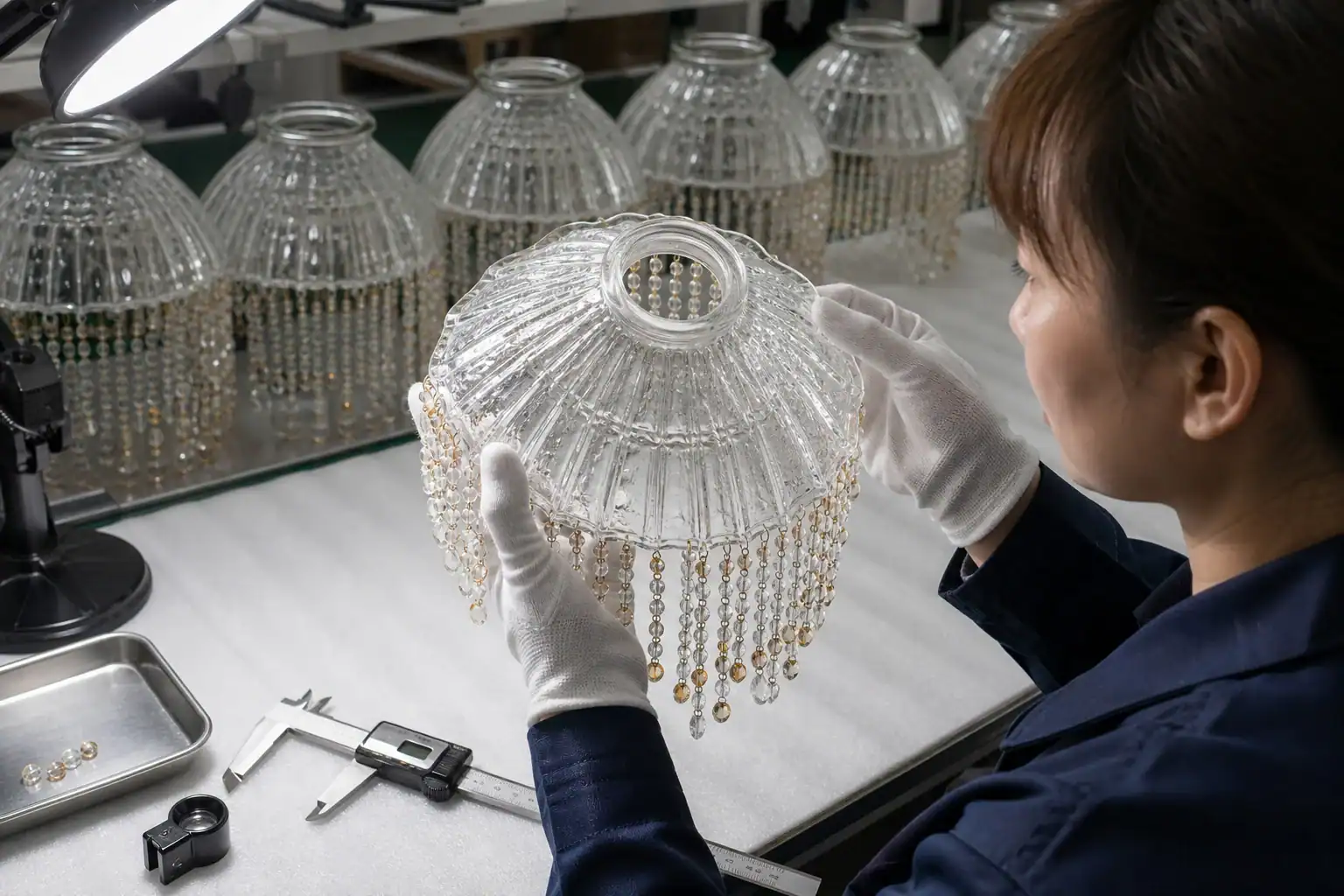
Approve the glass and fringe as one finished assembly. Checking only the glass body can leave a buyer with the right profile and the wrong visual weight.
Check the glass body
- opening, neck, lip and seating dimensions;
- overall height, maximum diameter and rim shape;
- color, opacity, frosting or seeded appearance;
- visible bubbles, scratches, chips and forming marks;
- edge condition and any contact area for the carrier or holder.
Check the fringe
- bead material and color;
- strand length and lowest point;
- density, spacing and repeat pattern;
- carrier position and attachment security;
- symmetry around the rim;
- clearance from the bulb, holder, wall and nearby surfaces.
Check the installed sample
Fit the sample to the actual ring, holder or adapter when possible. View it from standing height, from below and from the normal room distance. Switch on the intended lamp source. Note whether the bulb is too visible, the fringe is too heavy for the fixture, or the edge sits at an awkward height.
The approval record should separate dimensions from appearance preferences. A drawing may control the opening and height. A physical sample may control the acceptable amber tone, bead spacing or amount of seeded texture. Both records are useful for repeat production.
Packing considerations
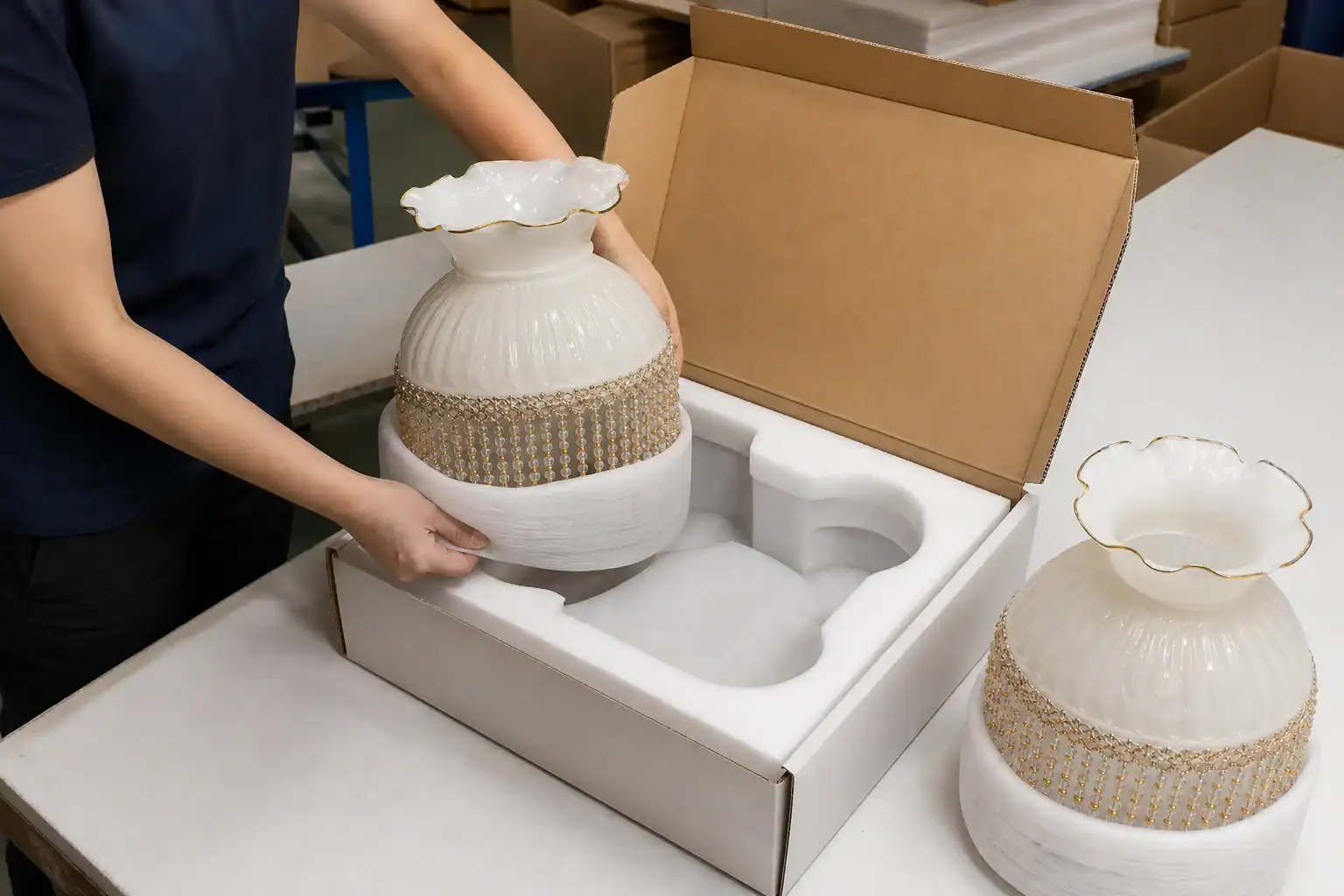
Beaded fringe adds projections that can catch on wrapping or press against neighboring glass. Ask how each shade will be separated, how the rim will be protected and how movement inside the carton will be limited. If the trim is supplied separately, ask for a clear packing and assembly instruction.
Packing is part of the product handoff. It should not change the approved fringe length, crush the strands or leave the glass edge exposed during handling.
Care and maintenance
Disconnect power before cleaning the fixture. Support the glass body rather than pulling on the fringe, especially when the trim is attached near the rim.
For light dust, use a soft dry brush or a clean microfiber cloth. A small soft brush can reach between bead strands. Do not soak an unknown fringe assembly. Moisture can affect a textile carrier, metal parts, adhesive or other attachment materials. Spray a suitable glass cleaner onto a cloth, not directly toward the socket or trim, and follow the care instructions supplied with the actual product.
If a strand loosens, stop using the fixture until the attachment has been checked. A quick repair with an untested adhesive may change the appearance or create a problem near heat. Ask the manufacturer or fixture maker for the correct repair route.
Beaded fringe glass lamp shade FAQs
What is a beaded fringe glass lamp shade?
A beaded fringe glass lamp shade has a rigid glass body and a decorative row or group of bead strands around its rim or another defined edge. The glass profile, fitter and fringe are separate specifications and should be reviewed together.
Does the fringe reduce the amount of light?
It can change the apparent light output near the edge, especially when the fringe is dense, dark or long. The glass finish, bulb, fixture orientation and room surfaces also matter. Test the finished assembly when the light level is important.
Are glass beads heavier than acrylic beads?
The answer depends on the bead size, strand length, density and carrier. Glass or crystal-like beads may add more weight, but a lightweight material can still become substantial when many strands are used. Ask for the finished assembly information rather than comparing material names alone.
Can a beaded fringe be added to an existing glass shade?
Sometimes, but the edge, attachment method, total weight and heat environment need review first. Do not drill, glue or clamp a glass shade without confirming that the method suits the glass and the complete fixture. A manufacturer can advise whether the fringe should be integrated into a new sample or supplied as a separate trim.
How do I measure the fitter opening?
Measure the inside diameter at the surface where the shade enters or seats in the holder. Record the neck outside diameter, neck height, lip or groove and attachment method as well. Take several readings and photograph the reference surfaces.
Can the glass be clear, opal, amber or smoke?
Those finishes are common design directions, but the available result depends on the glass, forming method, size and finish process. Approve a physical sample when opacity, tint or seeded texture must match a collection.
Can a manufacturer make the shade from a drawing or sample?
A manufacturer can review a drawing, sample or damaged part and advise on the glass body, fringe treatment, forming route and sample process. The request should include the fitter, dimensions, finish, bead brief, quantity and application.
What should I include in a quote request?
Include photographs or a drawing, opening and profile measurements, glass finish, bead material and color, strand length and density, fixture type, bulb information, quantity, packing needs and destination. An original sample or holder photo is useful for replacement work.
Send the fitter, profile and fringe brief
A decorative fringe works when the glass body, connection and trim are specified as one product. Send the supplier the dimensions that control the fit, the finish that controls the light and the fringe details that control the final silhouette.
Use the JX custom glass lampshade services to request a technical review. Include a drawing or sample photos, measured fitter opening, profile dimensions, glass finish, bead material, quantity and fixture application.
Request a Custom Quote or Send Your Drawing for Review.