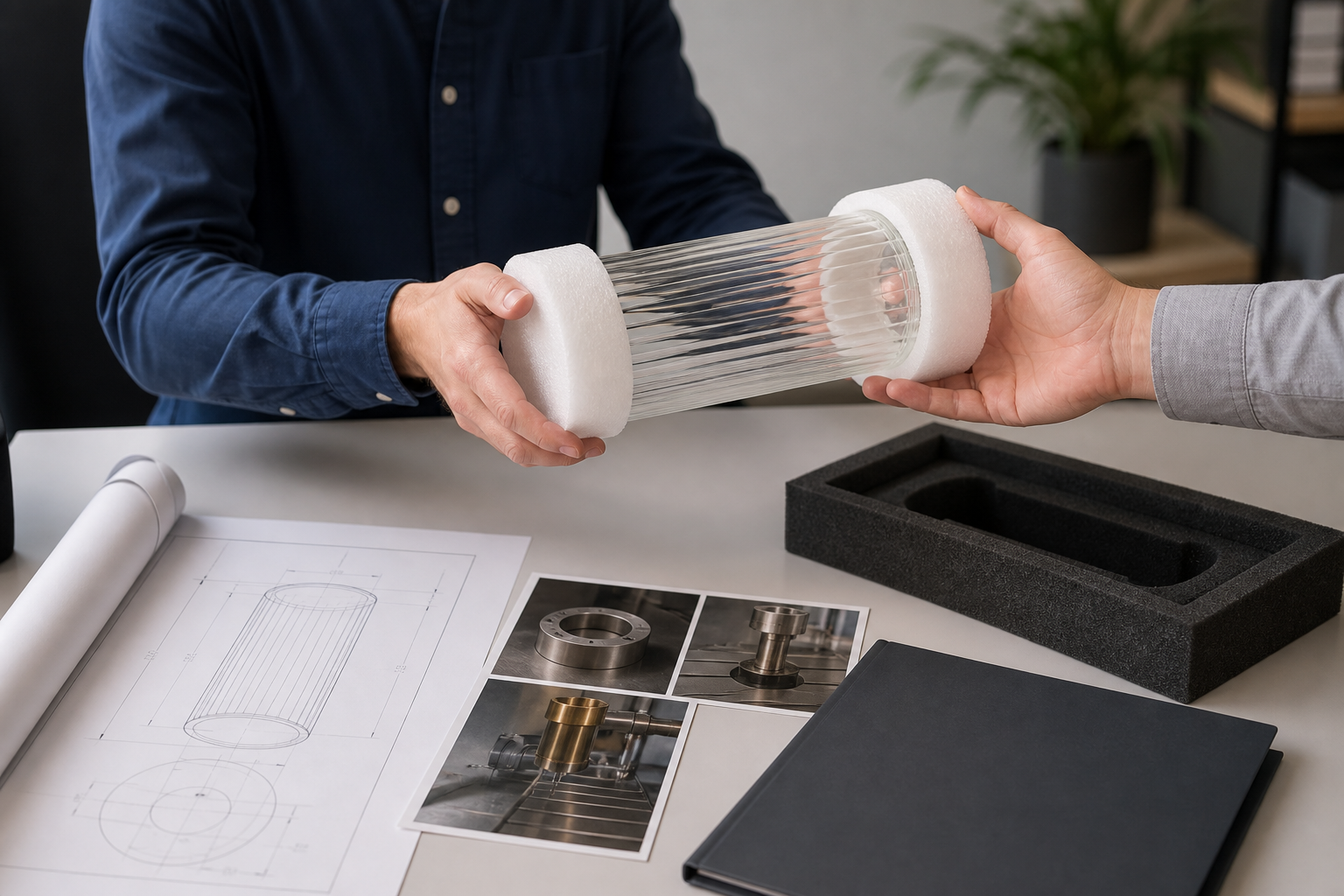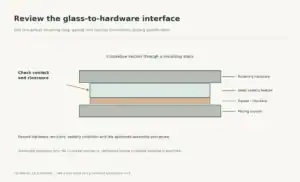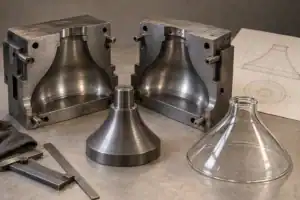
A cylindrical glass lamp shade should be specified by the fixture interface first, then by the visible cylinder. Confirm the opening, fitter or retaining method, height, outer diameter, glass process, finish, quantity and packing before comparing prices. A shade can look like the right cylinder and still fail because the neck, lip, clearance or wall thickness does not match the assembly.
This guide is written for lighting brands, distributors, hospitality buyers, restoration suppliers and project teams. It treats the cylindrical shade as a production component, not as a generic decoration. The goal is a quote that can be sampled, approved and reordered.
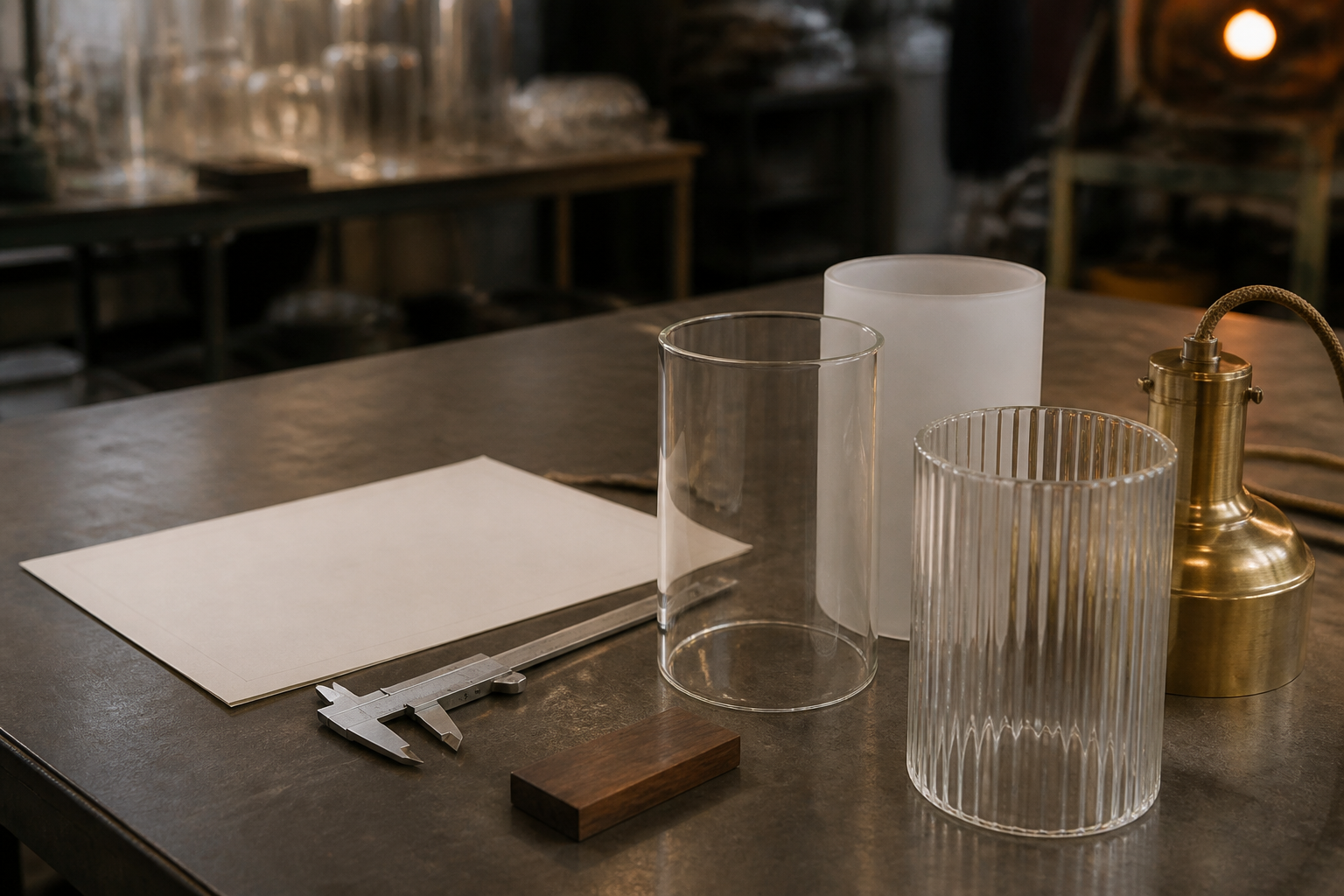
The short answer: specify the interface before the cylinder
Start the RFQ with one line for each cylindrical shade SKU or fixture position. Put the connection information before the style description. A supplier can usually understand "clear cylinder" in seconds, but cannot price a usable replacement or OEM part from that phrase alone.
| Field | What to send | Why it controls the quote |
|---|---|---|
| Fixture identity | Fixture photo, model, application and position | A cylinder for a pendant may use a different retention method from a wall or table fixture |
| Interface | Opening, neck, lip, gallery, thread, ring, clip or set screw details | The interface decides whether the glass seats and stays in place |
| Dimensions | Fitter opening, height, maximum diameter, wall thickness and clearances | Visible size is not enough to produce a fitting part |
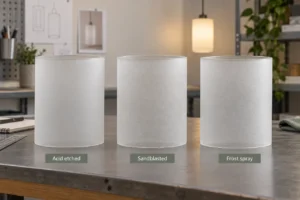
| Glass direction | Clear, opal, frosted, ribbed, seeded, tinted or etched | The finish changes light transmission, surface appearance and approval criteria |
| Quantity | Samples, first order, annual demand and reorder estimate | The practical process, tooling and packing plan can change with volume |
| Evidence | Drawing, old shade, fixture photos, sample code and revision | It gives the supplier a reference that can be checked later |
If you have a surviving shade, keep it available until the supplier has recorded it. If it is broken, photograph the fixture, holder, rim and any large fragments before disposal. A side photo often reveals a small shoulder or retaining lip that a front photo hides.
JX's lampshade fittings guide explains the interface vocabulary in more detail. Use the terms to organize the request, but let the drawing, sample or fixture evidence decide the final fit.
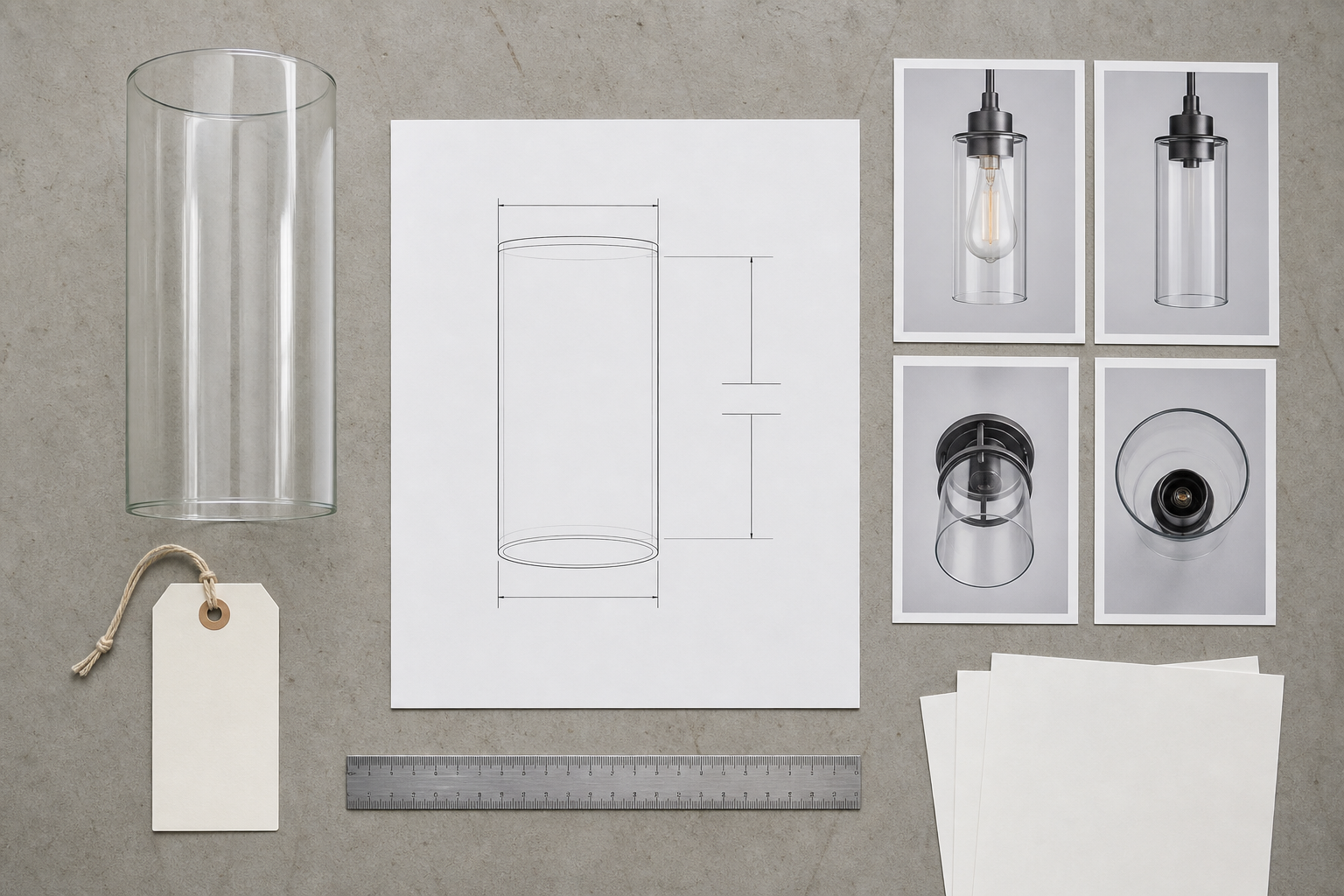
What counts as a cylindrical glass lamp shade?
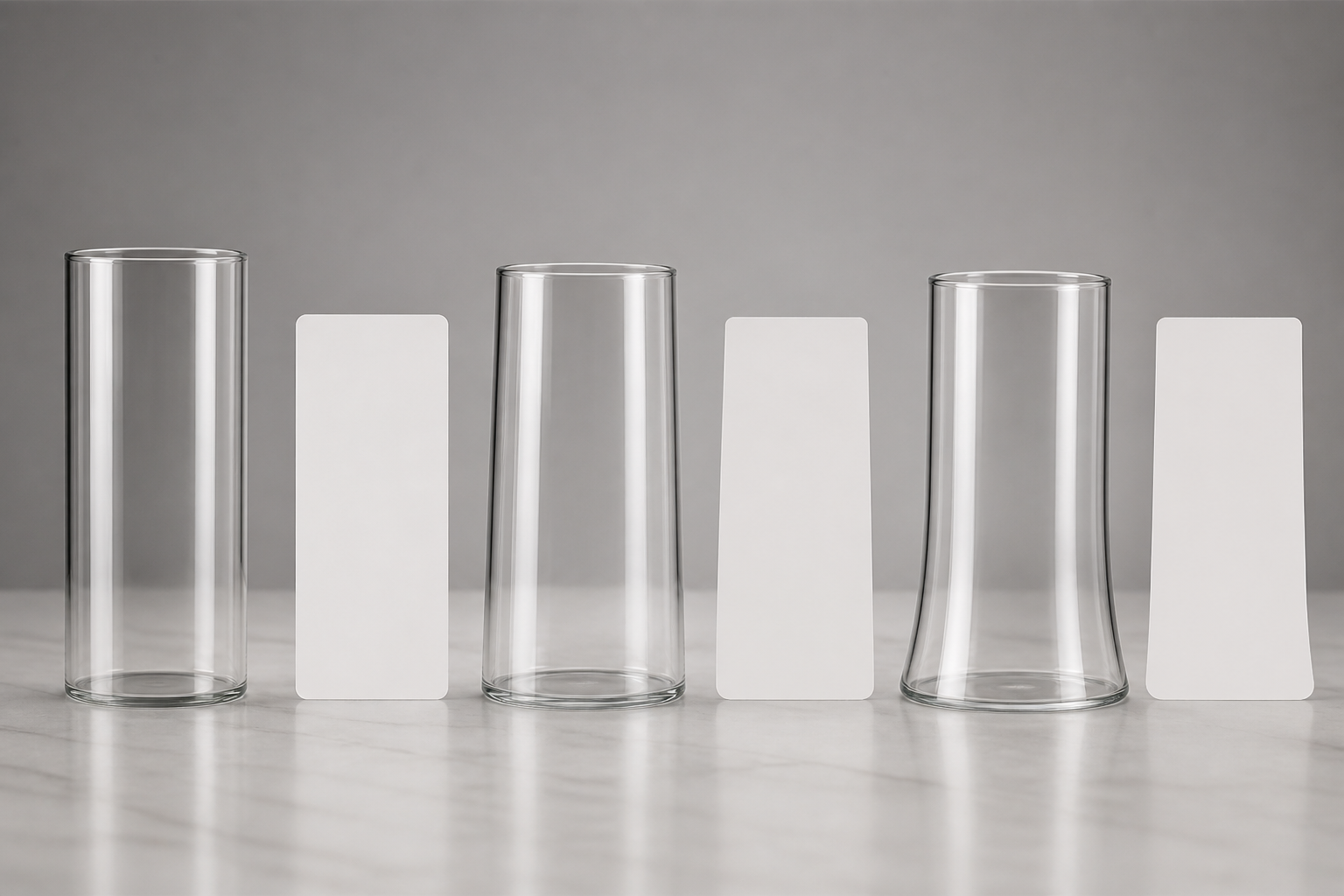
The simplest form has two roughly parallel sides and a circular section. That description still covers several useful production shapes. The difference is not just visual. It changes how the shade mounts, how the light leaves the glass and how easy it is to reproduce.
Straight cylinder
A straight cylinder keeps a similar outside diameter over most of its height. It works well when the fixture needs a vertical wall, a clean pendant outline or a repeatable cover around a lamp source. The drawing should still show whether the ends are open, rounded, beveled, ground or fire polished.
Tapered cylinder
A tapered cylinder has a smaller diameter at one end. It may still be sold as a cylinder because the body remains straight-sided, but the two end diameters need separate values. This shape is common when a designer wants a narrower neck or a controlled opening toward the fixture.
Flared or closed cylinder
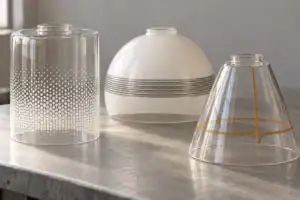
A flared end, rolled rim, domed cap or shoulder changes the part's profile even when the middle is cylindrical. These details affect mold design, trimming, polishing and packing. If the flare is part of the design, show the complete side profile instead of calling the part a standard cylinder.
The correct description for an RFQ is usually "cylindrical body plus interface and end treatment." That wording gives the buyer room to specify the part without forcing it into a catalogue shape that does not exist.
Dimensions that control fit and appearance
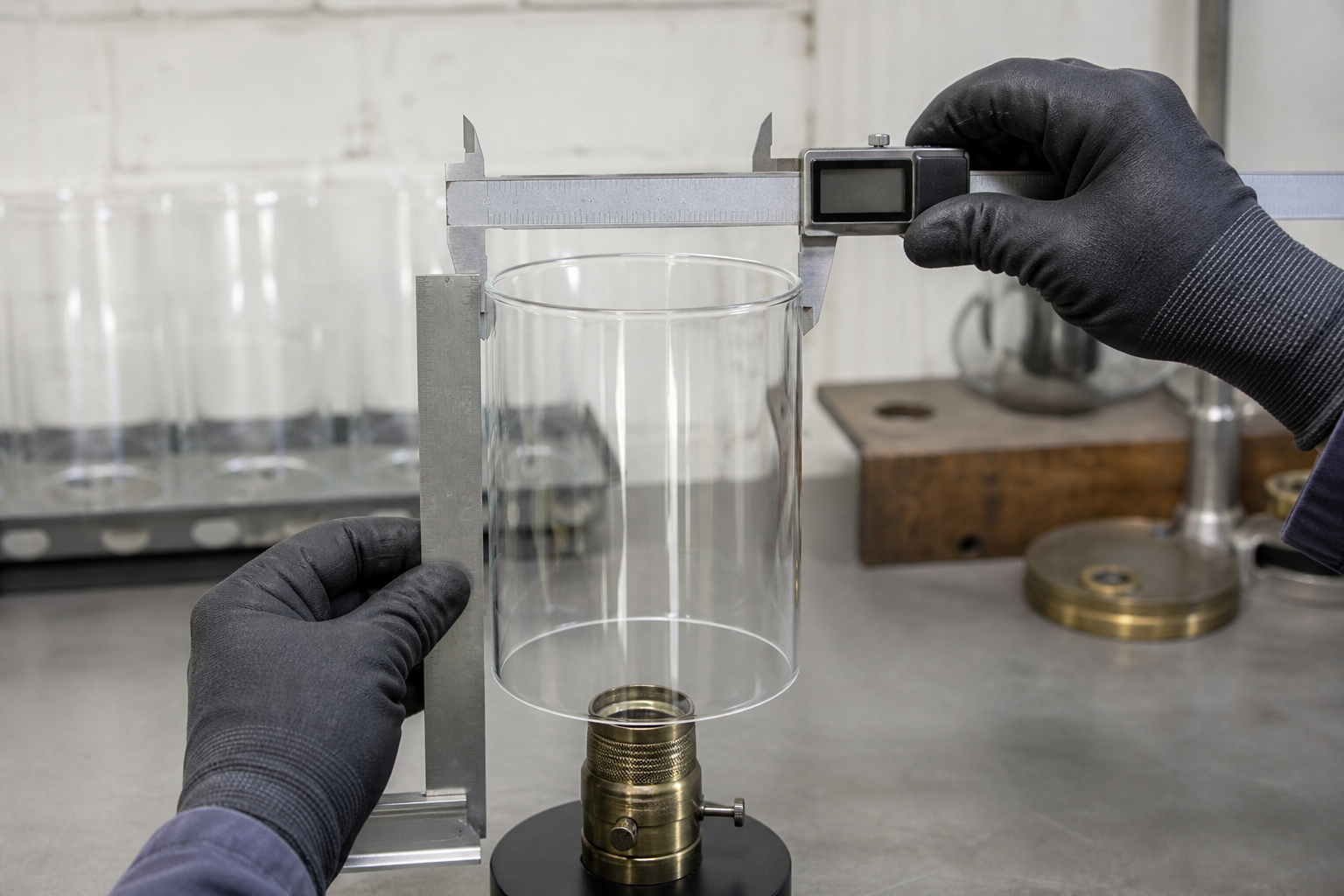
Measure the part in this order:
- Identify the holder or fitter and measure the opening that actually receives the glass.
- Record the seating surface, lip, thread, groove, gasket or retaining ring position.
- Measure the overall height from the seating reference to the opposite rim.
- Measure the maximum outside diameter and any local shoulder or flare.
- Record bulb, socket, bracket and wall clearances inside the fixture.
- Add wall thickness, edge treatment and tolerance requirements when the buyer has a controlled drawing.
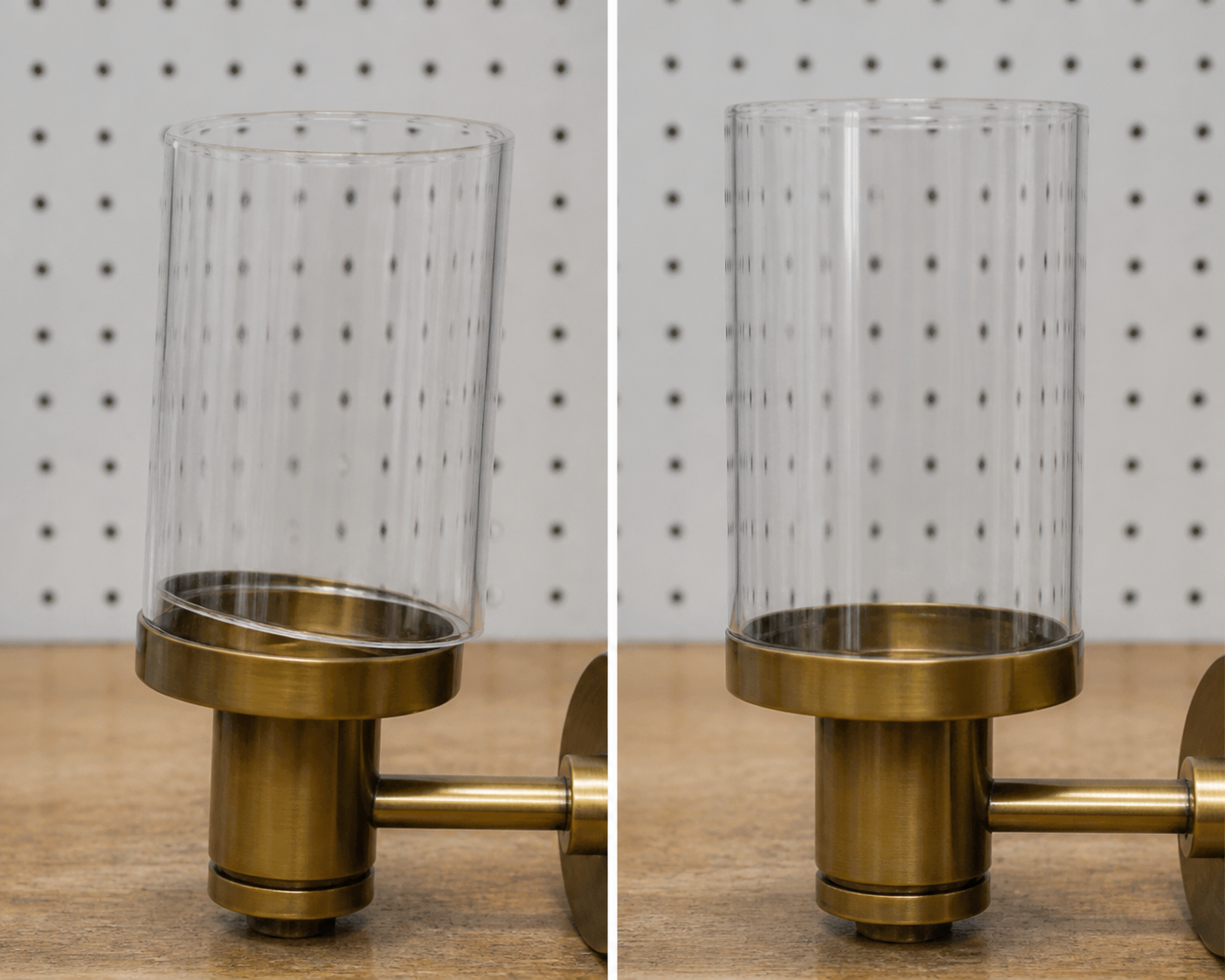
The opening is usually the fit-controlling dimension. The outer diameter and height control appearance and light distribution, but they do not tell a supplier whether the glass can seat. This is why a photograph with one dimension written across the widest point often leads to a wrong replacement.
For a cylindrical shade, also check whether the body is truly round. A hand-blown part may have an approved amount of variation. A machine-pressed part may need a tighter roundness and wall-thickness requirement. The specification should say which variation is acceptable and which defect is not.
Do not guess a tolerance because another lamp shade uses the same nominal diameter. The material, forming process, rim treatment, fixture hardware and quantity all affect the practical result. If the tolerance is not known, send the drawing or sample for supplier review and ask the factory to return a proposed tolerance with the quotation.
Choose the glass process for the project, not the photograph
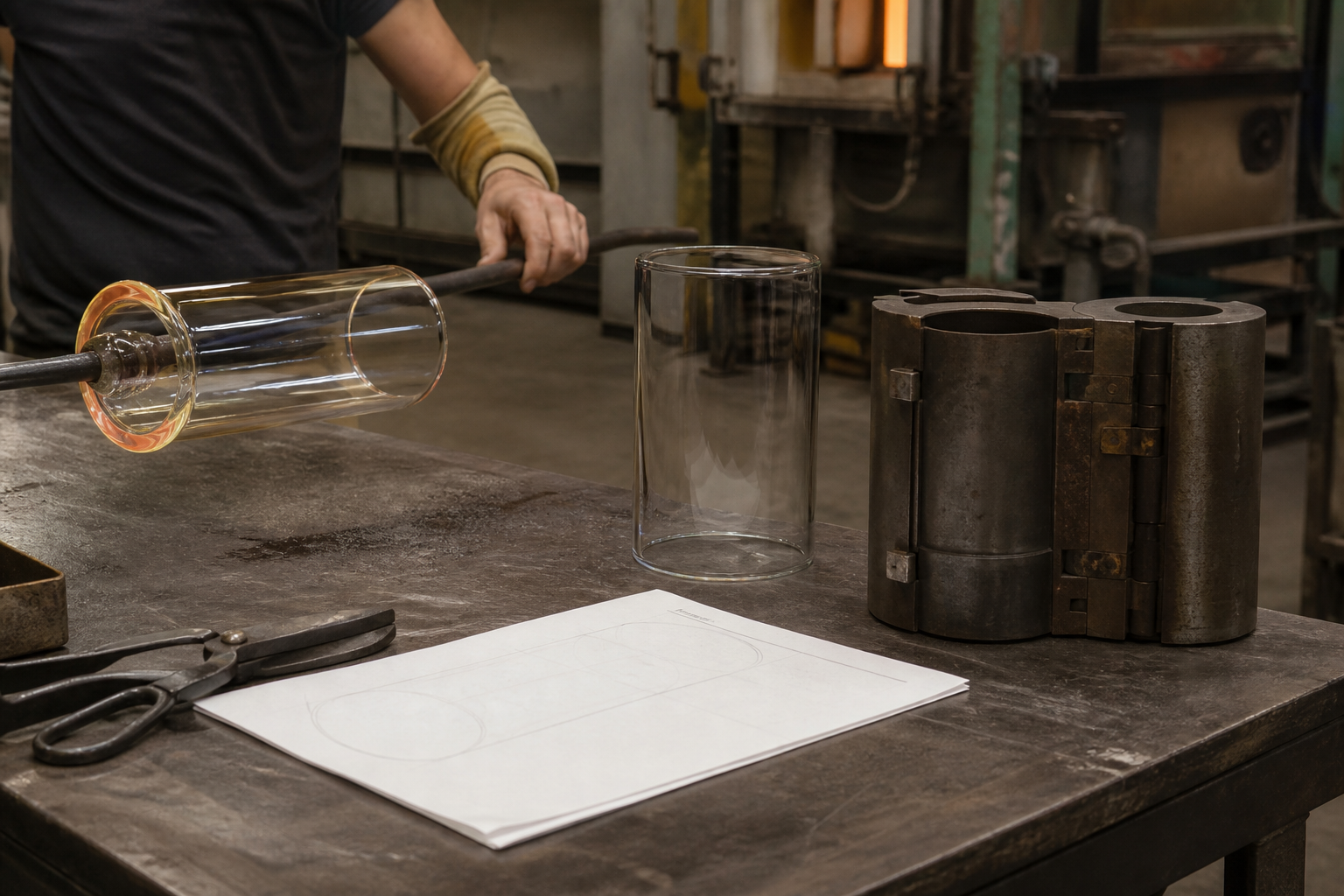
The same cylindrical outline can come from different glass processes. Select the process after deciding what the project values most: repeatability, surface character, heat context, tooling cost, size or a particular finish.
| Process route | Usually suits | Questions for the buyer |
|---|---|---|
| Hand blown or handmade | Decorative programs, small design changes and organic surface character | How much piece-to-piece variation is acceptable, and which dimensions must stay controlled? |
| Machine pressed | Repeatable shapes, larger production runs and molded textures | Is the tooling cost justified by the quantity, and are the parting line, draft and rim acceptable? |
| Lampwork or borosilicate route | Small technical forms, etched details or projects that require a different glass formula | What temperature, impact and application information must the supplier review for the complete fixture? |
JX lists mouth-blown, machine-pressed, borosilicate, centrifugal and handmade glass shade routes. The correct route still depends on the specific drawing, glass formula, finish and quantity. A process name is not a substitute for a sample approval.
For a mass-market lighting program, machine pressing can make sense when the profile and texture need to repeat across a large batch. For a boutique hotel or a decorative collection, hand-blown variation may be part of the look. For a technical application, the buyer should provide the light source, operating environment and complete fixture context before treating any glass choice as suitable.
JX's machine-pressed glass lamp shade page is the right conversion destination when the project needs molded cylinders, repeated texture or a production discussion. The article remains a selection guide, not a promise that every cylindrical design uses one process.
Clear, frosted, opal, ribbed or seeded?
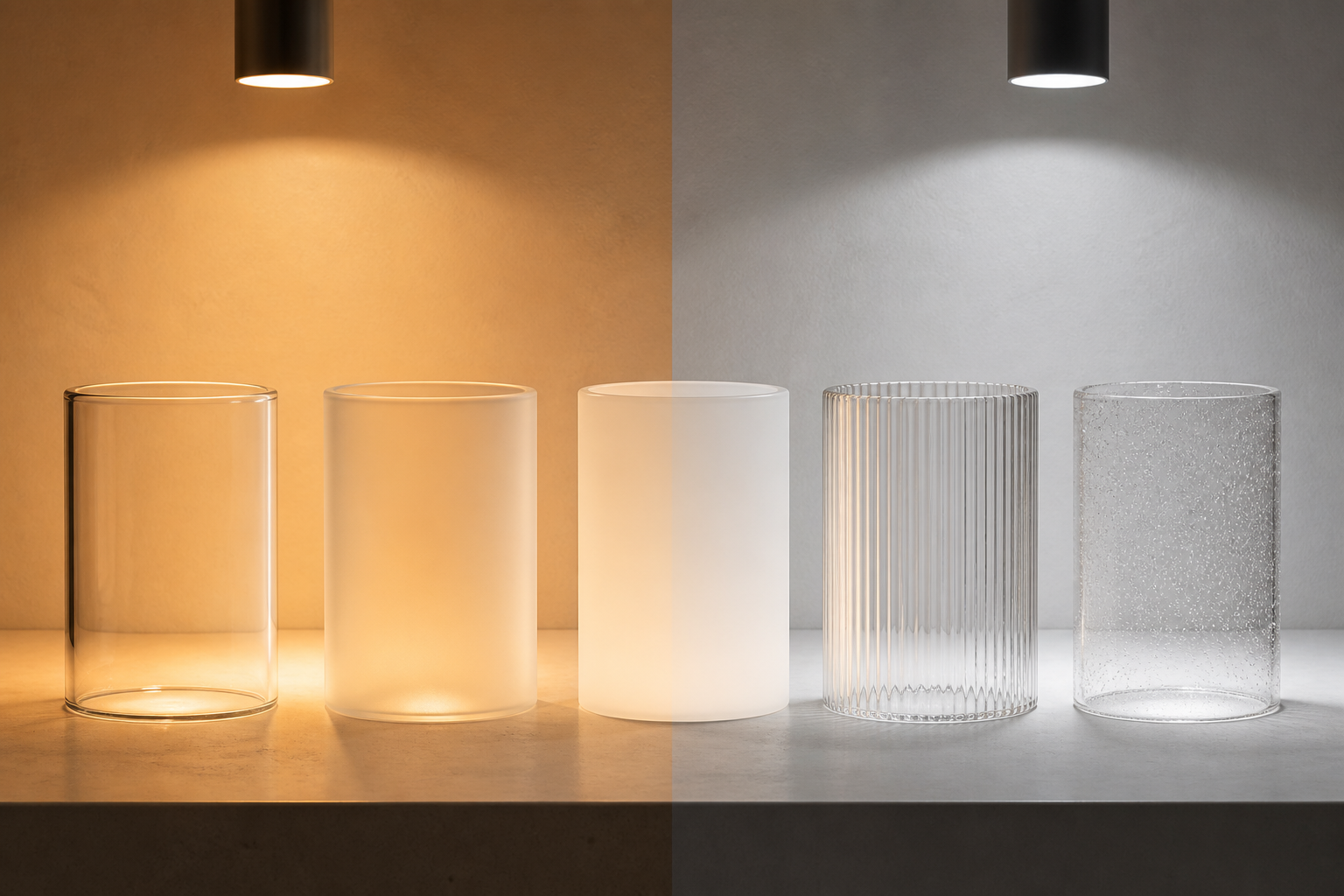
Finish is part of the lighting specification. It changes glare, shadow, visible hardware, surface variation and the way a buyer judges matching pieces.
| Glass direction | Practical effect | Approval point |
|---|---|---|
| Clear | Shows the lamp source and internal hardware more directly | Check bubbles, flow lines, rim polish and visual consistency under the real lamp |
| Frosted or sandblasted | Softens the source and hides some internal hardware | Approve opacity, texture and the transition at the fitter or polished edge |
| Opal or cased glass | Gives a more even, diffused appearance | Compare color, wall appearance and light output with the specified bulb |
| Ribbed or fluted | Adds directional texture and changes the way highlights move across the cylinder | Confirm rib pitch, depth, orientation and whether the pattern reaches the rim |
| Seeded or bubble glass | Adds internal visual variation and a vintage or handmade character | Set an acceptable range for bubble size, distribution and visible defects |
For a replacement, compare the approved sample with the installed shade under the light used in the project. A finish that looks close in daylight can look warmer, darker or more opaque when lit from inside. For a new collection, keep one approved sample with the drawing revision and finish reference.
If a buyer needs several cylinders to appear as a matched set, do not approve one piece and assume the rest will look identical. Define the matching method. That might mean a controlled pressed texture, a retained color reference or an acceptable handmade variation range.
Fitters and retaining methods to put on the drawing
Fitter language changes between lighting suppliers. A drawing should show the hardware relationship instead of relying on a name that may mean something different to another factory.
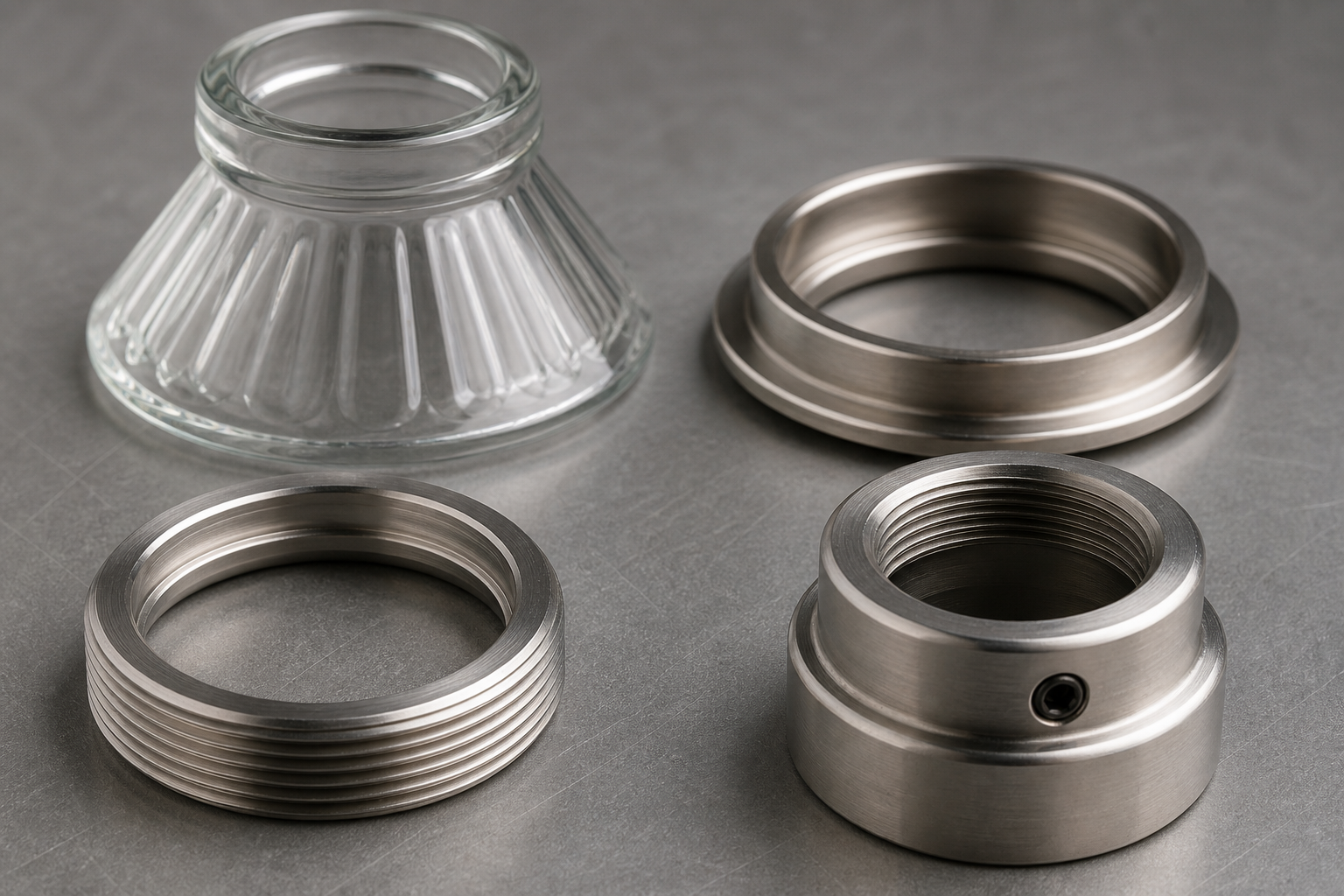
Lip, ring or gallery fit
The glass may sit on a ring, lip, gasket or gallery. Show the inner opening, seating depth, contact width and any compression point. If a retaining ring is used, show which side of the glass it touches and whether the ring is supplied with the shade.
Threaded or necked connection
A threaded neck needs the thread profile, pitch, length, start position and mating part. A neck that looks correct from the side can still fail if the thread starts too high or the usable length is too short. Photograph the mating hardware and include it in the sample review.
Clip, set screw or custom holder
Small holes, slots and set-screw flats need their position measured from a clear datum. Do not describe a hole as "centered" unless the reference center and tolerance are clear. For a custom holder, send the holder or a complete assembly photo with a scale reference.
The technical drawing checklist can help turn a profile sketch into a controlled part record. For unusual hardware, ask the supplier to mark the fit-controlling dimensions on the returned drawing before sampling.
Where cylindrical shades work best
The form fits several applications, but the same cylinder does not work equally well in each one.
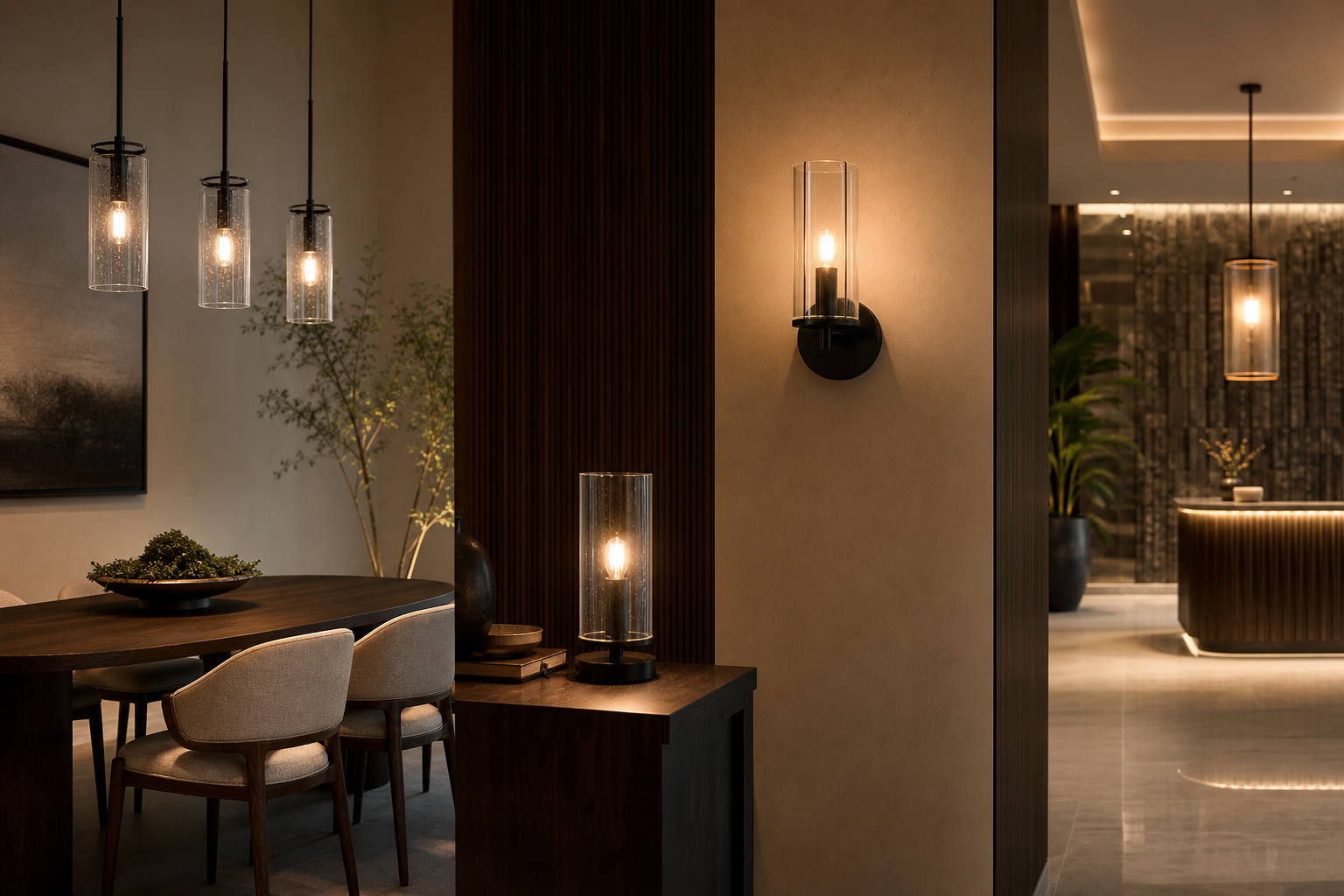
Pendant and ceiling fixtures
A vertical cylinder creates a simple outline around the lamp and can direct light downward, outward or both depending on the open ends and glass finish. Check the cord, socket, canopy and shade retention as one assembly. A cylinder that is stable on a table may swing or rotate on a pendant.
Table and desk lamps
Table lamps usually need a controlled relationship between the shade, bulb, harp or socket and base. Confirm the lower opening, upper opening and base width. If the shade is open at both ends, check whether the lamp body or bulb remains visible from the normal viewing angle.
Wall fixtures
Wall-mounted cylinders need clearance from the wall plate, arm and adjacent surface. Check how the shade is installed when the fixture is already mounted. A shade that only fits when the backplate is removed can create a service problem for the end customer.
Hotels, restaurants and repeated interior projects
For a hospitality rollout, consistency matters across rooms and replacement stock. Freeze the profile, finish, carton, label and sample code before the first bulk order. Keep a small reorder file with the approved drawing and one protected sample photo.
Sample approval for a cylindrical shade
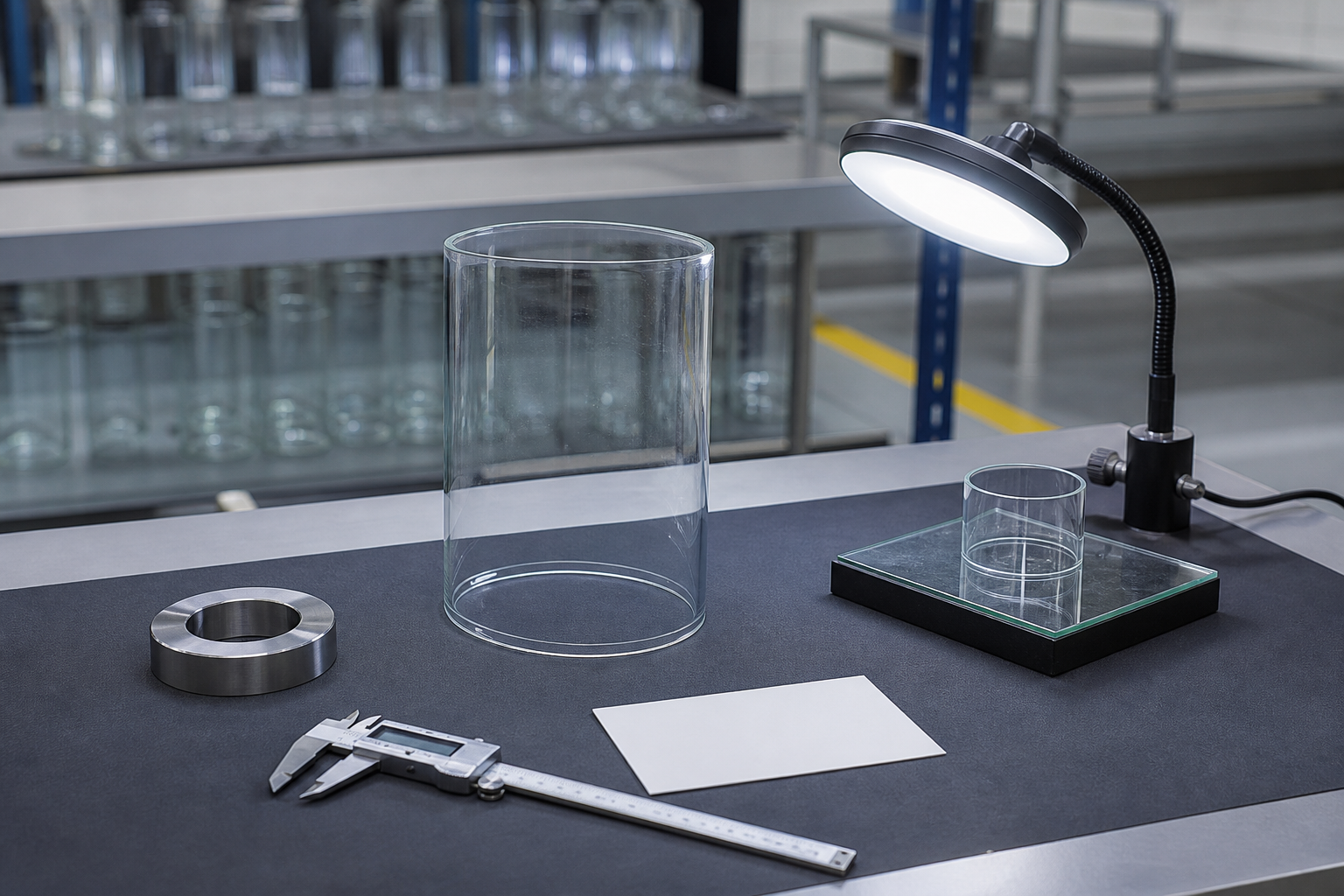
A sample should answer three questions: does it fit, does it look like the approved design, and can the factory repeat it at the required quantity?
Check the sample in this order:
- Place it on the actual holder or a controlled fixture reference without forcing the glass.
- Confirm the opening, seating surface, neck, lip, thread, ring, hole and screw clearance.
- Measure height, outside diameter, end treatment and any critical wall or shoulder detail.
- Inspect roundness, rim condition, scratches, chips, marks, bubbles, seeds and surface texture.
- Light the sample with the project bulb or an agreed equivalent. Review glare, shadows and visible hardware.
- Compare a pair or group together if the final product will be sold or installed as a set.
- Record the sample code, drawing revision, glass process, finish, comments, approver and date.
Do not sign off a sample with a message such as "looks good" when the project will require a reorder. Write what was approved. If the buyer later alters the opening, finish or height, create a new drawing revision and retire the prior approval record.
MOQ, lead time, packing and reorder control
The commercial questions should appear in the first quote, not after the sample has been approved. Ask the supplier to separate product price, sample cost, tooling, finish, packaging and freight assumptions.
JX uses 500 pieces as a planning floor for catalog items. A newly tooled OEM design is planned from 1,000 pieces, while a light-custom run capped at 1,000 pieces is commonly scheduled against a 25 to 30 day reference. Treat those figures as planning inputs. The quotation decides the actual MOQ and schedule after the profile, process, finish, tooling and destination have been reviewed.
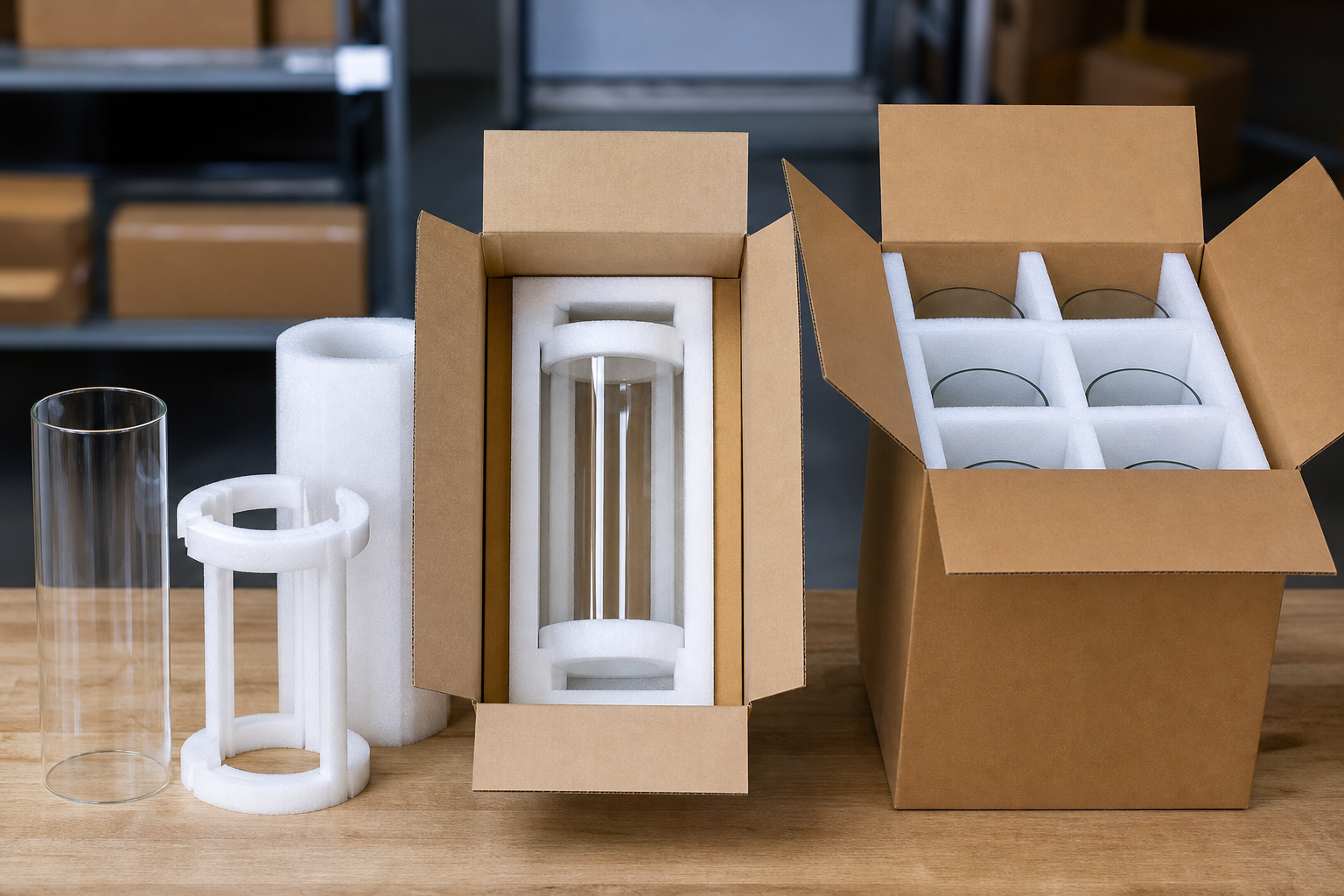
Tall or thin-walled cylinders need packing that protects the rim and stops the body from moving inside the carton. Put these points into the quote:
- individual wrap or sleeve around each shade;
- a molded or fitted insert that supports the rim and body;
- dividers when several cylinders share an inner carton;
- carton orientation and maximum stack information when relevant;
- carton marks, SKU labels and sample packing photos;
- damage evidence requirements and the replacement or credit process.
Keep the packing version with the drawing revision. A reorder can fail even when the glass is correct if the carton has changed and the rim is no longer supported during transport.
Prepare a cylindrical shade RFQ JX can price
Send one organized folder rather than separate messages with unnumbered photos. Include:
- a front, side and holder photo for each fixture;
- the original shade or a fragment when one is available;
- the fitter opening, seating depth, height, diameter and clearance measurements;
- a drawing or side profile with revision date;
- glass color, opacity, texture and rim direction;
- process preference, if the buyer has one, plus the reason for it;
- sample quantity, first-order quantity and expected annual demand;
- destination, packing requirement and requested documents;
- the required quote fields, including tooling, sample, MOQ, lead time and reorder terms.
The JX Lampshade site represents Yancheng Jingxin Glassware Co., Ltd., the manufacturing company behind the catalog. Its website states that the factory was founded in 1999, has more than 48,430 sq ft of production and office area, and exports to over 120 countries. The listed routes include mouth-blown, machine-pressed, borosilicate, centrifugal and handmade glass shades, with customization for shape, size, color, thickness, surface finish and packaging.
Use the custom glass lampshade manufacturing page when you want to discuss a new cylindrical design or production route. Once the files are organized, send them through the custom lampshade RFQ builder as one project package.
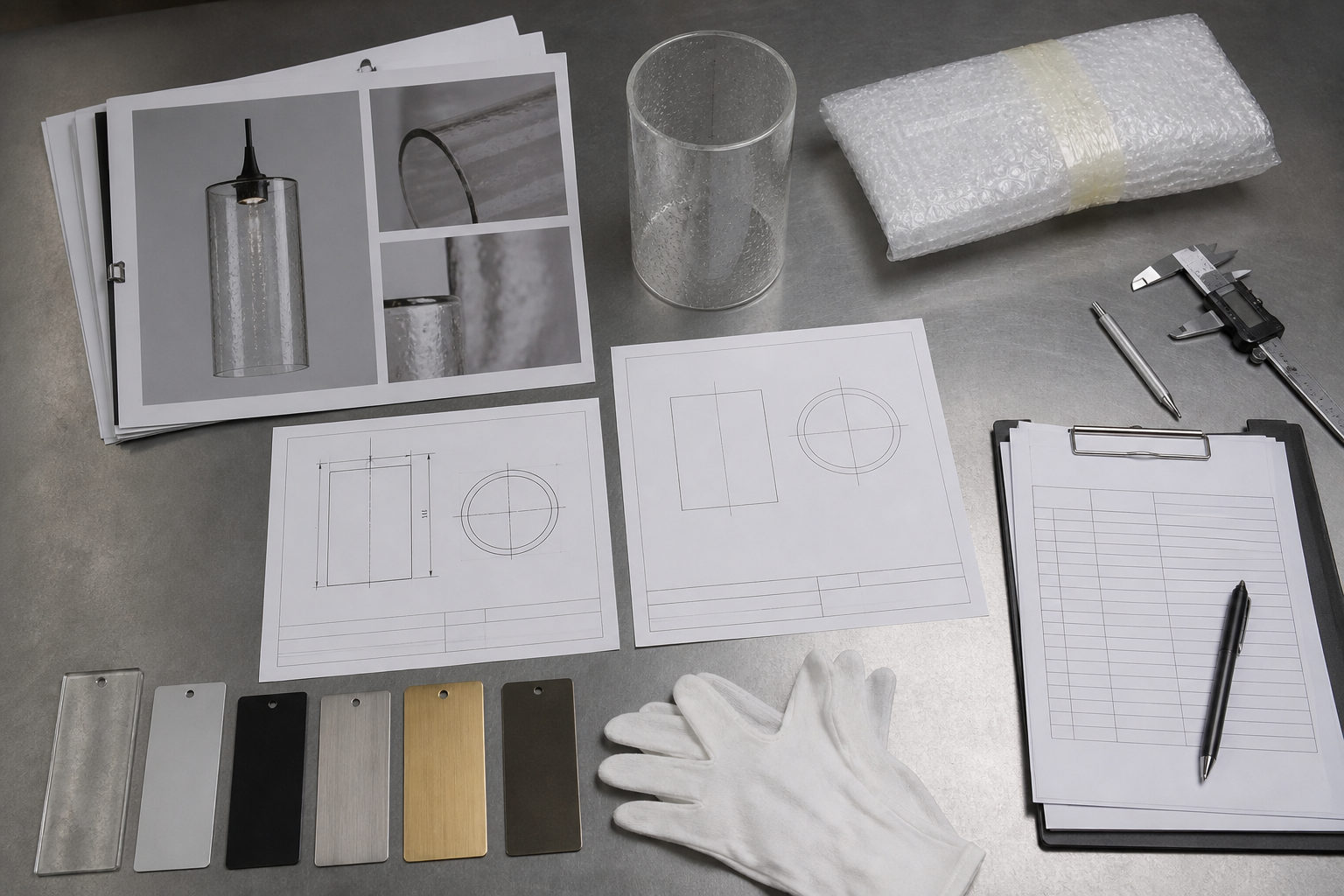
Six mistakes that make a cylinder order harder than it needs to be
- Ordering by outside diameter only. The cylinder may look right while the fitter opening is wrong.
- Describing the shade as "standard" without showing the holder. Cylindrical forms use several interface arrangements.
- Mixing process and finish in one vague phrase such as "clear handmade glass." The supplier needs to know which variation is acceptable.
- Approving one sample for a matched set. A single piece cannot show whether color, texture or bubble distribution will match across the order.
- Leaving the rim and packing out of the quote. A polished or thin edge needs support during handling.
- Losing the drawing revision after the first shipment. The reorder then starts with a photograph and a memory instead of a controlled part record.
Frequently asked questions
Which dimension controls fit on a cylindrical glass lamp shade?
Usually the fit-controlling opening or seating interface. Measure the opening, lip, neck, thread, ring or retaining method before the outside diameter. The final reference depends on the fixture, so send the holder or a complete assembly photo whenever possible.
Are cylindrical glass lamp shades only used on pendant lights?
No. They can be used on pendant, table, desk, wall and hospitality fixtures. The retention method, clearance and service access change by application, so the same body shape may need a different opening or hardware arrangement.
Is hand-blown or machine-pressed glass better for a cylinder?
Neither process is automatically better. Hand blowing can suit decorative programs that allow controlled variation. Machine pressing can suit repeatable profiles and molded textures at a larger volume. The buyer should compare the approved sample, tolerance, tooling and quantity together.
Can a cylindrical shade be made in frosted, opal or ribbed glass?
Those directions can be discussed as part of the design and process review. Specify whether the finish is applied to the surface, built into the glass, formed as a ribbed pattern or created with another treatment. The final appearance should be approved under the project light source.
Can JX make a custom cylindrical shade from a photo?
Photos can start the review, but a useful quote needs the fixture interface, fit-controlling dimensions, profile, finish, quantity and destination. If the shade is a replacement, send the surviving part or holder photos. For a new design, add a sketch, CAD file or side profile when available.
What MOQ should I expect for a custom cylindrical glass shade?
JX's current planning baseline starts at 500 pieces for catalog items and 1,000 pieces for full custom OEM. The final MOQ depends on the exact process, tooling, finish, sample plan and order quantity, so ask for the written quotation before releasing a purchase order.
Release the cylinder by its drawing revision
A cylindrical glass lamp shade becomes easier to buy when the buyer stops treating it as a simple round cover. Freeze the interface, record the profile, choose the process and finish against the project, approve the sample under the real light, and keep the packing and reorder record with the same revision.
When the files are ready, send the cylindrical shade brief through the JX RFQ builder. Include the opening and holder evidence first. That is the information most likely to prevent a quote that looks attractive but cannot be installed.