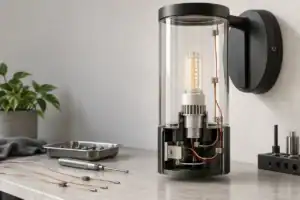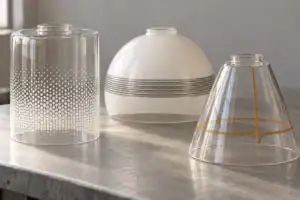
Choose glass lamp shades for home decoration by selecting the fixture type and fitting first (spider, uno, or gallery ring), then glass opacity (frosted for diffused warmth, clear for filament LED display, opal for uniform glow), then coordinating shade shape and color with the interior style.
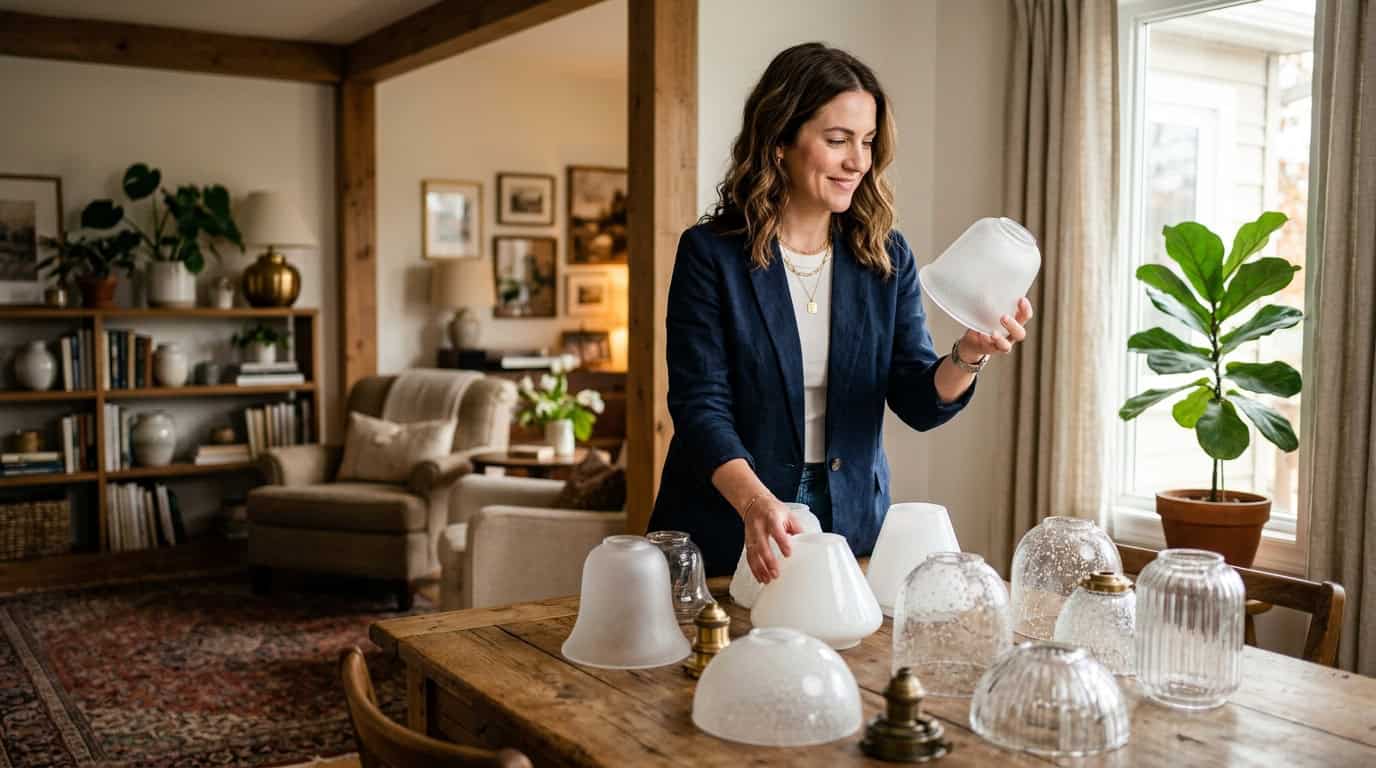
The question most people ask first is “which one looks best?” It’s actually the fourth question. Before aesthetics, you need to know whether the shade physically fits the lamp, what the room needs from the light, and what glass opacity delivers that lighting quality. Get the first three right and the fourth — style coordination — becomes a much shorter list to choose from.
This guide provides the full decision sequence for how to choose glass lamp shades for home decoration — from the fitting type that determines fit, to the glass type that determines light quality, to the style and color considerations that make the shade work in the room.
Why Glass Is the Right Material Choice for Decorative Lamp Shades
The dominant lampshade market is fabric — drum shades, empire shades, and bell shades in linen, cotton, and silk are the most common residential lamp shade sold. Glass shades represent a smaller but growing share of the market, and for specific applications glass is unambiguously the better choice.
Glass outperforms fabric when:
– The lamp uses a decorative filament LED bulb — fabric shades obscure the filament aesthetic that makes filament bulbs worth using; clear glass displays it
– The lamp is a pendant over a dining table or kitchen island — glass is cleanable, splatter-resistant, and maintains its appearance for decades; fabric shades in food-proximate locations degrade from steam and airborne oil
– The interior style is industrial, contemporary, or vintage/period-authentic — fabric shades read as “traditional residential” in a way that glass does not
– The lamp is in a bathroom or humid environment — glass is moisture-resistant; fabric shades can mildew in high-humidity spaces
Fabric outperforms glass when:
– Warm, diffused ambient light across a large arc is the goal — a large empire fabric shade produces a broader, softer light cone than any glass equivalent
– The lamp is an accent piece where the shade texture and pattern are the decorative element
– Budget is the primary constraint — quality glass shades cost more than equivalent fabric shades at the same size
According to the Illuminating Engineering Society’s residential lighting guidelines, glass enclosures for decorative luminaires provide superior long-term optical stability — glass does not develop the surface yellowing, particulate absorption, or structure degradation that fabric shades exhibit over 5–10 years of use.
Step 1: Identify the Fitting Type
The fitting type determines which glass shade will physically fit your lamp. This is not an aesthetic decision — it is a mechanical compatibility check.
Spider Fitting (Harp and Saddle)
The spider fitting is the most common for table and floor lamps. A wire spider (three arms extending from a central ring) rests on the lamp harp — a metal arch above the socket — and is secured at the top by a finial through a hole in the shade’s crown.
Glass shades with spider fittings are less common than fabric shades with spider fittings because glass requires a more robust mounting system (the glass is heavier and cannot flex like fabric). When glass spider-fitting shades are used on table lamps, the shade globe is typically mounted in a wire cage or ring that holds the glass and attaches to the harp via spider arms.
Uno Fitting
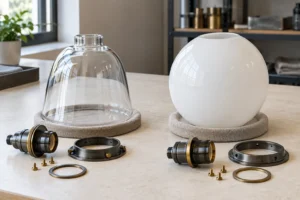
An uno fitting is a ring on the shade that screws directly onto a threaded lamp socket collar. No harp required. Uno fittings are common on pharmacy lamps, accent lamps, and some contemporary table lamp designs. Glass shades with uno fittings are available for these fixture types — the uno ring is incorporated into a glass collar or metal adapter that holds the glass shade body.
Gallery Ring (Fitter) Fitting
The gallery ring is the standard mounting for glass globe and dome shades on pendant fixtures, ceiling fans, and some table lamp designs with glass-specific sockets. The glass shade has a smooth collar at the top (the fitter); the gallery ring grips this collar with set screws. Fitter sizes are standardized: 2¼ inch, 4 inch, and 6 inch cover the vast majority of residential applications.
This is also the mounting system for chandelier cups and some vintage table lamp adaptors. When a glass shade is described by its fitter size (“4-inch fitter globe”), it uses a gallery ring mounting.
| Fitting Type | Where Used | How Glass Mounts |
|---|---|---|
| Spider/harp | Table lamps, floor lamps | Wire cage or ring on spider arms |
| Uno | Pharmacy lamps, accent lamps | Uno collar ring on glass body |
| Gallery ring | Pendants, ceiling fans, vintage lamps | Glass fitter collar in set-screw ring |
| Bayonet | Some ceiling fan kits | Quarter-turn lock on collar |
Step 2: Choose the Right Glass Opacity
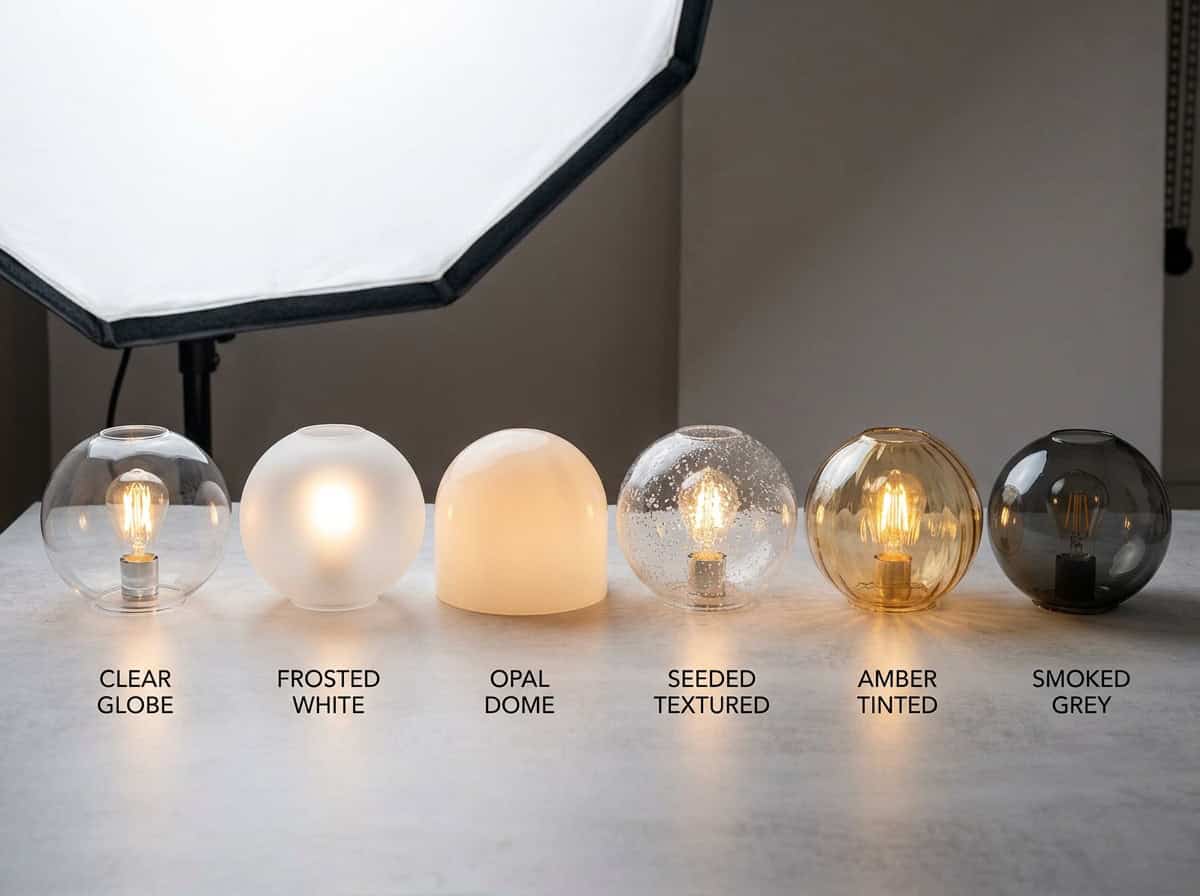
Once fitting compatibility is confirmed, the glass opacity decision determines the room’s lighting quality. This is the choice most buyers make by visual impression alone — and most buyers get it right, because the visual impression of a lit glass shade tells you most of what you need to know about the light it produces.
Clear Glass: Maximum Lux, Visible Bulb
Clear glass transmits 88–92% of the bulb’s output. The lamp source is fully visible. This is the correct choice when:
– You are using a decorative filament LED bulb and the glowing filament is the visual point
– Maximum light output for a given wattage is the priority (task lighting, accent lighting with limited wattage)
– The fixture is hung high enough that the bulb at eye level is not a glare issue
Clear glass works against you when the lamp is at seated eye level and the bulb is unpleasant to look at directly — standard LED and CFL sources look harsh through clear glass in close proximity.
Frosted Glass: Warm Diffusion, No Glare
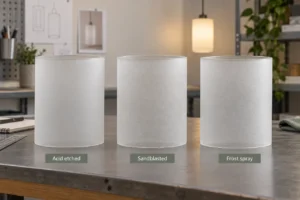
Frosted glass (acid-etched or sandblasted surface) transmits 75–82% and eliminates direct bulb visibility. The shade glows uniformly. This is the most common and most versatile choice for home decoration glass lamp shades:
- Works at any mounting height
- Compatible with any LED source (the source character is hidden)
- Produces flattering, even light that photographs well and looks welcoming in person
- The most neutral starting point when you are not sure which glass type to choose
Opal (Milk) Glass: Dense White Glow, Premium Appearance
Opal glass transmits 60–75% and has a dense, opaque white appearance lit or unlit. The light quality is the softest and most uniform of any glass type. Opal glass shades work particularly well:
- As torchiere bowls where indirect ceiling light is the goal
- In Victorian, Edwardian, or period-authentic interiors where opal glass is the historically correct material
- When the shade needs to look substantial and premium unlit — opal glass has visual weight that frosted glass does not
The trade-off: opal glass transmits significantly less light than frosted at the same wattage. A lamp that felt bright with frosted glass may feel dim after switching to opal at the same LED wattage. Step up by one LED wattage level when switching from frosted to opal.
Seeded, Textured, and Colored Glass
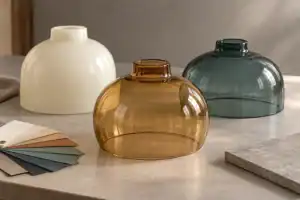
Seeded glass (air bubbles suspended in the glass body), hammered glass, ribbed glass, and colored glass all produce decorative effects while providing moderate diffusion. These are the correct choice when the glass shade itself is a visual focal point — when you want the shade to be noticed as a decorative object, not just a light source.
Per the U.S. Department of Energy’s residential lighting efficiency data, decorative glass shades with transmittance below 70% may require higher-wattage LED sources to maintain adequate illuminance at task surfaces — relevant when calculating LED wattage for reading lamps or kitchen pendants with colored glass.
Step 3: Match Shade Shape and Proportion to the Fixture
Glass shades come in several shape families, each suited to different fixture types and interior contexts.
Globe and Ball Shades
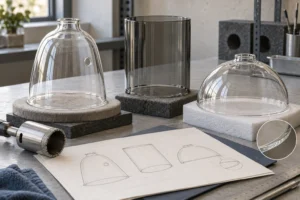
Spherical or near-spherical glass globes are the dominant shape for residential pendant fixtures and ceiling fans. Globe diameter relative to the fixture’s mounting hardware determines visual proportion — a globe that is too small for a pendant cord looks like a bulb with an afterthought; too large and it dominates the space.
For pendant fixtures, standard sizing principles: globe diameter equal to or slightly wider than the fixture canopy (the plate at the ceiling) produces balanced proportion.
Dome and Bell Shades
Dome and bell glass shades are deeper than they are wide — the diameter narrows toward the top. Used on table lamps (where the dome shape directs light downward) and some vintage pendant designs. Glass dome shades are less common than fabric bell shades in residential interiors but provide better thermal resistance and longer service life.
Cylinder and Tube Shades
Cylinder glass shades are equal diameter from top to bottom — producing a different visual character from globes or domes. Used on contemporary pendant fixtures, some wall sconces, and modern table lamp designs. Clear cylinder glass shades with visible LED bulbs are a signature of the minimalist and industrial interior styles.
Fluted and Tulip Shades
Fluted and tulip-form glass shades have a narrow top opening that widens toward the bottom before turning back in — the “flower” form. These are historically associated with Art Nouveau and Arts and Crafts design. Contemporary versions appear in bohemian and maximalist interiors.
Step 4: Coordinate with the Interior Style
The final decision is style coordination — making the glass shade’s color, texture, and form work with the room’s palette and design direction. This is where most lamp shade guides spend all their time; we’ve addressed it last because it is genuinely the least constraining step.
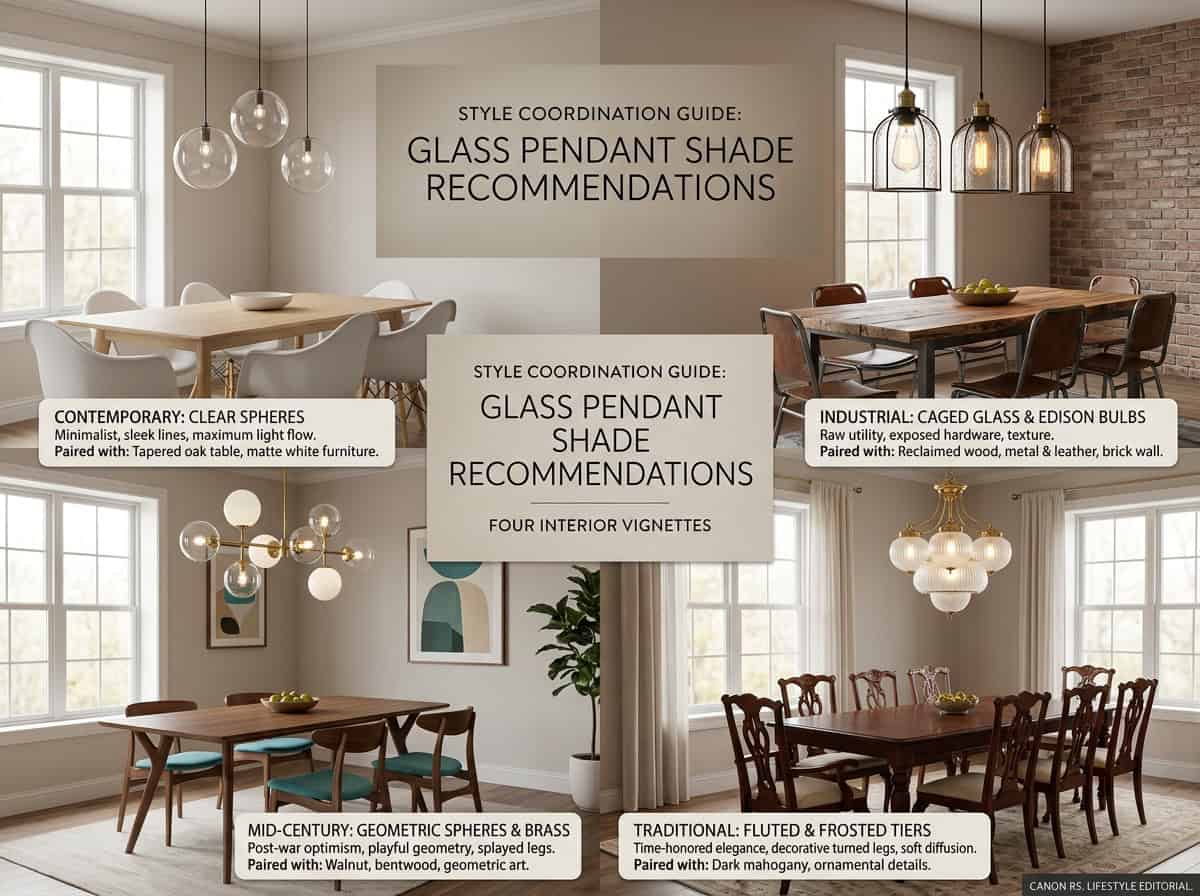
Contemporary and Minimalist Interiors
Clean lines, neutral palette, minimal decoration. Glass shade choices that work:
– Clear cylinder or globe shades in matte black or brushed brass fittings
– Simple frosted white globes in contemporary fixture hardware
– Smoked grey glass in a pendant over a dining or kitchen island
Avoid: heavily textured, colored, or ornate glass shades that compete visually with the minimal room palette.
Industrial and Urban Loft Interiors
Exposed brick, concrete, metal, and raw wood. Glass shade choices that work:
– Clear glass globes with filament LED bulbs over kitchen islands and dining tables
– Opal dome pendants on metal conduit (the engineering lamp aesthetic)
– Amber-tinted glass with brass or black iron fittings
The Victorian Society’s documentation on industrial design heritage notes that opal glass pendant shades with cast iron gallery rings are authentic to late 19th century industrial and workshop spaces — a useful reference for historically accurate loft interior styling.
Traditional and Classic Interiors
Warm color palettes, decorative trim, period furniture. Glass shade choices that work:
– Opal white glass with decorative brass gallery rings
– Seeded glass in amber tones
– Cranberry or ruby glass accent shades on mantel or side table lamps
– Prismatic cut crystal glass for chandeliers
Mid-Century Modern Interiors
Organic forms, warm wood tones, earthy palette. Glass shade choices that work:
– Hand-blown glass in amber, olive green, or cognac tones
– Opal white globe pendants in walnut or brass fittings
– Seeded glass with simple geometric forms
Coastal and Relaxed Interiors
Sea glass tones, natural textures, casual layering. Glass shade choices that work:
– Frosted glass in pale aqua, sage green, or soft white
– Seeded glass in natural amber tones
– Woven rattan or rope combined with small glass globe inserts
How to Tell What Type of Lamp Shade You Need
This is the PAA question and it deserves a direct answer: you need the shade type that matches your lamp’s fitting system, then the opacity that matches your lighting goal, then the style that matches your room. In that order.
The three most common mistakes buyers make when choosing glass lamp shades for home decoration:
Mistake 1: Choosing shade diameter without checking the fitting. A globe that looks right in the product photo may use a 4-inch gallery ring fitter when your pendant fixture takes a 2¼-inch fitter. Confirm the fitter size before ordering.
Mistake 2: Choosing glass type based on appearance alone. Clear glass looks beautiful in product photos. Clear glass at seated eye level with a standard LED bulb creates uncomfortable glare. Frosted glass looks plainer in the photo and produces better light in the room.
Mistake 3: Selecting a shade without considering the LED bulb type. A shade chosen to display a filament LED will look wrong with a standard LED (the hot spot at the top of the bulb is visible and unflattering through clear glass). A shade chosen for a standard LED may look right but fail to showcase a filament LED’s aesthetic. Decide on the bulb first, then choose the glass.
Trends in Glass Lamp Shades for Home Decoration in 2026
Amber and warm-tinted glass growing. The wellness and sleep-hygiene design movements of the early 2020s created sustained demand for warm-spectrum bedroom and living room lighting — amber glass naturally filters blue-spectrum output without the color rendering penalty of amber-filtered LED bulbs. Amber glass table lamp and pendant shades are growing in the premium residential segment.
Handmade glass as a value signal. Machine-produced glass dominates the mid-market. In the premium residential and design-professional segment, hand-blown and hand-pressed glass shades are increasingly specified as a marker of quality and artisan production. The slight dimensional variation and surface character that hand production creates is a feature, not a flaw.
Darker glass for dramatic effect. Smoked grey, dark amber, and near-opaque black glass shades are growing in the design-forward residential segment — these shades produce dramatically different light qualities (darker, more atmospheric, less lux) than frosted or clear alternatives and are specifically chosen for their atmospheric rather than functional contribution.
| Trend | Glass Choice | Interior Context |
|---|---|---|
| Warm-spectrum sleep hygiene | Amber tinted glass | Bedroom, living room |
| Handmade quality signal | Mouth-blown seeded glass | Premium residential |
| Dark and dramatic | Smoked grey, black | Design-forward interiors |
| Filament LED aesthetic | Clear globe | Kitchen island, dining, studio |
| Vintage revival | Opal and cranberry glass | Traditional, period revival |
Frequently Asked Questions
How do you tell what type of lamp shade you need?
Identify your lamp’s fitting first — spider/harp for most table lamps, uno for pharmacy lamps, gallery ring for pendants and ceiling fans. Then select glass opacity based on your lighting goal: clear for maximum light and visible filament LED aesthetics, frosted for warm diffused light without glare, opal for premium soft glow. Style and color are the final decisions. Getting the fitting type right is the only decision that cannot be revised after purchase.
How do I choose the right size glass lamp shade for a table lamp?
The glass shade diameter should be approximately two-thirds to three-quarters the height of the lamp base — a 24-inch table lamp base typically takes a 16–18 inch shade diameter. The shade should fully cover the lamp’s hardware and harp without extending below the lamp base. For glass globe shades on table lamps, globe diameter of 10–14 inches works for most mid-size table lamps.
Is a glass lamp shade better than a fabric shade?
Glass outperforms fabric in durability (glass does not yellow, absorb particulates, or degrade over time the way fabric does), cleanability (glass wipes clean), and in applications where the light quality and visual character of glass is the design intent. Fabric outperforms glass for broad, soft ambient illumination across a large arc, for cost at equivalent quality levels, and where the shade pattern or texture is the decorative focus.
Can you put a glass lamp shade on any lamp?
Only if the glass shade’s fitting type matches the lamp socket configuration. A glass shade with a gallery ring fitter requires a holder ring on the lamp or socket adapter — it cannot simply rest on a harp. Conversely, a glass shade in a wire cage with spider arms requires a harp, which many lamps do not have. Confirm fitting compatibility before purchasing any glass shade for an existing lamp.
What glass lamp shade style works for a traditional interior?
Opal white glass with decorative brass gallery rings, seeded glass in warm amber tones, and cut crystal glass for chandelier arms are the most period-authentic choices for traditional British and American interiors. For late Victorian specifically, opal glass dome shades on metal gallery rings with decorative bases (oil-lamp style) are historically accurate. Colored glass accents (cranberry, cobalt, amber) work well in traditional dining and living room contexts.
How do glass lamp shades affect the color of the light in a room?
Clear and frosted glass transmit the LED source color essentially unchanged — a 2700K warm-white LED through frosted glass produces warm-white room lighting. Opal glass slightly shifts color rendering toward soft and even. Colored glass dramatically shifts the light color — amber glass produces candlelight-warm light at a fraction of the full lumen output; smoked grey glass reduces lux and produces a slightly cooler tone; ruby and cobalt glass produce intense color effects at very low lux levels.
What is the best glass lamp shade for a bedroom?
Frosted or opal white glass with warm-white LED sources (2700K or lower) is the most consistently effective bedroom lamp shade choice — it produces comfortable, glare-free light that does not interfere with sleep onset at low wattage. For bedside lamps specifically, a smaller globe (8–10 inches in diameter) at close range produces less scatter than a large globe and is easier to switch off from bed without disturbing a partner. Amber glass is a growing choice for sleep-hygiene conscious buyers who want to minimize blue-spectrum evening light.
Conclusion
Choosing glass lamp shades for home decoration follows a sequence that most buyers reverse: they choose style first and discover the fitting won’t work, or choose opacity by visual impression and find the light quality is wrong for the room. The correct order — fitting type, opacity/glass type, proportion, then style — collapses the decision space rapidly and leaves you with a short list that genuinely suits both the room and the lamp.
Glass lamp shades age better than fabric, clean more easily, and deliver a visual weight and light quality that fabric cannot replicate. The trade-offs are cost (glass shades at equivalent quality are more expensive) and the narrower range of fitting types (not every lamp is glass-shade-ready without an adapter).
For home lamp shades in frosted, opal, clear, seeded, and colored glass across the full range of fitter sizes and shade forms, our glass lampshade product line at jxlampshade.com covers residential decorative and replacement applications with documented glass construction.