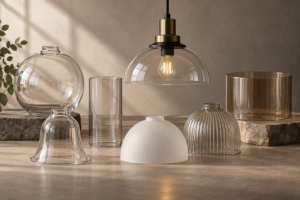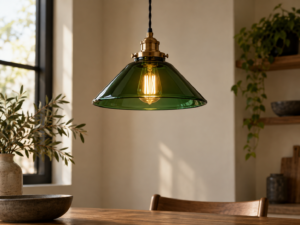
Pooky lampshades are handcrafted British lighting shades known for bold hand-painted prints, quality card and linen materials, and fittings for both table lamps and pendants, available in drum, empire, and coolie shapes across 5 to 20 inch diameters, with US-compatible spider and gimbal fittings.
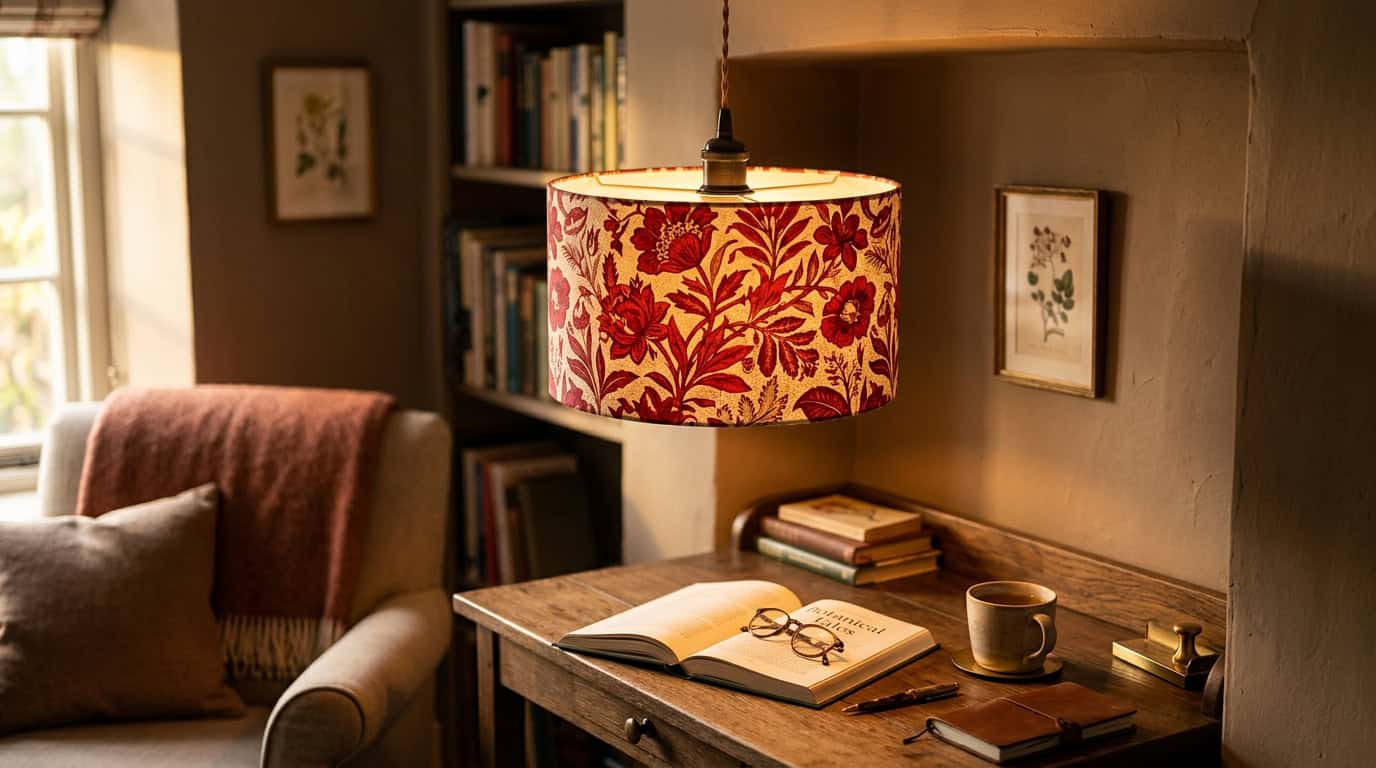
You’ve probably seen the name on a design blog or noticed the shade in a friend’s living room. The one that somehow looked expensive without being obnoxious about it. Pooky lampshades have a way of doing that. Before you click buy on an $80 to $180 shade, though, there are real practical questions worth answering: which shape works with your lamp base, do their UK fittings work in the US, what size do you actually need, and is a Pooky shade worth the price compared to what else is out there?
This guide covers all of it: styles, materials, fittings, sizing math, and a look at where Pooky actually sits in the market.
What Are Pooky Lampshades?
Pooky lampshades are decorative lighting shades produced by Pooky Lighting, a British brand founded in 2005 with a focus on bold pattern, craft materials, and accessible luxury pricing.
Most lighting brands either chase mass-market pricing (thin polycotton, generic shapes) or go full-luxury with bespoke pricing to match. Pooky carved out the space between: genuinely handcrafted shades, many printed by hand, at prices that don’t require a decorator’s budget. That positioning is why the brand shows up consistently in editorial features and on design-forward Instagram accounts.
The Pooky Brand: British Craft Meets Bold Pattern
Pooky started as a UK operation and has since expanded with a US storefront (us.pooky.com) serving North American customers. The brand’s visual identity runs on pattern and color: scarlet, forest green, deep navy, and an ongoing rotation of hand-painted prints ranging from floral and animal motifs to geometric and botanical designs.
Their shades are predominantly made from two materials, stiff card (often hand-painted) and woven linen, with a smaller range in velvet and specialty fabric. The card shades are the most recognizable. The paint sits on the exterior with visible brushstroke texture, giving each shade a slightly handmade feel even when produced at scale.
In practice, a Pooky drum shade on a plain ceramic lamp base reads as a statement without being maximalist. That’s deliberate. The brand’s product photography almost always pairs busy shades with simple, neutral bases. The shade carries the personality; the base stays quiet.
What Makes Pooky Shades Different from Generic Alternatives
The real difference comes down to print quality, material weight, and finishing detail. Generic lampshades from big-box retailers use lightweight polycotton that diffuses light unevenly, fades within 18 to 24 months of UV exposure, and tends to bow slightly as the wire frame ages. Pooky’s card shades don’t bow. Stiff card holds its geometry. Their linen shades use a heavier weave than typical budget alternatives, which gives a warmer, more even glow when lit.
The fitting quality is also a step up. Pooky uses solid brass rings and fittings on most shades rather than chrome-plated steel used in mass-market options. That matters if you’re putting one above a steaming tub or in a kitchen where plated fittings rust faster.
Pooky isn’t producing bespoke one-offs, though. If you’re comparing them to truly custom lampshades from a small atelier, the construction is similar but the price is substantially lower. The trade-off is less variety in shade shapes: Pooky’s range centers on drum, empire, and pendant styles rather than unusual or asymmetric forms.
| Feature | Pooky | Mid-market (e.g. Pottery Barn) | Budget (e.g. Amazon generic) |
|---|---|---|---|
| Material | Stiff card / woven linen / velvet | Polycotton or synthetic | Thin polycotton |
| Print method | Hand-painted or screen print | Machine print | Digital print |
| Fitting hardware | Solid brass ring | Chrome-plated steel | Lightweight wire |
| US fitting options | Spider, gimbal, pendant ring | Spider standard | Spider standard |
| Price range | $65 to $185 | $30 to $90 | $12 to $40 |
| Estimated lifespan | 8 to 12 years | 3 to 5 years | 1 to 3 years |
Pooky Lampshade Styles and Types
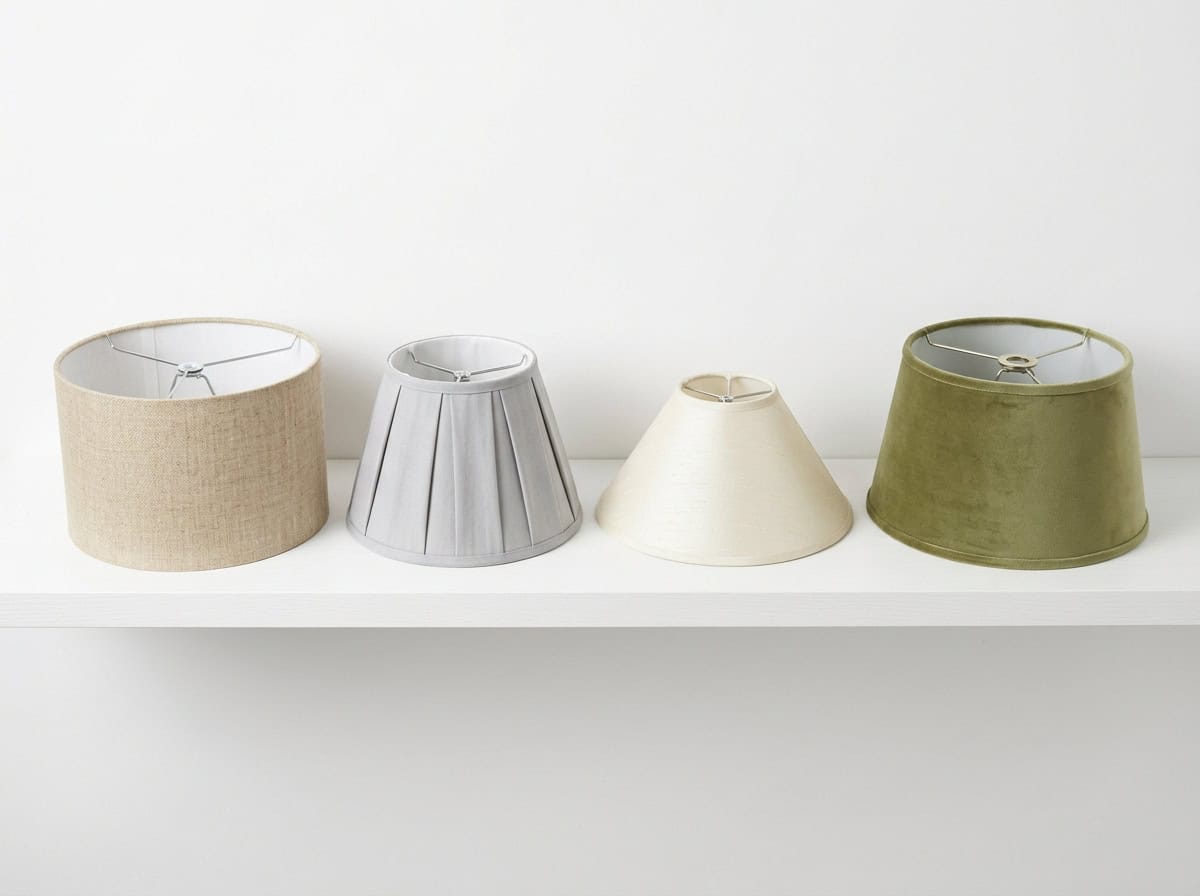
Pooky makes shades in four main forms: drum, empire, coolie, and pendant, each suited to a different lamp base type and room scale.
Understanding which silhouette works before you order saves the hassle of returns. The shape affects light distribution, the visual proportion of the lamp, and whether the shade looks intentional or slightly wrong in your room.
Drum Lampshades: The Pooky Signature
Drum shades have equal top and bottom diameters, creating a cylinder. They’re the most versatile Pooky format and the one you’ll see most often in their editorial content. A drum shade directs light both upward and downward roughly equally, which makes it good for ambient lighting rather than focused task light.
For table lamps, drum shades work best on bases with a clear vertical form: ceramic columns, turned wood, sculptural metal. They look odd on very wide, squat bases because the straight sides emphasize the mismatch between the base’s spread and the shade’s geometry.
Pooky’s drum range runs from 7 inches (small table lamp or bedside) up to 20 inches (floor lamp or statement table lamp). The most popular sizes in their catalog are 10, 12, and 14 inch, fitting standard table lamps with a base height between 12 and 18 inches.
Empire and Coolie Shades: Classic Proportions
Empire shades taper, larger at the bottom than the top. This is the classic lampshade silhouette you’d recognize from traditional and transitional interiors. They direct more light downward than drum shades, making them better for reading lamps or any situation where you want a pool of light rather than ambient fill.
Coolie shades are a steeper version of the empire, a wide shallow taper that looks almost like a flattened cone. These suit specific aesthetics (mid-century, coastal, eclectic) and work well on shorter, wider bases where a tall drum would look top-heavy.
Pooky’s empire and coolie range is narrower than their drum selection, but they do offer several printed options in each shape that carry the brand’s signature pattern language.
Pendant and Cordless Lamp Shades
Pendant shades hang from a ceiling fitting rather than sitting on a lamp base. Pooky makes pendant-specific shades in both card and linen, sized from 5-inch mini pendants up to 14-inch statement pendants. These require a different fitting from table lamp shades (more on that in the fittings section).
Cordless lamp shades are a newer addition to Pooky’s range: shades designed for their rechargeable LED lamps. These are self-contained and don’t require any wiring or fitting compatibility checks, which makes them genuinely useful in spaces where running a cord isn’t practical. A mantelpiece, a bookcase shelf, an outdoor table.
| Style | Top Diameter | Bottom Diameter | Best Lamp Base Type | Light Direction |
|---|---|---|---|---|
| Drum (small) | 7 in | 7 in | Bedside, accent table lamp | Even up/down |
| Drum (standard) | 10 to 14 in | 10 to 14 in | Standard table lamp, column base | Even up/down |
| Drum (large) | 16 to 20 in | 16 to 20 in | Floor lamp, large table lamp | Even up/down |
| Empire | 5 to 8 in top | 10 to 16 in bottom | Traditional bases, reading lamps | Downward pool |
| Coolie | 4 to 6 in top | 14 to 20 in bottom | Wide, squat bases | Downward spread |
| Pendant | 5 to 14 in | 5 to 14 in | Ceiling rose / pendant cord | Downward + ambient |
Pooky Lampshade Materials Explained
The material choice matters as much as the shape. A linen shade in the same size as a card shade will give your room a noticeably warmer, softer light because the weave diffuses the bulb glow rather than transmitting it. Card transmits light more directly, which can make a bold printed design slightly translucent when lit. That’s not necessarily bad, but it’s worth knowing before you order.
Pooky uses three main materials: stiff card, woven linen, and velvet, each with different light behavior, durability, and maintenance requirements.
Hand-Painted Card Shades
This is the material most people associate with Pooky. The base is heavy-weight card stock, stiffer and more structured than fabric alternatives, coated and then printed or hand-painted on the exterior. The results range from simple block colors to elaborate multi-color botanical prints.
Card shades transmit light cleanly and hold their shape indefinitely. They’re also the easiest to clean: a dry or barely-damp cloth handles most dust. The limitation is moisture. In a very humid room (above a steaming bath, for instance), prolonged exposure can cause the card to soften or bow. For bathrooms, Pooky recommends their linen options instead.
According to Lowe’s lampshade buying guide, rigid card and hard-backed shades are the best choice for spaces where shape retention matters, particularly in high-traffic rooms where the shade might get bumped.
Linen and Fabric Shades
Pooky’s linen shades use a natural-fiber weave that diffuses light more softly than card. The effect when lit is warmer and more ambient, better for bedrooms and living rooms where you want atmosphere over task lighting. Unlit, the texture is visible and adds tactile interest that printed card doesn’t have.
Linen shades require more careful cleaning. Surface dust can be brushed gently, but linen doesn’t respond well to scrubbing or moisture. Pooky’s linen range also tends toward more neutral colorways: off-white, natural, mushroom, muted prints. That suits the material’s softer aesthetic rather than the bold contrast you get with painted card.
As The Spruce’s room lighting guide notes, fabric shades create a fundamentally different atmosphere from hard shades. The diffused glow from woven materials reads as intimate rather than functional.
Velvet and Specialty Finishes
Velvet shades are the premium tier of Pooky’s range and are more seasonal, rotating in and out of the collection. Velvet absorbs more light than card or linen, producing a very soft, warm glow and a matte exterior. Use these as accent lamps rather than primary light sources. They’re statement pieces, not reading lights.
Specialty finishes appear occasionally in Pooky’s range: metallic card, paper-over-card, or pleated formats. These are generally one-season items rather than core catalog products, so availability varies and stock doesn’t reliably return.
Pooky Lampshade Fittings: US vs UK Compatibility
This is where most international buyers run into trouble. Pooky’s fittings are not automatically cross-compatible, and ordering the wrong one means a shade that physically won’t attach to your lamp.
In the US, Pooky table lamp shades use spider or gimbal fittings that attach to a standard harp. UK shades use BC (bayonet cap) or ES (Edison screw) pendant fittings. You need to specify the correct fitting when ordering from the US site.
Spider and Gimbal Fittings for US Table Lamps
US table lamps use a vertical shade support system: a harp (a U-shaped metal bracket) clips onto the lamp socket, a saddle sits across the harp top, and the shade’s spider fitting (a central hub with 3 to 4 radiating arms) drops onto the saddle and is held by a finial screw.
Gimbal fittings work similarly but are designed for lamps where the socket faces sideways rather than upward. Less common, but used in certain swing-arm and adjustable lamps.
Pooky’s US site ships all table lamp shades with the appropriate spider fitting pre-attached. If you’re ordering from the UK site and shipping to the US, you need to confirm the fitting type at checkout. The default UK fittings won’t work with US lamps.
Pendant Fittings for the UK (BC, ES, and Pendant Rings)
UK pendant and table lamp shades use different attachment systems based on the bulb fitting:
- BC (Bayonet Cap / B22): The most common UK lamp fitting. The shade has a ring that clips to a BC lampholder.
- ES (Edison Screw / E27): Used in many table lamps and floor lamps sold in Europe. The shade ring screws or clips to the ES socket.
- Pendant ring: For ceiling pendants, the shade attaches to a ring or gallery on the pendant cord fitting.
Neither BC nor ES fittings are standard in the US. US residential wiring uses medium base (E26) or candelabra base (E12) sockets with different physical dimensions. A BC-fitted Pooky shade ordered from the UK site will not attach to a US lamp without an adapter.
How to Order the Right Fitting When Buying from the US Site
Buy from us.pooky.com rather than the UK site. The US store automatically ships shades with spider fittings sized for US harps. You select your shade size, and the fitting is pre-configured for American lamps.
For pendant shades on the US site, Pooky typically includes a pendant ring compatible with standard US pendant cords. If you have a non-standard pendant installation (canopy kits, track pendants), check the fitting diameter before ordering. Pooky uses 40mm pendant rings on most shades, which is the UK/EU standard rather than US standard pendant hardware.
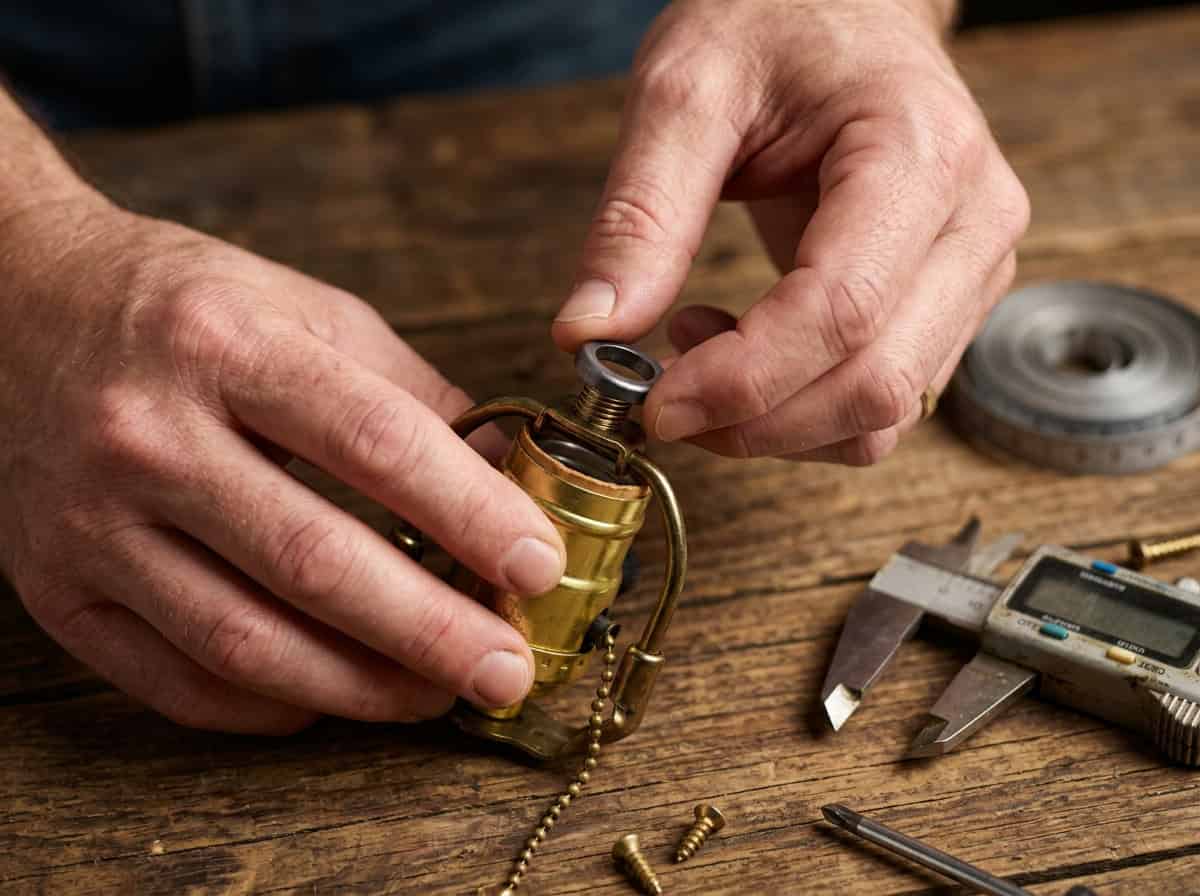
| Fitting Type | Used In | Compatible With | Available from Pooky US? |
|---|---|---|---|
| Spider (washer fitter) | US table lamps | Harps + saddles, E26 sockets | Yes, standard on all US table lamp shades |
| Gimbal | US adjustable lamps | Sideways-facing sockets | Selected styles, confirm at checkout |
| BC ring (B22) | UK table lamps | UK bayonet lampholders only | UK site only |
| ES ring (E27) | UK/EU table lamps | European Edison screw sockets | UK site only |
| Pendant ring (40mm) | Pendant cords | UK/EU standard pendant cords | Yes, standard on US pendant shades |
If you’re shopping jxlampshade.com’s glass and fabric pendant shade collection as an alternative to Pooky pendants, all shades specify the fitting type clearly in the product details. No guesswork.
How to Size a Pooky Lampshade for Your Lamp Base
Sizing is the most common mistake buyers make, and it’s entirely avoidable with two measurements.
The standard rule: your shade’s bottom diameter should be roughly equal to the lamp base height, and the shade’s height should cover the harp and socket while leaving the base’s neck visible below.
The 2-Inch Rule and Diameter Math
Start with your lamp base height. Measure from the bottom of the base to the top of the socket (not including the bulb or harp). A well-proportioned shade’s bottom diameter will fall within 2 inches of that measurement. A lamp base that measures 12 inches tall pairs best with a shade between 10 and 14 inches in bottom diameter.
This isn’t a rigid law. A shade on a large console or desk can go slightly wider than the formula suggests without looking wrong. A shade on a small side table in a tight corner should stay at or below the formula diameter to avoid visual crowding.
For Pooky’s drum shades, the top and bottom diameter are equal, so you’re choosing one number. For empire and coolie, you typically shop by bottom diameter. That’s the number Pooky lists as the shade “size.”
Interior lighting designers at Houzz note that lampshade proportion is one of the most commonly overlooked elements in residential lighting. A shade that’s 4 or more inches too narrow or too wide for its base reads as visually incomplete, even to people who can’t quite identify why the lamp looks off.
Height Proportions for Table Lamps vs Floor Lamps
Shade height should generally equal about 60 to 70% of the lamp base’s visible height. The shade needs to cover the harp and bulb socket completely (exposed hardware looks unfinished) but shouldn’t extend so far down that it covers the majority of the base.
For floor lamps, scale up. Pooky’s 16 to 20 inch drums work here, with a shade height of 10 to 13 inches. Floor lamps typically take wider shades than table lamps because the viewing angle is from across the room rather than from directly beside.
According to Fenchel Shades’ 2026 lampshade buying guide, a reliable cross-check for any shade is to measure the combined height of the shade plus the lamp base: the shade should constitute 40 to 50% of the total lamp height for a well-balanced visual result.
Common Sizing Mistakes to Avoid
Too narrow: the shade sits like a hat perched on the base rather than a covering for it. Light blasts out of the sides of the harp rather than being directed by the shade. This is the most common mistake for buyers who default to small shades to avoid “overwhelming” the base.
Too wide: the shade’s bottom extends past the base’s footprint, making the lamp look unstable. On round bases, a shade that’s more than 2 inches wider than the base’s widest point tends to look disproportionate.
Too tall: a shade that’s too tall in relation to its diameter looks narrow and chimney-like. For drum shades specifically, Pooky recommends a height roughly 80 to 90% of the diameter. A 12-inch drum should be about 10 to 11 inches tall.
Ignoring the harp length: if your existing harp is longer than standard (some adjustable harps extend to 12 inches), a correctly sized shade may still expose the harp because the shade sits too high. Check your harp length before ordering, or plan to replace the harp with a shorter one.
Pooky Lampshades vs Alternatives: Price and Value
Pooky sits in the $65 to $185 range for most shades, which puts them above mid-market options like Pottery Barn or Threshold but well below bespoke custom shades. The quality gap versus mass-market is real and noticeable. Whether that gap is worth paying for depends entirely on what you’re using the lamp for.
When Pooky Is Worth the Premium
The premium pays off when the lamp is a visual focal point: a sideboard lamp, a bedside lamp in a well-designed room, a console table lamp that guests will actually look at. In those situations, the quality of the shade material and print is visible and worth the spend.
It also pays off when you want a specific bold pattern that doesn’t exist elsewhere. Pooky’s print range genuinely has no direct equivalent at lower price points. A scarlet hand-painted card drum shade is not something you’ll find at Target or even Pottery Barn. For that aesthetic, Pooky is essentially the only option at their price tier.
If you’re buying for a rental or high-use environment where shade durability matters, the stiff card and linen hold up better over years of handling than thin polycotton alternatives. The math on total cost per year often lands in Pooky’s favor.
Comparable Alternatives Under $60
For buyers who want the drum shade silhouette without Pooky’s price, the options worth considering are:
- Threshold (Target): decent linen options in neutral colors, limited prints, good construction for the price. No match for Pooky’s pattern range.
- Ballard Designs: fabric shades in the $45 to $75 range with better quality than big-box alternatives. More traditional shapes, less editorial aesthetic.
- CB2: modern shapes, some textured options, limited color. Better suited to minimal or contemporary rooms than Pooky’s more maximalist instinct.
- jxlampshade.com custom options: for specific glass or specialty material shades, our handcrafted lampshade collection covers shapes and finishes that aren’t in Pooky’s catalog, particularly glass, rattan, and natural fiber options at transparent pricing.
What You Sacrifice Going Budget
The trade-off with sub-$40 shades: thinner material that transmits light unevenly (you’ll see the bulb shadow through the shade when lit), fittings that corrode faster, and prints that fade within a couple of years of light exposure. For a bedside lamp in a low-traffic bedroom, a budget shade may be perfectly adequate. For a lamp that gets moved, adjusted, or is in a room with significant UV exposure, the lifespan difference between Pooky and a $25 Amazon shade is substantial.
The House & Garden guide to choosing lampshades makes a useful point: the total cost of a lamp (base plus shade) amortized over its lifespan often makes the premium shade the cheaper per-year choice, particularly if the base itself is an investment piece.
| Pooky | Mid-market ($30 to $90) | Budget (under $40) | |
|---|---|---|---|
| Material quality | High: card/linen/velvet | Medium: polycotton | Low: thin synthetic |
| Print durability | 8 to 10 years minimum | 3 to 5 years | 1 to 2 years |
| Fitting quality | Solid brass | Chrome-plated steel | Lightweight wire |
| Pattern/color range | Broad, distinctive | Moderate | Limited |
| US fitting included | Yes (spider/gimbal) | Yes | Yes |
| Value for focal lamp | Excellent | Adequate | Poor |
| Value for utility lamp | Overqualified | Good | Fine |
FAQ: Pooky Lampshades
Are Pooky lampshades available in the US?
Yes. Pooky operates a dedicated US storefront at us.pooky.com with shades pre-fitted for US lamps. Shipping is from a US fulfillment location, so delivery times are similar to domestic brands. Pricing is in USD and includes US-compatible spider fittings. The US range is a subset of the full UK catalog. Some seasonal prints and specialty materials are UK-only.
What sizes do Pooky lampshades come in?
Pooky’s range runs from 5 inches (small pendant) to 20 inches (large drum for floor lamps), with the most common table lamp sizes being 10, 12, and 14 inches. Sizes refer to the bottom diameter. Empire shades are listed by bottom diameter; drum shades by a single diameter since top and bottom match. Heights vary by shape. Drum shades average about 80 to 90% of their diameter in height.
Can I use a Pooky lampshade with any lamp base?
Any lamp base that uses a standard US harp-and-saddle system will work with Pooky’s spider-fitted US shades. If your lamp has a clip-on socket (no harp) or a different fitting system, a Pooky spider shade won’t attach without a conversion ring. Pendant shades require a separate pendant cord and appropriate ceiling fitting. They don’t convert to table lamp use.
How do I clean a Pooky hand-painted card lampshade?
Dry cleaning only. Use a soft, dry brush or a clean, dry lint roller to remove surface dust. A barely-damp cloth on a specific stain is acceptable if you let the card dry immediately and completely. Never saturate card with water or use spray cleaners. Moisture softens the card base and can lift or blur the paint. For linen shades, use a dry brush and avoid scrubbing in any direction.
Do Pooky lampshades fade over time?
Card shades are more fade-resistant than fabric alternatives because the paint or print is applied to the exterior surface and sealed, rather than being a dye in the fiber. In practice, direct sustained sunlight from a window lamp that sits in afternoon sun will cause some fading in any shade. Avoid positioning any quality shade in direct sunlight for long-term use.
What is the return policy for Pooky shades in the US?
Pooky’s US site accepts returns within 30 days for unused items in original condition. Shades that have been installed on a lamp (even briefly) may be considered used. Shipping costs for returns are generally the buyer’s responsibility unless the item arrived damaged. Confirm the current policy directly with Pooky’s US customer service before ordering, since policies do update.
Are there Pooky lampshade dupes or lookalikes?
Not exact dupes. Pooky’s hand-painted prints are genuinely proprietary and the closest alternatives use digital printing rather than the brushwork texture Pooky achieves. For the general aesthetic (bold pattern, British design sensibility, quality card shades), Harlequin, Sanderson, and smaller UK brands like Olive et Oriel make comparable items at similar or higher price points. Budget alternatives with printed patterns exist on Amazon and Etsy, but the print quality and material weight are in a different tier.
Which Pooky shade works best for a bedroom?
A drum or empire shade in linen or a warm-toned print, in the 10 to 12 inch range for a bedside lamp. Linen gives the softest, warmest glow, which is what you want in a room where you don’t want bright overhead lighting. For a statement floor lamp in a bedroom corner, a 16-inch linen drum at low wattage (LED equivalent of 40W) creates ambient light without glare. Avoid very dark card prints for bedside lamps. They absorb too much light and the lamp ends up too dim for reading.
Choosing Your Pooky Lampshade: What Actually Matters
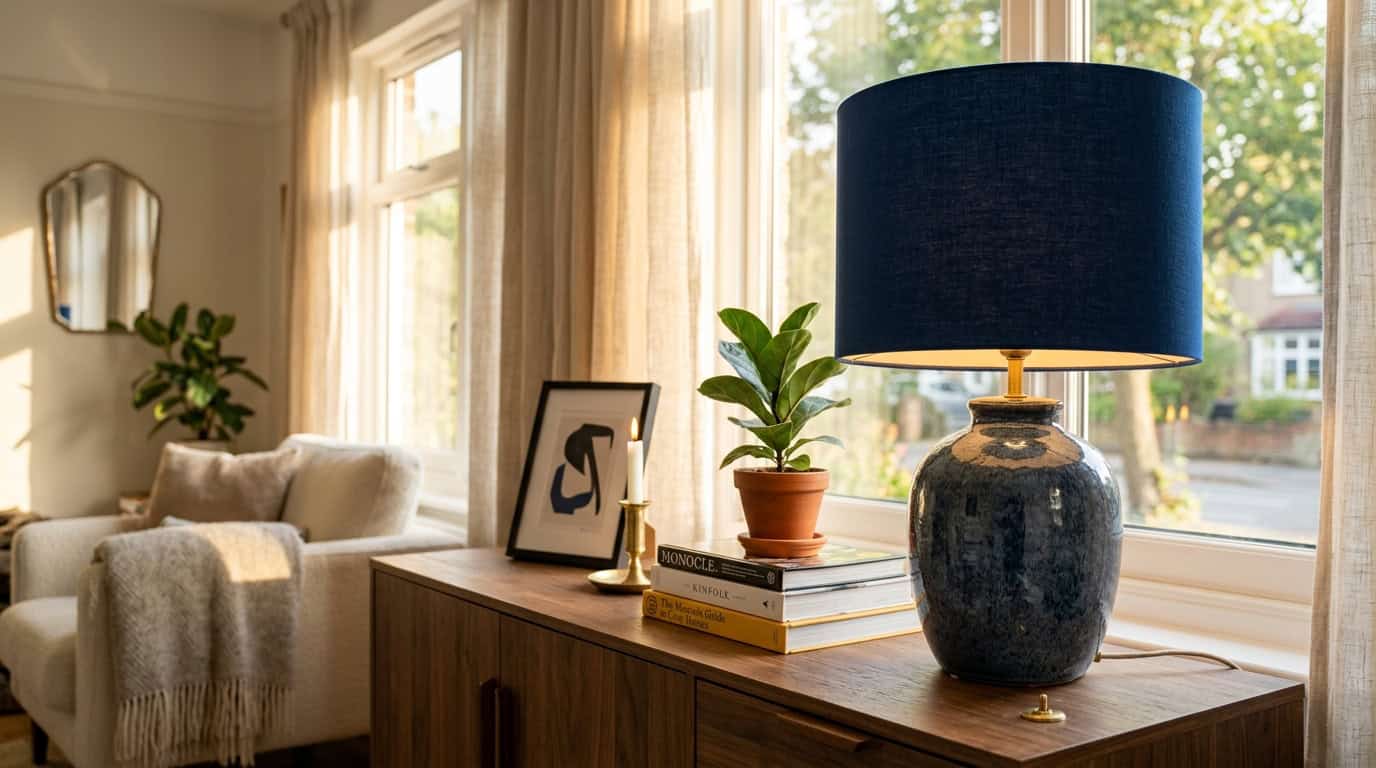
Get the fitting wrong and the shade won’t attach. Get the size wrong and even the most beautiful print will look awkward on your lamp. Get the material wrong and the light quality in your room won’t be what you expected. Those are the three things to get right.
For most US buyers: order from us.pooky.com (not the UK site), confirm your lamp uses a standard harp-and-saddle system, measure your base height to determine shade diameter, and choose card for a crisper pattern and linen for warmer ambient light. If you want a pendant shade, check that your ceiling fitting accepts a 40mm pendant ring or plan to use an adapter. Beyond that, the pattern choice is personal. Pooky’s catalog is large enough that most buyers find something that fits their room’s palette without settling.
If your room calls for a glass shade, a rattan finish, or a shape outside Pooky’s catalog (very shallow coolie, rectangular, or specialty forms), explore our full lampshade range at jxlampshade.com. We cover specialty materials and finishes that sit alongside Pooky’s price tier with direct manufacturer pricing.
Related Articles
Shop All Lampshades: JX Lampshade Collection
How to Measure a Lampshade: Step-by-Step Sizing Guide
Drum Lampshades: Styles, Sizes, and Best Lamp Pairings
Linen Lampshades: Materials, Light Quality, and Care
Pendant Lampshades: Fittings, Sizes, and Ceiling Installation
Lampshade Fitting Types: Spider, Gimbal, and Pendant Explained