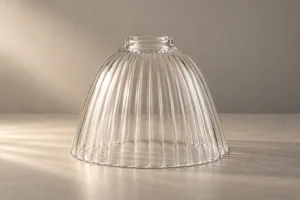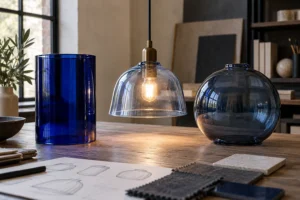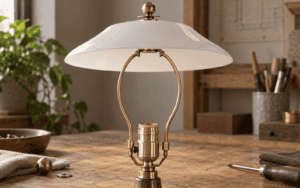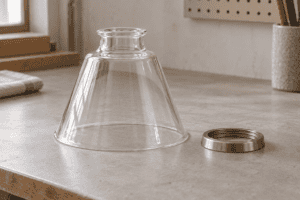
Black table lampshades diffuse light very differently from pale ones: opacity, not the black color itself, decides how much glow escapes through the fabric or glass.
You’ve probably had this moment: a black lampshade looked perfect in the store, sculptural and moody sitting on a warm wood console. You get it home, screw in a bulb, and switch it on, and the room barely brightens. The shade you bought for its looks is now fighting you on function.
That gap between how a shade photographs and how it actually lights a room is the single biggest complaint buyers have with black table lampshades, and it’s almost never mentioned on the pages that sell them. Retailers show you the silhouette. Nobody explains that a black cotton drum and a black glass globe behave like two completely different products once the bulb is on. This guide covers both: the honest tradeoffs of black shades as light diffusers, and the styling decisions that make them look intentional rather than accidental.
What Are Black Table Lampshades?
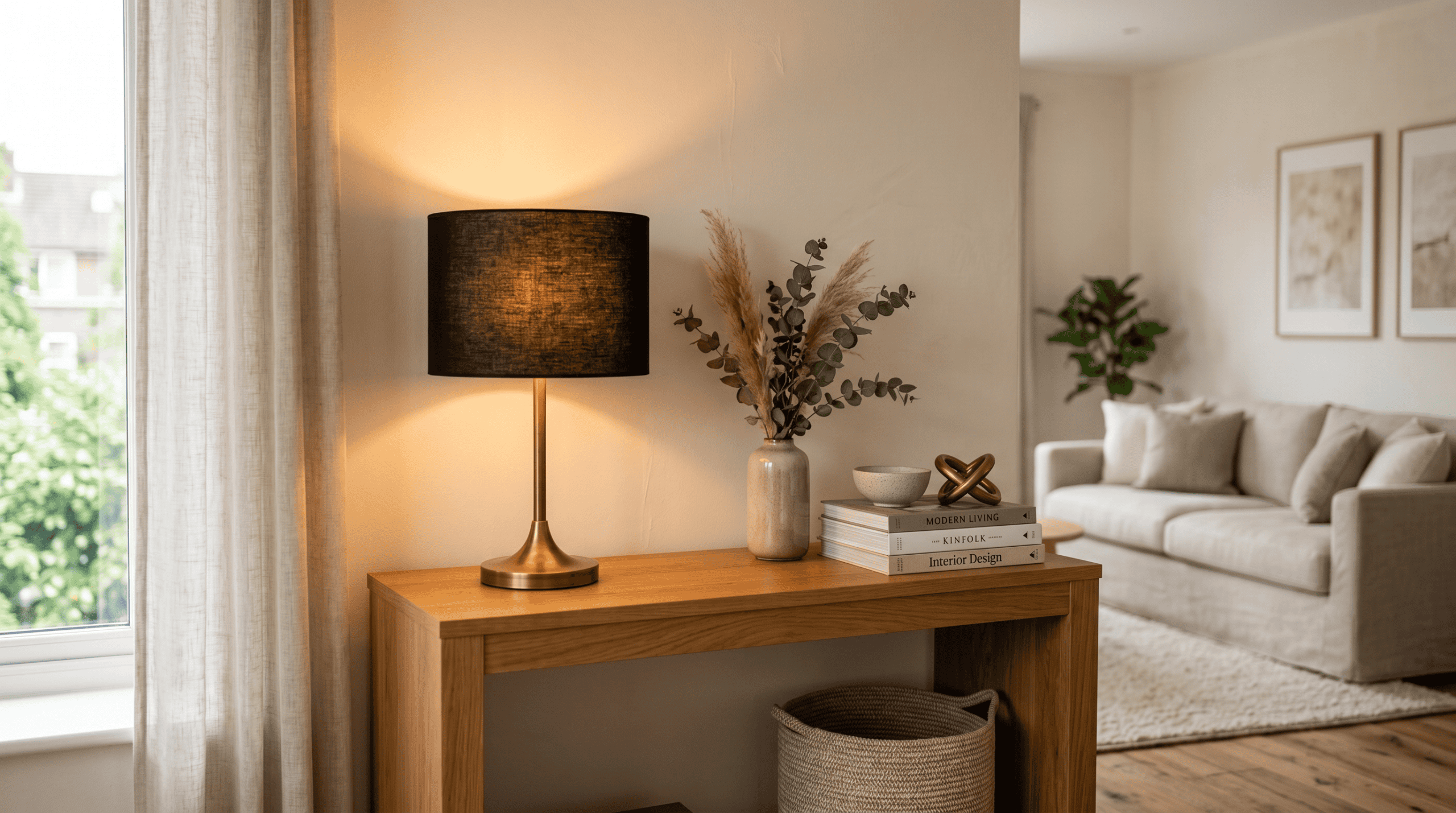
Black table lampshades are shades in any black or near-black finish (matte cotton, glossy laminate, velvet, or black glass) fitted to a table lamp base. They range from soft charcoal-black linen to deep, glassy jet black, and the finish you pick changes both the daytime look of the lamp and how much usable light it throws at night.
The lampshade itself is a fairly old invention relative to the light source it covers. As Wikipedia’s overview of the lampshade notes, shades were adopted widely once incandescent bulbs became bright enough that designers needed a way to soften glare and shape where the light actually landed. The shade’s job was never purely decorative: it was a fix for a lighting problem. Black table lampshades push that original function to its limit: they’re the shade style that redirects light the most aggressively, which is exactly why understanding the mechanism matters more here than with a pale shade that just glows evenly no matter what you do.
Why a Black Shade Looks Different Lit vs. Unlit
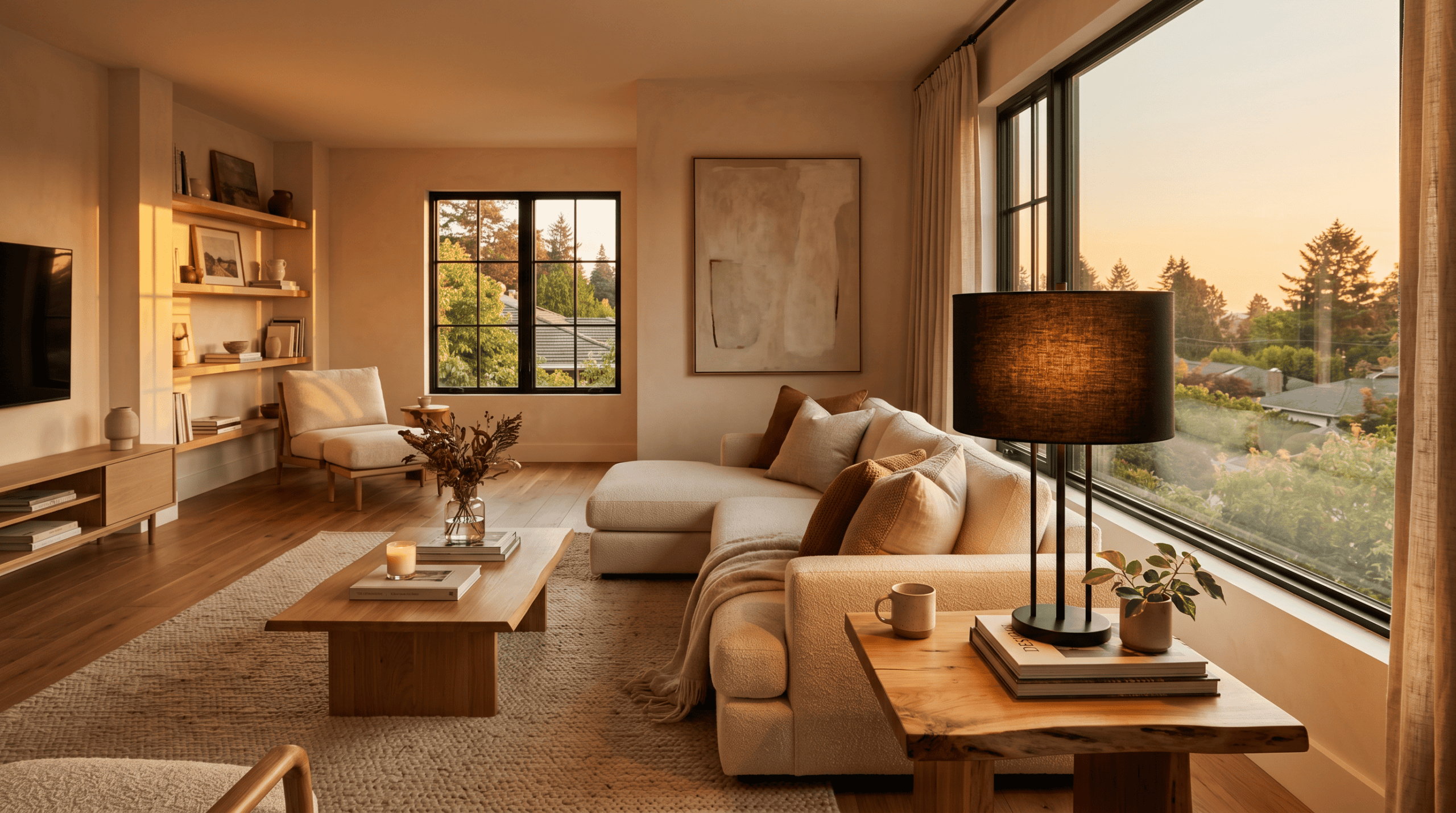
This is the detail almost every buying guide skips, and it’s the one that actually matters. Unlit, a black table lampshade reads as a solid, graphic silhouette: it’s a decor object first, a light source second. Lit, the story changes completely: black pigment absorbs light rather than transmitting it, so very little glow passes directly through the fabric wall of the shade. Instead, light escapes mostly through the open top and bottom, which is why black shades throw a strong pool of light up onto the ceiling and down onto the tabletop, but very little ambient light sideways into the room.
That’s a fundamentally different behavior from a white or cream shade, which glows evenly across its whole surface like a paper lantern. Confusingly, most product photography shows the shade lit from inside for the catalog shot (which makes it look like it glows all over), but that’s a staging trick with a bright bulb and a dark room, not how it performs under normal daytime use.
Expert tip: If you want a black table lampshade to double as a genuine light source for the room, not just a design accent, check the lining before you check the fabric outside.
Matte vs. Glossy vs. Textured Black: Comparing the Finishes
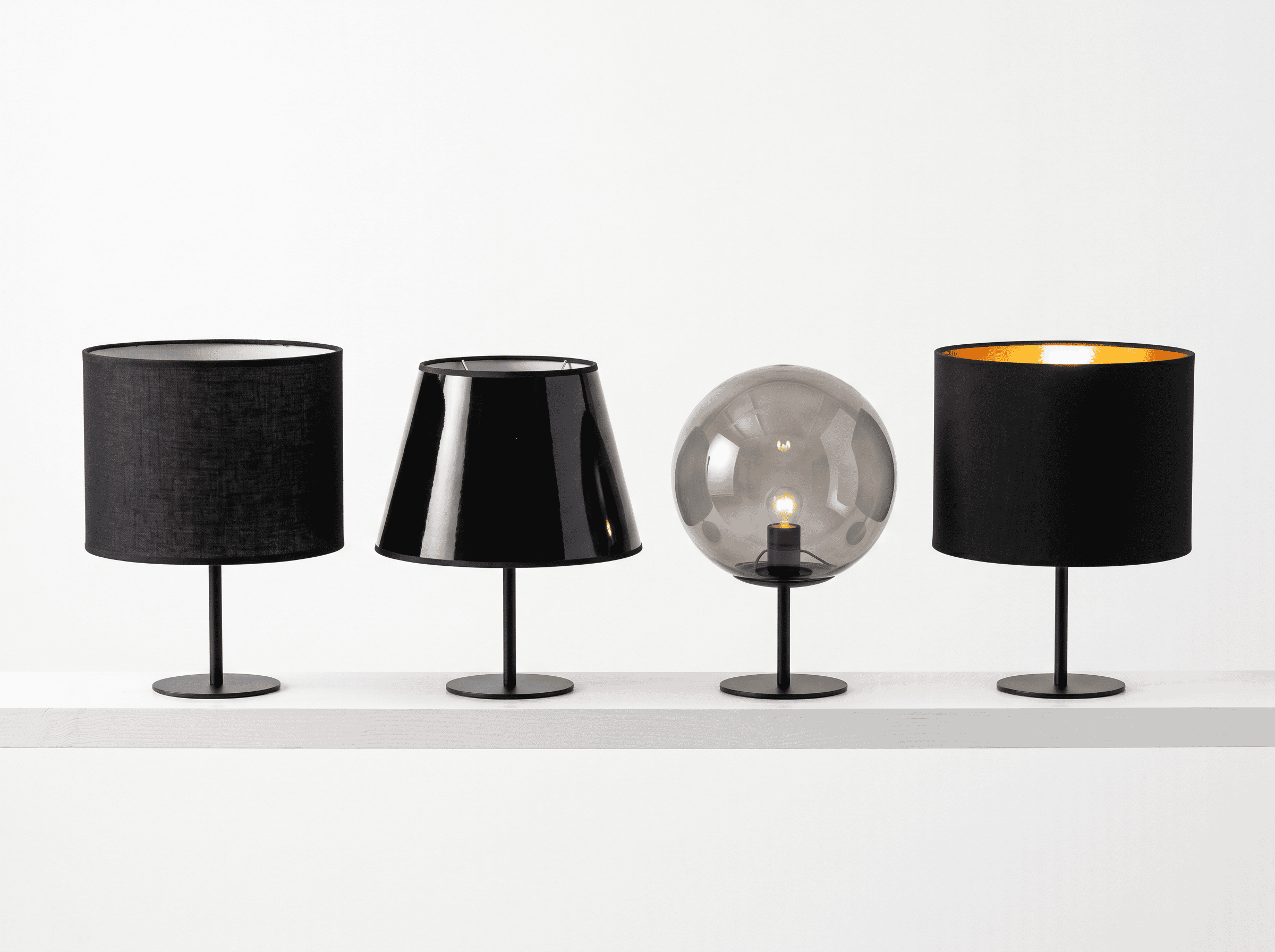
Three finish categories cover almost everything sold as a black table lampshade, and they don’t perform the same way:
- Matte black cotton or linen: the most common; absorbs the most light, softest visual texture, best for a quiet, grounded look
- Glossy black laminate or lacquer: reflects ambient room light off its surface even when off, reads more formal and sharper-edged, and lets slightly more light escape at the seams than matte fabric does
- Black glass: a different material category entirely, since glass doesn’t behave like woven fabric. Depending on tint depth, black or smoked glass can pass a surprising amount of warm light through thinner sections while staying visually dark, which is why manufacturers position smoke and black-tinted glass shades as a design compromise between drama and usable glow
| Finish | Light passed through the body | Visual weight | Best paired base |
|---|---|---|---|
| Matte black cotton/linen | Very low | Soft, grounded | Wood, brass, cream ceramic |
| Glossy black laminate | Low, slight surface reflection | Sharp, formal | Chrome, black metal, marble |
| Black or smoke glass | Low to moderate (tint dependent) | Jewel-toned, luminous edges | Brass, bronze, dark wood |
If a genuinely dark, sculptural glass option is what you’re after rather than fabric, JX’s smoke and colored glass lamp shade collection is worth a look. The tint depth is controlled at the manufacturing stage rather than dyed after the fact, which is part of why it holds color more evenly under heat than some painted glass alternatives.
Types of Black Table Lampshades
Shape and material together decide how a black table lampshade throws light and how it reads visually, and neither one alone tells the full story.
Shade Shapes: Drum, Empire, Rectangle, Bell
- Drum: straight-sided cylinder, the most even light spread of any shape, works on almost any base style
- Empire: tapered, narrower at top than base, throws more light downward and less to the sides. It’s the classic bedside-lamp silhouette
- Rectangle: pairs best with rectangular or asymmetrical bases, common on console and buffet lamps, directional light along the long axis
- Bell / coolie: steep, sloped sides, forces most light downward, useful over a desk or reading surface
Black Fabric vs. Black Glass vs. Black Metal
Fabric dominates the category by volume, but glass and metal solve different problems. Metal shades (often perforated or pierced) throw dramatic pinhole patterns and suit an industrial or mid-century look, but they run hotter to the touch than fabric (a detail covered in the safety section below). Glass holds its finish indefinitely and never needs re-covering, which matters for hospitality buyers replacing shades on a five-year refresh cycle rather than a five-year fashion cycle.
Cost and lifespan track differently across the three, too. Fabric shades are the cheapest to buy but the shortest-lived: a linen or cotton shade near a warm bulb will typically show some yellowing or fading at the top rim within a couple of years, faster if it sits in direct sun. Metal shades resist fading indefinitely but can dent, and powder-coated black finishes can chip at the rim over years of handling. Glass sits at the other end: higher upfront cost per unit, but it neither fades, dents, nor needs re-covering, which is the whole reason manufacturers pitch it to commercial buyers replacing shades across dozens of rooms rather than one.
For someone buying a single shade for a bedside lamp, that lifespan difference barely matters. Pick whichever finish looks right. For someone speccing forty identical table lamps across hotel rooms, it’s the deciding factor, because a fabric shade that needs replacing every two to three years turns into a recurring line item that a glass shade simply doesn’t.
Gold-Lined vs. White-Lined vs. Black-on-Black
The interior lining is the single highest-leverage choice in the entire buying decision, and it’s the thing black table lampshades listings mention least.
- Gold or brass lining: reflects light back through the fitter with a warm cast, the classic choice for a table lamp that needs to read as ambient and flattering
- White lining: reflects light with a neutral, brighter, slightly cooler cast than gold; better if the lamp needs to function as real task light
- Black-on-black (no reflective lining): the darkest, moodiest option, and also the dimmest, since almost all the light that would have bounced back out is absorbed instead
| Lining | Light output vs. black-on-black | Light color cast | Best use |
|---|---|---|---|
| Gold/brass | Notably higher | Warm, amber | Living room, bedroom ambiance |
| White | Highest | Neutral-bright | Desk lamp, reading corner |
| Black-on-black | Lowest (baseline) | None (pure shadow) | Accent/mood lamp only |
Where Black Table Lampshades Work Best
Black table lampshades earn their keep in rooms with a light source to spare and a decor scheme that benefits from a grounding dark note. They underperform as the sole light source in an already dim room.
Home Styling: Pairing With Brass, Wood, and Marble Bases
Warm-toned bases (brass, walnut, warm brass-and-marble combinations) soften the visual weight of a black shade and keep the whole lamp from reading as a stark silhouette. We’ve found in practice that a black table lampshade on a pale or light-wood base photographs beautifully but can look slightly unbalanced in person, because the eye expects visual weight at the top and bottom of a lamp, not just the top. Cream, warm wood, or aged-brass bases correct for this automatically.
Cool-toned pairings (black shade on chrome, black metal, or dark stone) go the opposite direction: crisp, formal, slightly gallery-like. Neither pairing is “correct”; it depends on whether the room’s other finishes lean warm or cool.
There’s a reason black reads as “grounding” in the first place rather than just heavy or somber. Color-emotion research summarized in a peer-reviewed analysis on NCBI/PMC on how lighting color temperature shapes mood and visual perception found that warmer light sources consistently shifted perceived comfort and visual weight in a room compared to cooler ones. That lines up with why a black shade under a warm-white bulb feels cozy and intentional, while the same shade under a cool white or daylight bulb can tip into feeling stark or clinical. The shade color and the bulb color temperature are making the same design statement together, not independently, so it’s worth choosing them as a pair rather than picking the shade first and treating the bulb as an afterthought.
Hospitality and Restaurant Mood Lighting
Restaurants and boutique hotels use black table lampshades deliberately for a reason home buyers often miss: a black shade limits how much of the fixture itself draws attention, which is exactly the goal at a dinner table where the light should feel ambient rather than sourced. Hospitality buyers specifying lamps for dining rooms or guest suites tend to favor gold-lined black shades specifically because the warm bounce keeps skin tones and food flattering under low light; a white-lined shade in the same setting reads too clinical for the mood most restaurants want. If you’re sourcing at volume for a property refresh, our hotel and hospitality lamp shades guide goes deeper on spec sheets and fitter standardization across a property.
There’s also a durability angle that home buyers rarely think about but hospitality buyers can’t ignore: a table lamp in a guest room gets handled far more roughly than one in a homeowner’s living room: knocked, adjusted, sat next to, occasionally spilled on. A black glass shade shrugs off that handling in a way a fabric shade doesn’t; it wipes clean instantly and won’t stain or absorb odor the way a porous fabric shade can over a hotel’s multi-year service life. That single maintenance advantage is often the deciding factor once a hospitality buyer has already settled on black as the color.
When to Skip Black Entirely
Skip a black table lampshade if the lamp is the room’s only light source, if the room already reads dark or small, or if the lamp’s job is close task work like reading fine print. In every one of those cases, the light-absorbing nature of black fabric works directly against the goal.
How to Choose: Sizing, Bulbs & Buying Mistakes
Getting a black table lampshade right comes down to three decisions made in this order: size the shade to the base first, pick the wattage and bulb color second, and choose the lining last.
Sizing to the Harp and Fitter: the Proportion Rule
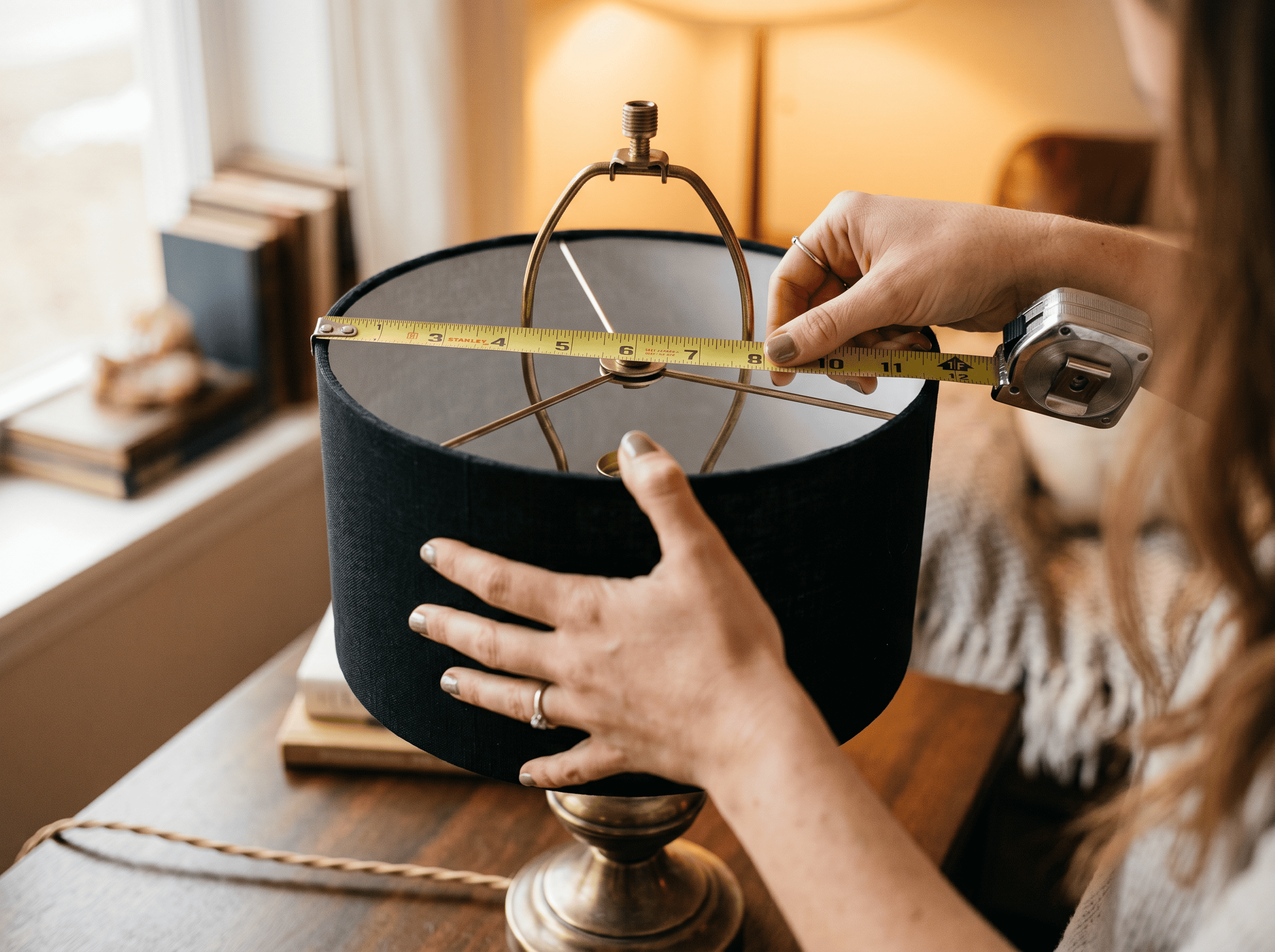
The shade’s bottom diameter should run roughly equal to the height of the lamp base, and the harp (the wire frame the shade sits on) should be tall enough that the bottom of the shade sits at or just below the socket, hiding the bulb from a standing eye-line. Undersized black shades are especially unforgiving compared to pale ones. Because so little light passes through the fabric, a shade that’s too small also concentrates whatever light does escape into a smaller, harsher pool rather than a soft glow. For fitter and harp measurement basics before you shop, our lampshade frames guide walks through the sizing math in more detail than most listing pages bother to.
Fitter type matters as much as size. Most table lamps use a spider fitter (a wire cross-frame that clips onto the harp) or a clip-on fitter (which grips the bulb directly, no harp needed). Black shades are sold in both, and mixing them up is a common return reason: a clip-on shade won’t sit right on a lamp built for a spider fitter, and vice versa. Check the existing shade or the lamp’s listing for fitter type before ordering a black replacement, not just the diameter.
Wattage and Heat Inside a Black Shade
Dark, densely woven fabrics trap more heat around the bulb than pale, loosely woven ones, simply because less infrared energy escapes as visible light through the shade wall. This isn’t a minor footnote: the U.S. Consumer Product Safety Commission’s investigation into portable lighting found that excessive bulb wattage relative to the fixture was a contributing factor in a meaningful share of fire-related lamp incidents, and separately documented that even mid-wattage halogen bulbs can reach surface temperatures several times higher than a standard incandescent of the same wattage. The practical takeaway for a black table lampshade: stay at or under the wattage printed on the harp or socket label, and favor an LED bulb, which the U.S. Department of Energy notes runs at a fraction of the surface temperature of an incandescent or halogen bulb of comparable brightness, a meaningful safety margin when the shade around it is already absorbing more heat than it releases.
Expert tip: If a black shade feels warm to the touch after an hour of use, that’s normal for fabric near a warm-white incandescent-equivalent LED. If it feels hot, drop the wattage or switch to LED. Don’t just live with it.
Picking a Lining Color for Light Output
Match the lining to the lamp’s job, not just its looks. A lamp that needs to function as real light (a console lamp doubling as entry lighting, a desk lamp) wants a white or light-gold lining. A lamp that’s purely decorative (an accent piece on a shelf, a mood lamp in a bedroom corner) can go black-on-black without losing anything functionally, because function was never the point.
The Buying Mistakes Worth Avoiding
A few patterns show up repeatedly in black table lampshade purchases that go wrong:
- Buying by silhouette alone: judging the shade purely on its unlit shape in a product photo, without checking the lining color at all
- Ignoring the harp height: a shade that’s the right diameter but sits on too-short a harp exposes the bulb and undoes the whole point of a shade
- Mismatching shade shape to base style: a heavily tapered empire shade on a wide, squat ceramic base looks top-heavy. Match the taper direction to the base’s own silhouette
- Assuming all “black” fabric is equally opaque: loosely woven black linen passes noticeably more light than a tightly woven black cotton or a lined black fabric, even at the same visual darkness
- Skipping the lining question entirely: the single highest-impact decision in the whole purchase, and the one most listings never mention
Future Trends (2026 & Beyond)
The “Warm Black” Shift
Interior design coverage heading into 2026 has consistently flagged a move away from stark, cold matte black toward warmer, softer black-brown tones (espresso, charcoal, deep coffee-black) as the fresher take on the color. For table lampshades specifically, that shift shows up as more brands blending a small amount of brown or grey pigment into what’s marketed as “black,” rather than shipping a true, flat black. The effect under warm-white LED lighting is subtler and reads less like a 2020-era matte-black-hardware trend and more like a considered, lived-in dark tone.
This tracks with a broader pullback from the stark, high-contrast black-and-white palettes that peaked a few years ago. Designers now generally treat pure, cold black as something to use sparingly and deliberately rather than as a dominant scheme. For table lampshades that means black is increasingly chosen as one grounding note in a warmer, layered room rather than as the room’s entire color story. A single black table lampshade against cream walls and warm wood reads current; an all-black-and-white room with a black shade as one more high-contrast element reads a little dated by comparison.
Tunable Bulbs Inside Dark Shades
As tunable-white and smart bulbs become standard rather than premium, they solve one of the oldest complaints about dark shades directly: instead of a fixed bulb color fighting a fabric that already blocks most transmitted light, a tunable bulb lets a black table lampshade run cooler and brighter for daytime task use and warmer and dimmer for evening mood, without buying two lamps.
The market backdrop supports continued growth in this category: global demand for lamps and lighting is forecast to keep climbing through the back half of the decade, with Statista’s market outlook projecting steady annual growth in the segment, and decorative lighting specifically (the category black table lampshades sit in) tracking a multi-billion-dollar global market with mid-single-digit annual growth through 2031 per independent market research estimates.
| Trend | What’s changing | What it means for buyers |
|---|---|---|
| Warm black pigments | Less flat/cold black, more espresso-charcoal blend | Softer look under warm-white LED |
| Tunable bulbs standard | Smart bulbs replacing fixed-color bulbs | One lamp covers task + mood lighting |
| Black glass availability | Wider tint-depth range from manufacturers | More lit-vs-unlit control than dyed fabric |
FAQ
Quick answers to the questions buyers ask most before purchasing black table lampshades.
Do black lampshades reduce light output?
Yes, noticeably. Black table lampshades absorb most of the light trying to pass directly through the fabric wall, so light escapes mainly through the open top and bottom rather than glowing across the whole shade surface. Bottom line: expect a directional pool of light, not even ambient glow, unless you pair the shade with a reflective gold or white lining.
What’s the best bulb for a black table lampshade?
A warm-white (2700K to 3000K) LED at or under the wattage printed on the harp label. LEDs run far cooler than incandescent or halogen bulbs of equivalent brightness, which matters more in a black shade because dark fabric already traps more heat than pale fabric. Bottom line: LED, warm-white, and never over the rated wattage.
Gold lining or white lining: which is better?
Gold lining gives a warmer, more flattering cast and slightly less total brightness than white; white lining gives the brightest, most neutral light. Bottom line: choose gold for ambiance (living room, bedroom), white for function (desk, reading).
Should I buy a set of 2 matching black lampshades?
Only if the lamps sit within sight of each other: on a console, flanking a sofa, on matching nightstands. Bottom line: symmetry reads intentional when the lamps are visually paired; it’s wasted if they’re in separate rooms.
Is black glass or black fabric the better choice?
Black glass holds a permanent, uniform finish and never fades or needs re-covering, but transmits a narrower range of light depending on tint depth. Black fabric is more affordable, more common, and easier to swap out later. Bottom line: glass for a permanent design statement, fabric for flexibility and lower upfront cost.
Do black lampshades fade or discolor over time?
Fabric shades, especially cheaper dyed cotton, can fade to a slightly brown or grey cast under years of direct sun or heat exposure near the bulb. Black glass does not fade; its color is set during manufacturing rather than applied as a surface dye. Bottom line: if the lamp sits in direct sunlight, glass or a high-quality solution-dyed fabric holds color longer than cheap printed cotton.
Can I paint an existing lampshade black instead of buying new?
Technically yes with fabric spray paint, but it’s rarely worth it. Spray paint stiffens fabric, can clog the weave enough to change how light passes through unpredictably, and rarely gives an even finish on a curved surface. Bottom line: for anything beyond a quick DIY accent piece, buying a purpose-made black shade gives a far more even, predictable result.
What size black table lampshade do I need?
Measure the lamp base’s height and pick a shade with a bottom diameter close to that number (roughly proportional, not exact). A base around 20 inches tall generally suits a shade in the 14 to 16 inch diameter range; a shorter 14-inch base suits something closer to 10 to 12 inches. Bottom line: proportion the shade to the base height first, then adjust for personal taste on top of that baseline.
Getting the Black Table Lampshade Right for Your Room
The buying mistake we see most often isn’t about style. It’s about treating a black table lampshade like any other shade and being surprised when it lights the room differently. It won’t glow evenly like a cream linen shade, and that’s not a defect; it’s how opaque, light-absorbing material behaves by design. Once you plan around that (sizing to the base, matching the lining to the lamp’s actual job, keeping wattage sensible), a black shade does exactly what buyers want it to: it grounds a room without shouting for attention.
Start with the job the lamp needs to do. If it’s genuine task or ambient light, lean toward a gold or white lining and a properly sized harp. If it’s a purely decorative accent (a shelf lamp, a console piece, a mood lamp in a reading nook), a black-on-black glass or fabric shade in a shape that echoes the base’s lines will do more for the room’s look than any brighter alternative could. Either way, the difference between a black table lampshade that photographs well and one that actually earns its place in daily use comes down to those few decisions, not the color itself.
None of this is a reason to avoid black. It’s a reason to buy it with eyes open. Once you do, black table lampshades reward that small amount of planning more reliably than almost any other shade color, because the tradeoffs are consistent and predictable rather than a gamble.