What Are the Different Types of Glass Lamp Shades for Commercial Lighting?

Author: Hannah, 10+ years Senior Manager
The glass lamp shade specification decision fundamentally determines fixture performance, aesthetic character, and commercial viability. For lighting manufacturers and specifiers navigating commercial projects—from hospitality rollouts to corporate campuses, healthcare facilities to retail environments—understanding the technical distinctions between glass types, forming methods, and finishing options separates successful product development from costly field failures.
As a custom glass lamp shade manufacturer operating integrated production across borosilicate, soda-lime, and lead crystal specialties, we’ve supplied over 3.2 million commercial-grade shades to fixture brands in 52 countries. This comprehensive analysis examines the seven primary glass lamp shade categories dominating commercial lighting specification, their manufacturing processes, performance characteristics, and optimal application contexts.

Category 1: Pressed Borosilicate Glass Shades


Technical Foundation and Manufacturing Process

Pressed borosilicate represents the engineering-grade standard for high-performance commercial lighting. The manufacturing process begins with electrically heated furnaces melting raw batch—silica sand (SiO₂), boron oxide (B₂O₃), alumina, and fluxing agents—at 1,250°C to 1,300°C. This composition yields the distinctive 3.3 × 10⁻⁶/K thermal expansion coefficient that defines borosilicate’s superior thermal shock resistance.
In glass lamp shade factory production, molten glass flows from the furnace forehearth into precision steel or cast iron molds mounted on automated pressing machines. A plunger mechanism applies 50-200 bar pressure, forcing glass into mold cavities with dimensional tolerances achieving ±0.5mm on critical features. The pressed parison transfers to annealing kilns for controlled cooling over 18-24 hours, eliminating internal stresses that would otherwise cause spontaneous fracture.
 

Commercial Applications

High-Output Downlights: Thermal management in 15W+ LED COB fixtures demands borosilicate’s heat resistance. Standard soda-lime shades experience thermal stress failures at junction temperatures exceeding 120°C, while borosilicate maintains integrity beyond 200°C surface temperatures.
Outdoor Architectural Lighting: Freeze-thaw cycling, solar loading, and precipitation exposure destroy conventional glass within 3-5 years. Borosilicate installations demonstrate 15+ year service life with minimal optical degradation.
Food Service and Healthcare: Steam cleaning, autoclave sterilization, and aggressive disinfectant exposure mandate borosilicate’s chemical inertness and thermal shock resistance.
Custom Glass Lamp Shade Considerations: Pressed borosilicate requires dedicated tooling investment ($4,000-$12,000 for production molds) and minimum order quantities typically 500-1,000 units. However, the material enables precision features—internal threads, mounting bays, optical prisms—impossible through alternative forming methods.

Category 2: Blown Soda-Lime Glass Shades


Artisan and Semi-Automated Production

Soda-lime glass, comprising approximately 72% SiO₂, 14% Na₂O, 10% CaO, and 4% MgO/Al₂O₃, dominates decorative lighting through its optical clarity, color compatibility, and forming versatility. Two distinct production methodologies serve commercial markets:
Machine Blowing: Automated IS (Individual Section) machines gather molten glass gobs, transfer to blow molds, and apply compressed air forming. Production rates reach 30-60 pieces per minute for standard shapes, with wall thickness control of ±15% and dimensional tolerances ±2mm.

Hand Blowing: Master glassblowers gather molten glass on blowpipes, manipulate with hand tools, and inflate to final dimensions. Production rates of 10-30 pieces per hour yield organic variation and complex geometries impossible through automation.

Optical and Economic Characteristics

Soda-lime’s 1.518 refractive index produces brilliant light transmission and sparkle valued in decorative applications. However, the 9.1 × 10⁻⁶/K thermal expansion coefficient restricts applications involving steep thermal gradients. The material’s lower raw material cost—approximately 40% below borosilicate—enables competitive pricing for temperature-moderate environments.
 

Commercial Deployment

Hospitality Decorative Pendants: Restaurants, hotels, and residential lobbies prioritize aesthetic warmth over thermal extremes. Hand-blown soda-lime shades provide the “touch of the maker” differentiation commanding $800-$2,400 fixture price points.
Retail Ambient Lighting: Moderate-output LED installations (under 10W) where thermal management is engineered into fixture housing rather than shade material.
Cost-Optimized Commercial Rollouts: Large-scale office or educational installations where specification-grade performance is sacrificed for budget compliance.
Glass Lamp Shade Manufacturer Sourcing: Soda-lime production concentrates in traditional glassmaking regions—Murano, Bohemia, Foshan—where generational craft skills coexist with modern factory automation. Vertical integration from batch melting through finishing provides quality control and supply security unavailable from merchant glass processors.

Category 3: Opal and Diffused Glass Shades


Light Engineering Through Material Modification

Opal glass achieves diffuse light transmission through controlled phase separation or fluoride opacification, creating thousands of microscopic glass-glass interfaces that scatter light without absorption. Two technical approaches dominate custom glass lamp shade factory production:
Fluoride Opal: Addition of fluorides (NaF, CaF₂, AlF₃) to glass batch creates fluoride crystallites 50-200nm in size. This “superwhite” opal achieves 60-75% diffuse transmission with excellent color rendering (CRI maintenance >95).
Phosphate Opal: Phosphate additions produce larger scattering centers and warmer tone, preferred for residential and hospitality applications seeking reduced glare intensity.
 

Commercial Specification Drivers

Glare Control: UGR (Unified Glare Rating) compliance in office environments often mandates opal diffusion. Direct-view LED sources require 60%+ diffusion to achieve UGR <19 for open-plan workspaces.
Beam Shaping: Opal shades with engineered thickness variation create asymmetric distribution patterns, directing light toward work surfaces while maintaining ambient uniformity.
Aesthetic Softness: The “glowing volume” effect of opal glass transforms point sources into luminous architectural elements, valued in boutique hospitality and high-end residential specification.
Manufacturing Complexity: Opal glass requires precise batch chemistry and controlled melting atmospheres. Inconsistent fluorine volatilization produces “streaking” or color variation that rejects entire production lots. Experienced glass lamp shade manufacturers maintain dedicated opal furnaces with 72-hour color transition protocols to ensure batch-to-batch consistency.

Абажур из стекла, выдувка рта

Боросиликатное стекло для абажуров

Абажур из прессованного стекла
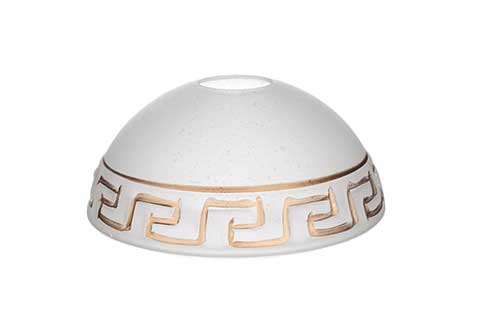
Центробежный стеклянный абажур

Изогнутый стеклянный абажур

Ручной работы стеклянный абажур

Category 4: Crystal and Lead Glass Shades


Density, Brilliance, and Heritage Craft

Lead crystal—containing 24-30% lead oxide (PbO)—replaces calcium with lead in the glass network, increasing density to 3.0-3.2 g/cm³ and refractive index to 1.545-1.560. The resulting optical properties—exceptional brilliance, spectral fire, and weight—define luxury lighting segments.

Manufacturing Distinctions

Lead glass’s lower working viscosity and extended plastic range favor hand-working techniques:
  • Cut crystal: Diamond wheel cutting and polishing creates prismatic facets that refract light into spectral components
  • Mold-blown crystal: Patterned molds impart surface texture without secondary cutting
  • Pressed crystal: High-lead compositions pressed into detailed molds for mass-produced decorative elements

Regulatory and Market Evolution

Environmental regulations—EU REACH restrictions, California Proposition 65—have pressured lead content reduction. Modern custom glass lamp shade manufacturers offer “lead-free crystal” formulations using barium, zinc, or titanium oxide substitutions achieving 90-95% of lead crystal optical performance without regulatory liability.
 

Commercial Positioning

Heritage and Traditional Fixtures: Restoration projects, classical architectural contexts, and luxury residential where material authenticity justifies regulatory compliance costs.
Statement Lighting: Chandeliers, pendants, and sconces where shade material itself constitutes the design focal point rather than functional light distribution.
Gift and Decorative Markets: Limited-edition pieces where material preciousness supports premium pricing.

Category 5: Tempered and Heat-Strengthened Glass Shades


Safety Engineering Through Thermal Treatment

Tempered glass—produced by heating annealed glass to 620-650°C then rapid air quenching—creates surface compression (80-150 MPa) balanced by interior tension. This stress state fundamentally alters failure mechanics: tempered glass shatters into small granular fragments rather than sharp shards, satisfying safety glazing requirements.
Heat-strengthened glass undergoes similar but less aggressive treatment, achieving 40-70 MPa surface compression. It retains annealed glass fracture patterns (large shards) but offers 2× mechanical strength and improved thermal resistance.
 

Commercial Lighting Applications

Public and High-Traffic Spaces: Building codes often mandate tempered glass for fixtures below 2.5m mounting height or in vulnerable locations.
Food Service and Preparation: NSF and health department regulations frequently require tempered glass in kitchen and dining areas.
Outdoor and Vandal-Prone Installations: Mechanical strength resists impact damage; when failure occurs, granular fragments reduce liability exposure.
Technical Constraints: Tempering distorts optical precision—flatness deviations of 0.3-0.5% are typical. Post-tempering cutting or drilling is impossible; all fabrication must precede thermal treatment. These restrictions limit tempered glass applicability in precision optical applications.

Category 6: Specialty Coated and Surface-Modified Glass Shades


Functional Surface Engineering

Beyond bulk glass composition, surface treatments extend glass lamp shade functionality:
Vacuum Metallizing: Aluminum or silver deposition in vacuum chambers creates reflective surfaces with 90-95% reflectance. Interior metallization of pendant shades directs light downward while maintaining exterior aesthetic. Exterior metallization produces mirror or semi-reflective decorative effects.
Dichroic Coatings: Thin-film interference coatings deposited via physical vapor deposition (PVD) transmit selected wavelengths while reflecting others. The “color-shift” effect—transmission color differing from reflected color—creates dynamic lighting effects valued in entertainment and architectural accent applications.
Anti-Reflective (AR) Coatings: Magnesium fluoride or multi-layer dielectric coatings reduce surface reflectance from 8% to <1% per surface, maximizing light transmission for museum, photographic, and scientific lighting.
Hydrophobic/Oleophobic Coatings: Fluoropolymer treatments reduce surface energy, preventing water spotting and fingerprint adhesion in outdoor or high-touch applications.
 

Manufacturing Integration

Surface coating requires specialized glass lamp shade factory infrastructure: vacuum chambers (10⁻⁵ mbar), PVD sputtering systems, and cleanroom environments. Batch processing economics favor minimum quantities of 500-2,000 pieces depending on coating complexity. In-line coating for high volumes (10,000+ units) enables cost reduction but requires dedicated production lines.

Category 7: Recycled and Sustainable Glass Shades


Environmental Performance as Specification Criteria

Post-consumer recycled glass (PCR) incorporation—30-100% cullet content—reduces virgin material demand and melting energy consumption (approximately 25% energy reduction per 10% cullet increase). However, optical consistency challenges limit commercial lighting applications:
  • Color variation: Recycled glass introduces iron and chromium contaminants producing greenish tint
  • Seed and bubble: Re-melting history increases gaseous inclusions
  • Chemical inconsistency: Mixed source cullet creates unpredictable working properties
Carbon-Neutral Production: Some glass lamp shade manufacturers achieve net-zero emissions through renewable energy (solar, wind), electric melting (replacing fossil fuel combustion), and verified carbon offset purchases. Premium pricing of 10-25% reflects these investments but enables client ESG compliance and green building certification (LEED, BREEAM).
 

Market Positioning

Corporate Sustainability Mandates: Fortune 500 headquarters, government facilities, and institutional clients with carbon reduction commitments increasingly require documented sustainable sourcing.
Consumer Brand Differentiation: Residential lighting brands targeting environmentally conscious demographics leverage recycled content as marketing differentiation.
Technical Limitations: High-optical-performance applications (museum, medical, precision architectural) generally require virgin material consistency unavailable from current recycled glass processing.

Индивидуальные приложения стеклянных абажуров для ламп
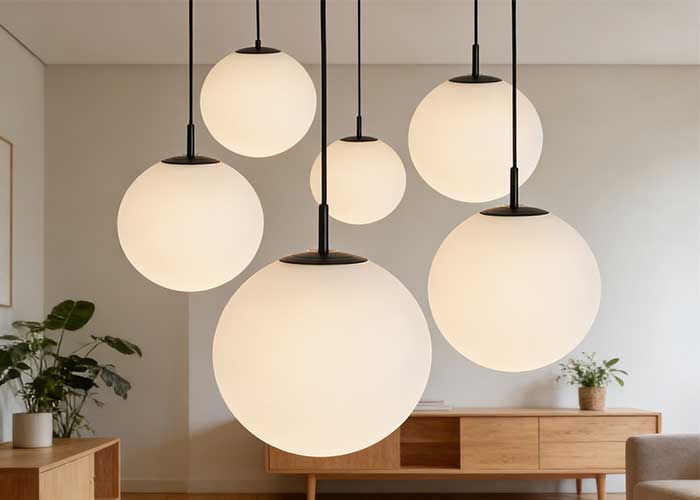
Элегантные стеклянные абажуры для стильных решений освещения.

For Home Decoration

В домах они обеспечивают мягкое и комфортное освещение, улучшая гостиную, спальни и столовые с элегантным дизайном и сбалансированным распределением света.
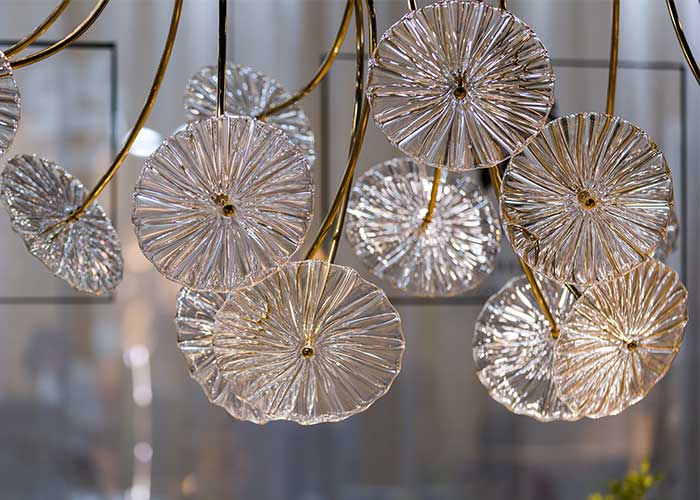
Элегантные стеклянные абажуры с замысловатыми цветочными узорами для стильного внутреннего освещения.

For Cafes & Restaurants

В кафе и ресторанах наши стеклянные абажуры помогают создавать теплую и уютную атмосферу, поддерживая как современные, так и классические стили интерьера, улучшая общий опыт посетителей.
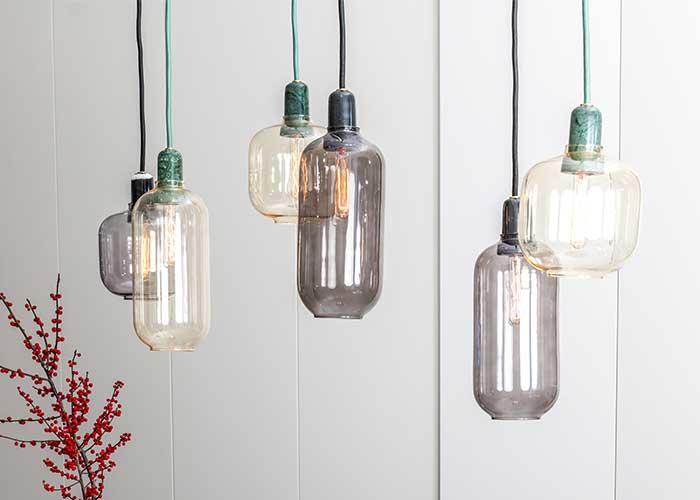
Современные стеклянные подвесные лампы, висящие в стильной композиции для домашнего освещения.

For Hotel

Для гостиниц и проектов в сфере гостеприимства наши продукты обеспечивают стабильное качество, изысканный внешний вид и надежную работу, соответствуя высоким стандартам для номеров, лобби, коридоров и общественных пространств.
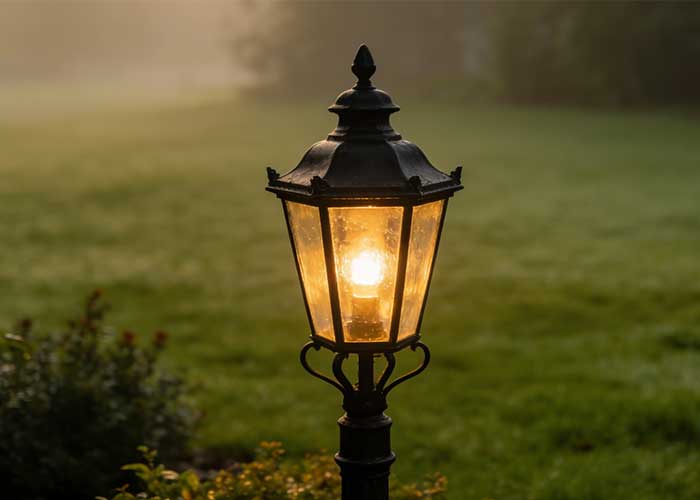
Уличный стеклянный абажур для уличных фонарей для освещения сада или тропинки.

For Lawn Lights

Для садовых светильников они имеют современный, элегантный внешний вид, идеально подходят для садов, патио и внешних пространств.
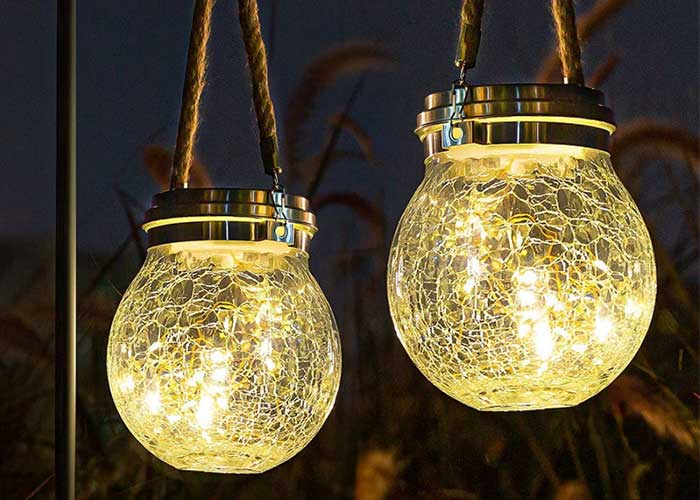
Элегантные стеклянные гирлянды для внутреннего и наружного освещения, идеально подходят для домашнего декора и мероприятий.

For Outdoor Courtyard

Наружные стеклянные лампы прочные, водонепроницаемые и легко очищаются. Они устойчивы к выцветанию, дождю и высоким температурам, обеспечивают мягкое, равномерное освещение и имеют долгий срок службы.
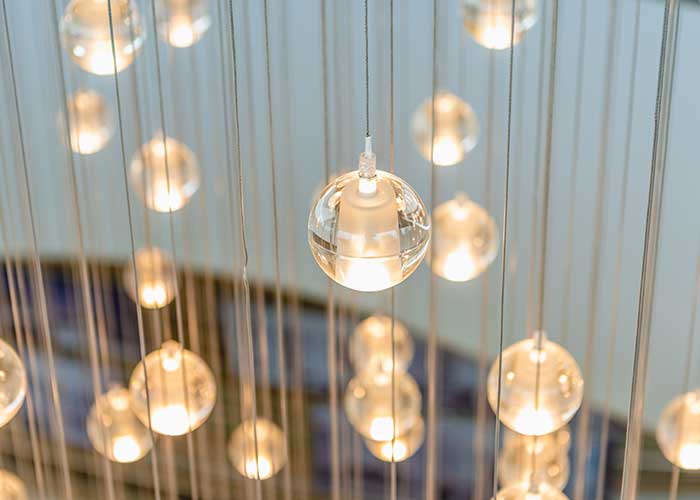
Современные стеклянные абажуры, висящие с потолка, декоративные светильники для дома и коммерческих помещений.

For Engineering

Для инженерных проектов наши продукты обладают высокой прочностью, термостойкостью и отличной стойкостью к погодным условиям. Стабильная передача света, безопасность и долговечность, идеально подходят для инженерных и наружных применений.

Quality Verification and Supplier Qualification


Assessing Glass Lamp Shade Manufacturer Capabilities

Technical specification achieves value only through manufacturing execution. Qualification criteria for индивидуальных стеклянных абажуров suppliers include:
Material Certification: Request batch-specific chemical analysis confirming composition. Borosilicate should demonstrate B₂O₃ content 12-13%, expansion coefficient 3.3 ± 0.2 × 10⁻⁶/K.
Process Control Documentation: For critical applications, audit furnace control charts, annealing kiln temperature profiles, and statistical process control data.
Testing Capabilities: In-house thermal shock testing (20°C to 300°C cycling), photometric measurement (integrating spheres, goniophotometers), and mechanical testing (impact, pressure) indicate sophisticated quality infrastructure versus subcontracted validation.
Vertical Integration: Facilities melting raw batch provide material traceability and customization impossible from merchant glass processors. However, specialized glass lamp shade factories sourcing certified tubing may offer superior forming expertise for specific applications.

Часто задаваемые вопросы


What glass type offers the best value for commercial LED downlights?

Pressed borosilicate 3.3 provides optimal total cost of ownership for high-output LED applications. While unit material cost exceeds soda-lime by 60-80%, elimination of thermal failure warranty claims (typically 2-5% of revenue with inferior materials) and 15+ year service life justify investment. For outputs below 10W with engineered thermal management, soda-lime opal offers acceptable performance at reduced cost.

How do hand-blown and machine-made glass shades differ in commercial specification?

Hand-blown shades provide organic variation and complex geometries valued in decorative segments, with individual piece times of 10-30 minutes. Machine-made shades achieve ±2mm dimensional consistency and 30-60 pieces per minute production rates, essential for large-scale commercial rollouts requiring uniformity. Specification decisions hinge on aesthetic priorities versus volume requirements and budget constraints.

Can a single glass lamp shade factory produce multiple glass types?

Integrated facilities typically specialize. Borosilicate and soda-lime require dedicated furnaces—cross-contamination of even trace boron destroys soda-lime working properties, while sodium contamination compromises borosilicate thermal resistance. Large custom glass lamp shade manufacturers operate separate production lines; smaller facilities focus on single material families. Verify material-specific expertise rather than assuming universal capability.

What lead times should lighting brands expect for custom glass production?

Standard catalog items from stock: 2-4 weeks. Custom tooled production: 12-16 weeks initial order (including 4-6 week mold fabrication), reducing to 6-8 weeks for repeat orders. Hand-blown artisan pieces: 8-12 weeks depending on complexity and artisan availability. Ocean freight from Asian manufacturing adds 4-6 weeks; air freight reduces to 1 week at 300-500% cost premium.

How do surface treatments affect glass shade durability?

Acid etching and sandblasting reduce surface integrity, potentially decreasing mechanical strength by 20-40%. However, for thermal shock performance, these treatments often prove beneficial—surface compression from differential cooling during etching can improve thermal resistance. Vacuum-metallized coatings require protective overcoats (silica or polymer) to prevent oxidation and abrasion in high-touch applications.

What testing validates glass shade compliance with commercial building codes?

ASTM C1048 (heat-treated flat glass), ASTM C1279 (non-destructive stress evaluation), and ANSI Z97.1 (safety glazing) provide standardized validation. For international projects, EN 12150 (thermally toughened soda-lime silicate safety glass) and EN 14179 (heat-soaked thermally toughened soda-lime silicate safety glass) apply. Glass lamp shade manufacturers should provide test reports from accredited laboratories (SGS, Intertek, Bureau Veritas).

How does recycled glass content affect optical performance?

Post-consumer recycled glass introduces iron and chromium contaminants producing greenish tint and reduced transmission (typically 5-15% below virgin material). For applications where color accuracy and maximum output are critical, virgin material is recommended. For ambient and decorative applications where slight color variation is acceptable, 30-50% recycled content achieves sustainability objectives without significant performance compromise.

What distinguishes pharmaceutical-grade from standard commercial glass shades?

Pharmaceutical and medical lighting requires: (1) USP Type I or EP Type I borosilicate glass certification confirming hydrolytic resistance; (2) validated cleaning and sterilization protocols (autoclave, gamma irradiation, hydrogen peroxide vapor compatibility); (3) particulate and extractable testing per USP <788> and <1661>; (4) complete batch traceability from raw material through finished device. Standard commercial glass lamp shade factories lack these validation systems; medical-grade suppliers maintain dedicated cleanroom production and quality systems.

Can glass shades be repaired or refinished in the field?

Glass is fundamentally unrepairable—thermal or mechanical damage requires replacement. Some surface degradation (mineral deposits, organic residue) can be addressed through appropriate cleaning protocols. Never attempt field cutting, drilling, or grinding—uncontrolled stress introduction guarantees subsequent failure. Specify replacement stock for critical installations, or partner with custom glass lamp shade manufacturers offering rapid-turnaround replacement programs.
 

How do lighting brands protect intellectual property for custom glass designs?

Three mechanisms: (1) Design patents protect ornamental appearance for 15 years (US) or 25 years (EU); (2) Utility patents cover functional innovations (mounting systems, optical features); (3) Contractual exclusivity agreements with glass lamp shade manufacturers prevent design replication for competing clients. Mold ownership clauses and non-disclosure agreements provide additional protection. Note that pure geometric forms and functional shapes may not qualify for design patent protection.

Conclusion: Strategic Glass Specification

 
The diversity of glass lamp shade types available to commercial lighting specifiers reflects centuries of materials science development and manufacturing refinement. No single glass type dominates all applications; optimal specification requires matching material properties—thermal, optical, mechanical, chemical—to specific installation demands, budget parameters, and design intentions.
Successful lighting brands develop deep partnerships with custom glass lamp shade manufacturers whose technical capabilities span multiple material families and forming methodologies. This integration enables responsive product development, consistent quality execution, and supply security essential for commercial market success.
The technical distinctions outlined in this analysis provide foundation for informed specification. However, final material and process selection benefits from direct consultation with manufacturing engineers who can evaluate specific design geometries, performance requirements, and volume projections against production capabilities and economic constraints.

Общие вопросы

Yancheng Jingxin Glassware Co., Ltd. является профессиональным производителем стекла established in 1999. We operate our own production base and office area of more than 48,430 sq ft (approximately 4,500 m²), integrating design, manufacturing, quality control, and export services.

Мы производим широкий ассортимент индивидуальных стеклянных абажуров  включая ламповые абажуры из стекла, прессованные стеклянные абажуры, абажуры из боросиликатного стекла, центробежные стеклянные абажуры и т. д. Наши возможности охватывают OEM и ODM производство для различных применений и отраслей.

Да, мы предоставляем полный спектр услуг по индивидуализации OEM и ODM включая:

  • Проектирование и инженерное развитие индивидуальных продуктов
  • Разработку собственных форм
  • Печать логотипов и брендинг
  • Обработку поверхности и отделку
  • Индивидуальные решения по упаковке

Да, наша команда дизайнеров может разработать индивидуальную посуду из стекла по вашей концепции. Мы предоставляем профессиональные услуги по дизайну на основе ваших идей, образцов-отсылок или функциональных требований — без необходимости технических чертежей для начала работы.

Наш процесс обеспечивает качество перед массовым производством

Подтверждение дизайна с клиентом

Разработка формы в нашем цехе

Производство образцов для утверждения

Тестирование и обратная связь от клиента

Массовое производство только после окончательного утверждения образца

Мы предлагаем комплексную индивидуальную упаковку для безопасной международной доставки:

  • Защитные внутренние упаковочные материалы
  • Экспортные картонные коробки
  • Индивидуальные цветные коробки и розничная упаковка
  • Печать этикеток и брендинг
  • Упаковка, соответствующая стандартам международных перевозок
  • Инспекция на каждом этапе производства
  • Научные процедуры контроля качества
  • Предварительная проверка каждой партии перед отправкой
  • Соответствие международным экспортным стандартам
  • Сертифицированные системы управления качеством

Мы работаем несколькими производственными линиями с опытными работниками, обеспечивая стабильное массовое производство для заказов любого размера. Наше предприятие гарантирует стабильное качество и надежную своевременную доставку как для небольших партий, так и для крупномасштабных заказов.

Сроки выполнения зависят от сложности и объема заказа:

  • Catalog/light customization: 25–30 days for orders up to 1,000 pieces
  • Orders of 1,000–5,000 pieces: 35–45 days
  • Full custom OEM with new molds: 45–65 days; final timing is confirmed by project

Мы экспортируем в более чем 120 стран и регионов по всему миру, включая:

  • Северная Америка (Россия, Россиянин)
  • Европа (Россия, Германия, Франция и др.)
  • Рынки Азиатско-Тихоокеанского региона
  • Ближний Восток
  • Африка
  • Океания (Россия, Новая Зеландия)

Мы поддерживаем всеобъемлющую глобальную сеть распространения.

Запросить коммерческое предложение Готовы сотрудничать? Создайте проект с нами!

ЗАПРОСИТЬ КОММЕРЧЕСКОЕ ПРЕДЛОЖЕНИЕ
Прокрутить вверх
ЗАПРОСИТЬ КОММЕРЧЕСКОЕ ПРЕДЛОЖЕНИЕ