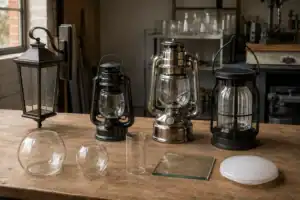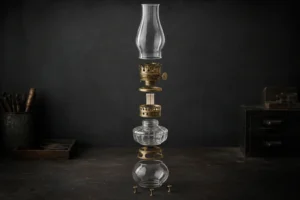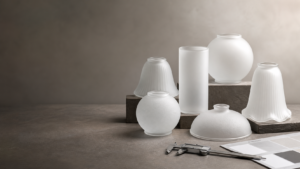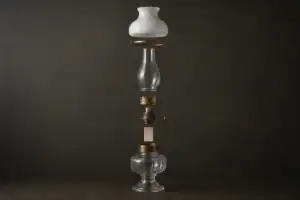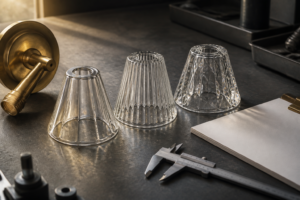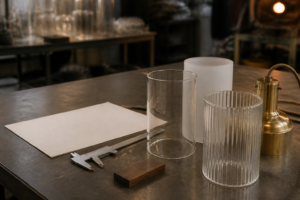
Wall light shades diffuse bulb glare, shape the direction and quality of ambient light, and define the decorative character of any wall-mounted fixture.
Picture this: you switch on a bare-bulb wall sconce, and instead of warm atmosphere you get a harsh, hospital-corridor blast of light. Add the right wall light shade and the whole room shifts — shadows soften, the ceiling glows, and the fixture suddenly looks intentional. The shade is doing at least half the design work.
Yet most guides jump straight into product listings without answering the questions that actually matter before you buy: What shape works best on a wall versus a table lamp? Which material survives a steamy bathroom? How do you measure for a replacement without guessing? This guide covers all of it — from the physics of shade materials to a step-by-step replacement walkthrough and the styles dominating 2026 interiors.
What Are Wall Light Shades?
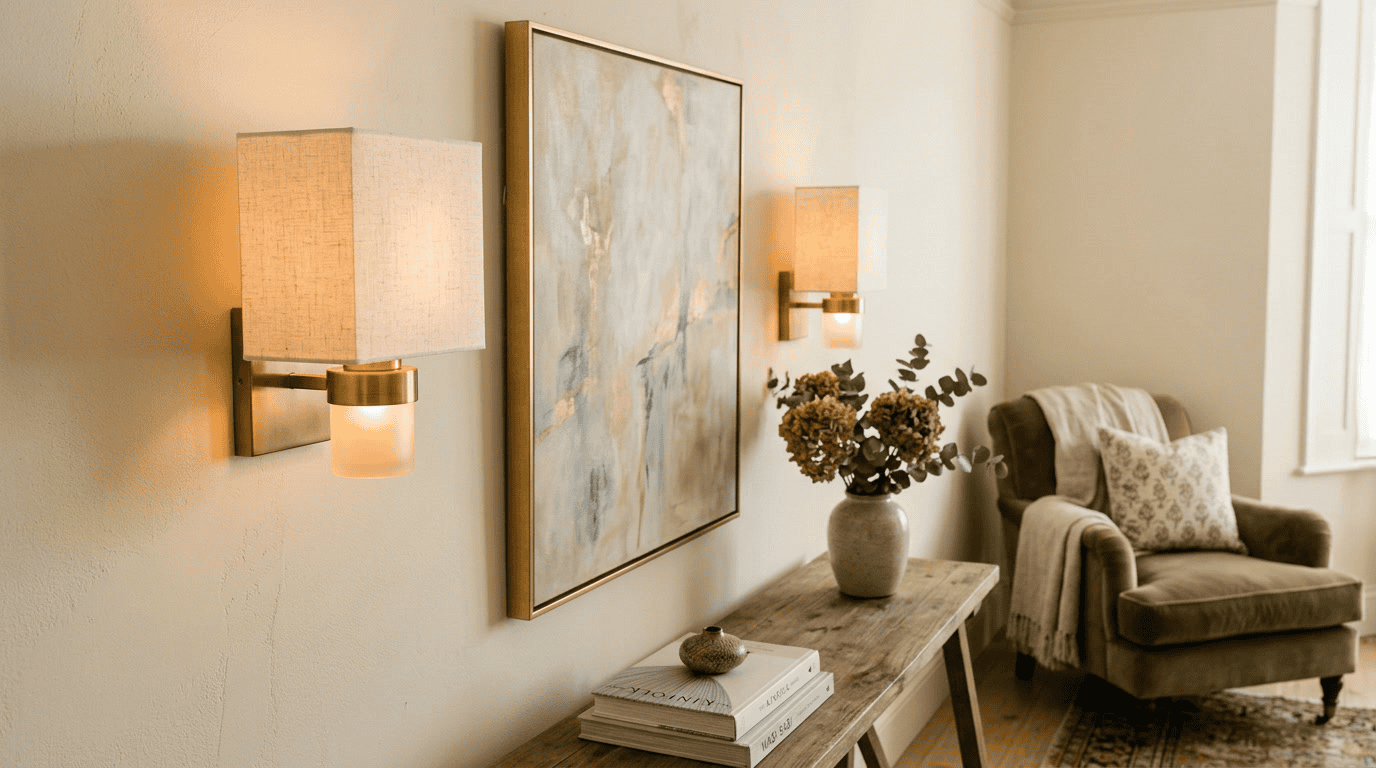
Wall light shades are purpose-built covers fitted over wall-mounted light fixtures to control light output, reduce glare, and add decorative character.
Unlike table-lamp shades, which sit on a harp above the bulb, wall light shades must work in a more constrained geometry: they project from a vertical surface, often close to eye level, which means glare control is non-negotiable. A table shade that looks fine at floor level becomes blinding when it’s mounted at face height on a corridor wall.
The earliest lampshades appeared shortly after Thomas Edison and Joseph Swan independently developed the incandescent filament bulb in 1879. As Wikipedia’s history of the lampshade explains, early 20th-century designers immediately set about reducing the intense glare from electric lamps — initially with blown glass domes, then with fabric over wire frames. Tiffany Studios popularized leaded stained-glass shades, which are still made and sold today.
Modern wall light shades serve three overlapping functions:
- Glare diffusion — the shade material scatters or absorbs direct light rays, reducing the harshness of a bare bulb at eye level.
- Light direction — the shape of the shade determines whether light projects upward (uplighter), downward (downlighter), to the sides, or in a soft 360° ambient wash.
- Decoration — the shade material, color, and silhouette are often the most visible design element of the whole fixture.
The Fitter: How a Shade Attaches to a Wall Fixture
Before buying any wall light shade, identify the fitter type on your fixture. The three most common options:
- UNO fitter — a threaded collar that screws onto the lamp socket neck; the standard for most American wall sconces.
- Clip-on fitter — a spring-loaded clip that grips the bulb itself; common on small decorative sconces and chandeliers.
- Finial/harp fitter — a saddle that spans two vertical wires (the harp), locked by a decorative finial nut; rare on wall fixtures but seen on larger swing-arm sconces.
Getting the fitter type wrong means the shade will wobble, tilt, or simply not fit. Measure before you order.
Types of Wall Light Shades by Shape
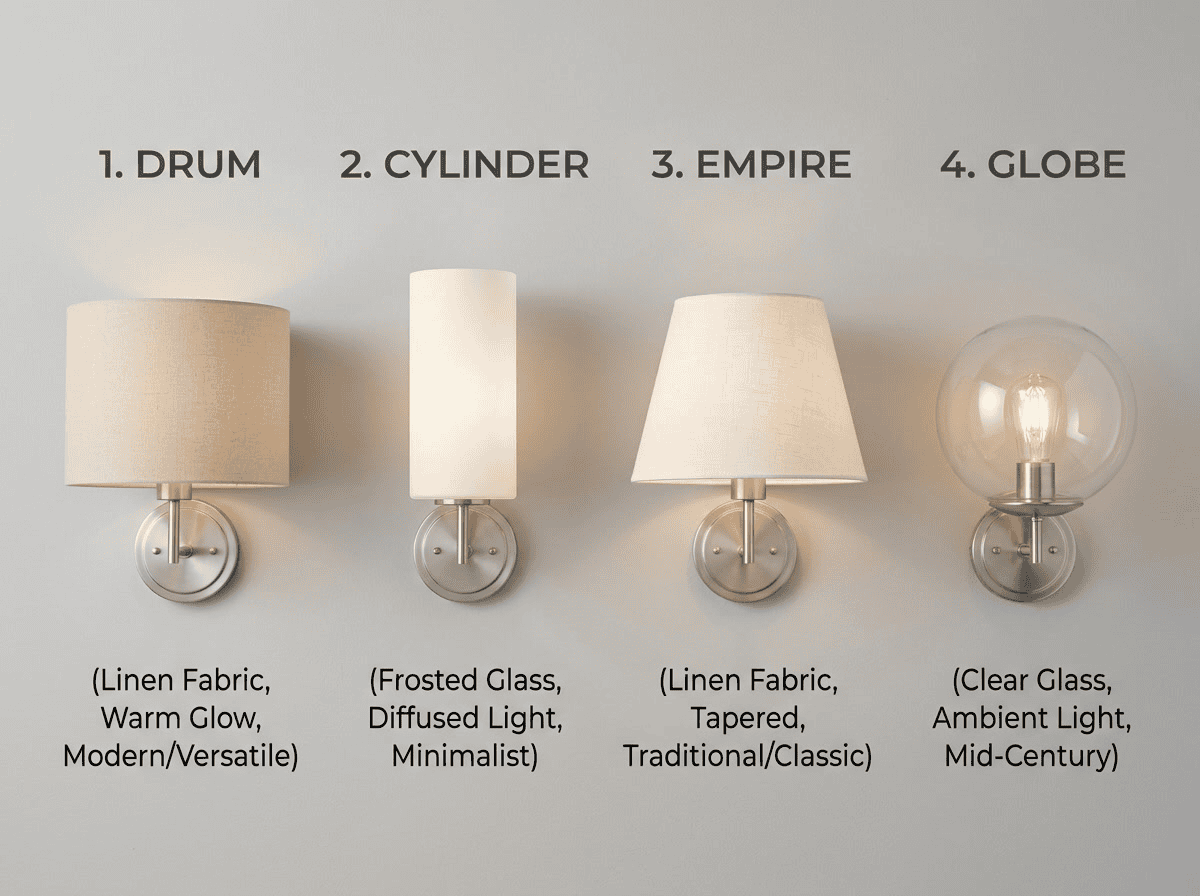
The shape of a wall light shade controls how light distributes around the room — drum shades spread light evenly, empire shades focus it downward, and globe shades diffuse it in all directions.
Shape is the single biggest factor in how a shade performs. The major shapes behave very differently when mounted on a wall versus centered over a table, because the wall position adds an asymmetry: the back half of the shade is always closer to the surface and the electrical box.
Drum and Cylinder Shades
Drum shades have equal top and bottom diameters — a clean, contemporary silhouette that casts light evenly from both ends. On a wall light shade, this means an attractive halo effect above and below the fixture while light also filters through the shade material itself. They pair best with modern, Scandinavian, or minimalist interiors.
Cylinder shades are the taller, narrower cousin of the drum — a 1:1.5 or 1:2 height-to-width ratio rather than a 1:1 ratio. Because they project further from the wall, they need a deep electrical box or a swingarm bracket. On bedroom reading sconces, a cylinder shade concentrates light exactly where you need it without splashing onto your partner’s side.
In practice: drum shades in a diameter of 8–10 inches work on most standard single-bulb sconces. Go wider than 12 inches and the shade starts to look like it belongs on a table lamp that got lost.
Empire and Bell Shades
Empire shades flare outward from a small top diameter to a wider bottom — the classic lampshade silhouette. On wall light shades, the flare directs the majority of light downward and outward in a cone that’s useful for reading nooks, bedside sconces, and hallway accent lighting. Bell shades are a softer, curved version of the same idea, with gently bowed sides rather than straight diagonal lines.
Both shapes work beautifully with traditional, transitional, and vintage interiors. The curved profile also disguises a worn mounting bracket better than a straight-sided drum shade.
Globe and Cone Shades
Globe shades — spherical or near-spherical, often in frosted or opal glass — produce the most even 360° light distribution of any shape. They’re common in bathroom vanity sconces where shadow-free lighting matters, and in hallways where ambient fill is the goal rather than task illumination.
Cone shades (narrow at top, dramatically wide at the bottom) make a strong design statement and direct a wide flood of light downward. They’re associated with mid-century modern and Scandinavian design. Because the bottom opening is large and close to eye level on a wall sconce, a semi-opaque material or a frosted inner finish is almost always necessary to prevent glare.
Shape Comparison Table
| Shape | Light Direction | Best Room | Style Match | Glare Risk |
|---|---|---|---|---|
| Drum | Even up + down + through | Living room, dining | Modern, Scandinavian | Low–Medium |
| Cylinder | Focused beam | Bedroom, study | Contemporary, Industrial | Low |
| Empire / Bell | Mainly downward | Hallway, reading nook | Traditional, Transitional | Low |
| Globe | 360° ambient | Bathroom, corridor | All styles | Medium (clear glass) |
| Cone | Wide downward flood | Mid-century rooms | MCM, Scandi | High (open bottom) |
| Torchiere / Uplight | Upward wash | Entry, lounge | Art Deco, Contemporary | None |
Wall Light Shade Materials: What Each One Does
The shade material controls light warmth, glare level, maintenance requirements, and how long the shade lasts — glass diffuses cleanly, fabric softens and warms, and metal directs with precision.
Material choice is where most buyers get caught out. The store photo makes everything look good under controlled lighting, but the material’s behavior changes completely once the bulb is live and the room lights are dimmed.
Glass Wall Light Shades
Glass is the oldest shade material, and in high-humidity rooms — bathrooms, laundry rooms, covered porches — it’s often the most practical. Glass doesn’t absorb moisture, doesn’t yellow with age, and wipes clean. In a glass lampshade, the finish determines the light quality:
- Frosted glass scatters light evenly and hides the filament or LED cluster, producing a soft, shadow-free glow. This is the go-to for bathroom vanity sconces.
- Clear glass lets the bulb show — beautiful with Edison filament LEDs but harsh with standard bulbs. The fixture design needs to be worth displaying.
- Opal white glass is fully opaque, producing a warm, even emission with no hotspots. Excellent for maximizing perceived brightness from a low-wattage LED.
- Colored and tinted glass (amber, smoke, seeded glass) creates atmosphere but reduces the effective lumens reaching the room. Plan for a slightly higher-wattage bulb.
- Stained and art glass (Tiffany style) is primarily decorative — each panel blocks more light than it transmits, so these shades are accent fixtures, not primary lighting.
One practical note from Wikipedia’s lampshade entry: incandescent bulbs generate enough heat to crack glass shades over time. If you’re using a glass wall light shade in a tight, enclosed fixture, always use LED bulbs — they run far cooler and eliminate that cracking risk entirely.
Fabric Wall Light Shades
Fabric shades (linen, cotton, silk, faux silk, and paper-backed burlap) are the most versatile option for interior spaces. They warm the light tone significantly — a 4000K cool-white LED comes out of a cream linen shade looking closer to 2700K — which is why so many designers choose linen for living room and bedroom wall light shades.
The trade-off is maintenance: fabric attracts dust, absorbs cooking smells in kitchens, and will yellow or stain in humid rooms. Keep fabric wall light shades in dry interior zones and vacuum them lightly every few months.
Linen and cotton shades typically have a self-lining (the same fabric folded back) for a casual, casual texture-forward look, or a white styrene lining for maximum reflectivity and a crisper, brighter output. For a reading sconce, the white-lined option is noticeably brighter at the same wattage.
Metal Wall Light Shades
Metal shades — steel, brass, copper, aluminum — are opaque by nature, so they direct 100% of the light out through the open ends. This makes them ideal for task lighting and accent lighting: the light goes exactly where intended, with zero bleed-through the shade body.
Perforated metal shades are a middle path: punched or laser-cut patterns project decorative spots and lines on the surrounding walls, which is a design feature in itself for bedrooms and dining rooms.
The downside: metal conducts heat, so always check the fixture’s rated maximum wattage and use LED bulbs. A metal shade that gets too hot is uncomfortable to adjust and can discolor the mounting wall over time.
Material Comparison Table
| Material | Light Quality | Humidity Resistance | Maintenance | Style Match | Price Range |
|---|---|---|---|---|---|
| Frosted glass | Soft, even | Excellent | Wipe clean | All styles | $15–$80 |
| Opal glass | Warm, diffuse | Excellent | Wipe clean | Classic, modern | $20–$100 |
| Clear glass | Bright, visible bulb | Excellent | Wipe clean | Industrial, Scandi | $12–$60 |
| Linen / Cotton | Warm, textured | Poor | Vacuum + spot clean | Traditional, Boho | $20–$80 |
| Faux silk | Warm, elegant | Poor | Dust only | Formal, Art Deco | $30–$120 |
| Perforated metal | Pattern projection | Good | Wipe clean | Industrial, MCM | $25–$90 |
| Opaque metal | Directional beam | Good | Wipe clean | Modern, Industrial | $20–$70 |
Room-by-Room Guide: Choosing Wall Light Shades by Space
Match the shade to the room’s humidity level, light function, and style — glass for wet areas, fabric for living rooms and bedrooms, metal for industrial or task-focused spaces.
The room context changes every variable: ambient humidity, required light levels, viewing distance, and the visual weight of the fixture relative to the space.
Living Room Wall Light Shades
Living rooms benefit from layered lighting — overhead, task, and accent — and wall light shades usually serve the ambient or accent tier. Here, shade material and color carry significant decorative weight because the fixtures are at eye level and often visible from multiple seating positions.
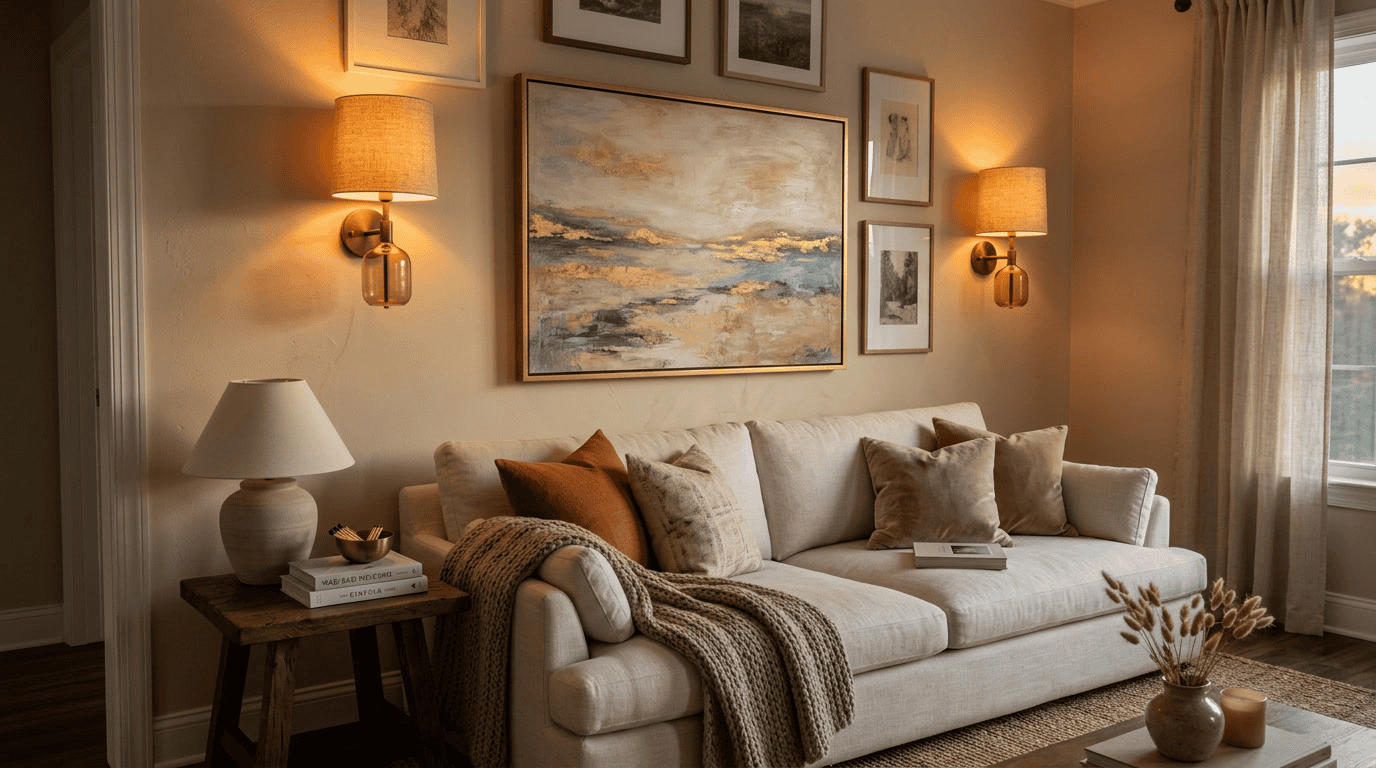
According to Houzz’s comprehensive guide to lamp shades, drum shades and empire shades are the most versatile options for living room wall sconces. A pair of matching linen drum sconces flanking a sofa creates symmetry and adds warmth without overwhelming the wall. For open-plan spaces with high ceilings, an uplight torchiere sconce bounces light off the ceiling for a soft, spacious fill.
Color matters: warm whites and cream tones in fabric shades warm the light toward 2700–3000K, which most people find more relaxing in a living room. Cooler greys and whites push closer to 3500K — better for concentration, less ideal for unwinding.
Bedroom Wall Light Shades
Bedroom wall light shades live at approximately bedside height — roughly 50–60 inches from the floor when mounted — which means glare control is critical. A fabric or frosted-glass shade prevents the direct-bulb dazzle that makes reading in bed uncomfortable.
For a minimalist bedroom with bedside sconces in place of nightstand lamps, a fabric cylinder or drum shade in a neutral tone (oatmeal, greige, white) is almost never wrong. For a more dramatic look — a statement headboard wall or a dark-painted feature wall — a dark-metal or smoked-glass shade adds contrast and keeps the fixture from disappearing against the backdrop.
Practical tip: If you read in bed, choose an empire or cylinder shade oriented to cast light downward, rather than a torchiere or globe shade that distributes light upward. The directional output saves your partner from the bleed.
Hallways and Entryways
Hallway wall light shades have one primary job: provide enough ambient light to navigate safely without creating a sterile corridor feel. Globe shades in opal white glass hit both targets — bright enough, but soft rather than clinical. In a narrow hallway, choose a shade with a smaller projection depth (the distance from wall to the shade’s front edge) to avoid a head-bumping hazard.
Entryways can handle more drama: an oversized fabric shade on a statement sconce makes a strong first impression, and the entryway’s dual role as a high-traffic zone and a style showcase justifies bolder choices than, say, a utility corridor.
Bathroom Wall Light Shades
Bathrooms are categorically different from every other room when it comes to wall light shades. The combination of steam, condensation, and splashing means any shade material that absorbs moisture will degrade rapidly. Fabric is largely off the table. The correct choices are:
- Frosted or opal glass — the default for bathroom vanity sconces, for good reason.
- IP44-rated fixtures — check the fixture’s IP (ingress protection) rating; IP44 means protected against water splashing from any direction. Any shade fitted to an IP44 fixture must also be rated for that environment.
- Clear glass with filament LED — a design choice increasingly popular in bathroom renovations; the visible filament adds warmth without the heat risk.
How to Choose and Replace Wall Light Shades
Measure the existing shade’s top diameter, bottom diameter, height, and fitter type before ordering a replacement — a mismatch in fitter type means the shade won’t attach at all.
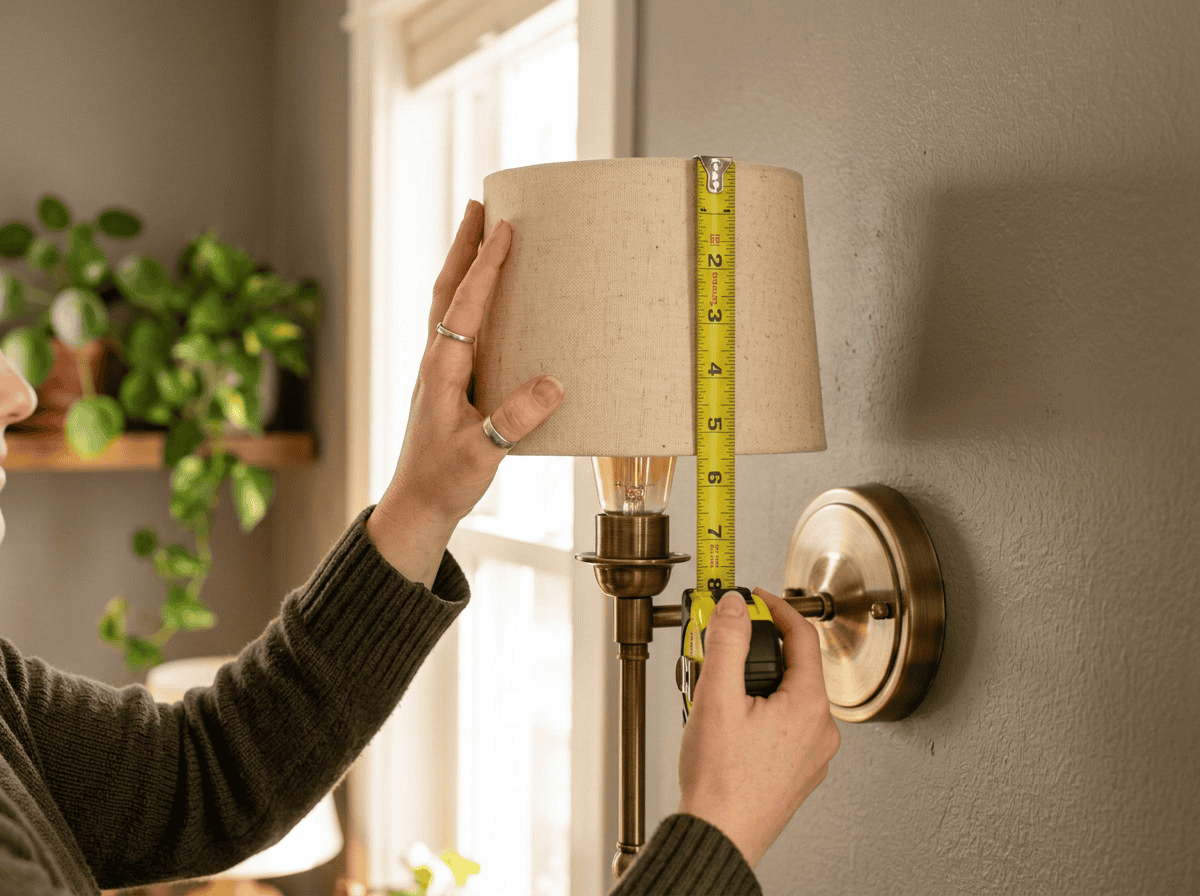
Step 1: Identify Your Fitter Type
Turn off the light and let the bulb cool. Gently remove the existing shade. Look at how it attaches:
– UNO collar? You’ll see a threaded ring around the socket neck.
– Clip-on? There’s a spring clip that pinches onto the bulb.
– Finial? There’s a small harp structure with a decorative nut on top.
Buy a replacement shade with the same fitter type — this is non-negotiable. A UNO shade will never fit a clip-on socket and vice versa.
Step 2: Measure the Existing Shade
With the old shade in your hands, measure:
1. Top diameter (the smaller opening)
2. Bottom diameter (the larger opening, or equal to top for drum shades)
3. Height / slant height
4. Projection depth — how far the shade extends from the mounting wall
For a direct replacement, match all four dimensions within ±1 inch. For an intentional upgrade in size, keep the new bottom diameter no more than 20% larger than the original — anything bigger will look out of proportion on the fixture’s stem.
Step 3: Consider the Bulb
Modern wall light shades are designed for LED bulbs, which run far cooler than incandescent lamps. As the team at Lamps USA notes in their lamp shade guide, heat from traditional bulbs was historically the primary cause of premature shade aging — scorched fabric, cracked glass, yellowed paper. With LEDs in the fixture, that concern essentially disappears, and you can choose materials like thin fabric or paper parchment without worrying about heat damage.
For glass wall light shades in enclosed fixtures, confirm the LED bulb’s maximum temperature; most glass shades are rated to 40W equivalent, and modern LEDs well below that threshold are more than sufficient.
Step 4: Fit and Adjust
Attach the new shade to the fitter, restore power, and observe from across the room at sitting height. Check:
– Is there any visible hot spot (bright patch on the shade surface)?
– Is the bottom opening at a comfortable angle — not tilted, not projecting toward a seating area?
– Does the shade diameter look proportional to the fixture arm and the wall area around it?
If the shade tilts, the UNO collar or clip-on spring needs re-centering. Most UNO rings adjust with a gentle quarter-turn.
Wall Light Shade Size and Fitter Reference Table
| Fixture Type | Recommended Shade Diameter | Fitter Type | Max Shade Height |
|---|---|---|---|
| Standard single-bulb sconce | 7–10 inches | UNO or clip-on | 8 inches |
| Swing-arm reading sconce | 8–12 inches | UNO | 10 inches |
| Buffet / plug-in sconce | 6–9 inches | UNO | 7 inches |
| Bathroom vanity bar (per bulb) | 4–6 inches | Clip-on | 5 inches |
| Large statement sconce | 12–18 inches | UNO with reducing ring | 14 inches |
Trending Wall Light Shade Styles in 2026
In 2026, the standout trends are organic natural materials, smart LED-compatible designs, and sculptural shapes that treat the shade itself as a decorative object rather than a functional afterthought.
The wall sconce has had a remarkable revival over the past few years, shifting from a purely functional fitting to one of the most design-forward elements in a room. As Glowe Studio’s 2026 lighting trend report documents, sconces now “stand out through bold aesthetics, sculptural forms, and advanced lighting technologies” rather than blending into the wall.
Natural and Organic Materials
Raw, textural materials are replacing the perfect-finish look of the mid-2010s. Wall light shades in woven rattan, hand-blown glass with visible air bubbles, raw linen, and ceramic are everywhere in 2026 interiors. These materials play well with the “quiet luxury” and biophilic design movements: they bring warmth, imperfection, and a sense of handcraft into rooms that can otherwise feel over-polished.
Blown glass is particularly well-suited to wall light shades: the slight variations in thickness create a live, organic quality when the bulb is illuminated, and glass in amber, smoky grey, or sage green tints coordinates beautifully with contemporary neutral palettes. Each piece is subtly unique — a selling point for rooms where every element is considered.
Shades 4 Seasons’ 2026 lampshade trend analysis identifies sustainability as a core driver: natural materials appeal to environmentally conscious buyers because they’re biodegradable, low in synthetic additives, and carry a heritage quality that fast-fashion home accessories can’t replicate.
Smart LED-Compatible and Dimmable Designs
This trend isn’t about the shade itself — it’s about what the shade needs to work with. In 2026, wall sconces are increasingly integrated into smart home lighting systems. The shade needs to tolerate a full dimming range (from 1% to 100%) without flickering and without the harsh color-shift that lower-quality LEDs show at low dim levels.
Frosted glass and opal glass shades are the strongest performers here: the diffusing material masks the color shift that some LEDs show at the bottom of the dimming range, and they look equally good at full brightness and at a 10% bedside glow.
Fabric shades with a white styrene lining also perform well with dimmable LEDs — the lining reflects efficiently at all brightness levels, so the fixture doesn’t look dramatically different at 20% versus 80%.
Sculptural and Statement Shapes
The “invisible shade” minimalism of the 2010s is giving way to shades designed to be noticed: pleated fabric, geometric faceted glass, oversized globe shades in smoked or amber tones, and asymmetric cone shades that become art objects. For a single-sconce statement in an entryway or above a hallway console, these designs earn the extra budget.
The counter-trend is also strong: for rooms with multiple sconces in a row (hallway, bathroom vanity, dining room), a simple, clean shade that repeats well — white drum, frosted globe, clear cylinder — is more cohesive than five competing statement pieces.
FAQ: Wall Light Shades
What style of wall light shade is trending in 2026?
Organic natural materials are the headline trend. Hand-blown glass shades in amber and smoke tones, woven rattan, and textured linen are all prominent. The other major direction is smart LED-compatible frosted glass, which supports full dimming ranges and integrates cleanly with home automation systems.
How do I measure for a replacement wall light shade?
Measure four dimensions on your existing shade: top diameter, bottom diameter, height, and projection depth from the wall. Also identify your fitter type — UNO, clip-on, or finial — before ordering, since a mismatch in fitter type means the replacement won’t attach. Match all measurements within ±1 inch for a direct swap.
Can I use any lamp shade on a wall sconce?
Not always. Table lamp shades typically use a harp-and-finial fitter designed for a vertical upright lamp; most wall sconces use a UNO collar or clip-on fitter instead. You also need to consider projection depth — a large shade that projects 10 inches from the wall can become a hazard at head height in a hallway. Always check fitter type and depth before buying.
Are glass wall light shades safe in a bathroom?
Yes — glass is actually the recommended material for bathroom wall light shades because it doesn’t absorb moisture and wipes clean. Frosted or opal glass shades on IP44-rated fixtures are the standard choice for bathroom vanity lighting. Avoid fabric shades in bathrooms: steam causes lining adhesives to fail and fabric to sag or yellow.
How do I clean a glass wall light shade?
Turn off the power and let the bulb cool fully. Unclip or unscrew the shade from the fixture. Wash in warm water with mild dish soap, rinse thoroughly, and dry with a lint-free cloth before reattaching. Avoid abrasive pads on frosted glass — they scuff the surface finish and make the diffusion uneven.
Do wall light shades reduce light output?
Yes, all shades reduce the raw lumen output compared to a bare bulb. The reduction varies significantly: a white opal glass shade might transmit 60–70% of the lumens, a deep-colored fabric shade as little as 30–40%. For task lighting, choose a white-lined fabric shade or frosted glass to maximize useful output. For ambient accent lighting, the reduction is rarely a problem — you want the softened, diffused effect.
What’s the difference between a wall sconce shade and a regular lamp shade?
Wall sconce shades are typically smaller (6–12 inches diameter versus 10–18 inches for floor lamp shades), shallower in projection depth, and built for a UNO or clip-on fitter rather than the harp-and-finial system of floor and table lamps. They also need to be more robust against being bumped at head height. The visual proportions differ too — a shade that looks right on a floor lamp would be oversized and awkward on a wall sconce.
Conclusion
Wall light shades do far more decorative and functional work than they get credit for. The right shade transforms a bare-bulb sconce into a considered design element; the wrong one (wrong shape, wrong material, wrong fitter type) makes an expensive fixture look like an afterthought.
The key takeaways: match the material to the room’s humidity level first, then optimize for light direction and style. Glass in wet areas; fabric in dry living spaces; metal when you want precision directionality. Measure fitter type and projection depth before ordering any replacement. And in 2026, lean into organic materials — hand-blown glass and natural linen are both beautiful and environmentally responsible choices that age better than synthetic alternatives.
Whether you’re replacing a single worn shade or planning a whole-home lighting refresh, the best investment is time spent measuring the existing fixture and understanding how the shade will behave at your actual light levels. The difference between a good result and a great one is almost always in those pre-purchase details.