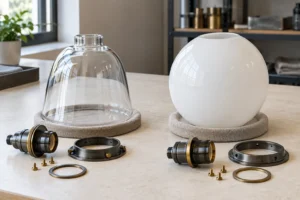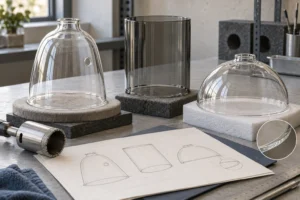
The best glass lamp shade for a table lamp depends on use: frosted glass for bedside and reading applications (glare-free, warm diffusion), clear glass for displaying filament LED bulbs, opal glass for soft ambient accent lamps, and seeded or colored glass for decorative statement pieces.
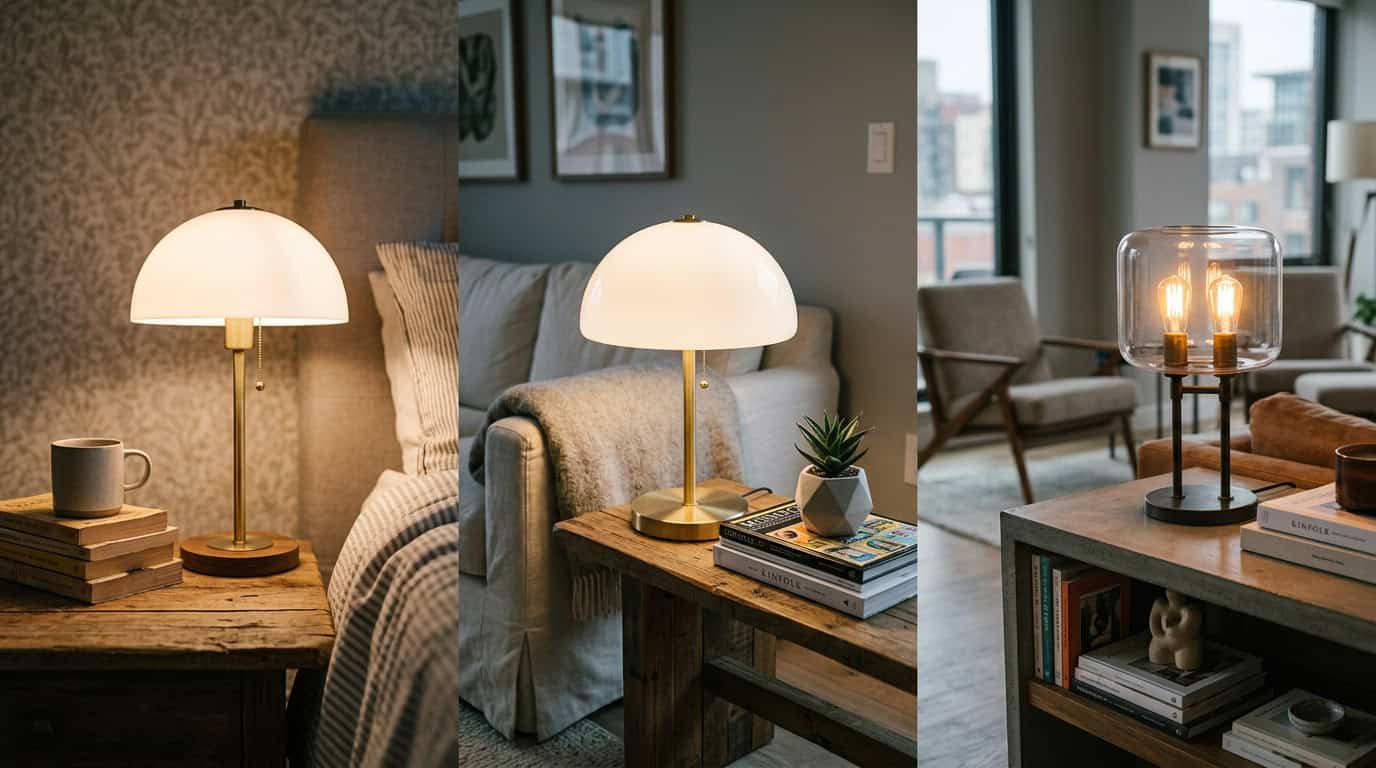
Glass lamp shades are not one product. A frosted globe on a bedside lamp and a hand-blown seeded glass shade on a living room accent lamp are both “glass lamp shades for table lamps,” but they serve completely different purposes and produce completely different light. The question isn’t which glass shade looks best — it’s which glass shade is best for what that table lamp is actually doing.
This guide breaks down the best glass lamp shade for table lamp use cases: bedside and reading lamps, living room accent lamps, desk and task lamps, and decorative statement lamps, with specific glass type recommendations for each.
Are Glass Lamp Shades Good for Table Lamps?
Yes — with the right expectations. Glass lamp shades outperform fabric in durability, cleanability, and in applications where the glass visual character is the design goal. They underperform fabric in producing broad, warm ambient illumination from a large shade at close range. The question is whether a glass shade is right for this specific table lamp in this specific role.
Glass table lamp shades are good when:
– The lamp uses a decorative filament LED and the visible bulb is the design point
– The lamp sits in a kitchen, bathroom-adjacent, or high-humidity space where fabric would degrade
– The interior style calls for glass (industrial, period-authentic, contemporary minimal)
– Durability matters — glass shades on frequently used table lamps last significantly longer than fabric
– The lamp serves a task function and maximum light output per watt matters
Glass is not the default choice when:
– The table lamp is the primary source of soft ambient illumination in a large sitting room — a large fabric drum shade broadcasts a wider arc of warm light than any glass equivalent
– The lamp is purely decorative and the shade’s surface texture or pattern is the decorative element
– Budget is the driving constraint — quality glass shades cost more than fabric shades at equivalent size
According to ASTM standards for glass product performance, glass lamp shades maintain optical clarity and transmittance characteristics for 15+ years under normal residential use — a significant durability advantage over fabric shades, which typically show visible degradation (yellowing, particulate absorption, structural weakening) within 5–8 years.
The Best Glass Shade by Table Lamp Use
Best for Bedside and Reading Lamps: Frosted Glass
Bedside table lamps serve two functions: reading lamp (when directed toward the book or screen) and ambient lamp (when used at low level to navigate the room without waking a partner). The best glass lamp shade for a table lamp in a bedside role is frosted glass — specifically a frosted white globe or dome in 8–12 inch diameter.
Why frosted beats clear for bedside use:
– Clear glass at seated eye level creates glare from the visible bulb — uncomfortable for reading and jarring if the light is switched on in a dark room
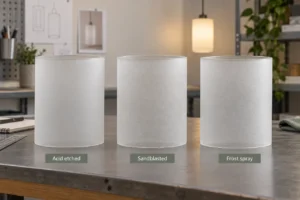
– Frosted glass eliminates the hot spot and produces even, glare-free light that is comfortable at close range
– At low LED wattage (4–8 watts), frosted glass at bedside distance produces sufficient reading illumination without over-lighting the room
The U.S. Department of Energy’s research on bedroom lighting quality identifies glare avoidance as a primary factor in bedroom lighting satisfaction. Frosted glass shades scored significantly higher than clear glass in glare comfort ratings in residential bedside applications.
Recommended: Frosted white globe, 8–12 inch diameter, 2¼ or 4 inch fitter, warm-white LED 2700K, 6–8W.
Best for Accent Lamps: Opal Glass
Living room accent lamps serve primarily decorative and ambiance roles — they are not task lights. The best glass lamp shade for a table lamp in an accent role is opal glass (milk glass), which produces the most uniform, soft glow of any glass type and makes the lamp look premium both lit and unlit.
Opal glass accent table lamp shades work particularly well:
– In traditional, Victorian, and period-authentic interiors where opal glass is historically correct
– On statement lamp bases where the shade should complement without competing
– When the lamp is a primary visual element of a room vignette (bookshelf, side table, mantel)
– When warm, soft, uniform light is more important than maximum lux output
The one trade-off: opal glass transmits 60–75% of the bulb’s output versus frosted at 75–82%. At the same LED wattage, an opal shade produces perceptibly less light than frosted. Step up one wattage level when switching from frosted to opal.
Recommended: Opal white glass globe or dome, 10–14 inch diameter, warm-white LED 2700K, 8–10W.
Best for Displaying Filament LED Bulbs: Clear Glass
The Edison-style filament LED bulb — with its visible glowing filament array — became the defining decorative lamp element of the 2010s and remains popular in contemporary and industrial interiors. A filament LED in a clear glass shade is visually striking because the bulb itself is the ornament.
Clear glass globe shades for table lamps work well:
– On high-positioned table lamps where the bulb is above typical seated eye level
– On accent lamps in the corners of a room where the light source is not directly in any sightline
– In industrial or contemporary interiors where the exposed bulb aesthetic is intentional
– On lamp bases designed to display the bulb (the base positioning puts the bulb high and visible)
Recommended: Clear glass globe, 8–12 inch diameter, filament-style LED 2200–2700K, 4–8W (filament LEDs are decorative, not task, sources).
Glass Types for Table Lamp Shades: Full Comparison
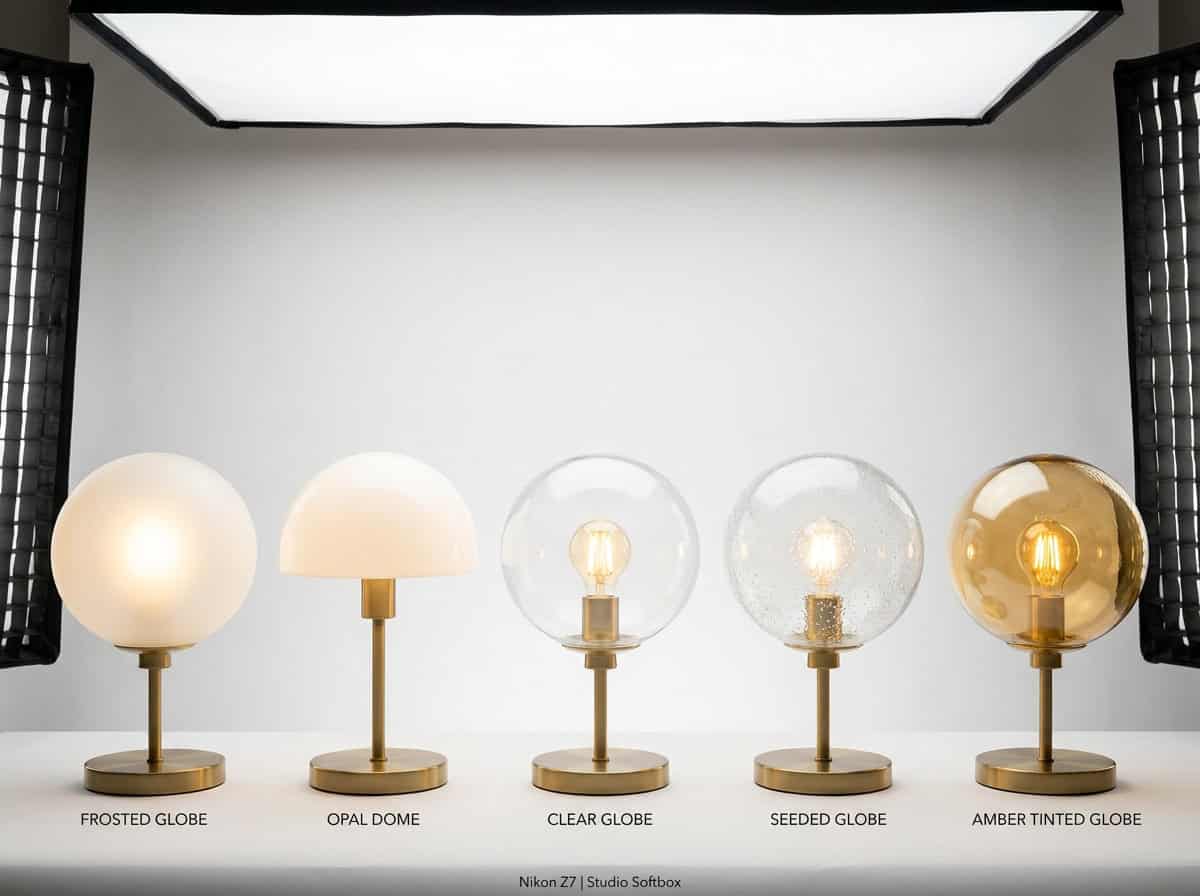
Beyond the three primary use cases above, two additional glass types have specific residential table lamp applications:
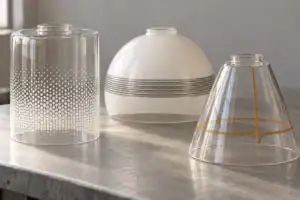
Seeded and Textured Glass
Seeded glass, hammered glass, and ribbed glass all provide moderate diffusion while creating decorative surface interest. These are the correct choice when the glass shade is meant to be noticed — when it contributes texture, depth, and visual character to the room rather than just diffusing the light source.
Seeded glass table lamp shades are particularly effective in:
– Craftsman, arts-and-crafts, and cottage interior styles
– Bohemian and maximalist interiors where decorative layering is the goal
– As pairing for natural material lamp bases (woven rattan, ceramic, natural stone)
– When some visual movement in the lit shade is desirable — seeded glass creates gentle shadow patterns on surrounding surfaces
Colored and Art Glass
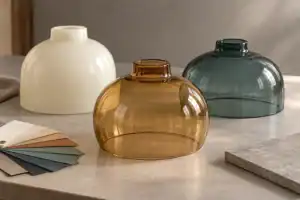
Amber, green, ruby, cobalt, and smoke-grey glass shades shift the light color dramatically. Colored glass table lamp shades are purely decorative — they produce atmospheric light at relatively low lux levels and are not appropriate for task reading or functional bedside use.
The classic banker’s lamp with a green glass dome shade is the defining example: the green glass produces a distinctive cool-green cast that works in library, study, and traditional office contexts. Amber glass produces warm candlelight-like light appropriate for intimate living room vignettes.
Caution: Deep colored glass (ruby, cobalt) transmits very little light — 25–40% of the bulb’s output. LED bulbs produce dramatically less visible output through these glass types than incandescent bulbs at equivalent wattage. This is usually acceptable for purely decorative lamps but is problematic if the lamp also serves a functional role.
How to Choose the Right Glass Shade Size for a Table Lamp
Table lamp glass shade sizing follows proportion principles:
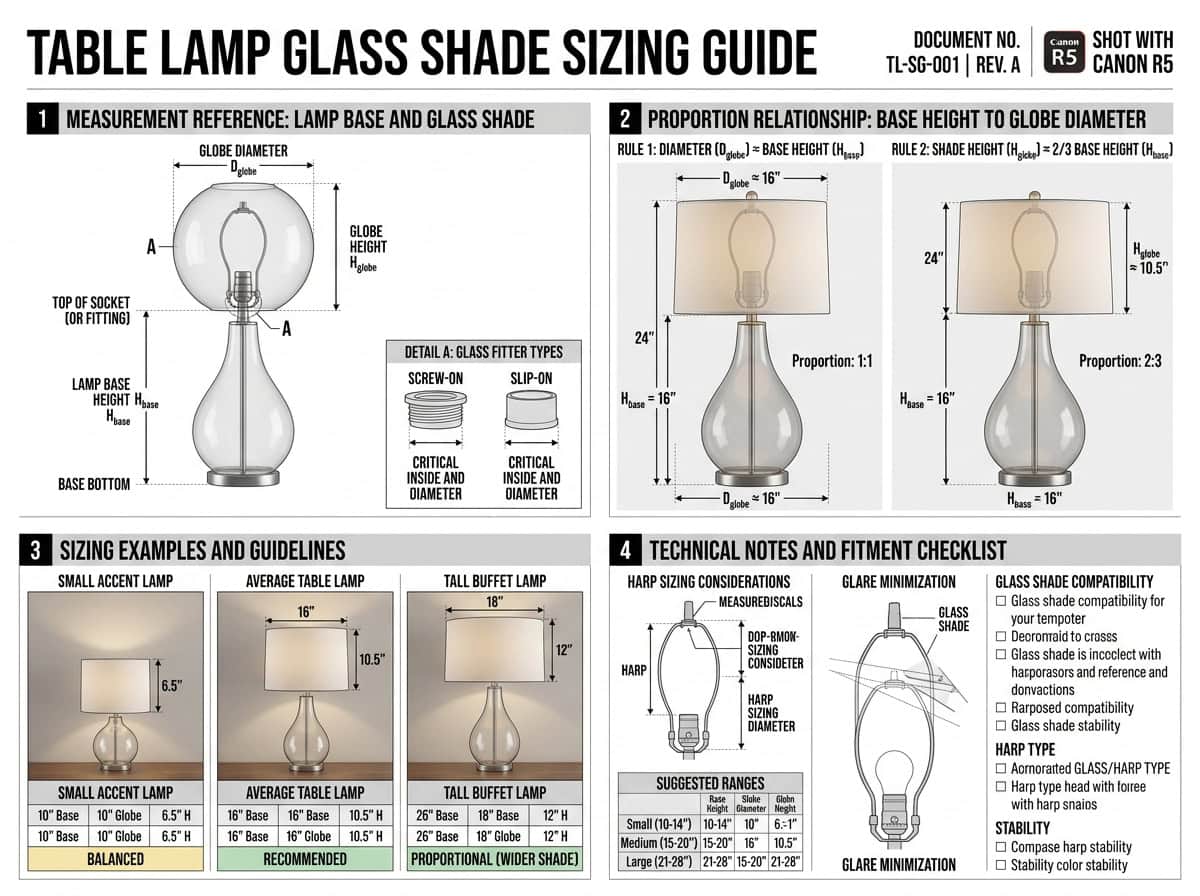
The two-thirds rule: The glass globe diameter should be approximately two-thirds the height of the lamp base. A 24-inch table lamp base typically takes a 14–16 inch diameter globe; a 16-inch table lamp base typically takes a 10–12 inch globe.
The bottom-line rule: The shade bottom edge should sit above the lamp base bottom. A glass globe shade that extends below the lamp base bottom looks bottom-heavy and proportionally wrong.
The eye-level rule: For bedside lamps specifically, the bottom of the shade should be at or slightly below seated eye level (approximately 26–28 inches from the floor for a typical bedside lamp). This prevents both glare (shade bottom is below eye level, blocking direct view of the bulb) and shadow issues (shade bottom is at eye level, letting the shade itself obstruct vision).
Lamp base height to glass globe diameter reference for standard table lamps:
| Base Height | Globe Diameter | Fitter Size |
|---|---|---|
| 12–16 inch | 8–10 inch | 2¼ inch |
| 18–22 inch | 10–14 inch | 2¼ or 4 inch |
| 24–28 inch | 14–18 inch | 4 inch |
| 30+ inch | 16–20 inch | 4 or 6 inch |
Tiffany Glass Lamp Shades for Table Lamps
Tiffany-style stained glass table lamp shades deserve their own section because they are a distinct category — not a glass type variation, but a complete design system with specific structural and aesthetic requirements.
Why Tiffany glass is expensive: Authentic Tiffany studio pieces (Louis Comfort Tiffany, 1892–1933) are museum-quality antiques because each piece was individually hand-soldered from hundreds of hand-cut glass fragments. The copper foil technique, the selection and cutting of individual glass pieces for color and texture transitions, and the quality of the solder work all contribute to value. A genuine Tiffany Studios piece can sell at auction for $50,000–$500,000 depending on size, condition, and pattern rarity.
Quality reproduction Tiffany shades are widely available at $200–$2,000 for table lamp sizes (16–24 inch diameter). The construction technique is identical to authentic pieces — individual glass pieces cut and wrapped in copper foil, then soldered together in the pattern. What differs is glass quality, solder consistency, and pattern execution. Quality reproductions use genuine art glass (not stamped plastic) and hand-soldering throughout.
What to look for in a quality reproduction:
– Genuine art glass pieces (each piece should be translucent, show color depth, and have slight surface variation)
– Consistent solder lines (regular width throughout, no blobs or gaps)
– Correct base hardware (a wobbling or flimsy base indicates a low-quality reproduction)
– Correct proportion (the shade height relative to diameter for classic Tiffany patterns is specific — check reference images)
Per the Corning Museum of Glass documentation on art glass techniques, the copper foil technique used in Tiffany shades creates a flexible, impact-resilient joint between glass pieces — superior for decorative shade construction to the lead came technique used in flat panel windows.
Caring for Glass Table Lamp Shades
Glass table lamp shades accumulate dust, smoke residue (in kitchens or rooms with candles/fireplaces), and oxidized silicone from cleaning products used in the room. Annual cleaning maintains optical performance and appearance.
Cleaning process:
1. Remove the shade from the fitting (loosen set screws for gallery ring; unscrew the finial for spider fitting; unscrew for uno fitting)
2. Wash in warm water with a small amount of dish soap — soak 10–15 minutes
3. For smoke or grease residue: a 50/50 white vinegar and water solution
4. For calcium deposits from hard water: dilute white vinegar, no abrasion
5. Rinse thoroughly, dry completely before reinstalling
6. Never use abrasive pads on frosted or textured glass — the surface is easily scratched
Trends in Glass Table Lamp Shades for 2026
Amber glass revival. The sleep-hygiene movement in residential design has driven significant growth in amber-tinted glass for bedroom and living room table lamps — amber glass naturally reduces blue-spectrum output that disrupts circadian rhythms, without requiring special LED bulbs.
Hand-blown glass as quality signal. The artisan market for hand-blown glass table lamp shades is growing as mass-produced glass shades become commoditized. Buyers in the $200+ price range increasingly expect visible evidence of hand production — slight ripples, thickness variation, and color depth that machine production cannot replicate.
Smoked and dark glass. Smoked grey glass table lamp shades are gaining ground in contemporary and Scandinavian interior design — the dark glass creates a dramatic, atmospheric lamp that reads as a design object as much as a light source.
| Trend | Glass Type | Interior Context |
|---|---|---|
| Sleep hygiene lighting | Amber glass | Bedroom bedside lamps |
| Artisan quality signal | Mouth-blown seeded glass | Premium residential |
| Dark and atmospheric | Smoked grey glass | Contemporary, Scandinavian |
| Filament LED display | Clear glass globe | Industrial, contemporary |
| Period revival | Opal glass, cranberry glass | Traditional, vintage |
Frequently Asked Questions
Are glass lampshades good for table lamps?
Glass lamp shades are excellent for table lamps in specific applications: bedside lamps (frosted glass produces glare-free reading light), accent lamps (opal glass produces premium ambient glow), and lamps featuring filament LED bulbs (clear glass displays the filament aesthetic). Glass outperforms fabric in durability, cleanability, and in any application where the glass visual character is the design goal. Fabric outperforms glass for broad ambient illumination from large shades.
How to choose a lamp shade for a table lamp?
Choose the shade type that matches the lamp’s mounting system (spider, uno, or gallery ring fitter), then select glass opacity based on the lamp’s role (frosted for reading/bedside, clear for filament LED accent, opal for ambient accent), then select size proportional to the lamp base (globe diameter approximately two-thirds the base height), then coordinate style with the interior.
Why is Tiffany glass so expensive?
Authentic Tiffany Studios pieces (produced 1892–1933) are expensive because each is individually hand-crafted from hundreds of hand-selected, hand-cut glass pieces joined with copper foil and solder — a labor-intensive process producing an unrepeatable object. Genuine Tiffany Studios pieces sell for $50,000–$500,000 at auction. Quality reproduction Tiffany shades using the same technique cost $200–$2,000 for table lamp sizes and represent excellent value for the craftsmanship involved.
Can you put a glass lampshade on any lamp?
Only if the glass shade’s fitting type matches the lamp. A gallery ring glass shade (which has a glass collar and uses set screws) requires a holder ring on the lamp socket. A spider-fitting glass shade requires a harp. An uno glass shade requires a uno-threaded socket. Confirm the fitting type before purchasing any glass shade for an existing lamp — not all lamps can accept all shade fitting types.
What is the best size glass globe for a table lamp?
Globe diameter approximately two-thirds the lamp base height is the standard proportional guide. For a 24-inch table lamp base, a 14–16 inch diameter globe. For a 16-inch base, a 10–12 inch globe. The globe bottom edge should remain above the lamp base bottom for correct proportion, and should be at or below seated eye level for glare avoidance.
What type of glass is best for a night lamp?
Frosted glass (75–82% transmittance, no visible bulb) at low LED wattage (4–6 watts, 2700K warm white) is the best glass type for night lamps and bedside use. The frosted surface eliminates glare, the warm color temperature supports melatonin production, and the low wattage provides sufficient navigation light without over-illuminating the room. Amber glass is a growing alternative for sleep-hygiene conscious buyers who want to specifically reduce blue-spectrum output.
Is opal glass better than frosted for a table lamp?
Opal glass (60–75% transmittance) produces softer, more uniform light and a more premium appearance than frosted glass (75–82% transmittance). The practical trade-off: opal glass transmits less light per watt, requiring a step up in LED wattage to maintain equivalent illuminance. For pure ambient accent lamps where visual character matters more than lux output, opal is better. For lamps with a reading or task function, frosted glass’s higher transmittance makes it the better choice.
Conclusion
The best glass lamp shade for a table lamp is not a single product — it is a frosted globe for bedside reading, an opal dome for accent ambiance, a clear globe for filament LED display, and a seeded or colored shade when the glass itself is the decorative statement. Getting this match right between use case and glass type produces significantly better results than choosing by appearance alone.
The second decision — size — follows proportion principles rather than personal preference: two-thirds the base height in globe diameter, shade bottom above the lamp base, and shade bottom at or below seated eye level for glare-free reading.
For glass table lamp shades in frosted, opal, clear, seeded, colored, and hand-blown configurations across standard fitter sizes — and for the complete range of home lamp shades covering every fixture type, our glass lampshade product line at jxlampshade.com provides residential quality glass lamp shades with documented glass construction.