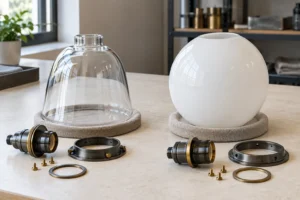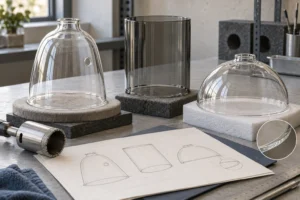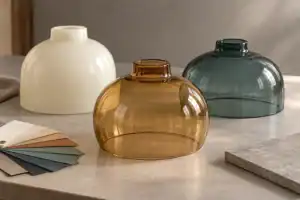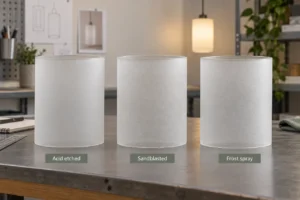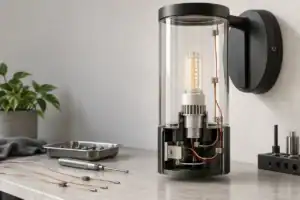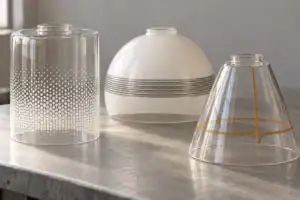
Frosted glass is the best glass finish for most bedroom lighting — it eliminates glare, transmits 75–82% of the bulb’s output, and produces comfortable, glare-free light with warm-white LED sources (2700K). Amber glass is the superior choice for sleep-hygiene conscious buyers who want to minimize blue-spectrum evening exposure.
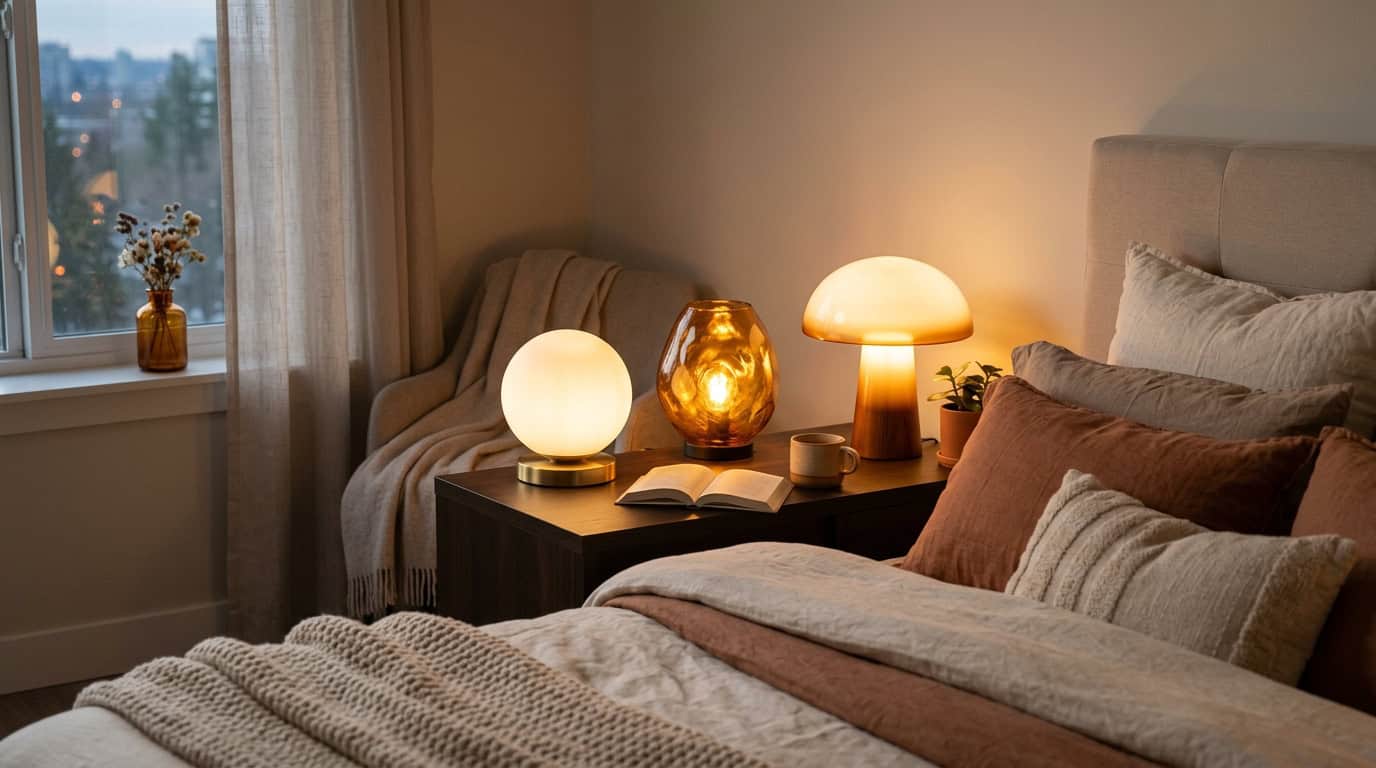
The bedroom is the only room in the house where lighting quality directly affects sleep. Get it right and the room transitions naturally from a work or social environment to a sleep environment as the evening progresses. Get it wrong and the lighting is either too harsh for wind-down or too dim for getting dressed or reading.
Glass finish is a significant part of that equation. The best glass finish for bedroom lighting determines how the light feels in the room — sharp or soft, stimulating or calming, flattering or unflattering. This guide covers frosted, opal, clear, seeded, and amber glass in the specific context of bedroom lighting, with the scientific context on light quality and circadian rhythm that the Reddit polls and quick blog posts don’t provide.
How Glass Finish Affects Bedroom Lighting Quality
Glass finish affects bedroom light in three ways that matter:
1. Glare. Clear glass transmits the lamp source directly — the bright point of an LED chip or filament is visible through the glass. At bedroom distances (bedside lamp at 18–24 inches from the eye), this creates direct glare that is uncomfortable and physiologically stimulating. Frosted, opal, and textured glass eliminate point-source glare by diffusing the source.
2. Light distribution. The glass finish determines how broadly light is distributed from the lamp. Clear glass directs more light in specific directions (through the glass directly toward the source direction). Frosted and opal glass scatter light more uniformly — the lamp glows rather than beams. In a bedroom, uniform scattering from frosted or opal glass produces softer shadows on faces and objects, which reads as more relaxing and flattering.
3. Spectral filtering. Clear, frosted, and opal glass transmit the LED source’s spectral output essentially unchanged — a 2700K warm-white LED through frosted glass produces 2700K room lighting. Colored glass filters selectively — amber glass absorbs blue-wavelength light (400–500nm), shifting the transmitted spectrum toward red and orange wavelengths. This spectral shift has documented effects on melatonin production.
According to research published by the National Institutes of Health on light and sleep, blue-spectrum light exposure in the two hours before sleep suppresses melatonin production by an average of 23% compared to amber-spectrum light at equivalent lux levels. Amber glass bedside lighting is not merely aesthetic preference — it has measurable sleep quality implications.
The Five Glass Finishes for Bedroom Lighting
Frosted Glass: The Best All-Round Bedroom Glass Finish
Frosted glass (acid-etched or sandblasted) is the most consistently effective glass finish for bedroom lighting across all bedroom functions.
Why frosted wins for most bedrooms:
– Eliminates direct bulb glare at bedside distances — the most common complaint about clear glass lamps in bedrooms
– 75–82% transmittance provides adequate illumination for reading and dressing at moderate LED wattage
– Works equally well for bedside lamps, ceiling pendants, and wall sconces
– Visual appearance is clean, neutral, and works with any interior palette
– The Reddit poll cited in the SERP (which reported 8 out of 10 lighting professionals preferring frosted glass) confirms industry consensus
For ceiling fixtures with glass shades, frosted glass distributes light broadly and evenly across the room — eliminating the shadow patterns that clear glass ceiling fixtures create at night and that can disrupt sleep if the lamp is left on at low brightness.
Best application: all bedroom glass lamp shades, ceiling fixtures, and wall sconces where a general-purpose glass finish is wanted.
Opal (Milk) Glass: Premium Soft Glow for Accent Lamps
Opal glass produces a denser, more uniformly white appearance than frosted glass — it transmits 60–75% of the bulb’s output and glows rather than diffuses. The light quality from an opal glass bedside lamp is softer than frosted at equivalent wattage.
The trade-off: opal glass transmits less light. A bedside lamp that provides adequate reading illumination with a frosted shade will be noticeably dimmer with an opal shade at the same LED wattage. Compensate by stepping up one wattage level.
Best application: accent bedside lamps where soft ambient glow (not reading illumination) is the goal, or where the premium appearance of opal glass matters for the room’s design.
Amber Glass: The Best Glass Finish for Sleep Health
Amber glass is not just a decorative choice for bedroom lighting — it is functionally superior to frosted glass for the two hours before sleep, when blue-spectrum light exposure matters most for melatonin production.
The amber glass filter transmits red and orange wavelengths while absorbing blue wavelengths (400–500nm). This selective transmission is what warm-white LED sources (2700K) approximate but do not achieve as fully — an LED color temperature of 2700K still includes some blue-spectrum output. Amber glass adds an additional selective filter that further shifts the transmitted spectrum toward melatonin-compatible wavelengths.
The practical implication: An amber glass bedside lamp with a standard warm-white LED (2700K, 8W) produces roughly the same melatonin-compatible spectral output as a dedicated circadian LED source — without requiring specialty bulbs. This makes amber glass bedside lamps a cost-effective sleep-hygiene intervention.
Trade-offs of amber glass for bedroom use:
– Transmittance is 50–65% — significantly less than frosted, which means a higher wattage LED is needed for the same lux output
– The amber light color is not appropriate for color-critical tasks (getting dressed in matching colors is harder under amber light)
– Morning light quality is an argument against amber glass — the warm amber tone that is ideal for evening may feel less energizing for the morning alarm lamp
Best application: bedside lamps used in the evening wind-down period (2 hours before sleep), nightstand lamps, and any bedroom lighting prioritizing sleep quality over daytime functionality.
Clear Glass: Best for Statement Lamps Above Eye Level
Clear glass in a bedroom works well when the fixture is positioned above typical eye level — pendant lights on high ceilings, wall sconces positioned above head height, or table lamps on tall furniture where the bulb is not in the sightline from the bed.
At below-eye-level positions (typical bedside lamp heights of 20–30 inches above the mattress surface), clear glass creates direct glare from the visible bulb. This glare is both uncomfortable and physiologically stimulating — the visual attention drawn by the bright point activates alertness responses that conflict with sleep.
Best application: ceiling pendants, wall sconces at head height or above, and any bedroom fixture where the glass shade is above typical sightlines.
Seeded and Textured Glass: Decorative Character for Accent Lamps
Seeded glass, hammered glass, and ribbed glass provide moderate diffusion (transmittance 65–78%) while adding visual texture. These are appropriate for bedroom accent lamps — reading lamp on a dresser, side table decorative lamp — where the shade is a design element.
For the primary bedside reading lamp, seeded glass is a reasonable choice and produces comfortable glare-free light, but the transmittance is lower than frosted glass which may require stepping up in LED wattage to maintain reading illuminance.
Comparing Glass Finishes for Bedroom Lighting
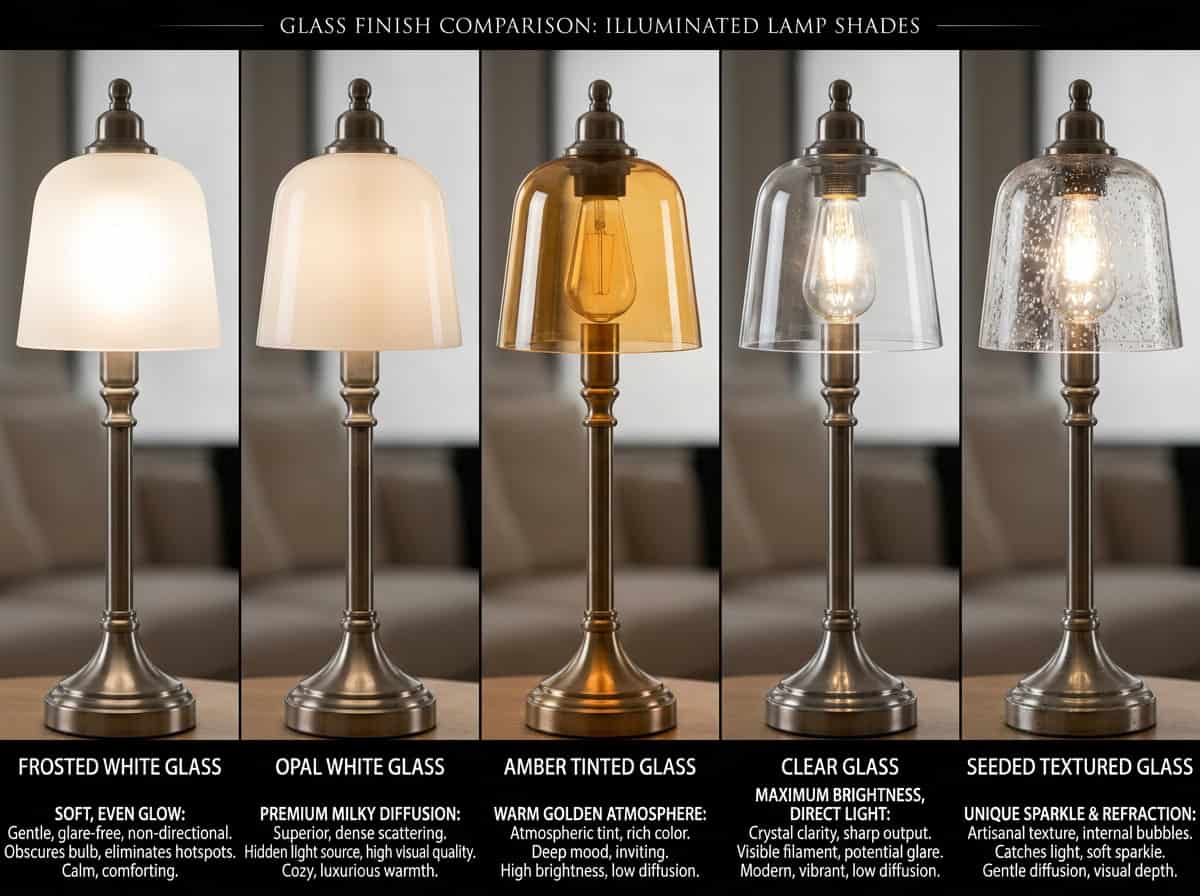
The key comparison dimensions for bedroom glass finish selection:
| Glass Finish | Transmittance | Glare at Bedside | Sleep Compatibility | Best Use |
|---|---|---|---|---|
| Frosted | 75–82% | None | Good (with 2700K LED) | All-round bedside and ceiling |
| Opal | 60–75% | None | Excellent | Accent, ambient lamps |
| Amber | 50–65% | None | Best (blue-filter) | Evening wind-down lamps |
| Clear | 88–92% | Significant | Poor | Above-eye-level only |
| Seeded/textured | 65–78% | Minimal | Good | Decorative accent lamps |
Matching Glass Finish to Bedroom Fixture Type
Different bedroom fixtures have different glass finish requirements because they serve different functions and are positioned differently relative to the viewer.
Bedside Table Lamps
Bedside table lamps are at close range (18–24 inches from the head during use) and in the direct sightline from the bed. Glare avoidance is the highest priority.
Best glass finish: Frosted glass for reading and functional bedside use. Amber glass for sleep-priority bedside use. Opal glass for ambient accent bedside lamps that are not used for reading.
Ceiling Pendant and Overhead Fixtures
Ceiling fixtures illuminate the whole room and are typically above sightline from a standing position. Glare is less critical but light distribution uniformity matters more.
Best glass finish: Frosted or opal glass for ceiling pendants and overhead fixtures. Clear glass is acceptable at sufficient ceiling height (9 feet or above) where the fixture is clearly above standing eye level.
Wall Sconces
Bedroom wall sconces serve reading or ambient light roles. Position relative to eye level from the bed determines glare risk.
Best glass finish: Frosted glass for reading sconces at mattress head height. Clear or seeded glass for decorative sconces positioned above eye level from the bed.
Floor Lamps and Torchiere
Bedroom floor lamps — particularly torchiere uplighters — direct light toward the ceiling for indirect ambient illumination. The glass shade on a torchiere is typically a large opal or frosted bowl.
Best glass finish: Opal glass for torchiere bowls (maximum diffusion of the upward light, most uniform ceiling illumination). Frosted glass is an acceptable alternative.
How to Choose the Best Glass Finish for Your Bedroom
The selection sequence for bedroom glass finish:
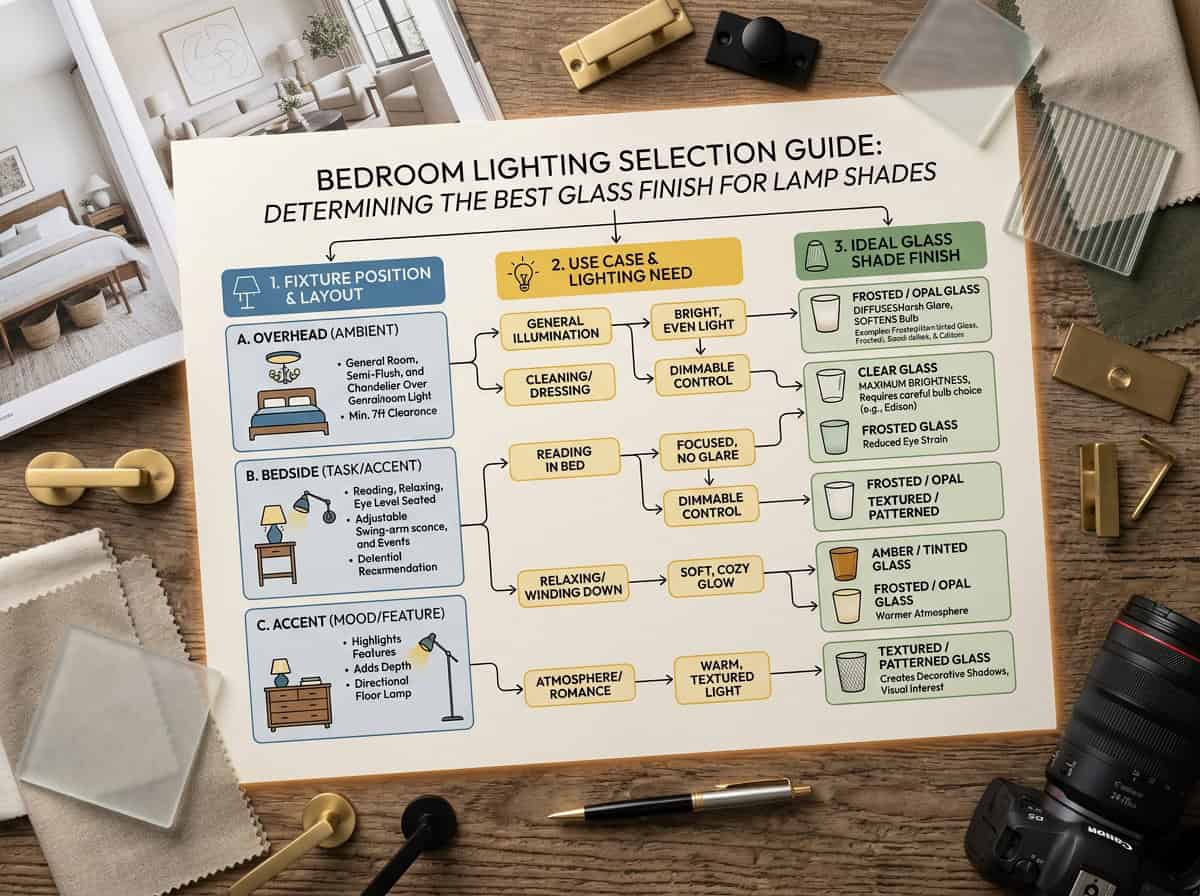
Step 1: What is the fixture’s primary function?
– Reading/task → frosted glass (maximum lux through glare-free glass)
– Evening ambient/accent → opal or amber glass (soft glow, warm spectrum)
– Statement/decorative → seeded, textured, or colored glass
– Above-eye-level ambient → clear or frosted glass
Step 2: Where is the fixture positioned relative to sightlines from the bed?
– At or below eye level from bed → frosted, opal, or amber (no clear glass)
– Above eye level from bed → any glass finish acceptable
Step 3: Does sleep quality priority outweigh other considerations?
– Yes → amber glass for fixtures used in the two hours before sleep
– No → frosted glass as the default best-round choice
Step 4: What LED bulb will be used?
– Warm-white 2700K or lower → pairs with all glass finishes
– Standard 3000K → acceptable with frosted and opal; produces cooler result with amber
– Filament decorative LED → clear glass to display the filament
The Illuminating Engineering Society’s residential lighting quality guidelines identify the bedroom as the most lighting-sensitive residential space because it must support multiple modes — getting ready, reading, relaxing, and sleeping — each with different illuminance and color temperature requirements.
Bedroom Lighting Scenarios and Glass Finish Recommendations
Primary couple’s bedroom with bedside lamps and ceiling fixture:
– Bedside lamps: frosted glass shades, 2700K LEDs, dimmer-compatible
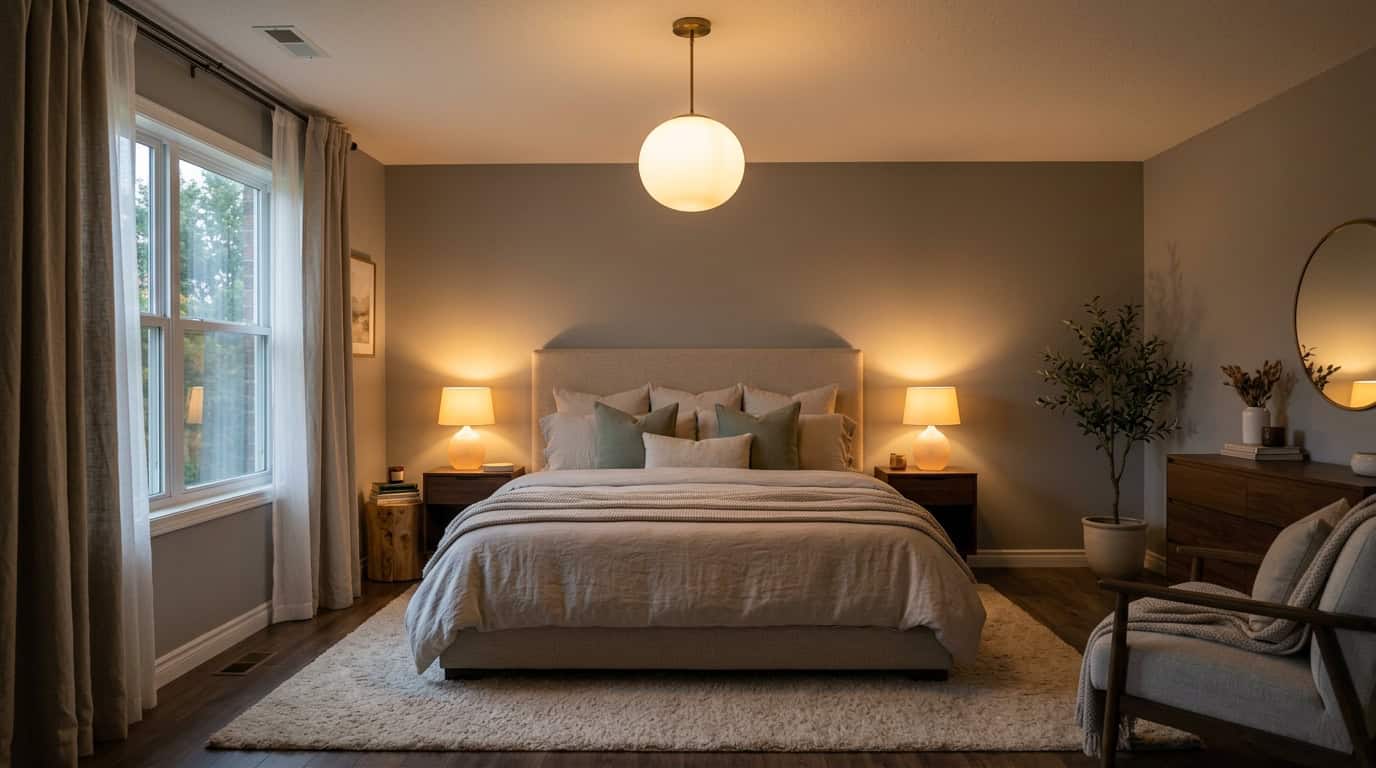
– Ceiling fixture: frosted or opal glass globe, 2700K LED, dimmer switch
– Result: full-spectrum warm residential bedroom lighting with no glare at any position
Sleep-priority bedroom with emphasis on circadian health:
– Bedside lamps: amber glass shades, 2700K LEDs
– Ceiling fixture: frosted glass globe on dimmer — full brightness for morning, very low for evening wind-down
– Optional: separate bright light source (bathroom or hallway) for color-critical morning grooming
Romantic ambiance bedroom with decorative lamps:
– Bedside lamps: opal glass for soft glow, or amber glass for warm candlelight quality
– Accent lamps: seeded glass in amber or sage green tones
– Ceiling: optional, or very low dimmer level frosted globe
Contemporary bedroom with pendant lighting:
– Ceiling pendant over bed: frosted glass globe at sufficient height above the pillow sightline
– Bedside: reading sconces with frosted glass
– Clear glass accent piece on dresser or vanity at sufficient height
Frequently Asked Questions
What type of glass is best suited to make night lamps?
Frosted glass is the best choice for night lamps because it eliminates point-source glare at close range and diffuses light uniformly — critical for a lamp used at low wattage in a dark room where any bright point becomes uncomfortably prominent. Amber glass is the superior choice specifically for sleep-health night lamps that prioritize melatonin-compatible spectral output. Standard clear glass is not recommended for night lamps used at bedside or eye-level positions.
Is frosted or clear glass better for bedroom lighting?
Frosted glass is better for bedroom lighting in almost all scenarios. Frosted eliminates the glare from visible bulbs that makes clear glass unsuitable for bedside and close-range bedroom use, produces more flattering and comfortable light quality, and works well with any LED source type. Clear glass is appropriate only for bedroom fixtures positioned clearly above eye level from both standing and lying positions (ceiling pendants at high ceilings, high wall sconces).
Does the glass finish of a lamp shade affect sleep quality?
Yes, through two mechanisms. First, glass finish determines glare — clear glass creates point-source glare that triggers alertness responses; frosted and opal glass eliminate glare. Second, colored glass (particularly amber) selectively filters blue-spectrum light that suppresses melatonin production. Research consistently shows that blue-light exposure in the two hours before bed delays sleep onset and reduces sleep quality, making amber glass a functionally superior choice for bedside lighting used in the evening.
What color temperature LED should I use with bedroom glass lamp shades?
2700K warm-white LED is the standard recommendation for all bedroom glass lamp shades. This color temperature produces warm, incandescent-like light quality through frosted, opal, and amber glass. With clear glass, 2700K prevents the harsh cold appearance that standard or cool-white LEDs create. For purely sleep-health applications, 2200K (extra warm) LEDs with amber glass provide maximum melatonin-compatible spectral output.
Can I use the same glass finish for all bedroom lighting fixtures?
Yes, and using frosted glass throughout the bedroom provides the most consistent and versatile result. The alternative — different glass finishes for different fixture roles (frosted for reading sconces, amber for accent lamps, opal for ceiling) — allows more nuance but requires more coordination. For a simple, reliable bedroom lighting scheme, frosted glass throughout with a dimmer on the ceiling fixture covers all bedroom lighting modes adequately.
How do I transition my bedroom lighting for sleep without replacing fixtures?
If switching glass shades is not immediately practical, LED bulb choice makes a significant difference. Switching from standard 3000K LEDs to 2700K or 2200K warm-white LEDs in existing frosted glass shades reduces blue-spectrum output without changing the fixture. Adding smart bulbs that transition automatically from 3000K during daytime to 2200K in the evening is an effective sleep-health intervention that works with any glass shade type.
Should I use the same glass finish for the ceiling light and bedside lamps in a bedroom?
Not necessarily — the ceiling fixture and bedside lamps serve different roles. The ceiling light is typically used for room-wide illumination during getting ready and is often positioned above typical sightlines, making frosted glass (or even clear at sufficient height) appropriate. Bedside lamps are at close range and in direct sightlines from the bed, making frosted, opal, or amber glass essential. Using frosted throughout is the simplest approach; matching the ceiling fixture glass to the bedside lamps creates visual cohesion.
Conclusion
The best glass finish for bedroom lighting is frosted glass for most applications — it eliminates glare at bedside distances, transmits adequate light for all bedroom functions, and works with any interior style or color palette. Amber glass is the superior choice when sleep health is the explicit priority — the blue-spectrum filtering has documented benefits for melatonin production and sleep onset.
Clear glass has a narrow bedroom application: fixtures positioned clearly above eye level from the bed, where glare is not a sightline issue. Opal glass works well for accent lamps that are not primary reading sources.
For bedroom glass lamp shades in frosted, opal, and amber glass finishes with documented glass construction and standard residential fitter sizes — and for the full selection across all home fixtures, see our home lamp shades collection, our glass lampshade product line at jxlampshade.com provides the glass shade options that bedroom lighting designers specify for both comfort and sleep quality.