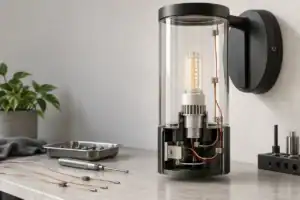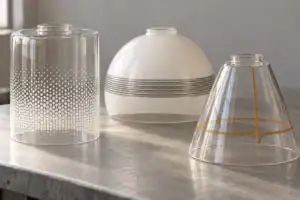
Glass pendant shades for dining rooms should hang 30–36 inches above the table surface, use a globe diameter of 12–16 inches for a single pendant over a round table or 8–12 inches for a row over a rectangular table, and use frosted or opal glass for food-flattering diffused light rather than clear glass which creates eye-level glare.
The glass pendant over the dining table is one of the highest-leverage lighting decisions in a home. Get it right and every dinner looks beautiful, the table feels like the center of the room, and the light is warm without being dim. Get it wrong — pendant too high, glass too clear, globe too small — and the table either feels underlit or the pendants create glare that makes guests squint.
This guide covers the complete specification for glass pendant shades for dining rooms: hanging height, globe diameter by table size and shape, glass type selection for food-flattering light, and how to coordinate style with different dining room aesthetics. The product listing pages that dominate the search results for this keyword show you options but not how to choose between them.
Why Glass Is the Right Shade Material for Dining Room Pendants
Dining rooms are among the best applications for glass pendant shades for several reasons:
Cleanability. Dining environments produce steam, cooking vapor, and occasional food splatter. Fabric pendant shades absorb these and are difficult or impossible to clean effectively. Glass shades wipe clean — relevant for any pendant that hangs over a dining table where it is in range of cooking steam and candle smoke.
Light quality. Glass pendants produce a qualitatively different light than fabric pendants — more focused, with more visible variation in brightness between the lit area under the pendant and the surrounding space. This directionality makes the table feel like the center of the room, which is precisely the effect dining room lighting should create.
Durability. Dining room pendants are in service every day. A quality glass pendant shade lasts 15+ years without the yellowing, structural degradation, or fabric fatigue that fabric shades develop.
Visual weight. Glass pendants have visual presence that fabric shades lack. A pair of frosted glass globes over a dining table is a design element; a pair of fabric drum shades at the same height is a background element. For dining rooms where the lighting fixture is meant to be noticed, glass is the right choice.
According to the Illuminating Engineering Society’s residential dining room lighting recommendations, pendant fixtures over dining tables should provide 150–350 lux at the table surface — a range that glass globe pendants at 30–36 inches achieve efficiently with LED sources.
The Critical Spec: Hanging Height
The most common dining room pendant mistake is hanging the glass shade too high. Designers and homeowners consistently over-estimate the correct height — a pendant that appears too low in a bare room or during daytime looks correct at dinner with people seated at the table.
The correct hanging height for glass pendant shades over a dining table:
– 30–36 inches above the table surface for standard dining table heights (28–30 inches from the floor)
– Bottom of the shade is at approximately 58–66 inches from the floor — above eye level for seated diners (approximately 45–48 inches), but at or slightly above eye level for standing guests
At the correct height of 30–36 inches above the table, the glass globe is close enough to concentrate light on the table surface, create visual intimacy around the table, and make the pendant feel present in the room rather than retreating toward the ceiling.
The wrong hanging heights and their effects:
– Too high (more than 40 inches above table): pendant appears to float disconnected from the table; light spreads too broadly and creates less lux at the table surface; the pendant’s focal effect is lost
– Too low (less than 26 inches above table): pendant obstructs sightlines across the table; guests seated at opposite ends cannot see each other; the shade is in range of accidental head contact when rising from the chair
For rooms with ceilings above standard 8 feet, add 3 inches of pendant height per additional foot of ceiling height — a 10-foot ceiling calls for pendant bottom at 36–42 inches above the table.
Globe Diameter by Table Size and Shape
Globe diameter is the second critical specification. A pendant globe that is too small for the table looks inadequate; too large and it overwhelms the space.
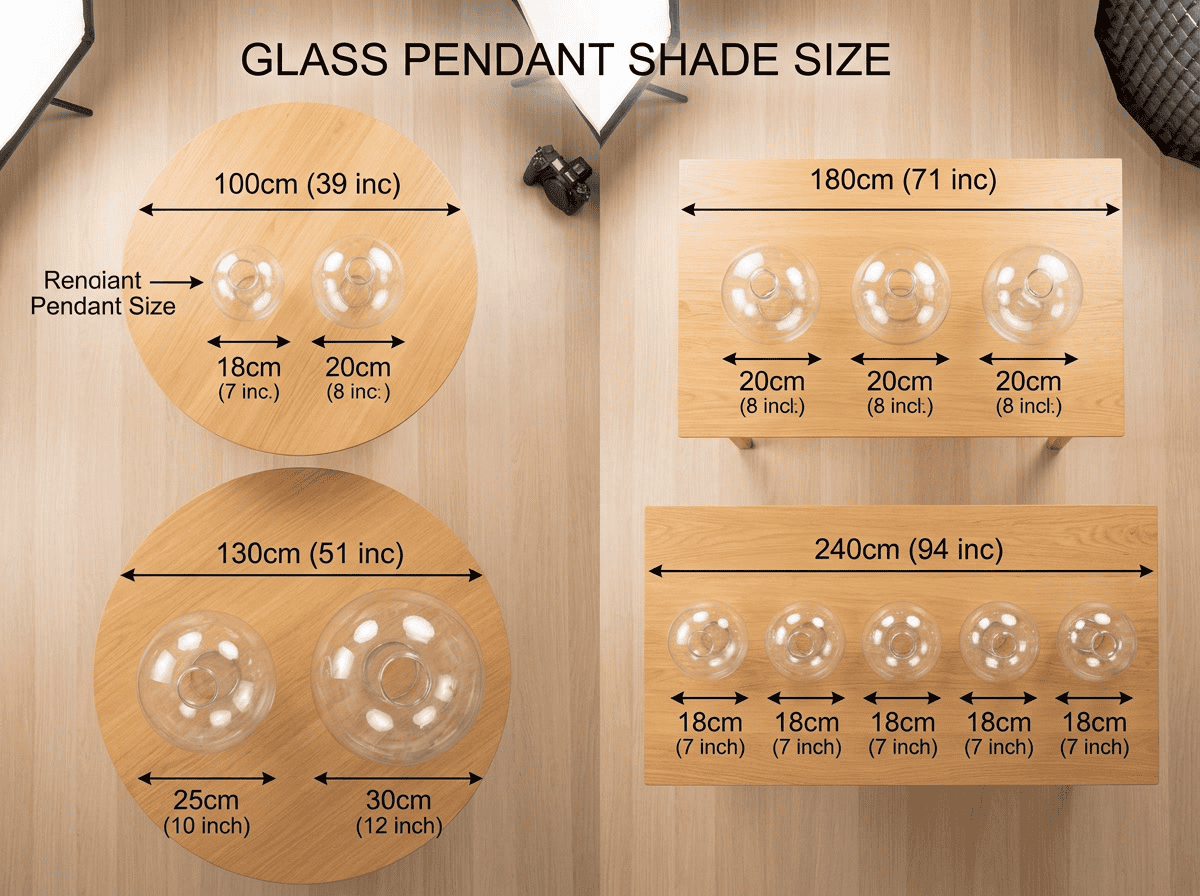
Single Pendant Over a Round or Square Table
For a single glass pendant centered over a round or square table:
– The globe diameter should be one-third to one-half the table diameter
– A 42-inch round table: 14–18 inch diameter globe
– A 48-inch round table: 16–22 inch diameter globe
– A 60-inch round table: 20–30 inch diameter globe (or multiple smaller pendants)
Multiple Pendants Over a Rectangular Table
Rectangular dining tables typically use 2–3 pendants in a row, centered along the table’s long axis. For row pendant configurations:
– Individual globe diameter: approximately one-quarter to one-third the table width
– For a 36-inch wide table (typical): globes of 8–12 inches in diameter
– For a 42-inch wide table: globes of 10–14 inches in diameter
– Pendant spacing in a row: approximately one-third the table length apart (for 3 pendants on a 72-inch table: 18 inches from each end, 36 inches between outer pendants)
Sizing Reference
| Table Size | Configuration | Globe Diameter | Pendant Count |
|---|---|---|---|
| 36-inch round | Single | 12–14 inch | 1 |
| 48-inch round | Single | 16–20 inch | 1 |
| 60-inch round | Single or pair | 20–24 inch (1) / 10–12 inch (2) | 1–2 |
| 60×36 inch rectangular | Row | 8–10 inch | 2–3 |
| 84×36 inch rectangular | Row | 8–12 inch | 3 |
| 96×42 inch rectangular | Row | 10–14 inch | 3 |
Glass Type for Dining Room Pendants
The glass type determines the most important characteristic of dining room lighting — whether the light is flattering and inviting, or harsh and uncomfortable.
Frosted Glass: The Best General-Purpose Choice
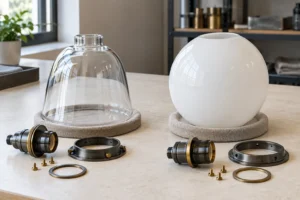
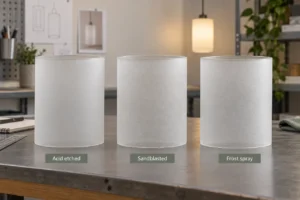
Frosted glass eliminates the visible bulb hot spot and produces uniform, even light from the entire globe surface. At dining room pendant heights (30–36 inches above the table), a frosted glass globe illuminates the table surface with soft, even light that minimizes harsh shadows on faces and food.
Frosted glass pendants work in virtually every dining room style and with any warm-white LED source. At 75–82% transmittance, frosted glass delivers adequate lux at the table surface with standard LED wattages of 8–15 watts.
Why frosted beats clear for dining: At dining height and close range, a clear glass globe with a visible LED creates an uncomfortable bright point in the sightline of diners seated at the opposite end of the table. Food and faces look better under frosted glass — the soft, diffused illumination produces fewer harsh shadows and more flattering rendition of both food textures and skin tones.
Opal Glass: Premium Soft Glow for Formal Dining
Opal glass (milk glass) produces the softest, most diffused light of any glass type — transmitting 60–75% of the bulb’s output as a uniformly warm white glow. For formal dining rooms and spaces where candlelit atmosphere is the design goal, opal glass pendant shades deliver the richest, most premium light quality.
The trade-off is lux output: an opal glass globe requires a higher-wattage LED than frosted to achieve equivalent table surface illumination. A 12-inch opal globe at 30 inches above the table with a 10-watt LED produces approximately 150 lux at the table center — the low end of the IES recommended range. For adequate dining illuminance from opal glass, use 12–15 watt LED sources.
Clear Glass: Only for Filament LED Dining Applications
Clear glass pendant shades in a dining room work when:
– The pendant hangs higher than standard (40 inches or more above the table, where the bulb is at or above seated eye level)
– A decorative filament LED is used and the visible glowing filament is the intended design element
– The dining space is a kitchen/dining combination where loft-style industrial aesthetics intentionally include visible bulbs
At standard hanging heights over a dining table, clear glass with standard LEDs creates uncomfortable glare. If the design calls for clear glass, ensure the pendant hangs at the high end of the range (36–40 inches above table) and use a filament LED at 2200K — the warm amber color of the filament is less glare-inducing than standard LED chip white light.
Seeded and Textured Glass: Character for Casual Dining
Seeded glass, hammered glass, and ribbed glass provide moderate diffusion while adding visual interest to the pendant. These are the right choice for casual dining spaces, kitchen/dining combinations, and interiors where the pendant is meant to be decorative rather than architecturally understated.
Seeded glass at 65–78% transmittance provides good lux delivery and interesting light-play effects on the table surface — the air bubbles refract the light in subtle patterns that plain frosted glass does not produce.
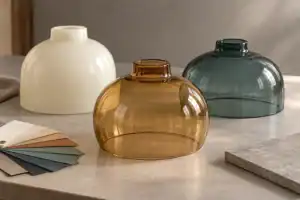
Colored Glass: Dramatic Atmosphere for Accent Dining Lighting
Smoked grey, amber, and dark-tinted glass pendant shades over a dining table create atmosphere at the expense of lux. A smoked grey 12-inch globe pendant with a 10-watt LED may deliver only 80–100 lux at the table center — below the functional dining illuminance range but suitable when candles or supplemental wall sconces provide additional light.
Colored glass dining pendant shades work best:
– In combination with other light sources (wall sconces, sideboard lamps, or candles)
– In restaurants and hospitality-inspired dining rooms where atmosphere takes priority over functional illuminance
– As a design statement in high-contrast interiors where the pendant is meant to be visually dramatic
Glass Pendant Shade Styles for Dining Room Aesthetics
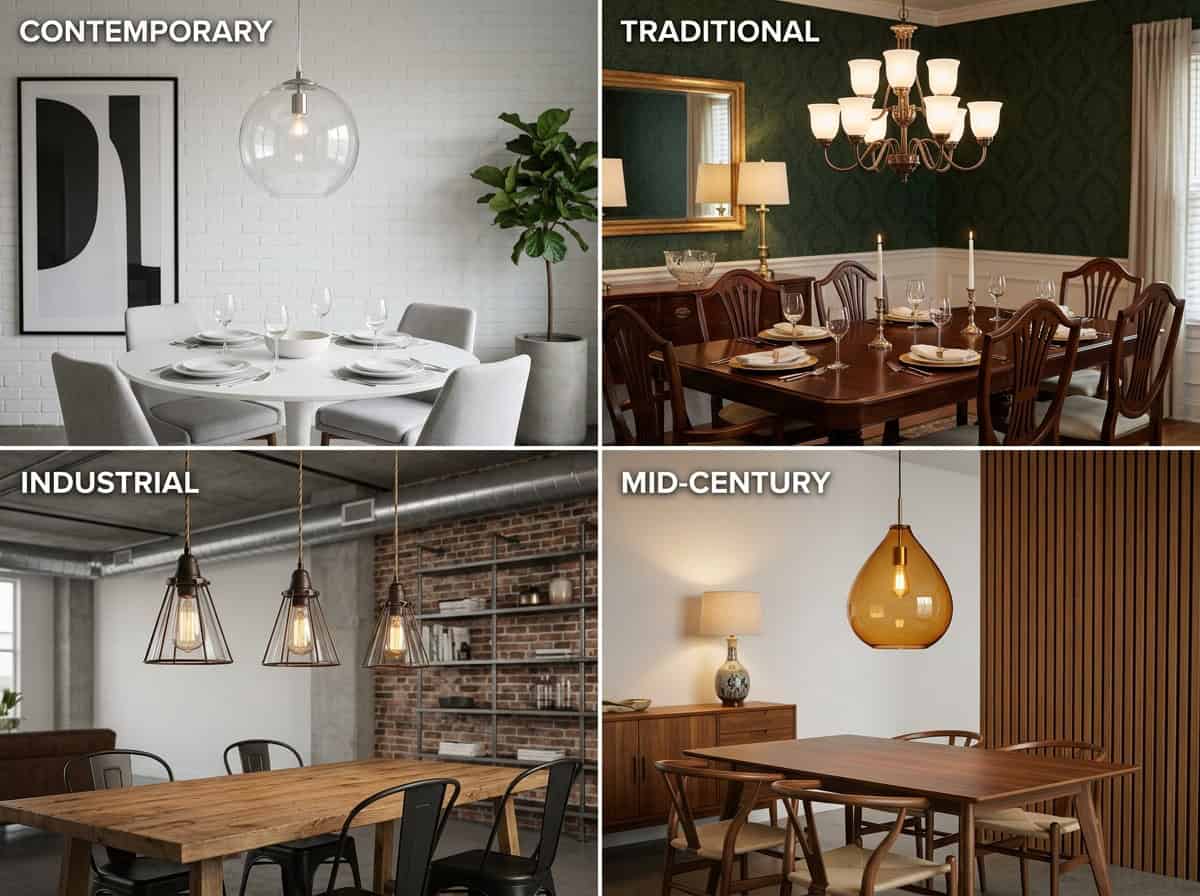
Contemporary and Modern Dining Rooms
Best glass pendant style: Simple frosted or clear globe in matte black or brushed brass fittings. Single large pendant (16–22 inches) over round tables; two medium pendants (12–14 inches) over rectangular tables.
The Architectural Digest documentation on contemporary dining room design consistently shows clear or frosted glass globes as the dominant pendant choice in contemporary residential dining rooms — the visual simplicity of the glass globe suits the clean-line aesthetic.
Avoid: Heavily textured or ornate glass shades that compete with the minimal room palette.
Traditional and Classic Dining Rooms
Best glass pendant style: Opal white glass in decorative bronze or gold fittings, or a chandelier with multiple small opal or seeded glass arms. Crystal glass is appropriate for formal traditional dining rooms.
Avoid: Industrial clear glass pendants that clash with period furniture and warm color palettes.
Industrial and Urban Dining Spaces
Best glass pendant style: Clear glass globes with visible filament LED bulbs, on black metal conduit or Edison cord. Multiple smaller pendants (8–10 inches) in a row over a rectangular industrial table. Or opal dome pendants on cage-style gallery rings referencing the engineering pendant aesthetic.
Avoid: Delicate or decorative glass finishes that conflict with the rawness of industrial materials.
Mid-Century Modern Dining Rooms
Best glass pendant style: Hand-blown glass in amber, cognac, or organic form globes on walnut or brass fittings. Opal white in simple geometric forms also works well. The organic quality of hand-blown glass — slight asymmetry, color variation — pairs better with mid-century furniture than machine-produced glass.
Coastal and Organic Dining Rooms
Best glass pendant style: Frosted white globes in matte white or natural rope fittings. Seeded glass with natural amber tone. The glass shade should feel light and effortless rather than heavy or deliberate.
LED Bulb Selection for Dining Room Glass Pendant Shades
The LED bulb choice affects the dining room ambiance as much as the glass finish choice. For glass pendant shades over dining tables, two bulb parameters matter:
Color temperature: 2700K warm-white is the standard recommendation for dining room glass pendants. Warm-white light makes food and faces look flattering by rendering warm tones (reds, oranges, yellows) more accurately than cool-white or neutral-white LEDs. The U.S. Department of Energy’s guidance on residential lighting confirms that 2700K LEDs in dining spaces produce the most positive subjective lighting satisfaction scores.
Bulb shape: For frosted and opal glass globes, the bulb shape is invisible — use any A19 or globe LED at the appropriate wattage. For clear glass globes, use a filament-style LED (Edison bulb style) — the visible filament array is the decorative element, and standard LED chips show as an unpleasant concentrated bright point through clear glass.
Wattage: For glass globes at 30–36 inches above the table:
– 12-inch frosted globe: 8–10W LED
– 14-inch frosted globe: 10–12W LED
– 12-inch opal globe: 12–15W LED
– 16-inch frosted globe: 12–15W LED
Adding a dimmer to dining room glass pendant circuits is strongly recommended — the ability to shift from full illuminance (eating) to low ambient (conversation, candles) dramatically expands the functionality of the pendant lighting without requiring fixture changes.
Frequently Asked Questions
How high should glass pendant shades hang over a dining table?
The standard specification is 30–36 inches between the bottom of the pendant shade and the table surface for 8-foot ceilings. This height keeps the pendant above seated-eye sightlines while close enough to focus light on the table and create visual intimacy. For ceilings above 8 feet, add 3 inches per additional foot of ceiling height. The most common mistake is hanging pendants too high — at 40+ inches above the table, pendants lose their focal effect and spread light too broadly.
What size glass pendant shade for a dining room table?
For a single pendant over a round table, globe diameter should be approximately one-third to one-half the table diameter. For a row of pendants over a rectangular table, individual globe diameter should be approximately one-quarter to one-third the table width. A 36-inch round table suits a 12–14 inch globe; a standard 36-inch wide rectangular dining table suits 8–12 inch globes in a row of 2–3.
How many glass pendants over a rectangular dining table?
Two pendants for tables up to 6 feet (72 inches) long; three pendants for tables 7–10 feet long. Pendants in a row should be spaced approximately one-third of the table length apart. The outermost pendants should be positioned at approximately one-third of the table length from each end, not centered over the table ends.
Is frosted or clear glass better for dining room pendants?
Frosted glass is better for most dining room pendant applications. At the standard hanging height of 30–36 inches above the table, clear glass creates a visible bulb at seated eye level that produces uncomfortable glare for diners looking across the table. Frosted glass eliminates this glare while delivering slightly less lux — a trade-off that is worth making for dining room use. Clear glass with a filament LED is the exception: the warm, diffuse glow of a filament bulb is much less glare-inducing than a standard LED through clear glass.
What color glass pendant shade works best in a dining room?
For dining rooms that serve food, warm glass tones — frosted white, opal white, warm amber, or clear with a 2700K filament LED — produce the most flattering light for food and faces. Cool-toned glass (smoked grey, blue) shifts the light color in ways that can make food look less appetizing and skin tones less warm. The first rule of dining room lighting is that the light should make the food and the people look good — warm glass finishes achieve this.
Can I mix glass pendant shade styles over a dining table?
Mixing pendant sizes (different heights) is an intentional and effective design technique for large rectangular tables. Mixing glass types or styles in a cluster over a round or small table can look unintended and busy. The safest approach for mixed configurations: same glass type and finish throughout, varied only in globe diameter. Same-style pairs or trios read as deliberate; mismatched styles at the same fixture position read as an accident.
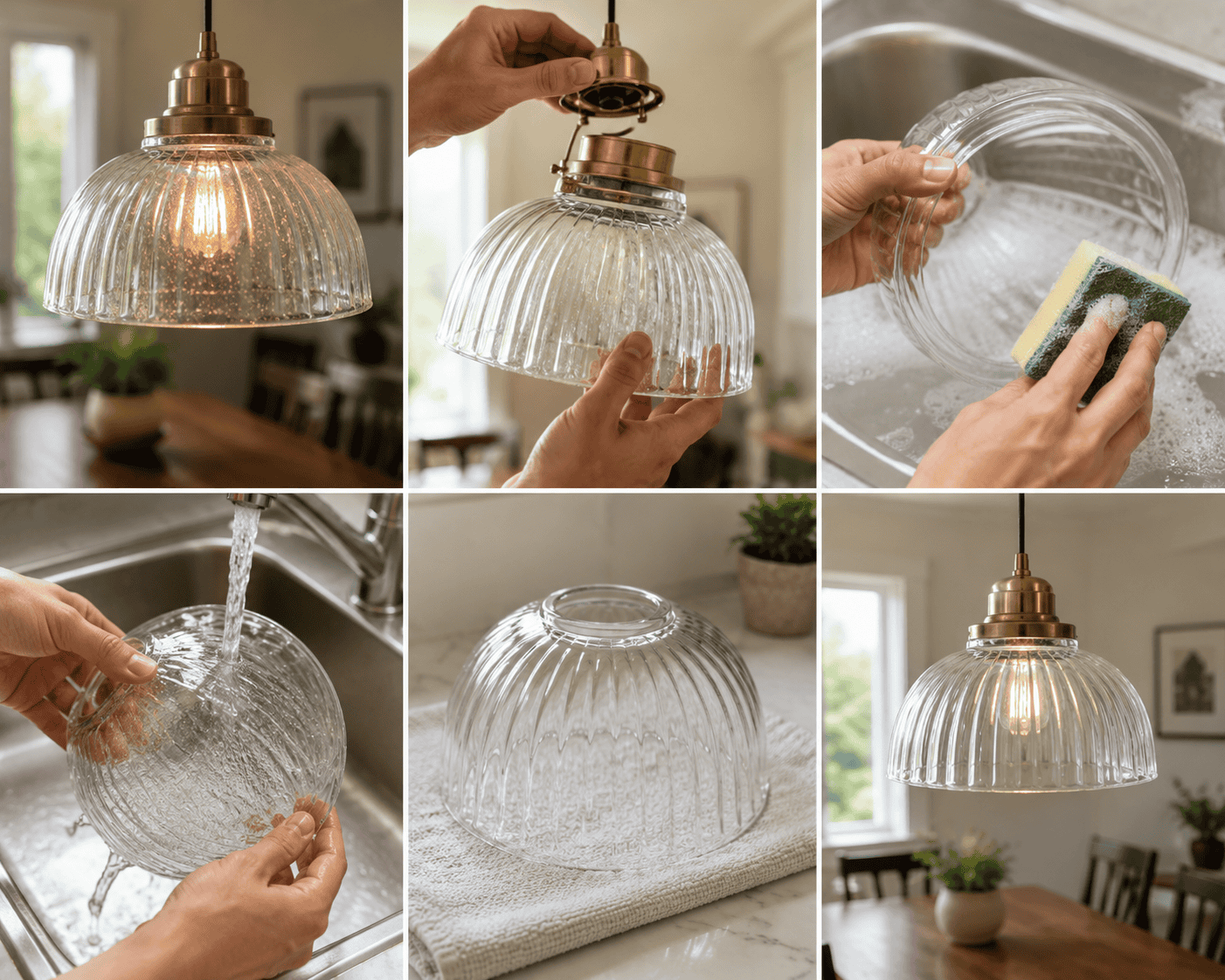
Do glass pendant shades need special cleaning in a dining room location?
More frequent cleaning than other locations — cooking vapor, steam, and occasional food particulate settle on dining room pendants. Glass shades should be cleaned annually (minimum) and more frequently if the pendant hangs over a table that also serves as a kitchen workspace. Remove the shade from the gallery ring, wash in warm water with dish soap, rinse thoroughly, and dry before reinstalling. The advantage of glass over fabric: this process takes 5 minutes and leaves the glass optically clean; fabric shades cannot be similarly cleaned.
Conclusion
Glass pendant shades for dining rooms require three specifications to work correctly: hanging height (30–36 inches above the table), globe diameter (proportional to table size), and glass type (frosted or opal for food-flattering diffused light). The fourth choice — style — is genuinely personal, but the first three are not negotiable if the pendant is to serve its function.
The most expensive pendant at the wrong height over the wrong table size produces worse results than a simple, correctly specified frosted globe at the right height. Start with the geometry, then choose the style.
For glass pendant shades in frosted, opal, seeded, clear, and colored glass across the standard 4-inch and 6-inch fitter sizes — part of our home lamp shades collection — used in residential dining room pendant fixtures, our glass lampshade product line at jxlampshade.com covers the full range of globe diameters from 8 to 20 inches for residential dining applications.