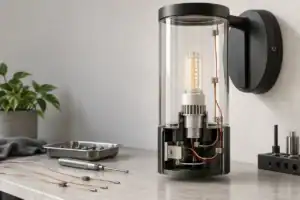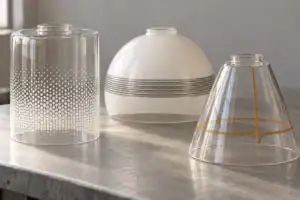
Direct answer: Cut glass lamp shade replacement involves finding or ordering a glass shade with matching fitter dimensions and a comparable cut or pressed geometric pattern to replace a broken or missing original. The critical measurements are fitter inner diameter, shade outer diameter, and height. Both genuine cut glass originals and quality pressed-glass reproductions are available.
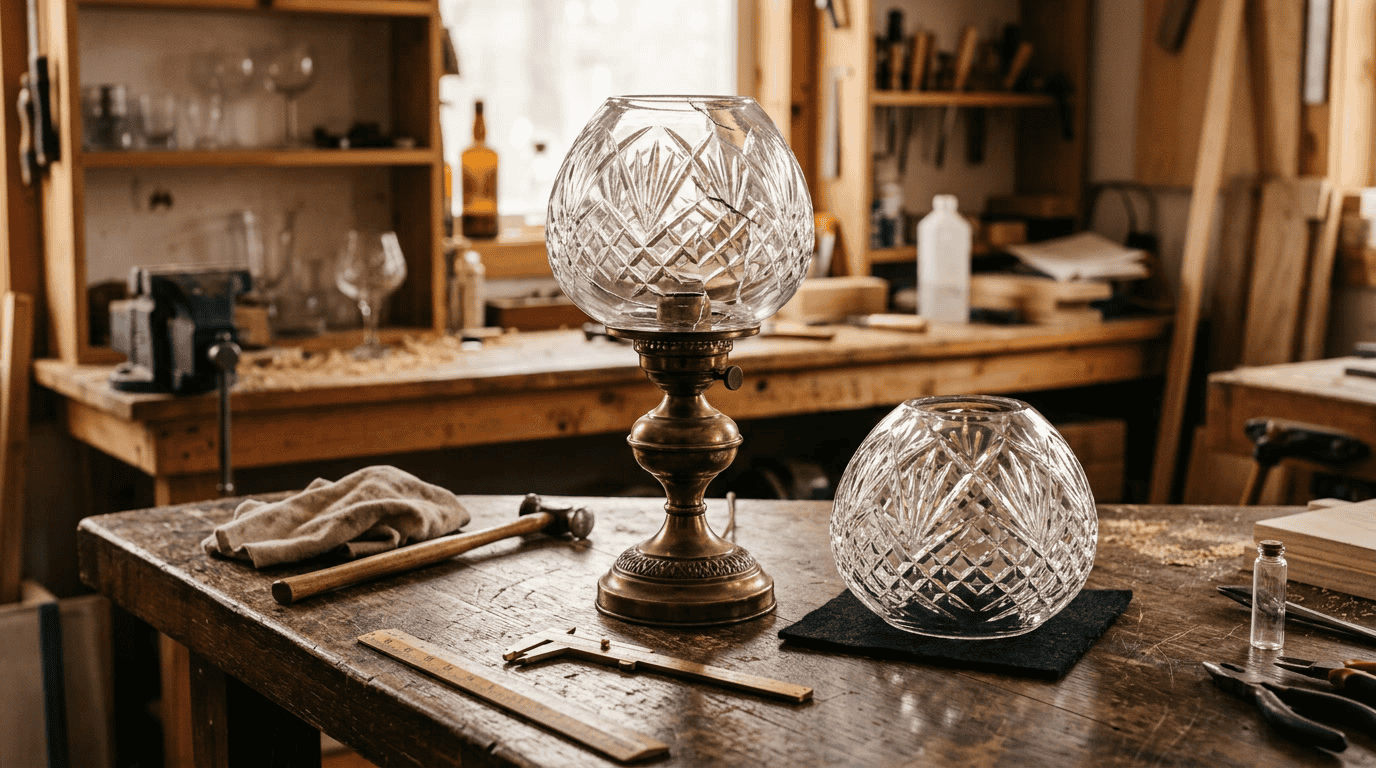
Cut glass lamp shades break. The faceted exterior surfaces that make them beautiful — catching and refracting light into prismatic patterns across the room — also make them more vulnerable than smooth glass to the impact of being bumped, knocked from a table, or simply falling during a bulb change. When a cut glass shade breaks, the challenge is finding a replacement that matches the lamp’s proportions, fitter dimensions, and visual character.
This guide covers the complete replacement process for cut glass and pressed geometric glass lamp shades — from measuring correctly, to evaluating sources, to specifying a custom reproduction if no matching original is available.
Understanding Cut Glass vs. Pressed Geometric Glass
Before sourcing a replacement, understanding what you actually have clarifies what you should be looking for.
True cut glass: Pattern is ground and polished into the glass after forming, using rotating metal wheels with abrasive. Each facet is individually cut and polished. True cut glass has sharp-edged, highly polished facets with excellent light refraction — the “sparkle” is distinctly better than pressed pattern. True cut glass shades are more expensive and less commonly available as replacements because hand-cutting is labor-intensive.
Pressed geometric glass: Pattern is formed by pressing molten glass into a mold. The pattern surface is less sharp-edged than true cut glass but produces similar decorative effect at lower cost. Most “cut glass style” shades in the residential market are pressed glass, not true cut. Reproductions are almost always pressed.
Mold-blown geometric glass: The pattern is blown into a mold while the glass is still molten. Softer pattern detail than pressed; typically used for rounded geometric forms (diamond, honeycomb) rather than sharp-edged facets.
For replacement purposes: if your original is true cut glass, a pressed reproduction will be visually similar but won’t have the same optical precision. For decorative purposes this is usually acceptable; for a lamp that is the focal point of a room, seek a true cut glass replacement.
Step 1: Measure Before Anything Else
The most common cut glass shade replacement failure is ordering based on appearance and discovering the fitter doesn’t fit. Always measure first.
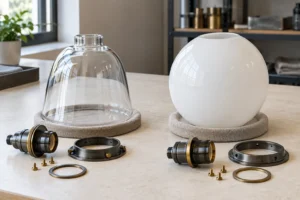
Fitter inner diameter: The inner diameter of the shade’s opening where it attaches to the lamp hardware. Common sizes:
| Fitter size | Inner diameter | Common lamp type |
| Uno | 7/8″ (22mm) threaded | Most table lamps 1940–present |
| Gallery 2¼” | 2.25″ | Older table lamps, some pendants |
| Gallery 3¼” | 3.25″ | Floor lamps, larger pendant fixtures |
| Neckless | Varies (no rim fitter) | Some ceiling and pendant fixtures |
| Spider | 1 5/8″ saddle | Harp-mount floor and table lamps |
Measure the inner diameter of your existing shade’s fitter opening with a ruler or calipers. If the shade is broken, measure from the lamp’s hardware (socket collar for uno, ring inner diameter for gallery fitter).
Shade outer diameter: Widest point of the shade exterior. This is proportional to the lamp base height; correct replacement maintains the original proportion.
Shade height: From fitter top to shade bottom. If replacing a broken shade, you may only have fragments; estimate height from the lamp base and the visual proportion of the lamp you remember.
Full measurement guidance: how to measure a replacement glass lamp shade and glass lamp shade fitting standards.
Step 2: Identify the Pattern Type
Cut glass patterns fall into approximately six categories that inform what you’re searching for:
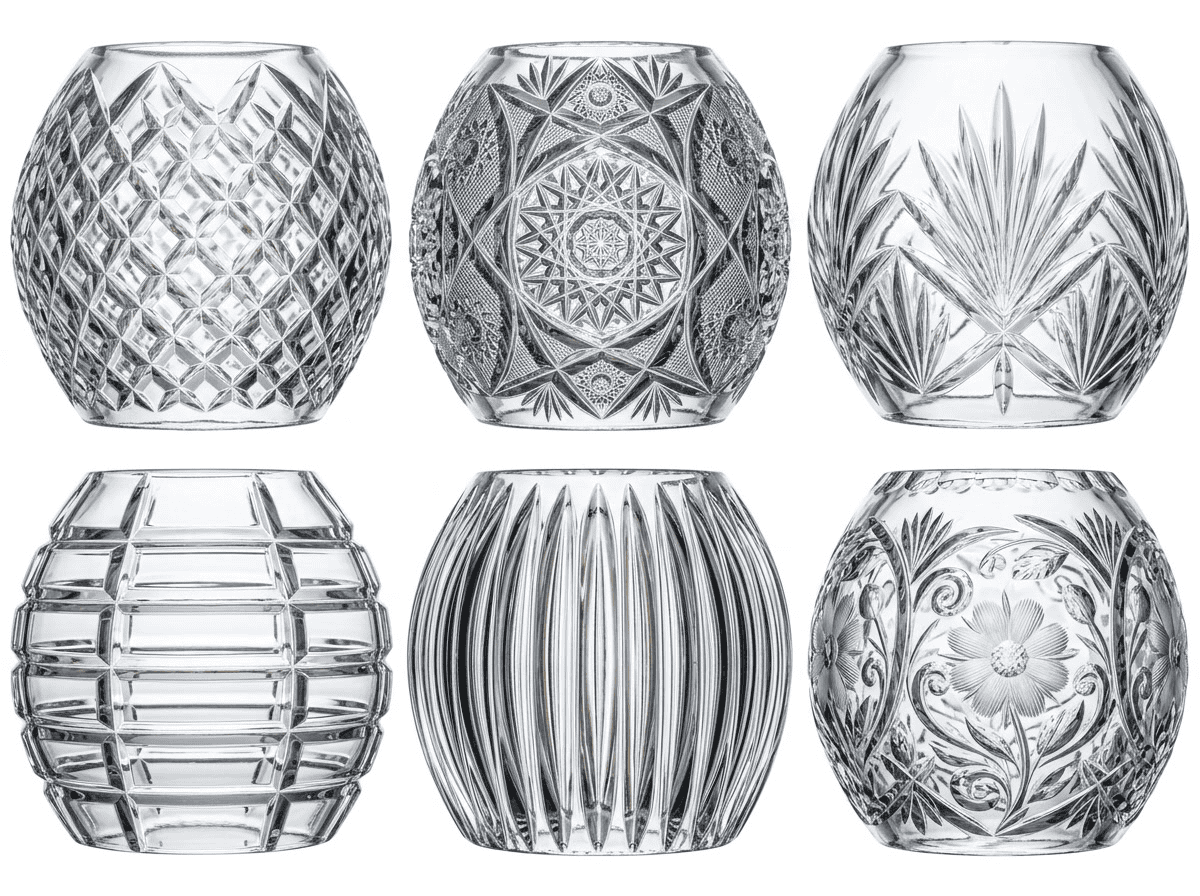
diamond crosshatch (most common): Regular diamond grid pattern cut or pressed across the entire shade surface. Most ubiquitous “cut glass” pattern in residential lighting. Widely available in reproductions.
Hobstar / strawberry diamond: More complex pattern with radiating star shapes at intersections of the diamond grid. True hobstar is a true cut pattern; pressed glass achieves a simplified version. Associated with American Brilliant Cut Glass period (1880–1915).
Fan or shell cut: Repeated fan-shaped or scallop-shell cuts arranged in rows. More graceful than the geometric diamond patterns. Used on higher-end Victorian and Edwardian shades.
Step or block cut: Horizontal banding of flat-cut rectangular steps. Clean, architectural pattern well-suited to Art Deco lamps.
Fluted/vertical cuts: Straight vertical cuts running the full height of the shade. Simple and effective light refraction pattern.
Bohemian floral cut: Naturalistic flower and leaf motifs cut into the glass. Complex, labor-intensive, associated with European (particularly Bohemian/Czech) production. Difficult to find as exact replacements.
For replacement matching: if the pattern type is critical (e.g., completing a matching pair), photograph the original or a surviving fragment in detail and share with the supplier. For single-lamp replacement where exact pattern match isn’t required, any similar pattern in the correct diameter and fitter works.
Step 3: Choose Your Source
Antique markets and estate sales: Best for American Brilliant Cut Glass period originals and early 20th century forms. Pattern matching is possible if you bring your lamp base for comparison. No guarantee on fitter dimensions — measure in person.
Specialist lighting and glass restoration dealers: Stock curated replacement shades including cut glass forms. Better fitter dimension verification than general antique markets. Prices higher but more reliable.
Online marketplaces: Wide selection, but “cut glass” labeling is inconsistent (pressed glass routinely sold as cut glass). Always request: fitter inner diameter, shade outer diameter, height, and a photo of the shade lit from inside. Request a close-up photo of the cut surface to evaluate pattern quality.
Glass shade manufacturers: For non-standard sizes, unusual fitter dimensions, or custom pattern requirements, a manufacturer is the most reliable source. Can produce pressed geometric glass shades to specified dimensions. True cut glass custom work is available but significantly more expensive and requires longer lead times (typically 6–10 weeks).
According to Wikipedia’s article on cut glass, the American Brilliant period (1876–1917) produced the highest-quality cut glass in American history — shades from this period are genuine antiques and command corresponding prices. Post-Brilliant period shades (1917 onward) are generally pressed glass, not true cut.
Step 4: Evaluate Quality Before Committing
For any cut glass or pressed geometric shade, evaluate quality before purchasing. The test is straightforward:
Run your fingernail along the pattern edges. True cut glass has edges sharp enough to feel definitively under the fingernail. Pressed glass patterns have rounder, softer edges. Mold-blown patterns are the softest and most rounded.
Hold to a strong light and look at the pattern surface. True cut glass facets are brilliantly polished — they reflect light clearly and create sharp highlights. Pressed glass has a slightly matte quality on the facet surfaces from the mold release.
Look at the fitter rim edge. Quality glass shades have polished or fire-finished fitter rims — smooth and rounded. Lower-quality shades have rough-cut or grinding-wheel finished rims that feel sharp.
Request a lit photo. The single most informative quality indicator for any glass shade is a photo of the shade lit from inside. Cut glass creates brilliant prismatic dispersal; pressed glass creates a more uniform sparkle; poor quality pressed glass creates a dull geometric texture with minimal light play.
For our range of cut glass style replacement shades, cut glass lamp shades shows current production options with fitter specifications.
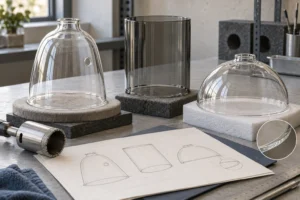
Step 5: If No Match Is Available — Specify a Custom Reproduction
When the original shade has an unusual fitter dimension, non-standard diameter, or distinctive pattern that no in-stock shade matches, custom reproduction is the answer.
What to provide a manufacturer:
- Fitter type and inner diameter (e.g., “2¼” gallery ring, inner diameter 2.25″”)
- Outer diameter (e.g., “10” outer diameter”)
- Height (e.g., “6” from fitter top to shade bottom”)
- Wall thickness (if known; typical range 3–5mm for cut-glass style pressed shades)
- Pattern description or reference photo (e.g., “diamond crosshatch with hobstar at intersections, approximately 12 rows of diamonds visible”)
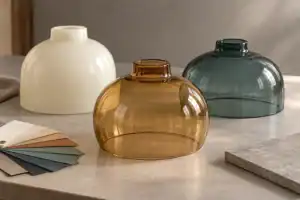
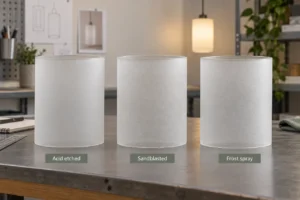
- Glass type (clear, frosted/acid-etched exterior, amber tint)
With these specifications, a manufacturer can produce a pressed geometric glass shade that matches your original within the pattern-accuracy tolerance of pressed vs. true cut. For most residential replacement purposes this is sufficient.
Maintaining Cut Glass Shades After Replacement
Cut glass and pressed geometric shades require more careful cleaning than smooth glass because the pattern surface collects dust in the pattern recesses and is harder to clean completely.
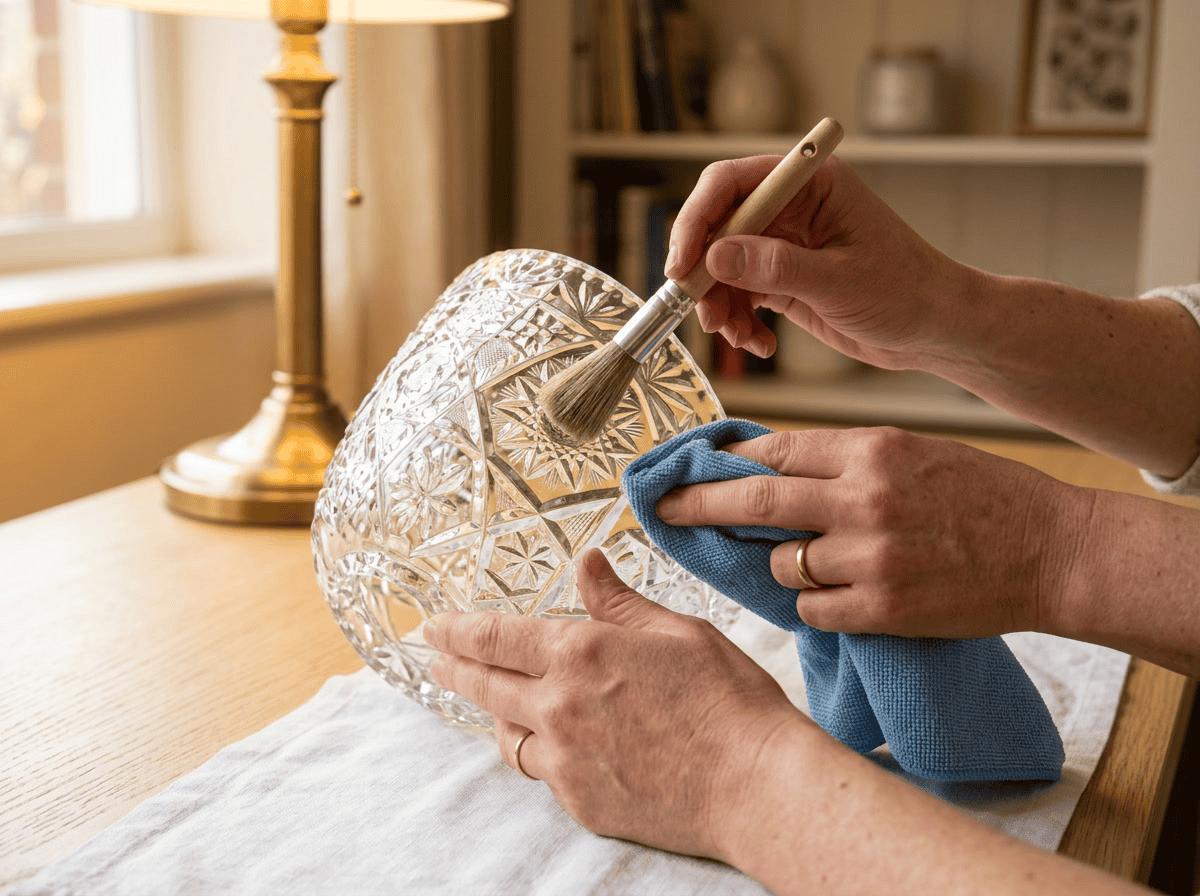
Monthly maintenance:
- Remove shade from lamp (cool it first — 15 minutes for LED)
- Dust pattern recesses with a soft natural-bristle brush (watercolor brush or soft toothbrush) before any wet cleaning
- Damp microfiber cloth with warm water + small amount of dish soap
- Wipe exterior surface following the pattern direction — not against the cut edges
- For persistent dust in deep pattern recesses: diluted dish soap on the bristle brush, light scrubbing, then rinse
- Air dry completely before reinstalling
What to avoid:
- Pressure washers or high-pressure water — impacts the fitter hardware
- Abrasive sponges — will dull polished cut surfaces
- Ammonia-based cleaners near any metal fitter hardware
- Twisting the shade by gripping the pattern — grip at the fitter rim instead
According to the Corning Museum of Glass’s glass care guidelines, lead crystal cut glass (some high-end Victorian shades) requires pH-neutral cleaners only — acidic or alkaline cleaners attack the crystal matrix. For standard soda-lime cut-glass-pattern pressed shades, mild dish soap is safe.
Frequently Asked Questions
How do I know if my lamp shade is true cut glass or pressed glass?
Run your fingernail along the pattern edges. True cut glass has sharp, polished edges you can feel clearly. Pressed glass has rounder, softer edges from the mold. Also examine the facet surfaces under good light — true cut glass facets are brilliantly polished; pressed glass surfaces are slightly matte.
What is the most common fitter size for cut glass table lamp shades?
2¼” gallery fitter (inner diameter) for older Victorian and Edwardian cut glass shades. Uno fitter (7/8″ threaded) for 1930s–1960s table lamps. Spider/harp for 1950s–present better-quality lamps. Always measure your lamp’s actual hardware rather than assuming a standard size.
Can I use a pressed glass shade to replace a true cut glass shade?
For practical daily use, yes. A quality pressed diamond or hobstar pattern shade produces similar visual character to cut glass at a fraction of the cost. The difference is visible on close inspection (cut glass has sharper edges and more polished facets) but less apparent in normal room use.
How long does a custom reproduction cut glass shade take?
Typically 4–8 weeks from a glass shade manufacturer for pressed geometric designs. True cut glass custom work takes longer — 8–12 weeks — because of the labor required for cutting and polishing. Both timelines assume the specification is complete when the order is placed.
Are cut glass lamp shades safe for LED bulbs?
Yes. LEDs produce dramatically less heat than the incandescent bulbs cut glass shades were originally designed for. Soda-lime glass is safe at any LED operating temperature. True lead crystal (rare in lamp shades, common in decorative crystal) is also fully safe with LED.
Can a cut glass shade be repaired if chipped at the fitter rim?
Minor chips on the fitter rim can sometimes be polished out by a glass polishing service, but structural chips that affect how the shade seats in its fitter are typically not repairable to safe functional standard. Replacement is usually the practical choice for any chip that falls within the fitter seating area.
What’s the best replacement for a Victorian cut glass shade I can’t find a match for?
Specify a custom pressed glass reproduction with diamond crosshatch or hobstar pattern in the correct fitter dimension. The visual result in normal room use is very close to the original; the difference is apparent only on close inspection. Specify 4–5mm wall thickness and polished fitter rim for quality closest to a Victorian original.
Related Articles in This Series
Conclusion
Replacing a cut glass lamp shade is a measurement-first exercise. The fitter dimension is the absolute constraint; everything else — pattern, diameter, height, glass type — is adjustable within ranges. Most replacement failures happen because buyers start from the visual and discover the fitter doesn’t fit.
Measure the fitter inner diameter first. Then set the proportional outer diameter and height. Then choose between in-stock pressed geometric options and a custom reproduction. For most residential replacements, a quality pressed diamond or hobstar pattern shade in the correct dimensions is the practical answer — available faster, at lower cost, and with standardized fitter dimensions.