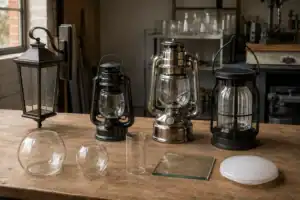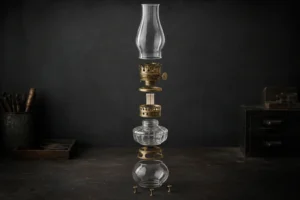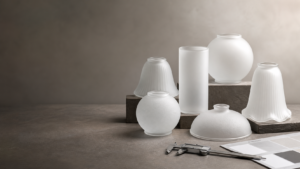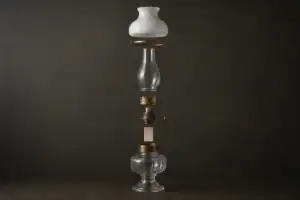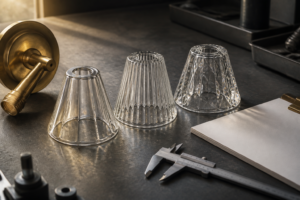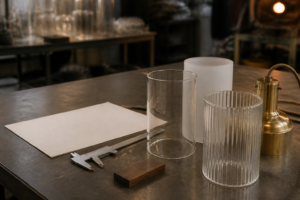
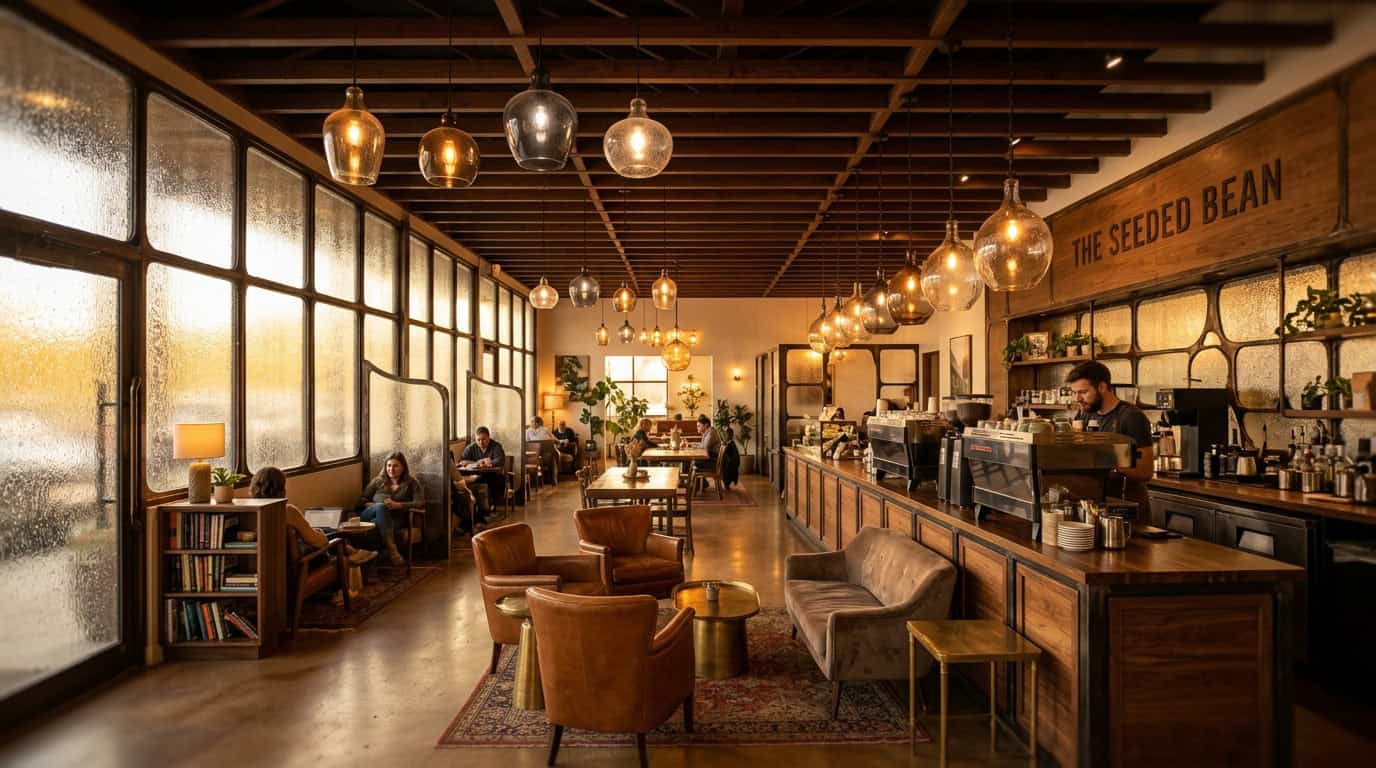
Decorative glass shades for coffee shops should match the brand aesthetic: seeded or hand-blown glass for specialty coffee (artisan quality signal), clear glass with filament LED for industrial-vintage concepts, frosted ribbed or fluted glass for contemporary minimalist cafes, and amber glass for café-bar hybrid evening service — the glass shade is a brand element, not just a light fixture.
A coffee shop’s glass shade is in every photograph. Every latte art shot, every flat-lay of the menu, every “working from a coffee shop” post on social media includes the pendant shade in the background — blurred, warm, present. The glass shade is the most photographed lighting element in any commercial space because it is at eye level, it is lit from within, and it appears in the background of almost every human-height photograph taken in the space.
That ubiquity makes the decorative glass shades for coffee shops a brand decision, not just a lighting decision. This guide covers the glass shade styles that define each coffee shop aesthetic, why they work, and how to specify them correctly.
Why Glass Shades Define Coffee Shop Identity
Coffee shop lighting exists at the intersection of brand identity, customer experience, and operational function in a way that few other commercial lighting contexts do.
The Instagram factor. Coffee is the most photographed food category on social media. The Sprout Social index on food and beverage social content consistently identifies coffee shops as among the highest-engagement hospitality venues on Instagram — primarily because the product (coffee) and the environment (the cafe space) both photograph dramatically. The glass shade appears in those photographs constantly, and the quality and character of the shade affects the visual brand of the coffee shop in every guest-generated image.
The dwell time factor. Coffee shop customers who stay 30 minutes or longer are exposed to the decorative glass shades for an extended period — they are objects that are examined, not just glanced at. A seeded glass shade with visible air bubbles, a hand-blown globe with slight color variation, or a ribbed fluted glass shade with interesting light patterns can be an object of aesthetic pleasure that contributes to the experience of the visit. A generic frosted white globe is functional but not memorable.
The brand consistency factor. A specialty coffee shop that sources single-origin beans, uses a pour-over bar, and serves coffee on ceramic cups positioned as artisan objects has established a brand story around quality and craft. The glass shade must be consistent with that story — a cheap clear glass globe on a generic pendant cord conflicts with everything else the brand is communicating.
Decorative Glass Shade Styles by Coffee Shop Concept
Specialty Coffee and Third-Wave Coffee Bars
Third-wave specialty coffee positions coffee as a craft product deserving the same attention and narrative as wine or artisan food. The design environment reinforces this — natural materials, minimal decoration, craft objects, visible process.
Best decorative glass shade: seeded glass or hand-blown art glass
Seeded glass (with suspended air bubbles) is the ideal shade material for specialty coffee shops. The visible handmade quality of the glass — the bubbles, the slight irregularity — aligns with the artisan narrative. When illuminated, seeded glass creates a gentle, alive light quality — the bubbles refract and scatter light in subtle patterns that plain glass cannot replicate.
Hand-blown glass is the premium version of this recommendation. A hand-blown globe with slight color depth (a natural amber or pale sage tint from the glass composition), visible thickness variation from the blowing process, and minimal organic asymmetry signals craftsmanship without pretension. In a specialty coffee bar where the barista’s technique is visible and the bean origin is on the menu, hand-blown glass shades are the lighting equivalent of the ceramic cups — a material choice that says “this is made with intention.”
Color temperature recommendation: 2700K warm-white LED. Seeded and hand-blown glass have slightly lower transmittance than smooth frosted glass (65–78%) — the 2700K source produces warm, inviting light through the textured glass without requiring high-wattage LEDs.
Industrial and Warehouse-Conversion Coffee Shops
Exposed brick and concrete, blackened steel fixtures, open ductwork, reclaimed wood — the industrial coffee shop aesthetic has defined independent urban coffee shops for the past 15 years.
Best decorative glass shade: clear borosilicate glass globe with filament LED
The clear glass globe with a visible Edison-style filament LED is the canonical industrial coffee shop pendant. The warm orange glow of the filament at 2200–2400K, framed by the clear glass dome, is the single most photographed cafe lighting element in existence — it appears in every “coffee shop aesthetic” mood board and has become the visual shorthand for authentic, independent coffee culture.
The practical specification: clear borosilicate glass (not soda-lime, which will develop micro-fractures from the temperature differential between the cool ambient and the warm near-bulb air in a sealed coffee shop environment over 2–3 years), 4-inch gallery ring fitter, 8–10 inch globe diameter, filament-style LED at 2200K.
Height: 26–30 inches above counter surfaces and bar seating. At this height, the filament is above seated eye level but close enough that the warm glow is the dominant light source at the counter.
According to the Illuminating Engineering Society’s documentation on decorative luminaire aesthetics, the filament LED in a clear glass shade produces a visual brightness (luminance) of approximately 8,000–15,000 cd/m² — significantly below the glare threshold for side-glance viewing (typically above 30,000 cd/m² for discomfort) which is why filament LEDs in clear glass work comfortably at cafe counter heights where standard LED chips would create glare.
Contemporary Minimalist Coffee Shops
Minimalist coffee shops — white walls, concrete floors, Scandinavian design influence, focus on the coffee and the ritual — use glass shades that are visually quieter but materially interesting.
Best decorative glass shade: ribbed or fluted frosted glass, or opal white glass
Ribbed glass (with parallel vertical channels pressed into the glass surface) produces a distinctive light quality — the ribs create subtle vertical shadow patterns that give a visual texture to the pendant’s illuminated surface, while the frosting between the ribs diffuses the light source. The result is more visually interesting than plain frosted glass without the folk-art character of seeded glass.
Opal white glass in a clean geometric form (perfect sphere or precise cylinder) provides visual restraint with material quality — the dense, glowing white of opal glass reads as premium without introducing visual complexity.
Color temperature: 3000K for contemporary minimalist coffee shops, which balances the productivity needs of laptop-worker customers with a warm enough tone to remain hospitable.
Vintage and Retro-Themed Coffee Shops
Vintage-themed coffee shops — inspired by 1940s–1960s American diners, European café culture, or Victorian tea rooms — use decorative glass shades as authentic period references.
Best decorative glass shade: opal milk glass dome or bell shade with period-appropriate hardware
Period-authentic opal glass domes (cream-tone opal rather than stark white, with visible mold seam lines and slight thickness variation) are the correct glass shade for vintage and retro coffee shop aesthetics. The warm cream tone of period opal glass — different from the cooler white of modern tin-oxide opal glass — produces a distinctly vintage light quality.
For Victorian and Edwardian café-inspired themes, fluted bell shades in opal or pale amber glass on ornate brass gallery rings are the authentic period element.
Café-Bar and All-Day Restaurant Concepts
Café-bar concepts serve coffee and breakfast in the morning, lunch through the afternoon, and cocktails and wine in the evening. The glass shade must work across all three modes — or the space must have different glass shade specifications for the café and bar zones.
Best decorative glass shade: frosted white (daytime cafe) + amber (evening bar section)
If the space has physical differentiation between café and bar zones, specify frosted white glass in the café-seating area and amber glass at the bar counter and bar-facing seating. The color temperature shift between the two zones creates a natural visual signal that the bar is a different mode of the space.
If the entire space operates in both modes, frosted white glass on dimmer circuits — transitioning from full brightness at 3000K during the day to 40% power at effective 2400K in the evening — covers both modes. The dimming shift is more effective as a mode transition than a glass shade change because it affects the entire space simultaneously.
Glass Shade Decorative Effects by Material
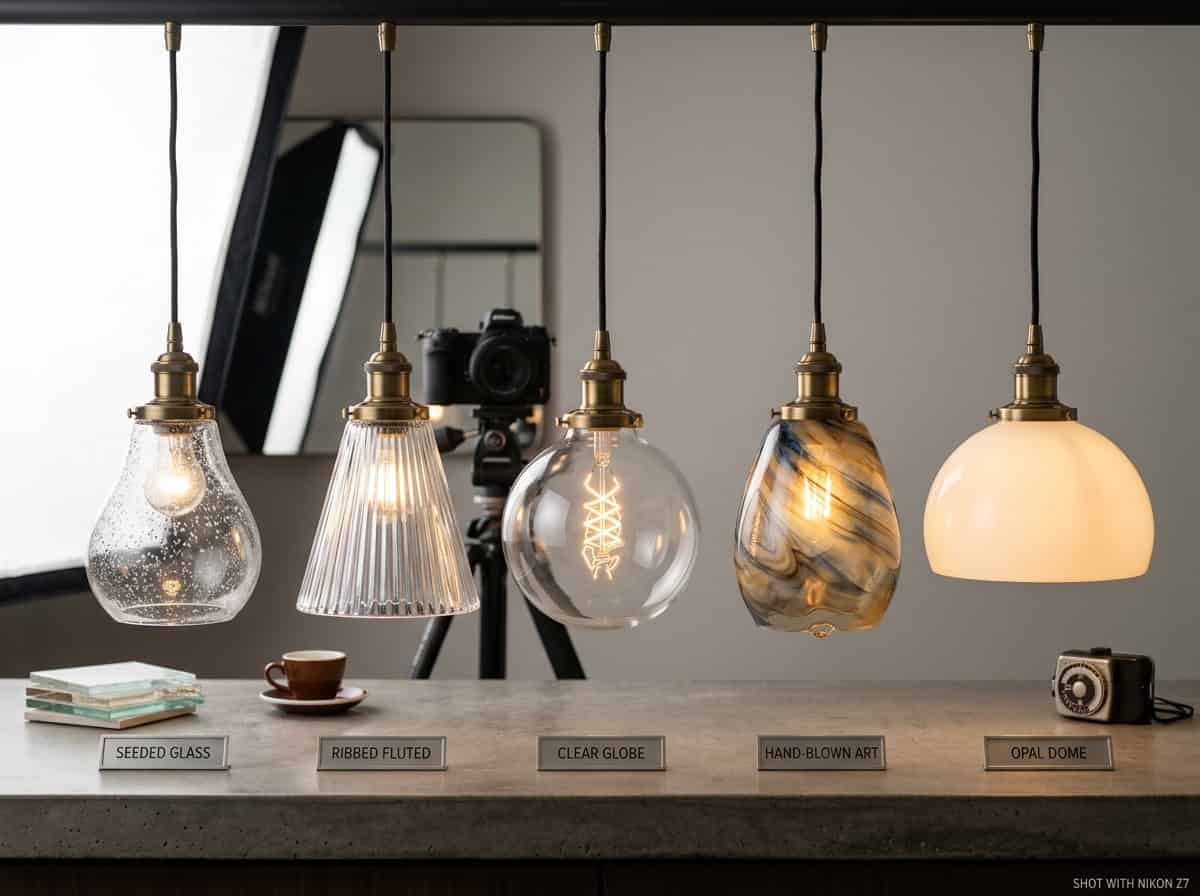
Different decorative glass shade materials create different visual and light effects that contribute to the coffee shop’s atmosphere:
Seeded glass: Gentle light variation — the bubbles create subtle refractions that produce a living, organic quality to the lit shade. The unlit appearance is a milky, interesting glass with visible internal texture.
Ribbed/fluted glass: Shadow patterns — the ribs cast subtle vertical lines of shadow and light on adjacent surfaces. The effect is architectural and intentional-feeling, suits contemporary and minimalist aesthetics.
Hand-blown art glass: Organic uniqueness — slight color variation, thickness irregularity, and surface character that no two pieces share exactly. Each shade is slightly different, which can be a feature (artisan character) or a management challenge (batch inconsistency in a large fit-out).
Clear glass (filament LED): Drama — the visible filament creates a point of warm orange light that is the visual focal point of the pendant. The clear glass disappears visually, leaving only the glowing filament and the warm halo around it.
Opal/milk glass: Premium glow — the dense, creamy white of opal glass glows uniformly and completely, with no visible source or texture. The pendant appears to emit light rather than contain it.
Amber glass: Warmth and depth — the glass itself becomes a warm, glowing object lit from within. The amber color is visible even unlit, and when illuminated the pendant radiates a warm orange-amber glow that defines the surrounding atmosphere.
Specifying Decorative Glass Shades for a Coffee Shop Fit-Out
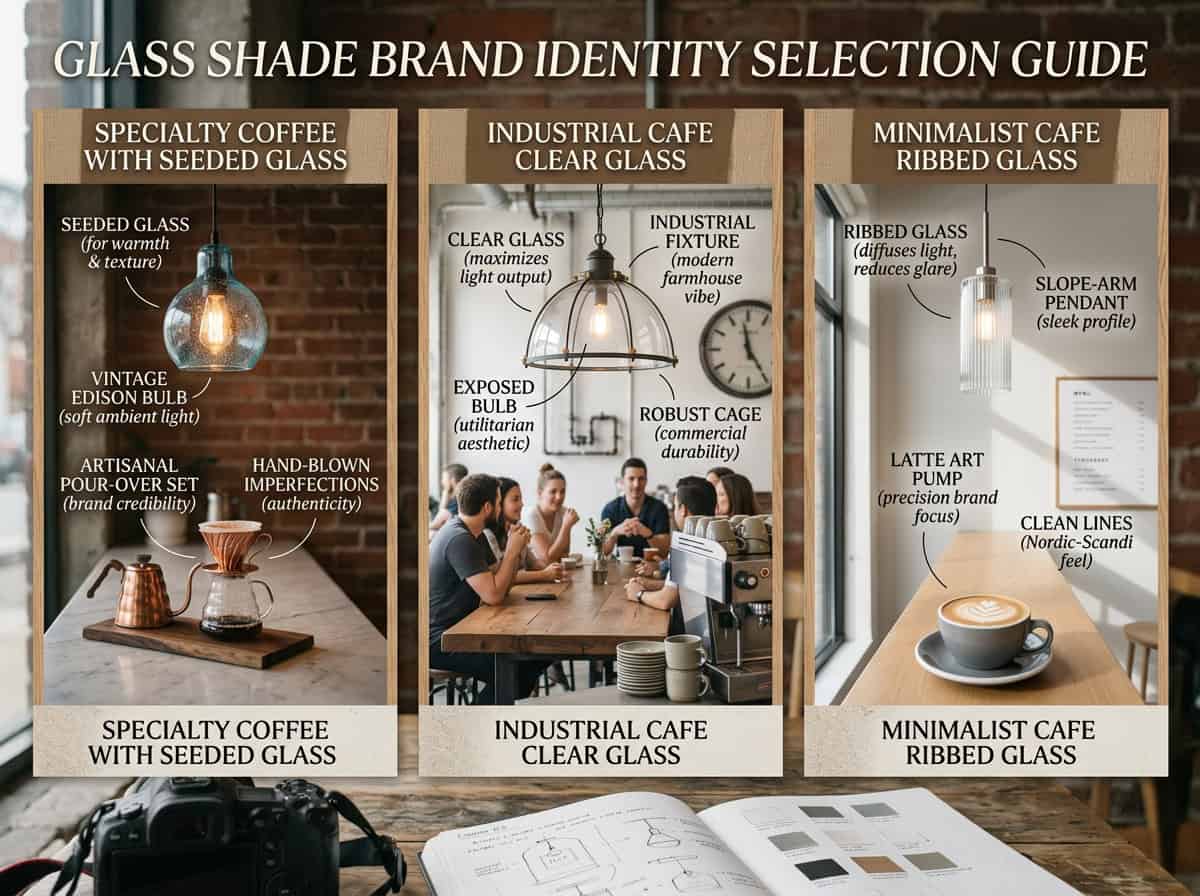
Step 1: Define the brand story in one sentence. Is this coffee shop about craft and origin? Community and warmth? Design and minimal aesthetics? The glass shade should reinforce whichever of these the brand story is built around.
Step 2: Match glass material to brand story:
– Craft and artisan → seeded glass or hand-blown
– Community and warmth → frosted or opal at 2700K
– Design and minimal → ribbed/fluted frosted or clean opal
– Industrial and authentic → clear glass + filament LED
– Premium and sophisticated → opal or amber with quality hardware
Step 3: Specify pendant position for the primary photographic zones. Identify where guest photography will be concentrated — the espresso bar, the best natural light tables, the feature seating area. Specify decorative glass shades at these positions first; utility areas (counter seating, takeout zone) can use simpler frosted glass.
Step 4: Confirm batch consistency requirements. For seeded and hand-blown glass, some variation between shades is inherent — specify “matched batch” to minimize variation, but accept that hand-production shades will not be identical. For frosted and ribbed glass, specify tight dimensional and transmittance tolerances for batch consistency.
Per Energy.gov commercial lighting programs for small business, commercial spaces with decorative pendant lighting that is carefully specified for both aesthetics and efficiency can achieve equivalent illuminance at 30–40% lower energy cost compared to unplanned lighting design — relevant for small coffee shops where utility costs are a meaningful operating expense.
Trends in Decorative Coffee Shop Glass Shades for 2026
Ribbed glass moment. The ribbed and fluted glass aesthetic — previously associated with vintage bathroom fixtures — has been adopted by contemporary hospitality design as a decorative pendant element. Ribbed glass pendants are appearing in high-end cafes and coffee bars as a replacement for the plain frosted globe.
Colored glass coming back. Pale sage green, pale blush, and pale amber glass shades — colors rather than clear or white — are entering specialty coffee shop design. The color is subtle (pale enough to produce largely white light with a slight tint) but visible both lit and unlit as a material choice.
Oversized feature pendants. Rather than a row of identically sized pendants, some contemporary coffee shops are specifying one or two large-diameter feature pendants (18–24 inch globes) as visual anchors — contrasting with smaller functional pendants elsewhere in the space.
| Trend | Glass Shade Style | Coffee Shop Context |
|---|---|---|
| Ribbed/fluted glass | Contemporary, minimalist | Urban, design-forward |
| Colored glass (sage, blush) | Pale tinted art glass | Specialty, lifestyle |
| Oversized feature pendants | Large-diameter seeded or opal | Destination cafes |
| Hand-blown artisan glass | Organic form, slight color | Third-wave, craft |
| Industrial clear glass stabilizing | Clear + filament LED | Established aesthetic |
Frequently Asked Questions
What decorative glass shade works best in a specialty coffee shop?
Seeded glass or hand-blown art glass best supports the specialty coffee brand narrative — the visible artisan quality of the glass material aligns with the craft story the coffee itself is telling. The slight organic variation, the suspended air bubbles, and the character of handmade glass signal the same intentional craftsmanship that specialty coffee communicates through its sourcing and technique.
Can I mix different decorative glass shade styles in the same coffee shop?
Yes, deliberately — but with a consistent design logic. A common effective approach: one decorative glass shade style for the primary espresso bar and feature seating area (e.g., seeded glass for the artisan narrative), and simpler frosted glass for counter and work-table seating where functional light matters more. Mixing without logic creates visual incoherence.
What glass shade should I use over a coffee shop espresso bar?
Clear glass with filament LED (for industrial concepts) or seeded glass with 2700K LED (for specialty/artisan concepts) are the most effective choices over an espresso bar. The espresso bar is the visual center of the coffee shop and the pendant shade above it is in every photograph — specify the most brand-representative glass shade choice at this position.
How do decorative glass shades affect coffee shop photography?
Significantly. Clear glass with filament LED creates warm bokeh points in background photography — the “coffee shop aesthetic” signature. Seeded glass creates a textured warm glow in backgrounds. Opal glass produces a cleaner, softer background glow. Amber glass makes all warm-colored objects (coffee, pastry, wood surfaces) glow more richly in photographs. Frosted white is the most neutral photographic background.
Are there decorative glass shades suitable for outdoor coffee shop seating?
Yes — borosilicate glass shades with IP44 or IP65 ratings for covered outdoor coffee shop seating areas. Seeded borosilicate glass works well for covered outdoor café terraces; clear borosilicate with filament LED for outdoor industrial-style seating. Ensure the shade’s IP rating matches the outdoor location and use commercial damp/wet-location-rated pendant hardware.
What size decorative glass shade for a coffee shop pendant over a two-seat table?
10–12 inch diameter globe, hung 28–32 inches above the table surface for a 2-seat table. For the espresso bar, 8–10 inch diameter at 26–30 inches above the bar surface. For a feature position (a 4-seat table or a communal table anchor), a 14–16 inch diameter globe at 30–34 inches creates appropriate visual weight for the larger scale.
How do I clean decorative glass shades in a coffee shop?
Remove the shade monthly (weekly in proximity to steam equipment). For seeded and hand-blown glass: warm water and dish soap soak — 10–15 minutes — then soft cloth wipe. Avoid abrasive pads which scratch textured glass surfaces. For ribbed glass: a soft brush to clean between the ribs where residue accumulates. For clear glass: warm water rinse, soft cloth, then dry immediately to prevent water spotting. All types: dry completely before reinstalling.
Conclusion
Decorative glass shades for coffee shops are brand decisions disguised as lighting decisions. The glass shade that appears in every guest photograph, defines the background of every coffee pour shot, and is examined by every customer who spends 30 minutes in the space is communicating something about the brand — intentionally or not.
The correct approach is to choose the glass shade that tells the right brand story: seeded or hand-blown glass for craft and artisan narratives, clear glass with filament LED for industrial authenticity, ribbed or fluted frosted glass for contemporary minimalism, and amber glass for warm community-hub and evening-bar contexts.
For decorative glass shades for coffee shops in seeded, hand-blown, ribbed, frosted, opal, amber, and clear glass — in commercial-grade borosilicate construction with the material character that supports specialty hospitality branding — our glass lampshade product line at jxlampshade.com covers specialty coffee and hospitality specifications.