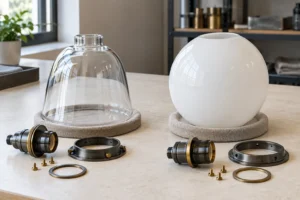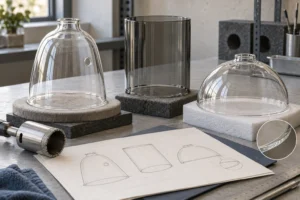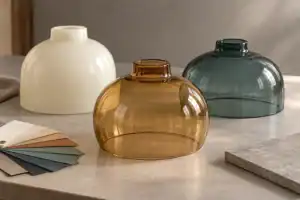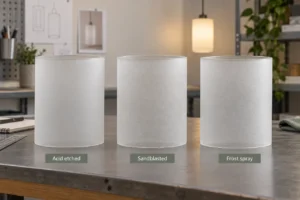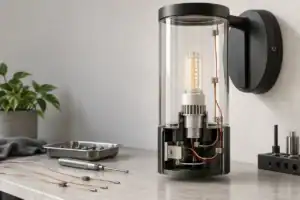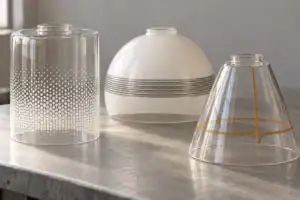
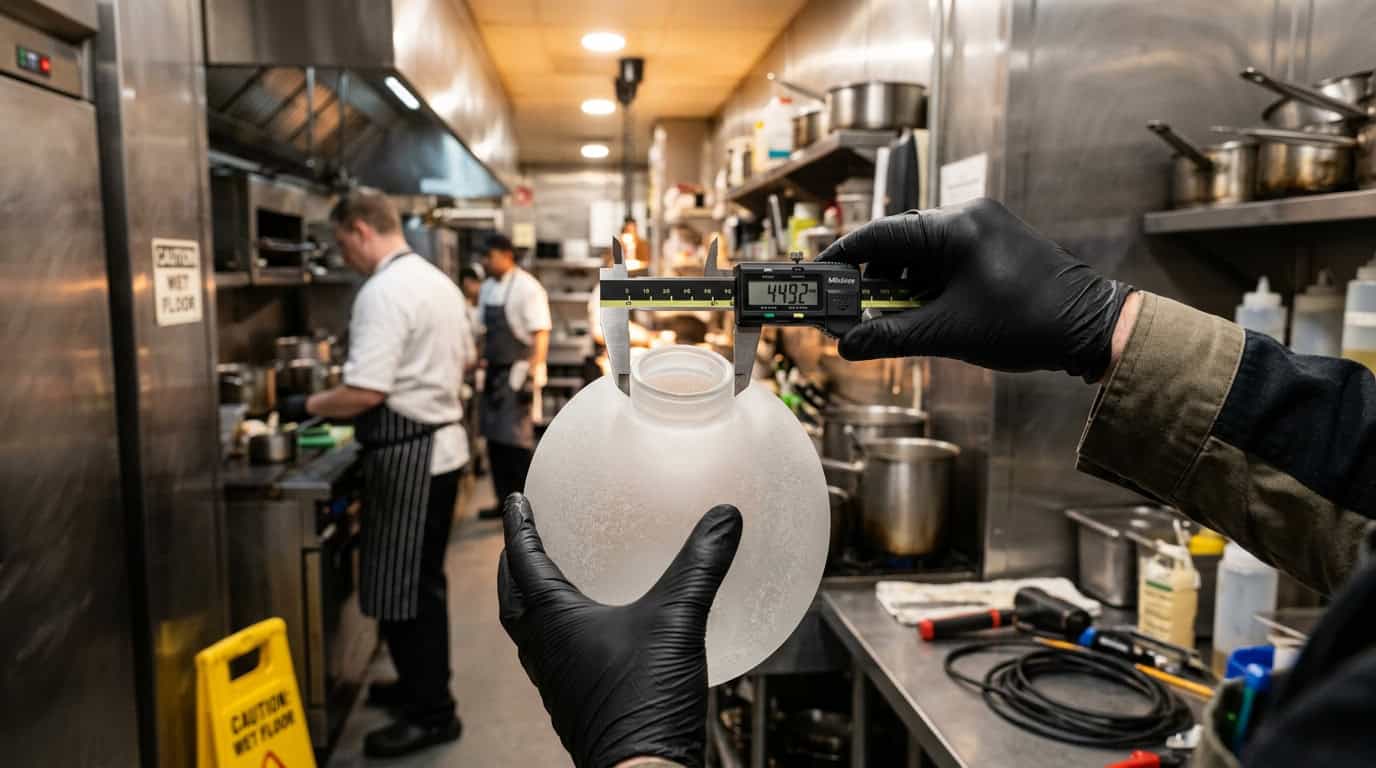
To measure replacement glass shades for restaurant lights, measure the fitter inner diameter (inside the collar opening with digital calipers — standard commercial sizes: 2¼ inch, 3¼ inch, 4 inch, or 6 inch), the globe outer diameter, and shade height. For batch replacement across multiple identical fixtures, verify all three dimensions against one surviving shade before ordering the full quantity.
A glass shade breaks in a restaurant and the manager reaches for a tape measure. Wrong tool, wrong method. Restaurant glass shade replacement fails more often from measuring errors than from specification errors — and the cost of a wrong-size order in a commercial context is higher than at home: it delays reopening a fixture, creates visual inconsistency in the dining room, and may require a second round-trip order if the supplier’s lead time is a week or more.
This guide provides the complete measurement process for replacement glass shades for restaurant lights — covering pendant globes, wall sconce shades, track pendant shades, and outdoor covered fixture shades — with specific guidance for commercial multi-fixture replacement orders.
Why Restaurant Glass Shade Measurement Differs from Residential
Restaurant glass shade replacement has commercial-specific complications that residential replacement does not:
Batch replacement requirement. If one shade breaks in a row of 12 identical pendant fixtures, the replacement shade must match the surviving 11 exactly — in fitter size, globe diameter, height, glass type, and transmittance. Ordering by visual impression produces a shade that may fit the holder ring but looks visibly different when lit alongside the survivors.
IP-rated fixture compatibility. Restaurant pendants in damp or wet locations (covered outdoor, kitchen pass-through, washdown-adjacent areas) use sealed fitter assemblies with gaskets. The replacement glass shade must match the sealed collar geometry — not just the fitter inner diameter, but the collar seating face depth — to maintain the IP rating of the assembly.
Track pendant adapters. Many commercial restaurant pendant systems use track-mounted adapters that accept standard gallery ring glass shades. The track adapter’s inner gallery ring diameter may differ from standard residential fitter sizes — always measure the adapter ring, not the fixture cord or canopy.
Wall sconce shade sizing. Restaurant wall sconce glass shades often use smaller, non-standard fitter sizes (1⅝ inch or 2¼ inch with specific collar geometry) that differ from the pendant fitters in the same space. Measuring pendant and wall sconce shades independently is essential.
The Four Measurements for Restaurant Glass Shade Replacement
Measurement 1: Fitter Inner Diameter (Critical — Controls Fit)
The fitter inner diameter is measured inside the glass collar opening — from the inner glass wall on one side to the inner glass wall directly opposite, using digital calipers.
Standard commercial restaurant fitter sizes:
– 1⅝ inch (42 mm) — small wall sconce shades, chandelier arm shades
– 2¼ inch (57 mm) — compact pendant globes, track pendants, some wall sconces
– 3¼ inch (83 mm) — mid-size commercial pendants, vintage or antique-style fixtures
– 4 inch (102 mm) — standard commercial pendant globes (the most common size in restaurant fit-outs)
– 6 inch (152 mm) — large commercial dome pendant shades
Do not measure the outside of the collar. The outer collar diameter is 10–16 mm larger than the fitter inner diameter depending on glass wall thickness. Measuring outside-to-outside gives a fitter specification that is too large and produces a shade that cannot seat in the holder ring.
Measurement 2: Globe Outer Diameter (Proportion Control)
Measured at the widest point of the glass shade body — outside to outside across the equator for spherical globes.
This measurement must match the surviving shades in the fixture row to within ±5 mm for visual consistency. A replacement globe that is 15 mm wider than the survivors will be immediately visible in a row of identical fixtures.
Measurement 3: Shade Height (Clearance and Proportion)
Measured from the base of the fitter collar lip (where the glass contacts the holder ring) to the lowest point of the shade.
For enclosed restaurant fixtures (where the shade sits inside a housing), the shade height must fit within the fixture’s internal clearance. For open-frame pendant shades, height is a proportion dimension — match within ±10 mm of the original.
Measurement 4: Collar Seating Face Depth (IP-Rated Fixtures Only)
For restaurant fixtures in damp or wet locations — covered outdoor, washdown areas, kitchen proximity — the collar seating face depth determines whether the replacement glass shade maintains the fixture’s IP rating seal.
Measure the depth of the glass collar section that extends into the holder ring (the seating face). IP54 applications require 6–8 mm seating face depth; IP65 requires 10–12 mm. A replacement shade with insufficient collar seating depth will not compress the gasket adequately, reducing the effective IP rating of the assembly.
Measuring Process for Multiple Identical Fixtures
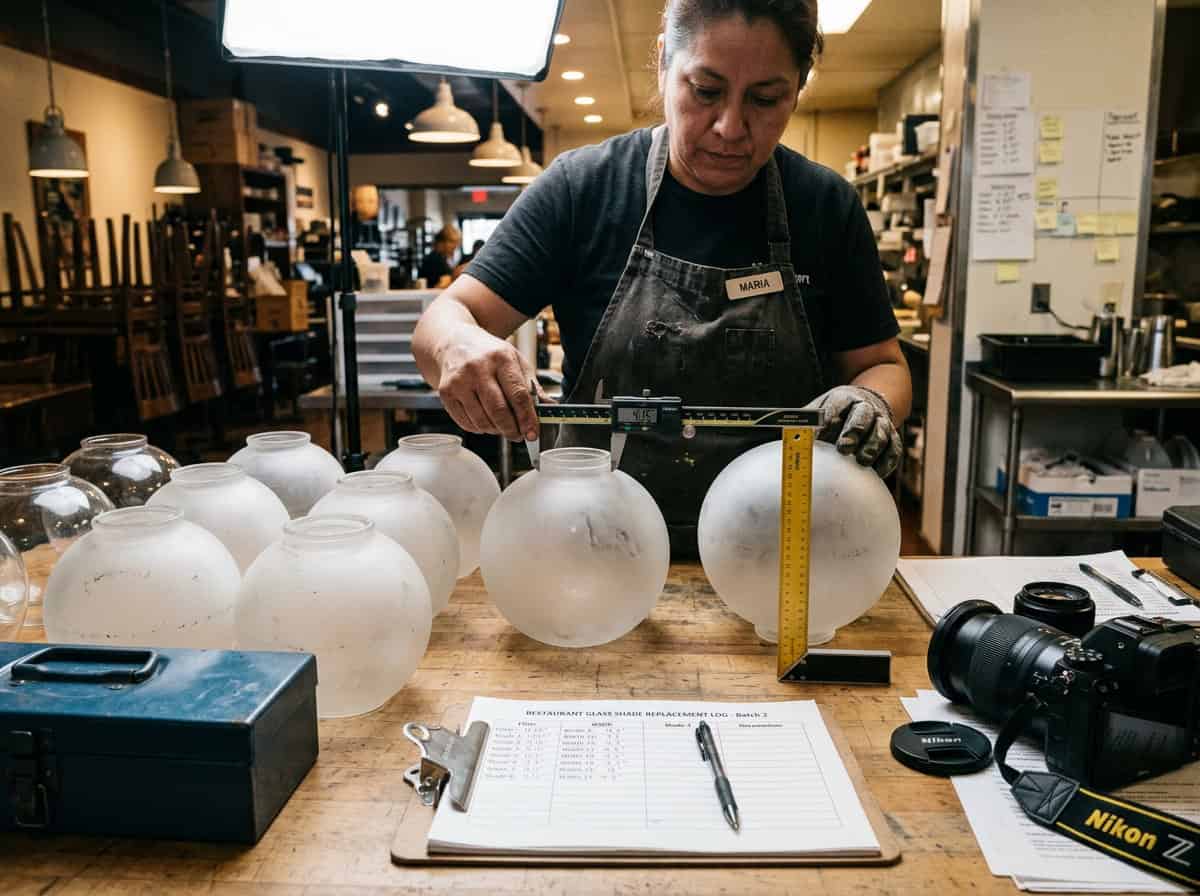
Restaurant replacement orders often involve multiple identical shades. The correct process for batch replacement:
Step 1: Identify the fixture model (if possible)
Check the pendant fixture for a model number — usually stamped inside the housing canopy, on the cord grip, or on the manufacturer label at the gallery ring. With the model number, contact the fixture manufacturer for the documented replacement shade specification. This is the most reliable approach because it bypasses measurement error entirely.
Step 2: Measure one surviving shade from the installation
Remove one intact glass shade from the fixture row and measure all four dimensions:
– Fitter inner diameter (digital calipers inside the collar)
– Globe outer diameter (ruler at widest point)
– Shade height (collar lip base to lowest point)
– Collar seating face depth (calipers measuring the collar insertion depth, IP fixtures only)
Record all measurements in mm. Do not round — record to 0.1 mm precision for fitter inner diameter.
Step 3: Cross-check against the holder ring
With the measuring shade removed, measure the inner diameter of the exposed holder ring. Compare to the fitter inner diameter from the shade measurement. These should match within ±0.5 mm. If they differ by more than 1 mm, the original shade may have been an imperfect match — measure the holder ring as the authoritative fitter specification.
Step 4: Order a sample before the full batch
For batch orders of 6 or more replacement shades, request one sample shade before committing to the full order quantity. Physically test-seat the sample in the holder ring, verify the IP gasket compression if applicable, and compare visually to the surviving shades when both are lit. Only confirm the full order after sample approval.
Per ASTM C1048 standards for glass dimensional tolerances, restaurant-grade glass shades should be ordered with a documented fitter diameter tolerance of ±0.5 mm maximum for standard pendant applications, ±0.2 mm for IP65 sealed assemblies.
Measuring Specific Restaurant Fixture Types
Bar Counter Pendant Shades
Bar counter pendants in restaurants are often hung at 24–28 inches above the bar surface, which is 6–8 inches lower than dining table pendant height. They typically use smaller globe sizes (6–8 inch diameter) with 2¼ or 4 inch fitters.
Common bar pendant shade measurement errors:
– Measuring the pendant cord or canopy diameter instead of the gallery ring inner diameter
– Confusing the bar surface height (42 inches from floor) with the table height (28–30 inches) when checking fit clearance
– Not accounting for bar stool height when verifying the shade will clear seated customers’ heads
Measurement approach: With the pendant hanging in place, measure the gallery ring inner diameter directly on the fixture if possible. For replacement, remove the shade carefully and measure the ring while the pendant is suspended — do not remove the pendant from the cord to measure.
Wall Sconce Shades
Restaurant wall sconces typically use smaller fitter sizes than pendant fixtures — 1⅝ inch or 2¼ inch are the most common for decorative wall sconce shades.
Key difference from pendant measurement: Wall sconce shades frequently use a clip-style or bayonet mounting rather than a gallery ring with set screws. For clip-style mounts, the shade is sized by the outer diameter of the socket mount clip — measure the clip outer diameter and confirm the shade’s collar inner diameter is 3–5 mm larger (clearance fit).
Track Pendant Shades
Track pendant systems in commercial restaurants use adapter heads that drop from the track and accept standard gallery-ring glass shades at the pendant end. The adapter head gallery ring inner diameter is the fitter size for replacement shades.
Measurement approach: Remove the glass shade from the pendant adapter. Measure the adapter’s gallery ring inner diameter — this is the fitter size. The track, the adapter, and the cord are irrelevant to the shade measurement.
Outdoor Covered Fixture Shades
Outdoor covered fixtures (covered terrace, pergola, outdoor dining area) require IP65-rated shade assemblies. The measurement process is the same as for indoor pendants but the collar seating face depth measurement is critical to maintain IP65 seal.
For outdoor covered restaurant fixtures, always measure collar seating face depth in addition to fitter diameter. A frosted glass globe with the correct fitter diameter but insufficient collar depth will appear to fit correctly but will allow moisture ingress at the fitter seal within the first weather event.
Per IEC 60529 IP rating standards, maintaining the IP65 rating of an outdoor luminaire assembly after shade replacement requires that the replacement shade provide equivalent gasket compression to the original — which is determined by the collar seating face depth and collar flatness.
Documenting Restaurant Glass Shade Specifications
For restaurant operators managing ongoing glass shade replacement across multiple locations, maintaining a shade specification record eliminates remeasurement at each replacement event.
Recommended specification record per fixture type:
| Field | What to Record |
|---|---|
| Fixture location | “Bar counter,” “Main dining pendant,” “Terrace wall sconce” |
| Fitter inner diameter | In mm, e.g., “102.0 mm (4 inch)” |
| Globe outer diameter | In mm |
| Shade height | In mm |
| Collar seating depth | In mm (IP fixtures only) |
| Glass type | “Frosted white,” “Amber,” “Clear” |
| IP rating required | IP44, IP54, IP65 |
| Production batch number | From original order (for color matching) |
| Supplier and item code | For reorder reference |
This documentation record allows replacement ordering by specification code rather than requiring a physical measurement visit for each replacement event — particularly valuable for restaurant groups managing multiple locations.
According to National Restaurant Association operational guidelines on commercial equipment documentation, maintaining equipment specification records reduces maintenance labor cost by 25–35% versus reactive specification research at each maintenance event.
Common Measurement Errors in Restaurant Glass Shade Replacement
Error 1: Measuring globe outer diameter as fitter size
These are independent dimensions. A 12-inch globe may have a 4-inch fitter or a 6-inch fitter — the globe diameter tells you nothing about the fitter size.
Error 2: Using a flexible tape measure for fitter inner diameter
A flexible tape bends slightly across the collar opening, producing a chord measurement shorter than the true inner diameter by 2–5 mm. For restaurant batch orders where a 2 mm error means 10+ shades that don’t fit, always use digital calipers.
Error 3: Not checking collar seating face depth on IP-rated fixtures
IP-rated outdoor and washdown-area fixtures have specific collar engagement requirements. A shade with the correct fitter diameter but insufficient collar depth looks like it fits but fails the IP seal.
Error 4: Ordering full batch without sample verification
In a residential context, ordering a wrong-size shade is a minor inconvenience. In a restaurant with 15 pendant fixtures, ordering 14 wrong-size replacement shades is a significant cost. Always sample-verify before committing to a batch order.
Error 5: Measuring a damaged shade
A cracked or broken shade may have deformed dimensions at the collar — the fracture stress can slightly distort the collar geometry. Always measure a surviving intact shade, not the broken piece.
Frequently Asked Questions
How do I measure replacement glass shades for restaurant pendant lights?
Remove one intact pendant glass shade and measure three dimensions with digital calipers: (1) fitter inner diameter — inside the collar opening, across to the opposite inner wall; (2) globe maximum outer diameter at the widest point; (3) shade height from collar lip base to lowest point. Compare the fitter inner diameter to standard sizes (2¼, 4, or 6 inch) and order by the closest standard size. For batch orders of 6+ shades, order one sample before committing to the full quantity.
What are the standard fitter sizes for restaurant glass shades?
The most common commercial restaurant fitter sizes are 2¼ inch (57 mm) for compact pendants and wall sconces, 4 inch (102 mm) for standard dining room pendants, and 6 inch (152 mm) for large commercial dome shades. Some vintage or specialty restaurant fixtures use 3¼ inch (83 mm), and chandelier-style decorative fixtures use 1⅝ inch (42 mm) slip-cup sizes.
Can I measure the glass shade while it’s still in the fixture?
For fitter inner diameter measurement, you need to access the inside of the collar — which is easier with the shade removed. For globe diameter and shade height, you can measure on the fixture with a long ruler. For IP-rated fixture collar depth measurement, the shade must be removed from the assembly. Removing one shade for measurement and using it as the reference for batch ordering is the correct approach.
What if my restaurant glass shade fitter size is non-standard?
If the caliper measurement falls between standard sizes (e.g., 3½ inch), the fixture may use a proprietary fitter. Contact the fixture manufacturer with the caliper reading. Some manufacturer-specific fitters require replacement shades sourced directly from the OEM. Alternatively, fitter adapters are available in some size ranges — a 3½-to-4-inch adapter ring can allow standard 4-inch fitter shades to fit a 3½-inch proprietary holder ring.
How do I ensure batch consistency for 12+ replacement restaurant glass shades?
Order from a supplier who guarantees batch production (all shades made in the same production run from the same glass batch). Specify the transmittance tolerance (e.g., frosted glass ±5% transmittance), fitter diameter tolerance (±0.5 mm maximum), and globe diameter tolerance (±3 mm maximum) in the order. Request a batch QC certificate confirming the lot measurements fall within the specified tolerances.
Do I need special glass shades for outdoor restaurant lighting?
Yes. Outdoor covered restaurant lighting requires IP-rated glass shades with sufficient collar seating face depth to maintain the fixture’s IP65 weather seal. Borosilicate glass is preferred for thermal shock resistance from rain on warm glass. The collar seating face depth must be 10–12 mm minimum for IP65 applications. Standard residential replacement glass shades are not appropriate for outdoor restaurant use.
How often do restaurant glass pendant shades need replacement?
In normal restaurant service (no adjacent steam source, regular cleaning, careful handling), frosted or opal borosilicate glass pendant shades should last 5–8 years before replacement. Soda-lime glass in commercial environments typically lasts 3–5 years. Glass shades adjacent to steam equipment or in high-cleaning-frequency positions (kitchen pass-through, outdoor bar) may require replacement every 2–3 years regardless of glass type.
Conclusion
Measuring replacement glass shades for restaurant lights requires four dimensions — fitter inner diameter, globe outer diameter, shade height, and collar seating depth for IP-rated fixtures — taken with the correct tools at the correct reference points. The fitter inner diameter, measured inside the collar with digital calipers, is the one dimension that determines whether the shade fits. Every other dimension is about proportion, clearance, and visual match.
For commercial restaurant replacement orders, the batch approach — measure one surviving shade, order a sample, verify before committing to quantity — is the process that prevents the expensive wrong-size order scenario.
For commercial-grade replacement glass shades in frosted, opal, amber, and clear glass with documented fitter diameter tolerances and batch consistency for restaurant fit-out and maintenance programs, our glass lampshade product line at jxlampshade.com provides commercial-specification glass shades with technical documentation.