The safest way to source replacement glass shades for sconces is to match the fixture interface first, then the profile and finish. Send the supplier a front photo, side photo, holder or fitter details, critical dimensions, finish direction, quantity and packing requirement. A shade that looks right in a product photo can still fail if the lip, opening, screw clearance or backplate depth is different.
This guide is for lighting brands, distributors, restoration buyers and project teams. It focuses on the information that makes a replacement shade quote usable and repeatable. It is not an electrical installation manual.
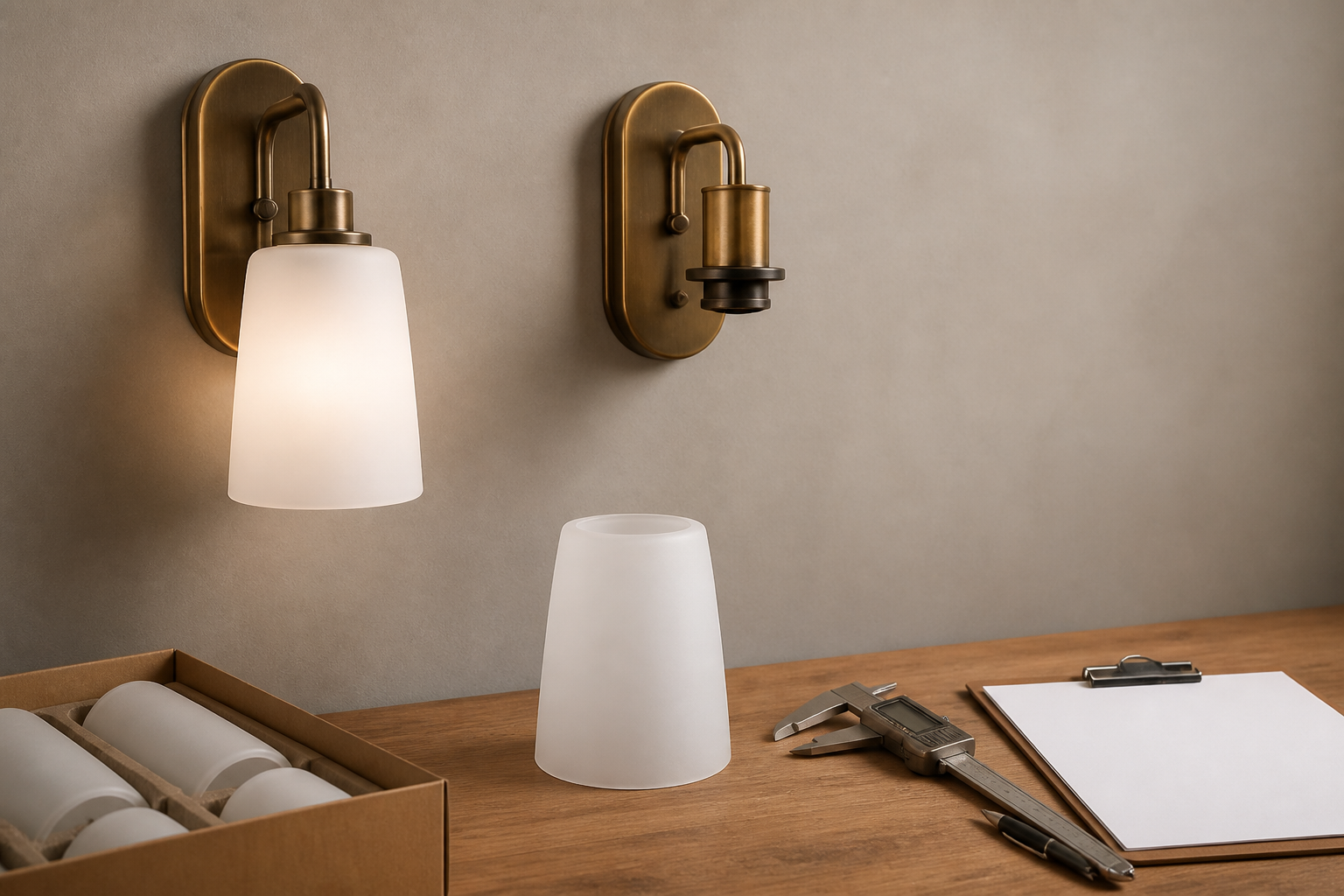
The short answer: build a controlled replacement brief
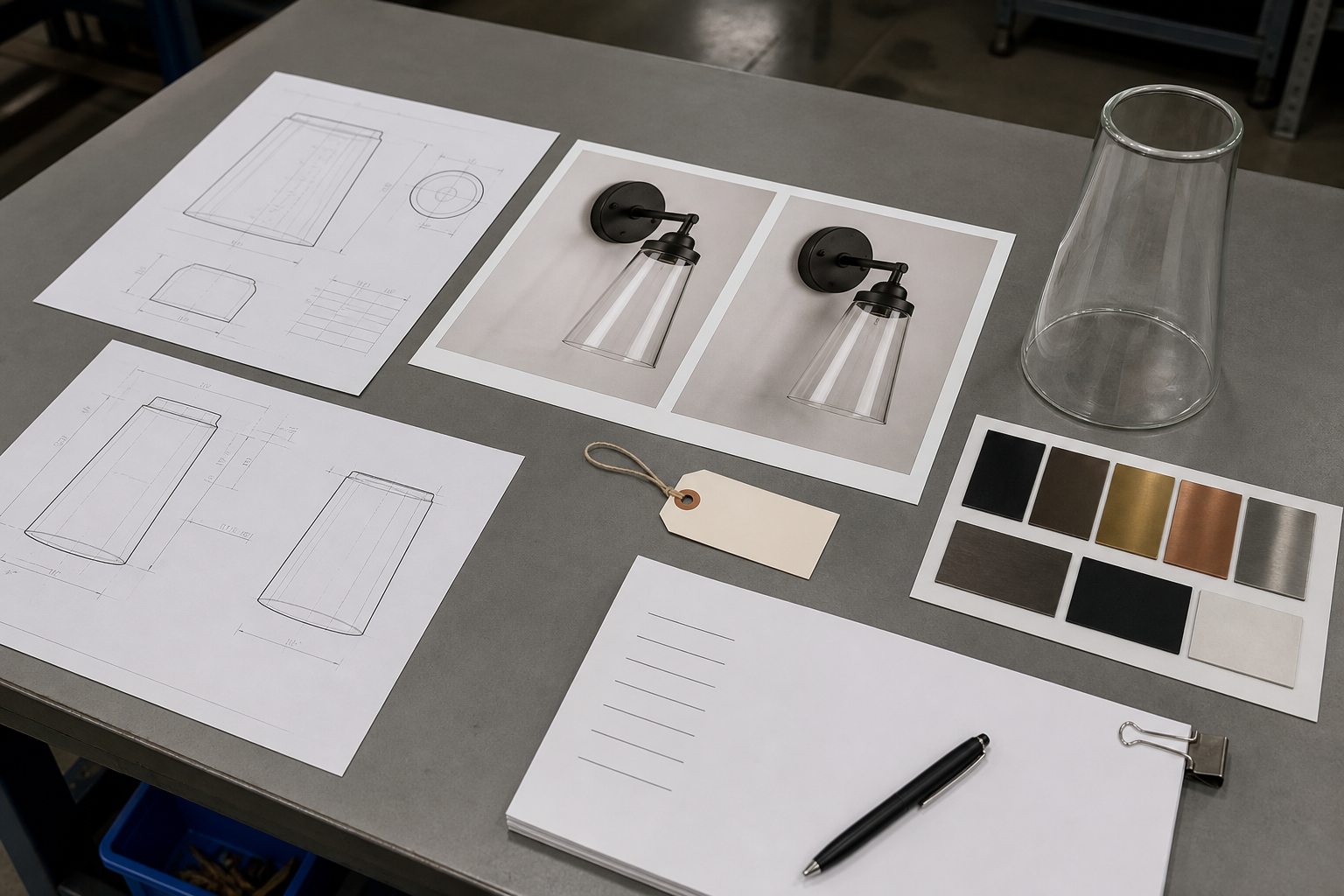
Before asking for a price, freeze the part you want quoted. Use one line for each SKU or fixture position, even when several sconces look similar.
| Field | What to send | Why it matters |
|---|---|---|
| Fixture identity | Brand, model, collection, fixture position and a clear front photo | Stops a similar-looking shade from being quoted for the wrong assembly |
| Holding system | Holder ring, fitter, lip, set screw, clip, threaded connection or custom interface | The connection controls whether the glass can seat and stay in place |
| Critical dimensions | Opening, lip, height, maximum width, hole or slot, and clearances | Gives the supplier a measurable part definition |
| Appearance | Shape, glass direction, color, opacity, texture, edge finish and pair matching | A replacement pair must look consistent under the same light |
| Quantity | Samples, replacement pieces, matched pairs, sets and expected reorder quantity | Tooling, MOQ, packing and unit price can change with the quantity band |
| Evidence | Surviving shade, drawing, photos, sample code and revision date | Ties the quote to a reference that can be checked later |
| Packing | Individual protection, inner pack, carton, labels, pallet and claim evidence | Fragile glass needs a packing scope, not a vague "export carton" line |
If the original shade is available, keep it intact until the supplier has recorded the reference. If it is broken, photograph every usable fragment and the bare fixture before disposal. Those images can explain a shoulder, lip or cutout that a ruler cannot describe.
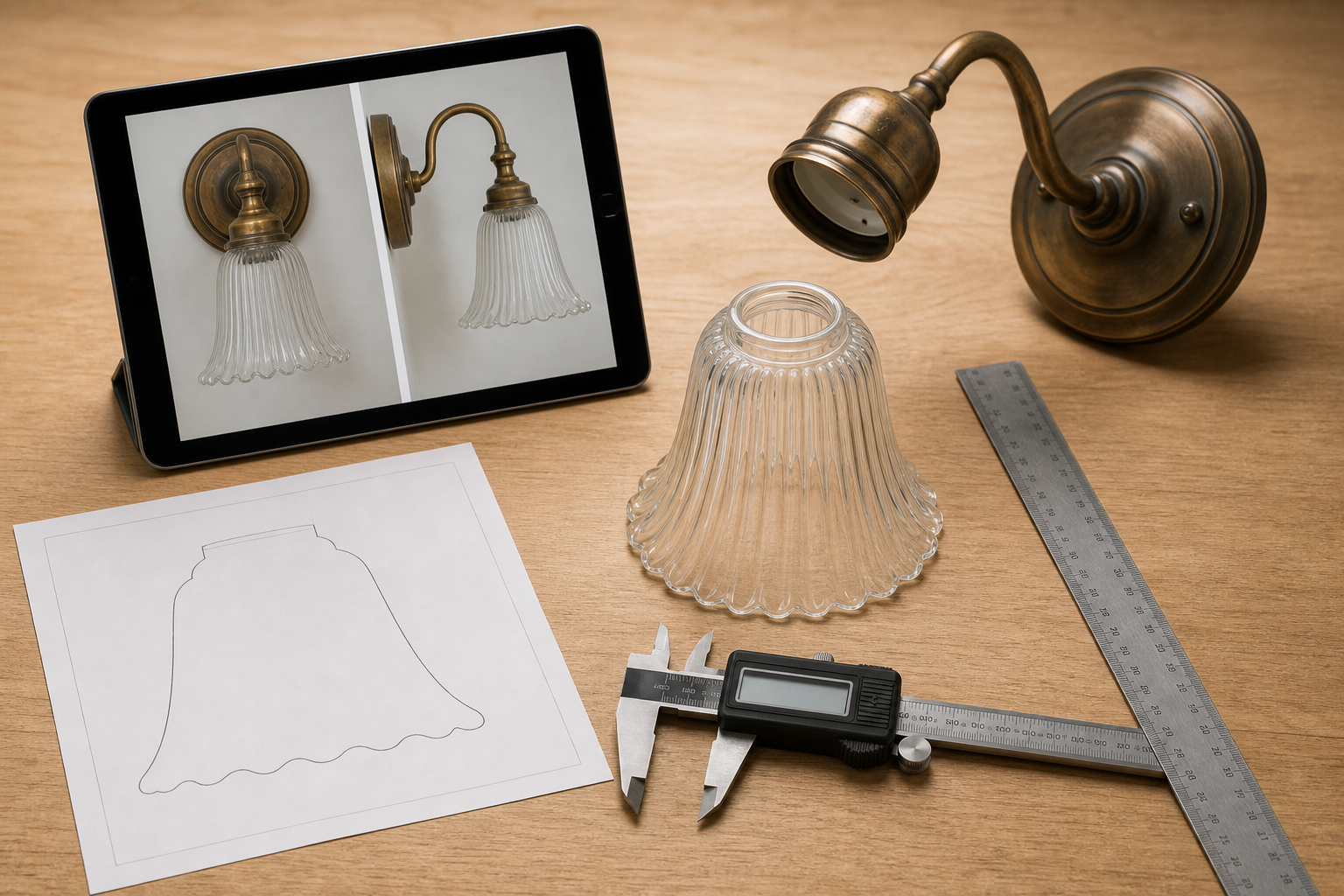
Identify the sconce holding system before choosing a shade
Wall sconces use several ways to hold glass. The names vary between fixture makers, so describe what the hardware does instead of relying on a catalogue term alone.
Ring or lip fit
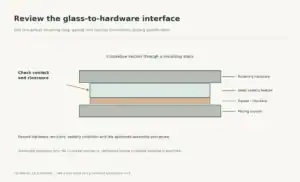
Some shades rest on a metal ring, gasket or shoulder. The glass may have a formed lip, a straight collar or a small step that stops it from dropping through the holder. In this arrangement, the inside opening, outside seating surface and lip depth all matter.
Measure the holder and the surviving glass from the same reference point. If the fixture uses a gasket, photograph the gasket in place and record whether it sits inside a groove, under a lip or around the outside of the glass. A replacement with the right opening but the wrong seating depth may rock, pinch the gasket or sit too high.
Set screw, clip or retaining hardware
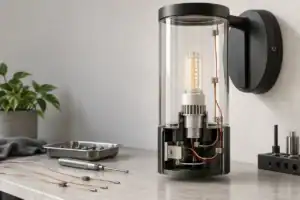
Other sconces hold the shade with set screws, clips, springs or a cage. The glass needs room for the hardware to pass without chipping the rim. Record the number and position of the screws or clips, the contact points, the clearance around the glass and whether the hardware touches the glass directly.
Do not assume that two shades with the same outside diameter share the same connection. A straight cylinder with a screw seat is a different quote from a half dome with a rolled lip, even if both parts cover the same bulb.
Custom or proprietary interface
Decorative fixtures often have a non-standard collar, slot, central hole, side opening or backplate relationship. If the replacement belongs to a lighting collection, send the fixture model and one complete assembly photo. For a restoration job, send the surviving shade and the hardware separately.
JX's glass lamp shade fitting standards guide covers fitting terminology in more depth. Use it to prepare the terms, then let the drawing, photo and sample control the quote.
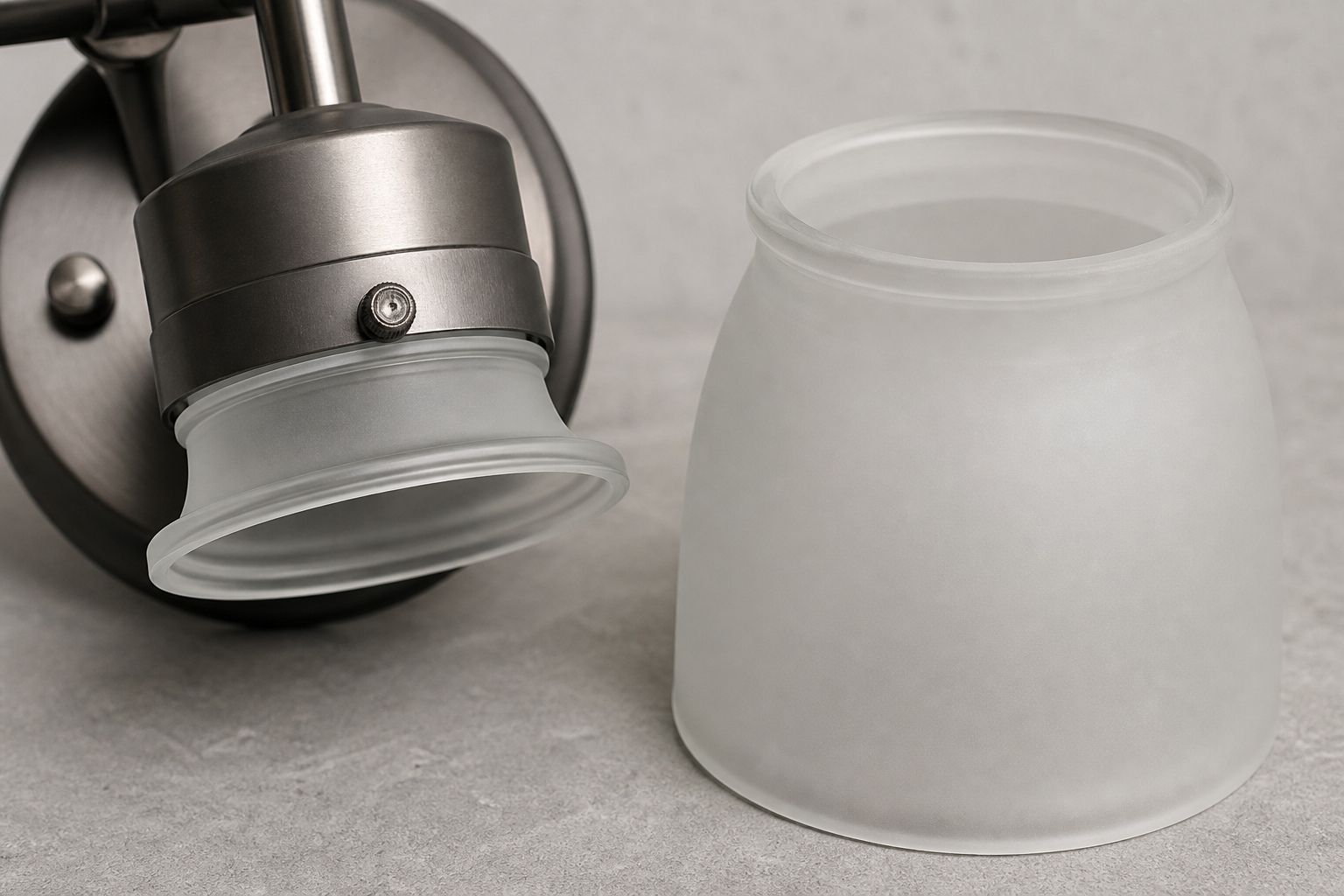
Measure the part and the fixture together
For a replacement sconce shade, record the dimensions that control fit and the dimensions that control appearance. Keep them in separate columns. This prevents a large visible diameter from hiding a wrong opening.
- Measure the clear inside opening of the holder or glass collar. Use a rigid rule or calipers across the widest span. Record inches and millimeters when the project uses both systems.
- Measure the outside seating diameter and lip depth if the shade rests on a ring or gasket.
- Measure the shade height from the seating reference to the lowest point of the glass body.
- Measure the maximum width of the glass body, then check clearance to the wall plate, arm, bulb, socket cover and nearby shade on a paired fixture.
- Record every hole, slot, notch, thread, side opening or cutout, including its distance from the seating edge.
- For a pair or set, measure the surviving pieces separately. A matched pair can have the same nominal size while one profile is slightly distorted or the color has aged differently.
Do not write a tolerance into the RFQ unless you know which dimension it applies to and how the fixture accepts it. A supplier can confirm a production tolerance after reviewing the profile, glass process, finish and interface. The goal at the first contact is a clear reference, not a guessed number.
JX's replacement glass lamp shade measurement guide explains the general measurement method. If the sconce is outdoors or uses a weather seal, use the outdoor replacement glass shade guide as a separate check for gasket and clearance questions.
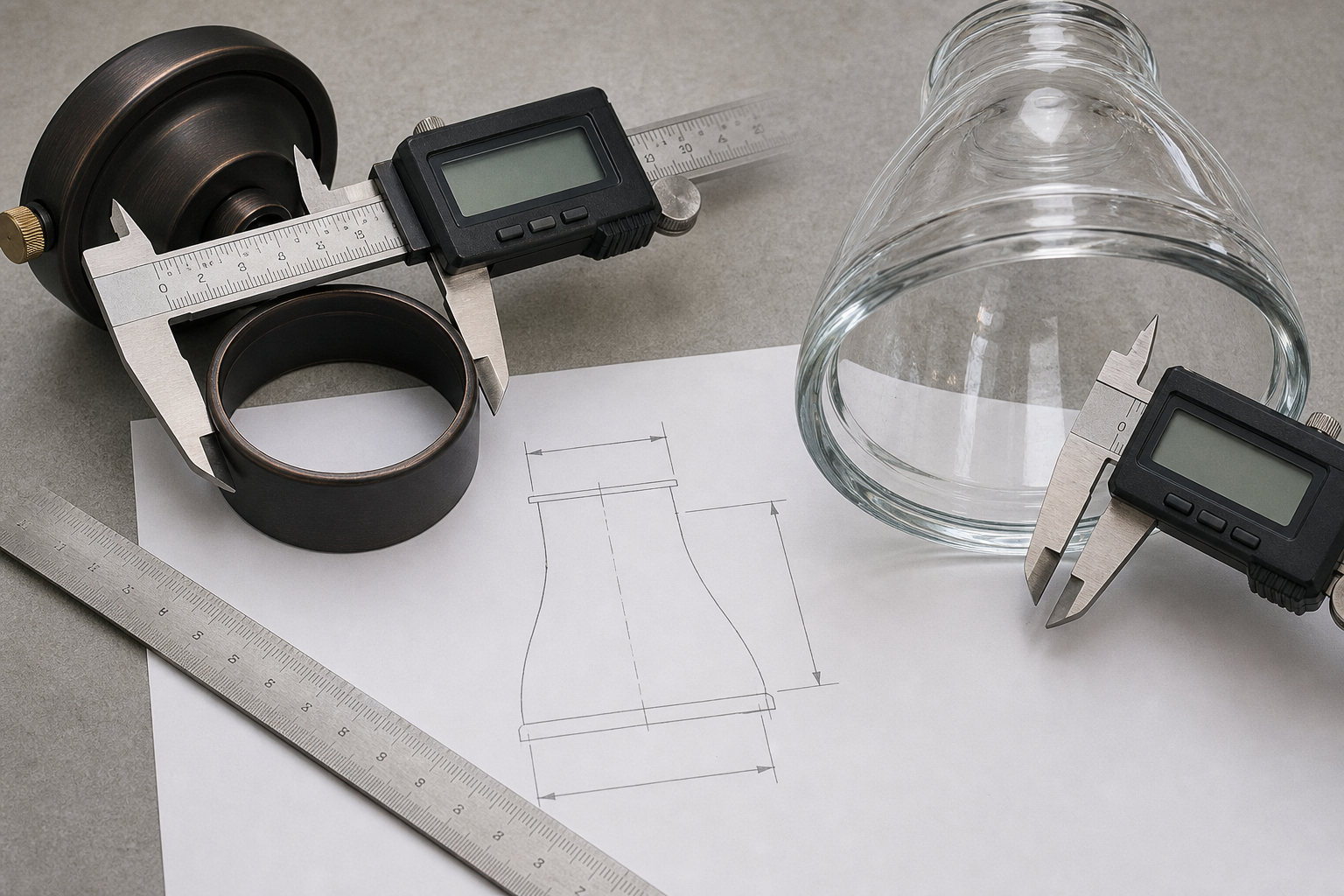
Choose shape, glass direction and finish
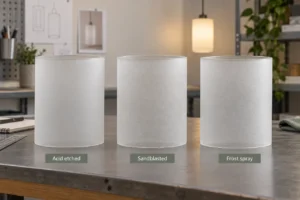
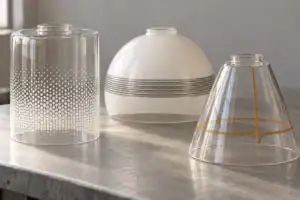
The replacement should suit the fixture's light path as well as its appearance. A clear shade exposes the lamp and spreads more direct light. Frosted or opal glass softens the source. Ribbed or seeded surfaces change the visual texture and may make small variations more visible between pieces.
| Decision | Questions for the buyer | Evidence to send |
|---|---|---|
| Profile | Is the shade a half dome, bell, cylinder, cone, globe or a custom outline? | Side photo, front photo and a profile drawing if available |
| Glass direction | Should the piece be clear, opal, frosted, colored, seeded or textured? | Surviving piece, finish sample or target reference |
| Edge treatment | Is the rim fire polished, ground, rolled, hidden by a holder or visible? | Close-up of the rim and the contact area |
| Symmetry | Is the part used alone, as a left and right pair, or in a repeated collection? | Photos of the complete fixture row or paired shades |
| Cleaning and use | Will the shade sit in a hotel, restaurant, bathroom, exterior or residential setting? | Application, cleaning method and environmental notes |
| Lamp clearance | What bulb, socket cover and heat path does the fixture use? | Fixture model, lamp information and internal clearance photo |
For a replacement, an attractive new finish is not automatically an acceptable finish. If the other sconces in the room have aged glass, compare the new sample against the installed pieces under the actual room lighting. For a new collection, approve the finish with a retained sample and a clear production reference.
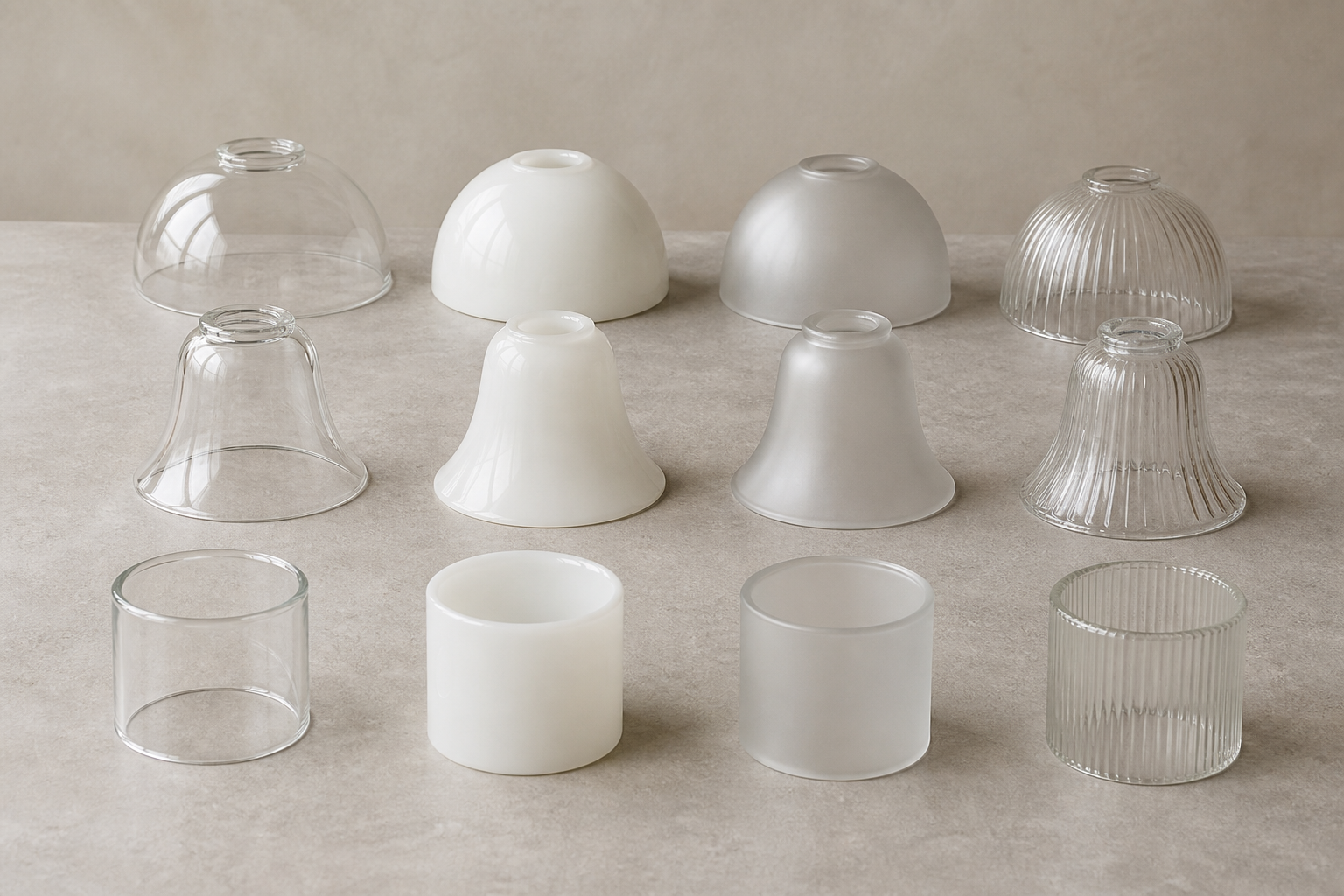
Replacement matching versus new sconce development
These are two different RFQ tracks. Mixing them creates slow quotations and unclear samples.
Track one: matching a surviving part
Send the original shade, fixture photos, a dimension sheet and the number of pieces required. Mark which features must match exactly and which features can be proposed. Typical fixed points include the holder opening, seating lip, height, maximum width, hole position and visible finish.
Ask the supplier to state whether the proposal is a close reproduction, a catalog alternative or a new development. A catalog alternative may reduce development work, but it should not be presented as an exact replacement until the interface and sample have been checked.
Track two: developing a new collection part
Send the fixture drawing, design intent, target profile, glass direction, finish, annual quantity, launch quantity and packaging plan. State whether one size will be used across several sconces or whether each fixture position needs its own SKU.
For a new design, a small change to the collar or back opening can affect tooling, trimming, polishing and packing. Put the design revision on every drawing and sample comment. JX's technical drawing checklist is useful when the project moves from a photo brief to a controlled part record.
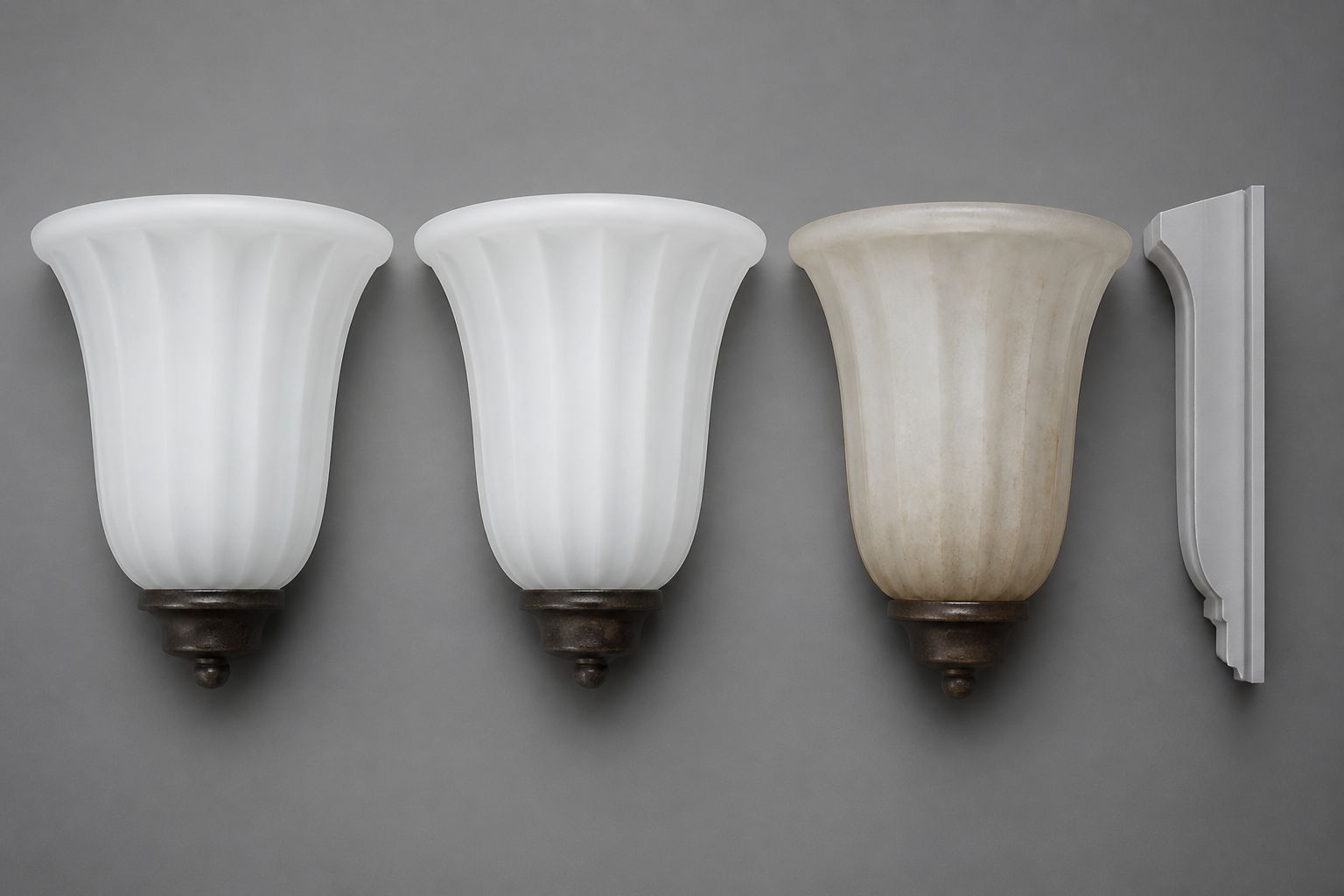
RFQ fields that make a replacement quote comparable
Send one organized brief rather than a collection of photos in separate messages. The supplier should be able to identify the part without guessing which image belongs to which fixture.
| RFQ section | Minimum information |
|---|---|
| Project and SKU | Project name, buyer SKU, fixture model, fixture position and replacement quantity |
| Reference | Original shade, surviving pair, photos, drawing file, sample code and revision date |
| Interface | Holder type, clear opening, seating surface, lip, screw or clip positions, gasket and backplate clearance |
| Shape | Profile, height, maximum width, rim, shoulder, hole, slot and visible orientation |
| Glass and finish | Glass type requested, color, opacity, texture, coating, edge finish and acceptable visual variation |
| Quantity plan | Sample quantity, first order, matched sets, annual estimate and expected reorder quantity |
| Tooling | Existing tool review, new mold need, ownership question, maintenance and storage request |
| Quality | Critical dimensions, visual defects, sample approval method, inspection record and claim evidence |
| Packing | Individual protection, inner pack, carton size, divider or insert, labels, pallet and shipping mode |
| Commercial terms | Currency, Incoterm, named place, quote validity, MOQ, lead time and document requirements |
Ask every supplier to return the quote in the same field order. That makes it easier to tell whether a price difference comes from the glass, the finish, the tool, the packing or an excluded service.
Sample approval for a single shade, pair or set
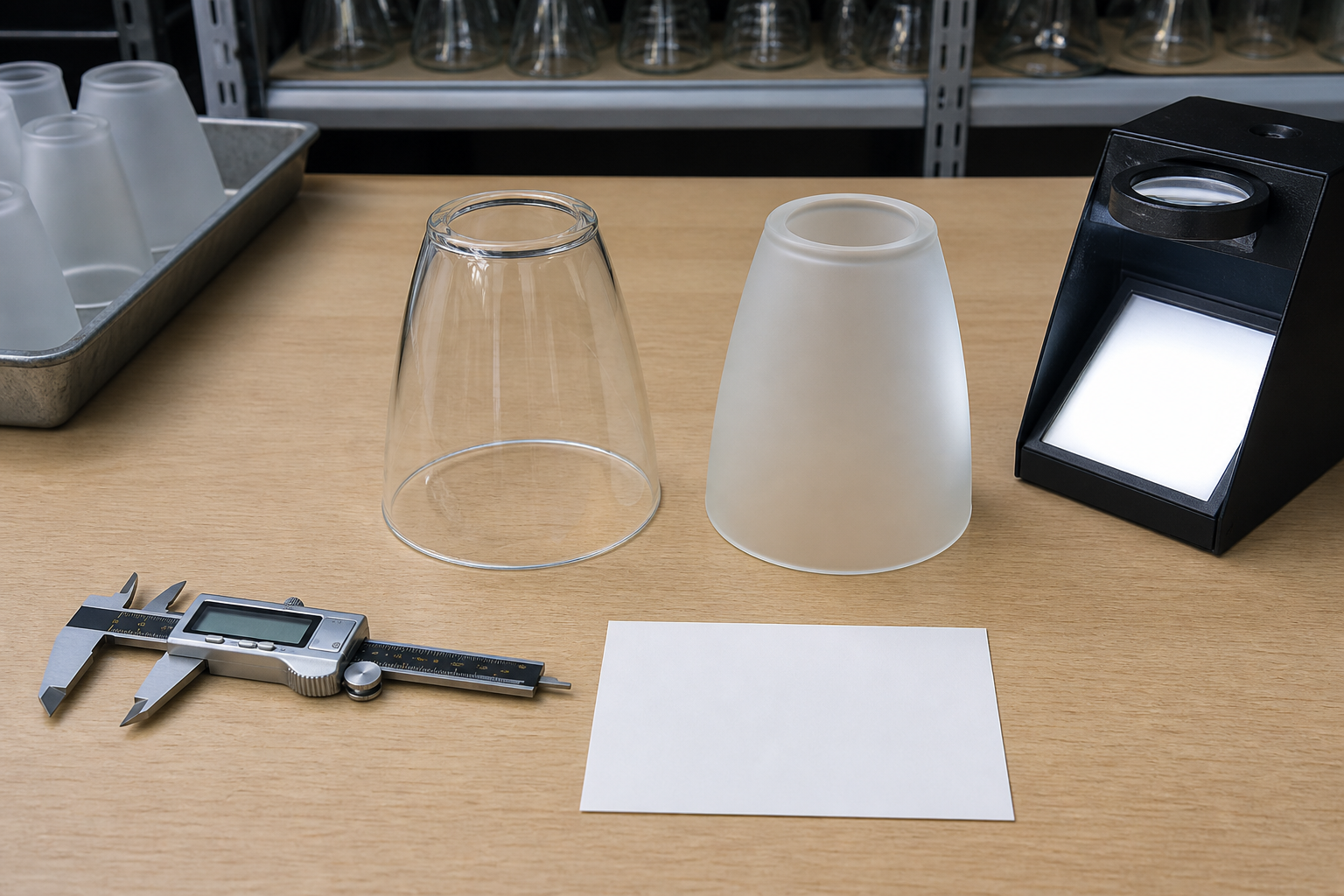
A sample should answer three questions: can the glass attach to the fixture, does it look like the approved reference, and can the supplier record the result for the bulk order?
Check the interface first. Place the sample on the holder or use a controlled fixture reference. Confirm the opening, seating surface, lip, hole, screw clearance and height. Do not force a shade onto a metal ring. If the sample needs pressure to seat, stop and record the issue.
Check appearance under the lighting used in the project. Review color, opacity, texture, rim visibility, bubble or seed distribution, surface marks and profile symmetry. For a matched pair, compare the pieces side by side and photograph them together. A single approved piece does not prove that a pair matches.
Finally, record the approval. Use a sample code, drawing revision, finish reference, comments, approval date and the person responsible for the sign-off. If the buyer changes the color or profile after approval, issue a new revision instead of editing the old comment.
Packing wall-sconce glass for export
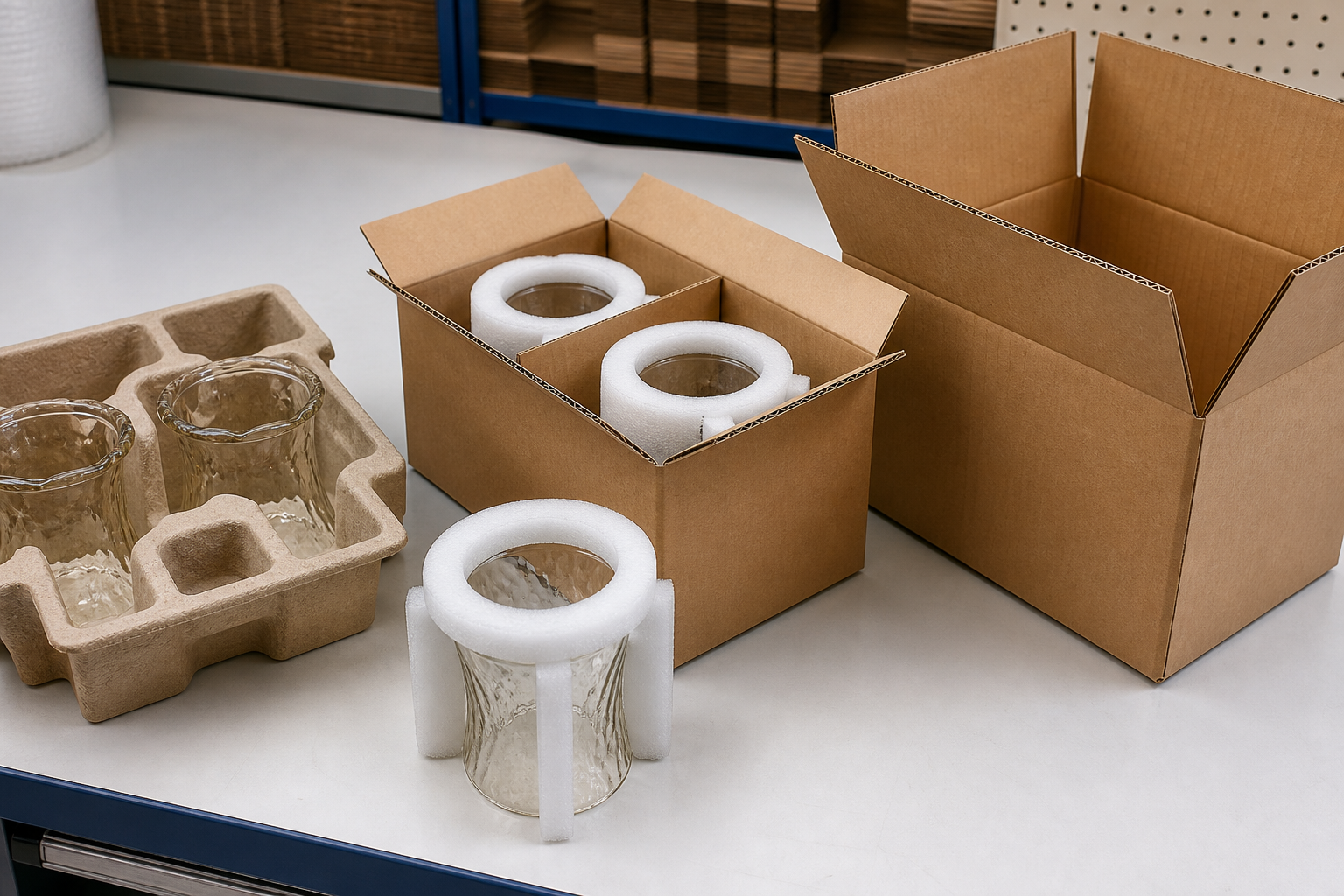
Sconce shades often have a thin rim, a narrow neck, a projection, a hole or a polished edge. Those details need their own protection. "Standard export packing" is not enough information for a fragile replacement program.
Ask the supplier to define these lines in the quotation:
- How each piece is wrapped or sleeved.
- How the rim, fitter, hole and projection are kept away from impact.
- How neighboring pieces are separated so they cannot rub.
- Pieces per inner pack and pieces per master carton.
- Insert, divider, foam, molded protection or other contact material.
- Carton dimensions, gross weight, labels and pallet arrangement.
- Orientation and stacking limits when the profile is tall or asymmetric.
- Packing photos or a packing sample before the full shipment.
- Damage reporting window, photo evidence and replacement or credit process.
Packing should be quoted at the same quantity as the order scenario. A small sample carton may not represent the cost or protection required for a bulk matched set. Keep the approved packing photo with the SKU record and ask the supplier to flag any change before the reorder.
MOQ, lead time and document questions
Use planning language until the supplier reviews the exact profile, finish, tool status and quantity. For the current JX baseline, catalog items start from 500 pieces, while full custom OEM starts from 1,000 pieces. The final MOQ belongs in the written quotation because a matched pair, a new mold, a special finish and a small restoration run can require different treatment.
Catalog or light-customization orders up to 1,000 pieces have a planning baseline of 25 to 30 days. This is a planning reference, not a fixed promise. Samples, color approval, packaging approval, new tooling, order revisions and destination documents can change the schedule.
If the project is for the United States or another regulated market, ask for the current documents that apply to the actual assembled fixture and destination. A glass shade supplier should not turn a fixture standard into a blanket product certification claim. UL Solutions describes UL 1598 as a luminaire standard, so the lighting brand or fixture maker still needs to confirm the compliance route for the complete product.

Six quote mistakes that cause avoidable replacement problems
- Ordering by visible width only. The globe or bell may look correct while the opening or seating lip is wrong.
- Using one photo for several fixtures. Similar sconces can use different collars, holes or backplates. Mark every photo with the SKU outside the image or in the file name.
- Calling a replacement "universal." A supplier can propose a close alternative, but the buyer should approve the interface before using that word.
- Approving the finish from a screen. Glass color and opacity change under transmitted and reflected light. Keep a physical reference when the match matters.
- Leaving packing outside the quote. Thin rims and projections need protection that can be priced, photographed and checked.
- Losing the approved record after the first order. A reorder without the drawing revision, sample code, tool ID and packing version is a new guessing exercise.
A procurement checklist for the final release
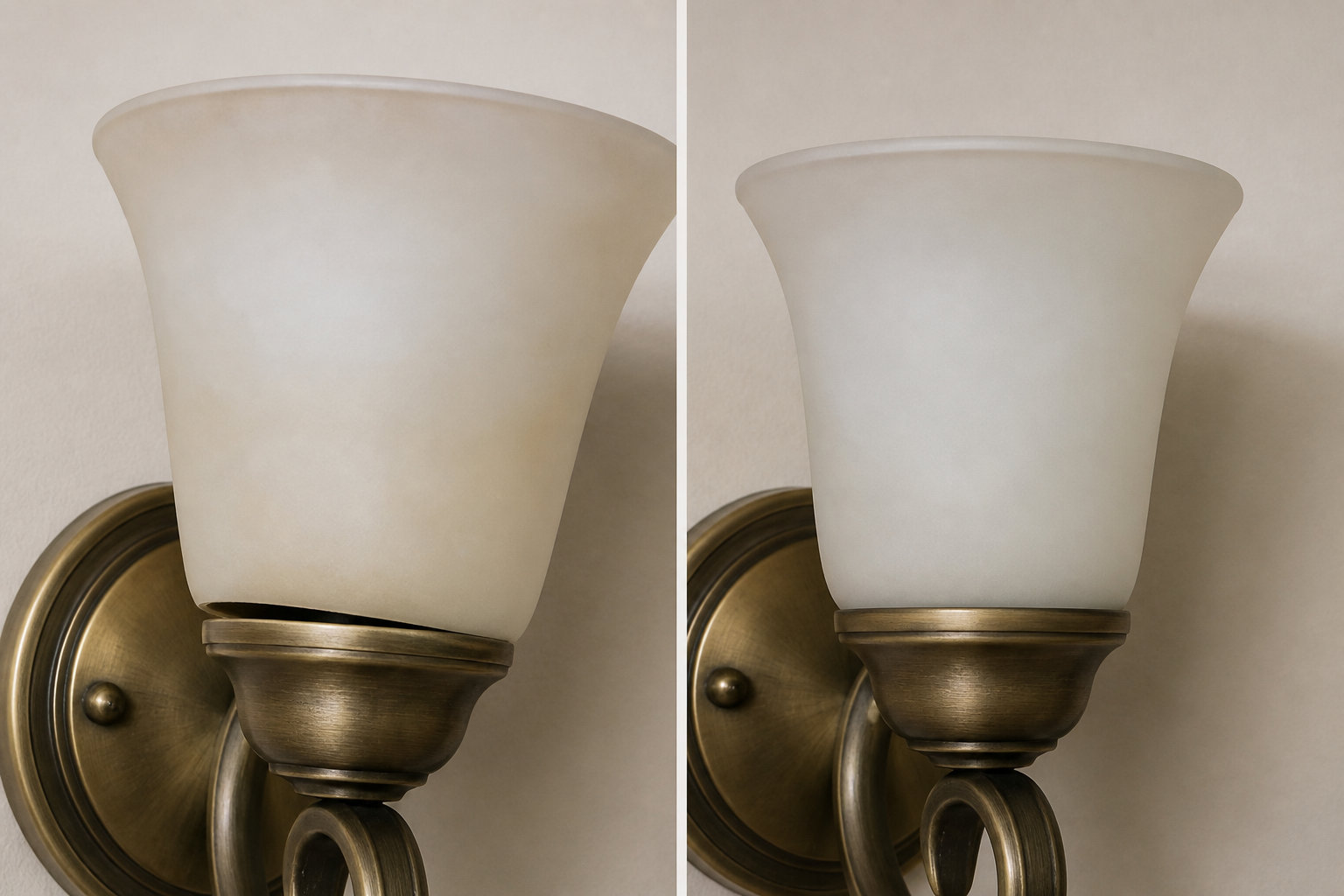
Before releasing a replacement glass shade order, confirm that the project file contains:
- A buyer SKU and fixture model for every part.
- Front, side, interface and clearance photos.
- The opening, seating, height, width, lip, hole and slot dimensions.
- A drawing revision or a written record of the reference sample.
- Glass, finish, rim and acceptable variation instructions.
- Sample approval for the interface and appearance.
- Quantity by SKU, matched-pair requirement and expected reorder quantity.
- Tooling ownership, maintenance and storage questions.
- Individual packing, carton and claim instructions.
- MOQ, lead-time baseline, quote validity and destination document questions.
If any of these fields is missing, mark it as an open question in the RFQ. A blank field is safer than an assumption that later becomes a wrong shipment.
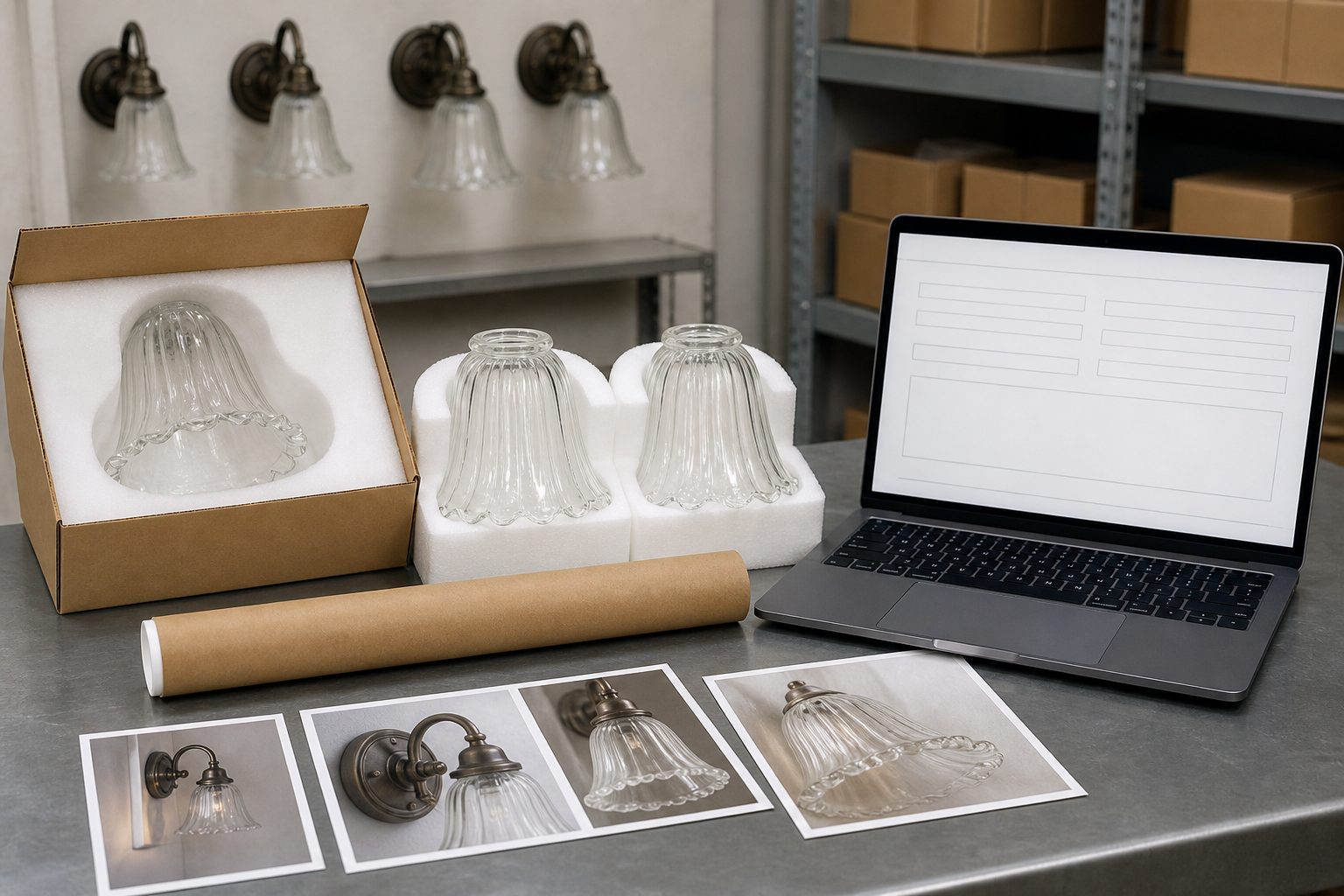
Prepare the files JX needs to price a sconce shade
JX Lampshade is the product and website brand of Yancheng Jingxin Glassware Co., Ltd., also used as Jingxin Glassware in manufacturing and business documentation. The current company baseline is a factory of 48,430 sq ft, approximately 4,500 m², founded in 1999, with exports to over 120 countries and regions worldwide.
For a sconce replacement request, send the fixture photos, surviving shade or fragments, drawing if available, opening and clearance measurements, finish reference, sample quantity, first-order quantity, expected reorder quantity, destination and packing requirements. Include whether the request is an exact match, a close replacement or a new design proposal.
JX can review catalog and custom glass shade routes. Catalog items start from 500 pieces as a planning reference, while full custom OEM starts from 1,000 pieces. The quotation confirms the final MOQ, price, lead time, packaging and applicable documents. For applicable projects, ask for current RoHS or REACH documentation and confirm any product or destination certificate against the actual SKU and market.
Use the custom lampshade RFQ builder to collect the starting files in one submission. The more complete the interface and reference information, the less likely the first quote is based on a guess.
Frequently asked questions
What is the most important measurement for a replacement sconce shade?
The fit-controlling measurement is usually the clear opening or seating interface, but the exact reference depends on how the fixture holds the glass. Record the holder, lip, gasket, screw or clip arrangement together with the opening. The overall width alone is not enough.
Can a table lamp glass shade work on a wall sconce?
Only when the interface, clearance, heat path and fixture hardware accept it. A similar profile does not prove compatibility. Ask the supplier to review the complete fixture reference before treating a catalog shade as a replacement.
Should I send the old broken shade to the supplier?
If it can be packed safely, an intact or partial original can help with profile and finish matching. Send clear photos first and ask how the sample should be packed. Keep the fixture photos and dimensions even when a physical sample is available.
How do I order a matching pair?
State that the pieces are a matched pair, send photos of the surviving pair or fixture row, and approve both pieces side by side. Record the pair as one controlled sample reference rather than approving only the first piece.
What should I ask about packaging?
Ask how the rim, collar, holes and projections are protected, how pieces are separated, how many are in each carton, and what evidence is required for a damage claim. Request a packing photo or sample when the shade has a thin edge or unusual projection.
Can JX quote a small restoration order?
JX's current catalog planning baseline starts from 500 pieces, and full custom OEM starts from 1,000 pieces. A restoration or small project may need a project-specific review. Send the quantity, reference part, development requirement and destination so the quotation team can confirm what is possible.
Send a complete sconce shade brief
For a useful first response, attach one folder with the fixture photos, SKU list, measurements, drawing or surviving sample information, finish direction, sample quantity, bulk quantity, destination and packing questions. Ask the supplier to identify any missing field before pricing.
That brief gives the buyer something concrete to compare: the same interface, the same appearance reference, the same quantity, the same packing scope and a documented reorder path. Send the sconce shade brief through the JX RFQ builder when the files are ready.