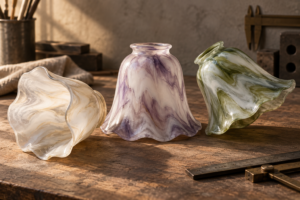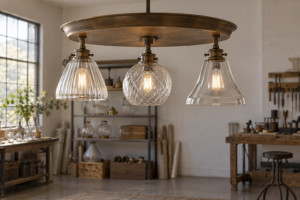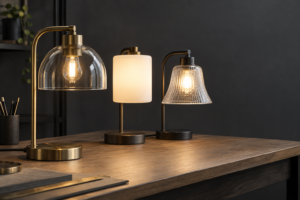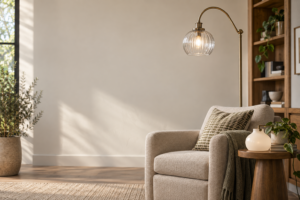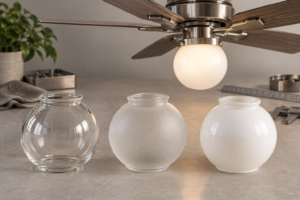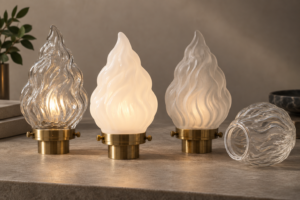
Pan light glass shades are the glass components fitted to a shallow pan-style ceiling or chandelier fixture. The phrase is also used for flat LED panel lights, so the first sourcing decision is to identify which type you have. For a decorative fixture, confirm the pan, socket or retaining interface, shade opening, profile, height and clearance before ordering. A photo alone is rarely enough for a reliable replacement quote.
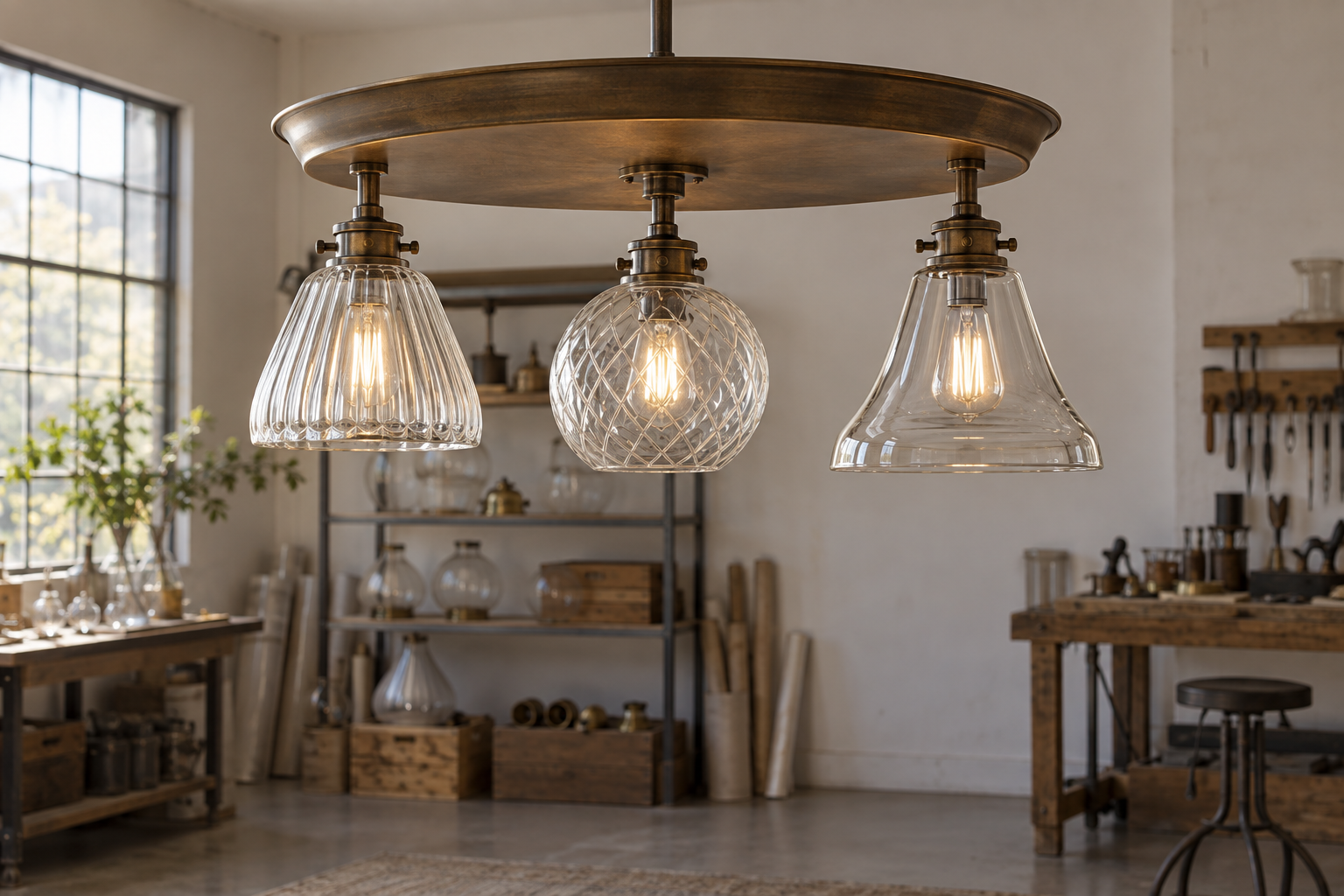
What is a pan light?
A decorative pan light is a ceiling or chandelier fixture built around a shallow round metal canopy, often called a pan. Sockets or short arms sit below or around that pan, and each glass shade is held by a fitter, gallery ring, screw ring, retaining clip, or another mechanical interface. The fixture can have one shade or several shades. The word pan describes the fixture architecture, not one universal shade shape or one universal opening size.
The search term has a second meaning. In commercial lighting, a pan light may refer to a flat LED panel or low-profile panel fixture. That product uses a diffuser or light guide and does not use a decorative glass shade in the same way. If a buyer searches for a pan light glass shade, the safest content and sourcing path is to state the distinction early, then work from the physical fixture in front of them.
For a replacement or custom order, use these three clues:
- A shallow round metal pan with visible sockets, arms, or canopy hardware usually points to a decorative pan fixture.
- A thin flat housing with an integrated LED surface usually points to a modern panel light, not a replaceable decorative glass shade.
- A decorative fixture with a removable shade still needs interface measurements. Similar-looking glass can fail if the fitter, shoulder, retaining ring, or clearance is wrong.
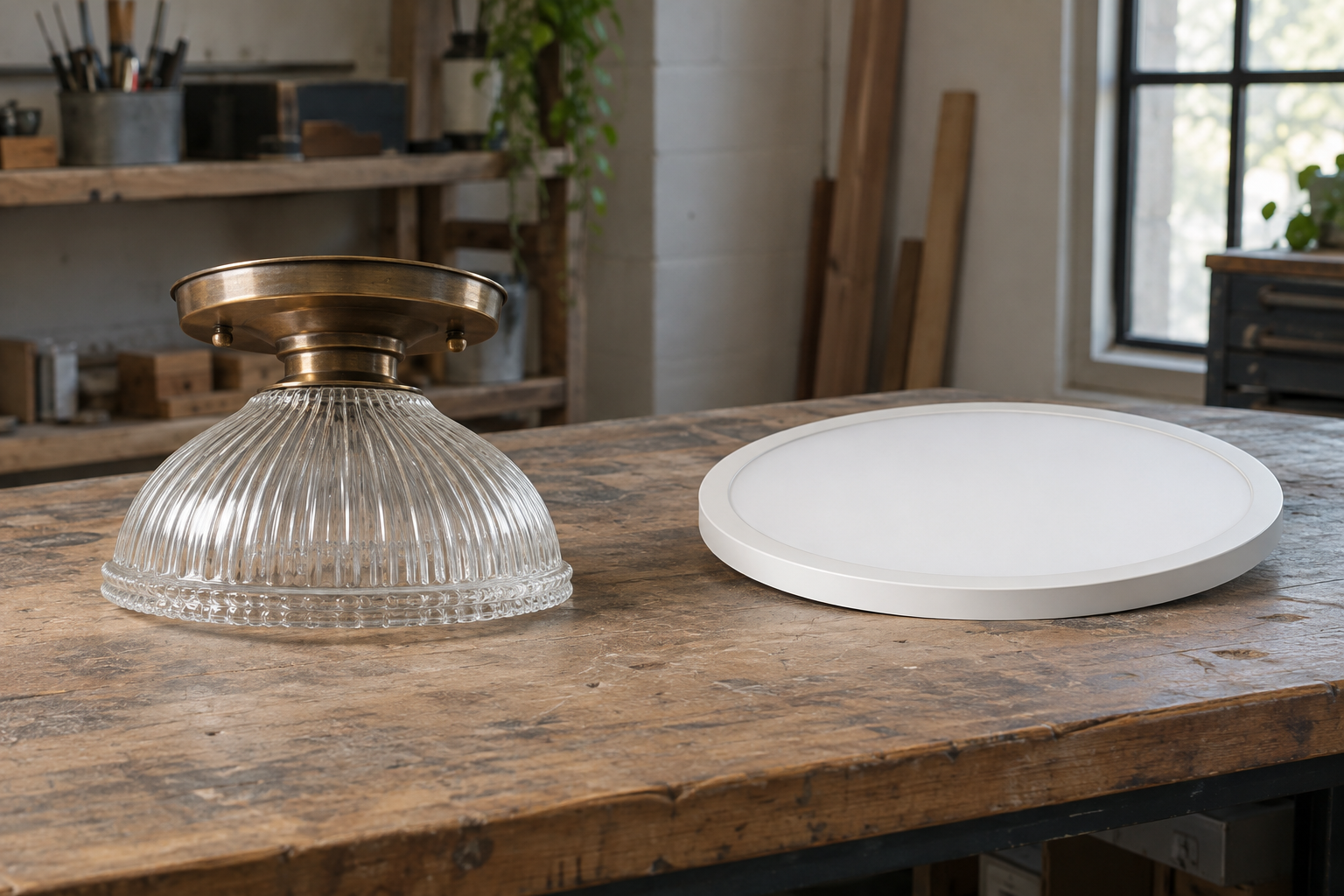
How a decorative pan light is built
Before choosing glass, map the fixture from the ceiling down. The pan or canopy carries the electrical and mechanical load. A socket holder positions the lamp. A gallery or fitter transfers the shade load to the holder. The shade then controls the visible silhouette, glare, and spread of light. On a multi-light fixture, small differences in shade height or opening can be noticeable when the lamps are viewed together.
The interface may be top-mounted, bottom-mounted, or held between hardware rings. Some shades have a defined neck or fitter. Others sit on a wide rim. Some assemblies use set screws that touch a metal collar rather than the glass itself. Do not assume that a visually similar replacement can use the same hardware without checking the contact points.
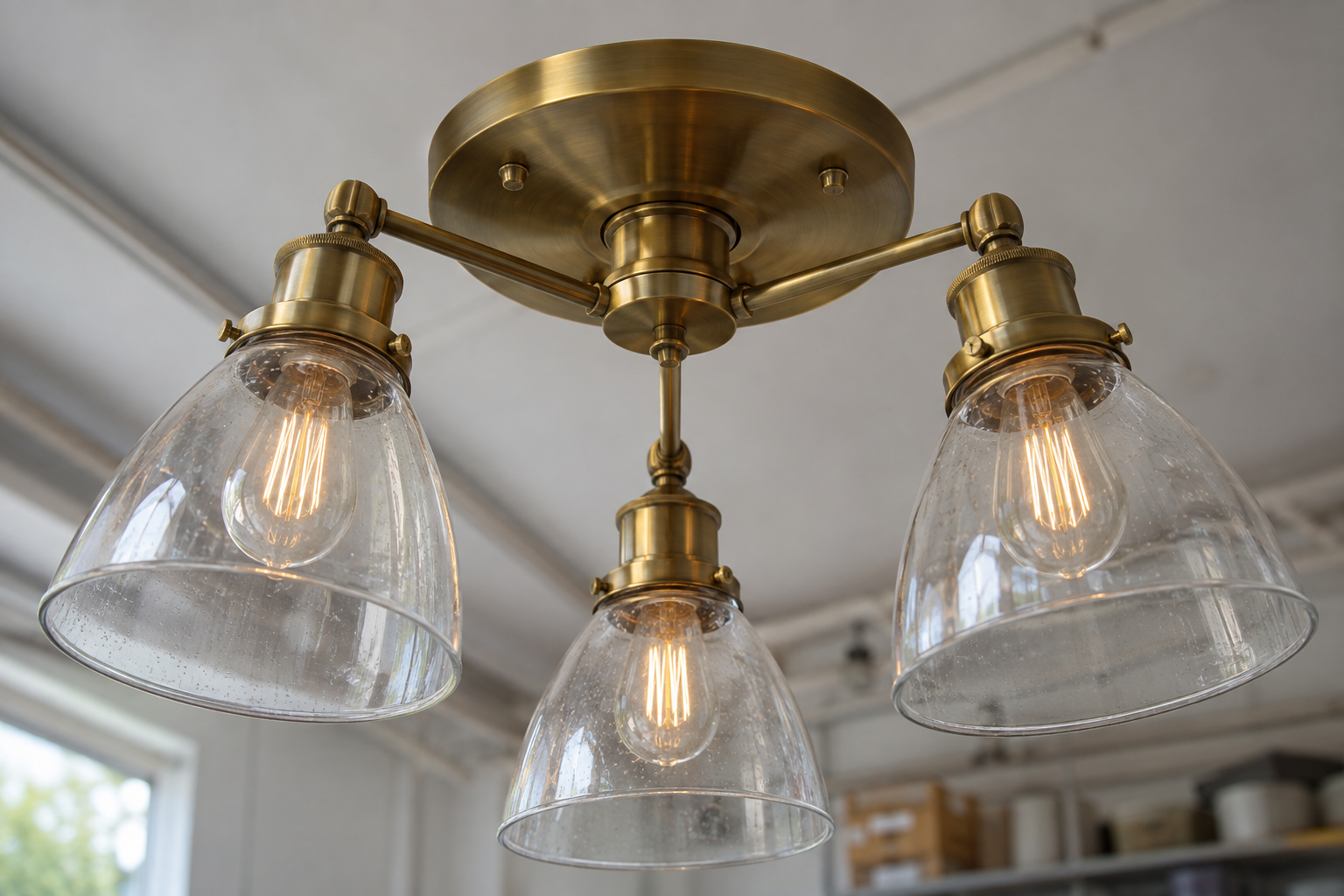
The following map helps a buyer decide what to photograph and measure before contacting a manufacturer.
| Fixture area | What to record | Why it matters |
|---|---|---|
| Pan or canopy | Outside diameter, depth, finish, number of shade positions | Establishes the fixture family and visual proportion |
| Socket holder | Socket position, holder outside diameter, exposed threads or collar | Determines where the shade can sit without stressing the glass |
| Fitter or gallery | Inside diameter, outside diameter, shoulder, thread or screw locations | Controls mechanical compatibility |
| Shade body | Overall height, maximum width, wall profile, opening shape | Controls the replacement silhouette and clearance |
| Retaining hardware | Ring, screws, clips, gasket, spring, or none | Prevents an apparent fit from becoming an unstable fit |
| Lamp and heat zone | Lamp type, lamp position, distance to glass, ventilation | Supports a safe review of the finished assembly |
Pan light glass shade profiles worth comparing
The right profile depends on the original fixture, the desired light distribution, and the amount of room around the bulb. Clear domes and globes show the lamp and hardware. Bell and shallow bowl shapes can give a more traditional downward silhouette. Fluted or pressed patterns change both the visual weight and the way highlights move across the shade.
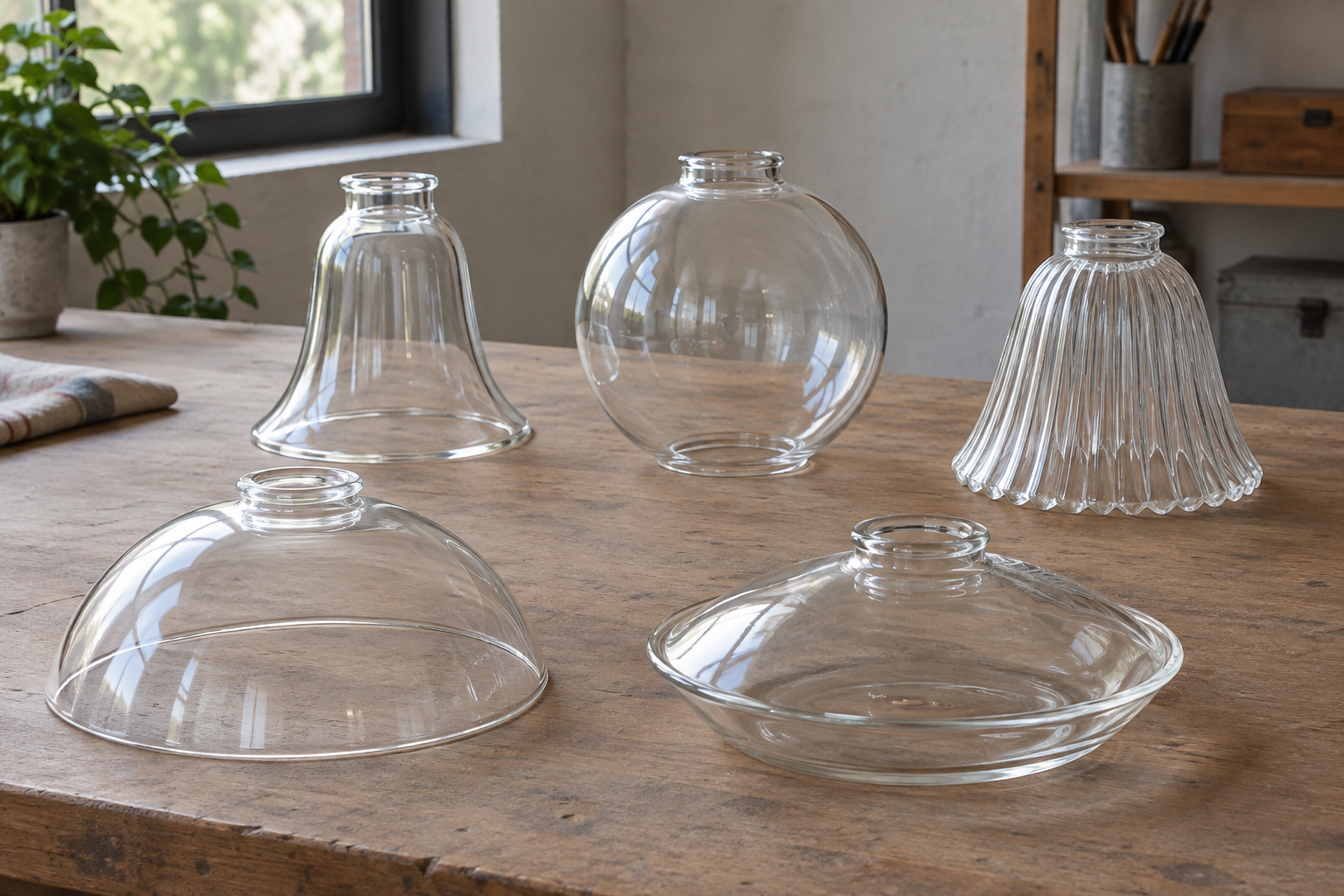
Do not select a profile from a product name alone. Terms such as dome, bowl, tulip, bell, globe, and schoolhouse can be used differently by different sellers. Send a side view with a reference object, plus a view of the opening and the hardware. If the original is broken, a photo of the remaining fitter and a matching fixture position can be more useful than a fragment of glass.
| Profile direction | Typical visual effect | Questions for the buyer |
|---|---|---|
| Clear dome | Keeps the light source and upper hardware visible | Is glare acceptable, and does the dome clear the socket? |
| Opal or milk dome | Hides the lamp and softens hot spots | Is the target brightness still adequate for the room? |
| Bell or tulip | Creates a longer downward silhouette | Does the lower diameter clear the arm or adjacent shade? |
| Globe | Spreads light around the fixture | Is there enough distance between adjacent globes? |
| Shallow bowl | Reads as a low, broad shade | Does the rim need a separate ring or seat? |
| Fluted or pressed | Adds texture and directional highlights | Will the pattern line up across a multi-shade fixture? |
Fitter control is more important than a product name
The fitter is the part of the shade and holder that establishes the mechanical relationship. A shade may have a neck, lip, rim, or opening that looks close to another shade but does not seat correctly. A small mismatch can create rocking, point loading, screw interference, or an uneven appearance.
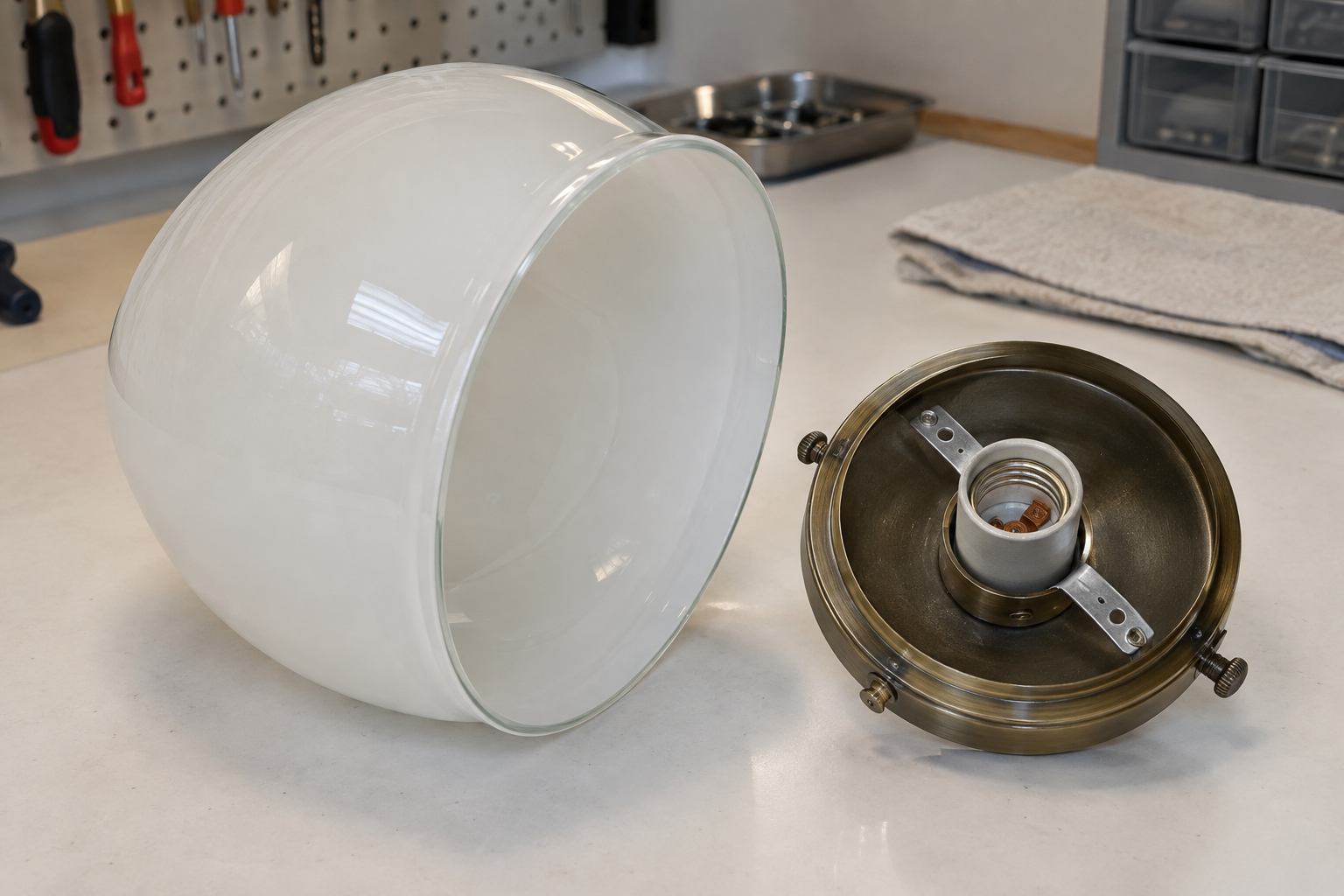
For a first review, record the following separately:
- The shade opening inside diameter and outside diameter.
- The straight or tapered length of the opening section.
- The point where the shade first touches the fitter or ring.
- Any shoulder, bead, groove, thread, or screw clearance.
- Whether the glass is supported by a ring, a collar, a gasket, or a point contact.
JX maintains a separate guide to glass lamp shade fitter types because the interface is often the hidden reason a replacement fails. Use the guide together with a physical measurement, not as a substitute for one.
Measurements to capture before ordering a replacement
Measure the original shade when it is intact. If it is broken, measure the holder and use the remaining pieces only as supporting evidence. Take measurements in the same orientation used by the fixture. Note whether a value is inside, outside, or centerline to centerline. That distinction prevents a supplier from interpreting an outside diameter as the opening needed for a ring.
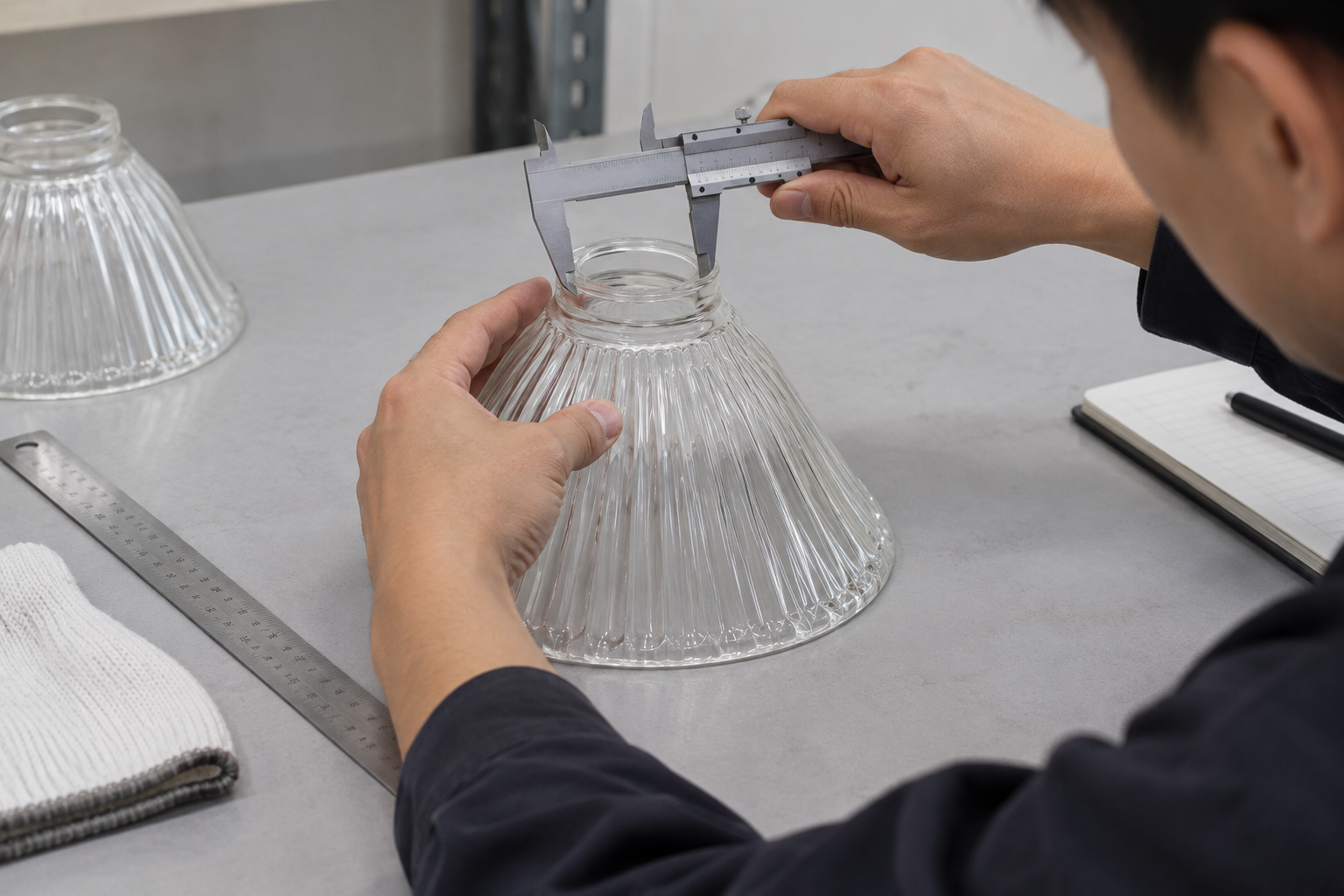
| Measurement | How to capture it | Common error |
|---|---|---|
| Fitter opening | Measure the glass opening at the actual seating plane | Measuring the widest body diameter instead |
| Fitter outside diameter | Measure the outside of the neck or rim | Treating it as the ring's inside diameter |
| Overall height | Measure from the seating plane to the lowest point | Including a removable cap or hardware |
| Maximum width | Measure the widest part of the shade | Measuring a diagonal or an installed angle |
| Rim thickness | Measure or photograph the contact edge | Assuming a ring can hide any edge condition |
| Taper or shoulder | Record where the opening changes direction | Sending only one diameter |
| Fixture clearance | Measure to bulb, arms, canopy, and nearby shades | Checking the shade in isolation |
| Quantity and matching | State how many pieces must match | Approving one sample without a multi-piece review |
For a drawing-led project, add a side profile, a top or bottom opening view, and a section through the fitter. JX also provides a glass lamp shade technical drawing checklist that can help organize these fields before a quote is requested.
Check clearance before approving the replacement
Fit is not complete when the shade can be placed over the holder. The shade must also clear the lamp, socket, retaining hardware, pan, arms, and nearby shades during installation and use. A replacement can have the right opening but a deeper body that touches a bulb or collides with the next shade on a multi-light fixture.
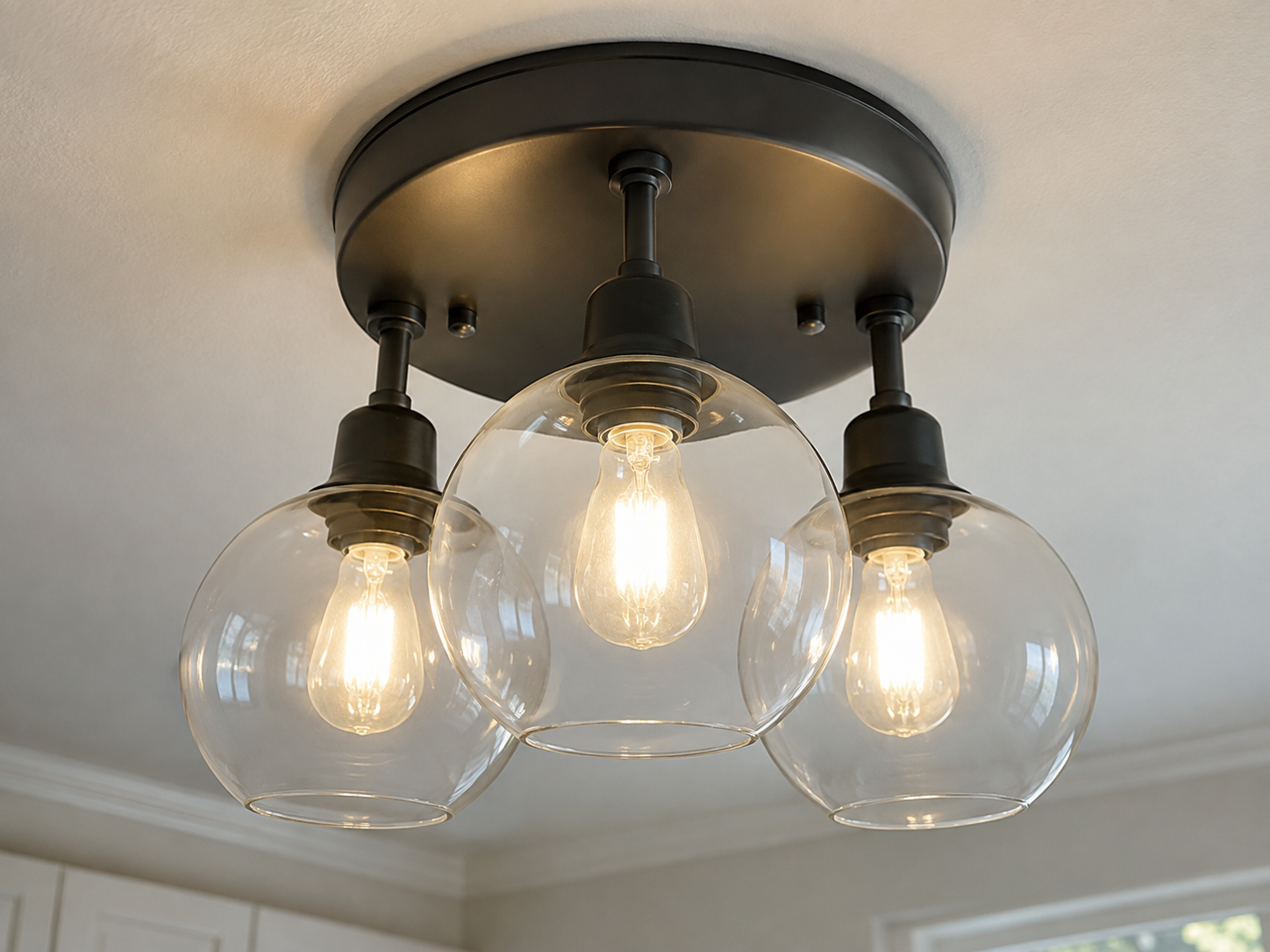
Use the physical fixture to check three positions: the shade fully seated, the shade being installed or removed, and the shade held by the final retaining hardware. Photograph the clearance from the side and from below. If a lamp or socket is being changed at the same time, state that in the RFQ because it can change the available space.
Clearance is also a heat and maintenance question. The glass shade manufacturer can review the geometry and material choice, but the complete luminaire still needs to be evaluated by the responsible fixture designer or qualified electrician. A glass shade by itself is not an electrical certification for the finished lamp.
Choose a finish by light behavior, not just color
Glass finish affects what the buyer sees when the lamp is off and how the room looks when it is on. Clear glass preserves sparkle and makes the bulb part of the design. Opal and milk glass hide the lamp and give a more even appearance. Frosted surfaces reduce reflections but can change the perceived brightness. Seeded or ribbed glass adds texture and can break up a direct view of the lamp.
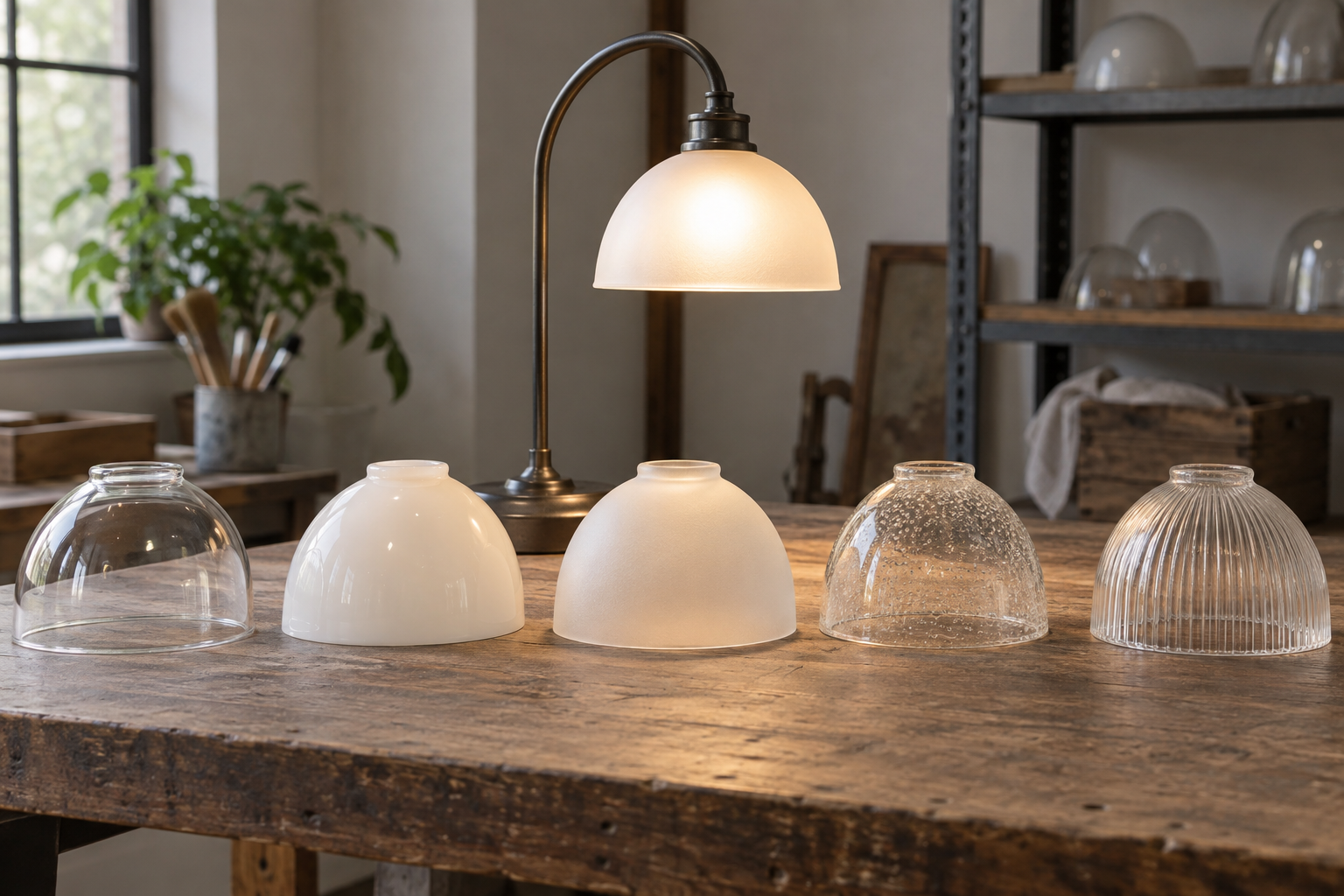
| Finish direction | When it may fit | What to confirm |
|---|---|---|
| Clear | Decorative bulbs, visible filament, crisp reflections | Glare, fingerprints, and the appearance of the socket |
| Opal or milk | Soft general light and a concealed lamp | Diffusion level, color appearance, and cleaning method |
| Frosted | Lower reflection and a quieter surface | Whether the process is acid, sand, spray, or another finish |
| Seeded | Vintage texture and irregular highlights | Sample consistency and the acceptable level of bubbles |
| Ribbed or fluted | Directional texture and stronger shadow lines | Pattern pitch, orientation, and mold repeatability |
| Lightly tinted | A controlled color note in the fixture | Color tolerance, batch matching, and sample approval |
Ask for a physical sample or an approved digital reference before a bulk decision. Screen images can make clear, opal, and frosted surfaces look closer than they are. For a multi-shade pan fixture, approve the sample under the intended lamp and at the intended viewing distance.
Pressed or blown glass for pan light shades
Pressed and blown processes can both produce useful lighting shades. The better choice depends on the profile, quantity, texture, repeatability, and development budget. A buyer should not treat one process as automatically superior.
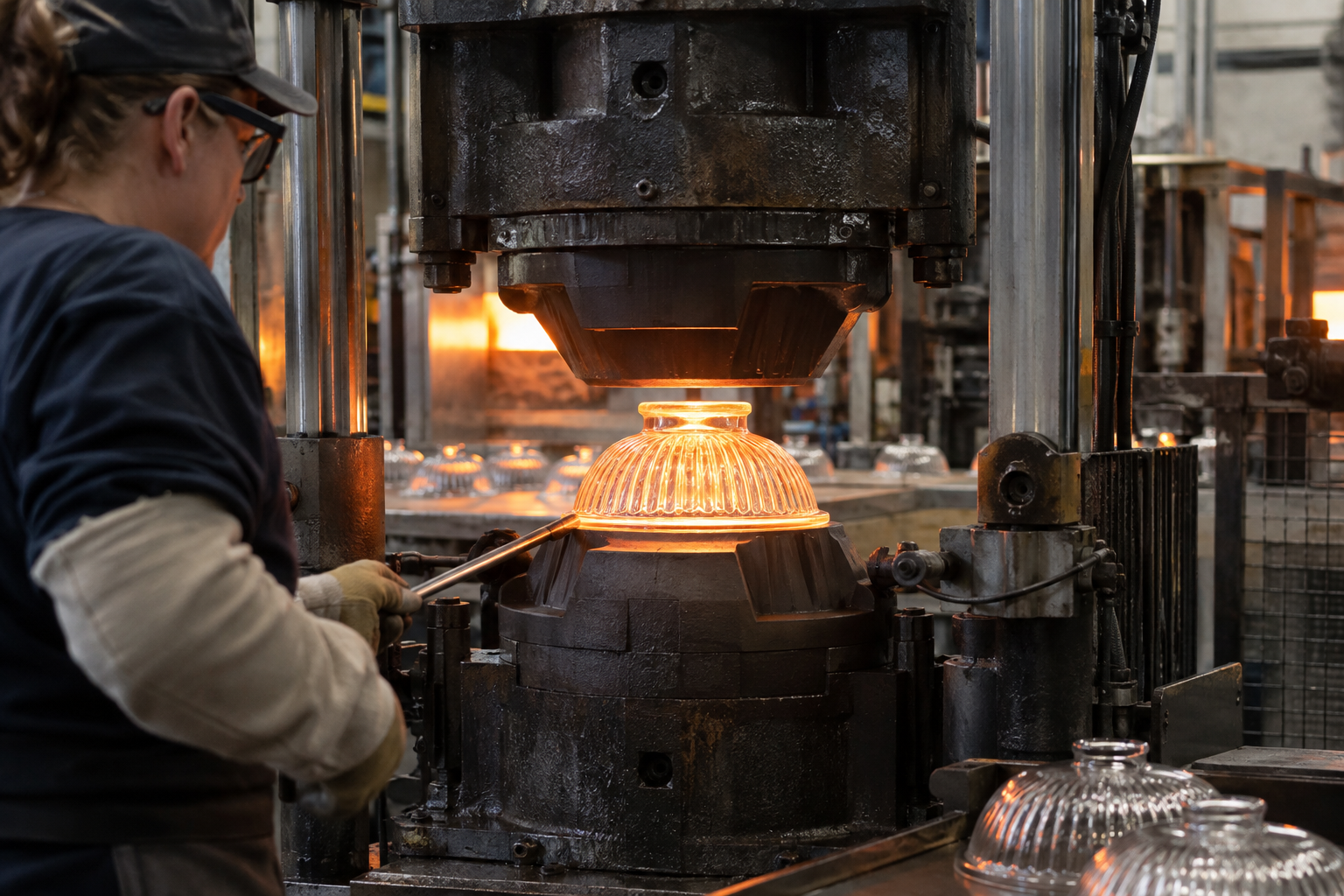
Pressed glass uses a mold to shape the hot glass. It is often a practical direction for repeatable profiles, repeated textures, and larger programs where a tool can be justified. The mold, parting line, edge condition, and release behavior still need review.
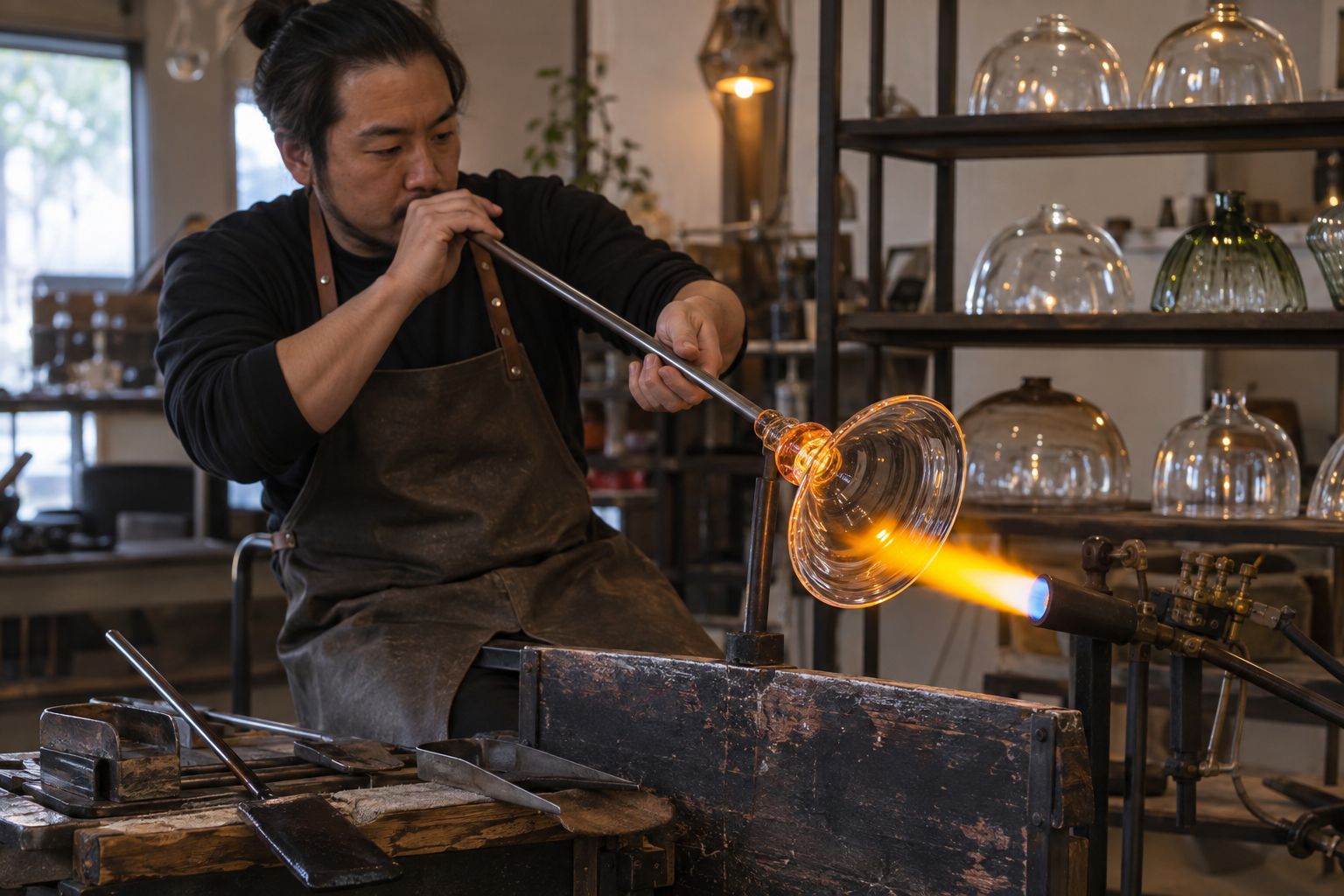
Blown glass can support more fluid profiles and craft-led development. It may be a better fit when the shape, wall character, or small-batch intent benefits from hand forming. The sample still needs a dimensional and visual review, especially at the fitter and rim.
| Decision point | Pressed glass | Blown glass |
|---|---|---|
| Profile repeatability | Mold-led and repeatable after development | Depends more on process control and skilled forming |
| Texture | Strong option for repeated ribs, beads, or patterns | Useful for softer or more individual surface character |
| Tooling | Requires a suitable mold and maintenance plan | May reduce hard tooling for some development paths |
| Development review | Check parting, draft, rim, and mold witness | Check wall variation, opening shape, and rim repeatability |
| Best quote input | Approved drawing, finish, quantity, mold ownership | Approved sample, target dimensions, finish, quantity |
The final selection should be made from the approved sample and the production plan. JX can discuss the practical route after reviewing the profile, quantity, finish, and tolerances.
Custom mold and sample approval
A custom pan light shade becomes easier to reproduce when the drawing and physical sample describe the same part. Before tool work, mark the critical dimensions: the fitter, the seating face, the maximum body diameter, the lowest point, and any pattern orientation. Also mark the dimensions that are visual targets rather than functional interfaces.
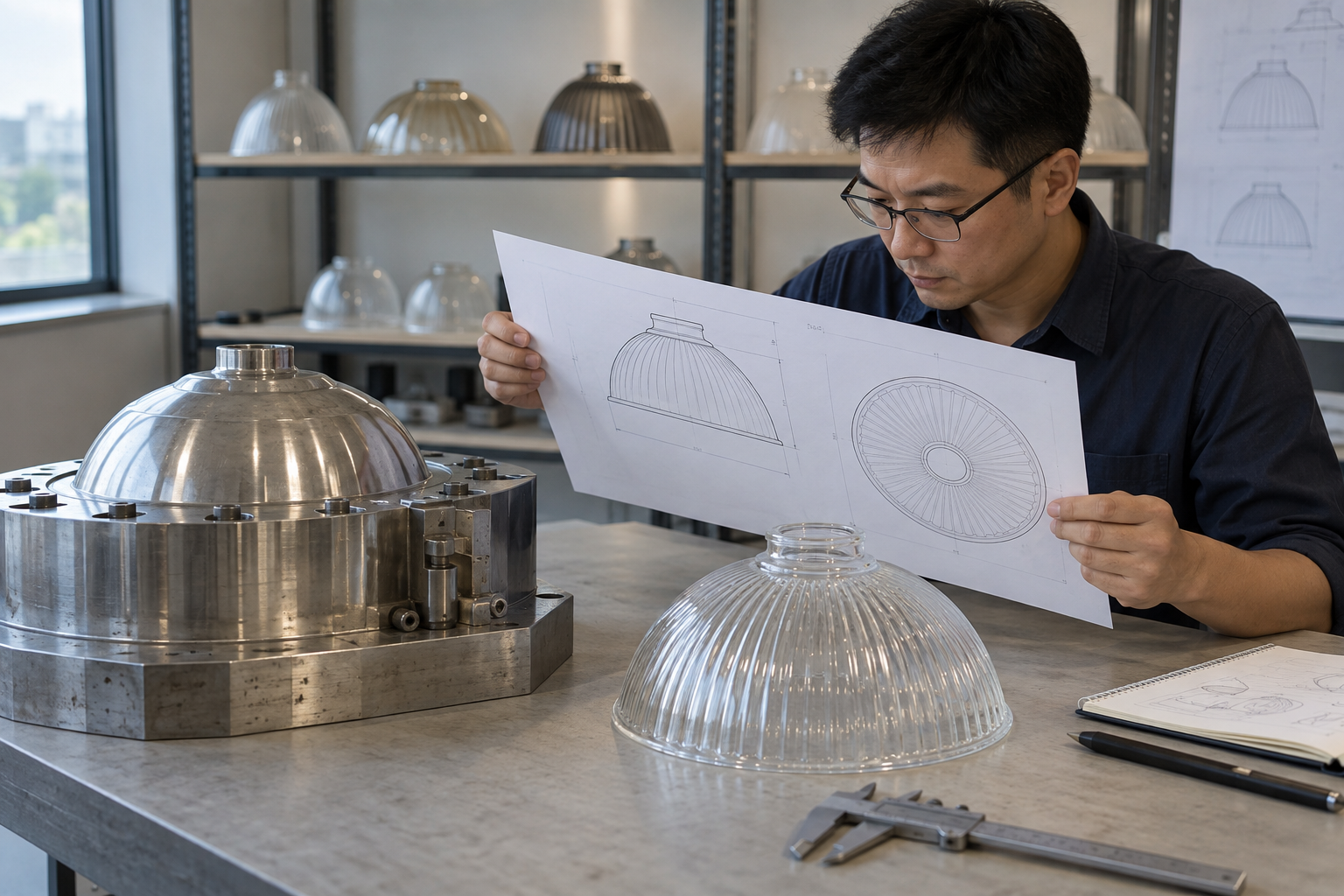
The first sample review should be practical. Place the sample on the actual or representative holder. Check that it seats without force, that the retaining hardware has room, and that the shade does not touch the bulb or neighboring component. Then review the visible silhouette from the normal viewing position. A sample can be dimensionally close and still look wrong when three or four shades are installed together.
Record approval comments by item, not as a general statement. Useful notes identify the dimension, the location on the part, the reference sample, the allowed direction of change, and who is approving the change. If the mold is paid for by the buyer, clarify ownership and storage in the commercial documentation before production begins.
Quality checks for repeat orders
Quality control should reflect the risk of the part. On a pan light shade, the fitter and rim usually deserve more attention than a decorative surface variation that has already been approved. Check the opening, seating plane, overall height, maximum width, profile symmetry, edge condition, finish, and visual match against the approved sample.
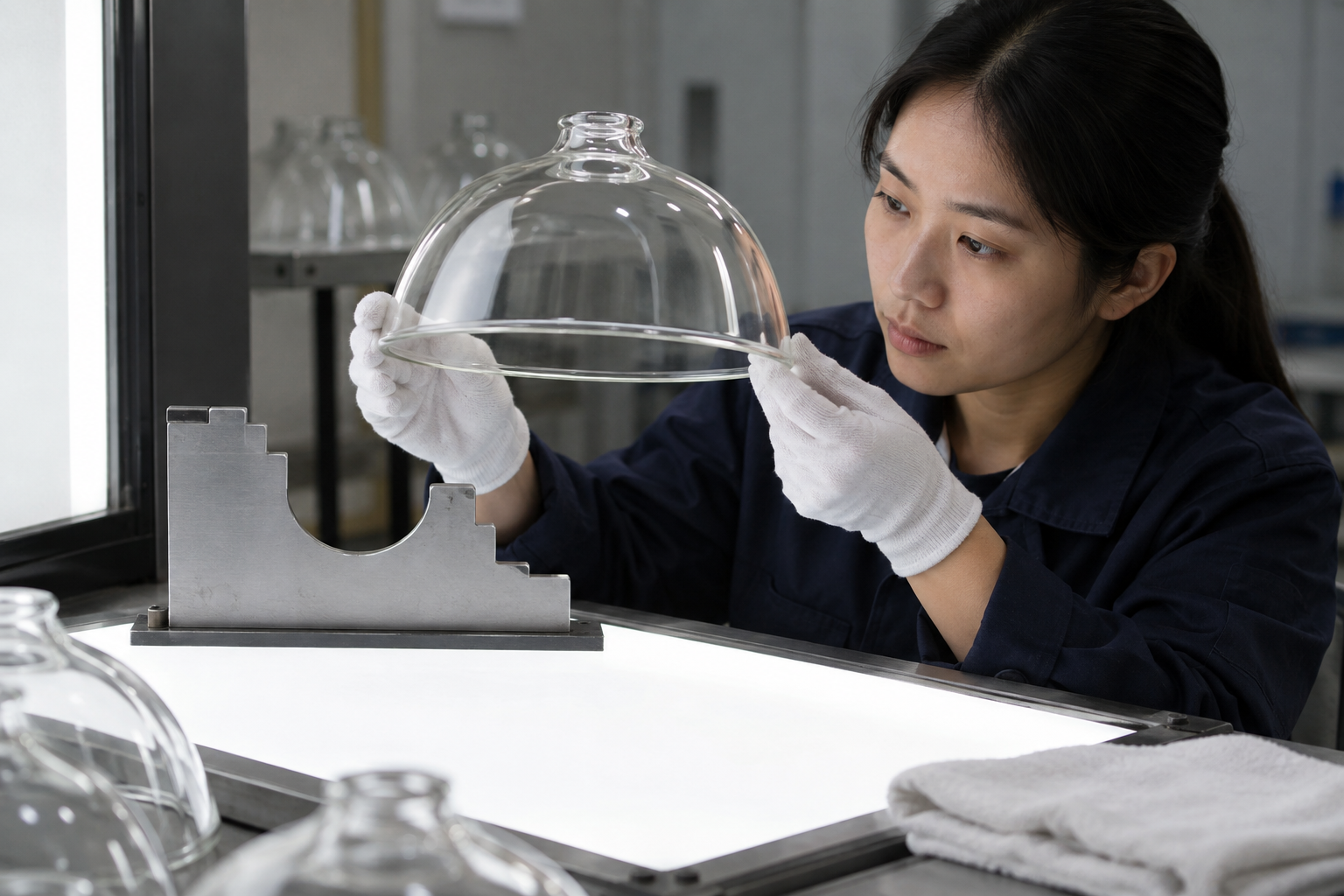
JX's glass lamp shade quality inspection checklist is a useful companion for building an inspection record. The exact acceptance limits should be agreed for the project. Do not turn a general checklist into an unconfirmed factory promise.
| Check | Example evidence | Buyer decision |
|---|---|---|
| Fitter geometry | Caliper record, seating photo, section drawing | Accept, adjust, or hold the lot |
| Profile symmetry | Profile gauge or controlled side view | Confirm visual match to the sample |
| Rim and edge | Close photo and handling review | Confirm safe seating and approved finish |
| Surface | Light table or controlled inspection light | Separate acceptable texture from damage |
| Finish match | Sample beside production piece | Confirm color and diffusion consistency |
| Quantity matching | Group photo of the full set | Check the visual effect as an installed group |
| Packing condition | Carton photos and unpacking record | Trace damage to packing or transport |
Edge finishing is part of the fit
The edge that sits in a ring or collar is not only a cosmetic line. It can be the load-bearing contact area. A sharp, uneven, chipped, or poorly controlled edge can prevent stable seating or concentrate force. A ground edge, fire-polished edge, or another treatment may be appropriate depending on the design, but the target must be agreed from a sample.
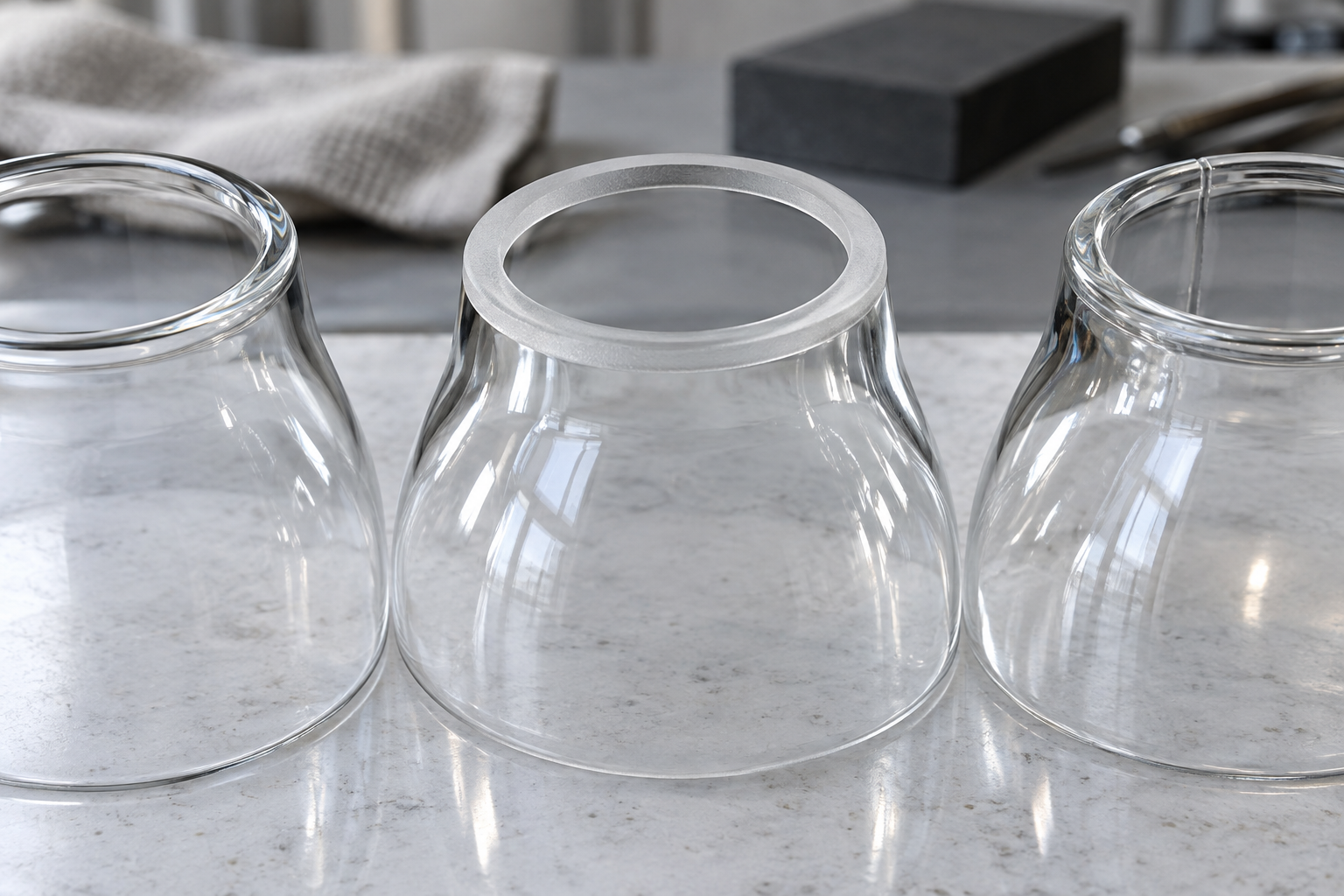
Ask the supplier to show the edge in the same orientation used by the fixture. A photo taken from the side may hide a lip or bead that changes the seating condition. If a gasket is used, include its material and compression behavior in the fit review rather than treating it as an afterthought.
Packaging a fragile pan light shade for export
Packaging should protect the rim, fitter, and widest body area. A shade that survives a vertical drop in an empty carton may still fail when several pieces touch each other or when the rim is supported unevenly. Use dividers, edge guards, and a fit check for the actual carton configuration.
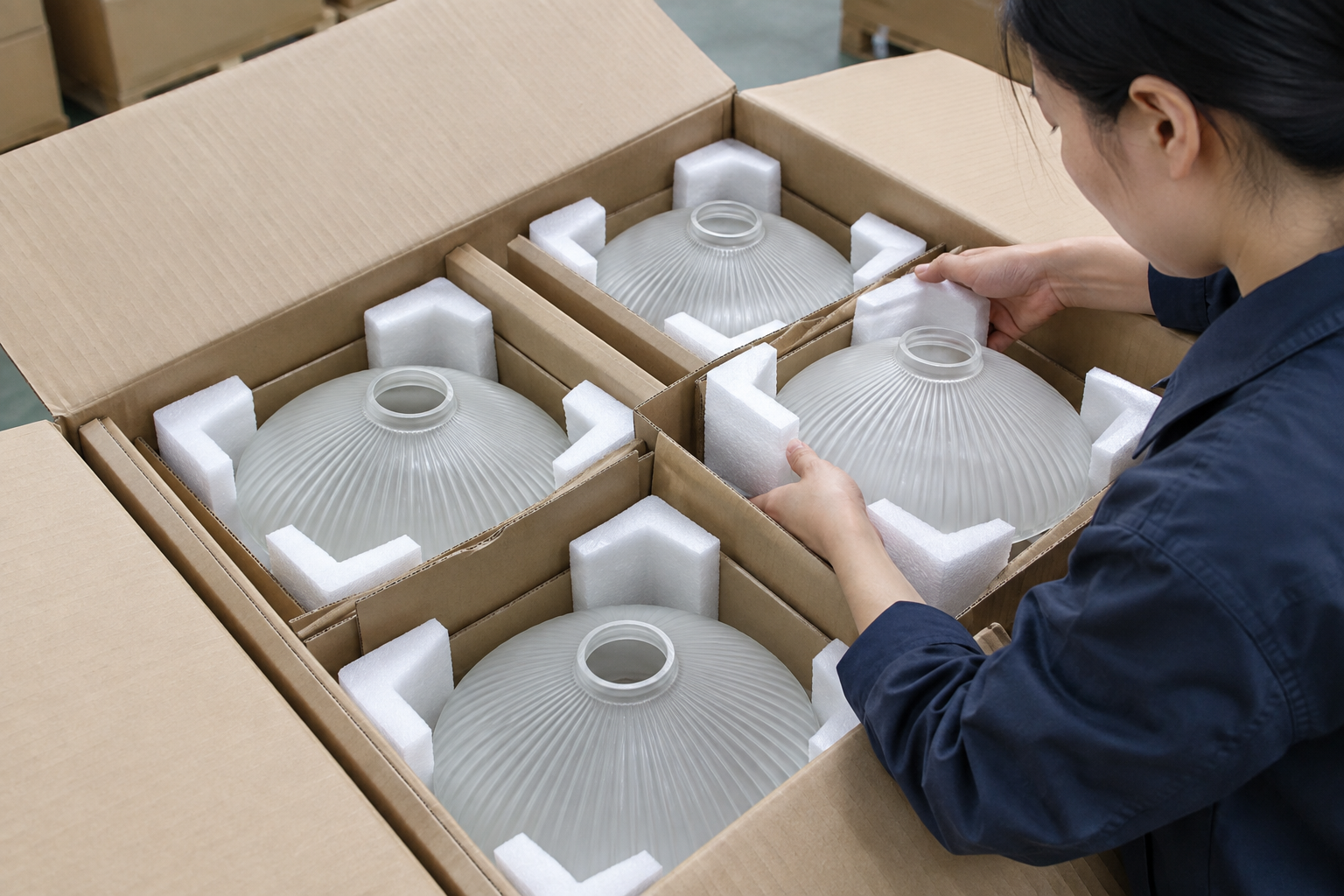
For an OEM program, ask for a packing sample or a packing photo before the full shipment. Record the number of pieces per carton, separator material, orientation, outer carton markings, and whether spare pieces are included. The right arrangement depends on the shade geometry and logistics route, so treat packaging as a project item rather than a generic add-on.
What to send in an OEM pan light RFQ
The fastest quote is usually the one that removes the most guesswork. A clear request does not need a long specification document, but it should separate known values from items that need supplier review.
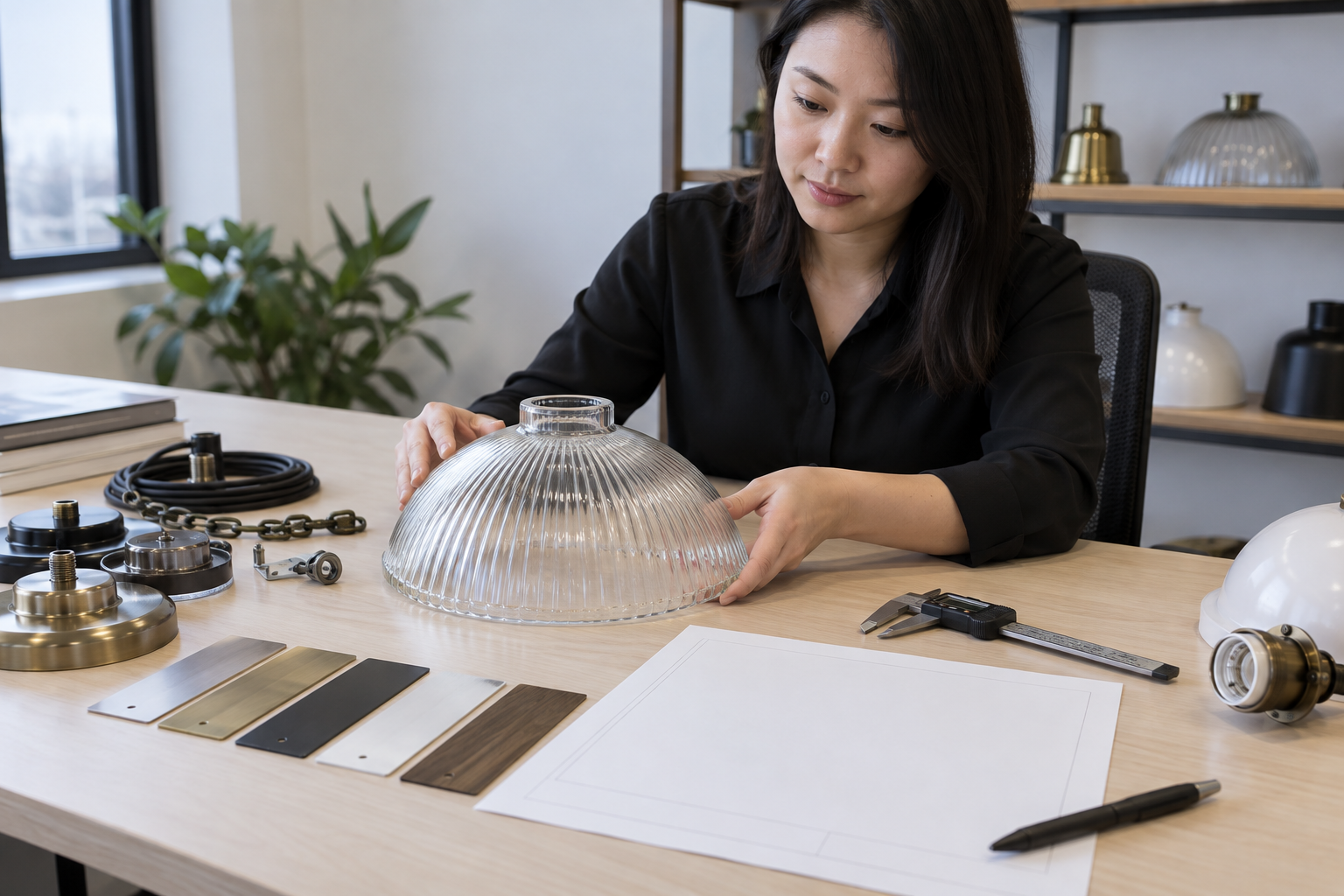
Include:
- A fixture photo from the side, below, and at the fitter.
- The shade profile drawing or a clear side sketch.
- Inside and outside opening dimensions, overall height, maximum width, and rim details.
- Glass direction such as clear, opal, frosted, seeded, ribbed, tinted, or a sample reference.
- Quantity for samples, first production, and expected repeat orders if known.
- Required matching across a multi-shade fixture.
- Bulb or lamp position, clearance concerns, and any hardware that remains unchanged.
- Packaging expectations, destination market, and the requested delivery sequence if those are already defined.
- Questions about sample cost, development route, tooling ownership, inspection evidence, and commercial terms.
The custom lampshade RFQ builder can help structure the request. If the project needs more technical detail, send the drawing and physical reference together. A supplier can then confirm what is measurable, what is a visual target, and what still needs a fit trial.
Common pan light replacement mistakes
The same errors appear across restoration, replacement, and private-label projects:
- Using the fixture name as if it were a standard fitter. Pan light is a fixture description, not a universal interface.
- Measuring only the widest diameter. The fitter opening and seating plane usually control compatibility.
- Ordering from a single front photo. The photo hides the holder, rim, height, and clearance.
- Choosing glass color from a screen. Clear, opal, frosted, and lightly tinted samples can look similar online.
- Approving one piece for a multi-shade fixture. The installed group can reveal differences that a single piece does not.
- Leaving edge finishing out of the drawing. The rim may be the most important contact area.
- Treating the glass shade as the complete safety approval. The finished electrical assembly remains a separate responsibility.
- Asking for a price before the quantity and sample route are clear. Tooling, process, packaging, and inspection can change the commercial result.
Buyer questions
What is a pan light?
In the decorative fixture context, a pan light is a ceiling or chandelier fixture built around a shallow round metal pan or canopy, with one or more sockets and glass shades. The phrase can also refer to a flat LED panel light, so a photo of the fixture is important when discussing a replacement shade.
Are pan lights and panel lights the same?
No. A decorative pan light uses a pan-shaped metal fixture and may use removable glass shades. A panel light is normally a flat LED fixture with an integrated diffuser or light guide. The terms can appear together in search results, but their replacement parts and sourcing paths are different.
Can I replace only the glass shade?
Often, yes, if the existing holder, fitter, retaining hardware, and electrical assembly remain suitable. The new shade still needs to match the seating interface, body clearance, edge condition, and lamp position. Confirm the complete installation with the responsible qualified person.
What dimensions matter most for a pan light glass shade?
Start with the opening at the seating plane, the opening outside diameter, the fitter length, overall height, maximum width, rim condition, and clearance to the bulb and nearby hardware. State whether every measurement is inside, outside, or centerline to centerline.
Is a 2 1/4 fitter universal for pan lights?
No. A nominal fitter term is a useful starting label, but the actual seating depth, shoulder, ring, screw clearance, glass thickness, and holder design still need confirmation. Use the nominal term together with a drawing or measured photos.
Should I choose clear, opal, or frosted glass?
Choose based on the desired view of the bulb, glare, diffusion, cleaning, and the original fixture character. Clear glass shows the lamp and hardware. Opal or milk glass softens and hides the lamp. Frosted glass reduces reflections. Approve a physical sample under the intended lamp whenever the finish is important.
Is pressed glass better than blown glass?
Neither process is automatically better. Pressed glass can suit repeatable profiles and molded textures. Blown glass can suit fluid forms, craft-led development, or certain small runs. The profile, quantity, tolerance, visual target, and development plan should decide the route.
What should an OEM buyer include in a pan light shade RFQ?
Send fixture photos, a side profile, fitter dimensions, overall size, glass finish, quantity, matching requirements, clearance concerns, packing expectations, and sample or inspection questions. Separate confirmed values from open decisions so the supplier can review the design instead of guessing.
Does a glass shade provide electrical certification for the lamp?
No. A glass shade is a component. The completed luminaire, wiring, socket, lamp, heat behavior, mechanical support, and market requirements must be assessed through the appropriate product and compliance process for the finished assembly.
The shortest path to a quote-ready pan light shade
For a replacement, start with the actual fixture: identify the pan, photograph the fitter, measure the seating plane, and check clearance. For an OEM program, add a profile drawing, finish direction, quantity, sample route, inspection plan, and packaging requirement. That information lets a glass shade manufacturer discuss a realistic process and identify missing details early.
JX works with custom glass lamp shade projects and can review a drawing, sample, or fixture photo before the quotation stage. Use the custom glass lamp shades manufacturer page to frame the manufacturing discussion, then send the fit and finish data through the RFQ path. If you are comparing suppliers, the glass lamp shade supplier quote comparison guide can help keep process, sample, tooling, inspection, and packaging questions in the same conversation.