Glass Annealing for Lamp Shades: Stress Testing to Reduce Field Failures
Glass annealing reduces residual stress by holding formed glass in an appropriate temperature range and controlling its cooling. To verify a lamp shade’s annealing quality, review the batch’s process record alongside a suitable residual-stress examination. Together, they help identify a process problem before assembly or shipment. The finished luminaire still needs validation for its thermal and mechanical loads.
A shade can look acceptable, match the nominal opening size and still leave an engineer with unanswered questions: Was the thick fitter adequately annealed? Can the stress result be reproduced? Did finishing damage the rim? Does the retaining ring load the glass unevenly?
For production managers and technical staff, the glass annealing process for lamp shades should end with an acceptance decision tied to the actual part. “Kiln cooled” does not provide enough information to release an engineering or outdoor lighting order.
What does annealing change in a glass lamp shade?
During cooling, temperature differences within a formed glass part can leave internal stress. Annealing allows stress to relax before controlled cooling limits the stress remaining at room temperature. The Corning Museum of Glass explanation of annealing describes why rapid cooling can leave glass vulnerable to breakage, including later mechanical or thermal shock.
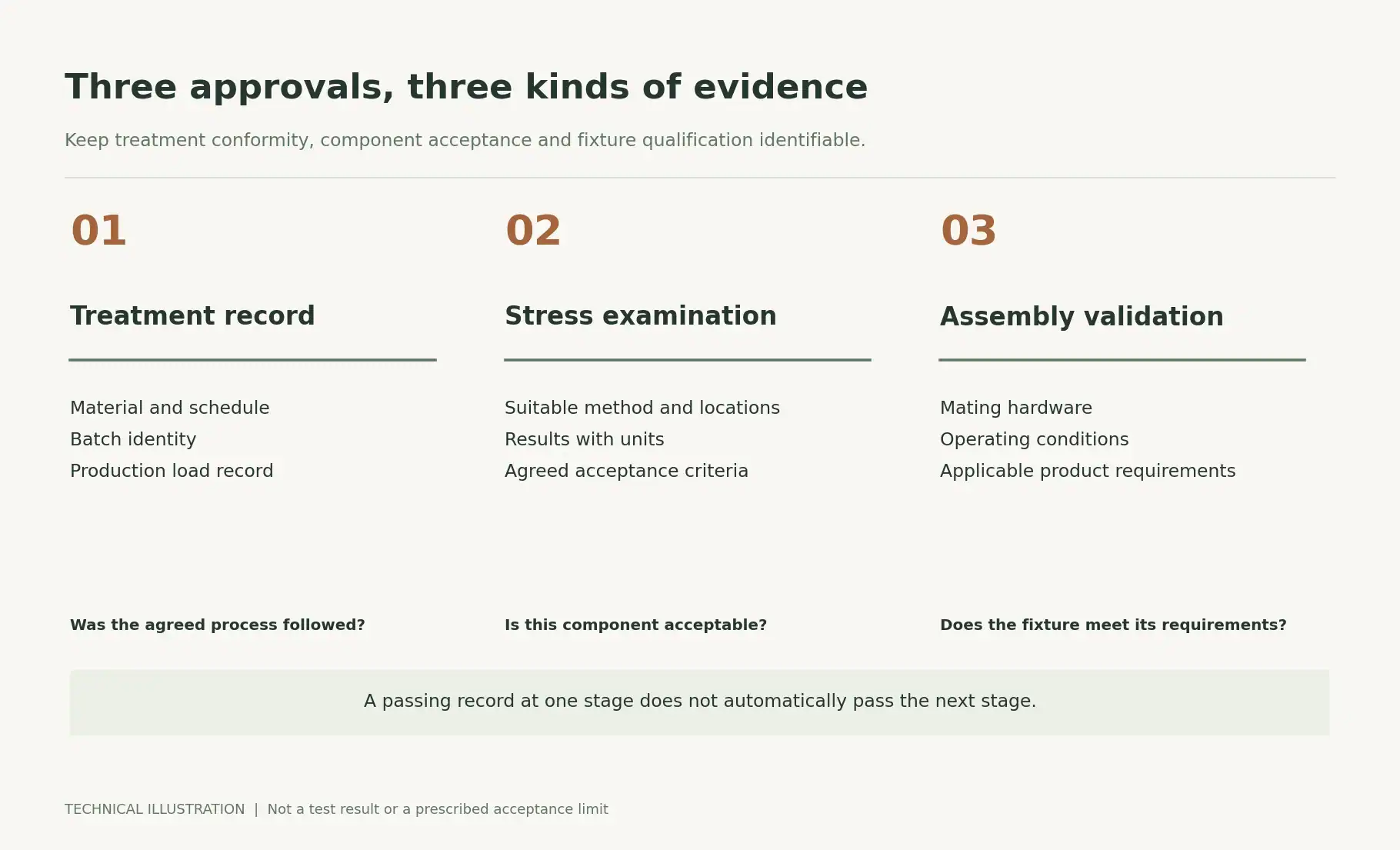
For purchasing and production, separate three questions:
Was the specified treatment carried out?
Evidence to request: Batch-linked process record and approved schedule
Decision it supports: Process conformity
Is the remaining stress acceptable?
Evidence to request: Examination method, measured locations and agreed criteria
Decision it supports: Component acceptance
Will the shade work in the luminaire?
Evidence to request: Assembly and application validation
Decision it supports: Product qualification
Passing one check does not automatically answer the other two. Keep these approvals identifiable in the sample report and purchase specification.
For the broader sequence from forming to finishing, see how glass lamp shades are made. This guide focuses on the evidence needed to approve the annealing stage.
Why one furnace temperature or cycle time is insufficient
Ask the supplier which glass grade, geometry and loading arrangement the proposed schedule covers. A cycle described only as “two hours” does not identify its holding conditions, cooling stages or relationship to the production load.
The annealing point and strain point are material characteristics. ASTM C336-26 describes their determination by fiber elongation and identifies annealing-schedule development as one use of the resulting data. It does not supply a universal lamp-shade furnace recipe.
The process review should answer:
- Which material specification supports the selected temperature range?
- Which wall sections and transitions were considered when qualifying the cycle?
- How is the furnace load arranged, and what changes require review?
- What recorded temperature information is available for the batch?
- Which final stress results demonstrate that the schedule is suitable?
A furnace sensor records the temperature at its location. Ask how the supplier established that its record represents the relevant load; do not assume it directly measures every shade’s temperature.
If a supplier proposes a longer treatment, ask which feature or test result justifies it. Agree the required outcome and supporting evidence, then establish the schedule through process qualification.
Where should residual stress be examined?
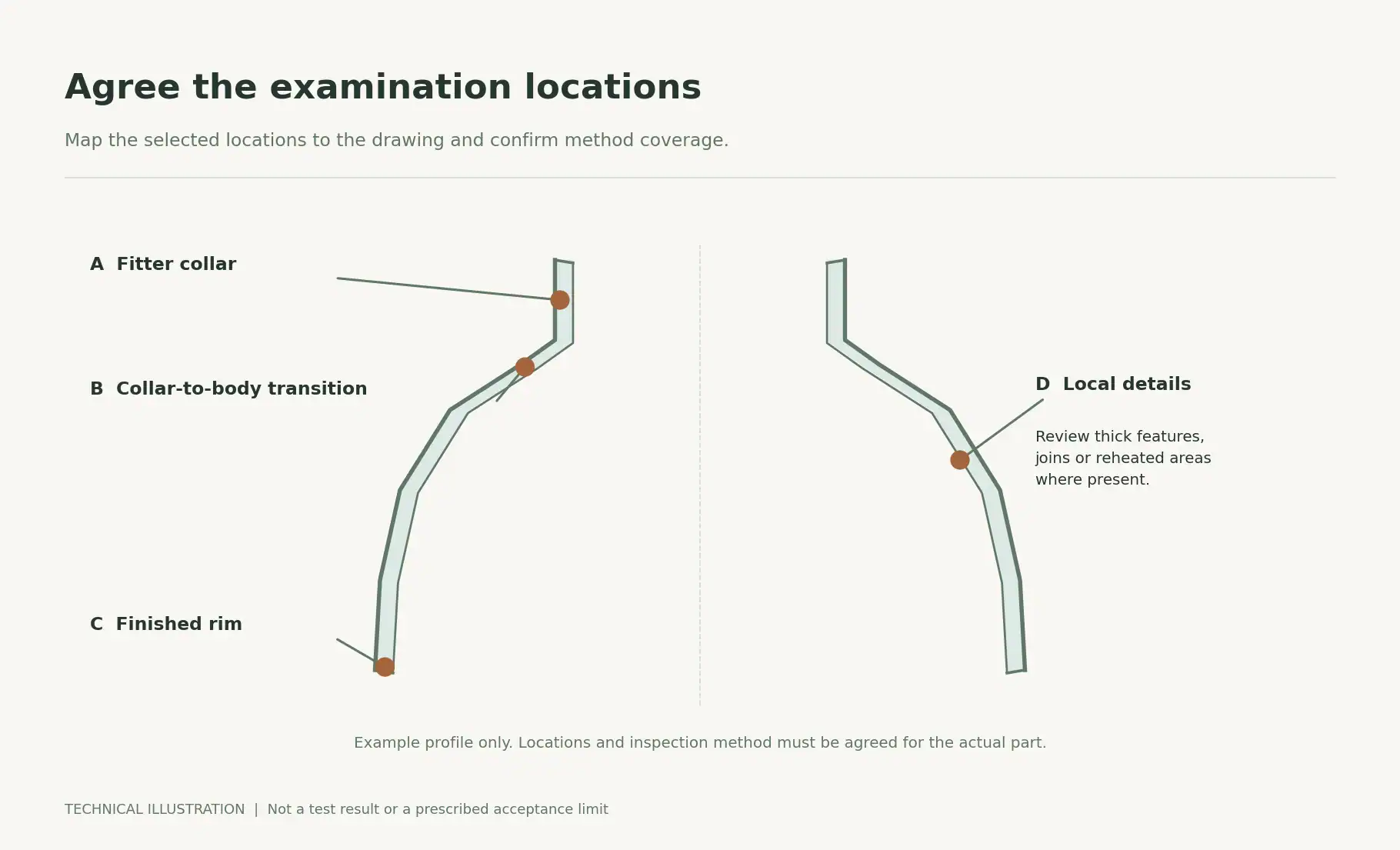
Put the examination locations on a sketch or drawing. Asking for “a stress test” leaves too much room for the supplier and buyer to inspect different parts of the shade.
Useful locations to consider during qualification include the fitter collar, collar-to-body transition, rim, locally thick decorative features and areas associated with joining or reheating. The responsible technical team should confirm which locations the chosen method can meaningfully examine.
Use the wall-thickness and tolerance review to identify geometry that needs attention. A stress examination and dimensional inspection can use the same location labels, making the results easier to compare without treating them as the same measurement.
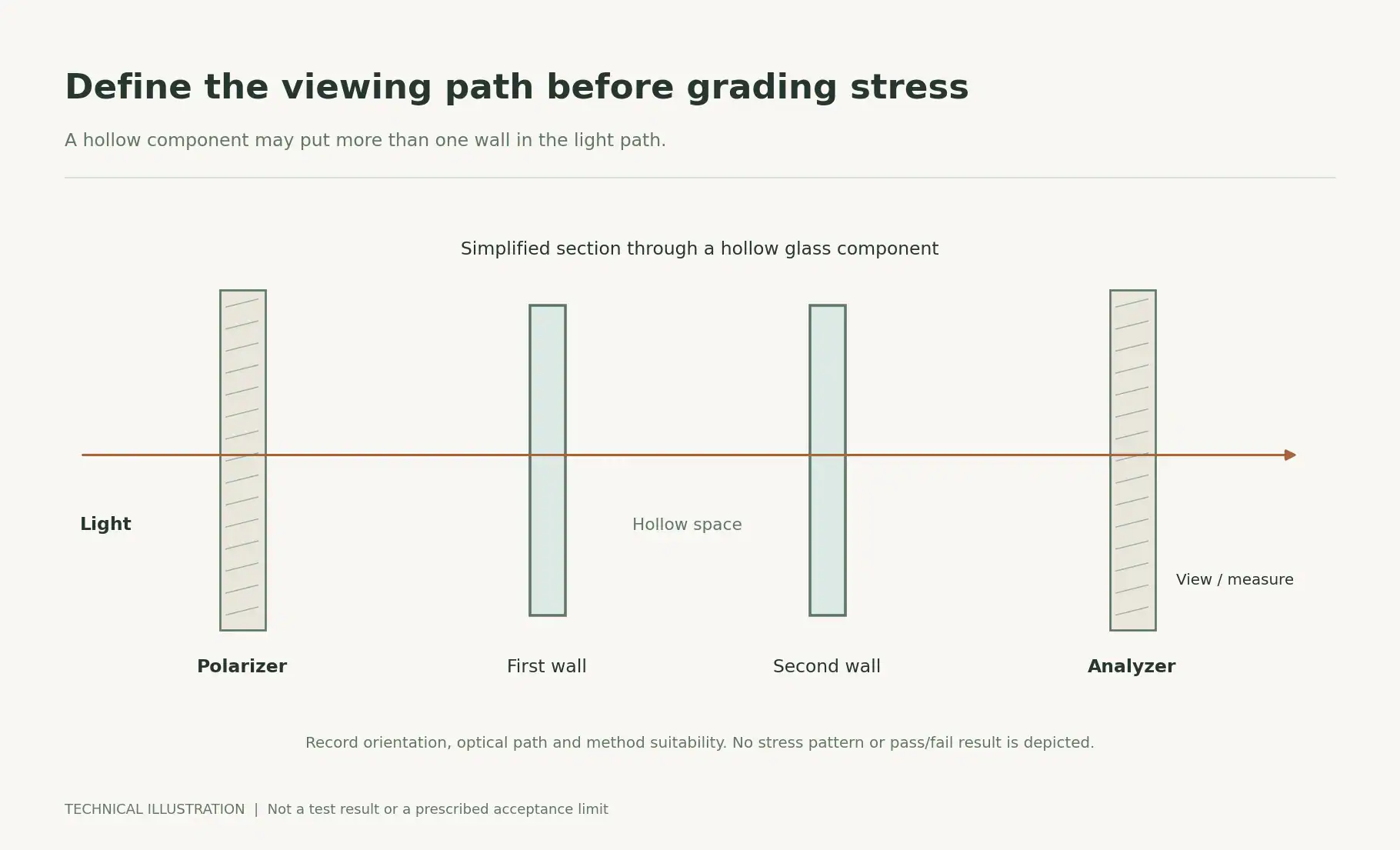
For a new profile, request views that cover the agreed locations. Retain the part orientation, instrument setup and sample identity with the images. A photograph of the easiest transparent area may omit the feature that controls the acceptance decision.
If a location cannot be assessed reliably, identify it in the report and agree how it will be evaluated before accepting the component.
What can a polariscope tell you?
A polariscope uses polarized light to reveal effects associated with stress birefringence. Its output needs interpretation under a defined method. Optical retardation is influenced by the stress condition, optical path and material; a colored image alone is not a direct strength measurement. SCHOTT’s TIE-27 guidance on stress in optical glass explains these relationships. Its optical-glass specifications should not be copied as lamp-shade acceptance limits.
For a hollow, curved shade, ask the laboratory to document the light path and how the shape affects interpretation. Color, opacity, texture and coatings also warrant a method-suitability check before a production inspection plan is agreed.
Keep screening and quantitative acceptance identifiable
Visual screening can be useful for comparison with an approved reference under controlled conditions. If acceptance requires a numerical result, specify the quantitative method and reporting units as well.
ASTM C148-17(2022) covers polariscopic examination of glass containers and includes comparison using a polariscope and determination using a polarimeter. Its stated application concerns commercial soda-lime-silica container glass, with use for other products of similar composition described in its significance section. Applicability to a particular lamp shade must be established; the citation alone does not certify a shade or luminaire.
Ask whether the reported value is retardation, retardation normalized by optical path, or a calculated stress. Nanometres, nanometres per centimetre and megapascals describe different quantities. Any conversion needs the method’s assumptions and appropriate material information.
Do not adopt a generic “below 50 nm/cm” or similar limit from another product. Agree the criterion with the responsible engineer and test provider for the specified material, geometry and application.
Write a stress report that another technician can repeat
A report should allow a second technician to identify the part, repeat the examination and reach an acceptance decision using the same specification.
Component
Part number, drawing revision, material and finish
Traceability
Production batch, treatment record and sample IDs
Method
Procedure, applicable edition and any agreed adaptation
Setup
Instrument, verification status, orientation and viewing conditions
Coverage
Examined locations, optical path assumptions and inaccessible areas
Results
Observations or values with units and supporting images
Decision
Acceptance criterion, pass/fail result and authorized reviewer
Keep reference images linked to the same procedure. A photograph with different lighting, exposure or orientation may be unsuitable for grading a later batch.
During sample approval, ask the supplier to show how a borderline result is escalated. If production and incoming inspection disagree, both teams need a defined recheck procedure and a decision owner before shipment becomes urgent.
Why acceptable annealing does not settle assembly compatibility
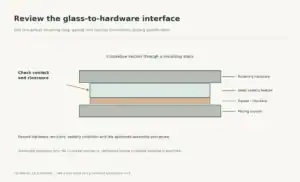
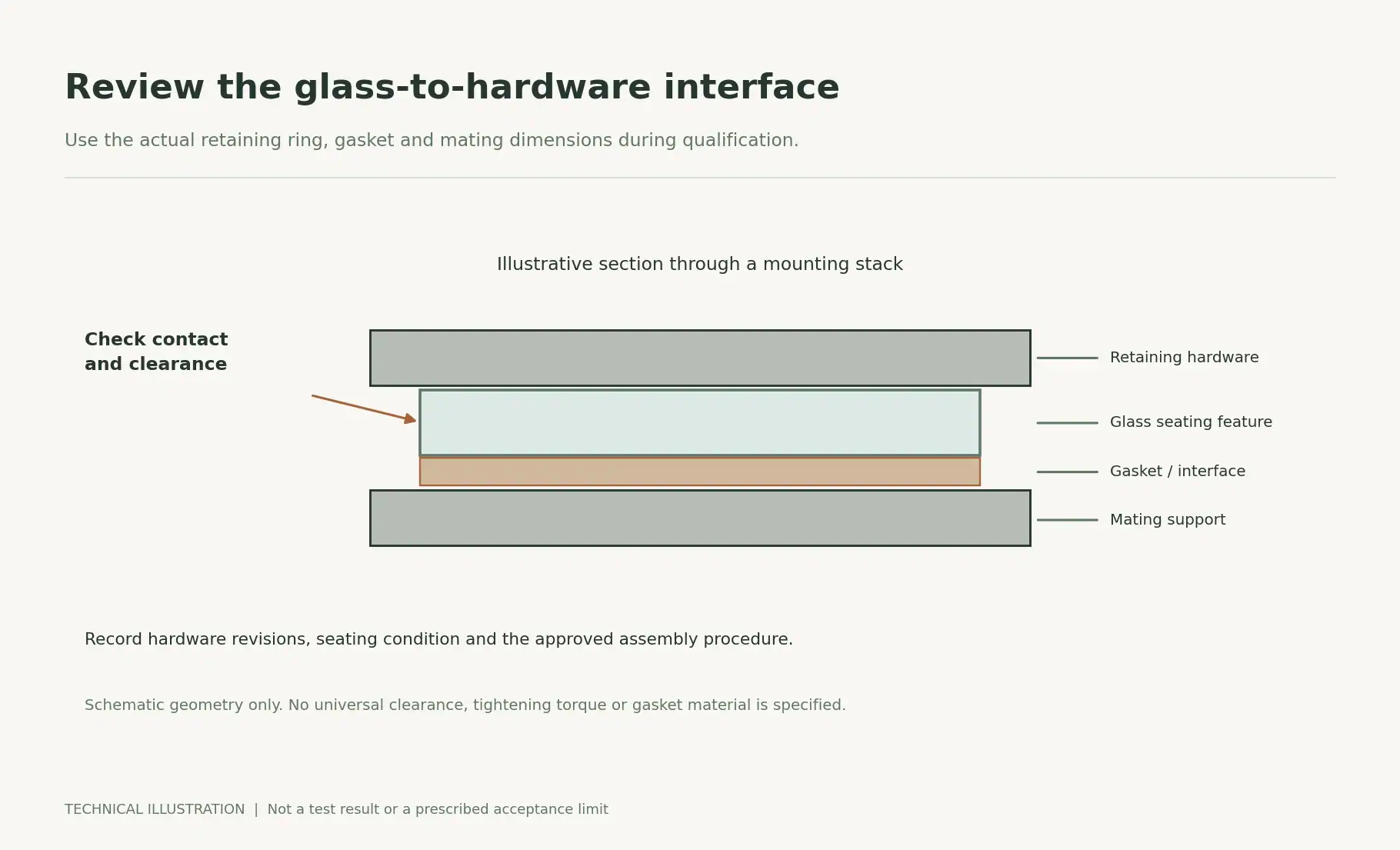
Inspect the mounting interface separately. A satisfactory residual-stress result cannot establish that a fitter has adequate clearance, that a gasket distributes the load or that the finished rim is undamaged.
SCHOTT’s TIE-33 guidance on glass strength explains the relationship between surface flaws and failure under tensile load. That is a reason to check the specified edge finish alongside the annealing evidence, particularly at the retaining interface. Its optical-material test data are not strength ratings for the shade being purchased.
As an illustrative engineering case, consider a globe with a satisfactory stress report that cracks after its retaining ring is tightened. Investigate the contact pattern, opening dimensions, rim condition, hardware and assembly procedure. The result does not by itself prove that annealing was inadequate.
Use the mating hardware during qualification and record:
- Where the shade seats and where it contacts metal or gasket material.
- Which dimensions control clearance and retention.
- How tightening or retention force is controlled.
- Whether installation and removal introduce visible damage.
- Which hardware and gasket revisions were used.
Specify a tightening value only when the assembly has an established requirement. A universal torque copied from a different fitter can create another uncontrolled variable.
What additional checks matter for outdoor luminaires?
Residual-stress examination, thermal-shock testing and assembly validation answer different questions. Keep their results separate in the qualification record.
For an outdoor design, define the intended exposure before requesting a thermal test: operating orientation, light source, enclosure, ambient conditions, water exposure and mounting configuration. Ask the laboratory which procedure represents the requirement and which conditions remain outside the test.
The glass supplier’s report is component evidence. The luminaire manufacturer must also establish the applicable finished-product requirements. IEC 60598-1:2024 sets general safety requirements and tests for luminaires; the relevant product part, market adoption and project requirements still need to be identified.
Avoid specifying an impressive temperature difference without the rest of the procedure. A useful thermal test record identifies the temperatures, conditioning time, transition conditions, cycles, support arrangement, sample quantity and failure criteria.
Passing a defined test supports the conditions that were evaluated. Do not turn it into an unsupported claim about service life, every climate or zero field failures. For a project inquiry, send the actual exposure brief with the outdoor lamp-shade requirements rather than relying on the word “outdoor” alone.
Connect stress results to batch release and production yield
Agree the inspection plan before production. Define the batch, sample selection, coverage, acceptance criteria and response to failure. Sample quantity and inspection frequency should follow risk and the applicable specification; this guide does not prescribe a universal AQL.
A practical review point is a change in glass grade, wall profile, furnace loading, treatment schedule or a later heating operation. Decide during qualification which changes require renewed evidence and who can approve them.
If a sample fails, identify and hold the affected lot while the cause and scope are reviewed. A replacement passing sample does not erase the initial failure. Record the original result, investigation, disposition and conditions for release.
Reannealing, when technically appropriate, needs its own approved route and reinspection. It should not be assumed to repair chips or other damage. Confirm its compatibility with the part, finish and subsequent operations before authorizing rework.
Track losses by operation: forming, annealing, finishing, assembly and final inspection. Recording where a defect is first detected, together with the investigation result, helps the production team decide which operation needs attention. Overall yield alone cannot provide that detail.
Questions production teams ask about glass annealing
Does borosilicate glass still need an annealing specification?
Yes. The material-family name does not establish the treatment or remaining stress in a finished component. Request a specification appropriate to the actual glass grade and forming route, then agree how conformity will be verified.
Can a clean surface prove that a shade is adequately annealed?
No. Surface appearance and residual-stress examination are separate checks. Use the agreed examination method and retain the result with the batch record.
Does annealing make a shade tempered safety glass?
No. Annealing and tempering describe different treatments and intended stress conditions. Specify the required glass condition explicitly and verify any safety-glazing claim against the applicable product requirements.
Can the same stress criterion cover clear, colored and opal shades?
Do not assume that it can. Ask the test provider to confirm method suitability, examination coverage and acceptance criteria for each relevant construction. An unreadable result should be recorded as an examination limitation.
Should stress testing happen before or after finishing?
Define the acceptance stage from the actual process route. Earlier checks can support process control; final acceptance must account for the operations and condition covered by the specification. Later heating and edge work need to be considered during that review.
What if the supplier cannot provide the requested examination?
Resolve the gap during sampling. Options may include a qualified external laboratory, an agreed alternative method or a revised inspection scope approved by the responsible engineer. Record what remains unverified before committing to production.
Approve the treatment, the component and the assembled fixture
Before releasing an order, identify the glass grade and treatment record, the stress-examination result for the specified locations, and the assembly or application validation required for the project. Any missing item should have a named owner and a clear acceptance condition.
Use these records with the broader glass lamp shade quality inspection checklist. The aim is to make a rejected or accepted lot explainable, so the next order can follow the same approved basis.
Send the drawing and inspection requirements for review
Jingxin Glassware’s manufacturing workflow includes forming, annealing and finishing, with the route confirmed for the product and order. For an engineering or outdoor shade, send a drawing or sample reference together with the glass specification, critical wall sections and fitter details.
Include the mating hardware, intended operating conditions, surface treatment and requested examination or test reports. If the current issue is breakage, add the batch identity, failure location, assembly conditions and photographs. These inputs help distinguish a request for process evidence from a request to qualify the complete fixture.
Ask for confirmation of the proposed inspection scope, available reporting, any external testing requirement and the acceptance stage before approving production. Instrument availability, test capability, schedule and commercial terms must be confirmed for the specific project.
Send Your Drawing and Stress-Test Requirements
Related engineering resources
How glass lamp shades are made
Wall thickness tolerance for pressed glass lamp shades
Glass lamp shade edge finishing
Glass lamp shade quality inspection checklist