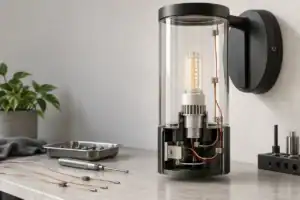
An E27 lamp holder is an Edison screw socket with a 27 mm thread diameter used to securely connect a light bulb to a lamp, pendant, or ceiling fitting.
Walk through any hardware store or scroll through any lighting supplier’s catalogue and you’ll find shelves packed with small, unassuming components that most people overlook entirely — lamp holders. Yet that humble socket is the single point of connection between your bulb and your electrical supply. Get it wrong and you risk flickering lights at best, a fire hazard at worst. Get it right and you have a safe, long-lasting fitting that works with hundreds of compatible bulbs.
The E27 lamp holder is the world’s most widely used lamp socket. It turns up in pendant lights above kitchen islands, in vintage Edison-style floor lamps, in outdoor lanterns, in chandelier arms, and in DIY desk lamp builds. This guide covers every angle — what it is, how it differs from other socket types, which material suits which application, how to wire one safely, and what the next wave of smart-socket technology looks like.
What Is an E27 Lamp Holder?
An E27 lamp holder accepts any bulb with a 27 mm Edison screw base, the global standard for medium-size domestic and commercial lamps.
The “E” in E27 stands for Edison — a nod to Thomas Edison’s original screw-cap design patented in 1880. The number “27” is the outer thread diameter in millimetres. That single measurement defines everything about compatibility: if the bulb’s base thread measures 27 mm across, it fits an E27 socket. Full stop. No adapter needed.
The Edison Screw Standard Explained
The Edison screw family covers multiple sizes, from the tiny E10 torch-bulb socket up to the E40 industrial mogul base used in stadium lighting. E27 sits in the middle as the dominant household size, which is why it is the default fitting in most European, Australian, and Asian luminaires.
According to the International Electrotechnical Commission’s lamp cap standards, the E27 is officially designated IEC 60061-1 sheet 7004-21-1. That standard locks in the 27 mm nominal thread diameter, thread pitch (3.629 mm), and shell dimensions — guaranteeing that an E27 bulb manufactured in Germany slots into an E27 holder made in China without any guesswork.
The holder itself has two electrical contacts: the outer shell (neutral in most wiring conventions) and the centre contact pin at the base (live). When you screw in a bulb, the bulb’s centre contact touches the socket’s live pin and the bulb’s shell contact completes the neutral circuit through the socket shell. Simple, reliable, and — when the holder is made properly — very safe.
How E27 Lamp Holders Work
Inside the socket, spring tension keeps the centre contact pressed firmly against the bulb base. Most quality ceramic holders use a phosphor-bronze or brass contact spring rated for thousands of insertion cycles. Cheap plastic holders often use thin steel contacts that lose their springiness over time, causing intermittent connections and, in the worst cases, arcing.
The holder also carries current: every E27 lamp holder has a rated wattage (typically 60 W, 100 W, or 250 W depending on material) and a rated voltage (230 V in Europe, 120 V in North America). Running a 250 W halogen in a 60 W plastic holder will melt the housing. That mismatch is the most common — and most preventable — lamp-holder failure we encounter.
| Specification | Standard E27 | Heavy-Duty E27 |
|---|---|---|
| Thread diameter | 27 mm | 27 mm |
| Rated voltage | 230 V (EU) / 120 V (US) | 230 V (EU) / 120 V (US) |
| Rated wattage (plastic) | 60 W | N/A |
| Rated wattage (ceramic) | 250 W | 500 W |
| Rated wattage (porcelain) | 250 W | 500 W |
| Contact material | Brass / phosphor-bronze | Copper alloy |
| Max ambient temp | 60°C | 90°C |
| IP rating (basic) | IP20 | IP44–IP65 |
Types of E27 Lamp Holders
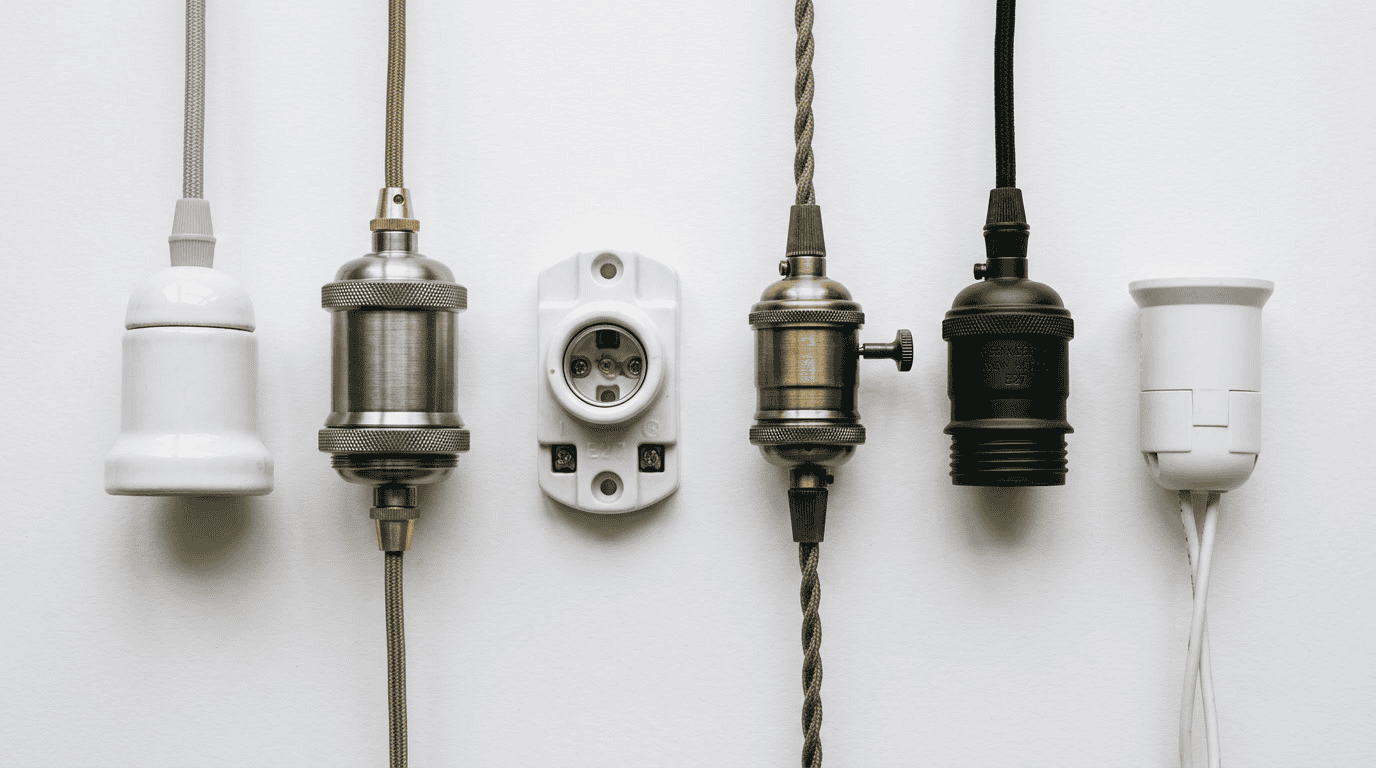
E27 lamp holders come in four main material families — plastic, ceramic, porcelain, and metal — each suited to different wattage, temperature, and aesthetic requirements.
Pendant and Hanging E27 Holders
Pendant E27 holders are the most recognisable type: a socket body with a top entry for the cable, designed to hang from a ceiling rose or canopy. The cable feeds through a strain-relief cap (also called a cable grip or cord grip), which prevents tension from pulling the live connections loose.
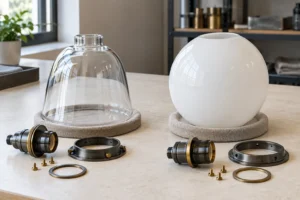
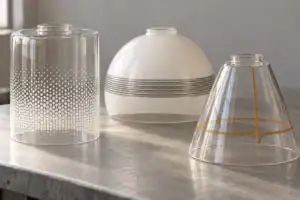
Most pendant holders come with an E27 socket in either plastic, porcelain, or metal. For glass lampshade applications — pendant shades that clamp or sit over the socket — look for a holder with a lampholder ring or shade ring at the bottom. This threaded ring (typically 40 mm, 52 mm, or 58 mm diameter) accepts a corresponding ring on the shade, holding everything level without tape or improvised fixing.
In practice, we always match the shade ring size to the lampshade’s opening before ordering a holder. A mismatch of just 4 mm means the shade rocks or won’t seat flush — a small annoyance that compounds over years of vibration.
Ceramic E27 Lamp Holders
Ceramic is the material of choice wherever heat is a concern. Fired at over 1,200°C, the ceramic body does not melt, warp, or off-gas under sustained high-wattage operation. That makes ceramic E27 holders ideal for:
- High-wattage halogen or incandescent bulbs (150 W–250 W)
- Track lighting where bulbs run for eight or more hours daily
- Commercial display lighting in retail environments
- Oven and appliance lamps rated for elevated ambient temperatures
The contact quality in ceramic holders varies widely. Premium holders use brass contacts with generous spring geometry; budget versions use thin steel that corrodes in humid environments. Look for holders that specify brass or phosphor-bronze contacts if the fitting will live in a kitchen, bathroom, or conservatory.
Batten-Fix and Wall-Mount E27 Holders
Batten-fix holders screw flat against a wall or ceiling with a back-plate, accepting a bulb in a bracket or open-shade configuration. They are the utilitarian workhorses of the E27 world — found in garage workshops, storage areas, and period-style bathroom vanity bars.
Porcelain batten holders have been manufactured to essentially the same design for over a century, and there is a reason the design hasn’t changed: it works. A thick porcelain body, brass contacts, and a simple cable-clamp terminal block is a combination that outlasts the building it’s installed in. According to the U.S. Department of Energy’s LED lighting resources, modern LED bulbs last 15,000–50,000 hours — but only if the holder feeding them maintains a reliable contact. Porcelain holders are the quiet enabler of that longevity.
Smart and Adapter-Type E27 Holders
A newer category is the E27 adapter socket — a device that screws into an existing E27 holder and adds functionality: remote control, voice control, dimming, or motion sensing. These are not lamp holders in the traditional sense but they occupy the same thread space.
The growth of this category reflects a broader trend: consumers want smart functionality without rewiring. An E27 smart adapter costs a fraction of a new smart luminaire and can be moved from fitting to fitting as needs change.
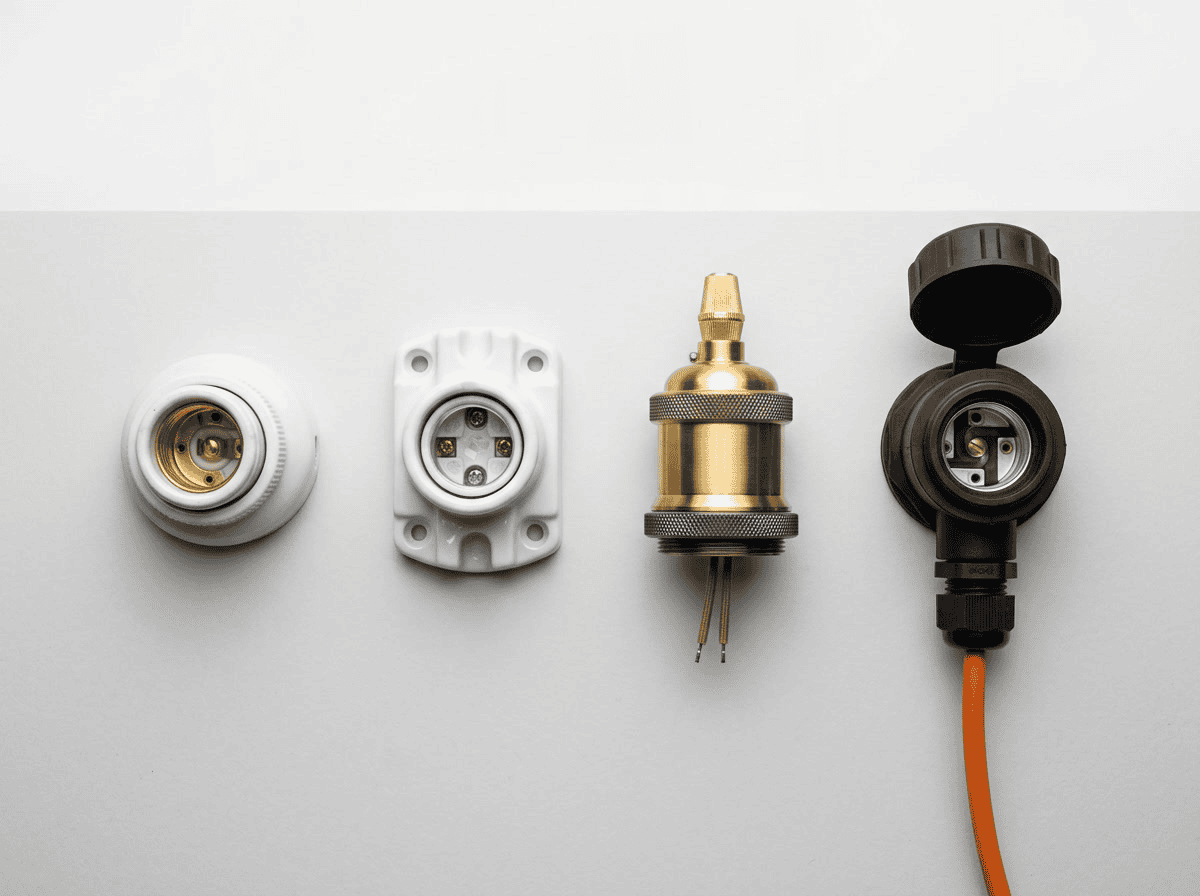
| Holder Type | Best For | Wattage Limit | Material Options |
|---|---|---|---|
| Pendant (hanging) | Pendant shades, chandeliers | Up to 250 W | Plastic, ceramic, metal, porcelain |
| Batten-fix | Walls, ceilings, open bulbs | Up to 250 W | Porcelain, plastic |
| Bracket/angled | Directional spots, track arms | Up to 150 W | Metal, ceramic |
| Smart adapter | Retrofit smart control | Up to 60 W (most) | Plastic with PCB |
| Outdoor/IP-rated | Exterior, garden, wet areas | Up to 100 W | Rubber, IP65 plastic |
E27 vs E26 — What’s the Difference?
E26 and E27 are nearly identical in physical size — the key difference is a 1 mm thread diameter — but they are NOT fully interchangeable under high load or voltage mismatch conditions.
Physical Dimensions and Thread Compatibility
The E26 socket is the North American standard with a 26 mm nominal thread diameter. The E27 is the European/international standard at 27 mm. That 1 mm difference sounds negligible, and for most LED bulbs with flexible plastic bases, the threads will engage in either socket. Many manufacturers produce bulbs with bases that technically fit both.
However, that sloppy fit matters in two scenarios:
- High-vibration environments — a slightly loose base in a ceiling fan or industrial machine will work its way out over time, causing intermittent contact.
- High-wattage incandescent or halogen bulbs — thermal expansion of the contacts under load amplifies the tolerance mismatch. A 150 W halogen with a nominally cross-compatible base can arc in a mismatched holder.
As Wikipedia’s entry on the Edison screw notes, E26 and E27 are dimensionally similar but were standardised independently, and the IEC and ANSI/NEMA standards bodies treat them as distinct specifications.
Voltage and Regional Use
Beyond physical dimensions, regional voltage is the more important practical distinction:
- E27 (Europe, Asia, Australia): 220–240 V, 50 Hz supply
- E26 (North America): 120 V, 60 Hz supply
Most modern LED bulbs are rated for a wide voltage range (100–240 V), so a single bulb can physically and electrically work in both markets. But the holder is designed for the voltage and wire gauges of its target market. An E26 holder’s terminal block may not be rated for the higher current that flows at 120 V for the same wattage load. Never assume a holder sold for one regional market is safe to use at a significantly different voltage.
How to Choose the Right E27 Lamp Holder
Match the holder to three factors before buying: the bulb’s wattage, the installation environment (wet/dry/hot), and the shade or fixture geometry.
Material Considerations
Ceramic or porcelain for any application above 60 W or any fitting that runs for more than four hours daily. The upfront cost difference over plastic is small — typically a few dollars or euros per socket — but the temperature headroom is enormous.
Metal (aluminium or brass-shell) for aesthetic applications — exposed industrial-style pendant lights, vintage filament lamp setups, or articulated desk lamps where the socket is part of the visual design. Metal conducts heat away from the base more efficiently than plastic but less efficiently than ceramic. Keep metal holders below 100 W.
Plastic/thermoplastic only for LED applications under 10 W where heat output is genuinely minimal. Modern LED bulbs in the 4–9 W range produce very little heat at the base, making plastic holders a rational low-cost choice for high-volume installations like a string of café-style garden lights.
IP Ratings for Outdoor and Wet Areas
IP (Ingress Protection) ratings tell you what a holder can withstand:
- IP20 — basic indoor protection, no moisture resistance. Fine for dry living spaces.
- IP44 — protected against solid objects over 1 mm and splashing water. Suitable for bathrooms (Zone 3) and covered outdoor areas.
- IP65 — dust-tight and protected against water jets. Use this for exposed garden fittings, outdoor wall lanterns, and coastal environments.
- IP67 — submersible to 1 metre. Only needed for water-feature or underground lighting.
Most standard E27 pendant holders are IP20. If you’re putting an E27 fitting on an exterior porch that takes rain splash or in a bathroom vanity zone, do not skip the IP rating check. A failed plastic holder in a wet zone is an electrocution hazard, not just an inconvenience.
Wattage and Voltage Ratings
Every holder will carry a marking showing its maximum wattage and rated voltage. Look for these on the body itself, not just the packaging. Common markings:
250W 2A 250V~— ceramic pendant holder60W E27 250V— standard plastic holder500W E27 250V T300— heavy-duty ceramic for high-wattage lamps
The “T” designation (T100, T200, T300) indicates the holder’s thermal rating — T300 means it can tolerate ambient temperatures up to 300°C. This matters for oven lamps and sauna fittings.
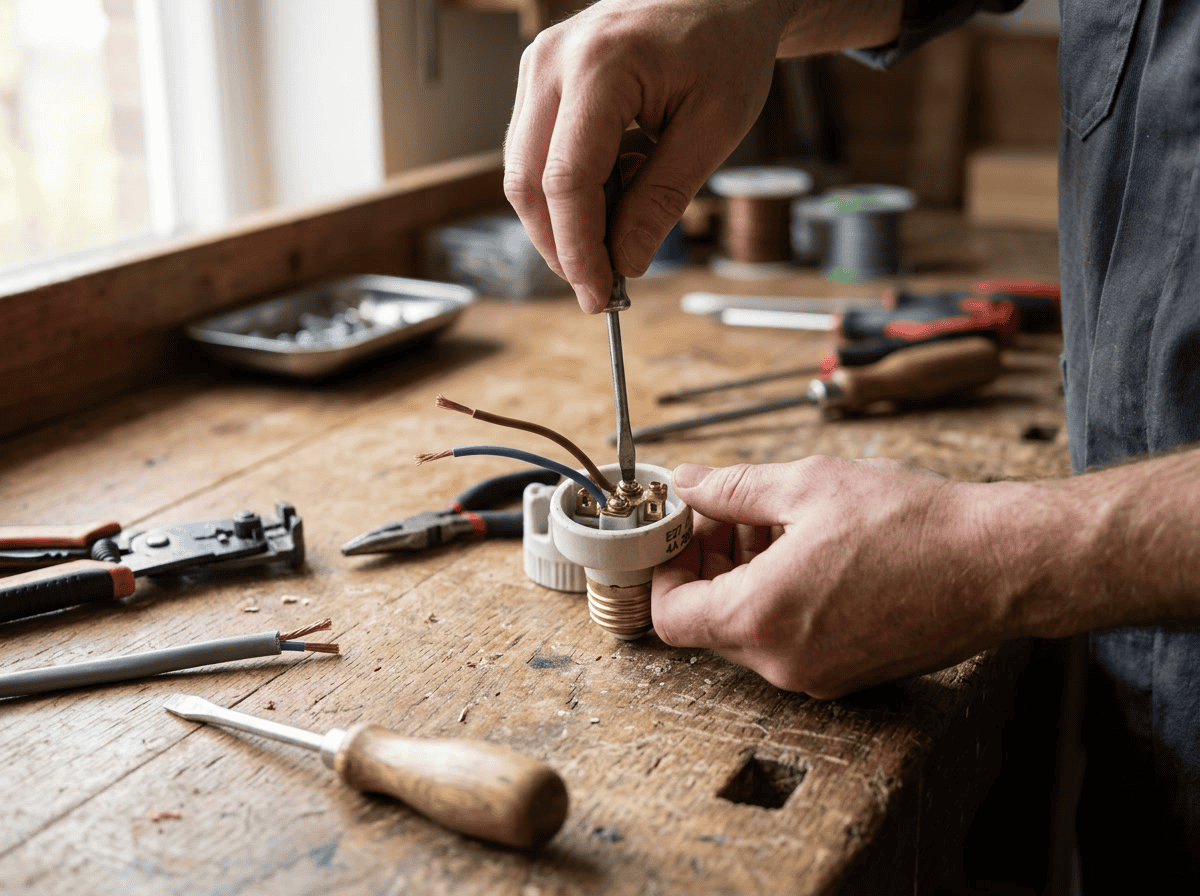
How to Wire an E27 Lamp Holder (Step-by-Step)
Wiring an E27 lamp holder takes under ten minutes, requires only a screwdriver and wire stripper, and is well within DIY capability — as long as the circuit is isolated first.
Tools and Safety Precautions
Before touching any electrical component:
- Isolate the circuit — switch off the breaker and lock it out if others share the building. Test with a non-contact voltage tester before touching any wire.
- Gather tools: flat-blade and Philips screwdrivers, wire stripper, electrician’s insulation tape, optional: heat-shrink tubing.
- Check the cable: Use cable rated for the holder’s wattage. For a 250 W ceramic holder, use a minimum 0.75 mm² two-core flexible cable. For higher wattages, 1.0 mm² or 1.5 mm² is safer.
Never work on a live circuit. The E27 holder’s live terminal (centre contact) sits inside the socket where your fingers naturally reach when fitting a bulb. That geometry is safe when the circuit is dead; dangerous when it’s live.
Step-by-Step Wiring Guide
Step 1 — Disassemble the holder. Unscrew the cap or collar from the body. Most pendant holders have three parts: the top cap (cable entry), the body (socket with terminals), and an optional shade ring.
Step 2 — Thread the cable. Feed the cable through the cap before making any connections. This is the step DIYers most often forget, then have to undo all their work.
Step 3 — Strip the cable ends. Strip the outer sheath back 40–50 mm. Strip 8–10 mm of insulation from each conductor (live and neutral). Twist the strands tightly so no stray strands can bridge the terminals.
Step 4 — Connect to terminals. Most E27 holders have a clearly marked terminal block with screw connections:
- Live (L / Brown) — inner terminal (connects to centre contact)
- Neutral (N / Blue) — outer terminal (connects to shell)
- Earth (E / Green-Yellow) — only if the holder has an earth terminal (metal holders generally do; ceramic ones often don’t)
In regions using older wiring colours (red for live, black for neutral), the principle is the same: live to centre contact, neutral to shell. For an earth connection, the IET Wiring Regulations (BS 7671) specify that all metalwork accessible to touch must be bonded to earth.
Step 5 — Strain relief. Tighten the cable grip / cord clamp so the cable can’t be pulled free by tugging. The clamp should grip the outer sheath, not the individual conductors.
Step 6 — Reassemble and test. Screw the cap back onto the body, fit a known-good bulb, restore power, and check for correct operation before completing the installation.
Common Wiring Mistakes to Avoid
| Mistake | Consequence | Fix |
|---|---|---|
| Live and neutral swapped | Bulb works but shell is live — shock risk when fitting/removing bulbs | Always connect live (brown) to the inner terminal |
| Insufficient strip length | Poor contact, arcing, overheating | Strip exactly 8–10 mm — no more, no less |
| No strain relief | Cable tension pulls terminals loose over time | Always clamp the outer sheath |
| Using plastic holder for high-wattage halogen | Melting, fire risk | Use ceramic for anything above 60 W |
| Stray conductor strands bridging terminals | Short circuit, blown fuse, potential fire | Twist strands tightly, use ferrules in high-vibration locations |
Top Applications for E27 Lamp Holders
E27 lamp holders appear in nearly every lighting category — from delicate glass pendant chandeliers to rugged outdoor garden posts.
Pendant Lighting and Glass Lampshades
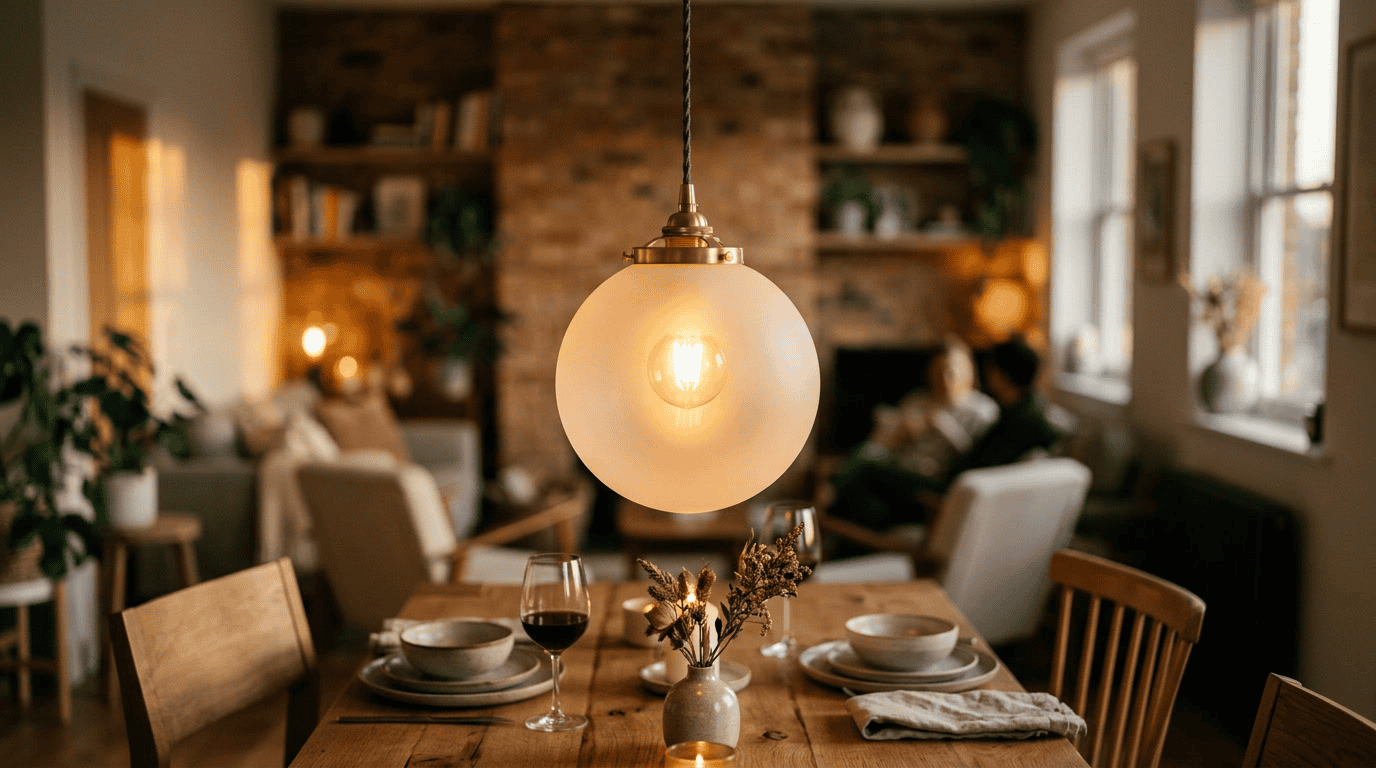
Pendant lights are the highest-profile application for E27 holders. A bare Edison bulb in a metal pendant holder creates the industrial aesthetic that dominated interior design through the 2010s and still sells strongly. Swap that metal holder for a porcelain or ceramic one and you gain the vintage look that pairs naturally with glass lampshades.
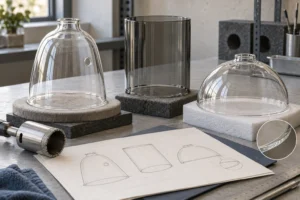
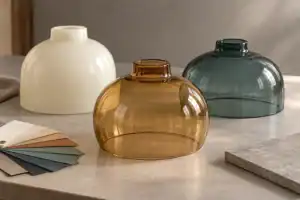
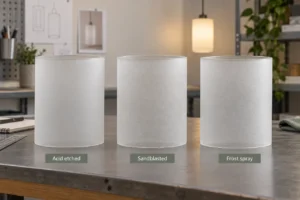
Glass lampshades — globe shades, bell shades, and flared drum shades — mount onto the shade ring of the E27 holder. The shade ring keeps the glass concentric around the bulb, diffusing light through the glass and throwing soft colour if the glass is tinted or textured. For this application, the holder must have a shade ring thread that matches the shade’s opening size, and the holder body must clear the shade’s inner neck without the bulb touching the glass.
That last point matters more than most lighting guides acknowledge. A clear glass globe with a 60 mm neck sitting directly on an A60 LED bulb is fine. The same globe on a vintage-style tubular T30 bulb with a longer body may press against the inner glass surface, creating stress fractures over time as the glass heats and cools. Always verify bulb-to-shade clearance before completing the installation.
DIY Table Lamps and Floor Lamps
The DIY table lamp market has grown substantially since the early 2020s, driven by custom-look interiors and the availability of affordable pendant cord sets with E27 holders already wired in. According to a Statista report on the global lighting market, the luminaire segment accounts for a significant share of the broader $120+ billion lighting industry, with DIY and retrofit segments growing faster than the OEM market.
For a DIY lamp, the key specifications are:
- Holder type: pendant with strain-relief cap for hanging applications; batten-fix for wall-mounted reading lights
- Cable length and colour: braided fabric cables in cotton, jute, or silk finishes are popular for exposed-cord aesthetics
- Wattage: most DIY table lamps use LED bulbs under 10 W, so a standard plastic holder is technically adequate — though ceramic remains our preference for longevity
Outdoor and Garden Lighting
Outdoor E27 applications demand IP44 or IP65 holders without exception. Wall lanterns, path lights, string lights between pergola posts — all should use rubber or IP-rated plastic holders that can handle rain, condensation, and temperature swings from −20°C to +50°C.
An often-overlooked issue is UV degradation. Standard grey or black plastic holders exposed to direct sunlight for two or three years will become brittle and crack around the cable entry. For south-facing or roof-mounted fittings, specify holders with a UV-stabilised housing or use stainless-steel and ceramic alternatives.
Future Trends in E27 Lamp Socket Technology (2026+)
Smart integration and sustainable materials are reshaping the E27 holder market — without changing the thread diameter that has remained constant for over 140 years.
Smart E27 Socket Adapters
The fastest-growing segment in the E27 holder category is not the holder itself but the smart adapter that screws into it. Wi-Fi and Zigbee-enabled E27 adapters let any existing fitting join a smart-home ecosystem. Matter protocol support — finalized in late 2022 and now appearing across major brands — means devices from different manufacturers can interoperate reliably.
Second-generation smart E27 adapters now include:
- Ambient light sensors that auto-adjust brightness based on room conditions
- Energy monitoring with per-socket wattage and lifetime cost tracking
- Multi-socket mesh networking where one hub coordinates up to 100 individual E27 adapters
The practical upside: a homeowner can add smart control to an entire house without rewiring a single circuit. The limitation: most smart adapters are capped at 60 W, which excludes high-wattage applications.
Sustainable Materials and Circular Design
The lighting industry is under growing pressure to eliminate single-use plastics from fixture components. Several European manufacturers are now producing E27 holders in bio-based polyamide (plant-derived nylon), recycled aluminium shells, and unglazed high-fire ceramic from local clay sources — reducing transport carbon while maintaining equivalent mechanical performance.
The EU’s Ecodesign for Sustainable Products Regulation (ESPR), which came into force in 2024, is expected to mandate minimum durability and recyclability requirements for lighting components by 2027. Holders designed today for material separation and easy disassembly are already ahead of that curve. According to the EU Ecodesign Regulation framework, repair and reuse provisions for electrical components are a core pillar of the 2025–2030 product sustainability agenda.
Frequently Asked Questions
What is an E27 lamp holder?
An E27 lamp holder is an Edison screw socket with a 27 mm thread diameter that connects a light bulb to a lamp or wired fitting. It is the most common lamp socket type in Europe, Asia, and Australia, compatible with a wide range of LED, CFL, halogen, and incandescent bulbs.
What is the difference between E26 and E27 lamp holders?
E26 is the North American standard (26 mm thread); E27 is the European/international standard (27 mm thread). They differ by 1 mm and many LED bulbs with flexible bases will fit both — but holders are designed for their regional voltage (120 V for E26, 230 V for E27) and should not be casually swapped in high-wattage or safety-critical applications.
What types of E27 bulb holders are there?
The main types are pendant/hanging holders, batten-fix (surface-mount) holders, angled bracket holders, and smart adapter sockets. Materials include plastic, ceramic, porcelain, metal (brass/aluminium), and rubber-sealed IP65 outdoor variants.
Can I use an E27 holder for a 250 W bulb?
Only if the holder is rated for 250 W. Ceramic and porcelain E27 holders are typically rated 250 W; standard plastic holders are limited to 60 W. Check the wattage marking on the holder body before installing any high-wattage bulb.
How do I wire an E27 pendant lamp holder?
Thread the cable through the top cap first, then connect the live (brown) wire to the inner terminal and the neutral (blue) wire to the outer terminal. Tighten the strain-relief clamp on the outer cable sheath, reassemble the cap, and test with a low-wattage bulb before full-load operation.
What IP rating do I need for an outdoor E27 holder?
IP44 is the minimum for covered outdoor areas and bathrooms; IP65 is required for exposed outdoor fittings that may be hit by rain or garden hoses. Standard IP20 holders should never be used outdoors.
Are E27 lamp holders compatible with LED bulbs?
Yes. E27 holders are fully compatible with LED bulbs as long as the wattage and voltage ratings match. LED bulbs typically draw 4–15 W at E27 wattages, well within the limits of even plastic holders. Dimming requires a holder wired to a compatible dimmer switch and a dimmable LED bulb.
Conclusion
The E27 lamp holder is deceptively simple — a threaded socket, two contacts, a terminal block, a cable grip. But those few components carry every watt of power that reaches your bulb, and every part of that chain matters: the material determines the thermal headroom, the IP rating determines where it can live, the terminal connection determines how long it stays reliable, and the shade ring geometry determines whether your glass lampshade hangs level for a decade or rocks loose within a month.
For most pendant and decorative applications, a quality ceramic E27 holder with a brass shade ring gives you the best combination of heat tolerance, longevity, and aesthetic flexibility. For outdoor use, step up to IP65 rubber or sealed plastic without compromise. For DIY LED builds where heat is minimal, a well-made plastic holder is a rational choice — just verify the voltage rating matches your supply. The thread standard set by Edison in 1880 is not going anywhere. Choosing the right E27 lamp holder now means your glass lampshade, your pendant cluster, or your garden lantern will still be working correctly long after the bulb inside it has been replaced many times over.